






























































Article Contents:
- What the buyer is looking for with the query «buy wooden ball blanks»
- Wooden ball with hole: what it is for furniture and interior
- Characteristics to check before ordering
- Why the hole is more important than it seems
- Diameter, scale and visual role of the ball
- Beech or oak: how the material changes the result
- Where wooden balls with hole are used
- How to distinguish a furniture part from a hobby blank
- Which KN elements to combine with wooden balls
- How to choose wooden ball blanks for a stand
- How to choose a ball for furniture support or leg
- Wooden balls for partitions, rods and decorative verticals
- What to buy together with wooden balls
- Practical selection: from idea to order
- Mistakes when buying wooden ball blanks
- Who will benefit from wooden balls with a hole
- How to buy wooden balls with a hole on STAVROS
- FAQ
- Where to buy wooden ball blanks with a hole?
- How does a wooden ball with a hole differ from a regular blank?
- What are wooden balls with a hole used for in furniture?
- Can such balls be used for decoupage?
- Which material is better to choose: beech or oak?
- How to check compatibility with a rod or stand?
- Can wooden balls be used for furniture legs?
- Which construction kit elements pair best with balls?
- Why shouldn't you buy Christmas tree balls for a furniture structure?
- What to clarify before ordering from STAVROS?
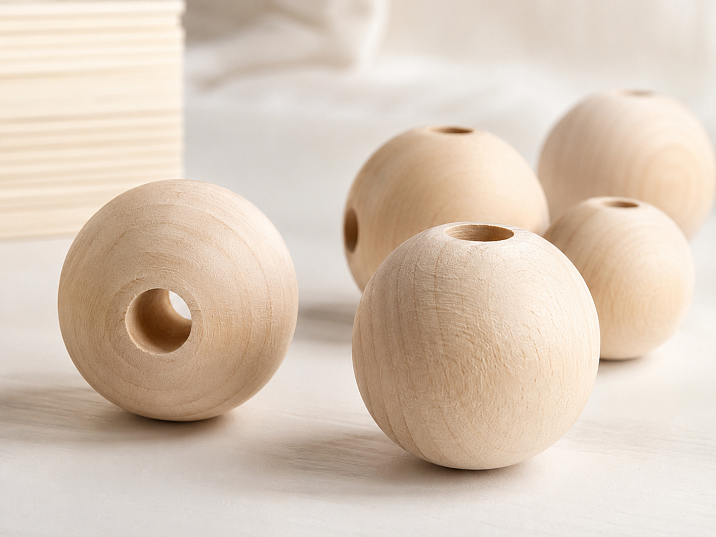
When a customer is looking to buy wooden ball blanks with a hole, most often they don't need a souvenir ball for painting or a random part from a hobby store. They need a precise wooden element that can be incorporated into a stand, furniture support, leg, decorative rod, baluster, or custom interior structure. Here, not only the shape of the ball matters, but also the hole, material, size, compatibility with adjacent modules, and future finishing.
A ball seems like a simple part only in a photo. In a finished structure, it works as a connecting link: it softens the strict vertical, makes the stand more expressive, helps create a rhythm from several elements, and turns an ordinary support into a decorative part of furniture. A mistake in size or mounting hole is immediately noticeable: the ball may not fit on the axis, be out of scale, clash with cubes, bushings, or discs, and look alien after finishing.
At STAVROS, such elements are not classified as craft blanks, but as furniture and interior construction parts. These are solid wood components for those who assemble stands, supports, legs, partitions, decorative verticals, and custom furniture solutions. Therefore, the article helps not just to understand what wooden balls with a hole are, but to choose them consciously: for the task, material, adjacent parts, and future order.


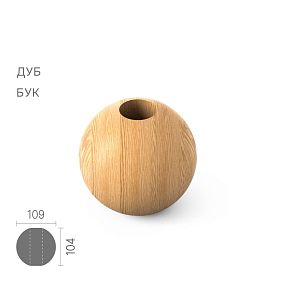
What a customer is looking for with the query "buy wooden ball blanks"
The phrase "buy wooden ball blanks" seems broad, but different intentions hide behind it. One person is looking for a ball for decoupage, another for a painting blank, a third for Christmas decor, and a fourth for a precise furniture part with a hole. For STAVROS, the last scenario is important: the customer needs a spherical element that will become part of a structure.
If you buy wooden ball blanks for furniture, the choice cannot be based solely on appearance. Several parameters need to be checked: whether there is a hole, its diameter, the type of wood the part is made from, how it will combine with other modules, and whether it is suitable for enamel, varnish, oil, or tinting. A regular smooth ball without a hole may be beautiful, but for a stand or rod, it won't solve the task.
A customer who wants to buy wooden ball blanks for a furniture support usually solves one of the practical tasks. They need to assemble a decorative vertical, add a rounded element between straight parts, make a leg less rough, design a side stand for a bed or cabinet, assemble a rhythmic partition, or select an element for a baluster or rod. In each case, the ball does not exist separately. It works together with adjacent elements.
| Customer query | What a person might actually be looking for | Which option is suitable for a furniture structure |
|---|---|---|
| buy wooden ball blanks | Wooden ball, but purpose not yet specified | Need to check for hole, material, and compatibility |
| buy wooden ball blanks | Finished part for further finishing | A spherical element made of solid wood with precise parameters is suitable |
| buy wooden ball blanks | Balls for decor, furniture, or hobbies | For furniture, it's better to choose an element with a mounting hole |
| buy wooden balls with hole | Part for threading onto an axle, rod, or post | Precise product intent for a construction set |
| buy wooden blanks | Broad query without specifying shape | Need to narrow down the selection to balls, cubes, bushings, discs, or other parts |
| wooden blanks where to buy | Search for a store or section | For a furniture task, you should look not at hobby blanks, but at construction set parts |
This is the main difference: the broad phrase "buy wooden blanks" leads the buyer to a huge selection, but does not help to understand which part will withstand the task. And the precise query "buy wooden balls with a hole" already leads to a structural element. It is needed not just for beauty, but for assembly.




Wooden ball with a hole: what it is for furniture and interior
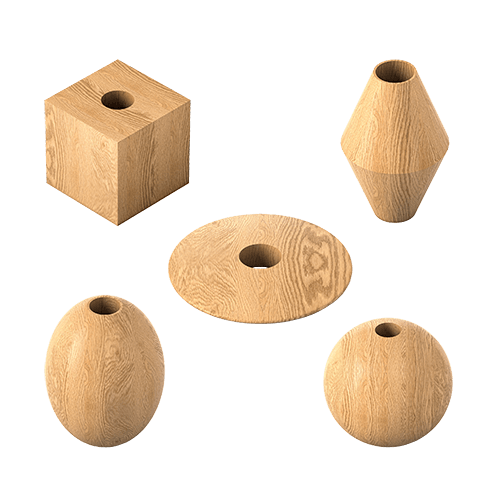
A wooden ball with a hole is a rounded solid wood part that can be used on a central axis, in a stand, decorative support, vertical composition, or furniture unit. The hole makes the ball not just a blank, but a working element: it can be strung, combined with other parts, and included in a rhythm of cubes, bushings, washers, disks, and conical shapes.
In a furniture structure, such a ball solves several tasks at once. It softens strict lines, adds smoothness, makes the stand more expressive, and helps avoid the feeling of a simple stick or bar. In classic style, it can evoke the motif of turned furniture. In neoclassicism, it works as a neat decorative accent. In custom furniture, it helps create a recognizable shape without complex carving.
A regular blank without a hole is suitable for other tasks. It can be painted, decorated, or used as a decorative ball on a surface. But if you need to assemble a stand, rod, leg, or baluster, a part without a mounting hole becomes a problem. You would have to drill, risk chips, disrupt geometry, and adjust manually. A ready-made element with a hole saves time and reduces the risk of errors.
| Product type | What it's suitable for | Suitable for furniture constructor |
|---|---|---|
| Ball without hole | Decoration, painting, separate accent | No, if assembly on an axis is needed |
| Ball with hole | Stands, supports, rods, vertical elements | Yes, if the hole diameter fits |
| Spherical KN-element | Furniture and interior structures | Yes, as part of a parts system |
| Christmas tree ball | Holiday decor | No for furniture construction |
| Blank for decoupage | Hobby, hand painting, souvenirs | Not the main option for furniture |
| Ball for decorations | Costume jewelry, pendants, small decor | Usually too small or not designed for furniture tasks |
Therefore, at STAVROS, wooden balls with a hole should be considered not as a decorative trifle, but as part of a system. In the section wooden constructor elements you can select not only spherical parts, but also adjacent shapes that help assemble a stand or support in a single style.
Our factory also produces:


Characteristics to check before ordering
The buyer often starts the selection with the shape: whether they like the ball or not. But for furniture, this is not enough. The wooden ball must fit the structure in terms of fit, size, material, and finish. Even a small discrepancy can ruin the assembly: the hole will not match the rod, the ball will be too large for a thin leg, or too small for a massive post.
At STAVROS, the constructor group includes elements made of beech and oak. For spherical parts, this is especially important because the type of wood affects not only strength and appearance, but also future finishing. Beech is often chosen for enamel and dense painting when a smooth, even surface is needed. Oak reveals itself in tinting, varnish, or oil when you want to preserve the expressive natural texture.
It is especially important to check the mounting hole. The KN-element card may specify a specific diameter, for example 34 mm for individual geometric shapes. This number must match the task: the ball must fit correctly on the rod, post, or axle. Buying a part that is "approximately similar" is risky: wood does not stretch, and additional adjustment after purchase can damage the shape.
| Parameter | What to Check | Why this is important |
|---|---|---|
| Part type | Ball, spherical element, cube, bushing, disc or other shape | The shape determines the external rhythm of the stand and compatibility with adjacent elements |
| Hole | Diameter and location | The ball must sit on the axle without skew or excessive adjustment |
| Material | Beech or oak | The wood species affects the appearance, finish, and combination with other furniture |
| Size | Current dimensions in the product card | The scale of the ball must match the stand, leg, or baluster |
| Purpose | Stand, support, rod, partition, furniture part | Different tasks require different proportions and adjacent elements |
| Finishing | Enamel, tinting, varnish, oil or other confirmed option | It is better to check the exact finishing options in the product card or with a STAVROS manager. |
| Compatibility | Cubes, bushings, washers, discs, conical parts | The set looks neater if the elements are selected in advance. |
| Order | Availability, lead times, current parameters | This data should be checked before purchasing on the STAVROS website. |
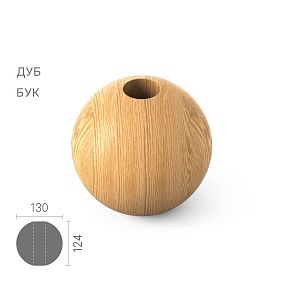
The closest to the task of a spherical part is Geometric figure KN-013. This is a product worth studying if you need to buy wooden balls with a hole not for a hobby, but for a furniture or interior structure. Before ordering, you need to check the material, size, and mounting hole in the product card, and for complex assembly, clarify compatibility with adjacent elements.
Get Consultation
Why the hole is more important than it seems
The mounting hole is the main feature that distinguishes a furniture ball from a regular decorative blank. It determines whether the part can be used on a stand, rod, central axis, or in a modular support. If there is no hole, the ball will need to be modified. If the hole is smaller than the required diameter, the part will not fit. If it is larger, play may occur, and the structure will lose its neatness.
In a furniture stand, a ball usually works as a stringing element. It can be placed between bushings, discs, washers, or cubes. Visually, the ball softens the vertical line, but technically it must maintain the correct axis. A skewed ball is immediately noticeable, especially if there are several such parts. One element might go unnoticed, but a row of three, five, or seven balls already requires precise geometry.
A buyer sometimes thinks: "I'll take a wooden ball and drill the hole myself." For a simple craft, this is possible. For furniture, the risk is higher. When drilling yourself, you can shift the center, get a chip, break symmetry, or make a hole at the wrong angle. After painting or tinting, defects become more noticeable. A finished part with a hole is more convenient because the buyer understands in advance how it fits into the structure.
The hole also affects the choice of neighboring parts. If the ball is placed on the same axis as a cube, bushing, or disc, all elements must work in one system. You cannot buy wooden balls with a hole of one diameter and then randomly pick bushings of a different size. As a result, the structure will be assembled with gaps, misalignments, or extra adapters.
Before ordering, you need to ask yourself three simple questions. What axis will the ball be installed on? What elements will be nearby? What finish is planned after assembly? The answers help not just to buy wooden ball blanks, but to select a working set that won't need reworking.
Diameter, scale, and visual role of the ball
The size of the ball affects not only the fit but also the character of the entire structure. A small ball works as a light accent. It hardly competes with neighboring parts but helps make the vertical less dry. This option is suitable for thin posts, neat decorative axes, small furniture elements, light partitions, and elegant legs.
A large ball behaves differently. It is more noticeable, changes the silhouette more strongly, and can become the main decorative node. Such an element is appropriate where a pronounced support, a large post, a side accent of a bed, a massive furniture leg, or a noticeable vertical in the interior is needed. But a large ball requires attention: if placed in a too thin structure, it will seem heavy and random.
Scale should be evaluated not by an individual part but by the entire assembly. A ball between two thin bushings looks one way, a ball between cubes another, and a ball next to a wide disc a third way. Therefore, it is better to buy wooden ball blanks not based on the principle "I liked the shape," but based on the logic of the future composition. First, you need to understand where the ball will be: at the top, in the middle, at the base, or repeated along the entire height.
In posts and furniture supports, the rule of rhythm works well. A rounded part softens harsh transitions, but it needs calm neighbors. If there are too many different shapes nearby, the post starts to look overloaded. The ball is best revealed when supported by simple elements: bushings, washers, discs, or cubes. Then it does not compete with the entire structure but connects it.
For side posts of beds and nightstands, spherical elements help move away from a flat, too simple shape. In decorative partitions, they set a repetition that is visible from afar. In furniture legs, the ball can become a transition between the base and the support part. In balusters, it helps create a soft silhouette without complex carving. In each case, the size must match the neighboring parts, otherwise the ball will look like a foreign insert.
Beech or oak: how material changes the result
The material for a wooden ball is no less important than its shape. Beech and oak are perceived differently in finishing, look different in interiors, and suit adjacent details differently. If a buyer is choosing wooden ball blanks to buy for furniture under enamel, they usually need a calm material with an even visual character. If the goal is to emphasize natural texture, it is better to look towards oak.
Beech is good where form is more important than the wood grain. It provides a restrained base for painting, helps achieve a neat appearance, and does not overload the detail with active texture. In classic and neoclassical furniture, beech is often chosen for light enamel, calm pastel shades, and dense painting. A beech ball can be included in a stand where the silhouette plays the main role, not the natural pattern.
Oak is chosen when the wood should be visible. Its texture is more expressive, so a spherical detail made of oak looks more stately and natural. Such an element is well suited for studies, living rooms, furniture with open wood texture, interiors with warm shades, dark tinting, oil, or varnish. An oak ball does not need to be hidden under dense paint if the goal is to show the material.
| Material | When to choose | What the buyer gets |
|---|---|---|
| Beech | For enamel, dense painting, calm appearance | Even visual base and neat shape |
| Oak | For tinting, varnish, oil, natural texture | Expressive wood grain and more noticeable character |
| Beech + painting | For classic, neoclassic, light furniture | Clean silhouette without excessive texture activity |
| Oak + clear finish | For study, living room, natural interior | Wood remains part of the decorative image |
| One material in the set | When a sphere combines with cubes, bushings, and discs | Less risk of mismatch in shade and texture |
| Mixing materials | Only with a conscious design task | You can achieve contrast, but it needs to be thought out in advance. |
The main mistake is randomly mixing beech and oak. Before finishing, the difference may seem small, but after staining, varnish, or oil, it becomes more noticeable. If a sphere, cube, and bushing are made from different species, the set may look disjointed. Sometimes this is done intentionally, but in most furniture tasks, it's better to select elements from the same species or understand in advance how they will be finished.
Where are wooden balls with a hole used?
Wooden balls with a hole can be purchased for various structures, but they almost always work on one idea: to create a neat decorative vertical or soften a furniture joint. Unlike a flat overlay, a sphere is visible from all sides. It works well where the element is seen not only from the front but also from the side: on a leg, post, partition, support, baluster, or decorative axis.
In furniture supports, a sphere helps make the leg more expressive. A simple cylindrical or rectangular support can look too technical, especially in a classic interior. A sphere adds plasticity and softens transitions. If bushings, washers, or discs are used nearby, the support begins to be perceived as an assembled part, not just a random stick under the furniture.
In side posts of beds and nightstands, spherical elements help support a classic or designer style. They can be located closer to the top of the post, in the middle, or repeated along the height. This technique is especially useful when furniture needs to be made more expressive without large carvings. The sphere is noticeable but does not overload the facade.
In decorative partitions, balls with a hole work as a repeating motif. They can alternate with cubes, discs, or bushings, forming vertical axes. Such a partition does not look flat: light catches the rounded shapes, details are visible in perspective, and the structure itself becomes more interior-oriented.
In rods and balusters, a sphere is needed for rhythm. It can separate straight sections, emphasize transitions, and create visual pauses. If a buyer is selecting elements for a staircase or furniture style, they should look not only at the sphere but also at neighboring categories: balusters for staircases help understand how rounded elements work in vertical wooden forms, and Posts for staircase provide guidance on larger support solutions.
In custom furniture, wooden balls with holes open up more possibilities. They are used in console tables, decorative stands, individual legs, interior screens, shelving units, custom table bases, cabinets, beds, and small architectural details indoors. What matters here is not just purchasing one shape, but the ability to assemble your own set of elements.
How to distinguish a furniture component from a hobby blank
There are many wooden balls on the market. Some are sold for decoupage, others for painting, others for children's beads, and still others for Christmas decorations. They may look similar on the outside, but by purpose they are different products. For furniture, you need a component that is suitable for assembly, finishing, and combination with other elements. For hobbies, the shape and smooth surface are often sufficient.
A decoupage blank is usually chosen for hand painting or gluing images. It may not have the required hole, and if it does, its diameter may not fit the furniture axle. Such a component does not need to match cubes, bushings, or discs. It is not designed to become part of a stand or support.
A Christmas ball serves a festive purpose. Even if it is wooden, that does not make it a furniture element. It has a different scale, a different logic of use, and a different method of hanging or fastening. Using it instead of a spherical component for a stand means building a problem into the structure from the start.
Souvenir balls and beads are also unsuitable without checking. They may be too small, have a narrow hole, not match the required wood species, or poorly combine with furniture finishes. As a result, the buyer gets a set of small parts that do not work in the interior.
| Query or product | Include in the furniture article as the main option | Why |
|---|---|---|
| buy wooden ball blanks | Yes | The query can be redirected to a furniture selection of balls with holes |
| buy wooden balls with hole | Yes | Precise product query for assembly |
| buy wooden ball blanks | Yes | Commercial tail, if to clarify the purpose |
| wooden balls with hole for stand | Yes | Clear furniture task |
| buy wooden blanks for crafts | No as the main option | Leads to hobbies and crafts |
| buy wooden blanks for decoupage | No as the main option | Does not match the furniture kit |
| wooden Christmas balls | No | Another seasonal product and another way of use |
| wooden egg blanks | No | No suitable product focus |
| souvenir balls | No | Do not guarantee compatibility with furniture construction |
The right way is to start not with a general search, but with a task. Need a stand? Then the hole, diameter, material, and adjacent parts are important. Need a support? Then the ball should be proportionate to the leg and not interfere with the structure. Need a decorative partition? Then you need to think about repeatability, rhythm, and the number of elements. This way the buyer separates furniture parts from random blanks faster.
Which KN elements to combine with wooden balls
A ball rarely works alone. Much more often it is part of a modular vertical or support, where other geometric elements stand nearby. It is the combination of shapes that makes the structure expressive. A rounded part softens the line, a cube adds graphics, a bushing connects transitions, a washer separates elements, a disk provides a pause or base, a conical part enhances dynamics.
If you use only balls, the stand may become too soft and decorative. If you assemble it only from cubes, it will be rigid and angular. A combination of a ball with straight and flat parts gives a more balanced result. Therefore, before purchasing, it is worth considering not one part, but the entire set.
| Element | Role in the structure | How to combine with a ball |
|---|---|---|
| Ball or spherical element | Soft accent and plasticity | Place between bushings, discs, or straight sections |
| Cube | Geometric contrast | Use next to a ball if a stricter graphic is needed |
| Bushing | Transition between shapes | Place between a ball and a disc, a ball and a cube, a ball and a straight part |
| Washer | Separator and visual pause | Helps avoid shapes sticking together |
| Disc | Base or calm transition | Enhances the composition and completes the node |
| Conical part | Dynamic transition | Suitable when the stand needs an elongated shape |
| Straight bar or axle | Load-bearing assembly line | All elements must match the hole and size |
For contrast with a rounded shape, you can look at Geometric figure KN-011. A cubic element helps make the stand more graphic and remove excessive softness. If a sphere is needed for smoothness, a cube is needed for structure. Together, they create a more expressive furniture part.
Another adjacent element — Geometric figure KN-005It should be considered when the buyer is assembling not just one part, but a set for a vertical axis, support, or decorative structure. Before ordering, you need to check the parameters in the product card and understand how this element will combine with the ball in terms of scale.
A good set should not look like a random collection. It should feature a consistent wood species, well-thought-out size, and a clear logic of form. For example, the ball can be the main soft accent, the cube a graphic pause, the bushing a transition, and the disc a base. Then even a simple stand looks cohesive and complete.
How to choose wooden ball blanks for a stand
For a stand, a spherical element is chosen based on three criteria: fit, scale, and position in the structure. Fit determines technical compatibility, scale determines appearance, and position determines the part's role. The same ball can look good in the middle of a stand but too heavy at the very top. Or vice versa: a small ball at the base may get lost, while at the top it becomes a neat point.
If the stand is tall, the ball can be used as a repeating element. But repetition requires discipline. All balls must be seated identically, adjacent parts must match in diameter and style, and distances must appear intentional. Otherwise, the structure will resemble a random assembly of different parts.
For a low stand, it's better not to overload the form. One ball between bushings or next to a disc can provide enough plasticity. Adding too many elements will make the leg or support visually heavy. This is especially noticeable on pedestals, small tables, console parts, and furniture legs.
In a decorative stand, it's important to understand from which side it will be seen. If it's open from all sides, the ball is fully revealed. If the stand is against a wall, part of the form will be hidden, and the ball may play a lesser role. For partitions, screens, and open shelving, rounded parts are especially useful: they are visible in perspective and create volume.
Before ordering, it's worth drawing a simple diagram: the bottom of the stand, the top, repeating elements, the ball's position, and adjacent cubes or bushings. Such a quick sketch helps understand how many parts need to be purchased and how they will be assembled. Without a diagram, it's easy to order extra elements or, conversely, forget an important transition.
How to choose a ball for a furniture support or leg
In a furniture leg, the ball should not be just a decoration. It must support the overall silhouette of the support. If the leg is thin, a too-large ball will weigh it down. If the furniture is massive, a small ball will get lost. Therefore, the selection starts with the scale of the furniture: pedestal, bed, console, table, dresser, decorative stand—all these items require different proportions.
For a small pedestal, a spherical element can be a compact accent. It will soften the support but not draw too much attention to itself. For a bed or large furniture, the ball can be more noticeable, especially if it is placed in a side stand or closer to the top node. For a console table, the ball can work as a decorative center of the leg.
If a buyer chooses wooden balls with a hole for furniture legs, they should also immediately look at the category Solid wood furniture legs. This helps compare ready-made solutions and understand what scale of support is needed. Sometimes it is more advantageous to take a ready-made leg, and sometimes to assemble a custom support from individual constructor elements.
A ball in a leg is often combined with straight sections, bushings, or discs. The straight part provides height, the ball provides plasticity, and the disc provides completion. If all elements are from the same wood species, the finish is calmer. If some parts are for enamel and some for open texture, the result needs to be thought out in advance, otherwise the furniture will look heterogeneous.
For supports, it is better to avoid random balls without precise parameters. Even if the outer diameter fits, the hole may not match, and the material may not combine well with the rest of the part. In furniture supports, every inaccuracy is noticeable because the leg is at eye level when sitting and is often visible from the side.
Wooden balls for partitions, rods, and decorative verticals
In interior partitions, balls with a hole provide a good decorative effect. They break up long verticals, add volume, and create rhythm. Such a partition can look lighter than a solid carved panel, but more expressive than simple slats. Balls work especially well where light passes through the structure: the rounded shape gives soft shadows and makes the vertical livelier.
For rods, spherical elements are chosen based on the logic of repetition. If there is one rod, the ball can be a central accent. If there are several rods, it is better to repeat the balls in the same places to avoid visual noise. The rhythm can be strict or free, but it should read as an intention, not as a random arrangement.
In decorative vertical axes, the ball can be used between discs and bushings. The disc provides a pause, the bushing elongates the form, and the ball softens the transition. If a cube is added, the composition becomes more architectural. This technique is suitable for custom furniture, interior stands, decorative partitions, non-standard under-tables, and furniture side panels.
For partitions, it is important to calculate the number of parts in advance. One ball looks like an accent, a row of balls looks like an ornament. If there are many balls, it is better to keep the shape of neighboring elements calm. If there is only one or two balls, you can add cubes or conical parts so that the composition does not seem empty.
A buyer looking for wooden modules with a 34 mm hole to purchase for similar tasks needs to carefully check product cards. Not all parts have the same sizes and holes. Even within one group, shapes may differ. Before ordering, you need to verify the diameter, material, and purpose of each element.
What to buy together with wooden balls
Buying one ball solves the problem only in a simple case. For a stand, support, or partition, a set is often needed. It may include spherical elements, cubes, bushings, discs, washers, conical parts, as well as ready-made furniture or staircase components if the project involves a larger structure.
The clearest way is to start with the constructor section, select a ball, then choose adjacent parts by material and hole. If a rounded accent is needed, the ball will be the main element. If strict geometry is required, a cube can be used nearby. If a smooth connection is needed, bushings and discs will come in handy. If a more complex shape is desired, conical parts are added.
For a buyer who is just learning the module system, it is useful to read the material wooden blanks not for crafts. It helps to understand the general principle of the constructor, and the current article already narrows the selection to balls and spherical elements with a hole.
If the project is broader than a single stand, it is worth looking at Solid Wood Items. There it is easier to see which wooden elements can work together: legs, balusters, posts, parts for furniture and interiors. Such an overview helps avoid buying a ball in isolation from the entire structure.
For a furniture task, it is better to assemble the set in advance. For example, a leg may require a ball, bushing, disc, and straight section. For a decorative stand, several balls, cubes, and separating elements may be needed. For a partition, repeating modules in the same logic. The earlier a buyer thinks through the set, the lower the risk that after receiving the order, one part will be missing or adjacent elements will turn out to be different in scale.
Practical selection: from idea to order
A good choice starts not with the purchase button, but with the task. First, you need to understand what exactly is being assembled: a furniture leg, a decorative post, a rod, a bed side element, a partition, a baluster, or an author's module. After that, it's easier to decide how many balls are needed, where they will be placed, and what parts will be required nearby.
The second step is to determine the axis. If the ball is placed on a rod, the hole must match its diameter. If the ball is part of a stacked post, the hole must align with the other parts. If the design does not include a central axis, you need to understand why exactly a ball with a hole is needed and how it will be secured. Sometimes a buyer purchases a part with a hole "just in case" but never uses it. It's better to understand the design right away.
The third step is the material. Beech and oak should not be mixed randomly. If all elements will be under enamel, beech may be a rational choice. If a natural texture is needed, oak will give a more expressive result. If the furniture already exists, the material must be selected to match it. The new ball should not conflict with the finished legs, facades, countertops, or staircase parts.
The fourth step is the finish. Before purchasing, it's useful to understand whether the ball will be painted, tinted, varnished, or oiled. Exact finish options and current parameters should be checked in the product card or clarified with a STAVROS manager. This is especially important if the product is being selected to match existing furniture where color and texture must align.
The fifth step is the neighboring elements. A ball without surroundings can look lonely. For a post, it needs transitions. For a leg, a base and a top. For a partition, repetition and rhythm. For a baluster, connection with the overall silhouette. Therefore, before ordering, it's worth assembling not only the main element but the entire set.
Mistakes when buying wooden ball blanks
The most common mistake is buying a ball without a hole for a design where the part must sit on an axis. Externally, the product may seem suitable, but without a hole, it is not ready for assembly. Self-drilling does not always solve the problem: the center may shift, the shape may be damaged, and after finishing, the defect will become noticeable.
The second mistake is not checking the hole diameter. The buyer sees the phrase "with hole" and assumes that is enough. But holes come in different sizes. For a furniture post, a specific size is important. If the ball does not fit the rod or neighboring elements, the purchase becomes pointless.
The third mistake is choosing decoupage blanks instead of furniture parts. Such products may be good for hobbies, but they are not necessarily suitable for supports, rods, or posts. Their material, hole, size, and quality of processing may not match the furniture task.
The fourth mistake is to only look at the photo. The ball in the photo may appear larger or smaller than in reality. Without checking the dimensions, it's hard to understand how it will look on a leg, in a partition, or next to a cube. The photo helps to assess the shape, but the decision should be made based on the parameters.
The fifth mistake is not considering the type of wood. Beech and oak behave differently in finishing. If you buy some parts in beech and some in oak, and then coat them with a clear finish, the difference will be noticeable. For enamel, this may not be as critical, but for tinting and varnish, the material should be chosen carefully.
The sixth mistake is buying one ball without understanding the set. For a stand, adjacent elements are often needed: bushings, discs, washers, cubes. Without them, the ball may look like a random insert. The set helps to assemble a complete shape and avoid inconsistency.
The seventh mistake is using Christmas tree balls or souvenir elements instead of furniture parts. They are designed for a different scenario. Even if the shape is similar, the purpose is different. Furniture construction requires precision, not just external similarity.
The eighth mistake is not planning for future finishing. After painting or tinting, parts may visually change. A ball that seemed suitable in its raw state may become too prominent or, conversely, get lost after coating. Therefore, the material and finish should be considered together.
Who are wooden balls with a hole suitable for
Such elements are suitable for craftsmen, furniture manufacturers, designers, private buyers, and those who assemble interior structures from wooden parts. They are especially useful when you need not just to cover a technical node, but to make it a decorative part of the furniture.
Wooden balls with a hole are well suited for custom furniture. In such furniture, what is valued is not a standard smooth support, but an expressive silhouette. The ball helps to make a leg, stand, or side panel recognizable. At the same time, it does not require complex carving and easily combines with other geometric elements.
For classic and neoclassical interiors, spherical elements help add softness. They do not look too modern and work well next to turned parts, balusters, furniture legs, and decorative stands. They are especially neat in enamel or calm tinting.
For modern interiors, a ball can also be appropriate if used sparingly. For example, one ball between simple geometric parts provides an expressive accent without overload. In combination with cubes and discs, it can look more graphic and architectural.
It is not worth choosing spherical elements if the design must be completely minimalist and without decorative transitions. In this case, a simple smooth post or a ready-made support is better suited. Also, a ball may be unnecessary if the furniture is already overloaded with carvings, overlays, and active texture. Decoration should help, not argue with other details.
How to buy wooden balls with a hole on STAVROS
To buy wooden balls with a hole without mistakes, it is better to follow a clear route. First, open the constructor section, then select the desired shape, check the product card, verify the material, size, and hole, then choose adjacent elements. This path is more reliable than searching for random blanks by a general query.
If you need a spherical part, start with the KN-element card and check if it fits your task. If assembling a post, check compatibility with the axis. If a support, evaluate the scale relative to the furniture. If a partition, immediately calculate the number of repeats. If the part is for painting, decide in advance which wood species is best for finishing.
The query "where to buy wooden blanks" is too broad. It can lead to hobby shops, souvenir blanks, and painting supplies. For a furniture task, it is more correct to search not just for wooden blanks, but for constructor elements with a hole, from the required species, and with a clear role in assembly.
On the STAVROS website, it is important to look not only at the product name but also at the card. In it, you need to check the current parameters, material, dimensions, features, and availability. If the design is complex, it is better to clarify compatibility with a manager in advance. This is especially important when the ball must combine with cubes, bushings, discs, or be used on the same axis with other parts.
Buying on STAVROS is convenient because the ball can be considered not separately, but within the system of wooden elements. The buyer sees adjacent products, can assemble a set, and is not limited to a random part. For furniture, this is much more important than just finding a ball of the right diameter.
FAQ
Where to buy wooden ball blanks with a hole?
Wooden ball blanks with a hole for furniture and interior structures can be selected in the STAVROS constructor section. It is important to look not only at the shape but also at the material, size, mounting hole, and compatibility with adjacent elements.
How is a wooden ball with a hole different from a regular blank?
A regular blank can be simply a smooth ball for painting, decoupage, or decoration. A ball with a hole is suitable for assembly on an axle, rod, or stand. For furniture, this is a key difference because the part must not only look beautiful but also fit correctly into the structure.
What are wooden balls with a hole used for in furniture?
They are used in decorative stands, furniture supports, legs, side elements of beds and cabinets, rods, balusters, partitions, and custom designs. The ball softens the strict vertical line and helps create a more expressive silhouette.
Can such balls be used for decoupage?
Technically, a wooden part can be finished in different ways, but furniture balls with a hole should not be considered as regular blanks for decoupage. Their main purpose is to be part of a structure. If you need a craft or souvenir, it is better to look for a product specifically for hobbies. If you need a furniture stand or support, it is better to choose a component from a construction set.
Which material is better to choose: beech or oak?
Beech is well suited for enamel and dense painting when a smooth surface and clean shape are important. Oak reveals itself better in tinting, varnish, or oil when you need to preserve the expressive natural texture. The choice depends on the future finish and adjacent parts.
How to check compatibility with a rod or stand?
You need to compare the diameter of the ball's mounting hole with the axle, rod, or other structural elements. It is also important to check the dimensions of adjacent parts. If a ball, cube, bushing, and disc are assembled on one axle, their parameters must be coordinated.
Can wooden balls be used for furniture legs?
Yes, if the ball matches in size, material, and hole. In a leg, it can work as a decorative transition or a central accent. But it needs to be combined with straight sections, bushings, discs, or other elements to make the support look complete.
Which construction kit elements are best combined with balls?
Cubes, bushings, washers, discs, and cone-shaped parts go well with balls. A cube adds geometry, a bushing helps create a transition, a washer separates shapes, a disc provides a visual pause, and a cone-shaped part elongates the silhouette.
Why shouldn't you buy Christmas tree balls for a furniture structure?
Christmas tree balls are designed for holiday decor, not furniture assembly. They have a different purpose, mounting, scale, and strength requirements. Even a wooden Christmas tree ball cannot replace a furniture element with a mounting hole.
What should be clarified before ordering from STAVROS?
Before ordering, you need to check the material, size, mounting hole, current product card parameters, compatibility with other elements, and future finishing. If the ball is being selected for a complex stand, partition, or furniture support, it is better to clarify details with a STAVROS manager.
Conclusion: a ball with a hole is a small detail that determines the entire assembly
A wooden ball with a hole may seem like a small element, but in furniture and interiors, it affects proportions, rhythm, fit, and the overall character of the structure. It helps make a stand softer, a support more expressive, a partition more voluminous, and custom furniture more cohesive and recognizable.
The main thing is not to confuse furniture elements with hobby blanks. For a stand, rod, leg, or baluster, you need not just a wooden ball, but a part with a suitable hole, material, and size. Beech and oak offer different finishing possibilities, and adjacent cubes, bushings, discs, and washers help assemble a complete set without random mismatches.
STAVROS allows you to select wooden balls and other construction set elements as part of the system. Before ordering, it is worth carefully checking the product card, thinking through adjacent parts, and understanding what role the ball will play in the future structure. Then the purchase will not be a random blank, but a precise step towards neat furniture or interior assembly.