








































































Article Contents:
- What Is the Wooden Coat of Arms N-376 and Why It’s Not What You Think
- How this article differs from other STAVROS materials
- Carved Overlay N-376: What Exactly Is Depicted and Why It Matters
- Where to Use the Carved Overlay N-376
- On the Front Door or Office Door
- On the Wall of an Office, Library, or Living Room
- On Furniture: Cabinet, Chest of Drawers, Portal
- In Representative and Commercial Spaces
- How to choose material: beech or oak
- Beech: The Right Choice for Light Classic Style
- Oak: a choice for a premium office
- Sanding quality: Standard or Prestige
- How to choose the right size and installation location
- How to install the carved overlay N-376
- How to coat the carved overlay N-376
- Mistakes when choosing a wooden coat of arms
- What goes well with N-376
- How to place an order for N-376
- Selection table: task — solution — link
- Heraldry in the interior: a bit about tradition and meaning
- Where to buy a wooden coat of arms STAVROS: direct route
- FAQ: answers to popular questions about wooden coats of arms
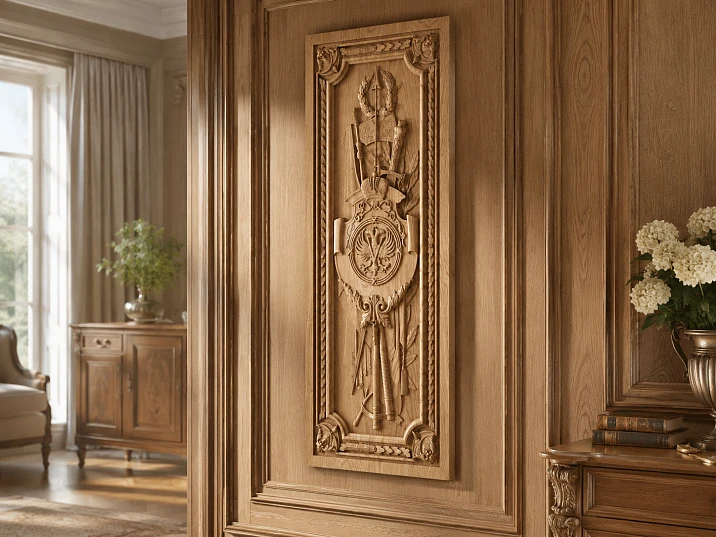
There are things that change a space quietly — not by rearranging furniture, changing finishes, or starting renovations. They simply appear in the right place — and everything around begins to read differently. A wooden coat of arms above the office door. A carved overlay with a shield and laurel wreath on a library panel. A heraldic accent on the door of an antique cabinet. This is exactly how N-376 works — the STAVROS carved overlay with a heraldic motif, chosen by people who clearly understand that decor is not embellishment, but the language of the interior.
If you are looking for where buy a wooden coat of arms — not plastic, not stamped, not MDF — but real, made of solid beech or oak, with quality carving and specific dimensions that can be matched to your project — this article is for you. Here, one specific STAVROS product is examined: carved overlay N-376 with a heraldic motif. Everything else is beyond the scope.
What is the wooden coat of arms N-376 and why it is not what you think
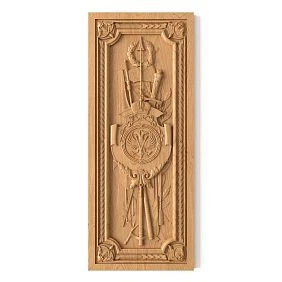
First of all — an important clarification that is not often said but must be stated aloud. N-376 is a decorative heraldic overlay. Not an official state coat of arms. Not a symbol of political affiliation. Not a legally significant emblem. It is an artistic wooden product with a heraldic motif: a shield, crossed weapon elements, a laurel wreath — a classic imagery system that has existed in European decorative culture since the Middle Ages and still adorns offices, libraries, portals, doors, and furniture facades.
Heraldry as a decorative language is one of the most enduring traditions in the design of serious, representative, office interiors. The shield symbolizes protection and dignity. The laurel wreath — victory and recognition. Crossed blades or spears — strength and honor. All of this is not state symbolism, but a figurative code that, in the interior, speaks of the owner's special attitude to the space. This is decor for those who do not seek random solutions.
STAVROS produces this overlay from solid wood — beech or oak. The company has been working with wood for over twenty years: behind it are the reconstruction of the Konstantinovsky Palace in Strelna, work with the interiors of the Hermitage, the Alexander Palace, the Trinity-Izmailovsky Cathedral, and the Sheremetev Mansion. These are not marketing words — this is the basis for understanding why wooden coat of arms STAVROS differs from its analogs on the market. Here, carving is not an imitation, but a profession.




How this article differs from other STAVROS materials
The STAVROS website has a wide section carved decor elements in general — with overlays, moldings, pilasters, columns, church utensils, and much more. This article is not an overview of all this wealth. It is dedicated exclusively to one product: the carved overlay N-376 with a heraldic motif.
There is no talk about stucco here. No about moldings. No about furniture legs and handles. No about beds. No about house carving. The focus is strictly one — the N-376 overlay as a commercial product and as a design tool for interior projects.
If you are interested in the entire section carved appliqués STAVROS — there are over 400 models of different shapes, sizes, and artistic styles. But this article is about N-376 and only about it.
Our factory also produces:
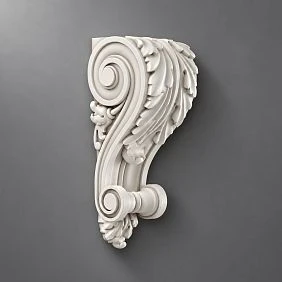
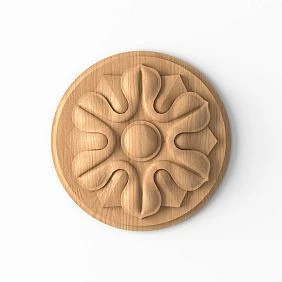
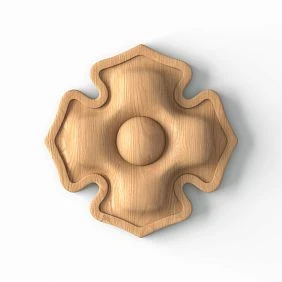
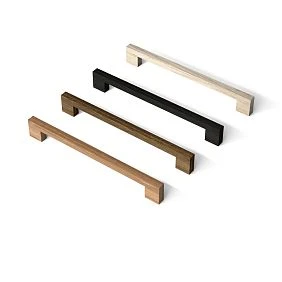
Carved overlay N-376: what exactly is depicted and why it matters
Before discussing application and selection, you need to understand the product as an artistic object. N-376 is an overlay decorative element with a heraldic composition. In its center is a shield of traditional European shape with a pointed lower edge. Around the shield are crossed elements (blade, spear, arrows depending on the interpretation of the ornament). Along the perimeter is a laurel wreath, closed at the bottom and diverging upward to the sides of the shield.
This composition is symmetrical. Symmetry is a key property of the overlay as a decorative element: it allows centering N-376 on a door, wall, or furniture facade without visual loss of balance. The element does not pull the gaze to the side, does not create imbalance — it works as a natural center of gravity of the decorative panel.
The shape of the overlay is rectangular with a termination inscribed in heraldic proportions. The carving is executed in volume: elements have different depths of detailing, which creates a play of shadow and light under side lighting. This is fundamentally important: under directed light (desk lamp, sconce, spotlights) N-376 comes alive — the ornament gains plasticity and depth that photography cannot fully convey.
The product is made from solid beech or oak. Both species are from the proven professional STAVROS range, which is used throughout the entire line. solid wood overlays.
Get Consultation
Where to use the carved overlay N-376
On the entrance door or office door
The door is the first thing that greets a person in a space. The first impression is the architecture and decor of the door. That is why architraves, inserts, overlays, and heraldic elements on doors have existed in interior design for centuries. N-376 on the door leaf is not just decoration. It is a way to convey the character of the space even before the door opens.
Carved door decor in the form of a heraldic overlay works organically in several types of spaces:
-
Executive office — doors of the director's, manager's, or head of the family's office in a country house. N-376 above the handle or in the upper part of the door leaf creates a representative accent.
-
Library — especially in historical or stylized interiors: wooden panels, cabinets with glass doors, patterned parquet. A coat of arms above the bookcase is an image that is read instantly and correctly.
-
Main entrance to a mansion or apartment — a large wooden door with a heraldic overlay at eye level. This is not flashy — it is restrained and convincing.
-
The meeting room — the decor above the entrance sets the tone for the meeting.
How is the door overlay mounted? According to STAVROS recommendation — using mounting adhesive (e.g., TYTAN Prof.classic Fix), which is available in the related products of the card. Apply the adhesive to the back surface of the overlay, press it against the door, hold for 5–10 seconds — done. The adhesive ensures reliable bonding with wood, MDF, laminate, and other door leaf materials.
On the wall of an office, library, or living room
Carved decor for the office in the form of a heraldic overlay — one of the most precise tools for shaping a representative space. The wall behind the desk, the wall between bookshelves, the wall panel above the fireplace — any of these places accommodates N-376 organically.
The heraldic overlay on the wall works as a standalone element — without the need to compose it into a multi-level decorative scheme. One element. One place. One semantic accent. It is this conciseness that makes N-376 a valuable tool — in an era when many interiors suffer from excessive decor.
How to compose the overlay with the wall:
-
Centering along the horizontal axis of the wall panel — the most versatile option
-
Placement above a central object (fireplace, bookshelf, sofa) — creates hierarchy
-
A symmetrical pair of N-376 on two side panels along the wall — for a more formal composition
-
Including moldings and frames in the scheme — N-376 pairs well with straight wooden decor from the same catalog
On furniture: cabinet, chest of drawers, portal
Carved furniture overlay — one of the most practical uses of N-376. An old cabinet with good construction but a boring facade. A massive chest of drawers lacking an accent. A library cabinet door that should 'speak' about its contents.
A heraldic overlay on a furniture facade does several things at once:
-
Adds visual weight and status to the piece
-
Creates a central focal point for the facade
-
Connects furniture with wall decor if they are done in the same style
-
Hides the monotony of smooth doors that would otherwise look empty
Where exactly to glue on the furniture facade?
Door center — if the door is small (up to 500 mm in height). Upper third of the door — if the door is tall (above 700 mm). Always along the axis of symmetry: N-376 is a symmetrical element, and any offset from the axis will be immediately noticeable.
Wooden overlay for cabinet In a heraldic style, it also works well paired with wooden handles in a similar style — especially in office and library interiors.
In executive and commercial spaces
Boutique hotel, club, restaurant with an English library-style interior, law firm, private bank, company representative office. In all these spaces, the decor works as part of branding — non-verbal, interior branding. N-376 in such spaces is an element that the client does not read as 'decor' but feels as 'seriousness'.
Commercial orders for several dozen or hundreds of STAVROS overlays are accepted through sales department managers. Contacts: +7 (800) 555-46-75, [email protected], Telegram/WhatsApp.
How to choose the material: beech or oak
This choice is not about taste. It is technological — and it determines how N-376 will look after the final coating.
| Material | When to choose | What you get |
|---|---|---|
| Beech | For white or colored enamel, dense opaque paint | Smooth matte surface without pores, perfect carving geometry |
| Oak | For tinting, oil, semi-transparent varnish | Expressive texture, lively surface, premium appearance |
Beech: the right choice for light classics
Beech is a fine-grained, non-porous wood. After sanding, the beech surface is uniform and accepts enamel predictably: without dips, without spots, without surprises in the light. This means that a carved beech overlay under white or cream enamel will look expensive and neat — the details of the ornament are clearly readable, shadows from the depth of the carving create volume, and the matte coating film does not distract from the shape.
Beech under clear varnish or tinting is less interesting. Its natural pattern is neutral and does not create a "lively" texture. If you plan to have visible wood grain, choose oak.
Gluing option: for enamel. The lamellas are glued without matching by color and texture — this is not a problem because the opaque coating will hide any tonal differences.
Oak: the choice for a premium study
Oak is a porous wood with a pronounced natural pattern and large fibers. Under tinting — "antique", "dark cherry", "tobacco", "walnut" — oak looks expensive and solid. This is exactly how wooden interior details from the 19th century, which are still preserved in historic mansions and clubs, appear.
Oak is stronger than beech. This is important for overlays mounted on doors with active use — touches, bumps during passage. The oak surface is more resistant to mechanical impact and holds carving sharper.
Oak can also be coated with opaque enamel, but this is significantly more labor-intensive: the porosity of oak requires multi-layer priming. Without proper preparation, the pores will "break through" the enamel even after several layers of coating.
Gluing option: for tinting. The lamellas are matched by color and texture — important for a visible surface under a semi-transparent coating.
Selection rule in one phrase: enamel → beech; tinting → oak.
Grinding quality: Standard or Prestige
STAVROS offers two levels of grinding for all overlays — including N-376.
Standard — machine grinding. The product surface is uniform, ready for coating, but if necessary requires minor manual finishing before final treatment. More attractive price.
Prestige — detailed manual grinding. All hard-to-reach areas of the carving — grooves, transitions, sharp corners of the ornament — are hand-finished. The product is ready for coating without additional preparation. This is important when working with the overlay under strict time constraints or when fine finishing on site is not possible.
For a cabinet or executive project, where the overlay is installed in a finished finishing area — Prestige is recommended. For rough assembly with subsequent painting on site — Standard is sufficient.
How to correctly select the size and installation location
Technical parameters of N-376 are specified in the product card on the website. Before ordering, it is necessary:
Step 1. Measure the installation area. Take dimensions of the surface where the overlay is planned: width and height of the door panel, wall niche, or furniture facade.
Step 2. Determine the scale of the overlay. N-376 has specific dimensions — they are indicated in the product card. Compare: the overlay should occupy 25–40% of the facade width on which it will be installed. An overlay that is too small gets lost. One that is too large overwhelms. The scale rule is one of the key principles in furniture decor.
Step 3. Determine the installation height. On a door — at eye level (160–170 cm from the floor). On furniture — at the center of the facade or the upper third of the door. On a wall — at eye level or slightly higher, depending on the ceiling height.
Step 4. Check symmetry. N-376 is a symmetrical element. Any offset from the vertical axis of the facade will be immediately noticeable. Using a spirit level during installation is mandatory.
Step 5. Check the surroundings. There should be "breathing room" around the overlay — free space without other large decorative details. A heraldic element works best in solitude, not in a crowd.
How to Install the Carved Overlay N-376
Installing a wooden overlay is a straightforward operation if you follow the correct sequence of steps.
What you'll need:
-
Assembly adhesive (TYTAN Prof.classic Fix or equivalent)
-
construction level
-
Marking pencil
-
Painter's tape for temporary fixation during bonding (if necessary)
Installation procedure:
-
Dust off the installation surface and the back side of the overlay
-
Mark the center and installation boundaries using a level
-
Apply glue to the overlay
-
Press against the surface, hold for 3–5 minutes, then release (contact scheme)
-
Press firmly and hold for 5–10 seconds
-
If necessary, secure with painter's tape until the glue fully sets
The glue sets within a few minutes; full strength is achieved after 24 hours.
If installation is done before painting, the overlay is attached and then coated together with the facade. If after painting, the facade is coated separately, the overlay separately, then mounted on the finished painted surface.
How to coat the carved overlay N-376
Finishing is a separate story that requires attention. Incorrect coating can ruin even the highest quality carving.
For enamel (beech, reglued for enamel):
-
Dust removal
-
Priming — an even layer
-
Interlayer matting (light sanding for adhesion)
-
Finish enamel — 2 coats with interlayer drying
Choose matte or semi-matte enamel: glossy enamel looks heavy on threads — it glares in the grooves and prevents reading the ornament.
For tinting (oak, regluing for tinting):
-
Dust removal
-
Application of stain or tinting primer
-
Intermediate sanding
-
Finish varnish — 2–3 coats with interlayer sanding
Choose matte or satin varnish — the "living wood" effect is created by non-matte surfaces.
If you have no experience with wood paint and varnish coatings, it is recommended to entrust this work to a carpenter or wood painter. STAVROS paints products independently for orders of 150,000 rubles or more.
Mistakes when choosing a wooden coat of arms
Each of these mistakes is real. And each one costs more than the time spent on careful selection.
Mistake 1: Buying an overlay without checking the size.
N-376 has specific dimensions. Before ordering, you need to compare them with the dimensions of the installation location. A coat of arms that is too small on a large door will get lost. One that is too large on a small door will feel overwhelming and disrupt the proportions.
Mistake 2: Confusing a decorative overlay with an official coat of arms.
N-376 is a heraldic decorative overlay, not a state symbol. This is important to understand when using it in official or public spaces.
Mistake 3: Choosing oak for a dense enamel without proper preparation.
If you have no experience working with porous oak under an opaque coating, the result may be poor. It is better to choose beech if enamel is planned.
Mistake 4: Placing a large overlay on a small door.
Scale is the law of decor. The overlay should be proportionate to the facade. 40% is the maximum width of the overlay relative to the width of the facade.
Mistake 5: Not coordinating the style with the rest of the space's decor.
N-376 is a classic heraldic element. It works in classic, neoclassical, English, cabinet, and baroque interiors. In minimalism, high-tech, or Scandinavian style, it will look out of place.
Error 6: Not leaving "air" around the overlay.
If there are other large decorative elements around N-376, they will compete for attention. A heraldic accent requires clean space around it.
Error 7: Driving commercial weight to the general catalog instead of the product card.
Product card of the carved overlay N-376 is a precise landing page with specifications, prices, and an order button. That's where the buyer should land.
What goes well with N-376
A carved overlay is not a solitary element in a vacuum. It works within a system. What works well alongside N-376 in the same interior?
Wooden moldings and frames. A straight-line wooden profile around N-376 creates a "coat of arms frame" — a classic design scheme for door inserts and wall panels.
Wooden baguettes. STAVROS offers a wide range of wooden baguettes — they are stylistically compatible with N-376 and can form a decorative frame around the overlay.
Wooden handles and fittings in a classic style. If N-376 is installed on a furniture facade, the handles should be in a classic design system — with a curved profile and a cast base.
Other overlays from the STAVROS catalog. Section carved appliqués contains more than 400 models of different styles and shapes — symmetrical, corner, floral, acanthus. N-376 in combination with smaller corner elements is a standard technique in the design of door panels and wall panels.
Solid wood overlays. Section solid wood overlays — for those looking for massive elements without gluing from lamellas.
How to place an order for N-376
N-376 is available for order from 1 piece. The product is in stock — shipped within 3 working days in an unsanded condition. If the product is not in stock — the average production time is 5–10 working days.
Contact us to confirm shipping to your destination. and the CIS via CDEK and DPD. STAVROS showrooms are in St. Petersburg and Moscow, where you can see the products in person.
Ordering methods:
-
Through the product card on the website: carved overlay N-376
-
By phone: +7 (800) 555-46-75 (toll-free in Russia)
-
By email: [email protected]
-
Via Telegram or WhatsApp
Selection table: task — solution — link
| Task | Solution | Link |
|---|---|---|
| Buy a wooden coat of arms | Carved overlay N-376 made of beech or oak | Buy N-376 |
| View all carved overlays | STAVROS overlays catalog | carved appliqués |
| Solid wood overlays | Solid wood overlays section | planks from solid wood |
| Full range of carved decor | Carved decor catalog | Carved Decor |
Heraldry in interior design: a bit about tradition and meaning
Allow me to take a small step aside — not toward technical specifications, but toward meaning. Because good decor deserves an understanding of where it came from and why it still works.
Heraldry as a system of symbols emerged in Western Europe in the 12th century — initially as a way to identify knights in battle when the face was hidden by a helmet. The shield, the ornament on it, the helmet, the crest, and the mantling — all of this allowed one to recognize one's own. Gradually, the heraldic system moved beyond the battlefield: coats of arms appeared on castle gates, book spines, palace facades, aristocratic furniture, and church utensils.
In the 18th–19th centuries, heraldry became an integral part of the design of studies and libraries: spaces where important decisions were made, where books were kept, where the mind rested. A coat of arms on a wall or door is not only a symbol of belonging to a family or clan. It is a marker of the seriousness of the place. It is a declaration: "people think here."
N-376 is the heir to this tradition. Not a state symbol, not a political sign — but a cultural image that continues to say the same thing it said three centuries ago: this space deserves respect.
And a wooden coat of arms as a material only reinforces this meaning. Wood is a living material. It breathes, ages with the interior, acquires patina, retains the warmth of touch. Plastic decor lacks this. MDF imitation does too. Only real wood, solid wood, with carving — creates a feeling that cannot be faked.
STAVROS makes exactly such products. Twenty years in the profession, thousands of completed projects, work with cultural heritage sites — this is not just a reputation. This is a guarantee that carved wooden coat of arms will look the same in twenty years as on the day of purchase — or better, with that noble patina that quality wood acquires with age.
Where to buy STAVROS wooden coat of arms: direct route
Go to the product card: buy wooden coat of arms N-376 — there is full information about characteristics, sizes, prices, and the order button.
To explore related products: carved appliqués — the entire range of STAVROS overlays, more than 400 models.
For solid wood overlays: planks from solid wood.
To explore all STAVROS carved decor: Carved Decor.
FAQ: answers to popular questions about wooden coats of arms
Where to buy a wooden coat of arms STAVROS?
In the product card: carved overlay N-376. Order from 1 piece, Contact us to confirm shipping to your destination. and CIS.
Is this the official coat of arms of Russia or state symbols?
No. N-376 is a decorative heraldic overlay with a shield motif, weapon elements, and a laurel wreath. This is an artistic item, not an official state symbol.
What wood is N-376 made from?
From solid beech or oak, your choice. Beech — for enamel. Oak — for tinting or clear varnish.
Where can a wooden coat of arms be installed?
On a door (entrance, interior, cabinet), on a study or library wall, on a furniture facade (wardrobe, chest, portal, cabinet), on a wall panel.
How is the overlay mounted?
Using mounting adhesive. Apply to the back of the overlay, attach to the surface, press for 5–10 seconds. Full strength — after 24 hours.
Is a design project needed for an order?
For small orders — not necessary. A STAVROS manager will help with selection by phone or through the request form. For large commercial projects — it is recommended to prepare a drawing or design plan.
Which is better: beech or oak under white enamel?
Beech. Its non-porous surface better accepts opaque coatings and does not require complex multi-layer priming.
Can I order N-376 in a non-standard size?
STAVROS manufactures custom products for individual projects with a volume order. Check with the manager.
How quickly is the order shipped?
If the product is in stock — within 3 business days. If made to order — 5–10 business days.
Can I see the overlay in person?
Yes. STAVROS showrooms are located in Saint Petersburg and Moscow. Addresses and opening hours are on the website in the contacts section.
How to care for the wooden overlay after installation?
Wipe with a slightly damp soft cloth. Do not use harsh cleaning agents or abrasives. If there is a varnish or enamel coating, standard wood care applies, as for any painted wooden surface.
Can I buy N-376 with a pre-applied coating?
STAVROS performs painting of products when ordering items for a total of 150,000 rubles or more. For smaller orders, the coating is applied by the buyer or their contractor.