Article Contents:
- Why a flat wall no longer works: a frank conversation
- Three reasons why texture is better than pattern
- What is a textured wall with stucco: explaining in simple terms
- The principle of uniform painting: the key secret
- Stucco vs wallpaper and panels: an honest comparison
- Wallpaper: beautiful, but flat
- Cheap 3D panels: volume without meaning
- Decorative plaster: good, but expensive and irreversible
- Where does a textured wall with stucco work best
- The wall behind the sofa: the prime candidate
- Bed headboard: textured wall instead of a soft headboard
- Entryway: an architectural corridor from an ordinary narrow space
- Mirror area: from object to architecture
- Home office: seriousness through geometry
- Three schemes for a textured wall: from delicate to monumental
- Scheme one: "Quiet luxury" — for modern interiors
- Scheme two: "Wall as a panel" — for living room, bedroom, salon
- Scheme three: "Architectural axis" — for fireplace, portal, tall mirror
- How to choose moldings for a textured wall
- By Profile Width
- By line orientation
- How to calculate frame sizes
- Stucco decor for a relief accent: choosing by space
- For light living spaces
- For neutral modern walls
- For expressive accent zones
- For formal areas
- The most important technique: paint everything in one color
- Five color solutions for a textured wall
- Technical nuances of uniform coloring
- Five mistakes when creating a textured wall
- Mistake one: too many small details
- Mistake two: moldings without connection to furniture
- Mistake three: accent decor without a side light source
- Mistake four: contrasting painting without confidence
- Mistake five: buying only overlays without moldings
- Purchase table: task — what to buy — where to look
- How to connect a textured wall to the ceiling
- FAQ: answering common questions about textured walls with stucco
- About the company
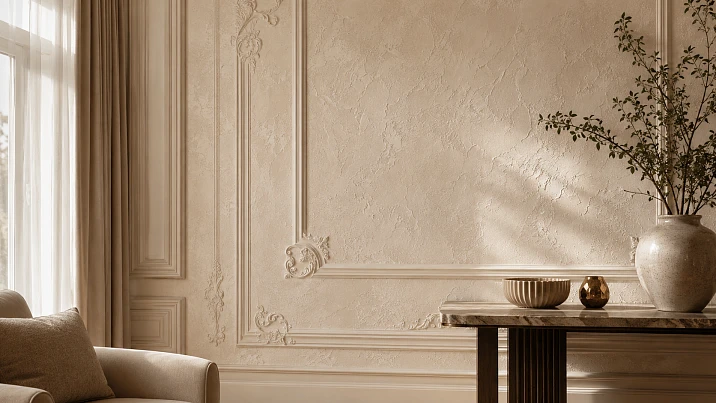
There is one simple test for any interior. Turn off the overhead light — leave only side lighting: a floor lamp, a sconce, candles. And look at the wall. If it remains flat, gray, and lifeless — it has no texture. If soft shadows, relief stripes, and depth appear — the wall is alive. This is what separates a "completed renovation" from a "created interior."
True luxury on a wall is not a pattern, but a shadow. Moldings and polyurethane moldings create it without expensive carpentry, a plaster workshop, or heavy panels. Physical relief — a molding frame, a decorative overlay, a stucco accent — with proper lighting turns an ordinary wall into an architectural surface that changes throughout the day: soft in the morning, deep in the evening, almost sculptural at night.
That's what this article is about — not about "gluing on decor," but about how to use stucco decoration and polyurethane moldings to create a wall you want to look at.
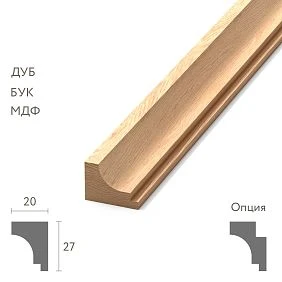
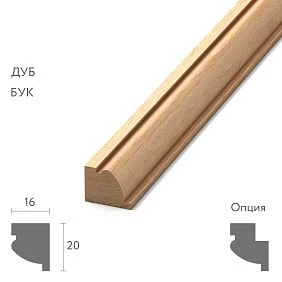
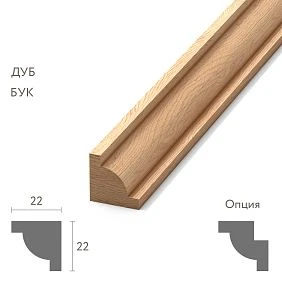
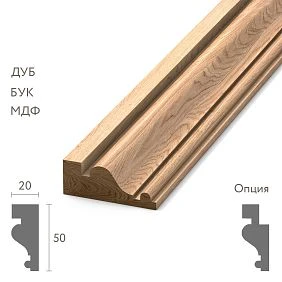
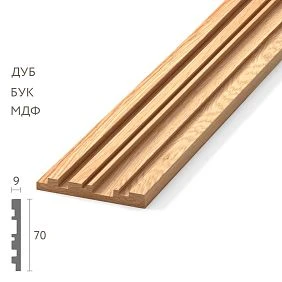
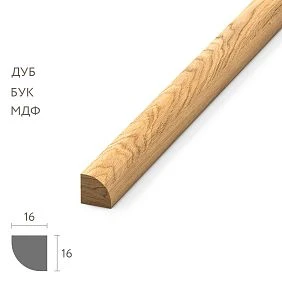
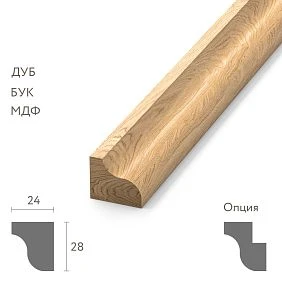
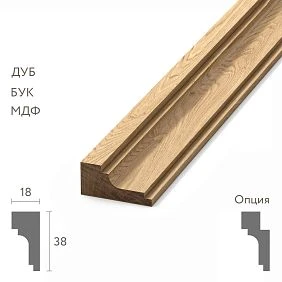
Why a flat wall no longer works: a frank conversation
There was an era when a white wall was considered ideal. Minimalism, purity, "let the furniture speak for itself." But something went wrong: white walls turned into walls with white walls. Without character, without texture, without history. Then came wallpaper with an "expensive" pattern — and it turned out that a pattern on a flat surface doesn't create depth, only adds visual noise. Then came 3D panels, which quickly filled the niche of "cheap pretending to be expensive" and just as quickly became a marker of budget renovation.
What's happening now? The interior vector is shifting toward architecturality, texture, and meaningful decor. People want walls that "hold" the space. That don't require furniture to look complete. That look different under different lighting — and are interesting every time.
Decorative polyurethane molding and moldings are the answer to this demand. Physical relief that doesn't imitate volume but creates it. A shadow that isn't drawn but cast. Architecture that fits into any space — from a studio apartment to a country house.




Three reasons why texture is better than pattern
First. A pattern on wallpaper or tile is flat: it looks the same under any lighting — from the side, from the front, and by candlelight. The physical relief of a molding or stucco overlay changes with the light: the more side-lit the source, the deeper the shadow, the more expressive the surface.
Second. A pattern limits the color scheme: if the wallpaper is "wood-look," everything else must "get along" with that wood. Buy molding and painting it together with the wall in one color means gaining complete freedom in choosing a shade. Beige, graphite, dusty green, warm white — any option works because the decor does not compete with the color but lives within it.
Third. Wallpaper and panels are a surface-level solution. They are visible immediately, at first glance, and it is instantly clear that they are added "on top." Stucco in the color of the wall works differently: you notice it not right away, but when your gaze begins to break down the space layer by layer. And this feeling of "at first I didn't understand where that sense of luxury came from" is the most valuable thing interior decor can provide.
Our factory also produces:
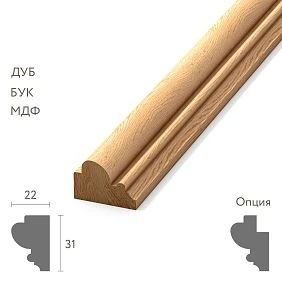
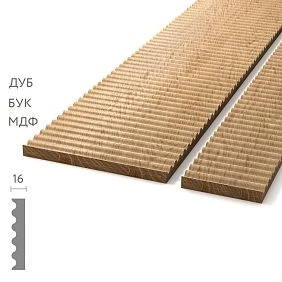
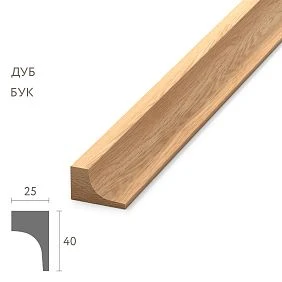
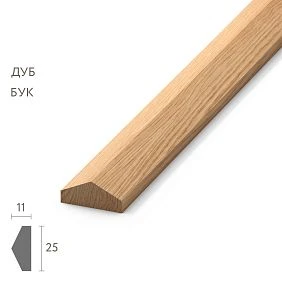
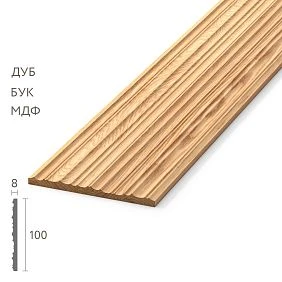
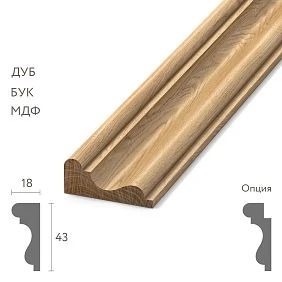
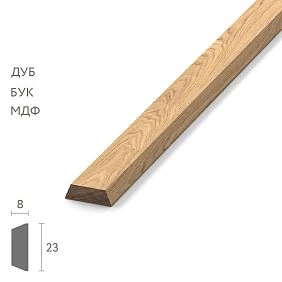
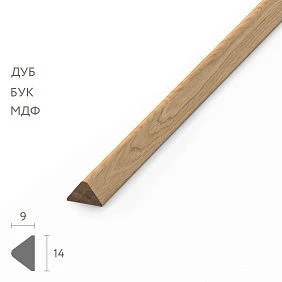
What is a textured wall with stucco: explaining without complex words
A textured wall is not necessarily Venetian plaster costing 15,000 rubles per square meter or hand-carved gypsum. It is a surface with physical relief created by several layers:
-
Geometry — molding frames, horizontal and vertical lines, panel grid
-
Accent — decorative overlay, stucco element, corner rosette at molding joints
-
Unity — one paint color for moldings, overlays, and the wall surface
-
Light — side lighting that reveals the relief
It is the sequence of these four layers that turns an ordinary painted wall into an architectural surface. And in this system Moldings made of polyurethane — it is not decoration, but a structural element: they set the geometry from which everything else derives.
Get Consultation
The principle of uniform coloring: the key secret
The most common question: "What if I paint the moldings and the wall the same color, won't the decor get lost?" The paradoxical answer: that is precisely when the decor truly appears. Because the contrast of form and material disappears — and only the relief, only the volume, only the play of shadows remains. The overlay ceases to look like "something stuck on" and becomes part of the wall surface itself.
Look at the best interiors of French hotels, English clubs, Scandinavian residences. There Molding in the wall color — this is a standard technique. White molding on a white wall. Gray decor on a gray surface. The decor does not shout "I'm here!" — it quietly makes the wall deeper. And it is this silence that costs a lot.
Stucco vs. wallpaper and panels: an honest comparison
Before buying something for the wall, it is useful to understand how the main options differ. Not to condemn competitors, but to choose the right tool for a specific task.
Wallpaper: beautiful, but flat
Wallpaper is a pattern on a flat surface. Even the most expensive textured wallpaper provides a relief of no more than 1–2 mm. This is not enough to create a shadow under side lighting. Moreover, wallpaper has a service life: it fades, peels off at corners, turns yellow near radiators. Replacing it is a full-scale renovation.
Moldings and buy decorative moldings — that's a different story. Polyurethane does not yellow, does not peel, is not afraid of humidity and temperature changes. It can be repainted at any time — just apply a new coat of paint once, and the wall is fresh again, while the relief is fully preserved.
Cheap 3D panels: volume without meaning
3D panels made of polystyrene or PVC create volume, but they do not create architecture. They have no details — only a repeating geometric relief. They are easily perceived as a "budget solution" because that is exactly what they are. Moreover, most 3D panels are not intended for painting and lose their appearance after 2–3 years under the influence of ultraviolet light.
decorative polyurethane elements — this is a different category. Here the relief has meaning: it is an ornament, a figure, an architectural profile. It is not a repeating pattern, but intentionally placed accents. Polyurethane is painted with water-based paint without restrictions and looks like plaster — with significantly less weight and significantly greater durability.
Decorative plaster: good, but expensive and irreversible
Venetian plaster, travertine, concrete effect — these are real textures. But they require a craftsman, take several days, and cost 5–10 times more than moldings. Moreover, if you change your mind, redoing it means another craftsman and more money.
You can buy ready-made stucco matching the Baroque style. Calculate the quantity: linear meters of cornices and moldings, number of rosettes, pilasters, consoles, corner elements. Add a ten to fifteen percent allowance for trimming. and creating a molding system on the wall is a task that can be solved over a weekend. Moldings are cut with a knife at an angle, glued with acrylic mounting adhesive, and dry in a few hours. If something goes wrong, the element can be removed without damaging the surface. Flexibility and reversibility are serious advantages over plastering techniques.
Where a textured wall with stucco works best
Not every wall and not every room accepts relief decor equally well. There are areas where moldings and stucco fully reveal themselves — and it's worth starting with them.
Wall behind the sofa: the main candidate
The wall behind the sofa is the most visible plane in the living room. It is the first thing that catches the eye when entering the room. It sets the "tone" of the entire space. And it is most often left empty — because the owners don't know what to do with it.
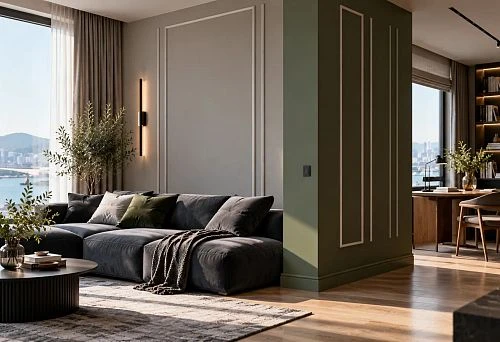
A molding frame, whose width matches the width of the sofa plus 20–30 cm on each side, is the start of a textured wall behind the sofa. Inside the frame is an empty space, filled with a darker shade of paint, or a single decorative appliqué along the central axis, or a pair of small sconces on the sides. The result: the wall behind the sofa becomes a "frame" for the entire seating area — structuring the space, giving it scale and completeness.
For this task, Polyurethane wall decor — a category created specifically for wall compositions. Here you can find both individual appliqués and components for complex panel solutions.
Bed headboard: textured wall instead of a soft headboard
A soft headboard is a beautiful solution, but expensive and functionally tricky: it gets dirty, fades, and is difficult to maintain. A textured wall behind the bed is a more architectural alternative. A molding frame the width of the bed plus a small indent, a couple of accent appliqués in the upper part of the frame — and the bedroom acquires the character of a designer hotel room.
Frame height: from the mattress level to approximately 160–180 cm from the floor (or to the ceiling molding line, if height allows). The decor inside is delicate, in the color of the wall. For a bedroom, it's better to avoid too deep a relief: here you need surface tranquility, not theatrical expressiveness.
Hallway: an architectural corridor from an ordinary narrow space
The hallway is the most difficult room for decor: there is little space, no windows, sometimes a low ceiling. And this is exactly where moldings work better than anything else. Vertical frames on a narrow wall visually stretch the ceiling. A horizontal molding belt at a level of 1.0–1.2 m divides the corridor into a "base" and an "upper" part — a classic technique of English townhouses.
A small decorative overlay near the mirror, a thin molding along the ceiling perimeter — and the corridor transforms from a "pass-through space" into an architectural transition. It is often the hallway that creates the first impression, and it is here that a few thousand rubles decorative wall molding provide the maximum return on investment.
Mirror zone: from object to architecture
A mirror with a molding frame on the wall is just a piece of furniture. A mirror surrounded by a molding system, with stucco accents on the sides and a unified color scheme — that is a built-in architectural element, part of the wall. The principle of "embedding" works here: the more the mirror "grows" into the wall through moldings, the less it looks like "bought and hung" and the more like something originally envisioned by the architect.
For the mirror zone buy polyurethane moldings you need to buy with a margin: two horizontal segments (top and bottom), two vertical ones (on the sides), four corner rosettes — and the frame is ready. Next — a couple of decorative overlays on the sides of the mirror or above it, a unified color scheme. This takes a day of work and costs several times less than a mirror in a custom frame.
Study: seriousness through geometry
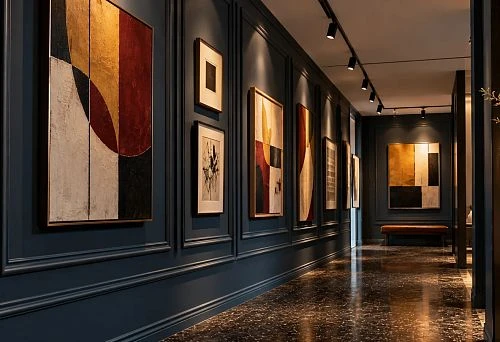
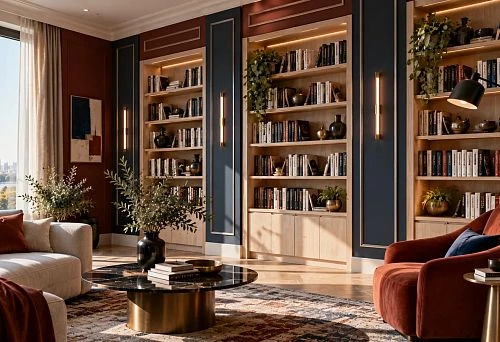
A study is a space where the geometry of the wall should speak of order and status. A strict panel grid of moldings on a dark wall (graphite, dark blue, dark green) — this is the effect of an expensive library or an English club. No "palatial" decor, only precise geometry and deep color.
For a study, it is better to choose moldings with a more pronounced profile: 50–80 mm wide, with clear angular geometry. Frames should be rectangular, vertically oriented (this enhances the feeling of height and significance). Decorative overlays should be minimal or absent: the geometry of the moldings itself serves as decor.
Three schemes for a textured wall: from delicate to monumental
Scheme one: "Quiet Luxury" — for modern interiors
This scheme is for those who want texture without theatricality. It works in Scandinavian, modern, Japanese interiors — anywhere restraint matters.
Contents:
-
Thin molding with a profile of 25–40 mm — for one or two rectangular frames
-
One or a pair of small overlays with a delicate relief — inside or on the border of the frame
-
Matte paint in the same shade as the wall
Placement principle: one frame, centered relative to the zone (sofa, bed, console). Frame width — equal to the width of the main furniture element below it. Height — from 60 to 100 cm. Indent from ceiling and floor — equal on both sides.
Effect: the wall gains calm depth. In daylight — neat geometry. With side lighting — a soft shadow along the perimeter of the frame. No theatricality, only architectural precision.
Where to buy moldings for this scheme: Moldings made of polyurethane — a wide selection of profiles from thin and strict to more decorative.
Scheme two: "Wall as a Panel" — for living room, bedroom, salon
This scheme is for those who want a full decorative statement. The wall becomes a panel — an independent object, interesting even without furniture in front of it.
Contents:
-
Moldings for a large frame — profile width 50–80 mm
-
Central stucco decor — an overlay, a pair L/R, or an ornamental element
-
Corner rosettes at molding joints — Decor for Molding
-
A sconce or spotlight directed at the decor — a source of side light
-
Uniform painting of all elements
Layout principle: one large frame occupying most of the accent wall. Inside the frame — central decor along the axis of symmetry. A variant with two frames side by side is possible — horizontally or vertically, depending on the wall proportions.
Effect: the wall reads as a cohesive architectural statement. With proper lighting, each detail is 'revealed' through chiaroscuro. This is the scheme most often used in professional design projects — and it is what creates the 'expensive interior' effect that is hard to explain but easy to feel.
For the central accent in this scheme, it works well Molded decor NPU-479 for 770 rubles — a compact ornamental element with a clear relief, which, when painted monochrome, looks like a small wall sculpture, not a 'store-bought decoration'. Or Molded decor NPU-484 with a more expressive motif — for those who want an accent with character. For paired decor on the sides of the frame — NPU-492L paired with a mirrored right version, both overlays facing inward toward the frame.
Buy Relief Decoration for this scheme, it's better as a set — overlays plus moldings plus corner decorative elements: this makes it easier to calculate the quantity and avoid extra orders.
Scheme three: "Architectural Axis" — for a fireplace, portal, tall mirror
This scheme is for spaces with monumental focal points. A fireplace, tall mirror, door portal, console under a large painting — anything that already has its own architectural significance and requires decorative framing commensurate with its scale.
Contents:
-
Vertical molding "pilasters" on the sides of the main element
-
Horizontal molding "architrave" above it
-
Large decorative element along the central axis — mascaron, cartouche, large overlay
-
Symmetrical side details — a pair of L/R overlays
-
Calm coloring, possible light patina on the central decor
Principle: a strict vertical axis held by the central element. Everything else is symmetrical and proportionate. Scale is crucial for this scheme: small decor on a monumental fireplace will be lost, too large will disrupt the proportions.
The main element of the scheme: Polyurethane decor MPU-002 — a lion mascaron for 10,340 rubles. Sizes from 49×49 mm to 208×208 mm, relief depth up to 69 mm. This is the center of the "architectural axis" — an element that fixes the symmetry point of the entire composition. Mounted strictly along the axis — above the center of the fireplace, in the keystone of an arched opening, or in the center of a horizontal architrave.
buy decorative moldings for the third scheme comes after the scale of the main element is determined. The mascaron sets the proportions — the rest of the decor is selected to match it.
How to choose moldings for a textured wall
A molding is not just a "strip on the wall." It is a profiled plank that creates shadow through its cross-section. The more complex the profile, the more shadow lines, the richer the surface looks. Therefore, the choice of molding profile directly affects the final visual result.
By profile width
Thin molding (20–35 mm) — for delicate geometry. Works in modern interiors with a minimalist palette, in small spaces (does not overwhelm), on furniture facades. The shadow from such a molding is a thin line that you notice upon close inspection.
Medium molding (40–60 mm) — a universal format. Suitable for most residential spaces with standard ceilings of 2.5–2.8 m. Frames made from such molding are clearly visible from a distance of 3–4 m. This is the workhorse of any molding system.
Wide molding (70–120 mm) — for high ceilings (from 3 m), large spaces, classical and neoclassical interiors. The shadow from wide molding is visible even in diffused daylight. This format creates the "palace" effect of paneled walls.
By line orientation
Horizontal moldings (parallel to the floor) calm the space, make it wider, and create a sense of stability. They work well in living rooms and bedrooms.
Vertical moldings (parallel to the walls) elongate the ceiling, making the room more formal and prestigious. They are indispensable in studies, hallways with low ceilings, and libraries.
Rectangular frames (a combination of horizontal and vertical) are a universal classic technique. Vertically oriented frames (height greater than width) are classic. Horizontally oriented ones are for a more modern interpretation.
How to calculate the size of frames
The starting point is always the furniture, not the wall. Frame width = width of the sofa or bed (± 10–20 cm). Bottom edge of the frame = 30–40 cm from the floor or from the top of the sofa backrest. Top edge = 20–30 cm from the ceiling molding or from the line where the ceiling meets the wall.
The distance between frames (if there are several) should be less than the width of the frames themselves — this is a rule of classic panel systems that preserves the sense of architectural proportion.
buy polyurethane moldings better with a small margin (10–15% of the calculated footage) — in case of trimming at an angle and inevitable first installation errors.
Stucco decor for a relief accent: choose according to the space
Moldings create geometry — decorative overlays create a story. These are different tasks, and they need to be solved differently.
For light, lively spaces
Bedroom, children's room, women's study, winter garden, relaxation area — images from nature are appropriate here: birds, butterflies, dragonflies, floral patterns. They add life to the surface without monumentality. NPU-492L with a paired right version — it's a bird with a distinct silhouette that works beautifully above the headboard or on the sides of a mirror in such an area.
For neutral modern walls
For walls without a specific 'figurative' motif, it's better to use ornamental overlays with an abstract or geometric relief. Molded decor NPU-479 for 770 rubles — this is exactly that option. Compact, with a clear relief, it is painted to match the wall and works as an invisible accent — noticeable only to those who look closely.
For expressive accent zones
Sometimes you need decor with character — a larger motif that doesn't hide but makes a statement. Molded decor NPU-484 — this is an element with a more expressive relief and intricate detailing. In a molding frame, with side lighting, it works as a wall sculpture. Monochrome painting allows it to be used in a wide range of styles — from classic to contemporary.
For formal zones
Fireplace, grand hall, executive office, restaurant — here scale and status are needed. MPU-002 Decor — a lion mascaron is ideal for these spaces. It is installed along the central axis, at the point where the eye seeks the main element. The large relief (up to 69 mm deep) creates a true sculptural shadow even in diffused light. For a fireplace and portal, this is the most "mature" choice.
The most important technique: paint everything in one color
Let's return to the principle we already discussed — because it is so important that it deserves a separate conversation. This is not just advice — it is a fundamental principle of architectural decor that the best interior traditions have followed for centuries.
When moldings, overlays, and the wall surface are painted in one color, the decor ceases to be "added" and becomes "built-in." The wall surface gains unity: the relief exists, but it does not compete with the color; it enhances it. The shadow from the molding is a shadow from the wall, not from a "strip." The shadow from the overlay is the depth of the surface, not a "glued-on object."
Five color solutions for a textured wall
White on white — a classic that never goes out of style. Ideal for light apartments, Scandinavian and Provencal interiors. The relief in daylight is delicate, almost weightless. In evening side lighting, it is expressive, with clear shadows.
Beige on beige — the "quiet luxury" style that is often discussed in the context of modern interior design. Warm neutral shades (ivory, sand, cashmere) with relief in the same tone are the most "expensive" solution for most living spaces. It looks both calm and rich.
Graphite on graphite — for studies, restaurants, boutiques, modern living rooms with a dark accent wall. The dark color enhances the depth of the shadow: the relief of the molding on a dark wall looks more expressive than on a light one. Important: a matte finish is mandatory; gloss kills the effect.
Dusty green on dusty green — a natural interior, olive and sage shades. This is a lively, slightly "botanical" character — it works well in bedrooms, dining rooms, country houses. Relief moldings against such a background create the feeling of a conservatory wall or an English country house.
Warm gray on warm gray is the most "urban" option. Neutral, intelligent, without unnecessary statements. Works well in living rooms of apartments with large windows where there is plenty of daylight.
Read more about the technique of installation and painting in the article about installation of polyurethane molding — there, all stages from priming to the final coating are covered.
Technical nuances of uniform painting
Before applying paint, moldings and overlays need to be primed — this improves adhesion and prevents spotting. The joints of the moldings with the wall are puttied with a thin layer of finishing putty and sanded — this makes the transition "invisible" and creates the feeling that the molding grew out of the wall.
The paint should be matte or velvet matte (gloss level no more than 10% on the scale). Semi-matte and glossy paints are not suitable: they reflect light differently on flat and textured surfaces, making installation joints visible.
Five mistakes when creating a textured wall
Mistake one: too many small details
A textured wall is rhythm, not noise. If you place twenty small decorative elements on a wall without a system, the relief turns into visual chaos. The rule: one or two active accents and molding geometry as a base. The rest is silence.
Mistake two: moldings without connection to furniture
Molding frames placed independently of furniture look random. The frame should "respond" to the sofa, bed, console, or mirror — in width, axis of symmetry, and vertical position. When the frame and furniture "talk" — a sense of unified design emerges.
Mistake three: accent decor without a side light source
This is the most common cause of disappointment. The moldings are glued, the overlays are installed, everything is painted in one color — but there is no effect. Because the room has only one overhead light fixture in the center of the ceiling, which evenly illuminates the entire wall without shadows. The relief "doesn't work."
Solution: a side source — a sconce near the wall, a floor lamp in the corner, a directed spotlight on the accent zone. Even a slight shift of the light source from the vertical immediately "activates" the relief. This is why in professional design projects, textured walls are always designed together with the lighting scheme.
Mistake four: contrast painting without confidence
Sometimes buyers paint moldings white and the wall dark, or vice versa. This can work but requires a confident design concept. Without it, contrast makes the wall "motley" instead of "architectural." Rule: if you're not confident about contrast — paint monochrome. This is always correct.
Mistake five: buying only overlays without moldings
A decorative overlay without a molding frame is a "detail without context." It can be beautiful but does not create a textured wall. A textured wall is a system. Buy Polyurethane Molded Decoration correctly means buying it together with moldings. They don't compete with each other — they work in pairs.
Purchase table: task — what to buy — where to look
| Task | What to buy | Category |
|---|---|---|
| Make the wall textured without wallpaper | Moldings + matte paint | Moldings and cornices |
| Add a relief accent | Decorative NPU overlays | PU overlays |
| Wall behind the sofa | Moldings + overlay + molding decor | Wall Decor |
| Formal axis at the fireplace | Mascaron MPU-002 + pilaster moldings | PU overlays |
| Design the ceiling in the same style | Ceiling stucco and cornices | ceiling decor |
| Add a center for the chandelier | Ceiling rosette | Outlets |
| Hallway with architectural character | Vertical frames made of moldings | Moldings and cornices |
How to connect a textured wall to the ceiling
The strongest interior system is when the wall and ceiling work together. A molding frame on the wall and a cornice along the ceiling line create a "box" of space — a decorative volume that is perceived as a single architectural whole.
Ceiling molding — cornices, friezes, decorative belts — logically continue the wall texture upward. The cornice along the ceiling line is the "lid" for the wall frames. The ceiling rosette under the chandelier is the "dome" over the entire system.
For small rooms, it is important to maintain scale: the ceiling cornice should be slightly wider than the wall molding — this is a standard architectural rule that preserves visual hierarchy. If the wall molding is 40 mm, the ceiling cornice should be 60–80 mm.
ceiling rosettes are selected by diameter: for rooms up to 20 sq. m — rosettes with a diameter of 20–35 cm, for rooms 20–50 sq. m — 35–60 cm, for large spaces — from 60 cm. This ratio maintains proportionality and does not create the feeling of a "huge circle in the middle of the ceiling."
FAQ: answering common questions about textured walls with stucco
How is a textured wall with stucco different from a wall with wallpaper?
Wallpaper provides a pattern on a flat surface — it does not create shadows under side lighting. Stucco and moldings create a physical relief with a real shadow that changes with the light. This is the difference between a "drawn" and a "real" texture.
Can you make a textured wall using only moldings, without overlays?
Yes, and this is an excellent solution for modern minimalist interiors. Molding geometry without decorative overlays creates a "quiet" texture: it is present but does not shout. If you want a bit more character, add one or two small overlays at key points.
What molding should I buy for the wall behind the sofa?
Optimal scheme: Moldings made of polyurethane for the frame, a decorative overlay along the central axis of the frame, corner rosettes at the joints, uniform painting. Frame width = sofa width ±20 cm.
Do I need to paint the stucco the same color as the wall?
For an expensive effect — yes. Monochrome painting removes the feeling of "stuck-on" decor and makes the relief part of the wall itself. Contrast painting is also possible but requires a confident design.
What should I buy together with molding for a textured wall?
Standard set: moldings + decorative overlays + Decor for Molding (corner rosettes) + mounting acrylic glue + primer + matte paint. For the ceiling — a cornice and a rosette under the chandelier.
Can you make a textured wall in the bathroom?
Yes. Polyurethane is moisture-resistant and not afraid of steam. Polyurethane moldings in the bathroom are a standard solution. It is important to use moisture-resistant mounting adhesive and treat the joints with acrylic sealant.
How long do polyurethane moldings stay on the wall?
With proper surface preparation (priming) and installation using high-quality acrylic adhesive — for many years. Polyurethane does not absorb moisture, does not swell, and does not crack. It can be repainted at any time without removal.
About the Company
The entire range of moldings, stucco, decorative overlays, ceiling rosettes, and architectural decor for creating textured walls is presented in the STAVROS catalog. STAVROS produces items from extruded polyurethane with precise geometry, clear relief, and detailing that is preserved with any painting technique — from monochrome to patina.
STAVROS is a manufacturer that thinks systematically: molding, overlay, decor for moldings, ceiling cornice, rosette. All elements are designed as parts of a unified decorative language, allowing the creation of cohesive architectural surfaces — from a basic molding frame to a full-fledged formal panel.
If you want a wall where light plays — start with the STAVROS catalog. Choose moldings, select an accent, decide on the paint color. Everything else will be done by the relief and properly placed lighting.