Article Contents:
- Distributor of finishing materials: why not every store needs a full trim inventory
- How a chain warehouse differs from a single store's warehouse
- Wooden skirting board: which items are reasonable to keep in all locations
- When it's better to keep skirting board only at the central warehouse
- Wooden moulding: why a chain accumulates dead stock especially quickly
- What is a chain's virtual total stock
- Available stock and physical stock are not the same thing
- How to reserve goods for a specific store or customer
- Moving mouldings between stores: when it's more cost-effective than a new order
- Why you can't just move "the same wooden skirting board"
- How to process an internal transfer
- Who is responsible for the goods during a transfer
- Wooden cornice: why it's not cost-effective to duplicate a large profile in every showroom
- What must always be available to the salesperson next to the sample
- Finishing materials stores: why a sample without the network's total stock sells poorly
- One SKU — four possible presence models
- Why this classification can't be done once and for all
- How to tell when it's time to remove a profile from the local warehouse
- How to recognize the opposite — that a profile should be added to local stock
- A chain of building materials stores: why sales need to be analyzed both across the chain and at each location
- Regional demand may differ
- A chain of building stores in Moscow: how to account for nearby branches
- What to do if the customer needs more than one showroom has
- When it is better not to assemble an order from three locations
- A project order must not be broken up for retail sales
- When it is time for the distributor to place a consolidated chain reorder
- Why three small orders from branches are worse than one consolidated order
- How to form a centralized request to the manufacturer
- How to calculate a network reorder
- Why a local zero does not always require purchasing
- How to calculate the real network deficit
- When internal transfers become too expensive
- How to estimate the cost of an internal transfer
- How to control IN TRANSFER
- Why a network needs an internal transfer SLA
- Why network stock should be counted by compatible SKUs, not by name
- How to handle small network-wide stock balances
- When local stock should be returned to the central pool
- Which metrics are useful for a chain manager to see
- Which three reports a chain really needs
- 1. Chain-wide stock by SKU
- 2. Movement between branches
- 3. Sales and shortages

A company has a central warehouse and several showrooms. In one, wooden skirting boards sell better; in another, mouldings are requested more often; in a third, a specific cornice is regularly ordered. If each branch builds its own stock independently, the chain quickly ends up in a paradoxical situation: the company has plenty of goods, but the right SKU is missing at exactly the point where it is needed.
for Distributor of finishing materials — this is no longer a question of assortment for a single store. It is a matter of managing distributed stock: how much goods the entire company should hold, where a specific SKU should be physically located, what volume is already reserved, what is actually free, and when it is more profitable to move goods between locations instead of placing a new order with the manufacturer.
The working model looks like this:
network-wide catalog → central stock → local working balance → display samples → reservation → internal transfers → total available balance → centralized reorder.
This way, the network stops duplicating the same warehouse in every branch. Fast-moving items can be kept close to the customer, rare profiles at the central warehouse, and project products can be sold by sample and ordered for a specific need.
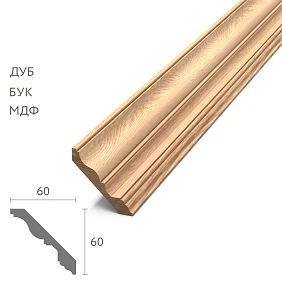
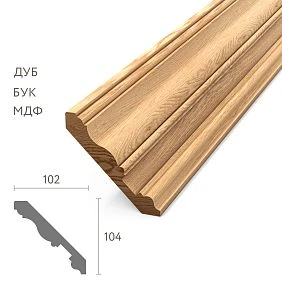
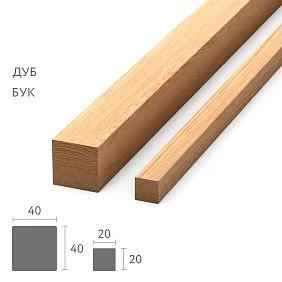
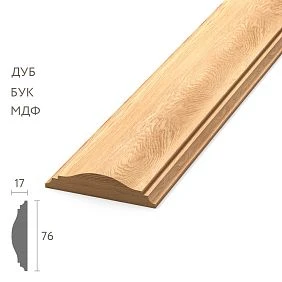
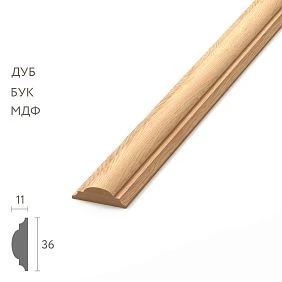
Finishing materials distributor: why every store does not need a full stock of trim
The network's assortment can be unified, but physical stock does not have to be duplicated at every location.
For each SKU, one of the presence models must be selected:
| Model | What is in the store | Where the main stock is |
|---|---|---|
| Local warehouse | Full working stock | Store |
| Local minimum | Small remaining stock | Store + central warehouse |
| Sample | Demo profile | Central warehouse |
| Custom Order | Sample or card | Manufacturer / project order |
The less frequently a specific profile sells and the more space it takes up, the less reason there is to keep it in identical batches across all branches.




How a chain's warehouse differs from a single store's warehouse
A single store answers the question: how much PLT-A should be kept here?
The chain must answer a different question:
how much PLT-A does the whole company need, and exactly where should those meters be located?
A network stock appears — the sum of physical goods across all stores and the central warehouse minus volumes already reserved.
This fundamentally changes decisions. A branch may see only 20 m of skirting board locally, but the network still has 180 m at the central warehouse and 60 m in a neighboring salon. So a zero local balance does not always mean a new purchase is needed.
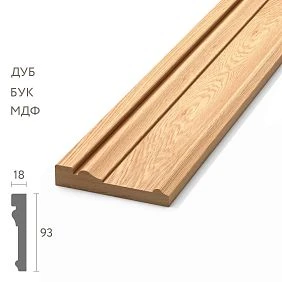
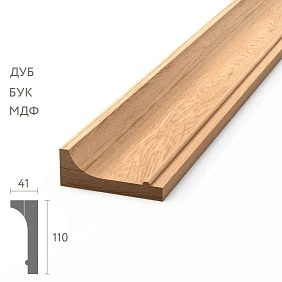
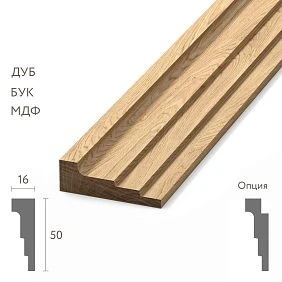
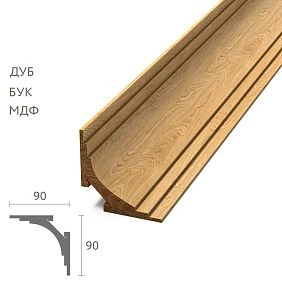
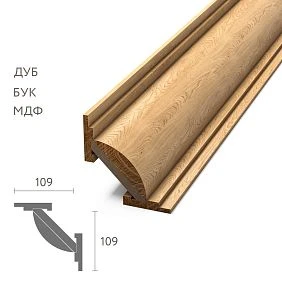
Our factory also produces:
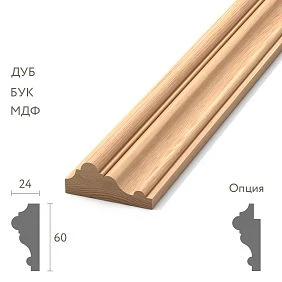
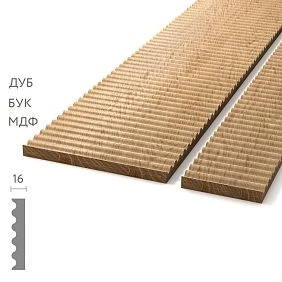
Wooden skirting board: which items are reasonable to keep at all locations
There is no universal list. The decision is made based on the data of a specific network.
Candidates for local stock are determined by:
- sales frequency;
- typical order volume;
- number of different customers;
- share of urgent sales;
- frequency of repeat reorders;
- internal transfer time from the central warehouse;
- demand geography.
If the same skirting board regularly sells in small batches at all locations, local stock is justified. If almost all purchases are project-based and large, a deep branch stock may be unnecessary.
Get Consultation
When it is better to keep skirting board only at the central warehouse
The central model is especially logical if the profile:
- sells rarely;
- is more often ordered in project batches;
- takes up a lot of space;
- has several similar variants;
- can be shown to the customer by sample.
In that case, the showroom only needs a display sample, a product card, and the current network-wide stock.
STAVROS offers a separate samples section for dealers, system integrators, showrooms, and salons. For a distributed network, this makes it possible to separate the display assortment from warehouse stock: to show the customer the profile in person without buying a full batch for every branch.
Wooden moulding: why a network accumulates dead stock especially quickly
Mouldings clearly expose the weakness of independent branch accounting.
For example:
- store A — 17 m MLD-A;
- store B — 23 m;
- store C — 16 m.
Each location considers its own stock small. In total, the network has 56 m.
If a typical order is 40–50 m, the product is effectively available. But without a shared network-wide stock, managers continue to consider it scarce and may initiate a new purchase.
What a virtual shared network stock is
For a single SKU, the system may show:
| Location | Physical | Reserved | Available |
|---|---|---|---|
| Moscow | 24 м | 10 м | 14 м |
| Saint Petersburg | 42 м | 0 | 42 м |
| Central warehouse | 180 м | 110 м | 70 м |
Total physical — 246 m, available — 126 m.
For a decision to sell or place a new order, the second number matters more.
Available stock and physical stock are not the same thing
The branch sees 80 m. But 60 m are already reserved for a designer's project. Only 20 m can be promised to the buyer if the reservation is not officially released.
For the network, a useful formula is:
FREE STOCK = PHYSICAL STOCK – RESERVED – PROJECT STOCK – HOLD.
If internal transfers have already been initiated, they also cannot be considered free stock at the source location.
How to reserve stock for a specific store or customer
Basic statuses:
- FREE — available for a new order;
- RESERVED — allocated to a customer or store;
- PROJECT STOCK — allocated to a specific project;
- IN TRANSFER — being moved between locations;
- SOLD — sold;
- HOLD — temporarily unavailable pending review.
This way, two showrooms won't promise the same 50 m to the same customer.
Moving moulding between stores: when it's more profitable than a new order
Store A has 60 m of PLT-A sitting idle. Store B needs 45 m for a real client.
Before placing a new order with the manufacturer, it makes sense to check the internal transfer.
But only with a complete match:
- item code;
- material;
- versions;
- commercial length;
- condition;
- the specific project's requirements.
If the profile matches only "by eye", the transfer can create mixed stock within the network itself.
Why you can't just transfer "the same wooden skirting board"
The wording "oak skirting board" is too broad. A network may have several oak profiles of different heights and geometries.
Internal transfers must be based on the exact SKU. Otherwise, store A writes off one item, while B receives a visually similar different one.
How to process an internal transfer
Not:
Vasya took three packs to another salon.
But:
TRANSFER-024
FROM: STORE-A
TO: STORE-B
SKU: PLT-XXX
QTY: 48 m
STATUS: IN TRANSFER
After receiving:
STATUS: RECEIVED
This way, the item does not disappear from inventory between write-off in one store and receipt in another.
Who is responsible for the item during transfer
The chain determines responsibility by its own policy. But there must be a handover point in the records.
Before it, the item belongs to the source location; after it, to the receiving one. In IN TRANSFER status, it is not considered available in either.
Wooden curtain rod: why it is unprofitable to duplicate a large profile in all salons
The curtain rod is long, takes up space, and is often chosen for a specific interior.
For part of the SKU, it is more rational:
a sample in each showroom + the main volume in the central warehouse.
Rare curtain rods can generally be sold via sample and project order if local demand does not justify a permanent physical stock.
What must be available to the salesperson next to the sample
A sample without data turns into a decorative display.
The manager should see:
- article number;
- product type;
- size;
- the material;
- network physical stock;
- available stock;
- possibility of internal transfer;
- possibility of ordering from the manufacturer;
- expected timeframe.
Finishing materials stores: why a sample without the network's total stock sells poorly
for finish material stores the problem arises when the client has chosen a profile, and the manager replies: "We need to call other locations to find out if it's available."
The network model should provide an answer immediately:
how much is available now, where the item is located, and how it can be obtained.
Then the sample becomes a full-fledged sales tool.
One SKU — four possible presence models
| Class | Model | For which positions |
|---|---|---|
| A1 | Stock in all stores | The most popular |
| A2 | Central warehouse + local minimum | Regular |
| B | Central warehouse + samples | Medium-frequency |
| C | Sample + order from manufacturer | Rare and project-based |
This matrix should be built on actual sales and the network's logistics, not on the desire to “show that everything is in stock.”
Why this classification cannot be made once and for all
Sales change. A new molding can move from C to A2 if the network regularly transfers it between branches. An old high-demand baseboard can move from A1 to B.
During the period established by the company, the following are analyzed:
- sales;
- turnover;
- number of internal transfers;
- stockout cases;
- dead stock;
- customer refusals due to waiting.
How to tell when a profile should be removed from the local warehouse
Signs:
- no local sales for a long time;
- all real orders are project-based;
- the item is regularly returned to the central warehouse;
- it is constantly moved to other locations;
- the local stock is fragmented into low-value tails;
- a more in-demand SKU has emerged.
This does not mean removing the product from the catalog. Only the model of physical presence changes.
How to recognize the opposite — that a profile should be added to local stock
Let's imagine that over three months a store ordered the same molding from the central warehouse five times, and two customers refused to wait for internal delivery.
This is a signal: the cost of constant transfers and lost sales may be higher than the cost of local working stock.
Then the SKU should be moved, for example, from B to A2.
Chain of building materials stores: why sales need to be analyzed both across the chain and for each location
chain of building materials stores should not evaluate a SKU based on only one branch.
A profile may be weak in store A, strong in B and C, and profitable for the entire chain. If A decides that the product "doesn't sell," that is not grounds to exclude it from the overall catalog.
Two levels need to be considered:
- local efficiency;
- efficiency of the chain as a whole.
Regional demand may differ
One showroom may work primarily with classical interior designers, another with contractors for modern apartments.
Therefore, the overall catalog may be the same, while the physical inventory matrix may differ.
This is a normal chain: the assortment is centralized, and stock is adapted to local demand.
Moscow chain of building stores: how to account for nearby branches
If moscow chain of building stores has several nearby locations; rare SKUs do not necessarily need to be deeply duplicated in each.
You can use:
- central reserve;
- samples in all showrooms;
- small local stock only in locations with real demand;
- prompt internal transfer.
The faster and cheaper internal logistics works, the less need there is to duplicate rare stock.
What to do if the client needs more than is available in one showroom
The client needs 120 m of MLD-A.
Free space:
- showroom A — 30 m;
- central warehouse — 70 m;
- showroom B — 40 m.
Network free stock — 140 m.
The order can be closed without a new purchase if all 140 m fully match by item code, material, finish, and project requirements.
When it is better not to assemble an order from three locations
A combined batch may be unprofitable if:
- the finish differs;
- the condition differs;
- a single batch is critical for the project;
- many internal transfers are needed;
- assembling from three locations takes more time than a new project order.
Sometimes a complete delivery from the manufacturer is better than an arithmetically sufficient network stock.
A project order cannot be broken up for retail sales
The central warehouse physically has 400 m of PLT-A. Of these, 300 m are already allocated to the hotel.
The goods are physically available. Only 100 m are free.
If the store promises the retail customer all 400 m, the network creates a shortage within an already confirmed project.
PROJECT STOCK must be unavailable for regular reservation until a separate decision.
When it is time for the distributor to place a general network reorder
Not when one branch has reached zero.
Need to consider:
- total free stock;
- network sales forecast;
- reserved projects;
- item IN TRANSFER;
- replenishment lead time;
- local store minima.
If the network physically has 220 m, but only 40 m is available, the reorder decision should be based on 40 m.
Why three small orders from branches are worse than one consolidated order
Stores request separately:
- 40 m;
- 30 m;
- 50 m.
If it concerns the same SKU and identical configuration, the buyer can consolidate the demand:
120 m.
This way, the chain forms a single centralized request and then distributes replenishment across locations.
How to form a centralized request to the manufacturer
| SKU | Chain total | Available | Reserved | Forecast | Reorder |
|---|---|---|---|---|---|
| PLT-A | … | … | … | … | … |
| MLD-A | … | … | … | … | … |
| KZ-A | … | … | … | … | … |
The request should answer not the question of "how much stores want," but how much the chain actually needs after accounting for the current free stock and reserves.
How to calculate the chain reorder
Simplified management formula:
NET REORDER = demand forecast + confirmed reserves + target stock – free network balance – confirmed incoming replenishment.
For example:
- forecast for the nearest period — 180 m;
- new project reserves — 120 m;
- target free stock — 80 m;
- currently free — 90 m;
- already 60 m in transit.
Calculation:
180 + 120 + 80 – 90 – 60 = 230 m.
This is an example of the methodology, not a universal standard. The network determines the target stock based on its own statistics.
Why a local zero does not always require a purchase
Store A has reached zero for MLD-A. Before placing a new order with the manufacturer, three sources need to be checked:
- central free stock;
- free stock from neighboring branches;
- incoming replenishment.
Only if they are insufficient does a real external need arise.
How to calculate the real network deficit
For a single SKU, it is useful to calculate the deficit of the entire network rather than a local zero.
Conditional example:
- store A requests 40 m;
- store B requests 35 m;
- store C requests 25 m;
- the central warehouse has 55 m available;
- In store D, there are 20 m without reservation;
- another 15 m are already on their way from the manufacturer.
Total requirement — 100 m. Available and confirmed network resource — 90 m.
Network deficit = 100 – 55 – 20 – 15 = 10 m.
A new order for 100 m in such a situation would create excess stock. First, the network uses what is already available and in the confirmed incoming flow.
If part of these 90 m is reserved for projects, it must be excluded from the calculation. That is why the formula always works only with the free balance.
When internal transfers become too expensive
The network can fall into the other extreme: constantly moving goods from branch to branch.
If one SKU is moved to the same location every week, this is already a signal that the local stock level is set incorrectly.
Need to compare:
- cost of internal transportation;
- manager time;
- frequency of transfers;
- cost of storing a small local stock;
- lost sales due to waiting.
Sometimes adding 50 m to the local permanent stock is more profitable than organizing three transfers every month.
How to estimate the cost of an internal transfer
An internal transfer is rarely "free," even if the company uses its own vehicle.
The calculation may include:
- transportation;
- picker time;
- loading and unloading;
- manager time for processing;
- risk of damage to long-length items;
- customer waiting time.
If the same SKU is constantly moving from the central warehouse to a specific showroom, the network is effectively already financing local stock — just through logistics.
It is useful to compare:
cost of local storage for 50–100 m
с
with the cost of all transfers of this SKU for the period.
If the second value is consistently higher, the presence matrix should be reviewed.
How to control IN TRANSFER
After being sent from store A, the item should no longer be counted as its available stock. But store B should not yet count it as received.
For this, there is an intermediate status: IN TRANSFER.
| Transfer | SKU | From | Where to | Quantity | Status |
|---|---|---|---|---|---|
| 024 | PLT-A | Store A | Store B | 48 м | IN TRANSFER |
After actual acceptance, B closes the transfer with the RECEIVED status.
Why a network needs an internal transfer SLA
If a manager promises a customer an item from a neighboring branch, they must understand not only whether it is in stock, but also the actual transfer time.
For example, a network can set internally:
| Transfer type | Target time |
|---|---|
| Between nearby stores | According to internal regulations |
| Central warehouse → showroom | According to internal regulations |
| Interregional transfer | Separate lead time |
The specific numbers are determined by the network itself. The point of an SLA is not the standard, but predictability. You cannot promise a buyer "tomorrow" if internal logistics usually take three days.
If the item is needed sooner, the manager immediately sees that an internal transfer is not suitable and another source needs to be considered.
Why network stock should be counted by compatible SKUs, not by name
Cannot be summed:
- "oak skirting board";
- "classic moulding";
- "large cornice".
Summation is performed by exact SKU and finish.
Otherwise, the virtual total stock becomes a nice but false number: the system shows 200 m of "oak skirting", although these are four different profiles.
How to handle small leftover stock across the network
Each branch may accumulate leftovers: 8 m, 11 m, 14 m, 6 m.
Individually, they look insignificant. Across the network, there can be dozens of such SKUs.
It is useful to generate a report once per period:
| SKU | Store A | Store B | Store C | Chain total | Solution |
|---|---|---|---|---|---|
| MLD-A | 8 м | 11 м | 14 м | 33 м | Consolidate / keep |
Sometimes several "small" leftovers together fulfill a real order. Sometimes shipping costs more than their benefit. The decision is made based on the typical order and logistics.
When local stock needs to be returned to the central pool
A branch may hold 40 m of a rare molding for a long time, even though there are no sales for it anymore. If another store regularly requests this SKU, it makes sense to return the item to the central pool or transfer it to where it is actually needed.
Signals for return:
- prolonged absence of local sales;
- no active reservations;
- SKU moved from A2 to B;
- other branches regularly experience shortages;
- local stock is taking up useful space.
The return is processed through the same TRANSFER process. You cannot simply “take the excess to the warehouse” without changing the location in the records.
Which metrics are useful for the chain manager to see
For each SKU:
- physical stock of the chain;
- available stock;
- reserved;
- in transit between stores;
- sales by location;
- number of internal transfers;
- number of stockouts;
- average replenishment time;
- dead stock.
This dashboard helps make decisions based on actual product movement, not on managers' gut feelings.
Which three reports a chain really needs
To avoid overloading management, it's enough to start with three reports.
1. Chain-wide stock by SKU
Physically, freely, reserved, in transit.
2. Movement between branches
Which SKUs move most often, between which locations, and in which direction.
3. Sales and shortages
How many times a product was sold, how many times it was not available locally, and how many sales were lost due to waiting.
These three reports already make it possible to review A1/A2/B/C without a complex analytical system.
When a distributed model is not needed
Not every company needs a complex stock network.
If there are two stores, they are located near the central warehouse, almost all mouldings are sold to order, and local sales are small, a deep branch matrix may be unnecessary.
In such a situation, it is enough:
- samples in showrooms;
- central stock;
- fast delivery to points;
- unified reservation.
The system must match the real scale of the business, not copy complex models just for the sake of process.
Final scheme for managing mouldings across a store network
- Create a unified SKU catalog for the entire network.
- Divide the physical assortment into local stock, central stock, samples, and made-to-order goods.
- Track physical and available stock separately.
- Reserve project batches before promising goods to other customers.
- Show the seller the stock across the entire network, not just their store.
- Process any internal transfer using the exact SKU.
- Use the IN TRANSFER status until actual receipt by the second location.
- Do not duplicate rare large profiles across all branches without demand.
- Use samples to expand the display assortment.
- Analyze sales at both the branch and network levels.
- Review the SKU presence model based on actual movement.
- First use available network stock, then place a new order.
- Consolidate branch needs into a single centralized request to the manufacturer.
- Control the cost of internal transfers.
- Do not dismantle PROJECT STOCK for random retail sale.
For a chain of showrooms, it is more convenient to view wooden moulding not as a set of independent warehouses, but as a single product pool with several physical locations. Then a rare moulding sitting idle in one store can fulfill a real sale in another; a project cornice will not be accidentally promised to a retail customer; and a new order to the manufacturer is placed only after checking what the company already has.
At the same time, in this model STAVROS acts specifically as a manufacturer of decorative items and moulding, while the network of stores, showrooms, or procurement specialists manages the distribution of purchased goods among its locations itself.
The main task of distributed accounting is simple: to see not only where the goods are physically located, but also to whom they have already been promised, whether they can be moved, and whether new stock even needs to be purchased.