Article Contents:
- Handrail, railing, balusters — what's the difference and why it matters
- When a wooden handrail is the best choice
- Wooden staircase in a private house or cottage
- Staircase to the second floor in an interior with wooden elements
- Classic, neoclassical staircase with carved decor
- Restoration of an old staircase
- Interior where the tactile warmth of the material matters
- Wooden handrail profiles — from round to complex relief
- Round profile
- Oval profile
- Shaped profile with relief
- Massive wooden handrail
- Handrail profile for modern stairs
- How to choose the right profile
- Handrail material: oak vs beech — choose wisely
- Oak handrail
- Beech handrail
- Comparison table
- How to choose a handrail for balusters — compatibility rules
- Scale: the handrail should not "overpower" the balusters
- Decor: carved balusters require a decorative handrail
- Material and tinting: unity is mandatory
- Handrail mounting on balusters
- How to choose a handrail for stair posts
- Scale of the post and handrail
- Joining the handrail to the post
- Finial on the post
- Determining the height of posts
- Handrail height and grip ergonomics — without unnecessary standards
- Optimal height
- Why a too thin handrail is bad
- Why a too wide one is also bad
- Sharp edges — a hidden problem
- Turn and transition — the hand should not "slip off"
- Wooden handrail coating — varnish, oil, or paint
- Oil for handrail
- 2K (two-component) varnish
- Stain + varnish
- Enamel Painting
- Stair railing kit — what's included and how not to get confused when ordering
- Full kit composition
- Calculation of Baluster Quantity
- Calculation of handrail length
- Mistakes when choosing a wooden handrail and railings
- What to check before buying a handrail for a staircase
- Wooden stair railings in the home interior system
- FAQ — answers to popular questions about wooden handrails and railings
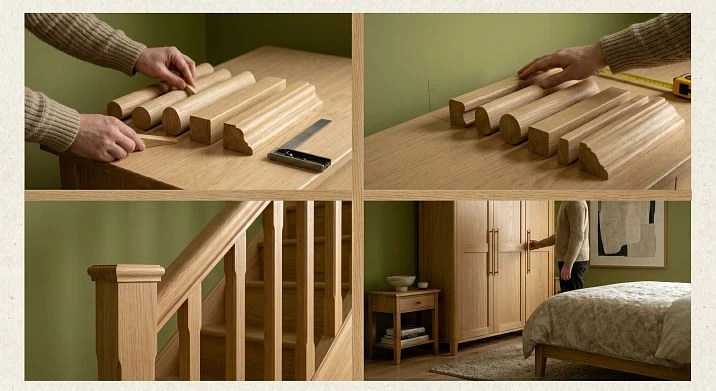
A staircase in a home is not just a structure for moving between floors. It is an architectural feature that is visible immediately upon entry, touched by hands every day, and sets the tone for the entire home interior. And while the steps are hidden underfoot, the handrail is both in sight and in hand simultaneously. That is why choosing a wooden handrail for a staircase is a decision that affects safety, aesthetics, and the overall feel of the home.
Round or shaped profile? Oak or beech? How to match a handrail to balusters? At what height to install? What is included in a complete railing set? This article answers all these questions — practical, concise, with specific guidelines.
View Wooden handrails for stairs made of solid oak and beech — in the STAVROS catalog.
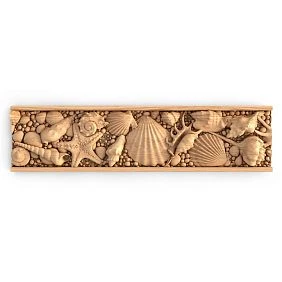
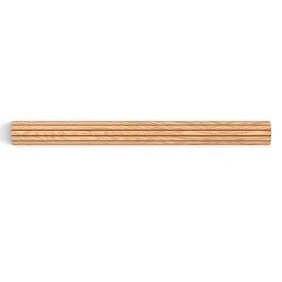
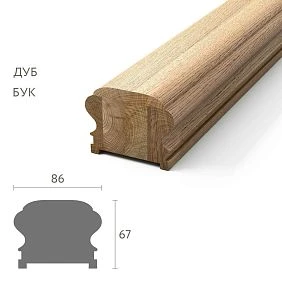
Handrail, railing, balusters — what is the difference and why it matters
Before choosing, it is worth speaking the same language. The three words — 'handrail', 'railing', 'balusters' — are often used as synonyms. This is a mistake that leads to confusion when ordering components.
Handrail — the upper horizontal (or sloping along the flight) element of the guard. It is what you hold with your hand. This is what needs to be chosen based on profile, cross-section, length, and material.
Railing — the entire staircase railing system as a whole: handrail + balusters + posts + fasteners. When they say "buy stair railings" they mean exactly the set.
Balusters — vertical railing elements that support the handrail from below and fill the space between the handrail and the steps or the sub-baluster board. wooden balusters for staircase — turned, carved, square, flat — this is a whole family of products.
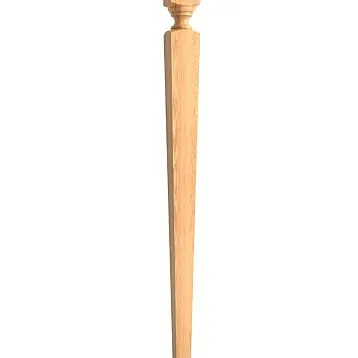
Posts — supporting vertical elements at the beginning of the flight, at the end, and at turns. They bear the main load. Wooden posts for the staircase are usually larger in cross-section than balusters and often have Crown Molding — a decorative element on the top end.
Why this distinction? Because when buying a wooden handrail for a staircase, it is important to understand right away: the handrail is not an independent isolated element. It is part of the system, and it must be selected in conjunction with balusters and posts.




When a wooden handrail is the best choice
The market offers handrails made of stainless steel, aluminum, PVC, glass, polyurethane. Each material is appropriate in its own context. But there are situations where wooden stair handrail — the only organic solution.
Our factory also produces:
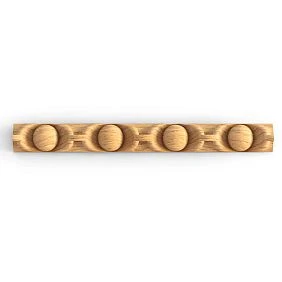
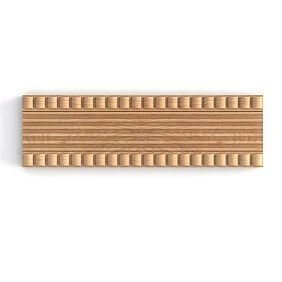
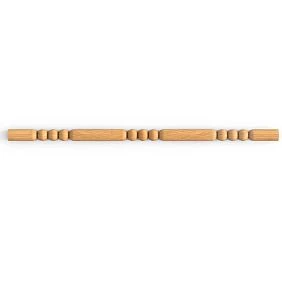
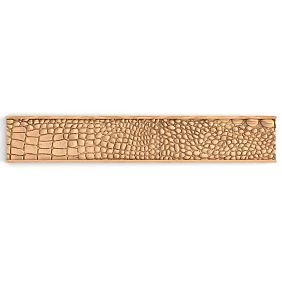
Wooden staircase in a private house or cottage
If the treads and risers are made of wood, a handrail made of the same material is 100% logical. Oak treads + oak balusters + oak handrail — this is a system that maintains the unity of material and tint. A metal or plastic handrail in such a system is a foreign body that always catches the eye.
Get Consultation
Staircase to the second floor in an interior with wooden elements
Wooden staircase to the second floor — this is not just a functional element of the house, it is an architectural dominant. When the interior features wooden doors, wooden floors, Wooden trim, wooden ceiling beams — a solid wood handrail continues this program, completes it.
Classic, neoclassical staircase with carved decor
Carved balusters, turned posts, Newel posts on the posts — this is the classic language of a wooden staircase. A shaped wooden handrail with a profile that echoes the relief of the balusters is an essential detail in such a system.
Restoration of an old staircase
In old houses — mansions, dachas, wooden buildings — the staircase often remains, but the handrail has dried out or is missing. Replacing the handrail without completely redoing the staircase is a practical and economical solution. Buy a wooden handrail separately from balusters and posts — it is possible. But it is important to choose a profile that is compatible with the existing fastening system.
An interior where the tactile warmth of the material is important
Wood feels warm to the touch. This is not a metaphor — it is physics. A metal handrail on a cold morning is an unpleasant contact. A wooden handrail is warm, alive, with texture. In homes with children and elderly people, where people walk on the stairs barefoot or in slippers, a wooden handrail is noticeably more comfortable.
Profiles of wooden handrails — from round to complex relief
The profile of a handrail is its cross-section. It is the profile that determines the comfort of the grip, the decorative character, and compatibility with balusters. Choosing a profile is the first technical question when purchasing.
Round profile
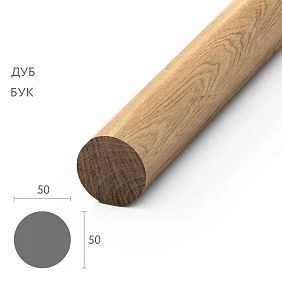
Classic ergonomics. Diameter: 40–60 mm. The hand fully wraps around the handrail, the thumb closes with the rest — this is a "closed grip", the most reliable. It is this profile that is recommended for safety.
Round handrail — neutral in style. Suitable for both classic stairs, modern stairs, and Scandinavian interiors. Diameter 40 mm — for narrow flights and compact stairs. Diameter 50–60 mm — for wide flights, solid wood beds, and houses with high ceilings.
Oval profile
Slightly flattened vertically — width slightly greater than height. For example, 60×45 mm or 70×50 mm. Feel in hand: slightly flatter, the hand rests comfortably when moving horizontally along the handrail (when descending the stairs and transitioning to a horizontal section). This profile is popular as a compromise between round and shaped.
Shaped profile with relief
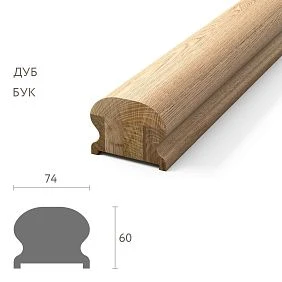
Handrail with grooves, chamfers, shelves — decorative and recognizable. This profile 'reads' in space: its relief creates a play of light and shadow. For a classic staircase with carved balusters — a shaped handrail is organic. It echoes the same decorative motif as the balusters through the language of its profile.
Important: a shaped profile may be less comfortable for grip if the relief creates sharp edges. Check: the hand should rest on the handrail without discomfort. A good shaped profile has rounded edges, without sharp edges.
Massive wood-style handrail
Wide, heavy handrail — for stairs with wide flights (width 1200 mm and more) and large posts. Cross-section: 80×55 mm or 90×60 mm. Such a handrail looks solid and 'expensive' — it is a custom-made detail for representative stairs in country houses.
Handrail profile for modern stairs
Flat or slightly embossed profile — 70×40 mm or 80×35 mm. For minimalist staircases with glass or metal infill, where a wooden handrail is combined with a non-traditional railing. Tinting: natural oak with oil finish, dark walnut, gray.
How to choose the right profile
Guidelines for decision-making:
-
Safety first — a round or near-round profile with a diameter of 40–50 mm for daily comfort.
-
Staircase style — classic requires a shaped profile, minimalism requires a flat or oval one.
-
Staircase scale — narrow flight → compact profile, wide → massive.
-
Compatibility with balusters — the handrail profile should "rhyme" with the relief of the balusters.
Handrail material: oak vs. beech — making an informed choice
The two main materials for wooden handrails in Russia are oak and beech. Both are solid wood, both durable, both easy to work with. But there is a difference — and it matters.
Oak handrail
Oak — density 650–750 kg/m³. Expressive open texture with a large pattern of annual rings. The surface is wear-resistant. It is oak that is associated with a "status" wooden staircase: dark walnut, expressive texture, a feeling of solidity.
Oak handrail — for expensive classic and neoclassical staircases, for homes where wood is the main interior material. Under oil or 2K varnish — the oak texture looks lively and noble. Under tinting in dark walnut or wenge — expressive and status.
Oak feature: contains tannins, which when in contact with iron produce bluish spots. This is important during installation: steel screws into oak without pre-drilling can leave dark marks. Use galvanized or stainless steel fasteners.
Beech handrail
Beech — density 620–680 kg/m³. The texture is finer than oak: a fine, uniform pattern. Color — light, creamy-pinkish. Beech accepts stain well, paints perfectly in any color — white, gray, light beige. This is important for interiors where the handrail needs to be painted to match the walls or furniture.
Beech handrail — for staircases in Scandinavian style, in modern interiors with a white or gray palette, for children's spaces. Beech sands well, giving a smooth surface — tactilely pleasant when gripped.
Beech feature: when humidity changes, it is slightly more prone to warping than oak. With proper drying to 8–10% and proper coating, this risk is minimal.
Comparison in table
| Parameter | Oak | Beech |
|---|---|---|
| Density | 650–750 kg/m³ | 620–680 kg/m³ |
| Texture | Expressive, large | Fine, uniform |
| Natural color | Light brown, warm | Creamy pink |
| For dark tinting | Excellent | Good |
| For light painting | Worse (tannins) | Excellent |
| Abrasion resistance | Very High | High |
| Style | Classic, neoclassical, country | Scandinavian, modern, neutral |
Both materials are from the hardwood category. Both are significantly stronger than pine. wooden staircase elements Made from oak and beech, they are designed for decades of use with proper care.
How to choose a handrail for balusters — compatibility rules
Handrail and balusters — a visual duo that is seen simultaneously. If they are not coordinated, the staircase looks "assembled from different parts."
Scale: the handrail should not "overwhelm" the balusters
Thin balusters with a diameter of 30–40 mm (turned, with thin necks) + a massive handrail 90×60 mm = scale imbalance. The handrail will visually "crush" the balusters. Rule: the thinner the balusters, the more compact the handrail.
And vice versa: massive square balusters 50×50 mm + a thin round handrail 38 mm — the upper part of the railing looks weak compared to the lower part. Cross-sections should be proportional.
Guideline:
-
Balusters 30–40 mm → handrail 40–50 mm in diameter.
-
Balusters 45–60 mm → handrail 50–60 mm or shaped 60×45 mm.
-
Balusters 60–80 mm → handrail 60–80 mm or massive shaped.
Decor: carved balusters require a decorative handrail
If Carved balusters — with floral ornament, twisted relief, classic vases and capitals — the handrail should support this decorative level. A smooth round handrail against the background of rich baluster carving looks unfinished. A shaped profile with a relief that echoes the baluster decor is a systemic solution.
If the balusters are simple — turned smooth cylinders or square without decor — the handrail can be a decorative accent: it creates the character of the entire railing system. A wooden handrail with an expressive profile against the background of simple balusters works.
Material and tinting: unity is mandatory
Balusters and handrail — from the same wood species and in the same tint. If the balusters are oak with a dark walnut finish — the handrail is oak with the same walnut finish. Mixing dark oak and light beech on the same staircase is an unjustified contrast.
Exception: intentional designer contrast. Black balusters + white handrail — in a modern interior. But this is a technique, not an accident.
Handrail mounting on balusters
The handrail is placed on top of the balusters and fastened through them from below (with screws into the handrail body) or from the side. Important: the groove on the bottom of the handrail must match the width of the upper ends of the balusters. Standard groove: 38–45 mm. If the width of the upper end of the baluster is 30 mm — transition blocks are used. More details about fastening balusters to steps and railings — in a separate guide.
How to choose a handrail for stair posts
Posts are the anchors of the railing system. They take lateral load and hold the entire structure. The handrail enters the post from the side or from above — and it is at this point that the joint must be both strong and beautiful.
Scale of post and handrail
A post with a cross-section of 100×100 mm is a large element. A handrail with a diameter of 40 mm against such a post will look like a thin "thread". The minimum recommended handrail for a 100×100 mm post: diameter 50 mm or shaped 60×45 mm.
For an 80×80 mm post — a handrail with a diameter of 45–55 mm. For a 70×70 mm post — a handrail with a diameter of 40–50 mm.
Joining the handrail to the post
The handrail enters the post through a special joining element — a "gooseneck", "turn", or "bend". These are shaped wooden inserts that allow the handrail to smoothly change direction on a landing or at a turn of the flight.
Gooseneck — transition of the handrail from an inclined to a horizontal section (at the beginning and end of the flight). Turn — a 90° or 180° turn on the landing between flights. These elements are included in the full stair railing set — and they must be of the same wood species and profile as the main handrail.
Finial on the post
A finial is installed on the top end of the post Crown Molding — decorative element: ball, pyramid, vase, simple cap. The finial is the completion point of the vertical axis of the post. It must be made of the same material as the handrail and balusters.
A ball finial with a diameter of 80–100 mm on a 100×100 mm post is a classic ratio. The finial should be larger than the diameter of the handrail itself; otherwise, the post looks unfinished.
Determining the height of posts
How to determine the height of stair posts — a separate topic with calculations. The height of the post depends on the handrail height (900–1000 mm from the step vertically is the comfort standard), the length of the baluster, and the method of attachment. When planning a set, start with the height of the posts.
Handrail height and grip ergonomics — without unnecessary regulations
The handrail should be comfortable. This sounds trivial, but this is where mistakes are made.
Optimal height
Standard for residential buildings: 900–1000 mm from the step surface to the top plane of the handrail (vertically). This is the height at which an average-height adult naturally lowers their hand onto the handrail without bending their body.
For homes with children, an additional handrail is sometimes installed lower — at a height of 600–650 mm. This is not mandatory but increases safety.
For elderly people, 950–1000 mm is preferable: when climbing stairs, the hand with support on the handrail works better at a slightly greater height.
Why a handrail that is too thin is bad
A handrail with a diameter of 30–35 mm or less is too thin. The hand does not fully grip it, the grip is unstable. When moving along the stairs, the hand "slips" off the thin profile. This is especially dangerous on steep flights. Minimum comfortable diameter: 40 mm.
Why a handrail that is too wide is also bad
A handrail with a diameter of more than 75 mm — the hand does not grip it. This is no longer a handrail, it is a support beam. Maximum comfortable diameter for hand grip: 55–60 mm. For people with small hands: 40–50 mm.
Sharp edges — a hidden problem
A shaped handrail with sharp edges is useless decoration. Sharp edges are unpleasant when moving the hand along the handrail. All edges of the profile must be rounded: a rounding radius of 3–5 mm is the boundary between "pleasant" and "unpleasant."
Turn and transition — the hand should not "slip off"
On the landing between flights, the handrail changes direction. If the joint is not smooth, the hand "bumps" into the corner and movement is interrupted. A smooth wooden turn, precisely mitered to the required angle, is a mandatory element. A homemade welded transition on a wooden handrail is always a poor result.
Coating of a wooden handrail — with varnish, oil, or paint
Choosing a finish coating is not just about aesthetics. The handrail experiences stress: hand sweat, ultraviolet light (if the staircase is in an opening with a window), mechanical abrasion. The coating must withstand this.
Oil for handrail
Oil penetrates the wood structure without creating a film on the surface. The surface is matte, warm, and feels alive to the touch. Tactilely, this is the best option for a handrail: the hand does not slip on a varnish film. Excellent for oak — oil emphasizes its texture.
Disadvantage of oil: lower mechanical protection than varnish. The handrail needs to be renewed every 2–3 years — apply another layer of oil to a pre-cleaned surface.
2K varnish (two-component)
Polyurethane 2K varnish creates a hard, wear-resistant film. Resistant to water and mechanical damage. The coating is matte, semi-matte, or glossy. For a handrail, matte or silk-matte gloss (10–30 gloss units) is recommended: it does not slip in the hand.
2K varnish is the choice for handrails in homes with heavy use: children, frequent guests, humid climates.
Stain + varnish
First, tinting with stain — color: walnut, oak, wenge, teak, mahogany. Then coating with varnish. A standard option for classic staircases: handrail in dark walnut, balusters and posts in the same tint.
Enamel painting
For beech handrails for painting — acrylic or alkyd enamel. A white handrail on a white staircase in a Scandinavian interior — laconic and clean. Colored enamel is a bold technique in children's areas or designer interiors.
Stair railing kit — what's included and how not to get confused when ordering
Ordering Wooden stair railingsIt is important to understand: this is not a single SKU, but a set of interconnected elements.
Full set composition
-
Handrail — linear footage. You need to measure the length of the flight + horizontal sections + a small allowance for cutting.
-
Balusters — the quantity is calculated by step: usually 1 baluster per step or 2 balusters per step (depends on design and safety requirements).
-
Posts — by number of locations: start of flight, end of flight, each turn.
-
Finials — one for each post.
-
Bottom rail (or stringer) — base for attaching balusters from below (not always).
-
Gooseneck fittings and turnouts — for each transition from sloped to horizontal and for each corner.
-
Fasteners — dowels, screws, wall plugs.
Calculation of the number of balusters
Standard baluster spacing: one baluster per step. With a step width of 270–300 mm, the center-to-center spacing of balusters is 270–300 mm. With two balusters per step, the spacing is 130–150 mm.
Example: staircase with 12 steps, one baluster per step = 12 balusters + 2–4 balusters for the horizontal landing section = 14–16 balusters.
Handrail length calculation
Handrail length = length of the stair flight along the sloping line (not the horizontal projection) + horizontal sections + a small allowance for fitting (100–150 mm). For a two-flight staircase — two handrail sections + turnings for connection.
Mistakes when choosing a wooden handrail and railing
It's better to learn from others' mistakes. Here are the most common errors that lead to rework and extra costs.
Buying a handrail separately without checking with balusters and posts. Result: incompatible profiles, different wood species, inability to properly join elements. Rule: buy the entire railing set from one manufacturer or check compatibility before ordering.
Choosing only by photo without considering the cross-section. In the photo, the handrail may look massive — but in reality, the diameter is 40 mm. For a staircase with a flight width of 1200 mm, this is weak. Always check the actual dimensions.
Choosing too thin a profile for a wide flight. Wide flight — wide handrail. The proportion should match the scale of the staircase.
Not accounting for turns and joints. A two-flight staircase with a landing requires turnings. Without them, the handrail simply breaks off — this is both inconvenient and unsafe. The cost of turnings and goosenecks should be included in the budget.
Mixing different wood species without a system. Oak balusters + beech handrail without tinting = two different colors. Both are beautiful individually, but together they don't work. If you must mix species — tinting should bring them to one color.
Saving on material. A pine handrail under load — scratches, dents, gets marks from rings and nails. For a staircase that will last 15–20 years — only hardwood: oak or beech.
Do not check the mounting groove for balusters. Handrail with a 38 mm groove for balusters with a 45 mm top end — does not fit. Or fits with a gap and play. Before purchasing, check: the width of the groove in the handrail = the width of the top end of the baluster.
Install the handrail without leveling. A handrail laid with a sideways tilt is immediately noticeable and looks unprofessional. Installation — with a laser level or a construction bubble level.
What to check before buying a handrail for a staircase
Before placing an order, go through the following points:
-
The length of the flight is exact, taking into account the slope (not the horizontal projection, but the length along the line of ascent).
-
The number of flights and landings — determines the number of swan necks and goosenecks.
-
Type of balusters — their cross-section and height (determines the handrail profile).
-
Type of posts — their cross-section (determines the scale ratio with the handrail).
-
Width of the flight — affects the choice of profile.
-
Material — oak or beech. For dark tinting — oak, for light painting — beech.
-
Profile — round, oval, shaped. Personally evaluate the grip comfort.
-
Coating — oil, varnish, stain + varnish, enamel.
-
Completeness — handrail + goosenecks + returns. Or a full set with balusters and posts.
-
Is on-site adjustment needed — and is there a possibility to cut to length.
Wooden stair railings in the home interior system
The staircase and its railing are not an isolated element. It exists in a space filled with other wooden details.
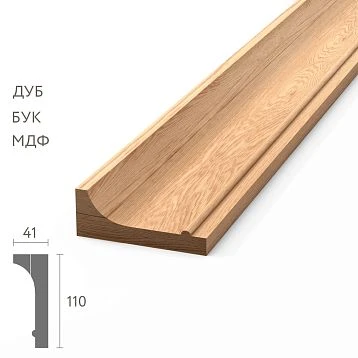
Wooden trim — baseboards, architraves, cornices — in the same material and tint as the handrail with balusters. When the baseboard near the stairs and the stair handrail are made of the same oak, in the same color — the house speaks a single language.
Wooden moldings on the walls of the stair hall — a continuation of the decorative program of carved balusters. If the balusters have a floral ornament, moldings with the same floral profile on the walls — this is a system, not random coincidences.
wooden doors in a tint matching the handrail — a visual connection between the first and second floor through color and material.
Thinking about the stair handrail separately from the rest of the wooden decor in the house is like choosing one wardrobe item while ignoring everything else. A system is needed.
FAQ — answers to popular questions about wooden handrails and railings
Which handrail is best for a wooden staircase?
The best choice is solid wood handrail made of oak or beech, with a profile compatible with balusters and posts in scale, decor, and tint. A round or soft oval profile is the most comfortable for gripping.
How is a handrail different from a railing?
Handrail — the top element of the railing that you hold onto. Handrails for staircase — the entire railing system: handrail + balusters + posts + fasteners + transition elements.
Can I buy a handrail separately from the balusters?
Yes. But before purchasing, be sure to check: the handrail profile is compatible with the balusters in terms of groove, the material matches, and the tint is the same.
Which handrail profile is more comfortable — round or shaped?
Round with a diameter of 40–50 mm is the most comfortable from an ergonomic grip perspective. A shaped profile is chosen for decorative effect — provided the profile edges are rounded.
Which is better for a handrail — oak or beech?
Oak — for natural staining, classic and neoclassical styles, expressive texture. Beech — for painting, light interiors, Scandinavian style. Both are equally durable.
At what height should a handrail be installed?
900–1000 mm from the stair surface to the top plane of the handrail is the comfort standard for adults. For homes with children, an additional handrail at a height of 600–650 mm is possible.
What is a gooseneck and a turn?
A gooseneck is a shaped insert for a smooth transition of the handrail from an inclined section to a horizontal one. A turn is an insert for a turn on the landing. Both are included in the full railing set and must be of the same wood species and profile.
Which handrail should I choose for a staircase to the second floor in a private house?
For a classic staircase to the second floor in a wooden house — an oak or beech handrail of a shaped profile, complete with turned balusters and turned posts. Staining — to match the furniture and doors. Full guide — in the article Wooden staircase to the second floor.
A handrail is a part that is touched by hands thousands of times a year. That is why it should be chosen not only with the eyes, but also with logic: profile, cross-section, material, compatibility with the system. A beautiful handrail that is uncomfortable to grip is a bad handrail. A comfortable one that is not coordinated with the balusters is an incomplete system.
STAVROS manufactures Wooden handrails for stairs made of solid oak and beech, balusters, posts и Newel posts — all staircase elements in a single system, from one material, with a single quality standard. The buyer receives not a set of disparate parts, but a coordinated kit. Production in Russia, warehouses in St. Petersburg and Moscow, delivery throughout the country. STAVROS — when a staircase becomes the architecture of a home.