Article Contents:
- Importance of correctly determining post height
- Safety of staircase construction
- Aesthetics and harmony of interior
- Economic efficiency
- Main regulatory documents
- Typical parameters of post height
- 1. Initial post
- 2. Intermediate posts
- 3. Final post
- Calculation of post height
- Step 1. Taking measurements and creating a plan
- Step 2. Calculating optimal height
- Step 3. Considering construction specifics and materials
- Step 4. Practical verification of calculations
- Step 5. Final adjustments and installation
- 1. Step height
- 2. Total rise of the staircase
- 3. Type of staircase
- 4. Aesthetic considerations
- 5. Regulatory requirements
- Input data
- Calculation
- Preparation for Installation
- Step 1. Marking locations for post mounting
- Step 2. Pre-drilling holes
- Step 3. Mounting posts
- 3.1. Use of Screws
- 3.2. Strengthening with Metal Brackets
- Step 4. Installation of Additional Railing Elements
- Step 5. Final inspection and finishing
- 1. Riser Height and Overall Ladder Rise
- 2. Type of Ladder
- 3. Regulatory Requirements and Standards
- 4. Design and Aesthetic Considerations
- 5. Physical and Climatic Conditions
- Input data
- Calculation
- Work area preparation
- Installation of Posts
- Integration with Other Ladder Railing Elements
- Regular Inspection
- Technical Maintenance
- Question 1: How to Determine the Optimal Post Height for a Ladder?
- Question 2: What Regulations Govern Post Height?
- Question 3: What Factors Influence the Choice of Post Height?
- Carefully Plan the Project
- Select High-Quality Materials
- Follow Installation Technology
- Do Not Forget About Maintenance
- Example 1: Classic Wooden Staircase
- Example 2: Modern Spiral Ladder
- Example 3: Eco-Friendly Project for an Eco-House
- Main Conclusions
- Call to Action
- Final Thoughts
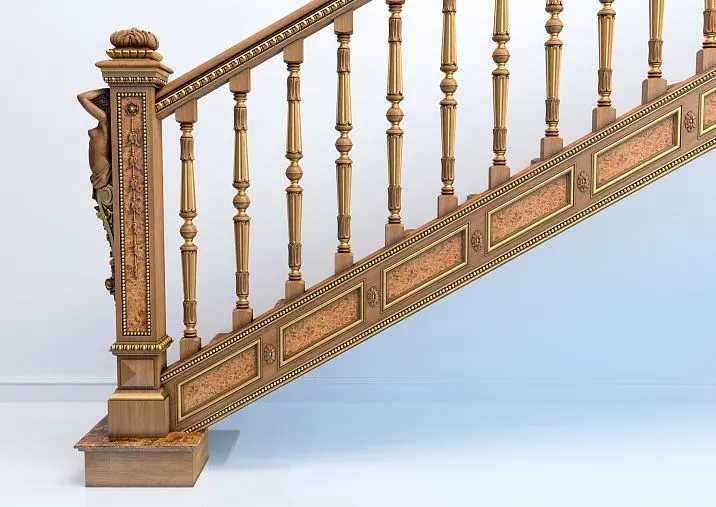
A ladder is not just a means of moving between floors, but one of the key interior elements that define the style, atmosphere, and overall aesthetics of a home. Thanks to properly installed railing elements — posts, balusters, handrails, and finials — a ladder becomes not only functional but also safe, and capable of highlighting the interior’s individuality. Especially important is determining the optimal post height for ladders. Incorrectly chosen height may affect ergonomics, safety, and the overall appearance of the structure.
In this article, we will thoroughly examine how to determine the height of posts for ladders, discuss norms and calculations for selecting the optimal height, and share practical recommendations from professionals. Our step-by-step guide is intended for those who wish to install the railing themselves and ensure the longevity of the structure. If you are looking for quality solutions for your project, we also recommend reviewingstaircase components.
This article will address the following questions:
● Why Properly Determining Post Height is Crucial for Ladder Safety and Aesthetics.
● Norms and Standards Regulating Post Height.
● Key Factors Influencing the Choice of Optimal Post Height.
● Step-by-Step Calculations and Recommendations for Determining Post Height for Different Types of Ladders.
● Practical Tips for Installing Posts and Their Combination withbalusters for staircases, railings and balusters andfinials.
Let's start by studying the meaning of the correct definition of column heights.


Value of correct baluster height determination




Ladder structure safety
Correctly selected baluster height is one of the most important factors affecting ladder safety. Balusters perform a supporting function: they hold the balusters to which handrails are attached, and overall ensure the stability of the railing. If balusters are placed too low or too high, this may lead to uneven load distribution, increasing the risk of structural element displacement and, consequently, injuries.
● Optimal baluster height ensures convenient placement of handrails and balusters, allowing users to hold onto the railing confidently.
● Even load distribution between balusters and balusters reduces the risk of mechanical damage and extends the ladder's service life.
Our factory also produces:


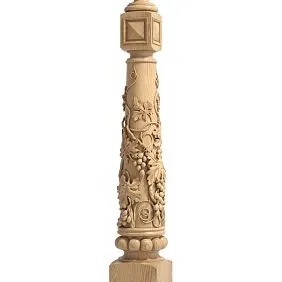

Aesthetics and harmony of interior
In addition to the functional component, correct baluster height has an aesthetic value. A staircase where balusters, balusters, handrails andNewel posts harmoniously combine, look stylish and complete. Disproportionate elements may "ruin" the overall design, so it is important to consider not only technical standards but also design solutions.
● Harmonious combination of elements creates visual symmetry, making the staircase the central element of the interior.
● Aesthetically correct baluster height contributes to design unity, whether classic, modern, or minimalist style.
Get Consultation
Economic Efficiency
Investing in quality mounting and correct baluster height determination helps avoid costly repairs and element replacements in the future. Calculation errors may lead to the need to redo the entire structure, which is expensive and time-consuming.
● Quality mounting and correct baluster height selection allow ensuring the longevity of the structure.
● Preventing errors during installation reduces the risk of additional expenses and saves resources.
Norms and standards for determining baluster height
Main regulatory documents
There are a number of regulatory documents regulating the installation of staircase structures. They establish standards for height, distance between elements, and other important parameters. Familiarize yourself with local building codes to ensure your staircase meets safety requirements.
● Building Codes and Regulations (SNiP): They specify exact dimensions and proportions for various types of staircases.
● GOSTs: Some GOSTs establish norms for manufacturing and installing railing elements, including balusters and balusters.
● Expert recommendations: In addition to official regulations, experienced builders and designers provide practical recommendations based on real installation experience.
Tip: If you plan tobalusters for staircase to buy, ensure that their dimensions and mounting comply with the norms specified in SNiP and GOST.
Typical baluster height parameters
Baluster height may vary depending on the type of staircase, its purpose, and structural features. Consider the main parameters:
1. Starting baluster
The starting baluster is the first baluster installed at the beginning of the staircase. It serves as the support for the entire railing, so its height should match the height of the first step.
● Recommendation: The height of the starting baluster should be such that it ensures comfortable staircase use and complies with regulations. In most cases, this value ranges from 90–100 cm, but may vary depending on the specific project.
2. Intermediate balusters
Intermediate balusters are installed on each step or every few steps, depending on the staircase construction.
● Recommendation: The distance between intermediate balusters should be equal to ensure even load distribution and aesthetic perception of the structure. Usually, the distance varies between 70–90 cm, but exact values depend on the staircase dimensions and project-specific requirements.
3. Final baluster
The final baluster is located at the top of the staircase and is the finishing element of the railing. Its height should also be coordinated with the overall design and functionality of the staircase structure.
Recommendation: The height of the final post should ensure convenient use of handrails and protection against falling. Usually, the final post is slightly taller than the initial one, helping to create a visual completion of the railing.
Calculating post height
The calculation of optimal post height is based on several key parameters:
● Step height: Determine the height of each step. This is the primary parameter that determines the height of the posts.
● Total number of steps: The more steps, the more important it is to ensure even distribution of posts for safety.
● Staircase proportions: Take into account the overall dimensions and proportions of the staircase. The height of the posts should harmoniously fit into the overall composition.
Example calculation:
If the step height is 18–20 cm and the total number of steps is 12, the approximate height of the initial post can be calculated as 90–100 cm. Intermediate posts are placed at intervals ensuring even load distribution. Exact values must be adjusted depending on the specific design and safety requirements.
Tip: Use calculators and specialized programs for staircase structure calculations to achieve maximum accuracy.
Practical recommendations for determining post height
Step 1. Measuring and creating a plan
The first step is careful measurement of all staircase parameters:
● Measure the height of each step. This will allow you to determine the total rise of the staircase.
● Determine the number of steps. Based on this, calculate the total rise.
● Create a staircase sketch. On the sketch, indicate where thePosts for staircase posts will be located and how they will interact with the staircase balusters.
Tip: A detailed plan will help avoid errors and ensure harmonious placement of all elements.
Step 2. Calculating optimal height
Based on measurements and the sketch, calculate the optimal post height:
● Initial post: Set its height according to the height of the first step (usually 90–100 cm).
● Intermediate posts: Determine even spacing between them, which depends on the total number of steps and their height.
● Final post: Calculate its height so that it ensures a smooth transition to the upper level of the staircase and matches the aesthetic of the structure.
Example: If each step is 20 cm high and the staircase has 12 steps, the total rise will be 240 cm. In this case, the initial post may be 100 cm, and the final post 110–120 cm, to create a visual completion of the railing.
Step 3. Considering construction specifics and materials
Wooden construction features require careful attention:
● Wood is subject to shrinkage and expansion. When calculating post height, consider possible changes in material dimensions depending on humidity and temperature.
● Wood treatment. Treat the wood with protective compounds to maintain its dimensions and prevent deformation.
● Compatibility with other elements. The height of the posts should harmonize with the staircase balusters and handrails, as well as withfinialsthe elements that complete the overall appearance of the staircase.
Step 4. Practical verification of calculations
Before final installation, perform a test assembly on a small section:
● Install temporary fasteners. Use temporary fasteners or clamps to check how the selected height of the posts will look in reality.
● Check ergonomics. Walk up the stairs and assess the comfort of using the handrails and balusters.
Tip: If anything causes discomfort or looks unharmonious, adjust the dimensions before final installation.
Step 5. Final adjustments and installation
After verifying the calculations, proceed to the final installation of the posts:
● Post installation: Secure the posts for the stairs according to your plan, using quality fasteners.
● Final check: Ensure all posts are installed straight, without misalignment, and match the calculated height.
● Integration with railing: After installing the posts, proceed to install the balusters for the stairs, handrails, and balusters andcarvedto create a cohesive and harmonious railing.
Factors affecting the selection of post height
1. Step height
The main parameter determining post height is step height. The higher the step, the higher the corresponding railing section should be to ensure comfortable use.
● Recommendation: Step height typically varies from 17 to 20 cm. Based on these values, you can calculate the optimal height for the starting and ending posts.
2. Total rise of the staircase
The total rise of the staircase is determined by the sum of the heights of all steps. This value affects the distribution of posts throughout the structure.
● Example: If the staircase consists of 12 steps, each 20 cm high, the total rise will be 240 cm. This number will help determine how many intermediate posts are needed for even load distribution.
3. Type of staircase
Different types of staircases (straight, spiral, attic) have specific characteristics in the distribution of post height.
● Straight staircase: In such a construction, posts are typically evenly spaced along the entire length of the staircase.
● Spiral staircase: Calculations are more complex here, as railing elements are arranged along a curved line. It is important to consider the turning radius and angles of inclination.
● Attic staircase: Often has a narrower rise, requiring special attention to post height selection to ensure safety.
4. Aesthetic considerations
Post height should harmonize with the overall interior design. Posts that are too high or too low may disrupt visual balance.
● Harmony with staircase balusters: Optimal post height should match the size and shape of balusters, as well as handrails and balusters andfinialsto create a harmonious ensemble.
● Proportions of the structure: Post height affects the visual perception of the entire staircase. Properly chosen proportions make the staircase a central element of the interior.
5. Regulatory requirements
There are several regulatory documents governing the height and placement of posts for staircases. Compliance with these requirements ensures safety and comfort during use.
● SNiP and GOST: These documents establish minimum and optimal dimensions for different types of staircases. For example, regulations may require that railing height does not fall below a certain level.
● Practical recommendations from specialists: In addition to official standards, experienced builders provide practical advice based on real installation experience. Such recommendations may help adapt standard norms to specific operating conditions.
Example of calculating post heights
For better understanding of the calculation process, let's consider a practical example.
Initial data
● Step height: 20 cm
● Number of steps: 12
● Total rise of the staircase: 12 × 20 cm = 240 cm
● Required railing height: Usually not less than 90–100 cm from the step level to ensure safety.
Calculation
- Initial post:
The height of the initial post is determined as the railing height starting from the first step. If the standard requires a minimum of 90 cm, the initial post may be 90–100 cm high. - Intermediate posts:
If the railing must be evenly distributed along the entire staircase, intermediate posts can be installed every 2–3 steps. For example, if posts are installed every 3 steps, the total number of intermediate posts will be 12 / 3 = 4. The height of these posts should correspond to the level at which they are located. It is necessary to ensure that there is a consistent visual and functional level between the posts. - Final post:
The top post, which completes the railing, may have slightly greater height (e.g., 10–20 cm more), to ensure a smooth transition to the upper level of the staircase and to create a sense of completion of the structure.
Example:
● Initial post: 100 cm
● Intermediate posts: 90–95 cm (depending on step placement)
● Final post: 110 cm
Tip: Accurate calculations depend on the specific project, so always consider the individual characteristics of your staircase and regulatory requirements.
Practical recommendations for installing posts
Preparation for installation
Before installing posts, carefully prepare the work area:
● Measuring: Use a tape measure, level, and laser level for accurate measurements. Record all data and compare it with the sketch.
● Surface preparation: Clean and, if necessary, sand the staircase surface where the posts will be mounted.
● Selecting fasteners: Use quality fasteners — screws, brackets, anchors, and construction adhesive. Remember, secure fastening is key to the long-term durability of the structure.
Step 1. Marking locations for post installation
● Mark the locations for post installation on the steps and adjacent surfaces.
● Use a level to check the vertical alignment of the markings.
● Verify that the markings comply with regulatory requirements and the sketch.
Tip: Use a drilling template to ensure all holes are identical. This is especially important for staircase balusters and posts to maintain a consistent structural style.
Step 2. Pre-drilling Holes
● Drill pilot holes at marked locations to ensure precise and neat post installation.
● Select the appropriate drill bit size based on the chosen fasteners (screws, anchors, etc.).
● Control drilling depth to ensure uniformity of all holes.
Tip: Pre-drilling is a mandatory step, especially for wooden elements, to avoid splitting and damage.
Step 3. Installing Posts
3.1. Using Screws
● Install posts into prepared holes and secure them using stainless steel screws.
● Gradually tighten fasteners, checking post verticality with a level.
● Optionally, use construction adhesive to increase connection reliability.
3.2. Reinforcing with Metal Brackets
● After initial securing, attach posts with additional metal brackets to ensure even load distribution.
● Ensure brackets fit tightly against the surface and are secured with minimal gaps.
Tip: If you plan to buy posts for stairs, choose fastening brackets with anti-corrosion coating for long-term structural durability.
Step 4. Installing Additional Railing Elements
After installing posts, secure the remaining railing elements — balusters for stairs, handrails, and balusters.Newel posts.
● Balusters: Secure balusters to posts and treads using the above-described fastening methods.
● Handrails: Install handrails, paying attention to horizontal alignment and secure fastening.
● Finials: Secure finials on top posts to complete the staircase railing composition.
Tip: All elements must function as part of a unified system, so it is important that their dimensions and heights are coordinated.
Step 5. Final inspection and finishing
After installation, perform a final inspection of the entire structure:
● Ensure all posts are installed straight and stable, without any misalignment.
● Confirm that fasteners have no play and all connections are secure.
● Complete final finishing: treat wooden surfaces with protective compounds, sand, and if necessary, paint or varnish elements.
Tip: Regular maintenance of fastener connections will extend the lifespan of the staircase and preserve its aesthetic appearance.
Factors affecting the selection of post height
1. Tread Height and Overall Rise of the Staircase
The primary parameter for calculating post height is tread height. The higher the tread, the greater the railing rise must be to ensure comfort and safety.
● Example calculation: If tread height is 20 cm and the staircase has 12 steps, total rise equals 240 cm. Based on this, the initial post may be 90–100 cm tall, intermediate posts around 90 cm, and the final post slightly taller to create a sense of completion.
2. Type of Staircase
Staircase type affects post placement:
● Straight staircase: Posts are typically evenly spaced along the entire structure.
● Spiral staircase: Calculations are more complex due to curved element placement, and post height must account for radius and turning angles.
● Attic staircase: May require a specific approach, as the structure often has non-standard sizes and shapes.
3. Regulatory Requirements and Standards
There are a number of regulatory documents, such as SNiP and GOST, that regulate the height of stair railings and, accordingly, the height of posts. Compliance with these norms is a mandatory condition for ensuring safety and ease of use.
● SNiP: Establishes minimum and recommended dimensions for railings.
● GOST: Defines standards for manufacturing and installing railing elements, including stair posts.
Tip: Familiarize yourself with current regulations to ensure your staircase meets safety standards.
4. Design and Aesthetic Considerations
The height of the posts should harmoniously fit into the overall design of the staircase. Disproportionate elements may disrupt visual balance and reduce the aesthetic value of the interior.
● Coordination with balusters for the staircase: The height of the posts should match the size of the balusters to create a unified visual ensemble.
● Compatibility with handrails and balusters: The height of the posts affects comfort when using handrails — too low or too high elements may cause discomfort.
5. Physical and Climatic Conditions
Wood tends to shrink and expand depending on humidity and temperature. When calculating post height, it is important to consider these changes to avoid deformations.
● Accounting for seasonal fluctuations: When designing a staircase, consider possible changes in the dimensions of wooden elements.
● Treatment with protective compounds: Proper treatment will help maintain the dimensions and properties of the material.
Practical Calculation Example
Let's consider a practical example of calculating the height of posts for a wooden staircase.
Initial data
● Step height: 20 cm
● Number of steps: 12
● Total rise of the staircase: 12 × 20 cm = 240 cm
● Regulatory railing height: 90–100 cm from the stair level
Calculation
- Initial post:
Choose a height of 100 cm to ensure comfortable use of handrails and safe entry onto the staircase. - Intermediate posts:
When evenly distributing posts along the staircase, it is recommended to install them every 3 steps. In this case, there will be 4 intermediate posts. Their height should correspond to the level of the steps where they are located, usually around 90 cm. - Final post:
To create a finished look, the final post may be slightly taller — around 110–120 cm — which will allow the railing to smoothly conclude at the end of the staircase.
Tip: Exact values may vary depending on the specific project, so always perform test calculations and adjustments.
Practical recommendations for installing posts
Preparation of the Work Area
- Surface Cleaning and Preparation:
Ensure the surface where the staircase posts will be mounted is flat and clean. - Marking:
Accurate marking of mounting locations is essential for proper installation. Use templates for drilling to ensure all holes are uniform.
Post Installation
- Pre-drilling:
Drill holes at marked locations to avoid splitting the wood and ensure secure mounting. - Mounting with Screws:
Secure the posts using stainless steel screws and construction adhesive for added reliability. - Using Metal Angle Brackets:
To strengthen the connection, secure metal angle brackets to evenly distribute the load. - Vertical Alignment Check:
After installation, check that the posts are level and stable using a level.
Tip: Careful preparation and proper assembly are key to the long-term durability of the structure.
Integration with Other Elements of the Stair Railing
After installing the posts, proceed to attach balusters for the stairs, handrails, and finials. All elements must function as part of a unified system, so their dimensions and heights must be coordinated.
● Balusters: Attach balusters so they fit organically into the overall structure and match the calculated height of the posts.
● Handrails: Ensure that handrails are installed horizontally and at a convenient height for use.
● Finials: Secure finials on the top posts to complete the composition.
Maintenance and Technical Care Tips
After installation, it is important to regularly inspect the fastening connections to maintain the longevity and safety of the stair structure.
Regular Inspection
● Check fasteners: Periodically inspect all connections, tighten screws and brackets as needed.
● Maintain protective coating: Reapply varnish and oils to wooden elements to protect them from moisture and sunlight.
Technical Maintenance
● Monitor adhesive joints: If construction adhesives are used, monitor their condition and renew them as needed.
● Preventive cleaning: Regularly clean the stair surface of dust and debris to maintain its aesthetic appearance.
Tip: Regular technical maintenance extends the lifespan of your stairs and ensures their safety.
Frequently asked questions
Question 1: How to determine the optimal height of posts for stairs?
Answer: The optimal height of posts is determined based on the height of the steps, the total rise of the stairs, and regulatory requirements. On average, the height of the initial post is 90–100 cm, intermediate posts are about 90 cm, and the final post may be slightly higher, around 110–120 cm. Exact values depend on the specific project and must comply with safety standards.
Question 2: Which regulations govern the height of posts?
Answer: Standard regulations such as SNiP and GOST establish requirements for the height of stair railings, including posts. It is recommended to review current regulatory documents for your region to ensure full compliance with the structure.
Question 3: What factors influence the choice of post height?
Answer: The following factors influence the choice of post height:
● Height and number of steps.
● Type of staircase (straight, spiral, attic).
● Total rise of the staircase.
● Aesthetic considerations and design intent.
● Regulatory requirements and safety standards.
● Characteristics of materials, especially wood, which is subject to shrinkage and expansion.
Expert Recommendations
Carefully plan the project
Professionals always emphasize that careful planning is the key to success. Create a detailed plan, perform all necessary measurements, and prepare a sketch to help you visualize the final result.
Tip: Use professional tools such as a laser level and drilling templates to achieve maximum accuracy.
Choose quality materials
The quality of materials determines the reliability of the entire staircase structure. Choose only provenPosts for staircase and balusters for the staircase. Do not economize on fasteners—quality screws, brackets, anchors, and mounting adhesive guarantee long-lasting connections.
Follow the installation technology
Quality fastening is achieved by following all technological stages:
● Precise marking and pre-drilling are mandatory steps that cannot be skipped.
● Combine fastening methods: use both mechanical fasteners and mounting adhesive for additional reinforcement of connections.
● Use a level to control the verticality and stability of each element.
Tip: If you have doubts, consult professionals or study instructional videos on installing balusters and handrails.
Do not forget about maintenance
After installation, regular maintenance is key to preserving the staircase’s operational characteristics:
● Conduct periodic inspections of fastener connections.
● Renew protective coatings on wooden elements.
● Clean the structure of dust and dirt.
Successful project examples
Example 1: Classic Wooden Staircase
In one of the private home projects, wooden posts and balusters were installed according to strict regulations. The height of the initial post was 100 cm, intermediate posts—90 cm, and the final post—110 cm. This approach ensured not only aesthetic harmony but also high safety of the staircase. The balusters were secured using screws, metal brackets, and mounting adhesive, achieving an ideal connection. The result exceeded the owners’ expectations, and the staircase became a central element of the interior.
Example 2: Modern spiral staircase
For the spiral staircase in a modern office space, a careful calculation of post heights was performed, taking into account the curved arrangement of steps. Special software calculations and precise measuring tools were used. The post heights were determined based on the total rise height and the staircase’s turning angle. Balusters were fastened using a combined method (screws + mounting adhesive), and metal brackets provided additional connection strength. The final structure not only met regulations but also became a striking design accent in the interior.
Example 3: Eco-friendly project for an eco-house
In the interior of the eco-house, the idea of installing wooden posts and balusters was implemented, with special attention paid to using natural materials and adhering to ecological standards. The post heights were calculated considering wood shrinkage and regional climatic conditions. Balusters were fastened using pre-drilling, quality screws and brackets, and protective coatings ensured the structure’s longevity. As a result, the staircase became not only safe and reliable but also harmoniously integrated into the overall eco-friendly design of the house.
Conclusion
Main Conclusions
Correct determination of post heights for staircases and quality fastening of balusters to steps is the key to safety, durability, and aesthetics of the entire staircase structure. Key points to consider:
● Accurate measurements and marking: Use quality measuring tools to precisely determine fastening locations.
● Pre-drilling: Always drill holes to avoid splitting wood and ensure even fastening.
● Quality fasteners: Use only proven stair posts, stair balusters, handrails, and balustersNewel poststo ensure maximum reliability.
● Combined fastening: Combine fastening methods—mechanical (screws, brackets, anchors) and adhesive—for enhanced connection strength.
● Compliance with regulations: Carefully study current building codes and standards to ensure your staircase meets safety and ergonomic requirements.
● Regular maintenance: Conduct periodic inspections and renew protective coatings to extend the structure’s service life.
Call to Action
If you want to create a reliable, durable, and beautiful staircase, pay special attention to correctly determining post heights and quality fastening of balusters for staircases. Follow our recommendations, use quality staircase components, and your staircase will serve you for many years, ensuring safety and aesthetic enjoyment.
Final Thoughts
Determining the height of balusters for staircases is not just a technical calculation, but a comprehensive process involving analysis of regulations, proportion calculations, consideration of material characteristics, and aesthetic considerations. Proper attachment of balusters to treads ensures the longevity and safety of the structure, making the staircase not only a functional element but also a true work of art.
Invest in quality, use proven staircase posts, balusters, handrails, and balusters,Newel posts, to ensure the durability and aesthetic completeness of your staircase structure. Let every detail, every staircase baluster, be a manifestation of your pursuit of perfection and reliability.
Follow our detailed recommendations, experiment with mounting methods, study regulations, and create a staircase that becomes not only a functional element but also a central accent of your interior, reflecting your impeccable taste and attention to detail.