Article Contents:
- Structural elements of a wooden staircase: stringer, carriage, treads, risers
- Stringer and carriage: what is the fundamental difference
- Tread and riser: terminology and function
- Stair flight: geometry of movement
- Intermediate landings and winder steps
- Wood species for steps — oak, ash, pine, beech
- Oak — the benchmark choice for steps
- Ash: Elasticity and Expressive Texture
- Beech: precision and stability
- Pine: affordability and limitations
- Comparative table of wood species for steps
- Standard step dimensions: tread, riser height
- Optimal dimensions according to standards
- Tread overhang (nosing)
- Tread and riser thickness
- Accessories for wooden staircase: balusters, newel posts, handrail, skirting
- Balusters: rhythm and character of the railing
- Newel posts: structural and architectural anchor
- Handrail: functionality and sculptural quality
- Stair skirting: lower architectural belt
- Wooden staircase squeak — causes and elimination methods
- Where does the squeak come from
- Eliminating squeaks: practical algorithm
- Installation of wooden steps on a metal frame
- Preparing the metal frame
- Damping pad — mandatory element
- Attaching steps to the metal frame
- Riser on a metal frame
- Step finishing: oil-wax, varnish, paint — what to choose
- Oil and oil-wax: natural beauty and repairability
- Polyurethane varnish: maximum protection
- Paint: white steps and modern solutions
- Comparison of stair coverings
- Wooden staircase and hall interior: decorative system
- FAQ - answers to popular questions
- About the Company STAVROS
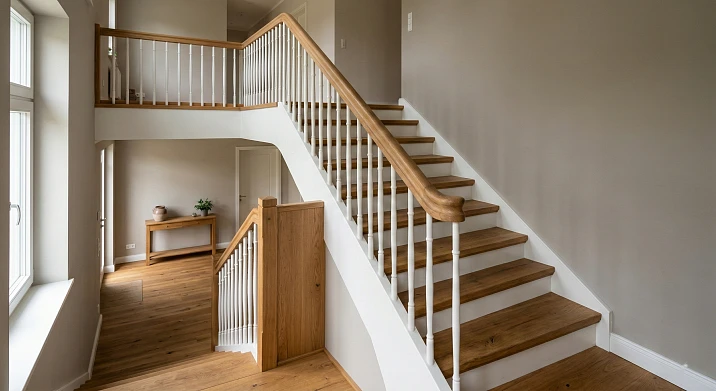
There is one element in a country house that defines everything else. Not the kitchen, not the bedroom, not the living room. The staircase. It is the first thing guests see upon entering the hall. It is what the family passes through two hundred times a day. Its creak is heard throughout the house at three in the morning. And its beauty—or lack thereof—sets the tone for the entire space.
Wooden staircase to the second floor— is not a construction element that 'needs to be done,' nor an expense item that 'needs to be minimized.' It is an architectural element that will live in your home for 50–70 years. The correct choice of steps, risers, stringers,balusters, and handrailsdetermines not only beauty—it determines safety, comfort, and quiet in the home. This article is about how to make all key decisions correctly: from the structural design to the finishing coating.
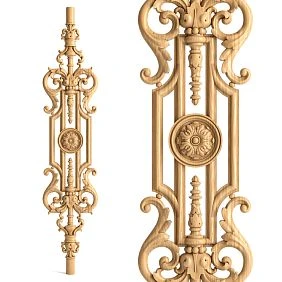
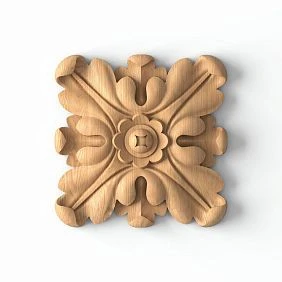
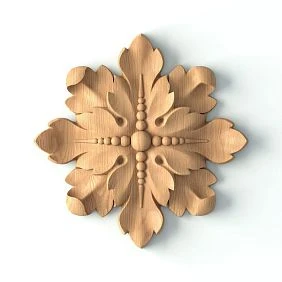
Structural elements of a wooden staircase: stringer, carriage, steps, risers
Before choosing the wood species and baluster pattern—you need to understand the structure.Wooden staircase— is a system of interdependent elements, where each affects the others. An error in the structural design is a problem that cannot be masked with decor.




Stringer and carriage: what is the fundamental difference
These are two fundamentally different ways of supporting steps.
A wooden staircase stringer is a side board with grooves into which the ends of the steps are inserted. The step is 'hidden' inside the stringer; its end is not visible from the outside. The outer surface of the stringer is a smooth plane, creating a closed, monolithic appearance for the staircase. This is a more complex structure to execute, requiring precise groove cutting, but it yields an architecturally finished result—especially in classical and neoclassical interiors.
A wooden carriage for a staircase is a load-bearing beam with a toothed upper edge on which the steps are laid from above. The ends of the steps are exposed, and the shape of the load-bearing element is visible from the outside. The carriage structure is simpler to install, easier to calculate, and clearly visible in modern open interiors, where the structural logic of the staircase is 'honestly' displayed. On a metal frame—the carriage principle applies: steps are laid on metal 'ridges.'
Our factory also produces:
Tread and riser: terminology and function
A step is the horizontal platform on which the foot steps. Its horizontal part is called the wooden tread, and the vertical part, which closes the space between steps, is called the wooden riser.
The tread is a load-bearing element. It bears the entire weight of a person walking plus the dynamic load of walking. Therefore, the tread thickness is a minimum of 36–40 mm for a span of up to 900 mm. For a span of 1,000–1,200 mm—42–45 mm. A thinner step will bend under load, leading to creaking and deformation over time.
The riser is not a load-bearing but a protective element. It closes the open space between steps, gives the staircase a closed appearance, and participates in transferring horizontal loads in the stringer structure. The riser thickness is 18–24 mm. With open steps (without risers)—the structure is called 'open': the staircase appears light and airy. With risers—'closed': a more traditional, monumental appearance.
Get Consultation
Stair flight: geometry of movement
A wooden stair flight is a continuous sequence of steps from one floor to another (or to an intermediate landing). Correct flight geometry is the foundation of convenience and safety.
Formula for a comfortable step: 2h + b = 600–640 mm, where h is the riser height, b is the tread width. Optimal values: h = 160–175 mm, b = 270–300 mm. The flight slope with these values is 28–35°—this is the zone of maximum walking comfort.
A too steep flight (slope over 45°)—is dangerous, especially when descending. A too gentle slope (less than 20°)—occupies an unjustifiably large area. The ideal is 30–35°.
Intermediate landings and winder steps
If there is a turn in the staircase (U-shaped or L-shaped configuration), the turn is executed either through a horizontal landing or through a series of winder steps. Trapezoidal winder steps—a more compact solution, saving ceiling height and floor area, but requiring more complex calculations and more precise manufacturing of components.
Wood species for steps—oak, ash, pine, beech
Choosing the species is not a question of 'what looks prettier.' It is an engineering decision that determines service life, maintenance effort, and the final budget.
Oak—the benchmark choice for steps
A solid oak staircase—is a solution that is never regretted. Oak density is 650–750 kg/m³—one and a half times higher than pine. Brinell hardness—3.7–4.0 units. This means: oak steps do not wear down under the impact of footwear even after 20–30 years of intensive use.
Oak has low moisture absorption due to its high tannin content. It does not swell during wet cleaning and does not crack from heating. Oak's texture is expressive: large vascular channels create a characteristic pattern visible under any finish — oil, varnish, or wax.
The only nuance when working with oak is that its tannic acids react with iron. When using steel fasteners without a protective coating, dark staining may occur at the attachment points. The solution is to use galvanized or stainless steel fasteners.
Ash: Elasticity and Expressive Grain
Ash is oak's closest competitor in terms of strength parameters but has a fundamentally different texture. Its fibers create a more contrasting, 'sporty' pattern with clearly defined straight lines. Density — 650–700 kg/m³, hardness — 4.0 units. Ash's elasticity is higher than oak's, making it ideal for steps: it slightly 'springs' underfoot, softening the step.
Ash takes stains well: when treated with oil containing a dark pigment, it mimics American walnut — one of the most valued interior materials. This allows for a 'luxurious' look on a reasonable budget.
Beech: Precision and Stability
Beech is a favorite material in woodworking. High density (650–700 kg/m³), exceptional structural uniformity, and precise behavior during processing. Beech allows minimal tolerances during milling — all steps from the same batch will be geometrically identical.
The downside of beech is that it is more 'reactive' to humidity than oak or ash. With sharp fluctuations in air humidity (winter — summer in an unheated house), beech may experience slight warping. For homes with constant heating, this is not a significant factor.
Pine: affordability and limitations
Pine is the most common and affordable material. Density 430–540 kg/m³, soft compared to hardwoods. This has a direct consequence: pine steps become indented with prolonged use. In the third to fifth year of active use, characteristic heel marks appear on the treads.
Conclusion: pine is acceptable for seasonal-use dachas and for secondary staircases (to the basement, attic). For the main staircase of a permanent residence country house — only hardwoods.
Comparative Table of Wood Species for Steps
| Species | Hardness (Brinell) | Moisture resistance | Stability | Recommendation |
|---|---|---|---|---|
| Oak | 3,7–4,0 | High | Good | Main Staircase |
| Ash | 4,0 | Medium | Good | Main Staircase |
| Beech | 3,8 | Medium | Good with stable humidity | Main Staircase |
| Spruce | 1,6–1,8 | Low | Satisfactory | Dacha, auxiliary staircases |
Standard Step Dimensions: Tread, Riser Height
These are not conventions — this is geometry tested by centuries of practice and codified in regulatory documents.
Optimal Dimensions per Standard
Riser height: 150–180 mm (optimum — 165–175 mm). Tread width: 250–320 mm (optimum — 270–290 mm). Formula check: 2 × 170 + 280 = 620 mm — within the norm (600–640 mm).
Minimum flight width: 800 mm (regulatory minimum for residential buildings). Recommended — 900–1,000 mm. For a grand staircase in a hall — 1,100–1,200 mm and wider.
Tread Overhang (Nosing)
The front edge of the tread overhangs the riser by 20–30 mm — this is called the nosing or overhang. The nosing increases the effective step area for the foot without increasing the total flight length. It is also a decorative element: the nosing line creates an expressive horizontal shadow, visually emphasizing each step.
Tread and Riser Thickness
Oak tread thickness of 40 mm for a 900 mm span — standard. For a wider flight (1,000–1,200 mm) — 42–45 mm. Thickness is not only a structural measure: a thicker step visually looks more monumental, 'more expensive'.
Oak riser — 18 mm. MDF riser in a frame construction — 22–24 mm. If the riser is used as a load-bearing structural element (transfers forces to the stringer) — 18 mm of solid wood is sufficient. If decorative — can be reduced to 15 mm.
Components for a Wooden Staircase: Balusters, Newel Posts, Handrail, Skirting
When the structure is designed and the steps are chosen — the moment comes to assemble the railing system.components for wooden staircasesmust form a unified ensemble: in wood species, decorative style, and finish tone.
Balusters: Rhythm and Character of the Railing
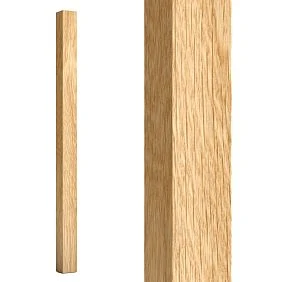
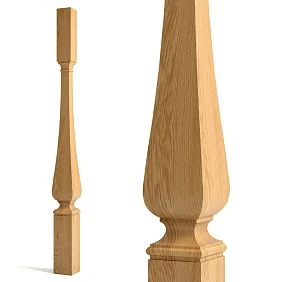
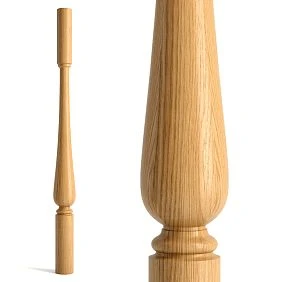
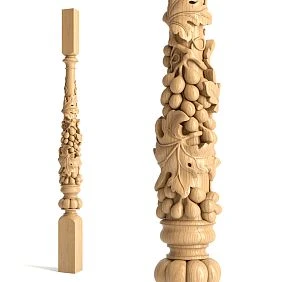
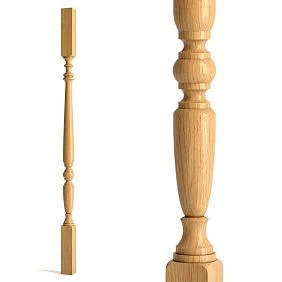
wooden handrails and balustersis what is seen first. The baluster sets the style of the entire staircase. Turned form with two or three nodes — timeless classic. Twisted — Baroque and Renaissance. Square straight — minimalism and loft. Carved with acanthus — monumental Empire and Neoclassical.
In the STAVROS catalog — over 50 models of oak and beech balusters: from the laconic L-019 (from 1,760 rub.) to the monumentally decorated L-030 (from 7,310 rub.) and L-046 (from 6,380 rub.) with extensive carving along the entire height. Baluster spacing — 130–150 mm on centers (clear gap — no more than 150 mm per standard). Details on calculating spacing and number of balusters — in a separate section below.
Support Posts: The Structural and Architectural Anchor
A post is a load-bearing element that takes the main lateral load from the railing system. Its cross-section is a minimum of 80×80 mm, recommended is 100×100 mm. Height is from the step surface (or floor) to the lower plane of the handrail: standard is 900 mm from the step. The post must be made from the same wood species as the balusters and in the same finish tone.
Support posts L-097 (from 3,000 rub.), L-117 (from 3,340 rub.) — for standard staircases. Grand posts L-041 (from 6,230 rub.) and L-028 (from 6,490 rub.) — for staircases with monumental balusters from series L-030 and L-046. The lower post at the first step is often made larger than the others: an accent, 'entry' element of the system.
Handrail: Functionality and Sculptural Quality
A wooden handrail for a staircase is the surface held by the hand. It is the only element of the staircase with which a person is in constant tactile contact. Therefore, its shape, size, material, and finish quality must be impeccable.
Optimal cross-section for a comfortable grip: width 50–65 mm, height 32–45 mm, top surface rounded with a radius of 16–22 mm. Edges — with 3–5 mm chamfers or rounded. Sharp corners on a handrail are an injury risk when the palm slides.
Handrails from the STAVROS catalog are made of oak and beech, standard length 2,000 mm, connection — via a surface-mounted lock with glue for assembling long flights. The recommended wood species for the handrail is the same as for the steps: unity of material — unity of tone.
Stair Skirting Board: The Lower Architectural Band
Under the stringer at the floor — a place forwooden baseboard. This element closes the lower junction of the stringer to the floor, conceals gaps, and creates a smooth transition between the plane of the staircase and the plane of the hall floor. The profile of the skirting board under the stringer must match the floor skirting board in the hall — they should be from the same collection and the same tone.
Squeaking of a Wooden Staircase — Causes and Remediation Methods
Perhaps the most common complaint from owners of wooden staircases. Squeaking is not inevitable. It is a technical problem with specific causes and specific solutions.
Where Squeaking Comes From
Squeaking occurs in one case — when two wooden elements rub against each other. This happens for several reasons.
Cause 1: Wood Drying. Fresh wood with high moisture content dries out — shrinks in size. Joints that were tight during installation develop gaps. Solution — use wood with a moisture content of 8–12% (STAVROS standard: 8–10% when manufactured in a controlled microclimate).
Cause 2: Incorrect Riser Fastening. A riser nailed without glue will eventually start moving between the tread and the next tread. Solution — fasten the riser with D3 structural adhesive + a screw through a pilot hole at an angle.
Cause 3: Unfilled Grooves in the Stringer. Treads in stringer grooves are fastened with a wedge. If the wedge is not driven in fully or has dried out — the tread starts to 'move' in the groove. Solution — tighten or replace the wedge, additionally secure the tread with a screw from below.
Cause 4: Balusters. A loose baluster touches a neighboring one under load — creating a squeak in the upper part of the railing. Solution — reinforce the baluster seating with PVA or D3 glue through a hole in the lower part.
Squeak Elimination: A Practical Algorithm
Step one: Localization. Walk on the staircase slowly, pinpointing the exact location of the squeak — by step number and zone (center, edge, corner). Squeak at the stringer and squeak in the center of the tread are different problems.
Step two: Diagnosis. Press with your hands on the tread, on the riser, on the stringer at the squeak point. Determine what exactly is moving.
Step three: Elimination. If the riser is moving — inject thin structural PVA into the gap with a syringe, press, let dry. If the tread is moving in the stringer groove — from below (if accessible) drive in a new wedge with PVA. If the tread-stringer connection is squeaking — tighten with a 5×70 mm screw through the riser into the tread at an angle.
Installation of Wooden Treads on a Metal Frame
A metal frame for a staircase is a popular solution: metal provides structural rigidity, wood provides warmth and beauty. This is a symbiosis that works when the technology for installing wooden treads is followed.
Preparation of the Metal Frame
Before installing treads, the metal frame must be completed, painted (primer + finish paint for metal), and checked for geometry. All 'shelves' (horizontal platforms for treads) must lie in the same horizontal plane — check with a level. Deviation of more than 2 mm across the flight width — correct with shims (packers) before installing treads.
A Damping Pad is a Mandatory Element
A solid wood tread cannot be fastened directly to metal without a damping pad. There are two reasons: first — metal and wood have different coefficients of thermal expansion, the joint will experience stress with temperature fluctuations; second — hard metal and hard wood at the contact point create a squeak with the slightest movement.
A pad made of 3–5 mm foamed polyethylene or 3 mm silicone tape — between the metal and wood across the entire contact area. This eliminates both risks.
Fastening the Tread to the Metal Frame
Holes in the metal shelf are drilled with a diameter of 5–6 mm. Through them, 5×50 mm screws are screwed from below into the tread. To prevent splitting — a 3.5 mm pilot hole in the wood before screwing.
Number of fastening points — minimum 4 for a step up to 900 mm wide, 6 — for a width up to 1,200 mm. Distance from edges — at least 50 mm.
Riser on a metal frame
The riser on a metal frame is attached to the vertical post of the frame. The scheme is the same: damping pad + screws from below. Additionally — D3 adhesive on the upper end of the riser, at the point of contact with the tread. The adhesive joint eliminates the gap, which could potentially creak.
Step covering: oil-wax, varnish, paint — what to choose
This is the final decision before completing the staircase — and one of the most important. The coating determines both the appearance, durability, and maintenance effort.
Oil and oil-wax: natural beauty and repairability
Oil coating penetrates the wood structure without creating a film on the surface. The surface "breathes," the wood texture is felt tactilely. The tone is natural, with a slight enhancement of grain contrast.
The main advantage of oil is repairability. A scratch, wear? Light sanding with P320 in the local area and applying a new coat of oil with a brush. After an hour — invisible. This is fundamentally important for steps: the surface with the highest mechanical load in the house.
The downside of oil is lower wear resistance compared to varnish. Steps with oil coating need to be refreshed every 2–3 years (depending on usage intensity). With weekly maintenance (washing with neutral detergent, annual application of a maintenance oil layer) — the lifespan extends to 4–5 years.
Polyurethane varnish: maximum protection
Polyurethane varnish creates a hard protective film on the step surface. This is the most wear-resistant coating: when properly applied in three coats, it lasts 10–15 years without recoating.
Application technology: primer-varnish (first isolating coat) → sanding P320 → second coat of varnish → sanding P400 → final coat. Three coats are mandatory: one creates priming, the second — the film base, the third — final hardness.
The disadvantage of varnish — difficulty of local repair. A scratch after three years? The entire step is sanded and re-varnished — otherwise a tone difference between old and new coating is visible.
Paint: white steps and modern solutions
Painting steps white is a fashionable and yet practical solution for certain styles. White steps combined with a dark handrail and white balusters — a classic English style that looks organic in a house with a white interior.
Technology: primer-isolator → two coats of white alkyd or polyurethane enamel with intermediate sanding P400. Alkyd enamel is harder and yellows over time. Polyurethane — whiter, harder, more expensive.
Comparison of step coverings
| Finish | Wear resistance | Repairability | Appearance | Maintenance |
|---|---|---|---|---|
| Wax-oil | Medium | Good | Natural, matte | Every 2–3 years |
| Polyurethane varnish | High | Complex | Glossy or matte | Every 10–15 years |
| Alkyd enamel (color) | High | Medium | Any color | Every 5–7 years |
Wooden staircase and hall interior: a decorative system
The staircase does not end at the last step. It is part of the overall hall space, and that is why its decor must be coordinated with the decor of the walls and ceiling.
If the hallway has installed Wooden moldingsor frame decor on the walls — the staircase balusters should be made of the same wood species and in the same tone. If there iswooden ceiling cornice— its profile "tongue" should echo the handrail decor.wooden floor baseboardin the hall transitions into a stair skirting under the stringer — this is the lower horizontal belt, connecting the hall floor and the stair space into a unified system.
If the house uses wall-mountedPolyurethane Decor— pilasters, moldings — their color scheme should be coordinated with the tone of the wooden stair railing. Unity of tone is more important than unity of material. A white polyurethane pilaster and white wooden balusters will create a more harmonious ensemble than a white pilaster and natural oil-finished balusters.
FAQ — answers to popular questions
What is the minimum ceiling height needed for a staircase to the second floor?
Clearance above the flight — at least 1,950–2,000 mm. This is measured vertically from the step to the lowest point of the ceiling or the next flight. With a smaller value, tall people will hit their head on the ceiling.
How many steps are needed for a standard interfloor distance?
With a floor height of 2,700 mm and a riser height of 170 mm: 2,700 / 170 = 15.9 → 16 steps. Adjusted riser height: 2,700 / 16 = 168.75 mm — quite comfortable.
Can steps be made from pine?
For seasonal use in a dacha — yes. For a main staircase in a permanent residence — no: the softness of pine guarantees heel marks appearing in 3–5 years.
What is best for gluing the riser to the tread?
PVA-D3 glue or special structural PVA for wood. Apply to both ends, compress, hold for 24 hours in a clamp.
How to calculate the number of boards for steps?
Length of one step = width of flight + 2 × handrail overhang (if handrail is on posts — flight + 0). Multiply by the number of steps. Add 10–12% reserve for cutting.
Is a riser needed on an open staircase?
No — this is a structural choice. Open steps (without risers) give a feeling of lightness, airiness. The downside — small objects can fall through the gaps between steps. With children under 3 years old — a staircase without risers is not recommended.
How often should the oil coating on steps be renewed?
With normal use (family of 3–4 people, daily use): full renewal every 2–3 years. Annual maintenance (applying maintenance oil in one pass with a cloth) extends the cycle to 4 years.
About the company STAVROS
A wooden staircase is an investment for decades. The components you choose today will bear the load of daily use for the next 40–50 years. An error in material or manufacturer choice will manifest not in a year, but in five — when redoing is significantly more expensive than doing it right the first time.
STAVROS — a Russian manufacturer of wooden components for stairs and architectural decor made from solid oak and beech. Production is carried out on European equipment under strictly controlled microclimate: temperature 20–24°C, humidity at least 40%, wood moisture content in the product — 8–10%. This guarantees geometric stability of elements after installation — steps do not warp, balusters do not dry out, handrails do not crack.
In the STAVROS catalog — a full range ofstaircase components: over 50 models ofbalusters, support posts, handrails, as well asWooden moldings and cornices, pilasters, Skirtingand all architectural decor for creating a finished interior. Complete order per project — from one batch of wood, uniform tone, with uniform geometry. Contact us to confirm shipping to your destination. STAVROS creates staircases that outlive the houses they stand in.