


















































Article Contents:
- Why cornices, skirting boards and mouldings are best calculated as a single trim system
- One finishing materials supplier or three different ones: where the risk arises
- Different wood and different visual tone
- Mismatched profiles
- Different timelines
- Three contracts, three deliveries, three acceptances
- Example of skirting board calculation without the "magic 10%"
- Example: the math says "eight," but cutting requires verification
- Samples first
- Then approval
- Then the main calculation
- Reserve separately
- Installation reserve
- Operational reserve
- Mistake 1. Buying three groups as separate orders
- Mistake 2. Ordering a large footage without a physical sample
- Mistake 3. Counting only the net footage
- Mistake 4. Not accounting for the standard length
- Mistake 5. Buying an additional visible section from a new batch without checking
- What to calculate first: meters or lengths?
- Can skirting, cornice, and molding be ordered in one delivery?
- Does one supplier guarantee the same oak shade?
- Why do we need samples if the profile is visible on the website?
- How much does a molding sample cost?
- Should 10% extra be added to the entire order?
- Why can't molding be calculated by the room's perimeter?
- What should be done if an additional purchase is needed in two months?
- What matters more when comparing suppliers — price per meter or lead time?
- How should molding be accepted on site?
- Where to start the selection?

The flooring, doors, wall color, and overall interior architecture have already been approved on site. Now dozens or hundreds of linear meters of trim need to be purchased: baseboards, ceiling cornices, wall moldings. At this stage, a mistake rarely looks like “the wrong beautiful profile.” More often the problem is organizational: one group arrived on time, the second later; a material was lost in the specification; the lengths of the strips were not taken into account when cutting; the main footage was ordered without samples; two months later an additional purchase was needed, and the original batch could no longer be reproduced exactly.
For project specification, wooden trim should be calculated not as three independent purchases, but as a single procurement system. The lower line of the room is the skirting board, the wall line is the moulding, and the upper line is the cornice. Each item has its own product code and linear meterage, but before requesting a price it is useful to combine them into a single schedule: material, profile section, standard length, finished meterage, number of lengths, finish, reserve, delivery stage, and room.
A single supplier does not automatically guarantee an identical wood shade or the absence of differences between batches. However, a unified specification allows requirements to be set in advance, physical samples to be ordered, profiles to be verified, production and delivery to be coordinated, and then the goods to be accepted against a single specification. This is precisely what reduces risk on site.



Why cornices, skirting boards, and mouldings are better calculated as a single trim system
In the interior, these products occupy different zones, but the buyer sees them as a single class of long-length components.
Lower part of the room → skirting board.
Wall → moulding.
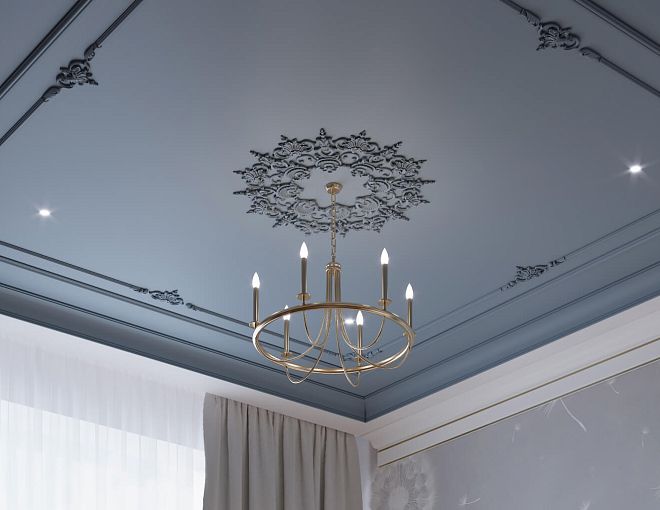
Upper part of the room → cornice.
Therefore, before ordering, it is necessary to agree not only the appearance of each item, but also the general parameters of the system:
- material — MDF, beech, oak, or another confirmed option for the specific product code;
- scale of the profiles;
- surface preparation quality;
- the future finish;
- standard length;
- availability or production time;
- packaging method;
- reserve at the site;
- delivery sequence.
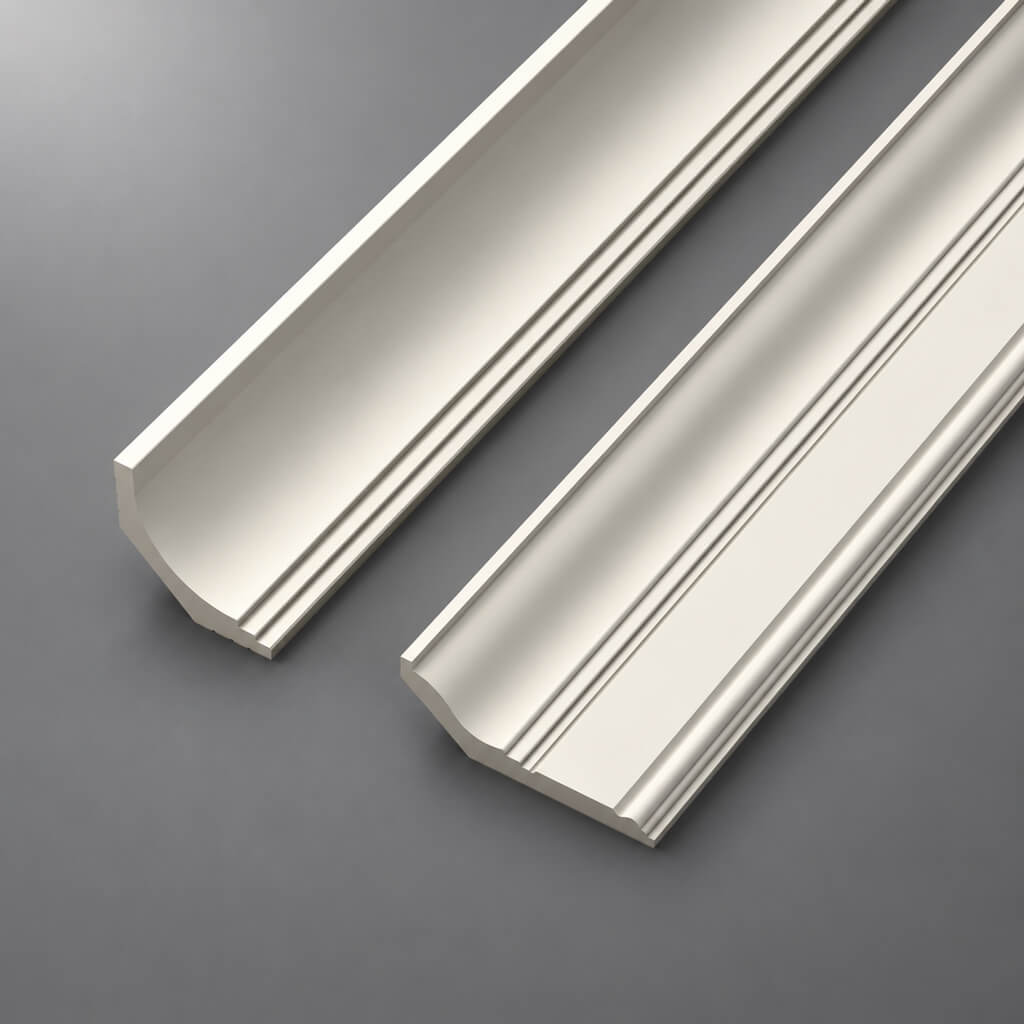
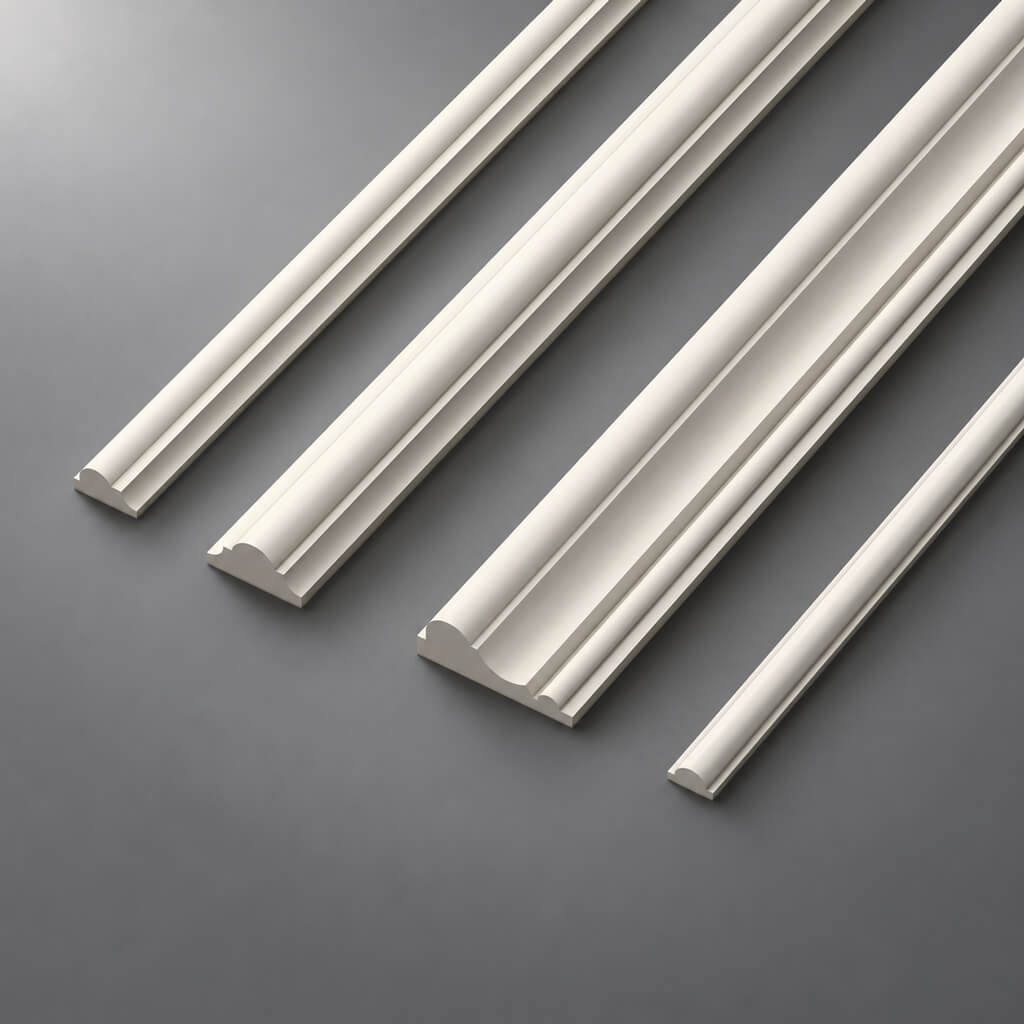
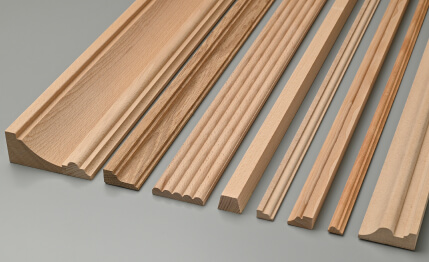
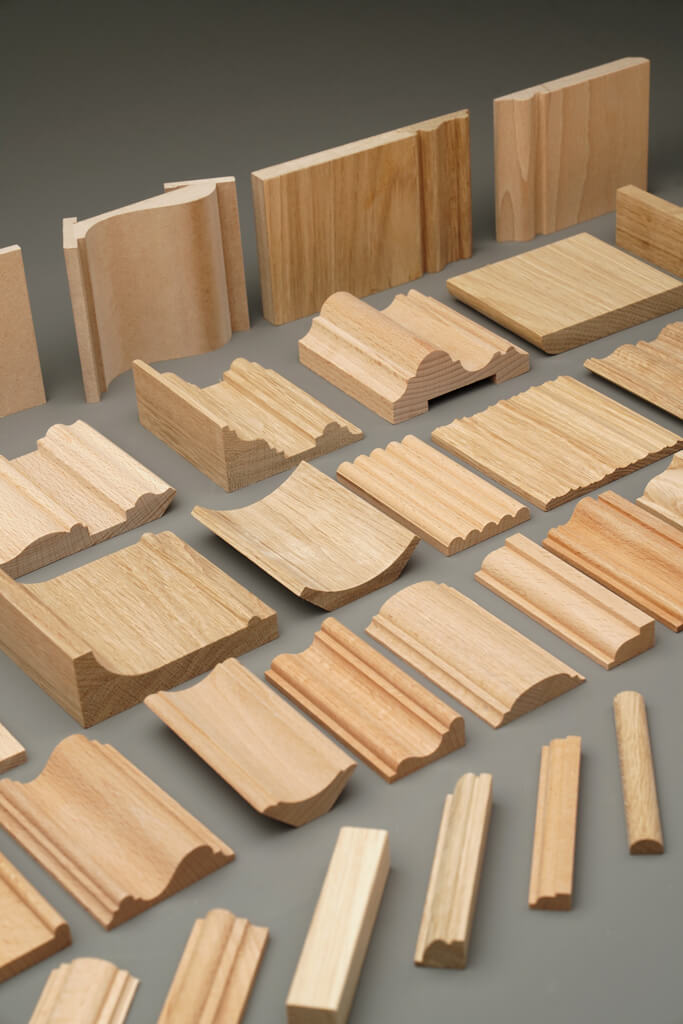
In the current STAVROS catalog, skirting boards, moldings, cornices, architraves, battens and other wood trim items are gathered into a single product group. This is convenient for complete sets: you can first form the overall system, and only then distribute it across rooms and work stages.



One supplier of finishing materials or three different ones: where the risk arises
By itself, one supplier does not make a project error-free. But three independent suppliers create more points that have to be synchronized.
Our factory also produces:


Different wood and different visual tone
Even if three invoices say "oak," this does not mean the same grain pattern, grading and shade. Natural wood is variable. Therefore, for a visible finish, the procurement task must be stated more precisely:
one species + approved samples + a unified finishing system + a clear batch order.
If the skirting board and cornice are painted with opaque enamel, the issue of natural tone is less noticeable, but the profile geometry and surface preparation remain.
Get Consultation
Mismatched profiles
Skirting, moulding and cornice can each be high quality on their own and still work poorly together in terms of scale.
The procurement specialist is not obliged to become an interior stylist themselves. Their job is not to lose the SKUs approved by the designer and not to replace one of them with a "similar" item due to lack of stock without re-approval.
Different timelines
If the skirting has already arrived but the cornice is only just going into production, the finishing crew may lose momentum. For a project, not only the price of the item matters, but also the date when the set is actually ready for installation.
Three contracts, three deliveries, three acceptances
Each independent delivery adds separate communication: invoice, packaging, transport, SKU verification, claim in case of damage. On a large project, this administrative burden becomes noticeable.
That is why supplying finishing materials for a single project is more convenient as a single managed specification, even if the items are in fact shipped in stages.
What to include in the specification for wooden trim before requesting a price
The request "give us a quote for cornices, skirting and mouldings" is too vague. The manager needs a working schedule.
| Position | Article | Material | Section | Rod length | Finished linear meterage | Number of lengths | Finish | Reserve |
|---|---|---|---|---|---|---|---|---|
| Baseboard | ___ | ___ | ___ | ___ | ___ m | ___ | ___ | ___ |
| Cornice | ___ | ___ | ___ | ___ | ___ m | ___ | ___ | ___ |
| Molding | ___ | ___ | ___ | ___ | ___ m | ___ | ___ | ___ |
It is useful to add three more fields to this table: room, installation stage, and required-on-site date.
Finished linear meters and the number of lengths are different quantities. For example, 20 m of cornice does not mean that it is enough to simply divide 20 by the product length and round up. You need to check the angles, the lengths of individual walls, and the possibility of using offcuts.
It is also better to set the reserve not as an abstract percentage, but after cutting: one additional strip, two lengths, or a specific set of parts for future replacement.
Wooden skirting board: what to determine before project procurement
For skirting boards, first fix the geometry of the room, not the price per linear meter.
Need to know:
- the total length of walls where the skirting board is actually installed;
- areas of built-in furniture where the profile is not needed;
- doorways;
- external and internal corners;
- the selected item code;
- height and protrusion;
- the material;
- standard length of the strip;
- finish;
- reserve.
If required to buy wooden baseboard as part of the overall package, it should be counted in the same schedule as the cornice and moldings. Then it is clear how much linear material arrives at the site as a whole and which items should belong to the same visual system.
Example of calculating skirting without the “magic 10%”
Let's assume the finished perimeter after deducting doors and built-in furniture is 48.6 m. The selected article in a specific configuration has a length of 2.4 m.
Purely arithmetically:
48.6 ÷ 2.4 = 20.25, that is, a minimum of 21 strips.
But 21 strips give only:
21 × 2.4 = 50.4 m.
The theoretical remainder is 1.8 m.
If a project has many walls of 2.2–2.3 m, this reserve may disappear during cutting: short offcuts cannot be automatically joined in a visible area. Therefore, the purchase quantity is confirmed not by a percentage, but by a wall and stock-length map.
Wooden cornice: why it cannot be purchased based only on the total perimeter
The cornice runs along the upper line of the room, but the ceiling geometry is often more complex than the floor: niches, protrusions, columns, beams, and gaps at built-in furniture.
In the current STAVROS catalog there are separate KZ-series cornices; for the selected item, the actual cross-section, material, length, and availability must be checked before ordering. If required buy a wooden cornice, the buyer must receive an approved item code, not look for a substitute based only on a similar height.
Example: the math says “eight,” but cutting requires verification
Let the finished cornice route be 18.4 m, and the specific selected version is supplied in 2.4 m lengths.
18.4 ÷ 2.4 = 7.67, formally eight lengths are needed.
Eight give 19.2 m, that is, only 0.8 m of theoretical remainder.
If the room has several external corners, short sections, and cuts, these 0.8 m do not necessarily turn into a useful reserve. Before counting, each wall must be laid out by lengths and it must be understood which remainders actually carry over to the next section.
Wooden mouldings: why wall layout is calculated by pieces, not by perimeter
Moulding is more complex than skirting and cornice because it often forms many separate frames.
The plan "a room has 20 m of walls — we'll take 20 m of moulding" is almost certainly wrong.
For each frame, you need to calculate:
2 × height + 2 × width.
If there are ten frames of 800×1200 mm on the wall:
2 × 0.8 + 2 × 1.2 = 4.0 m per frame.
For ten:
10 × 4.0 = 40 m of net moulding.
But 40 m is not the final order yet: you need to account for the specific product length and cutting of the sides. Pieces of 1200 and 800 mm may combine well in one length, or they may produce inconvenient leftovers — it all depends on the standard length of the selected SKU.
Therefore Buy wooden molding For project layout, it is better to do this after issuing a separate parts map, not just the total linear footage.
Wholesale for a project does not necessarily mean a huge batch of a single SKU
A project purchase might look like this:
- 50 m of skirting board;
- 20 m of cornice;
- 80 m of moulding.
Total — 150 linear meters, although no single item by itself looks like a “cartload of material.”
That is why wholesale finishing materials in project work often mean not one product in huge quantities, but a comprehensive package of several interrelated groups.
For the buyer, the total amount, logistics, lead times, and repeatability matter, not the formal number of meters of a single SKU.
If a project is divided by floors or rooms, the main order can be planned in stages, but the specification must still remain unified.
How to buy finishing materials when the site is not yet ready for installation
You don't have to wait until the last week of renovation to see the profile in person for the first time.
As of the check on September 10, 2026, STAVROS offers samples of moulding products 100 mm long at 99 ₽ per piece from available stock materials. Their purpose is not to replace a full-fledged profile, but to make it possible to check the shape, scale, and combination before the main order.
For a large project, the following sequence is convenient.
First, samples
Order samples of wooden trim by candidate item codes.
Place them against the actual floor, door, painted wall, and ceiling area. Look not only frontally, but also in side light: the profile is read through shadow.
Then approval
In the project specification, record the exact item codes and material. After that, replacing it with a “similar” profile must go through re-approval.
Then the main calculation
Only approved items receive the full linear footage, cutting map, and number of lengths.
Reserve separately
The reserve must be meaningful: an extra length for complex angles, a separate strip for future replacement, or an agreed warehouse remainder. There is no universal figure for all projects.
How to compare finishing material suppliers: not just the price per meter
Comparing suppliers by a single "₽/m" column is too weak for project linear trim.
It is more useful to check:
| Criterion | What to ask |
|---|---|
| Assortment | Whether the skirting, cornice, and moulding of the required class are in one catalog |
| Material | Which wood species/MDF a specific article is available in |
| Geometry | What cross-sections and standard lengths are available |
| Samples | Can a physical sample be obtained before the main purchase |
| Availability | What is available now, what is being produced |
| Lead time | When each item is ready |
| Reorder | Can the same SKU be ordered later |
| Packaging | How long-length items are protected |
| Delivery | How delivery to the site is organized |
| Reserve | Can additional quantity be reserved in advance |
A single supplier becomes an advantage only when it simplifies this system. If you still have to clarify each line separately and the timelines do not match, the phrase "from one supplier" alone does not achieve much.
Why a sample should be linked to a SKU rather than stored as "that beautiful oak profile"
A month after approval, no one on site should be trying to recall the profile from a photo in a messenger chat.
On the sample or in the specification sheet, you need to record:
Article ___ / material ___ / cross-section ___ / approval date ___ / room ___
If the client has approved three profiles, it is better to keep them as a small set: skirting + moulding + cornice.
A physical sample is especially useful for repeat purchases: you can compare a new delivery not with memory, but with the actual approved piece.
That is why Samples of linear products — not a “souvenir before purchase,” but a normal element of project documentation.
Delivery of building materials to site: long-length items require separate logistics
Decorative trim should not be treated as just another box that can be placed under bags of mix.
Need to check:
- length of transport units;
- packaging method;
- possibility of carrying in;
- dry storage location;
- protection of the profile from heavy loads;
- marking by article numbers;
- number of lengths;
- condition of the ends and face geometry upon acceptance.
Mixed delivery is especially dangerous when long decorative items travel together with heavy materials without separate protection.
If a delivery of building materials arrives in one vehicle, it is better to separate the moulding as an independent group during loading and acceptance.
Acceptance: count not only meters, but also lengths
There must be a person on site who has the final specification.
They verify:
- article number;
- the material;
- cross-section;
- standard length;
- number of lengths;
- packaging;
- visible damage;
- compliance with the delivery stage.
The note in the delivery note “moulding — 80 m” is insufficient if the project has three different article numbers.
The earlier a discrepancy is detected, the lower the chance that the material has already been unpacked, cut, or sent for finishing.
Linear trim from the manufacturer: why SKU consistency matters for a long project
Imagine that today the project ordered 100 m of profile, and two months later another 18 m were needed.
When reordering, two different things matter.
SKU and geometry. You need the same profile, not a “similar” one.
Visual match. For natural wood, a new batch does not have to be identical in grain and shade to the old one. Therefore, visible areas where matching is critical are best completed all at once, or the strategy for additional purchases and finishing should be agreed in advance.
This is especially important for a design studio, construction company, or furniture workshop, where a project may proceed in stages.
The manufacturer is useful here not through a magical promise of complete identity, but through the ability to work with an exact SKU, technical specifications, and repeat ordering according to the specification.
How to separate the main order and the reserve
There are two types of reserve.
Installation reserve
Needed for cutting, complex angles, possible defects on site and damage during work.
It is determined after the cutting plan.
Operational reserve
One or several lengths can be kept for future repairs, especially if the profile is prominent and runs through several rooms.
These two tasks should not be mixed.
If all the additional material goes into installation, there will be no reserve left for future replacement.
It is useful to have two separate lines in the specification:
main installation — ___ pcs.
reserve after project handover — ___ pcs.
One specification does not mean one physical delivery
For a large project, a single procurement system does not have to arrive in one truck on one day.
On the contrary, delivering all the trim too early can create a new risk: dozens of long lengths will have to be stored on site, where plasterers, electricians, and furniture installers are still working. The packaging starts being moved around, some of the profile is unpacked “to take a look,” and free space gradually runs out.
It is more rational to keep a single master specification but split the physical delivery into stages.
For example:
| Stage | What is required | When needed |
|---|---|---|
| 1 | Samples and control profiles | before order approval |
| 2 | Skirting for finished rooms | after the floor and walls |
| 3 | Molding for wall frames | before final wall painting |
| 4 | Cornice | after the top junction is ready |
| 5 | operational reserve | with the last delivery or separately |
Key condition: each shipment must reference the same current schedule. Then phasing does not turn into five separate orders with different wording.
In the master table, it is convenient to add columns:
"Delivery stage", "Required on site by date", "Shipped", "Remaining to deliver".
If the cornice is needed in three weeks, it does not have to be delivered together with the skirting board tomorrow. But the purchaser must already know the exact item code, material, and quantity so that the later stage does not start with a new selection.
Specification version control: how to avoid receiving material on site according to an old project
During a long renovation, the schedule changes.
The designer replaced the molding. The client removed the frames in the study. A built-in wardrobe took up an extra meter of wall, and less skirting board was needed. The ceiling niche was expanded — the cornice route changed.
If the manager, the fit-out coordinator, and the site foreman work with different files, even a perfectly calculated order becomes unreliable.
That is why a specification must have a version.
For example:
Pogonazh_Object_A_v03_2026-09-10
Within it, it is useful to record each edit:
| Version | What changed | Approved by |
|---|---|---|
| v01 | initial profile selection | Designer |
| v02 | molding replaced in the living room | designer + client |
| v03 | baseboard recalculated after built-in furniture | Assembler |
Before issuing an invoice, only the latest version is sent to the supplier.
Before acceptance at the site, the foreman must also have exactly that version.
Screenshots from messengers are especially dangerous. One image may contain an old SKU, another may have a new measurement, and the modification date is already lost.
The correct process is simpler:
one master schedule → version number → date → approver → archive of old versions for history only.
This way, the delivery of finishing materials is controlled by a document, not by chat.
How to verify the total order before payment: checking amounts by groups
Before payment, it is useful to perform an independent arithmetic check.
Suppose, according to the work list, we have:
- skirting board — 23 lengths;
- cornice — 9 lengths;
- moulding — 31 lengths.
In total, the supplier must include:
23 + 9 + 31 = 63 lengths, not counting the separately designated operational reserve.
If the reserve is:
- skirting board — 1 length;
- cornice — 1;
- molding — 2,
then the full physical order:
63 + 4 = 67 lengths.
In the invoice, it is useful to check not only the rubles, but also this number.
After that, the amounts within each group are reconciled:
quantity × price of the specific configuration = line item cost.
If the price is indicated per piece/length, you cannot silently multiply it by linear meters. If the product card uses a different unit of accounting, the calculation must follow it. The unit of sale must be recorded next to the quantity in the order table.
Such a check takes a few minutes, but it catches typical errors: a lost reserve, a duplicated line, an outdated quantity after recalculation, and confusion between meters and pieces.
What to do if one profile is delayed while the rest are ready
This is a real test of the completeness quality.
Suppose the skirting and molding are ready for shipment, while the cornice is expected later.
There are three working scenarios.
Ship what is ready now. This works if these groups are needed earlier and there is safe storage at the site.
Wait for the complete set. This works if installation starts all at once and an additional delivery would create extra costs.
Split the delivery but keep the overall reserve and documentation. This works for a phased project.
None of the options can automatically be considered the best.
The decision depends on the work schedule, the cost of the second delivery, the available storage space, and the risk of crew downtime.
But there is one mandatory rule: a delay of one item must not lead to an unauthorized substitution with an "almost identical" profile without re-approval. The system has already been approved at the site, and changing one element can disrupt not only the appearance but also the previously made cutting plan.
Five mistakes when purchasing cornices, skirting boards, and moldings
Mistake 1. Buying three groups as independent orders
As a result, timelines and specifications live separately.
How to prevent: one shared schedule and one demand calendar.
Mistake 2. Ordering a large footage without a physical sample
A photo does not show the real profile and scale.
How to prevent: first a 100-millimeter sample or another available physical sample of the specific item.
Mistake 3. Counting only the net footage
Linear meters do not account for cutting.
How to prevent: convert the footage into a parts map and the number of lengths.
Mistake 4. Not accounting for the standard length
The same 40 m may require a different number of items depending on the dimensions of the parts and the length of the length.
How to prevent: record the L of each SKU in the specification.
Error 5. Buying the visible section from a new batch without checking
For natural wood, a visual difference is possible.
How to prevent: source critical areas from a single purchase, keep a sample, and plan the reserve separately.
What to send to the supplier to get an accurate calculation
The final package should not be a long email without numbers.
Pass on:
- floor plan;
- perimeter schedule;
- wall frame diagram;
- selected item codes;
- material for each item;
- finished linear meters;
- standard length;
- cutting plan, if it is already ready;
- variant of the future finish;
- required reserve;
- city and delivery address;
- the date when each group is needed on site.
If the profile has not yet been approved, first order samples.
If approved, you can go to the catalog wooden trim and assemble specific items into the specification.
A working request to the supplier may look like this:
"Please check the specification of the trim for the project: skirting board ___, cornice ___, molding ___; material ___; the net footage and number of lengths are indicated in the table. We need confirmation of current availability/production time, the possibility of a single or phased delivery, packaging for long-length items, and a separate reserve for the marked items."
Such a request allows discussing not a “discount per meter,” but the actual specification of the project.
When a single delivery is especially justified
A complete purchase from one supplier is especially convenient when:
- skirting board, moulding and cornice must be coordinated with each other;
- the project is large and consists of several rooms;
- finishing is proceeding according to schedule;
- a reserve is needed;
- some items are made to order;
- there is a designer or specification manager responsible for a single schedule;
- a repeat order by item code is planned.
But if the project uses fundamentally different systems — for example, a wooden skirting board from one manufacturer and a completely different ceiling material — there is no need to artificially reduce everything to a single supplier.
The goal is not "to buy everything in one place at any cost." The goal is to reduce the number of uncontrolled variables.
Final check before payment
Before the invoice, go through one table.
| Question | Status |
|---|---|
| Item codes approved | Yes / no |
| Physical samples checked | Yes / no |
| Material specified for each item | Yes / no |
| Cross-section and length of the stock recorded | Yes / no |
| Finished linear footage calculated | Yes / no |
| Cutting plan checked | Yes / no |
| Number of stock pieces determined | Yes / no |
| The installation reserve is separated from the operational stock | Yes / no |
| Finish agreed | Yes / no |
| Production time/availability confirmed | Yes / no |
| Delivery and storage of long-length stock are arranged | Yes / no |
| The person responsible for acceptance has a specification | Yes / no |
If half the lines are still empty, the question of price is premature.
The main conclusion of the article:
it is more efficient to manage wooden trim for a project as a single procurement system rather than as three independent categories. Skirting boards, cornices, and mouldings get their own SKUs and calculations, but are united by a common specification, samples, schedule, reserve, and acceptance.
That's exactly how Trimming Items turn from dozens of separate cards into a clear set for a specific project.
Questions before ordering wooden trim
What to calculate first: meters or lengths?
First the finished geometry of the project, then the linear meters, after that — the cutting plan and the number of lengths of a specific standard length.
Can skirting board, cornice, and moulding be ordered in one delivery?
This can be discussed as a single specification; the actual possibility of a single date depends on the availability and lead times of specific SKUs.
Does one supplier guarantee the same shade of oak?
No. Natural wood is variable. Critical visible areas are best coordinated using samples and a batch strategy.
Why are samples needed if the profile can be seen on the website?
A physical sample shows the real scale, cross-section, shadow, and material. At the time of review, STAVROS offers 100 mm long trim samples.
How much does a trim sample cost?
As of September 10, 2026 — 99 ₽ per piece for available stock materials.
Should a 10% reserve be added to the entire order?
A universal percentage does not suit every project. The reserve is best determined after cutting, and material for future replacement should be specified separately.
Why can't molding be calculated by the perimeter of the room?
Because wall frames consist of many separate horizontals and verticals. First, each frame is calculated, then the parts are converted into lengths.
What should be done if an additional purchase is needed in two months?
Keep the exact article number, material, sample, and original supply data. For natural wood, allow for possible visual differences in a new batch.
What matters more when comparing suppliers — price per meter or lead time?
For a project, the whole set matters: price, availability, standard length, samples, article consistency, packaging, lead time, and delivery.
How do you accept linear trim on site?
Check the article number, material, cross-section, length, number of lengths, packaging, and visible damage against the final specification.
Where to start the selection?
First you can look at Wooden trim, then order physical samples of the selected article numbers, and only after approval form the main meterage.