Article Contents:
- What to buy for ornamental decor: a working list
- Wooden ornament vs polyurethane stucco: fundamental difference
- What wooden ornament provides
- What polyurethane stucco provides
- Comparison table
- Where to use wooden ornaments: nine precise scenarios
- Chest of drawers facades
- Sideboards and display cabinets
- Cabinet and wardrobe doors
- Fireplace portals and TV zones
- Consoles and mantelpieces
- Wooden panels and partitions
- Trims and doorways
- Stair railings and handrails
- Decorative mirror frames
- Polyurethane stucco as an architectural frame for ornament
- Moldings as a frame for ornament
- Decorative stucco as a background
- Decor for moldings: ornamental frieze
- Ornament styles: what to choose for the interior
- Baroque and Rococo
- Classicism and Empire
- Neoclassicism
- Art Deco
- Modern classicism
- Ready-made kits for specific tasks
- Dresser front: central ornament and molding frame
- Wall panel in the living room with wooden ornament
- Fireplace portal: wood and polyurethane in a unified system
- Sideboard: carved decor and wooden glazing bead
- Accent wall section with central ornament
- Mistakes when buying wooden ornament and polyurethane molding
- Choosing too large an ornament for a small facade
- Mixing different carving styles
- Placing polyurethane decor in load-bearing areas
- Buying ornament without a placement scheme
- Not considering the thickness of the element
- Using too many active patterns
- How to choose a wooden ornament: parameters and criteria
- Wood species
- Type of carving
- Sizes
- Installation of a wooden ornament: from marking to finish
- Marking and positioning
- Fasteners
- Finish Coating
- FAQ: answers to the main questions about ornamental decor
- About the Company STAVROS
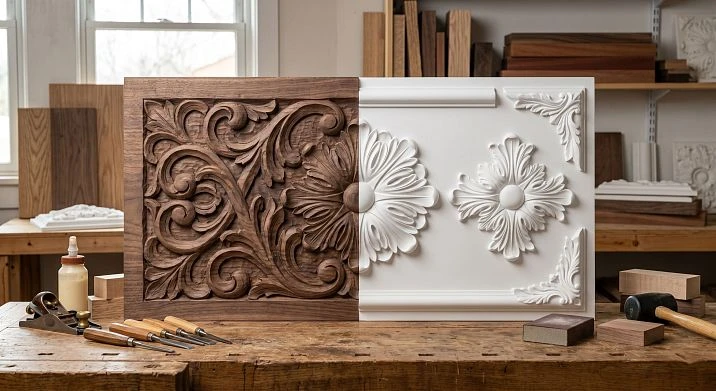
Imagine two similar dressers. Same dimensions, same body material, same paint. But one has bare facades, the second has a carved wooden ornament in the center of each door and a thin polyurethane molding frame around the perimeter. You look at both — and realize that the second one costs twice as much. Although the difference is only in the decor.
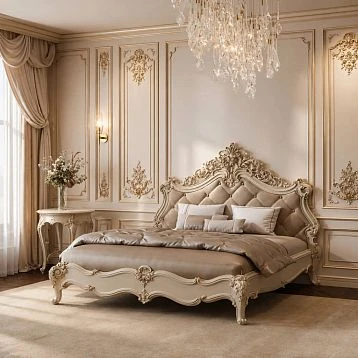
This is exactly how ornamental decor works in the interior. Not as decoration for decoration's sake, but as an architectural tool that creates a feeling of value, handcraft, and thoughtfulness. wooden ornament — is the center of this system. Polyurethane moldings — is the architectural frame around it.
In this article — a specific commercial conversation: where to use Carved wooden ornament – this is an art that preserves traditions of the past and finds its place in modern interiors. It can decorate any space, adding style, elegance, and individuality. Use wooden ornaments to create expressive accents, decorate facades, furniture, and walls, and you will transform your space, making it unique and irreplaceable!, where — polyurethane decorhow to connect them, and what to buy in one order so you don't have to go back three times.
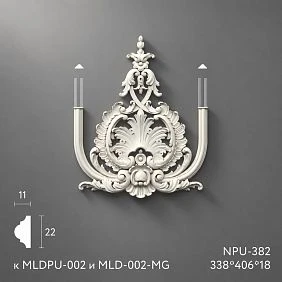
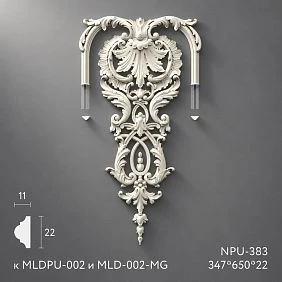


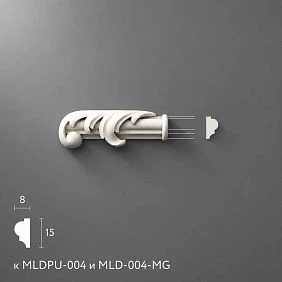
What to buy for ornamental decor: a working list
From theory to practice. Here is a complete set for a decorative system with ornament.
Wooden elements:
-
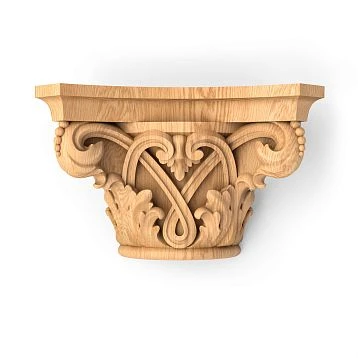
wooden ornament — central overlay patterns for furniture, panels, and portals;
-
Carved wooden decoration — shaped overlays, carved inserts, decorative reliefs;
-
decor for furniture — overlay elements for facades, doors, baseboards;
-
decorative wooden ornaments — openwork, relief, and flat-carved overlays of various sizes;
-
Wooden decoration — the entire range of overlay elements made of solid wood.
Polyurethane elements:
-
Moldings made of polyurethane — frame profiles around the ornament and along the perimeter of the panel;
-
Polyurethane appliqués — lightweight stucco accents for walls, ceilings, unloaded facades;
-
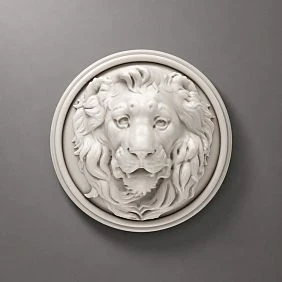
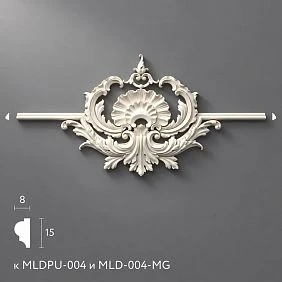
Decorative stucco — embossed medallions, cartouches, corner elements;
-
Decor for Molding — dot inserts along the length of the cornice;
-
Polyurethane moldings — the full range of relief decor for painting.
Installation and finishing materials:
-
adhesive for polyurethane — breakdown: what to glue polyurethane molding with;
-
fasteners for wood (self-tapping screws, studs, dowels);
-
acrylic sealant;
-
adhesive primer;
-
paint or enamel;
-
varnish or oil for wooden ornaments;
-
10% spare parts allowance.




Wooden ornament vs. polyurethane stucco: fundamental difference
This question is asked by everyone who comes for decor for the first time. And the correct answer is not “one is better than the other,” but “each material has its place.”
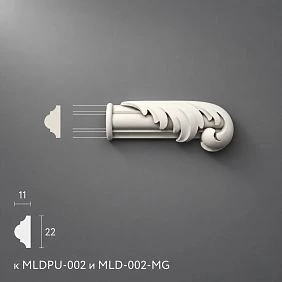
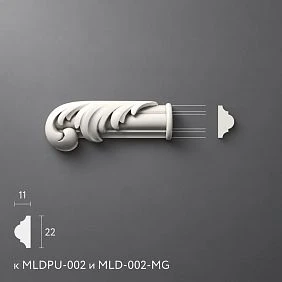
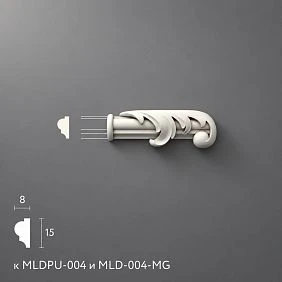
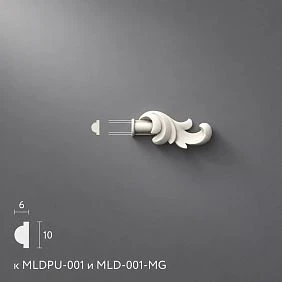
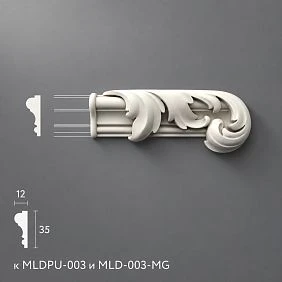
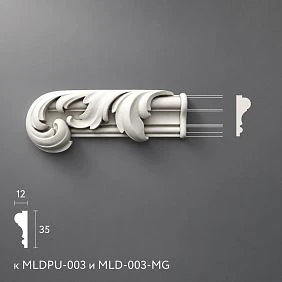
Our factory also produces:

What a wooden ornament provides
Carved wooden ornament – this is an art that preserves traditions of the past and finds its place in modern interiors. It can decorate any space, adding style, elegance, and individuality. Use wooden ornaments to create expressive accents, decorate facades, furniture, and walls, and you will transform your space, making it unique and irreplaceable! — it is depth and texture that cannot be replicated in polyurethane. Living wood has a porous structure: the carving goes into the material, creating shadows of varying depth. At an angle of lighting, the ornament “plays” — it changes depending on where the light comes from. This is not just a decorative overlay. It is a spatial object.
Tactile wooden ornament is density and warmth. You feel it with your hand. Polyurethane is softer and colder.
Wooden patterns are resistant to mechanical stress. On furniture facades, architraves, handrails — wood does not chip or deform from accidental impacts.
The finish coating of wood — natural oil, wax, varnish — preserves the texture and enhances the expressiveness of the carving. When painted white or another color, the ornament does not lose its shape — the relief is clearly readable.
Get Consultation
What polyurethane stucco provides
Polyurethane moldings — is lightness, repeatability, and precision of form. A polyurethane overlay weighs several times less than a wooden one of the same size. For ceiling rosettes, long cornices, repeating ornamental inserts along the wall — polyurethane is indispensable.
The surface of polyurethane is a smooth primer for painting. It accepts any enamel and is painted in the color of the wall, facade, or ceiling without additional preparation (after priming). This allows the decor to be integrated into the overall color scheme.
For repeating elements — for example, corner inserts in frame moldings, ornamental friezes around the perimeter, identical central accents on several panels — polyurethane is more convenient and economical than wood.
Table of differences
| Parameter | Wooden ornament | Polyurethane molding |
|---|---|---|
| Material | Solid wood | Polyurethane |
| Weight | High | Low |
| Tactile | Warm, dense | Cool, soft |
| Load resistance | High | Medium |
| Painting | Under varnish, oil, enamel | Under enamel (after primer) |
| Application | Furniture, portals, architraves | Walls, ceilings, unloaded areas |
| Repeatability | Limited | High |
| Natural appearance | Maximum | Depends on painting |
Where to use wooden ornaments: nine precise scenarios
Chest of drawers fronts
Chest of drawers — the "face" of a bedroom or living room. decorative wooden ornaments on drawer fronts turn standard furniture into a piece with character. Placement: center of each drawer, symmetrical relative to the handle. Ornament size — no more than 30–35% of the drawer width.
For a chest of drawers 900 mm wide with drawers 180 mm high: ornament 120–150 mm in the largest dimension. Shape: oval, rectangular with rounded edges, or square — depends on the drawer's proportions.
Sideboards and display cabinets
Sideboard — a furniture piece with an active decorative zone: glazed doors on the upper part, solid fronts on the lower body. Carved wooden decoration — for the lower solid fronts. Ornament centered on each door. In the upper glazed part — wooden glazing bead and ornamental overlays on the horizontal crossbars.
A separate application point: a decorative belt along the sideboard's top cornice — a wooden ornamental frieze or a stucco strip.
Cabinet and wardrobe doors
On cabinet doors, the ornament should be delicate — especially if the cabinet is large and the doors are in a row. Identical wooden patterns on each door create a rhythm — the furniture reads as a single architectural object. Different ornaments — chaos.
Scheme: the ornament is placed in the upper third of the door, centered. Below — the handle. Even lower — a zone without decoration.
Fireplace and TV zone portals
The portal is the most "honorable" place for a large wooden ornament. The keystone element above the portal (central decor in the top beam), corner blocks, and relief inserts in the pilasters — this is a classic architectural design scheme.
Ornament dimensions for a portal 1200–1400 mm wide: central keystone element 150–200 mm, corner blocks 100–120 mm.
Consoles and fireplace shelves
A console is a horizontal surface on legs or brackets. Decorative overlays on the brackets (support parts) and on the front panel of the console. decor for furniture here — small acanthus leaves, volutes, or geometric inserts on the support "ears" of the console.
Wooden panels and wall sections
Wall panels made of MDF with wooden ornament inside frame sections — this is a level that was previously only available in historical interiors. Now it is accessible to everyone. Central ornament in each section or only in individual, accent sections — creates wall dynamics.
Works in conjunction with polyurethane moldings: polyurethane molding — frame, wooden ornament — center.
Architraves and doorways
Decorative ornament above the door architrave — a "keystone" over the opening. Used in classic interiors where ceiling height allows placing decor above the door. Ornament size: 150–250 mm, proportional to the width of the opening.
Stair railings and handrails
Decorative overlays on stair railing posts and balusters. Wooden ornament — on balusters, side posts, horizontal rails. For a staircase in a classic home — a full carved program.
Decorative mirror frames
Mirror frame with wooden ornament at corner points and in the center of the top horizontal — an architectural frame, not just a molding. For hallway, living room, boudoir. Ornament at corners: 60–80 mm. Central top element: 100–150 mm.
Polyurethane stucco as an architectural frame for ornament
Ornament without surroundings is a point without context. It can be beautiful on its own, but in an interior, a point accent works much stronger when there is an architectural structure around it.
Moldings as a frame for ornament
Classic system: wooden ornament is placed inside a rectangular frame made of of polyurethane moldingsThe frame "holds" the ornament in space, creates a zone of silence around it, and highlights it as a separate object.
The width of the frame molding is 1.5–2 times narrower than the width of the ornament. For a 120 mm ornament, use a frame molding of 20–25 mm. The proportion is maintained.
Decorative stucco as a background
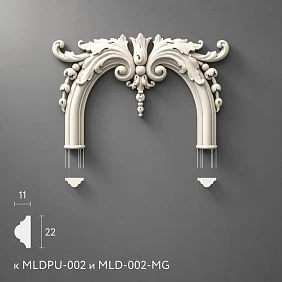
Decorative stucco in the form of corner inserts in frame moldings — another level of the system. A polyurethane corner piece in each corner of the frame creates a transition accent and geometrically "holds" the corners. The wooden ornament in the center is the main accent.
Result: three levels of decor — molding (frame), corner pieces (accents), central ornament (main focal point). This is enough for an expressive, balanced composition.
Decor for moldings: ornamental frieze
Decor for Molding — point inserts along the length of the cornice at a certain interval — create an ornamental frieze. If the wooden ornament is the center of the panel, and a molding cornice with such inserts runs along the top edge, then the entire panel area gains rhythm: the frieze points respond to the central accent ornament.
Stylistics of ornaments: what to choose for the interior
Baroque and Rococo
Acanthus leaves, scrolls, floral garlands, cartouches with symmetrical ornament. Maximum plasticity, deep relief, asymmetrical details in rococo. Carved wooden ornament – this is an art that preserves traditions of the past and finds its place in modern interiors. It can decorate any space, adding style, elegance, and individuality. Use wooden ornaments to create expressive accents, decorate facades, furniture, and walls, and you will transform your space, making it unique and irreplaceable! — for central accents on furniture. Polyurethane moldings — for ceiling and wall zones.
Classicism and Empire
Strict geometric ornaments: meander, palmette motif, acanthus leaf in classical symmetry, laurel wreath. The ornaments are clear, symmetrical, without any play of curves. wooden patterns in the classicist style — ideal for chests of drawers, consoles, door trims.
Neoclassicism
Simplified classical motifs. The ornament is flatter, linear, without deep relief. Used sparingly — one ornament per facade, without excess. Polyurethane appliqués in the neoclassical style — geometric rosettes, simple medallions.
Art Deco
Geometric ornaments with symmetry principles, zigzags, 'sun' rays, stylized flowers with geometric outlines. Wood — with a clear geometric pattern, under varnish or dark stain. Polyurethane — under white or colored enamel with a geometric profile.
Modern classic
A calm version of classic: small ornaments, without deep carving, simple geometry. Wooden ornament — one overlay on the facade, in a neutral form factor: a rectangle with a slightly relief pattern or rounded corners. Polyurethane — only a molding frame.
Ready-made kits for specific tasks
Chest of drawers facade: central ornament and molding frame
Task: chest of drawers 900 × 1000 mm, 3 drawers, MDF for painting in cream color.
Set:
-
wooden ornament — 3 overlays for 3 drawers, size 120 × 80 mm, classic floral motif;
-
Moldings made of polyurethane — frame profile 20 mm around the perimeter of each drawer, perimeter of one facade ≈ 2 linear m × 3 drawers = 6 linear m + 15% = 7 linear m;
-
Polyurethane appliqués — corner inserts for 4 corners of each drawer = 12 pcs;
-
Wooden handles made of beech (1 per drawer = 3 pcs);
-
Glue for polyurethane, fasteners for wooden ornament (pins);
-
Primer, cream enamel, 10% reserve.
Wall panel in the living room with wooden ornament
Task: accent wall 3600 × 2700 mm, three sections of 1200 mm, paneling height 1800 mm.
Set:
-
Moldings made of polyurethane — frame profile 25 mm for three sections: perimeter of one section (1200 + 1800) × 2 = 6000 mm, total 18 linear m + 15% = 21 linear m;
-
wooden ornament — 3 central accents (one per section), size 180–220 mm, symmetrical classic motif;
-
Decorative stucco — corner inserts, 4 in each section = 12 pcs;
-
Decor for Molding — inserts along the top cornice of the panel: 5–6 pcs.;
-
Polyurethane adhesive, ornament pins, sealant, primer, paint matching the wall color, 10% spare.
Fireplace portal: wood and polyurethane in a unified system
Task: decorative portal 1400 × 1600 mm, classic interior.
Set:
-
Carved wooden decoration — central lock ornament for the top beam of the portal, 200 × 150 mm;
-
decorative wooden ornaments — ornamental inserts in the pilasters (2 per pilaster = 4 pcs.);
-
Moldings made of polyurethane — profile around the portal perimeter, 40 mm. Perimeter: (1400 + 1600) × 2 = 6000 mm = 6 linear m + 15% = 7 linear m;
-
Polyurethane appliqués — corner blocks 4 pcs. for the external corners of the portal;
-
Polyurethane moldings — additional relief inserts along the horizontal architrave;
-
Polyurethane adhesive, wood fasteners, sealant, primer, paint, 10% spare.
Buffet: carved decor and wooden glazing bead
Task: buffet 1200 × 2100 mm, lower blind part + upper glazed part.
Set:
-
Carved wooden decoration — overlays on 2 lower blind facades, size 150 × 100 mm;
-
decorative elements for furniture — ornamental strip along the upper cornice of the buffet;
-
Moldings made of polyurethane — calm frame profile 15 mm on the lower facades;
-
Polyurethane appliqués — 2 small stucco accents above the upper doors;
-
Wooden handles, varnish for wooden ornaments, glue and primer for polyurethane, 10% spare.
Accent pier with central ornament
Task: pier 900 × 2700 mm between two doorways in the hall.
Set:
-
Moldings made of polyurethane — frame around the perimeter of the pier, profile 30 mm: (900 + 2700) × 2 = 7200 mm = 7.2 linear m + 15% = 8.3 linear m ≈ 9 linear m;
-
wooden ornament — one central accent in the middle of the pier, 200–250 mm;
-
Polyurethane appliqués — corner inserts 4 pcs. in the corners of the frame;
-
Glue, sealant, fasteners, primer, paint, 10% spare.
Mistakes when buying wooden ornament and polyurethane stucco
Choosing too large an ornament for a small facade
Proportion is a golden rule. The ornament should not occupy more than 30–40% of the facade area. For a dresser drawer 300 mm wide, an ornament 200 × 200 mm is a disaster. Correct: 80–100 mm.
Mixing different carving styles
Baroque sheet ornament on one facade and strict classicist meander on the adjacent one is not eclecticism, it's a mistake. One style for all furniture. One style for the entire room.
Placing polyurethane decor in loaded areas
Polyurethane appliqués on the lower part of furniture facades — in the area where legs, bags, vacuum cleaners are. Polyurethane chips here. The lower third of furniture — only wood or no overlays at all.
Buying ornament without a placement scheme
The ornament is purchased. The installer arrives, looks at the facade, and realizes: one ornament for three different doors, without understanding centering. The result — some are centered, others are slightly shifted, and some had to be reinstalled. A layout diagram on paper (or on the phone) — before purchase.
Do not account for element thickness
A wooden ornament 15 mm thick on the facade of a sliding wardrobe that fits into a niche with a 10 mm gap — when closed, the wardrobe "does not close." The thickness of the ornament must be less than the gap between the facade and the body in the closed position. Standard: 8–12 mm.
Using too many active patterns
Every wall, every facade, every panel with an active pattern is visual noise. One main ornamental accent in the room, the rest — calm frames.
How to choose a wooden ornament: parameters and criteria
Tree species
Beech. Dense, uniform, without pronounced grain. Beech ornament — for painting. It accepts enamel well, the surface is smooth.
Oak. Dense, with characteristic texture. Oak ornament — under varnish or oil. Carving on oak is expressive: the texture enhances the depth of the relief.
Linden. Soft wood, traditional for carving. Allows for thin, openwork ornament with deep relief. For painting or varnish.
Ash. Hard, with pronounced linear grain. Ash ornament — under transparent coatings for the most expressive natural appearance.
Thread type
Flat-carved. Ornament with minimal relief (2–5 mm). Linear drawing, geometry. Suitable for modern classic and neoclassical styles.
Relief-carved. Ornament with relief of 8–15 mm. Classic leaves, rosettes, volutes. Shadow visible, high expressiveness. For classic and baroque styles.
Pierced (openwork). Ornament with through cutting. Openwork pattern creates a lace effect. For display cases, door inserts, decorative grilles.
Volumetric. Ornament with height of 15–25 mm or more. Maximum plasticity. For portals and large furniture pieces.
Dimensions
Sizes of wooden ornaments range from small inserts of 40 × 40 mm to large panels of 400 × 300 mm and more. For furniture facades, the optimal range is 80–200 mm. For wall panels and portals, it is 150–300 mm.
Installation of wooden ornament: from marking to finish
Marking and Positioning
Before installation, marking is done. The center of the facade or panel is determined horizontally and vertically using a level. The ornament is applied to the surface, and the position of fastening points is marked.
Fasteners
PVA glue + pressing. For wooden ornament on a wooden or MDF facade, use carpenter's PVA. Application: an even layer on the back side of the ornament. Pressing: 30–60 minutes. Fixation during pressing: masking tape or temporary clamps.
Finishing pins. For secure fastening: 2–4 pin-nails diagonally through the ornament. Heads are countersunk and puttied.
Mounting adhesive. For polyurethane overlays — mounting adhesive compatible with polyurethane. Details: what to glue polyurethane molding with.
Finishing coating
For wooden ornament under varnish: sanding → primer-varnish → sanding P220 → finish varnish in 2 coats. For ornament under painting: sanding → primer → puttying joints → sanding → enamel in 2 coats. For polyurethane elements: adhesion primer → enamel in 2 coats.
FAQ: answers to the main questions about ornamental decor
Which is better — wooden ornament or polyurethane overlay?
This is not a competition — these are different roles. wooden ornament — the main accent with natural texture, tactility, and depth of carving. Polyurethane moldings — an architectural frame, repeatable decor, light relief for painting. The best system is both together, each in its place.
Can carved wooden decor and polyurethane stucco be combined in one interior?
Yes, this is a classic professional technique. Carved wooden decoration — the main accent pattern, Moldings made of polyurethane — a framing architecture around. The main thing: one style for both materials and maintaining hierarchy — what is primary, what is background.
What to buy for a furniture facade with ornament?
wooden ornament (central accent), Moldings made of polyurethane (frame), corner Polyurethane appliqués, wooden handles, glue, fasteners, sealant, primer, paint, and a 10% reserve.
Where is it better to use wooden patterns?
On furniture facades, in portals, on wall panels, in decorative mirror frames, on architraves, consoles, and sideboards. Everywhere where natural texture, durability, and tactile appearance are important.
How not to overload the interior with ornament?
One main ornamental pattern in the room — a central accent on a key surface. Around it — calm moldings and frames. The remaining walls and facades — without ornaments or with minimal geometric decor. Less means more expressive.
About the company STAVROS
The entire range described in this article — Wooden ornaments, Carved wooden decoration, decorative wooden ornaments, decor for furniture, Polyurethane moldings, Polyurethane appliqués, moldings made of polyurethane и Decor for Molding — is produced and supplied by STAVROS.
STAVROS is a St. Petersburg manufacturer of architectural and furniture decor made from solid wood and polyurethane. Full-cycle production in St. Petersburg. Catalog with complete technical specifications, exact dimensions, and photos of each element. Among the completed projects are the State Hermitage Museum, the Konstantinovsky Palace, the Alexander Palace, and the Trinity-Izmailovsky Cathedral. Over twenty years of precise work. Orders starting from one unit. Delivery across all of Russia.