Article Contents:
- Why the correct total meters does not yet mean the correct order
- What exactly is sold in the K-105 listing
- Thin profile with a braid: why the joint is more visible than it seems
- Symmetry is important on paired facades
- After painting, the error does not always disappear
- Finish length of each side
- Blank length
- Useful remainder
- Number of connections
- Numbering saves from confusion
- Small decorative frames
- Test corner
- Color sample and shade approval
- Short part in a mixed cutting map
- High furniture fronts
- Wide drawers and doors
- Multiple parts from one blank
- Selecting Wood
- What should be visible on the map
- Why the plan to 'cut in place' is dangerous
- Leftover for testing
- Leftover for repairs
- Where not to place a joint randomly
- How to make the connection predictable
- Frame on a furniture facade
- Contour on the door leaf
- Small frame around the mirror
- Design of panels and wall panels
- Decor of a chest of drawers and a cabinet
- Beech for painting and a calm wood surface
- Oak for finishing with visible texture
- Mixing beech and oak in one frame is risky
- When considering "Standard"
- When "Prestige" is considered
- Why sanding should be specified for both lengths
- With opaque enamel
- With transparent finishing
- What is checked during dry layout
- Why glue is chosen after material and finishing
- Inner and outer dimensions of the frame
- Small drawer
- Tall cabinet door
- Wide dresser facade
- When additional decor is useful
- When it is better to avoid it
- Why two lengths need to be listed as separate items
- Why the material cannot be specified once in a note
- How to link the specification to the cutting map
- Why meter-long strips are checked for straightness
- How to divide lengths in a package
- Why you can't immediately cut the damaged section
- Mistake 1. Only counted the perimeter
- Error 2. Bought 300 mm for long verticals
- Error 3. Chose only meter-long strips
- Error 4. Took the finished size as the workpiece length
- Error 5. Called the remainder useful without checking
- Error 6. Used the same remainder twice in the calculation
- Error 7. Counted paired facades separately
- Error 8. Did not specify the length in the invoice
- Error 9. Mixed beech and oak
- Error 10. Confused "Prestige" with finished trim
- Error 11. Did not make a test corner
- Error 12. Did not check the 9 × 4 mm scale
- Error 13. The joint was placed in the center without a designer's decision
- Error 14. The finish was chosen based on a flat sample
- Error 15. Installation started before dry layout
- Error 16. The facade opening was not checked
- Error 17. Different batches were ordered
- Error 18. The goods were not inspected upon receipt
- Step 1. Approve the frame shape
- Step 2. Record each side
- Step 3. Convert finished parts into blanks
- Step 4. Mark sides longer than 300 mm
- Step 5. Mark sides longer than 1000 mm
- Step 6. Distribute meter-long strips
- Step 7. Assign useful leftovers
- Step 8. Add 300 mm strips
- Step 9. Align symmetry
- Step 10. Choose beech or oak
- Step 11. Choose "Standard" or "Prestige"
- Step 12. Add a test element
- Step 13. Check the bill
- Step 14. Specify delivery
- Step 15. Place order as one batch
- What is the cross-section of K-105?
- What lengths are available?
- Which is better — 300 or 1000 mm?
- Can K-105 be calculated only by perimeter?
- Why are six meters of short planks not equal to six-meter planks?
- How to understand if a joint is needed?
- Where to place the connection?
- Do I need to consider the braid when joining?
- Can I get a long side of 1200 mm without a joint?
- How do I calculate the allowance for a miter cut?
- What is a useful remainder?
- Can I buy only meter-long strips?
- Can I order only 300 mm?
- What is K-105 made of?
- What to choose for enamel?
- What to choose for tinting?
- What does "Standard" mean?
- What does 'Prestige' mean?
- Can I mix "Standard" and "Prestige" in one frame?
- Is K-105 suitable for a furniture facade?
- Is K-105 suitable for a door?
- Can I assemble a frame for a mirror?
- Where can I see other wooden baguettes?
- Where can I see other moldings?
- Do I need to buy glue right away?
- How to order finishing materials?
- Can I order help with the layout?
- Where can I check the price of K-105?
- How to order K-105 in one batch?
- How do I check the product upon delivery?
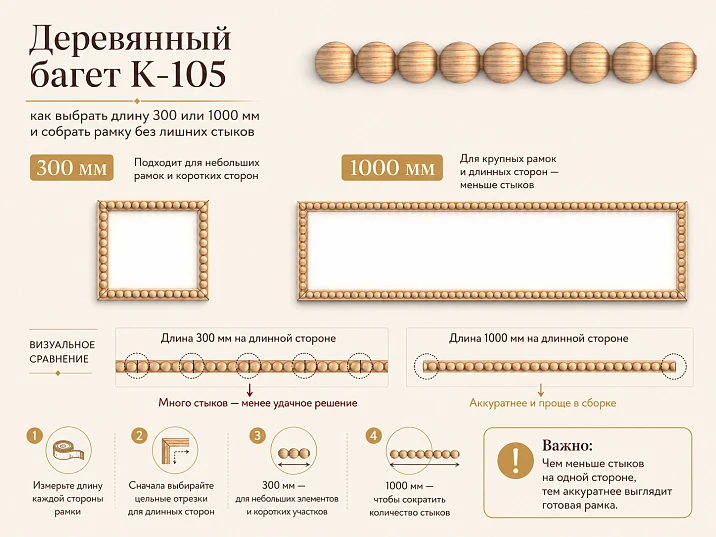
Wooden baguette K-105 is easy to calculate incorrectly even when the total footage is determined without an arithmetic error. On paper, everything looks convincing: four facades, several rectangular frames, a total length of 5.8 or 6 meters, a small margin — so the material should be enough. The buyer opens the product card, sees strips of 300 and 1000 mm, adds up their length, and places an order. But at the cutting stage, an unpleasant discovery is made: there are indeed enough meters, but the long sides have to be assembled from two or three parts, the short leftovers do not fit any piece, and on paired doors the joints end up in different places.
The problem is not with K-105 itself or the complexity of the calculation. The error appears earlier — at the moment when the baguette is counted only in meters, forgetting that the frame consists of specific sides. For each side, a blank of a certain length is needed, taking into account the miter cut. A piece that cannot be turned into any of these blanks remains a leftover, even if it was honestly included in the paid footage.
K-105 is a thin carved wooden molding with a braid pattern. Its cross-section is 9 × 4 mm, and the product card provides two lengths: 300 and 1000 mm. Materials are beech and oak, with sanding quality of "Standard" or "Prestige". The small cross-section makes the profile delicate: it can outline a panel, emphasize a rectangle on a furniture facade, or assemble a light frame around a decorative field, mirror, or panel. But the same thinness makes the joints noticeable. On a narrow braid, each line break reads more strongly than on a wide smooth profile.
Therefore, before buy wooden baguette K-105, you need to answer not one, but three questions: how many whole sides are required, from which slats they will be cut, and where the inevitable joints will be. Only after this does the total footage turn into a real set.
Why the correct sum of meters does not yet mean the correct order
Let's imagine a conditional project: for several furniture facades, exactly 6 meters of K-105 is required. There are two formally equal orders:
-
twenty slats of 300 mm each — totaling 6 meters;
-
six slats of 1000 mm each — also 6 meters.
In terms of total length, the options are identical. In terms of cutting possibilities, they are completely different.
If the long side of the frame has a finished size of 540 mm, it is impossible to assemble it from a single 300 mm slat. At least two fragments will be required, and in fact, also an allowance for the joint. On four facades, there may be eight such long sides. This means that the short format creates many joints in advance.
A meter-long slat, on the contrary, allows you to cut the long side as a single piece. The remainder after it can go to a short element, if its length is sufficient considering the cut. But here too, you cannot automatically decide that 1000 mm is always more advantageous. If the project consists of small decorative inserts of 180–220 mm, a meter-long slat may produce many inconvenient leftovers, and the 300 mm option may turn out to be more rational.
The main difference sounds like this:
The footage answers the question "how much material in total," while the cutting map answers the question "can all the needed parts be obtained from this material."
These two calculations complement each other. One without the other leaves risk.




What exactly is sold in the K-105 listing
Before compiling the list, it is useful to record the confirmed characteristics. They define the boundaries of the calculation and prevent mixing K-105 with a similar baguette of a different cross-section or length.
| Parameter | Confirmed value | How to use when ordering |
|---|---|---|
| Article number | K-105 | Specify in the estimate, cutting map, and invoice |
| Product type | Carved wooden baguette, narrow molding | Do not confuse with a ready-made frame or wide profile |
| Ornament | Pigtail | Consider the continuity of the pattern and the visibility of joints |
| Section A × C | 9 × 4 mm | Check the profile scale on the facade and in the drawing |
| Length L, option 1 | 300 мм | Use for short parts, samples, and sections that actually fit within this length |
| Length L, option 2 | 1000 мм | Consider for long sides and combined cutting |
| Material | Beech or oak | Link with future finishing and adjacent wooden elements |
| Sanding | "Standard" or "Prestige" | Do not confuse with the final finish coating |
| Finish | Selected separately | Coordinate before ordering the batch |
| Universal allowance for cutting | Not set | Calculate according to the actual connection scheme and technology |
| Finished frame complete with set | Not confirmed | K-105 is ordered as linear molding, the quantity is determined by the cutting layout |
The parameters seem simple, but it is the combination of length, material, and preparation that creates a specific order item. The entry "K-105 — 6 m" is too sparse. It does not show how many strips of 300 mm are needed, how many of 1000 mm, which material is chosen, and what level of sanding is required.
The working specification should look more detailed: "K-105, cross-section 9 × 4 mm, length 1000 mm, oak, sanding "Prestige" — ___ pcs.; K-105, cross-section 9 × 4 mm, length 300 mm, oak, sanding "Prestige" — ___ pcs. Quantity according to the approved cutting layout."
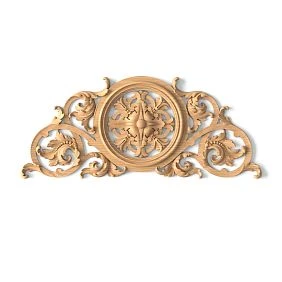
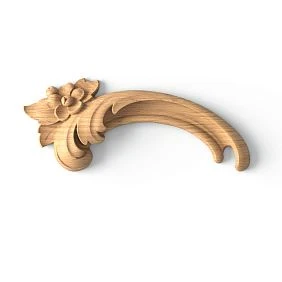
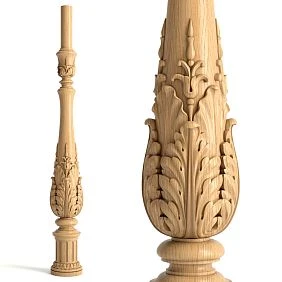
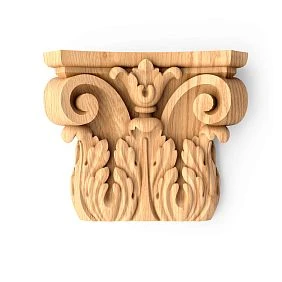
Our factory also produces:
Thin profile with a braid: why the joint is more visible than it seems
On a wide smooth baguette, the joint can sometimes be hidden in the shadow or in an inconspicuous area. K-105 works differently. The 9 × 4 mm cross-section creates a thin decorative contour, and the braid sets a sequential rhythm. The eye quickly reads this line. When it suddenly breaks or shifts, the joint becomes noticeable even without careful inspection.
This does not mean that K-105 cannot be joined. Sometimes a joint is inevitable: the side is longer than 1000 mm, the project has complex geometry, or available strips are distributed among many parts. The question is different — the joint must be planned, not appear as a random result of a shortage of a solid workpiece.
Get Consultation
Symmetry is important on paired facades
If two doors are next to each other, the buyer compares them automatically. Suppose on the left vertical side of one frame the joint is located at a height of 420 mm, and on the adjacent facade — 610 mm. Even neatly made joints create a different rhythm. The facades begin to look assembled from different sets.
It is better to decide in advance:
-
whether both sides can be made as whole pieces;
-
if not, where to place the joint on each door;
-
whether it will be mirrored or the same in height;
-
whether the seam will fall into the area of brightest lighting;
-
whether the direction of the pattern matches;
-
whether there will be a handle nearby that will additionally attract attention.
After painting, the error does not always disappear
Solid enamel can reduce the contrast of the wood, but it does not eliminate the geometric gap. On a convex carved pattern, light forms shadows. If two parts are joined with a slight offset, the shadow line reveals the seam.
Transparent or tinted oak finish, on the contrary, preserves the texture. Then the wood grain is added to the geometry. Therefore, the choice of length must be finalized before finishing, rather than hoping that the coating will hide the result of random cutting.
Four indicators without which the total footage is useless
To buy wooden molding for a specific project, four different values need to be calculated.
Finished length of each side
This is the size of the finished part after cutting and fitting. It is taken from the approved frame drawing.
It cannot be replaced by the total width of the facade. If the door is 600 mm and the frame is set back from the edges, the horizontal side will be shorter. The exact value depends on the chosen measurement line and the method of joining corners.
Workpiece length
The workpiece is longer than the finished part. The allowance is needed for marking, cutting, and fitting. The specific value depends on the technology, so a universal allowance cannot be assigned without project data.
Useful remainder
A remainder is considered useful only when a specific future part has already been identified for it. The phrase "this piece will come in handy somewhere" is not a calculation.
Number of joints
Two specifications with the same footage can yield a different number of joints. For a thin decorative frame, this is an important indicator of visual quality.
Add a separate "joint" column to the list. Then the decision becomes clear: one side is solid, another is composite, the connection is acceptable, or the cutting pattern needs to be changed.
Side list: a document that turns an idea into a set
The side list is compiled before purchase. Separate rows are created for each frame.
| Frame | Side | Finish size | Required blank | Source plank | Remainder | Joint |
|---|---|---|---|---|---|---|
| № 1 | Top | According to the drawing | With allowance | 1000 мм | By map | No |
| № 1 | Bottom | According to the drawing | With allowance | 1000 мм | By map | No |
| № 1 | Left | According to the drawing | With allowance | 300 or 1000 mm | By map | By decision |
| № 1 | Right | According to the drawing | With allowance | 300 or 1000 mm | By map | By decision |
After the first frame, add the second, third, and all the rest. It is convenient to place paired facades next to each other in the table: this makes it easier to check symmetry.
Numbering saves from confusion
Each part is assigned a designation: F1-Top, F1-Bottom, F1-Left, F1-Right. On the cutting map, the same marking shows which plank the element is cut from.
For a large batch, you can add:
-
room;
-
cabinet number;
-
the facade number;
-
material;
-
sanding;
-
finish;
-
pattern direction;
-
note on the joint.
Such a document is useful not only for the craftsman. It helps the purchaser check the invoice, the designer see the composition, and the client understand why a few meters are not enough.
How to choose between lengths of 300 and 1000 mm
There is no rule like "always take a meter-long baguette" or "the short option is more economical." The length is chosen based on the parts.
| Situation | 300 мм | 1000 мм | What determines the choice |
|---|---|---|---|
| Short side up to 300 mm with allowance | May be suitable | That will also work | Usefulness of the remainder and the number of such parts |
| Side longer than 300 mm | Does not yield a whole part | May yield a whole part | Need to avoid a joint |
| Test swatch | Convenient short format | Redundant for a single trial | Is the remainder planned to be used |
| Several short parts | May require many planks | Several parts can be obtained from one plank | Cutting map |
| Paired facades | May increase the number of joints | Simplifies symmetrical cutting | Same position of joints |
| Side longer than 1000 mm | Several parts will be required | A joint will also be required | Where to place the connection and how to align it |
| Complex decor with small inserts | Often convenient | May leave remnants | Actual dimensions of each section |
This table does not choose for the buyer. It shows what data needs to be substituted.
When a 300 mm length really works better
A short plank is easy to underestimate. After an unsuccessful calculation, the buyer sees it only as a source of extra joints. But 300 mm is a full-fledged product length, not a random offcut and not just a display sample. In a suitable layout, it helps to assemble the set more accurately.
Small decorative frames
If each side with allowance fits confidently within 300 mm, the short format can be convenient. For example, a miniature frame on a drawer, a decorative insert on a panel, or the outline of a small panel does not require a meter-long blank just for one piece.
But you need to check not the finished size, but the blank. A side exactly 300 mm long does not fit into a 300 mm plank if cutting and fitting are required. The boundary of the product length is not the boundary of the finished part.
Test corner
Before cutting the entire batch, it is useful to assemble one corner. It shows how the braid comes together, how the profile looks after cutting, how noticeable the joint line is, and how the chosen finish behaves.
For such a task order K-105 with a length of 300 mm it may be more reasonable than using a meter-long plank. But the decision depends on whether the short element will be needed in the main cutting layout.
Color sample and shade approval
Beech or oak perceive opaque and transparent finishes differently. A short fragment allows for a test, to see the braid relief, evaluate the shadow, and approve the color before ordering the entire batch.
It cannot be automatically assumed that a 300-millimeter plank is always supplied as a sample with special conditions. This is one of the confirmed lengths of K-105. Its purpose is determined by the buyer's project.
Short piece in a mixed cutting map
Sometimes the basis of an order is meter-long planks, but after distribution, several short sides remain that do not fit into useful leftovers. Purchasing one or several 300 mm planks covers these positions without extra meter.
It is the mixed order that often turns out to be the most manageable: long sides get whole meter-long blanks, short ones get separate fragments, and leftovers are pre-assigned to specific parts.
When meter-long K-105 reduces the number of joints
Length 1000 mm unfolds where a solid line matters.
Tall furniture fronts
The vertical side of a decorative frame on a cabinet door often exceeds 300 mm. Short strips would force dividing it into several parts. The meter-long K-105 allows obtaining a single piece if the required blank does not exceed 1000 mm.
A solid vertical line is especially important on paired fronts. It preserves the continuity of the braid and eliminates the need to mirror intermediate joints.
Wide drawers and doors
The horizontal side of the frame can be longer than 300 mm even on a low front. Here, the meter-long strip also reduces the number of joints.
Multiple pieces from one blank
The meter format does not necessarily go to one side. It can yield two or more short pieces if their total, including allowances, fits within 1000 mm.
Suppose the project requires two blanks of 260 mm each and one of 340 mm. Their net total is 860 mm. But before deciding, you need to add real allowances and account for cutting losses. Only then can you see whether the set fits into one strip.
Wood Selection
On oak, the texture is noticeable. When several elements of one frame are cut from a single long strip, their shade and grain direction are easier to match. This does not guarantee absolute uniformity, but gives the craftsman more control over the layout.
For long sides, you can buy a meter-long baguette K-105, and distribute the short pieces among the leftovers or supplement with 300 mm strips.
Cutting map: not a drawing for production, but a purchase check
The cutting map is often perceived as an internal workshop document. In fact, it is needed even before payment. It is the map that shows which product option to put in the cart.
Each strip is marked separately:
-
M1 — 1000 mm;
-
M2 — 1000 mm;
-
K1 — 300 mm;
-
K2 — 300 mm.
The diagram records which parts will be cut from each blank. Technological sections are left between them according to the accepted technology. Parts cannot be laid out flush against each other based on final dimensions.
What should be visible on the map
-
Initial length of the strip.
-
Number of each part.
-
Required length of the blank.
-
Order of cuts.
-
remainder.
-
purpose of the remainder.
-
Material.
-
Grinding level.
-
Frame to which the part belongs.
-
Note regarding the pattern or joint.
Why the plan to "cut to fit on site" is dangerous
This approach is only possible with sufficient stock and a simple project, but it does not help to buy material correctly. Without a map, it is impossible to understand in advance:
-
whether meter-long planks will be enough;
-
how many short pieces need to be added;
-
whether useless fragments will remain;
-
where the joints will occur;
-
whether paired frames will be assembled identically.
Cutting on site does not cancel the math. It only postpones the moment when the error becomes visible.
Useful leftover and useless leftover are not the same thing
After cutting a meter-long plank, 180 mm remains. The buyer is happy: the material is not wasted. But in the cutting list, the shortest remaining piece is 205 mm. This means the 180 mm piece does not cover any item.
From the perspective of wood mass, the leftover exists. From the perspective of the project, it does not.
Usefulness is checked by three criteria:
-
the length is enough for a specific part with allowance;
-
the profile and direction are suitable;
-
the part is not yet provided with another blank.
If at least one item is not met, the remainder cannot be deducted from the order.
Remainder for testing
A short fragment can be useful for cutting out, adjusting the cut, or a test connection. Then this purpose is fixed in advance. But the same remainder cannot be simultaneously recorded as a future frame side and as test material.
Remainder for repair
Sometimes the customer wants to keep a small reserve in case of damage. This is a separate project item. It should not be disguised as "unavoidable waste." The reserve must be conscious and signed.
Example of calculating one frame without reference to random footage
Consider a conditional frame. All figures below describe only the calculation principle, not the K-105 standard.
Suppose that after drawing the layout, four required blanks are obtained:
-
two vertical ones of 620 mm each;
-
two horizontal ones of 360 mm each.
Net sum of blanks:
620 × 2 + 360 × 2 = 1960 mm.
By total length, it seems that two planks of 1000 mm each are enough. But the two verticals already take up 620 mm each. After them, 380 mm remains before accounting for cutting and technological losses. Theoretically, one horizontal of 360 mm can fit into each remainder. Practically, it is necessary to check whether the remaining 20 mm is enough for all operations.
If allowances are already included in 620 and 360 mm, and losses between parts allow cutting, two meter-long planks can cover the frame. If not, a different option will be required.
This example shows why the map starts with blanks. The frame perimeter formula gives only a starting point.
Example for four identical facades
Suppose each frame requires:
-
two blanks of 720 mm;
-
two of 280 mm.
For one frame the total is 2000 mm, for four — 8000 mm.
Ordering eight meter-long strips seems obvious. From each you can cut 720 mm, and the remainder of 280 mm seems ideal for the short side. But if 720 and 280 mm are exactly the blank sizes and no additional loss is needed between them, the scheme works. If these are finished sizes, they no longer fit on one strip after adding allowances.
Possible solutions:
-
increase the number of meter-long strips;
-
use meter-long strips for verticals and 300-millimeter ones for horizontals;
-
change the calculation line after agreeing on the corners;
-
reconsider the frame size if the project allows adjustment.
The most understandable order might look like this: eight meter-long strips for the long sides and eight short strips for the horizontals. It will give more total length than a clean perimeter, but the cutting will become transparent. Whether the quantity can be reduced is shown only by a detailed map.
It is impossible to declare one option cheaper in advance. The price depends on the card, material, sanding, and the chosen quantity. The advantage of the map is not in promising savings, but in a manageable result.
A side longer than 1000 mm: the joint must be assigned, not discovered
If the required workpiece exceeds a meter in length, a solid piece from the confirmed K-105 options cannot be obtained. Then the connection becomes part of the project.
Where not to place a joint randomly
-
in the visual center, if it immediately falls into the field of view;
-
near a handle or overlay that attracts attention;
-
at different heights on paired facades;
-
in a place with bright side light;
-
too close to a corner;
-
where the base has an unevenness.
How to make the connection predictable
First, choose the position on the layout. Then, calculate separate blanks for the two parts. In the map, mark the direction of the braid and the assembly order. On paired elements, the joints are placed consistently.
If a side is 1280 mm, you cannot write "1000 + 300" and consider the problem solved. You need allowance for the connection and cuts, as well as an understanding of which fragment will remain after fitting. Specific allowances are set by the workshop.
Symmetry is more important than minimal waste
Sometimes a map with the least waste gives different joints on two facades. The material is used almost completely, but the appearance suffers.
In decorative work, the densest cutting layout does not always win. You need to compare two criteria:
-
rationality of using the strips;
-
visual consistency of the frames.
If an additional short strip is required for symmetry, this is a deliberate design decision, not a mistake. The buyer understands what they are paying for: not for extra millimeters, but for an identical composition.
Where K-105 is particularly convincing
A thin braid should not compete with large carving. Its strength lies in a precise contour.
Frame on a furniture facade
K-105 can emphasize the rectangle of a panel, divide the surface, or create a light decorative belt. Before ordering, check the facade size, offsets, handle, and opening.
Contour on a door leaf
On a door, a narrow baguette can support a classic composition. It is useful to look at doors with wooden trim and assess the scale of frames, but you cannot copy others' dimensions. You need to measure your own door leaf and check the layout against the opening and hardware.
A small frame around a mirror
K-105 can be considered a thin decorative contour if the base structure and mounting method are predetermined. The trim itself should not automatically be called a ready-made load-bearing frame.
Design of panels and wall panels
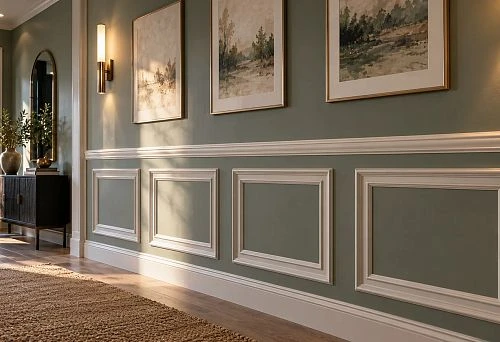
The braid helps highlight the inner field. Here it is especially important to determine whether each section will be solid and how the joints relate to the panel corners.
Decor of the chest of drawers and bedside table
On small facades, a length of 300 mm may be more useful than on a tall cabinet. But the decision again depends on the workpiece, not on the general name of the furniture.
Ready-made frame or assembly from K-105
A buyer who needs a frame sometimes chooses between two paths: purchasing a ready-made product or assembling a decorative contour from moldings.
| Criterion | Assembly from K-105 | Ready-made wooden frame |
|---|---|---|
| Size | Formed according to the project | Limited by the characteristics of the specific frame |
| Ornament | K-105 braid | depends on the model |
| Layout | Side map required | Usually not required by the buyer |
| Joints | Need to plan | Already formed by the manufacturer |
| Material | Beech or oak for K-105 | Checked against the frame card |
| Finishing | Agreed separately | Depends on the selected product |
| Application | Decorative contour on the base | Independent finished structure by purpose |
Useful if you need an independent structure for a mirror or painting compare a finished frame and an assembly from a baguette. K-105 gives freedom of layout, but requires designing the base, corners, and installation.
Beech or oak: the wood species is chosen together with the future finish
Length affects joints, material affects appearance and further finishing. These decisions cannot be made in separate documents. If part of the frame is ordered in beech and part in oak, identical geometry will not make the elements visually unified.
Beech for painting and a calm wood surface
Beech can be considered under opaque enamel or a finish where a pronounced oak texture is not required. On thin K-105, the material works delicately: the braid is read through the relief, not through a contrasting grain pattern.
But the phrase "beech under enamel" does not mean that any chosen option is already fully prepared for immediate application of a specific composition. You need to check the sanding level, finishing system requirements, priming, and a test coat.
If the project is designed for beech elements, you can find out the price of K-105 in beech for both lengths and compare them already by the cutting map.
Oak for finishes with visible texture
Oak is chosen when the wood grain should remain part of the composition. Tinting, oil, or another transparent coating highlights both the fibers and the carved ornament.
On the long side, it is important to match parts by shade. If the frame is assembled from several slats, a difference in texture near the joint can emphasize it. Ordering in one batch and pre-layout give the craftsman more options for selection.
For such a scenario, you can order oak K-105, but the shade of the future coating should be checked on a real sample.
Mixing beech and oak in one frame is risky
Technically, different wood species can be joined, but without a deliberate design intent, the result looks random. Even under opaque paint, materials may differ in behavior during preparation. Under a transparent finish, the difference is obvious.
The bill of materials should have a separate column for "material." It protects the order from a situation where meter-long slats are chosen from oak and short ones from beech only because the items were processed at different times.
"Standard" and "Prestige": sanding quality is not equal to final finish
The K-105 card provides sanding options "Standard" and "Prestige." They cannot be described as two ready-made colors or two types of final coating.
When considering "Standard"
This option is appropriate if the project involves further preparation in the workshop and the contractor understands the scope of subsequent operations. But the exact surface condition should be checked in the card of the selected item or with the manager.
When considering "Prestige"
"Prestige" involves more detailed hand sanding. This is especially noticeable on the carved profile: the braid has small recesses and transitions where preparation affects the quality of the future finish.
However, even buying K-105 "Prestige" does not mean getting the product in its final color. The finish is chosen separately.
Why sanding needs to be specified for both lengths
If meter-long strips are ordered in one quality and 300-millimeter ones in another, parts of the same frame will require different preparation. This increases the risk of an uneven surface after painting.
In the invoice, each line is compared:
-
article number;
-
cross-section;
-
length;
-
material;
-
sanding;
-
Quantity.
Unpainted baguette: first a sample, then the whole batch
The request "buy unpainted wooden baguette by the meter" reflects a practical scenario: the buyer wants to choose the color, enamel, tint, or oil themselves. But an unpainted product cannot be perceived as a universal blank that accepts any coating equally without preparation.
The result depends on:
-
the type of wood;
-
level of sanding;
-
the selected composition;
-
the method of application;
-
the number of layers;
-
interlayer treatment;
-
lighting;
-
the color of the adjacent base.
A test piece is needed for two reasons. The first is color. The second is texture. The composition may accumulate in the recesses of the braid, darken the pattern more strongly, or reduce its readability.
If required wooden baguette buy by the meter For finishing on site, a separate test element is included in the calculation. It cannot simultaneously be considered a finished frame side.
How to match the color on a short and a meter-long strip
Both lengths must refer to the same material and the same finishing system. For natural wood, it is useful to lay the strips side by side before cutting.
With opaque enamel
Compare:
-
surface smoothness;
-
depth of the relief;
-
filling of recesses;
-
shine;
-
appearance of joints;
-
alignment with the facade.
With a transparent finish
Added:
-
wood tone;
-
direction of fibers;
-
contrast;
-
end reaction;
-
difference between the planks.
If the frames are paired, the parts are distributed not by the principle of "whichever comes first," but so that adjacent facades look consistent.
For an oak project, you can order oil for oak K-105 after confirming the compatibility of the specific composition. For beech in the same section, you can buy materials for painting, without substituting them for the finishing process map.
Installation begins not with glue, but with dry layout
Glue does not fix a short workpiece, an extra joint, or a mixed-up orientation. Before final fastening, all elements are assembled dry.
What is checked during dry layout
-
outer frame size;
-
inner size;
-
corner alignment;
-
position of the braid;
-
symmetry;
-
gaps;
-
joint locations;
-
correspondence to the facade;
-
interaction with the handle;
-
the opening of adjacent doors;
-
matching of paired frames.
Why glue is chosen after the material and finish
The composition must match the base, wood species, surface preparation, and the adopted technology. No single product can be called universal for all K-105 projects without testing.
After approving the layout, you can buy mounting adhesive for wooden baguette and other consumables. But the mere presence of glue in the catalog does not mean that only the adhesive method is suitable for a specific base.
Cutting corners: why the allowance cannot be replaced by a single number
Articles on calculation often advise adding a conditional 5 or 10 percent. For purchasing overall material, such a reserve can serve as a rough guideline, but it does not show whether each plank will be enough for each side.
The allowance depends on:
-
the joint angle;
-
the point at which the part is measured;
-
the tool;
-
the quality of the first cut;
-
the need for re-fitting;
-
the width of the cut;
-
craftsman's experience;
-
the condition of the ends of the original strip.
K-105 has a cross-section of 9 × 4 mm. The profile is thin, so a careless cut can damage the relief or cause noticeable misalignment. The specific technique must be determined by the installer.
Inner and outer dimensions of the frame
These values must not be mixed. If the drawing specifies the internal light opening, the length of the outer side will be different. If the calculation is based on the outer contour, the internal dimension depends on the cross-section and the geometry of the joint.
The specification must always state from where to where the side is measured. The word "frame width" without explanation creates ambiguity.
How to check the K-105 scale on the facade before purchasing
A 9 × 4 mm profile looks very thin on a large door and more noticeable on a small drawer. The same molding changes character depending on the scale of the base.
Make a paper or wooden mock-up:
-
draw lines 9 mm wide on the facade;
-
assemble the full rectangle;
-
step back to the usual viewing distance;
-
compare the frame with the handle, panel, and edges;
-
assess whether the braid gets lost;
-
check whether the outline looks too busy;
-
repeat on the adjacent facade.
A flat line does not convey a 4 mm relief, so the final decision should be checked with a real fragment. A short 300 mm strip may come in handy for this.
Three scenarios for a furniture frame and different length choices
Small drawer
Suppose all four workpieces are less than 300 mm after accounting for the cut. You can assemble a frame from short strips or cut several parts from meter-long pieces. The option with fewer useless leftovers and clear sorting will win.
Tall cabinet door
Verticals are longer than 300 mm, horizontals are shorter. It makes sense to consider meter-long strips for verticals, and distribute horizontals among leftovers or cover them with a 300 mm length.
Wide dresser front
Horizontals are long, verticals are short. The scheme flips: 1000 mm is needed for the top and bottom, and the short format can go to the sides.
These examples show why one length cannot be assigned a permanent role. Not "1000 mm — vertical", but "1000 mm — any workpiece that does not fit into 300 mm or rationally combines several parts".
Frame on paired doors: the map must be shared
If the left and right doors are considered separately, the craftsman may use leftovers differently. As a result, one frame will be solid, the other — composite.
For a pair, a shared map is created:
-
first, provide with
Decorative elements near K-105
A thin baguette can be combined with corner pieces, rosettes, or other details if sizes and style are coordinated. The decor should not accidentally overlap the braid or create too dense a composition.
In the catalog you can select corner elements for the baguette, but compatibility is checked against specific dimensions. The presence of elements in the same section does not automatically mean they match K-105.
When additional decor is useful
- the corner needs to be emphasized;
- the joint is planned to be hidden deliberately;
- the frame is part of a larger classical composition;
- it is necessary to connect the baguette with the overlay on the facade.
When it's better to refuse it
- the facade is small;
- the braid already creates sufficient rhythm;
- the corner element doesn't match in scale;
- the decor interferes with the handle;
- the frame loses its lightness.
Collection "Classics": a unified language without a random set of details
K-105 can be considered in a classic composition. But "classics" is not permission to combine all carved elements indiscriminately. Elements must match in scale, ornament density, and role on the facade.
A thin braid can work as a connecting line between larger details. It outlines the field without taking up much space. For a cohesive selection, it's useful to buy a wooden molding from the "Classics" collection and compare adjacent elements by size.
How not to confuse K-105 with a ready-made batten without ornament
Molding of the same cross-section can look completely different. K-105 has a carved braid that defines the front side and the direction of perception.
Before ordering, they compare:
- article number;
- cross-section;
- ornament;
- length;
- the material;
- sanding;
- view of the front side;
- finishing options.
A smooth batten is easier to join visually, but it does not replace the K-105 pattern. Conversely, a carved baguette should not be purchased if the project requires a neutral line without ornament.
In a wider section, you can buy wooden trim and compare different profiles before approving the specification.
K-105 specification: what should go into one order line
A good specification leaves no room for the buyer to "interpret it their own way." For K-105, an article number and total meters are not enough.
Each item specifies:
- full name;
- article K-105;
- cross-section 9 × 4 mm;
- length 300 or 1000 mm;
- material — beech or oak;
- grinding level — "Standard" or "Prestige";
- number of planks;
- purpose in the cutting plan;
- agreed finish;
- batch number or requirement to order the set simultaneously, if it matters to the project.
Why two lengths should be listed as separate items
The line "K-105, 12 pcs." says nothing about the distribution. The manager is not obliged to guess how many of these twelve strips should be 300 mm long and how many should be 1000 mm long.
Write separately:
- K-105, 9 × 4 × 1000 mm, oak, "Prestige" — 8 pcs.;
- K-105, 9 × 4 × 300 mm, oak, "Prestige" — 4 pcs.
The numbers here serve as an example of formatting, not a universal set.
Why the material cannot be specified once in a note
If there are many items in the invoice, a general note is easy to miss. The material must be in each line. The same applies to sanding.
How to link the specification to the cutting map
Add a reference to the drawing or list number. Then the reviewer sees not only the quantity, but also the basis for the calculation.
What to check in the invoice before payment
Even a correctly composed request must be compared with the seller's response.
Go through each line:
- whether the article number matches;
- is the cross-section 9 × 4 mm indicated;
- are 300 and 1000 mm not mixed up;
- does the material match;
- does the sanding match;
- does the quantity correspond to the card;
- is the item not replaced with a similar baguette;
- are short test fragments taken into account;
- are finishing materials not lost;
- is delivery correctly arranged.
After checking, you can find out the price of K-105 in the right options. You cannot compare the price of one meter-long strip with the price of one short strip without recalculating the entire layout: the buyer purchases not an abstract meter, but a set of parts.
How to honestly compare the cost of two layouts
Let option A contain more 300 mm strips, and option B contain more meter-long ones. Comparing only by the price of one item shows nothing.
For each option, calculate:
- the cost of all strips;
- the number of solid sides;
- number of connections;
- the volume of useless leftovers;
- the number of trial elements;
- the complexity of cutting;
- risk of repeat purchase;
- matching of paired frames.
A scheme with a large number of joints may turn out to be cheaper in total. The buyer must decide whether such a result is acceptable. The article cannot assign a universal priority: hidden internal frames have one set of requirements, while front facades have another.
Delivery of strips 300 and 1000 mm
Length affects not only cutting but also order fulfillment. Meter-long trim requires suitable packaging and careful transportation. Short elements are more compact, but a large number of individual strips also needs to be checked upon receipt.
Before payment, clarify:
- packaging method;
- number of seats;
- marking of different lengths;
- protection of the front ornament;
- possibility of sending both lengths in one batch;
- procedure for inspection upon receipt;
- conditions for presenting remarks;
- cost and delivery method.
On the website, you can calculate delivery of wooden moldings after determining the quantity and city of receipt.
Why meter-long strips are checked for straightness
A long thin profile is sensitive to careless transportation. Upon receipt, it is inspected on a flat surface, without creating a false bend by your own pressure.
How to separate lengths in a package
300- and 1000-millimeter positions should be clear without re-measuring each piece. If the packages look similar, label them immediately after verification.
Acceptance of K-105 before cutting
Do not start cutting the first strip you come across. First, sort the order into groups.
Check:
- article number;
- cross-section;
- length;
- quantity;
- beech or oak;
- "Standard" or "Prestige";
- braid integrity;
- end condition;
- absence of noticeable mechanical damage;
- conformity of the planks to each other according to the project.
With natural finishing, oak is additionally sorted by shade and grain pattern. First, visual groups are assembled for paired facades, then part numbers are applied.
Why you can't immediately cut out the damaged area
If a defect is detected before cutting, the situation is easier to document and discuss. After cutting, it becomes harder to prove the original condition. First, take photos, mark the packaging, and contact the seller.
What to buy together with K-105
Molding rarely exists alone in a project. But related products are added only after calculating the frame.
Product or section Why it's needed What to check before purchase K-105 length 1000 mm Long sides and combined cutting Number of solid parts and remnants K-105 length 300 mm Short sides, test corner, cutout Does the workpiece fit with allowance Construction adhesive Fastening according to accepted technology Base, wood species, and finish Oil or material for painting Finish processing Compatibility and test sample Decorative elements Addition of corners or composition Scale, dimensions, and style Ready-made frame Alternative to assembling from molding Purpose, size, and construction Other wooden molding Comparison of profiles Cross-section, ornament, and length Design project Checking proportions and layout Full facade dimensions and side map After the set is approved, you can Order baguette, glue, and finishing in one delivery, if the selected materials match the project's technology.
Who K-105 suits
K-105 is worth considering when the buyer needs:
- thin carved contour 9 × 4 mm;
- braid ornament;
- baguette made of beech or oak;
- choice between lengths of 300 and 1000 mm;
- decorative frame on the facade, door, panel, or base;
- option to choose "Standard" or "Prestige";
- independent layout for specific dimensions;
- neat classic rhythm without a heavy wide profile.
It is especially convenient for a project where frame dimensions are already known and a list of sides can be prepared in advance.
When K-105 may not be suitable
It is wiser to choose another product if:
- a smooth profile without a braid is required;
- the 9 × 4 mm cross-section is too thin or too noticeable;
- a solid side longer than 1000 mm without joints is needed;
- the customer is not ready to plan joints;
- a ready-made load-bearing frame is required;
- the mounting base is not suitable;
- other materials are required;
- the frame shape does not allow the profile to be joined neatly;
- the ornament conflicts with the rest of the decor;
- the future finish is not coordinated.
In this case, it is useful to open wooden baguette — catalog and prices and compare profiles before purchasing.
Mistakes that cause the frame to fall apart into short pieces
Mistake 1. Only counted the perimeter
The perimeter does not show the length of each side.
How to fix: create a list of blanks.
Error 2. Bought 300 mm for long verticals
The material was enough in total, but the sides became composite.
How to fix: check which parts require 1000 mm.
Error 3. Only meter-long slats were chosen
After short parts, many fragments were left without purpose.
How to fix: compare the mixed map with the 1000 mm option.
Error 4. The finished size was taken as the workpiece length
No material was left for the cut.
How to fix: add an allowance according to the workshop's technology.
Error 5. The remainder was called useful without checking
It turned out to be shorter than the required part.
How to fix: assign a specific position to each remainder.
Error 6. Used the same remainder twice in the calculation
On paper, the fragment went both for the sample and for the frame side.
How to fix: record a single assignment.
Error 7. Paired facades were calculated separately
The joints were positioned differently.
How to fix: create a common map for the pair.
Error 8. Did not specify the length in the invoice
The incorrect distribution of 300 and 1000 mm ended up in the order.
How to fix: create two separate lines.
Error 9. Mixed beech and oak
Short and long parts of the same frame differ in material.
How to fix: repeat the wood species in each position.
Error 10. Confused "Prestige" with finished trim
The customer expected a color, but received prepared molding without an agreed finish.
How to fix: record sanding and coating separately.
Error 11. Did not make a test corner
The braid shift was discovered after cutting the entire batch.
How to fix: first assemble a test joint.
Error 12. The scale of 9 × 4 mm was not checked.
On a large facade, the baguette visually got lost.
How to fix: create the layout on a real surface.
Error 13. The joint was placed in the center without the designer's decision.
It became the main visual accent.
How to fix: assign connections on the layout.
Error 14. The finish was chosen based on a flat sample.
On the carved braid, the color turned out darker in the recesses.
How to fix: make a color test on K-105.
Error 15. Installation began before dry layout.
Frame dimensions and angles did not match.
How to fix: assemble the full contour without glue.
Error 16. Did not check the facade opening
The frame came close to the adjacent door or handle.
How to fix: test the furniture in motion.
Error 17. Ordered different batches
The oak shade and preparation differed.
How to fix: if possible, order the entire set at once.
Error 18. Did not inspect the goods upon receipt
Damage was discovered after cutting.
How to fix: perform acceptance before processing.
How to order K-105 via a clear route
Step 1. Approve the frame format
Determine outer and inner boundaries, margins, and the number of contours.
Step 2. Record each side
Do not add up dimensions prematurely.
Step 3. Convert finished parts into blanks
Add allowance according to the master's technology.
Step 4. Mark sides longer than 300 mm
They cannot be solid from a short plank.
Step 5. Mark sides longer than 1000 mm
Joints are designed in advance for them.
Step 6. Distribute meter planks
First, ensure long and most visible parts.
Step 7. Assign useful leftovers
Each leftover must receive a number of the future part.
Step 8. Add 300 mm planks
Close short positions that do not fit into the balances.
Step 9. Align symmetry
Check pairs of facades and doors.
Step 10. Choose beech or oak
Link the wood species with the finish.
Step 11. Choose "Standard" or "Prestige"
Do not confuse sanding with the top coat.
Step 12. Add a test element
Provide for an angle or a paint-out as a separate line.
Step 13. Check the invoice
Match all positions with the map.
Step 14. Specify delivery
Rate the packaging of the meter-length items.
Step 15. Place order as one batch
After checking, you can order K-105 with delivery in the calculated length distribution.
Frequently asked questions about wooden baguette K-105
What is the cross-section of K-105?
The confirmed cross-section A × C is 9 × 4 mm. Before ordering, it is useful to look at a real sample: on a large facade, this profile is perceived differently than on a small drawer.
What lengths are available?
The card lists 300 and 1000 mm. These are two separate product items that can be combined in one cutting layout.
What is better — 300 or 1000 mm?
There is no best option outside the project. A length of 300 mm is suitable for short workpieces and samples, 1000 mm — for long sides and obtaining multiple parts. The cutting map makes the decision.
Can K-105 be calculated only by perimeter?
The perimeter is needed for a general assessment, but it does not show which strips to cut the sides from. For an order, a list of each part is compiled.
Why are six meters of short strips not equal to six-meter strips?
The total material is the same, but the maximum solid part differs. From a 300 mm strip, you cannot get a side of 500 or 700 mm without joining.
How to understand if a joint is needed?
Compare the required workpiece length with 300 and 1000 mm. If it is longer than the selected strip, a composite part will be needed.
Where to place the connection?
The position is assigned on the layout considering light, handles, paired facades, and pattern. There is no universal point.
Do I need to account for the braid when joining?
Yes. The pattern creates a rhythm, so the offset of parts is noticeable. Before the batch, a test corner or joint is made.
Can I get a long side of 1200 mm without a joint?
From the confirmed lengths of K-105 — 300 and 1000 mm — a solid 1200 mm blank cannot be obtained. A composite side is needed, or another product if the project requires full integrity.
How to calculate the allowance for cutting?
It is determined by the joining technology and the tool. You cannot universally add one number to all projects without a drawing.
What is a useful remainder?
This is a fragment that fits a specific not-yet-provided part, taking into account the allowance and the direction of the profile.
Can I buy only meter-long strips?
Yes, if the map shows rational cutting. But short sides may leave many unused fragments.
Can I order only 300 mm?
It's possible for a project where all blanks fit within this length or joints are acceptable. For long sides, this choice will increase the number of connections.
What is K-105 made of?
Beech and oak are confirmed.
What to choose for enamel?
Beech is often considered for opaque painting, but the preparation system and coating need to be agreed upon separately.
What to choose for tinting?
Oak is suitable for finishes with visible texture. The color is checked on a K-105 sample.
What does "Standard" mean?
This is a sanding quality option. The exact surface condition is checked in the card of the selected item.
What does "Prestige" mean?
This is an option with more detailed hand sanding, not a color name or finished coating.
Can I mix "Standard" and "Prestige" in one frame?
Such an order will complicate preparation and may result in different surface quality. For one set, it's better to agree on a single option.
Is K-105 suitable for furniture fronts?
It can be used as a thin decorative molding after checking the scale, indents, handles, opening, and base.
Is K-105 suitable for a door?
A decorative frame on the door leaf can be considered, but the long sides may require joints, and the position should be checked relative to the frame and hardware.
Can a frame for a mirror be assembled?
K-105 can be used in decorative finishing, but the load-bearing structure, base, and mirror mounting need to be designed separately. For a ready-made solution, compare the frame category.
Where can I see other wooden moldings?
In the catalog you can order molding for furniture and frames and compare cross-sections, ornaments, and available options.
Where can I see other moldings?
The section presents Linear products — sizes and prices for various decorative tasks.
Do I need to buy adhesive right away?
First, approve the material, substrate, and technology. After that, the installation compound is selected.
How to order finishing materials?
After a test application, you can choose Materials for installing wooden decor and check their compatibility.
Can I order help with the layout?
For complex facades, you can order the layout of a wooden baguetteby providing the dimensions of all sides and the requirements for joints.
Where can I check the price of K-105?
The current price is checked in the card for a specific length, material, and sanding. The total order cost is determined by the quantity of both items.
How to order K-105 in one batch?
Prepare a specification for 300 and 1000 mm, material, sanding, and quantity. After verification, place a combined order.
How to check the goods upon receipt?
First, compare lengths, quantity, material, and sanding, then inspect the ornament and ends. Cutting begins after full acceptance.
First, distribute the sides — then buy the meters
K-105 has two confirmed lengths: 300 and 1000 mm. Neither is automatically correct. The short plank is convenient for small parts, samples, and adding to an order. The meter-long one helps keep long sides whole and get several elements from one blank. But only the cutting map shows how many planks of each type are actually needed.
Before purchasing, perform five steps:
- write down all sides of the frames;
- convert them into blank sizes;
- distribute the parts across 1000 and 300 mm strips;
- check the number and position of joints;
- choose the material and sanding for the entire batch.
The STAVROS company allows you to assemble an order sequentially: choose K-105 from beech or oak, compare two lengths, select a wooden baguette and molding, add decorative elements, mounting and finishing materials, coordinate design and delivery. This route does not promise a magical absence of waste. It gives something more important — a predictable frame where each strip is purchased for a specific side, and each joint appears by decision, not due to an error in the footage.