










































































Article Contents:
- Short answer: which wooden baguette to choose
- What is wooden molding
- Where wooden baguette is used
- For pictures
- For mirrors
- For panels
- For interior frames
- For classic interiors
- How to choose baguette width
- How to choose baguette profile
- Wooden baguette for paintings
- Wooden baguette for mirror
- Baguette strip, molding and layout: what's the difference
- How to choose a baguette to match your interior style
- Classic
- Neoclassicism
- Modern Interior
- Office
- Living Room
- How to choose the color of a wooden baguette
- Baguette for painting, varnishing, or staining
- How to combine a baguette with furniture and decor
- Mistakes when choosing a wooden baguette
- What to buy together with a wooden baguette
- FAQ: Questions about wooden baguettes
- About the Company STAVROS

A frame is not just an edging. It's the first thing you see before you see the painting. It's the last thing you notice when examining a mirror. A properly chosen one Wooden Picture Frame makes the work invisible — it simply serves, enhances, holds the space. The wrong one argues, overwhelms, distracts.
Over decades of working with wood and interiors, I've become convinced: choosing a baguette is not purely a matter of taste. It's a matter of understanding: understanding space, scale, style, material, and the system of details into which the frame fits. In this article — everything you need for an accurate choice baguettes for paintings, mirrors and panels: from profile width to coating color, from style to matching with furniture.



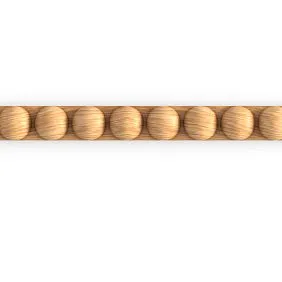
Short answer: which wooden baguette to choose
If you need a quick reference point — here it is:
-
For a small painting or poster — a narrow or medium wooden profile without heavy relief. The smaller the work, the more delicate the frame should be.
-
For a large canvas or panel — a wide wooden picture molding with a noticeable profile. A large work requires a worthy framing.
-
For a mirror — a profile that echoes the furniture, doors and floor baseboard in the same room.
-
For a classic interior — a figured, relief or carved baguette with an expressive profile.
-
For neoclassical and modern classical styles — a calm, medium-width wooden profile with a soft relief, for white enamel or natural varnish.
-
For painting — Wooden profile with high-quality sanding, made of dense, uniform wood without open pores.
This is a navigator. Now — in depth.




What is wooden molding
Before choosing, you need to understand what exactly you are choosing. The term "baguette" comes from French: baguette — a stick, a profile strip. In interior design and painting, it is a decorative profile used for creating frames, trims, and accent details.
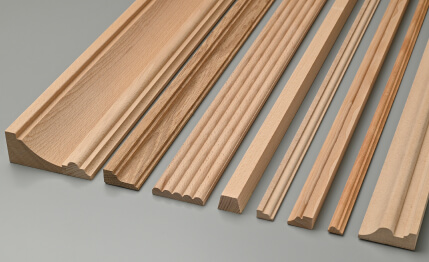
Wooden Picture Frame — is a profile strip made of natural solid wood: birch, alder, pine, beech. It has a specific cross-section — a profile shape — that repeats along the entire length. It is the profile that determines the character of the frame: how expressive it is, what style it supports, how it works with lighting.
How is a wooden baguette different from plastic or polyurethane? First of all — naturalness. Wood reacts to light differently: it has a living texture, a warm tone, a "breathing" surface. A frame made of solid wood feels different in your hands than lightweight plastic. And in the interior, this difference is tangible and visible.
Picture frame strip — is a linear element: sold by the meter or in standard lengths. Frames are made from it by joining corners at 45 degrees. That is why not only the quality of the strip itself is important, but also the precision of the cut — it is the corner joint that determines how neat the finished frame will be.
A wooden baguette pairs well with wooden furniture, solid wood moldings on walls and facades, with wooden cornices above windows and furniture, wooden skirting board around the perimeter of rooms. This is a system — and the baguette in it is not a single detail, but a participant in the whole.
Our factory also produces:


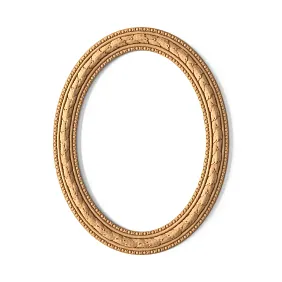


Where wooden baguette is used
Get Consultation
For paintings
A painting in a wooden frame is a classic that never ages. wooden picture molding used for framing paintings, graphics, watercolors, posters, photographs, and interior prints.
It is important to understand: the frame should not compete with the painting. It should support it — create a visual boundary between the work and the wall, 'hold' the perception, help the eye focus on the image.
For calm watercolor works and delicate graphics — a narrow, delicate profile. For classical oil painting with rich tones — a wider, confident baguette. For reproductions of old masters — a figured profile with relief, in a warm tone or with gilding.
For mirrors
A mirror in a wooden frame is an interior item, not just a reflective surface. Wooden Picture Frame turns the mirror into a full-fledged interior object: in the hallway, bedroom, living room, study.
Here the logic is different than with paintings. The frame of the mirror should be proportionate to the mirror itself and the space in which it hangs. A wide mirror in a narrow frame is a disproportion. A small mirror in a heavy profile frame is overload.
For a hallway mirror — a wooden baguette matching the doors, wooden baseboards and console furniture. For a bedroom mirror — matching the nightstands, dresser, and handles. It is this unity of details that creates the feeling of a well-thought-out interior.
For panels
A decorative panel — textile, painted, relief, or photographic — requires a frame that works with its scale. For large horizontal panels above a sofa or in a study — a wide wooden profile with moderate relief. For small decorative inserts — a more subdued frame.
A special case is a carved or stucco panel. Here, the frame should be neutral enough not to compete with the relief of the piece itself.
For interior frames
Wooden baguette is used not only for framing finished objects but also for creating decorative frames as independent interior elements. An empty frame on the wall is an accent, a niche, a hint at a work of art. In classic interiors, such frames are often used to create "gallery" zones.
Pogonazh iz massiva allows creating frames of any size for a specific space — this is the main advantage of the molding over a ready-made factory frame.
For a classic interior
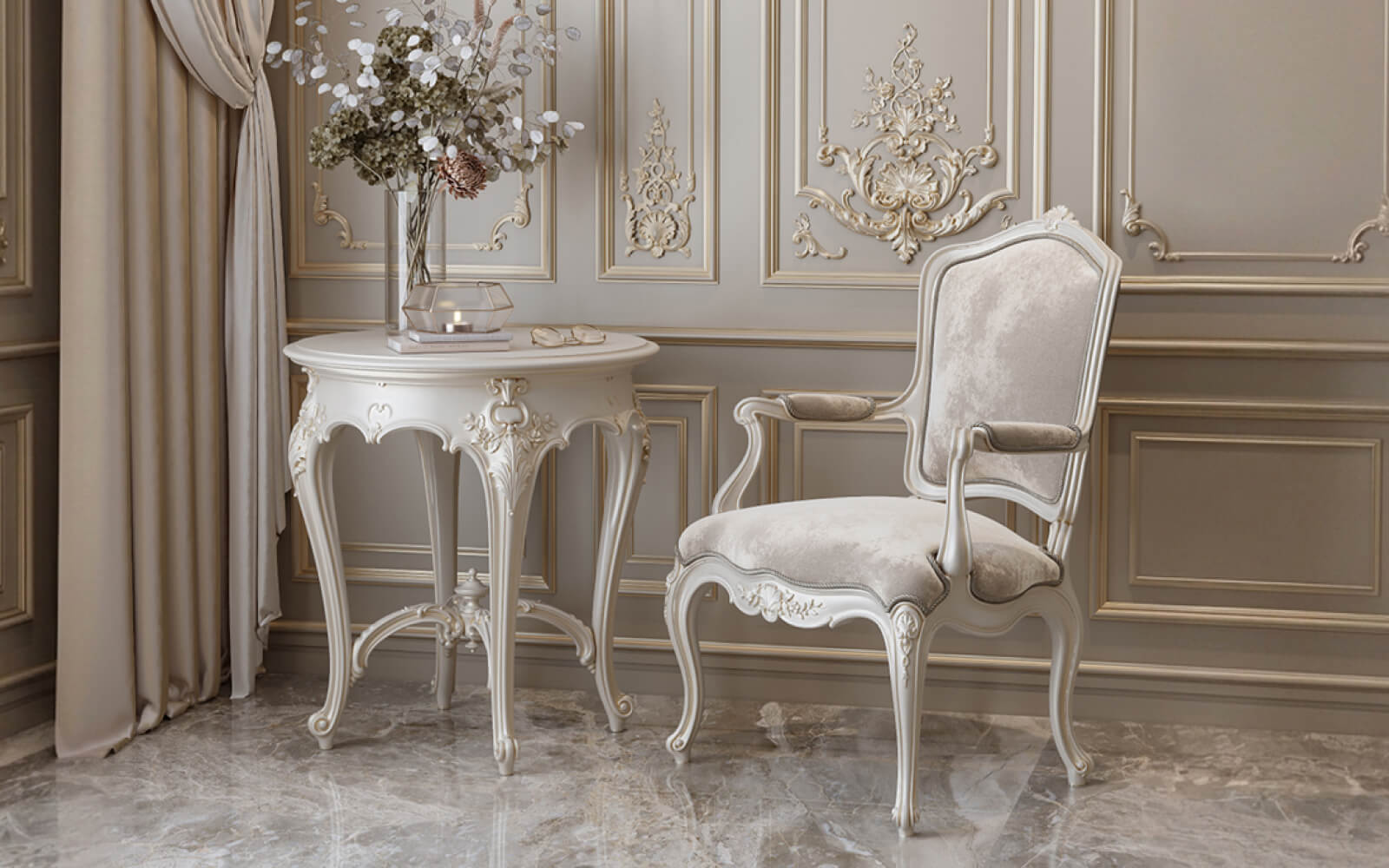
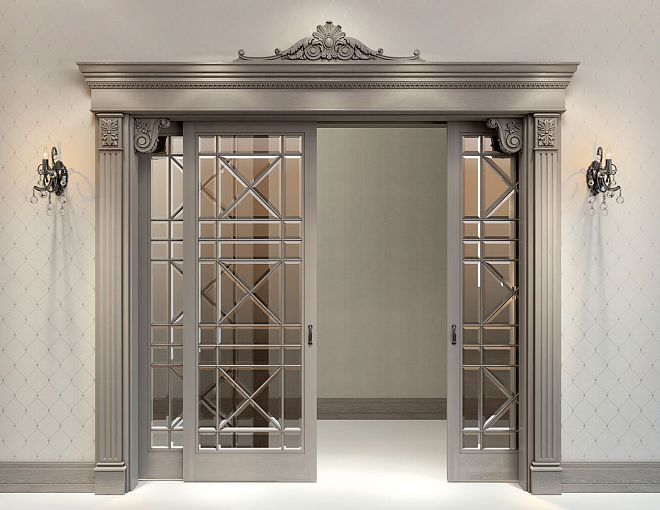
A classic interior is a space where details carry meaning. Here, the wooden baguette works as a connecting element: it echoes solid wood moldings on the walls, with with wooden cornices above windows and furniture, with profiles of door casings.
In a classic interior, picture frames, wall moldings, and furniture cornices are one family of details. One material, one tone, a unified profile style. It is this connection that creates a sense of integrity and architectural thoughtfulness.
How to choose the width of a baguette
Width is the first measurement that catches the eye. And the first thing to calculate before choosing a profile.
Scale of the work. A small watercolor measuring 20×30 cm — maximum frame width 30–40 mm. Otherwise, the frame "eats" the work. A large oil painting 80×100 cm can work with a frame width of 60–90 mm. For monumental works and panels, the width can reach 100–120 mm.
Scale of the wall. Above a sofa in a living room with high ceilings — the frame should be noticeable. On a narrow wall section in a hallway — delicate. The frame is perceived in the space, not just up close.
Scale of nearby furniture. If a mirror hangs above a console or dresser, the frame width should be proportionate to the furniture nearby. A frame that is too thin gets lost against massive furniture.
Practical rule for paintings. Frame width — approximately 1/10 of the longer side of the painting. For a painting 50×70 cm — a frame width of 55–70 mm will be proportionate. This is not a rigid standard, but a working guideline.
Mat and inner field. If there is a mat (white or colored field) between the painting and the frame, the frame can be narrower — the mat creates visual breathing room and compensates for the "modesty" of the profile.
How to choose a baguette profile
Profile is the cross-sectional architecture of the molding. It determines how the frame behaves in the interior.
Smooth straight profile. Rectangular cross-section without relief. Maximum minimalism. For a modern minimalist interior, for black-and-white photography, for graphics with clean lines. Such a Wooden profile does not claim to be decorative — it simply holds the work.
Chamfered profile. Straight shape with a slanted edge along the inner or outer side. Slightly more expressive than smooth. Works in calm interiors — neoclassicism, Scandinavian classic, modern wood finishes.
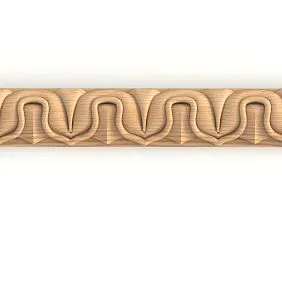
Ornamental profile. Curved or stepped cross-sectional shape with multiple levels. For classic and neoclassical styles. Creates a play of shadows, adds depth. It is this profile that turns a simple frame into an architectural framing.
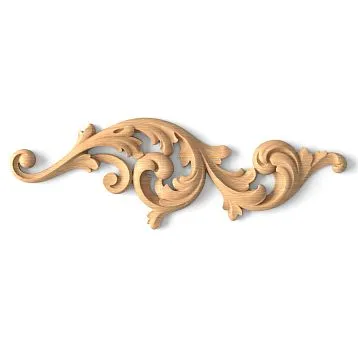
Relief profile. Decorative relief on the front edge — diamonds, beadwork, ornamental bands. For expressive classic interiors, for framing paintings with rich classical art. Wooden decoration in the form of overlays on frames — a development of the same idea.
Wide profile with a flat surface. Wide frame with a smooth central field. Can be used as a "matte" framing option — painted in the wall color, providing a neutral field between the picture and the wall.
Profile for painting. Any of the listed options in an unpainted state is a semi-finished product, ready to accept any color. buy wooden molding without coating and paint it yourself — the most flexible solution: the color is selected for a specific interior.
Wooden picture frame molding
This is the most sensitive topic in the section on baguettes. A picture frame is a partner to the artwork. There should be a dialogue between them, not an argument.
Oil painting. Classical oil painting — especially landscape, portrait, still life — is traditionally framed in a wide, figured profile in a warm tone. This is a historically established tradition that works. Warm wood or a gilded profile under varnish — a space where oil painting 'breathes'.
Watercolor and graphics. Here — a different conversation. Delicate, airy works require delicacy. Narrow Wooden picture frame in a light tone, possibly with a mat. The profile — calm, without active relief.
Contemporary painting and prints. Abstraction, modern art, digital prints — here there are fewer rules. Both a smooth enamel profile and a natural wood tone are possible. The frame can be accent or, on the contrary, dissolve into the background.
Placement location. Living room above the sofa — the frame should be noticeable. Study — the frame can be dark, status-oriented. Bedroom — a calm frame, without active decor. Children's room — bright colors or natural wood, light profiles.
Frame color and painting. The frame can echo a color in the painting (warm frame for a painting with a warm palette) or be neutral. White frame — universal. Dark frame — creates contrast. Natural wood — warmth and coziness.
Wooden frame molding for a mirror
A mirror in a wooden frame is one of the most expressive ways to enrich an interior. Why? Because the mirror itself is neutral — it reflects. And the frame defines its character.
In the hallway. The hallway is the first space that greets you. A mirror here is both functional and decorative. Wooden Picture Frame for a mirror in the hallway should match the doors, with wooden skirting boards and with the furniture — a console or cabinet under the mirror. A unified tone and style of the profile create completeness.
In the bedroom. A mirror in the bedroom is part of the ensemble with the bed, nightstands, and dresser. The mirror frame should match the tone of the wooden furniture legs и handles. If the furniture is white enamel — a mirror in a white frame. If the furniture is natural wood — a mirror with the same varnish.
In the living room. A large mirror in the living room is an architectural object. The frame should be confident, noticeable, with an expressive profile. For a classic living room with solid wood moldings on the walls — a figured wooden profile. For a modern space — a wide smooth profile with enamel.
For a large mirror. A full-length mirror or large horizontal format — here a thin frame is inappropriate. The profile should be substantial enough to visually "hold" the mirror. The minimum frame width for an 80×100 cm mirror is 50–60 mm.
For a small mirror. A small mirror in a delicate wooden frame is a fitting accent in the bathroom area, in a niche, or above the sink. Precision and proportionality are important here.
Baguette strip, molding, and layout: what's the difference
This is a question that is asked often — and not without reason. The names are similar, the applications overlap, but these are different products with different purposes.
| Element | Main application | Features |
|---|---|---|
| Wooden picture frame molding | Paintings, mirrors, panels, frames | Profile with an internal groove for glass or canvas |
| Baguette strip | Manufacturing frames of any size | Sold by the linear meter, cut at 45° |
| Molding | Walls, furniture facades, panels | Overlay profile without a groove |
| Layout | Joints, furniture facades, panels | Flat or narrow, without complex relief |
| Glazing bead | Glass in frames, display cases, doors | Narrow fixing profile |
| Rail | Walls, partitions, decorative panels | Wide or narrow, flat |
Key difference between wooden cornice и solid wood molding — in purpose. Bagette is for frames. Molding is for walls and furniture. Profiles may look similar, but bagette has an internal groove for inserts (glass, plexiglass, canvas), while molding does not.
wooden floor — is an even narrower and flatter element. Used for creating frame inserts on furniture facades, for finishing joints, for decorative panels. This is not a frame profile — it is an overlay decor.
wooden trim — is the narrowest element. Its task is to fix glass in a frame or glazed door. Narrow, with or without bevel. Decorative function is minimal.
Understanding this difference is the foundation of a smart choice. When buying Pogonazh iz massiva, always clarify: what exactly the profile is needed for — this determines which type of product you need.
How to choose a frame to match your interior style
Style is context. And context determines the choice.
Classic
A classic interior is richness of detail, symmetry, and warm tones. Here wooden picture molding should be expressive: a shaped profile, width from 60 mm, warm wood tone or gilding. Frames in a classic interior echo wooden cornices the window trims, moldings on walls and the door profiles.
An important principle of classic style: frames should not be identical in size, but should be in the same style. A gallery wall with paintings in different frames of the same style is a classic technique that works flawlessly.
Neoclassicism
Neoclassicism is classic with a modern editor. A little less decor, more clean surfaces. A wooden profile — medium width, with moderate relief. Under white enamel or a soft natural tone. The frame is proportionate to the painting — not overwhelming, not getting lost.
Neoclassical interiors are characterized by white or light gray frames that combine with painted furniture facades, handle brackets and wooden baseboards.
Modern interior
Minimalism and modern aesthetics require maximum restraint. A smooth straight profile, narrow or medium frame, pure color — white, black, natural. No carving, no relief. A wooden frame here is valued for its material — for its naturalness — rather than for its decor.
Office
A study is a space of concentration and status. Dark wooden molding — walnut, dark oak, wenge — creates an atmosphere of seriousness. Paintings in dark frames above bookshelves, next to furniture decor — this is an image that never loses relevance.
For a study, it is advisable to match the wooden profile with the tone of the furniture. If the furniture is dark — frames in the same tone. If light — frames can be slightly darker, creating an accent.
Living Room
The living room is the most public space. Here the molding works in an ensemble: picture frames, mirror frames, moldings on walls, wooden cornice above the drapes, Skirting around the perimeter — all together.
A wooden baguette in the living room should be part of this system. Not a separate detail "for beauty," but an element of the room's overall wooden register.
How to choose the color of a wooden baguette
The color of the frame is a decision made in context. No color is good or bad in itself — it is good or bad in a specific space with specific furniture.
To match the furniture. The most reliable solution. If the furniture is white enamel — the frames are white. If the furniture is dark walnut — the frames are in a dark tone. A unified tone of wooden interior details is a sign of a well-thought-out space.
To match the floor. Wooden floors and wooden frames in the same tone — a subtle, cozy solution. It works especially well in small rooms where a visual connection of all horizontal and vertical surfaces is needed.
To match the doors. Doors and picture frames in the same tone — a stylistic echo that is not always noticed, but makes the interior consistent.
To match the baseboard. with a classic profile creates a sense of solidity, reliability. and frames in a unified tone — a technique from the classical interior school. The baseboard "grounds" the room, the frames accent the walls. A unified tone creates an architectural rhyme.
Natural wood look. Varnish without staining — a warm, lively tone. Frames with natural varnish work well in spaces with wooden floors, wooden furniture, and a countryside aesthetic.
Contrasting baguette as an accent. Dark frames on a light wall — a strong technique. White frames on a dark blue or dark green wall — a modern designer move. Contrast works if it is intentional, not accidental.
Light tone. White, cream, ivory — frames that "dissolve" in a light interior and work to enhance the perception of the artworks themselves. For minimalist spaces with white walls, this is often the best choice.
Dark tone. Anthracite, dark walnut, dark cherry — a prestigious, weighty solution. For studies, classic libraries, formal living rooms.
Molding for painting, varnish, or stain
The finish coating of a wooden molding is not the last step. It is a decision that must be made before the frame is assembled.
Under enamel. buy wooden molding without coating and painted with enamel — this is the most flexible option. Color choice is unlimited. Technology: sanding (P150 → P220), primer, two coats of enamel. The surface is smooth, clean, uniform. For birch and alder blanks without open pores — the result is almost without orange peel.
Important: the strip must be painted before assembling the frame. Seams after painting look neater than seams painted after joining.
Under clear varnish. Varnish preserves the wood grain. Warm, natural tone. One- or two-component parquet or furniture varnish are good options. Glossy varnish on frames creates a shine that can sometimes look excessive in an interior. Semi-matte is a more restrained and modern option.
Under stain. Stain changes the shade while preserving the wood structure. Birch under dark walnut, alder under cherry — standard solutions. After staining, varnish is mandatory for protection. Important: test on a small area before full treatment, because the same stain on different wood species gives different results.
Contrast coating. A frame with dark edges and a light front surface — or vice versa. Impressive, but requires precision in execution. Such solutions are best left to professionals.
Principle of sequence. First — decision on coating. Then — purchase of the strip. Then — painting. Then — assembly of the frame. Never the other way around.
How to combine baguette with furniture and decor
Wooden baguette in the interior is an element of the system. One frame on the wall is a detail. Five frames, coordinated with moldings, baseboards, and furniture, is an interior.
С classic furnitureClassic furniture with wooden details — a chest of drawers, a sideboard, an armchair — requires frames of the same character. The figured wooden profile of the frame echoes the profiled legs and handles of the furniture.
С wooden skirting boardsThe baseboard sets the tone for the lower part of the space. Frames in the same tonality connect the walls with the floor. This is especially important in classic and neoclassical interiors.
С solid wood moldingsMoldings create decorative panels on the walls. Picture frames placed inside these panels or above them is a classic gallery technique. The profile of the molding and the frame should be proportionate and close in style.
С wooden cornicesThe cornice above furniture or a window and picture frames in the same tone is a high level of stylistic consistency. In a classic interior, this is not an option, but a rule.
С decorative inlaysOverlays on furniture facades and the profile of frames are details of the same ornamental language. A plant relief on the overlays and a relief profile of the frame is a dialogue that is visible.
С furniture handlesIt would seem a trifle. But wooden handle-buttons in the tone of frames and baseboards is a detail that is noticed subconsciously and creates the feeling of 'this was done by people who think about details'.
With mirrors, paintings, and panels in one composition. A gallery wall is a separate art form. Frames of different sizes but a unified style and tone; a mirror as the central object; paintings as additions. Principle: all frames from one solid wood trim, one coating tone, different sizes and formats.
Mistakes when choosing a wooden baguette
Every mistake in this list is real experience. Learn from it without personal losses.
Choosing a baguette by looking only at the painting, without considering the interior. In the store, the frame seems nice — at home it looks out of place. Always look at the context: the wall, nearby furniture, baseboard, lighting.
Taking too wide a profile for a small piece. A small watercolor in a wide heavy frame is overwhelming. The work gets lost. The frame takes over.
Putting a thin baguette on a large mirror. A thin frame on a large mirror creates disproportion. A mirror 80×120 cm in a 15–20 mm frame looks unfinished. Minimum — 40–50 mm.
Mixing different wood shades without a unifying idea. Three frames on one wall: light ash, dark walnut, and painted white — that's chaos, not a gallery.
Not considering the color of furniture and baseboard. Frames chosen "by eye" without comparing to furniture. Result: frames look separate, the interior doesn't come together.
Confusing baguette with molding or glazing bead. Buying molding instead of baguette and trying to make a frame out of it is impractical: molding has no internal groove for insertion.
Don't plan the coating before assembly. Painting an already assembled frame is difficult and ineffective. Paint the strip before assembly.
Don't overload the wall with overly active frames. If all frames have a pronounced relief, in a dark tone, on a dark wall — the space feels oppressive. Balance: active frames on a light background or calm frames on a rich background.
What to buy together with a wooden baguette
For those who design the space systematically:
Wooden Picture Frame — main profile for frames of paintings, mirrors, panels.
Pogonazh iz massiva — full range of profiles made from natural wood.
Moldings from solid wood — for decorative panels on walls and furniture facades.
wooden cornice — for framing the top of furniture and windows.
with a classic profile creates a sense of solidity, reliability. — for the lower framing of the space in tone with the frames.
wooden floor — for facade inserts and joints.
wooden trim — for fixing glass in frames and glazed doors.
Wooden decoration — overlay elements for frame-style furniture.
decor for furniture — full range of overlay parts.
wooden furniture handles — to complete the style system in one tone with the frames.
Classic Furniture — if you are looking not only for parts but also for items for a classic interior.
FAQ: questions about wooden baguette
How is a wooden baguette different from molding?
Wooden Picture Frame — profile for frames: inside it has a groove for glass, plexiglass, or canvas. solid wood molding — overlay profile without a groove, used for walls and furniture facades. They may look similar, but their purpose is different.
How to choose a wooden baguette for a painting?
Consider the size of the painting, the style of the image, the placement location, and the color of the interior. For small works, choose a narrow, calm profile. For large classical paintings, choose a wide, shaped profile. The color of the frame should match the furniture, baseboards, or doors in the same room.
Which wooden profile should I choose for a mirror?
For a large mirror, choose a profile at least 40–50 mm wide. For a mirror in the hallway, match the color of the doors and furniture. For a mirror in the bedroom, match the color of the nightstands and handles. Wooden frame for a mirror should be proportionate and coordinated with the space.
Can a wooden frame be painted?
Yes. Buy wooden picture frame molding without coating and painting it yourself is the right decision. Sanding, primer, enamel, or varnish. Painting should be done before assembling the frame — this ensures the best result.
What is a frame molding?
Picture frame strip is a profile molding made of solid wood, from which frames are made. It is sold by the linear meter. To assemble the frame, the molding is cut at 45 degrees and joined into a rectangle of the desired size.
How to combine a frame with other interior details?
To match the baseboards, moldings, cornices, and furniture. A unified tone for all wooden details — white for enamel, dark for varnish, or natural — creates a cohesive interior.
About the company STAVROS
A painting needs a frame. A mirror needs a border. A wall needs moldings. And behind all this is one thing — a correctly chosen wooden profile made from solid wood. STAVROS produces a full range solid wood trim: wooden baguettes for paintings and mirrors, Moldings, Crown Molding, Baseboards, layouts и trim.
STAVROS is a production where the profile is made precisely, without deviations in shape and size. The strip is cut at exactly 45 degrees — meaning the frame comes out without gaps. The surface is sanded evenly — meaning the coating lays flat. The details are made so that you think about the interior, not the quality of the material.