


































Article Contents:
- Buy wooden furniture handles
- Which wooden furniture handles to buy
- Types of wooden furniture handles
- Bracket handles
- Button Handles
- Round wooden handles
- Recessed wooden handles
- Wooden handles for kitchen furniture
- How to choose the size of a wooden handle
- Finish: buy wooden handles with or without finish
- Which furniture suits wooden handles
- For a Wardrobe
- For a Dresser
- For boxes
- For Kitchen
- For classic furniture
- Mistakes when buying wooden handles
- Where to buy wooden furniture handles
- FAQ: Answers to Popular Questions



Buy wooden furniture handles
Buying wooden furniture handles is not just about solving a pragmatic hardware task, but about making one of the most visible design decisions in an interior. The handle is the first thing the hand touches. The first thing that catches the eye on the facade. The first detail guests notice when entering a kitchen or living room. That is why choosing wooden handles should be approached as seriously as selecting facade material or countertop color.
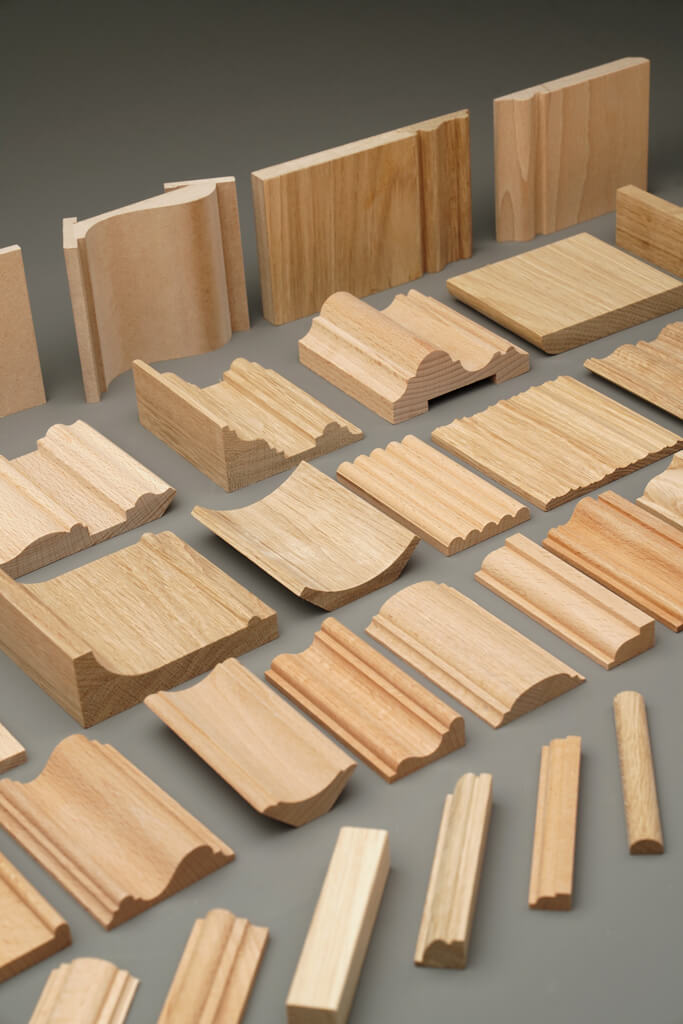
Wooden Furniture Handles — a category of hardware that has firmly established itself in the premium and mid-price segments in recent years. This is no coincidence. Solid oak and beech withstand years of use, do not deform from humidity changes, do not chill fingers in winter, and do not heat up in summer. Wood is a living material that makes each product unique due to its individual grain pattern.
This article is a practical guide for those selecting wooden handles for furniture. It covers all key questions: what types exist, how center-to-center distance works, how a pull handle differs from a knob, when a recessed form is needed, and why coating is crucial for a kitchen. Read sequentially — by the end of the article, you will know exactly enough to make a mistake-free choice.



Which wooden furniture handles to buy
Before moving on to formats and sizes, it is important to agree that choosing a wooden handle is not just about aesthetics. There are at least five parameters that determine whether a specific model will suit your furniture, and only one of them is appearance.
The first parameter is the type of facade. A hinged cabinet door, a pull-out drawer, a film facade, painted MDF, or solid wood — all dictate different requirements for the handle's shape and weight. For a light drawer, a small knob is sufficient. For a wide cabinet door, a pull handle with a comfortable grip is needed.
The second parameter is the center-to-center distance. This is the distance between the two mounting holes. It is standardized: 32 mm, 64 mm, 96 mm, 128 mm, 160 mm, 192 mm, 224 mm, 256 mm, and so on according to the modular system of furniture hardware. Before buying wooden furniture handles, measure existing holes or plan in advance where new ones will be drilled.
The third parameter is the size of the handle itself. Visually, the handle should occupy from one-third to half of the facade's width horizontally or height vertically. A handle that is too small gets lost on a wide facade. One that is too large on a narrow drawer creates imbalance.
The fourth parameter is the coating. Wooden furniture handles can be bought either painted (black, white, brown, clear varnish) or without coating — for self-toning or painting to match a specific facade color.
The fifth parameter is style. Classic furniture requires certain shapes, Scandinavian minimalism others, loft and eco-interiors yet others. Wooden handles are organic in most styles, but shape matters.
It is reasonable to buy wooden furniture handles as a set at once — for all facades of a specific room. This ensures visual integrity and unity of the interior. If furniture in different rooms is united by the same wood or color scheme, the handles should also be from the same series.
Our factory also produces:

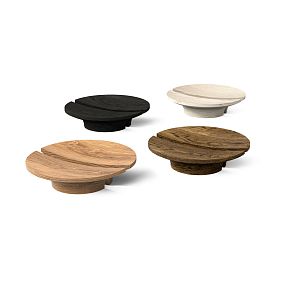
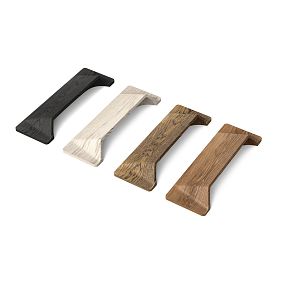


Types of wooden furniture handles
Get Consultation
Pull handles (bail handles)
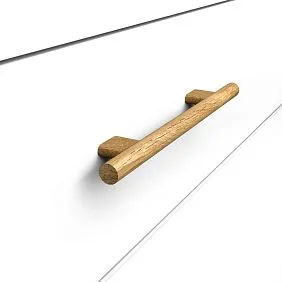
Wooden bracket handle — the most common and functionally convenient option for furniture fittings. The U-shape with two attachment points creates a reliable grip and evenly distributes the load when opening. That is why the wooden bracket handle is most often found on kitchen sets, sliding wardrobes, hinged cabinets, chests of drawers, and hallway furniture.
The wooden bracket is produced in a wide range of center-to-center distances: from 64 to 256 mm and more. This makes it universal: a small bracket with a center distance of 64–96 mm is suitable for cabinet drawers, a wide one with a center distance of 192–256 mm is suitable for tall cabinet facades. An important feature is that the bracket is equally convenient for vertical and horizontal installation, which opens up wide possibilities for design solutions.
From a style perspective, a solid wood bracket handle fits into classic, neoclassical, Scandinavian style, modern minimalism, and eco-interiors. A bracket with expressive oak texture and a clear coating looks equally appropriate on a white kitchen and on a dark walnut cabinet in a study. The key condition is unity of form across all furniture.
Separately, it is worth mentioning ergonomics. A wooden bracket provides a comfortable grip with the whole palm, unlike a knob, which requires fingertip grip. For elderly people or with frequent use (kitchen, dressing room), this is a fundamentally important advantage.
Button Handles
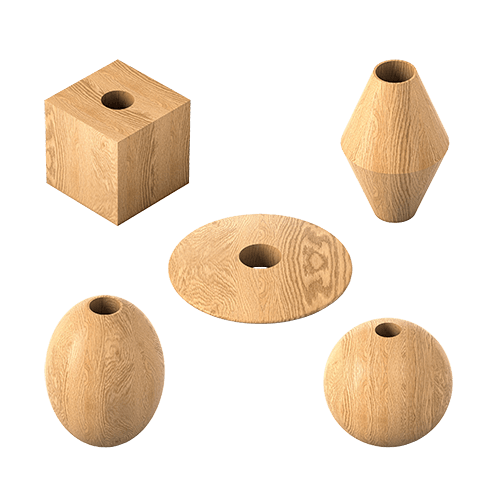
wooden button handle — a compact surface-mounted fitting with one attachment point in the center. This is a laconic solution for small facades: cabinet doors, bedside chest drawers, display cases, nightstands, and cabinets in the bathroom and children's room.
The main advantage of a knob is its minimalism. It does not protrude from the facade plane with a sharp movement, does not take up much space, and does not interfere with adjacent doors when opening. At the same time, wooden knob handles for furniture can be purchased in a wide variety of shapes: round, square, mushroom-shaped, flat, convex.
A knob made of solid beech or oak with an oil coating has a characteristic warm texture and soft tone, which is especially advantageous on light MDF facades, painted wood, or natural veneer.
It is also worth buying wooden knob handles for furniture for those furnishing a children's room: rounded shapes without sharp corners are safe for children, and natural wood does not cause allergies. Wooden knobs perfectly combine with Scandinavian style, Provence, and eco-interiors, where the very idea of natural materials is central.
Round wooden handles
Round wooden handles for furniture are chosen when you need to create an accent without straight lines. This shape appeals to organic forms — natural contours and tactility. A round wooden handle always looks warm and cozy.
It makes sense to buy round wooden handles for furniture primarily for dressers, children's furniture, nightstands, kitchen fronts in Provence or Shabby Chic style, as well as for any furniture where you want to soften the geometry. A circle is a shape without beginning or end; it does not disrupt the horizontal line of the facade while simultaneously creating a striking accent.
From a technical standpoint, round handles are installed through a single central hole, which simplifies installation and reduces the risk of marking errors. The diameter ranges from 30–40 mm for small drawers to 80–100 mm for wide fronts. Large-diameter handles made of solid oak with oil treatment create a striking accent and give furniture weight and character.
When buying round wooden handles for furniture, pay attention to the mounting depth — the thickness of the "cap" and the height of the stem. These parameters determine how much the handle will protrude from the facade surface and how comfortable it is to grip.
Flush-mounted wooden handles
Wooden recessed handles — a separate class of hardware that fundamentally differs from all surface-mounted forms. A recessed handle does not protrude above the facade surface: it is installed in a special groove recessed into the solid wood or MDF board. When closed, the facade looks like a continuous plane without any protruding elements.
This is an ideal solution for minimalist interiors, for kitchen sets in high-tech or modern classic style, as well as for furniture walls where there is no room for opening doors with protruding handles. Recessed handles are also relevant in narrow corridors and hallways where protruding hardware creates inconvenience.
Technically, a recessed handle requires precise routing. This is important to consider when ordering furniture or during DIY installation: the size of the groove must exactly match the size of the handle. Wooden recessed handles are mainly made from hardwoods — beech and oak — which ensures sufficient strength for daily use.
Wooden handles for kitchen furniture
The kitchen is the most heavily used space in an apartment in terms of furniture operation. Buying wooden handles for kitchen furniture is a decision that requires special attention here. Kitchen hardware operates under conditions of high humidity, temperature fluctuations, grease, detergents, and constant mechanical impact. Not every handle can withstand such stress without losing its appearance.
Buying wooden handles with coating for kitchen furniture is the optimal choice for most kitchen projects. Professional painting or varnishing creates a protective layer that prevents moisture from penetrating the solid wood, resists grease stains, and is easy to clean with a damp cloth. You should buy wooden handles for kitchen furniture with oil or varnish coating if you want to preserve the visible wood texture, and with enamel if you need a uniform color.
Grip comfort in the kitchen is not trivial but an important criterion. If a handle is used several times a day for many years, the shape must be ergonomic. Handle brackets win here by a large margin: they allow you to grab the door with your whole palm, which reduces strain on the wrist and speeds up opening. For drawers with kitchen utensils, dishes, or grains, this is fundamentally important.
When selecting handles for the kitchen, it is important to consider not only the shape but also compatibility with other interior elements. The color and tone of the wooden handle should match or harmonize with the color of the countertop, floor, interior doors, and decor. A warm beige handle made of beech with an oil coating pairs perfectly with a light marble-look countertop. A dark oak handle with a black coating creates a graphic contrast on white facades.
A separate topic is facades of different zones. Upper cabinets, lower cabinets, and tall units can have handles of different sizes—but of the same shape and color. This creates a visual rhythm and a sense of a well-thought-out, cohesive kitchen set. Mixing different shapes or colors of handles in one kitchen is one of the most common mistakes that ruins the design concept.
If the kitchen set is made in a classic style with patinated facades or carved decor, the handles should have a corresponding character. In this case, round knob handles made of solid wood with a clear coating or brackets with a textured surface work well. For a modern kitchen in a Scandinavian spirit, flat horizontal bracket handles with a minimalist profile are suitable.
How to choose the size of a wooden handle
A mistake in handle size is one of the most frustrating: it is immediately noticeable and cannot be fixed without refitting all the furniture. That is why choosing the size must be approached methodically. Below is a step-by-step algorithm that will save you from unnecessary expenses.
Step 1. Measure the width of the facade. This is the key starting point. A bracket handle should occupy one-third to half of the facade width when mounted horizontally. If the facade is 400 mm wide, the optimal bracket has a center-to-center distance of 128–192 mm. For a 600 mm facade, it is 192–256 mm.
Step 2. Determine the type of handle. Bracket, knob, round, recessed—each type has its own logic for size. Knobs and round handles are selected by diameter, brackets by center-to-center distance, and recessed handles by groove length.
Step 3. Check the center-to-center distance. If replacing old handles, measure the distance between the centers of the holes. Standards: 32, 64, 96, 128, 160, 192, 224, 256 mm. Most furniture manufacturers adhere to a 32 mm step, allowing you to replace the handle without moving the holes.
Step 4. Consider the thickness of the facade. The mounting bolt must match the thickness of the facade material. Standard MDF facade thickness is 18–20 mm, solid wood is 22–28 mm. If the bolt is too short, the handle will wobble. If too long, it will protrude from the back of the facade.
Step 5. Evaluate the grip comfort. The distance from the facade plane to the handle is called "offset" or "reach." For a comfortable grip, it should be at least 20–25 mm. For kitchen handles used daily, a reach of 28–35 mm is recommended.
Step 6. Check that the handle does not interfere with adjacent doors. This is especially relevant for corner cabinets, tightly spaced facades, or drawers with small gaps. A long pull handle mounted vertically may hit the upper or lower facade.
Step 7. Choose a unified size range for all facades. Wooden furniture handles in the same room should be from the same series. It is acceptable to use handles of two sizes — smaller for drawers and larger for doors — but only if they have the same shape and color.
Coating: buy wooden handles with or without coating
This issue is resolved based on the task, not aesthetic preferences. Both options have clear use cases, and each is correct in its own situation.
Wooden handles with coating — is a ready-to-install product. The coating is applied at the factory, it is uniform, durable, and resistant to everyday wear. Four basic colors — black, white, brown, and clear lacquer — cover most design needs. Coated handles are convenient for standard kitchen projects, replacing hardware without repainting furniture, and quickly updating an interior.
uncoated wooden handles — is a blank for custom finishing. They are preferred in several scenarios: when handles need to be painted exactly to match the facade color, when restoring old furniture with non-standard shades, or when the design project requires a unique finish — staining, patination, whitewashed wood effect, or aged solid wood.
Additionally, handles without coating are chosen by those who want to preserve the maximum liveliness of the wood texture. Applying oil by hand emphasizes the grain pattern and provides depth that industrial coating does not always convey. This is especially noticeable on oak with its expressive annual rings.
| Option | When to choose | Advantages |
|---|---|---|
| Handles with coating | Ready design, quick installation, standard colors | Does not require finishing, moisture resistant, durable |
| Uncoated handles | Non-standard color, restoration, designer project | Complete freedom of finishing, lively texture, uniqueness |
Important detail: even coated solid oak handles "breathe" — meaning they react slightly to changes in humidity. This is not a defect, but a property of natural material. That is why wooden handles are not recommended to be installed directly above the sink or in an area of constant contact with water — metal fittings are preferable there.
What furniture are wooden handles suitable for
For a cabinet
Wooden handles for cabinets are one of the most common search categories. This is logical: a cabinet, especially in a bedroom or dressing room, occupies a significant area of the facade, and every detail of the fittings affects the overall impression.
For cabinets with tall facades, pull handles with a center-to-center distance from 128 to 256 mm are optimal. Horizontal mounting at a comfortable grip level (approximately at waist or chest level) is a classic solution. Vertical mounting is more modern, it elongates the facade vertically and creates a sense of height.
For sliding wardrobes or built-in hinged cabinets with framed facades, solid wood pull handles with a clear coating create an effect of natural integrity. If the cabinet frame is made of wood-like MDF, the handle should either continue this tone or create a deliberate contrast.
For classic cabinets with shaped facades, cornices and furniture decor wooden knob handles or small round handles look expressive. Overlay wooden elements together with solid wood handles create a unified material concept.
For a chest of drawers
A chest of drawers is a piece of furniture where wooden handles reveal themselves best. Several drawers arranged in a vertical row create an ideal rhythm for handles of the same shape. This is where it is especially noticeable how much the wooden handles for dresser drawers influence the final look of the product.
For a Scandinavian-style chest of drawers, flat horizontal pulls or round knobs with minimal volume are suitable. For a classic chest of drawers with profiled drawers, carved knobs or elegant pulls with rounded edges are suitable. For a rustic style, massive oak handles with an oil finish and emphasized texture are suitable.
An important point: handles for dresser drawers must be mounted strictly along the axis of the drawer — centered both horizontally and vertically. Even a slight offset is immediately noticeable and creates a feeling of carelessness.
For drawers
A wooden drawer handle is an element that is literally in the user's hands every day. That is why maximum ergonomic requirements are placed on the shape and convenience of drawer handles.
For pull-out drawers of a kitchen set, pulls with a projection of at least 28 mm are suitable — this ensures a comfortable grip even when opening a heavy drawer with dishes. For drawers of a bedside table and chest of drawers, knobs or small pulls with a center-to-center distance of 64–96 mm are sufficient.
Wooden handles for drawers made of solid beech are the most affordable and durable option. Beech has high density and is easy to process, which allows creating handles with clear edges and a smooth surface.
For Kitchen
A separate section above is dedicated specifically to the kitchen. Here is a brief summary. Buy wooden handles for kitchen furniture with a coating — the best choice for most projects. Pulls — for doors of lower and upper cabinets. Knobs — for small cabinets, display cases, tall cabinets. Round handles — for a Provence or eco-style kitchen. Recessed handles — for a modern minimalist kitchen.
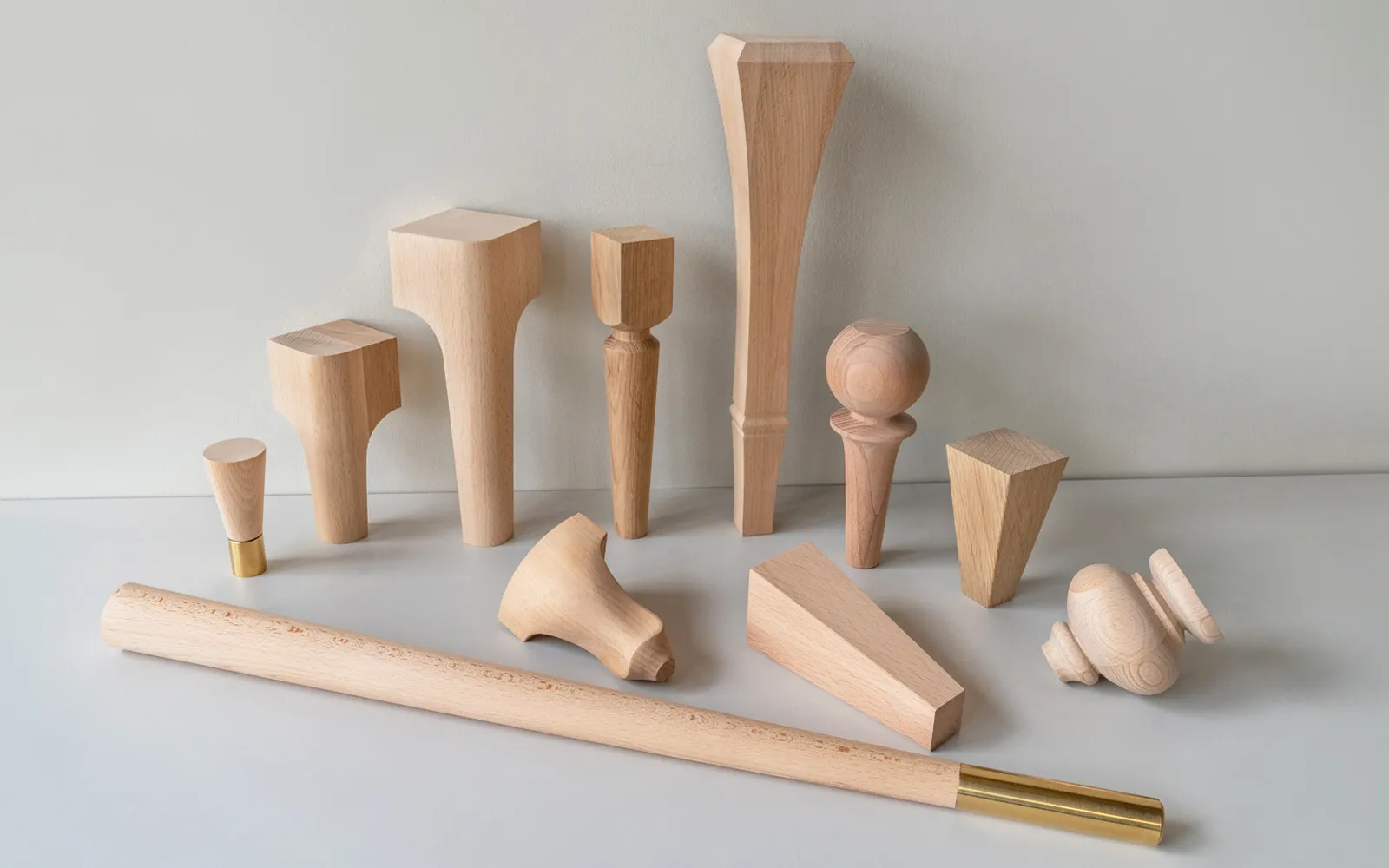
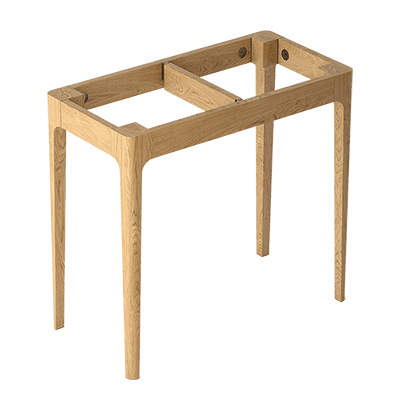
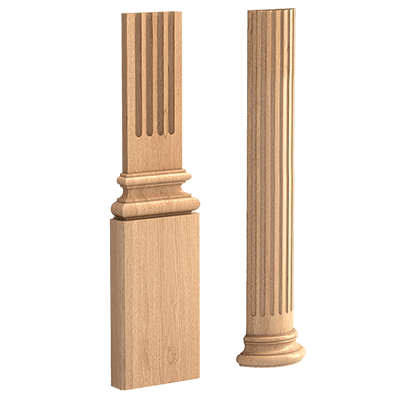
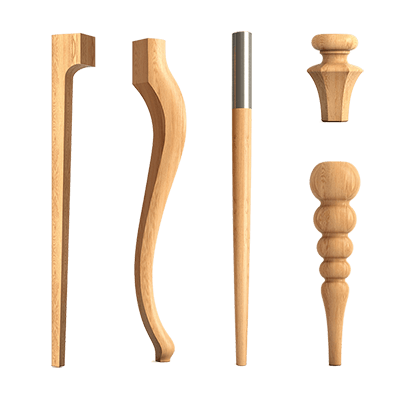
When choosing handles for the kitchen, do not forget about compatibility with with matching legs: if the kitchen set stands on solid wood legs, the tone of the legs and handles should be uniform or harmoniously combined.
For classic furniture
Classic furniture is a special context. Here, a wooden handle should be not just a functional element, but part of a decorative system. Carved knob handles, pulls with a figured profile, handles with a relief surface — all this fits organically into a classic interior.
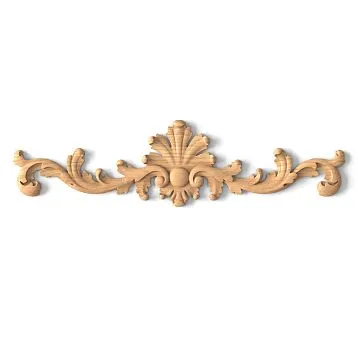
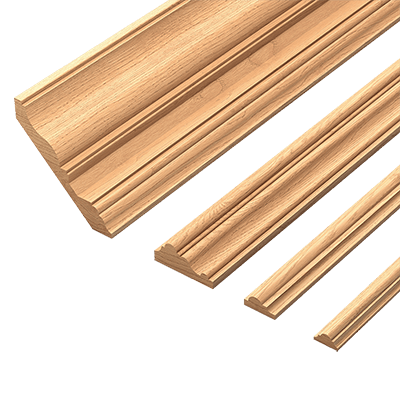
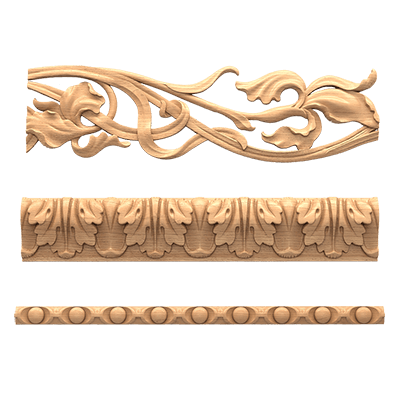
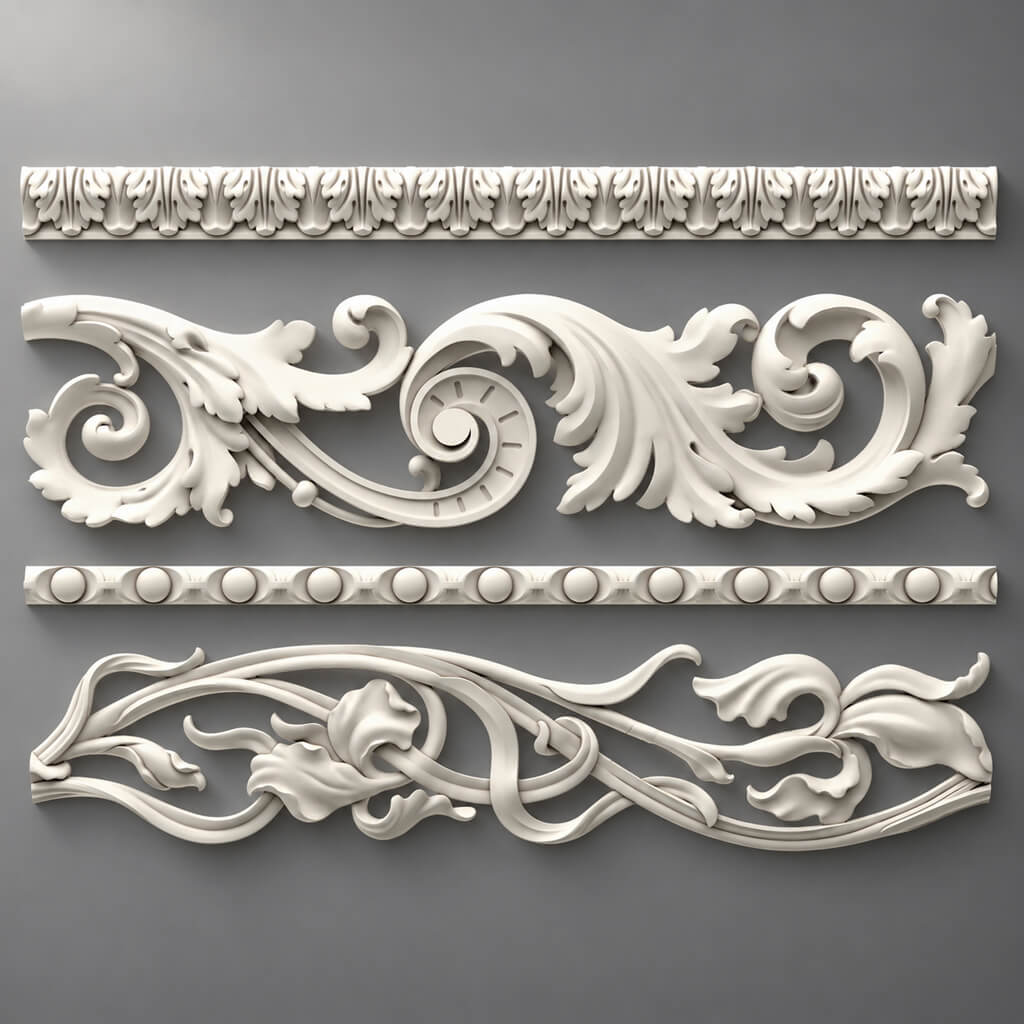
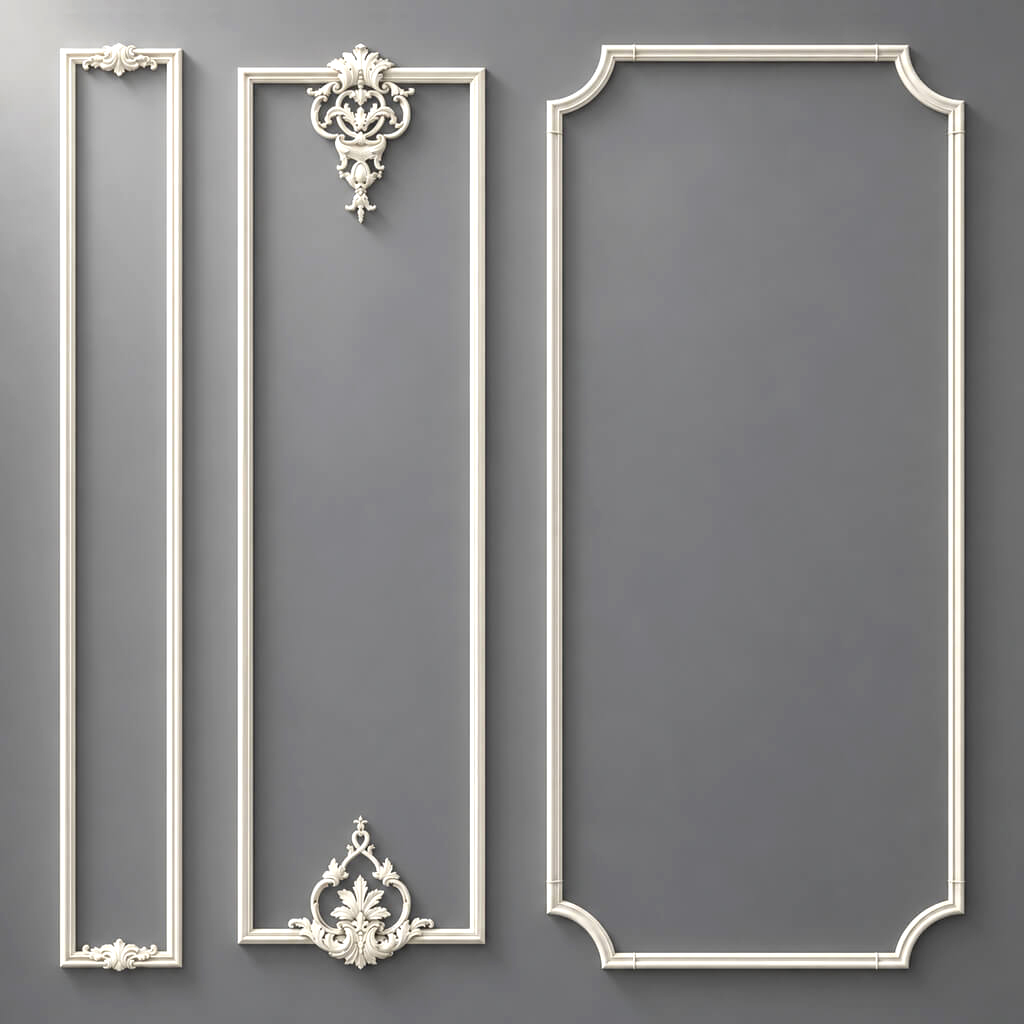
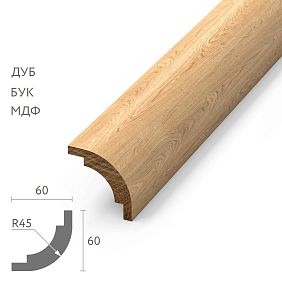
Wooden handles look especially impressive when combined with carved decorative appliqués for furniture: overlays, sockets, cornice profiles. The unity of material — natural oak or beech — creates a sense of integrity and traditional craftsmanship.
For restoring old classic furniture, unfinished wooden handles allow precise color matching to the existing paint or varnish coating. This is more challenging, but the result is complete unity of old and new, which is impossible to achieve when buying metal fittings.
Mistakes When Buying Wooden Handles
Over decades of working with furniture fittings, a list of mistakes that are made over and over again — by both professionals and homeowners doing renovations themselves — has accumulated. Here are the most typical ones.
Buying handles without checking the center-to-center distance. The most common mistake. A beautiful handle arrives home but doesn't fit the existing holes. The result is either new holes (which are visible on the facade) or returning the item and reordering.
Not considering the facade thickness. The bolt turns out to be too long and protrudes, or too short — and the handle is not securely fastened. Before ordering, you need to know the exact thickness of your facades.
Choosing a shape based only on photos. A photo doesn't convey the weight, texture, or grip comfort. A handle that looks perfect on screen may feel uncomfortable or too light in hand. If possible, it's better to touch a sample.
Not checking grip comfort. The handle's projection, distance from the facade to the handle, and handle diameter — all of these are critical for daily use. In a kitchen, where a handle is opened dozens of times a day, an uncomfortable shape becomes a constant source of irritation.
Mixing different wood shades without a system. Light beech in one area and dark oak in another — without a design rationale, this looks like a coincidence. If the shades are different, there should be a logic behind it.
They do not consider the style of handles, legs, and applied decor. A wooden handle should match all furniture fittings, not just the color of the facade. Chrome, gold, black metal — all of this affects the final look.
They buy handles without a spare for replacement. Wood is a material that may require replacement of individual elements over time. Especially in the kitchen. If a specific model is discontinued, finding an exact match is almost impossible. It is reasonable to buy 10–15% extra stock beyond the required quantity.
They do not plan a unified style in advance. Handles for the bedroom, kitchen, and hallway are purchased separately at different times and end up differing in shape and color. If the interior is intended as a cohesive whole, the fittings should be chosen in one order or according to a single concept.
Where to buy wooden furniture handles
Wooden furniture handles with quality assurance, the correct size range, and a full set of fasteners can be purchased from a manufacturer that specializes specifically in solid wood.
STAVROS is a Russian manufacturer of wooden furniture fittings made from solid beech and oak. The catalog features over thirty models of applied handles produced using 3D milling. Each model is available in painted and unpainted versions, has a wide size range, and comes with mounting hardware included.
Assortment furniture handles covers all formats: brackets, knobs, round, inset, and profile models. For those who want a ready-made solution — Wooden handles with coating in four basic colors. For custom projects and restoration — uncoated wooden handles for self-finishing.
For a cohesive furniture look, STAVROS offers to choose handles in combination with with matching legs, furniture decor и carved decoration made from solid wood — all elements are produced from a single material and create a recognizable, coordinated system of wooden fittings.
The product is always in stock. Minimum order is from one piece. Delivery is available to all regions of Russia and CIS countries.
FAQ: Answers to popular questions
Which wooden furniture handles should I buy?
The choice depends on the type of furniture and interior style. For cabinets and dressers, pull handles with a center distance of 96 to 192 mm are most often chosen. For small drawers and nightstands, knobs or round handles are used. For minimalist furniture, recessed handles are preferred. It is important to determine the center distance, facade thickness, and style concept in advance.
What is better: a pull handle, a knob, or a round wooden handle?
Each type is optimal in its own situation. The pull handle is a versatile and ergonomic choice for most facades: cabinets, kitchen sets, dressers. The knob is for small, lightweight doors and drawers. The round handle is for a decorative accent and organic style. The answer to 'what is better' always depends on the specific facade and interior solution.
How to choose the size of a wooden handle for a facade?
The length of the pull handle should be one-third to half the width of the facade when mounted horizontally. The center distance must be measured accurately in advance. The handle projection (distance from the facade to the grip) should be at least 20–25 mm for a comfortable grip. For the kitchen, 28–35 mm is preferable.
Which handles are suitable for kitchen furniture?
For the kitchen, pull handles made of solid wood with a coating are best: they are convenient for frequent use and resistant to moisture and dirt. For Provence or eco style, round handles can be chosen. For minimalism, recessed handles are preferred. The main thing is unity of shape and color throughout the entire kitchen set.
What to choose: handles with or without coating?
Handles with coating — a ready-made solution for installation: white, black, brown, or clear lacquer. Uncoated handles — for custom finishing to match a specific facade color, for restoration projects, and custom design solutions. For kitchens, coated handles are recommended: they are protected from moisture.
How to choose wooden handles for classic furniture?
For classic styles, bow handles with figured profiles, round knobs, and carved solid wood models with clear or brown coating are suitable. A combination of handles with applied and carved wooden decor works well — it creates a unified decorative system. Oak with an oil finish looks especially expressive: it conveys the noble texture of the solid wood.
Can wooden handles be purchased individually?
Yes. STAVROS supplies Furniture Handles from one piece, which is convenient both for replacing a single broken handle and for a trial order before purchasing a full set.
Which wooden handles are suitable for furniture restoration?
For restoration, uncoated handles are preferable: they can be painted or tinted to exactly match the existing paint or varnish layer of the furniture. The shape is chosen based on the style of the original piece: for antique chests — knobs or round handles, for cabinets — bow handles with a classic profile.