Article Contents:
- Why handles for children's furniture should be chosen separately
- Children's furniture — different requirements
- Five criteria for a safe handle for a children's room
- Where wooden handles are used in a children's room
- Complete application map
- How many handles are needed for a typical set of children's furniture
- Knob handle or pull handle: what to choose for children's furniture
- Two types — two logics
- Wooden knob handle: compactness and safety
- Wooden pull handle: convenience on large fronts
- Comparison table: knob vs pull for children's furniture
- Safe shape: no sharp corners or unnecessary bulkiness
- Why shape matters more than it seems
- Characteristics of a safe shape
- Handle size: how not to make a mistake
- Scale decides everything
- Size guidelines
- Installation height: an equally important parameter
- Why wood is suitable for children's furniture
- Warm material in the literal sense
- Ecological safety
- Durability and Repairability
- Aesthetics of natural materials
- How to choose handles to match the style of a children's room
- The style of a children's room is also design
- Scandinavian style and minimalism
- Classic and neoclassic
- Provence and Country Style
- Neutral 'growing' style
- What to pair wooden handles with in a children's room
- Children's furniture decor system
- Color coordination
- Common mistakes when choosing handles for children's furniture
- Mistake 1: Sharp corners and edges
- Mistake 2: Handle too small for a heavy drawer
- Mistake 3: Too large gap on a bracket handle
- Error 4: Mismatch with furniture style
- Error 5: Different handles on the same furniture set
- Error 6: Ignoring the child's age
- Special cases: handles for white children's furniture
- White furniture — a special context
- Handles for enamel: buy painted or paint yourself
- Where to buy wooden handles for children's furniture
- What is important when buying
- Catalog of handles and related products
- FAQ: popular questions about handles for children's furniture
- STAVROS: wooden handles with care for quality and safety
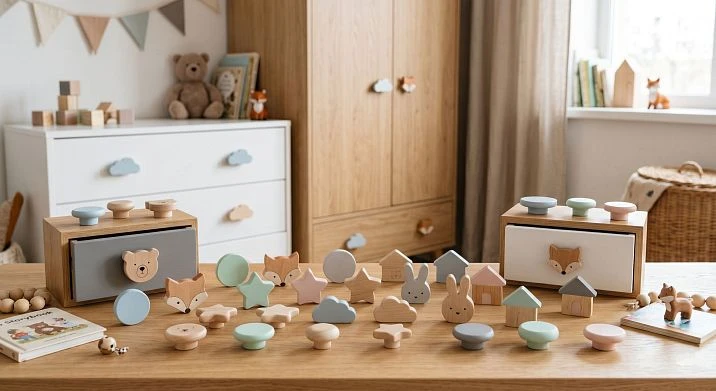
A children's room is a special space. Everything here must be thought out differently than in other rooms: softer, safer, warmer — and at the same time beautiful, functional, durable. Furniture is chosen carefully, textiles are selected by color and composition, toys are checked for safety. But here's the paradox: handles for children's furniture are thought about last — or not thought about at all, leaving what came with the set.
After all, it is the handle that a child's hand reaches for first. Literally. Every time they open a dresser drawer, take a toy from the closet, pull out a desk shelf — they grab the handle. Hundreds of times a day. And how comfortable, safe, and pleasant to the touch this detail is determines the quality of their daily interaction with their own space.
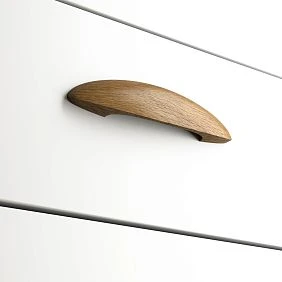
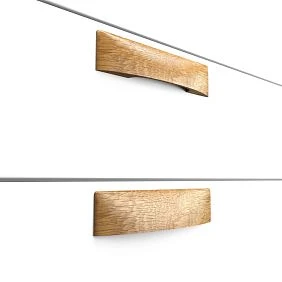
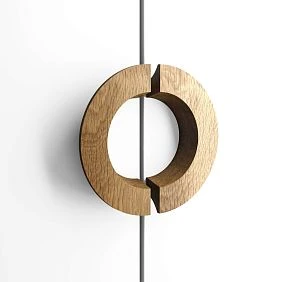
Wooden handles for children's furniture — this is not just hardware. It is part of the image of a children's room, part of its character, and — importantly — part of its safety. Let's talk about this in detail.
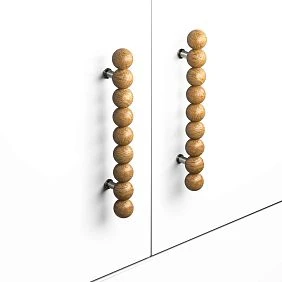
Why handles for children's furniture need to be chosen separately




Children's furniture — different requirements
Adult furniture hardware is designed for an adult user: a certain palm size, a certain grip strength, a certain behavior during use. In a children's room, everything is different.
A child doesn't pull a drawer by the middle of the handle — they grab whatever comes to hand. They can hit themselves on the corner of a protruding bracket, catch their clothes on a sharp edge, pinch their fingers in the gap between the handle and the facade. All of these are real scenarios that happen not due to inattention, but simply because a child is a child.
That is why handles for children's furniture must meet requirements that no one imposes on adult hardware.
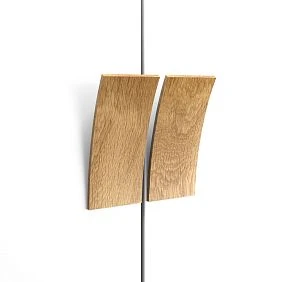
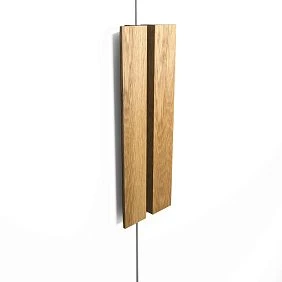
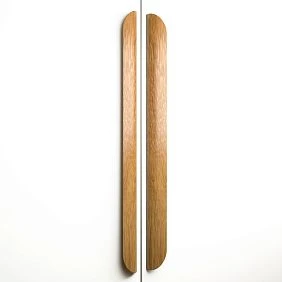
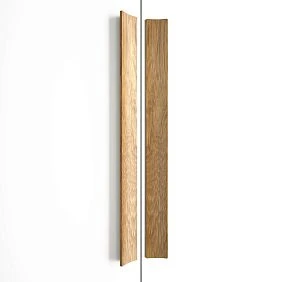
Our factory also produces:
Five criteria for a safe handle for a children's room
1. No sharp corners or protrusions. Any sharp corner or protruding element is a potential source of injury. Children move quickly and do not always look at their feet or at eye level. The handle should be rounded, smooth, without sharp edges.
2. Secure fastening. A handle that wobbles or creaks is not just an annoyance. A poorly secured handle can come off when a child pulls a drawer with force — this can lead to a fall, impact, and possible injury. The fastening must be designed for loads several times higher than the "adult norm."
3. Pleasant tactile surface. Children explore the world through tactile contact. A handle that is pleasant to hold — silky, warm, without burrs — is part of a positive experience interacting with the space. Cold metal or rough plastic surfaces are clearly inferior to warm solid wood.
4. Convenient size for a child's palm. An adult handle bracket 128 mm long is too large for a five-year-old child's hand. They will grip it awkwardly and pull with force, increasing the risk of sudden movement and falling. The handle should be proportionate to a child's hand.
5. Chemical safety. A child may put the handle in their mouth — especially a preschooler. The material and coating must be non-toxic. Solid wood is unmatched in this regard: a neutral, inert material with no volatile compounds.
Get Consultation
Where wooden handles are used in a children's room
Complete application map
A children's room is not just "a wardrobe and a bed." It is a whole system of storage, workspace, and relaxation areas. And handles are needed almost everywhere.
Wardrobe for clothes. The largest piece of furniture in a children's room. The wardrobe doors are the first thing a child opens in the morning and closes in the evening. Here you need a handle bracket or a large knob handle with a comfortable grip.
Chest of drawers. Several drawers of different sizes. The lower ones are large, for clothes; the upper ones are small, for small items. The handles on each drawer should match its size: small Wooden knob handle on a small box, the middle bracket is on the wide lower part.
Bedside table. A small item with one or two drawers. Here, a compact, neat handle size is important — the child reaches for the table in the dark, blindly, sleepy.
Desk with drawers. The child opens the desk drawers regularly — for pencils, notebooks, small items. The handle should be comfortable in a "desk" position, i.e., when pulling towards oneself from the side.
Bed with pull-out drawers. Children's beds often have drawers for bedding or toys under the sleeping area. The handles here are compact, not interfering with maintenance and not catching on bedding.
Shelving unit with doors. Open shelving without handles is good. But if the shelving has doors, the handles should be at the child's height, not an adult's.
Children's play storage system. Low cabinets, modular systems, drawers on wheels — all require small, round, easy-to-grip handles.
How many handles are needed for a typical set of children's furniture
A standard set of children's furniture includes:
-
Wardrobe: 2–4 handles on doors
-
Chest of drawers: 6–10 handles (by number of drawers)
-
Desk with drawers: 2–4 handles
-
Nightstand: 1–2 handles
-
Bed with drawers: 2–4 handles
Total — from 13 to 24 handles for a full set. That's a lot. And it means that the choice of model, size, and finish must be made consciously and in advance, with a unified system for the entire space.
Knob handle or pull handle: what to choose for children's furniture
Two types — two logics
The entire world of furniture handles is divided into two large families: knobs and pulls. Each has its own logic of use, its own advantages, its own place in a children's room.
Wooden knob handle: compactness and safety
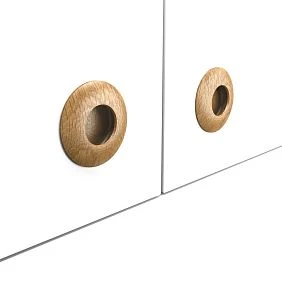
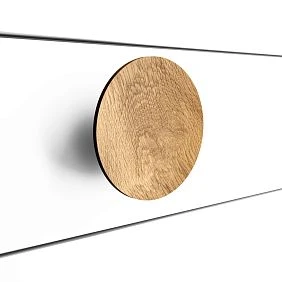
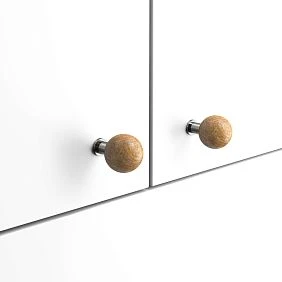
Wooden knob handle — is a single-piece overlay element that is attached with one screw in the center. It has no protruding side elements, fits completely in the hand when grasped, and takes up minimal space on the facade.
For a children's room, this is an ideal choice in several cases:
-
Small boxes and cabinets — the push-button handle is proportional to the small front.
-
Lower storage areas — where a child often bends down or kneels.
-
Modern, Scandinavian, or minimalist style — the button does not overload the front.
-
Furniture for the youngest — for preschoolers and toddlers, a button is more convenient than a bracket: it's easier to grasp.
An important bonus in terms of safety: the push-button handle has no "tunnel" between the handle and the front where fingers can get pinched. This makes it preferable for the youngest users.
Wooden bracket handle: convenience on large fronts
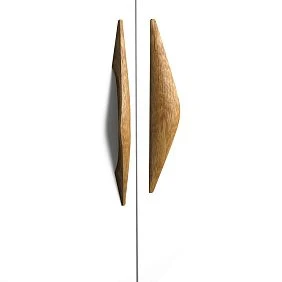
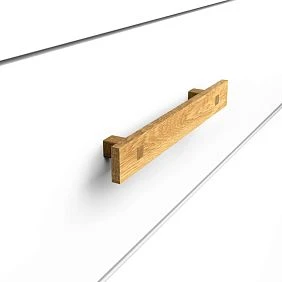
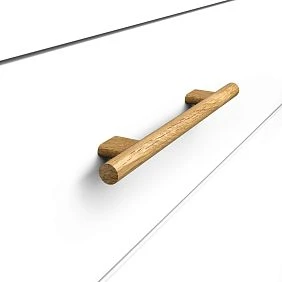
wooden hook handle — is an arched handle that attaches at two points and creates a "loop" that is easy to pull. For large drawers and cabinet doors, a bracket is much more convenient than a button: the hand fits under the handle, the grip is firm, and the pulling force is distributed evenly.
For a children's room, a bracket is suitable:
-
For large cabinet doors — a wide door requires a handle that is comfortable to pull with force.
-
On lower dresser drawers — where heavy items are stored.
-
For school-age children, the hand is already large enough for a confident grip on the bracket.
The only thing to pay attention to when choosing a bracket for a child's room: the ends of the bracket posts should be rounded, without sharp edges. The angle between the base of the post and the facade should not be sharp — this is where snags and injuries most often occur.
Comparison table: button vs bracket for children's furniture
| Parameter | Button handle | Bracket handle |
|---|---|---|
| Facade size | Small and medium | Medium and large |
| Convenience for toddlers | Excellent | Average |
| Safety (no pinching) | High | Medium (depends on gap) |
| Enhanced | Below | Higher |
| Visual effect | Concise, neat | Expressive, “furniture-like” |
| Style | Scandinavian, modern | Classic, neoclassic, transitional styles |
Safe shape: no sharp corners or unnecessary bulkiness
Why shape matters more than it seems
Parents usually think about furniture safety in terms of the furniture’s own corners and edges: rounded tabletop corners, rounded shelf edges. But handles are also protruding elements, and their shape is no less important.
Consider a situation: a child runs across the room, turns, loses balance, and grabs the dresser. If the handle is an angular metal bracket with sharp ends, it could result in a cut or bruise. If the handle is rounded Wooden furniture handle with smooth transitions — the palm will slide off without consequences.
Characteristics of a safe shape
Rounded ends. All protruding parts of the handle — the ends of the bracket posts, the edges of the button — should be rounded with a radius of at least 2–3 mm. This may seem like a small detail, but it is the sharp ends that most often cause accidental scratches.
Smooth transitions. Where the handle transitions into the base (around the perimeter for a knob, at the attachment points for a pull), there should be no sharp steps. A smooth rounded transition is safe. A 90° right angle is a potential problem.
No sharp reliefs. Carved handles with sharp jagged ornaments are beautiful for an adult interior, but not for a children's room. In a children's room, if carving is used, it should have a soft, relief pattern without sharp peaks.
Smooth surface. Burrs, roughly processed ends, unpolished edges — all of this is unacceptable in a handle for children's furniture. The surface should be pleasant to the touch and completely smooth.
Moderate protrusion. The handle should not protrude too far from the facade. The optimal protrusion for a knob is 20–30 mm. For a pull, the gap between the arch and the facade is 15–25 mm: enough for a comfortable grip, but not so large that fingers can easily get caught in it during an accidental impact.
Handle size: how not to make a mistake
Scale is everything
A small handle on a large cabinet, or a large pull on a tiny drawer — both options look awkward and are inconvenient to use. The size of the handle should correspond to three parameters simultaneously: the size of the facade, the expected load, and the age of the user.
Size guidelines
Knob handle for children's furniture:
-
Diameter 30–40 mm — for the smallest drawers, cabinets, bedside tables, and lower storage zones with light contents.
-
Diameter 40–55 mm is a universal size for a chest of drawers, medium desk drawers, and small cabinet doors.
Wooden handle for children's furniture:
-
Center distance 64 mm — for small chest drawers and medium fronts.
-
96 mm — for large drawers, lower chest sections, and medium cabinet doors.
-
128 mm — for large cabinet doors. However, ensure the child can comfortably grip the handle: if the door is tall and the handle is installed at the child's hand level, 128 mm is suitable for children aged 7–8 years.
Installation height: an equally important parameter
A correctly sized handle installed at the wrong height is still inconvenient. For children's furniture, the installation height should match the child's height, not the usual "adult" standards.
Guidelines for handle installation height:
-
Preschooler (3–6 years): handles at 60–80 cm from the floor.
-
Primary school child (7–10 years): 80–100 cm.
-
Teenager (11+): standard height for adult furniture.
On cabinets with two tiers of doors, the lower row of handles is installed at a child's height, the upper row at the usual adult level.
Why wood is suitable for children's furniture
Warm material in the literal sense
Physics is unequivocal: wood is a poor conductor of heat. This means that a wooden handle always feels warm to the touch, regardless of the room temperature. A metal handle in a cold room unpleasantly chills the hand. A plastic one is inconsistent in feel. A wooden one is equally comfortable in any situation.
For a child who touches furniture hundreds of times a day, this is important. Warm tactile contact creates a feeling of coziness and belonging—exactly what shapes a child's attitude towards their room.
Ecological safety
Solid wood is a natural, inert material. It does not emit volatile organic compounds, does not contain formaldehyde or heavy metals. Handles made of solid beech or oak, finished with natural oil or safe acrylic enamel, are completely safe even for the youngest children.
This is a fundamental difference from cheap plastic fittings, which may contain plasticizers and dyes of questionable origin.
Durability and repairability
A wooden handle, worn down after several years of active use, can be easily refreshed: sanding, a new coat of varnish or paint—and the handle looks like new. A plastic or metal handle with chipped coating will have to be thrown away.
Aesthetics of natural material
Wood pairs well with any children's furniture: white painted, natural wood, Scandinavian style, classic, Provence style. The neutral warmth of solid wood unifies diverse furniture pieces into a cohesive interior look.
Wooden decoration and solid wood handles create a sense of craftsmanship, of "living" furniture — as opposed to the cold facelessness of mass production.
How to choose handles for the style of a children's room
A child's room style is also design
A children's room has the right to style. Not "hang whatever, they'll draw on it anyway" — but a thoughtful, consistent look that grows with the child or can be easily changed when needed.
Scandinavian style and minimalism
White or light gray furniture, natural wood in details, clean lines — one of the most popular options for a children's room. For this style, the following are ideal: buy wooden handles in the form of simple knobs with a round or cylindrical shape: without ornament, in natural beech color or with a light oak tint.
A Scandinavian children's room with wooden handles is warmth, calm, and functionality. No excess, only what is needed and beautiful.
Classicism and neoclassicism
Furniture with paneled fronts, applied moldings, clear proportions — for this style, a handle with moderate decor is appropriate: a bracket with a classic arch, a knob with a slight rounded relief. Color — white, cream, or natural wood.
A classic-style children's room is built as a smaller version of an adult classic interior — and the handles here follow the same logic. children's furniture handles with moderate relief and rounded shapes — exactly what is needed.
Provence and country
White furniture with a distressed finish, wooden details in natural color, textiles with a soft print — a nursery in Provence or country style requires handles with character: slightly handmade, with visible wood texture, possibly with a light patina.
Large wooden knob handles with a noticeable beech or oak grain, in white or cream with a worn finish — an ideal choice.
Neutral "growing" style
If you want the nursery interior to easily adapt to the child's age — choose the most neutral handles: a round knob or a simple bracket made of solid wood in natural or white color. Such handles will be appropriate at five years old and at fourteen — simply because they are neutral and high-quality.
What to pair wooden handles with in a children's room
Children's furniture decor system
A children's room is a small space where all furniture details are in close proximity to each other and constantly interact visually. That is why unity of details is no less important here than in an adult interior.
Furniture legs. If a chest of drawers or a nightstand stands on legs, they should be coordinated with the handles in material and finish. wooden furniture legs — beech or oak — in natural color or for painting perfectly combine with wooden handles of the same species.
For white children's furniture: beech legs and handles under white enamel — a unified system. For natural wood furniture: oak legs and handles under oil — the same principle.
Overlay decorative elements. If the facades of a children's wardrobe or chest of drawers have overlays decorative elements for furniture — rosettes in the corners of frames, ornamental inserts — handles should match their style and finish. A carved overlay with a relief ornament and a smooth cylindrical handle is a dissonance. An overlay with a soft relief and a handle with a moderate rounded profile is harmony.
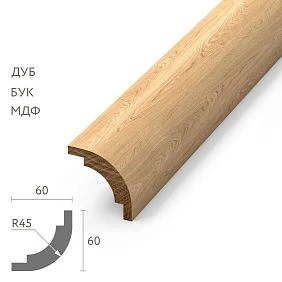
Moldings and trims. If the wardrobe facades use trim frames made of wooden trim, the handle organically integrates into this decorative system: its size and shape should be proportionate to the width of the trim.
Baseboard. with a classic profile creates a sense of solidity, reliability. in a children's room, coordinated by wood species and color with furniture handles, creates a sense of space integrity — that very 'everything in its place' which is so important for a children's room.
Color coordination
Rules for color coordination of handles in a children's room:
-
White furniture → white or cream handles, or handles in natural wood color (creates a warm contrast).
-
Natural wood furniture → handles of the same wood or slightly darker (walnut tint).
-
Colored furniture (pink, blue, green) → white or natural handles — they are neutral and do not clash with the color.
-
Combined furniture (white body + wooden facade) → wooden handles, matching the facade.
Common mistakes when choosing handles for children's furniture
Mistake 1: Sharp corners and edges
It would seem obvious — but it occurs regularly. Metal brackets with straight ends, handles with sharp corners at the base — all these are potential sources of injury in a child's room. Always check the ends of the handle before purchasing: they should be rounded.
Mistake 2: Handle too small for a heavy drawer
A 25 mm diameter knob on the bottom drawer of a dresser where jeans and sweaters are stored is a mistake. The child will pull with all their might, the handle experiences stress it is not designed for. Result: either the handle breaks, or the child falls sharply backward when opening.
Rule: for heavy drawers — a bracket with two attachment points and sufficient length for a secure grip.
Mistake 3: Too large a gap in the bracket
A gap between the bracket arch and the facade larger than 30–35 mm is a place where fingers can easily get caught when gripping in an unconventional way. This is especially relevant for children aged 3–5, who grab everything indiscriminately.
Mistake 4: Mismatch with furniture style
A baroque carved handle on a minimalist white cabinet, or a strict rectangular bracket on Provence-style furniture — both options create a sense of randomness. The handle should 'speak' the language of the furniture it equips.
Error 5: Different handles on the same furniture set
"I bought what was in stock" — and now the wardrobe has one type of handle, the dresser another, and the nightstand a third. A children's room is a small, visually busy space. Mismatched handles create a sense of clutter even in a perfectly tidy room.
The solution is simple: choose one handle model (or two — a knob and a pull from the same series) and use them on all furniture in the set.
Error 6: Ignoring the child's age
Handles that are perfect for a three-year-old may be uncomfortable for a ten-year-old — and vice versa. If the children's room is being set up for growth, choose neutral, universal models of medium size — they are comfortable for both small and grown hands.
Special cases: handles for white children's furniture
White furniture — a special context
White children's furniture is an undisputed leader among popular solutions for children's rooms. White is neutral, visually expands the space, pairs well with any textiles, and is easy to refresh with repainting.
For white furniture handles for children's furniture can be solved in two ways:
Monochrome option — handles in the same white or cream color. The decor works solely through shape and shadow. Result: a restrained, elegant look.
Contrast option — handles made of natural wood (light beech, oak) on a white background. The warm color of the wood creates a pleasant, lively contrast with the cool whiteness of the furniture. This is one of the most popular techniques in Scandinavian design.
Both options are correct — the choice depends on the look you want to create.
Handles for enamel: buy painted or paint yourself
Wooden handle for enamel — this is a handle made of solid wood in its natural state, which can be painted in the desired color yourself. This gives complete freedom in choosing the shade: white, cream, gray, any color according to the RAL code.
Preparation process:
-
Sanding with P180 grit on the surface.
-
Priming with acrylic primer.
-
Sanding with P220 grit after drying.
-
Applying acrylic enamel in 2 coats.
The result is a handle indistinguishable from a factory-painted product, yet fully matched to the desired furniture color.
Where to buy wooden handles for children's furniture
What to consider when buying
The furniture fittings market offers a huge selection — but not everything is equally high-quality. When purchasing, handles for children's furniture pay attention to the following:
-
Material — must be explicitly stated: "beech", "oak", "solid wood". Not just "wood" in general.
-
Surface finish quality — smooth, without burrs, feels smooth to the touch.
-
Geometry precision — especially important for brackets: both ends must be at the same height, the center distance must be accurate.
-
Hardware included — a high-quality screw of appropriate length, possibly with a rosette.
-
Possibility to order a single piece — sometimes you need to replace one handle, not buy a pack of 10.
Catalog of handles and related products
For complete furnishing of children's furniture:
-
buy handles for children's — full catalog of solid wood furniture handles.
-
wooden button handle — buttons of various sizes without coating, ready for painting.
-
buy wooden handles — handles with finished coating.
-
Buy furniture legs for a 200-room hotel project — this is not an ordinary deal, but a partnership requiring a special approach. — legs for children's furniture made of solid wood.
-
decor for furniture — decorative overlay elements for facade design.
-
Furniture and Decor made of solid wood — full catalog of products.
FAQ: popular questions about handles for children's furniture
Which handles are the safest for children's furniture?
The safest are wooden knob handles with rounded shapes, rounded ends, and a smooth surface. They have no sharp corners, do not pinch fingers, and are made of non-toxic material.
At what age can a child use pull handles?
Pull handles are convenient for children aged 4–5 years. For younger children and toddlers, knobs are better — they are easier to grasp with a small hand.
Can wooden handles be painted together with the furniture?
Yes. Solid wood handles are primed and painted with acrylic enamel. This allows achieving a complete match of the handle color and the furniture facade.
How to properly install a knob handle on a dresser drawer?
In the center of the drawer. Measure the width and height of the facade, find the central point — drill a hole for the screw there. Tighten the screw from the inside of the facade. Do not overtighten: excessive force may split the wooden knob.
What size handle should I choose for a child's dresser?
For the upper small drawers — a knob with a diameter of 35–45 mm. For the lower wide drawers — a pull with a center-to-center distance of 64–96 mm. Base it on the drawer width: the handle should not take up more than 1/5 of the facade width.
Do I need to change the handles when the child moves to another room or as they grow older?
Not necessarily — if the handles are chosen to be neutral and high-quality. A round wooden knob made of beech is equally appropriate in the room of a five-year-old and a twelve-year-old child. If you want to refresh the look, it's enough to repaint the handles in a different color.
How much do wooden handles for children's furniture cost?
The price depends on the size, shape, and type of wood. Detailed moldings catalog and handles with current prices — on the STAVROS website.
STAVROS: wooden handles with care for quality and safety
When it comes to a children's room, the requirements for the quality of parts increase. Not because the child pays attention to certificates — but because every day he grabs these handles hundreds of times. And how they feel in his hand, how they look, how long they last — all of this is part of the environment in which a person grows up.
STAVROS produces furniture handles from solid beech and oak — with correct shapes, a smooth surface, and quality that is immediately visible upon first touch. All products undergo sanding, geometry control, and checking of mounting holes. The assortment includes knobs and pulls of various sizes, in natural form for painting and with a ready-made coating.
In addition to handles, STAVROS offers a complete set for equipping children's furniture made of solid wood: wooden furniture legs, decorative elements for furniture, molding profiles and solid wood products for any task. A single supplier — single quality — single image.
If you want buy handles for children's with confidence that they are safe, beautiful, and will last a long time — STAVROS is a choice that speaks for itself.