Article Contents:
- Short answer: which handles to choose for children's furniture
- Why wooden handles are often chosen for children's furniture
- What types of wooden handles are there for children
- Button Handles
- Bracket handles
- Figurative handles
- Simple round handles
- Wooden handles for painting
- Safety: what to look at first
- Knob handle or pull handle: which is better for a children's room
- How to choose the size of handles for children's furniture
- How to match handles to the style of a children's room
- How to update children's furniture with handles
- What to pair wooden handles with in a children's room
- Mistakes when choosing handles for children's furniture
- What to buy together with wooden handles for a children's room
- FAQ: Answers to Popular Questions
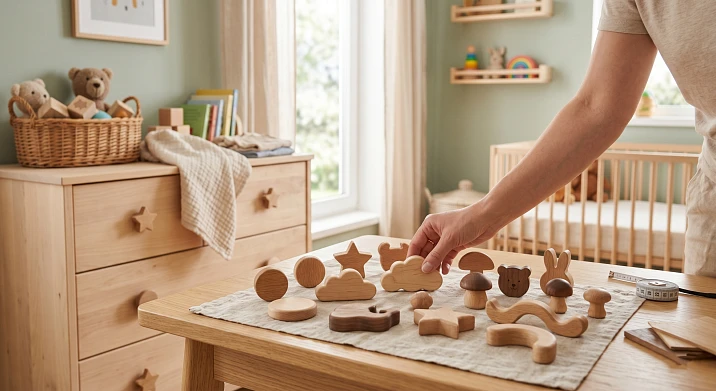
When setting up a children's room, you first think about the bed, wardrobe, lighting, and wall color. Handles are at the very end of the list. Then the child opens a dresser drawer, catches a finger on a sharp metal edge — and parents realize: the question "which handles to put in a children's room" is not trivial at all. It's a matter of safety, convenience, and how well the furniture will match the space being created for the child.
Wooden handles for children's furniture — this is not just hardware. It's a detail that a child touches every day, many times in a row. That's why it should be warm to the touch, comfortable in shape, safe in geometry, and beautiful in appearance — because a children's room is also a space where a little person forms their attitude towards the world of things. Good things from childhood are not a whim. It's a cultivation of taste.
Short answer: which handles to choose for children's furniture
If you need a quick reference without lengthy explanations — here it is.
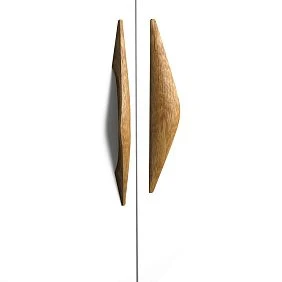
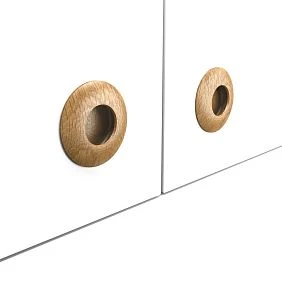
For younger children — rounded wooden knob handles without sharp corners or protruding parts. A small hand confidently grips the knob, does not slip, and does not touch the edges.
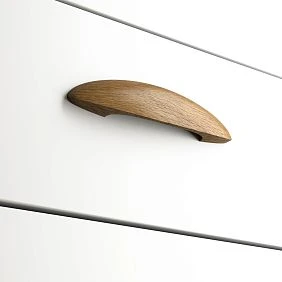
For dressers with wide drawers — small Wooden handle hooks with softly rounded ends. It is convenient for a child to grasp the drawer with all fingers without extra effort.
For tall cabinets — larger brackets with a secure grip. It is important that the handle is at a height accessible to the child and allows opening the door without jerks or unstable movements.
For a playroom or themed children's room — shaped handles in the form of a star or a paw. They create a mood, turn furniture into part of the play space, and — if chosen correctly — are completely safe.
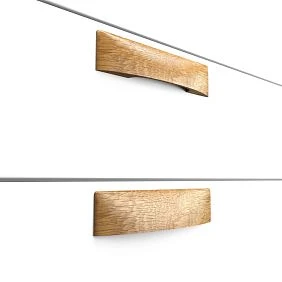
For a light neutral children's room — natural wooden handles without coating or under light varnish. The warm wood tone softly contrasts with white or pastel facades.
for classic children's furniture — calm shaped handles in a unified system with legs, overlays, and decor. This is not about playful forms — it's about elegance, consistent with the overall interior style.




Why wooden handles are often chosen for children's furniture
Wooden handles in a children's room are a conscious choice, not a coincidence. And this choice has compelling arguments.
Tactile quality. Wood is warm. Literally: the thermal conductivity of wood is significantly lower than that of metal — it does not cool the hand, does not create an unpleasant sensation of contact. A child opening a drawer feels the surface of the handle — and wood here wins over any metal or plastic.
Absence of sharp elements. Metal fittings often have sharp edges, protrusions, burrs. Wooden fittings for children's room with proper processing — smooth, rounded, without potential sources of injury.
Visual softness. A children's room is a space where the dominance of metal, shine, and cold surfaces is not needed. Wooden handles fit into any warm color concept: pastel tones, neutral beiges, natural cream shades. They don't 'scream' — they harmonize.
Possibility of painting. wooden furniture handles Can be painted — to match any facade color, under enamel, under tinting. If you repaint children's furniture after a few years, the handles are repainted along with it. Metal does not allow this.
Renovation without replacing the body. New wooden handles on an old wardrobe or chest of drawers are the cheapest and fastest way to change the look of children's furniture. Removing four old knobs and installing four new wooden ones takes 15 minutes, the result is like a small renovation.
Compatibility with wooden elements. If there are wooden Furniture legs, Decorative Inserts or Wooden rails on the walls — wooden handles organically fit into this system. Metal in such a system would look foreign.
Our factory also produces:
What types of wooden handles are there for children's rooms
Get Consultation
Button Handles
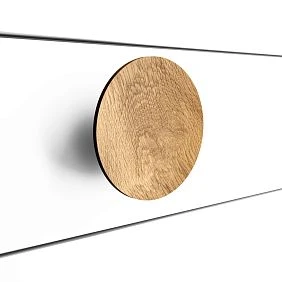
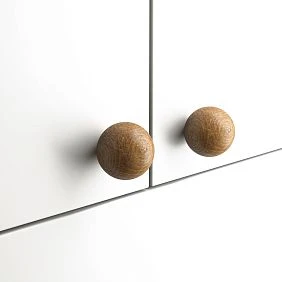
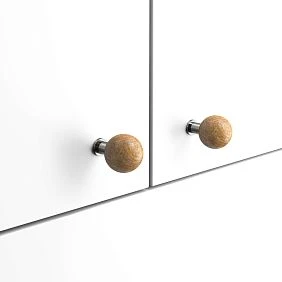
Wooden knob handle — the most popular type for children's furniture and perhaps the safest. A knob is a protruding rounded element that is attached with one bolt through the facade. No arcs, no protruding ends — only a spherical or slightly flattened "mushroom" that is comfortable to grip and pull.
Knob sizes range from 30 to 60 mm in diameter. For small drawers of a children's chest, the optimal knob is 35–45 mm. This size is comfortable for a child's hand to hold and visually does not overload a small facade.
The shape of the knob affects tactility. A classic spherical knob is universal. A flattened knob with a soft relief is for children's interiors with neutral decor. A knob with a notch or textured surface provides a better grip, especially important for small children whose fingers are not yet strong enough.
Knobs are well suited for chests of drawers, bedside tables, small cabinets, and stands. Where you just need to "grab and pull" — a knob is ideal.
Pull handles (bail handles)
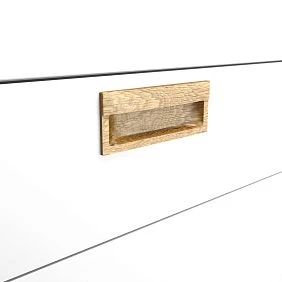
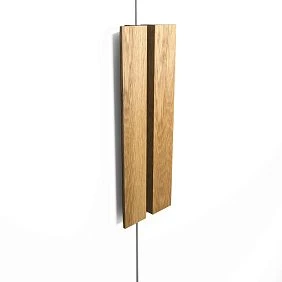
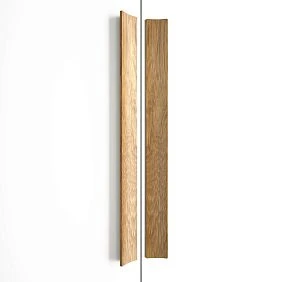
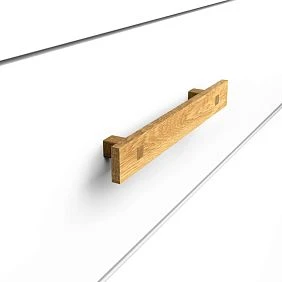
Wooden bracket handle — arched or rectangular profile with two mounting points. The bracket allows gripping the handle with all fingers, which is especially convenient for children when opening heavy or large fronts.
Distance between mounting points (center-to-center distance) — standard options: 64, 96, 128, 160 mm. For children's cabinets, 96–128 mm is optimal: wide enough for a full grip, not too bulky for a small front.
An important parameter is the height of the bracket arch above the front surface. For children's furniture, it's better not to take an overly high arch (more than 30 mm): a child may catch their clothes or toys when moving past. The optimal arch height for children's furniture is 18–25 mm.
The ends of the bracket — a spot that needs to be checked separately. They should be rounded, without sharp edges. A good quality wooden bracket has fully rounded ends and a smooth surface along the entire profile.
Figurative handles
This is the most "childish" category, which generates the greatest interest among both children and parents. Star-shaped handle or paw-shaped handle — this is not just decor. For a child, it's an element of play space: furniture becomes part of the story they tell themselves.
Despite all the playfulness of the shape — safety requirements remain the same. A star without sharp rays, a paw without protruding "claws." All corners are rounded, the surface is polished, the coating is non-toxic.
Figurative handles are usually attached like buttons — with a single bolt. Size is most often 50–80 mm in the largest dimension. They work well on small fronts: dresser drawers, small cabinet doors, nightstands.
For children aged 2 to 7, figurative handles are an excellent choice: they create an emotional connection with the furniture. A child is more willing to put things away in a "wardrobe with stars" than in a faceless cabinet with a metal bracket.
Simple round handles
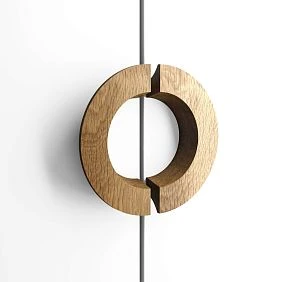
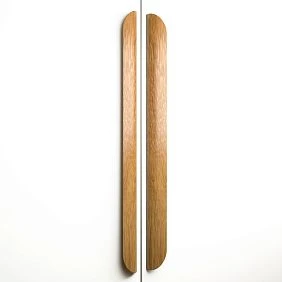
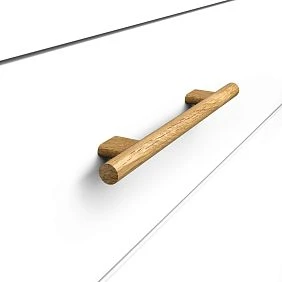
An intermediate type between a button and a decorative shape. A rounded cylindrical profile — simple, without relief, with soft rounded ends. For a Scandinavian and neutral children's room style, such Wooden handles are a flawless choice.
They read as an accent of natural wood on a white or pastel front. The laconic form does not create unnecessary "noise" in the space and is clearly warmer and livelier than metal counterparts.
For a teenager's room aged 10+, such handles no longer look "childish" — they are simply good, calm, natural. This is important: children's furniture often lasts up to 14–16 years, and handles should not turn it into "baby" furniture prematurely.
Wooden handles for painting
A separate category worth highlighting. These are handles without factory coating — made of sanded solid wood, ready for any composition. White enamel, colored paint, tinting to light wood — everything is possible.
If children's furniture is painted in a single color (a typical situation during restoration or customization), buy wooden handles без покрытия и покрасить их вместе с фасадами — идеальное решение. Ручка становится частью единой цветовой поверхности: ни контраста, ни разнородности.
Безопасность: на что смотреть в первую очередь
Раздел, который нельзя пропускать — особенно если ребёнку до 6–7 лет.
Отсутствие острых углов. Это базовое требование, которое должно стоять первым в любом критерии отбора. Проверяйте каждый угол, каждый переход профиля. Хорошая мебельная ручка для детской скруглена везде, где это возможно. Никаких острых рёбер, никаких «засечек» — только плавные переходы.
Удобный захват. Детская рука меньше взрослой — и ручка должна это учитывать. Слишком тонкая скоба скользит в руке. Слишком крупная кнопка не даёт нормально сжать пальцы. Оптимальный диаметр ручки или профиля скобы для детской — 18–25 мм. Ребёнок уверенно держит такой профиль, не прикладывая избыточных усилий.
Гладкость поверхности. Шлифовка — ключевой параметр. Поверхность ручки должна быть идеально гладкой: никаких задиров волокна, никаких неровностей. Проверяйте рукой, в том числе в косом свете. Задиры на деревянной ручке — потенциальные занозы, что для детской мебели недопустимо.
Надёжное крепление. Ручка, которая «болтается», — опасная ручка. Ребёнок резко дёргает — ручка отрывается — травма. Болтовое соединение с гайкой изнутри фасада должно быть надёжно затянуто и желательно зафиксировано резьбовым фиксатором или шайбой Гровера. При монтаже проверяйте каждую ручку на отсутствие люфта.
Отсутствие слишком выступающих деталей. Дуга скобы, которая выступает на 40–50 мм от фасада, в коридоре между кроватью и шкафом — это ловушка для одежды и потенциальный синяк. Для детской выбирайте ручки с умеренным выступом.
Safe coating. If handles are painted or varnished, the coating must be dry and cured. Acrylic enamels and water-based varnishes are non-toxic after complete drying. Solvent-based coatings require longer airing. The rule is simple: coated handles can only be placed in a children's room after the composition is completely dry and cured.
Age aspect. For children under 3 years old, it is fundamentally important that handles have no removable parts — a small child can unscrew a decorative element and put it in their mouth. A solid wooden knob is significantly safer here than a composite metal handle.
Knob handle or pull handle: which is better for a children's room
This is one of the most common questions — and the answer depends on the specific task.
Task | Optimal choice
---|---
Small dresser drawer (width up to 300 mm) | Wooden knob handle
Medium dresser drawer (300–500 mm) | Knob or small 96 mm pull
Wide drawer (500 mm and more) | Wooden bracket handle 128–160 mm
Small cabinet door | Knob or 96 mm pull
High cabinet door | Bracket 128 mm at child's hand level
Play furniture, themed style | Star-shaped handle or "paw" handle
Scandinavian/neutral style | Simple round wooden handle
Classic children's | Wooden handle with soft profile, for enamel
One important practical point: for cabinets with double doors, handles should be positioned symmetrically. If the left door has a handle on the right, and the right door has a handle on the left, and they are mirror images — that is correct. Asymmetrical placement creates a sense of carelessness, especially noticeable in a child's room.
Second point: the height of the handle on the cabinet door should match the child's height. The standard "adult" height of 1,400–1,600 mm from the floor is too high for a child aged 3–5. For young children, the handle on the cabinet should be lowered to 900–1,100 mm — this is an accessible height for independent opening.
How to choose the handle size for children's furniture
Handle size is both a visual proportion and ergonomics at the same time. A mistake in size is immediately visible and can only be corrected by replacement.
Proportion to the facade. Rule of thumb: the handle (in its largest dimension — button diameter or center-to-center distance of a pull) should be 15–25% of the facade width. For a 400 mm wide drawer — a pull of 64–96 mm. For a 600 mm drawer — a pull of 96–128 mm. A button on a 400 mm drawer — 40–60 mm in diameter.
Small button on a large facade. A 30 mm button on a 500×900 mm cabinet door looks like a random detail: it is not visible as an accent, it does not form a proportion. A button with a diameter of at least 50–55 mm or a switch to a pull is needed.
Too large a pull on a small drawer. A 160 mm pull on a 250 mm wide drawer covers almost the entire width of the facade — it looks grotesque. For narrow drawers — a button or a pull no more than 64 mm.
Ease of grip for a child. For children aged 3–5, the hand is small. A pull profile diameter of 15–18 mm is optimal for a small hand. A diameter of 22–25 mm is already for children aged 8+. A button with a diameter of 35–45 mm is comfortable for children of any age: the wide sphere is grasped by the palm, not the fingers.
Distance between handles on adjacent facades. If two drawers are next to each other, the distance between their handles should not be less than 60 mm. Otherwise, when opening one drawer, a child will accidentally touch the adjacent one.
How to choose handles according to the style of a children's room
The style of a children's room is determined not only by the furniture but also by the smallest details — including the handles.
Modern neutral children's room. White or pastel facades, clean lines, minimal decor. For such a space — Wooden handle simple shape: a cylindrical button or a straight pull. No carving, no ornament. Natural wood tone on a white facade — an accent of warm material that makes cold whiteness lively.
Scandinavian style. Light tones, natural materials, functionality. A wooden handle made of untreated beech or ash under a clear matte varnish is ideal. Simple shape, honest material. No decor, no gilding. Wood itself is decor.
Classic children's room. If the children's room is furnished classic furniture — the handles should match this language. A wooden handle with a soft profile, for white enamel. In a system with wooden legs и decorative inlays — the handles form a unified decorative ensemble. This is not a playroom — it's a children's room "for growth," which will be relevant at both 5 and 15 years old.
Playroom for children. Thematic interior: nautical theme, forest theme, space theme. Star-shaped handle for the space theme, paw-shaped handle for the forest theme — it's not just beautiful, it creates a narrative of the space. The child "reads" the room through details. And a handle shaped like a bear's paw is a signal: "You are in a forest house."
Teenager's room. When a child outgrows the play age — they need furniture with a more neutral character. A laconic wooden bracket with a straight profile, for white enamel or dark varnish — this is a handle that is appropriate at both 12 and 17 years old. It's important to choose with perspective in mind.
Light furniture for painting. If you are buying a blank or repainting old furniture — take uncoated wooden handles and paint everything together. A single coating means a single space.
How to update children's furniture with handles
Experience shows: changing handles is the fastest and cheapest way to update a child's room. Let's break down step by step how it works.
First step — assess the furniture. If the body is sturdy, the fronts have no cracks or delamination — it's worth updating, not replacing. New handles + painting = 90% of the renewal effect for 10% of the cost of new furniture.
Second step — remove the old handles. Unscrew the bolt from inside the drawer — the handle comes off. The hole in the front remains: new handles are either placed in the same hole (if the center distance matches), or the hole is filled and a new one is drilled.
Third step — choose new handles. Select by style, size, type. Check the center distance for brackets: standard 64, 96, 128 mm. For knobs — only the hole diameter: standard 4–5 mm.
Fourth step — repaint the fronts if necessary. Clean the surface, prime, apply enamel in 2–3 coats. Paint handles together with the fronts or separately — depending on the situation.
Fifth step — add Wooden furniture legs instead of old plastic or wheeled supports. Solid wood legs lift the furniture off the floor, visually lighten it, and give it a classic character.
Sixth step — add Decorative Inserts on the facades. Corner wooden elements or a central rosette — and a modest IKEA cabinet becomes part of a classic children's room.
The seventh step is to consider wooden trim for designing frame inserts on the facades. A rectangular frame from molding + a central overlay + a wooden handle — the furniture acquires a classic frame facade.
The result of all these steps: furniture you bought for a reasonable price a few years ago looks like custom-made classics. And all this — without a new body, without movers, without a two-week renovation.
What to pair wooden handles with in a children's room
The handle works in a system. One beautiful handle in an uncoordinated space is not a system. A system is when every wooden element in the room belongs to one language.
Handles and legs. wooden furniture legs — the lower accent of the furniture. From the same wood species as the handles. For a children's dresser with beech knobs — turned beech legs under white enamel. This creates a visual rhythm: handle on top, legs on the bottom — the furniture is framed by wood on both sides.
Handles and overlays. decorative elements for furniture on the facades — corner or central — should be from the same wood species as the handles. With a uniform enamel paint, this is almost impossible to break — all details will be the same white color. With a natural finish, the species must match or be as close in tone as possible.
Handles and battens. If the walls in the children's room feature Wooden planks — horizontal stripes or vertical panels — handles made of the same wood species tie together the wall decor and furniture. This creates a space where everything speaks the same material language.
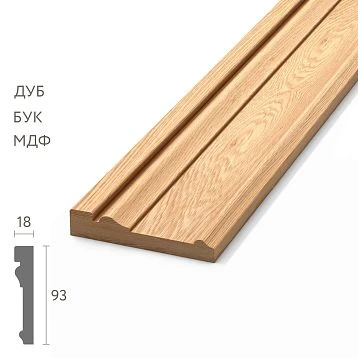
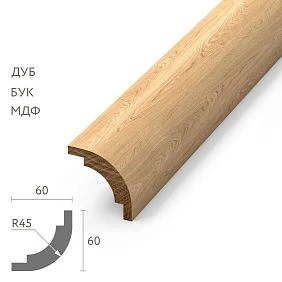
Handles and baseboard. with a classic profile creates a sense of solidity, reliability. made of the same wood species as the handles — the lower horizontal that organizes the entire space from below. Together with the furniture legs, the baseboard creates a "floor zone" — the lower level of the room where the wood tone is repeated several times.
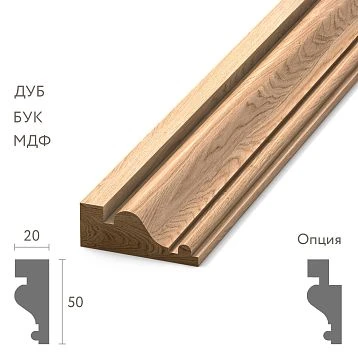
Handles and trim. Wooden molding at panel joints or in wall decor works as a subtle decorative element. If the handles and trim are from the same wood species — a wooden "frame" is formed in the children's room, uniting the furniture and architectural wall finishes.
Handles and brackets. For open shelves in the children's room — Decorative brackets made of wood paired with wooden handles on adjacent closed cabinets — this is a unified wooden ensemble. Open shelves with wooden brackets next to a cabinet with wooden handles — a space in harmony.
Mistakes when choosing handles for children's furniture
The list is honest and specific — no theoretical discussions.
Choosing handles only by appearance. A photo in the catalog is good, but you can't put your hand to the screen. A wooden handle should be smooth, without burrs, with clear rounded edges. This can only be checked physically. If buying online, study the description, ask for photos in oblique light, read reviews about the quality of sanding.
Not considering grip comfort. A handle that looks beautiful but is uncomfortable for a child's hand is a bad handle for a child. The child should open furniture independently, without effort and without the risk of slipping.
Installing sharp or overly protruding models. In a children's room, there are corridors between the bed, desk, and wardrobe. A bracket protruding 50 mm in such a passage is a source of bruises and snags. Choose handles with moderate protrusion.
Choosing handles that are too small for a large wardrobe. This is a visual mistake that ruins the proportions of the facade. A small knob on a large door looks lost — and is also inconvenient when opening.
Not checking the quality of sanding. A burr on a wooden handle is a splinter in a child's hand. No beautiful coating compensates for poor sanding of the base surface. The handle surface should be sanded to 150–180 grit: smooth, without fuzziness.
Not matching handles with furniture and other decor. Handles from different series, different wood species, and different styles on the same furniture create decorative chaos. This is especially noticeable in a children's room because children's furniture is small and details are visible up close.
Not considering the child's age. For toddlers — knobs and monolithic shapes. For schoolchildren — any comfortable handles. For teenagers — concise adult shapes. Figurative handles in the shape of stars, installed 'forever,' may become boring by age 10.
Choosing handles that are difficult to clean. In a children's room, furniture gets dirty quickly and often. A complex handle relief with deep grooves means difficulty in cleaning. For a children's room, handles with a simple, easy-to-wipe surface are preferable.
What to buy together with wooden handles for a children's room
Handles are the starting point. What makes the system complete?
Wooden furniture legs — the lower accent of the furniture ensemble. Turned legs made of the same wood as the handles visually connect the top and bottom of the furniture into a single decorative solution. Buy legs for furniture without coating — paint together with handles and furniture.
decorative inlays for furniture — corner and central wooden elements for facades. In a classic children's room, they work together with handles, creating a framed relief effect.
decorative bracket — for open shelves in a children's room. A wooden bracket made of the same wood as the handles connects the closed and open storage areas into a single wooden system.
wooden plank — for wall panels in a children's room. Horizontal or vertical slats create decorative accents on the walls that echo the wooden handles on the furniture.
Wooden molding — for framing facades and wall inserts. Decorative rectangles made of layout on the facades turn simple furniture into classic furniture.
with a classic profile creates a sense of solidity, reliability. — the lower horizontal line of the entire space. Made of the same wood as the handles, legs, and overlays — it closes the wooden system "from top to bottom."
Wooden decoration — any additional elements: overlays, rosettes, corner details. Everything that makes children's furniture not just a storage space, but part of a well-thought-out interior.
FAQ: Answers to popular questions
Which handles are best for children's furniture?
Best Wooden handles for children's furniture — with a rounded shape, smooth sanding, comfortable grip, and no sharp corners. For small children — buttons and shaped handles without protruding parts. For schoolchildren — brackets and laconic shapes. Material — solid beech or oak with a safe coating.
What to choose for a children's dresser: a knob or a pull?
For small drawers (up to 350 mm wide) — wooden knob. For medium and wide drawers — Wooden bracket with a center-to-center distance of 96–128 mm. A pull provides a more secure grip when opening a heavy drawer.
Can wooden handles be painted?
Yes, this is one of the main advantages of wooden handles. For white or colored enamel — sanding, acrylic primer, 2 coats of paint. For tinting — stain, fixing varnish. For a natural look — clear matte varnish. Painted handles painted together with the fronts — the result is flawless.
Are shaped handles suitable for a children's room?
Yes, star-shaped handles и paw handles are perfect for children's furniture. The main thing is to check that the rays and protrusions are rounded, the surface is smooth, and there are no sharp elements. Such handles create a playful atmosphere and turn furniture into part of a child's world.
How to update children's furniture without buying new?
The most affordable way is to replace the handles with wooden ones, add Wooden furniture legs and repaint the facades if necessary. Additionally — Decorative Inserts и Wooden molding for frame design. The result is a completely updated look without replacing the body.