


























Article Contents:
- Why handles for children's furniture should be chosen separately
- Safety is the first criterion
- Grip comfort for a small hand
- Tactile experience
- Decorative potential
- Which wooden handles are suitable for children's furniture
- Knob handles (rounded)
- Shaped handles: star, paw, and others
- Small round handles with a profile
- Handles for painting
- Why wood is the best material for handles in a children's room
- Warmth and tactile feel
- No sharp edges
- Non-toxicity
- Repairability and painting
- Ecological and Aesthetic Value
- Handles for a children's wardrobe: how to choose correctly
- Installation height
- Handle size for wardrobe
- Unified style for the entire wardrobe
- Handles for a children's dresser and drawers: load and convenience
- Reliability of attachment is critical
- Drawer grip convenience
- How many handles are needed for a dresser
- Children's wooden furniture legs as part of a system
- Figural handles: star, paw, and other shapes
- Star handle: a versatile accent
- Paw handle: thematic decor
- How to use figural handles as a decorative accent
- Coating and color of wooden handles for a children's room
- Uncoated handles: maximum freedom
- Coated handles: ready-made option
- Color strategies for a children's room
- What to check before buying handles for children's furniture
- 1. Handle size
- 2. Grip comfort for a child
- 3. No sharp edges
- 4. Material and coating
- 5. Bolt length
- 6. Quantity of handles with a spare
- 7. Compatibility with facade thickness
- Mistakes when choosing handles for children's furniture
- Handles for a children's room in different interior styles
- Scandinavian Style
- Themed children's room
- Classic children's room style
- Neutral modern style
- Where to buy wooden handles for children's furniture
- FAQ: Answers to Popular Questions
- About the manufacturer

A children's room is a space where every detail matters. Not because it's customary to say so in design articles. But because a child interacts with furniture differently than an adult: they pull drawers with their whole palm, grab a handle with two fingers, knock on cabinet doors, test everything for strength and taste. Literally.
That is why handles for children's furniture — is not "leftover hardware." It's the first thing a child's hands touch every day. And the first thing a parent notices when they realize: a regular handle won't work here.
Sharp edges, cold metal, uncomfortable grip, unstable fastening, toxic coating — this is a list of requirements "by contradiction" that automatically eliminates most adult hardware. So what's left? Wood remains. Warm, safe, alive. Wooden handles for children's furniture are a choice that simultaneously meets the requirements of safety, aesthetics, and durability.
This article is a detailed guide for parents, children's interior designers, and furniture craftsmen. We'll cover everything: from shape and size to coating, installation, and specific models.


Why handles for children's furniture need to be chosen separately
Let's start with a question that seems obvious but actually requires clarification.
Can't you put the same handles in a children's room as in the living room? Formally, you can. Practically, no. And here's why.
Safety is the first criterion
An adult furniture handle is designed for an adult hand and adult behavior. It may have sharp edges on the ends, protruding decorative elements, long brackets with sharp edges at the bases. An adult automatically avoids these details. A child does not.
A child runs along a dresser, hits the handle with their elbow. A child falls and grabs the drawer. A child pulls a cabinet door toward themselves and misses the handle. In each of these scenarios, sharp metal or hard plastic poses a risk of injury. A wooden handle with rounded edges does not.
Our factory also produces:




Ease of grip for a small hand
The hand of a child aged 3–8 is fundamentally different from an adult's hand. A bracket handle 160 mm long is too long, uncomfortable, and slippery for a small palm. A knob handle with a diameter of 30–35 mm is just right: the child grasps it entirely and pulls it toward themselves with force.
Get Consultation
Tactile experience
Wood is warm. This is not a metaphor—it is physics. Metal draws heat away from touch, wood does not. For a child who interacts with furniture multiple times a day, tactile comfort matters. A wooden handle feels pleasant to the touch, it does not cool the hand or cause unpleasant sensations.
Decorative potential
Children's furniture handles made of wood are both functional hardware and a decorative element. A handle in the shape of a star, paw, cloud, or animal turns an ordinary dresser into furniture with character. It is a detail that a child notices—and perceives as part of their space.
Which wooden handles are suitable for children's furniture
Let's look at types by shape and function.
Knob handles (round)
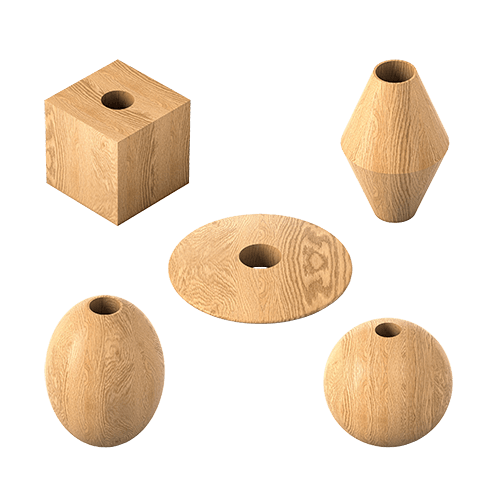
The most versatile option for a children's room. A knob handle is a small round element with a diameter of 25–45 mm, attached with a single bolt in the center. The shape is simple, without sharp parts, convenient for any age — from 2 years and older.
For toddlers: diameter 30–35 mm — optimal grip for a child's hand.
For older children: 35–45 mm — a more confident grip.
Knob handles without a finish — for painting in any room color. with a finish — ready for installation in natural or tinted finish.
Shaped handles: star, paw, and others
The most expressive and popular type for a children's room. The handle doesn't just open a drawer — it creates an image.
Wooden star handle — a five-pointed star made of solid wood. The size is comfortable for a child's hand: the child grasps the entire shape. The edges of the star are rounded — no sharp points. Mounts with a single bolt. Looks like a full decorative accent on the front of a cabinet or dresser.
Wooden paw handle — an animal paw shape with rounded toes. Tactilely pleasant, soft in silhouette, absolutely safe. A child perceives it with joy — it's a playful element built into the furniture. Ideal for children's themed interiors: forest style, Scandinavian, eco-theme.
Both options are made of solid wood, uncoated, ready for painting. This is an important advantage: you can paint them any color — to match the furniture, in contrast, or in the accent wall color.
Small round handles with profile
A classic knob handle with a small decorative profile — slightly raised, with a gentle bevel or ridges. Comfortable for children's palms, neat in appearance. Looks good on white and light-colored fronts.
Handles for painting
A separate category: uncoated wooden handles — made of raw sanded wood. They are painted together with the furniture or separately — in the desired color. This allows for a perfectly color-coordinated result: handles exactly matching the front, handles in a contrasting accent color, or handles with a decorative pattern.
For a children's room — especially relevant: handles can be painted pink, blue, mint, yellow — any color of a children's theme.
Why wood is the best material for handles in a children's room
This question deserves a separate section because there are both metal and plastic options for children's handles on the market. Let's break down why wood is better.
Warmth and tactility
Metal absorbs heat upon touch — the hand feels cold. Plastic feels like an artificial material. Wood is temperature-neutral, pleasant to the touch, and alive. For children, for whom tactile experience is part of perceiving the world, this is important.
No sharp edges
A high-quality wooden handle is manufactured with mandatory rounding of all edges and ends. Metal bracket handles in the budget segment often have sharp ends at the bases — a potential source of scratches. A wooden handle does not have this risk.
Non-toxicity
wooden furniture handles Solid wood is a natural material without the release of harmful substances. The coating — water-based varnish or wax — is safe. A small child who puts everything in their mouth is not exposed to chemical risk.
Repairability and repainting
A wooden handle can be repainted. If a child outgrows the "forest animals" theme and wants a different style — just repaint the handles. Metal is harder to repaint, plastic is almost impossible.
Eco-friendliness and aesthetics
Wood is a natural material that complements any children's interior: Scandinavian, eco-style, thematic, classic. wooden interior products made of solid wood is a choice that shapes a child's correct visual taste from the very beginning.
Handles for a children's wardrobe: how to choose correctly
A wardrobe is the largest piece of children's furniture. Its doors open and close many times throughout the day. And the handle bears the main load.
Installation height
This is the first and most important parameter. The handle should be at a height where the child can reach it without effort.
Approximate installation heights:
| Child's age | Height | Handle height from the floor |
|---|---|---|
| 2–3 years | 85–95 cm | 60–70 cm |
| 4–6 years | 100–115 cm | 75–85 cm |
| 7–10 years | 120–135 cm | 85–100 cm |
| 11+ years | 140+ cm | 100–110 cm |
Important: the handle on the cabinet door is installed on the side opposite the hinges — that is, where the door opens. Standardly — at the edge of the door. For a children's cabinet, the indentation is often made slightly smaller than in adult furniture: this makes it easier to open.
Cabinet handle size
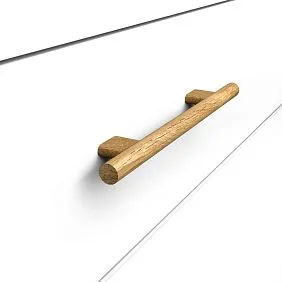
For cabinet doors — a knob handle with a diameter of 35–45 mm or a shaped handle of a similar size. Pull handles are not recommended for children's cabinets: a 96–128 mm long pull is too long for a child's palm, the child pulls it awkwardly, with a risk of slipping.
Unified style for the entire cabinet
If the cabinet has multiple doors — all handles must be identical. This seems obvious, but in practice it is often violated: handles from different batches are purchased, resulting in a slight discrepancy in color or size — and on a white facade, this is immediately noticeable.
Wooden handles with coating — ready for installation, with a uniform color within the batch. handles without coating — painted together, which guarantees perfect color matching.
Handles for a children's dresser and drawers: load and convenience
A chest of drawers is an item with a specific usage dynamic. Drawers are opened and closed intensively. By children — especially intensively. They pull drawers with a jerk, slam them shut with force, and sometimes use them as a step. The handle must withstand all of this.
Mounting reliability is critical
The handle on a chest of drawers drawer is held by one or two bolts that pass through the front panel. With intensive use, a loosely tightened bolt starts to loosen the mounting hole. After a few months, the handle wobbles or breaks off.
Rule: when installing a handle on a drawer, tighten the bolt fully, but without stripping the thread. Place a washer under the bolt head. If the front panel is thin (16 mm chipboard), use a bolt of the correct length: one that is too long will pierce through the front panel.
Ease of grip for the drawer
A chest of drawers drawer is pulled with one hand, often in a single motion. The handle for this should be:
-
large enough to grip securely;
-
without sharp edges or protruding parts underneath;
-
installed centered on the drawer horizontally.
The optimal option for a chest of drawers is a knob handle 35–45 mm or paw-shaped handleit is quite large, comfortable to grip, and safe in shape.
How many handles are needed for a dresser
A standard children's dresser has 3–5 drawers. One handle per drawer, centered. Total: 3–5 pieces plus 1–2 spare (bolts get lost accidentally, one drawer may be damaged during moving).
Tip: buy handles with a small reserve — 2–3 extra pieces. Wooden handles from the same model and batch may differ in shade from a new batch after a year.
Children's wooden furniture legs as part of a system
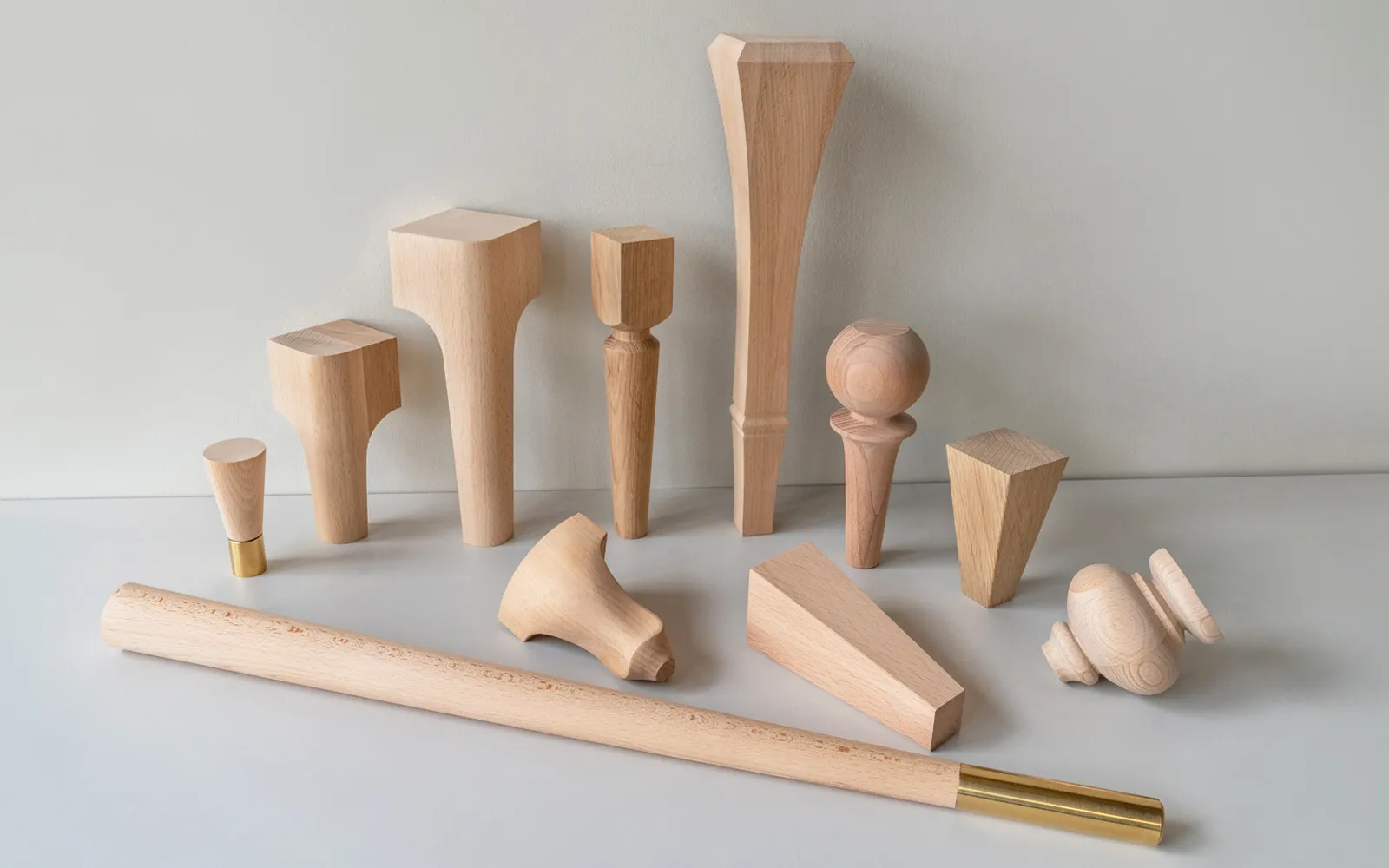
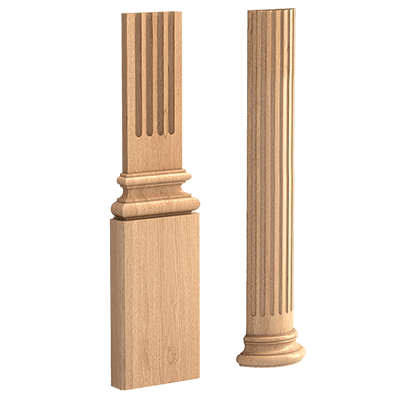
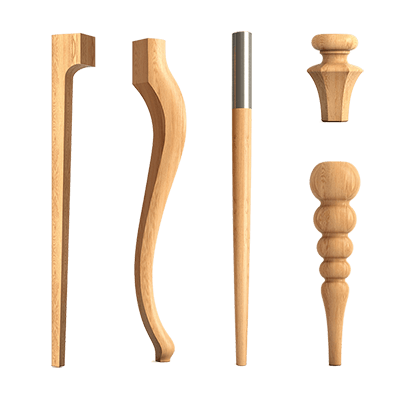
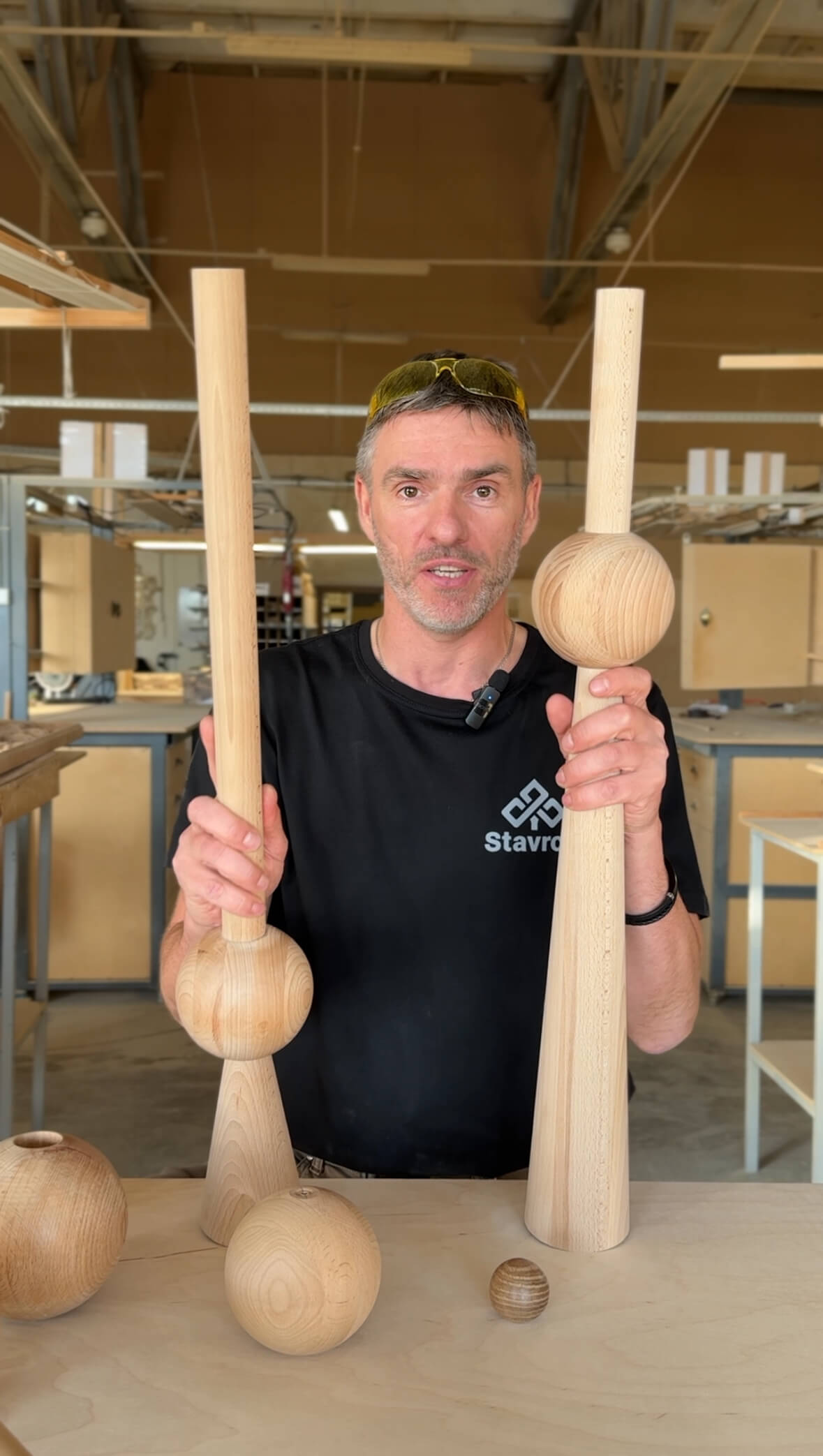
If you are updating a dresser in a children's room, it makes sense to change the handles together with the legs. wooden furniture legs — round or conical — combined with wooden handles create a unified natural look for the furniture: no metal, no plastic, all from one material.
Figural handles: star, paw, and other shapes
Figural handles for a children's room are a separate story. They solve two tasks at once: functional (comfortable grip) and visual (decorative accent in the interior).
Star handle: a universal accent
Wooden star handle — is a five-pointed star made of solid wood with rounded edges. The size of the rays is calculated so that the child grips the handle between the rays — the grip is stable and comfortable. The shape is universal: suitable for any children's interior — from sky-blue "space" to delicate "princess" style.
The star handle in gold is a formal accent. In white — delicate, almost invisible on white furniture. In bright yellow or pink — playful. It's the same handle, but in different colors — four different moods.
Paw handle: thematic decor
Wooden paw handle — the silhouette of an animal paw with pads. The shape is completely rounded, without sharp details. The size is optimal for a child's hand: large and comfortable.
The paw handle fits perfectly into themed children's rooms: "forest animals", "bear cub", "Scandinavian forest", "zoo". But not only — it also looks organic in neutral Scandinavian or eco-interiors, where wood is the main material.
Both shaped handles are supplied without coating — made of sanded solid wood. This means complete freedom in choosing the final color: they are painted together with the furniture and become an integral part of the facade.
How to use shaped handles as a decorative accent
Shaped handles on a white dresser facade in mint color. Star handles in gold on a white wardrobe. Paw handles in dark brown on a milky sideboard in a children's room. Each of these scenarios is a conscious design decision where a small detail creates an image.
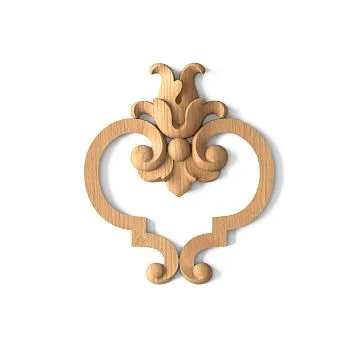
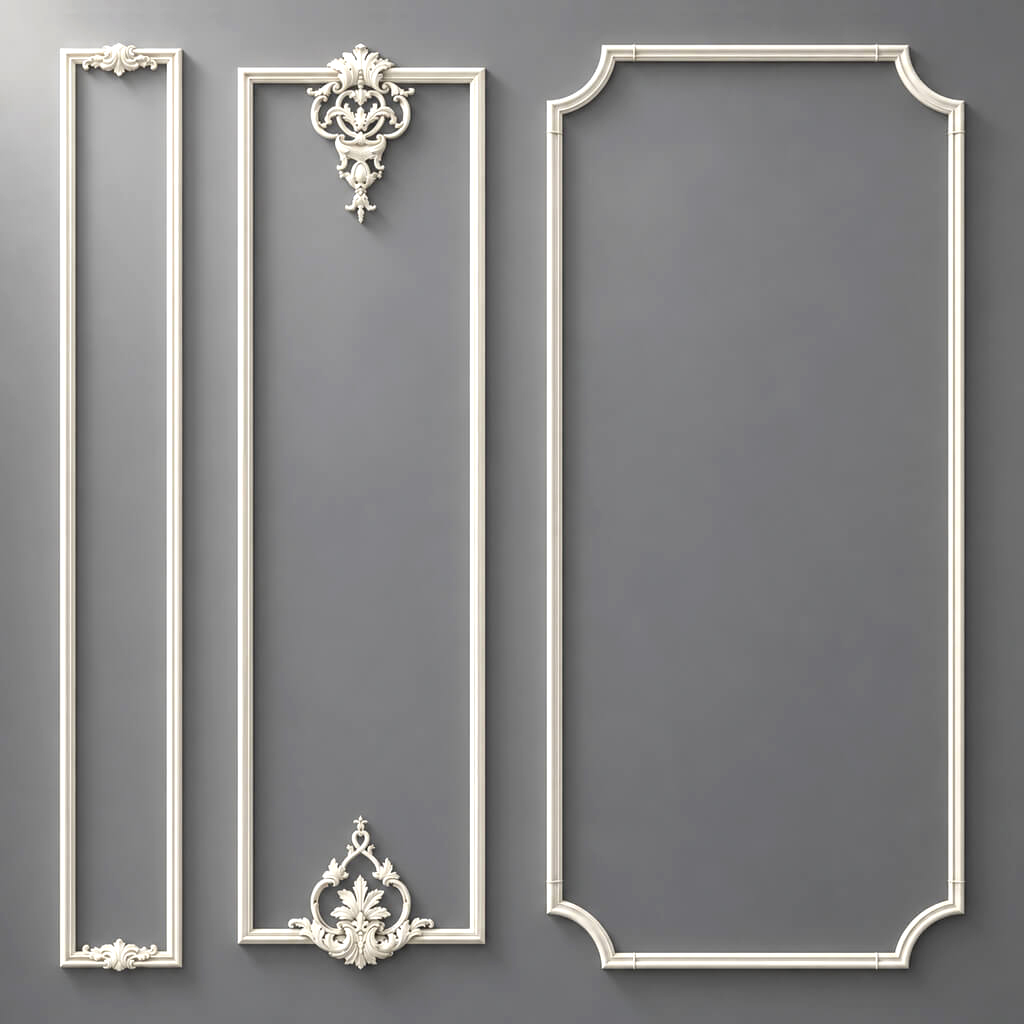
Combine shaped handles with wood furniture decorWooden overlays with simple ornaments on the cabinet facades paired with shaped handles — this is the level of designer children's furniture.
Coating and color of wooden handles for children's room
The color of the handle is the final touch in the furniture's appearance. And this is especially important for a children's room because a child's interior relies on color more actively than an adult's.
Uncoated handles: maximum freedom
uncoated wooden handles — pure sanded wood, ready to accept any color. This is the most flexible choice.
Finishing options:
-
Acrylic paint — matte or semi-matte, any RAL or NCS color. Safe for a children's room.
-
Stain + varnish — tinting to a specific wood species or shade.
-
Chalk paint — trendy matte texture. Popular in Scandinavian and Provence interiors.
-
Natural wax — preserves the wood color, provides light matte protection.
Coated handles: ready-made option
Wooden handles with coating — with factory finish. Convenient if you don't want to paint yourself. The natural wood color under varnish is a universal solution for Scandinavian, eco, or neutral nursery styles.
Color strategies for a nursery
Handles matching the facade. White handles on a white dresser — a delicate detail that practically blends into the facade. The furniture looks monolithic and minimalist.
Contrasting handles. Mint handles on a white cabinet. Gold handles on a milky one. Dark gray on pastel blue. Contrast makes handles noticeable — it's an accent, a focal point on the facade.
Handles matching the accent color in the interior. If the nursery has an accent wall in pastel pink — handles of the same shade will connect the furniture with the wall. This is a color linking technique that professional designers use in every project.
Multi-colored handles. Each drawer of the dresser has a handle of its own color: red, yellow, blue, green. This is a childlike, playful, fun solution. Suitable for preschool children. When the child grows up — you can repaint all handles in one color.
What to check before buying handles for nursery furniture
Practical checklist. Go through it before ordering.
1. Handle size
Measure the distance between the centers of the mounting holes on the furniture (if they already exist). Standard center-to-center distances: 32 mm, 64 mm, 96 mm. Knob handles are attached with one bolt — center-to-center distance is not important.
2. Grip comfort for a child
If possible, let the child hold the handle in their hand before purchasing. If ordering online, focus on the diameter: 30–35 mm for preschoolers, 35–45 mm for schoolchildren.
3. No sharp edges
Check all ends and edges. Handcrafted wooden handles may have small burrs — before installation, go over them with fine sandpaper (grit 240–320).
4. Material and coating
Specify the type of wood and the treatment compound used. For children, only natural wood and non-toxic coating.
5. Bolt length
The bolt for attaching the handle must match the thickness of the facade. A 16 mm facade + a handle with a 10 mm mounting hole = a bolt at least 26 mm long. Standard M4 bolts in the kit — check the length.
6. Quantity of handles with a reserve
Count all doors and drawers. Add a 10–15% reserve. Handles from the same batch guarantee an exact match in color and size.
7. Compatibility with facade thickness
Thin facade 10–12 mm — the bolt should not go through. Check the bolt length before ordering.
Mistakes when choosing handles for children's furniture
These mistakes are common — and easy to avoid.
Choosing only by shape, forgetting about convenience. A beautiful shaped handle that is uncomfortable to pull — irritates the child daily. Check: can it be grasped with one small hand?
Choosing handles that are too small for heavy drawers. A small 20 mm knob handle on a heavy drawer with clothes — a torment. The handle should match the weight of the element being opened.
Installing sharp or overly protruding elements. Metal bracket handles with sharp ends in a child's room — a potential injury. A rounded wooden handle — no.
Not considering the child's height. Handles on cabinet doors installed at adult height 130–150 cm from the floor — a child aged 3–5 cannot reach them. Install handles at child height.
Buying handles from different batches. A slight color difference between batches on white furniture is immediately visible. Order everything at once.
Forgetting about spares. In a year, one bolt will be lost, one handle will be broken by a child. Two or three spare pieces — peace of mind.
Choosing color separately from furniture and room. A beautiful handle by itself does not mean a beautiful handle on your furniture. Evaluate the handle color only next to the facade and in the room's interior.
Use metal staples in a nursery for toddlers. Sharp staple ends at the bases pose a real risk for children under 5. Only rounded wooden shapes.
Handles for a children's room in different interior styles
Scandinavian style
White furniture, light wood, neutral tones. uncoated wooden handles made of natural wood or painted white — the perfect combination. paw-shaped handle in natural wood color on a white dresser — a characteristic technique of Scandinavian children's interior.
Themed children's room
"Forest", "animals", "space", "sea" — in themed children's rooms, handles become part of the narrative. Star-shaped handle in gold on blue furniture — "space". A paw-shaped handle in brown on green — "forest". A children's detail that works for the story.
Classic children's room style
For a classic children's room with white enamel furniture — wooden knob handles with a light profile in white or cream enamel. Together with decorative inlays a complete image is created on the facades
Neutral modern style
Gray, mint or pastel furniture — wooden handles in natural color or in a contrasting accent shade. Here the handle is not the main accent, but a harmonious detail.
Where to buy wooden handles for children's furniture
Buy handles for children's furniture made of natural wood is important from a manufacturer who provides complete information about dimensions, material and coating — so as not to guess, but to know.
In the Stavros catalog — Wooden furniture handles made of solid wood: without a finish for self-painting and with a finish in finished form. For children's rooms, shaped models are especially suitable: star-shaped handle made of solid wood и paw-shaped handle made of solid wood. Next in the catalog — decor for furniture и Wooden legs — to update children's furniture comprehensively.
FAQ: Answers to popular questions
Which handles are best to choose for children's furniture?
Wooden knob handles or shaped handles made of solid wood with rounded edges. For preschoolers — diameter 30–35 mm, for schoolchildren — 35–45 mm.
Are wooden handles suitable for a child’s room?
Yes, this is the optimal choice. Wood is warm to the touch, has no sharp edges, can be painted any color, and is a natural, safe material.
Which handles are safer for a children's dresser?
Round knob handles or shaped handles without sharp protruding parts. Avoid metal brackets with sharp ends at the bases.
Can wooden handles for children's furniture be painted?
Yes. Uncoated handles made of sanded wood can be painted with acrylic paint, stain, or chalk paint in any color. Safe compositions are a must for a children's room.
What to choose for a children's wardrobe: a knob or a bracket?
A knob. A bracket handle 96–128 mm long is inconvenient for a small hand. A knob handle 35–45 mm is the optimal choice for a wardrobe in a children's room.
Are shaped handles suitable for drawers?
Yes. Star handles and paw handles are convenient for drawers: the shape provides a secure grip, and the size is sufficient for reliable force when opening.
How to choose the size of a handle for a child?
For preschoolers — diameter 30–35 mm. For children aged 7–10 — 35–45 mm. The main criterion: the child should be able to fully wrap their palm around the handle.
How many handles are needed for a children's dresser?
Based on the number of drawers plus a 10–15% reserve. For a dresser with 4 drawers — 5–6 pieces.
How to choose the color of handles for children's furniture?
Three strategies: matching the facade (subtle), contrasting color (accent), color of an accent in the interior (linking with room decor). Always evaluate the handle color next to the actual facade.
Where to buy handles for children's furniture?
In the STAVROS catalog: Wooden furniture handles Made from solid wood — shaped, uncoated and coated — with Contact us to confirm shipping to your destination.
About the manufacturer
STAVROS is a Russian manufacturer of wooden products for furniture and interiors. The company's catalog includes a full range wooden furniture handles: from classic knobs to shaped children's forms — Star-shaped handle и paw-shaped handle. Next to it — Decorative Inserts, Furniture legs and the entire catalog wooden products for interiors. If you want to create a children's room with safe, beautiful, and durable wooden fittings — STAVROS offers natural quality with Contact us to confirm shipping to your destination.