Article Contents:
- Prestige HL-001 or Cenote HL-029: short answer
- Why installation method matters more than appearance
- Overlay installation Prestige
- Inset installation Cenote
- Protrusion and passage area
- Replacement and maintenance
- Prestige 88 × 31 × 30 × 32 mm
- Prestige 158 × 31 × 30 × 64 mm
- Prestige 248 × 31 × 30 × 128 mm
- Prestige 350 × 31 × 30 × 192 mm
- Prestige 460 × 31 × 30 × 256 mm
- How to measure old holes
- When the match is close enough
- When the holes don't match
- How to mark new holes
- First, remove one old handle
- Check the installation direction
- Consider the facade thickness
- Do not overtighten the screws
- Size 80 × 20 × 66 × 11 mm
- Internal recess for grip
- Minimum protrusion about 9 mm
- One size for different facades
- Precise template
- Depth 11.5 mm
- Diameter 67 mm
- Clean cutout edge
- Test piece inspection
- Enamel and edge
- Oak tinting
- Glue and finished coating
- Smooth facade without old holes
- Facade with old holes
- Frame front
- Thin panel
- Furniture without the ability to remove the facade
- If the holes match Prestige
- If the holes are under the new pull handle
- If Cenote is planned
- Enamel helps hide repairs
- Cenote and facade from 16 mm
- Prestige and screw length
- Frame and panel
- Concealed fittings
- Small drawer
- Medium chest of drawers drawer
- Kitchen front
- Tall pencil case
- Wide bottom drawer
- Wardrobe in bedroom
- Walk-in closet
- Wardrobe in hallway
- Vertical installation
- Narrow corridor
- Children's Furniture
- Modern kitchen
- Small chest of drawers
- Nightstand next to the bed
- Furniture in commercial interiors
- Beech under white or colored enamel
- Oak for light tinting
- Oak for dark tinting
- Test swatch
- Same batch
- Kitchen
- Commode
- Walk-in closet
- When the mix looks random
- Prestige on cabinets, Cenote on nightstands
- Prestige on the tall cabinet, Cenote on lower fronts
- Different rooms
- When it's better not to mix
- Make a list of fronts
- Don't judge handles only by the kitchen's appearance
- Spare handle
- Prestige Mixed Series
- Cenote Set
- Shell handle and regular bracket
- Cenote and furniture button
- Cenote and profile pull
- Prestige and long metal handle
- Unpainted handle and finished coating
- Recessed handle and fully concealed mechanism
- Need to replace handles on a finished dresser
- Need to order a new minimalist kitchen
- Need a unified series throughout the kitchen
- The cabinet is in a narrow hallway
- Need to preserve the old holes
- Need to emphasize the oak texture
- Need a white handle matching the facade color
- Need hardware for a children's room
- Need a handle for a heavy tall door
- Choosing a handle only by photo
- Confusing overall length with center distance
- Not checking the thickness of the Cenote facade
- Milling after final enamel
- Gluing without a template
- Not aligning old holes with Prestige
- Installing 460 mm on a small drawer
- Installing 88 mm on a tall cabinet without checking
- Not accounting for the passage
- Choosing beech for transparent finish, expecting oak grain
- Finishing without a test sample
- Buy part of the kit later
- Use glue without compatibility check
- Do not check adjacent doors
- How is Prestige HL-001 different from Cenote HL-029?
- Which handle is easier for ready-made furniture?
- Which handle is better to plan for a new facade?
- What sizes are available for Prestige HL-001?
- Which Prestige size should I choose for a small drawer?
- Which Prestige is suitable for a tall cabinet?
- What size is Cenote HL-029?
- What is the minimum front thickness for Cenote?
- How much does Cenote protrude above the front?
- Can Cenote be installed on an already painted front?
- What glue is needed for Cenote?
- Is the mounting hardware included with Prestige?
- Can Prestige be used vertically?
- Can I install Cenote on a drawer?
- Which handle is best for a narrow hallway?
- What to choose for children's furniture?
- How to cover old handle holes?
- Can I combine different sizes of Prestige?
- Can I combine Prestige and Cenote?
- What to choose for white enamel?
- What should I choose to preserve the wood texture?
- Do I need to buy a spare handle?
- Where to buy Prestige HL-001 and Cenote HL-029?
- What to check right before payment?
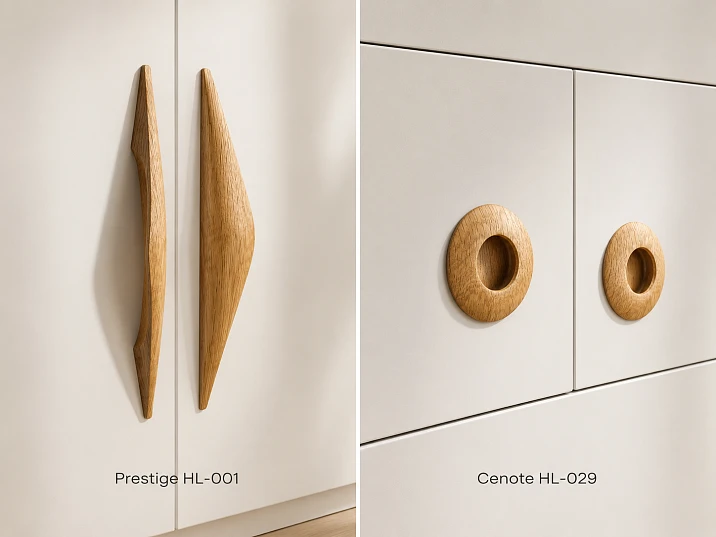
Comparison of two wooden handles for kitchen, cabinet, dresser, and furniture in a walkway area
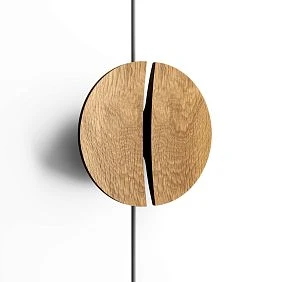
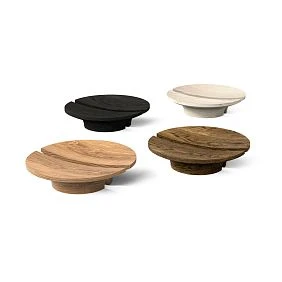
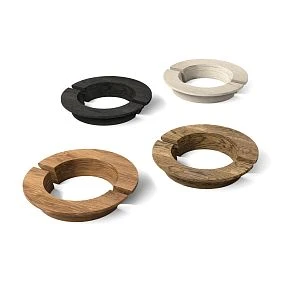
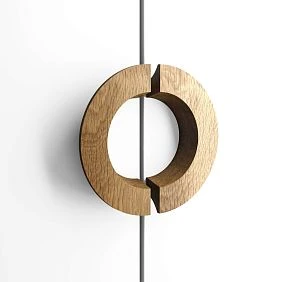
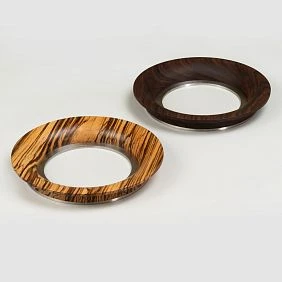
Prestige HL-001 or Cenote HL-029: short answer
Prestige HL-001 is best chosen when you need an overlay handle with screw mounting, replacement of existing hardware, or a uniform design in five sizes for drawers, cabinets, and tall wardrobes. The model length ranges from 88 to 460 mm, center distance from 32 to 256 mm. Cenote HL-029 suits new furniture and minimalist facades where a nearly flush surface and a small protrusion of about 9 mm are important. It is glued into a round mounting recess with a diameter of 67 mm and a depth of 11.5 mm, so it is better to plan the routing before final finishing of the facade.
Buy Prestige HL-001 overlay wooden handle Buy Cenote HL-029 recessed wooden handle Buy wooden furniture handles Choose handles for self-finishing
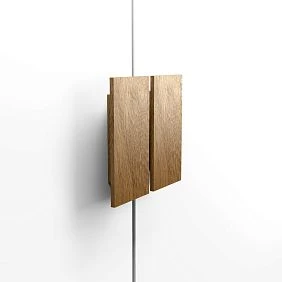
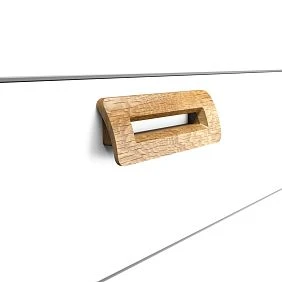
Prestige HL-001 is an overlay shell handle. It is mounted with screws, screw fasteners are included, lengths are 88, 158, 248, 350, and 460 mm.
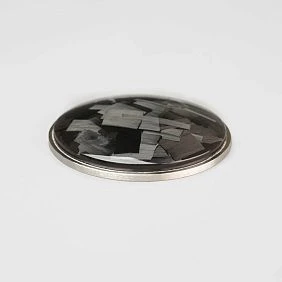
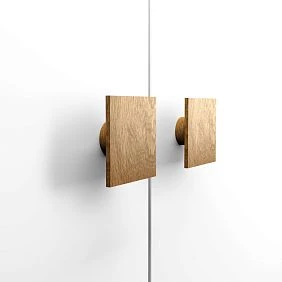
Cenote HL-029 is a round recessed handle. Size 80 × 20 × 66 × 11 mm, mounting recess 67 mm, depth 11.5 mm, installation — gluing.
For a finished facade, HL-001 is often more convenient. If the center distance matches the old holes, replacement can be done without restoring the entire surface.
For a new minimalist facade, HL-029 is often more suitable. Milling and seating are planned before enameling or tinting.
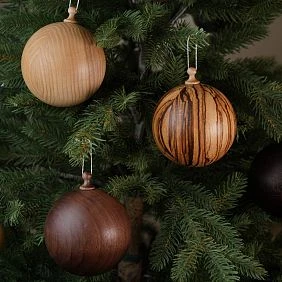
Both models are available in beech or oak. Beech is chosen for dense enamel, oak for tinting while preserving texture.
The thickness of the facade must be checked in advance. For Cenote, a minimum thickness of 16 mm is specified; for Prestige, the screw length and the specific facade design are important.
A buyer who wants to purchase wooden furniture handles for a kitchen, cabinet, or dresser usually starts with shape and color. In the comparison of Prestige HL-001 and Cenote HL-029, appearance is important, but the installation method becomes decisive. One model is attached with screws to the front surface and protrudes about 30 mm. The other is glued into a prepared recess and remains almost flush with the facade.
This difference determines whether the old facade can be preserved, whether milling will be needed, how the handle will behave in a narrow passage, and how easy it will be to replace it in a few years. The Prestige HL-001 is convenient for updating ready-made furniture, especially if the old holes match the center distance of 32, 64, 128, 192, or 256 mm. The Cenote HL-029 is better planned together with a new facade: the round recess with a diameter of 67 mm must be made precisely, and the depth of 11.5 mm must be coordinated with the material thickness.
Prestige has another strong advantage — five sizes in one design. You can install a short handle on a small drawer, a medium one on a kitchen door, and a long one on a pencil case or wardrobe, maintaining a single series. Cenote is produced in one size of 80 mm and works not as a long line, but as a compact local grip.
For ready-made furniture, you can choose the Prestige HL-001 size. For a new facade with an almost hidden grip — choose the Cenote HL-029 made of beech or oak. If a different installation method, shape, or size is needed, it is wiser to open the catalog of beech and oak handles and compare models before drilling the facade.




Why the installation method is more important than the appearance
Surface-mounted and inset handles work differently even before first use. Prestige is attached through two holes and absorbs force through screws and the facade body. Cenote is installed in a round recess and held by adhesive bonding on the seating surface. Therefore, the choice of handle is related not only to design but also to the tool, facade material, thickness, and finishing sequence.
Our factory also produces:
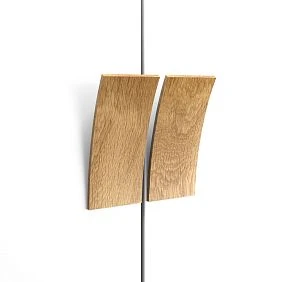
Surface mounting of Prestige
To install HL-001, you need to mark the center distance, drill two holes, and secure the handle with screws from the kit. This method is easier to adapt to ready-made furniture. If the old holes match, the facade does not require deep rework. If they do not match, you will have to cover the old points or choose a different length.
Get Consultation
Inset mounting of Cenote
HL-029 requires a round seating recess with a diameter of 67 mm and a depth of 11.5 mm. An error in diameter, depth, or position is immediately noticeable: the handle may sit unevenly, protrude more, or sink in. Milling is best done before final enamel or tinting to avoid damaging the coating.
Protrusion and passage zone
Size C of Prestige is about 30 mm. In the kitchen, this is convenient for a confident grip, but in a narrow corridor or near a passage, the handle may catch on clothing. The visible part of Cenote protrudes about 9 mm, so the facade remains calmer and safer for the passage zone.
Replacement and maintenance
A screw-on handle is easier to remove, repaint, or replace. A glued-in Cenote becomes part of the facade, and removal may damage the seating area or finish. If the furniture is designed for long-term use without frequent hardware changes, this is not a problem. For restoration and regular updates, Prestige is more flexible.
Confirmed characteristics of Prestige HL-001 and Cenote HL-029
| Parameter | Prestige HL-001 | Cenote HL-029 | Practical Meaning |
|---|---|---|---|
| Type | Overlay shell handle | Round recessed handle | The first is mounted on the surface, the second — into a prepared recess. |
| Dimensions | 88, 158, 248, 350 and 460 mm in length | 80 × 20 × 66 × 11 mm | Prestige offers a size series, Cenote — one compact format. |
| Center-to-center distance | 32, 64, 128, 192 and 256 mm | Not used | For replacement, Prestige compares old holes; Cenote requires new routing. |
| Mounting | Screw, fasteners included | Gluing | Cenote requires a compatible mounting compound separately. |
| Facade preparation | Two holes | Round cutout 67 mm deep 11.5 mm | Cenote requires milling and a precise template. |
| Minimum front panel thickness | Depends on the facade and fastener length | From 16 mm | For Cenote, check the remaining thickness after cutout. |
| Protrusion | About 30 mm by size C | About 9 mm of visible part | Cenote protrudes less and is more convenient in a narrow passage. |
| Material | Beech or oak | Beech or oak | Both models can be selected for enamel or tinting. |
| Sanding | «Prestige» | «Prestige» | The surface is prepared for subsequent finishing. |
Comparison: which handle suits your facade
| Situation | Preferred model | Why |
|---|---|---|
| Replacing an old handle with two holes | Prestige HL-001 | You can choose a center distance of 32–256 mm and keep the facade if the holes match. |
| New smooth facade without holes | Cenote HL-029 | Milling can be planned before finishing to achieve an almost flat surface. |
| Tall kitchen cabinet | Prestige 350 or 460 mm | The long handle line matches the height of the facade and provides a large grip area. |
| Cabinet in a narrow hallway | Cenote HL-029 | A protrusion of about 9 mm catches clothing less and does not narrow the passage. |
| Small drawer box | Prestige 88 mm or Cenote 80 mm | The choice depends on whether you need a surface-mounted handle or a recessed round knob. |
| One design on drawers and tall doors | Prestige HL-001 | Five lengths allow you to keep one series on different facades. |
| Minimalist kitchen without protruding lines | Cenote HL-029 | The round grip barely disrupts the plane of the facade. |
| Furniture that is planned to be repainted and changed | Prestige HL-001 | A screw handle is easier to remove, maintain, or replace. |
After the table, the choice can be reduced to a simple question. If the facade is already made and has two holes, first check Prestige. If the facade is new, smooth, and can be sent for milling, Cenote provides a cleaner plane. For the final decision, it is useful to look at a shell handle with a length from 88 to 460 mm and nearby look at a round inset handle for furniture.
Prestige HL-001: five sizes in one design
The main strength of Prestige is the size series. The buyer does not have to choose different models for drawers, doors, and cabinets. You can keep the same shape while changing the length and center distance. This is especially convenient in the kitchen and wardrobe, where facades vary greatly in height and width.
Prestige 88 × 31 × 30 × 32 mm
The shortest version is suitable for a small drawer, bedside table, compact door, or internal furniture module. The center distance of 32 mm is convenient for a small facade where a long handle would look excessive. When replacing old hardware, it is important to measure the distance between the centers of the holes, not the total length of the old handle.
For small furniture, you can choose a wooden handle 88 mm and check if the center distance is 32 mm.
Prestige 158 × 31 × 30 × 64 mm
The size fits a chest of drawers, bedside table, kitchen drawer, and small cabinet door. The 158 mm length is more noticeable but does not become a long architectural line. The 64 mm center distance is common on compact furniture, but old holes need to be measured with a caliper or precise ruler.
Prestige 248 × 31 × 30 × 128 mm
The medium version fits a kitchen front, cabinet, and wide drawer. The 128 mm center distance is convenient for many modern cabinets and provides a confident grip. If the old handle also had 128 mm between hole centers, Prestige can cover traces of the previous hardware, but this depends on the width of its base and the condition of the coating.
For a standard kitchen front, you can look at a handle with a center distance of 128 mm.
Prestige 350 × 31 × 30 × 192 mm
The 350 mm length corresponds to a large door, kitchen tall cabinet, swing wardrobe, and high section of a dressing room. The 192 mm center distance requires precise marking. The handle can be installed vertically to emphasize height, or horizontally on a wide front. The direction is chosen based on proportions and grip convenience.
Prestige 460 × 31 × 30 × 256 mm
The maximum version is designed for a tall cabinet, walk-in closet, or large kitchen front. The long handle becomes part of the furniture's architecture and is visible from afar. The center distance of 256 mm must be checked before drilling: an error on a long dimension is more noticeable and can lead to misalignment.
For a pencil case and walk-in closet, you can choose a handle for a tall furniture front. Additional recommendations are collected in the article on how to choose a long handle for a cabinet.
How to choose the center distance for Prestige
Center distance is the distance between the centers of the mounting holes. It is not equal to the total length of the handle. For Prestige, length A is always greater than distance D. For example, a model 248 mm long has a center distance of 128 mm, while the 460 mm version has 256 mm. This difference is important when replacing old hardware.
How to measure old holes
Remove the old handle and measure the distance between the centers of the holes on the front. Measuring from the outer edge of one hole to the outer edge of another is not allowed: the result will be larger. If the holes have some play, focus on their central axes.
When the match is sufficient
If the old center-to-center distance is 32, 64, 128, 192, or 256 mm, one of the Prestige sizes may fit. But you still need to check the overall length, base width, and whether the handle will cover traces of the old finish. Matching holes does not guarantee a perfect visual result.
When the holes do not match
There are three options: choose another model with a suitable center-to-center distance, restore the old holes and drill new ones, or replace the facade. Covering old points only with a pull handle is risky if they extend beyond its base. Repairs must be done before final finishing.
How to mark new holes
Use a template or jig, especially for several identical doors. The edge distances should be the same. On a long handle, an error of one or two millimeters is more noticeable. Before drilling, attach the handle and check its position from a distance.
How to replace an old handle with Prestige HL-001
Prestige is convenient for restoration because it is mounted with screws and has five center-to-center distances. But a simple replacement is only possible if the holes match and the facade is in good condition. If the previous hardware left dents, scratches, or a faded outline, the new handle may not fully cover them.
First, remove one old handle
Do not order a set based on the overall length of the hardware. Remove one handle, measure the center-to-center distance and facade thickness, and assess the condition of the holes. This way, you can determine if the included fasteners are suitable and if repairs are needed.
Check the installation direction
Prestige can be placed horizontally or vertically. On a box, horizontal installation is usually more natural; on a pencil case, vertical. If the old holes set an inconvenient direction, a simple replacement may not yield the desired result.
Consider the thickness of the facade
Fasteners are included, but their actual compatibility with a specific thickness needs to be checked. A screw that is too short will not provide a reliable connection; one that is too long may protrude into the handle's working area or fail to tighten the body. If in doubt, consult a furniture maker.
Do not overtighten the screws
The wooden handle and facade can be damaged by excessive force. Tighten the screws evenly, controlling the fit. If the handle wobbles, look for the cause in the holes, fastener length, and facade flatness, rather than compensating with brute tightening.
To replace existing hardware, you can look at a wooden handle with screw fastening and compare all five center distances.
Cenote HL-029: almost flush facade surface
Cenote does not create a long line like Prestige. It works as a compact round grip recessed into the facade. The external size of 80 mm makes the handle noticeable, but the visible part protrudes about 9 mm. This is especially useful in narrow passages, on minimalist kitchens, and on furniture where protruding hardware obstructs movement.
The price of such visual calm is more complex preparation. You cannot simply drill two holes and secure the handle with screws. You need to precisely select a round mounting spot with a diameter of 67 mm to a depth of 11.5 mm, check the facade thickness from 16 mm, and glue the product with a compatible compound.
Size 80 × 20 × 66 × 11 mm
Dimensions describe the visible part and mounting geometry. Three numbers are especially important for the buyer: 80 mm for the outer size, 67 mm for the recess diameter, and 11.5 mm for the depth. They determine whether the handle will fit on the facade and how much material will remain after routing.
Internal recess for grip
The handle works due to a round recess. Fingers go inside, so a protruding arc is not needed. Before ordering, it is useful to check the comfort of such a grip on a sample or similar model, especially if the door is heavy or used by a person with limited hand mobility.
Minimum protrusion about 9 mm
Cenote snags less on clothing and does not create long protruding elements. In a narrow hallway, children's room, and walk-through kitchen, this is a practical advantage. However, the handle is not installed completely flush: the visible part remains above the surface and forms a neat contour.
One size for different facades
The 80 mm model can be repeated on drawers, cabinets, and doors, maintaining a single round motif. Unlike Prestige, the size does not change. This creates a calm system, but on a very tall door, the compact grip may look small. Then comfort and visual proportion are evaluated separately.
For new furniture, you can look at a wooden handle with minimal protrusion and provide its mounting dimensions to the cabinetmaker in advance.
How to prepare a 67 mm mounting recess
Routing is a key step in installing Cenote. The handle must fit evenly, without skew or excessive gap. Too small a cutout will prevent the product from seating, too large will weaken the glue joint and ruin the appearance. An error is difficult to fix after finishing the facade.
Precise template
For a series of facades, a template or jig is needed. It fixes the diameter and center position. Marking "by eye" is risky even on one door, and on several it creates a noticeable difference in height. The round shape especially quickly reveals misalignment.
Depth 11.5 mm
The cutter must remove material to the confirmed depth without going through the facade. With a thickness of 16 mm, a limited layer of material remains after the cutout, so the quality of the base and the precision of the equipment are critical. The craftsman must account for the actual thickness, not the nominal value from the order.
Diameter 67 mm
The mounting diameter refers to the inner part of the handle, while the outer size is 80 mm. Do not cut a hole along the outer contour. Before routing, check the drawing and the actual product, if production allows receiving the handles first and then preparing the facades.
Clean edge of the cutout
Chips and torn edges will be visible near the handle or weaken the fit. The tool must match the facade material. Different modes and preparation are used for solid wood, MDF, veneered, and painted panels. The article does not prescribe a universal router bit.
Test piece inspection
Before a series, it is useful to perform a sample cut on a piece of the same thickness and material. The test shows the accuracy of the diameter, depth, fit, and behavior of the future coating. One test is cheaper than fixing all facades.
Why Cenote is better planned before painting
Milling after enamel or tinting creates a risk of chips, scratches, and damage to the protective layer. The edge of the cutout may require additional processing, and dust may get onto the finished surface. Therefore, the optimal sequence is usually: marking, cutout, trial fit, preparation, finishing, gluing.
Enamel and edge
If the cutout is done before painting, the craftsman can evenly coat the visible areas and the end. After installation, the handle covers part of the fit, and the facade maintains a neat contour. The specific sequence depends on the workshop's technology and glue.
Oak tinting
On an oak facade and oak handle, it is important to match the shade. If the handle is tinted separately, the sample must match the facade. The seating area should not remain unprotected, especially if the furniture is used in the kitchen.
Glue and finished coating
The adhesive must be compatible with the wood, facade base, and finish. The manufacturer recommends TYTAN Prof. Classic Fix, but before installation, the instructions and a test area are still checked. Some coatings may reduce adhesion.
For installation, you can buy mounting adhesive for Cenote handle, after first confirming its compatibility with the facade.
Can Cenote be installed on ready-made furniture
Technically, this is possible if the facade has sufficient thickness, can be removed from the body, and can be precisely milled. In practice, the risk is higher than when making new furniture. The coating must be preserved, edges must not be damaged, and internal fittings, frames, or thin panels must be avoided.
Smooth facade without old holes
This is the best option for modification. The craftsman removes the door, checks the thickness, and performs the template and milling. If the coating is durable and allows for careful processing, Cenote can be installed without making a new facade.
Facade with old holes
A round handle does not always cover two old points. If the holes are inside the future cutout, they can weaken the mounting area. If outside, they will remain visible. Before installation, repair or a new facade is needed.
Frame facade
A recessed handle requires a sufficient flat area. A narrow frame, panel, or level difference may not allow for a 67 mm circle. Cenote should not be chosen based only on the overall door size; the actual mounting surface must be measured.
Thin panel
The model is not suitable for facades thinner than 16 mm according to confirmed data. Even at 16 mm thickness, the craftsman must assess the remaining material and strength. Installation on a thin panel or decorative insert is risky.
Furniture without the ability to remove the facade
Milling a vertical door in place is more difficult and dangerous for the cabinet. Dust, inaccurate fixation, and limited access increase the risk. Sometimes it is more rational to remove the facade or order a new one.
What to do with old handle holes
This question is especially important when switching from surface-mounted hardware to Cenote. Old holes cannot simply be left under paint if they weaken the fit or remain visible. The restoration method depends on the facade material and future finish.
If the holes match Prestige
Nothing needs to be covered. Choose the appropriate center distance and check if the base covers the traces of the old handle. This is the simplest way to update furniture.
If the holes are under the new surface-mounted handle
They may remain inside the mounting area but should not interfere with the new screws. Old points are restored if the surrounding material is weakened. Do not screw new fasteners too close to a damaged hole without repair.
If Cenote is planned
Old holes are evaluated relative to a 67 mm circle. Sometimes the sample removes the damaged area, sometimes the holes extend beyond the contour and require full restoration. The decision is made by the furniture maker after marking.
Enamel helps hide the repair
Under an opaque coating, the restored surface can be leveled and repainted. Under oak tinting, traces of repair are much harder to hide because the texture must remain visible. In such a case, a new facade sometimes looks neater.
How to choose a handle for the facade thickness
Thickness affects both installation methods. For Cenote, it determines whether an 11.5 mm sample can be made while maintaining strength. For Prestige, it determines whether the screw length is sufficient and how securely the facade holds the fastener.
Cenote and facade from 16 mm
The minimum value does not mean that any 16 mm panel is automatically suitable. The actual thickness, material, presence of routing on the back, frame construction, and facade edge must be considered. The handle center is placed in an area without hidden hardware.
Prestige and screw length
Fasteners are included in the kit, but facades may have different thicknesses. Before ordering, check whether the included screw is suitable. A thick solid wood facade may require a different size, while a thin panel may need careful tightening and a washer if the design allows.
Frame and panel
The thickness of the facade may vary. The frame is thicker, the panel is thinner. Cenote cannot be installed in the thin part just because the overall facade is stated as 20 mm. Prestige should also be mounted in a stable area.
Concealed fittings
Hinges, guides, and reinforcements may be located near the intended handle. Before drilling or milling, check the reverse side. This is especially important on pull-out drawers and narrow doors.
Which Prestige size to choose for a drawer, chest of drawers, and kitchen
The overall length of the handle should match the facade, but there is no universal proportion. On a small drawer, a long HL-001 looks heavy and may interfere with adjacent handles. On a wide door, a short version gets lost and provides too small a grip area. The size is chosen based on the actual field, and the center distance is based on holes or a template.
Small drawer
Prestige 88 mm with a center distance of 32 mm is suitable for a compact cabinet, top drawer of a chest of drawers, and a small kitchen module. The handle should not approach the edges of the facade or interfere with adjacent drawers. If a nearly flat surface is important, Cenote 80 mm provides an alternative round grip.
Medium chest of drawers drawer
Prestige 158 mm with a center distance of 64 mm provides a confident grip without excessive length. On a wide chest of drawers, you can install one handle per drawer or use two handles on a particularly long facade, but this scheme requires symmetry calculation.
Kitchen facade
Prestige 248 mm with a center distance of 128 mm is suitable for many doors and drawers. It is well readable and remains convenient for daily use. In a minimalist kitchen, Cenote may look calmer, especially if the handles are repeated on all facades in one size.
Tall pencil case
Prestige 350 or 460 mm is installed vertically and placed in a convenient grip zone. The length should match the height of the door, but does not necessarily have to occupy most of it. If the pencil case is in a narrow passage, Cenote reduces the protrusion but retains only the local grip.
Wide bottom drawer
A long handle helps to open a wide front evenly. Prestige 350 mm can be convenient if the center distance of 192 mm suits the design. For a heavy drawer, the guides and installation quality are important; the handle length itself does not solve the opening effort issue.
Prestige for tall cabinet and wardrobe
Handles 350 and 460 mm create a pronounced vertical line and help visually elongate the front. They suit a bedroom cabinet, hallway, wardrobe, and tall kitchen pencil case. The length becomes part of the design, so handles on adjacent doors should be at the same height.
Wardrobe in the bedroom
A long wooden handle connects the tall front with natural interior materials. Oak under tint supports a wooden headboard or floor, beech under enamel allows making the fittings in the color of the cabinet. The 30 mm protrusion usually does not interfere if there is enough space in front of the cabinet.
Wardrobe
In a wardrobe, long handles are conveniently repeated on several sections. Sizes 350 and 460 mm can be combined with shorter Prestige handles on drawers, keeping the same series. It is important to prepare a specification in advance so that identical fronts receive the same length.
Wardrobe in the hallway
If the cabinet is located near an entrance and passage, a long handle may catch outerwear. Check the distance to the wall, door, and movement trajectory. In a tight area, Cenote is often more practical, although its compact grip looks different.
Vertical installation
Marking should be the same on all doors. The offset from the edge is chosen so that the handle is comfortable to use and the screws do not fall into a weak area or hidden fittings. For a long model, use a template rather than sequential measurements of each point separately.
Additional length recommendations are collected in the article about calculating the handle length for a pencil case.
Where Cenote is especially convenient
A recessed handle opens where protruding hardware creates a real problem or does not match the design. It is not universally better than an overlay handle, but it provides a clean surface and reduces the risk of accidental contact.
Narrow hallway
A cabinet near a passage often snags clothing with long handles. Cenote protrudes about 9 mm and occupies a local area. This helps preserve the passage width and makes the facade calmer.
Children's furniture
The minimal protrusion reduces the chance of catching on the handle during play. Additionally, the round contour has no long ends. Safety still depends on installation quality, finish, and placement, not just the shape.
Modern kitchen
On smooth facades, Cenote supports a minimalist look and does not create long lines. Handles can be painted to match the kitchen color or highlighted with an oak texture. Mounting cutouts are made before the final finish and using a single template.
Small chest of drawers
One size of 80 mm fits several drawers and doors. The round motif repeats calmly and does not overload the facade. On a very wide drawer, check whether one handle is sufficient for convenient opening.
Nightstand next to the bed
Protruding hardware can be located near a passage and catch on clothing or bedding. Cenote maintains a smoother surface. For a finished cabinet, installation is only possible after checking the thickness and condition of the facade.
Furniture in commercial interiors
In a hotel, salon, or showroom, a recessed handle reduces the number of protruding parts and helps create a neat row of facades. Installation must be serially precise because misalignment of round handles is immediately noticeable.
Before designing, you can study the material on how to choose a recessed wooden handle.
Beech for enamel or oak for tinting
Both models are available in two types of wood. The material is chosen after determining the installation method and size. If the handle must completely match the painted facade, beech under enamel looks rational. If natural texture is important and the handle should be a separate wooden detail, oak under tinting is chosen.
Beech under white or colored enamel
An opaque coating unifies the handle with the furniture. Prestige in the color of the facade looks like a formed wooden line, Cenote almost dissolves into the plane. Before painting, the handles are tried on, marked, and removed or finished according to the workshop's technology.
Oak for light tinting
Light oak emphasizes the natural material without strong contrast. On a long Prestige, the wood grain is readable along the entire length, while on Cenote it is concentrated in a round contour. The tinting must match the facade, countertop, or other wooden details.
Oak for dark tinting
A dark handle becomes a graphic accent. Prestige 350 or 460 mm forms a noticeable vertical line, Cenote creates a small dark dot. On a light kitchen, both solutions look contrasting but give a completely different scale.
Test paintout
The color on beech and oak may differ from the sample on the screen. Before finishing the entire set, a test is done on the same wood species and with the same preparation. This is especially important for long handles, where unevenness in shade is more noticeable.
Same batch
It is better to order handles for one set simultaneously. This simplifies the selection of wood and uniform finishing. If part of the set is purchased later, the texture and tone may differ, especially for oak.
For self-painting, you can buy wooden handles without coating and choose beech or oak based on the final finish.
Can I use different sizes of Prestige in one set
Yes, that is one of the advantages of the series. Short handles are suitable for drawers, medium ones for standard doors, and long ones for tall cabinets and wardrobes. To make the set look cohesive, sizes are distributed by function, not randomly.
Kitchen
On upper and lower fronts, you can use Prestige 158 or 248 mm, on wide drawers — 248 or 350 mm, on tall cabinets — 350 or 460 mm. Center-to-center distances must be included in the drawing. All handles are placed at a consistent height.
Chest of drawers
Small upper drawers can get 88 mm, main ones — 158 or 248 mm. If the fronts are identical, it is better to keep one size. Different lengths are justified when the geometry of the drawers differs noticeably.
Wardrobe
Long handles on doors and short ones on drawers create a clear hierarchy. The material and finish unify the series. For oak, it is important to coordinate the direction and tone.
When the mixing looks random
If identical adjacent doors receive different sizes without reason, the front loses symmetry. The difference should be related to width, height, or function. A specification helps avoid confusion when ordering.
Can you combine Prestige and Cenote in one interior
Yes, but this is no longer a single size series, but a combination of two principles. Prestige creates a noticeable line, Cenote creates a compact point. They can work in different zones of the same apartment or even the same set, if the distribution is deliberate.
Prestige on cabinets, Cenote on nightstands
Long handles suit tall fronts, while recessed round grips suit small nightstands. A common material and color help unify the models. This approach is especially convenient in the bedroom and dressing room.
Prestige on the tall cabinet, Cenote on the lower fronts
In the kitchen, a long handle emphasizes a tall module, while Cenote keeps the lower cabinet planes flat. The composition becomes more complex, so the placement and shade need to be shown in a visualization.
Different rooms
In the kitchen, you can choose Cenote for minimalism, and in the bedroom, Prestige for expressive wooden lines. A single wood species or color creates a connection without fully repeating the shape.
When it's better not to mix
On a small dresser or a single row of fronts, two types of handles can look like a random replacement. If the furniture is compact, one mounting principle usually looks more cohesive.
How to calculate the number of handles
The quantity is counted per facade, not by the number of furniture modules. One cabinet may have two doors and four drawers, meaning six handles will be needed. For paired doors, one handle per leaf is sometimes used; for a wide drawer, one long handle or two short ones. The layout is approved before ordering and drilling.
Make a list of facades
Record each drawer, door, tall cabinet, and internal module. Specify the width, height, opening direction, and selected size. For Prestige, add the center-to-center distance; for Cenote, add the diameter and depth of the recess.
Do not count handles based solely on the kitchen's appearance
A panel may hide an internal drawer, and a wide facade may consist of two leaves. A working drawing is more accurate than a visualization. An error in quantity is often discovered only after finishing, when a purchased batch may differ in tone.
Spare handle
For a large set, it is useful to consider one spare handle of each size used. It will come in handy in case of damage, repair, or facade replacement. This is especially important for tinted oak, where a later batch may differ in texture.
Mixed Prestige series
If furniture uses 88, 248, and 460 mm, spare parts must be planned separately for each size. A long handle cannot be replaced with a short one without new holes. The specification must include the article number, length, center-to-center distance, material, and finish.
Cenote set
One size simplifies counting, but each handle requires a separate recess. Before milling, the quantity is checked again to avoid making extra holes or forgetting an internal facade.
What to buy together with Prestige or Cenote
Prestige comes with screw fasteners, but the buyer still needs to prepare a template, check the facade, and choose the finish. For Cenote, compatible adhesive and precise milling are required. The general category helps compare other models, while thematic articles help choose the length, installation method, and application scenario.
| What to add to the purchase | Why this is needed | For which scenario | What to Check |
|---|---|---|---|
| Long handle for cabinet HL-001 | Offers five sizes in one design and screw mounting | Kitchen, cabinet, chest of drawers, walk-in closet, replacement of old hardware | Overall length, center distance, facade thickness, and installation direction |
| Handle for facades with a thickness of 16 mm or more | Creates a compact recessed grip with a protrusion of about 9 mm | New kitchen, narrow hallway, children's room, minimalist chest of drawers | Cutout 67 × 11.5 mm, thickness and material of the facade |
| Select handles for cabinet and dresser | Allows comparison of other designs and sizes | Prestige didn't align with the holes, and Cenote doesn't fit the thickness | Mounting method, material, finish, and actual dimensions |
| Beech handles for enamel coating | Help assemble a set without a ready-made finish | Painted facade or oak furniture for staining | Wood species, test swatch, and same batch |
| Glue for inset wooden handle | Used for gluing Cenote into the mounting recess | New or prepared facade | Compatibility with wood, facade material, and coating |
| How to choose wooden furniture handles | Helps compare basic shapes and purposes | Primary choice for kitchen, cabinet, and drawers | Whether different styles and installation methods mix |
| Comparison of furniture fitting shapes | Provides a wider design choice | Prestige and Cenote did not match the furniture style | Facade proportions and grip comfort |
How not to confuse Prestige and Cenote with similar handles
Shell handle and regular bracket
Prestige belongs to shell handles but has an elongated wooden shape and five sizes. A regular bracket may have a different grip and mounting geometry. When replacing, compare the center distance, overall length, and projection, not just the two holes.
Cenote and furniture knob
The round outer contour resembles a knob, but Cenote is recessed into the facade and has an internal indentation. A knob is usually mounted with a screw and protrudes more. These models cannot be replaced without changing the mounting scheme.
Cenote and profile pull
Profile handles are installed on the edge of the facade or form a continuous line. Cenote is a separate round piece in the center or on the side. It does not replace the profile and does not require an extended groove.
Prestige and metal long handle
The wooden model requires finishing and has its own thickness. Metal hardware may be thinner, stiffer, or have a different base. Matching center distance does not mean the same outer contour.
Unpainted handle and finished coating
Prestige and Cenote are offered for enamel or tinting. This does not mean that the selected color has already been applied. Before ordering, you need to determine the wood species and finishing system.
Flush pull handle and fully concealed mechanism
Cenote protrudes approximately 9 mm and remains visible. It is not a push-to-open system and does not open the front by pressing. The buyer receives a physical grip, not a hidden pusher.
Practical selection for specific situations
Need to replace handles on a finished dresser
Remove one old handle and measure the center-to-center distance. If it is 32, 64, 128, 192, or 256 mm, Prestige may fit without new holes. Cenote will require restoration of old points and a circular cutout, so it is usually more difficult for restoration.
Need to order a new minimalist kitchen
Plan for Cenote at the drawing stage. Specify size 80 mm, cutout 67 mm, depth 11.5 mm, and front from 16 mm. Milling is done before final finishing. For tall cabinets, you can keep Cenote or use a long Prestige as a separate vertical line.
Need a unified series throughout the kitchen
Prestige is more convenient due to five lengths. Short models go on drawers, medium ones on doors, long ones on tall cabinets. All handles are selected from one wood species and finished with one system. Center-to-center distances are included in the specification.
The cabinet is in a narrow hallway
Cenote protrudes less and catches clothing less often. But the facade must allow for sampling. If the cabinet is already ready and has holes, Prestige may be easier, but you need to check the actual clearance with the handle protruding 30 mm.
Need to keep the old holes
Choose Prestige based on center distance. If there is no match, do not drill new holes until you assess the repair. Sometimes another model from the category fits better and preserves the facade.
Need to emphasize the oak texture
Choose oak for tinting. On Prestige, the pattern stretches along the length and becomes a noticeable part of the cabinet. On Cenote, the texture works as a local round insert. A test paint-out is needed before the series.
Need a white handle matching the facade color
Beech under enamel allows for a uniform color. Prestige retains a volumetric line, Cenote almost dissolves into the facade. The gloss level must match, otherwise the handle will differ even with the same color code.
Need hardware for a children's room
Cenote has a smaller protrusion and a round contour. This reduces the risk of snagging but does not eliminate the requirements for adhesive joint strength and safe finishing. For drawers that are difficult for a child to open with a local grip, convenience is tested on a sample.
Need a handle for a heavy tall door
Prestige 350 or 460 mm provides a large grip area. But the opening heaviness depends on hinges, dampers, and geometry, not just the length of the hardware. Cenote can be used if the local grip is convenient, but its installation must be particularly precise.
Errors in Selection and Installation
Choosing a handle only by photo
In the image, you cannot evaluate the 30 and 9 mm protrusion, the center distance, and the need for routing. Before ordering, study the drawing and make a template on the facade.
Confusing overall length and center distance
Prestige 248 mm does not mean holes at a distance of 248 mm. The center distance of this model is 128 mm. The error leads to a mismatch with the old facade.
Not checking the Cenote facade thickness
A minimum of 16 mm is a mandatory guideline. On a thin panel, a 11.5 mm cutout can weaken the material or go through.
Routing after final enamel
This increases the risk of chips, scratches, and edge damage. It is better to prepare the mounting spot before finishing.
Gluing without a template
Round handles on adjacent doors immediately show the height difference. A single jig is used for the series.
Do not align old holes with Prestige
General similarity does not guarantee matching 32, 64, 128, 192, or 256 mm. First measure the facade, then order the handles.
Installing 460 mm on a small drawer
A long handle overloads the facade and may extend beyond its edges. The size should match the furniture and ease of grip.
Installing 88 mm on a tall cabinet without checking
A short handle may look accidental and provide too small a grip area. On a tall door, 350 or 460 mm is often considered, or a compact Cenote as a deliberate minimalist option.
Not considering the walkway
Prestige protrudes approximately 30 mm. In a narrow corridor or near a doorway, this may be obstructive. A cardboard mockup helps verify the actual dimension.
Choosing beech for a transparent finish, expecting an oak pattern
Wood species have different visual characters. For a pronounced texture, choose oak for tinting; for dense enamel, choose beech.
Finish without a test coat
Color and gloss on wood may differ from the sample. The entire set is painted after checking one element.
Buy part of the set later
Another batch of oak may differ in texture, and the repeat color may differ in shade. Quantity and stock are calculated immediately.
Use glue without compatibility check
Even the recommended composition must suit the coating and facade material. A test joint reduces the risk of peeling.
Do not check adjacent doors
Handles may collide when opening a corner cabinet or be at different heights. Marking is checked on the entire set.
Who is Prestige HL-001 suitable for
- for finished furniture with two existing holes;
- for a kitchen where different lengths are needed in the same design;
- for a chest of drawers, nightstand, cabinet, and wardrobe;
- for a tall pencil case and a large door;
- for horizontal or vertical mounting;
- for center-to-center distances of 32, 64, 128, 192, or 256 mm;
- for a buyer who needs to remove and replace the handle;
- for beech under enamel or oak under tinting;
- for a facade where a protrusion of about 30 mm does not obstruct passage;
- for a set where short and long handles must look the same.
Who is Cenote HL-029 suitable for
- for new furniture whose facades can still be milled;
- for a minimalist kitchen and smooth doors;
- for a cabinet in a narrow hallway or passage area;
- for children's furniture without long protruding elements;
- for a chest of drawers and a cabinet with a single round handle;
- for a facade with a thickness of 16 mm or more after checking the structure;
- for a mounting recess with a diameter of 67 mm and a depth of 11.5 mm;
- for installation with compatible adhesive;
- for beech under enamel or oak under tinting;
- for a project where the handle should protrude approximately 9 mm.
When it's better to choose a different model
- no Prestige center-to-center distance matches the old holes;
- the Cenote facade is thinner than 16 mm or has a weak panel;
- unable to perform precise milling;
- local Cenote grip is inconvenient for a heavy door;
- Prestige protrusion obstructs in a narrow passage;
- a metal, profile, or fully concealed system is required;
- the handle must be installed on the edge of the facade;
- the project requires a different size, shape, or center distance;
- old holes cannot be neatly restored;
- handles are already painted and must exactly match the finished color without additional finishing.
In these cases, it is worth choosing a surface-mounted or recessed handle from the general category and compare installation diagrams before working with the facade.
What to check before placing an order
- exact article Prestige HL-001 or Cenote HL-029;
- number of handles for each facade;
- for Prestige — total length and center distance;
- for Cenote — size 80 mm and recess 67 × 11.5 mm;
- thickness and construction of the facade;
- location of hinges, guides, and internal fittings;
- old holes and the possibility of using them;
- direction of handle installation;
- protrusion in the passage area;
- material: beech or oak;
- finish: enamel or tinting;
- the same batch for the entire set;
- Prestige fasteners and their compatibility with the facade;
- glue for Cenote and compatibility with the coating;
- current price, availability and ordering conditions in the product card.
How to buy Prestige or Cenote at STAVROS
Start not with the color, but with the facade. If the furniture is ready, remove one old handle and measure the center-to-center distance. Then compare the values 32, 64, 128, 192, and 256 mm in the Prestige card. If the furniture is being designed from scratch, check if you can incorporate a 67 × 11.5 mm cutout for Cenote while maintaining a facade thickness of at least 16 mm.
For surface mounting, you can order HL-001 in beech or oak. For minimal protrusion — order HL-029 for enamel or tinting. If the installation method has not yet been chosen, it is useful to first read the material about handles for cabinets, kitchens, and drawers.
Before payment, prepare a specification: article number, size, quantity, material, finish, and installation location. For Prestige, specify the center-to-center distance of each facade. For Cenote, add the diameter, recess depth, and panel thickness. Such a document helps the cabinetmaker avoid confusing sizes and drilling holes from memory.
Ready-made handles with confirmed geometry are more convenient than random fittings without precise drawings. The buyer knows in advance what holes or recesses are needed, can choose one wood species for the entire set, and coordinate the finish with the furniture. On the STAVROS website, you can also view options for STAVROS wooden handles and compare other forms.
FAQ: questions about Prestige HL-001 and Cenote HL-029
How is Prestige HL-001 different from Cenote HL-029?
Prestige is a surface-mounted shell handle on screws, available in five lengths. Cenote is a round inset handle 80 mm, which is glued into a mounting recess and protrudes less from the facade.
Which handle is easier for ready-made furniture?
Usually Prestige. If the center-to-center distance matches the old holes, replacement can be done without routing and deep facade repair.
Which handle is better to plan for a new facade?
It is convenient to embed the Cenote at the manufacturing stage. The furniture maker pre-makes a 67 mm diameter, 11.5 mm deep recess and finishes the facade considering the fit.
What sizes does Prestige HL-001 have?
88, 158, 248, 350, and 460 mm. The center distances are 32, 64, 128, 192, and 256 mm respectively.
Which Prestige size should I choose for a small drawer?
Often start with 88 or 158 mm. You need to check the facade width, grip comfort, and distance to the edges.
Which Prestige is suitable for a tall cabinet?
Sizes 350 and 460 mm. They create a long vertical line and are suitable for tall cabinets and wardrobe doors after checking the center distance.
What is the size of Cenote HL-029?
The product size is 80 × 20 × 66 × 11 mm. Installation requires a round recess with a diameter of 67 mm and a depth of 11.5 mm.
What is the minimum facade thickness for Cenote?
The confirmed data specifies a thickness of 16 mm or more. The actual possibility of installation is checked by the cabinetmaker based on the material and panel construction.
How much does Cenote protrude above the facade?
The visible part protrudes approximately 9 mm. This is noticeably less than the approximately 30 mm of Prestige.
Can Cenote be installed on an already painted facade?
Yes, but the risk of chipping and coating damage is higher. Milling is best done before final finishing.
What glue is needed for Cenote?
The manufacturer recommends TYTAN Prof. Classic Fix. Compatibility with the facade material and coating must be checked before gluing.
Is the fastener included with the Prestige?
Yes, screw fasteners are included. Their length and compatibility with the specific facade thickness are still checked before installation.
Can Prestige be used vertically?
Yes. Long sizes are especially suitable for vertical installation on tall cabinets and kitchen wall units.
Can Cenote be installed on a pull-out drawer?
Yes, if the front panel is thick enough and the round cutout does not conflict with the internal structure of the drawer.
Which handle is better for a narrow hallway?
Cenote is usually more convenient due to its protrusion of about 9 mm. Prestige protrudes about 30 mm and may catch on clothing.
What to choose for children's furniture?
Cenote has a smaller protrusion and a round contour. But you need to check the grip comfort, gluing strength, and finish safety.
How to cover old handle holes?
The method depends on the material and future coating. Under enamel, repairs are easier to hide; under oak tinting, it's more difficult. Sometimes it's more rational to choose Prestige with matching center-to-center distance.
Can different sizes of Prestige be combined?
Yes. Short handles are placed on drawers, medium ones on doors, and long ones on cabinets. The material and finish should unify the set.
Can Prestige and Cenote be combined?
Yes, if the models are distributed across different types of facades or rooms. On one small item, two mounting methods often look accidental.
What to choose for white enamel?
Beech for enamel. It allows painting the handles in the color of the facade to get a unified set.
What to choose to preserve the wood texture?
Oak for tinting. A test sample is needed before finishing the entire batch.
Do I need to buy a spare handle?
For a large kitchen set, it is useful to have one spare handle of each size used, especially if the set is tinted to a specific shade.
Where to buy Prestige HL-001 and Cenote HL-029?
In individual product cards or through the section where you can view all STAVROS furniture handles.
What should you check right before payment?
Article, quantity, size, center distance or recess, front thickness, material, finish, completeness, and installation method.
Result: Prestige for flexible size series, Cenote for almost flush front
Prestige HL-001 and Cenote HL-029 cannot be compared only by shape. Prestige solves the task of surface mounting, replacing old hardware, and unified design in five lengths from 88 to 460 mm. It suits small drawers, kitchen fronts, chests of drawers, tall cabinets, and wardrobe closets. Center distances of 32–256 mm help select a model for new or existing holes.
Cenote HL-029 is designed for a different scenario. The round handle 80 mm is glued into a recess with a diameter of 67 mm and depth of 11.5 mm, requires a front thickness of at least 16 mm, and protrudes about 9 mm. It suits new minimalist furniture, narrow passages, children's rooms, and fronts where long hardware should give way to a calm plane.
Both models are made from beech or oak with "Prestige" sanding and preparation for enamel or tinting. Before ordering, you need to determine the installation method, check the front, compile a specification, and order the entire set in one batch. For Cenote, milling is planned before final finishing; for Prestige, the center distance is measured, not the total length of the old handle.
on the Stavros website you can Buy Prestige HL-001 overlay wooden handle or Buy Cenote HL-029 recessed wooden handle. A conscious choice allows you to preserve the front, avoid unnecessary milling or new holes, and get hardware that matches the furniture not only in color but also in the way it is used.