





























Article Contents:
- Bench by the entrance and by the bed: how to choose a solid wood bench for hallway, foyer, and bedroom
- What is an interior solid wood bench — and how it differs from a bench and a frame
- Two main questions to start your selection
- Six places for a wooden bench: where it works best
- Entry Hall
- Hall
- Bedroom: foot of the bed
- Walk-in closet
- Guest area and living room
- Country house: staircase area and veranda
- Bench, ottoman, or pouf: an honest comparison
- Backrest: needed or not?
- When a backrest is needed
- When no backrest is better
- Size: how to choose length and height
- Bench length
- Bench height
- Seat width
- Material: oak vs beech — what's the real difference
- Oak: character and expressiveness
- Beech: stability and smoothness for painting
- How to match a tree with the interior
- How to combine a bench with STAVROS furniture
- In the hallway: an ensemble at the entrance
- In the bedroom: a bench as part of the bed ensemble
- Adding a mirror
- Mistakes when choosing a wooden bench
- Mistake 1: buying without measurements
- Mistake 2: confusing a garden bench with an interior bench
- Mistake 3: confusing a solid wood bench with a frame for upholstery
- Mistake 4: not considering the seat height
- Mistake 5: choosing only by photo
- Error 6: not matching the wood tone to the floor
- Error 7: placing the bench in the door opening zone
- Error 8: not considering the load
- Care for a solid wood bench
- What to buy together: furniture ensemble around the bench
- Bench in a classic interior: about details that are not immediately visible
- About the Company STAVROS
- FAQ: answers to the most common questions about a wooden bench
- Does STAVROS have ready-made solid wood benches?
- How is a bench different from a banquette?
- Do you need a bench at the foot of the bed?
- How to choose the length of a bench?
- What type of wood is best for choosing a bench?
- How to care for a wooden bench?
- Can I order a custom-sized bench?
- Does STAVROS deliver to regions?
- What items pair well with a bench in the hallway?
- Where to buy a STAVROS wooden bench in Moscow and St. Petersburg?


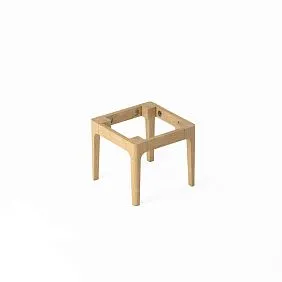


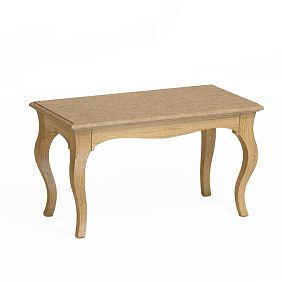
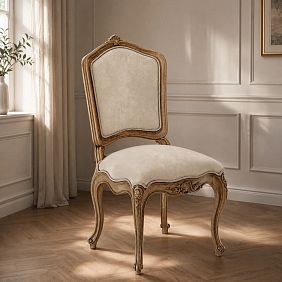

Bench at the entrance and by the bed: how to choose a solid wood bench for the hallway, foyer, and bedroom
The hallway greets you. It's the first thing a guest sees, and the last thing you see when leaving home. Strangely enough, this area is often given the least attention when furnishing an apartment or house. They put a shoe cabinet, hang a mirror, throw a rug at the doorstep — and consider it done. But an entryway without a proper seating area will always feel incomplete.
The same goes for the bedroom. The bed is there. The nightstands are there. The curtain is beautiful. But the space at the foot of the bed is empty, and it's noticeable — even if you can't immediately say what's missing. What's missing is a bench.
If you're wondering where buy a wooden bench for hallway, foyer, or bedroom — this article will guide you through all key selection questions. No empty advice, no general words, with specific parameters and real examples.
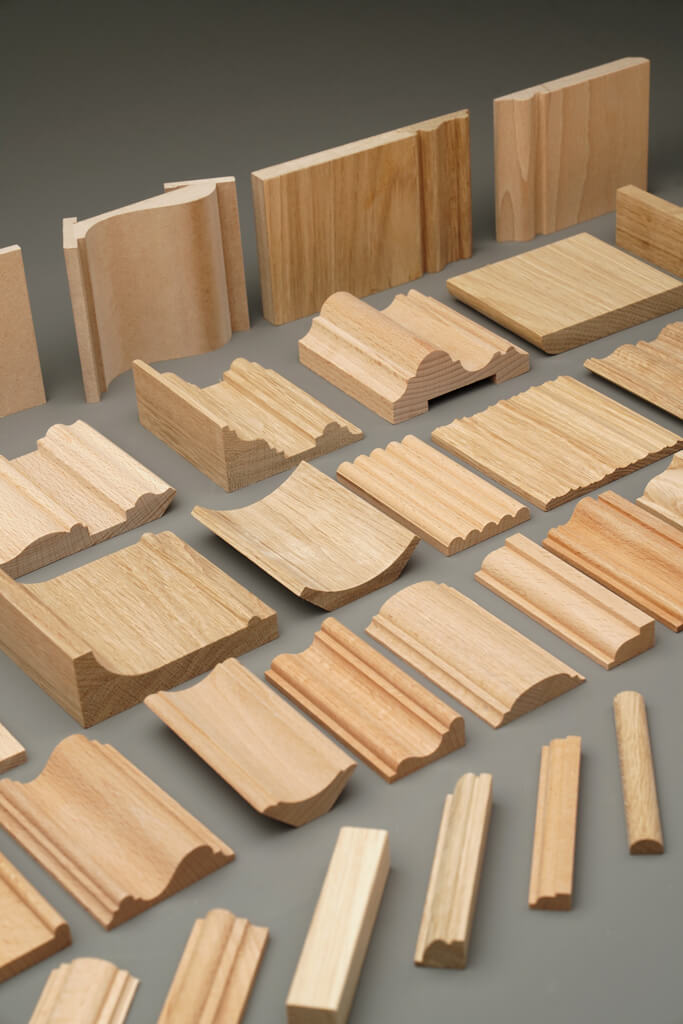

What is an interior solid wood bench — and how it differs from a bench and a frame
Let's set boundaries right away. On the internet, searching for "wooden bench" can yield anything: a garden bench, a cemetery bench, a gymnastics apparatus, a folding camping chair, a structure with a shoe storage box. None of these are the subject of this article.
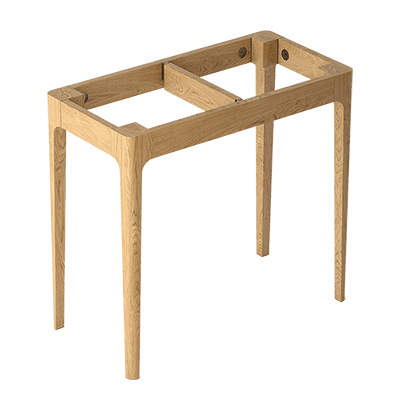
An interior solid wood bench is a piece of classic furniture. A finished product made of natural wood that serves two functions simultaneously: seating and decorative. It is not a blank for upholstery (that is called a frame — a different product scenario described separately in the article about frame for bench and ottoman). It is not a folding structure or furniture with a shoe storage box.
This is an item that stands against the wall in the hallway and looks like part of a well-thought-out interior. One that is placed at the foot of the bed — and the bedroom immediately gains a finished, almost hotel-like look. One that works in the foyer as an architectural element.
Solid wood bench STAVROS — this is exactly that kind of item. Made as part of a classic collection, from natural wood, with attention to carving and finishing details that make it interior-oriented rather than utilitarian.
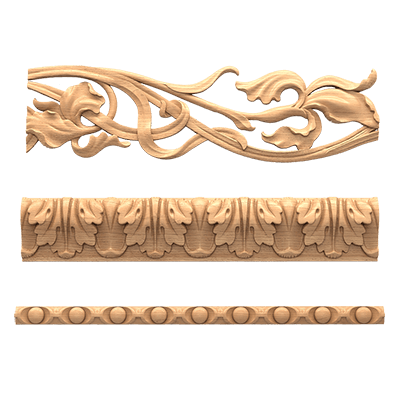
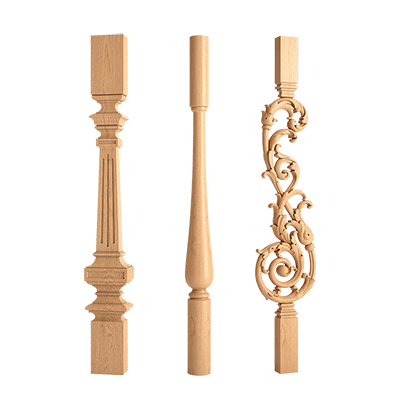
Our factory also produces:



Two main questions to start your choice
Before browsing catalogs and measuring walls with a tape measure, answer two questions for yourself:
First: where will the bench be placed?
Entryway, hall, bedroom, dressing room, guest area — each location dictates its own requirements for length, height, and shape.
Second: what do you expect from it?
Daily use for putting on shoes — one set of requirements. A decorative piece at the foot of the bed, where a blanket is folded once a week — another. A spot for guests in the hall — a third.
Once you answer these two questions, the choice becomes much easier.
Get Consultation
Six places for a wooden bench: where it works best
Entryway
This is the most obvious and most popular scenario. A bench at the entrance is needed for sitting while putting on shoes. It may seem like a small thing. But it is this 'small thing' that turns the entryway from a transit zone into a full-fledged space.
A wooden bench in the hallway works better than a pouf for several reasons: it is longer, meaning two people can sit at the same time; it fits more snugly against the wall; it visually completes the entryway group next to a mirror or console.
Buy a bench for the hallway made of solid wood means getting an item that will serve for years and not look like a temporary solution.
Next to the bench, it fits organically Marseilles 006-002 Console or Marseilles 006-003 Console — and the entryway turns into an ensemble: bench, console, mirror. Three items, a unified style, a finished look.
Hall
In a country house, in an apartment with a spacious hall, or in a cottage, the staircase area or transition between rooms is not just a corridor. It is a space that requires furniture. A long wooden bench against the wall of the hall performs a role close to architectural: it "holds" the wall, preventing it from looking empty.
A bench in the hall is not about "sitting down." It is about visual balance. It works as a horizontal accent that balances the verticality of the wall, a tall mirror, or a decorative panel.
Bedroom: foot of the bed
The most elegant scenario. A bench at the foot of the bed is a classic of classic interiors. It appears in photos of expensive hotels, in bedrooms with luxurious textiles, in interiors where details are chosen with genuine attention.
What does it offer practically?
-
A place to sit down in the morning and put on shoes or slippers.
-
A surface where you place a cover or blanket taken off the bed in the evening.
-
A decorative element that visually 'closes' the lower part of the bed.
Bench at the foot of the bed of the Versailles 001-001 bed creates an ensemble where the bedroom looks like a well-thought-out, cohesive space — not a collection of separate items.
Walk-in closet
A dressing room is a personal space for changing clothes. Here, the bench serves an obvious practical function: to sit while putting on shoes or pants. But it also has a decorative one: the right wooden bench in a dressing room transforms it from a 'closet with hangers' into a true boudoir space.
For a dressing room, a compact model without a backrest is better — it doesn't create visual heaviness in a small space.
Guest area and living room
Sometimes the living room lacks one extra seating spot. Adding another chair is too much. A pouf is too soft and unstable. A wooden bench by the window or against the living room wall is the perfect solution: it looks like a decorative element but accommodates guests when needed.
Country house: staircase area and veranda
In a country setting, a wooden bench made of solid wood looks especially organic. By the stairs, on a glazed veranda, in the transition zone between the kitchen and living room — anywhere there is a wall and a desire to create a cozy seating area without bulky upholstered furniture.
Bench, ottoman, or pouf: an honest comparison
Many buyers don't immediately understand the difference between these items — and that's normal. Let's break it down.
| Item | Length | Material | Best scenario |
|---|---|---|---|
| Wooden bench | Long (from 80 cm) | Solid wood | Entryway, hall, foot of the bed |
| Ottoman | Medium (50–100 cm) | Frame + upholstery | Bedroom, entryway |
| Ottoman | Compact (40–60 cm) | Soft upholstery | Small areas, single seat |
Marseilles 007-001 Banquette — soft, upholstered, with classic frame decor. It is appropriate in a bedroom or hallway when a soft seat with a decorative look is needed.
Marseilles 005-001 Pouf — compact, for one person, without a backrest. Works well next to an armchair or in a small area.
A solid wood bench is stricter, more architectural, longer. It is not "upholstered furniture." It is closer to the category of "classic interior items." This is a fundamental difference in visual weight and operational properties.
If you want a warm, cozy, slightly "hugging" seat — look towards a bench or pouf. If you want an architecturally clean piece with character — a wooden bench for the hallway or bedroom.
Backrest: needed or not?
This is one of the most common questions when choosing a bench. And the answer, as always, depends on the scenario.
When a backrest is needed
Long seating in a hall or entryway. If the bench will be used not only for brief stops while putting on shoes, but also as a place for reading, conversation, or waiting — a backrest significantly increases comfort.
Bench against a wall with a large distance to it. Without a backrest, a bench not placed flush against the wall visually 'floats' in the space. The backrest fixes the shape and makes the piece self-sufficient.
Long bench for several people. When the bench is designed for three or more people — a backrest is necessary for everyone's comfort.
When it's better without a backrest
At the foot of the bed. A bench with a backrest in front of the bed will block the view of the bed and disrupt its silhouette. Without a backrest — it's concise and correct.
In the dressing room. In a small space, a backrest creates extra visual weight. Without it, the bench takes up less space and looks neater.
In a niche or by a mirror. If the bench is placed flush against a wall, mirror, or console — a backrest is not needed: the wall itself performs this function.
Buy a wooden bench with a backrest or without — see specific models in the catalog classic furniture STAVROS and compare with your scenario.
Size: how to choose length and height
Bench length
The main mistake is not measuring the wall beforehand. The bench should fit into the space without blocking the passage, hitting the closet, or overhanging the door frame.
Length selection rule:
-
The bench should not occupy more than 60–70% of the wall width it stands against.
-
There should be a passage of at least 80–90 cm for free movement.
-
For two-way traffic (a corridor used from both sides) — a passage of at least 100 cm.
Practical guidelines:
-
Compact hallway 120–150 cm along the wall — bench length 80–100 cm.
-
Spacious hallway or foyer 200–300 cm along the wall — bench length 120–180 cm.
-
Bedroom at the foot of the bed — bench length matching the mattress width or slightly shorter (for a 160 cm bed — bench 130–150 cm).
Bench height
Standard seat height is 45–48 cm. This corresponds to the height of a regular chair and is suitable for most adults. When purchasing, be sure to check this parameter in the product card.
For the hallway: a height of 45–48 cm is optimal for sitting while putting on shoes.
For the foot of the bed: the bench height should match or be slightly lower than the mattress height. Standard mattress + base is 55–65 cm. A bench of 45–48 cm will be slightly lower, which is visually correct.
Seat width
For a wooden bench without upholstery, the seat width (depth) is 35–45 cm. This is a comfortable range for short-term sitting.
Material: oak vs. beech — what's the real difference
Both options are natural wood, both are used in the production of classic furniture. But their character and behavior under the finish differ.
Oak: character and expressiveness
Oak is a hard wood with a dense structure and a pronounced grain pattern. Large rays, clear transitions of annual rings, golden-brown natural tone. Under translucent tinting, oak reveals itself as a living material: each board is unique, the pattern never repeats.
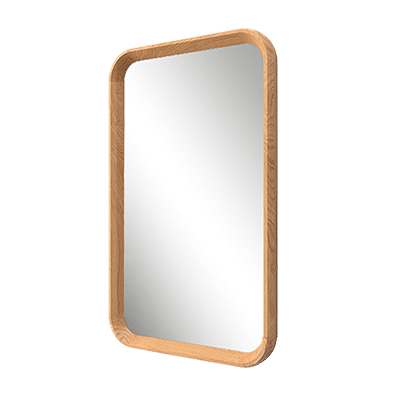
For a classic interior with warm wood finishes, parquet flooring, and wooden moldings, oak is the first and obvious choice. the Versailles 008-002 mirror or Versailles 012-001 Nightstand in the same tint as the oak bench — this is an ensemble where items speak the same language.
Beech: stability and smoothness for painting
Beech is a species with a fine, even grain. The structure is neutral, the tone is light. An ideal base for full painting: under white enamel, light gray, cappuccino, or any other neutral shade.
If you want a bench in white, milky, or light enamel — beech will provide a cleaner and smoother surface than oak.
How to coordinate wood with the interior
Check which wood and which tone are already present in the space:
-
Floor — is the parquet light or dark?
-
Furniture — what tone is the bed, console, wardrobe?
-
Decor — mirror frames, handles, moldings.
The bench does not have to be exactly the same tone as the bed. But the difference should not be drastic. A difference of 1–2 tones is acceptable. A light bench next to a dark bed requires a "bridge": a rug, textiles, light walls.
How to combine a bench with STAVROS furniture
In the hallway: an ensemble at the entrance
A classic entryway is built on the principle of three items: a console table, a mirror, and a bench. All three stand against one wall — and the hallway becomes welcoming and complete.
Marseilles 006-002 Console — an elegant carved console for a narrow space. It is placed above the bench, next to or above it.
the Estelle 008-001 mirror — a wooden frame with classic decor, hung above the console or bench.
The bench below, the console at arm level, the mirror at eye level. Three horizontals, three heights, one style.
In the bedroom: the bench as part of the bed ensemble
For a classic-style bedroom, a bench at the foot of the bed stands alongside essential items like bedside tables and a mirror.
Versailles bed 001-001 with a high headboard and carved decor requires a worthy 'partner' at the foot. A solid wood bench in the same finish creates an ensemble where no detail seems out of place.
Versailles 012-001 Nightstand on either side of the bed — and a bench at the foot — this is the set that turns a bedroom into a true bedroom, not just a room with a bed.
Adding a mirror
the Versailles 008-002 mirror in the bedroom or hallway supports the decorative language of the bench: carved legs, classic reliefs, gilding or patina.
Mistakes when choosing a wooden bench
Here is a list of what most often goes wrong — compiled not from theory, but from real customer experience.
Mistake 1: buying without measurements
It seems the bench is small and will definitely fit. They deliver it — it doesn't fit. Either too long, or it blocks the doorway, or it hits the cabinet. Always measure the wall, passage, and all obstacles — before ordering.
Mistake 2: confusing a garden bench with an interior bench
Garden and country benches are made from coarser material, with different geometry, without decor and finish for living spaces. In the hallway or bedroom, they look out of place — like a random object from another world.
Mistake 3: confusing a solid wood bench with a frame for upholstery
A frame is a semi-finished product, a base for further upholstery. A solid wood bench is a finished piece of furniture that does not require additional processing. These are different products for different customer scenarios.
Mistake 4: not considering the seat height
A bench that is too low is uncomfortable for putting on shoes: you have to bend over a lot. One that is too high does not allow you to rest your feet properly. The standard of 45–48 cm works for most people of average height.
Mistake 5: choosing only by photo
In the photo, the bench looks concise and light. In reality, it may turn out heavier, darker, larger. Be sure to look at the actual dimensions in centimeters, not just the "nice photo."
Mistake 6: not matching the wood tone with the floor
The quietest but most noticeable mistake. A dark oak bench on a light whitewashed parquet floor is a conflict, not a contrast. Either support the dark tone with other elements, or choose a bench that harmonizes with the floor.
Mistake 7: placing the bench in the door opening zone
Check which way the hallway door opens. A bench that falls within the door's opening radius is a constant source of irritation. The door catches the bench, the bench moves, the corner gets chipped. It is inconvenient and damages the finish.
Mistake 8: not thinking about the load
A wooden bench that will be sat on every day must have properly glued leg joints. A bench that will stand purely decoratively at the foot of the bed is less stressed. Consider the intensity of use when choosing.
Care for a solid wood bench
Natural wood is a living material. It reacts to humidity, temperature, and mechanical stress. But with proper care, solid wood products last for decades, only gaining nobility.
Daily care: wipe with a soft, slightly damp cloth. Do not use abrasive products, solvents, or chlorine-based products.
Moisture protection: do not place wet items directly on the wooden surface without a pad.
Coating renewal: for products with an oil coating — periodic application of Rubio Monocoat oil. The oil penetrates the fiber structure, nourishes the wood, renews the color, and protects against dirt. The application procedure takes about 15 minutes and requires no special skills.
Furniture pads: it is recommended to place felt or silicone pads under the bench legs — especially on parquet floors. This protects the floor covering from scratches and chips. Available in the section materials for installation and finishing.
What to buy together: furniture ensemble around the bench
A finished wooden bench is the core around which the space is built. Here is what logically to add:
-
Solid wood bench STAVROS — the main item.
-
Marseilles 006-002 Console — for the hallway or foyer, placed next to or above the bench.
-
Marseilles 006-003 Console — another console variant from the same collection.
-
the Estelle 008-001 mirror — hung above the bench or console in the hallway.
-
the Versailles 008-002 mirror — for the bedroom or a classic foyer.
-
Versailles bed 001-001 — a bench at its foot creates a complete bedroom ensemble.
-
Versailles 012-001 Nightstand — for a complete bed set in one style.
-
Marseilles 007-001 Banquette — a soft alternative to a bench, if upholstery is needed.
-
Marseilles 005-001 Pouf — a compact option for small areas.
-
Rubio Monocoat oil — care for the wooden surface.
-
Classic STAVROS furniture — full catalog of the classic collection.
-
Furniture and interior items — the entire range of home furniture.
A bench in a classic interior: about details that are not immediately visible
A high-quality solid wood bench differs from mass-produced items not only in price. The difference is in the details.
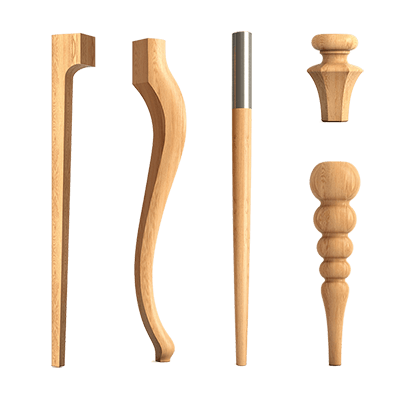
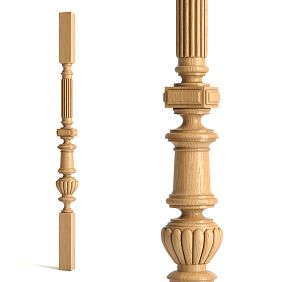
Legs. In a classic bench, the legs are turned or carved. This is not just a support — it is a decorative element that sets the style of the piece. Legs with a twisted pattern, a figured base, or a smooth curve immediately indicate the classic origin of the item.
Joints. The strength of the bench depends on how the legs are attached to the seat frame. A tenon-and-groove joint with high-quality gluing is a connection that lasts for decades. Simple metal bolts that loosen over time are a sign of budget production.
Carving and decor. A classic solid wood bench often features carved decor: on the legs, on the stretchers (crossbars between the legs), on the backrest. This is not an end in itself, but an organic part of classic design.
Sanding and finishing. Surfaces accessible to touch — the seat, legs, armrests (if any) — must be sanded smooth. Sharp edges, unsanded ends, uneven varnish — all these are signs of careless production.
Coating. For classic wooden furniture, two options are traditionally used: nitrocellulose or polyurethane varnish (more resistant to wear) and oil/wax (a more natural and lively finish). In the STAVROS catalog, you can specify the type of coating for each model.
About the company STAVROS
STAVROS is a St. Petersburg manufactory of wood and MDF products, founded in 2002 by artists Andrey Ragozin and Evgeny Tsapko. In 2003, the company was invited to restore the Konstantinovsky Palace in Strelna — and this set the direction for decades to come. STAVROS has worked on projects at the Hermitage, Alexander Palace, Trinity-Izmailovsky Cathedral, Sheremetyev Mansion, and numerous private interior projects across Russia.
The STAVROS Classic Collection is furniture created with the same attention to detail that is only developed through work on historical objects. Every bench, console, mirror, and bed is an item where wood, form, and finish are in precise harmony.
Production is in St. Petersburg. Showrooms are in St. Petersburg and Moscow. Minimum order is from one item. Delivery is across Russia and to CIS countries.
Solid wood bench STAVROS — this is not an "entryway bench" in the everyday sense. It is a piece of classic furniture that lives in an interior for a long time, losing neither form nor dignity.
FAQ: answers to the most common questions about wooden benches
Does STAVROS have ready-made solid wood benches?
Yes. In the STAVROS catalog, there is a separate category — solid wood benches in the classic collection. Full URL: stavros.ru/products/mebel-i-predmety-interera/klassicheskaya/vid_izdeliya_skamya/.
How is a bench different from a banquette?
A bench is wooden, without upholstery, an architectural item. A banquette has a soft seat, closer to upholstered furniture. For a hall or the foot of a bed in a classic interior, a bench is visually stricter and more precise.
Is a bench needed at the foot of the bed?
This is not a mandatory item — but it significantly changes the look of the bedroom. A bench at the foot of the bed creates a sense of completeness, adds a functional spot for a blanket or clothes, and supports the decorative ensemble of the bed.
How to choose the length of the bench?
Focus on the width of the wall (no more than 60–70% of its length) and the width of the mattress (if placing at the foot of the bed). For the hallway, leave a passage of at least 80–90 cm.
What type of wood is best for a bench?
For a warm tinted interior, choose oak. For a white or light finish, choose beech. Both options are solid wood, durable, and suitable for classic interiors.
How to care for a wooden bench?
Wipe with a damp cloth, avoid contact with harsh cleaning agents. For oil finishes, renew the Rubio Monocoat oil once a year. Place felt pads under the legs to protect the floor.
Can I order a bench in a non-standard size?
Non-standard items at STAVROS are possible with a certain order volume. Check with the manager on the website or by phone.
Does STAVROS deliver to regions?
Yes. Delivery is available throughout Russia via CDEK and DPD. Pickup by any transport company is also possible.
What items go well with a bench in the hallway?
A console, a mirror in a carved frame, a decorative panel, or a painting above the bench. All three items should be from the same style line and preferably from the same wood species with the same tint.
Where to buy a STAVROS wooden bench in Moscow and St. Petersburg?
At STAVROS showrooms in St. Petersburg and Moscow, as well as through the stavros.ru website with Contact us to confirm shipping to your destination.