Article Contents:
- First screen: a short answer for those who value time
- What is a wooden layout: breakdown by types
- Flat wooden layout
- Shaped wooden layout
- Corner wooden layout
- Wooden glazing beads
- Wooden slat
- Wooden corner
- Wooden baguette and overlays
- What is polyurethane molding: breakdown by types
- Wall and ceiling moldings
- Cornices
- Polyurethane trim
- Decorative appliqués
- Decor for moldings
- Where wood works best: seven tasks where natural material is irreplaceable
- Solid wood furniture and veneered facades
- Glass facades and doors: a task for glazing bead
- Slat walls and ceilings in Scandinavian and loft style
- Decor of wooden doors and door panels
- Wood paneling finishing
- Restoration and historical interiors
- Natural and eco-friendly interiors
- Where polyurethane works best: eight tasks for lightweight decor
- Decorative wall frames for painting
- Neoclassicism and stucco style
- Ceiling decoration
- Wet Areas
- Facade decoration
- Furniture renewal without replacing facades
- Door portals made of drywall
- Commercial interiors
- Detailed comparison by tasks
- Decorative frames on the wall
- Furniture fronts
- Door portal
- Corner Elements
- Combination of wood and polyurethane in one interior
- What to buy together: kits for the task
- Kit for wooden trim
- Kit for polyurethane trim
- Preparation for painting: how the two materials differ
- Wood: three steps of preparation
- Polyurethane: two steps of preparation
- Installation: what is easier and what is more reliable
- Installation of wooden trim
- Installation of polyurethane moldings
- Eight mistakes when choosing between wood and polyurethane
- Final comparison table
- Frequently Asked Questions
- About the Company STAVROS
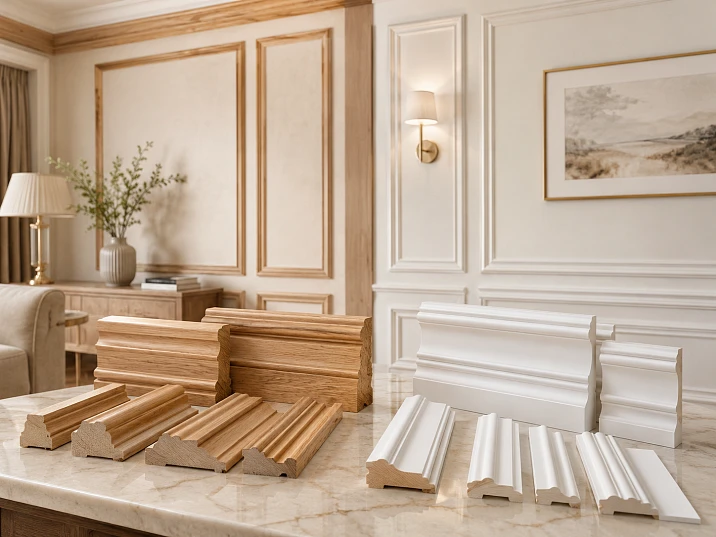
This question arises in the mind of everyone who faces the task of decorative finishing: walls with frames, furniture facade, door portal, glass cabinet door, corner joint of panels. And before a person — a fork. On one side — wooden floor: warm, natural, smelling of forest, familiar. On the other — Moldings made of polyurethane: lightweight, precise, indifferent to moisture, ideal for painting.
What to choose? The correct answer is not 'one is better than the other', but 'each material for its own task'. There are tasks where wood is irreplaceable. There are tasks where polyurethane provides what wood cannot. And there are tasks where both work — and the discussion is only about preferences.
This article is a practical analysis. No advertising in favor of one or the other. Only the logic of choice, specific scenarios, and honest arguments from both sides.
First screen: a short answer for those who value time
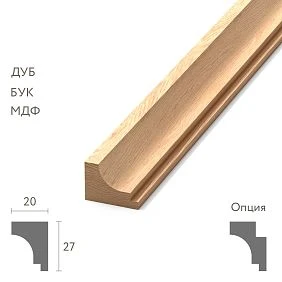
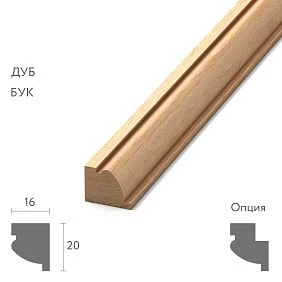
Wooden layout, glazing bead, batten, corner — choose when:
-
The natural texture of wood is important.
-
Base — array, MDF, veneer.
-
Task — glass facade, wooden door, wooden furniture.
-
Restoration or work in a wooden interior is needed.
Moldings and Polyurethane Decor — choose when:
-
Walls and ceiling are painted in one color.
-
Frames, stucco lines, neoclassical decor are needed.
-
Base — plaster, drywall, painted surface.
-
Easy installation and relief pattern for painting are important.
Most often, both materials are needed in one interior, each in its place.




What is wooden layout: breakdown by types
Wooden molding — a broad category of decorative and finishing wood moldings made from natural wood. It includes several fundamentally different types.
Our factory also produces:
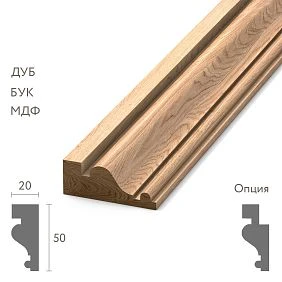
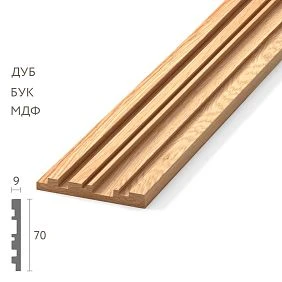
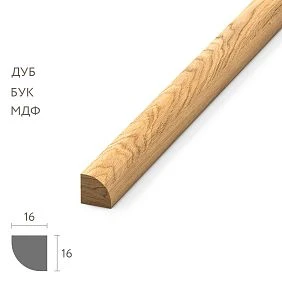
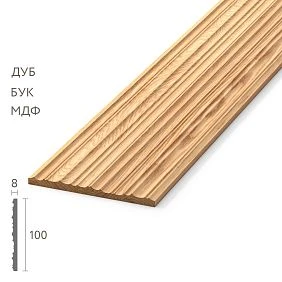
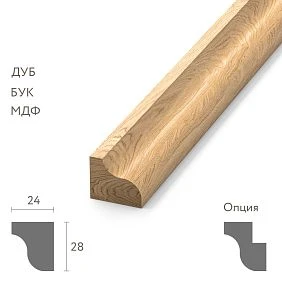
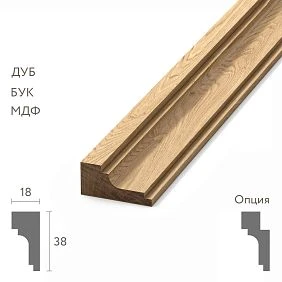
Flat wooden trim
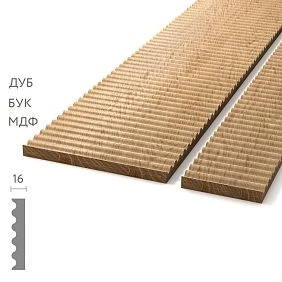
Flat wooden strip — a thin strip with a rectangular cross-section. Width from 10 to 60 mm, thickness usually 4–10 mm. Used:
-
For framing furniture fronts.
-
For decorative frames on walls.
-
For dividing strips on wooden panels.
-
For covering joints between different materials.
Flat molding is a versatile linear element. It does not create relief on its own but forms clear straight lines that structure the surface.
Get Consultation
Decorative wooden molding
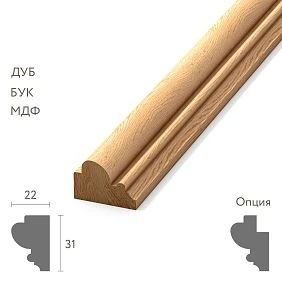
Decorative Wooden Tiling — a profile with a selected or milled relief: beveled, rounded, stepped, with fillets. Adds volume and visual expressiveness to the decorative element. Used where not just a contour but a beautiful profile is needed: on furniture fronts, door frames, decorative wooden frames.
Corner wooden molding
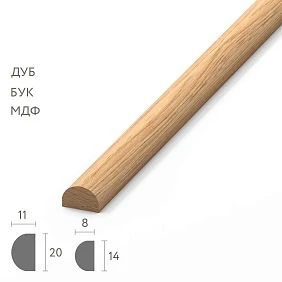
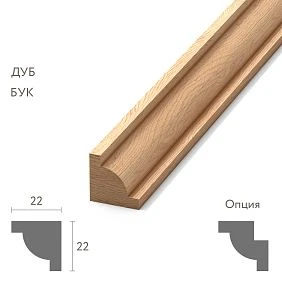
corner wooden paneling — an L-shaped profile covering external and internal corners. Solves a practical task: protects and decorates the corner joint. Used in wooden furniture, when finishing with wooden panels, at junctions of finishing materials with walls and floors.
Wooden glazing bead
Wooden trim — a specialized profile for fixing glass in frames. Cross-section is a small triangle or beveled rectangle. Used:
-
For fixing glass in window frames.
-
For securing glass in furniture facades.
-
For glass doors of cabinets, sideboards, display cases.
A glazing bead is a functional element. Its shape is dictated by the task: to press the glass tightly against the frame with a minimal visible profile.
Wooden slat
Wooden plank — rectangular or square molding used for slatted walls and ceilings, creating a rhythmic pattern on the surface, decorative partitions, framing niches. Slats are modern decor: Scandinavian style, loft, minimalism, Japanese style.
Wooden corner
Wooden corner bracket — symmetrical L-profile. It differs from the corner molding by having equal flanges. Used for protecting and masking corner joints, covering the ends of wooden panels, framing niches and openings.
Wooden molding and overlays
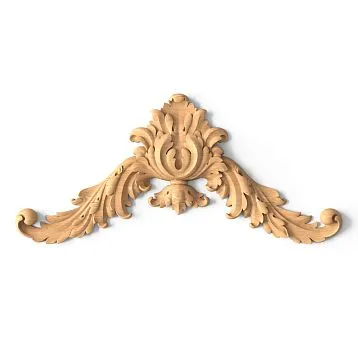
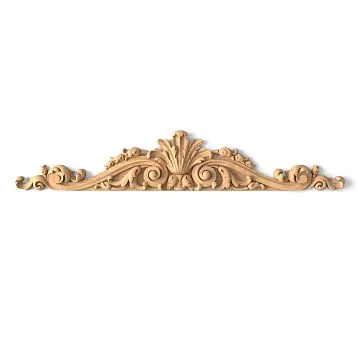
Wooden Picture Frame — a more complex profile with an ornamental cross-section. Wooden decoration and overlays — point volumetric elements for furniture: corner overlays, ornamental inserts, decorative overlays for facades.
What is polyurethane molding: a breakdown by types
Polyurethane molding — decorative molding made of foamed polyurethane. Lightweight, precise, perfectly even along the entire length, with clear reproduction of the pattern. Painted with acrylic paint after priming.
Wall and ceiling moldings
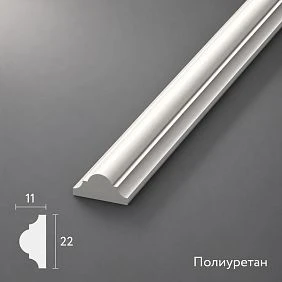
Linear profile for forming frames on walls and ceilings, belt lines, decorative horizontals. Width — from 20 to 120 mm. Pattern — from smooth to complex leaf or geometric.
Crown mouldings
Corner profiles for the wall-ceiling joint — the most noticeable element in the ceiling decor system.
Polyurethane moldings
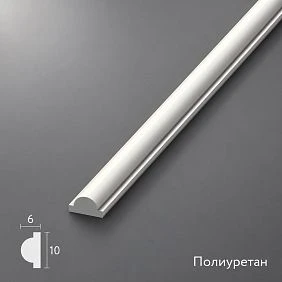
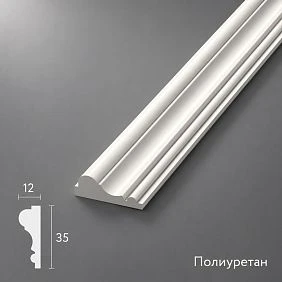
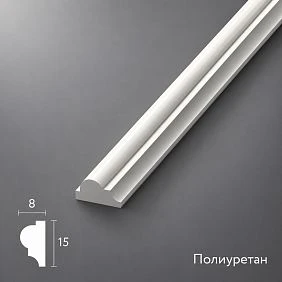
Polyurethane trim — thin linear decor from 15 to 40 mm. Used for furniture fronts, decorative belts, framing niches.
Decorative appliqués
decorative polyurethane elements — medallions, cartouches, corner accents, ornamental inserts. Volumetric elements for accent decor.
Decor for moldings
Decor for polyurethane moldings — corner inserts, linear accents for molding intersection points. Complement frame systems.
Where wood works best: seven tasks where natural material is irreplaceable
Solid wood furniture and veneered fronts
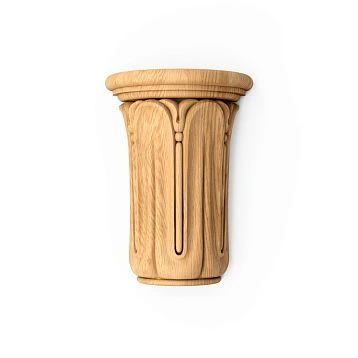
Wooden furniture is an ecosystem of natural materials. When the front of a cabinet or dresser is veneered MDF or solid wood, the decorative profile on it should be made of the same material. to buy, which will allow you to transform your furniture using carved wooden elements. You can use the C-003-3 decor set to decorate furniture, walls, doors, or any other surface. The C-003-3 decor set is made of oak or beech, known for their strength, durability, and beauty. You can buy the C-003-3 decor set at the Stavros decor store, which specializes in producing and selling decorative elements and hardware for furniture and interiors. At the Stavros decor store, you will find a wide selection of decor sets of various shapes, sizes, and styles. You can choose fits organically because it has the same texture, the same reaction to painting, the same perceived 'temperature'.
A polyurethane overlay on a veneered facade is technically possible but requires careful combination of textures. Wood on wood is simply natural.
Glass facades and doors: a task for the glazing bead
Fixing glass in furniture doors is a task for of wooden beadingThe glazing bead holds the glass mechanically — it is nailed or pressed against the frame, creating a closed loop. Polyurethane profile is not suitable for this task: it is decorative, not structural.
Slat walls and ceilings in Scandinavian and loft style
Scandinavian interior, Japanese minimalism, loft style — all are built on natural texture. wooden plank for a slat wall or ceiling is the only organic choice here. A polyurethane analogue will give a different feel — more 'molded', less 'natural'.
Decor of wooden doors and door panels
A wooden door panel with wooden trim is an architecturally consistent solution. Shaped trim around the panel perimeter, a glazing bead for glass — all this is organic in a wooden door. For a painted door portal made of drywall, a polyurethane molding is already more convenient.
Wood paneling finish
If walls are finished with wooden slats or panels, corner joints and ends are best covered wooden corner piece or with a wooden corner trim. Material unity is the foundation of a stylish result.
Restoration and historical interiors
For restoration of wooden furniture or finishes — only wood. Polyurethane does not recreate the wood texture — only the geometry of the relief.
Natural and eco-friendly interiors
When the interior concept is built around natural materials — linen, cotton, clay, wood, stone — polyurethane molding disrupts this logic. Here, wood, natural slats, and wooden trim are the only organic choice.
Where polyurethane works best: eight tasks for lightweight decor
Decorative wall frames for painting
Task: a wall with molding frames painted in the wall color. This is the main scenario for polyurethane. buy polyurethane moldings for this task means getting a profile with a perfectly even cross-section, stable along its entire length, not prone to warping or splitting. After priming and painting, it is indistinguishable from plaster relief.
Wooden layout for frames on walls also works, but requires preparation for painting: sanding, wood priming. The slightest unevenness in the wood texture will show through the paint. Polyurethane is a trouble-free material in this regard.
Neoclassicism and stucco style
A neoclassical interior is a stucco language: cornices, moldings, rosettes, overlays. Polyurethane reproduces fine ornamentation with precision that wood only achieves in expensive hand carving. Polyurethane moldings is serial production with the precision of an artistic piece.
Ceiling Decor
On the ceiling, a wooden profile is a risk. Wood changes geometry with humidity fluctuations: a wooden cornice in a bathroom or kitchen may warp, delaminate, or crack after a year. Polyurethane Decor on the ceiling — stable, lightweight, with no reaction to moisture.
Wet rooms
Bathroom, kitchen, rooms with unstable microclimate — polyurethane is unrivaled here. Wood swells, darkens, and loses shape in a humid environment. Polyurethane is indifferent to moisture.
Facade Decoration
Trims, cornice belts, facade moldings — for outdoor use, a material resistant to frost, moisture, and UV is needed. Specialized facade Polyurethane Decor with weather-resistant coatings — it is optimal here. Wood on the facade requires regular maintenance.
Updating furniture without replacing facades
When you need to refresh furniture — add relief, create the illusion of an expensive facade — Polyurethane trim or overlays are glued onto the existing surface. This is faster and cheaper than redoing facades.
Door portals made of plasterboard
A doorway in a painted plasterboard wall — here a wooden profile works less organically than Polyurethane molding. Polyurethane is painted the same color as the wall, forming a stucco portal without a seam.
Commercial interiors
In a restaurant, hotel, showroom — the cornice should be white, clear, and unchanged regardless of cleaning, temperature, and humidity. Moldings made of polyurethane are ideal for commercial interiors: durable, easy to repaint, require no special care.
Detailed comparison by task
Decorative frames on the wall
| Parameter | Wooden layout | Polyurethane molding |
|---|---|---|
| Preparation for painting | Sanding + wood primer | Acrylic primer |
| Stability | May warp in dry air | Stable |
| Ornament | Simple profile or handcrafted | Precise serial ornament |
| Installation | Glue or nails | Specialized glue |
| Result in wall color | Good | Excellent |
| Result with natural texture | Excellent | Not applicable |
Conclusion: For frames painted in wall color — Moldings made of polyurethane preferable. For frames with a natural wood look — wooden floor.
Furniture facades
| Parameter | Wooden layout/glazing bead | Polyurethane overlays |
|---|---|---|
| Compatibility with solid wood | Ideal | Requires combination |
| Glass fixation | Yes (glazing bead) | No |
| Decorative relief | Limited (milling) | Rich (serial ornament) |
| Installation | Nails/glue | Special adhesive |
| Updating old furniture | Partial | Quick, without replacement |
Conclusion: For facades with natural wood and glass — wooden glazing bead and Wooden molding. For decorative relief on a painted facade — decorative polyurethane elements.
Door portal
| Parameter | Wooden layout | Polyurethane molding |
|---|---|---|
| Wooden door | Organically | Possible |
| Painted opening in drywall | Possible | Excellent |
| Uniform tone with the wall | Requires preparation | Ideally |
| Rich stucco ornament | Only handmade | Mass-produced |
Conclusion: A wooden door in a wooden casing is a classic. A portal in a painted drywall wall — Polyurethane molding as a wall stucco composition.
Corner elements
| Parameter | Wooden corner | Corner polyurethane element |
|---|---|---|
| Task | Joint protection and masking | Stucco corner insert into frame |
| Base | Wooden panels | Painted walls, moldings |
| Texture | Natural | For painting |
| Installation | Glue, nails | Glue |
Conclusion: Wooden angle — for wooden panels and natural finishes. Decor for Molding — for stucco frame systems.
Combination of wood and polyurethane in one interior
This is not a contradiction — it is a system. In a well-designed interior, both materials coexist, each in its place.
How to assign roles:
-
Wood — texture: furniture, flooring, slats, handles, wooden details.
-
Polyurethane — architectural decor: cornices, wall moldings, ceiling decor, door portals.
Examples of successful combinations:
-
Wooden floor + white molding frames on the walls.
-
Solid wood furniture + white polyurethane cornice on the ceiling.
-
Wood slat wall in one zone + classic molding frames in another.
-
Wooden door panels + polyurethane stucco portal around the opening.
Conflict arises when both materials compete in the same place without logic: a wooden layout on the wall next to a polyurethane cornice of the same profile is stylistic chaos. But when each occupies its own niche — it is richness.
What to buy together: kits for the task
Wood trim kit
For a furniture facade with wooden trim:
-
Decorative Wooden Tiling — of the required profile, along the perimeter of the facade + 10% spare.
-
Wooden trim — for glass inserts.
-
Wooden angle — for corner joints.
-
Wood glue or furniture nails.
-
Wood primer.
-
Stain, varnish, or paint.
For a slatted wall:
-
Wooden planks — by wall area + 12%.
-
Wooden Picture Frame — for framing.
-
Assembly adhesive for wood.
-
Oil, varnish or paint for wood.
Polyurethane finishing kit
For wall frames:
-
Moldings made of polyurethane — by calculation + 12%.
-
Decor for Molding — corner inserts.
-
Adhesive for polyurethane. About the choice — in the article what to glue polyurethane molding with.
-
Acrylic sealant.
-
Acrylic primer.
-
Paint.
For polyurethane furniture decor:
-
Polyurethane trim — thin profile along the perimeter of the facades.
-
decorative polyurethane elements — point accents on the facades.
-
Adhesive for MDF/particleboard.
-
Acrylic primer.
-
Furniture paint.
More about installation — in the article installing polyurethane molding.
Preparation for painting: how two materials differ
Both materials are painted — but the preparation is different. It's important to understand this before purchasing.
Wood: three steps of preparation
-
Sanding — removes fuzz and unevenness after milling. Grit 120–180.
-
Wood primer — absorbent, closes pores, provides adhesion for the finish paint.
-
Finish painting — acrylic or alkyd paint, oil, varnish — depending on the task.
Wood feature: the fiber texture may show through the paint if applied thinly. For full coverage painting, a quality primer and two coats of paint are needed.
Polyurethane: two steps of preparation
-
Acrylic primer — creates an adhesive layer on the smooth surface of polyurethane.
-
Acrylic paint — lays evenly, without showing texture.
Feature of polyurethane: the surface is smooth and uniform. After priming, the paint lays perfectly, without a texture effect. The result is like on a plaster surface.
Installation: what is simpler and what is more reliable
Installation of wooden trim
Wooden trim is installed:
-
With wood glue — for furniture surfaces.
-
With furniture nails — for decorative framing of facades.
-
With a glazing bead profile with nails or screws — for glass.
-
With construction adhesive — for wall applications.
Complexity: wood requires precise 45° cutting without fiber chipping. Sharp tool, miter box, or miter saw. Uneven cut — chip or gap in the corner joint.
Another nuance: wood in warm and dry rooms may shrink slightly. This leads to micro-gaps in joints after a few months.
Installation of polyurethane moldings
Polyurethane is installed:
-
With specialized polyurethane adhesive — the main method.
-
With dowels — for heavy elements.
-
Painter's tape — for temporary fixation while the adhesive sets.
Cutting: fine-tooth hacksaw or sharp knife (for thin profiles). Polyurethane cuts softly, without chipping. 45° cut on a miter box — precise and neat.
Joints are sealed with acrylic sealant. After setting and painting — the seam is invisible. Polyurethane does not shrink or change geometry over time.
Eight mistakes when choosing between wood and polyurethane
Mistake one: choosing based on a catalog photo without knowing the task.
A beautiful photo of a wooden layout or polyurethane molding does not answer the question "will it suit my task." First — the task, then — the material.
Mistake two: not considering the base.
A wooden profile on a painted concrete wall is not the same as on a wooden facade. Polyurethane molding on solid wood furniture requires a delicate approach.
Mistake three: buying a wooden layout for stucco decor intended for painting.
Wood does not reproduce stucco ornamentation — only simple profiles. For an acanthus leaf, volute, or relief medallion — only polyurethane.
Mistake four: buying polyurethane without glue and sealant.
A polyurethane profile without specialized glue and acrylic sealant cannot be installed correctly.
Mistake five: mixing natural wood and white stucco without a concept.
"Wooden floor + wooden furniture + white moldings" — this is good. "Wooden layout on the wall next to a polyurethane cornice of the same scale" — this is a conflict.
Mistake six: not checking the actual dimensions.
A width of 30 mm looks different on screen than in hand. Ordering a sample or checking against a cross-section drawing is mandatory.
Mistake seven: not accounting for joints and trimming in the calculation.
Both materials 'lose' pieces when trimming corners. A 10–15% margin is mandatory for both.
Mistake eight: using wooden trim in wet rooms without protective coating.
wooden floor In a bathroom or kitchen without varnish or paint — it will swell, darken, and lose shape. Polyurethane in these conditions — no problem.
Final comparison table
| Parameter | Wooden layout | Polyurethane molding |
|---|---|---|
| Natural texture | Yes | No |
| Stucco ornament | Only handmade | Serial |
| Installation | Glue, nails | Special adhesive |
| Moisture resistance | Requires protection | High |
| Temperature response | May deform | Stable |
| Preparation for painting | Sanding + wood primer | Acrylic primer |
| Solid wood furniture | Ideally | Acceptable |
| Walls for painting | Good | Excellent |
| Glass fixation | Yes (glazing bead) | No |
| Facade application | Requires maintenance | Weather-resistant option |
| Commercial interiors | Limited | Excellent |
| Installation cost | Depends on complexity | Affordable |
Frequently asked questions
What is better: wooden layout or polyurethane molding?
Depends on the task. For natural furniture, glass facades and wooden panels — wood. For painted walls, stucco frames and neoclassical decor — Moldings made of polyurethane.
Can wood and polyurethane be combined in one interior?
Yes — provided each has its own role. Wood is for furniture and natural texture. Polyurethane is for architectural decor of walls, ceilings, and portals.
What to choose for decorative frames on the wall?
If the frames are painted the color of the wall — Moldings made of polyurethane more convenient and give a neater result. If a natural wooden frame is needed — Decorative Wooden Tiling.
What to buy for furniture: glazing bead or polyurethane overlay?
For glass — wooden trim. For decorative relief on a painted facade — Polyurethane trim or polyurethane overlays.
Can both materials be painted?
Yes. Wood: sanding → wood primer → paint. Polyurethane: acrylic primer → acrylic paint. The paint result on polyurethane is more uniform due to the smooth surface.
What to choose for the kitchen or bathroom?
For wet rooms Polyurethane Decor preferable: not afraid of moisture, does not change shape. Wooden layout in such rooms — only with a reliable varnish or paint-urethane coating.
How to calculate the margin for any of the materials?
For linear materials — 12–15% of the calculated length. For piece elements — 10% of the quantity.
About the company STAVROS
STAVROS — manufacturer and supplier of a full range of decorative materials: wooden decor, wooden trim, polyurethane moldings and cornices, decorative elements made of polyurethane и moldings from polyurethane.
The STAVROS catalog includes both wooden and polyurethane solutions. This means you don't have to choose "between stores" — you can select both materials in one place, understanding their compatibility and roles in the interior.
STAVROS works with professional designers, furniture manufacturers, construction companies, and private buyers across Russia. Consultation on material selection, quantity calculation, and installation recommendations are standard service in every order.