Article Contents:
- Door without replacement: buy a wooden door overlay to turn the panel into an interior portal
- What is a wooden door overlay: not decor, but surface architecture
- Three scenarios where an overlay is better than a new door
- The door works, but looks shabby
- The metal entrance door doesn't fit the hallway interior
- New interior, old doors
- Evaluate the interior panel
- Consider the weight of the overlay
- Plan the finish
- Don't confuse decorative overlay with cladding
- Wooden baguette as a frame for the opening
- Carved molding: lines that hold the composition
- Capitals: crowning the opening
- Rosettes: accent at the right point
- Oak
- Oak
- Mixed array
- Classic Interior
- Neoclassicism
- Study or Library
- Hallway in classic style
- Living room or bedroom with a neutral interior
- Step 1: Measure the clean field of the panel
- Step 2: Determine the axis
- Step 3: Calculate the maximum size
- Step 4: Consider the terrain
- Step 5: Match by visual weight
- Can I buy a wooden door overlay and install it myself?
- Is a wooden overlay suitable for a metal entrance door?
- How to choose a wooden overlay to match the interior style?
- Which is better: beech or oak for a wooden overlay?
- How to know if the overlay will overload the door?
- How many elements are needed for a door portal?
- Can I paint a wooden overlay myself?
- What to do if the door leaf is not level?
- How long does a wooden door overlay last?
- Can wooden overlays be used on surfaces other than doors?
Door without replacement: buy a wooden door overlay to turn the panel into an interior portal
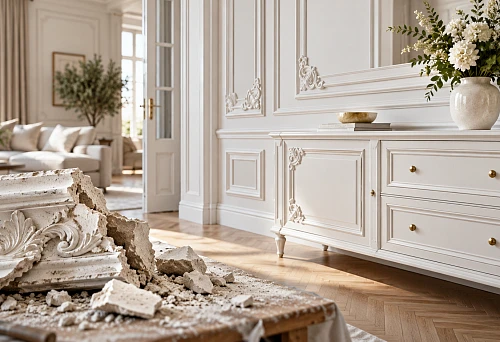
There are things that annoy quietly. They don't shout, don't break, don't interfere technically — they just give you no peace. That's exactly how a simple door works in an expensive interior. You've finished the hallway with marble, hung a classic console, chosen a mirror in a carved frame — and all this splendor runs into a bare painted panel with a cheap handle. Replacing the door seems like a solution, but it's labor-intensive, expensive, and often pointless: the panel is technically sound, the hinges work, the lock holds. There is a way out, and it's much more elegant than it seems.
If you want to buy a wooden door overlay, you're already thinking in the right direction. Because carved wooden overlay decor is a tool of transformation, not a cosmetic move. It's what turns a simple panel into an architectural accent, a doorway into a portal, and a hallway into a worthy start of an interior.




What is a wooden door overlay: not decor, but surface architecture
Before talking about selection and purchase, it's important to understand the nature of the item itself. A wooden door overlay is not a sticker, a film, or a decal imitating carving. It's a full-fledged three-dimensional element made of natural wood, which is attached to the surface of the door panel, portal, opening, or frieze. It has relief, depth, weight, and texture. It creates shadow and light. It changes the visual logic of the entire surface.
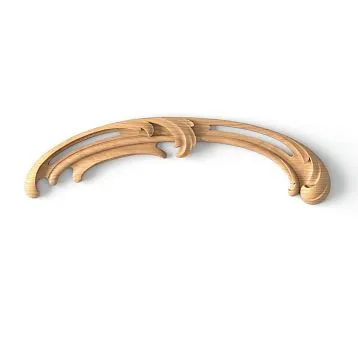
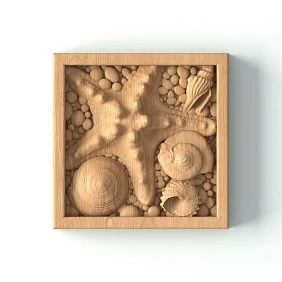
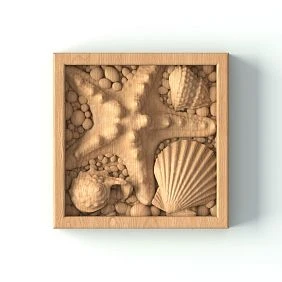
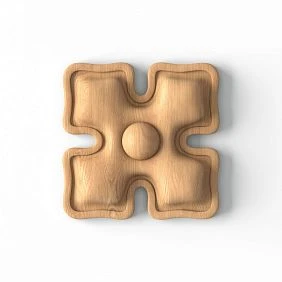
Decorative wooden inlays — these are carved products from solid wood, produced in several formats. Central overlays are located in the geometric center of the panel or on the key axis. Side overlays set vertical symmetry. Corner elements structure the fields. Insert overlays imitate a paneled construction. Large decorative panels create a full-fledged composition on the plane.
It's important to understand: a wooden overlay is not a cladding for the entire door. It works as an accent element — point or extended — which changes the perception of the panel without replacing it. It is this logic that makes wooden overlay decor such a versatile and effective solution.
Our factory also produces:
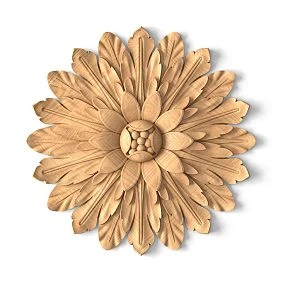
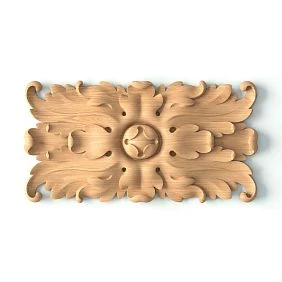
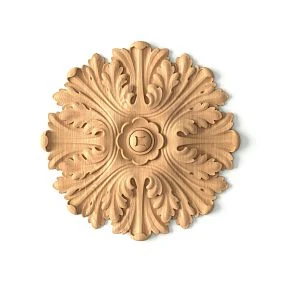
Three scenarios when an overlay is better than a new door
Let's honestly name the situations where buying a wooden door overlay is not just appropriate, but clearly preferable to replacing the door leaf.
Get Consultation
The door works but looks poor
Most often, this is exactly the case. An interior door closes softly, the seal holds, the hardware works. There is only one problem: a flat leaf without relief, without depth, without character. Against such a background, even an expensive handle looks strange — like a diamond in a cheap setting.
Installing carved wooden decor on such a leaf is literally dressing the door in a different style. One central overlay plus a baguette around the perimeter — and the door acquires a completely different plasticity.
The metal entrance door does not fit into the hallway interior
A situation familiar to most. Outside — an armored door with protection. Inside — a gray or brown metal sheet that does not match the parquet, stucco, and classic-style furniture. Replacing such a door is unjustified: it is expensive, performs its function, and changing it would be impractical.
Here, a wooden overlay for the entrance door comes to the rescue — for the inner side. A carved wooden element, properly selected in size and style, creates an interior story where there was previously a technically correct but aesthetically neutral surface.
New interior, old doors
The renovation is done, but the doors remain the same — standard, from the construction kit. There is no point in replacing them: they are functional, there are many of them, and the budget has already been spent elsewhere. In this case, systematic design with wooden overlays allows you to bring all doors to a single style without replacing any of them.
Central overlay: the main point of the door leaf
Any composition is built around a center. A door leaf is no exception. If you look at a door and there's nothing for the eye to catch onto, if the gaze slides and gets lost, it means the leaf lacks a main accent element.
A central wooden overlay is that very visual anchor. It can be vertically elongated, almost the full height, it can be compact and elegant in the center of the leaf, it can be located in the upper third — where the eye first meets the door.
Wooden Decor N-371 — a characteristic example of a universal overlay that can be used on a door leaf, furniture facade, window slope, and even in a niche. Such an element does not claim to be overloaded, but creates a clear relief and visual support.
The central overlay must be placed strictly along the axis of the leaf — vertical or horizontal, depending on the decor format. A deviation of even a few millimeters is perceived by the eye as an error, and the entire effect is ruined.
Key rules for the central overlay:
- It should not cover the handle, lock, or peephole
- Its lower edge does not drop below the level of the handle
- A field of at least 6–8 cm remains between the edge of the overlay and the end of the leaf
- The style of the overlay matches the overall style of the room
Wooden overlay for an entrance door: an interior story from the inside
The front door is not just protection. It is the first and last thing you see when entering and leaving the house. From the inside, it belongs to the interior — and must follow its rules.
If you are looking to buy a wooden overlay for a front door, it is important to understand a few things:
We are talking about the interior side. No wooden decor is installed on the outside of a metal front door — weather, moisture, and temperature changes will destroy it. But the interior side is a full-fledged design space.
The metal base requires proper fastening. A wooden overlay on a metal door is attached using adhesive, mechanical dowels, or special fixation points — depending on the door leaf design. It is important to understand: if the leaf is metal, an intermediate layer — a wooden substrate or MDF panel — may be needed between it and the overlay. This does not complicate the process but requires preliminary calculation.
The style is dictated by the hallway. A classic hallway with stucco and a mirror in a gold frame will require an overlay with ornamentation — acanthus, meander, foliage. A minimalist modern interior with wood and concrete can accommodate an elongated geometric overlay with a soft relief. A study in dark wood — a heavy, baroque accent.
One of the products that works organically in the front door area is Wooden Decor N-396. Compact overlays of this type maintain a good balance between the weight of the detail and its visual impact, without overloading the door leaf.
Wooden overlay on a metal door: what to know before buying
The query "buy wooden overlay for metal door" is one of the most common in this topic, and for good reason. Metal doors are found in almost every apartment, and most of them lack any interior character on the inside.
Before buying a wooden overlay for a metal door, you must:
Evaluate the inner panel
Some entrance doors already have an MDF panel or wooden insert on the inside. In this case, attaching the overlay is simplified. If the inner surface is metal or plywood, an intermediate layer is needed.
Consider the weight of the overlay
A massive carved detail weighs more than it seems. For a metal door, it is important that the overlay does not create a load on the hinges through weight imbalance. As a rule, decorative carved elements made of beech or oak weigh within reasonable limits and do not cause problems, but this should be checked when choosing a large central overlay.
Think through the finish
A wooden overlay under enamel is an ideal choice to integrate wooden decor into a metal door coated with dark or light paint. It becomes one with the panel and is not perceived as a separate element — only as relief.
Do not confuse decorative overlay and cladding
A decorative overlay is one or several accent carved elements that create an image. Cladding is a full covering of the inner side with panels. The article is dedicated to the first option: carved overlay parts that can be ordered separately and installed independently or with the help of a craftsman.
Paired and side overlays: symmetry as the language of classics
One overlay is good. But a system of overlays is a completely different story. When the panel is structured along the vertical axis and the decor is arranged mirror-wise, the door begins to live by the rules of classical architecture.
Paired side overlays are elements that are placed on either side of the central axis, creating a sense of symmetry and rhythm. They can be identical (mirror image) or slightly different — for example, left and right elements specifically designed as a pair.
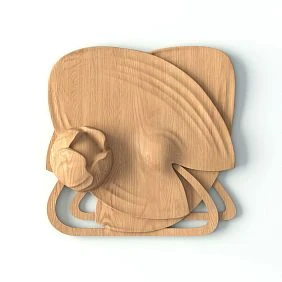
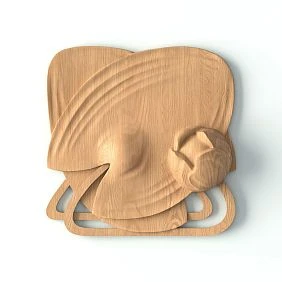
Wooden Decor N-428L — an example of such an element designed for use in a pair. When such a detail is installed on both sides of the door leaf, an effect is achieved that is unattainable with a single central element: the leaf ceases to be a plane and becomes a structure.
Rules for paired placement:
- The distance from the central axis to each element is the same
- Installation height — along the handle axis or in the upper third of the leaf
- A mandatory gap between the edge of the overlay and the door end
- The style and scale of the overlays correspond to the width of the leaf
For a standard door 800–900 mm wide, when using paired side overlays, it is important that the total width of the decor does not exceed 60–65% of the leaf width. Otherwise, the decor starts to overwhelm rather than adorn.
Vertical overlays: how a single element changes door proportions
There is a special type of decor that works not through accent, but through line. Vertically elongated overlays — long, extended, often occupying a significant part of the leaf height — visually lift the door, making it more slender and majestic.
This technique is especially effective in rooms with standard ceilings of 2.5–2.7 meters, where doors are perceived as too "squat." A vertical wooden overlay literally draws the eye upward and reformats the perception of space.
Wooden Decor N-240 — an elongated element that works perfectly in this role. Such an overlay can be used alone along the central axis or in pairs with a similar element on the sides, creating a vertical rhythm.
Vertical overlays look especially expressive:
- On plain painted doors (under enamel)
- On doors with wide flat panels
- In hallways with a height of 2.8 meters or more
- In studies and libraries, where doors are perceived as part of the wooden wall paneling
How to turn a door into a portal: carved decor extends beyond the door leaf
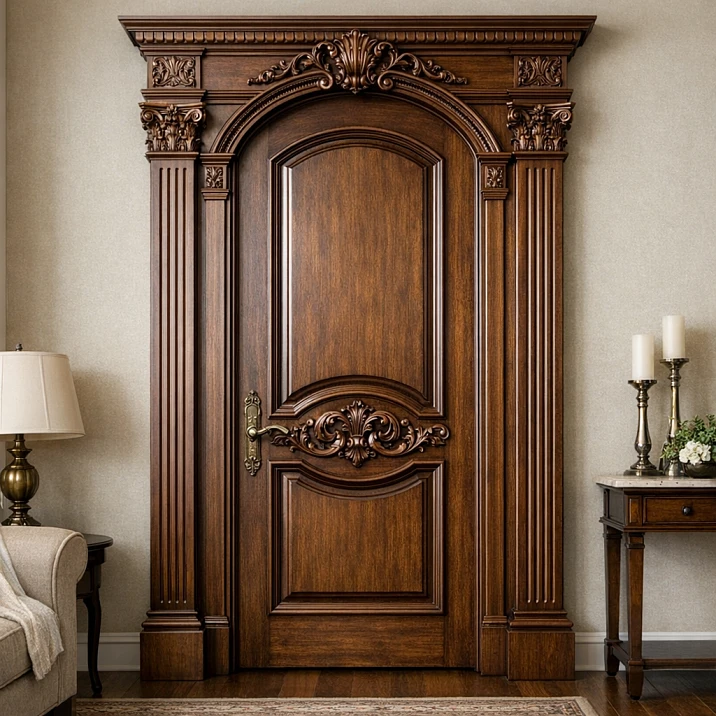
Here's where it gets interesting. Because a real door portal is not just an overlay on the leaf. It is a decorative system that covers the entire entrance area: the leaf itself, the opening, the wall around it, and the area above the door. And then the door ceases to be just a door—it becomes a portal to another space.
To create such a portal without replacing the door, you need to use several types of decor:
Wooden baguette as a frame for an opening
Wooden Picture Frame — this is the basis of frame design. The baguette runs along the perimeter of the doorway, creating a clear boundary between the door leaf and the wall. It can be straight, profiled, with relief, or with ornament. In a classic interior, a wide baguette with fine relief creates the effect of a real architectural frame.
Carved molding: lines that hold the composition
wooden carved trim — these are long profiled elements that can be used on the sides of the opening, creating vertical framing lines. They can imitate pilasters, side columns, or simply give rhythm to the wall surface around the door. Carved molding paired with a baguette already creates a full-fledged frame — and this is not the limit.
Capitals: crowning the opening
wooden capitals are located above the side posts of the frame — where in classical architecture the column ends and the horizontal element begins. A capital with acanthus ornament or volutes immediately elevates the doorway to the register of classical architecture. This is a detail that is visible immediately — and immediately makes an impression.
Rosettes: accent at the right point
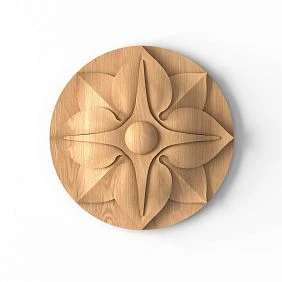
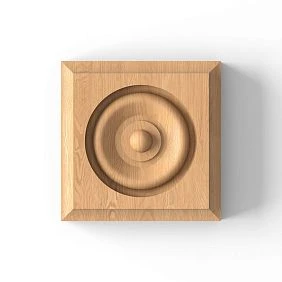
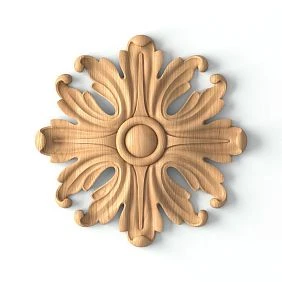
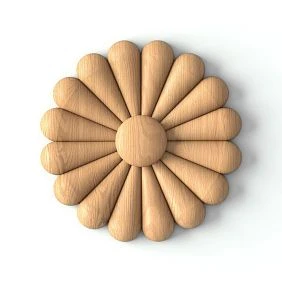
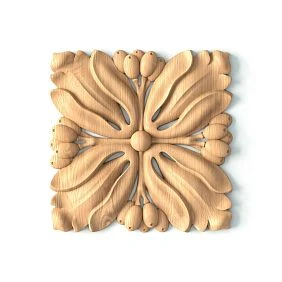
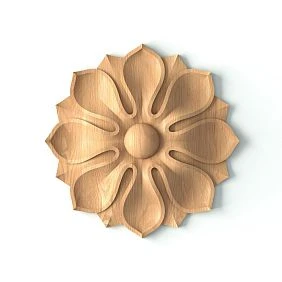
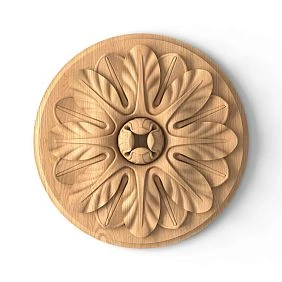
Wooden sockets — these are applied decorative elements of round or polygonal shape with ornament. In door design, they can be located in the corners of the frame, above the door leaf, on the sides of the capitals, or in the lock area. A rosette is a point that completes a line or marks an intersection. One such element, installed at the top central point of the portal, creates a sense of completeness.
When all these elements work together — overlays on the door leaf, baguette around the perimeter, molding on the sides, capitals above the posts, rosettes at key points — a door portal emerges. Not a door. A portal — an architectural transition from one space to another.
Material for wooden overlay: beech, oak, or mixed array
The question of material is not technical, but strategic. The type of wood used for the overlay affects not only its durability, but also how it will look after finishing.
Beech
Beech is a dense, uniform wood with a fine grain pattern. This makes it an ideal material for parts that will be painted with white or colored enamel. Beech surfaces accept paint evenly, without protruding spots or resin inclusions. If your door is painted — white, ivory, gray, anthracite — beech will be the optimal choice.
Oak
Oak is a noble wood with a pronounced pattern and high density. Under tinting, stain, or clear varnish, it reveals the character of the grain — dark lines, large pattern, a sense of depth. An oak overlay for natural finishing is a decor that is valuable in itself. If the door is planned in a dark, walnut, or honey color scheme — oak is unrivaled.
Mixed solid wood
Some elements are made from solid wood without strict adherence to a specific species — depending on the batch and part format. For overlays intended for painting, this is not critical. For overlays intended for tinting, it is important to specify the species when ordering.
Solid Wood Items is a category in which the material is a basic quality criterion. A solid part does not deform with changes in humidity as a part made of glued veneer does, and it retains its relief for decades.
Style: how to choose wooden decor for a specific interior
An overlay without style is a mistake. Buying a wooden door overlay and choosing the wrong ornament or the wrong scale means wasting resources and getting discomfort instead of pleasure.
Classic Interior
Classic works with symmetry, ornament, and hierarchy of details. A central overlay with a floral motif, paired side elements, a wide baguette with a profile, capitals above the portal posts. Finish — under varnish, under gilding, under white enamel with gilded inserts.
Neoclassicism
Neoclassical is classic with limitations. Less ornament, more geometry. Clear lines, soft relief, a limited number of elements. One well-chosen overlay works better than an overloaded system. Wooden decor under white matte enamel or tinted oak under oil.
Office or Library
Heavy decor, dark wood, large formats. Overlays with dense ornamentation, solid oak with dark tinting, wide frame molding, rosettes in the corners. Such a door should look monumental — this is a space of power and concentration.
Classic style hallway
In the hallway, the door is visible immediately, from a distance of several meters. The effect at the entrance is important here: the first impression should be unambiguous. A central overlay or vertical pair, molding around the opening, a capital above the door — and the entrance area acquires solemnity.
Living room or bedroom with a neutral interior
If the interior is restrained and the color scheme is neutral, you can afford one bright accent — a large central overlay with a pronounced relief. It will work as a sculptural object on the door, without requiring support from other elements.
How to choose the size of a wooden door overlay: measurements you can't miss
This block is for those who want not just to buy a wooden door overlay, but also to get the right result. Size is not just "will it fit or not." It's proportion, balance, and the final visual effect.
Step 1: Measure the clean field of the door leaf
Take measurements of the available surface of the door leaf. To do this, exclude areas occupied by the handle, lock, hinges, and casing. What remains is your working field.
Step 2: Determine the axis
Find the vertical axis of the door leaf (middle of the width) and the horizontal point where the center of the overlay will be located. Optimally — the upper third of the door leaf or the center of the distance between the handle and the top of the door.
Step 3: Calculate the maximum size
The width of the overlay should not exceed 55–60% of the door leaf width. The height — no more than 40–50% of the working field height. These figures are average guidelines for a single central element. When using a system of overlays, the proportions are recalculated.
Step 4: Consider the relief
A carved overlay has relief — that is, it protrudes above the surface of the door leaf. Make sure that when opening the door, the decor does not touch the casing, wall, or door closer.
Step 5: Match by visual weight
A small room cannot tolerate heavy decor. A large hall — on the contrary: a small overlay on a wide door leaf will get lost and look random. Match the scale of the decor with the scale of the space.
Mistakes when choosing a wooden overlay: an honest conversation
Buying decor and then being disappointed is a story best prevented. Here are real mistakes people make when choosing wooden overlays for doors.
Buying without measurements. The most common mistake. "It will roughly fit" does not work with carved decor. Even a small mismatch in scale ruins the proportion.
One small element on a large door leaf. A 15×15 cm overlay on a 2-meter high door leaf is not an accent. It is a random detail that does not make an impression. For a large door leaf, large or complex solutions are needed.
Ignoring the handle and lock. The decor should interact with the hardware, not compete with it. If the handle is located where you want to place an overlay, you either need to change the plan or re-fit the door with new hardware.
Mixing ornaments. Foliage + geometry + baroque ornament on one door is visual chaos. There should be one ornament, maximum two, and they should belong to the same stylistic family.
Overloading a narrow hallway. In a corridor 90–120 centimeters wide, heavy portal-like decor creates a claustrophobic effect. In a narrow space, light vertical elements work better than monumental overlays.
Lack of a finishing coating. A wooden overlay without varnish, enamel, or oil is an unprotected surface. This is especially critical for the entry area and wet rooms. The coating not only protects but also determines the final appearance.
Forgotten symmetry. If you install two elements, they must be mirror-aligned. A 5-millimeter error on a finished door is immediately visible and constantly irritating.
What to buy together with a wooden overlay: a complete door decor system
If you have already decided to buy a wooden overlay for the door, think about a set. A door decorated with a system of decorative elements looks several orders of magnitude more convincing than a door with a single overlay. And this does not mean doubling the labor costs—properly selected elements are installed using the same logic.
Wooden baguette—a frame around the entire door leaf or along the perimeter of the opening. This is a mandatory element if you want to achieve a portal effect, not just a decorated door.
Carved molding—side framing lines. They create a vertical rhythm and provide the door leaf with a spatial frame on both sides.
Wooden capitals—the completion of side elements at the top point. This is a detail that elevates the door to the register of architecture.
Wooden rosettes — point accents in corners, above the portal, at the center of the upper lintel. They anchor the composition and give the eye focal points.
The finishing coat — primer, enamel, varnish, oil, tinting. Without it, no wooden overlay will last long or look right.
Carved wooden decoration — this is a category where all these elements are gathered in one place. Here you can select a system, not a random set of parts.
Door portal without full replacement: a real scenario from practice
Imagine an entryway in an apartment with 2.8-meter ceilings. A metal entrance door. On the inside — standard MDF cladding in dark brown. Flooring — light marble. Walls — plaster for painting, color — light warm white. On the wall opposite the door — a wooden console with a mirror in a carved frame.
Question: how to tie the metal door to this space?
Solution:
-
On the inner MDF surface of the door — a central vertical overlay made of beech under white enamel. Height — 90 cm, positioned in the upper third of the panel above the handle.
-
Around the perimeter of the opening — a wooden baguette with moderate relief under the same white enamel. Width 60 mm.
-
On the sides of the opening on the wall — carved molding imitating pilasters, 180–200 cm long.
-
In the upper corners of the framing — small wooden rosettes.
-
Above the horizontal crossbar is a capital, emphasizing the top point of the portal.
Result: the metal door remained in place. From the street side — protection. From the hallway side — a white classic door portal that reads as an architectural element and organically connects the door with the console, mirror, and bright hallway space. The budget is an order of magnitude lower than when replacing the door. The result is higher.
Overlays for interior doors: when an accent is needed, not a renovation
Interior doors are a special case. They typically have a smooth panel without relief. In a standard layout, there can be five, eight, ten such doors. And they are all equally neutral. This is where wooden overlays work as a tool for stylistic programming.
If all interior doors are decorated with identical overlays from the same series, it creates a unified architectural language in the apartment. No need to replace any door. No renovation needed. A system of wooden decor is needed, properly selected and uniformly applied.
For interior doors, the following work well:
- Frame overlay imitating a panel
- Central accent in the form of a large carved detail
- Vertical side elements along the edges of the panel
- Corner overlays with ornament
White enamel overlays allow you to turn any cheap door into the "painted classic-style door" category — and it works even on a budget if the decor is chosen correctly.
Decor for a study: monumentality as a goal
A study is a room with special requirements for door decor. Maximum weight and solidity are appropriate here. Dark oak, solid wood, deep relief, complex ornamentation with foliage and geometric frames.
A study door should say: "Behind this door is a serious space." And a wooden overlay can create exactly that message. A wide central overlay with baroque ornamentation, solid oak under dark stain, heavy wooden molding — and an ordinary door becomes a gateway.
The height of the decor placement plays a special role here. In a study, overlays can be placed higher than usual — closer to the eye level of a standing person, rather than to the door handle. This enhances monumentality.
Decor for a bedroom: delicacy and balance
A bedroom requires a different approach. Here, the decor should be soft, not oppressive, not dominant. A good solution is a small central overlay with a floral or meander pattern, under white or cream enamel. The door should be part of the atmosphere, not the center of attention.
In a bedroom, small but elegant details with fine relief work better. An overloaded wooden overlay in a bedroom creates anxiety — and this is not a metaphor, but a physiological reaction to an excessive visual stimulus.
Where to buy a wooden door overlay: why it's important to choose the right source
When it comes to where exactly to buy a wooden door overlay, the selection criteria are clear:
Natural material. The overlay must be made of solid wood, not pressed sawdust with a film pattern. Only solid wood provides true relief, durability, and honest behavior during finishing.
Hand-carved or milled relief with hand sanding. The surface should have no burrs, unsanded edges, or unclear transitions in the ornament. This is visible to the naked eye.
Correct wood moisture. Fresh or overdried wood deforms. Normally dried solid wood with a moisture content of 8–12% is stable.
Ability to choose the finish. Ideally, get the overlay ready for the desired coating or at least with a primer that makes further finishing smooth.
Wide range of formats. Door decor is not just central overlays. If the supplier also offers baguettes, moldings, capitals, and rosettes, you get a unified system from one manufacturer, which is important for stylistic consistency.
FAQ: answers to the most common questions about wooden door overlays
Can I buy a wooden door overlay and install it myself?
Yes. Decorative wooden overlays are attached with adhesive (construction glue or liquid nails) and, if necessary, secured with finishing nails in hidden spots. Installation does not require special equipment if the door surface is smooth and degreased.
Is a wooden overlay suitable for a metal entrance door?
It is suitable for the interior side. If the inner surface of the door is MDF or wood, the overlay is attached without additional preparation. If it is metal, an intermediate wooden or MDF substrate is needed.
How to choose a wooden overlay according to your interior style?
Focus on the room's finish: furniture, moldings, stucco, wall color. If the style is classic — look for overlays with floral or geometric patterns. If neoclassical or art deco — prefer clear lines and moderate relief.
Which is better: beech or oak for a wooden overlay?
For white or colored enamel — beech. For tinting, varnish, oil with grain reveal — oak. Both materials are durable, but oak is heavier and more expensive.
How to know if the overlay will overload the door?
Simple test: draw the overlay outline on a sheet of paper, cut it out, and apply it to the door. If there is enough 'air' around the edges and the decor does not cover the hardware — the size is chosen correctly.
How many elements are needed for a door portal?
Basic portal: overlay on the door leaf + baguette around the opening perimeter + trim on the sides. Extended: add capitals and rosettes. Minimal decor for effect: overlay + baguette.
Can you paint a wooden overlay yourself?
Yes. A beech overlay accepts acrylic enamel or oil paint well. Before painting — be sure to prime. For oak under tinting — stain, oil, or varnish.
What to do if the panel is not level?
If the panel has significant curvature or deformation, the overlay will not fit tightly. In this case, either the panel needs to be corrected, or a thin overlay with a minimal base should be chosen.
How long does a wooden door overlay last?
With proper coating and normal indoor humidity levels, it lasts for decades. Solid beech or oak does not delaminate, crumble, or lose its shape under stable operating conditions.
Can wooden overlays be used on surfaces other than doors?
Yes. Wooden decorative overlays are versatile: they are used on furniture facades, walls, windows, arches, fireplace portals, niches, and built-in cabinets. The same element can connect multiple surfaces into a single decorative system.
Conclusion: a door that doesn't need replacing
A door is not a piece of furniture or just a structural element of a building. In a good interior, it is an architectural statement. And this statement can be made without replacing the panel, without renovation, without construction debris, and without significant costs. It is enough to choose the right wooden door overlay and complement it with a system of carved decor — baguettes, moldings, capitals, rosettes.
The result is a door that catches the eye. A door that looks more expensive than it cost. A portal that becomes part of the interior architecture, not just a way to close an opening.
STAVROS: carved wooden decor for those who take interior design seriously
STAVROS is a manufacturer of wooden carved decor from solid wood. Overlays, baguettes, moldings, capitals, rosettes, cornices — all of these are made from natural wood and are available for selection in the catalog.
If you have decided to buy a wooden door overlay — start with the catalog wooden decorative overlays. Here you will find elements of various formats, sizes, and ornaments — for a classic portal, for a modern interior door, for the entrance area of a metal door with interior finishing.
If you need a complete system — go to the section wooden carved decoration: here all the elements that make up a door portal are collected. Baguette, molding, capitals, rosettes — all in one place, in a unified style.
STAVROS works with those who understand: details decide everything. And a wooden door overlay is precisely the detail that turns an ordinary panel into something more.