




















































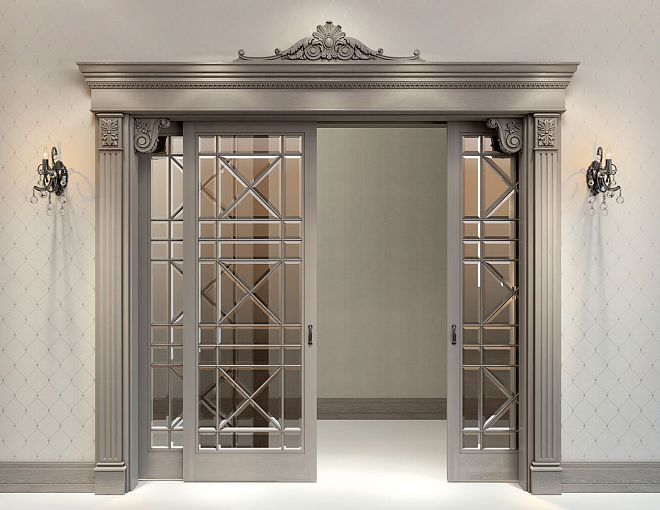












Idea for Decorating a Door with a Slat Panel PAN-001
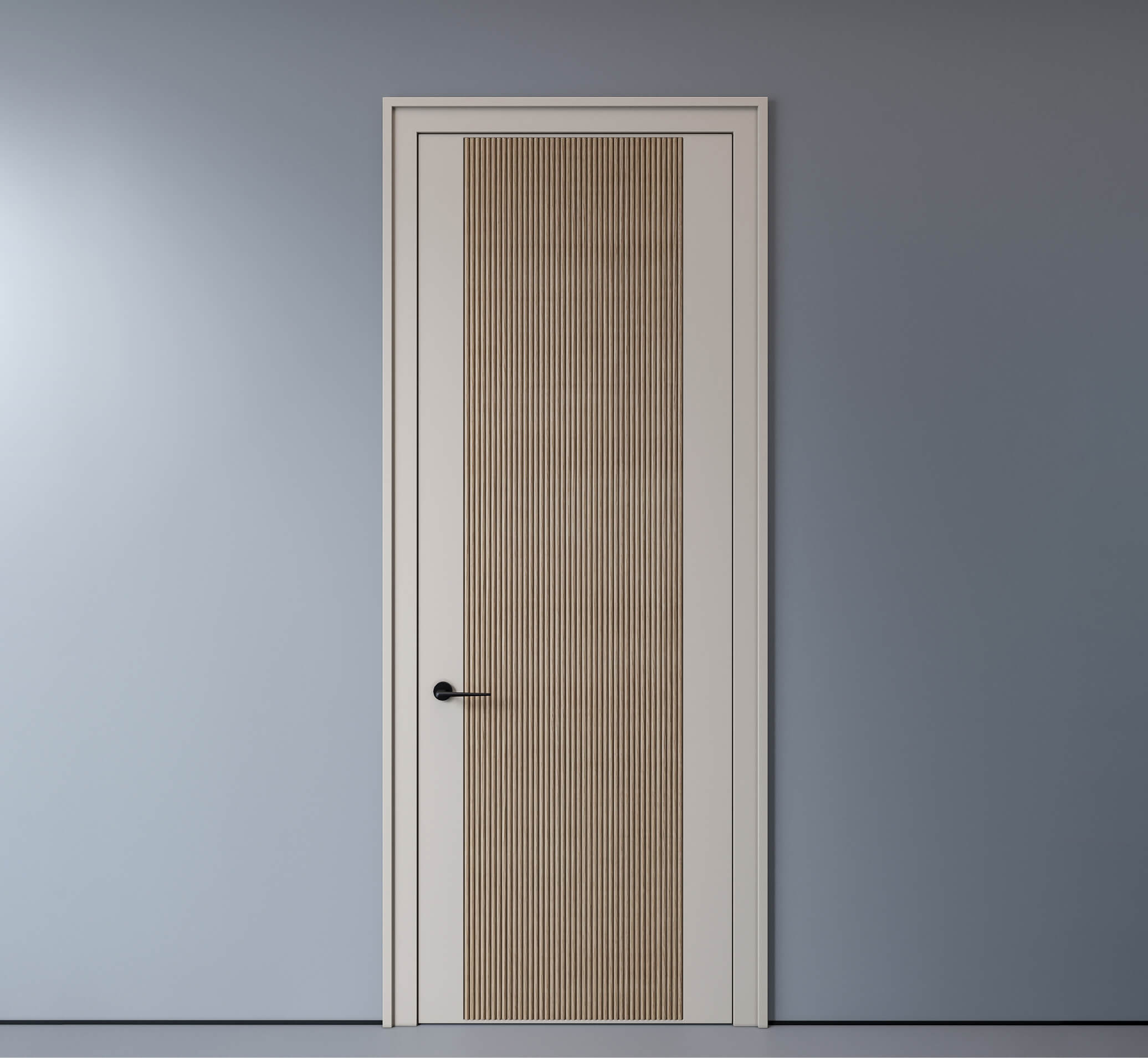
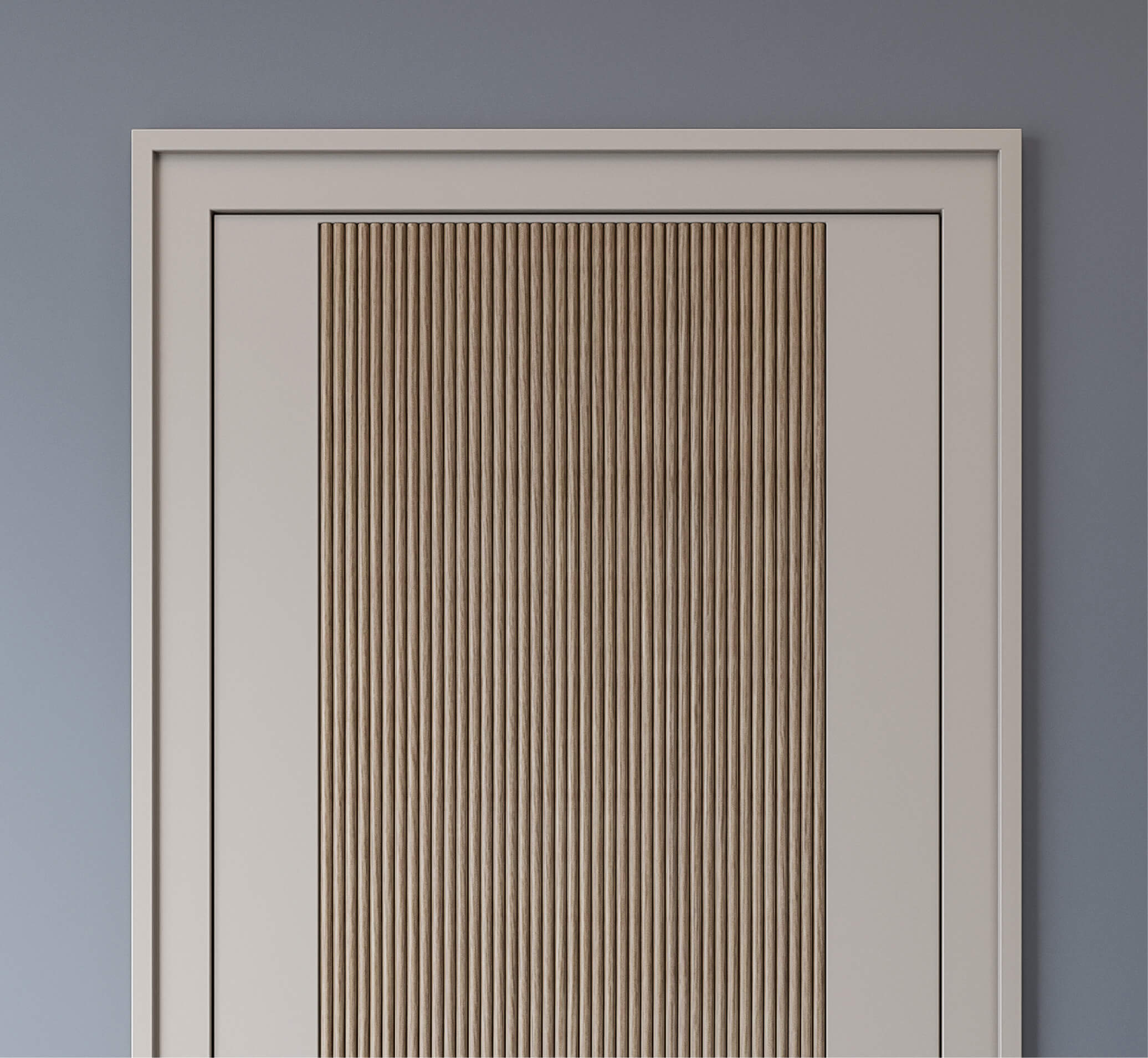
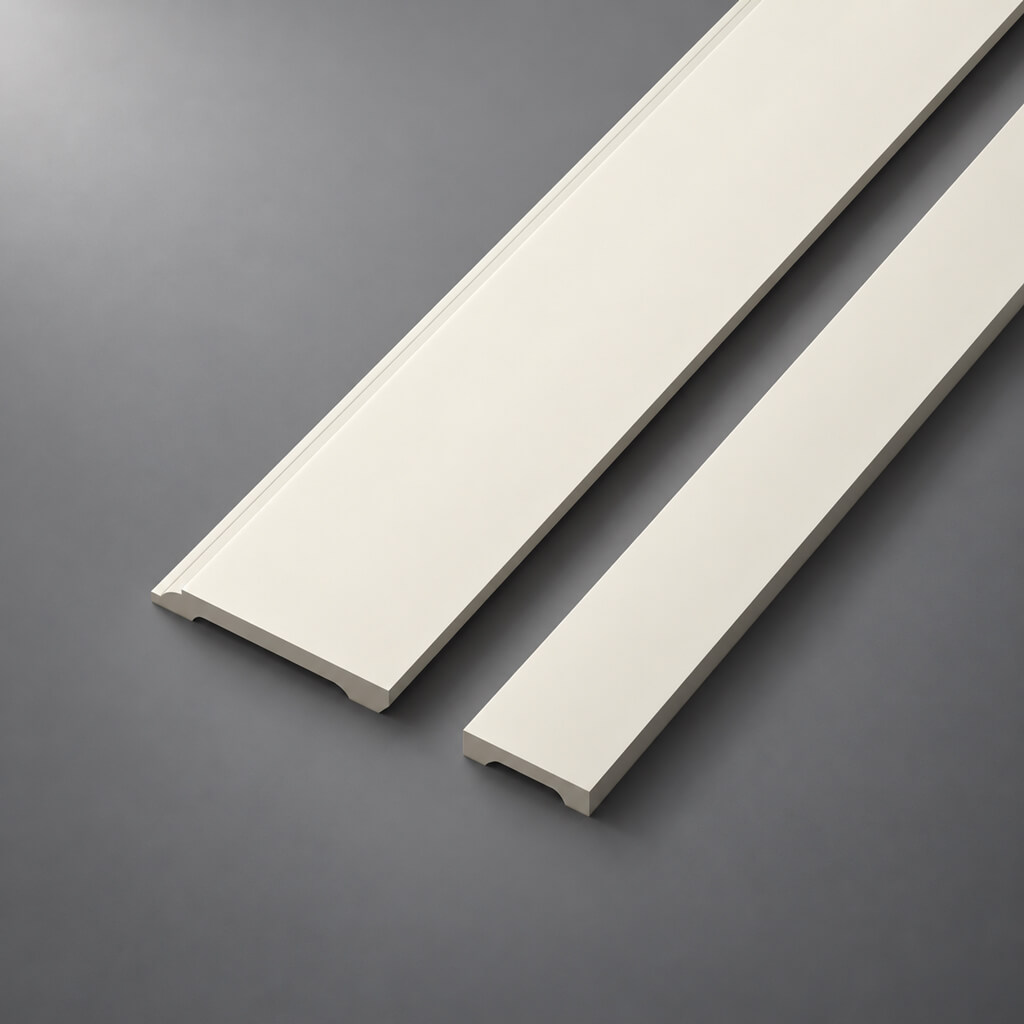
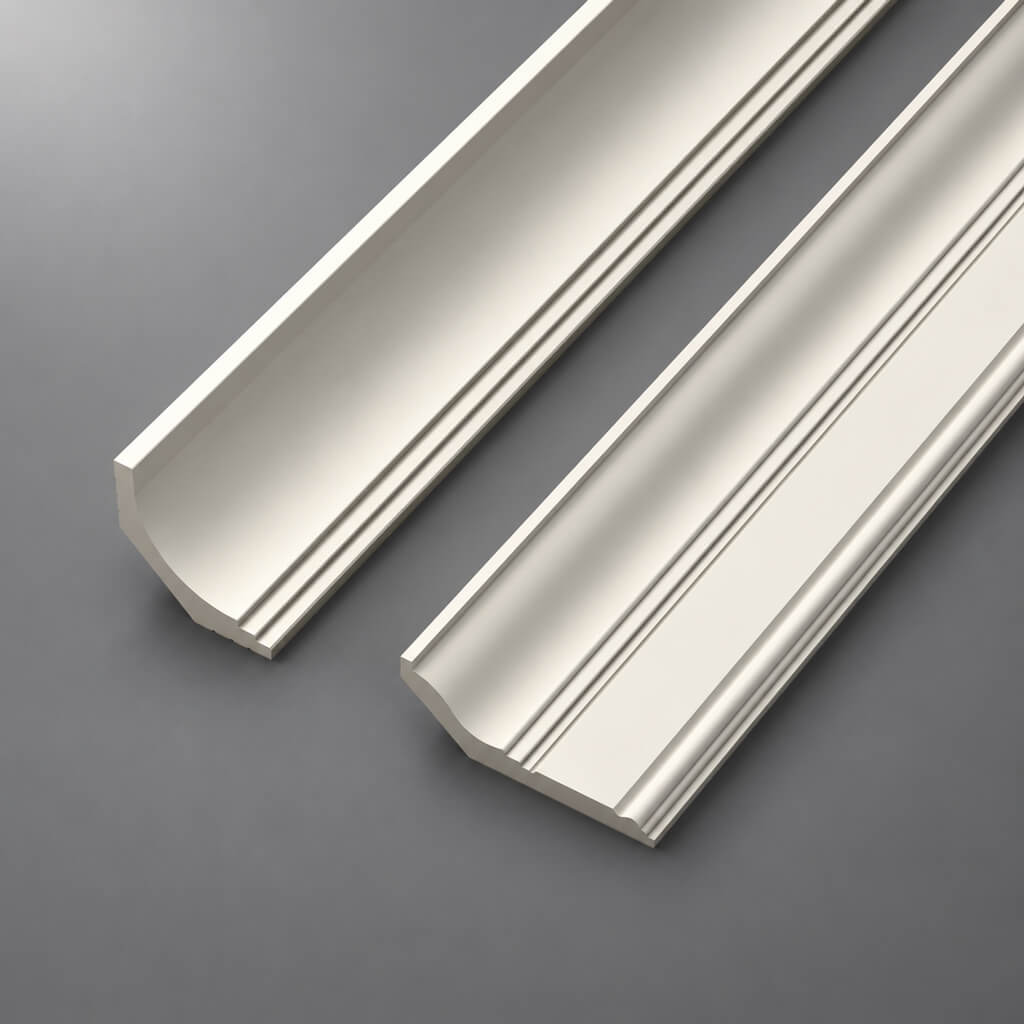
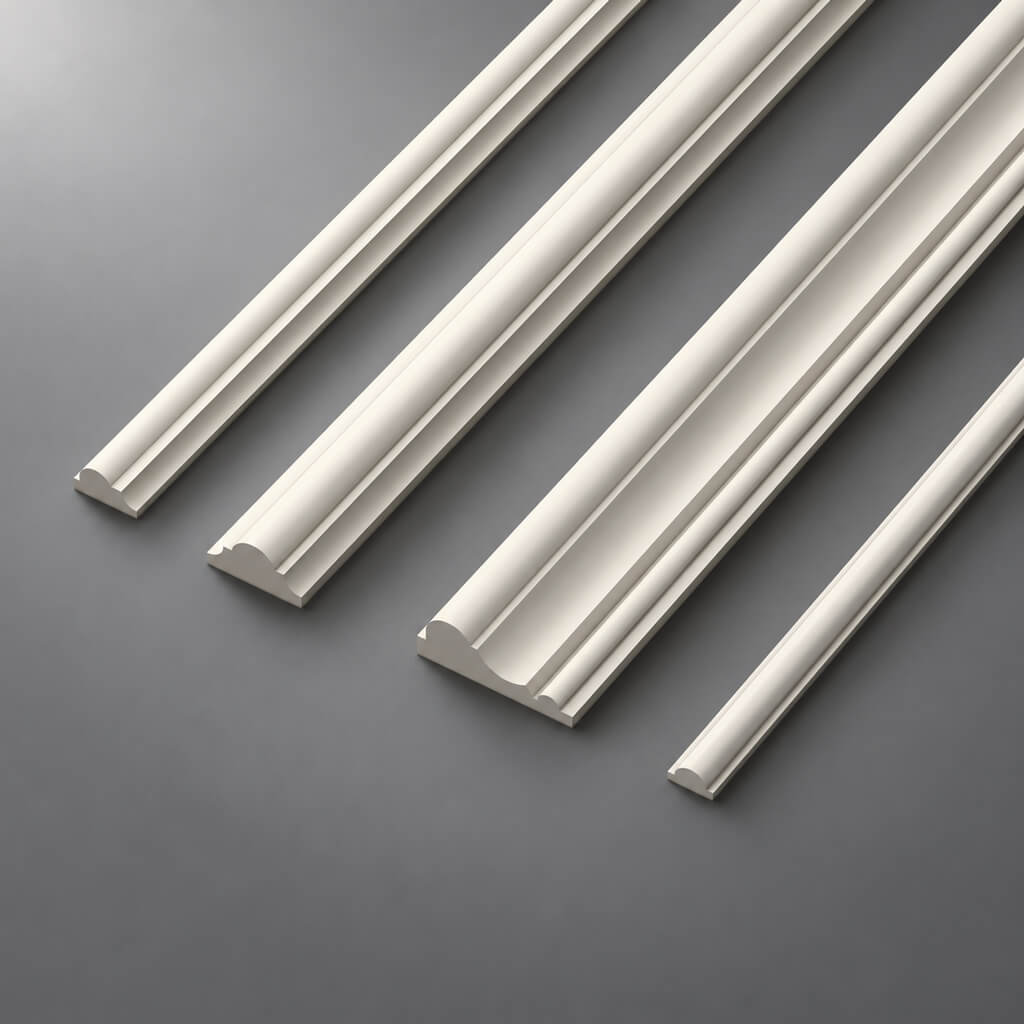
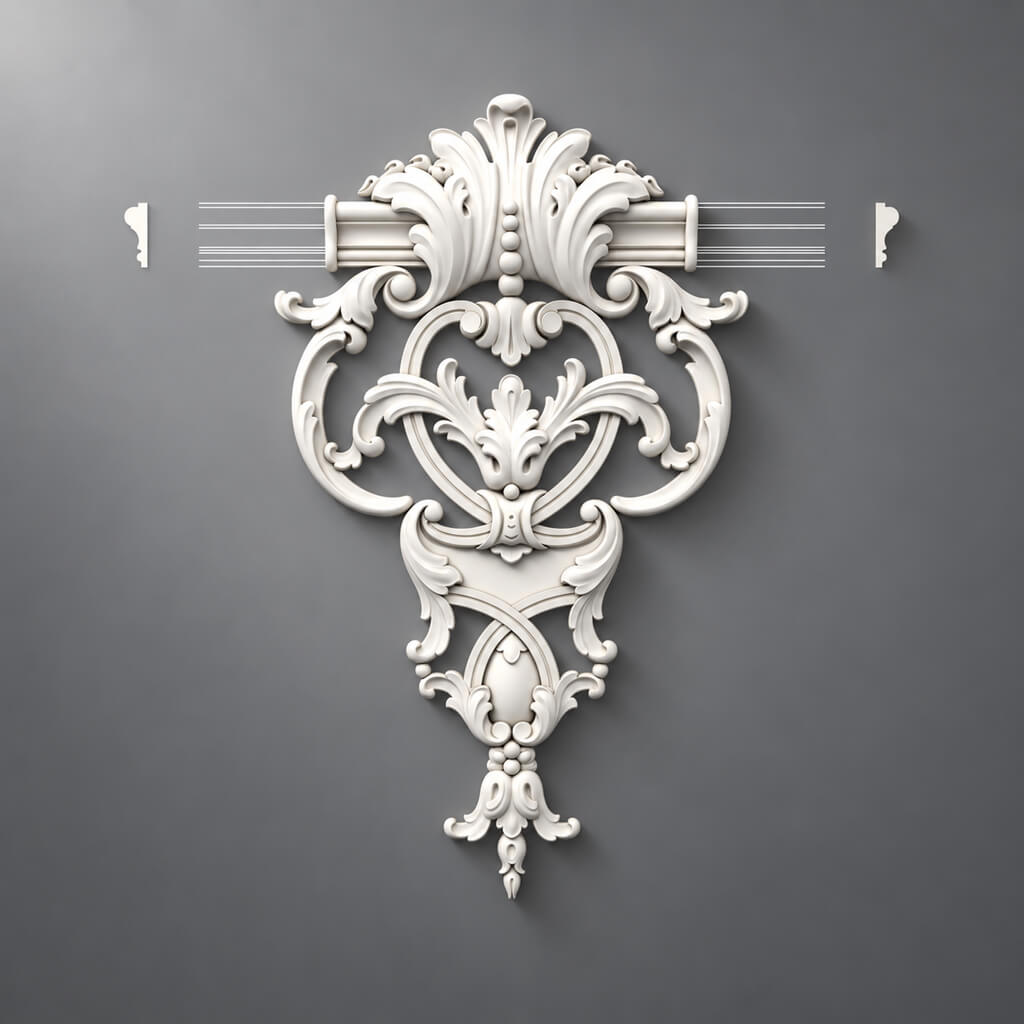
Used elements from the STAVROS array

We will help you implement the project
Measurements
You send us furniture, interior, and preferences dimensions
Design
Our specialists will create a project (paid service, from 2000 rub.)
Kitting
After project approval, you receive a specification
Implementation
We will select partners in your city for painting and mounting decor
You may also be interested in


Frequently asked questions
Our showrooms are located in Saint Petersburg and Moscow. Production is located in Saint Petersburg.
Moscow contacts: https://www.stavros.ru/contacts_all/?tab=msk
Contacts of Saint Petersburg: https://www.stavros.ru/contacts_all/?tab=spb
- Send request by email [email protected]
- Write to us at Telegram
- Write to us at WhatsApp
- Order by phone +7 (800) 555-46-75
- Visit our showroom in Saint Petersburg and Moscow
Yes, we ship orders throughout Russia and to CIS countries.
We cooperate with transportation companies such as СДЭК and DPD.
You can also arrange pickup of your order through any convenient transportation company for you.
Delivery cost depends on the size, weight of the item, and delivery address.
When placing an order, the delivery cost is calculated automatically and displayed as a separate line on our website.
Prices and availability of items on the website are always current. Data is updated daily.
Note: items in stock are stored on the warehouse in unpolished form and shipped within 3 working days.
If the item is not in stock, average production time: 5–10 working days.
This is the quality of polishing of the items.
Standard — machine polishing, at a more attractive price.
Prestige — detailed hand polishing, items do not require further work.
More details: https://www.stavros.ru/information/kachestvo/
This is the type of veneer of the items.
Under enamel: produced by gluing wooden laminates without color and texture matching. Contrast tonal and textural differences are noticeable. This blank should be chosen if the item is intended for opaque coating.
Under tinting: produced by gluing wooden laminates with color and texture matching. Tonal and textural differences may occur. This blank should be chosen if the item is intended for semi-transparent finish.
More details: https://www.stavros.ru/information/kachestvo/
Beech — dense, non-porous wood, most often used for items covered with enamel.
Oak — dense, porous wood with clearly visible natural grain. Due to its strength and decorative properties, it is often used in items with semi-transparent coating, highlighting the wood pattern.
Custom-made, if non-standard items are required, we can produce products from other types of wood, including blanks provided by the customer, manufactured according to our technical specifications.
All our furniture legs can withstand a vertical load of at least 100 kg.
Average production time for custom-made items: 5–10 working days.
Most items are stored on the warehouse in unpolished form. We need time to polish and pack orders.
Yes, we manufacture non-standard items according to individual projects, but we only accept orders with a minimum quantity.
We can manufacture items of the desired size, but we only work with bulk orders. For details, please consult the sales department manager.
Yes, some of our products can be used outdoors. For example, polyurethane items, as well as carved door casings made of pine.
Other items are produced to order using PUR glue, if minimum quantity is available. No warranty is provided for such products, as outdoor conditions are considered aggressive.
Yes, we paint items when ordering products for a total amount of 150,000 rubles or more.
- Dust removal. After sanding, the surface must be dusted.
- Priming. Apply primer in an even layer.
- Matting. After the primer has fully dried, the surface should be matted (lightly sanded for better adhesion).
- Finish coating. Apply finish coating: lacquer or enamel, in 2 layers, with interlayer drying.
More details: https://www.stavros.ru/information/sovety/
Apply adhesive to the decor. Attach to the surface and press briefly. Then, remove the decor from the surface and leave it open for 3–5 minutes. Press the decor firmly onto the surface and hold for 5–10 seconds.
More details: https://www.stavros.ru/information/sovety/
Ideally, you should prepare a design project before placing an order.
You can do this yourself by downloading drawings of our products from our website, or you can order a project from us.
If the number of decorative elements and fittings is small, our company's manager can assist you with selection.
Unfortunately, this service is not provided.
The packaging method depends on the type of items, but in each case, we ensure sufficient protection for safe transportation.
We most often use corrugated cardboard and stretch film. Fragile items are additionally secured on a rigid base to prevent damage during transport.
We ship all items starting from 1 piece.
Room measurements and item installation can be performed by our partners — carpentry companies represented in most regions of Russia.
Also see
Idea for Decorating a Door with a Slat Panel PAN-001
An ordinary interior door is almost always a missed opportunity. A flat panel, devoid of character, blends into the interior, adding neither rhythm, nor texture, nor mood. But once you clad the door leafwith a slat panel PAN-001— the space takes on a completely different quality: the vertical rhythm of the ribs stretches the panel upward, natural wood or MDF for painting adds materiality, and the door itself transforms from a functional element into an architectural accent. This card is about this very idea — not about selling, but about application, not about the product, but about the result.
Decorating a door with a slat panel is an approach that works in modern interiors, minimalism, Japandi, Scandinavian style, neoclassicism, and eco-concepts. The PAN-001 panel from STAVROS is specifically designed for such tasks: it is flexible, fabric-based, allows working with both straight and non-standard surfaces, and offers a choice between MDF, solid oak, and beech. This is not a ready-made door — it is a material that turns any door into an author's statement.
What this idea shows
Imagine a door leaf with even vertical slats running from top to bottom, with a spacing that sets a uniform rhythm for the surface. No applied rosettes, no carvings, no stucco decoration — only pure geometry, a repeating line, and the tactile depth of natural material. This is exactly what a door with the PAN-001 slat panel looks like: strict but lively, laconic but expressive.
Slat decor on a door makes the surface architectural. It is not just decoration — it is a way to add volume and structure to the door leaf, which are usually only achieved through expensive carving or custom manufacturing. Decorating a door with slats made ofSTAVROS slat panel catalog allows achieving the same visual effect much more affordably, quickly, and without being tied to a specific door manufacturer.
An important feature of the idea is its coherence. A door with vertical slats fits organically into a space where slat wall panels, slats on the ceiling, and slatted furniture facades already exist. It becomes part of a unified interior language, not a random accent. An accent door in the interior, finished in the same material and texture as the surrounding surfaces, is a sign of a well-thought-out design project, not random decoration.
Slat decor helps solve one of the main tasks of a modern interior: connecting different elements into a cohesive whole. The door supports the wall panels, echoes the furniture facades, and responds to the portal and baseboards. When the design of a door with wooden slats continues the logic of the space, the feeling of randomness disappears — a sense of an author's solution emerges.
Why PAN-001 is suitable for a door
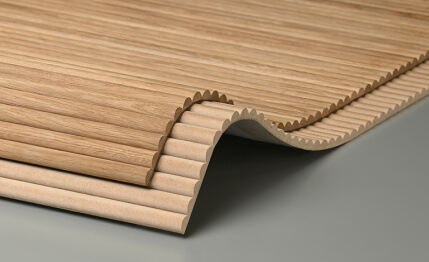
The PAN-001 slat panel is not just a set of wooden slats assembled at the factory. It is a flexible sheet on a fabric base, where each slat is fixed with a precise pitch, and the base allows the panel to wrap around surfaces without delamination or deformation. For a door leaf — flat, rigid, with clear edges — this property is especially valuable: the panel lays without gaps, without protruding edges, without manual adjustment of each slat.
A slat panel made of MDF as part of PAN-001 is an ideal choice for those who want to paint the door to match the wall or create a contrasting accent. MDF primes well, has no pronounced texture, and accepts any color according to RAL or NCS. A white door with white slats to match is an almost invisible but very tactile relief. A dark door with slats in deep anthracite or graphite is already a bold architectural accent.
oak slat panel gives a completely different effect: a lively texture, warm tones, the character of natural wood. Oak can be varnished, tinted to a specific shade, or treated with oil for a matte look. A slat panel made of beech is more uniform in texture, with a soft light palette, and tints well to walnut, wenge, or light Scandinavian shades. Both solid wood options create a surface on the door that lives, breathes, and ages beautifully.
What is especially important for use on a door — the panel is mounted with contact adhesive with possible mechanical fastening. This means it can be installed on an existing door leaf without replacing the door itself. No dismantling, no complex technological operations — only precise marking, contact adhesive, and careful laying of the sheet. Decorative wooden slats on a fabric base give a result that looks like expensive custom work, but can be installed by yourself or with the help of one specialist.
That is why PAN-001 is not just a material, but a complete decorative solution. It saves time, lowers the entry threshold for slat decor, and at the same time provides a high aesthetic result. If you are looking for decorative slats for a door that work immediately — without lengthy adjustment, without complex installation — this is exactly the option.
Which doors are suitable for slatted decor
This is perhaps one of the most common questions that designers and apartment owners have when they first see a slatted panel on a door leaf. It would seem that slats are for walls. But practice shows otherwise: finishing a door with slatted panels works in a variety of scenarios, each with its own logic.
Interior doors
Decorating an interior door with slats is the most obvious and at the same time the most effective scenario. A standard smooth MDF or veneer leaf gains a new dimension: vertical slats create structure, shadow, and rhythm. This works especially well for doors to the living room or dining room, where the door is visible from different sides and is perceived as part of the overall composition. Slatted panels for interior doors made of solid wood or MDF for painting allow you to adapt the solution to any style.
Wardrobe doors and hidden doors
A hidden door with slats is one of the most aesthetic applications of PAN-001. When the slatted panel continues from the wall onto the door leaf without a break, the door literally disappears into the interior. This technique is especially popular in modern projects with accent walls: the wall panel transitions into the door, creating a single plane. Wardrobe doors with slatted decor do not give themselves away with handles or frames—only an even vertical rhythm.
Cabinet doors and built-in storage systems
A cabinet door with wooden slats is a solution that turns built-in furniture into a full-fledged interior object. This is especially relevant for bedrooms and hallways, where the wardrobe takes up a large wall area: without decor, it is just a furniture array; with slatted panels, it becomes an architectural detail of the space. How to decorate an interior door with wooden slats—the same principle works for the facades of built-in wardrobes.
Sliding doors and compartment systems
Sliding doors with slatted decor are another interesting scenario. The leaf of a compartment system, finished with vertical wooden slats, ceases to be just a functional space divider. It becomes a decorative screen that can be moved, changing the zoning configuration while maintaining the integrity of the visual solution.
Doors for the study, bedroom, hallway
The door in the hallway with slatted decor greets guests immediately and sets the tone for the entire interior. The bedroom door with vertical slats creates a sense of privacy and coziness — especially if the slats are made of beech or oak tinted in warm shades. The study door with a slatted panel made of dark MDF under enamel is a serious, representative accent that speaks of the owner's taste without unnecessary words.
For all these scenarios, one thing is important: what to finish an interior door in a modern style with — it's a question not only of material but also of application logic. Slatted panels answer both questions at once.
What styles does slatted decor on doors complement?
A door with slats is a solution that does not belong to a single style. It is a language that adapts to different interior contexts, changing intonation but preserving the essence. Let's take a closer look at how slatted decor fits into various style concepts.
Japandi
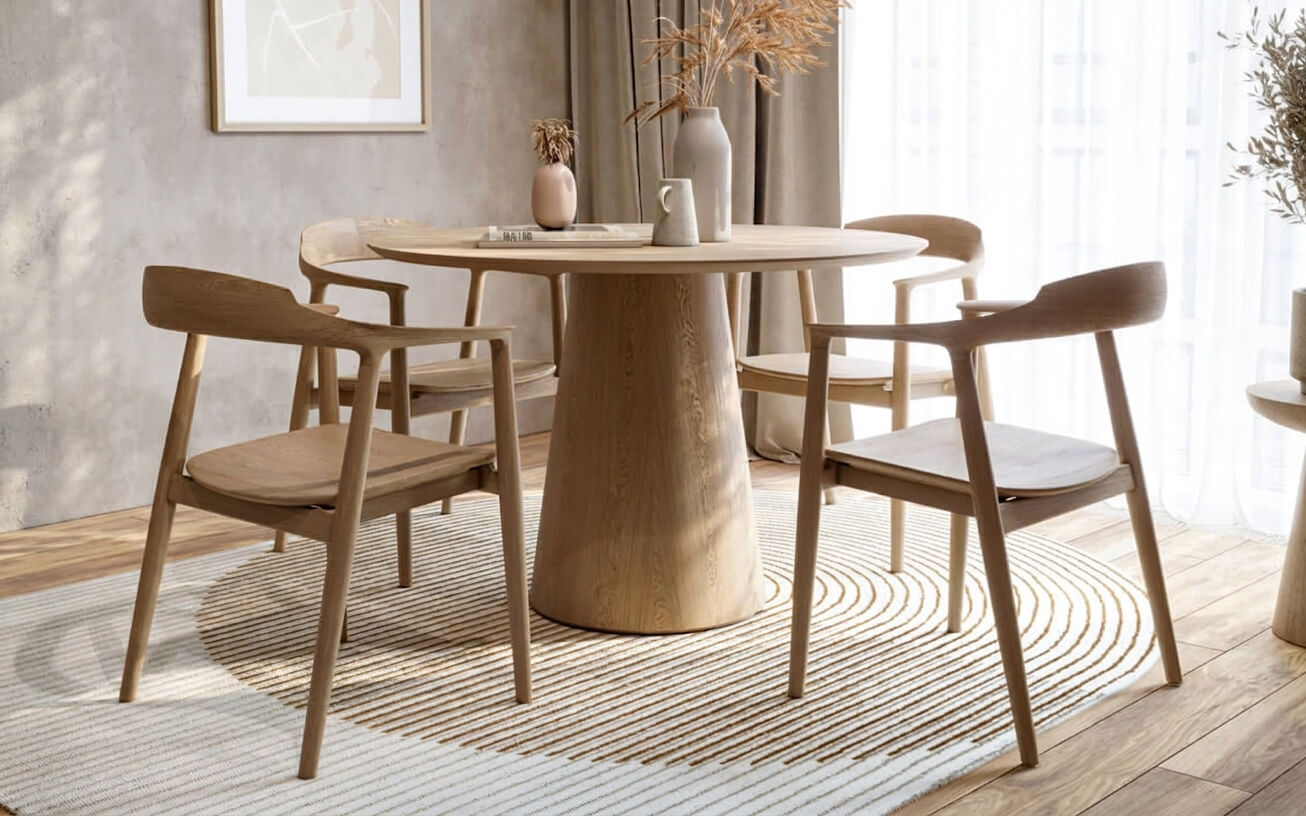
A door in the Japandi style is one of the most organic scenarios for PAN-001. The philosophy of Japandi is built on respect for material, for pause, for the silence of forms. Vertical slats made of oak with natural varnish or oil are almost a meditative surface: even but alive, restrained but warm. The slatted rhythm in Japandi works as a visual pause that allows the eye to rest. No overload, no decorative noise — only the texture of wood and light playing on the edges of the slats.
Modern minimalism
Door decor in the minimalist style requires precision: every element must be justified. A slatted panel made of MDF for painting in the color of the wall is an almost imperceptible but tangible solution. The door gains relief, shadow depth, but does not become a screaming accent. A door with slats in a modern interior in a minimalist key is about nuance, about the subtle difference between plane and structure.
Scandinavian style
A Scandinavian interior welcomes natural materials, light tones, and honest construction. A slatted panel made of beech in a light tint on the door is an absolutely Scandinavian story. An even slat spacing, light wood, a clean surface without unnecessary details. Wooden slats in a Scandinavian-style interior have long become a classic: they connect the floor, furniture, and walls into a single textural story.
Neoclassicism in a modern interpretation
This may seem unexpected, but slatted decor also fits into neoclassicism — if the accents are placed correctly. Not instead of moldings, but alongside them: slats on the door leaf combined with a classic portal and cornice give an interesting effect of combining tradition and modernity. MDF under enamel in classic white or cream — and the door sounds restrained but not banal.
Eco-style and natural interiors
Slatted decor in an eco-style interior is about connection with nature. Oak under varnish with visible fiber texture, beech with a warm honey hue — any of these options creates a feeling of materiality, closeness to natural forms. An interior door with wooden slats in an eco-context becomes part of a large organic story where wood is present everywhere: in the floor, in furniture, in decorative details.
Color, finish, and visual effect of the slatted panel on the door
The visual effect of a slatted panel on a door is largely determined by the choice of color and finish type. This is not a technical question — it is a design decision that influences how the door is perceived in a space. Let's break down the main scenarios.
Painting in the wall color
The most subtle and at the same time most sophisticated technique is painting the slatted panel in the exact shade of the wall. The door seems to disappear: its outline blurs, but the surface gains relief. This textured door finish works for those who want to conceal the door while preserving a decorative effect. A slatted panel with enamel in white, light beige, or nude tones is an ideal option for this scenario. MDF accepts such painting without issues, providing a smooth, clean surface.
Contrast finish
The opposite approach is to make the door an accent through contrast. A dark slatted panel against light walls, or vice versa — light slats on a dark door leaf. Vertical slats on a door in a contrasting color scheme create a strong visual accent that draws the eye and sets accents in the space. Door decor with wood in a dark tint — wenge, stained oak, black MDF — is a bold, modern solution for projects with character.
Natural wood under varnish
Wooden slats under varnish are a classic of slatted decor. Varnish emphasizes the fiber texture, adds depth to the color, and protects the surface. Oak under a clear matte varnish retains its natural warm hue and fiber pattern. Beech under a semi-matte varnish gives a more uniform, light surface. Both options create a lively, tactile surface on the door — one that invites touch.
Tinting to match furniture or flooring
One of the most clever design moves is to tint the slatted panel on the door to match the shade of the floor or furniture. This creates visual coherence in the space: the door becomes part of the overall color scheme, not a random element. Slats for tinting are an opportunity to achieve the desired shade without purchasing expensive veneer or a costly painted door. It is enough to properly select a stain or oil-wax with the right pigment.
Vertical lines as an architectural technique
The geometric effect deserves special mention. Vertical slats on a door visually elongate the panel — the door appears taller, the ceiling farther away. In rooms with low ceilings, this is a particularly valuable technique: the slatted decor works as an optical illusion, adding height to the space without actual construction changes. The wood texture adds depth: light falling on the relief surface creates a play of shadows that enlivens the door panel at different times of day.
How to use PAN-001 in an interior design project
The PAN-001 slatted panel is a material with a very wide range of applications, and door decor is just one of the scenarios. Understanding this range helps to use the panel most effectively within a single project.
Door leaf only
The simplest and fastest scenario is to cover only the door panel with the slatted panel. This is minimal intervention with maximum visual effect. Decorating a door panel with the PAN-001 panel takes a few hours and requires no special equipment. The result is a door that looks like a custom piece.
Door + adjacent wall
A more complex and impressive option is to continue the slats from the wall onto the door panel without interruption. A slatted panel for the door and wall in a unified solution creates an effect of architectural volume: the door appears as if cut out of the wall plane. This is a technique often used in high-level design projects — and now it is accessible thanks todecorative slats for walls, doors, and furniturefrom the STAVROS catalog.
Door portal trim
Decorating the door portal with slats is another scenario that enhances the effect. When the portal is finished in the same slatted texture as the door panel, the entire structure is perceived as a single architectural element. Slats for walls and doors in this approach work to create depth and completeness.
Unified interior composition
The most ambitious scenario is to use the slatted panel as a through element: doors, walls, furniture fronts, partitions. When the same material appears in different points of the space, the interior gains internal unity. Wooden panels for the door, cabinet, and wall from the same article guarantee that the color, texture, and slat spacing will be identical. Combining them with baseboards, moldings, and cornices from the same STAVROS line means getting a fully coordinated solution.
It is for such complex projects that it is important to look not only at a specific article but at the entire range:ideas for using STAVROS decorprovide a broad understanding of how different elements work together.
Which elements are used in this idea
This idea card usesthe slatted panel PAN-001 STAVROS— a flexible decorative fabric-based panel with vertical MDF, oak, or beech slats. Panel dimensions: 1010 × 8 × 950 mm, 1010 × 8 × 2400 mm, and 1010 × 8 × 2670 mm. The width of one slat is 14 mm, the total panel thickness is 8 mm. The panel is suitable for decorative finishing of doors, furniture fronts, and interior surfaces when you need to create an even rhythm of vertical lines and emphasize the material's texture.
Want to use this idea? Check out theslatted panel PAN-001 in the STAVROS catalog— there you will find current sizes, available materials, and execution options.
When to choose such an idea
Not every interior requires slatted door decor. But there are situations where this technique becomes the perfect answer to a design question. Here are a few scenarios where this idea is especially relevant.
If a regular door looks too plain — a boring flat panel without texture or character — slatted decor becomes the most effective and quickest way to transform it. How to decorate a door without replacing it entirely? The answer is obvious: a slatted panel that mounts over the existing door leaf.
If you need to match slatted panels on the wall — continue the visual motif of vertical lines onto the door — PAN-001 provides an identical pattern because it's the same material, the same slat spacing. No visible seams or transitions — just a unified architectural logic.
If you need an accent without complex carving — slats offer expressiveness without baroque overload. This is modern door decor: strict, clear, without excess.
If the interior is built on vertical lines — high ceilings are emphasized by slats, the space visually stretches, the air between slats creates a sense of lightness. How to make a door beautiful in such a context — add a slatted rhythm that continues the overall geometry of the space.
If you want the natural texture of wood but don't want to pay for a custom solid wood door — oak or beech in PAN-001 provides that naturalness at a significantly more affordable price. Decorating a door with wooden elements in the form of a ready-made slatted panel is a smart compromise between aesthetics and budget.
If the door should look like part of a designer project — the slatted panel creates the feel of a custom solution. How to update a door without replacing it — apply a layer of contact adhesive and lay the panel. How door decor ideas become reality — exactly like this.
Installation: what to know before starting work
Before moving to installation, it's worth understanding the process logic. The PAN-001 slatted panel is mounted with contact adhesive: both surfaces — the back of the panel and the door leaf — are coated with adhesive, left until the desired tackiness, and joined with precise positioning. There's no second chance: contact adhesive bonds instantly, so markings must be made in advance and checked multiple times.
If the door has a smooth laminated or veneered surface, it must be pre-degreased and, if necessary, lightly sanded for better adhesion. If the door has protruding hardware — hinges, handles, keyhole — you should either temporarily remove it or pre-cut the corresponding fragments of the panel. It is more convenient to do the work together: one holds the panel in the desired position, the other presses and smooths it.
If additional fixation along the edges is necessary, mechanical fastening can be used — small finishing nails or brads, which are subsequently puttied and painted over.Tips for installing decorative elementson the STAVROS website will help you understand the nuances specific to the particular type of surface and panel material.
After installation, the MDF panel can be primed and painted — it is better to do this after fixing, so that the coating covers all joints and edges. Oak and beech after installation are coated with varnish, oil, or tinting compound on a pre-sanded surface.
Slat panel in adjacent areas: wall, portal, furniture
The logic of door decoration becomes even more convincing when it is considered in the context of adjacent surfaces. The door does not exist in a vacuum: around it are the wall, portal, and adjacent furniture. And it is here that the slat panel PAN-001 reveals its main potential.
Decorating the wall next to the door with a slat panel creates visual unity: the door ceases to be a separate object and becomes part of the architectural plane. This is especially relevant for corridors and hallways, where the walls are narrow and every centimeter works for the overall perception.Door design optionsand adjacent surfaces in the STAVROS ideas section show how this is solved in practice.
A slatted portal above the door is a separate story. When the portal structure is finished in the same texture as the door leaf, the entire entrance area is perceived as a single architectural object. This is an expensive-looking solution that actually requires minimal material: only precise marking and careful panel installation.
Furniture facades next to the door are another argument in favor of PAN-001. A cabinet in the hallway, a built-in wardrobe in the bedroom, a shelving unit in the study — if their facades are finished with the same slatted panel as the door, the space gains integrity.Examples of using decorative elementson walls, doors, and furniture in the STAVROS ideas section provide a comprehensive understanding of how this principle works in real interiors.
Color and material combinations: practical recommendations
Once you have decided on the material — MDF, oak, or beech — the question of combinations arises. How to choose a finish that will work specifically in your interior?
A slatted panel with MDF enamel finish pairs best with neutral walls: white, light gray, cream, beige. A contrasting solution — black or dark blue enamel on the door with light walls — creates a powerful accent that sets the tone for the entire space. Painting a slatted panel is a simple process but requires high-quality primer: MDF without primer absorbs paint unevenly.
Lacquered oak pairs well with warm tones: ochre, terracotta, olive, beige. In a Scandinavian interior, oak works with white and gray. In Japandi, it works with black, white, and natural textiles. In neoclassicism, it works with classic neutral tones and gold hardware.
Beech with tinting is the most versatile option. The light structure of beech allows it to be tinted in a wide range: from light honey to dark walnut.How to choose a finish for enamel or tinting— more details can be found in the materials about quality and finishing on the STAVROS website.
Slat decor and project economics
The inevitable question is: how expensive is it? Comparing the PAN-001 slat panel with ordering a custom solid wood door with a slatted facade — the price difference will be significant. The fabric-based slat panel is a ready-made decorative solution that is installed on an existing door and provides a comparable visual result at a much lower cost.
Buying interior slats from the STAVROS catalog means getting material with ready-made geometry, precise slat spacing, and the option to choose between MDF and solid wood. This eliminates expensive custom joinery, reduces installation time, and lowers the skill requirements for the installer. MDF and solid wood slat panels deliver professional results within a reasonable budget.
If you compare the cost of buying oak slat panels as individual strips and assembling them manually with purchasing the ready-made PAN-001 — the second option will be cheaper overall, considering the time, labor, and inevitable defect rate during DIY assembly. Buying beech slat panels ready-made also guarantees consistent spacing, uniform slat width, and consistent geometry across the entire door surface.
FAQ: Answers to popular questions
Can the PAN-001 slat panel be used for interior door decoration?
Yes, this is one of the main applications. The PAN-001 slat panel is mounted on the door leaf using contact adhesive and, if necessary, additional mechanical fastening. The panel is suitable for smooth, flat door leaves made of MDF, veneer, or solid wood. Decorating an interior door with slats using PAN-001 does not require replacing the door itself — only careful installation and proper surface preparation.
Is PAN-001 suitable for painting to match the door or wall color?
Yes — the MDF version is specifically designed for painting. MDF accepts primer and enamel well, providing a smooth surface without pronounced texture. After installation, the panel is primed and painted in the desired color according to RAL or NCS. The slat panel for enamel allows painting the door to match the wall tone for a hidden door effect or in a contrasting color for an accent solution.
Can the slat panel on the door be combined with wall panels?
It's not just possible — it's how the best design result is achieved. Decorating the door leaf and the adjacent wall with the same PAN-001 panel creates a continuous slatted surface. This is especially effective for hidden doors, where the boundary between the wall and the door visually disappears. A slatted panel for the door and wall from the same article guarantees an identical slat pitch and the same material.
What materials are available for PAN-001 — MDF, oak, beech?
PAN-001 is available in three material options: MDF (for painting), solid oak (for varnishing, tinting, oil coating), and solid beech (for tinting and varnishing in a wide range of shades). Each option has the same geometry — slat pitch, width, thickness — and differs only in material and surface character. The choice of material is determined by the interior style, desired color, and type of finish.
Can this idea be used for a cabinet or wardrobe door?
Yes, and this is one of the most popular application scenarios. A cabinet door with wooden slats from PAN-001 turns built-in furniture into an interior object. This works especially effectively when the slatted cabinet fronts continue the visual motif of the wall or echo the slatted decor of a door in the same room. Decorative slats for a cabinet door leaf are mounted the same way as on an interior door — with contact adhesive.
How does this idea card differ from the PAN-001 product page?
The product pageslatted panel PAN-001 covers price, availability, technical specifications, and purchase. The idea card shows a specific application scenario: how exactly PAN-001 is used for door decor, what visual result it provides, and which styles and door types it suits. This is inspiration and a practical guide, not a commercial offer. If the idea convinces you — go to the catalog and choose the desired format and material.
How to decorate an interior door with slats yourself?
Basic sequence: prepare the door surface (clean, degrease, sand if necessary), mark the panel position, apply contact adhesive to both surfaces, let the adhesive set to the required degree, and fix the panel with precise alignment. After installation — painting or varnishing depending on the material. More details in the tips for installing decorative elementson the STAVROS website.
What effect do vertical slats on a door have?
Vertical slats on a door solve several problems at once: they visually elongate the panel upward, create a play of shadow and light on the textured surface, add tactile depth to a smooth surface, and connect the door to the overall interior context. In rooms with low ceilings, the vertical rhythm of the slats works as an optical illusion that adds height to the space.
Can PAN-001 be used on sliding doors?
Yes. The slatted panel on a fabric base is light enough not to create additional load on the sliding system mechanism. Installation is done the same way as on a regular door panel. A sliding door with slatted decor becomes a decorative room divider that fits organically into any modern interior.
Decorating a door with a slatted panel is not a seasonal trend, but a sustainable design technique that works in a variety of contexts. PAN-001 from STAVROS gives access to this technique without complex production, without long waiting times, and without the need to replace the entire door. Check out other STAVROS door decor ideas or explore the entire range of slatted panels made of MDF and solid wood — among them you will find a solution for any project.