








































































Article Contents:
- Buy wooden capital
- What is a capital and why it is important
- Where Wooden Capitals Are Used
- Wooden capital for column
- Wooden capital for pilaster
- Wooden capital for door
- Wooden capital for furniture
- Types of wooden capitals by style and shape
- Ionic capital
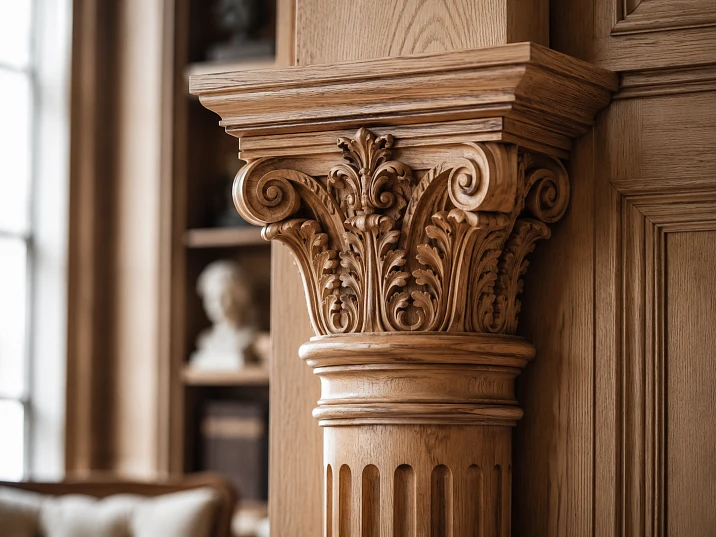
- Corinthian capital
- Doric Capital
- Capital with floral ornament
- Furniture capital with simplified profile
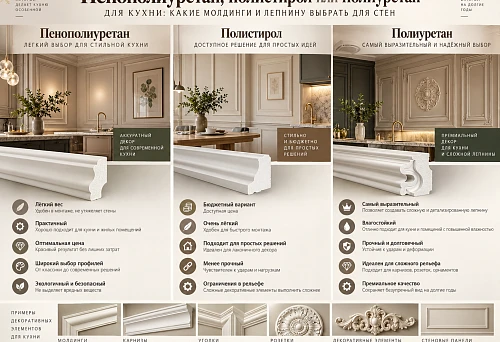
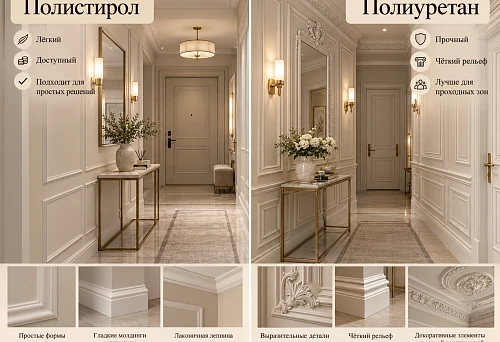
- Wooden or polyurethane capital: what is the difference
- How to choose a wooden capital before purchasing
- Determine the installation location
- Measure the base width
- Choose the style and ornament
- Check the height and projection
- Coordinate with adjacent elements
- Decide on the coating in advance
- Calculate the quantity
- Installation of a wooden capital: principles and details
- Attachment to the base
- Leveling
- Sealing the joint
- Finish after installation
- What affects the price of a wooden capital
- Mistakes when buying a wooden capital
- Where to buy a wooden capital in Moscow and throughout Russia
- FAQ: popular questions about wooden capitals
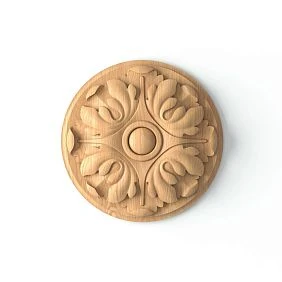
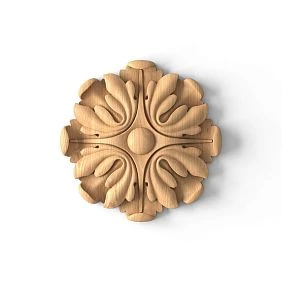
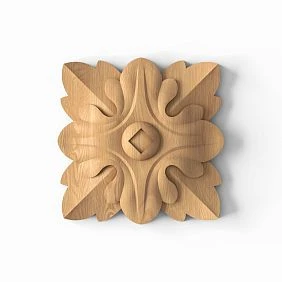
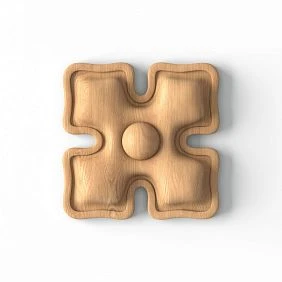
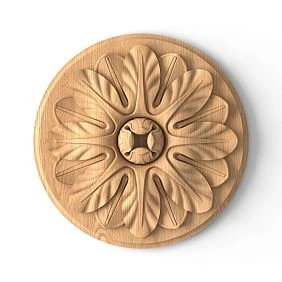
Buy a wooden capital
There are architectural details that have existed for three thousand years — and are still not outdated. The capital is one of them. The top of a column, the crown of a pilaster, the crown of a door portal. A small object with a huge semantic load: it is the capital that translates the vertical of the supporting element into the horizontal of the ceiling, it carries the ornamental program of the style, it is by it that we read whether we have a Doric order or a Corinthian, strict classicism or lush Baroque.
Buy a wooden capital — a request behind which there are very different scenarios. Someone is decorating columns in the living room of a country house. Someone is finishing pilasters in the library. Someone is making a door portal with carved decor — and is looking for capitals for architraves. Someone is restoring an old sideboard or cabinet and wants to return its historical appearance. All these scenarios are different, but united by one thing: a wooden capital as a detail requires precision in selection.




What is a capital and why is it important
A capital is the upper part of a column or pilaster, a decorative transition from a vertical shaft to a horizontal entablature. In ancient architecture of order systems, it had a strictly defined form: the Doric capital — a laconic echinus and abacus, the Ionic — famous volutes, the Corinthian — a lush acanthus leaf. These forms passed through the Renaissance, Baroque, Classicism — and live fully in modern classical interiors.
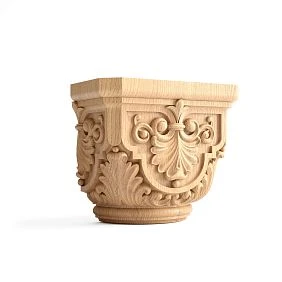
In wooden execution solid wood capital — this is a three-dimensional ornamental element that is made by milling, turning, or hand carving. Depending on the complexity and style, it can range from a laconic profiled block to a multi-tiered openwork structure with leaves, volutes, and cartouches.
Buying a wooden capital means acquiring a detail that completes an architectural element and sets the scale of the entire space. An incorrectly selected capital disrupts proportions: too small gets lost, too large overwhelms. The right one is so organic that the viewer perceives it as something self-evident.
Our factory also produces:
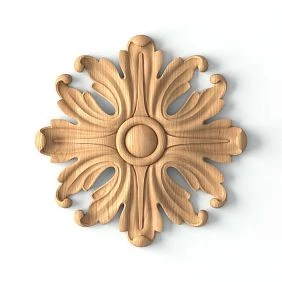
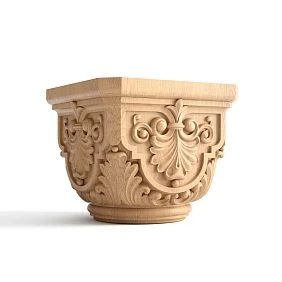
Where wooden capitals are used
A wooden capital is not only an architectural element of buildings. In interiors, it is used much more widely than is commonly believed. Let's look at the main scenarios.
Get Consultation
Wooden capital for a column
A column in an interior is either a structural element (a load-bearing post clad in wood) or a decorative one (a freestanding post creating an architectural accent). In both cases, a wooden capital for a column completes the vertical line and transitions it into the horizontal line of a beam, cornice, or ceiling molding.
Three parameters of the capital are important for interior columns:
Width. The capital must be wider than the column shaft. The classic ratio: capital width is 1.15–1.3 times the shaft diameter. If the shaft is 120 mm, the capital is 140–155 mm wide. If it is 200 mm, the capital is 230–260 mm. Failure to maintain this ratio disrupts the proportion.
Height. It depends on the proportions of the entire column. Typically, the capital is 1/7–1/8 of the shaft height. For a shaft of 2,400 mm, the capital is 300–350 mm high.
Overhang. The abacus (the top plate of the capital) should overhang the shaft evenly on all four sides. Asymmetry in the overhang is a visible defect that catches the eye even of an untrained observer.
A carved capital made of solid wood for formal columns—with acanthus leaves, volutes, or complex profile relief—is the pinnacle of the decorative program in a classic interior. Such capitals are installed in living rooms with high ceilings, in the halls of country houses, and in Empire-style studies and dining rooms.
Wooden capital for pilaster
Wooden pilaster — a flat vertical strip that represents a column on a wall. This is a technique known since the Renaissance: pilasters divide the wall plane into equal spans, create a rhythm of space, emphasize height, and visually elongate walls.
A wooden capital for a pilaster serves the same purpose as a capital on a volumetric column — it completes the vertical element. But structurally it is simpler: the pilaster is flat, so the capital is also partially flat, with a pronounced frontal relief and minimal depth on the sides.
A pilaster with a capital is one of the most common decorative techniques in classical interiors. In the decoration of walls in a living room, library, study, or billiard room — pilasters with capitals create a sense of volume and architectural scale without actual partition construction.
For pilasters, capitals are selected that match the width of the pilaster itself. Standard pilasters are 100, 120, 150, 200 mm wide. The capital is taken 15–20 mm wider on each side. For a 120 mm pilaster — the capital is 150–160 mm wide on the front part.
An important point: the capital for a pilaster must be coordinated with wooden molding horizontally — the cornice or frieze that runs at the level of the capitals. This creates a full architectural belt that completes the vertical row of pilasters.
Wooden capital for a door
Buy a wooden capital for a door — one of the few commercial queries in this topic confirmed by SEO Hub. This is no coincidence: Door Decoration — one of the most popular scenarios for using wooden capitals in an interior.
In classic-style door portals, the capital completes the vertical casing — just as it completes a pilaster on a wall. A casing with a capital is a "door column" that gives the opening architectural character. The door ceases to be just a hole in the wall — it becomes a portal.
Application scenarios for door capitals:
Interior portal. Two vertical wooden casings on each side of the opening, a capital on each casing at the top, a horizontal cornice along the top — and a simple rectangular doorway transforms into a full-fledged classic portal.
Door leaf decor. Capitals are also used in the design of the door leaf itself: at the corners of the upper part, as the completion of vertical applied moldings. A carved door with capitals on applied pilasters is the highest level of door decor.
Arched portal. In an arched opening, the capital is installed at the transition point of the vertical casing into the semicircular archivolt. This node is the most critical because the capital here carries a dual load: it completes the vertical and marks the beginning of the arch.
Size of the capital for a door casing: width — equal to the width of the casing or slightly wider (by 10–15 mm on each side). Height — 80–150 mm. For monumental portals with wide casings — a capital 180–220 mm high.
Wooden capital for furniture
This is perhaps the least obvious but very interesting scenario. A decorative capital for furniture is used in classic furniture compositions: tall cabinets, sideboards, library sections, four-poster beds, chests of drawers with columns.
In furniture, the capital completes a vertical furniture post or an applied column on the facade. The principle is the same as in architecture: a vertical requires completion, and the capital is the most organic way to create it.
A cabinet capital is a small element (width 40–80 mm, height 50–100 mm) installed on the top end of a corner post or an overlay column of the facade. In a properly designed classic cabinet, the capital above each column creates the impression of an "architectural" object rather than just furniture.
Carved furniture decor — a broader category that includes not only capitals but also rosettes, corner overlays, molding profiles, and frieze decorative bands. In this context, the capital is a structural element around which the entire decorative program of the facade is built.
Types of wooden capitals by style and shape
Before buying a wooden capital, you need to decide on the style. This is not an aesthetic preference — it is architectural logic. A capital in the wrong style looks like a quote from someone else's text.
Ionic capital
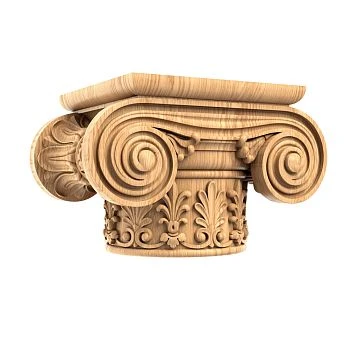
Recognizable side curls — volutes. This is the "softest" of the classic capitals: volutes create a smooth decorative transition from the shaft to the abacus. For interiors in the style of classicism, neoclassicism, soft classic — the Ionic capital is organic and versatile.
The wooden Ionic capital is one of the most common types in interior decor. Volutes are made by template milling or hand carving. Relief depth — from 15 to 50 mm depending on size and complexity.
Corinthian capital
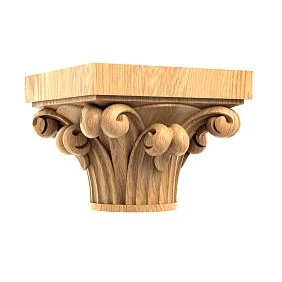
Acanthus leaves — lush, multi-tiered, with curled tips at the top. The most decorative of the ancient capitals. The Corinthian order is synonymous with luxury and solemnity.
A wooden Corinthian capital made of solid wood is the most complex product in the category. Acanthus leaves require either fine CNC milling with manual finishing or fully hand carving. Relief depth — 30–70 mm. Such a capital is appropriate in formal interiors: halls, living rooms, libraries with high ceilings.
An important detail: a wooden Corinthian capital visually appears richer than its plaster or polyurethane counterpart. The natural texture of solid wood gives the relief warmth and depth that imitation materials cannot reproduce.
Doric capital
Strict, geometrically clear: echinus (smoothly expanding cushion) and abacus (square slab). Minimum decor, maximum purity of form. The Doric capital is for those who value architectural expressiveness without ornamental excess.
In wooden execution — a turned or milled part with a profiled transition. For modern classics, neoclassicism, and laconic classical interiors — the optimal choice.
Capital with plant ornament
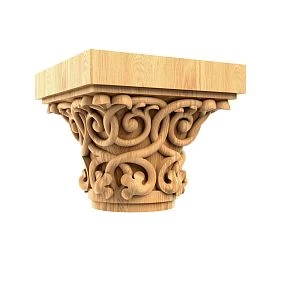
An intermediate form between the Ionic and Corinthian types. Leaves, shoots, flowers — but not strictly acanthus, in a freer interpretation. wooden ornament in this case is built within the national carving tradition: plant motifs characteristic of Russian wooden architecture give the capital a special — warm, recognizable — appearance.
Such a capital is organic in interiors with elements of Russian classicism, as well as in country houses where the owner consciously turns to the national decorative tradition.
Furniture capital with a simplified profile
For furniture, simplified variations of the classical capital are used: without voluminous leaves, but with a clear profile relief — several horizontal belts of different diameters. This is a functional option: a recognizable form without excessive complexity.
Such a capital is ideal for facade posts of classic cabinets and chests of drawers, for applied columns of furniture sections. decor for furniture within a single collection must be coordinated: capital, bases, applied moldings — a unified ensemble.
Wooden or polyurethane capital: what is the difference
This question arises for every buyer. Both materials are used for classic capitals — but in different scenarios.
| Material | When to choose | Advantages | Limitations |
|---|---|---|---|
| Wood (solid) | Furniture, doors, pilasters and columns made of solid wood, restoration | Natural texture, warm appearance, durability, possibility of repainting | Heavier, requires quality coating |
| Polyurethane | Walls, facades, lightweight decorative elements | Light weight, easy installation, not afraid of moisture | Does not visually match wooden columns and furniture |
| Wood for painting | Classic, restoration, non-standard color | Accepts enamel perfectly, patina possible | Beech is the best material for painting |
| Carved wooden capital | Baroque, classic, Russian style | Maximum decorativeness | Requires professional installation |
Key rule: a wooden capital goes with wooden elements — columns, pilasters, architraves, furniture. If the entire decorative system is made of solid wood, the capital must also be made of solid wood. Mixing materials (wooden column + polyurethane capital) creates a visible stylistic gap: different surface gloss, different response to tinting, different tactility.
How to choose a wooden capital before purchasing
Choosing a wooden capital is not about picking a "liked" one from a catalog. It is an architectural decision that requires precise measurements and systematic thinking.
Determine the installation location
First of all: column, pilaster, door portal, or furniture? Each scenario has its own geometry, its own requirements for relief depth, and its own installation solutions.
A column is a volumetric element; the capital envelops it on all sides. A pilaster is a flat element; the capital has one expressive frontal side. A door casing is a narrow vertical profile; the capital is small with a moderate projection. A furniture post is a point element; the capital is compact.
Measure the width of the base
The width of the capital is determined by the width of what it is placed on. For a column — the diameter of the shaft. For a pilaster — the width of the pilaster strip. For a casing — the width of the casing. For a furniture post — the cross-section of the post.
The capital is made 15–20% wider than the base on each side. This is a mandatory rule of classical proportion.
Choose a style and ornament
The style of the capital must match the style of the entire space. A Corinthian capital in a neoclassical interior is too decorative. A Doric capital in a Baroque hall is too strict. Be guided by the style: the richer the decorative program of the interior, the more complex the capital can be.
If you are working with door decor — the capital must match the pattern of the door leaf itself and wooden architraves.
Check the height and projection
Capital height: for decorative interior elements — 80–200 mm. For furniture capitals — 50–100 mm. For monumental columns — 250–400 mm.
Overhang (how much the capital extends beyond the base contour): the larger the overhang, the more "airy" the capital looks. For classic style — overhang 15–30 mm per side. For baroque — 25–45 mm.
Coordinate with adjacent elements
The capital does not exist in isolation. Check:
-
Does the capital match the style of wooden moldings in the same space?
-
Is the width of the capital consistent with the width of the horizontal cornice?
-
Does the ornament match the carved decor of doors or furniture?
-
Is the wood species of the capital the same as that of the main decorative element?
Decide on the coating in advance
Capital for tinting — oak or ash. Capital for painting — beech. Patina on a white base — beech with medium-depth relief: it is on moderate relief that patina works most expressively. Hand gilding — for Corinthian and complex carved capitals in formal interiors.
Calculate the quantity
Capitals are placed symmetrically — in pairs and quartets. For a door portal — 2 pieces. For a pilaster row of 4 pilasters — 4 pieces. For a corner furniture section with 4 posts — 4 pieces.
The mistake "I'll buy one, then order more" is common. Product parameters may change between orders: slightly different wood, slightly different relief density. As a result, elements do not look identical. Order the entire quantity at once.
Installation of a wooden capital: principles and details
Installing a wooden capital is an operation that requires precision and patience. A few key principles.
Mounting to the base
The capital is attached to the top end of a column or pilaster. Three options:
Glue joint — PVA or construction adhesive for wood. Used for small furniture capitals and pilaster elements. Reliable enough with proper surface preparation.
Screw fastening through the body of the capital — with subsequent covering of the hole with wooden plugs or putty for painting. For medium-sized capitals (100–200 mm).
Stud connection — a metal stud is screwed into the end of the column, the capital is placed on top and additionally fixed with glue. The most reliable option for heavy monumental capitals.
Leveling
The capital must be strictly horizontal: the top plane of the abacus is parallel to the floor. A spirit level is used for checking. If necessary — thin wooden shims under the base of the capital.
Sealing the joint
The gap between the lower base of the capital and the end of the column is filled with wood putty followed by sanding. This hides the installation joint and creates a feeling of monolithic construction.
Coating after installation
The final coating is applied after installation — otherwise, uncovered areas form at the joints. If the coating is applied at the factory (when ordering finished products with tinting), the joints are touched up by hand with a brush after installation.
What affects the price of a wooden capital
A wooden capital can be bought for both 800 rubles and 25,000 rubles. Let's break down why the difference is so significant — and what exactly the buyer is paying for.
Wood species. Pine is a budget option. Beech is a mid-level choice, ideal for painting. Oak is a premium hardwood, durable, with a pronounced texture. Ash is an analogue of oak in terms of characteristics. The price per cubic meter of oak is twice that of pine. This is proportionally reflected in the price of a small product.
Element size. A small furniture capital 60×50 mm has one cost. A monumental column capital 280×320 mm has a completely different one. Material consumption and machine time increase disproportionately to size.
Depth of carving. Surface relief — milling to 5–15 mm. A volumetric Corinthian capital with leaves in three tiers and a relief depth of 50–70 mm — fundamentally different labor intensity. Machine time on a CNC router for such a product is several hours. Manual finishing of the carving — additional hours.
Complexity of the ornament. A Doric capital with a clean profile — minimal complexity. A Corinthian capital with multi-tiered acanthus leaves and volutes — maximum complexity. The price can differ by 5–8 times for the same size.
Purpose. A furniture capital is compact and simplified. An architectural capital for a column is monumental and voluminous. Prices are incomparable.
Presence of coating. White wood (without coating) is cheaper. Tinting + varnish is more expensive. Painting with enamel is even more expensive. Hand-applied patina is a significant surcharge.
Custom size. Non-standard width or height — designed and manufactured to order. This increases the price but allows for a precise fit to the proportions of a specific object.
Compatibility with other elements. If the capital is manufactured as part of a set with pilasters, moldings и furniture decor — the cost per unit in a set may be lower than for a one-off order.
Number of parts. An order of 4 pieces or more — a serial batch. From 10 pieces — already the logic of a print run. The unit price decreases as the order volume increases.
Delivery. Wooden Solid wood capitals require packaging in corrugated cardboard and bubble wrap. Delivery within Moscow, St. Petersburg, and other regions — via transport companies. Large and heavy items are more expensive to deliver.
Installation. Professional installation of architectural decor is a separate service. For a pair of capitals on a door portal — from 3,000 to 10,000 rubles. For a full row of pilaster capitals in a living room — higher.
Mistakes when buying a wooden capital
These mistakes share one nature — underestimating the systematic nature of the detail. A capital is not an independent object, but part of decorative architecture. It only works in the right context.
They buy a capital without measuring. They selected it "by photo," and it turned out to be either too big or too small. Accurate measurement of the column or pilaster width is a mandatory first step.
They do not account for the width of the pilaster or column. "I'll buy the wider one" — and the capital protrudes 50–60 mm on each side, disrupting the proportion and creating a feeling of "a hat that doesn't fit."
They mix different carving styles. Ionic capitals on pilasters, Corinthian on columns, Doric on furniture — all in one room. This is not eclecticism; it's chaos. A unified space requires a unified architectural order.
They do not coordinate the capital with architraves and moldings. Bought a beautiful capital, but Wooden casing и Molding — from a different decorative program. The ornaments conflict.
They choose only by photo without checking dimensions. The relief in a professional photo may appear deeper or shallower than in reality. Always request exact dimensions: width, height, relief depth, abacus projection.
They do not plan the finish. Bought an oak capital — and wanted to paint it with white enamel. Oak with large pores does not provide a smooth surface for enamel without complex priming. Beech is the right choice for painting.
They buy one capital instead of a set. A door portal with a single capital is an asymmetrical structure that immediately draws attention and looks like a mistake. Always in pairs.
They ignore Carved Decor. The capital is just one element of the decorative program. Without coordinated carved decor on adjacent surfaces, it loses its architectural context and looks like a random detail.
Where to buy a wooden capital in Moscow and throughout Russia
Buying a wooden capital in Moscow is an obvious query for the capital's market. Several manufacturers offer solid wood architectural capitals in Moscow, but the key selection criterion is not location, but assortment and expertise.
STAVROS solid wood capitals are produced within a complete decorative system: pilasters, columns, moldings, architraves, overlays, carved decor — all from a single catalog, in a single decorative program. This is fundamentally important: when buying a capital, you can match it with pilaster, Molding, Baseboard и Carved Decor items from the same series — without the risk of a stylistic mismatch.
Delivery across all of Russia — via transport companies. Solid wood products are packaged with protection for relief and corner elements. Customers in Moscow, St. Petersburg, Krasnoyarsk, Voronezh, and other cities receive wooden capitals in the same quality as clients in St. Petersburg.
STAVROS company was founded by artist-restorers with real experience working on state sites — the Hermitage, the Konstantinovsky and Alexandrovsky Palaces. Behind every detail is an understanding of architectural decor from the inside: not 'make it look similar,' but reproduce the correct form with the correct proportions.
FAQ: popular questions about wooden capitals
Which wooden capital should I buy?
The choice depends on the installation location (column, pilaster, door, furniture), interior style, base dimensions, and coating requirements. Start with an accurate width measurement, determine the style — and select a capital from catalog for a specific object.
Where are wooden capitals used?
In classic interiors: on pilasters, columns, door portals with wooden casings, in furniture facades — on cabinets, sideboards, library sections.
How does a wooden capital differ from a polyurethane one?
Wooden — made of natural solid wood, suitable for furniture, doors, pilasters and columns made of wood. Polyurethane — lightweight, moisture-resistant, for walls and facades. Mixing materials in one system is not recommended.
How to choose a capital for a column or pilaster?
The width of the capital is 1.15–1.3 of the width (diameter) of the shaft. For a pilaster — the frontal width of the capital is 15–20 mm wider than the blade on each side. The style of the capital is in accordance with the order of the interior.
Can a wooden capital be used on a door?
Yes. The capital is installed on the upper end of the vertical casing, creating a door portal. Match its width with the width of the casing and the ornament with door decor.
What affects the price of a wooden capital?
Wood species, size, depth and complexity of carving, ornament style, coating, custom sizes, number of pieces, and delivery. A Corinthian capital made of oak with hand finishing costs significantly more than a simple Doric one made of pine.
How many capitals should be ordered?
Always in pairs or multiples of the number of symmetrical points: 2 for a door portal, 4–6 for a pilaster row, 4 for a corner furniture section. A single capital is a decorative mistake.