








































































Article Contents:
- Buy decorative wooden rosettes
- What is a wooden decorative rosette
- Decorative wooden rosettes: the main question before buying
- Where are decorative wooden rosettes used
- For furniture fronts
- For walls and wall panels
- Wooden rosette for ceiling
- For doors and door portals
- Carved, round and ornamental rosettes: what is the difference
- Wooden rosette and related decorative elements: what is the difference
- Material of wooden rosettes: oak, beech, or something else
- Beech — ideal for painting
- Oak — for tinting and oil coating
- Pine — for exterior elements and budget solutions
- How to choose a decorative wooden rosette: a systematic approach
- Step 1. Determine the installation location
- Step 2. Measure the surface
- Step 3. Choose the shape
- Step 4. Determine the depth of the relief
- Step 5. Coordinate the ornament with adjacent elements
- Step 6. Resolve the coverage issue
- Step 7. Calculate the quantity
- Step 8. Check the mounting method
- Socket in a frame furniture composition: how it works
- Wooden socket for painting: subtleties of preparation
- What affects the price of wooden sockets
- Mistakes when buying decorative wooden sockets
- Where to buy decorative wooden sockets
- FAQ: answers to popular questions about wooden decorative sockets
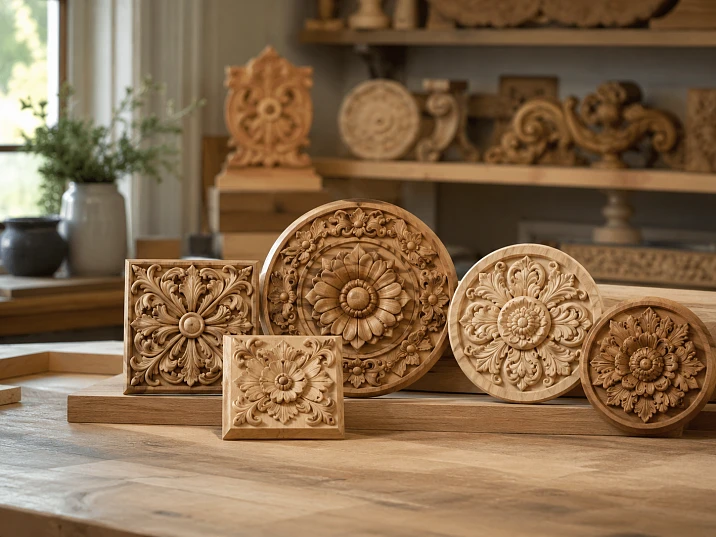
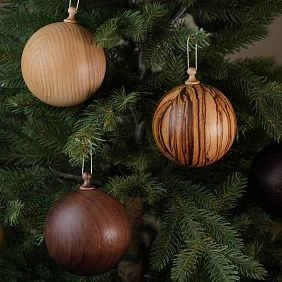
Buy decorative wooden sockets
There are details that don't take up much space — but they take up all the attention. A decorative wooden rosette is exactly such a detail. Small, sometimes quite miniature, it can transform a furniture facade from the category of "ordinary" to the category of "memorable." To place an accent where the plane is too empty. To pull a frame composition into a single whole. Or to become that single center around which the entire panel decor is built.
Buying wooden rosettes today is not a difficult task. It's harder to choose correctly: the right size, the right ornament, the right style, the right material. And to understand how the rosette fits into the overall decorative logic of furniture, doors, walls, or ceilings. That's what this article is about: a comprehensive breakdown for those who design interiors thoughtfully, not randomly.




What is a wooden decorative rosette
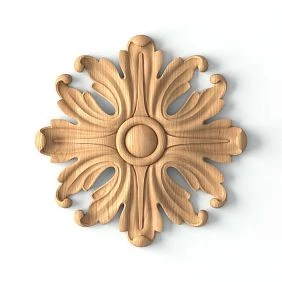
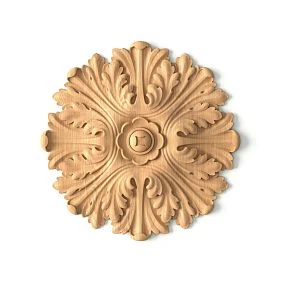
First of all — about terms. The word "rosette" in a decorative context has nothing to do with electrical outlets. A decorative wooden rosette is an applied ornamental element, usually symmetrical, often round or polygonal, with a relief pattern on the front side. It is glued or attached to the surface of furniture, doors, walls, or ceilings.
The name comes from the Latin "rosa" — rose. A classic rosette is a floral ornament in a circle: petals radiate symmetrically from the center, like a blooming flower. But the form has long gone beyond this image: modern carved rosettes can be square, diamond-shaped, hexagonal, with leaves, cartouches, volutes, and geometric motifs.
They are united by one thing: central symmetry and an accent role in the decorative composition. A rosette is not a background element. It is a focal point for the eye.
In the carved wooden decor STAVROS rosettes are highlighted in a separate category alongside overlays, capitals, brackets, moldings, and furniture legs. This allows them to be selected within a unified decorative system without breaking stylistic unity.
Our factory also produces:
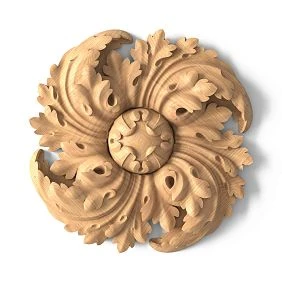
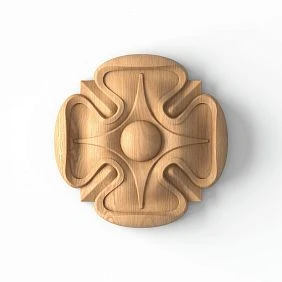
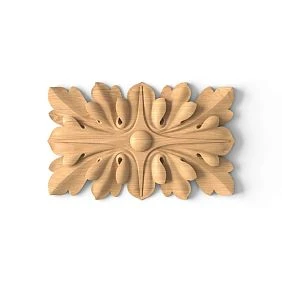
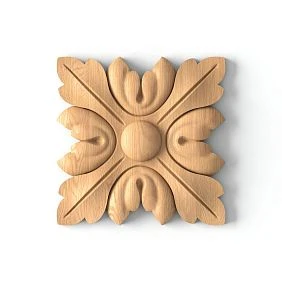
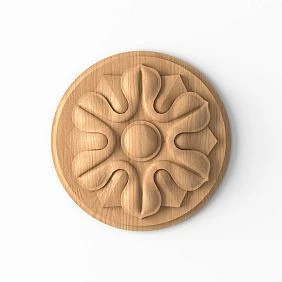
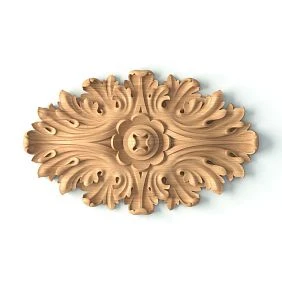
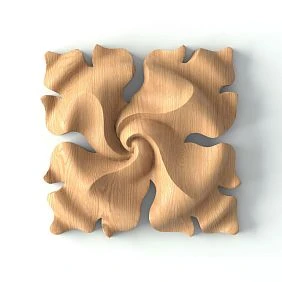
Decorative wooden rosettes: the main question before buying
Before choosing a specific model, answer yourself one single but decisive question: for what and where?
Buy decorative wooden rosettes — this is a request behind which lies a completely different task depending on whether we are talking about a furniture facade, a wall panel, a ceiling, or a door portal. Each scenario dictates its own requirements for size, relief depth, shape, and method of attachment.
A small rosette with a diameter of 60–80 mm is an ideal accent in the center of a furniture facade, at the intersection of frames. On a wall panel 2,400 mm high, it will get lost. A large rosette of 250–300 mm is a powerful center of a ceiling composition. On a door facade, it will be overwhelming, suppressing everything around.
Buying decorative wooden rosettes correctly means starting not with "I liked it" or "it's cheap," but with a precise understanding of scale, style, and location.
Get Consultation
Where are wooden decorative rosettes used?
For furniture fronts
A wooden rosette for furniture is one of the most common scenarios. Classic cabinets, sideboards, kitchen facades, chests of drawers, secretaries, bookcases — everywhere there is a flat facade with frame divisions, the rosette becomes the central decorative element.
How it works: the furniture facade is divided by moldings into rectangular or square fields. A rosette is placed at the intersection of the moldings or in the center of each field. It "closes" the intersection and simultaneously becomes an ornamental accent. The facade gains rhythm, depth, and character.
A wooden rosette for a furniture facade is not just a decoration. It is a constructive decorative node that ties the entire frame system into a single whole. Without a rosette, the intersection of moldings looks technical; with a rosette, it looks architectural.
STAVROS furniture decor includes more than 400 models of overlays and rosettes of various shapes, sizes, and ornaments — from laconic profile ones to lush Baroque ones with multi-tiered relief. The catalog includes symmetrical and asymmetrical options, central and corner elements, as well as constructor overlays with a docking system for moldings.
Size range of furniture rosettes: from 40×40 mm to 180×180 mm. For standard kitchen facades 400×600 mm — a rosette of 60–90 mm. For large cabinet sections 600×800 mm — 100–140 mm. For a monumental sideboard with high sections — 150–180 mm.
A wooden furniture rosette is mounted with PVA glue or wood glue. The furniture surface and the back side of the rosette are sanded, degreased, and glued under light pressure. With proper installation, the connection does not require screws and leaves no visible traces of fasteners.
For walls and wall panels
A decorative wooden wall rosette works in several formats: as part of boiserie (wall paneling with molding divisions), as a standalone accent on a plain wall, or as the central element of a decorative panel.
In the boiserie system, the rosette is placed at the intersections of wooden moldings and horizontal baseboard cornices. The size of the rosette in boiserie is proportional to the width of the molding: the rosette should overlap the intersection with a margin of 15–20 mm on each side.
A carved wooden wall rosette is a special story. A single large rosette with a diameter of 200–300 mm on a plain wall creates a focal point that, in terms of impact, is comparable to a painted medallion. This is a technique characteristic of Classicism and Empire interiors: a central medallion on the wall field, framed by a thin molding ring.
wooden ornament in the wall rosette format — it is not only a decorative but also a meaningful story. A rosette with a solar symbol, with a plant ornament, with geometric weaving — each motif carries a cultural trace that is read at the archetype level. That is why a wooden wooden ornament on a wall rosette works more powerfully than just a "decoration."
For wall panels in residential interiors, rosettes made of oak or beech are typical. Oak — for tinting and oil, with an open texture. Beech — for painting with enamel or patina, with a smooth, uniform surface.
Wooden ceiling rosette
A ceiling rosette is one of the most expressive application options. In a classic interior, the center of the ceiling is marked by a rosette from which a chandelier hangs. This is an architectural technique that gives the ceiling plane structure and focus.
A wooden ceiling rosette is mounted differently than a furniture one. Here, increased requirements are placed on the fastening: the rosette must hold securely on a horizontal surface under its own weight. An adhesive connection combined with additional hidden fasteners — screws into the floor slab or into a wooden backing — is mandatory for elements heavier than 500 g.
Ceiling rosette size: for a room area of 15–20 m² — diameter 300–400 mm. For an area of 25–35 m² — 500–600 mm. For high ceilings (from 3.2 m) and large halls — 700–1000 mm.
The profile of a ceiling rosette is typically multi-tiered: several concentric bands with ornamentation that unfold from the center to the edge. The richer the decorative program of the interior, the more complex the ornamental program of the rosette.
For doors and door portals
A carved rosette for a door is a decorative element on the panel or in the portal system. On the door panel, the rosette is most often placed in the center of the upper panel or at the intersection of applied moldings.
In context Door Decor a rosette can perform several functions at once: cover the nodal intersections of frame moldings, serve as a central decorative accent of the upper part of the door panel, or form a thematic motif — for example, a floral medallion in the center of each of the three door panels.
In a door portal, a rosette is often installed above the archivolt of an arch or in the keystone of the portal. This is a "lock" decorative element that fixes the top of the arch and completes the ornamental program of the entire portal.
For doors, small and medium-sized rosettes are used: 60–150 mm. Monumental ceiling rosettes of 500+ mm are not used on doors — the scale is not right.
Carved, round, and ornamental rosettes: what is the difference
When you need to buy wooden carved rosettes, it is important to understand the difference between the types.
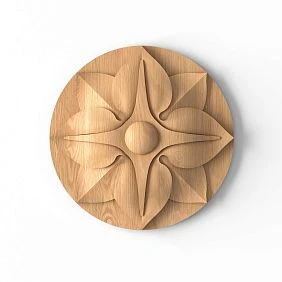
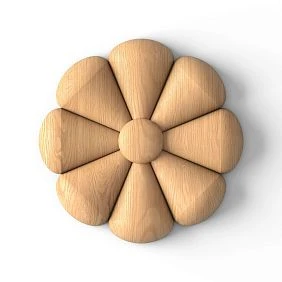
A round wooden rosette is a classic shape. A perfect circle with a concentric ornamental program: from a central flower or cone to petals, from petals to an ornamental ring, from the ring to an outer edge. Universal in application: furniture, wall, ceiling, door. Diameter: from 40 to 500+ mm.
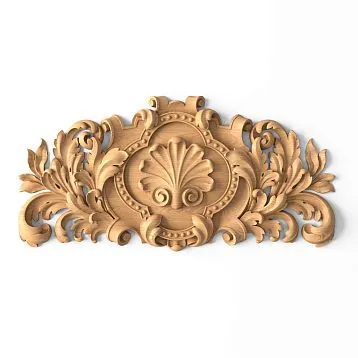
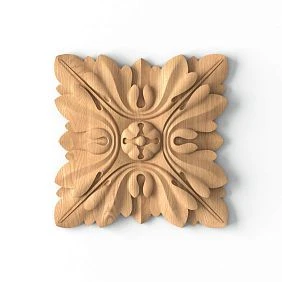
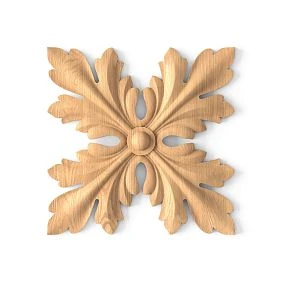
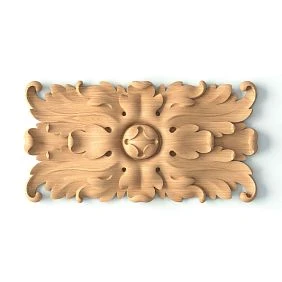
A carved wooden rosette with a floral ornament — leaves, petals, grape clusters, flowers, shoots. This is the most common type of ornamental relief. It is organic in classical, baroque, Provencal, and Russian styles.
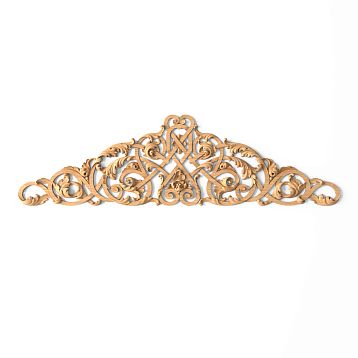
A rosette with a geometric ornament — weaves, stars, meanders, diamonds. More strict, more laconic. Suitable for neoclassicism, Scandinavian style, art deco.
A rosette with an ornament of wood in historical motifs — rocaille, cartouche, acanthus leaves, masks, angels. The highest level of decorativeness. For baroque and empire interiors.
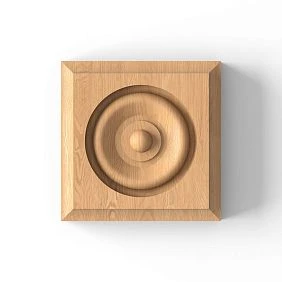
A square or polygonal rosette — a symmetrical element with straight or diagonal axes of symmetry. For frame furniture systems where the field shape is square or rectangular.
Carved wood decor STAVROS offers rosettes in the listed types — from oak and beech, with varying relief depths and in sizes from miniature to monumental. All products are ready for finishing: for enamel, varnish, stain, patina, tinting.
Wooden rosette and related decorative elements: what is the difference
The market for decorative wooden decor is rich in terms that are often confused with each other. Let's break it down clearly:
| Element | Role and Form |
|---|---|
| Wooden rosette | Central symmetrical accent, often round; installed at key points |
| applied decoration for furniture | Broad category of overlay elements of any shape: corner, central, frieze |
| wooden ornament | Pattern, motif, design — can be applied to a rosette, overlay, or any other element |
| furniture moldings | Linear profile element for frames, borders, horizontal bands |
| Carved Decor | Broad cluster of all carved wooden elements: overlays, rosettes, capitals, brackets, and more |
A rosette is a specific case of overlay decor. Overlay decor is a specific case of carved decor. Ornament is a design that can be applied to any of these elements. Molding is a separate category, a linear element.
Understanding this hierarchy helps to correctly place an order: not 'give me something beautiful,' but 'I need a central round rosette with a diameter of 100 mm with a floral ornament for a furniture facade to be painted, made of beech.'
Material of wooden rosettes: oak, beech, or something else
Wooden rosette for painting — a key distinction when choosing material. Let's dwell on it in detail.
Beech is ideal for painting
Beech is a dense, fine-grained wood with a uniform structure and no pronounced pores. This is what makes it the best material for wooden rosettes intended for painting with enamel. After sanding, the surface accepts primer and enamel evenly, without "sinking" or spots.
White, cream, and pastel rosettes on doors and furniture are almost always beech. Beech is suitable for patination: dark patina on a white or ochre base creates an aged, antique effect.
Price range for beech rosettes in the catalog of decorative wooden decor STAVROS — from 920 rubles for a small element to 15,000+ rubles for a large ornamental overlay.
Oak — for tinting and oil coating
Oak is a coarse-textured wood with an expressive grain pattern. Its open pores and dark medullary rays create a unique texture that cannot be replicated in varnish without special treatment.
An oak rosette under oil or tinting is a natural, living, "breathing" decor. In combination with oak moldings, oak furniture fronts, and oak floors, an oak rosette creates a cohesive, warm interior.
Oak is not the best choice for painting with enamel: the large pores require complex priming and filling. If you plan to use enamel, choose beech.
Pine — for exterior elements and budget solutions
Pine is soft, light, and easy to work with. For exterior decor (porches, verandas, gates) it is acceptable, especially with antiseptic impregnation. For high-end interior decorative rosettes, it is less preferable: the texture is uneven, and resin pockets may show through the enamel.
How to choose a decorative wooden rosette: a systematic approach
Buying wooden rosettes correctly means solving not one, but several interrelated tasks sequentially.
Step 1. Determine the installation location
Furniture, wall, ceiling, or door — this is the first distinction. The size, relief depth, mounting method, and material requirements depend on it.
Step 2. Measure the surface
For a furniture facade, measure the field between moldings. The rosette should occupy 20–35% of this field. For a wall panel, determine the "optical center" of the field and the proportion: the rosette in the center should be perceived as an accent, not a patch.
Step 3. Choose the shape
A round rosette is universal, suitable for most styles and installation locations. A square one is for geometrically clear frame systems. An ornamental overlay of complex shape is for Baroque and Classicist programs.
Step 4. Determine the depth of the relief
For furniture — 8–20 mm. A relief that is too deep on a furniture facade looks heavy. For walls and ceilings — 15–40 mm: here the depth of the relief creates light shadows that enhance the decorative effect at a distance.
Step 5. Coordinate the ornament with adjacent elements
The rosette must match the ornamental logic of the wooden applied decor, moldings и door decor in the same space. Acanthus leaves on the rosette and a geometric molding nearby — an ornamental conflict. A Baroque-style rosette and minimalist-style architraves — the same thing.
Step 6. Decide on the coating
For enamel — beech. For tinting — oak or ash. For patina — beech with a moderate relief of 15–25 mm: this is where patina "works" expressively, collecting in the recesses and fading from the protrusions.
Step 7. Calculate the quantity
Rosettes are installed in a system. If a cabinet facade is divided into 8 fields — 8 identical rosettes are needed. If there are 12 intersections of moldings in boiserie — 12 pieces are needed. Order everything at once: different batches may have slight differences in wood shade or texture, which will be noticeable when viewed up close.
Step 8. Check the mounting method
Most of decorative wooden patterns is attached with glue. For ceiling rosettes weighing more than 500 g — additional screws. Some models from the STAVROS catalog have a recess on the back that replicates the profile of the molding, allowing the rosette to be mounted directly over it — a convenient design technique for frame furniture systems.
Rosette in a frame furniture composition: how it works
A frame system on a furniture facade is a system of rectangular fields bounded by moldings. It is most often found on cabinet doors, buffet fronts, and door panels of classic doors.
A decorative wooden rosette is integrated into such a system in two ways:
Central placement. The rosette is in the geometric center of the field. The field remains flat, the rosette is the only relief accent. A clean, aristocratic technique.
Intersection of moldings. The rosette is at the point where horizontal and vertical moldings intersect. It "covers" the intersection, hides technical joints, and simultaneously creates an ornamental point in the grid of frames.
In both cases, the rosette must clearly fit the scale of the field. Practical rule: the diameter of the rosette is no more than 1/3 of the smaller side of the field. For a field of 150×200 mm — a rosette of maximum 50 mm.
For more complex decorative programs — a rosette in the center plus corner overlays wooden decor in the four corners of the field. This creates a "medallion" — a characteristic technique of classical furniture from the 18th–19th centuries.
Wooden rosette for painting: subtleties of preparation
A wooden rosette for painting requires proper preparation — otherwise the enamel will be applied with defects.
Priming. The first layer is wood primer. It seals the pores and creates a base for the enamel. Apply with a brush, carefully painting all recesses of the relief. After drying — light sanding with P320 sandpaper.
Filling pores (for oak). The oak surface is filled with a special fine-grained wood filler. For beech, this step is optional.
Applying enamel. With a brush, roller, or spray gun. The first layer is thin, covering. After drying — sanding with P400. The second layer is the finish coat. A third if necessary.
Patina. Applied by hand with a special oil- or wax-based pigment. Dark patina collects in the recesses of the relief, while the light base remains on the protrusions. After application — polishing with a soft cloth.
What affects the price of wooden rosettes
Price range — from 900 to 15,000+ rubles per unit. Understanding the pricing.
Wood species. Beech is the main material for overlays. Oak is 30–50% more expensive. The difference is fixed and determined by the cost of the material.
Size. Material consumption grows quadratically with size: a 200 mm diameter rosette uses 4 times more material than a 100 mm rosette. CNC router machine time is proportional.
Shape. A simple round rosette with concentric relief is basic complexity. An asymmetrical overlay with multiple ornamental zones and a non-standard contour is significantly more complex.
Carving depth. Relief of 5–10 mm is basic. Relief of 25–40 mm is multi-tiered, requiring multi-pass milling or manual finishing. Price increases proportionally to complexity.
Ornament complexity. A geometric pattern of repeating elements is simpler for CNC processing. A unique custom ornament with non-standard transitions is more expensive. Hand carving on a pre-milled blank incurs a significant surcharge.
Number of items. An order of 10–20 pieces is a serial batch. A single order is 20–40% more expensive. If you need rosettes for 8 facades, order them all at once.
Coating or preparation for painting. 'White wood' — no coating. 'Standard' sanding is included in the base price. 'Prestige' — fine sanding with pore sealing — surcharge. Tinting, patina — separate item.
Purpose. Furniture rosette — compact, with moderate relief. Ceiling rosette — monumental, with multi-tiered structure. Door rosette — with a specific profile for the architrave. Each type has its own pricing logic.
Custom size. Non-standard diameter or non-standard contour — manufacturing according to a drawing or sample. This is a project item with a corresponding price.
Delivery. Wooden rosettes are fragile decorative goods. Packed in individual cardboard cells plus bubble wrap. Delivery in Moscow, St. Petersburg, and regions via transport companies. Buy wooden rosettes in Moscow with pickup — possible from STAVROS warehouses.
Mistakes when buying decorative wooden rosettes
Each of these mistakes occurs in real projects. And each one costs either money, time, or nerves.
They buy without measuring. "I'll buy it, then find a place" — and a 120 mm rosette ends up on a facade with a field of 110×150 mm. Or vice versa: a small 60 mm rosette gets lost on a large field. Measurement is the first step, not the last.
They don't consider the scale of the furniture or wall. A beautiful monumental rosette that "breaks" the cabinet facade because it's too large — a classic mistake. The scale of the detail should match the scale of the surface.
They mix different ornament styles. A Baroque rosette with rocaille on a neoclassical door. A geometric Art Deco rosette on a Provence-style sideboard. An ornamental conflict is always noticeable, even if a person can't articulate it — they just feel that "something is off."
They don't check the thickness of the element. A rosette with a 35 mm relief on a cabinet door that closes flush against the body — and the door won't close. Always check the depth of the relief and the gap between the door and the body.
They don't coordinate with moldings and overlays. They bought a rosette from one supplier, moldings from another. The ornaments don't match, nor do the proportions. A systematic approach: all elements wooden furniture decor — from one catalog.
They don't think through the painting. They bought an oak rosette — and want white enamel. Or they bought a beech one — and want a stain to look like dark oak. The choice of wood species and the choice of finish are a single decision made before ordering.
They confuse decorative rosettes with electrical ones. This is a real situation: a search query "buy wooden rosettes" returns both decorative overlays and frames for electrical outlets. Make sure you are ordering exactly decorative wooden rosettes — ornamental overlays, not electrical fittings.
They order one at a time, gradually. "I'll buy one first, see how it looks" — and the second batch from the same series comes with a different shade or slightly different wood texture. Order the entire needed set at once.
Where to buy decorative wooden rosettes
Buy wooden rosettes in Moscow and across Russia — at the STAVROS online store. The company has specialized in carved wooden decor since 2002. It is based on the experience of artist-restorers who worked on state-significant sites: the Hermitage, Konstantinovsky Palace, Alexander Palace.
In the carved decor elements — over 400 models of overlays and rosettes made of oak and beech. Each product is ready for finishing: enamel, varnish, stain, patina, tinting. Custom coating according to a sample or technical specification is possible.
Decorative wooden rosettes can be purchased retail from one piece — and wholesale for complex furniture and interior projects. Buy wooden rosettes in St. Petersburg — from a warehouse in St. Petersburg or delivery by transport company. Buy wooden rosettes in Moscow — pickup from a Moscow warehouse or courier delivery.
STAVROS's systematic approach is the main advantage when working on a complex interior: rosettes, applique, Moldings, Door Decor, ornaments — everything in a unified decorative program, all compatible, all made of natural wood.
FAQ: answers to popular questions about wooden decorative rosettes
Which decorative wooden rosette should I buy?
The choice depends on the installation location, surface size, interior style, relief depth, and planned coating. Start with precise field measurements and style definition — then select a model from the catalog of carved decor STAVROS.
Where are wooden decorative rosettes used?
On furniture facades (cabinets, sideboards, kitchens, chests of drawers), on wall panels and in boiserie systems, on ceilings as a central medallion under a chandelier, on door panels and in door portals, as well as in decorative panels and restoration projects.
How does a carved rosette differ from an overlay?
A rosette is a symmetrical central decorative element, often round. Applique — a broader concept: any applied decorative element, including corner, linear, and shaped details. A rosette is a specific case of an overlay.
Can wooden rosettes be painted?
Yes. Beech rosettes perfectly accept enamel after priming. Oak rosettes are better tinted or oiled: their large pores require additional treatment for painting. Patination is possible on both types.
How to choose the size of a wooden rosette?
The diameter of the rosette should be no more than 1/3 of the smaller side of the field in which it is installed. For intersections of moldings, the rosette overlaps the intersection by 15–20 mm on each side. For ceiling rosettes: diameter (mm) ≈ room area (m²) × 15.
What affects the price of a decorative wooden rosette?
Size, material (beech or oak), depth and complexity of carving, shape, coating, number of items in the order, and delivery. The range is from 920 rubles for a compact element to 15,000+ rubles for a large ornamental overlay.
Do I need to order rosettes as a set?
Yes. Order all rosettes for one interior at the same time: this guarantees batch consistency in color, texture, and size. Individual additional orders may differ due to different wood batches.