

























Article Contents:
- Solid Wood or Polyurethane: Start With the Project, Not the Material
- 1. Weight
- 2. Dimensional behavior
- 3. Moisture
- 4. Surface character
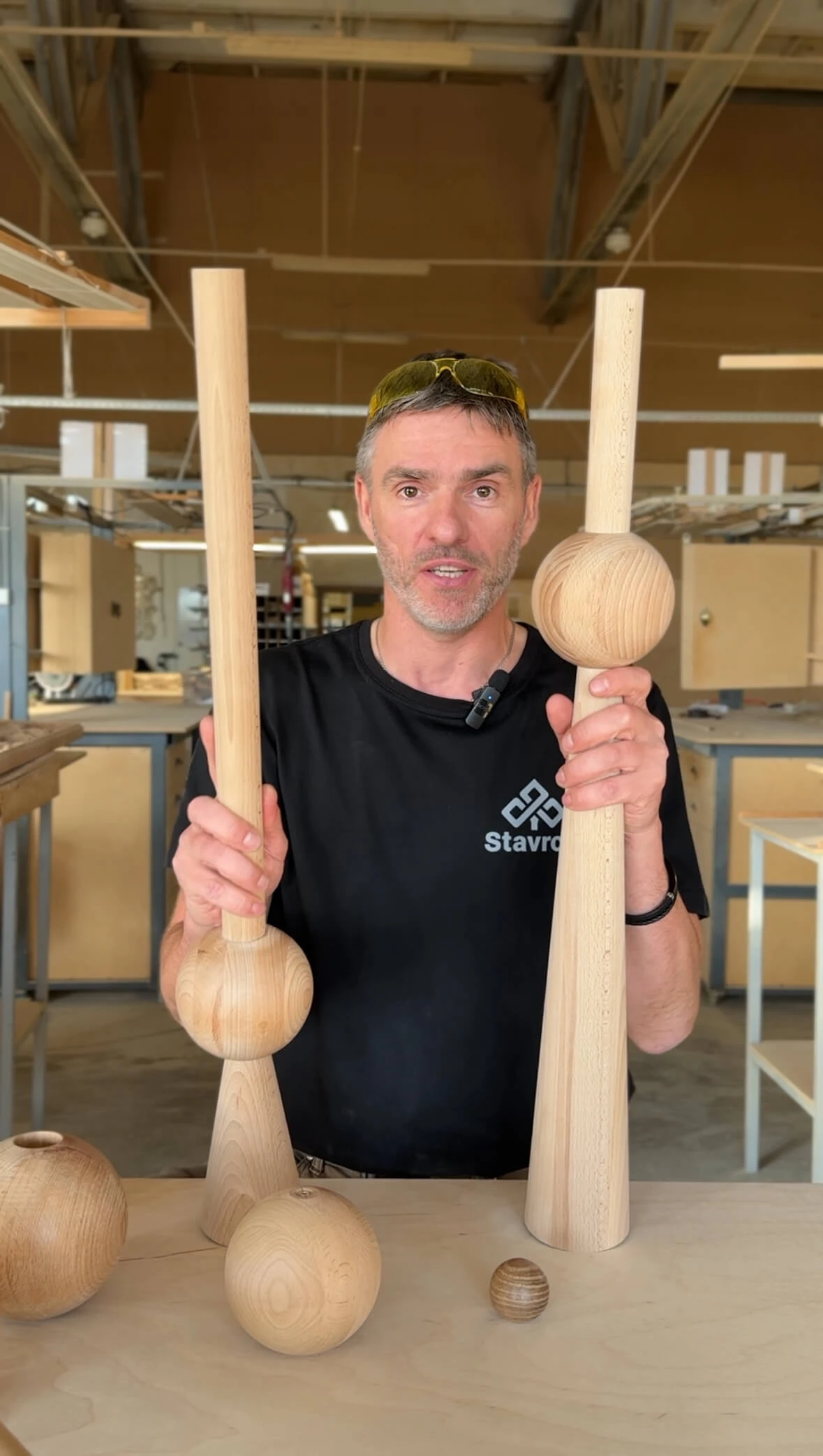
- Oak molding
- Beech molding
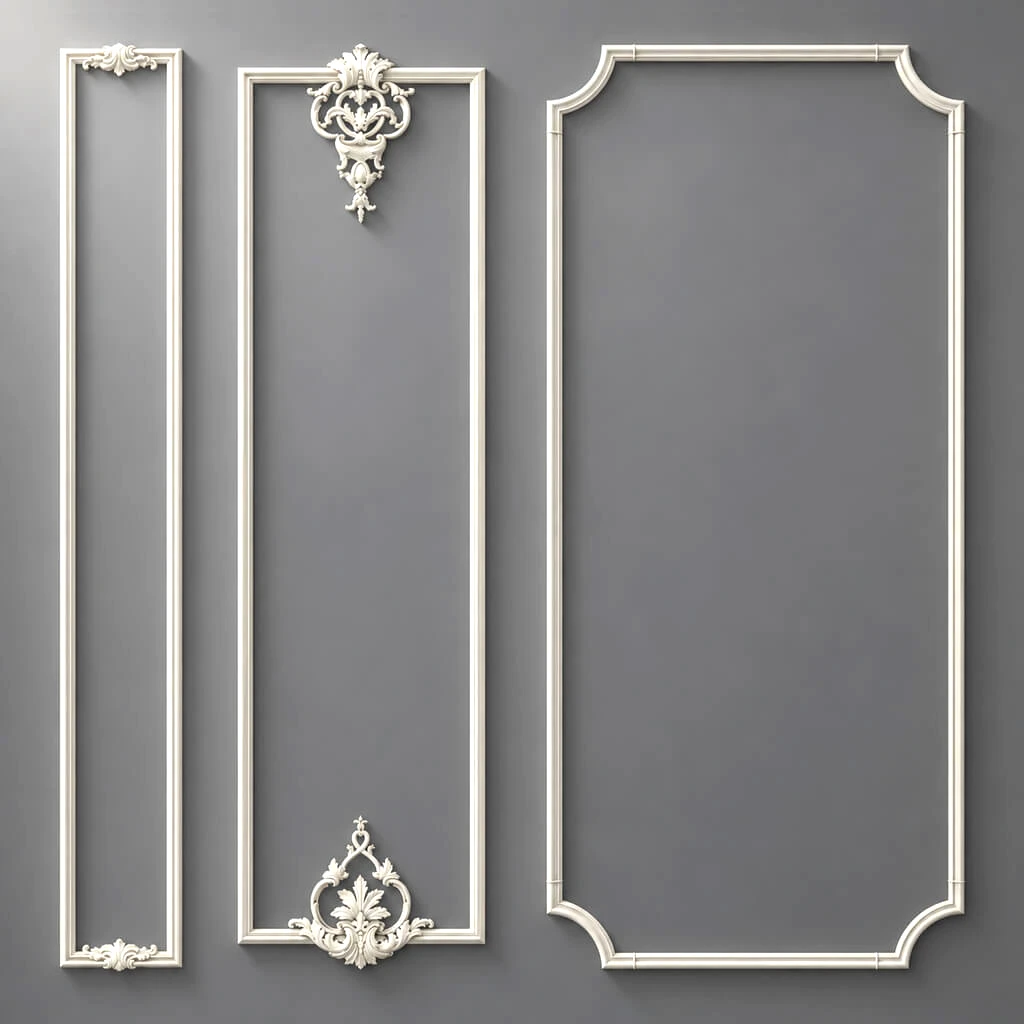
- Wall frames and decorative panel layouts
- Ornamental architectural details
- Ceiling decoration
- Corbels and brackets
- Traditional interiors
- Neoclassical interiors
- Transitional interiors
- Contemporary interiors
- Width
- Projection
- Relief depth
- Visual rhythm
- Where will it be installed?
- Will it be painted or stained?
- How much contact will it receive?
- How large is the room?
- Will several elements need to coordinate?
- Does weight matter?
- Is moisture a concern?
Choosing between solid wood and polyurethane molding is not simply a question of appearance. The material affects installation, maintenance, profile size, moisture tolerance, repairability, finish, and how convincingly the molding integrates into the architecture of a room.
Natural wood and polyurethane solve many of the same design problems, but they do so in very different ways.
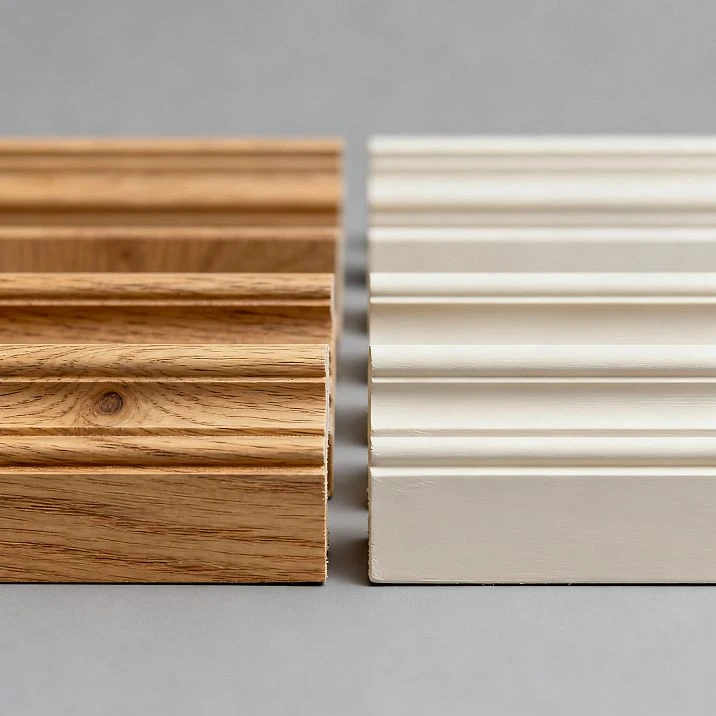
Solid wood molding brings real grain, natural variation, tactile depth, and the possibility of refinishing or restoration. Polyurethane molding offers low weight, dimensional consistency, detailed profiles, straightforward installation, and practical performance in many interior applications.
For homeowners, designers, builders, and millwork professionals, the useful question is therefore not:
Which material is universally better?
It is:
Which material performs better in this specific location, design, and installation scenario?
This guide examines polyurethane molding vs. wood from that perspective.
If you are already comparing decorative profiles for a project, you can also explore STAVROS high-quality polyurethane profiles and the collection of solid wood molding and trim.
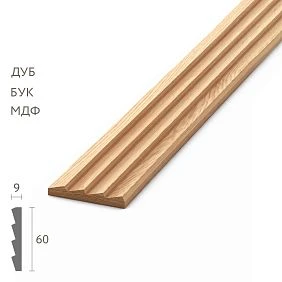
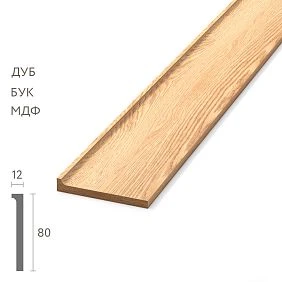
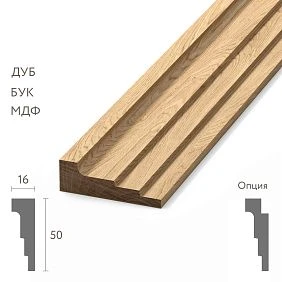
Solid Wood or Polyurethane: Start With the Project, Not the Material
The best material becomes much easier to identify when the project requirements are defined first.
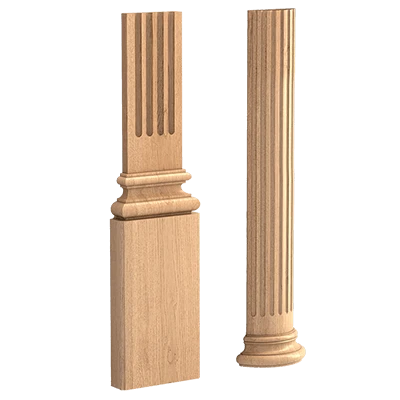
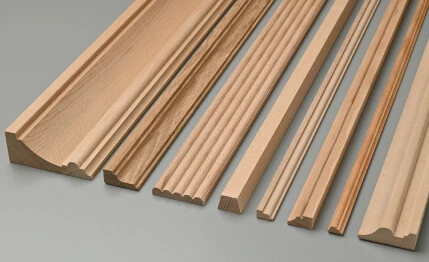
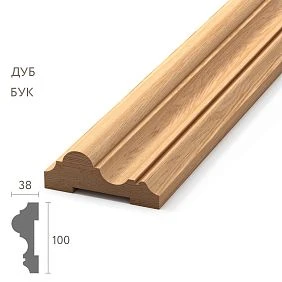
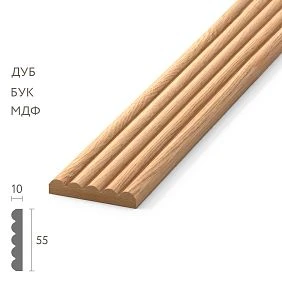
Solid wood molding is especially compelling when the material itself is part of the design language. In a traditional interior, a stained oak casing or carved beech molding is not simply a shape placed on a wall. The wood grain, edge definition, finish, and natural variation all contribute to the architectural character.
Polyurethane trim becomes particularly attractive when the profile needs to be lightweight, repeatable, easy to paint, or installed in a location where natural wood would require more preparation and maintenance.
Typical reasons to consider wood include:
- visible natural grain;
- stained or clear finishes;
- authentic traditional millwork;
- coordination with wood doors, cabinetry, flooring, or furniture;
- repairability;
- long-term refinishing potential.
Typical reasons to consider polyurethane include:
- lightweight installation;
- decorative profiles with complex relief;
- painted interiors;
- moisture-prone interior locations;
- repeated profiles across several rooms;
- ceiling applications;
- wall frames and decorative panel layouts;
- projects where predictable geometry is important.
In many well-designed interiors, the answer is not one material or the other. A project may combine solid wood at eye and hand level with polyurethane moldings on walls or ceilings.
That hybrid approach often makes more sense than trying to force one material into every architectural detail.
What Does “Molding” Mean in a U.S. Interior?
In American building and interior-design terminology, molding is a broad category of profiled trim used to finish, divide, frame, or decorate architectural surfaces.
Depending on location and purpose, molding may include:
- wall molding;
- panel molding;
- chair rail;
- door trim;
- window trim;
- crown molding;
- casing;
- decorative trim;
- base trim;
- cornice profiles;
- picture-frame molding;
- ornamental profiles.
This terminology is more natural for the U.S. market than a literal translation of the broader Russian concept of pogonazh.
A molding profile may be extremely simple—a narrow linear strip with one radius—or highly ornamental, with repeated classical motifs and deep relief.
Function matters just as much as appearance.
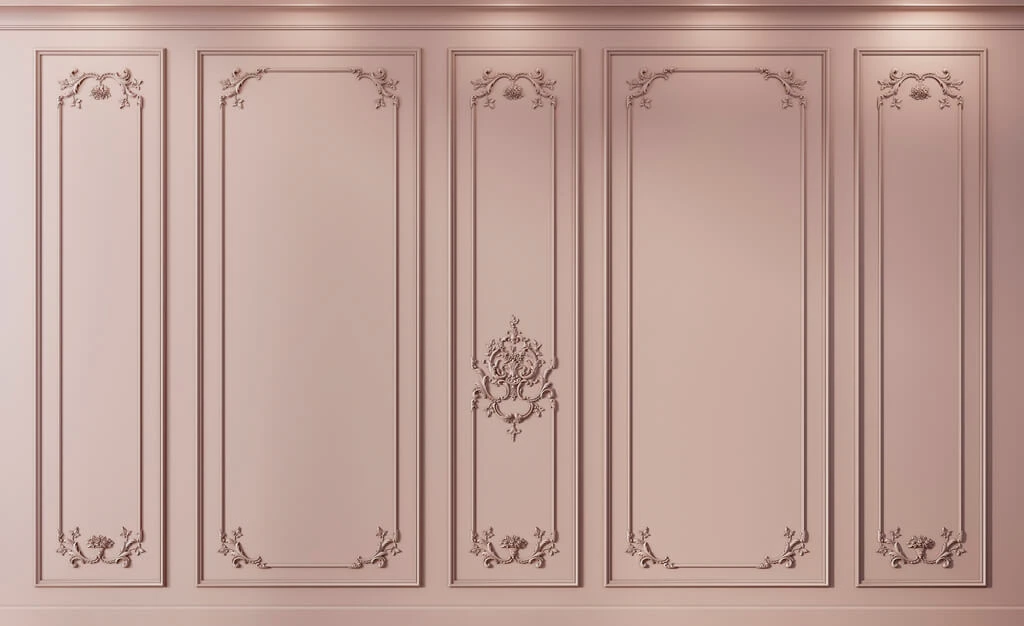
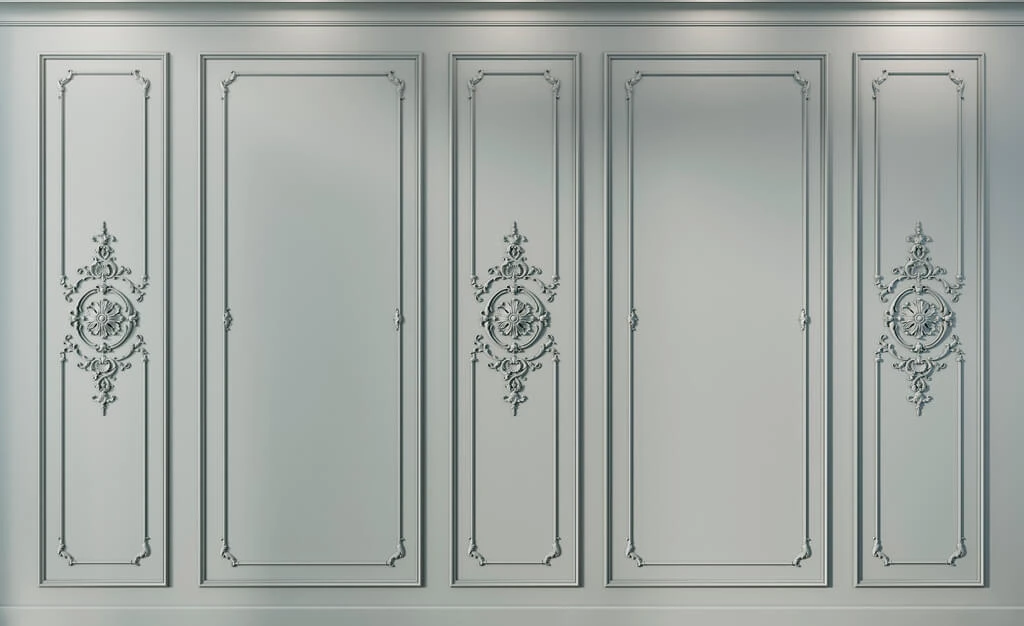
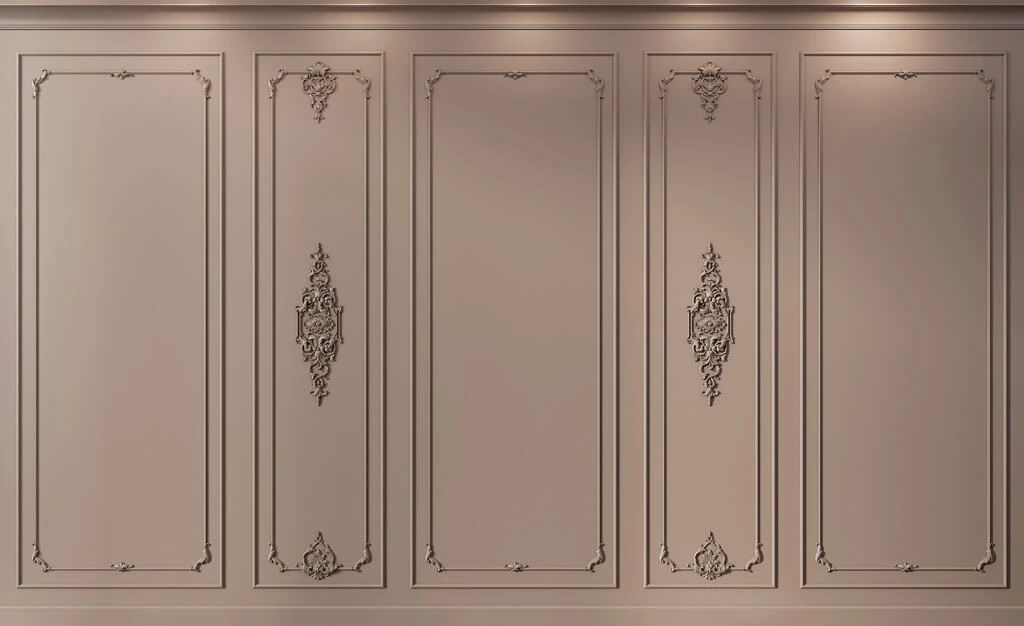
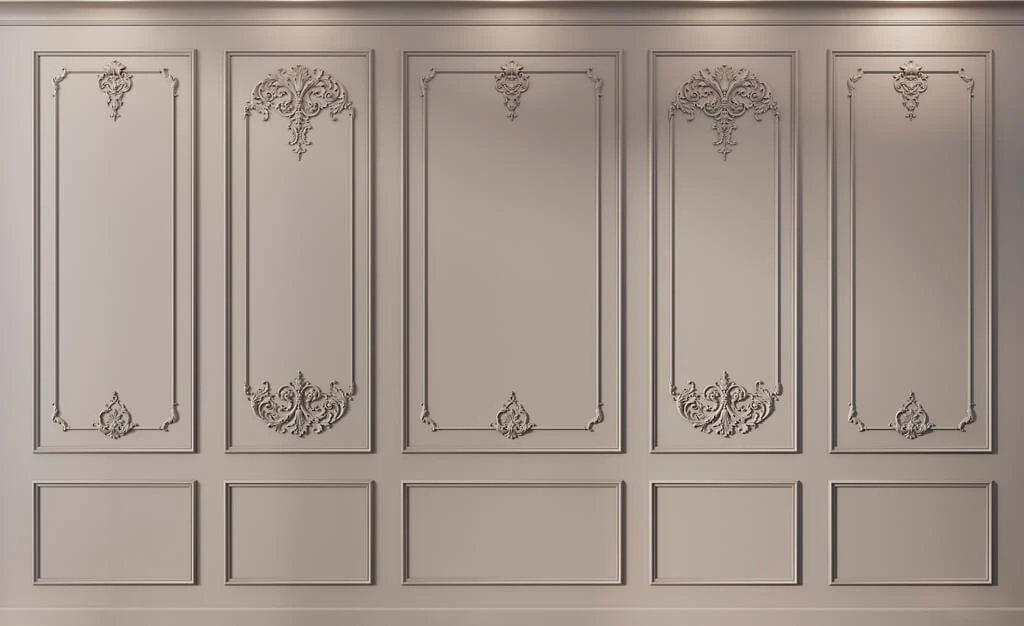
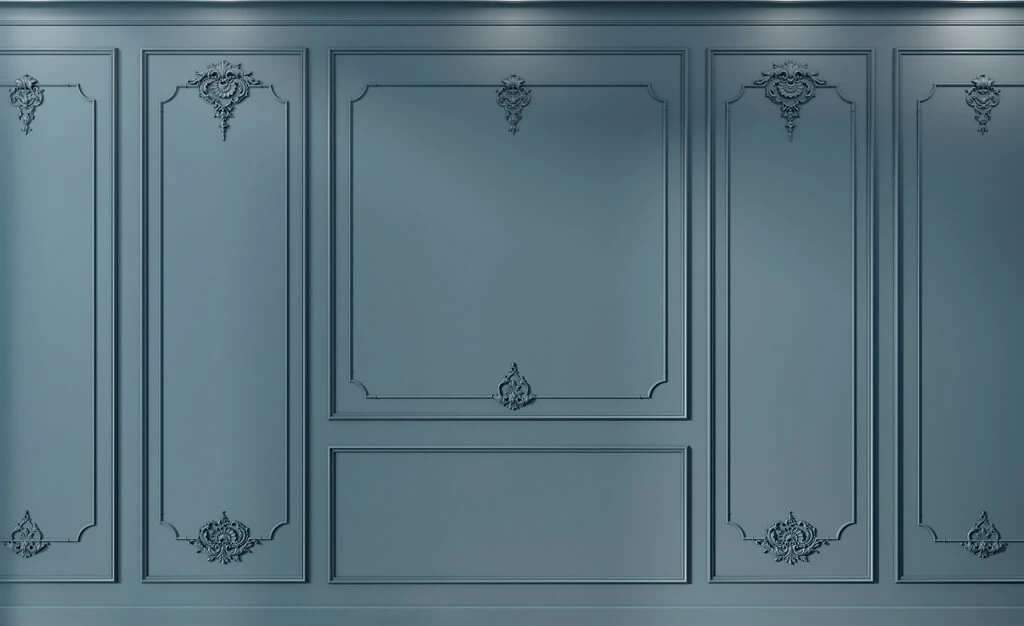
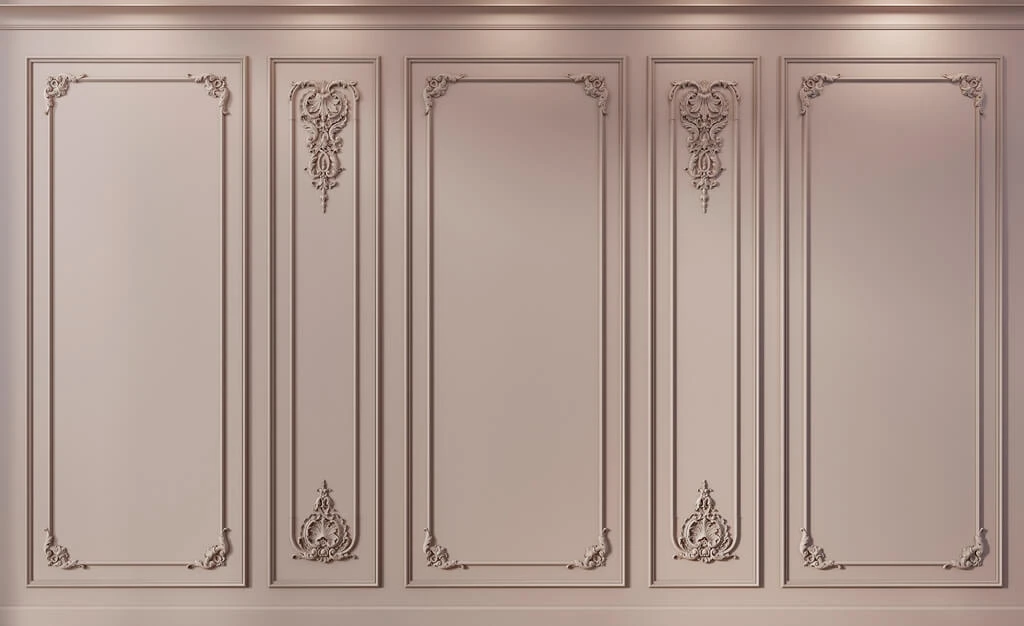
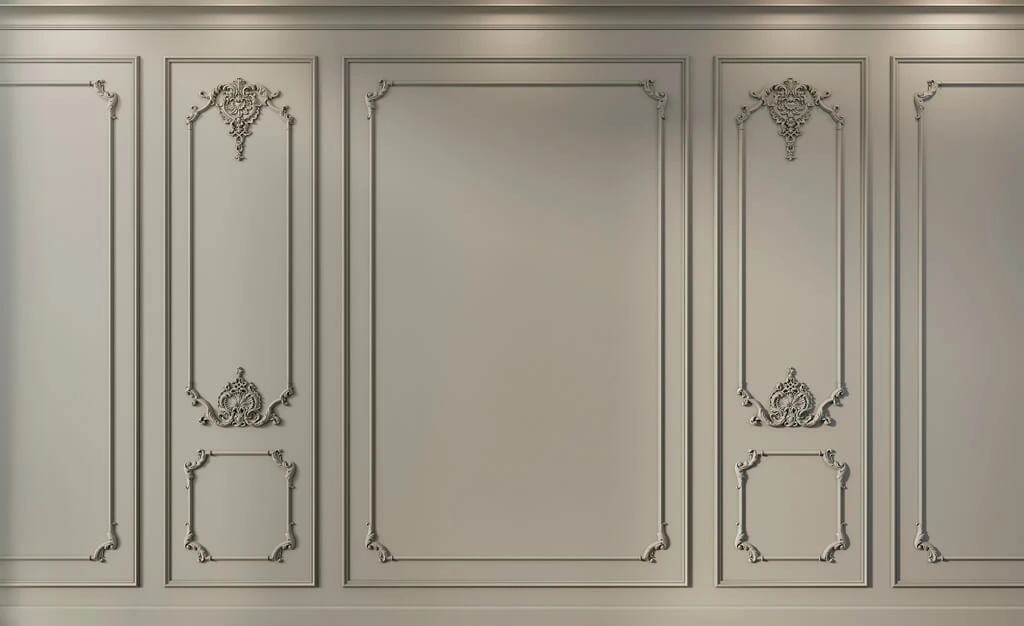
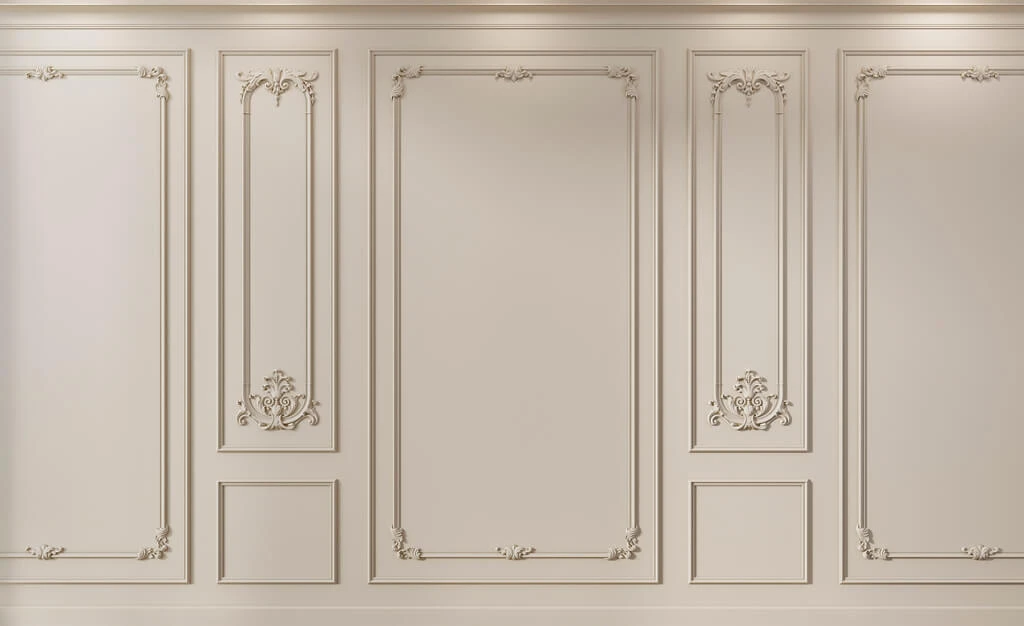
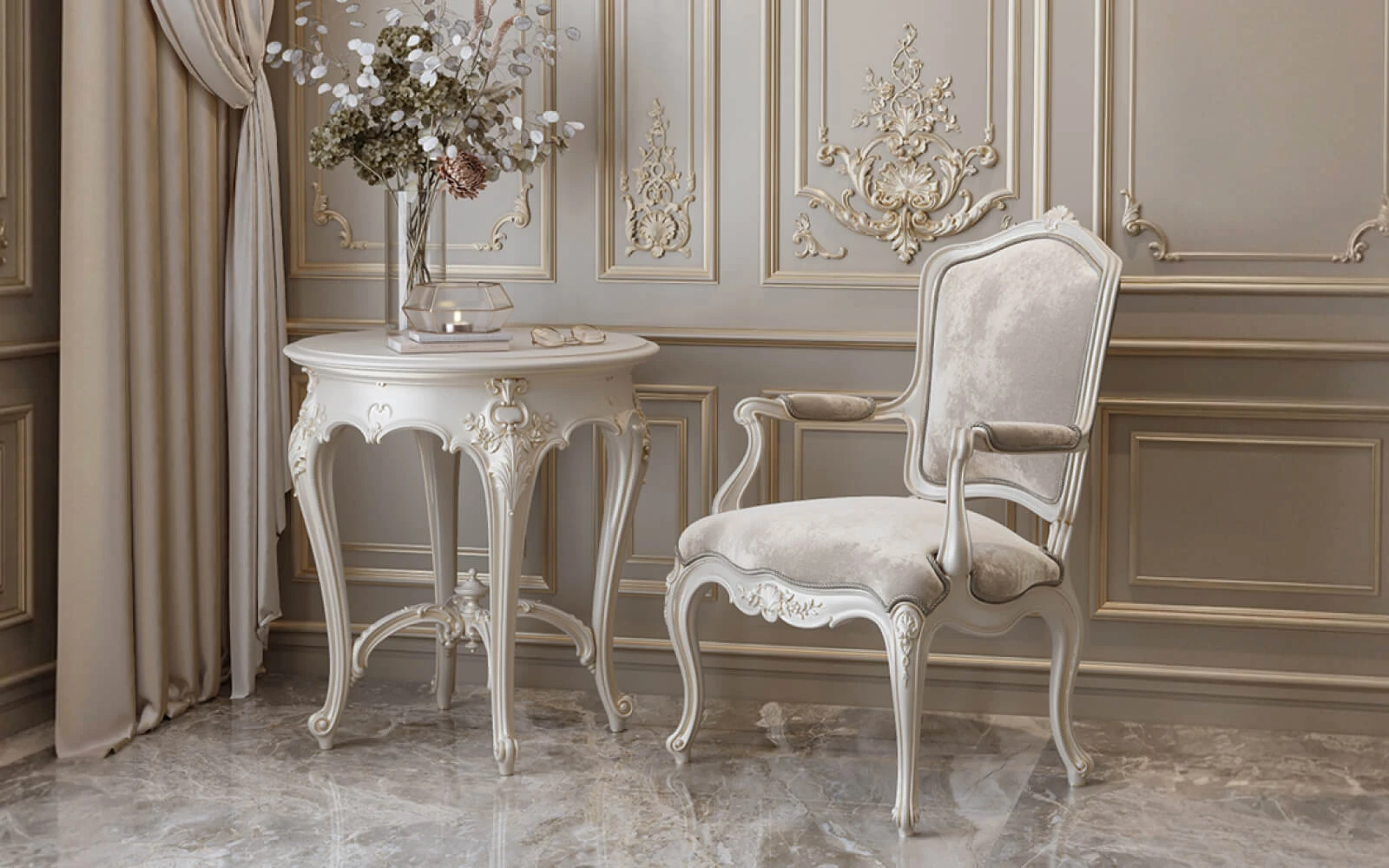
Wall molding can divide large surfaces and create panel compositions. Door and window trim visually complete openings. Ceiling trim establishes a transition between wall and ceiling. Decorative profiles can create classical symmetry, neoclassical wall frames, or more contemporary geometric compositions.
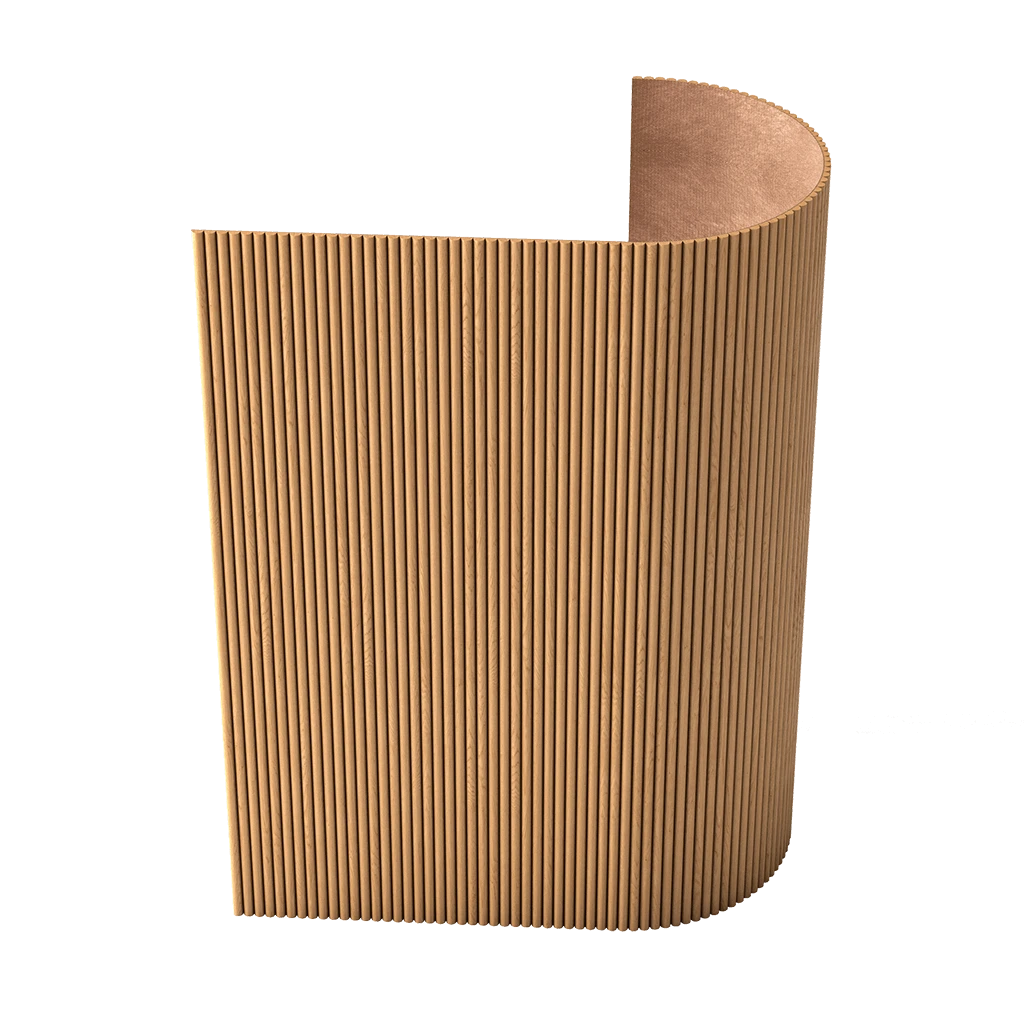
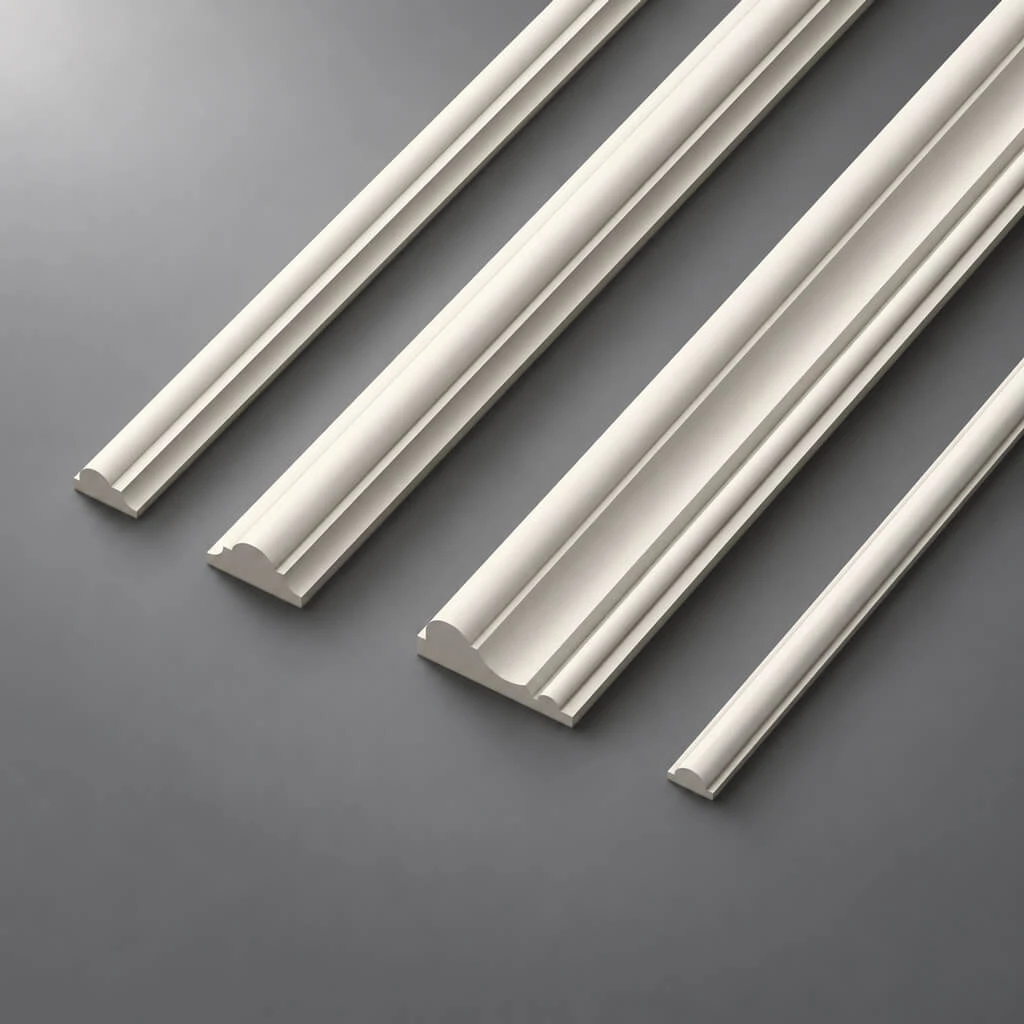
STAVROS polyurethane moldings are particularly suited to this type of architectural detailing because the collection includes linear profiles that can be used in wall frames, decorative layouts, furniture compositions, and other interior applications.
Polyurethane Molding vs. Wood: The Main Differences
The two materials can sometimes look similar after painting, but their physical behavior is fundamentally different.
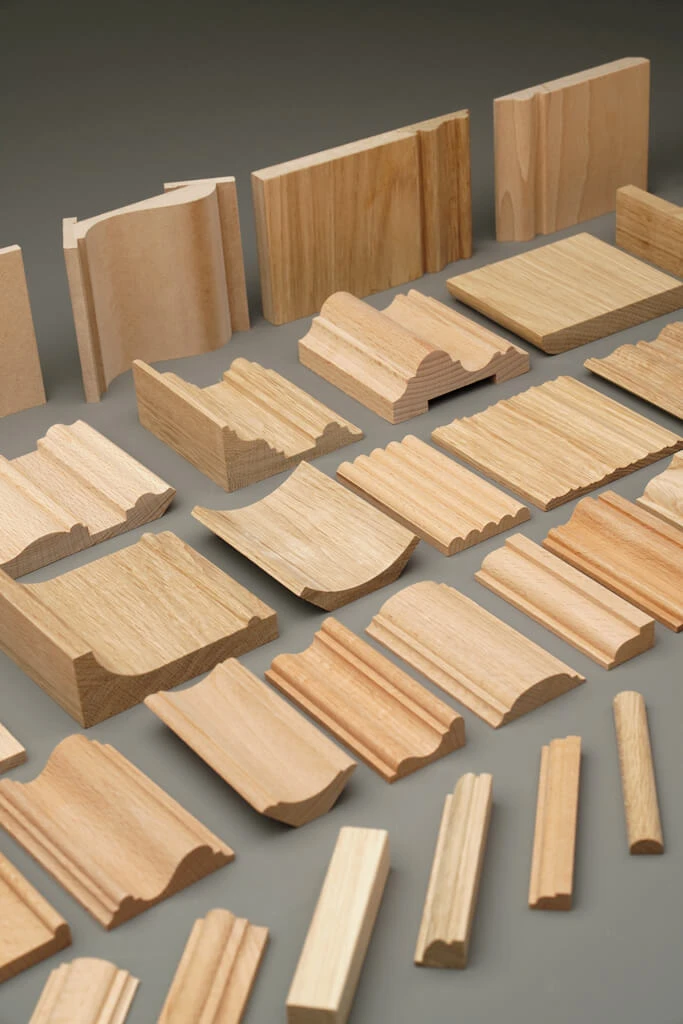
1. Weight
Solid wood is substantially heavier than polyurethane.
That matters most on ceilings, tall walls, and projects involving long decorative profiles.
A lighter molding is easier to:
- carry;
- position;
- align;
- hold while adhesive sets;
- install overhead;
- use in larger compositions.
For this reason, polyurethane trim is often attractive for ceiling and upper-wall applications where minimizing installation weight is useful.
Solid wood is not inherently difficult to install, but wider or heavier profiles generally require more deliberate fastening and handling.
Наша фабрика также производит:

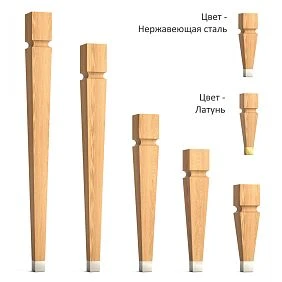
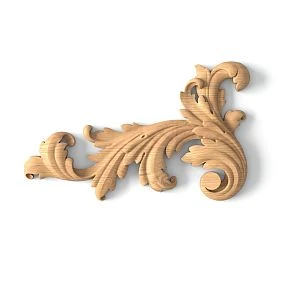
Смотреть весь Каталог продукции
2. Dimensional behavior
Wood is hygroscopic. It exchanges moisture with the surrounding air.
As interior humidity changes, wood can expand and contract. Proper drying, storage, acclimation, joinery, and finishing help manage that movement.
This is normal material behavior rather than a defect.
Polyurethane does not behave like natural timber. For interior decorative use, it generally offers more predictable geometry in changing humidity conditions.
This characteristic can be useful in:
- kitchens;
- bathrooms;
- climate-controlled commercial interiors;
- seasonal homes;
- wall-panel compositions where repeated dimensions must remain visually consistent.
It does not mean every polyurethane product is suitable for every environment. Product specifications should always be checked for the intended application.
Получить консультацию
3. Moisture
Moisture is one of the clearest distinctions between the two materials.
Unprotected wood can absorb moisture. For that reason, wood molding used near water or in humid areas requires a suitable finishing system and careful treatment of joints and exposed end grain.
Polyurethane is generally less sensitive to interior humidity and does not swell in the same way natural wood can.
For projects involving bathrooms, kitchens, laundry rooms, or other humid interior spaces, this can make polyurethane molding a practical alternative to natural wood.
4. Surface character
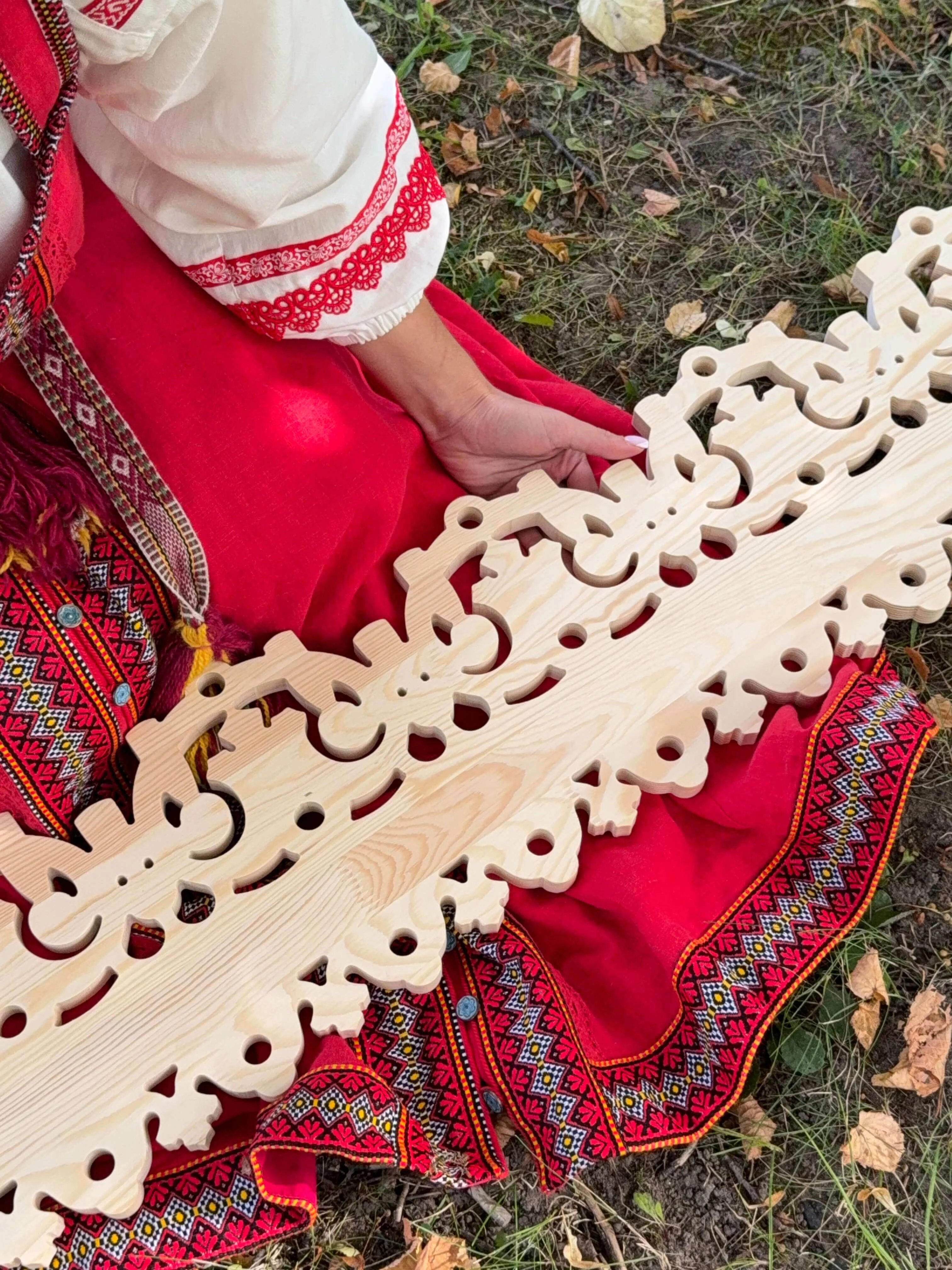
Wood has something polyurethane cannot fully reproduce: actual wood structure.
Oak, beech, and other hardwoods have real grain, pore structure, figure, and natural variation.
If the molding will be stained rather than painted, that difference becomes important.
Polyurethane is especially strong when the final design calls for:
- painted white trim;
- monochromatic walls;
- decorative wall panels;
- classical ornament;
- detailed relief;
- coordinated ceiling decoration.
Once painted, the visual emphasis shifts away from material grain and toward the profile itself.
That is one reason polyurethane moldings are so effective in many neoclassical and transitional interiors.
Solid Wood Molding: Where Natural Material Has a Clear Advantage
Natural wood remains difficult to replace when authenticity matters.
A real wood profile can be milled, carved, sanded, stained, painted, refinished, repaired, or modified.
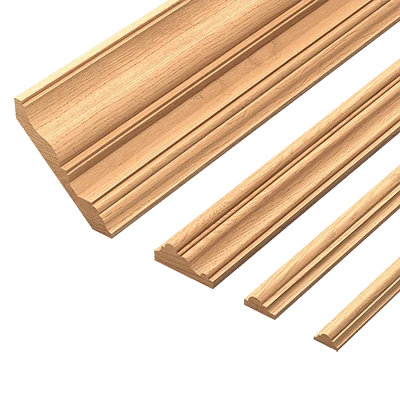
Oak molding
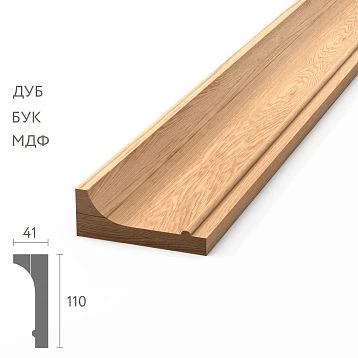
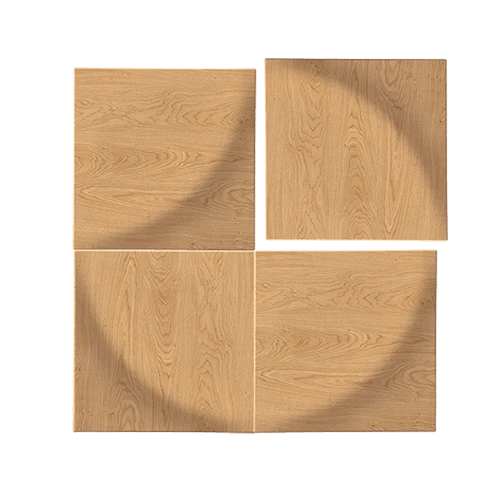
Oak is widely valued for its strength and distinctive grain.
It works particularly well in:
- traditional interiors;
- libraries;
- studies;
- entry halls;
- premium residential spaces;
- furniture and cabinetry;
- architectural millwork intended for stained finishes.
When oak remains visible under stain, oil, or clear finish, the material itself becomes part of the design.
Decorative depth comes not only from the shape of the molding but from the wood grain interacting with light.
Beech molding
Beech has a finer and more uniform visual structure.
That makes it suitable for projects where a smoother, quieter wood appearance is preferred.
It also accepts machining and finishing well, making it useful for detailed furniture parts and decorative profiles.
Where oak may be selected for expressive grain, beech may be chosen for consistency.
Both materials can be explored within the STAVROS collection of solid wood molding and architectural trim.
Where Polyurethane Molding Performs Especially Well
Polyurethane becomes particularly persuasive when the design depends more on architectural profile than on natural grain.
This is common in painted interiors.
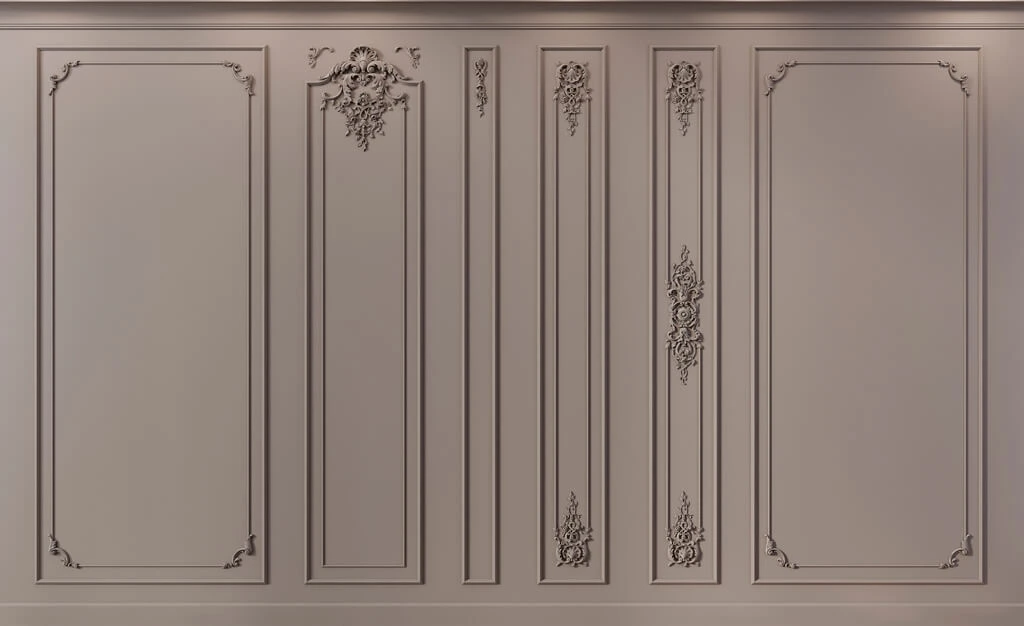
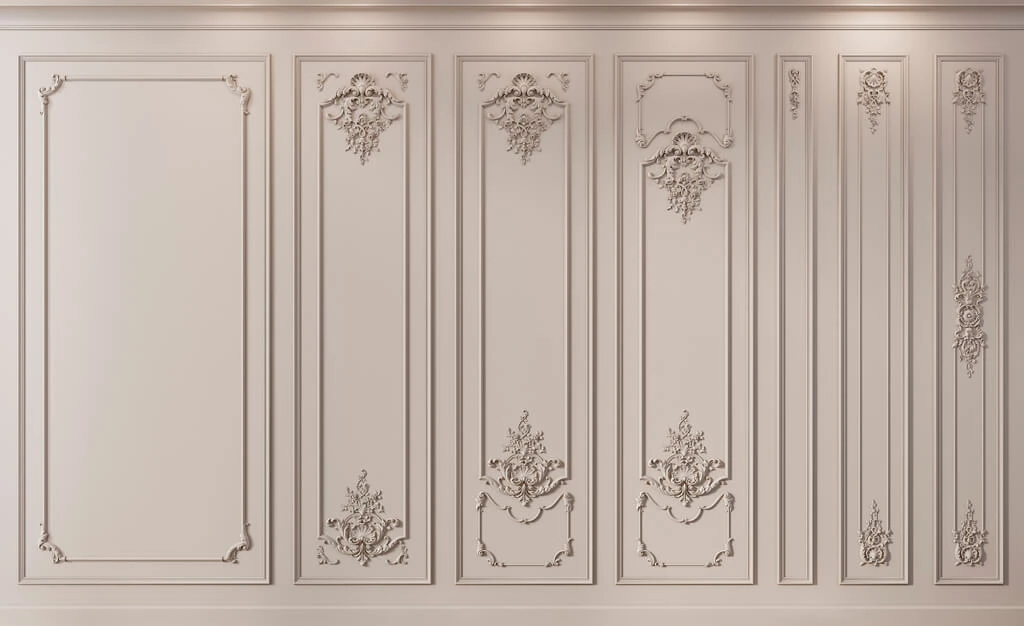
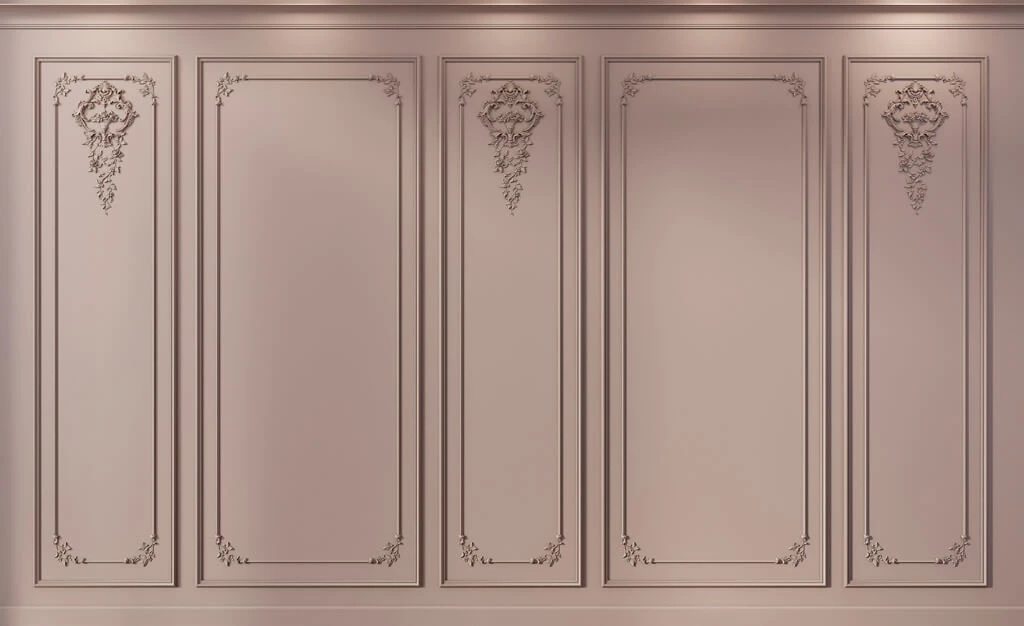
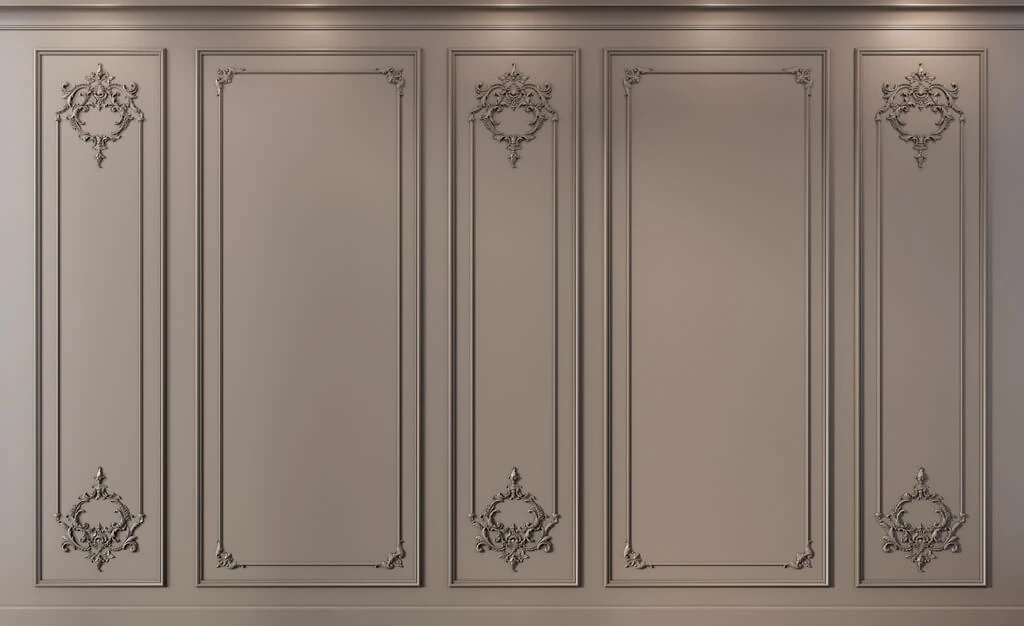
Wall frames and decorative panel layouts
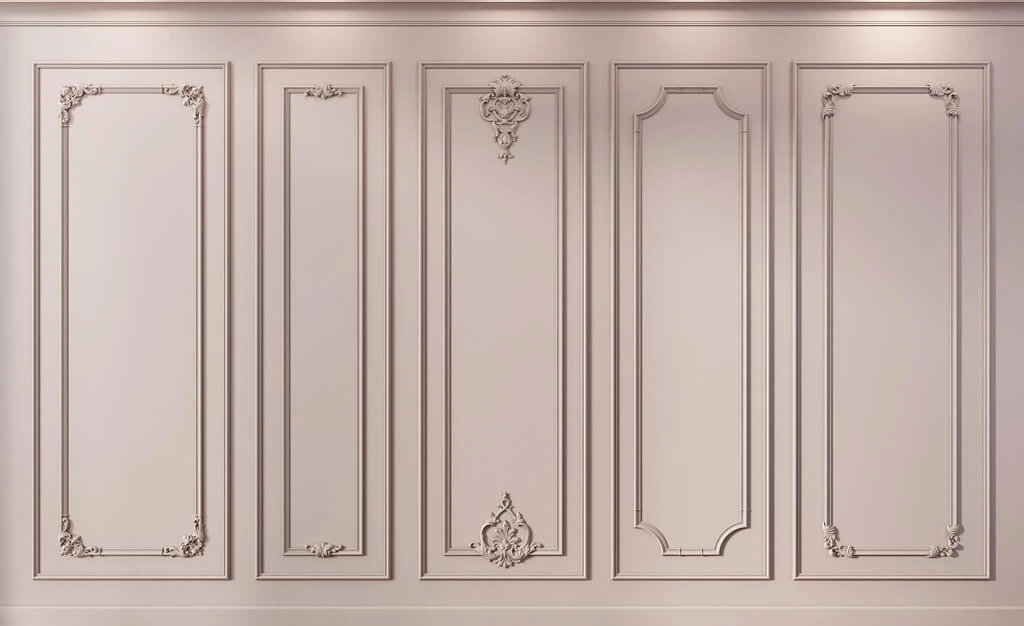
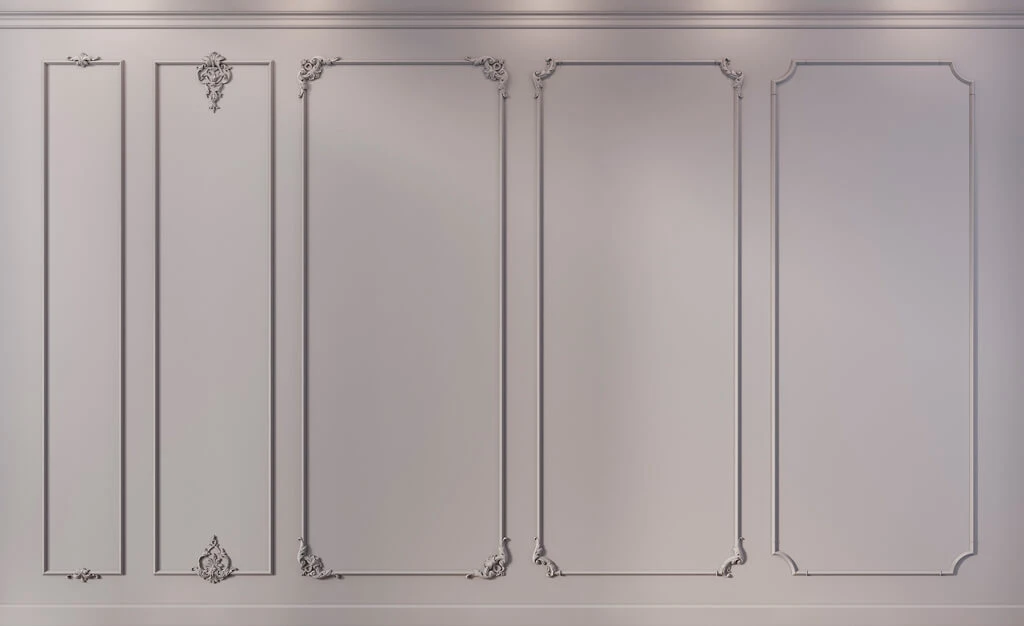
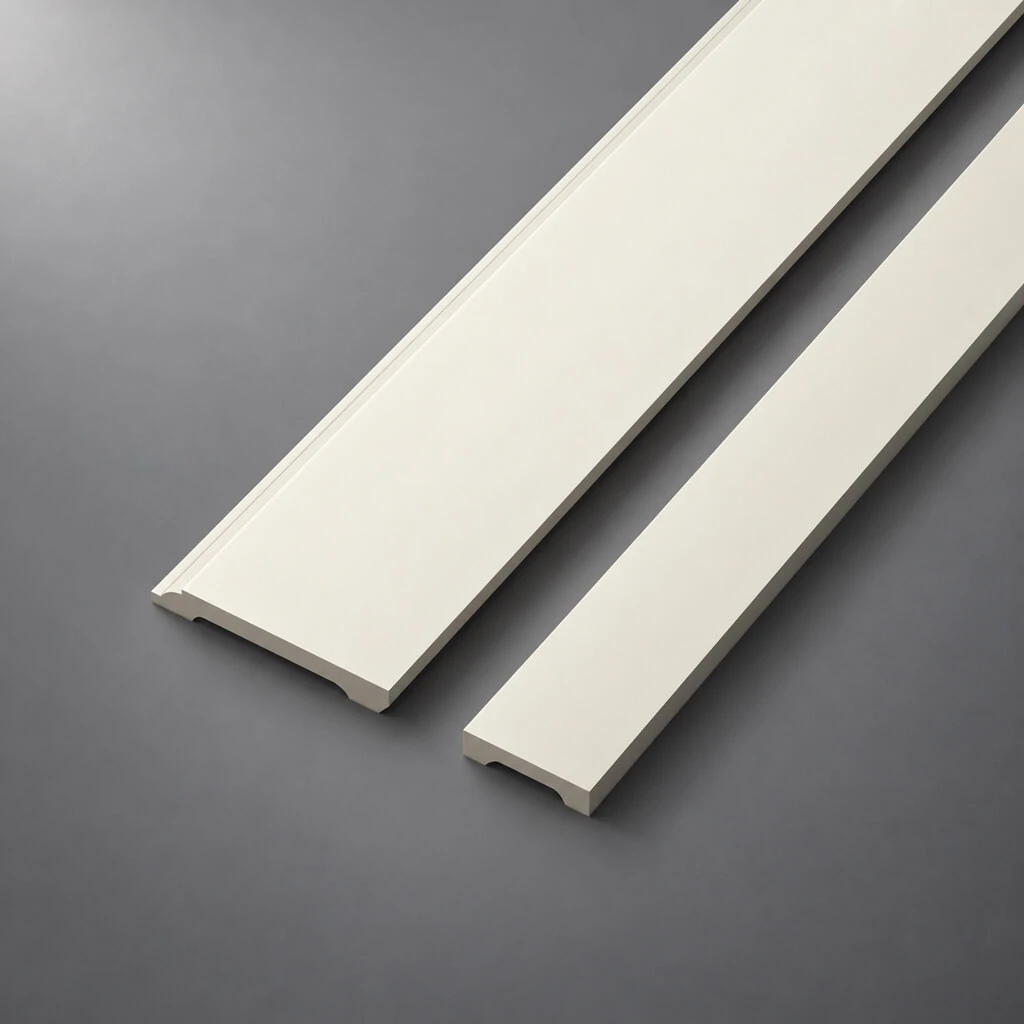
One of the strongest applications for polyurethane trim is decorative wall framing.
A relatively narrow molding can be used to create:
- rectangular wall panels;
- symmetrical wall frames;
- full-height panel layouts;
- framed wallpaper zones;
- decorative compositions around sconces;
- accent-wall geometry.
Because repeated profiles need to align cleanly, dimensional consistency is valuable.
For these projects, STAVROS high-quality polyurethane profiles can be used to build wall frames and panel compositions without introducing unnecessary visual weight.
Ornamental architectural details
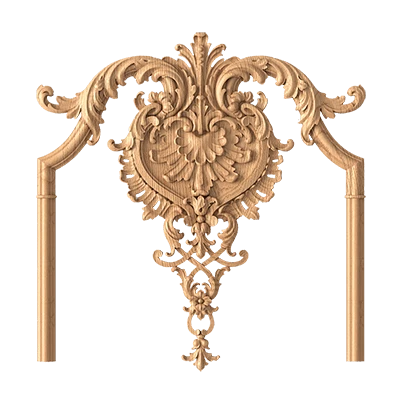
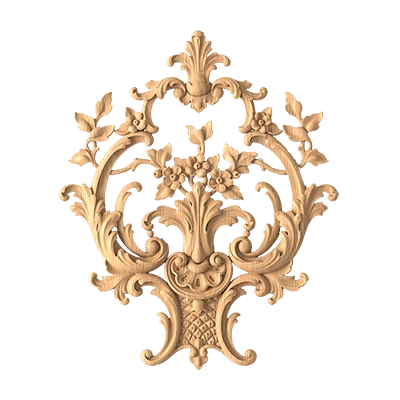
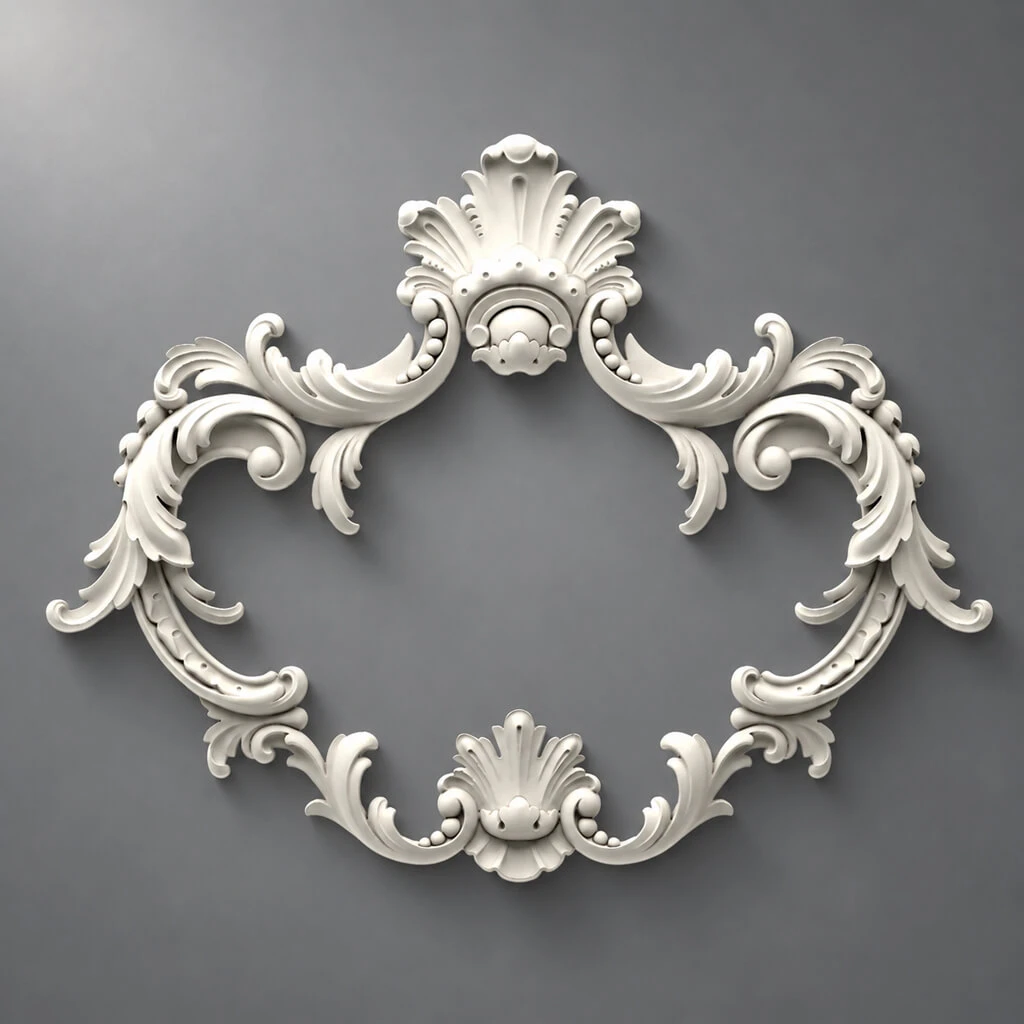
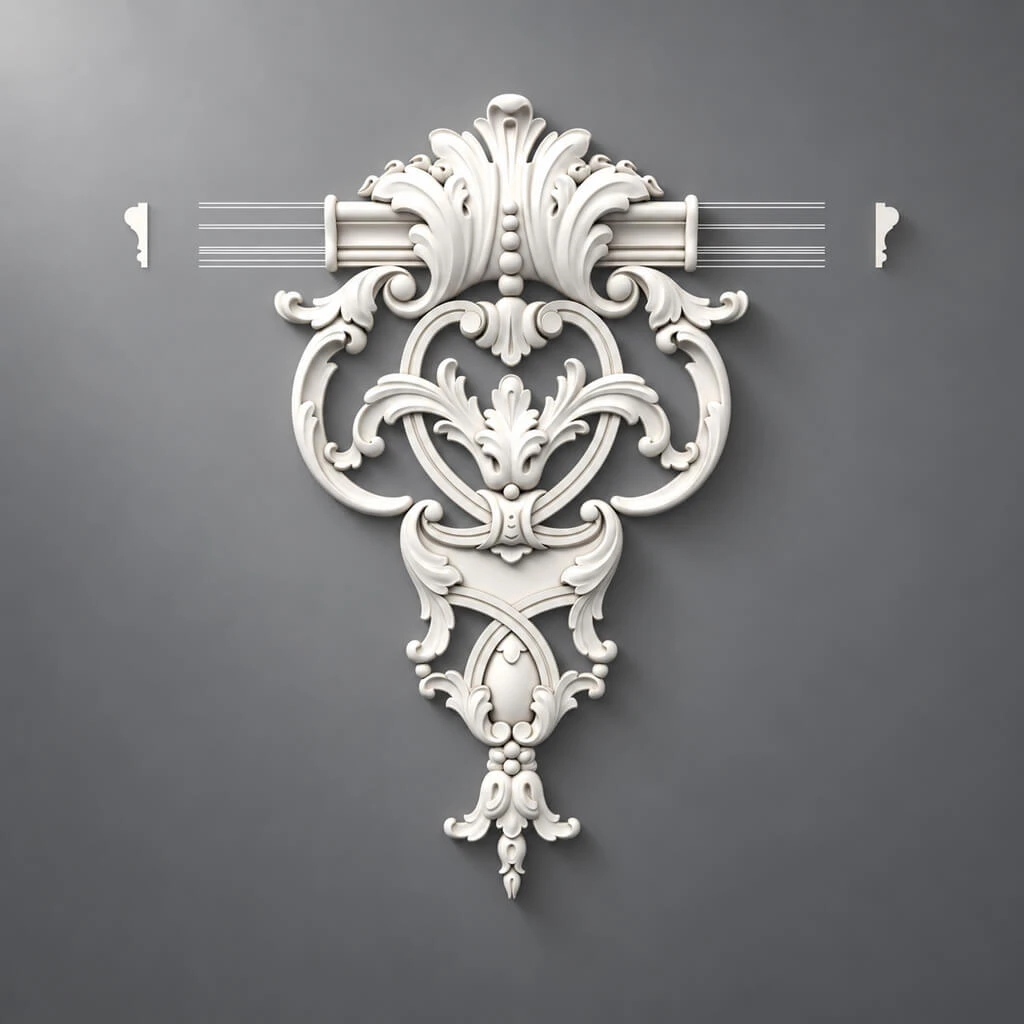
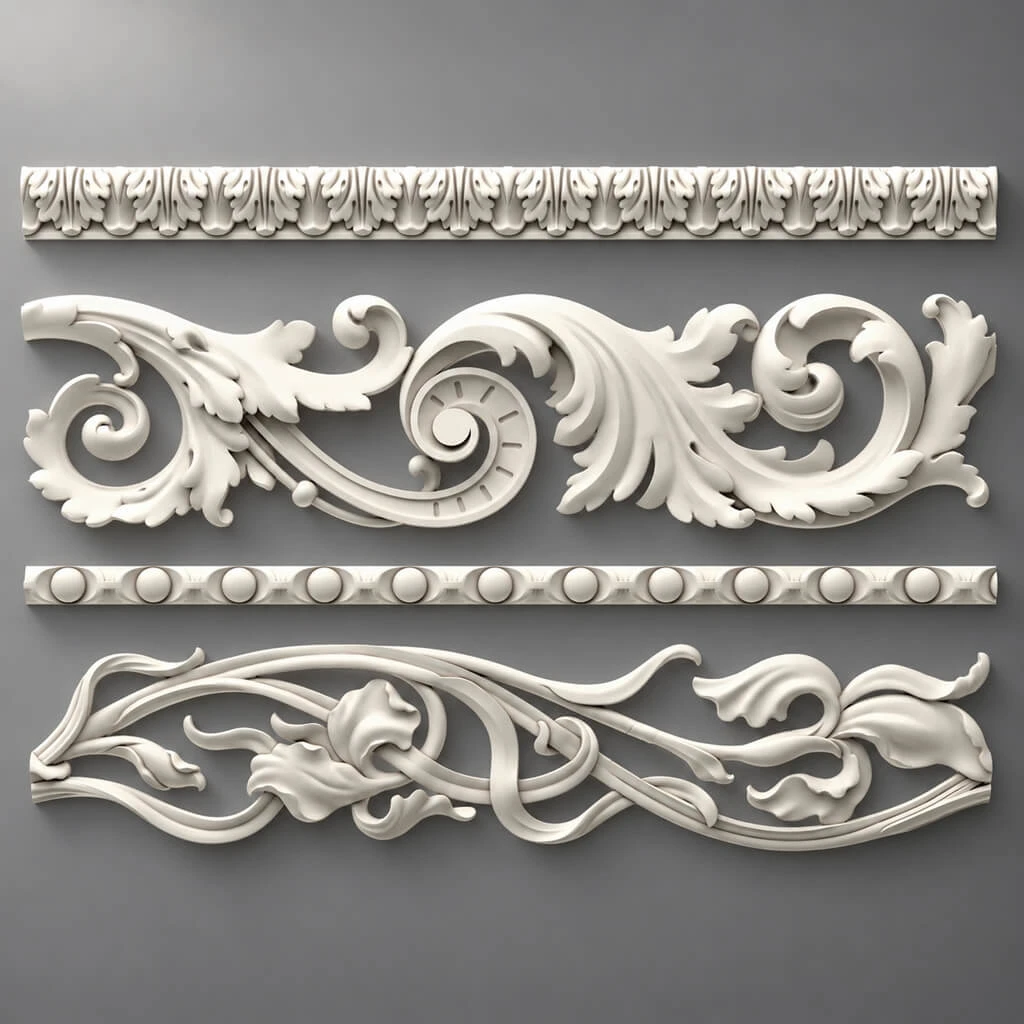
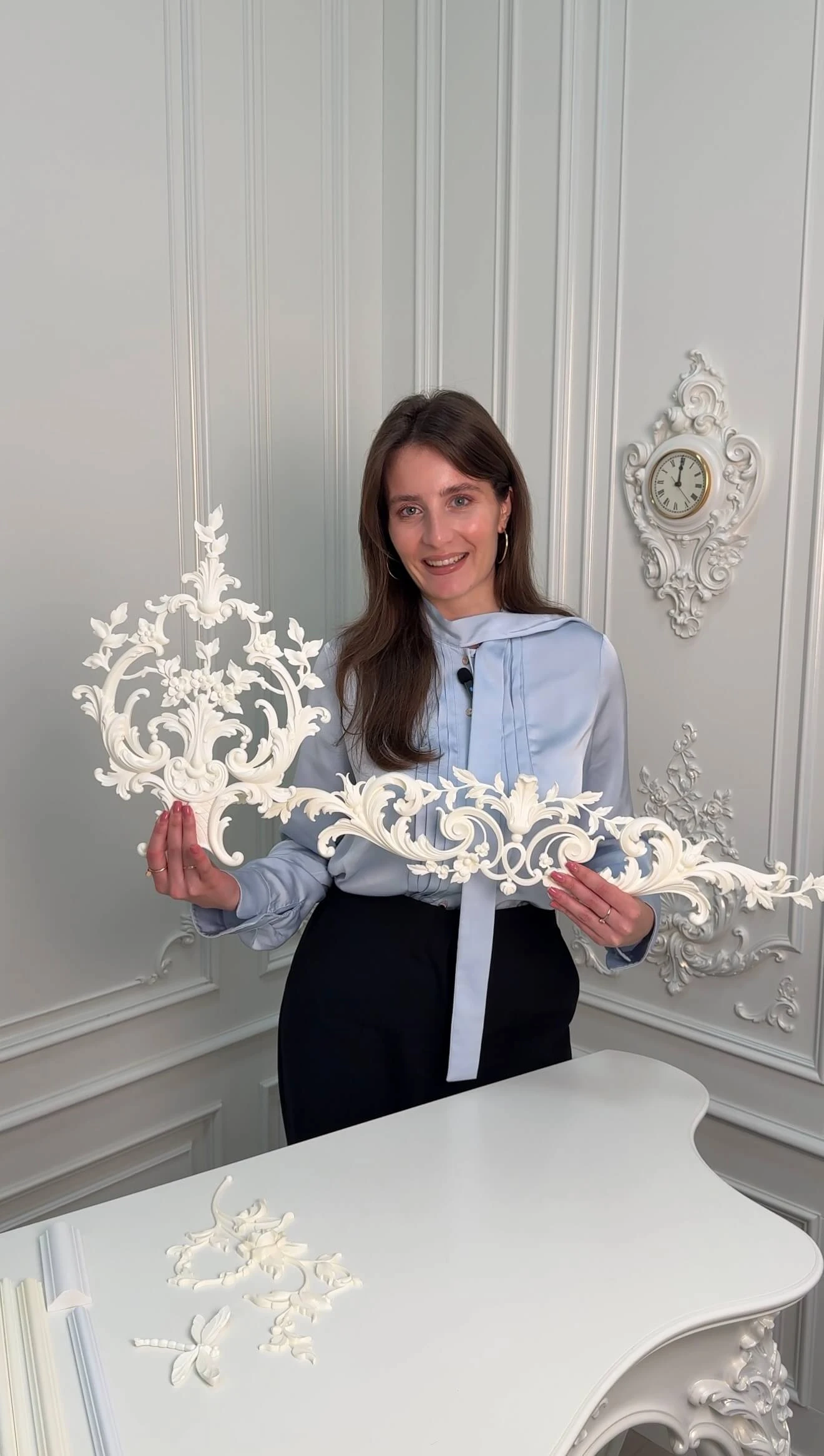
Casting allows polyurethane to reproduce detailed decorative forms efficiently.
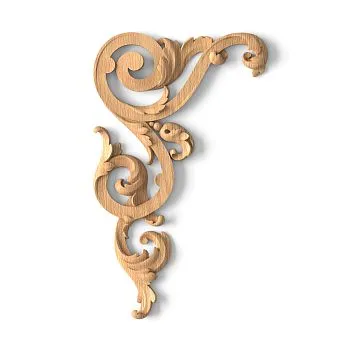
This makes it suitable for ornamental elements that would otherwise require extensive carving or molding work in wood.
Examples include:
- floral motifs;
- classical ornament;
- scrollwork;
- decorative appliqués;
- architectural onlays;
- relief elements;
- ornamental borders.
For this type of work, see the STAVROS collection of polyurethane decorative elements and onlays.
Ceiling decoration
Weight becomes increasingly important above eye level.
Polyurethane is therefore commonly considered for ceiling decoration, especially when a project includes larger ornamental elements.
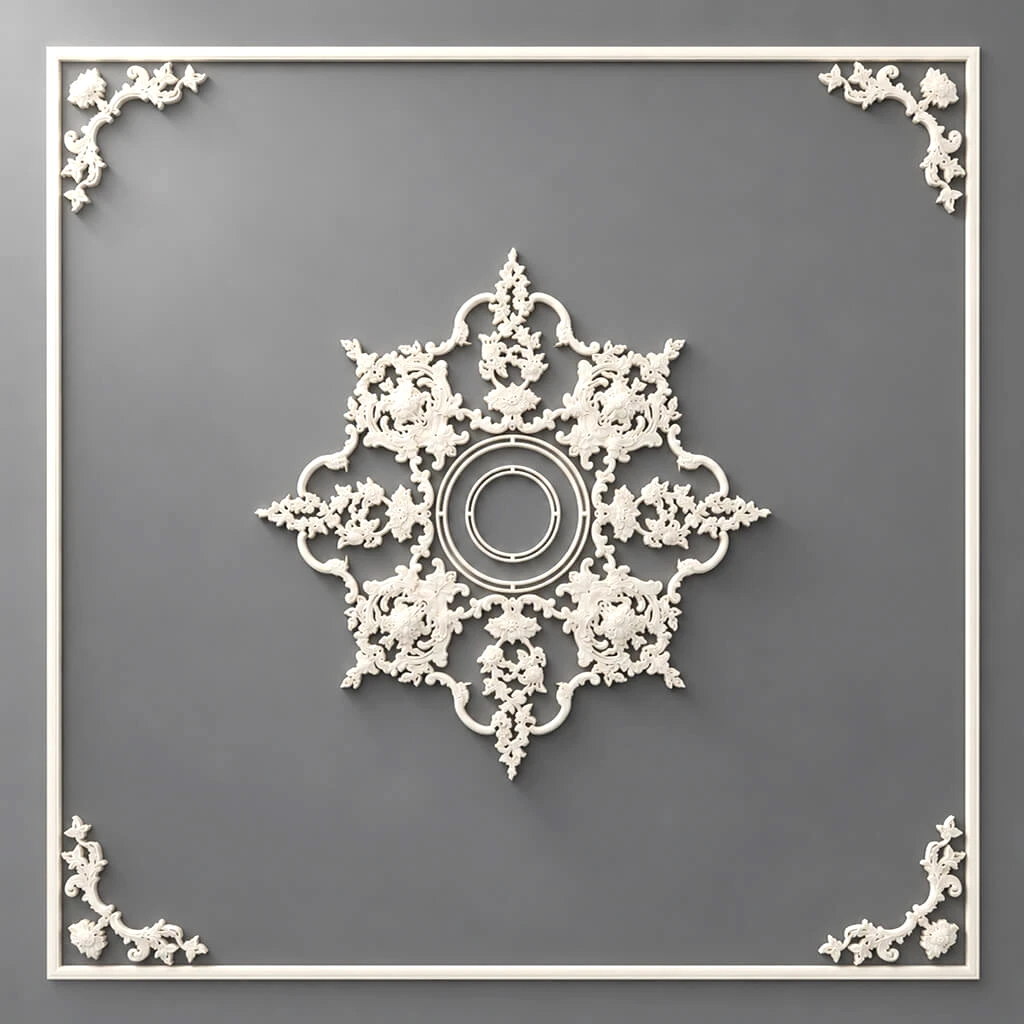
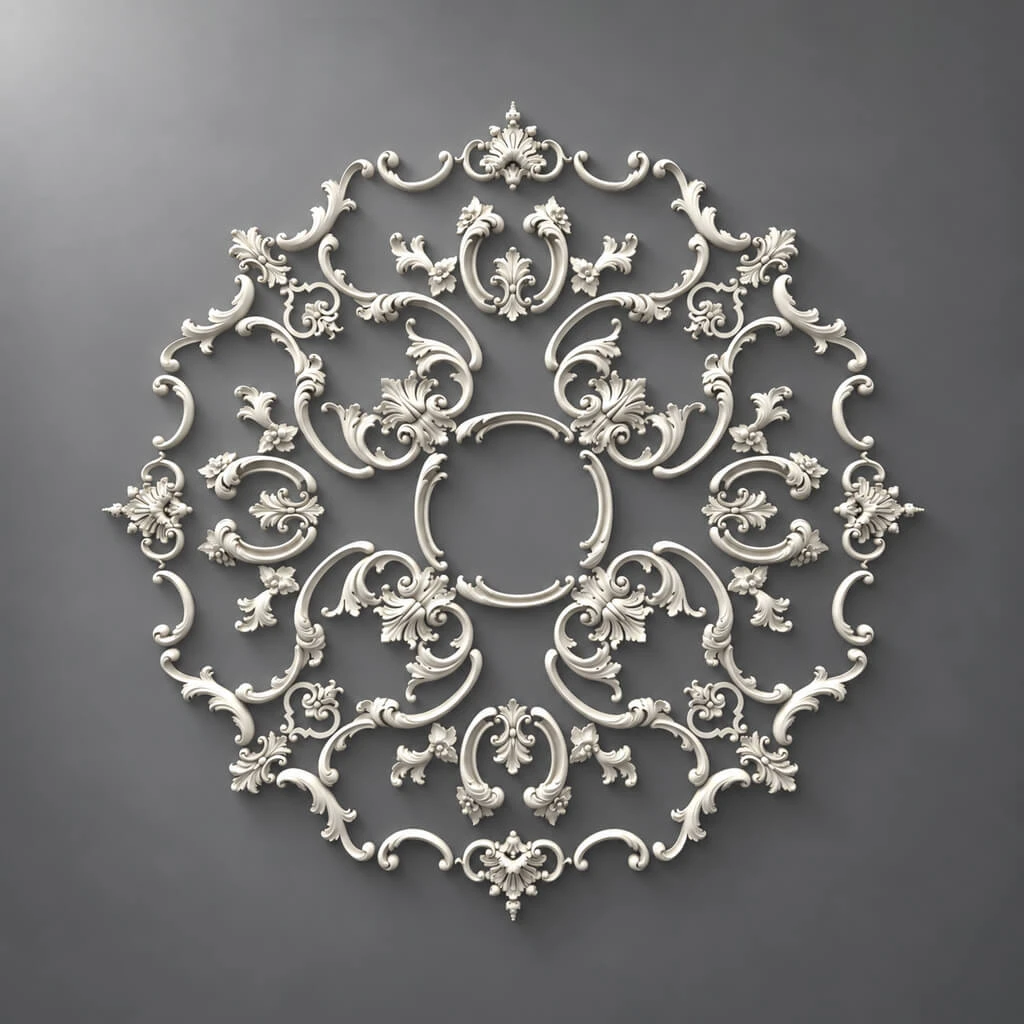
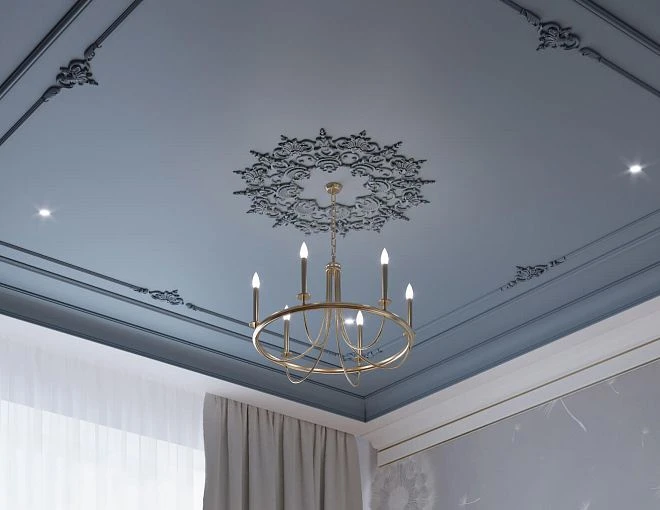
A prominent example is the ceiling medallion.
Used around a chandelier or pendant, a medallion can establish a visual center in a room and connect lighting with the surrounding architectural language.
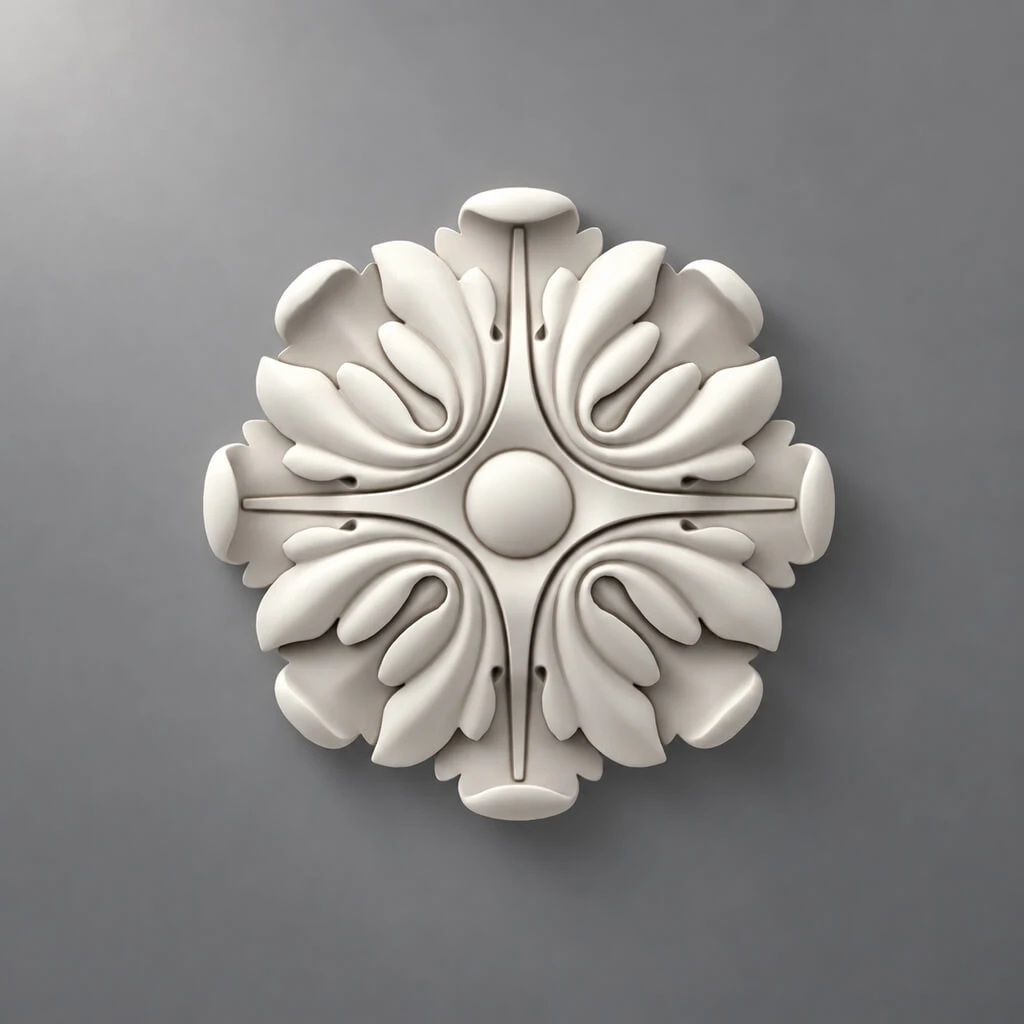
STAVROS offers polyurethane ceiling medallions in decorative styles suitable for traditional and transitional interiors.
Corbels and brackets
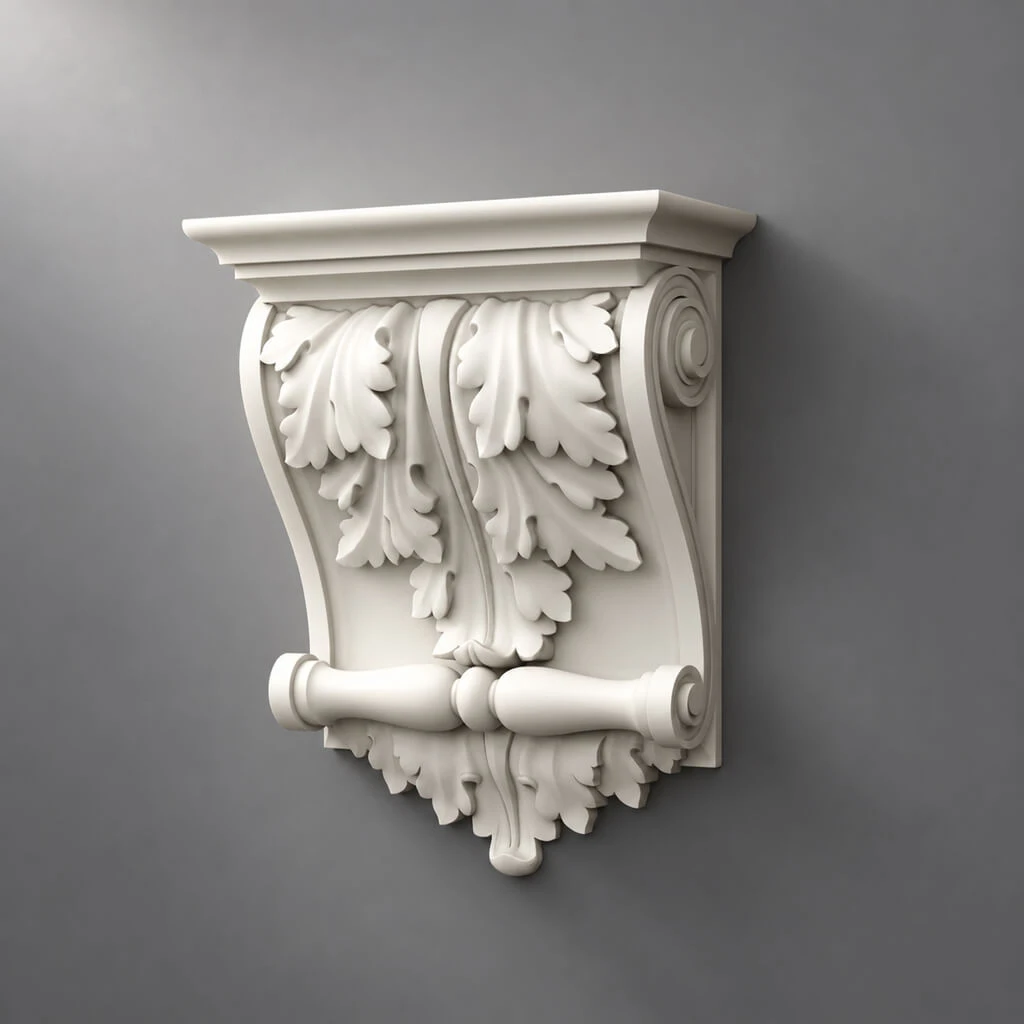
Decorative corbels can create the impression of structural support while functioning primarily as ornament.
They may be used:
- below shelves;
- at openings;
- beneath decorative ledges;
- as cabinet details;
- around classical architectural compositions.
Polyurethane makes these forms relatively lightweight while still allowing pronounced relief.
See STAVROS polyurethane corbels and decorative brackets.
Polyurethane Trim in American Interior Design
In the U.S., polyurethane trim appears across a wide range of interior styles.
It should not be thought of only as a substitute for wood.
In many projects it is a design material in its own right.
Traditional interiors
Traditional American interiors often rely on layered trim:
- casings;
- chair rails;
- panel molding;
- ceiling molding;
- decorative wall frames;
- medallions;
- corbels.
The success of such interiors depends heavily on proportion.
A wide profile in a small room can feel visually heavy. A very narrow molding in a large room with tall ceilings can disappear.
The correct scale depends on:
- ceiling height;
- wall width;
- door height;
- furniture scale;
- number of trim layers;
- spacing between decorative elements.
Neoclassical interiors
Neoclassical interiors are especially compatible with polyurethane moldings.
The style often uses:
- symmetrical wall panels;
- restrained classical ornament;
- tall base proportions;
- ceiling details;
- simple linear molding;
- carefully spaced decorative elements.
Because many neoclassical interiors use painted finishes, the difference between wood and polyurethane may become visually less important than the quality and proportion of the profile.
Transitional interiors
Transitional design combines traditional architectural structure with cleaner contemporary furnishings.
This makes it a natural environment for simple polyurethane wall molding.
A room can use a classical panel layout but finish every profile and wall in the same paint color.
The result is architectural without becoming overly ornate.
Contemporary interiors
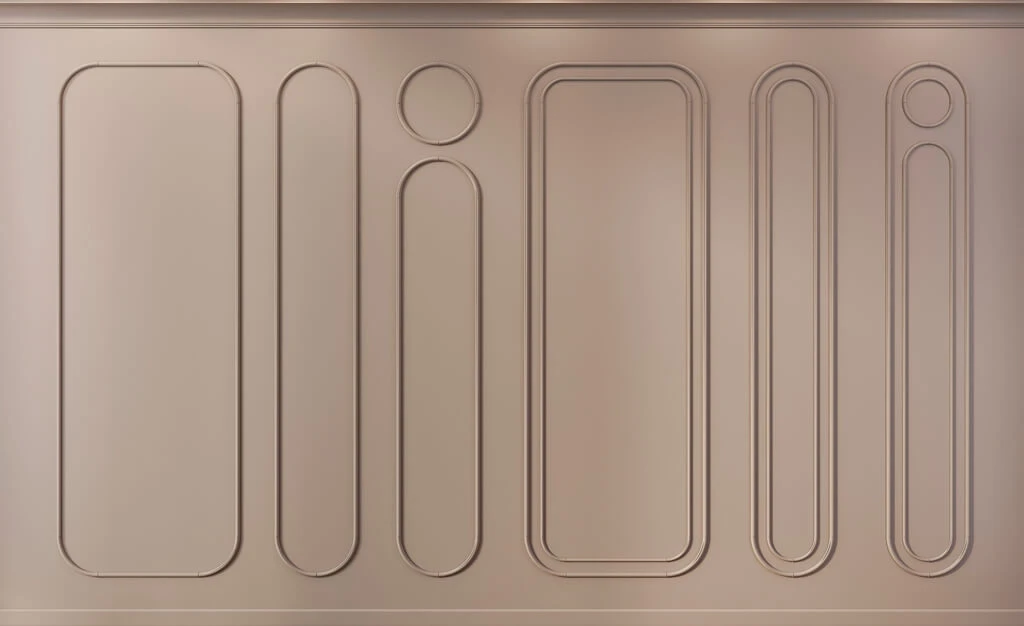
Polyurethane molding also works in contemporary design when ornament is reduced.
Simple profiles can create:
- narrow geometric frames;
- vertical wall divisions;
- repeated rectangular compositions;
- monochromatic relief;
- modern interpretations of traditional paneling.
The key is restraint.
The profile should support the room rather than dominate it.
Polyurethane Profiles: Why Profile Geometry Matters
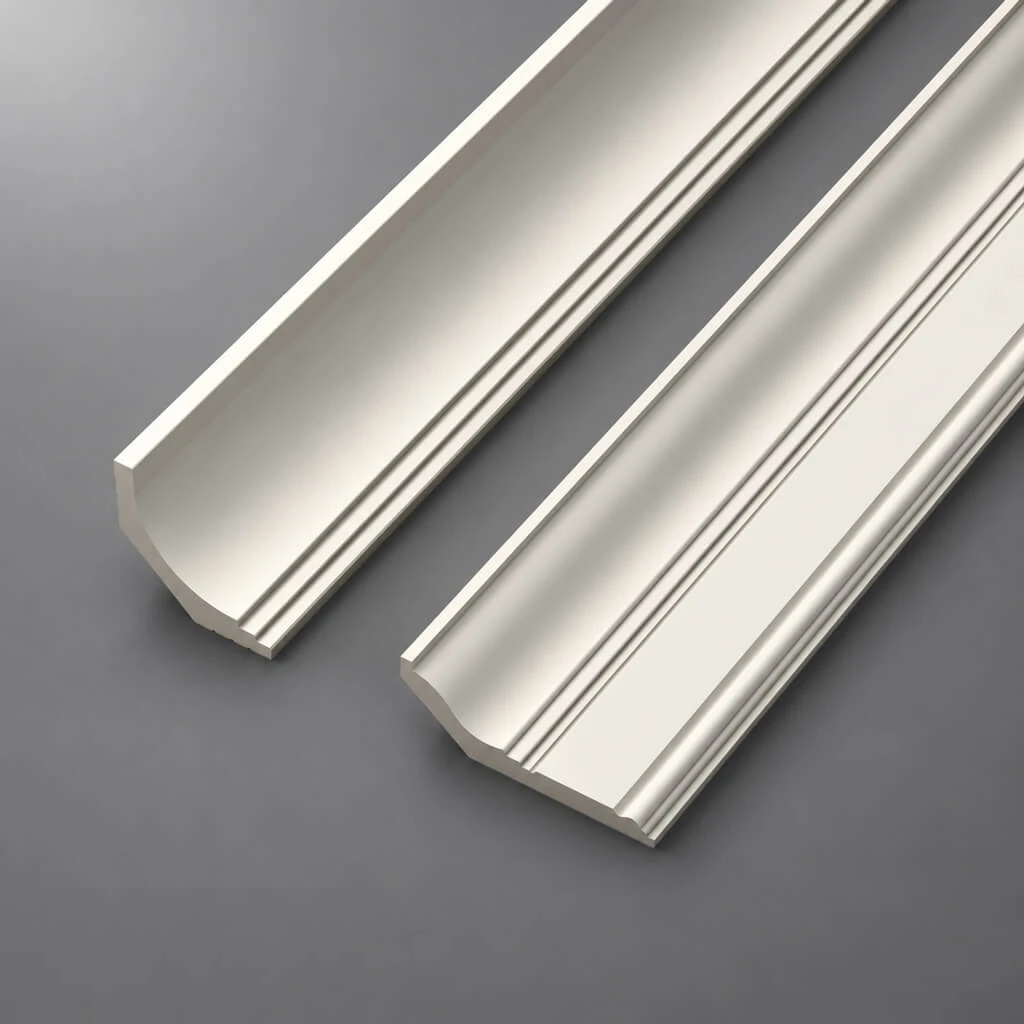
The word “molding” describes a category, but the actual design effect comes from the profile.
A profile is the cross-sectional geometry of the molding.
Two moldings of similar width can look completely different depending on:
- projection;
- depth;
- number of steps;
- concave sections;
- convex sections;
- bead details;
- edge radius;
- ornament.
For this reason, selecting molding only by width is a mistake.
When comparing polyurethane profiles, consider at least four dimensions:
Width
How much wall or ceiling surface the element occupies.
Projection
How far it extends from the surface.
Relief depth
Particularly important for ornamental molding.
Visual rhythm
How highlights and shadows travel across the profile.
A deeper profile creates stronger shadows and usually looks more architectural.
A shallow profile appears flatter and more restrained.
That distinction is important when choosing polyurethane molding profiles for walls, furniture, doors, or panel compositions.
High-Quality Polyurethane Profiles: What Should You Look For?
The phrase high quality polyurethane profiles should refer to more than decorative appearance.
Several practical characteristics matter.
Clean relief
Edges, beads, grooves, and ornamental details should be clearly defined.
Poorly formed details can become even more obvious after painting.
Consistent geometry
Sections from the same model should align predictably.
This matters especially in panel molding and repeated wall-frame installations.
Smooth surface
The face should be suitable for the intended finishing process without excessive correction.
Good edge quality
Cut edges should remain sufficiently clean for accurate joining and finishing.
Repeatability
A decorative profile used across several walls should maintain the same proportions from piece to piece.
These characteristics become especially important when several lengths meet in one composition.
A small dimensional inconsistency repeated across twenty joints becomes a visible installation problem.
Polyurethane Trim Molding for Walls
One of the strongest commercial and design applications in the U.S. is polyurethane trim molding used on walls.
This category overlaps with several common search terms:
- polyurethane wall molding;
- polyurethane panel molding;
- decorative polyurethane molding;
- chair rail;
- wall trim;
- picture-frame molding.
The same basic linear profile can often serve several different design purposes depending on placement.
For example, a narrow molding might form:
- a rectangular panel around artwork;
- a continuous horizontal division;
- a frame around wallpaper;
- a symmetrical wall composition;
- a decorative border around doors.
The material does not define the design.
The layout does.
Polyurethane Chair Rail
A chair rail traditionally protects the wall and visually divides its height.
In contemporary interiors, it may be more decorative than protective.
A polyurethane chair rail can be combined with panel molding below or above the horizontal line to create a complete wall composition.
The important decisions are:
- installation height;
- profile projection;
- relationship to door casings;
- relationship to furniture;
- whether the wall above and below will use the same paint color.
The most convincing installations coordinate all these elements rather than treating the chair rail as an isolated strip.
Polyurethane Door Trim and Window Trim
Door and window openings are strong architectural reference points.
Adding trim changes how those openings relate to the surrounding wall.
Polyurethane door trim can be particularly useful when the project uses painted architectural detailing and the trim is intended to coordinate with decorative wall molding.
The same principle applies to polyurethane window trim.
However, not every profile is designed for every location.
Always consider:
- impact exposure;
- required projection;
- installation surface;
- adjacent materials;
- whether the selected profile is intended for that application.
Where frequent physical contact is expected, solid wood may still be the more appropriate choice.
Installation: Polyurethane vs. Solid Wood
Installation is one of the areas where the differences between the materials become most obvious.
Cutting solid wood molding
Wood molding is commonly cut with woodworking tools appropriate to the profile and species.
Successful joints depend on:
- sharp blades;
- accurate angles;
- stable material;
- correct support;
- careful fitting.
Wood can also be mechanically fastened and later filled, sanded, and refinished.
That gives installers flexibility.
Cutting polyurethane molding
Polyurethane decorative profiles are generally lighter and easier to position.
Cuts still need to be accurate.
The fact that the material is lightweight does not eliminate the importance of:
- precise layout;
- clean miters;
- dry fitting;
- suitable adhesive;
- joint filling;
- final finishing.
A poorly planned installation will remain visible regardless of material.
Adhesive selection
Use an adhesive compatible with:
- the molding material;
- the wall or ceiling substrate;
- the manufacturer’s installation recommendations.
Different construction adhesives have different curing behavior and compatibility.
There is no reason to treat “construction adhesive” as one universal product category.
Corners and Joints
Corners are where molding quality and installer skill become most visible.
For a rectangular wall frame, four inaccurate cuts can make the entire panel appear distorted.
Before installation:
- establish the finished dimensions;
- verify the wall geometry;
- mark reference lines;
- cut and dry-fit the complete frame;
- adjust the joints;
- install only after the geometry is confirmed.
In older houses, walls and ceilings may not be perfectly square.
This makes visual alignment more important than relying blindly on nominal 90-degree geometry.
Paint and Finish
Finish strategy should be decided before material selection.
When to choose wood
Choose natural wood when the design requires:
- stain;
- visible grain;
- clear coating;
- natural oil;
- a genuine wood appearance.
A painted wood profile can still be beautiful, but painting removes one of the material’s primary visual advantages.
When polyurethane makes sense
Polyurethane is especially logical when the final design calls for a painted architectural surface.
For example:
- wall and molding in the same color;
- white trim against a colored wall;
- deep monochromatic wall panels;
- decorative ceiling elements painted with the ceiling;
- classical details finished in a coordinated palette.
Always follow the surface-preparation and paint recommendations for the specific product.
Wood vs. Polyurethane for Luxury Interiors
A common misconception is that luxury interiors require wood everywhere.
They do not.
Luxury depends on:
- proportion;
- detailing;
- material selection;
- finish quality;
- installation quality;
- consistency.
Natural wood is difficult to replace where it remains visible.
But a painted ornamental element high on a ceiling is judged primarily by shape, scale, relief, alignment, and finish.
For that reason, sophisticated interiors frequently combine materials.
A project might use:
- oak doors;
- solid wood casing;
- wood furniture;
- polyurethane wall molding;
- polyurethane ceiling decoration;
- ornamental polyurethane elements.
The correct combination is the one that makes sense visually and technically.
When Solid Wood Is the Better Choice
Choose solid wood molding when:
- natural grain is part of the concept;
- profiles will be stained;
- the project requires refinishing potential;
- the trim is frequently touched;
- restoration authenticity matters;
- the molding must coordinate directly with wood cabinetry, doors, or paneling;
- mechanical repairability is important.
For these applications, see STAVROS solid wood molding and trim profiles.
When Polyurethane Is the Better Choice
Consider polyurethane molding when:
- the design uses painted profiles;
- weight is important;
- the profile will be installed on walls or ceilings;
- the composition includes repeated decorative elements;
- detailed relief is required;
- stable geometry is valuable;
- interior humidity is a concern;
- several profiles need to coordinate visually.
STAVROS polyurethane moldings provide a broad range of linear decorative solutions for such projects.
Can Wood and Polyurethane Be Used Together?
Absolutely.
In fact, combining them can be one of the most intelligent strategies.
Consider a room with:
- natural oak doors;
- stained wood casing;
- hardwood furniture;
- painted wall frames;
- decorative ceiling molding.
Using wood for every element may not provide any meaningful visual advantage if the ceiling and wall molding will ultimately be painted.
A hybrid specification might therefore use wood where grain is visible and polyurethane where architectural form is the priority.
This approach lets each material perform where it makes the most sense.
Choosing Molding by Room
Living room
Living rooms often support the most complex architectural compositions.
Possible combinations include:
- wall frames;
- panel molding;
- decorative onlays;
- ceiling medallions;
- corbels;
- door trim.
Polyurethane is particularly convenient when several ornamental elements must share the same painted finish.
Dining room
Dining rooms are well suited to:
- chair rails;
- lower-wall paneling;
- symmetrical molding layouts;
- ceiling decoration.
A dining room can use polyurethane wall molding while preserving natural wood in furniture, doors, or flooring.
Bedroom
Bedrooms usually benefit from more restrained detailing.
Narrow molding can frame the headboard wall or create large wall panels without making the room feel excessively formal.
Entry hall
The entry hall is a high-contact zone.
This can favor more durable wood in areas likely to be touched or struck, while polyurethane decorative elements may still work well on upper walls and ceilings.
Bathroom
Bathroom material selection requires attention to moisture and product specifications.
Polyurethane is often attractive for decorative applications because it is not hygroscopic like natural wood.
However, the selected product, adhesive, finish, and installation system must still be appropriate for the environment.
Design Scale: One of the Most Important Decisions
Material debates often receive more attention than proportion, even though proportion frequently has a larger effect on the finished room.
Before selecting molding, consider:
- ceiling height;
- wall width;
- opening sizes;
- furniture height;
- panel spacing;
- profile width;
- projection.
Large rooms can generally support more architectural depth.
Small rooms often benefit from simpler profiles and more generous spacing.
The goal is not to install the largest possible molding.
The goal is to create the correct architectural scale.
Decorative Polyurethane Molding and Onlays
Linear molding is only one part of architectural decoration.
A wall composition can also incorporate:
- center ornaments;
- corner decorations;
- floral onlays;
- classical appliqués;
- relief elements.
These pieces can transform a simple rectangular wall frame into a more elaborate composition.
STAVROS offers a dedicated collection of decorative polyurethane molding and onlays for this purpose.
The key is restraint.
One carefully positioned decorative element can be more effective than filling every panel with ornament.
Ceiling Medallions and Architectural Focus
A ceiling medallion creates a transition between the light fixture and the surrounding ceiling.
Its size should relate to:
- room dimensions;
- ceiling height;
- chandelier diameter;
- surrounding molding;
- overall level of ornament.
An undersized medallion can appear disconnected.
An oversized medallion can dominate the room.
The STAVROS collection of polyurethane ceiling medallions allows the medallion to be coordinated with other decorative elements in the interior.
Corbels as Decorative Architecture
Corbels originally had structural associations, but in interior decoration they frequently function as visual architecture.
They can be used under:
- shelves;
- mantels;
- ledges;
- cabinets;
- openings;
- decorative transitions.
In classical interiors, they create shadow and depth.
In transitional interiors, simpler corbels can add structure without excessive ornament.
STAVROS polyurethane corbels and brackets can be integrated with molding and other relief elements to create a coordinated composition.
Manufacturing Differences
The visual result begins with the manufacturing process.
Solid wood molding
Wood profiles are produced by machining natural material.
The process may include:
- timber selection;
- drying;
- stabilization;
- profiling;
- carving;
- sanding;
- finishing.
Each piece retains some natural variation because the raw material itself varies.
That variation is often one of the reasons designers choose wood.
Polyurethane molding
Polyurethane architectural elements are formed in molds.
This allows complex relief to be repeated with a high degree of consistency.
The process is particularly suitable for:
- repeating ornamental patterns;
- complex classical profiles;
- decorative appliqués;
- ceiling medallions;
- corbels;
- detailed linear elements.
The ability to reproduce the same geometry across multiple pieces is a significant advantage in symmetrical interiors.
The original Russian article also emphasized this contrast between machining solid wood and molding polyurethane. Вставленный текст
Repairability and Long-Term Maintenance
Wood and polyurethane should also be evaluated from a maintenance perspective.
Wood
Wood can often be:
- sanded;
- filled;
- refinished;
- stained again;
- repainted;
- repaired locally.
That repairability is particularly valuable in long-term architectural installations.
Polyurethane
Minor surface damage can usually be filled and refinished, but a severely damaged section may be easier to replace than reconstruct.
This makes planning useful.
For large projects, keeping a small quantity of spare material can simplify future repairs.
Cost: Do Not Compare Only Price Per Foot
The real cost of architectural molding includes more than the product itself.
Consider:
- material;
- shipping;
- cutting;
- installation;
- fastening;
- surface preparation;
- finishing;
- labor;
- waste;
- future maintenance.
A cheaper material can become expensive if installation is complicated.
A more expensive material may be justified if it offers the appearance or performance the project requires.
For this reason, comparing only the initial price per linear foot provides an incomplete picture.
A Better Way to Compare Materials
Before ordering, create a project matrix.
| Requirement | Solid Wood | Polyurethane |
|---|---|---|
| Visible natural grain | Excellent | Not applicable |
| Painted decorative profiles | Excellent | Excellent |
| Lightweight ceiling use | Heavier | Strong advantage |
| Detailed repeated ornament | Possible | Strong advantage |
| Stained finish | Strong advantage | Not appropriate |
| Humidity stability | Requires more attention | Generally favorable |
| Refinishing | Strong advantage | More limited |
| Repeated geometry | Depends on material/process | Strong advantage |
| Complex decorative relief | More labor-intensive | Efficient |
| Natural material authenticity | Strong advantage | Not intended to replace it |
This is a much more useful decision framework than asking which material is “better.”
How to Choose the Right Profile Before Ordering
Before choosing a decorative molding, answer the following questions.
Where will it be installed?
Wall, ceiling, door, furniture, panel frame, or another location?
Will it be painted or stained?
If the grain needs to remain visible, wood becomes the obvious candidate.
How much contact will it receive?
A lower wall profile in a busy hallway has different requirements from a ceiling element.
How large is the room?
Profile scale must match the architecture.
Will several elements need to coordinate?
If you plan to combine wall molding, onlays, medallions, and corbels, consider them as one architectural system.
Does weight matter?
For large overhead elements, it often does.
Is moisture a concern?
The surrounding environment should be part of the material decision.
Common Mistakes
Choosing only by price
Material cost is only part of the project cost.
Choosing only by width
Projection and relief matter just as much.
Ignoring room proportions
Even a beautiful profile can look wrong at the wrong scale.
Mixing unrelated styles
A contemporary linear wall profile, heavily Baroque corbel, and Georgian-style ceiling detail will rarely form a coherent composition without careful design.
Overdecorating
More molding does not automatically create a more luxurious interior.
Treating polyurethane as imitation wood
This misses the point.
Polyurethane is most convincing when used for what it does well: architectural profiles, painted trim, relief, ceiling decoration, and repeated ornament.
FAQ
Is polyurethane molding better than wood?
Neither material is universally better. Solid wood is ideal when natural grain, authenticity, refinishing, and tactile material quality matter. Polyurethane molding is particularly useful for painted architectural decoration, lightweight installation, repeated profiles, and detailed ornamental work.
What is polyurethane molding used for?
Polyurethane molding can be used for wall frames, panel molding, decorative trim, ceiling details, ornamental compositions, and other architectural interior applications.
Is polyurethane trim suitable for wall panels?
Yes. Linear polyurethane profiles are well suited to picture-frame molding and decorative wall-panel layouts when the selected profile is appropriate for the application.
Explore STAVROS polyurethane molding profiles for wall and decorative compositions.
What is the difference between polyurethane molding and polyurethane trim?
The terms overlap. “Molding” usually describes a profiled decorative or architectural element, while “trim” is a broader term that can include moldings used around walls, openings, panels, and transitions.
Is urethane molding the same as polyurethane molding?
In the U.S. architectural-products market, urethane molding is often used as a shorter commercial term for polyurethane architectural molding. Product composition and specifications should still be checked for the exact item.
Can polyurethane molding be painted?
Many architectural polyurethane products are designed to receive paint, but preparation and paint-system requirements depend on the specific product. Follow the manufacturer’s instructions.
Is polyurethane molding suitable for humid rooms?
Polyurethane generally responds to humidity differently from natural wood and does not absorb moisture in the same way. However, suitability for a specific bathroom, kitchen, or other humid environment should be confirmed for the actual product and installation system.
Can I combine wood molding and polyurethane molding?
Yes. This is often an effective approach. Use wood where visible grain and natural material matter, and polyurethane where painted architectural profiles, low weight, or repeated ornament are more important.
What should I look for in high-quality polyurethane profiles?
Look for clean relief, repeatable geometry, smooth surfaces, accurate edges, and consistency between pieces.
What is better for a luxury interior?
Luxury does not depend on one material. A high-end project may combine solid wood doors and millwork with polyurethane wall molding, ceiling medallions, and decorative elements. Proportion, finish, detailing, and installation quality matter more than using one material everywhere.
Final Takeaway
The choice between solid wood and polyurethane molding should be made according to the role each element plays in the interior.
Choose solid wood molding when the natural material itself is part of the design—when grain, stain, tactile quality, restoration potential, or visual authenticity matter.
Choose polyurethane molding when the architectural form is more important than natural grain—especially for painted wall compositions, ornamental profiles, repeated decorative elements, ceiling details, and other applications where low weight and consistent geometry are useful.
And do not assume the entire room has to use one material.
Some of the most convincing interiors combine the two.
Natural wood can provide warmth and material depth at doors, furniture, cabinetry, and visible millwork, while polyurethane can provide architectural rhythm through wall frames, decorative profiles, medallions, and relief elements.
For projects focused on painted architectural detailing, browse STAVROS high-quality polyurethane profiles, polyurethane decorative elements, ceiling medallions, and polyurethane corbels.
For projects where natural grain and authentic timber remain central to the design, explore STAVROS solid wood molding and trim.
Final finishing adds costs for wooden trim. Multi-layer lacquering with intermediate sanding costs 200-400 rubles per linear meter. Enamel painting — 300-500 rubles. Polyurethane profiles are often delivered pre-painted — final finishing is either unnecessary or limited to single-layer painting on-site for 100-150 rubles per meter. Savings of another 10-15 thousand rubles per apartment.
Durability affects long-term ownership cost. Oak wooden trim lasts 50-100 years without replacement, requiring only surface renewal every 5-10 years. Renewal cost — 150-250 rubles per meter. Polyurethane trim lasts 20-30 years, after which full replacement is required. Over a 50-year planning horizon, wooden baseboard is cheaper due to longevity, despite higher initial cost.
Salvage value also matters. High-quality wooden trim from premium species retains value upon removal — it can be resold on the secondary market or reinstalled in another project. Polyurethane profiles are disposed of after removal — salvage value is zero. For temporary interiors with a 5-10 year horizon, this is insignificant; for permanent solutions, it favors wood.
Prestige economics is not obvious but real. Luxury real estate with natural materials is valued higher on the secondary market. Buyers of status properties are willing to pay extra for authentic materials. Oak or beech wooden trim increases property liquidity by 3-5 percent compared to polymer analogs. For a 30 million ruble apartment, this is 900 thousand rubles — more than compensating for the cost of wooden finishing.
Tax aspects are specific. For commercial real estate, finishing costs are included in the depreciable base. Expensive wooden trim increases depreciation allowances, reducing taxable profit. For investment projects, this may be an argument in favor of more expensive materials. For private buyers, this factor does not apply.
Innovation and market trends for trim
Technological innovations are reshaping the wooden trim market. Thermally modified wood gains enhanced geometric stability and water resistance through high-temperature treatment. Thermowood does not rot, is resistant to fungi, and reacts weakly to humidity. This expands the application of wooden trim to humid areas, previously reserved for polyurethane. The 30-50 percent cost increase is offset by expanded functionality.
Composite materials combine the advantages of wood and polymers. Wood-polymer composites based on ground wood and polymer binder combine wood texture with plastic water resistance. DPC trim is lighter than wood, more geometrically stable, and requires no final finishing. Application is currently limited to outdoor use, but material quality is improving, and indoor use is inevitable.
Digital design is changing the approach to profile development. Parametric modeling allows creating complex shapes optimized for specific interiors. CNC milling centers realize any geometry without traditional tool limitations. Custom profiles based on architects’ sketches become more accessible — development costs for small batches decrease.
Environmental trends strengthen the position of natural materials. Conscious consumption, green building standards like LEED, BREEAM, WELL, stimulate the use of renewable raw materials. Wooden trim receives additional points in environmental certification. The carbon footprint of wood production is significantly lower than that of oil-based polymers. For ESG-compliant projects, natural materials are preferable.
Aesthetic trends cyclically return to naturalness. After a decade of dominance by minimalism and synthetic materials, there is a renaissance of interest in natural textures. Unfinished wood, emphasized defects, contrasting staining, and brushing — all these techniques are in demand. Polymer imitations fail to meet the demand for authenticity, reinforcing the position of natural solid wood.
Customization is becoming standard. Consumers want uniqueness and reject standard solutions. The ability to choose wood species, profile, finish, and dimensions creates a sense of individualized approach. Manufacturers expand their lines and offer custom manufacturing services. Flexibility in offerings becomes a competitive advantage.
Online sales are changing distribution channels. Buyers research assortments online, compare features, and read reviews. Delivery of construction materials to sites has become standard. Manufacturers invest in quality content — photos, videos, 3D visualizations of profiles in interiors. Information transparency raises quality expectations — negative reviews spread instantly online.
FAQ: Frequently Asked Questions
Can wooden trim be used in bathrooms?
It is possible with proper protective finishing using multi-layer water-resistant lacquer or oil, with mandatory end treatment. Hardwood species with natural water resistance — such as oak — are preferred. Alternatively, thermally modified wood with enhanced stability is used. Polyurethane trim for bathrooms is more practical and reliable.
How does polyurethane trim differ from polystyrene?
Polyurethane is denser, stronger, and longer-lasting than polystyrene. Mechanical strength of polyurethane allows its use in contact areas — such as baseboards and door casings. Polystyrene is brittle and used only for ceiling cornices without load. Visually, quality polyurethane appears heavier and more convincing.
How to determine the quality of wooden trim when purchasing?
Check moisture content with a moisture meter — it should be 8–10 percent. Inspect the surface — smooth, without fuzz, chips, or cracks. The profile should be clearly defined along the entire length. The smell should be natural wood, without moldy tones. Geometry is checked by fitting two boards together — there should be no gaps.
Which material is more eco-friendly - wood or polyurethane?
Natural wood is more eco-friendly than polymers. Wood is a renewable resource, does not emit volatile compounds, and regulates air humidity. The carbon footprint of producing wooden trim is lower than that of polymer trim. Polyurethane is produced from petroleum products and may release harmful substances when heated. For eco-friendly interiors, solid wood is preferable.
Can polyurethane trim be painted in any color?
Yes, polyurethane can be painted with acrylic or latex water-based paints in any color. Priming improves adhesion. Glossy, matte, and satin finishes are available. Patination and decorative techniques are applied similarly to wood. Factory-painted trim requires only local touch-up at joints.
How long does oak trim last?
With proper use and maintenance, oak trim lasts 50–100 years or more. Protective coating should be renewed every 5–10 years. Mechanical damage is repaired by sanding and re-finishing. Historic buildings demonstrate a century-long durability of oak trim.
How to join polyurethane trim at corners?
Internal and external corners are joined by beveling ends at 45 degrees using a miter saw. Gaps are filled with acrylic sealant. Alternatively, factory-made corner pieces — surface-mounted corners — are installed over straight sections without trimming. The second method is simpler and faster but more expensive.
Is wood trim required to acclimate before installation?
Yes, it is mandatory. Wood trim must remain unpacked in the installation room for 5–7 days to equalize moisture content with the surrounding environment. Without acclimatization, after installation, warping, gaps at joints, and cracking may occur. Polyurethane requires only 1–2 days of acclimatization to equalize temperature.
Which trim is better for heated floors?
For rooms with underfloor heating systems, polyurethane trim is preferable. It does not react to temperature and humidity fluctuations and is geometrically stable. If wooden trim is used, it requires high-quality kiln-dried wood and multi-layer protective finishing. Thermally modified wood is a compromise option with increased stability.
Can wood and polyurethane be combined in one interior?
Yes, and it is often advisable. Wooden baseboards pair well with lightweight polyurethane ceiling moldings. Wooden door casings are complemented by polymer wall moldings. It is important to maintain profile style consistency and height and proportion harmony. Such a combination optimizes budget without visual compromises.
How to care for wooden trim?
Regular dry or slightly damp cleaning with soft cloth. Avoid aggressive cleaning agents and abrasives. Maintain stable air humidity at 40–60 percent. Renew protective coating every 5–7 years depending on usage intensity. Repair local damage by sanding and re-finishing the affected area.
Why is polyurethane trim cheaper than wooden trim?
The production cost of polymer profiles is lower than wooden ones. Casting polyurethane is faster and easier than machining solid wood. Raw material is cheaper than high-quality wood. Lower weight reduces transportation costs. Simple installation without special tools or skills reduces labor costs. No need for complex finishing reduces time and material costs.
Can polyurethane trim be used outdoors?
Quality polyurethane with UV stabilizers can be used for outdoor applications. Protective paint with exterior-grade paints is mandatory to prevent UV degradation. Without protection, the polymer will fade, become brittle, and lose its appearance. Wooden trim for outdoor use requires impregnation with antiseptics and multi-layer protection with lacquer or enamel.
What height of skirting board is optimal for a standard apartment?
For rooms with ceiling heights of 2.7 meters, the optimal baseboard height is 80–120 millimeters. Too low a baseboard visually disappears; too high a baseboard disrupts proportions. For high rooms (3.5–4.5 meters), baseboards 150–200 millimeters are suitable. Room width also affects this — in spacious halls, heavier profiles are appropriate.
Is polyurethane primed before painting?
Priming is recommended to improve paint adhesion. Special primers for polymers ensure reliable coating adhesion. Without priming, paint may peel under mechanical stress. Factory-painted polyurethane does not require additional priming — the factory coating already includes a primer layer.
Regional characteristics of trim application
Climate conditions in Russian regions dictate specific requirements for finishing materials. Northern regions with long heating seasons and low winter air humidity create extreme conditions for wooden trim. Indoor humidity drops to 20–25 percent, causing wood shrinkage and gaps at joints. Humidifiers stabilize the microclimate and extend the service life of wooden finishes.
Southern regions with hot, humid climates require enhanced biological protection for wood. Deep-penetration antiseptic treatments prevent fungal and insect damage. Polyurethane trim is preferable in southern regions for humid spaces and unheated verandas. Coastal areas with salty air are aggressive to unprotected wood — enhanced protection is required.
Far Eastern regions with monsoon climates and sharp humidity fluctuations impose maximum requirements for material stability.Polymer profilesPolymer profiles perform more reliably than wooden ones. For wooden trim, critical factors are high-quality kiln-dried wood and thermal modification, which enhance geometric stability.
Mountainous regions with altitude variations create specific operating conditions. Lower atmospheric pressure accelerates drying of protective coatings on wood. Intense ultraviolet radiation requires UV protection for both wood and polyurethane. High-quality lacquers with UV filters slow down fading and degradation of materials.
Market prospects for trim products
The Russian trim market demonstrates steady annual growth of 8–12 percent. Residential construction, renovation of old housing stock, and rising household incomes stimulate demand for quality finishing materials. The premium wooden trim segment grows at faster rates of 15–18 percent — buyers of luxury real estate are willing to pay for natural materials and uniqueness.
Import substitution strengthens positions of Russian manufacturers. Quality of domestic wooden trim has reached European levels at lower cost. Modern high-precision equipment, quality raw materials, and skilled personnel ensure competitiveness. Logistics advantages of local production — short delivery times, flexibility in working with clients.
Digitalization of sales changes interaction models. Online configurators allow customers to independently select profile, wood species, finish, calculate material quantity and cost. Virtual profile try-on in loaded interior photos helps make decisions. Transparency of information and ease of ordering increase conversion.
Environmental certification is becoming a competitive advantage. Buyers increasingly demand proof of legal timber origin, low formaldehyde content, and safety of finishing materials. Manufacturers invest in obtaining FSC, PEFC, and eco-labels from Russian and international systems.
Customization of mass production is a technological trend for the coming years. Flexible production systems allow manufacturing small batches of individual profiles at prices close to those of serial production. Digital design, CNC machines, and automated finishing operations make individualized approaches economically viable. Consumers get uniqueness without a premium markup.
Integration of manufacturers with design communities is strengthening. Joint development of new profiles with leading architects and designers creates in-demand products. Professional lines of molding for design projects with extended customization options stand out as a separate segment. Manufacturer brands become recognizable, and loyalty from the professional community is formed.
Conclusion
The choice between wooden and polyurethane molding is determined by a complex of factors — project budget, operating conditions, interior style, and the client's personal priorities.wood trim itemsremain the benchmark of quality, naturalness, and prestige for classic and luxury interiors.Polyurethane profilesprovide practicality, economy, and functionality for a wide range of tasks. A thoughtful combination of both materials optimizes the balance between aesthetics and cost.
Technological progress is blurring the boundaries between materials. Thermally modified wood acquires the stability of polymers, while high-quality polyurethane increasingly mimics wood texture. Composite materials combine the best properties of natural and synthetic raw materials. The future of the molding market lies in the diversity of offerings and the freedom to choose the optimal solution for each specific task.
STAVROS offers a full spectrummolding products made from solid oak, beech, and MDF, and also high-qualityPolyurethane profilesfor any interior solutions. Decades of production experience, modern equipment, and strict quality control guarantee reliability and longevity of products. A wide range of profiles, from classic to modern, the option to manufacture to order, and professional technical support help realize projects of any complexity. Choosing STAVROS means choosing proven quality, reasonable prices, and an individual approach to every customer.