





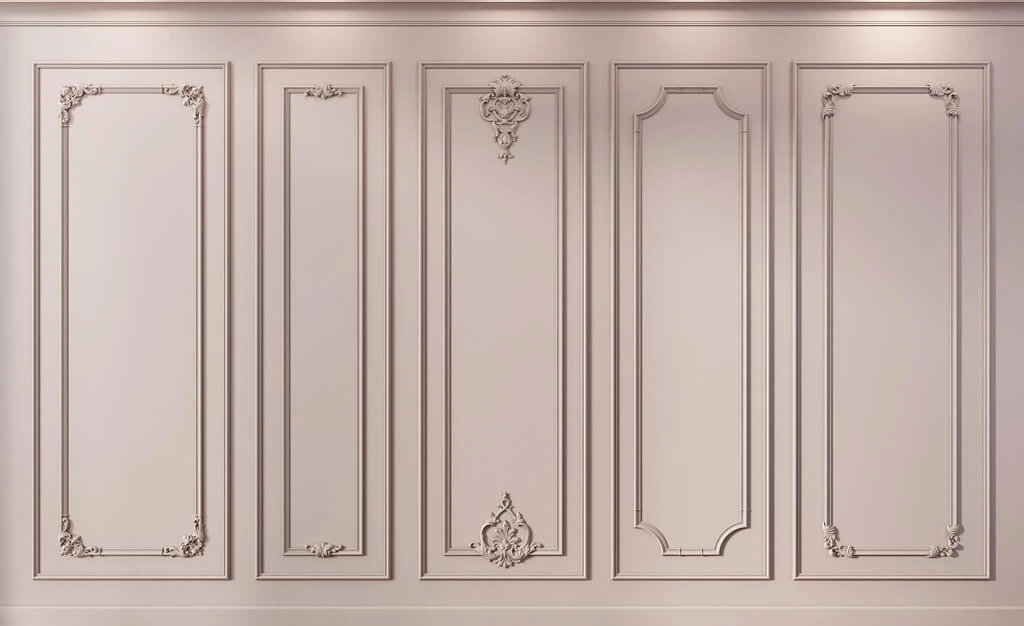
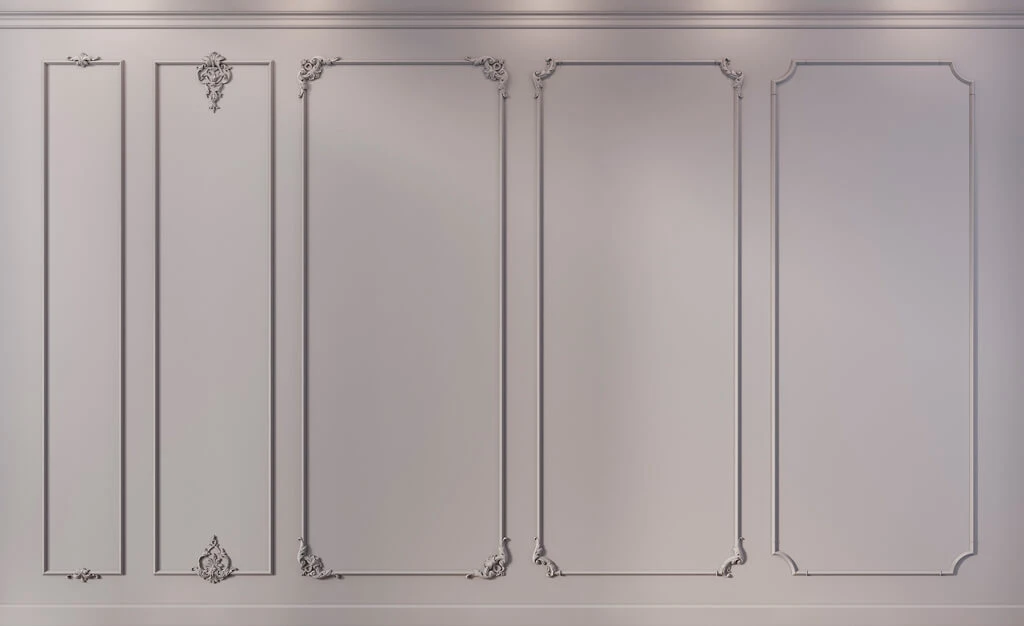
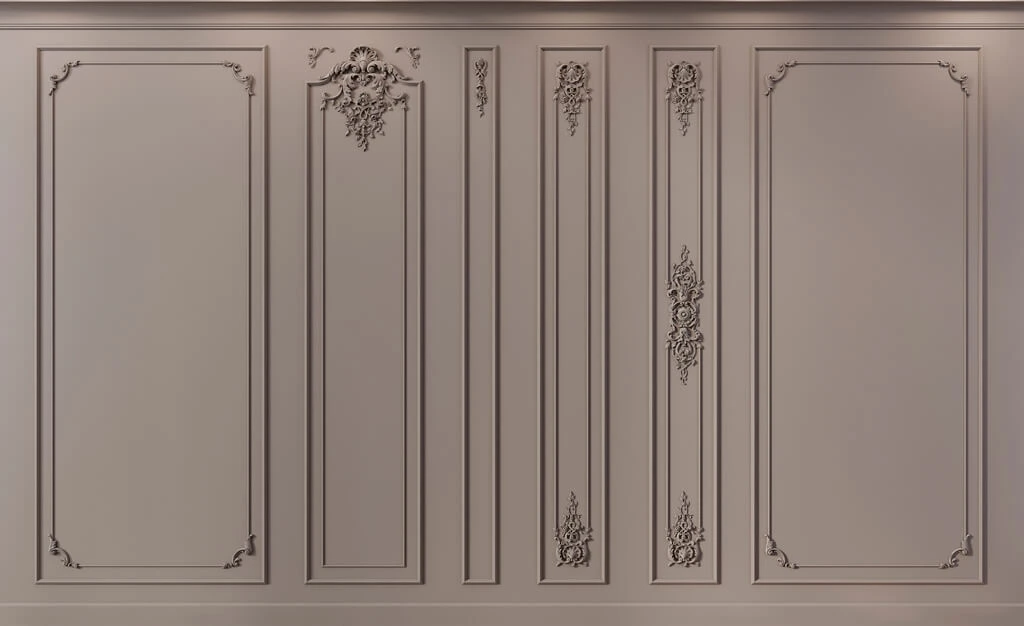























Article Contents:
- Product basis: what exactly we choose
- Specification table for selecting decorative overlays under enamel
- Central decorative overlay
- Corner Elements
- Paired symmetrical overlays
- Vertical and horizontal elements
- Decorative sets
- Wardrobe in the bedroom or hallway
- Kitchen fronts
- Chest of drawers, bedside table, and console
- Sideboard, display cabinet, and dining area
- Doors, panels, and interior inserts
- Beech for enamel
- Oak for tinting and complex coatings
- Why you shouldn't choose material by eye
- Small facade
- Medium facade
- Large facade
- Example of a simple markup formula
- Set for a wardrobe
- Set for a kitchen
- Set for a dresser
- Set for sideboard or display cabinet
- Which decorative overlays are best to choose for enamel?
- Can wooden overlays be painted before installation?
- How does a center overlay differ from a corner overlay?
- How many overlays are needed for one facade?
- Can the same decor be used on a kitchen, wardrobe, and chest of drawers?
- Are decorative overlays suitable for restoring old furniture?
- What is better for enamel: beech or oak?
- Do I need to buy overlays in pairs?
- Can carved overlays be installed on kitchen facades?
- How to avoid mistakes with the overlay size?
- What to clarify with the STAVROS manager before purchasing?
- Can overlays be combined with sockets, handles, and legs?
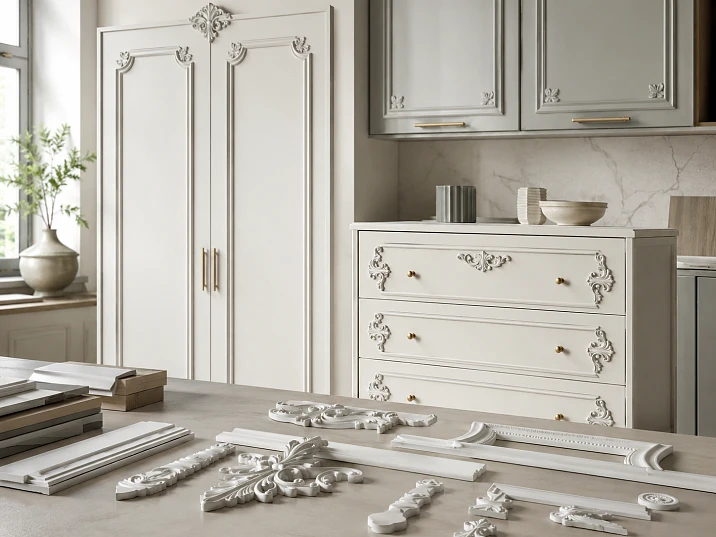
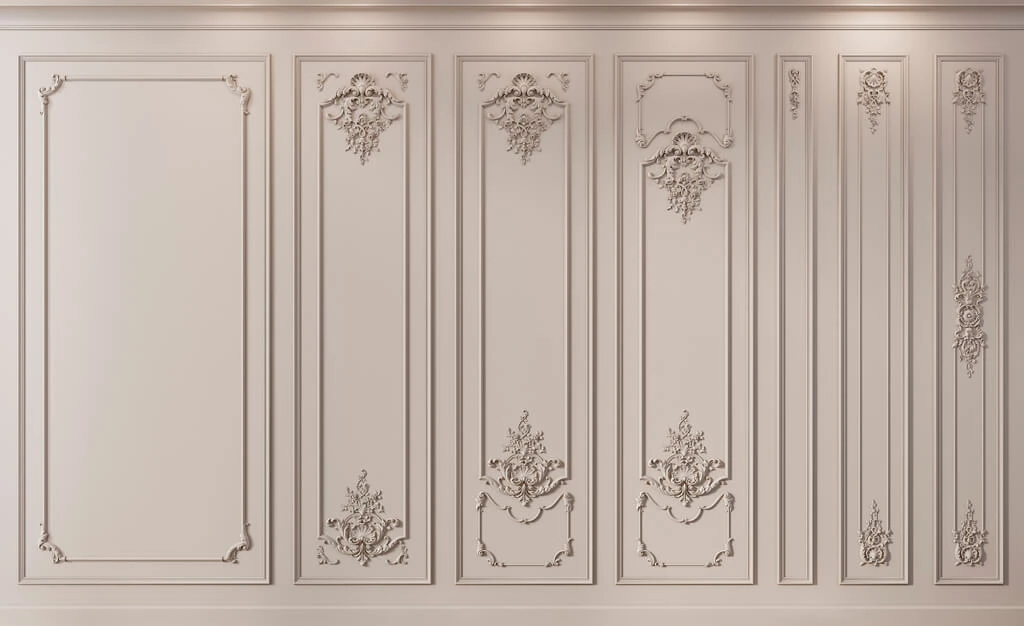
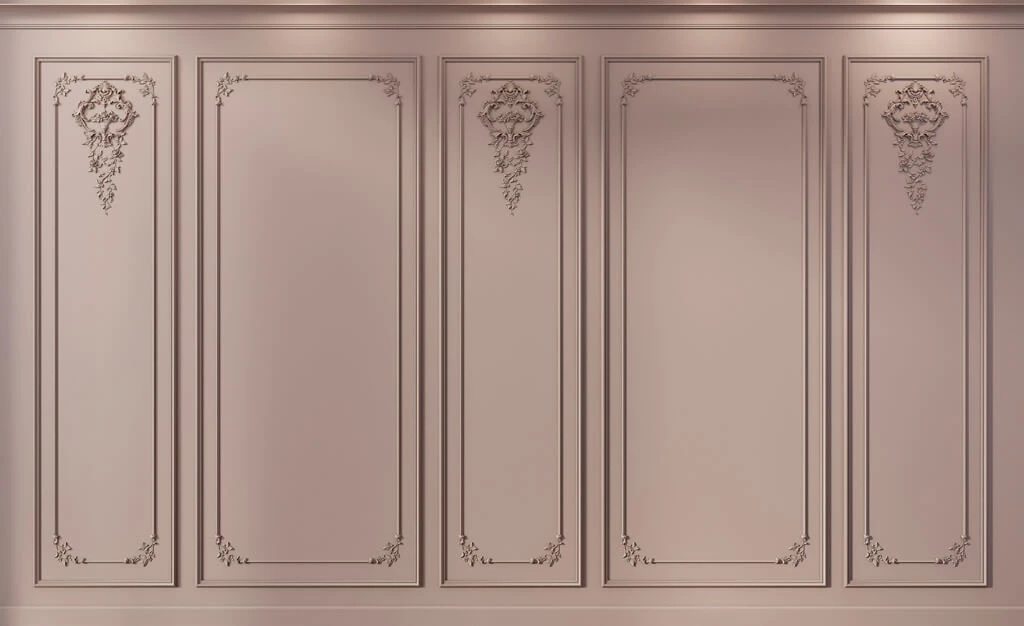
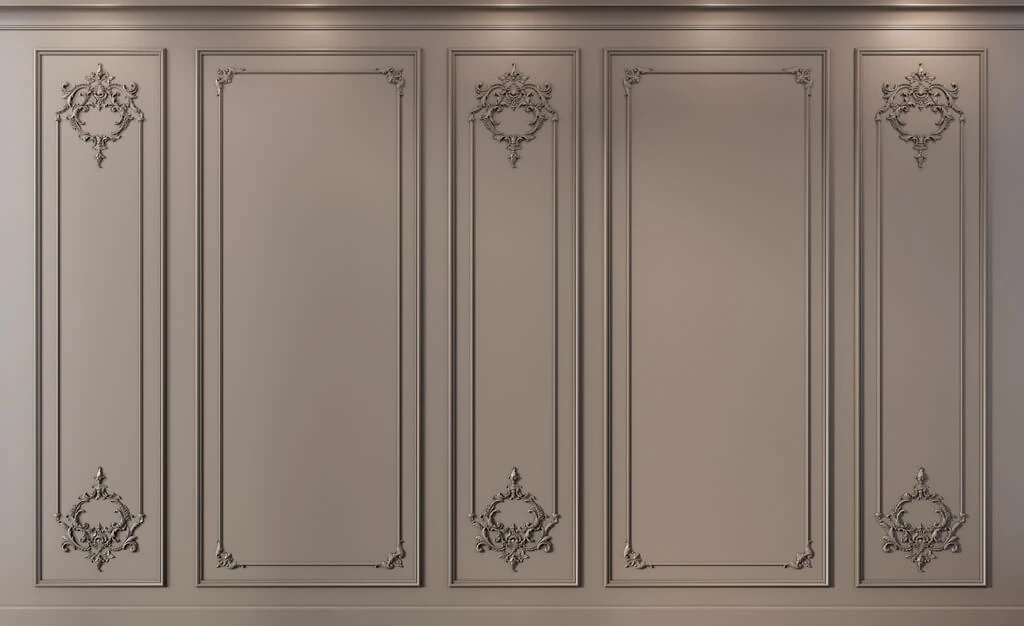
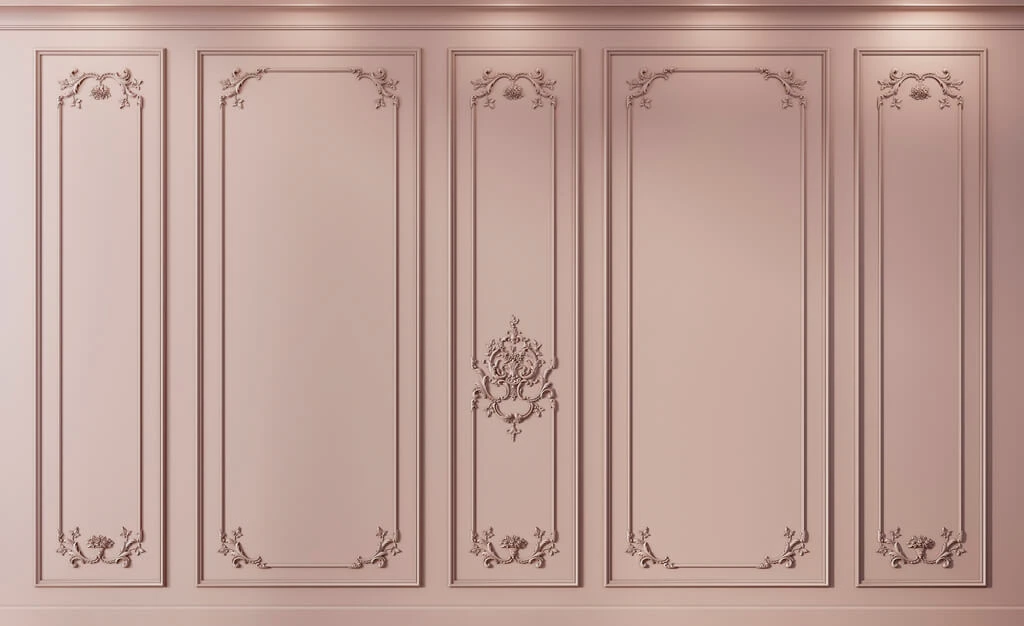
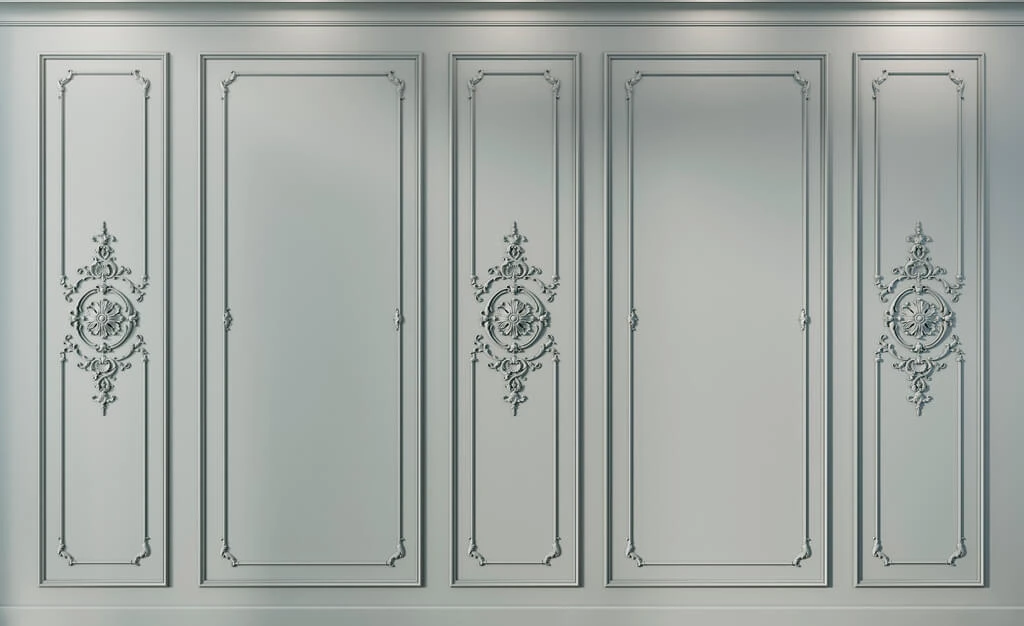
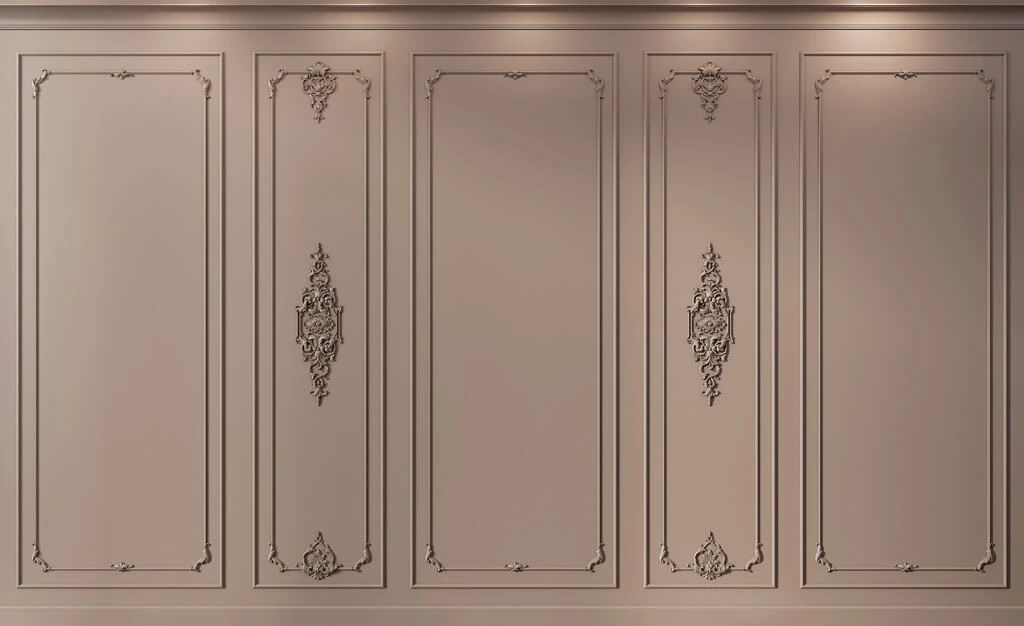
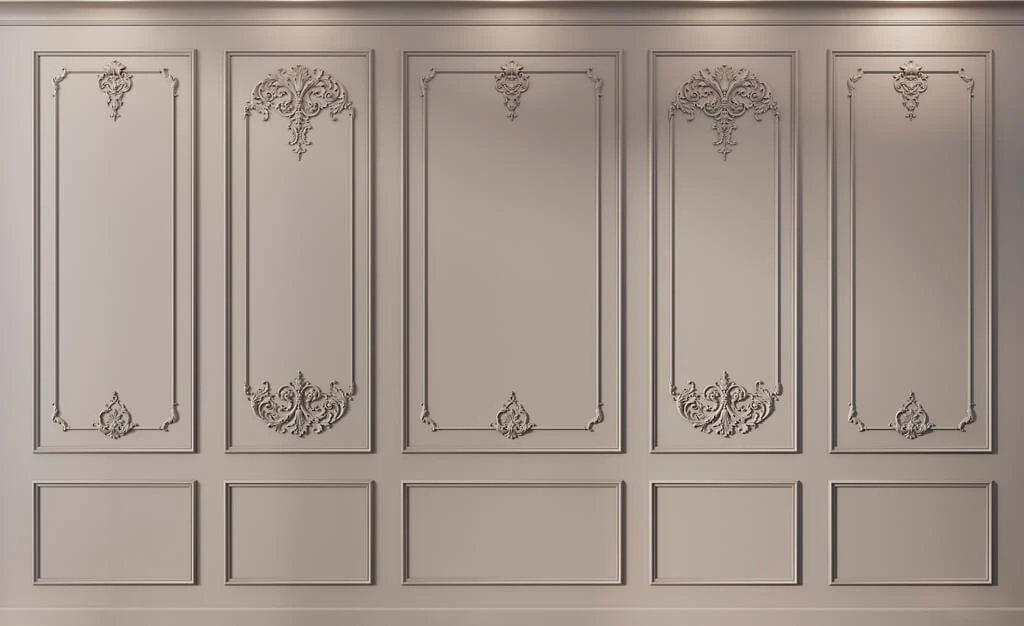
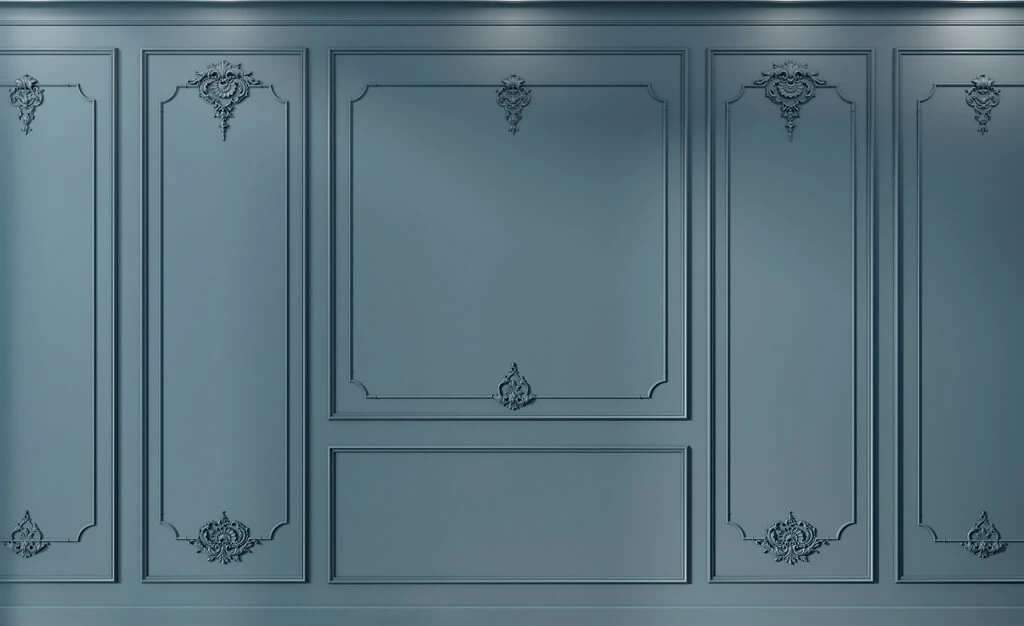
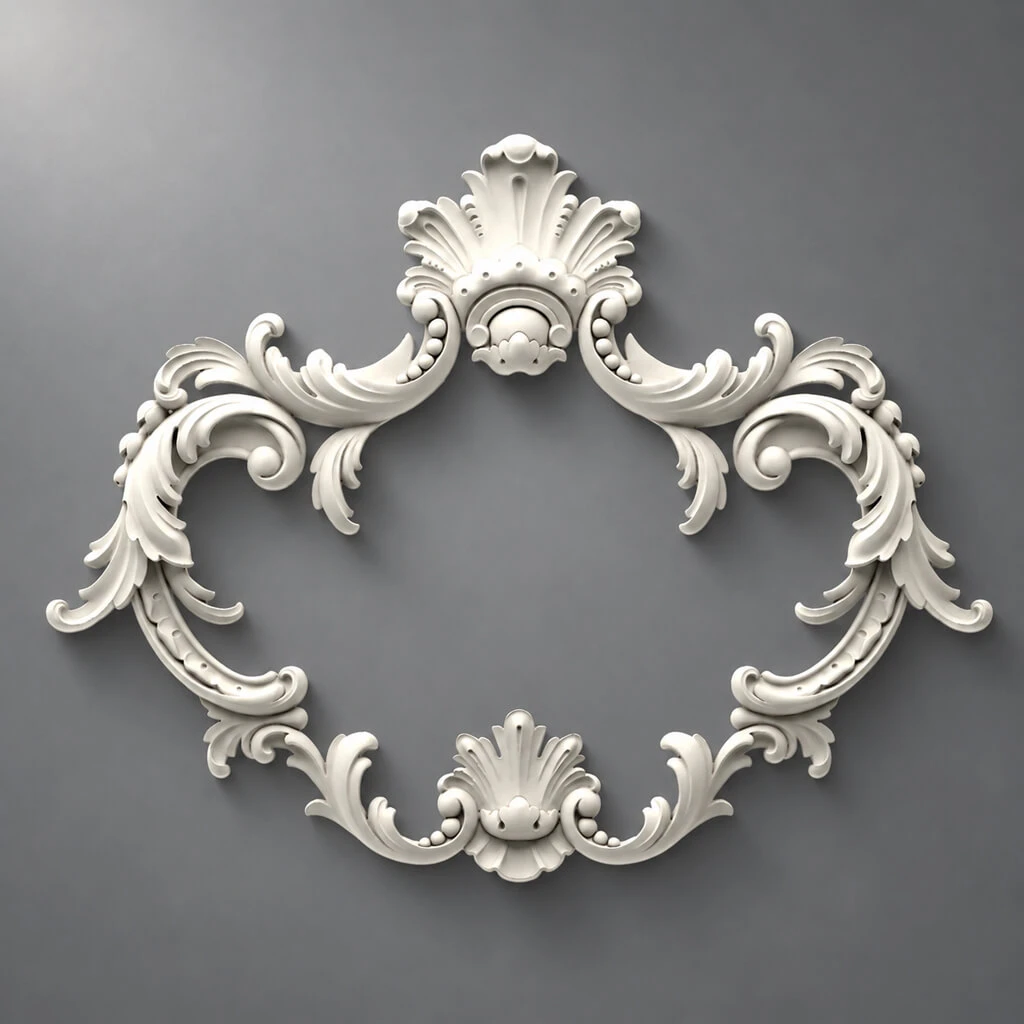
Decorative overlays for furniture under enamel help turn a plain flat facade into an expressive interior detail: with relief, symmetry, classic pattern, and a sense of finished joinery. They are chosen not only for restoring old furniture but also for new projects: cabinets, kitchens, chests of drawers, sideboards, display cases, nightstands, door panels, and interior panels.
The buyer's main task is not just to buy a beautiful carved detail, but to assemble a set that will look cohesive after painting. The central overlay should match the scale of the facade, corner elements should support the frame, paired details should maintain symmetry, and the material and surface preparation should be suitable for enamel. If you choose everything separately and without a system, the furniture may end up overloaded, random, or, conversely, too empty.
In the STAVROS catalog you can select Decorative wooden inlays for furniture facades, and also link them with other elements: sockets, moldings, handles, legs, pilasters, and brackets. This approach is especially important when you need to decorate not just one facade, but an entire piece of furniture or even a set: a wardrobe in the bedroom, a kitchen-living room, a chest of drawers in the hallway, a sideboard in the dining room.
In this article, we will look at how to choose wooden decorative overlays for furniture specifically for enamel: which elements are included in the set, how to account for the facade size, how decor differs for a kitchen, wardrobe, and chest of drawers, how not to overload the composition, and what to clarify in the product card before ordering.
Product basis: what exactly we are choosing
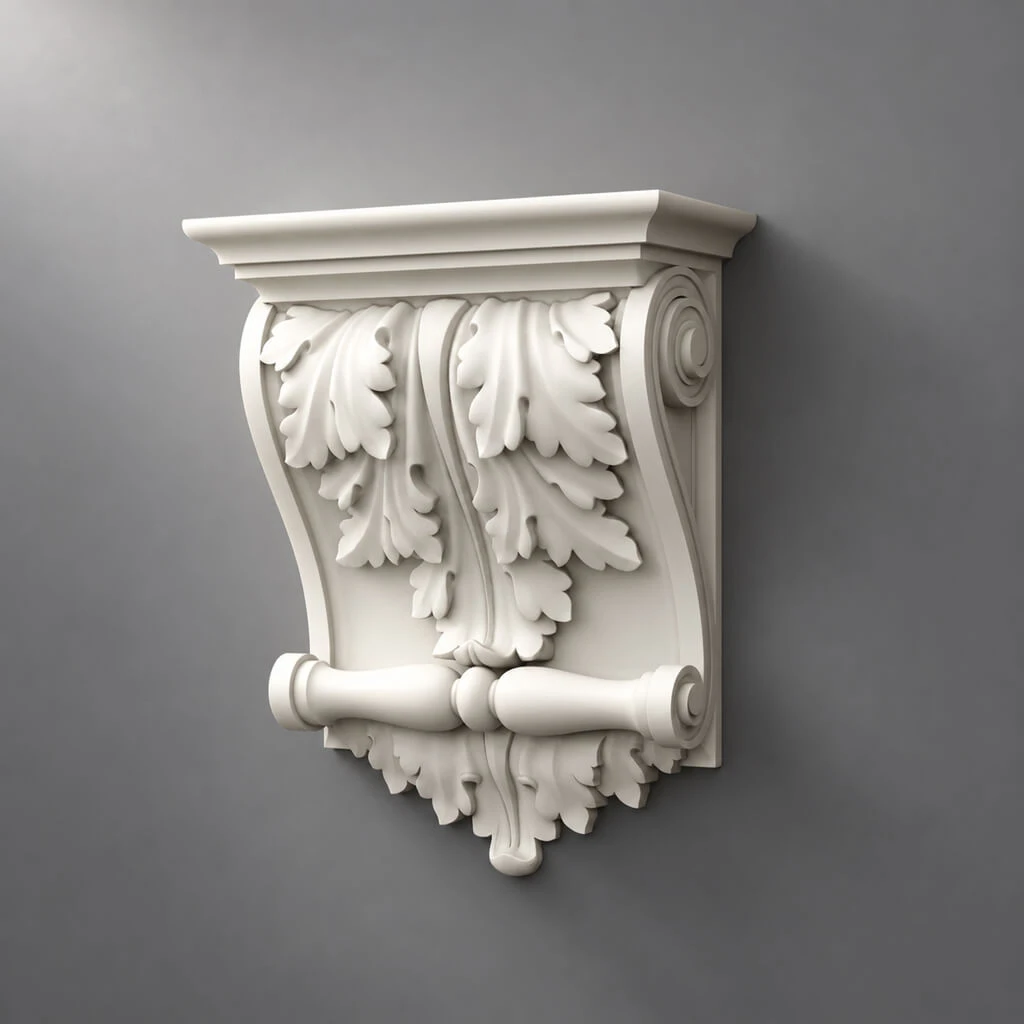
A decorative overlay is a relief element that is installed on the facade, frame, panel, side, cornice part, or other visible plane of furniture. Unlike a simple smooth strip, the overlay works as an artistic accent: it sets the style, emphasizes the axis, gathers the composition around the center, or completes the corners.
For furniture under enamel, three qualities are especially important. First, a readable relief. After primer, enamel, and possible final touch-up, a fine pattern may become more subdued, so it is better to assess the depth of carving and the scale of the ornament in advance. Second, the material. Wood gives the feeling of a real joinery detail, not a temporary decorative layer. Third, surface preparation. For painting, the quality of sanding, gluing, and how the product will behave after coating application matter.
In the section Carved wooden decoration STAVROS offers various elements for furniture, walls, and interior ensembles. For the purpose of this article, the main section is decorative overlays, as they most often become the face of furniture fronts.
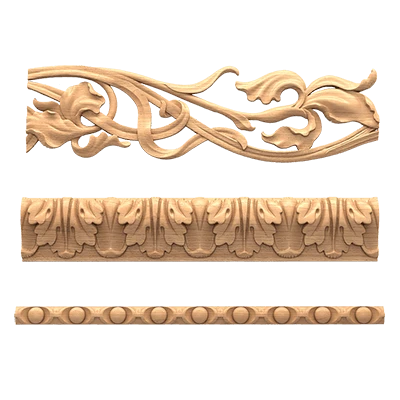
Overlays can be central, corner, horizontal, vertical, straight, curved, oval, rectangular, round, or asymmetrical. The catalog also includes decor kits where several elements are designed for combined use. This is convenient when you need not just one piece but to create a composition for a large facade, display case, cabinet, or sideboard.
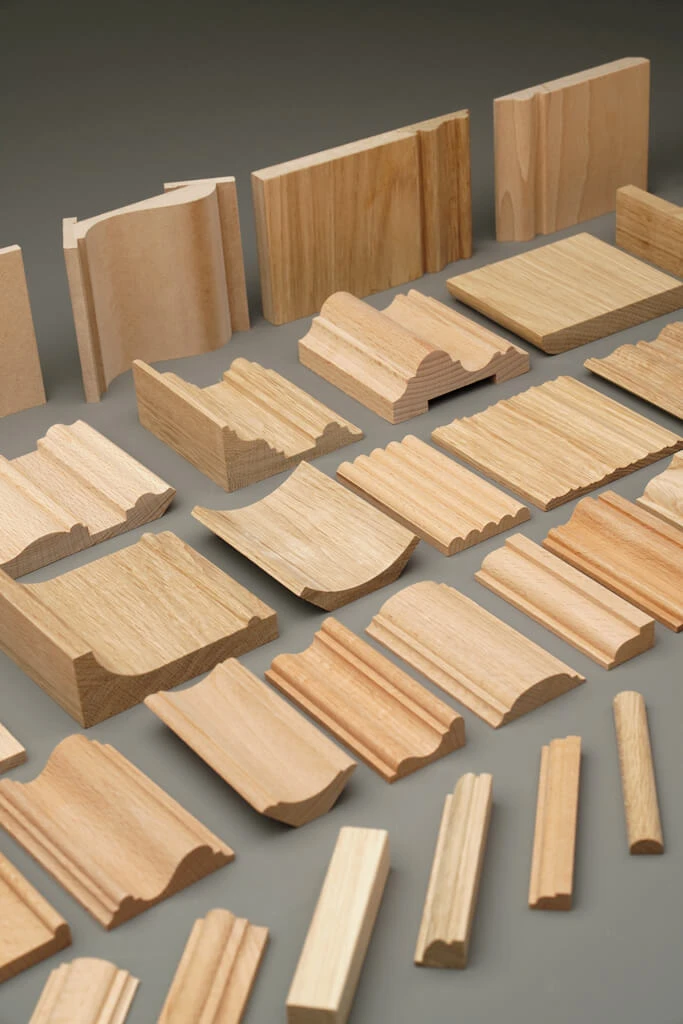
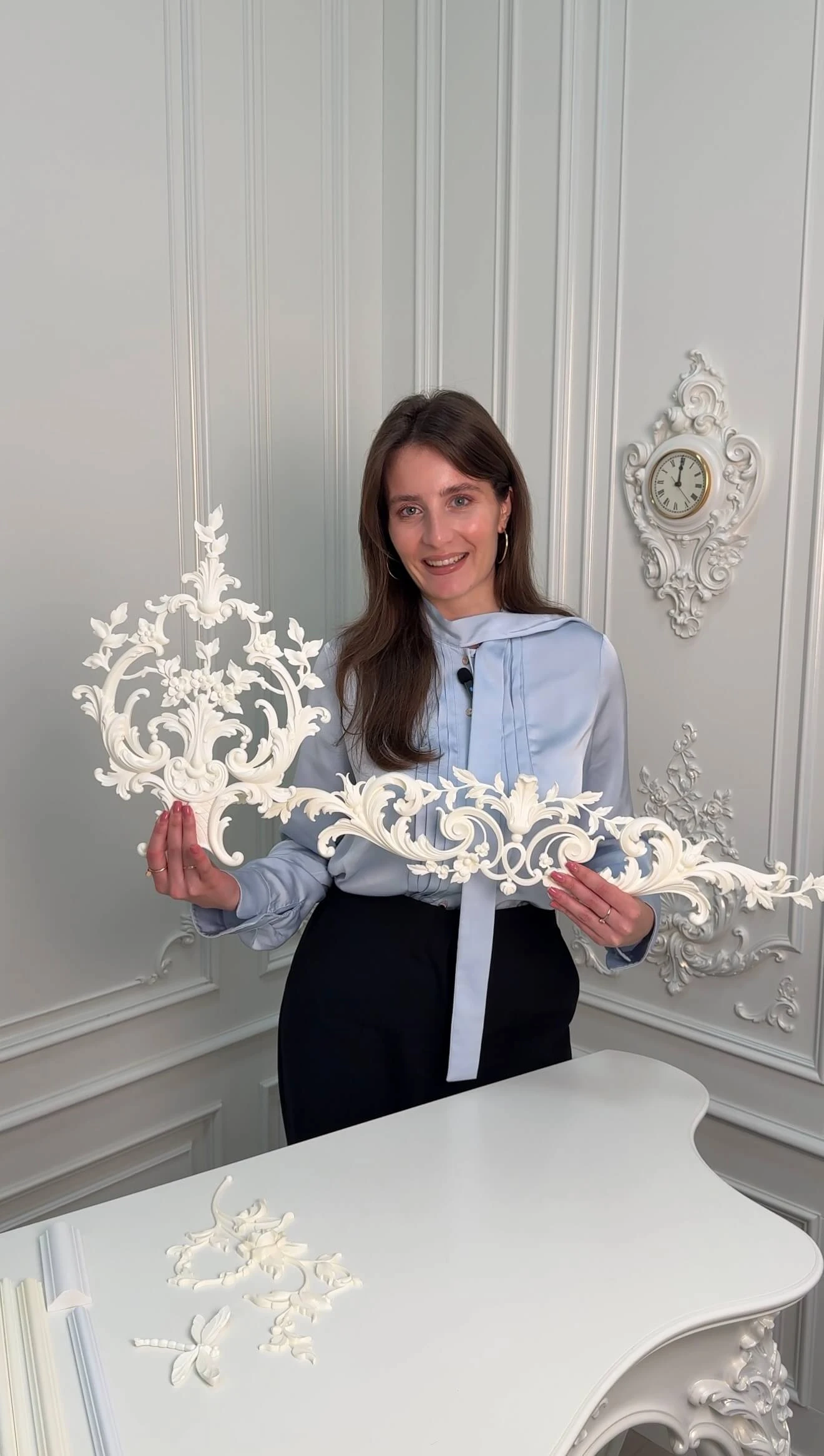


Specification table for selecting decorative overlays for enamel
| Parameter | What to consider before purchasing |
|---|---|
| Model / product group | STAVROS decorative overlays, individual carved overlays, and decor kits. The specific model is selected in the product card. |
| Product type | Overlay, decor kit, mascaron, central element, corner element, vertical or horizontal piece. |
| Size | The product cards specify dimensions A × B × C in millimeters. For example, individual models may have several size options, while kits have an overall dimension and composition. |
| Material | Beech and oak are found in confirmed product cards. For a specific item, the material should be checked in the product card. |
| Preparation / finish | In the product cards of individual items, the options "for enamel" and "for tinting" are indicated, as well as the grinding quality "Standard" and "Prestige". |
| Purpose | Facades of cabinets, kitchens, chests of drawers, bedside tables, sideboards, display cases, decorative panels, door and wall compositions. |
| Selection features | The scale of the facade, symmetry, depth of relief, repeatability of the ornament, compatibility with handles, moldings and legs are important. |
| Order conditions | In the product cards of individual items, availability or production to order may be indicated. The current status, lead time, price and configuration should be checked on the product page or with a STAVROS manager. |
| What to clarify additionally | Installation method, compatibility with the facade base, need for glue or fasteners, preparation for a specific enamel, number of elements per facade. |
Our factory also produces:
Why a comprehensive approach is needed for enamel
Enamel unifies furniture visually. It hides the natural color of wood, evens out the tone of facades and decor, making the relief part of a single plane. Therefore, the overlay for enamel should work not as a separate decoration, but as a fragment of the overall furniture architecture.
Imagine a cabinet with two tall doors. If you place one small overlay in the center of each door, the facades may look empty: large unfilled areas remain at the top and bottom. If you add corner elements, thin frames or vertical details, the composition becomes cohesive. But if you take too large overlays, the facade will lose lightness, and the pattern will start to conflict with handles and moldings.
The task in the kitchen is different. There are many repetitive doors and drawers here. The same large motif on each facade can quickly create visual noise. For the kitchen, moderate overlays, neat corners, small central elements, or repeated decor only on upper, display, or accent facades are more suitable.
A chest of drawers requires a third approach. It usually has a horizontal rhythm: several drawers, handles, a top surface, legs. Overlays should not interfere with opening, conflict with handles, or fragment the facade too finely. Here, a scheme often works: one central accent on a large drawer, paired elements on the sides, thin decor around the frame, or small corner details.
Under enamel, proportion errors are especially noticeable. When the entire item is painted one color, you can no longer 'save' the composition with material contrast. Everything relies on relief, shadows, correct distances, and scale. Therefore, first choose a scheme, then select elements, then check dimensions, and only after that place the order.
Get Consultation
What decorative overlays are included in the facade kit
A kit does not always mean a ready-made set in one card. Sometimes a kit is assembled from several items: a central overlay, corner elements, paired parts, moldings, rosettes, and hardware. The main thing is that all parts follow one idea.
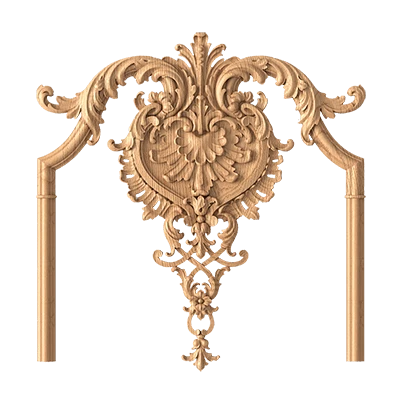
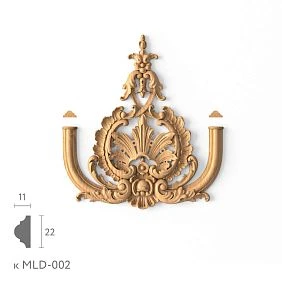
Central decorative overlay
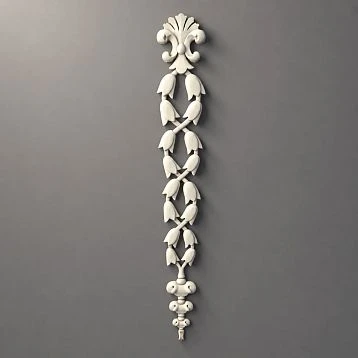
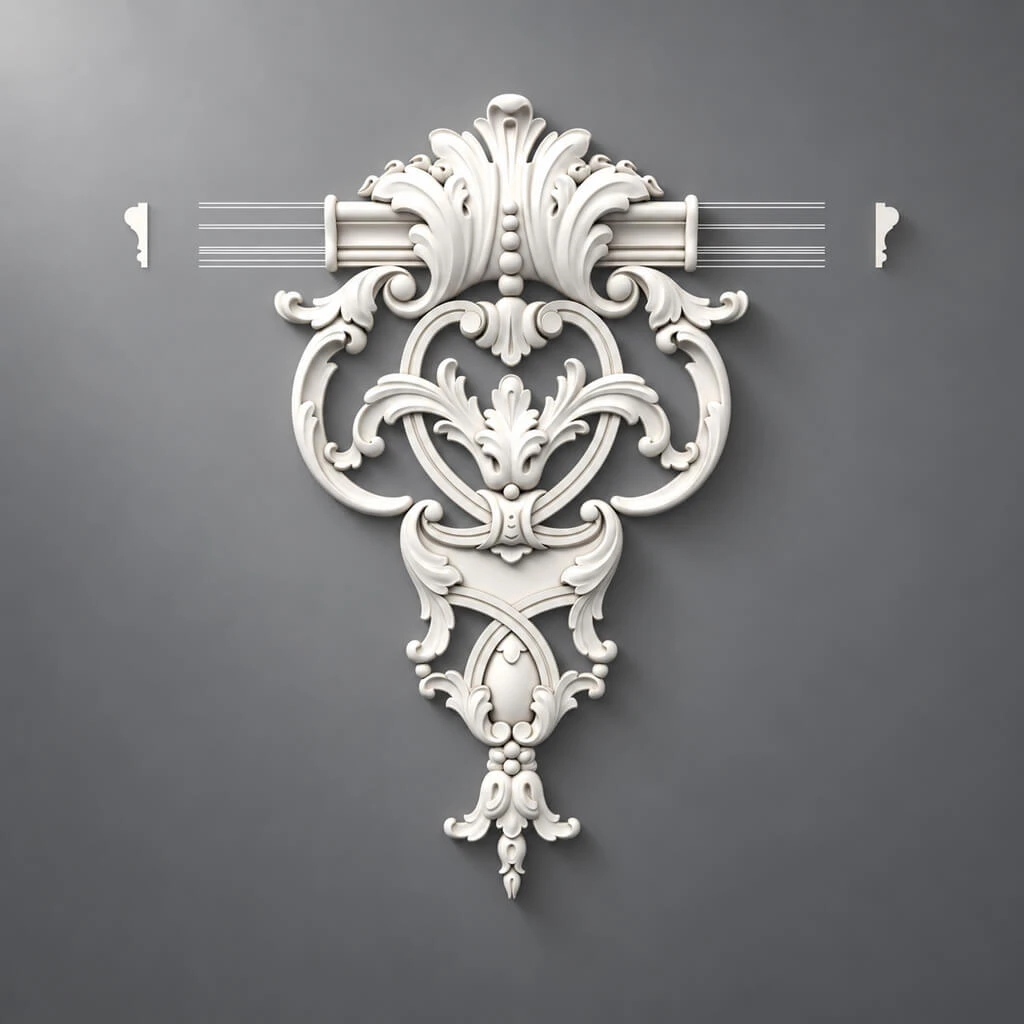
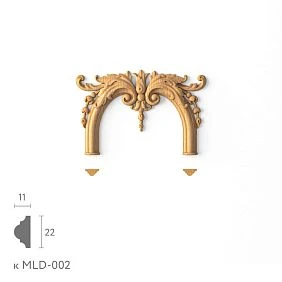
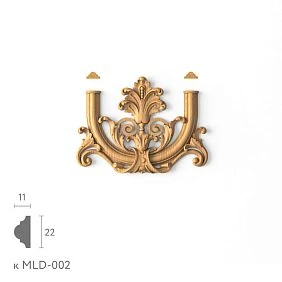
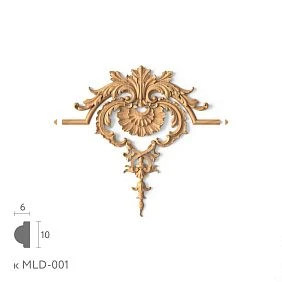
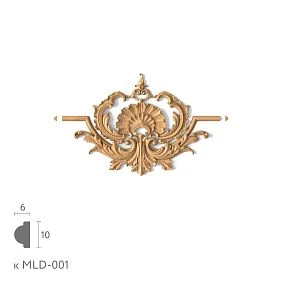
The central overlay is the main accent of the facade. It is located along the axis of the door, drawer, decorative panel, or leaf. Such an element immediately attracts attention and sets the style: classic, Empire, floral, geometric, rocaille, more strict, or more decorative.
For a wardrobe, the central overlay can be vertically elongated. It supports the height of the leaf and makes the facade more architectural. For a chest of drawers, a more compact element is often chosen, which does not interfere with the handle and does not conflict with the horizontal rhythm of the drawers. For the kitchen, central decor is best used sparingly: for example, on display facades, tall cabinets, an island, or decorative ends.
A good central element should not be a random spot. It should have air around it. If the overlay is too close to the edge of the facade, it looks cramped. If it is too small for a large leaf, it gets lost. Before purchasing, it is useful to make a simple markup on the facade with painter's tape: mark the center, the boundaries of the future frame, the handle location, and the estimated size of the overlay.
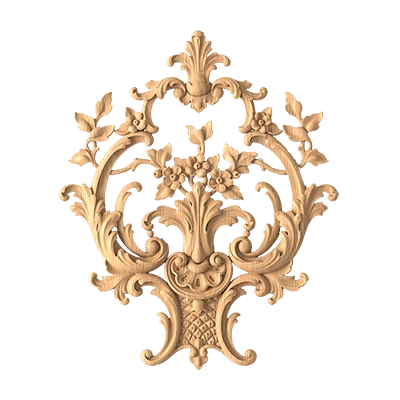
In the catalog, you can see examples of individual models, for example Wooden Decor N-106 or Wooden Decor N-154.1They show why it's important to look not only at the pattern, but also at the size, thickness, material, and surface preparation in the card.
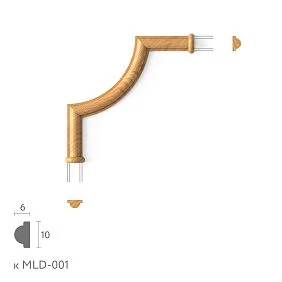
Corner elements
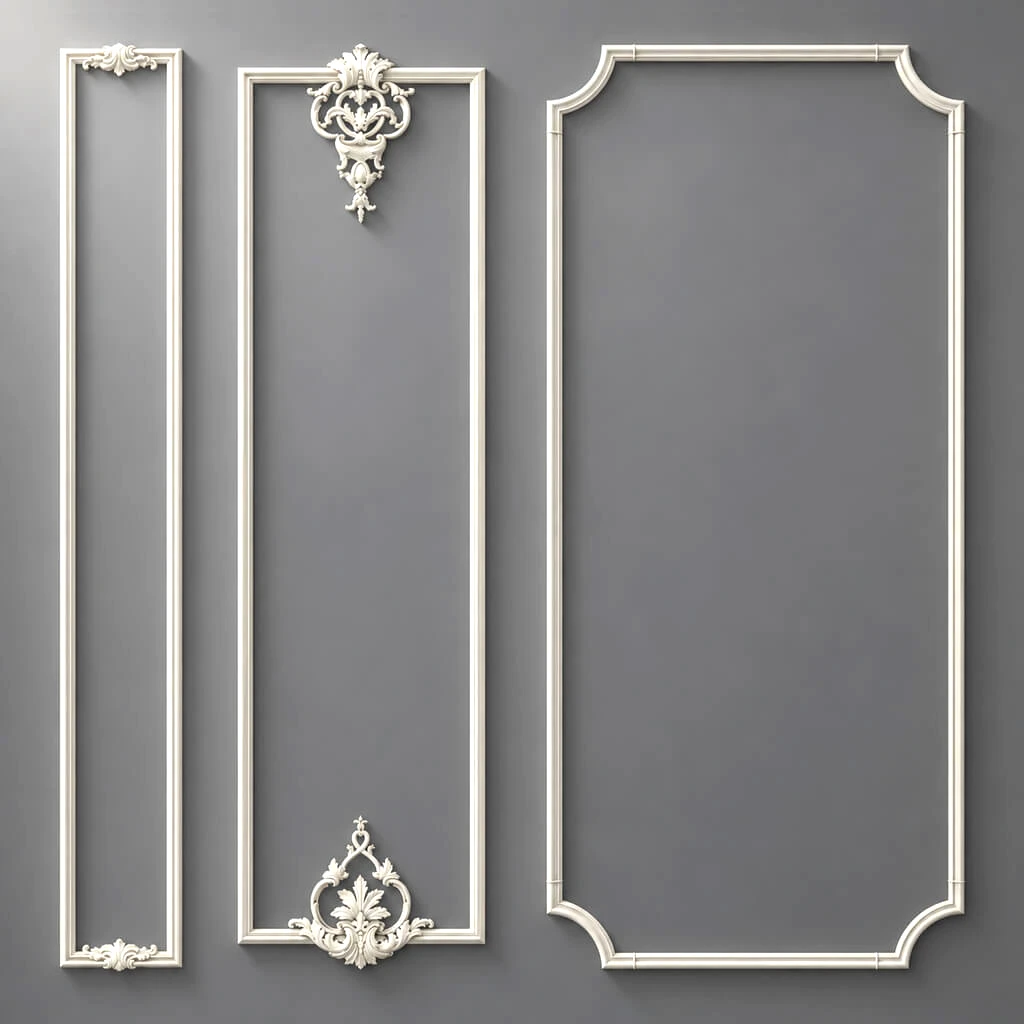
Corner overlays help frame a frame, panel, rectangular facade, or decorative panel. They work softer than the central element but greatly influence the feeling of completeness. Without corners, a facade with molding can look strict and flat, while with corner decor it appears more furniture-like, classic, and well-thought-out.
Corners are especially useful for dressers and kitchen facades. They don't occupy the center, don't interfere with the handle, but add relief. On cabinets, corner elements can be used around a large central area: at the top and bottom, in the corners of the frame, or at transition points to the cornice.
When choosing corner overlays, it's important to maintain mirror symmetry. If the element has a left and right orientation, one side cannot be replaced with the other without checking. Visually, this is immediately noticeable: the curl faces the wrong way, the pattern loses direction, and the facade looks like it's assembled from random leftovers.
For more complex solutions, it's useful to study the separate material on curved and corner decorative overlays. In this article, we consider corners primarily as part of a furniture set for enamel.
Paired symmetrical overlays
Pairing is needed where furniture has two doors, two side zones, two identical drawers, or repeating facades. Symmetrical overlays make the piece visually calmer and more expensive because the eye reads order.
On a two-door cabinet, paired elements can be arranged mirror-symmetrically: on each door, an identical central overlay, with handles or a vertical joint between them. On a sideboard, paired details can support display doors. On a dresser, they can stand at the edges of a wide drawer, leaving the handle in the center.
The error occurs when paired decor is purchased without considering the distance between facades. For example, two beautiful overlays on adjacent doors may end up too close to each other at the central joint. As a result, the middle of the furniture becomes overloaded, while the edges remain empty. Therefore, when marking, you need to look not only at the individual facade but at the entire piece as a whole.
Vertical and horizontal elements
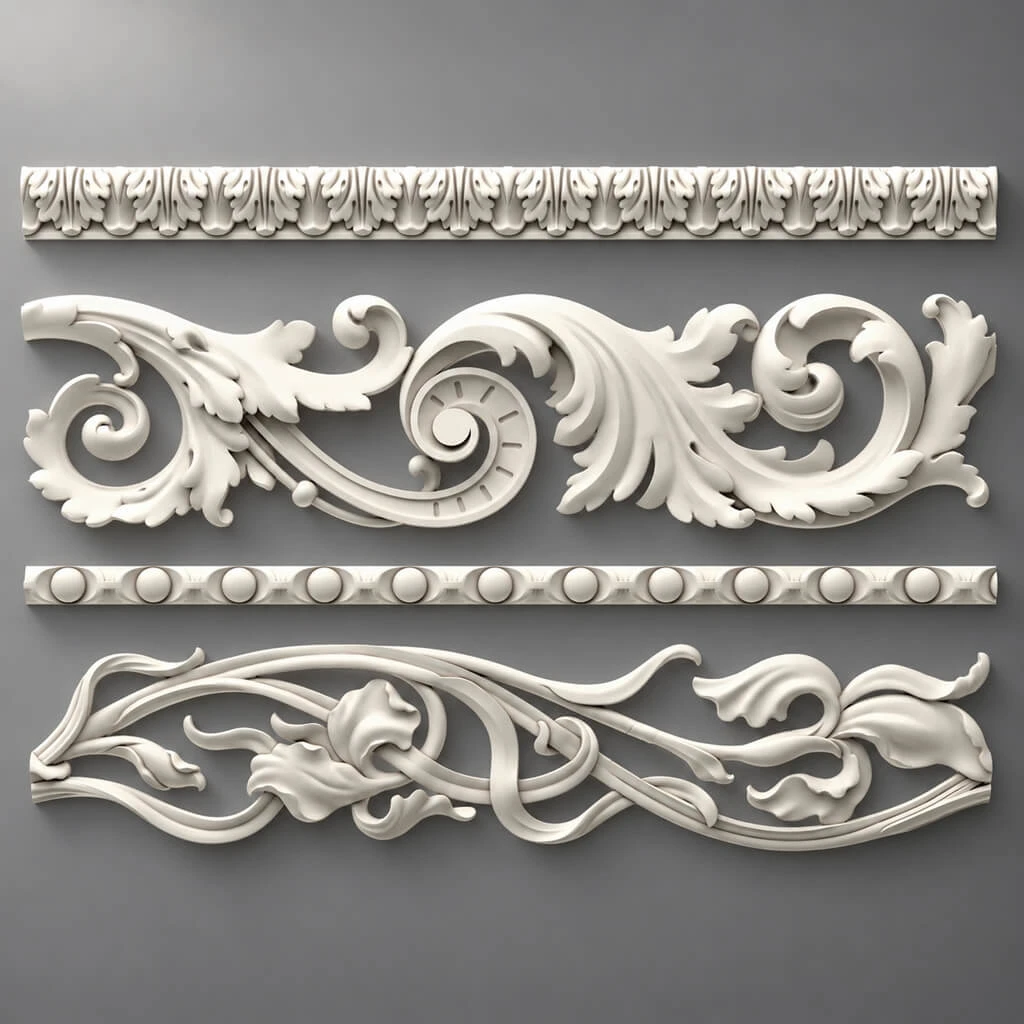
Vertical overlays elongate the facade. They work well on cabinets, tall cupboards, high doors, side panels, display case posts. Horizontal elements, on the contrary, emphasize width: they are used on chests of drawers, baseboards, top lintels, cornice areas, wide drawers.
If the furniture is low, an overly long vertical overlay may look heavy. If the facade is tall, a small horizontal element may get lost. You need to consider the direction of the furniture itself. A tall cabinet loves verticality. A chest of drawers loves horizontality. A kitchen loves the rhythm of modules. A sideboard loves a combination of verticals, central accents, and an upper decorative belt.
Decor sets
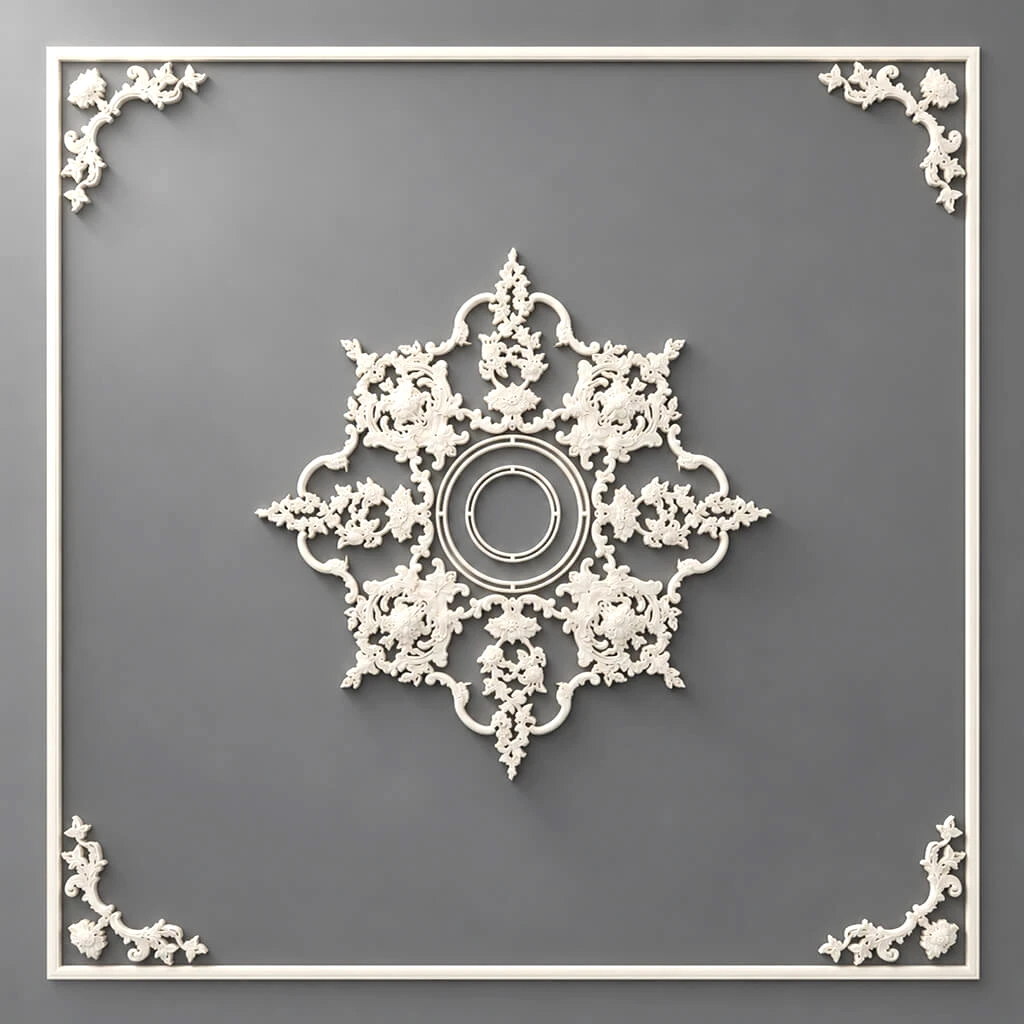
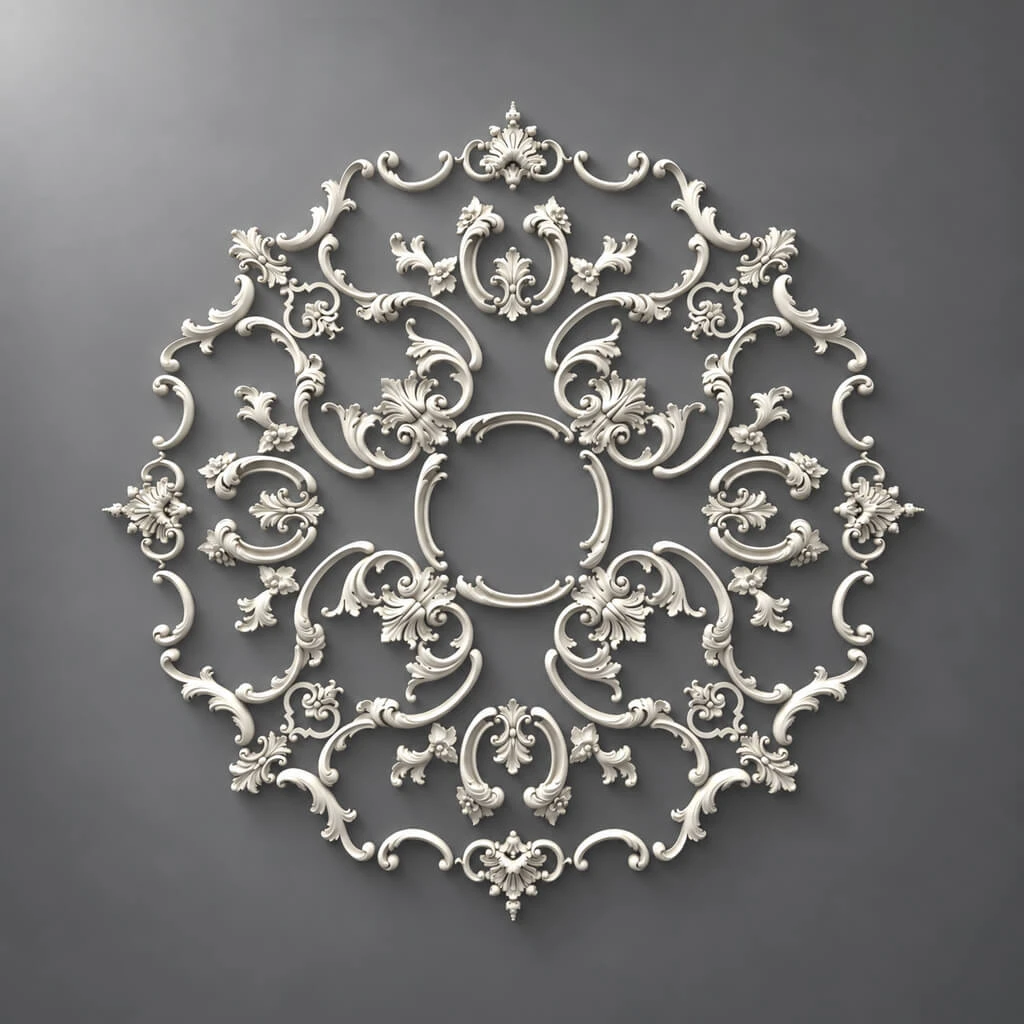
A ready-made set is convenient because several parts are already conceived as a single composition. This is especially valuable for large facades, decorative panels, sideboards, display cases, and custom furniture. For example, Decorative Set C-020 shows the logic of the set: in the card you can see the overall size, materials, preparation, and composition.
A set is not always needed for a small door. But if the facade is large and the task is to create an expressive central composition, a set may be more rational than independently selecting many small elements. The buyer gets not just "several overlays" but a system where the parts are interconnected in pattern and scale.
How to understand if decorative overlays suit your furniture
Before purchasing, you need to answer four questions: what facade are you decorating, what color will it be, what style is needed, and how active should the relief be. Without these answers, even a beautiful overlay may turn out to be unnecessary.
If the furniture already exists, start with its geometry. Measure the height and width of the front, the thickness of the door, the distance from the edge to the handle, the width of the frame if present. Separately note the places where the overlay should not interfere: hinges, handles, pull-out mechanisms, the joint of two doors, the opening line of the drawer.
If the furniture is only being designed, it is easier to incorporate the decor into the drawing right away. This allows you to correctly determine the height of the panel, the placement of moldings, the size of handles, and the number of overlays. For custom furniture, this is the best scenario: the decor is not glued on "afterward" but becomes part of the composition.
It is especially important to choose the color character in advance for enamel. White, milky, cream, gray, graphite, green, or blue enamel shows the relief differently. On a light surface, shadows are softer, and the decor looks calmer. On dark enamel, the relief becomes more contrasting due to light and shadow. If patina or relief highlighting is planned, the ornament can be more detailed, but the coating preparation should be discussed separately.
Style also influences the choice. For neoclassicism, calm symmetrical elements, plant motifs without excessive lushness, neat corners and frames are suitable. For Empire style, more solemn motifs, laurel, wreaths, and a pronounced axis are appropriate. For a classic sideboard, richer decor can be used. For modern furniture with a light classical note, it is better to choose one accent rather than covering the entire front with carving.
A good test: imagine the furniture without color, only in shadows. If the composition reads in monochrome, it will work well under enamel. If everything relies only on the contrast of wood and the front, the effect may weaken after painting.
Where to use decorative overlays under enamel in the interior
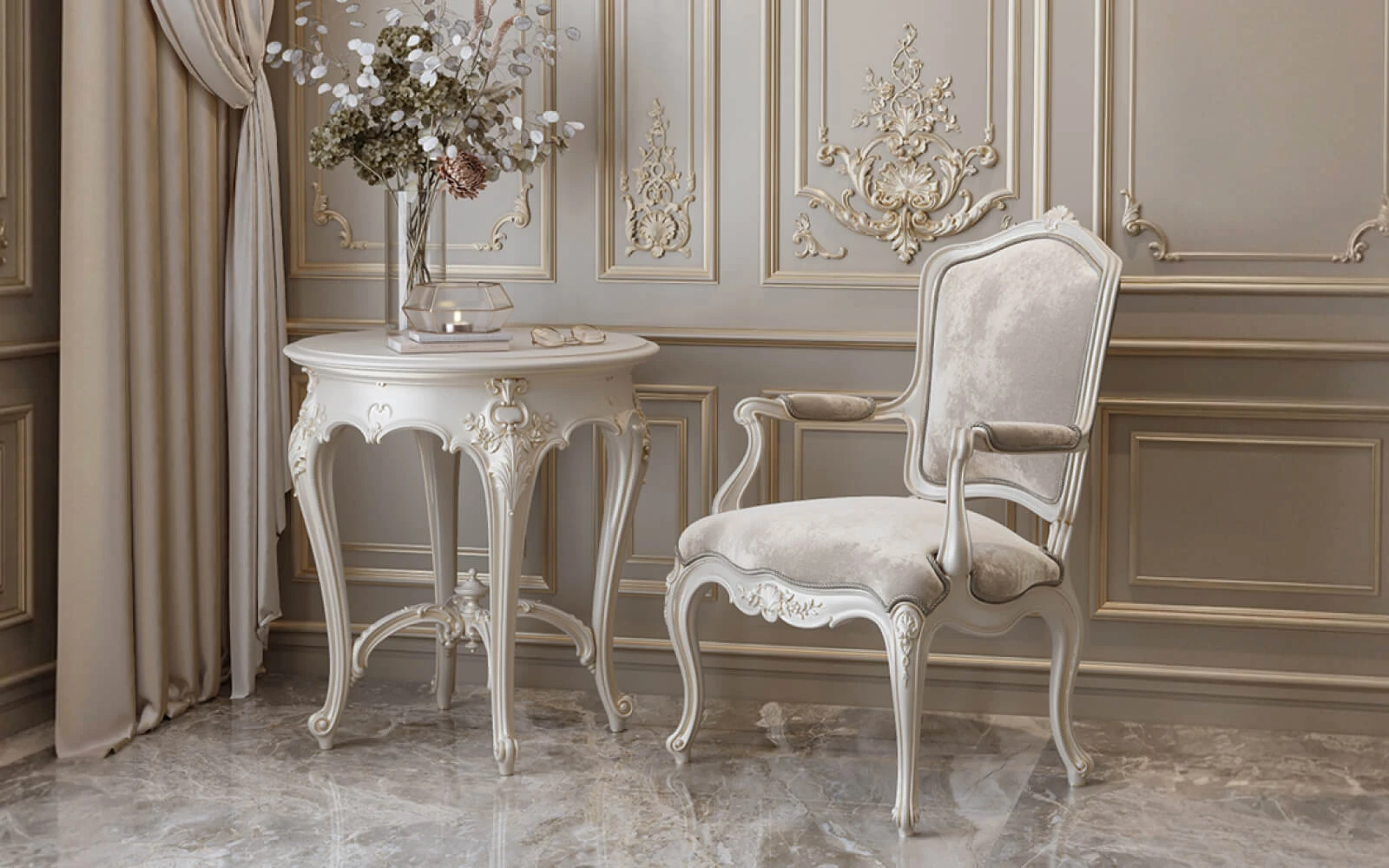
Decorative overlays are most often considered as furniture decor, but in a real interior, they work more broadly. The same motif can be repeated on a wardrobe, chest of drawers, door, wall panel, or kitchen island. This creates an ensemble rather than a set of individual items.
Wardrobe in the bedroom or hallway
A wardrobe is one of the best objects for carved decor. It has a large front area, even geometry, and a noticeable place in the room. If the wardrobe takes up an entire wall, overlays help break up the plane, add rhythm, and make built-in furniture resemble a full-fledged architectural element.
For tall doors, vertical compositions can be used: a central overlay, elongated side elements, corners around the frame, a top decorative accent. If the wardrobe has two doors, it is important to maintain mirror symmetry. If there are many fronts, it is not necessary to decorate each one identically: you can highlight the central doors while keeping the side ones calmer.
Under enamel, the cabinet becomes especially expressive. White and milky facades with relief are suitable for a classic bedroom, hallway, or dressing room. Gray and complex deep shades create a more intimate effect. But the darker the color, the more attention must be paid to dust in the relief and maintenance.
Kitchen facades
The kitchen requires discipline. Here, decorative overlays must consider not only beauty but also practicality: frequent opening, cleaning, proximity to the work area, humidity, temperature changes, grease, and steam. Therefore, carved decor is best placed where it won't constantly get dirty: on buffet zone facades, tall cabinets, upper cabinets, the island, decorative ends, and display sections.
If you want to decorate the entire kitchen, choose a calmer relief and a repeatable size. Each facade should not have too many competing details. The overlay, frame, handle, and panel must work together. Be especially careful when choosing decor for small doors: a large ornament can eat up useful surface area and make the kitchen feel heavy.
For a kitchen under enamel, the scheme "accent facades + calm base" works well. For example, the main doors remain with framed facades, while decorative overlays are placed on the hood box, island, buffet section, or tall cabinet. This gives the interior character without turning it into an overloaded set.
Chest of drawers, nightstand, and console
A chest of drawers is grateful furniture for overlays because its facade is clearly visible at eye and hand level. But a chest of drawers has many horizontals: drawers, gaps, handles, top lid, legs. The decor should emphasize this rhythm, not argue with it.
On a wide drawer, you can place a central overlay above or below the handle if there is enough space. On paired drawers, use identical small elements. On the sides, add vertical decor. On the lower part of the chest of drawers, overlays can be connected with furniture legs and supports, so that the piece looks cohesive from bottom to top.
If the chest of drawers is under enamel, handles become especially important. Too modern metal handles can ruin the classic composition, and too large ones can cover the carving. Therefore, along with overlays, you should look at Wooden furniture handlesespecially if you want to maintain a uniform material and calm pattern.
Sideboard, display cabinet and dining area
Sideboards and display cabinets allow for richer decor. Central overlays, corner elements, rosettes, vertical details, and cornice accents are appropriate here. Such pieces often stand in the dining room, living room, or kitchen-living room and become part of the formal area.
For display cabinets, it is important not to interfere with the glass. Carved decor can be placed on wooden crosspieces, lower doors, upper frieze, and side posts. If there are solid lower facades and a glass top, it is better to distribute the decor so that the lower part looks stable and the upper part looks light.
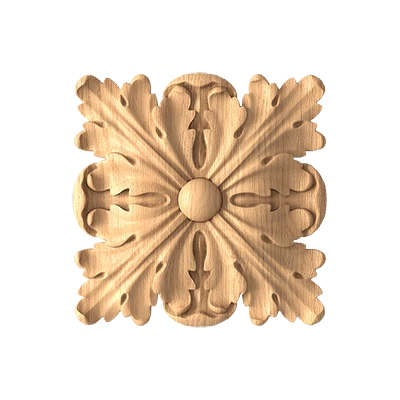
In a sideboard, the following work well rosettes for furniture facades and central overlays. A rosette can become a calm accent in a square panel, while an elongated overlay can emphasize the verticality of the door. The main thing is not to mix too many ornaments: if acanthus, laurel, and garlands are already present, adding unrelated geometry must be done very carefully.
Doors, panels, and interior inserts
Decorative overlays can be used not only on furniture. They are suitable for door leaves, wall panels, portals, and decorative frames. This is especially useful when you need to connect furniture with the room's architecture.
For example, a wardrobe in the hallway can be decorated with the same motif as the interior door. A chest of drawers in the bedroom can be supported by a wall panel behind the headboard. A sideboard in the living room can be linked to a decorative frame or portal. In such cases, the overlays become part of the interior language, not a standalone decoration.
Materials for enamel: beech, oak and surface preparation
When painting with enamel, the buyer often thinks only about color. But the material of the overlay is no less important. Wood has density, grain, reaction to humidity, processing and sanding features. Under enamel, the natural texture can be hidden, but the behavior of the base still remains significant.
In individual STAVROS product cards, beech and oak are found. Beech is often chosen for enamel because it is well perceived as a joinery base for painting. Oak can be interesting when a more expressive wood base is needed, especially if not only enamel but also tinting is considered. However, you cannot automatically transfer the material of one model to the entire catalog: the specific wood species must be checked in the card of the selected overlay.
For enamel, not only the wood species is important, but also the preparation. In individual product cards, you can find sanding quality "Standard" and "Prestige", as well as preparation options "for enamel" and "for tinting". For the buyer, this is a practical signal: the product should be selected based on the planned finish, not just by the picture.
Beech for enamel
Beech is perceived as a rational choice for painted furniture decor. If the relief will be covered with primer and enamel, the buyer needs stable shape, neat sanding, clean geometry, and predictable surface behavior. Beech is suitable for many classic and neoclassical tasks: cabinet fronts, chests of drawers, kitchen decorative elements, sideboards, display cabinets.
When choosing a beech overlay for enamel, it is worth paying attention to the size of the relief. A pattern that is too thin may become softer after painting. One that is too large will be conspicuous. The best option depends on the facade: for a kitchen, a moderate pattern is more common; for a cabinet, a larger one is possible; for a sideboard, a more saturated decor is acceptable.
Oak for tinting and complex coatings
Oak is often chosen where texture and expressiveness of the wood are important. If not opaque enamel is planned, but tinting, stain, varnish, or a combined coating, oak can look particularly interesting. But in an article about overlays for enamel, oak is also important: in some cards it is available as a material, and the buyer can compare options.
If the entire facade will be covered with dense enamel, you need to honestly assess whether oak is really needed. Sometimes for enamel, it is more rational to choose a material that better suits the painting task and project budget. If the decor will be tinted, patinated, or partially show the wood grain, oak can become a more expressive base. Always check the current material option in the card of the selected product.
Why you shouldn't choose material "by eye"
In a photo, an overlay can look almost identical in different materials, especially if the product is not painted. But after preparation, primer, enamel, sanding between layers, and the final coating, the result depends on the base. Therefore, for a responsible project, it's better to check with a STAVROS manager in advance which option suits the specific enamel, operating conditions, and facade base.
It's also important to understand that the overlay and facade can be made of different materials. For example, the facade can be wooden, veneered, MDF, or another furniture base, while the overlay is wooden. In this case, you need to choose the right glue, base preparation, and painting technology so that after installation, the elements look like a single whole.
How to choose the overlay size for the facade
Size is the most common cause of mistakes. A buyer sees a beautiful relief, adds the item to the cart, and then discovers that the overlay is too big for the door or too small for the cabinet. To avoid this, you need to evaluate not only the product's dimensions but also the facade area, distances to edges, handle placement, and the overall scale of the furniture.
In STAVROS product cards, dimensions are given in the format A × B × C. Usually, the buyer needs to understand the width, height, and thickness of the product. Thickness is especially important for furniture: a decor that protrudes too much can interfere with opening, snag, conflict with neighboring facades, or look rough on a thin door.
Small facade
For small facades of a chest of drawers, nightstand, or kitchen door, it's better to choose compact elements. Here, the decorative overlay should be an accent, not take up the entire plane. Small central motifs, corner details, and thin horizontal elements work well.
Before purchasing, check where the handle will be. If the handle is placed in the center of the drawer, the overlay should either be positioned above or below, or work around the handle. If the handle is on the side, you can use a freer central composition. The main thing is to leave enough space for the hand and not create an area that will constantly be bumped.
Medium facade
The middle facade is the most flexible zone. It could be a cabinet door, a kitchen wall unit, a dresser front, or a sideboard door. Here you can already use a central overlay and support it with corners or molding. But it's important not to turn each facade into a separate picture, especially if there are several such facades.
A good rule: one main motif per facade and one supporting technique. For example, a central overlay plus a frame. Or corner elements plus a handle. Or a vertical detail plus a calm molding. If you add everything at once, the facade will become heavy.
Large facade
A large facade requires not just a big overlay, but a composition. On a tall cabinet door, a small detail will get lost, but one huge overlay won't always solve the problem either. It's better to assemble a vertical scheme: a top accent, a central element, a lower supporting decor, a frame, or paired side details.
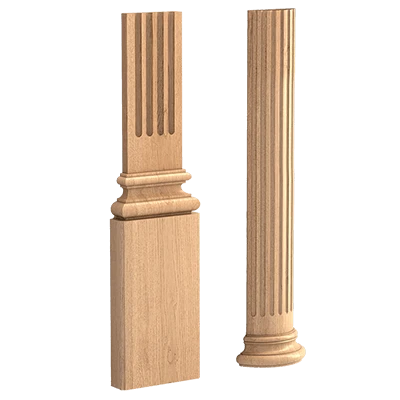
For large furniture, you can consider ready-made sets or a combination of several items from the section wooden decorative overlays. If a rich classic facade is planned, additional items may be needed wooden pilasters and columns for vertical division.
Example of a simple markup formula
First, measure the facade. Then leave margins from the edges. After that, mark the location of the handle, frame, and possible molding. Only then insert the overlay dimensions. If the overlay takes up too much of the free space, the facade will be overloaded. If it takes up too little, the decor will get lost.
To check, you can print a contour to scale or cut out a paper rectangle the size of the product. Attach it to the facade and step back a few meters. If from a distance the overlay reads as the desired accent, the size is close to correct. If it disappears or feels overwhelming, consider revising the model.
Set schemes for wardrobe, kitchen, dresser, and sideboard
The customer often asks not "which overlay is beautiful," but "how many do I need and how to arrange it." There is no universal quantity, but there are working schemes that are convenient to start from.
Set for wardrobe
For a wardrobe, you can use several levels of decor. The basic scheme is one central overlay on each door. It suits calm neoclassicism if the facades are not too large. A more expressive scheme is a central overlay plus corner elements around the frame. An even more complex one is a central vertical composition, top and bottom accents, side pilasters or moldings.
If the wardrobe is built-in and takes up the entire wall, decor helps eliminate the feeling of a flat panel. But a pause is important here. Not every door needs to be decorated equally richly. You can highlight the central block and leave the side doors calmer. This way the furniture will look lighter.
For a two-door wardrobe, mirroring is important. The overlays on the left and right doors should be at the same height. If paired elements are used, the direction of the pattern must be coordinated. If there is a vertical joint between the doors, do not place large decor too close to it.
Set for kitchen
The kitchen loves repeatability. If you choose one type of small overlay, it can be repeated on several facades. But the repetition must be justified. For example, the upper cabinets are decorated identically, the lower ones remain calmer. Or decor appears only on the island and the buffet area.
For a kitchen with enamel, three schemes are good. The first is an accent tall cabinet: decor is placed on high facades, while the other doors remain laconic. The second is an island: overlays decorate the visible side of the kitchen island, where there is no constant contact with water and grease. The third is a display zone: decor supports glass doors, upper lintels, and decorative side panels.
If the kitchen is small, you should not choose too large overlays for each facade. They will visually reduce the space. It is better to use one beautiful motif in a key area, and support the rest of the furniture with handles, molding, and enamel color.
Set for dresser
For a dresser, it's important not to interfere with function. Drawers should open easily, handles should stay in place, and relief should not be where it will be constantly bumped. Therefore, first mark the handles, then choose the decor.
For a dresser with three wide drawers, you can use a small central overlay on each drawer or highlight only the top/middle drawer. For a dresser with two doors and drawers, you can combine central elements on the doors and calmer horizontal overlays on the drawers. For a classic nightstand, corner elements and small rosettes work well.
A dresser often stands next to a mirror, sconce, painting, or decorative panel. Therefore, the overlays on it should take the surroundings into account. If there is already an active frame above the dresser, it's better to make the fronts calmer. If the wall is empty, the furniture can take on the role of a decorative center.
Set for a sideboard or display cabinet
A sideboard allows for a more formal approach. The lower part can be decorated with central overlays and corners, the upper part with rosettes, thin vertical elements, and decor on the posts. A display cabinet with enamel and glass looks especially good when the relief does not compete with the glass inserts but emphasizes the wooden structure.
Here are appropriate rosettes for furniture facades, decorative overlays, moldings, sometimes small brackets in the upper part. If the sideboard is tall, you can use vertical accents. If it is wide, use horizontal elements and symmetrical pairs.
The main mistake in a sideboard is trying to show everything at once. Rich decor looks convincing only when it has a hierarchy: a main center, supporting corners, calm frames, a repeating motif. If all elements are equally active, the eye doesn't know where to look.
How not to overload a facade with decor
Decorative wooden overlays for furniture should enhance the facade, not compete with it. Overload occurs when there are too many large elements on one plane, different ornaments are not connected to each other, handles compete with carvings, and frames unnecessarily fragment the surface.
The first rule is one main motif. If you chose acanthus, let it be the leading one. If geometry, don't add floral garlands without reason. If laurel, support it with similar calm details. Mixing styles is possible, but only with a clear design intent.
The second rule is repetition. In the kitchen, cabinet, and dresser, the same motif can be repeated in different sizes, but you shouldn't make each facade new. Repetition creates order. A random set creates the feeling of a renovation from leftovers.
The third rule is air. Relief needs space around it. If the overlay touches the handle, edge of the facade, frame, or adjacent element, it loses expressiveness. Air makes the decor more noticeable and visually more expensive.
The fourth rule is connection with hardware. The handle, leg, overlay, and molding should be of the same strength. If the handle is large and active, the overlay can be calmer. If the handle is almost invisible, the facade can be enhanced with relief. If the legs are carved, the lower decor should support them, not argue with them.
The fifth rule is checking from a distance. At arm's length, carving details are visible. From three meters, the composition is visible. Furniture in a room is perceived from a distance, so the layout should be evaluated not only up close.
Preparing overlays for painting with enamel
Painting with enamel is not just applying color. It is a chain of work: preparation, fitting, sanding, priming, painting, installation, final touch-up. The specific technology depends on the facade material, chosen enamel, operating conditions, and the master's recommendations. But it is useful for the buyer to understand the general logic.
First, the overlays are inspected. Geometry, relief, edges, front side, and matching of paired elements are checked. If the decor will be installed symmetrically, it is better to lay out the entire set on the floor or table and label the positions: left door, right door, top, bottom, center.
Then a dry fitting is done. The overlays are applied to the facade without glue, checking distances to edges, handles, frames, and adjacent doors. If necessary, the layout is adjusted. At this stage, it is easier to change the scheme than after priming and installation.
Next comes surface preparation. Relief areas require care: you cannot clog the pattern with a thick layer of primer or enamel. It is better to apply the coating so that the ornament remains readable. The edges also require attention, because they often reveal hasty work.
Overlays can be painted before or after installation. Painting before installation is convenient because it is easier to process the relief, edges, and hard-to-reach places. But after installation, final touch-up of joints may still be needed. Painting after installation helps to get a uniform layer on the facade and decor, but requires careful work in the relief.
If the facade and overlay are made of different materials, it is especially important to coordinate the primer, glue, and finish coating. You cannot simply glue decor onto an unprepared smooth surface and expect a long-lasting result. Before ordering, check with the STAVROS manager and the painting specialist what preparation is needed for your task.
Installation, placement, and practical nuances
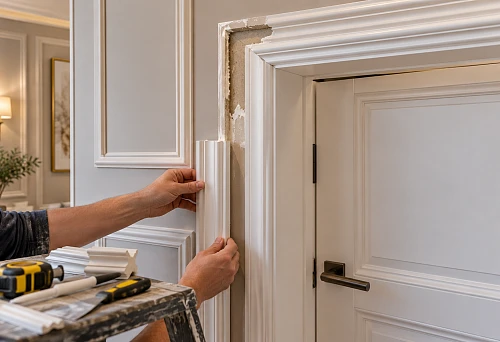
Installation of decorative overlays depends on the base, part size, weight, thickness, installation location, and future load. For small elements, adhesive fastening is often considered; for large ones, additional solutions may be required. But the exact method cannot be chosen based only on general advice: it must be coordinated with the specialist and clarified for the specific model.
Before installation, the facade must be clean, dry, level, and prepared for the chosen compound. If the surface is already painted, you need to understand whether the glue is compatible with the coating. If the facade is new, it is more convenient to mark the decor before the final painting.
It is better to make markings not "by eye" but along axes. For a central overlay, mark the vertical and horizontal axis of the facade. For corner elements, use identical offsets. For paired parts, use mirror distances. An error of a few millimeters on one facade may be almost unnoticeable, but on a series of kitchen doors, it will stand out.
If the overlay is placed on a drawer, check the movement of the facade. The relief should not interfere with the adjacent drawer, countertop, side panel, base, or handle. If the overlay is placed on a cabinet door, check the opening at a full angle. This is especially important for built-in cabinets, corner kitchens, and furniture near a wall.
After installation, remove excess glue, check the joints, allow the compound to gain strength according to the manufacturer's instructions, and only then perform finishing operations. If the decor is painted in advance, the joints can be carefully adjusted. If the painting is overall, it is important not to flood the relief and not to leave drips in the recesses.
What to buy together with decorative overlays
A comprehensive approach helps avoid a situation where the overlays are beautiful, but everything else is not connected to them. For a furniture facade, accompanying elements are often needed.
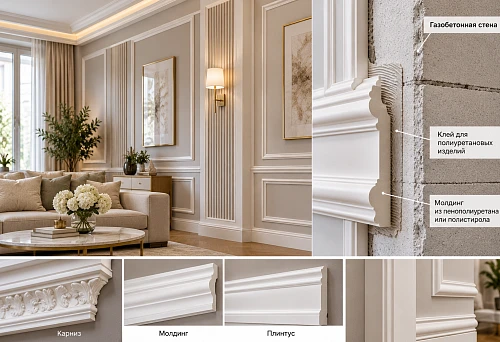
Moldings help create a frame. They define the boundary of the field within which the central overlay or rosette is placed. Without a frame, the decor may look like a randomly glued part. With a frame, it becomes part of the facade.
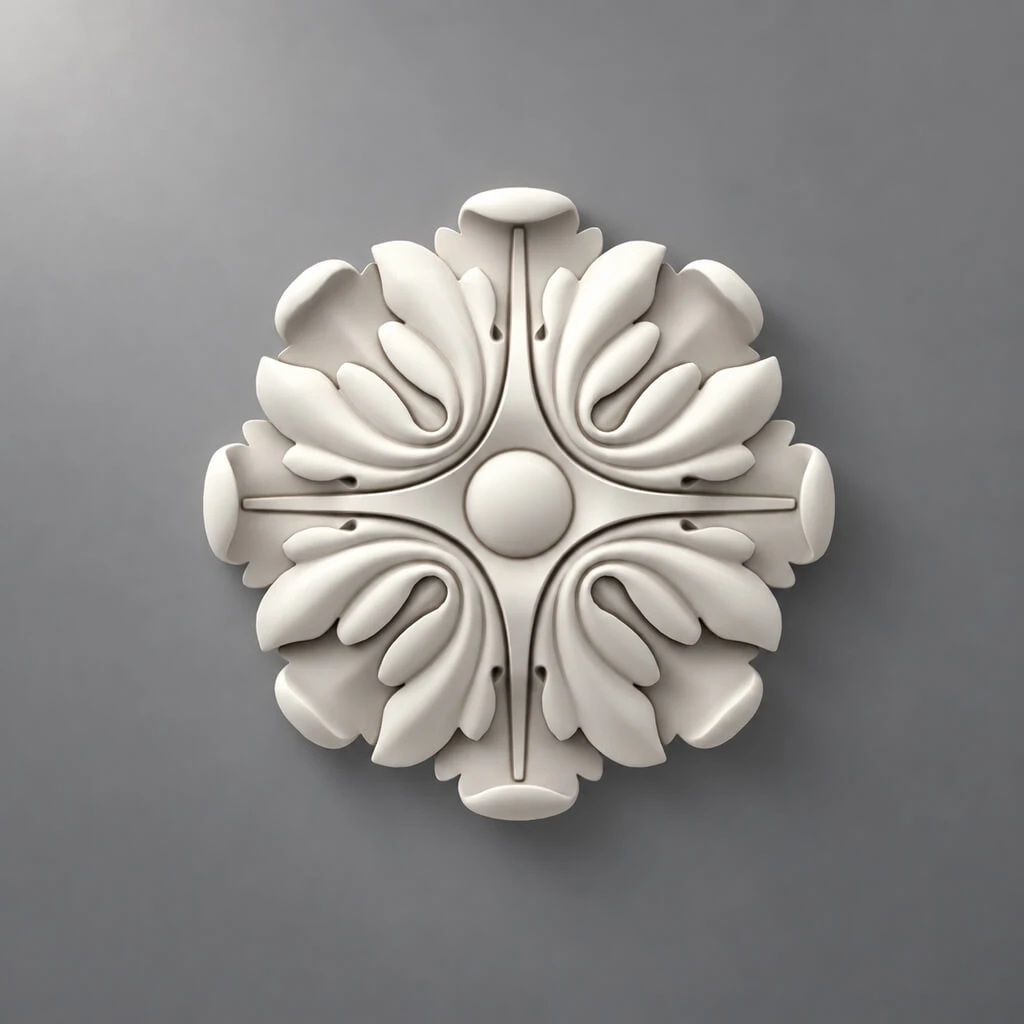
Rosettes add a center. They work especially well on square and rectangular panels, sideboards, display cabinets, and door panels. In combination with overlays, rosettes can support the overall ornament but should not conflict with it.
Handles are no less important for furniture than decor. If the facade is under enamel, the handle becomes a noticeable point of contact. Wooden handles can support carved decor, especially if the furniture is conceived as a single joinery piece. Take a look Wooden furniture handles before the final selection of overlays, so as not to
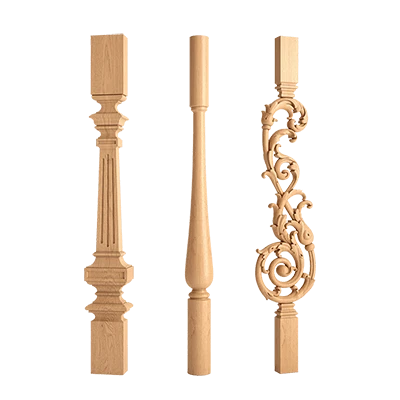
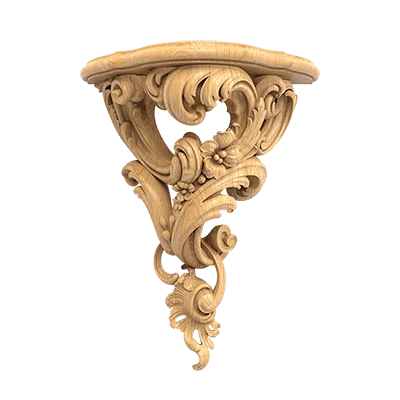
Brackets and pilasters are not always necessary, but for sideboards, display cabinets, portals, and large furniture, they can be important. Wooden Brackets help to design shelves, cornice areas, and decorative protrusions. wooden pilasters and columns help to assemble the vertical architecture of a cabinet, library, or display case.
Mistakes when buying decorative overlays for furniture
The first mistake is choosing only from a photo. The photo shows the ornament, but it is not always clear how it will fit on a specific facade. You need to look at dimensions A × B × C, thickness, material, preparation, and availability.
The second mistake is not considering the enamel. Decor that looks beautiful in wood may become too subdued or, conversely, too heavy after dense painting. Under enamel, it is better to evaluate the light and shadow and the depth of the relief in advance.
The third mistake is buying one overlay without a set plan. This is especially true for cabinets and kitchens. One element may look beautiful on its own, but on furniture, pairs, corners, repeating details, a frame, or handles in the same style will be required.
The fourth mistake is mixing different ornaments without a system. Acanthus, laurel, geometry, floral motif, shell, garland — all of this can be beautiful, but not necessarily together. If there is no design project, it is better to stick to one leading motif.
The fifth mistake is not checking the thickness. The relief overlay protrudes above the facade. On drawers, doors, corner sections, and kitchen modules, this can matter. The thickness must be verified before ordering.
The sixth mistake is forgetting about handles. A handle can cover the overlay, come too close to the relief, or ruin symmetry. Functional elements are placed first, then decor.
The seventh mistake is not clarifying the configuration. If the card shows a composition, you need to understand whether it is sold as a single item, a pair, a set, or separate pieces. This is especially important for left and right parts.
The eighth mistake is buying without a time buffer. If the product is made to order, it cannot be considered immediately available. The current lead time, availability, and shipment must be checked in the card or with a STAVROS manager.
The ninth mistake is not coordinating installation. The overlay must not only be beautiful but also properly installed. The base, adhesive, paint, weight, and operating conditions matter.
The tenth mistake is not looking at the furniture as a whole. A facade may look beautiful on its own, but in a room, it exists alongside walls, floors, lighting, textiles, doors, and other furniture. Decor should support the interior, not live on its own.
Who decorative enamel overlays are suitable for
Decorative enamel overlays are suitable for those who want to make furniture more expressive without completely replacing the structure. This is a good option for new facades, custom cabinets, kitchens with a classic character, chests of drawers, sideboards, display cabinets, nightstands, and interior panels.
They are suitable for furniture owners who value individuality. A flat facade can be bought anywhere, but a facade with properly selected carved decor looks like a piece assembled for a specific interior. This is especially noticeable in bedrooms, dining rooms, studies, and living rooms.
Such decor is suitable for designers and furniture workshops. Overlays allow flexible work with the project: enhance the facade, support the style, add a focal point, frame corners, create rhythm. At the same time, elements can be selected by size, shape, material, and preparation.
Enamel overlays are suitable for those who love classic interiors but do not want excessive palace heaviness. If you choose a calm relief and the right color, the furniture can look modern, soft, and noble.
Who should choose a different solution
Decorative overlays are not always necessary. If the interior is based on absolute minimalism, smooth facades without handles, and strict geometry, carved decor may be superfluous. In this case, it is better to keep a clean plane or choose a barely noticeable profile.
If the furniture is located in an area of heavy soiling and frequent aggressive cleaning, you need to be very careful when choosing a place for the relief. In a kitchen work area with active steam and grease, a complex pattern may require more maintenance. It might be better to move the decor to an island, sideboard, tall cabinet, or decorative panel.
If it is not possible to properly prepare the base and perform the installation, it is better to postpone the purchase until the technology is agreed upon. Even a beautiful overlay can look bad if it is glued crookedly, flooded with enamel, or the joints are not treated.
If the project budget is limited, do not buy many random elements. It is better to choose one expressive accent and do it well: the right size, the right place, neat painting. A composition of three well-thought-out details often looks better than a facade overloaded with a dozen unsuitable overlays.
How to buy decorative overlays for furniture on the STAVROS website
To buy decorative overlays for furniture without mistakes, start with the section Decorative wooden inlays. In the catalog, it is convenient to view the product shape, collection, pattern type, sizes, and availability. If the task is broader, you can go to the general section wooden carved decoration and select related elements.
Open the card of the model you like and check the dimensions A × B × C, material, preparation for enamel or tinting, sanding quality, availability, production time, price, and ordering options. If the product is needed for a set, immediately calculate the quantity: for one facade, for a pair of facades, for the entire cabinet, for all kitchen modules, or for several pieces of furniture.
If you are buying decorative furniture overlays for a specific project, it is better to prepare the dimensions of the facades and photos of the furniture in advance. This will help the STAVROS manager more accurately suggest which elements will fit in scale and which parameters need to be checked.
When ordering, clarify whether the decor will be painted together with the facade or separately, what enamel is planned, whether it is necessary to select material for painting, and what related products will be needed. For complex projects, it is useful to immediately look not only at overlays, but also at handles, legs, rosettes, brackets, and pilasters.
If you want to buy decorative furniture overlays for enamel not as a single part but as a set, focus on the task: a wardrobe needs verticality and symmetry, a kitchen needs rhythm and practicality, a chest of drawers needs connection with handles and drawers, a sideboard needs hierarchy and an expressive center.
Mini-checklist before ordering
Check the size of the facade and the free field for decor. Do not rely only on the overall width of the door: frames, handles, indents, and adjacent elements are important.
Determine which element will be the main one. This could be a central overlay, a rosette, vertical decor, or a ready-made set.
Choose the ornament style. Do not mix different motifs without a system.
Check the material in the product card. If beech and oak are available, choose taking into account the coating and the task.
Clarify surface preparation. For enamel, a suitable option, careful sanding, and the correct painting technology are needed.
Count the quantity. For paired facades and kitchens, it is important not to forget mirror elements, corners, and repeating parts.
Coordinate the installation. Clarify the base, glue, painting sequence, and final touch-up.
Check availability and lead time. If the product is made to order, account for this in the project schedule.
FAQ: customer questions about decorative overlays for furniture under enamel
Which decorative overlays are best to choose for enamel?
For enamel, it is better to choose wooden overlays with a readable relief, neat geometry, and suitable surface preparation. In the product card, check the material, size A × B × C, sanding quality, and preparation option. If a dense enamel is planned, too fine a pattern may become less noticeable, so the scale of the design should be assessed in advance.
Can wooden overlays be painted before installation?
Yes, this option is often convenient because it is easier to paint the relief, edges, and hard-to-reach areas. However, after installation, final touch-up of the joints may be needed. In some projects, the decor is painted after installation so that the facade and overlay receive a single coat. The choice depends on the craftsman's technique, enamel, base, and product size.
How does a center overlay differ from a corner overlay?
The center overlay creates the main accent on the facade. It works along the axis of the door, drawer, or panel. The corner overlay completes the frame, supports symmetry, and helps fill corners without overloading the center. In a set, they are often used together: the center sets the style, the corners assemble the composition.
How many overlays are needed for one facade?
Depends on the size of the facade and the layout. For a small door, one compact overlay or four corner elements may suffice. For a medium facade, a central element plus a frame is often used. For a large cabinet, several parts may be needed: center, corners, vertical elements, top and bottom accents. It's better to make markings before ordering.
Can the same decor be used on a kitchen, wardrobe, and chest of drawers?
Yes, it's a good way to tie the interior together. But the size and quantity need to be adapted. On a wardrobe, the decor can be larger; in the kitchen, it should be calmer and more repetitive; on a chest of drawers, it should be neater due to drawers and handles. The same motif can be used in different scales to make the furniture look like an ensemble.
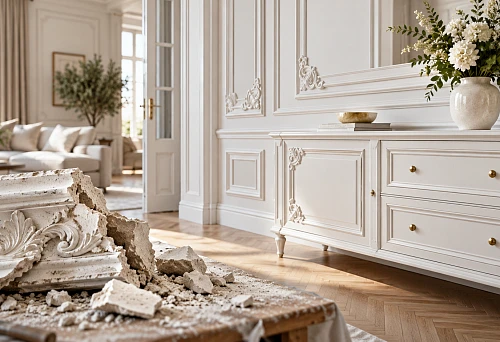
Are decorative overlays suitable for restoring old furniture?
Yes, if the base allows for installation and painting. Overlays can cover an empty facade, add relief, and update the style of a wardrobe, chest of drawers, or cabinet. But before purchasing, you need to check the surface condition, old coating, facade strength, and the possibility of preparation for glue and enamel. For restoration tasks, it's also useful to look at the material about carved wooden overlays for furniture restoration.
What is better for enamel: beech or oak?
In individual STAVROS product cards, both materials are found. Beech is often considered a practical base for painting, while oak is an expressive material, especially if tinting or decorative coating with texture reveal is possible. But the choice should not be abstract; it should be based on the specific model, facade, and finish. Check the current material in the product card.
Do I need to buy overlays in pairs?
If the furniture is symmetrical, most often yes. Two wardrobe doors, paired cabinet doors, identical kitchen or chest of drawers facades require repetition. One overlay may look random if the other side remains empty. But for an accent area, sometimes one central element is enough—for example, on an island or decorative panel.
Can carved overlays be placed on kitchen facades?
It is possible, but you need to consider the practice. It is better to place the relief where it will not constantly come into contact with water, grease, and intensive cleaning. Good areas are the buffet section, tall cabinet, island, display facades, and decorative ends. For the work area, choose a calmer relief and plan the maintenance in advance.
How to avoid mistakes with the size of the overlay?
Make markings on the facade before purchasing. Mark the center, handles, frame, indents from edges and adjacent doors. Then compare the free space with the size of the overlay in the product card. If in doubt, cut out a paper template according to the product dimensions and attach it to the furniture. This is a simple way to see the scale before ordering.
What should you clarify with the STAVROS manager before purchasing?
Clarify the material of the selected model, preparation for enamel, availability, production time, configuration, number of elements, recommendations for related products, and installation nuances. If you have a photo of the facade and dimensions, send them to the manager: this makes it easier to select overlays by scale and avoid mistakes.
Can overlays be combined with sockets, handles, and legs?
Yes, and often this is how a complete furniture ensemble is achieved. Overlays set the relief on the facade, sockets create central accents, handles are responsible for functionality and style, and legs complete the lower part of the furniture. The main thing is to choose elements in the same character and not overload the facade with different ornaments.
Conclusion
Decorative overlays for furniture under enamel are not a minor addition to the facade, but a full-fledged tool of furniture composition. With their help, you can make a cabinet taller and more expressive, a kitchen more individual, a chest of drawers more elegant, a buffet more solemn, and the interior more cohesive.
The right choice starts not with a picture, but with the task. You need to understand where the furniture will stand, what facade is being designed, what enamel color is chosen, what relief is needed, how many elements will be required, and what they will be combined with. Central overlays, corner details, sockets, handles, legs, brackets, and pilasters should work not separately, but as one ensemble.
At STAVROS, you can select wooden decorative overlays for furniture, view real product cards, compare sizes, materials, surface preparation, and assemble a set for a specific project. If the product parameters, availability, time, installation method, or compatibility with your enamel require clarification, it is better to contact the STAVROS manager in advance. This way, the purchase will not be random, but thoughtful—with the correct scale, beautiful relief, and a clear logic of application in the interior.