








































































Article Contents:
- Product basis: what counts as a wooden table base for a restaurant hall
- Characteristics of the STAVROS product group
- Why the table base is more important for cafes and restaurants than it seems
- How a restaurant table base differs from a home one
- Which wooden table bases are suitable for a restaurant hall
- For round tables
- For square tables
- For rectangular tables
- For coffee and side tables
- Classic restaurant
- Neoclassicism
- Coffee shop
- Banquet hall
- Hotel restaurant
- Which underframes are best for cafes and restaurants?
- How is a restaurant underframe different from a home one?
- Can wooden underframes be used in high-traffic cafes?
- What to choose for a round tabletop?
- What is better for a restaurant: wood or metal?
- Can I order several identical table bases for the hall?
- How do I know if a table base will fit my tabletop?
- Do I need a stock of table bases for a restaurant?
- Can wooden table bases be painted to match the interior color?
- Are STAVROS table bases suitable for a lounge area?
- What should I check before ordering a series of table bases?
- Where to buy wooden table bases for restaurant tables?
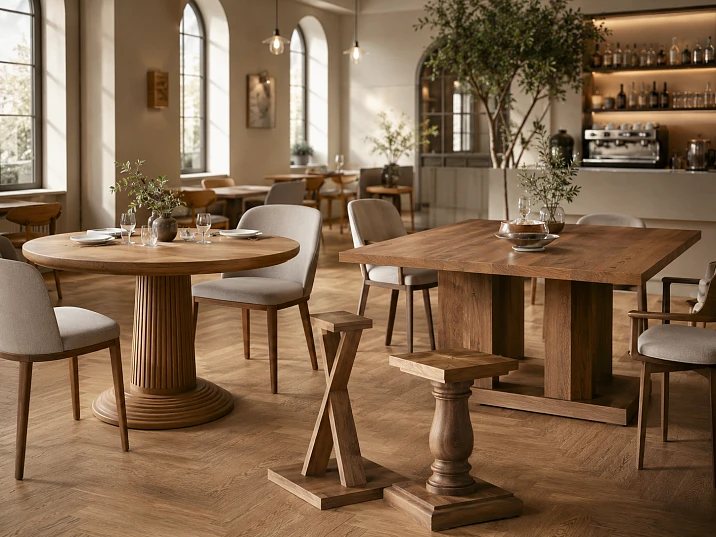
Wooden table bases for cafes and restaurants are chosen not only for their appearance. In a commercial hall, the table base works every day: it holds the tabletop, withstands frequent seating of guests, furniture movement, cleaning, changing table settings, the weight of dishes, and constant contact with the interior. Therefore, the request "buy wooden table bases" for a cafe owner, restaurateur, designer, or outfitter means not just purchasing one beautiful support, but selecting a series of bases for the hall.
In a cafe, restaurant, coffee shop, canteen, banquet hall, or hotel lobby, tables should be comfortable, stable, and equally neat in the overall composition. A random table base can ruin the seating: the support may bother the guest, the tabletop may wobble, the aisles may become inconvenient, and the hall may lose visual rhythm. A good base, on the contrary, works quietly: it does not conflict with the tabletop, does not interfere with legs, withstands use, and helps the interior look cohesive.
STAVROS offers wooden table bases, furniture frames, and table supports suitable for restaurant, coffee, dining, and lounge areas. The catalog includes a section furniture frames and under-table structures, a separate selection STAVROS table base, as well as specific models like STL-026-2 table base и STL-035 coffee table base.
This article will help you understand which table bases are suitable for a commercial hall, how a restaurant base differs from a home one, how to choose the size for a tabletop, what to consider when ordering a series, when wood is better than metal, what mistakes lead to uncomfortable seating, and where to buy STAVROS wooden table bases for a cafe or restaurant interior.
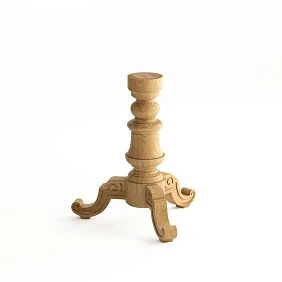
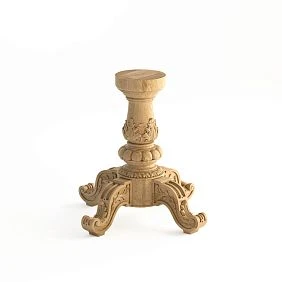
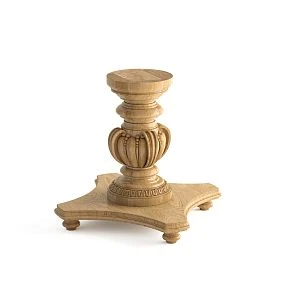
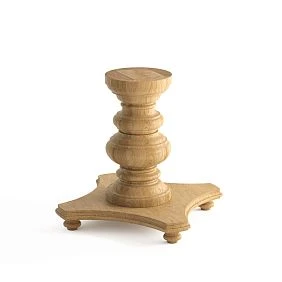
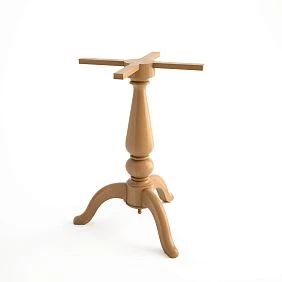

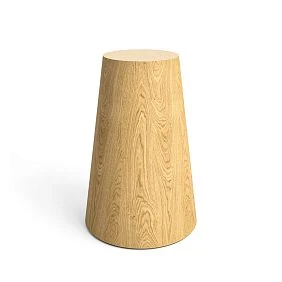
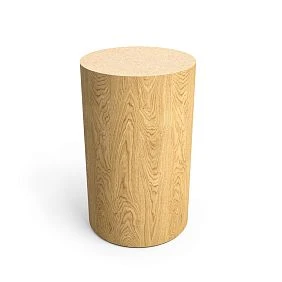
Product basis: what counts as a wooden table base for a restaurant hall
A table base is the supporting foundation of a table. It bears the load from the tabletop, sets the height, affects stability, determines seating comfort, and contributes to the interior style. In home furniture, the table base is often chosen as a decorative detail. In cafes and restaurants, it must be evaluated more strictly: a single table can be used dozens of times a day, and a series of tables must look uniform and function without annoying issues.
In the STAVROS assortment, this category includes wooden and wood-based table supports, furniture frames, dining table bases, coffee table bases, and related elements — Furniture Legs and Supports, fittings, finishing materials, and decorative elements. For cafes and restaurants, not only the shape and price are important, but also repeatability, material, sanding, coating, delivery of the required quantity, and compatibility with tabletops.
For example, the STL-026-2 underframe in the STAVROS card is specified with dimensions of 1200 × 800 × 740 mm, materials beech and oak, sanding quality "Prestige", regluing for enamel for beech and for tinting for oak. This is no longer an abstract base, but a specific table base that can be considered for a dining or restaurant scenario with the correct selection of a tabletop.
For lounge areas, waiting areas, coffee tables, and low seating groups, other models can be considered. For example, STL-035 is presented as a coffee table underframe with dimensions of 550 × 425 × 400 × 286 mm and MDF material. This format does not replace a restaurant dining table, but can be useful for a hall, coffee area, hotel space, waiting area, or soft seating group in a restaurant.




Characteristics of the STAVROS product group
| Group / Model | Product type | Size | Material | Finish / Preparation | Purpose | Features for cafes and restaurants | What to clarify before ordering |
|---|---|---|---|---|---|---|---|
| STAVROS underframes | Table bases | depends on the model | Beech, oak, MDF or other material per card | Depends on the model: for enamel, for tinting, "Prestige" sanding and other parameters per card | Dining, restaurant, interior, coffee tables | You can select a base series to match the overall style of the room | Availability, lead time, material, compatibility with tabletop, finish |
| Table base STL-026-2 | Table base | 1200 × 800 × 740 mm | Beech or oak | Beech — for enamel, oak — for tinting, "Prestige" sanding quality | Dining, restaurant, kitchen or interior table | Suitable for scenarios where an expressive wooden base is needed | Tabletop weight, fasteners, final height, guest seating |
| Underframe STL-035 | Underframe for coffee table | 550 × 425 × 400 × 286 mm | MDF | Sanding quality "Prestige" | Magazine, coffee, lounge table | Suitable for waiting areas, soft seating groups, halls, coffee zones | Compatibility with tabletop, coating, load, usage scenario |
| Legs and supports | Individual furniture supports | depends on the model | Card material | With or without coating, depending on the model | Additional furniture solutions, small tables, custom projects | Can be used in furniture assembly, but do not always replace a full underframe | Load, mounting, height, number of supports |
| Materials for installation and finishing | Related products | By card | By card | Oils, varnishes, finishing and installation materials — by assortment | Finishing, installation, care | Important when ordering a series of underframes to match the interior color | Compatibility of coating with commercial use |
The table shows an important principle: for a cafe or restaurant, you cannot choose an underframe based solely on a photo. You need to consider size, material, height, attachment method, finish, future tabletop, number of tables, seating layout, and operating conditions.
Our factory also produces:
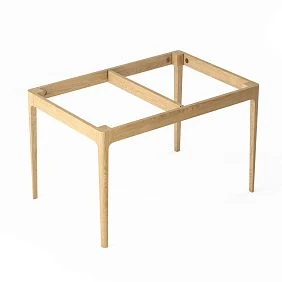
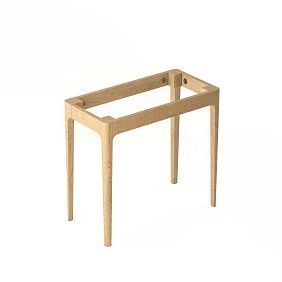
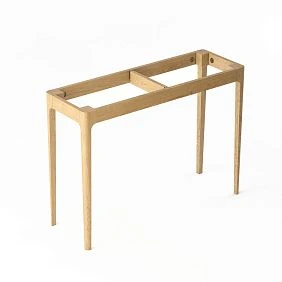
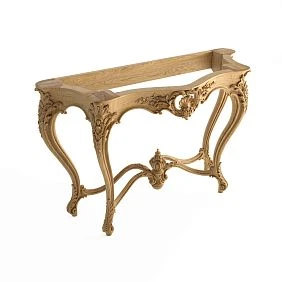
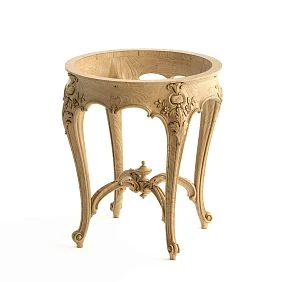

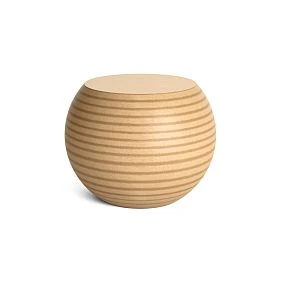
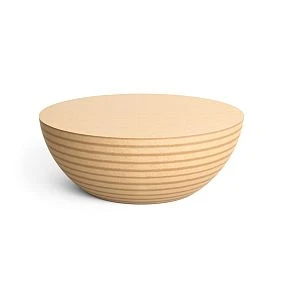
Why the underframe is more important than it seems for cafes and restaurants
A visitor rarely thinks about the underframe separately. They see the table as a whole: whether it's comfortable to sit at, whether the tabletop wobbles, whether the base gets in the way of legs, whether a chair catches on it, whether the furniture looks out of place in the room. But it is the underframe that is responsible for a significant part of these sensations. If the base is poorly chosen, even a beautiful tabletop won't save the situation.
In a restaurant, the table is a working tool. Dishes, drinks, utensils, food, decor, and sometimes laptops and documents are placed on it. It is moved during cleaning, shifted for banquets, and rearranged for different seating scenarios. A home table can stand for years with almost no movement. A restaurant table lives much more actively.
A restaurant underframe must withstand not only vertical load but also everyday dynamics: a guest leans on the edge, a waiter accidentally bumps the table, the table is moved, chairs are shifted, the floor turns out to be uneven. Therefore, stability is more important than decorative effect. A beautiful but too light base in the hall quickly becomes a problem.
Wooden underframes help create a warmer and more furniture-like look than utilitarian technical bases. In a premium restaurant, a coffee shop with a soft interior, a classic hall, a hotel dining room, or an intimate cafe, wood supports the atmosphere. It doesn't look cold, doesn't turn the table into an office structure, but connects the furniture with the interior.
Another factor is repeatability. A hall usually has more than one table. You need to order a series of identical or coordinated bases so that the seating area looks cohesive. Different underframes without a design scheme create visual noise: one table seems homey, the second office-like, the third temporary. For a commercial space, this reduces the impression of the interior.
Get Consultation
How restaurant underframes differ from home underframes
Home underframes can be chosen more freely. At home, a table is used by a limited number of people, furniture is rearranged less often, and the surface is usually cared for more carefully. In a restaurant, it's different. There, a table goes through many cycles of use daily: seating, setting, cleaning, moving, contact with shoes, bags, chairs, strollers, carts, and equipment.
The first difference is load. In an establishment, the table must be ready for unpredictable guest behavior. Someone leans on the edge, someone places a heavy bag, someone moves the table without lifting it. The base must be stable enough and properly matched to the tabletop.
The second difference is cleaning. In a restaurant, the floor is washed more often than at home. The underframe should be convenient for maintenance: there should be no complex hard-to-reach areas around it where dirt accumulates. If the base is carved or very decorative, you need to understand in advance how staff will care for it. Decor is beautiful, but in a commercial space it requires discipline.
The third difference is repairability. In a home interior, damage to one table is unpleasant but not critical. In a restaurant, a damaged support stands out from the set, and replacement must be possible. Therefore, when ordering a series, it's worth considering spare parts, model repeatability, and the possibility of reordering.
The fourth difference is a unified style. At home, one table can be an accent. In a restaurant, tables create the rhythm of the hall. Underframes must work with chairs, armchairs, sofas, the bar area, the counter, wall panels, lighting, flooring, and the brand palette. If the base is not connected to the interior, it looks random.
The fifth difference is seating. The guest should be comfortable placing their feet. The waiter should be comfortable serving the table. The chair should slide in. The underframe leg should not conflict with knees. For a commercial space, this is especially important: uncomfortable furniture affects the impression of the establishment no less than the menu.
Which wooden underframes are suitable for a restaurant hall
For round tables
Round tables are often used in coffee shops, small restaurants, breakfast areas, hotel cafes, and intimate halls. They create a soft seating arrangement: guests sit facing each other, there is no 'head' seat, and the table fits more easily into complex layouts. But a round tabletop requires a particularly stable base because the load is distributed differently than with a rectangular table.
If you want to buy wooden table bases for a round table, first check the tabletop diameter, edge overhang, center of gravity, and legroom. A base that is too small under a large tabletop creates a risk of instability. A base that is too wide can interfere with seating. Balance is needed.
For round tables, bases that visually support soft geometry work well. If the hall is decorated in neoclassical, calm classic, soft modern style, or coffee aesthetics with wood and textiles, a wooden table base looks natural. It does not make the table rough but gives it furniture-like stability.
For square tables
Square tables are convenient for cafes, bistros, small halls, and seating for 2–4 people. They are easy to place along a wall, line up in a row, or combine for groups. But the base for a square tabletop must be particularly precise in size: if the base is too large, guests will be uncomfortable; if too small, the table may seem unstable.
For a square table, it is important to check the tabletop overhang. The guest should sit comfortably, and the chair should slide in without hitting the base. If tables will be pushed together, the bases should not interfere with each other. This is a common mistake in cafes: tabletops can be placed side by side, but the bases conflict in shape and prevent forming a straight line.
A wooden table base for a square table works well in establishments where a furniture-like, rather than industrial, look is important. For example, a coffee shop with wooden panels, a restaurant with soft armchairs, a family cafe, a pastry shop, or a wine bar in a warm color scheme.
For rectangular tables
Rectangular tables are needed for restaurants, banquet halls, family dining rooms, long seating arrangements, meeting rooms, and large groups. Here the base is especially important: a long tabletop may require not one base but several support points or a special structure. You cannot automatically place a long surface on a base designed for a small table.
When choosing a base for a rectangular tabletop, consider the length, width, thickness, weight, and number of seats. Guests sit not only along the long sides but sometimes at the ends. The legs or base should not interfere with knees and chairs. If the table will be used for banquets, it may be pushed together with other tables—this also affects the shape of the base.
The STL-026-2 table base with dimensions 1200 × 800 × 740 mm can be considered as a foundation for an expressive table, but specific compatibility with the tabletop depends on the project. Before ordering, you need to clarify the fasteners, tabletop weight, final height, and operating conditions.
For coffee and side tables
Not the entire restaurant hall consists of dining tables. In cafes, hotels, restaurants, showrooms, or lounge areas, low coffee and side tables are often needed. They stand near armchairs, sofas, in waiting areas, next to the reception, in meeting zones, or in the lobby. For such scenarios, it is important to choose not a dining table base, but a base of appropriate height and visual mass.
Coffee table base STL-035 can be useful specifically for such zones. It does not replace a restaurant dining table, but helps assemble a soft seating group in the same furniture logic. This is especially important for establishments that have not only table seating, but also waiting areas, coffee breaks, lounges, hotel lobbies, or meeting zones.
For side tables, movement safety is especially important. A low table should not be placed in an active walkway. Its height should match the armchairs and sofas. The surface should be convenient for cups, menus, catalogs, small decor, but not become an obstacle.
How to choose the size of the table base for the tabletop
The table base is not chosen based on the principle of "liked the base." First, the tabletop and usage scenario are determined, then the base is selected. For cafes and restaurants, it is better to start from the hall layout: how many tables are needed, what shape the tabletops will be, how many seats per table, how guests and waitstaff move, whether tables can be pushed together.
| Tabletop type | Where to use | Which table base to consider | What to Check |
|---|---|---|---|
| Round | Coffee shop, small restaurant, breakfast area, intimate hall | Central or balanced wooden base | Diameter, center of gravity, legroom, tabletop overhang |
| Square | Cafe, bistro, seating for 2–4 guests, tables along the wall | Compact stable base | Overhang, stability, ability to move tables, chair comfort |
| Rectangular | Restaurant, dining room, banquet hall, family seating | Extended base or multiple supports | Length, weight, number of supports, seating at ends, load |
| Small coffee shop | Lounge area, hall, waiting area, soft seating group | Low underframe for coffee table | Height, visual weight, aisle safety, stability |
| Custom | Designer restaurant, showroom, custom furniture | Custom selection based on drawing | Weight, fasteners, balance, serviceability |
After the tabletop shape, you need to check the final table height. For a dining table, the base height and tabletop thickness are added together. If the tabletop is thick, the final height may become uncomfortable. If chairs with armrests are used, you need to check if they will fit under the table.
The next parameter is overhang. The tabletop should extend beyond the base enough for a guest to sit comfortably, but not so much that the table loses stability. In a restaurant, guests often lean on the edge, so the overhang cannot be considered purely decorative. It affects safety and usability.
Another parameter is aisle width. Tables in a hall do not stand alone: guests, waiters, and cleaning staff move around them. If the base is too massive or the tabletop too large, the aisles become cramped. Everything may look acceptable on the plan, but in reality, chairs are pulled out, people stand up, a waiter carries a tray, and the mistake becomes obvious.
Wooden or metal table base for a restaurant
A metal base is often chosen for lofts, industrial interiors, bars, food halls, and minimalist spaces with rough graphics. Metal provides a rigid look, a thin line, stability with proper construction, and pairs well with concrete, brick, glass, black profiles, and industrial lighting.
A wooden base serves a different purpose. It makes the table feel like furniture, warm, and softer in perception. In a restaurant with classic chairs, textiles, panels, wood, soft lighting, stone, ceramics, or neoclassical finishes, a wooden base looks more natural. It does not turn the hall into a technical space but supports the atmosphere.
| Parameter | Wooden table base | Metal table base |
|---|---|---|
| Visual image | Warm, furniture, interior | Cold, graphic, industrial |
| Where appropriate | Classic, neoclassical, coffee shops, restaurants with a soft atmosphere, hotel halls | Loft, bars, food halls, industrial projects |
| Finishing | Enamel, tinting, varnish, oil, patina — depending on the product | Powder coating, metal, patina on metal |
| Combination with a wooden tabletop | Natural, solid | Contrasting |
| Tactile | Warm texture | Cold surface |
| Repairability | Depends on the coating, finish update possible | Depends on the metal and coating |
| Role in the interior | Part of a furniture composition | Structural or graphic accent |
For STAVROS, a wooden and woody scenario is logical: underframes, furniture frames, solid wood and MDF products, enamel or tinted finishes. If the restaurant is built on a warm image, wood can be stronger than metal. If the interior requires rigid industrialism, metal may be more appropriate, but that is a different product intent.
How to choose a table base to match the interior style
Classic restaurant
In a classic restaurant, the underframe should look like part of the furniture, not a technical support. Proportions, wood texture, neat finishing, possible carving or calm profiled shapes are important here. The base should match the chairs, cornices, panels, doors, lighting, and the overall architecture of the hall.
If the interior features carved decor, moldings, wood panels, classic chairs, the underframe can be more expressive. But it is important not to overload the hall. When carving is present on walls, furniture, and lighting simultaneously, the table base should be more restrained.
Neoclassicism
Neoclassicism requires balance. Here, a wooden underframe can be painted with enamel, tinted, or varnished. The main thing is a clean form and correct scale. A base that is too rough will disrupt lightness; too decorative will shift the interior toward heavy classicism.
For neoclassicism, the following combination works especially well: a wooden underframe, a calm tabletop, soft chairs, neat lighting, neutral walls. If the hall is designed for long seating, comfort is more important than a striking picture.
Coffee shop
In a coffee shop, tables are often smaller and seating is denser. The underframe should be compact, stable, and easy to clean. Wood adds warmth: it pairs well with coffee, pastries, ceramics, textiles, plants, soft lighting, and small tabletops.
For a coffee shop, it's important to get the weight right. A table that's too light will move with every touch. One that's too heavy is difficult to move during cleaning. You need to find a middle ground: stability without excessive bulk.
Banquet Hall
In a banquet hall, tables are often rearranged, pushed together, lined up, formed into islands, and seating layouts are changed. Here, underframes should be not only beautiful but also predictable. If rectangular tabletops are used, you need to plan in advance the number of supports, length, stability, and compatibility when pushed together.
A wooden underframe in a banquet hall is appropriate if the interior is designed for a festive, warm, and furniture-like look. But with active rearrangement, it's important to clarify the weight, finish, and resistance to damage.
Hotel Restaurant
A hotel restaurant should be versatile. In the morning it's breakfast, in the afternoon business meetings, in the evening a relaxed seating. Underframes must withstand different scenarios and not look too thematic. Wood works well for such a space if a calm form and durable finish are chosen.
In a hotel, repeatability is especially important: tables in the dining hall, lobby, waiting area, and meeting rooms may differ in height but should feel like part of one system. Therefore, you can combine dining underframes with coffee table bases like STL-035 for soft seating areas.
What to Check Before Ordering a Series of Underframes
Ordering one underframe for home and ordering a series of underframes for a restaurant are different tasks. In a commercial project, an error multiplies by the number of tables. If the height is chosen incorrectly, all tables will be uncomfortable. If the finish is not suitable for use, damage will appear throughout the hall. If the shade is not coordinated, the entire batch will clash with the interior.
Before ordering a series, check the number of tables. Not only the total count, but also the distribution by zones: main hall, coffee seating, window, banquet area, lounge, bar group, terrace, if it is provided by the project. Each zone may require its own type of table base.
Then determine the shape of the tabletops. Round, square, rectangular, and coffee tables require different bases. Do not buy one model for all scenarios if the hall has different seating tasks. A unified style can be maintained through material and finish, not necessarily through identical shape.
Check the height of the finished table. Consider not only the table base but also the thickness of the tabletop. Compare the height with chairs, armchairs, sofas, and benches. If seating is already purchased, the table base must be selected to match them. If not, it is better to choose tables and chairs simultaneously.
Check the color of the coating. In the establishment, lighting can be warm, cold, directional, or dimmed. Wood and enamel look different under different lighting. If possible, coordinate samples in the actual hall or in conditions close to the future ones.
Check the production and delivery time. If the restaurant opening is tied to a date, table bases cannot be left for the last stage. It is necessary to account for production, finishing, delivery, assembly, possible replacement, batch inspection, and tabletop installation.
How to calculate the number of table bases for the hall
Start with the layout. The plan should include walls, entrances, windows, bar, kitchen, sanitary zones, waiter passages, evacuation routes, sofa groups, administrator desk, and technical zones. Only after this are tables arranged. The number of table bases cannot be calculated solely by the hall area.
For each table, determine the shape of the tabletop and the number of seats. Two small round tables may be more convenient than one large rectangular table if the hall is intimate. In a banquet format, on the contrary, rectangular tables are easier to combine. In a coffee shop, quick seating and free movement are important.
Then check the distance between tables. In reality, chairs are pulled back, people stand up, and a waiter passes with a tray. If the tables look nice on the plan but the passages do not work, the number of seats needs to be reduced. A good restaurant hall should not be packed with furniture to capacity.
After this, add a reserve. For a commercial project, it is useful to provide one or two additional table bases or the possibility of reordering, especially if the model is used throughout the hall. In case of base damage or seating expansion, a reserve saves time and maintains a uniform appearance.
If the hall is divided into several zones, it is not necessary to use the same underframes everywhere. The main hall can have dining bases, the lounge — coffee tables, the window area — compact side tables, and the banquet zone — more stable rectangular solutions. It is important that they are connected by material, finish, or overall style.
Underframe and tabletop: how to assemble a stable table
The tabletop and underframe must be a pair. They cannot be evaluated separately. A lightweight tabletop on a massive base can look heavy. A heavy tabletop on a narrow base can be dangerous. A beautiful tabletop on an unsuitable underframe will quickly lose its purpose.
The first parameter is the weight of the tabletop. Solid wood, stone, composite, thick MDF, veneer, glass — these are all different loads. If the tabletop is heavy, you need to clarify whether the chosen base is suitable, what fasteners to use, how the weight is distributed, and whether there is a risk of tipping when load is applied to the edge.
The second parameter is overhang. The further the tabletop edge extends beyond the base, the greater the leverage when load is applied to the edge. This is important in cafes: a guest may lean on the edge, a child may pull the table, a waiter may place a heavy tray closer to the edge. The overhang should be comfortable for legs but safe.
The third parameter is fastening. Each tabletop has its own requirements. Solid wood may require compensation for wood movement. MDF and veneered surfaces require different fasteners. Stone and composite require coordination with a specialist. If the fastening is not confirmed, it is better not to improvise but to check with a STAVROS manager or the tabletop manufacturer.
The fourth parameter is height. The STL-026-2 underframe has a height of 740 mm according to the dimensional diagram, but the final height of the finished table will depend on the tabletop. This is critical for restaurant seating: if the table is too high or too low, the guest is uncomfortable sitting, and the impression of the hall is diminished.
Materials: beech, oak, MDF and finish per project
In STAVROS wooden and wood-based underframes, you will find beech, oak, MDF, and other materials according to the specific product cards. You cannot generalize all models in one phrase: always check the product card before purchasing. But it is useful to understand the general differences.
Beech is often chosen for enamel projects. It provides a calm base, is well suited for painting, and helps achieve a smooth furniture look. In cafes and restaurants, beech under enamel is appropriate if the base needs to be painted in a corporate color, white, milky, graphite, green, dark blue, or another interior shade.
Oak is valued for its texture and expressiveness. It is logically considered for tinting, varnish, oil, natural or deeper wood tones. In a restaurant, an oak underframe can support a tabletop, parquet, doors, wall panels, a bar counter, a wine cabinet, and decorative elements.
MDF is good where stable geometry, a smooth surface, and a modern shape are needed. For underframes with complex geometry or coffee table bases, MDF can be a rational material. However, its application, coating, and performance properties should be reviewed for each specific item, not automatically transferred to all products.
The coating for a cafe and restaurant must be chosen with particular care. Enamel provides color and allows underframes to fit the brand style. Tinting preserves the wood texture. Varnish protects the surface. Oil emphasizes naturalness but requires an understanding of maintenance. Patina adds decorativeness, but in a commercial hall, it should be used sparingly.
Care, storage, and operation in a commercial hall
A wooden underframe in a restaurant lasts longer if the staff understands the rules of care. A common mistake is to assume that the table base does not require attention because plates are not placed on it. In reality, the underframe comes into contact with shoes, wet cleaning, moving chairs, carts, bags, and hands.
For daily care, products suitable for the specific coating are needed. You cannot automatically use aggressive chemicals, abrasive sponges, solvents, or excessively wet cloths. If the coating is damaged, not only the appearance suffers but also the material's protection. It is better to clarify care recommendations before launching the hall.
When cleaning, you should not constantly drag tables by pulling. Even a durable base and high-quality coating can be damaged by rough movement. If tables need to be rearranged frequently, think in advance about weight, glides, floor protection, and instructions for the staff.
If the floor in the hall is uneven, tables may wobble even with a good underframe. This is especially noticeable in old buildings, cafes on the first floors, and restaurants in historic premises. In such cases, it is worth considering adjustment elements or ways to compensate for unevenness in advance.
For storing spare underframes, it is important to maintain conditions suitable for wood and coating. Do not keep products in damp utility rooms, near heating, outdoors, or in areas with temperature fluctuations. If underframes are supplied without a finish coating, storage becomes even more critical.
What to pair with STAVROS wooden underframes
Wooden table bases work best not alone, but in an ensemble. They can be paired with tabletops, chairs, armchairs, a bar counter, wall panels, doors, baseboards, decorative elements, lighting fixtures, and the establishment's signature palette.
The first combination is the table base and tabletop. If the tabletop is wooden, the base can be tinted to a similar shade or create a striking contrast. If the tabletop is light, the base can be a dark accent. If the tabletop has an active texture, the base should be calmer.
The second combination is table bases and chairs. In a restaurant, the guest sees them together. If the chairs are classic, the table base should support the furniture's character. If the seating is modern, the base can be more minimalist. If there are soft sofas in the hall, the table base should account for the seating height.
The third combination is table bases and the decorative environment. At STAVROS, you can look not only at table bases but also Solid Wood Items, Carved Decor at furniture elements. This is useful if the restaurant is designed as a cohesive interior: tables, panels, decor, the bar area, and furniture should speak the same language.
The fourth combination is table bases and finishing materials. If the hall is done in a warm palette, wood supports the atmosphere. If the interior has a lot of stone, glass, and metal, wooden bases can add softness. If there is already a lot of wood, you need to ensure the shades don't clash.
Typical mistakes when choosing table bases for a cafe
| Mistake | Consequence | How to avoid |
|---|---|---|
| Choosing only from a photo | The table may be uncomfortable, unstable, or mismatched in style | Check size, height, material, tabletop, and seating |
| Not accounting for the weight of the tabletop | Risk of wobbling, overloading, or improper fastening | Coordinate weight, diameter, overhang, and fasteners |
| Choosing a base that is too light | The table moves, wobbles, and irritates guests | Select a base suitable for the load and commercial use |
| Not checking legroom | Guests hit the base, chairs cannot be pushed in | Check seating with real chairs |
| Mix different shapes without a scheme | The hall looks randomly assembled | Create a design scheme: main hall, lounge, banquet area |
| Forget about cleaning | Decor and complex shapes get dirty quickly | Choose a shape considering staff maintenance |
| Don't plan for spare | If damaged, it's hard to replace one base | Order spare or clarify possibility of reorder |
| Choosing a home table base for commercial load | The base cannot withstand a cafe or restaurant mode | Immediately consider the HoReCa scenario and ask questions to the manager |
| Not checking the coating | The surface quickly loses its appearance | Selecting a finish for wet cleaning and frequent use |
| Not accounting for uneven floors | Even a good table wobbles | Consider foot pads or adjustment |
These mistakes seem minor before opening an establishment. After launch, they become daily problems: tables wobble, guests complain, waitstaff avoid inconvenient zones, furniture looks mismatched. It's better to spend more time on selection than to redo the hall after purchase.
How to place an order for a restaurant project
For a restaurant project, it's better not to start with the phrase 'we need beautiful table bases.' A specification is needed. First, define the zones: main hall, coffee area, banquet section, lounge, lobby, veranda if available. Then for each zone, choose the type of tables: round, square, rectangular, coffee tables.
After that, create a table: number of tables, tabletop size, height, intended chairs, tabletop material, base color, coating, delivery time, reserve. Such a table helps avoid mistakes when ordering a series and speeds up discussion of the task with a STAVROS manager.
If you plan to buy wooden table bases for tables in the same style, it's better to clarify the possibility of ordering the required quantity right away. For a commercial project, batch consistency is important. Even small differences in shade or finish can be noticeable if the tables are placed next to each other.
If the project is urgent, check availability and timelines in advance. Some items may be made to order, some may be in stock. Terms for timelines, production, shipment, and delivery should be verified before purchase. Don't leave table bases for the last stage before the restaurant opens.
If the table bases will be painted, tinted, or coated in the project color, coordinate samples in advance. The color of the base should look good not only in the catalog but also next to the tabletop, chair, floor, walls, and lighting of the specific hall.
Where to buy wooden table bases for cafes and restaurants
You can buy wooden table bases for cafes and restaurants on the STAVROS website, starting from the section STAVROS table base. If you need to compare bases, frames, tabletops, and related furniture elements, it's more convenient to open the general section furniture frames and under-table structures.
For dining and restaurant tables, you can consider specific models, for example table base STL-026-2For lounge areas, coffee tables, and soft seating groups — separate bases, for example Coffee table base STL-035It is important not to mix these scenarios: a dining table and a coffee table require different heights, stability, and usage logic.
Before purchasing, clarify the material, size, sanding quality, availability, lead times, compatibility with the tabletop, fasteners, coating, delivery, and series ordering conditions. If the exact load, installation, color, or configuration are not confirmed in the product card, do not assume — it is better to check with a STAVROS manager.
For cafes and restaurants, it is more advantageous to think in terms of a set. Table bases, tabletops, chairs, finishes, hardware, and decorative elements should be part of a single scheme. Then the hall looks not like a collection of individual purchases, but a well-thought-out interior where each table supports the overall atmosphere of the establishment.
FAQ
Which table bases are best for cafes and restaurants?
For a commercial hall, it is better to choose stable table bases with clear geometry, appropriate height, sufficient support area, and compatibility with the tabletop. It is important that the model can be ordered as a series and repeated in the required quantity.
How is a restaurant table base different from a home one?
In a restaurant, the load is higher: tables are used more often, moved, wiped, and shifted for different seating arrangements. Therefore, stability, coating, repairability, repeatability, and guest seating comfort are important.
Can wooden table bases be used in a high-traffic cafe?
Yes, if the base shape, material, coating, tabletop weight, and fastening method are correctly selected. For high traffic, be sure to clarify operational parameters and maintenance.
What to choose for a round tabletop?
For a round tabletop, a stable base is important, which evenly supports the center of gravity and does not interfere with guests' legs. You need to check the tabletop diameter, overhang from the base, height, and mounting compatibility.
What is better for a restaurant: wood or metal?
Metal is suitable for industrial interiors, bars, and lofts. Wood works better in classic, neoclassical settings, coffee shops with a warm atmosphere, premium restaurants, and projects where the table should look like furniture rather than a technical structure.
Can I order several identical table bases for the hall?
Yes, for cafes and restaurants this is the main scenario. A series of identical or coordinated table bases helps maintain a unified visual rhythm in the hall. It is better to clarify the quantity, deadlines, and possibility of reordering in advance.
How do I know if a table base will fit my tabletop?
You need to compare the size, weight, shape, thickness, overhang, material, and fastening of the tabletop with the characteristics of the table base. If the data is not specified in the product card, compatibility should be clarified with a STAVROS manager.
Is a reserve of table bases needed for a restaurant?
For a commercial project, a reserve is useful. If one base gets damaged or you need to expand seating, a spare item will help maintain a uniform look in the hall. This is especially important when ordering a large series.
Can wooden table bases be painted to match the interior color?
Yes, if the selected model and material are suitable for the corresponding coating. For example, beech is often considered for enamel, oak for tinting. The specific finishing option should be clarified on the product page and agreed upon before ordering.
Are STAVROS table bases suitable for a lounge area?
Yes, but for a lounge area, you need lower bases for coffee or side tables, not dining ones. For example, for soft seating groups, you can consider individual models for coffee tables if they fit in size and scenario.
What should be checked before ordering a series of table bases?
Check the number of tables, shape and size of tabletops, finished table height, chairs, aisle width, coating color, production time, delivery, fasteners, spare parts, and the possibility of reordering.
Where to buy wooden table bases for restaurant tables?
Start with the STAVROS catalog: the table bases section and the general section of furniture frames and table bases. There you can choose a base, compare models, and clarify parameters before ordering.
Conclusion
Wooden table bases for cafes and restaurants are not a secondary detail, but the foundation of the seating area. They determine table stability, guest comfort, the visual rhythm of the hall, furniture lifespan, and the overall impression of the interior. In a commercial space, a mistake in a table base is repeated dozens of times if the model is ordered as a series, so the choice must be made carefully.
Different bases are needed for round, square, rectangular, dining, coffee, and side tables. It is important to consider the tabletop shape, weight, overhang, height, seating, coating, care, cleaning, floor unevenness, interior style, and the possibility of reordering. Wood works especially well where a restaurant or cafe builds a warm, furniture-like, premium image, rather than a cold technical aesthetic.
STAVROS helps to assemble such a task systematically: choose a base, match it with a tabletop, select adjacent furniture elements, plan the finish, and place an order for a specific hall. If you check dimensions, materials, timelines, coating, and compatibility in advance, wooden bases become not just supports but part of a cohesive restaurant interior.