Article Contents:
- Buy Decorative Elements: Selection for Furniture, Walls, Facades, and Doors
- What Are Decorative Elements
- How to Avoid Buying Random Decor: First the Task, Then the Element
- Decorative Elements for Furniture
- Fronts of cabinets and chests
- Kitchen fronts
- Doors
- Cabinets, Consoles, Sideboards
- Headboards and Furniture Panels
- Wooden Decorative Elements: When to Choose Oak and Beech
- Rosettes: A Small Element That Brings the Whole Composition Together
- Types of Rosettes by Shape
- How the socket works in the composition
- Polyurethane decorative elements: when it's the right choice
- When polyurethane is the right choice
- When polyurethane is the wrong choice
- Decorative elements for the house facade
- Types of facade decor
- Difference between interior and facade decor
- How to choose decorative elements by style
- Classic
- Neoclassicism
- Provence
- Russian style and folk decor
- Modern classic ("warm minimalism")
- How to assemble a kit, not a random set of parts
- Step 1: define the base surface
- Step 2: choose the main element
- Step 3: add a frame or outline
- Step 4: add corner accents
- Step 5: check the scale
- Step 6: coordinate material and color
- Step 7: calculate the quantity
- Step 8: don't forget the mounting adhesive
- Wood or polyurethane: an honest comparison
- Mistakes when buying decorative elements
- Buying decor without understanding the application area
- Mixing wood and polyurethane without a unified finishing system
- Choosing an element that is too large for small furniture
- Selecting facade decor for an interior task
- Not considering the base material
- Forgetting about mounting adhesive
- Not counting the quantity
- Not checking symmetry before installation
- Choosing individual elements rather than a set
- Focusing only on price
- What to buy along with decorative elements
- Carved decor and moldings
- Moldings and profiles
- Polyurethane decor
- Furniture decor
- Installation
- Why STAVROS
- FAQ
- Which decorative elements to buy for furniture?
- How do wooden decorative elements differ from polyurethane ones?
- Can wooden and polyurethane elements be combined in one project?
- Which decorative elements to choose for a house facade?
- How not to overload an interior with decorative elements?
- Where to buy decorative elements for furniture and walls?
- What is better for overlays — oak or beech?
- Is special glue needed for installing decorative elements?
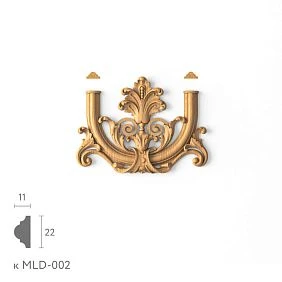
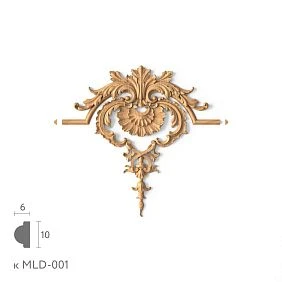
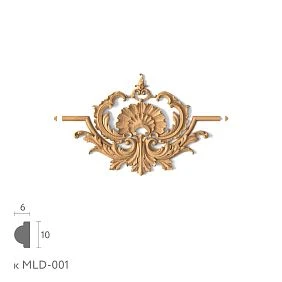
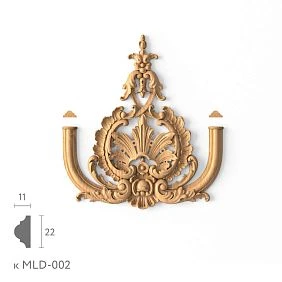

Buy decorative elements: selection for furniture, walls, facades and doors
There is a question that arises for everyone who once finds themselves in front of an empty cabinet facade, a bare wall in the living room, or a new door without a single detail: what exactly should be placed here? Not "something beautiful." Not "something made of wood." But specifically — which element, in what scale, from what material, for what finish. And here, most people make the first and main mistake: they buy decorative elements not for the task, but based on mood.
The result is predictable: a rosette that looks alien on a facade without molding. An overlay that is "not the right scale" and turns a cabinet into carnival props. A polyurethane cornice on furniture made of natural wood — and the entire interior cracks at the seams from this mismatch.
To buy decorative elements correctly means first answering three questions: where, why, and from what. This article is your working guide. Systematic, specific, without general words.




What to consider as decorative elements
First of all — a distinction. "Decorative elements" are not one product. It is a collective name for a group of products that are united by one thing: they shape the visual character of a surface, object, or space.
This group includes:
-
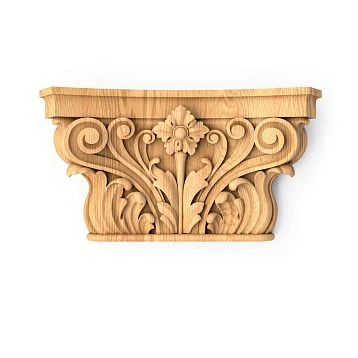
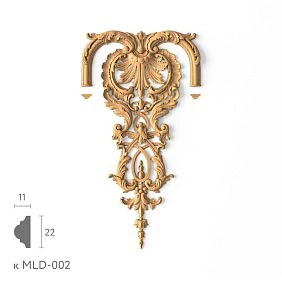
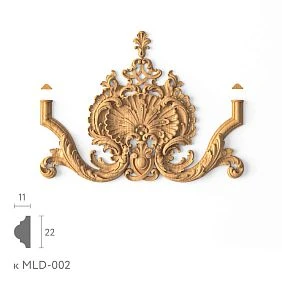
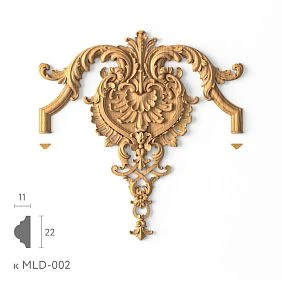
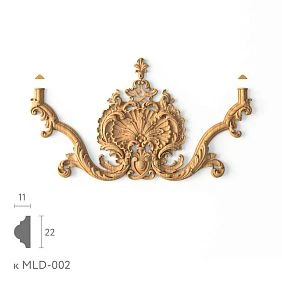
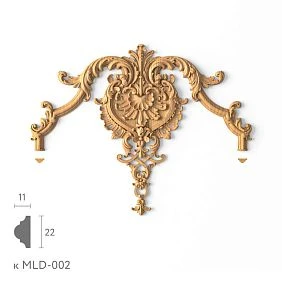
carved overlays — three-dimensional decorative elements for facades, doors, walls, joinery;
-
wooden rosettes — round, square, smooth and carved accents for corner and central points of the composition;
-
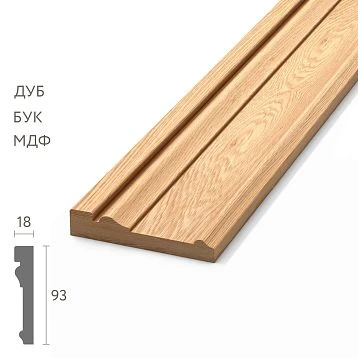
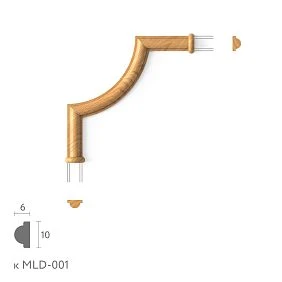
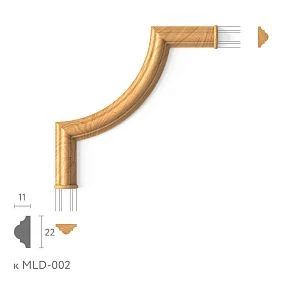
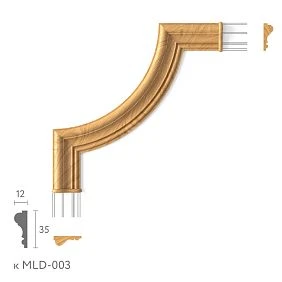
moldings — profile elements for dividing planes, framing panels, zoning walls;
-
cornices — upper framing elements for furniture, wall panels, ceiling transitions;
-
corners, layouts, glazing beads — for closing joints, designing transitions;
-
polyurethane overlays and rosettes — lightweight stucco decor for walls and ceilings;
-
molded products — slats, baguettes, baseboards, brackets;
-
capitals and pilasters — architectural elements for classic interiors.
All of these are decorative elements. But each type has its own role, its own place, and its own scale. Confusing them means buying blindly.
Start exploring the assortment with the section wooden decorative overlays и wooden rosettes in the STAVROS catalog — that's where the main range of carved furniture and interior decor is concentrated.
Our factory also produces:
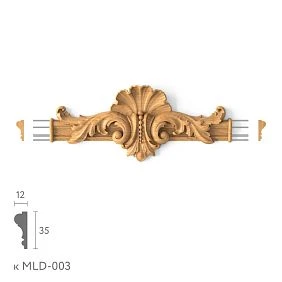
How not to buy random decor: first the task, then the element
Professional interior designers do this automatically, without thinking. A beginner or a craftsman working independently often skips this step — and pays for it twice: with money and time for rework.
The algorithm is simple. First — the task. Then — the element.
| Task | What to pick |
|---|---|
| Decorate a furniture facade | Carved overlays, rosettes, moldings |
| Make a wall relief | Moldings, polyurethane overlays, rosettes |
| Design a house facade | Facade moldings, overlays, cornices |
| Add an accent to the door | Overlays, rosettes, trims |
| Assemble a classic panel composition | Overlays + moldings + rosettes + trim |
| Close a joint or corner | Corners, strips, trim |
The question "which decorative element to buy" is incorrect. The right question is: "what exactly do I need to decorate, in what style, from what material, for what finish?" Answering it will automatically narrow your choice from "thousands of items" to ten to fifteen suitable ones.
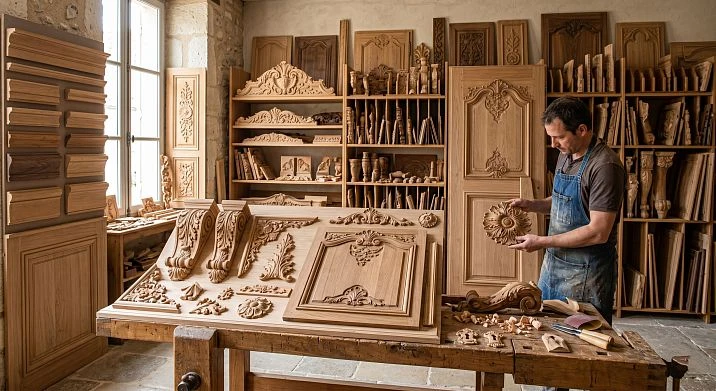
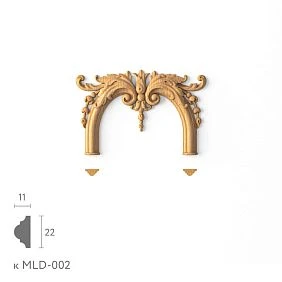
View the entire assortment — this is the decoration of cabinet fronts, chests, tables, and doors. Carved inlays allow creating a unique furniture design, adding individuality and expressiveness. The inlay N.VRS-014L gives furniture an elegant look, making it a true work of art. Using carved decoration on furniture adds luxury to the interior and highlights the owner’s taste. and related wooden trim is easiest in the STAVROS catalog — there, items are already grouped by type and purpose.
Get Consultation
Furniture Decorative Elements
Furniture is where most projects involving decorative elements begin. It is on the furniture facade that the visual effect of a carved wooden accent is most noticeable: the element is visible, it is close, and it can be examined.
Cabinet and dresser fronts
A flat facade is a canvas. A carved overlay turns it into a statement. On a sliding wardrobe, a carved overlay works as an accent that "holds" the center of the composition. On a dresser, it acts as a detail that communicates the style at first glance.
For facades, corner and center overlays are chosen. Corner ones form a frame, center ones place an accent in the center. The combination of both with a molding contour is a classic furniture solution that looks expensive without a complex structure.
Decorative wooden inlays The STAVROS catalog offers a wide range of shapes: corner, center, ornamental, floral, geometric. The material is beech and oak, unpainted, suitable for any finish.
Kitchen fronts
The kitchen is a space where a decorative element must be not only beautiful but also resistant to moisture, grease, and mechanical stress. Wooden carved overlays on kitchen facades must be coated with hard varnish or protective enamel. In this case, the overlay is not just decor—it is part of the facade's protective layer.
Scale selection rule: the overlay should not exceed one-third of the facade module's width. For kitchen cabinets 400 mm wide, the optimal overlay is no more than 130–150 mm in width.
Doors
A door with decorative overlays is a strong architectural technique. A simple interior door gains character with just the addition of two corner rosettes and a molding contour. For front doors, complex multi-level compositions of carved overlays, central medallions, and framing profiles can be built.
Important: for doors, choose overlays with sufficient adhesive surface and attach them with high-quality mounting glue. The vibration from opening and closing the door is a constant load that the adhesive joint must withstand for years.
Cabinets, consoles, sideboards
For low cabinets and consoles, the scale of the decorative element is especially critical. An overly large overlay "eats" the facade, while one too small gets lost. Practical rule: the height of the overlay should not exceed 40–50% of the facade panel's height. For a cabinet 60 cm high, the optimal overlay is 20–25 cm.
A sideboard is an item where decorative wooden elements for furniture are especially appropriate. A sideboard is by definition formal; on it, decor is noticeable and enhances status. For a classic sideboard, combinations of carved overlays with wooden rosettes at corner points and a molding frame around the perimeter of sections.
Bed headboards and furniture panels
The headboard is a vertical plane visible from any point in the bedroom. Decorative elements here work as a kind of 'artwork above the bed,' only built into the furniture. A central carved overlay + symmetrical corner accents + a molding contour is a time-tested, always striking scheme.
Wooden decorative elements: when to choose oak and beech
Wood is not a uniform material. Beech and oak behave fundamentally differently during processing, painting, and use. Understanding the difference means making the right choice from the start.
| Material | When to choose | Strengths |
|---|---|---|
| Oak | Natural finish, oil, varnish, tinting, premium furniture | Expressive large texture, durability, status |
| Beech | White and pastel enamel, neoclassicism, smooth painting | Closed pore, dense surface, perfect sanding |
| Solid wood for painting | Projects with a specific color according to RAL or NCS | Versatility, flexibility in tone selection |
| Solid wood for tinting | Furniture and panels with visible wood | Preserves the pattern and warmth of natural material |
Buying decorative wooden elements means choosing not just "wood," but a specific species for a specific task. Oak under white enamel means losing its main advantage: expressive texture. Beech under oil is not the best option for those who want to see "live" wood.
For carved overlays: oak is better where the carving will be visible under varnish or oil. Beech is for where the decorative element is painted to match the facade color and the wood texture doesn't matter.
For wooden rosettes: the same principle applies. A round carved oak rosette with walnut stain is a luxurious accent on a natural wood panel. A smooth square beech rosette under white enamel is a clean, minimalist element in a neoclassical interior.
Rosettes: a small element that ties the whole composition together
A wooden rosette is perhaps the most underrated decorative element in an interior. Small in size, it acts like a punctuation mark: it places an accent where one is needed, fixes an angle, completes the transition of moldings, and brings disparate details into a unified system.
Types of rosettes by shape
Round rosette — a classic option. Soft, without sharp corners, versatile. Works in classic, Provencal, and neoclassical styles. On the ceiling, it's a central medallion under a chandelier. On a wall panel, it's an accent in the corner of a molding frame or in the center of a section.
Square rosette — stricter, more geometric. Suitable for modern classic and Art Deco styles. Installed at the corner points of molding frames or as a standalone accent on flat facades.
Carved rosette — with ornamental relief: acanthus leaves, floral motifs, woven ornament. This is a decorative element with character — bright, grand, recognizable. It looks good on sideboards, consoles, and front doors.
Smooth rosette — without relief, only shape. A minimalist choice for those who appreciate geometry but do not want carved decor.
How the rosette works in a composition
A single rosette on an empty facade is a question mark without a sentence. A rosette in a system is a period at the end of a well-crafted phrase. The correct scheme: a molding frame around the perimeter of the facade section + rosettes at the corner points (or one central one) + a carved overlay in the middle. This triple system works on any plane: cabinet facade, wall panel, door.
Wooden sockets STAVROS offers a wide selection of shapes, sizes, and styles: from simple smooth to richly carved. Material — beech and oak, unfinished, ready for any final finish.
Polyurethane decorative elements: when this is the right choice
Polyurethane in interior decor is not a compromise or an imitation "of wood." It is an independent material with its own logic of application. Where it is appropriate, it is flawless. Where it is not appropriate, no quality of manufacturing will help.
When polyurethane is the right choice
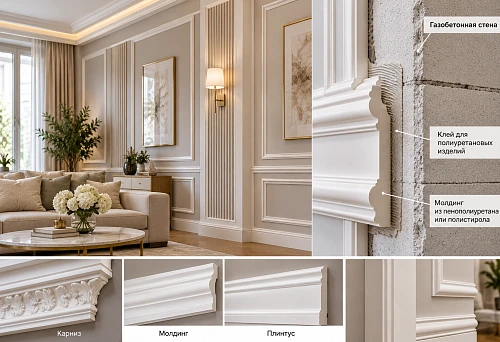
Walls and ceilings. Polyurethane overlays and rosettes for walls and ceilings are lightweight, moisture-resistant, and paint well. For a ceiling cornice, stucco medallion, decorative border — polyurethane works perfectly. It does not shrink, does not crack with heating and cooling, and holds its shape for years.
For painting in one tone with the wall. When a decorative element is painted the color of the wall, the material nature of the element is unimportant. Only the shape, only the relief is visible. In this scenario, polyurethane is in no way inferior to wood, and it is easier to install.
For complex facade and cornice profiles. Where a wooden cornice would require complex joinery or gluing of several elements, a polyurethane profile is supplied ready for installation.
molded decoration made of polyurethane STAVROS are overlays, rosettes, and moldings for walls and ceilings. In the section decoration for moldings — specialized elements to enrich molding systems with a polyurethane accent.
When polyurethane is the wrong choice
On furniture made of natural wood. If the entire dresser is made of solid oak, handles are wooden, legs are wooden, facades are oil-finished — a polyurethane overlay will disrupt the unity. Tactilely and visually it will be "different." For furniture made of natural wood — only wooden decor.
Buying decorative polyurethane elements correctly means using them where they are designed to work: walls, ceilings, facade decor for painting. Not where the warmth of natural wood is needed.
Decorative elements for the house facade
Facade decor is a separate topic that requires special attention. Outdoor use imposes different requirements on the material than interior use: resistance to ultraviolet radiation, temperature fluctuations, humidity, mechanical load from wind and precipitation.
Types of facade decor
Moldings and trims around windows are a classic facade element that shapes the face of the building. For stone facades — polyurethane or facade expanded polystyrene. For wooden houses — wooden profile with moisture-resistant impregnation and painting.
Cornices are horizontal elements along the roofline or between floors. They give the facade a finished look and emphasize the building's horizontality.
Corner elements — design of the building's external corners. Decorative pilasters or profiled corners visually "gather" the corners and structure the facade.
Keystones — elements above window and door openings. Originating from classical architecture, they are now used as a decorative detail to give the facade a historical character.
Difference between interior and facade decor
A fundamentally important point: an interior decorative element cannot simply be placed on the facade. It is not designed for atmospheric load. Conversely, a facade element looks rough and out of place in an interior.
For exterior use, materials specifically designed for facades with appropriate finishing are needed. Buying decorative elements for a house facade means clarifying with the supplier that the product is intended for facade use.
How to choose decorative elements by style
Style is a system. It's easy to disrupt, but expensive to restore. Here is a brief practical guide to selecting decorative elements for the main interior styles.
Classic
Classic style does not tolerate half-measures. A complete system is needed: carved overlays with ornamentation, wooden rosettes with relief, molding frames, cornices, pilasters. All elements in a unified ornamental key. Oak with warm brown toning. Gilding of individual details is possible.
Pairs well with wooden moldings и wooden furniture handles the same material.
Neoclassicism
Moderation is the main principle. Molding without complex relief. Rosettes — smooth or with a light floral motif. Overlays — without overloaded carving. White or cream enamel on beech. Symmetry is mandatory. Not a single extra element.
Provence
Botanical ornaments: leaves, flowers, weaving stems. Light finish — white with an aged tone, cream, pastel. Soft forms without sharp corners. Beech under white enamel with a slight aging effect on protruding details — an ideal system.
Russian style and folk decor
Rich wood carving, ornaments with geometric and botanical motifs, warm dark tints. The most expressive carved oak overlays are appropriate here. Decorative wooden inlays with rich relief — precisely for this style.
Modern classic ("warm minimalism")
Less carving, more geometry. Molding frames without complex profiles. Smooth rosettes. Minimum ornament, maximum form and proportion. Natural wood under oil or soft varnish. This style requires perfect geometric precision — the slightest curvature of lines is immediately visible.
How to assemble a set, not a collection of random parts
Here lies the main professional challenge. Buying decorative elements is easy. Assembling them into a system requires understanding.
Step 1: define the base surface
Furniture? Wall? Door? House facade? Each surface has its own logic, its own scale, its own material.
Step 2: choose the main element
One detail is the main one. The rest are supporting. On a furniture facade, the main element could be the central carved overlay. On a wall panel, it could be the molding frame. On a door, it could be the rosettes in the upper corners. Start with the main element — and build everything else around it.
Step 3: add a frame or outline
Molding around the perimeter is what turns a separate element into a composition. Wooden moldings STAVROS is a wide range of profiles for different styles and tasks.
Step 4: add corner accents
Rosettes in the corners of the molding frame are the points where horizontal and vertical elements 'meet'. Without them, the intersection of moldings looks technical. With rosettes, it becomes a deliberate design detail.
Step 5: check the scale
Print the sketch at 1:1 scale or use paper templates. Only this way can you understand the real size of the element on the actual surface — before it gets glued on.
Step 6: coordinate material and color
Wooden and polyurethane elements in one project are acceptable if they are all painted in a single color. If some parts remain varnished or oiled, the material difference will become obvious. Plan the finishing system before purchasing.
Step 7: calculate the quantity
Linear items — in meters with a 10–15% margin. Piece items (overlays, rosettes) — by exact number of positions, plus 1–2 spare units in case of chipping or installation error.
Step 8: don't forget the mounting adhesive
Mounting adhesive for decor — is part of the system, not an optional addition. Wrong adhesive or its absence means guaranteed problems during installation.
Wood or polyurethane: an honest comparison
| Criterion | Wood | Polyurethane |
|---|---|---|
| Tactile | Natural, warm, living material | Lightweight, neutral, uniform |
| Application | Furniture, doors, panels, natural finish | Walls, ceilings, stucco molding, decor for painting |
| Finish | Varnish, oil, enamel, tinting, patina | Primarily painting |
| Installation | Depends on weight and type of base | Usually simpler and lighter |
| Compatibility | Best choice for wooden interiors | Best choice for plaster walls and ceilings |
| Durability | Decades with proper care | Durable under stable conditions |
The conclusion is simple: wood and polyurethane are not competitors. They are different tools for different tasks. A professional approach is to use each where it works best.
Buying decorative polyurethane elements for stucco decor on ceilings and walls is logical. Buying decorative wood elements for furniture facades and doors is also logical. Mixing them in one project is possible but requires a carefully thought-out finishing system.
Mistakes when buying decorative elements
Let's be direct. These mistakes cost money and time. It's better to know about them in advance.
Buying decor without understanding the place of application
"It's beautiful — I'll buy it" is not a strategy. An overlay bought "because I liked it" will turn out to be either too large, or too small, or made of the wrong material. First — measurements and the task. Then — the purchase.
Mixing wood and polyurethane without a unified finishing system
We've already covered this. Let's add: if you're not sure — do a test. Apply the same coating to both materials and compare the result. Only then make a decision.
Taking an element that is too large for small furniture
A 30 cm overlay on a cabinet 45 cm wide is a tragedy of proportions. The cabinet will disappear under the overlay. The rule of scale: the total area of decorative elements should not exceed 30% of the facade area.
Choosing facade decor for an interior task
And vice versa. An interior overlay outdoors is degradation and destruction. A facade element indoors is roughness of texture, inappropriate scale, mismatch with the logic of the space.
Do not consider the base material
Decorative elements are glued to different surfaces: wood, MDF, drywall, plaster. Each base requires its own glue and surface preparation. Skipping this step means getting decor that falls off after three months.
Forgetting about mounting adhesive
"I'll find something in the garage" is a common and costly mistake. The correct mounting adhesive from the section materials for installation and finishing — is a reliable connection for years, not months.
Not counting the quantity
"I'll take it by eye" means either extra overspending or an urgent reorder from another batch with a shade mismatch. Calculate exactly + 10% reserve.
Not checking symmetry before installation
Especially critical for furniture facades and wall panels. Asymmetrically glued overlays are immediately noticeable and can only be fixed by removing and re-gluing. Use a level, markings, templates.
Choosing one element at a time, not as a set
One overlay without context is a question without an answer. Build a system: overlay + molding + sockets. Then the result will look professional.
Focus only on price
The cheapest decorative element, if it is made of the wrong material, wrong scale, or with poor sanding, will cost more than a quality one — in the form of rework, additional sanding, and lost time.
What to buy together with decorative elements
A systematic approach means a complete order. Here is what makes sense to take along with the main decorative elements.
Carved decor and linear moldings
-
Carved decorative inserts for furniture — corner, center, ornamental
-
Wooden sockets — round and square, smooth and carved
-
Wooden Picture Frame — for framing panels and decorative frames
Moldings and profiles
-
Wooden moldings — for dividing planes and frame systems
-
Trimming Items — corners, baseboards, strips, cornices
Polyurethane decor
-
polyurethane panels — for walls and ceilings
-
Decor for Molding — for enriching molding systems
Furniture decor
-
wooden furniture handles — for completing the furniture decor system
-
Furniture Legs and Supports — bottom line of furniture in a unified system with decor
Installation
-
Assembly adhesive and fasteners — the right adhesive for the specific substrate
Why STAVROS
You can buy decorative elements in the online store today in dozens of ways. But to assemble a system — only where there is a full range of compatible products, expertise, and a real product base.
STAVROS is a specialized supplier of wooden and interior decor since 2002. The catalog is not a random set of items, but a structured system: carved overlays, wooden rosettes, moldings, linear trim, polyurethane stucco decor, furniture handles, legs, mounting materials. Everything needed to create a decorative system on furniture, walls, doors, and facades — in one place.
Materials — beech and oak from kiln drying, unpainted, ready for any final finish. Polyurethane products — made of high-quality cast polyurethane with a smooth surface ready for painting.
STAVROS works with professional furniture workshops, design studios, and restoration projects. Among the projects — the Hermitage, the Constantine Palace, the Alexander Palace. Rating 5.0 based on more than 260 reviews.
Contact us to confirm shipping to your destination. — CDEK and DPD. Showrooms in Saint Petersburg and Moscow for pickup and in-person exploration of the assortment.
FAQ
Which decorative elements should I buy for furniture?
For furniture facades — wooden carved overlays, rosettes, moldings. For kitchen facades, moisture-resistant finishing is additionally important. For classic furniture — a full system of overlays, rosettes, and molding frames.
How do wooden decorative elements differ from polyurethane ones?
Wood — for furniture, doors, natural finishes. Polyurethane — for walls, ceilings, stucco decor for painting. Both materials are good, but each in its place.
Can wooden and polyurethane elements be combined in one project?
Yes, if they are all painted in a single color. If some remain under varnish or oil, the material difference will be noticeable and create a conflict in perception.
Which decorative elements should I choose for the house facade?
Facade moldings, trim, cornices, corner elements, and keystones made of material designed for outdoor use. Check with the supplier the product's purpose — interior or facade.
How not to overload the interior with decorative elements?
One main place — one main accent. A furniture facade, wall panel, door, or ceiling area — choose one thing as the focal point. Let the other elements support, not compete.
Where to buy decorative elements for furniture and walls?
In the STAVROS catalog — wooden overlays, rosettes, moldings, millwork, and polyurethane stucco decor with Contact us to confirm shipping to your destination.
What is better for an overlay — oak or beech?
Oak — for natural finishes (oil, varnish, tinting). Beech — for enamel and painting. The choice depends on the project's final finish, not personal preference.
Is special glue needed for installing decorative elements?
Yes. The glue is selected based on the base material: wood, MDF, drywall, plaster — each has its own adhesion and installation technology. Wrong glue means decor falling off in a few months.