
















































































Article Contents:
- What is door decor and why is it needed
- What elements are used for wooden door decor
- Carved door overlays
- Wooden moldings for doors
- Wooden architraves with patterns
- Rosettes and Corner Elements
- Pilasters
- Door cornice
- Decorative inserts and carved patterns
- Interior door decor: scenarios by room
- Living room door
- Bedroom door
- Study or library door
- Hallway door
- Double doors
- Tall doors
- Old doors for renovation
- Front door and entryway decor
- Carved architraves for the front door
- Finials and top accents
- Side elements and pilasters
- Combination of entrance door with porch
- Decor of the entrance door of a wooden house from the facade side
- How to choose the style of door decor
- Classic and neoclassic
- Baroque and Empire
- Modern classicism
- Russian style
- Country interior and dacha
- Interior with wooden furniture and classic furniture
- Moldings on the door: when they are appropriate and how to choose them
- When moldings are appropriate
- How to choose a molding profile
- Geometry of molding layout
- Carved door overlays: expressiveness and character
- Plant ornaments
- Geometric Ornaments
- Central overlays
- Decor for painting
- Solid wood overlays: durability and stability
- How to combine door decor with architraves, baseboards, handles, and furniture
- Door and architraves: mandatory unity
- Door and baseboard
- Door and furniture handles
- Door and classic furniture
- Door decor in different styles: practical solutions
- How to update an old door with wooden decor
- Candidates for Restoration
- Restoration Sequence
- Mistakes in Choosing Door Decor: Analysis of Typical Errors
- Too Large Decor for a Narrow Door
- Different Wood Shades on Doors, Baseboards, and Furniture
- Too Much Carving in a Small Room
- Lack of Connection with Architraves
- Unsuitable Molding Profile
- Choosing Decor Without Considering Final Paint
- Mismatch of the Front Door with the Facade
- Frequently Asked Questions
- What can you use to decorate a wooden door?
- Can you update an old door with wooden decor?
- Which moldings are suitable for a door?
- What is better for a door: moldings or carved overlays?
- How to choose decor for a door in a classic interior?
- Can you combine white moldings with a dark door?
- Where to buy wooden door decor with delivery?
- STAVROS: wooden door decor and a complete interior design system
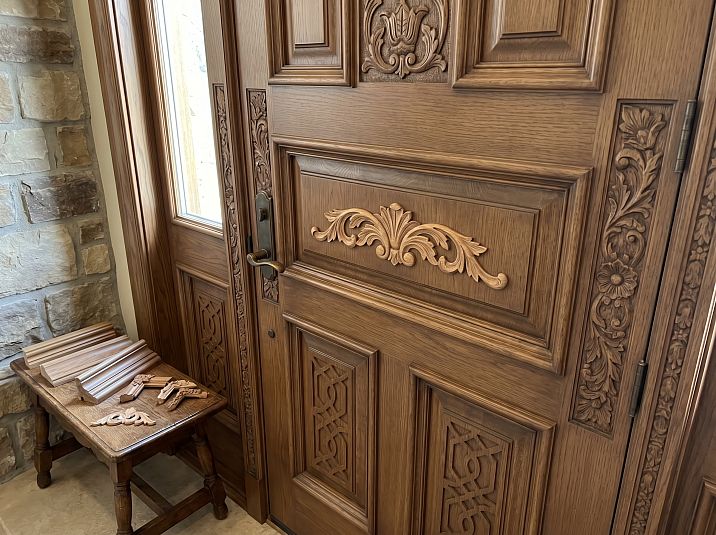
A door is not just a passage from one room to another. It is an architectural accent that sets the tone for the entire interior. Have you noticed how one properly designed door can transform an entire hallway? How a white door with wooden moldings suddenly turns an ordinary entryway into something exquisite — without expensive renovations, without replacing furniture, without changing the flooring?
It is this wooden door decor that has this almost magical ability: small overlays, properly selected moldings, or an expressive trim change the perception of the door, and with it, the entire surrounding space.
This article is a detailed guide on choosing Door Decor made of wood. We will cover all types of elements, all style scenarios, and all typical mistakes. Read on — and your doors will never be the same.

What is door decor and why is it needed
Door decor is not decoration for decoration's sake. It is a tool of architectural language. In a classic interior, doors are as integral to the composition as walls, ceilings, and floors. Just as a wall without moldings can look empty, a door without decor can appear unfinished, 'bare'.
Functions of door decor:
-
Architectural completeness. The door becomes part of the interior system, not just a functional opening in the wall.
-
Style identity. Moldings or carved overlays instantly convey the interior style: classic, baroque, neoclassical, country aesthetic.
-
Connection with other elements. A decorated door 'communicates' with architraves, baseboards, cornices, and furniture — creating a unified space.
-
Visual scale. Proper decor makes the door visually taller, wider, more significant — depending on the desired effect.
-
Restoration resource. Overlays and moldings allow you to update an old door without replacement: transform the panel, hide defects, give it a new character.
None of these effects are achieved by paint color alone. Only form, only volume, only wooden decor create true architectural expressiveness.




What elements are used to decorate wooden doors
The decorative arsenal for doors is rich. Let's look at each type of element — what it is, how it works, and where it is appropriate.
Our factory also produces:


Carved overlays for doors
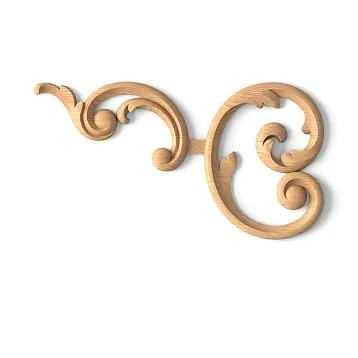
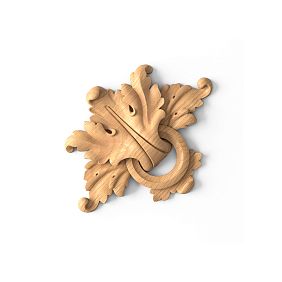
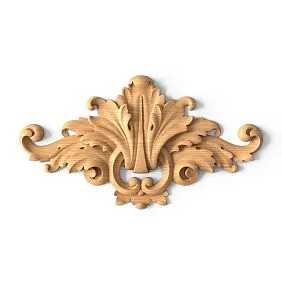
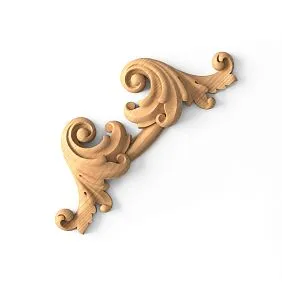
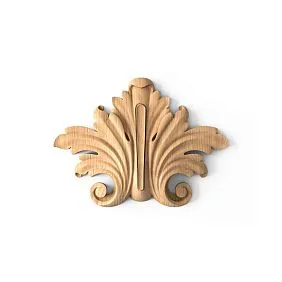
Wooden overlays for doors are three-dimensional decorative elements that are mounted directly onto the door leaf. They can be:
-
Central — one large overlay in the center of the leaf, creating the main decorative accent. Typical for entrance doors, front doors to the living room, double doors to the dining room.
-
Corner — overlays in the corners of the leaf or in the corners of inset panels. They create completeness in joint areas.
-
Perimeter — overlays along the perimeter of the leaf, imitating or replacing a molding frame.
-
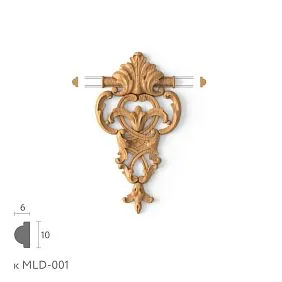
Ornamental inserts — carved elements with floral, geometric, or historical motifs set into the field of the leaf.
The overlays are mounted with glue and screws, fully painted together with the door, or separated by color to create a two-tone effect.
Get Consultation
Wooden door moldings
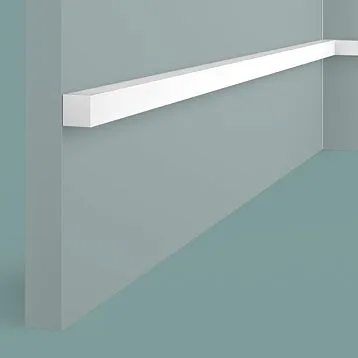
Wooden moldings on the door leaf are profiled strips that form geometric frames within the leaf. It is they that create that "classic" door look with rectangular or complex sections.
The principle of molding operation: it divides the flat leaf into architecturally organized fields — upper, middle, lower. In a classic interior, the fields usually have different heights: the lower one is the most massive, the upper one is more elegant.
The molding is glued to the leaf with slight adhesive pressure, after which the leaf is painted in a single color. Shadows from the molding in side lighting create visual depth — this is what turns a flat door into an architectural object.
Wooden patterned architraves
Wooden architraves for doors — the framing of the doorway. They perform a dual function: technical (covering the gap between the frame and the wall) and decorative (creating a "frame" for the door).
A patterned architrave is an architrave in which a profiled strip is combined with carved ornamentation: floral decor, geometric patterns, classic motifs. Such an architrave turns the doorway into an independent architectural accent.
A door architrave is typically wider than a window one — after all, the doorway is larger. The standard width of a door architrave is from 60 to 100 mm for interior doors, up to 120–140 mm for front and entrance doors.
Rosettes and corner elements
Decorative rosettes at the corners of the doorway or at the corners of molding frames are points where horizontal and vertical elements meet. The rosette covers the joint and simultaneously creates a decorative accent.
In classic door framing, corner rosettes are mandatory — they create a sense of completeness, of the frame being "closed." Without rosettes, the joints look technically correct but decoratively unfinished.
Pilasters
A pilaster is a flat vertical element imitating a column, located on the sides of a doorway. It is characteristic of formal interiors, palace, and classical designs. In modern country houses, pilasters at the entrance door create a solemn, representative image.
Cornice above the door
A horizontal decorative element above the doorway — a sandrik or cornice. It "crowns" the door, creating a sense of completion. In a classical interior, the cornice above the door is coordinated with the ceiling cornice in profile and scale.
Decorative inserts and carved patterns
Inserts in the form of medallions, rosettes, cartouches — individual decorative objects that are mounted in the door leaf field, above the door, or in the framing area. They create a strong local accent — especially effective on entrance and front doors.
All this assortment — from overlays to platbands and rosettes — is presented in the section wooden products STAVROS.
Decor for interior doors: scenarios by room
An interior door is the most common situation. Let's consider how the approach to decoration changes depending on the room.
Door to the living room
The living room is the main space of the house. The door to it is the "face" of the room, noticeable from the hallway and outside. It is here Door Decoration may be the most expressive.
For a classic-style living room — molding design of the panel with two or three sections, corner rosettes, a medium or wide architrave with a classic profile. The door can be double-leaf — then the decor on each leaf is mirror-symmetrical.
A tall door to the living room (2100–2400 mm) with molding division into three fields is an archetype of a classic living room. The lower field is the widest. The middle one is the main part. The upper one is the most elegant, often with a decorative insert or glass filling.
Door to the bedroom
The bedroom requires a balance between beauty and delicacy. Excessively rich decor in the bedroom overloads the space. Here are appropriate:
-
molding design in one or two fields;
-
a simple architrave profile;
-
rosettes — with a calm, not too large pattern.
The color of the door in the bedroom is often white or cream — and it is the white door with wooden moldings coated with white enamel that creates that impeccable classic image that you want to preserve for a long time.
Door to the study or library
A study is a space of focus and solidity. Here, darker, richer decor is acceptable. The wooden tone of the panel with lacquered moldings — warm walnut, oak, wenge. The casing is expressive, with a full profile. Adding pilasters on the sides of the opening is possible if height and width allow.
In a study, the principle of "door as furniture" works well: the door design echoes bookshelves, mirror frames, and handle decor.
Door to the hallway
The hallway is a transit zone. Its door should be expressive enough to create a first impression, but not so complex as to visually overload a small space. One or two moldings on the panel, a neat casing — that is enough.
For the hallway, the connection with casings and wooden skirting boardis especially important. It is in the hallway that the eye takes in several doors at once and the baseboard around the perimeter — and it is here that inconsistency of elements catches the eye.
Double doors
Double doors to the living room or dining room are an architectural gesture requiring proportionate decor. Molding design is mandatory here. Ornamental overlays are appropriate on the central axes of each leaf or on the upper section.
The key rule for double doors: symmetry. The decor on the left and right leaves must be mirror-identical. Any mismatch catches the eye and ruins the impression.
Tall doors
A door 2100 mm high or higher requires decor that "supports" the vertical, preventing the panel from looking monotonously elongated. Molding division into three fields is exactly the solution that works best here.
The upper field of a tall door is the zone for a decorative insert: a medallion, an ornamental overlay, decorative glass with a wooden frame. This creates a visual "completion" of the vertical.
Old doors for renovation
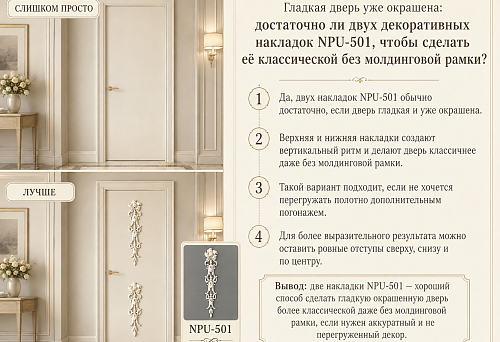
An old door with a sturdy panel but a lost appearance is an excellent candidate for restoration using decorative overlays. If the panel is smooth and not deformed, you can glue moldings onto it, install corner rosettes, and add carved overlays. After painting, the door looks completely renewed.
This is not a compromise — it is an economically and environmentally sensible solution. Decorative door overlays work specifically for such situations.
Decor of the entrance door and entrance group
The entrance door is the first thing guests see. For a wooden house, it is part of the overall facade ensemble. For a city apartment, it is the face of the entire finish, visible from the stairwell.
Carved architraves for the entrance door
On the entrance door, the architrave is installed on both sides: outside and inside. Outside, it is part of the facade decor: Carved wooden decoration in a unified ornament with window casings and other facade elements. From the inside, it is part of the interior solution, coordinated with the hallway decor.
The entrance door casing is typically wider than the interior one — 100–140 mm. This is due to the scale of the entrance opening and the higher decorative significance of the entrance area.
Crowns and upper accents
Above the entrance door, a cornice, pediment, or crown is installed — a horizontal decorative element that crowns the doorway. In wooden houses, this can be a carved horizontal plank with an ornament, brackets under the canopy, or a decorative overlay above the arch.
Side elements and pilasters
The main entrance is characterized by the decoration of the side zones of the opening: pilasters, vertical decorative elements that "frame" the door on both sides and create the feeling of a portal. In a wooden house, they are made from the same wood as the casings, in a unified ornament.
Combination of the entrance door with the porch
The entrance door and the porch are a single decorative system. Carved brackets under the porch canopy, railing balusters, the door casing — all of this should be executed in the same ornamental series. Mismatched ornaments here create a sense of randomness, even if each individual element is beautiful.
Decor of the entrance door of a wooden house from the facade side
For a wooden house, it is especially important that the door decor is organically connected with the window casings. If the windows have casings with a floral ornament, the entrance door casing should be from the same series: the same pattern, the same scale, the same finish. The unity of the facade is created precisely by this consistency.
How to choose a door decor style
Door decor does not exist on its own — it exists in context. And this context is the style of the interior or facade.
Classicism and neoclassicism
Classic wooden door decor — these are molding frames on the panel, expressive profiled architraves, corner rosettes, possibly pilasters and a sandrik above the opening. All of this is consistent with a single ornamental theme.
In classic style, two approaches are possible: monochrome (all white or cream) and wooden (natural wood tones under varnish). The monochrome approach is more "modern classic," while the wooden one is more traditional.
Baroque and Empire
Here, the decor can be more elaborate: large ornamental overlays with floral motifs, cartouches, medallions, rich relief. This is a style for formal interiors with high ceilings, stucco, and massive furniture.
Baroque door decor follows the rule of "a lot of everything, but everything is coordinated." Overload in Baroque is normal, but only if all elements belong to the same stylistic theme.
Modern classic
A more restrained version: straight moldings without complex profiles, minimal ornamental overlays, a neat architrave with moderate relief. The door looks noble, but without excess.
This is the most sought-after style today: a combination of classic structure with the purity of modern design. A white door with straight wooden moldings in white enamel is an example of modern classic.
Russian Style
For wooden country houses in the Russian style, carved overlays with folk motifs are characteristic: geometric ornaments, diamonds, stars, plant weaves. This is a case where carving is not an addition but the main decorative theme.
The entrance door of a wooden house with carved architraves, overlays with Russian ornament, and a forged handle is an image that creates a powerful sense of belonging to tradition.
Country interior and dacha
For a dacha and country house, organicity is important: wood everywhere, no plastic, no MDF. Overlays and moldings are from the same species as the doors and floors. The ornament is moderate, without excessive pomp. An atmosphere of coziness is created, not solemnity.
Interior with wooden furniture and classic furniture
When wooden furniture is present in the interior, the door decor should be coordinated with it in color and style. This is especially important in the living room and dining room, where doors and furniture are in direct visual dialogue.
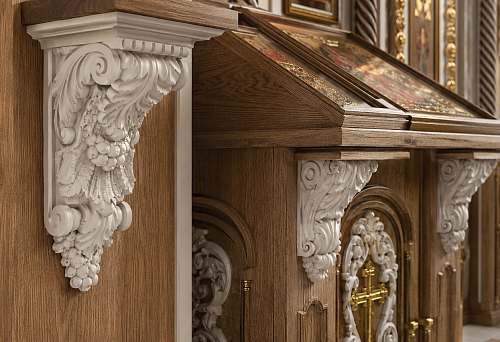
Classic furniture with carved details—cabinets with figured facades, chairs with carved backs—requires a commensurate level of complexity from the door decor. A door that is too simple next to a richly decorated sideboard creates dissonance.
Moldings on the door: when they are appropriate and how to choose them
Moldings are perhaps the most versatile tool for door decor. They can be installed on almost any door, in any style, with any paint color.
When moldings are appropriate
On a white door. A white door with white moldings is a classic in the literal sense of the word. It is this solution that is used in most classic interiors. The molding creates relief, shadows, volume—and the door ceases to be just a white rectangle.
On an old door. Adding moldings is one of the most effective ways to update an outdated door. If the panel is flat, the moldings are glued with acrylic adhesive under pressure, then the door is painted entirely. The result is a door that looks like new.
On a non-standard door. A tall door without decor looks bulky. Molding division "cuts" this bulk into architecturally meaningful parts.
In an interior with moldings on the walls. If the walls are decorated with molding frames, the doors should have coordinated molding design. Wall frames alone without decor on the doors look unfinished.
How to choose a molding profile
The molding profile determines its stylistic affiliation:
-
Simple rectangular profile — minimalism and modern classic.
-
Profile with a fillet — traditional classic, moderate richness.
-
Complex multi-step profile — formal classic, baroque, neoclassical.
Rule: the profile of the door molding should be coordinated with the profile of the door casing. If the casing is straight, the molding is straight. If the casing is classic, the molding is classic.
Geometry of molding division
Moldings on the panel form frames — sections into which the panel surface is "inscribed." There are several layout options:
-
One frame — the simplest version, suitable for small doors.
-
Two horizontal sections — standard classic.
-
Three sections (top + middle + bottom) — a full classic layout, especially good for tall doors.
-
Grid of four sections — a more complex and elegant solution.
Proportions matter: the bottom section should be taller than the middle one. This rule comes from classical architecture and creates a sense of stability, "groundedness."
Carved overlays on the door: expressiveness and character
If moldings create geometry and structure, then carved overlays create character. They transform a door from simply decorated to memorable.
Plant Ornamentation
Leaves, branches, flowers, vines — the most common type of ornament for wooden overlays. It is organic for any style that uses natural motifs: classic, baroque, art nouveau, country style. Floral ornament is perceived as soft, warm, cozy.
For interior doors, a floral overlay is most often installed in the center of the upper third of the panel or in the center of the upper section of the molding frame. This creates a light accent without overloading the door.
Geometric ornaments
Geometric overlays — diamonds, rosettes, stars, weaves — are characteristic of interiors with a clear structure. For the Russian style, geometric carving is a traditional element. For modern classics, geometric inserts in the corners of a molding frame create a strict, neat accent.
Central overlays
A large central overlay — a medallion or cartouche — is installed in the field of the panel as an independent decorative object. This is a solution for front doors: entrance to the living room, front door. Here the overlay is the master's "signature," completing the decorative program of the door.
Decor for painting
Most wooden door overlays are intended for painting: they are mounted on the panel, and the panel is painted together with them in a single color. Such an overlay works through shadow and relief — not through color contrast.
To create a two-color effect — the overlay is painted in a different color (e.g., gold, silver, a darker tone) — careful two-stage painting with painter's tape is required.
Solid wood overlays: strength and stability
For door decor, it is fundamentally important that the overlay is made of stabilized wood — a glued panel without internal stresses. An overlay made of raw or unstabilized board may delaminate or deform the panel when humidity changes. wooden decorative elements from the STAVROS catalog are manufactured taking into account stability requirements for interior use.
How to combine door decor with architraves, baseboards, handles, and furniture
A door does not live in a vacuum. It exists within a system of interior elements, and it is the degree of consistency within this system that determines the final result.
Door and architraves: mandatory unity
Wooden architraves for doors — the first element with which the door leaf decor must be coordinated. The architrave frames the door from the outside, the leaf is decorated from the inside — together they create a single architectural object.
If the leaf is decorated with classic moldings with a curved profile, the architrave must have a matching profile. If the leaf has a carved overlay with a floral pattern, the architrave can have a restrained profile — the architrave's pattern "submits" to the overlay's pattern.
Door and baseboard
Wooden baseboard in the room and the door architrave are elements of the same horizontal system. They must be the same color and ideally the same style. A white door with white moldings and a white baseboard with a classic profile — a perfect combination for a classic living room.
A separate topic is the junction of the architrave and baseboard in the doorway area. Two options are possible here:
Option 1: The baseboard approaches the architrave and stops — the joint is sealed. This is a simpler installation.
Option 2: The architrave is installed over the baseboard — the baseboard goes "under" the architrave. This is a more elegant solution requiring precise execution.
Door and furniture handles
wooden furniture handles — this is a detail that completes the door's look. A wooden handle on a wooden door with wooden moldings is an ideal single-material system. Metal handles are also acceptable, especially brass and bronze in a classic interior.
Important: the handle must be proportionate to the door. A small handle on a tall door looks accidental. A large handle on a small door is excessive.
Door and classic furniture
In the living room, where there is Classic Furniture with carved details, a door with moldings and overlays is a natural continuation of the decorative theme of the interior. Carving on the chair back, carving on the door overlay, carved ornament of the architrave — three points, three repetitions of the same theme. This is how an interior with depth is created.
Door decor in different styles: practical solutions
Let's consider specific door design scenarios in relation to the style.
| Style | Panel type | Panel decor | Casing | Color |
|---|---|---|---|---|
| Classic | Tall, three sections | Moldings + overlay in the top section | Wide profile with rosettes | White, cream |
| Neoclassical | Medium, two sections | Straight moldings | Medium profile | White, gray |
| Baroque | Tall, three sections | Moldings + large overlays + cartouche | Rich profile with ornament | Gold, dark wood |
| Russian style | Medium or high | Carved overlays with geometric ornament | Carved with folk motif | Natural wood |
| Modern Classic | Tall, three sections | Straight moldings without ornamental overlays | Straight or moderate profile | White |
| Countryside | Average | Minimal moldings | Simple or carved | Natural wood under varnish |
How to update an old door with wooden decor
This topic deserves a separate discussion. Replacing doors is an expensive and labor-intensive process. But sometimes there is no need to replace — it's enough to update.
Candidates for restoration
The door is suitable for restoration using overlays and moldings if:
-
the panel is strong, without cracks or deformations;
-
the surface is smooth, without deep damage;
-
the structure is stable (hinges, frame are in order).
If the door is made of MDF with a film coating, wooden overlays can also be glued, but the surface must first be degreased and the adhesive's bond strength to the film coating must be ensured.
Restoration sequence
-
Remove the door from its hinges and lay it horizontally.
-
Strip the old coating: sanding, removing peeling areas.
-
Mark the placement of moldings and overlays.
-
Glue the moldings with wood glue and press with clamps or tape.
-
Glue the overlays with PVA or acrylic glue.
-
After drying — putty the joints.
-
Primer.
-
Final painting in 2 coats.
Result: a door that looks like new — for a third of the replacement cost.
Mistakes when choosing door decor: analysis of typical blunders
Too large decor for a narrow door
A narrow door (width 600–700 mm) cannot handle large overlays and wide molding frames. The decor must be proportionate to the door leaf. A narrow door requires a narrow molding and a small, neat overlay.
Different wood shades on doors, baseboards, and furniture
Warm oak on the door, cool gray ash on the baseboard, reddish pine in the furniture — three different shades that 'argue' with each other. It is necessary to choose a unified color strategy: either everything in one tone, or a deliberate contrast.
Too much carving in a small room
In a small room, a busy door decor with large overlays and rich trim overwhelms the space. For small spaces — modest decor, emphasis on lines and geometry, minimal ornamental relief.
Lack of connection with trims
The door panel has decor, but the trim is plain and straight without profile. It's like a beautiful suit with sneakers: each element is fine on its own, but together — disharmony. The trim and door panel decor are chosen together.
Unsuitable molding profile
Too massive molding on a standard door — the panel looks overloaded. Too thin molding on a tall door — it gets lost, doesn't create the desired relief. The choice of profile is primarily determined by the door scale and room height.
Choosing decor without considering final painting
Buying overlays and moldings without thinking about how and with what they will be painted. For example, choosing an overlay with very deep relief that is difficult to paint evenly with a brush. Or forgetting to pre-paint the back side before installation. Finishing is planned before installation — not after.
Mismatch of entrance door with facade
An entrance door with rich carved decor — but the window trims are simple and unremarkable. Or vice versa. For a wooden house, unity of facade decor is critically important.
Frequently asked questions
What can be used to decorate a wooden door?
A wooden door is decorated with carved overlays, moldings, corner rosettes, decorative inserts, and architraves. The choice of elements depends on the interior style, door size, and desired result.
Can an old door be updated with wooden decor?
Yes, if the panel is sturdy and even. Overlays are glued onto the old panel, moldings create a new geometry, then the door is painted entirely. The result is a completely renewed door without replacement.
Which moldings are suitable for a door?
For a classic interior — profiled moldings with a curve. For modern classic — straight or with minimal profile. The molding profile should be coordinated with the architrave.
What is better for a door: moldings or carved overlays?
Moldings create a geometric structure and work in any classic style. Carved overlays provide a decorative accent and character. The optimal solution is a combination: molding division of the panel plus an overlay at a key point.
How to choose decor for a door in a classic interior?
Focus on three parameters: door height (determines the number of sections), architrave profile (determines the molding profile), and furniture style (determines the richness of ornamental overlays).
Can white moldings be combined with a dark door?
Yes, this is a deliberate contrasting technique: a dark panel plus white moldings. This solution works in modern classic and neoclassical styles. It requires precise color planning.
Where can I buy wooden door decor with delivery?
The STAVROS catalog features wooden overlays, moldings, architraves, and carved decor for designing any doors — interior and entrance.
STAVROS: wooden door decor and a complete interior design system
STAVROS company is a manufacturer of wooden decor for interiors and facades. The catalog includes — Wooden overlays for doors various patterns and sizes, Wooden moldings several profiles, Wooden architraves for doors, solid wood baseboard, carved facade decor, Furniture Handles и Classic Furniture.
All products are made from glued pine or oak panels using CNC with manual finishing. The surface is ready for final treatment without additional sanding. The material's stability ensures reliable installation and long-term use.
The key advantage of STAVROS for door decoration: unified ornamental series where overlays, moldings, architraves, and baseboards are designed in a consistent style. By choosing a series once, you get a complete decor system for doors, windows, baseboards, and cornices — without needing to find 'matching' items from different sources.
Full range wooden products for designing doors and interiors, selecting sets, placing orders with delivery across Russia — on the STAVROS website.