Article Contents:
- When you need to cover the joint of different wallpapers
- What to buy to cover the joint of different wallpapers
- Moldings as the most versatile way to cover the joint
- Decor for moldings: corners, rosettes, and accent elements
- Wooden baguette for wallpaper panel and frame on the wall
- Decorative overlays: when they are better than moldings
- How to cover the joint of wallpaper and ceiling
- How to cover the joint of wallpaper at the corner — briefly, without going into corner details
- How to choose a solution based on the joint type
- How to select size, color, and material
- What to buy together for a neat joint finish
- How not to confuse the solutions
- Practical selection for different situations
- Joint of two types of wallpaper on one wall
- Horizontal wallpaper joint
- Wallpaper panel on the wall
- Joint of photo wallpaper and regular wallpaper
- Joint of wallpaper and paint
- Joint of wallpaper and ceiling
- Small defect at the joint
- What to use to close the joint of different wallpapers?
- What to use to cover the joint of two types of wallpaper on the wall?
- Can the wallpaper joint be covered with a wooden baguette?
- What is decor for moldings?
- What to use to cover the joint of photo wallpaper and regular wallpaper?
- What to use to cover a horizontal wallpaper joint?
- What to use to cover a vertical joint of different wallpapers?
- How to cover the joint between wallpaper and ceiling?
- What to use to cover the wallpaper joint on an inner corner?
- What to use to cover the wallpaper joint on an outer corner?
- Can decorative overlays be used at the wallpaper joint?
- Which STAVROS elements are suitable for the joint of different wallpapers?
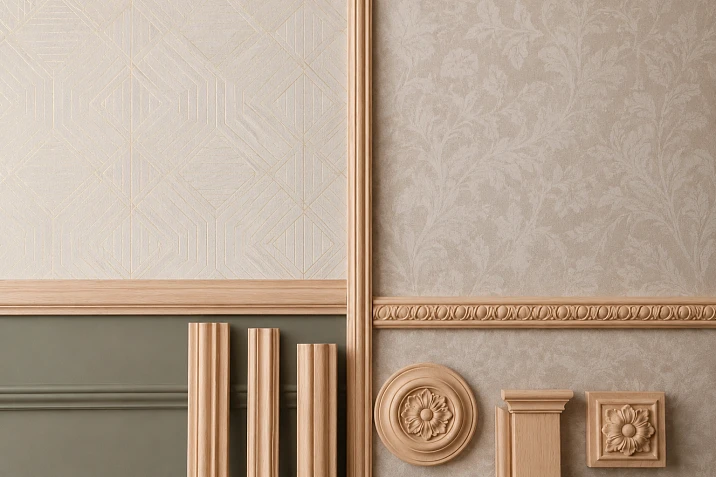
How to cover the joint of different wallpapers if after pasting the transition line is visible, the edges of the panels differ in thickness, the pattern does not match perfectly, or the accent insert looks unfinished? In such a situation, the joint does not necessarily have to be hidden as a defect. It can be turned into a decorative line: framed with molding, bordered with a wooden baguette, covered with an overlay, enhanced with rosettes, or assembled into a full frame on the wall.
This approach is especially useful when two types of wallpaper are used in a room: solid and patterned, background and accent, smooth and textured, regular wallpaper and photo wallpaper, wallpaper and a painted section of the wall. The transition between coverings itself often looks technical. But if you add a properly selected profile, baguette, or molding decor, the line becomes part of the composition.
It is important not to confuse this task with corner protection. If you need to cover a damaged external corner of the wall, that is a separate scenario. Here the main question is different: how to beautifully design the joint of different wallpapers on a flat wall surface, around a wallpaper panel, on a vertical transition, on a horizontal division, or near the ceiling. For this task, STAVROS offers wooden baguettes, baguette moldings, molding decor, decorative overlays, wooden rosettes, moldings, trims, and cornices.
Good decor does not just mask the seam. It helps to define the border of an accent wall, create a frame for a wallpaper insert, emphasize the wall division by height, connect the wallpaper with furniture, baseboards, door casings, and the overall style of the room. Therefore, you should not choose 'what to cover with', but what exactly should be achieved: a thin line, a decorative frame, a classic panel, a vertical divider, or an upper cornice.
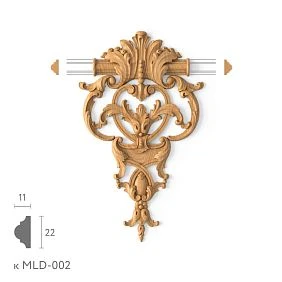
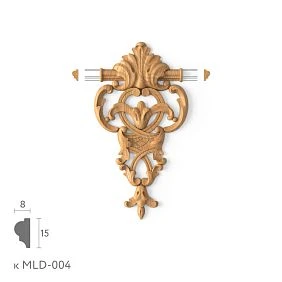
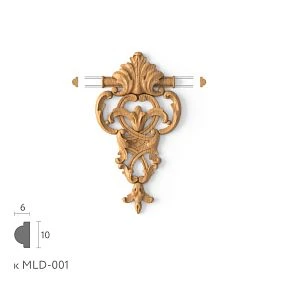
When you need to cover the joint of different wallpapers
The joint of different wallpapers should not always be covered. If the transition is smooth, the materials are of the same thickness, the pattern does not require framing, and the line itself looks neat, it can be left without additional decor. But in practice, different wallpapers often behave differently: one texture is thicker, another is thinner, one edge is slightly more noticeable, another casts a shadow, and the joint line looks too technical.
Most often, the question 'what to cover the joint of different wallpapers with' arises after designing an accent wall. For example, one part of the room is covered with calm solid wallpaper, and the area behind the sofa, headboard, console, or dining group is highlighted with patterned wallpaper. Until the accent zone is framed, it may look like just an inserted piece of another covering. Molding or baguette turns it into a panel.
The second common situation is horizontal wall division. The lower part may be darker or textured, the upper part light. Without a decorative strip, the transition often seems random. A baguette, molding, or wooden trim creates a neat belt and makes the division intentional.
The third scenario is the joint of photo wallpaper and regular wallpaper. Photo wallpaper is often perceived as an image, so it especially needs a frame or a clear border. If the edge is left without design, the entire composition may look like a temporary sticker. A wooden baguette for a wallpaper panel solves this problem better than a random plastic strip.
The fourth situation is the joint between wallpaper and paint. For example, part of the wall is painted, and part is highlighted with wallpaper. Here, a decorative profile helps make the transition neat and protect the edge of the covering. This is especially relevant in the hallway, living room, bedroom, study, and children's room, where the wall is constantly in view.
The fifth situation is the top joint at the ceiling. If the wallpaper reaches the ceiling unevenly, the junction line can spoil the impression of the entire wall. In this case, a cornice, ceiling molding, or trim works. The main thing is not to steer the entire article into the topic of curtain rods: here, the cornice is considered specifically as a way to close the top line of the wall.




What to buy to cover the joint of different wallpapers
Before purchasing, you need to understand the type of joint. A vertical transition, horizontal line, frame around a panel, and top joint at the ceiling require different solutions. The same molding is not always suitable for all tasks. Somewhere a thin profile is needed, somewhere an expressive baguette, somewhere decorative corners for moldings, and somewhere a small overlay is enough.
| Task | What to buy | When it fits | What to check before ordering |
|---|---|---|---|
| Vertical joint of two types of wallpaper | Molding or wooden trim | Accent wall, transition between wallpapers, zoning | Profile width, wallpaper thickness, wall height |
| Horizontal joint | Baguette, molding, or trim | Dividing the wall by height, lower and upper zone | Line level, wall proportions, profile color |
| Wallpaper panel | Wooden picture frame molding | Wallpaper insert, photo wallpaper, decorative frame | Panel size, joint angles, baguette width |
| Frame corners | Decor for moldings | Classic frame, panel, wall composition | Compatibility with molding, scale of corner decor |
| Minor defects | Decorative overlays | Spot masking, accents, composition corners | Defect size, patch thickness, wall style |
| Composition center | Wooden rosettes | Classic, neoclassic, decorative panels | Do not confuse with electrical outlets |
| Wall and ceiling junction | Cornice or ceiling molding | Uneven top line of wallpaper | Ceiling height, room style, connection to baseboard |
If you need to neatly cover the joint of different wallpapers on the wall without excessive decoration, start with molding. If the goal is to create a beautiful panel, look at baguettes. If you need to add a classic accent, rosettes and molding decor will come in handy. If the joint is small and the problem is localized, patches can help.
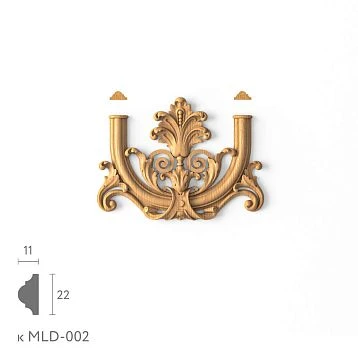
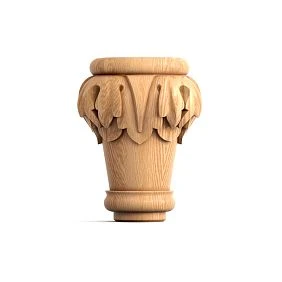
For a wall frame, you can use Decor for Molding: corner and decorative elements help cover joints and make the frame more expressive. If you need targeted masking or an accent on the wall, Decorative Insertsare suitable. For a frame around a panel, it is convenient to look at Wooden Picture Frameand for non-standard sizes — Baguette molding.
Our factory also produces:
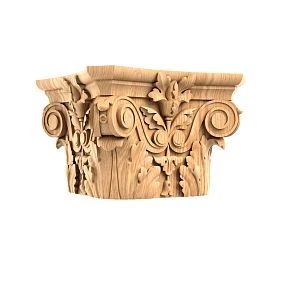
Moldings as the most versatile way to cover a joint
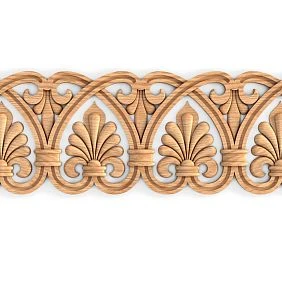
Molding is one of the most versatile ways to cover the joint between two types of wallpaper. It can be a vertical divider, a horizontal belt, a frame around a wallpaper insert, or part of a complex wall composition. Molding doesn't just cover the line. It makes the transition decorative.
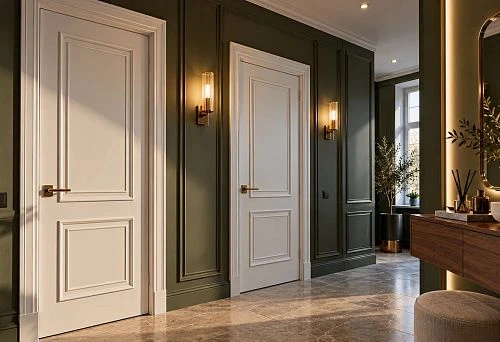
Vertical molding works well between two types of wallpaper on the same wall. For example, one part of the wall is decorated with background wallpaper, the other with accent wallpaper. Without a divider, the transition line can look too sharp. Molding creates a neat border and helps perceive the two coverings as a well-thought-out zoning.
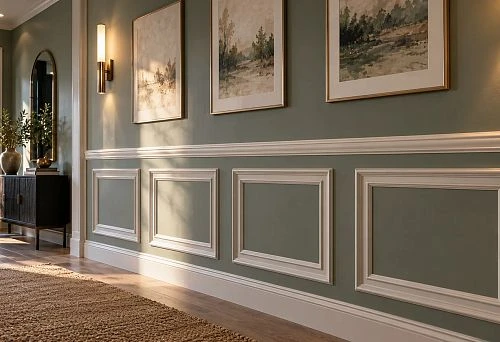
Horizontal molding is used when wallpaper divides the wall by height. The lower part can be more practical or darker, the upper part light and calm. In this case, molding acts as a decorative belt. It covers the joint, sets the level, and helps connect the wall with the baseboard, furniture, and door framing.
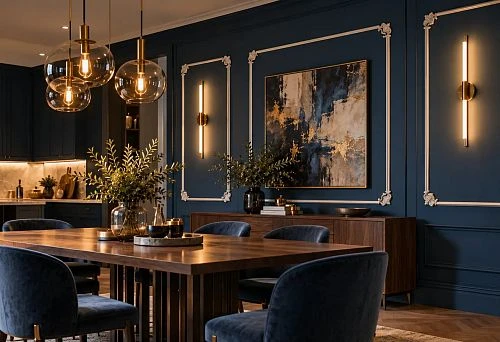
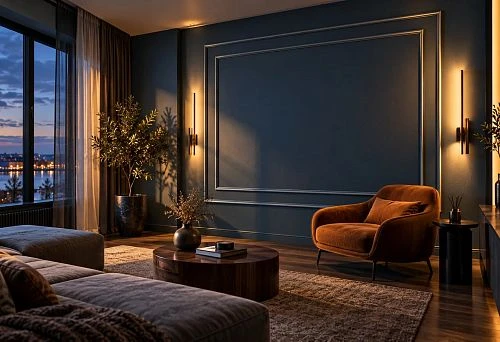
A molding frame around a wallpaper insert is needed when wallpaper is used to create a panel. This could be an area behind the sofa, an accent above a console, an insert in the bedroom, a decorative panel in the hallway, or a study wall. The frame turns the wallpaper from a covering into an interior object.
If you need to buy decorative moldings for walls, first check not only the pattern but also the width. A profile that is too narrow can get lost on textured wallpaper. One that is too wide will be overwhelming, especially in a small room. A good rule: the larger the wall and the more active the wallpaper pattern, the bolder the profile should be. But if the wallpaper is already very expressive, it's better to choose a calmer molding.
For wall frames, you can use moldings and solid wood trimwhen a wooden character is needed, connection with furniture, architraves, baseboards or other solid wood elements. If the interior is based on light classical wall finishing, you can look at Decorative Wall Moldings.
Get Consultation
Decor for moldings: corners, rosettes and accent elements
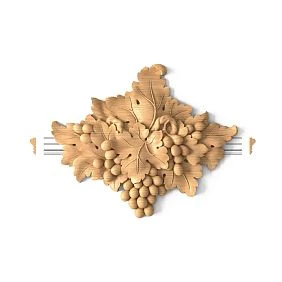
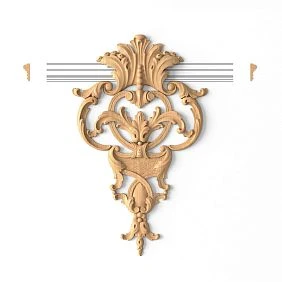
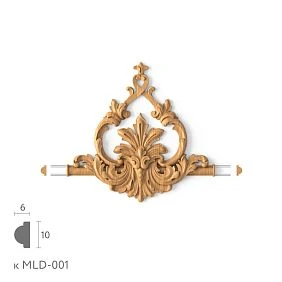
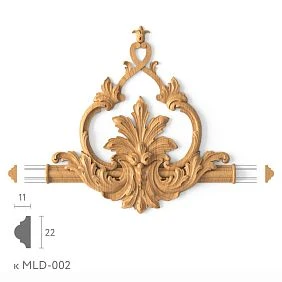
A regular molding covers the line. But if a frame is assembled from moldings, corners, joints and central points appear. This is where decor for moldings is needed: decorative corners, corner decor, rosettes, paired elements, small overlays.
Decorative corners for moldings are especially useful in classic and neoclassical frames. They cover corner joints and make the frame not just technical, but decorative. If the molding corners are difficult to cut or you want to enhance the composition, corner decor helps make the transition neater.
Central elements work differently. A wooden rosette can become a focal point inside the frame, above a horizontal molding, in the center of a wallpaper panel, or in the upper part of a wall composition. But here it is important to clarify that we are talking about a decorative rosette, not an electrical one. The article about wallpaper joints uses exactly Wooden sockets as a wall decorative element.
Paired overlays can be placed at the edges of the composition. For example, a vertical wallpaper joint can be not just covered with a profile, but designed as a decorative axis: a molding in the center, small elements at the top and bottom, a neat connection with the baseboard and ceiling line. But this technique requires moderation. If the wall is small, one molding without additional decor is enough.
Decor for moldings is not always needed. If the interior is modern, the wallpaper is calm, and the task is only to close the joint, extra rosettes and corners can overload the wall. If the room is decorated in classic, neoclassical or modern classic style, decorative elements help make the molding frame complete.
Wooden baguette for wallpaper panel and wall frame
A wooden baguette is especially suitable when the joint of different wallpapers is connected not just with a transition, but with the idea of a panel. For example, there is an insert of accent wallpaper on the wall, photo wallpaper, a fragment with an ornament, or a decorative area behind furniture. If you frame it with a baguette, it begins to be perceived as a painting, panel or architectural element.
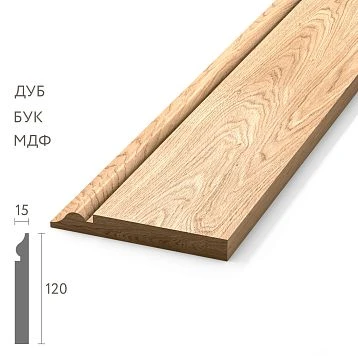
A baguette differs from a simple molding in its more pronounced framing role. It creates a frame, sets boundaries, and helps highlight a wallpaper insert. While a molding often works as a line, a baguette works as a contour. Therefore, when a customer asks what to use to cover the joint between photo wallpaper and regular wallpaper, a wooden baguette often turns out to be one of the most logical solutions.
A baguette is also convenient for non-standard sizes. Not every wallpaper insert has a ready-made format. Sometimes a panel needs to be assembled to fit the width of a sofa, console, bed, fireplace area, or the wall space between openings. In this case, baguette linear molding is useful: it allows you to select the length and assemble a frame for a specific wall.
If you need to buy a wooden baguette for painting or tinting, it's worth paying attention to unpainted options when they suit the task. Buying unpainted wooden baguette by the meter is convenient when the frame needs to match the color of the wall, furniture, baseboard, or trim. Wood can be integrated into the interior in different ways: highlighted, tinted, painted to match the wall color, or tied to the furniture group.
When choosing a baguette, it's important not to make a mistake with the width. A thin baguette can get lost around a large panel. A too wide one can make a small insert look heavy. If the wallpaper is busy, it's better to choose a calmer baguette. If the wallpaper is solid, the profile can be more expressive.
Before ordering, you need to calculate the perimeter of the frame, account for corner cuts, and add a margin. Buying wooden baguette linear molding without calculating the length is a common mistake. It's better to draw a diagram in advance, measure the height and width of the future frame, and check if nearby sockets, switches, sconces, furniture, or door trims are in the way.
Decorative overlays: when they are better than molding
Molding is good for a line. Baguette is good for a frame. And decorative overlays help where you need to cover not the entire joint, but a specific area or add an accent. For example, if a complex joint is visible in the corner of the frame, if there is a small defect on the wallpaper, if you need to emphasize the top part of the panel or connect the wall with carved furniture decor.
It's worth buying decorative overlays for the wall when a simple line seems too dry. An overlay adds relief, makes the composition richer, and helps repeat the motifs of furniture, doors, frames, or other wooden details. But it should be used carefully. The overlay should not look like a patch. It should be part of the overall scheme.
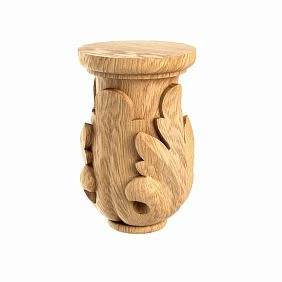
For example, if a frame made of baguette around a wallpaper insert is created on the wall, overlays can be placed in the corners or in the center of the top line. If the joint is vertical, small overlays can emphasize the beginning and end of the line. If the wall is decorated in a classic style, an overlay can support decorative rosettes and carved decor.
It makes sense to buy decorative wooden overlays when the room already has wooden elements: furniture, cornice, baseboard, trims, frames, doors, decorative details. Then the overlay does not look out of place. It connects the wall with the rest of the interior.
But if the task is only to cover a thin, even joint, a trim may be unnecessary. In that case, a molding or narrow profile is better. If the joint is in the center of the composition, next to a panel or in an accent wall area, a trim helps make the solution more expressive.
How to cover the joint between wallpaper and ceiling
A separate scenario is the joint between wallpaper and ceiling. Sometimes after pasting, the top line turns out uneven. Sometimes the wallpaper has noticeable thickness, and the transition to the ceiling looks rough. Sometimes you need to cover not only the edge of the wallpaper but also the joint between the wall and ceiling. In such situations, a cornice, ceiling molding, or profile helps.
How to cover the joint between wallpaper and ceiling depends on the room's style. In classic and neoclassical styles, cornices and profile elements work well. In modern interiors, it's better to choose a calmer line. If the bottom of the wall is already finished with a baseboard, the top cornice helps assemble the wall into a complete frame.
It's important to understand: wooden cornices in this article are considered as a related scenario for the top line of the wall. There's no need to steer the topic toward choosing curtain systems. If you specifically need a decorative top transition, you can look at Wooden cornices and assess how well they fit the room's scale, ceiling height, and finishing style.
How to cover the joint between wall and ceiling is not just an aesthetic question. The top line greatly influences the perception of the room. If it's uneven, even a beautiful joint of different wallpapers on the wall can look unfinished. Therefore, when designing an accent wall, it's better to think about the entire plane at once: the bottom baseboard, vertical joint, decorative frame, and top junction.
If the wallpaper reaches the ceiling and there is a baguette frame or moldings nearby, the top element should match them. A too-active cornice can clash with the frame. A too-simple one can get lost. It's better to choose elements in the same logic: by material, relief, color, and scale.
How to cover the joint of wallpaper at a corner — briefly, without going into the topic of corner guards
The joint of wallpaper at a corner is a related but not main topic. If it's an internal corner, it's often better to use a thin profile, narrow molding, or neat strip. Massive decor inside a corner can look heavy, especially in a small room.
If we're talking about an external corner, the situation is different. The outer corner wears out faster, gets caught, chipped, and dirty. It may require a corner piece or a more protective profile. But if the main task is specifically corner protection, that's a different article and a different buyer scenario.
Within the topic of joining different wallpapers, the corner should only be considered as a special case. For example, two types of wallpaper meet at an internal corner, and the line needs to be neat. Or a wallpaper insert reaches the outer edge of the wall, and the transition needs to be covered. But the main focus remains not the wooden corner piece as a product, but the decorative finishing of the joint line.
This is an important distinction for the reader. If they want to cover a separated joint of different wallpapers on a flat wall surface, they need a molding, baguette, trim, or overlay. If they want to protect a damaged external corner, they should look for a separate solution for corners. Therefore, in this article, corner pieces are not the main purchase route.
How to choose a solution based on the type of joint
Before ordering, it's useful to determine the type of joint. This is faster than choosing by photo. Different solutions have different roles: one covers the line, another creates a frame, a third adds an accent, and a fourth covers the top of the wall.
| Joint type | Best solution | Why it fits | When to be cautious |
|---|---|---|---|
| Vertical joint of two wallpapers | Molding or trim | Makes the transition smooth and decorative | A profile that is too wide can overwhelm the wall |
| Horizontal joint | Cornice or molding | Turns the line into a decorative belt | You need to precisely maintain the level |
| Wallpaper panel | Wooden picture frame molding | Creates a frame and a picture effect | You need to calculate the length and angles |
| Frame corners | Decor for moldings | Closes joints and strengthens the composition | Not always needed in a modern interior |
| Spot defects | Decorative overlays | Mask specific areas and add relief | The overlay should not look random |
| Wallpaper and ceiling joint | Cornice or ceiling molding | Closes the top line of the wall | Do not lead the solution into a heavy cornice unnecessarily |
| Internal corner | Thin profile | Does not overload the corner | Thick decor may look rough |
| External corner | Corner or decorative profile | Can cover and protect the edge | This is already closer to a separate topic about corners |
If the joint is long, a long element is needed. If the joint is short and inside a frame, decor for moldings can be used. If the joint belongs to a panel, a baguette frame is better. If it is the top line of the wall, a cornice or molding is needed. This logic helps avoid buying random elements.
How to choose size, color, and material
The size of the decorative element should overlap the joint with a margin. If the molding barely covers the line, any slight difference in wallpaper thickness will be noticeable. If the profile is too wide, it will become the main element of the wall and may weigh down the interior. Be especially careful when choosing width for small rooms, narrow partitions, and walls with active patterns.
Color can be selected in several ways. The first is to match the color of the wall or wallpaper. Then the molding or baguette covers the joint softly, without strong contrast. The second is to match the color of furniture, baseboard, door trim, or floor. Then the decorative line connects the wall with the interior. The third is a contrasting color. It is appropriate if the joint should become an accent, but requires precision.
The material depends on the overall finish. Wooden decor works well where the room already has solid wood, veneer, wooden frames, furniture, baseboards, or trims. Polyurethane moldings are convenient for lightweight wall geometry and painting. It is important not to mix materials without a plan. If the baguette is wooden, the overlays are wooden, and the molding has a different texture, you need to understand in advance how they will look after finishing.
If the elements will be painted, preparation is especially important. Unpainted baguettes and linear elements can be integrated into the color scheme, but before ordering, you need to check the parameters in the product card. If the element already has a coating, the color must be compatible with the wallpaper and adjacent details.
Thickness is also important for different wallpapers. If one covering is noticeably thicker than the other, a profile that can cover the difference is needed. If the wallpaper is thin and the joint is even, a lighter molding is sufficient. If the edge is peeling, you first need to secure the wallpaper, and only then install the decor. Covering an unstable area with a beautiful strip is a bad idea: over time, the problem may reappear.
What to buy together for neat joint finishing
The joint of different wallpapers is rarely covered by a single random detail. If you buy a molding, corner elements may be needed. If you choose a baguette, you need to calculate the linear footage. If you are making a wallpaper panel, decorative rosettes or overlays will come in handy. If you are finishing the top of the wall, you should consider a cornice and its connection with the lower baseboard.
| What to add to the purchase | Why this is needed | Which scenario it suits | What to pay attention to |
|---|---|---|---|
| Decor for moldings | Covers frame corners and enhances the composition | Wallpaper panel, molding frame, classic | Compatibility with profile and wall scale |
| Decorative overlays | Mask point defects and add an accent | Frame, joint next to furniture, decorative insert | Do not use as a random patch |
| Wooden picture frame molding | Creates a frame around wallpaper or photo wallpaper | Panel, accent wall, insert above furniture | Profile width and perimeter calculation |
| Bagette molding | Allows assembling a custom-sized frame | Large walls, long lines, custom panels | Length, allowance, cutting angles |
| Wooden rosettes | Add a center of composition | Classic, neoclassical, frame on the wall | Use only decorative sockets |
| Solid wood moldings and trims | Cover long joints and create decorative lines | Vertical and horizontal transitions | Width, color, wall height |
| Wooden cornices | Cover the top line of the wall | Wallpaper and ceiling joint | Match ceiling height and style |
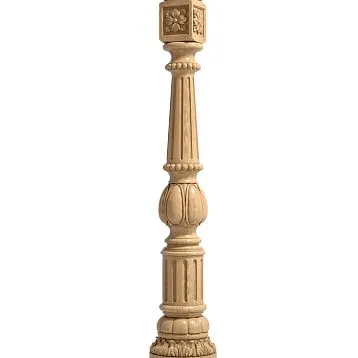
| Carved wood decor | Supports a rich decorative composition | Classic, accent wall, panel | Don't overload the wall |
| Decorative wall moldings | Suitable for frames and light wall geometry | Neoclassical, painted walls, panel schemes | Profile size and installation |
It's better to assemble the kit based on the task. For a vertical joint, a molding or trim is enough. For a panel, you need a baguette and possibly corner decor. For a classic frame, you may need moldings, rosettes, and overlays. For the top line, a cornice or ceiling profile.
If the wall is decorated in the same room with furniture, it's useful to look more broadly: how the wallpaper joint relates to frames, baseboards, trims, facades, and decorative details. In complex classic compositions, you can additionally use Carved wooden decoration, if it truly supports the room's style.
How not to confuse the solutions
Molding, baguette, linear products, overlay, rosette, and cornice may look similar to an unprepared buyer, but their purposes are different.
Molding covers the line and creates wall geometry. It is chosen for vertical and horizontal joints, frames, and decorative dividers.
Baguette creates a frame. It is best used around wallpaper panels, photo wallpapers, decorative inserts, or accent zones. If you need to frame wallpaper like a picture, baguette is better than a regular strip.
Linear products are needed when length and custom size matter. They help assemble long lines, non-standard frames, and large compositions.
Decorative overlays work pointwise. They do not replace long molding but help add an accent, cover a specific area, or finish composition corners.
Decorative wooden rosettes are a wall accent. They should not be confused with electrical outlets. They are used to decorate a frame, panel, or central part of a composition.
Cornice covers the top line of the wall and ceiling. It does not solve the vertical joint of two wallpapers on the wall plane but helps finish the wall from above.
This difference is important for purchasing. If you need a vertical divider, do not buy only overlays. If you need a panel, do not limit yourself to a thin strip. If you need to cover a joint near the ceiling, do not look for a decorative molding corner. First the task, then the product.
Practical selection for different situations
Joint of two types of wallpaper on one wall
If two types of wallpaper meet vertically, molding or a narrow wooden profile works best. It covers the edge and turns the transition into a decorative line. The width depends on the thickness of the wallpaper and the size of the wall. For a calm interior, choose a laconic profile. For a classic one, choose a more expressive one.
Horizontal wallpaper joint
It is better to design a horizontal joint as a decorative belt. Bagets, moldings, or trim are suitable here. It is important to maintain the level precisely because even a slight tilt will be noticeable. This technique works well in a hallway, children's room, living room, bedroom, and study.
Wallpaper panel on the wall
If an insert is made from wallpaper, it is better not to leave it without a frame. A wooden baguette turns the insert into a panel. If the panel is large, use baguette trim and calculate the length in advance. Decorative elements for moldings can be added at the corners of the frame if the interior allows for a more decorative solution.
Joint of photo wallpaper and regular wallpaper
Photo wallpaper often requires a frame. Without it, the edge of the image may look like a cut sheet. A baguette or molding makes the transition neat. If the photo wallpaper covers a large wall, the profile should be noticeable enough but not compete with the image.
Joint of wallpaper and paint
Here, a molding or trim works well. It covers the boundary of materials and makes the transition clean. If the painted part of the wall is calm, the profile can be highlighted. If both coverings are active, it is better to make the profile neutral.
Joint of wallpaper and ceiling
If the top line is uneven, a cornice or ceiling molding is needed. It covers the transition and makes the room complete. With a low ceiling, do not choose a too massive cornice. With a high room, a more expressive profile can be used.
Small defect at the joint
If the problem is localized, it's not always necessary to cover the entire line. Sometimes an overlay, socket, or decorative element within the composition helps. But it must be justified: for example, repeating on the other side of the frame or supporting the furniture decor.
Wall preparation before installing decor
Decor cannot be placed on a problem area without preparation. If the edge of the wallpaper is peeling, it must first be secured. If there is moisture, void, or unevenness under the wallpaper, the molding will only temporarily hide the problem. If the joint has separated due to poor wall preparation, the decorative profile will not solve the cause.
Before installation, check how straight the joint line is. If it varies significantly, a profile of sufficient width is needed. If the joint is almost straight, a thinner solution can be used. If the wallpapers are of different thicknesses, it is important that the profile does not emphasize the difference.
Marking is mandatory. For vertical molding, check with a plumb line. For horizontal, use a level. For a frame, check diagonals and corners. For a baguette, check the perimeter, allowance for cutting, and symmetry. Even expensive decor looks bad if installed crookedly.
If elements are to be painted, the order of work should be planned in advance. Sometimes it is more convenient to install the profile and paint it together with the wall. Sometimes it is better to prepare the parts separately. It all depends on the material, coating, and the desired result in the interior.
If using polyurethane molding, it is useful to study the material about Molding Installation. If using wood, check the parameters of the specific product and consider the base, fastening method, finish, and room conditions.
Mistakes when closing the joint of different wallpapers
The first mistake is choosing a molding that is too wide. It can cover the joint but overload the wall. This is especially noticeable in small rooms and on narrow walls.
The second mistake is making a frame without symmetry. If a wallpaper panel is framed with a baguette, the margins must be precise. A crooked frame spoils the impression more than an open joint.
The third mistake is using door or furniture overlays as the main wall decor without understanding scale. An overlay can work for a wall, but only if it functions within the composition.
The fourth mistake is mixing different wood shades. A baguette in one tone, rosettes in another, and a baseboard in a third shade can look random. If elements are to be painted, this must be decided in advance.
The fifth mistake is not accounting for wallpaper thickness. If materials have different thicknesses, a thin profile may not cover the transition.
The sixth mistake is covering a peeling edge without preparation. First, secure the covering, then install the decor.
The seventh mistake is overloading the wall with rosettes and corner decor. If the wallpaper is already busy, the decor should be more subdued.
The eighth mistake is buying a baguette without calculating the length. For a frame, you need the perimeter, allowance, and understanding of corners.
The ninth mistake is moving the joint of different wallpapers into the theme of corner protection. If the joint is on a flat wall, the main solution should be molding, baguette, or trim, not a corner piece.
The tenth mistake is confusing decorative wooden rosettes with electrical ones. For a wall frame, you need decorative elements specifically.
Who this solution is suitable for
Decorating the joint of different wallpapers with moldings, baguettes, overlays, and decorative rosettes is suitable for those who want to make the transition between coverings neat and beautiful. This is especially useful for accent walls, wallpaper panels, photo wallpapers, horizontal wall division, and classic and neoclassical interiors.
This approach is suitable for living rooms, bedrooms, hallways, studies, children's rooms, and commercial spaces where the wall should look finished. It helps turn a technical joint into a decorative line and connect the wallpaper with the rest of the finish.
The solution is not always necessary if the joint is perfectly even and does not require emphasis. It may also be unnecessary in a very minimalist interior where any extra line would look random. If the wall is damaged or the wallpaper is peeling, preparation is needed first, not the purchase of decor.
Where to buy decor for the joint of different wallpapers STAVROS
It's best to start the purchase by defining the task. Need to cover a vertical joint — look at moldings and trim. Need to make a frame around a wallpaper panel — choose wooden baguettes and baguette trim. Need to decorate the corners of the frame — add decor for moldings. Need an accent — look at decorative overlays and wooden rosettes. Need to cover the top line of the wall — consider a cornice or ceiling profile.
At STAVROS, you can select elements in one style: wooden baguettes, trim, moldings, decorative overlays, rosettes, carved decor, and cornices. Before ordering, you need to check the dimensions, material, finish, purpose, and compatibility in the product card. If the wall is complex, it's better to calculate the length, number of corners, profile width, and installation location in advance.
A good commercial route looks like this: determine the type of joint, choose the main solution, add decorative elements only if necessary, check dimensions, plan the finish, and place the order. Then the joint of different wallpapers will not be hidden by a random strip, but designed as part of the interior.
FAQ: questions about the joint of different wallpapers
What to use to cover the joint of different wallpapers?
Decorative moldings, wooden baguettes, trim, or overlays are best suited. If the wallpaper is made into a panel, the joint can be designed as a frame made of baguette.
What to use to cover the joint of two types of wallpaper on the wall?
For a vertical joint, a molding or narrow wooden profile will work. For a horizontal joint, you can use a baguette, molding, or trim.
Can you cover the wallpaper joint with a wooden baguette?
Yes. A wooden baguette is especially suitable if the wallpaper is used as a panel, insert, or decorative frame on the wall.
What is Molding Decor?
These are corner, central, and decorative elements that complement the molding frame: they cover connections, enhance the composition, and make the joint visually complete.
What to use to cover the joint between photo wallpaper and regular wallpaper?
For photo wallpaper, a baguette frame or molding works well. They separate the image from the background wallpaper and make the insert look like a panel.
What to use to cover a horizontal wallpaper joint?
A horizontal joint is best covered with molding, baguette, or trim. Such an element turns the transition line into a decorative belt.
What to use to cover a vertical joint of different wallpapers?
For a vertical joint, molding or a wooden profile is most often chosen. It covers the line and helps to design the wall zoning.
What to use to cover the joint between wallpaper and ceiling?
For the top joint, a cornice, ceiling molding, or profile is suitable. If a wooden accent is needed, consider a wooden cornice or trim.
How to cover the wallpaper joint on an inner corner?
On an inner corner, it's better to use a thin profile or molding. A massive element can visually weigh down the corner.
How to cover the wallpaper joint on an outer corner?
On the outer corner, you can use a corner piece or decorative profile. But if the main task is to protect the corner from damage, it is better to choose a separate solution for corners.
Can decorative overlays be used on wallpaper joints?
Yes, if the overlay is part of the composition: it covers a frame corner, masks a spot defect, or supports carved wall decor. As a random patch, it will look worse.
Which STAVROS elements are suitable for the joint of different wallpapers?
For this task, wooden baguette, baguette molding, decor for moldings, decorative overlays, wooden rosettes, moldings, trims, and cornices for the top wall line are suitable.
Conclusion: the joint of different wallpapers can be not hidden, but styled.
The junction of different wallpapers does not have to remain a technical line. It can be turned into a decorative element: cover it with molding, frame it with a baguette, add overlays, enhance with rosettes, or connect it to the upper cornice. The main thing is to choose a solution for the specific type of joint.
For a vertical transition, moldings and trims are suitable. For horizontal division, baguette or decorative profile. For a wallpaper panel, a wooden frame. For frame corners, decor for moldings. For point defects, overlays. For the top line, a cornice or ceiling molding.
STAVROS helps to assemble such elements in one logic: select wooden baguette, decor for moldings, decorative overlays, rosettes, moldings, trims, and cornices, check parameters in the cards, and style the joint of different wallpapers as a full-fledged part of the interior, rather than a place that had to be urgently covered with something.