Article Contents:
- When you need a wooden block, not a batten, angle, or molding
- Block as a rigid linear element
- Block as a decorative solid wood detail
- Block as a base for a frame, layout, or frame assembly
- Block BR-001
- Specifications table for BR-001
- Timber + batten
- Timber + cornice
- Timber + corner
- Timber + general wooden molding
- Need to make a decorative frame on the wall
- Need to assemble a base for a decorative panel
- Need to frame an opening or wall edge
- Need to create modern wooden geometry
- Need to select a part for a furniture project
- Need to cover the joint of wooden trim
- Mistake 1. Buying construction lumber instead of interior trim
- Mistake 2. Choosing 40x40 where 20x20 is needed
- Mistake 3. Choosing 20x20 for a task that requires rigidity
- Mistake 4. Not considering the material
- Error 5. Not buying the set immediately
- Error 6. Not checking the length and quantity
- Error 7. Thinking that a block will replace any profile
- Where to buy a 40x40 wooden block?
- Where to buy a 20x20 wooden block?
- How is a wooden block different from a batten?
- When is it better to choose a 40x40 block?
- When is it better to choose a 20x20 block?
- What's better to choose: oak or beech?
- Can a block be used for decorative wall finishing?
- What to buy together with a wooden block?
- Can a block be used as a base?
- How to cover the joint of wooden finishing?
- Can a block be combined with slats?
- Is a block suitable for a modern interior?
- Do I need to buy a block with a reserve?
- What to check before ordering BR-001?
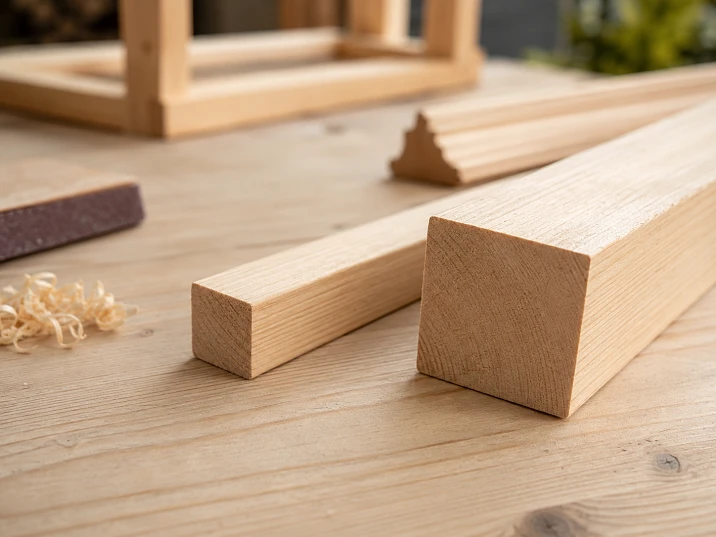
A 40x40 wooden block is most often bought not as an ordinary building material, but for a specific task: to assemble a level base, make a decorative frame, finish a wall, reinforce an interior structure, cover a joint, or select natural millwork for furniture and finishing. Such a block should not be a random blank from the nearest warehouse, but a neat solid wood element that can be used in the interior without the feeling of rough raw lumber.
With a 20x20 block, the task is often different: it is needed not as a massive base, but as a thinner linear element. It is convenient for making layouts, frames, trims, decorative lines, small bases, transitions, and neat wooden accents. Therefore, queries like "buy wooden block 20x20" and "buy wood block 20x20" cannot be reduced to a single general answer. The size changes the role of the part: 20x20 works thinner and lighter, 40x40 is denser, stiffer, and more noticeable.
STAVROS has a real product base for this topic: a category of wooden blocks, product card BR-001, as well as related sections where a block can be selected together with a batten, cornice, corner piece, and other solid wood moldings. Therefore, it is better to base the choice not on the abstract question "where to buy a block", but on a practical route: what is the project's task, what size is needed, which material is best suited, how a block differs from a batten, what to buy it with, and what to check before ordering.
If you need an interior wooden element, not a temporary mounting piece for rough work, it is worth looking at buy STAVROS wooden block. This approach helps to immediately move from an idea to a real product: choose the size, material, purpose, compatible elements, and understand how the block will work in the finish or structure.
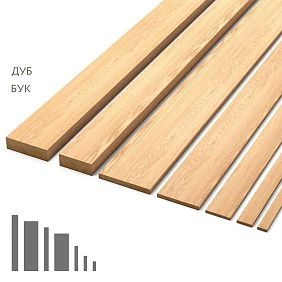
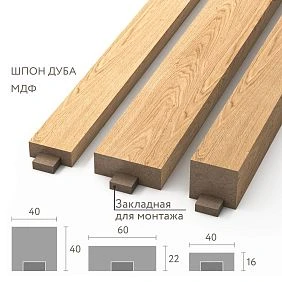
When you need a wooden block, not a batten, corner piece, or molding
A wooden block is chosen when you need not just a thin line on the wall, but a stiffer and more expressive linear element. A batten usually has a lighter visual role: it provides rhythm, layout, decorative division, vertical or horizontal lines. A molding has more profiling and decorative pattern. A corner piece has a specific task of covering an external corner or end. A block has a different character: it is perceived as a dense, simple, and confident solid wood part.
This is important in interiors. If you need a light decorative layout on the wall, a batten may be more convenient. If you need to cover an external corner, a block does not always replace a corner piece. If you need an expressive frame with a profile, it is better to look at molding or picture frame batten. But when you need a straight wooden line with noticeable thickness, a base for a frame, a spacer element, a structural node, or a calm massive accent, a block becomes a logical choice.
Another reason to choose a block is the need to work with geometry. A block is more easily perceived as "constructional" within a finishing solution: it can define an edge, hold a contour, serve as a base, form a frame, or reinforce a transition. Unlike a decorative profile, it does not compete with ornamentation or impose a style. This is especially convenient in modern interiors where wood is needed, but without complex carvings, curls, or active profile patterns.




Block as a rigid linear element
Rigidity is needed where the part is worked not only visually but also by hand. For example, when assembling a base for a decorative panel, creating a frame, finishing the edge of an opening, or forming a simple frame joint. A 40x40 block looks more substantial than a thin batten and is better suited where the element should be perceived as a support or base.
A 20x20 block works differently. It is still a block but looks lighter. It can be used in a decorative frame, on a small surface, in furniture layout, in neat edging, or as an additional linear element next to battens. If a project has too many massive parts, 20x20 helps maintain a wooden character without overloading.
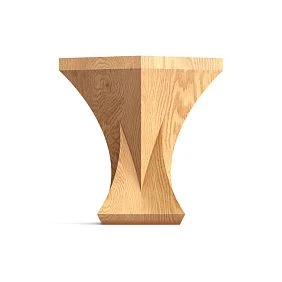
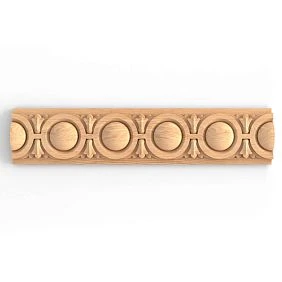
Our factory also produces:
Block as a decorative solid wood part
The decorative quality of a block lies not in a complex profile, but in the material, proportion, and clean line. Oak or beech look different from MDF, plastic, or a random pine blank. Solid wood gives a sense of real material: wood has density, texture, weight, and the possibility of finishing, sanding, staining, and painting.
Therefore, a wooden block can be not only a hidden base but also an exposed part. It can be used in decorative wall layouts, furniture contours, niche design, frames, transitions between materials, or as part of a complex wooden molding. The main thing is to know in advance whether the block will be visible. If so, the requirements for surface quality, material, and finish are higher.
Get Consultation
Block as a base for a frame, layout, or frame joint
A block is often needed where there is a task to assemble a contour. This could be a wall frame, a base for a decorative panel, a rectangular layout, a mirror frame, a base for battens, or a simple furniture or interior joint. In such cases, it is important not only to buy a block of the required cross-section but also to understand what it will be connected to.
If a block is used together with a batten, it is important to coordinate the thickness and visual spacing. If used with a cornice, understand where the top finish will be. If used with a corner piece, decide in advance how external corners and ends will be covered. That is why in a commercial article it is important to guide the buyer not only to one product but also to combinations: wooden blocks and battens for finishing, blocks with cornices, blocks with corner pieces, and general solid wood molding.
What wooden blocks does STAVROS have
At STAVROS, a block refers to wooden molding. This is an important point: we are not talking about random construction material for hidden rough installation, but about a wooden element that can serve in interior and decorative tasks. The block can be used as an independent part or as part of a set with slats, cornices, corners, and other molding products.
The main category for selection is wooden blocks. In it, the buyer sees the actual product BR-001 and can go to the product page to check dimensions, material, sanding quality, gluing options, and current ordering conditions. If the task is broader than one block, it is useful to look not only at the product page but also at adjacent filters: blocks with slats, blocks with cornices and slats, blocks with cornices and corners.
Block BR-001
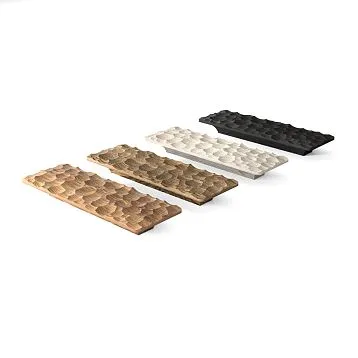
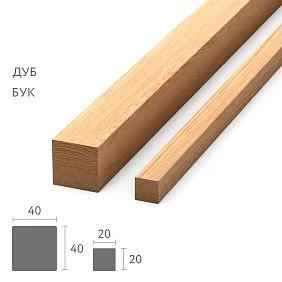
The key product for this article is block BR-001 made of oak or beech. The product page confirms dimensions 20 × 20 × 2400 mm and 40 × 40 × 2400 mm. This is convenient for the article because both common scenarios — 20x20 and 40x40 — can be covered using a real product rather than a fictional example.
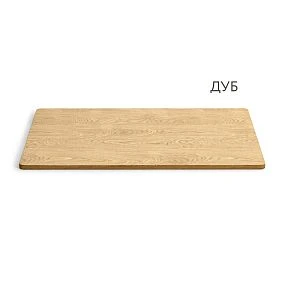
BR-001 is available in beech and oak. For the buyer, this is not just a choice of "more expensive or cheaper." Beech and oak behave differently in visual and finishing scenarios. Beech is often chosen for enamel when a smooth painted surface is needed. Oak is valued for its pronounced natural texture, which is logically revealed through staining or transparent finishes. Therefore, the material should be chosen not separately from the project, but together with the future coating.
The product page also specifies the "Prestige" sanding quality and gluing options for enamel and staining. This is important product detail: the block can be not only a structural base but also a visible element that should look neat after finishing.
Specifications table for BR-001
| Parameter | Value |
|---|---|
| Product | Wooden block BR-001 |
| Product type | Solid wood block |
| Available sizes | 20 × 20 × 2400 mm, 40 × 40 × 2400 mm |
| Materials | Beech, oak |
| Sanding quality | Prestige |
| Gluing options | For enamel, for tinting |
| Main tasks | Decorative finishing, frames, layouts, bases, interior structures |
| What to pair with | Battens, cornices, corners, other wooden moldings |
| What to check before ordering | Size, material, finish, quantity, purpose, current availability and lead times |
| Main transition | block BR-001 made of oak or beech |
This table helps quickly distinguish BR-001 from regular timber. Not only the size matters here, but also the material, sanding, further finishing, and the possibility of including the block in an interior composition. If the buyer needs rough material for a temporary frame, the requirements will be one thing. If the block remains visible in the finish, the requirements become completely different.
Size 20x20 or 40x40: how to choose for the task
Size is the first parameter that cannot be chosen "approximately." A 20x20 block and a 40x40 block can be made of the same material and from the same line, but they work differently in the interior. The same project can look neat or heavy just because of the wrong cross-section.
The 20x20 block is thinner and lighter. It is suitable for decorative lines, small frames, trims, layouts, furniture parts, and neat transitions. It is easier to fit where massiveness is not needed. It does not protrude as much, does not weigh down the wall, and pairs well with slats.
The 40x40 block is more noticeable and rigid. It is chosen when visual density, structural confidence, a base, a spacer element, a larger frame, an expressive wooden contour, or a lower/upper finishing node is needed. This size works better on large surfaces and where a thin slat would get lost.
| Task | Better to look at 20x20 | Better to look at 40x40 |
|---|---|---|
| Thin decorative frame | Yes | Not always, it might be a bit heavy |
| Expressive wooden contour | sometimes | Yes |
| Base for a small layout | Yes | If rigidity is needed |
| Frame or support node | Only for light tasks | More often yes |
| Wall geometry in a small room | Yes | With caution |
| Large plane, high ceiling | May get lost | Yes |
| Combination with slats | Good | Good if scale contrast is needed |
| Visually light modern interior | Yes | Only spot lighting |
| Denser classic or natural interior | Possible | Yes |
If a customer searches for "buy wooden block 40x40", there is almost always a task behind it where thickness matters. But you shouldn't automatically use 40x40 in all projects. In a small room, such a block may look too heavy. In a narrow decorative frame, it can "eat up" the internal space. In a furniture part, it may be excessive in scale.
If the query is "buy wooden block 20x20" or "block 20x20 wooden buy", the task is often closer to neat finishing. But even here, it's important not to make a mistake: 20x20 won't replace a stiffer element if you need to hold a contour, base, or volume. Therefore, the right choice is not just a number, but also an understanding of load, visibility, surroundings, and further finishing.
Beech or oak: how to choose the material
The material affects the appearance, processing, finishing, and perception of the block in the interior. Beech and oak are both hardwoods, but they give different results in a project. The mistake is to choose a material only by price or habit. It's better to look at what finish is needed: enamel, tinting, transparent coating, natural wood grain, dense paint, or connection with other furniture.
Beech is often chosen where enamel is planned. It provides a calm base for painting, well-suited for products that need to be neat, even, without an active wood pattern in the foreground. If a block is needed for a light wall, painted trim, a decorative frame under enamel, or an interior where wood should not compete with color, beech can be a practical option.
Oak is chosen when natural texture is important. Oak has a more pronounced grain, it reveals itself better in tinting and semi-transparent coatings. If you need to emphasize naturalness, connect the block with oak furniture, flooring, doors, frames, or other moldings, oak looks more convincing. It is especially appropriate where the block remains visible and should work not only as a form but also as a material.
| Parameter | Beech | Oak |
|---|---|---|
| Visual character | More calm | More expressive |
| Common scenario | For enamel, painting | For tinting, natural grain |
| Where it is appropriate | Light finish, painted frames, furniture parts | Natural interiors, warm wood finish, status accents |
| What to check | Preparation for enamel, surface quality | Grain, tinting, compatibility with other oak |
| When not to choose | If you need a prominent wood grain | If you need the smoothest possible base for dense enamel |
It's better to coordinate the material choice with the overall palette of the room. If there is already an oak floor, oak staircase, oak baseboard, or oak furniture nearby, an oak block will be easier to integrate into the interior. If the finish is based on white enamel, painted moldings, light doors, and calm geometry, beech under enamel often looks more logical.
Block as decorative wall finish
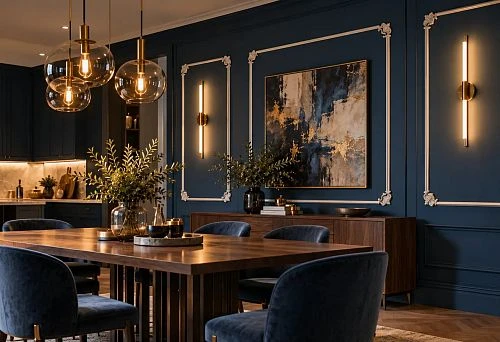
Decorative wall finishing with a wooden block is not just about aesthetics. The block helps define geometry, divide the plane, create frames, emphasize a niche, design an accent area, and make a transition from a smooth wall to a wooden detail. Unlike a profiled molding, a block looks simpler and stricter. This is good for modern interiors where naturalness is needed without overload.
For a small wall, it's better to choose a neat size. A 20x20 block can work as a thin contour around a panel, mirror, decorative insert, area behind a console or bed. It adds relief but doesn't take up much space. Using 40x40 on a small plane risks creating overly heavy geometry.
On a large wall, 20x20 may turn out to be too thin. Especially if ceilings are high, furniture is large, and the finish needs to be noticeable. Then 40x40 helps create a more confident line. But it's better not to place it too frequently. The larger the cross-section, the more important the distances between elements. Otherwise, the finish will look not like a well-thought-out architectural layout, but like a set of heavy strips.
The block can be combined with a slat. For example, the block sets the edge or frame, while the slats create an internal rhythm. In this case, it's convenient to open in advance wooden blocks and battens for finishing and see how different linear elements can work together. This is better than buying one block first, then a random slat, and then trying to match them in thickness and material.
Block as a base and frame element
Sometimes a block is needed not for display, but as a base. It can hold a frame, serve as a backing, set a distance, help assemble a joint, level a plane, create a base for a decorative panel, or form a simple structure. In such cases, rigidity, size, straightness, and ease of installation come to the forefront.
A 40x40 block is more suitable for such tasks because it has a larger cross-section. It is perceived more confidently as a base. It is easier to use where not only a line but also volume is needed. But this does not mean that 20x20 is useless. In light interior tasks, it can be more convenient: it protrudes less, fits more easily into a narrow area, and helps assemble a small contour without excess mass.
It is important to understand the boundary: the STAVROS decorative block is not a replacement for a calculated structural element for load-bearing constructions. If the project involves serious load, safety, mounting heavy objects, or construction responsibility, the parameters must be calculated separately. But for decorative finishing, frames, layouts, bases for light interior solutions, and visible wooden parts, BR-001 can be a good starting point.
In the commercial route, this means: if a main linear element is needed, first look at the block category. If a specific size and material are needed, go to the BR-001 card. If the finishing requires continuation, move on to slats, cornices, and corner pieces. This path helps assemble not just one detail but the entire unit.
What to combine a wooden block with
A block almost always wins when it is not alone. Even if the buyer came only for one size, slats, cornices, corner pieces, moldings, baseboards, or other linear elements often appear nearby in the project. If you don't think about this in advance, you can end up with a mismatch: a block from one material, a slat from another, a corner piece of a different shade, a cornice that doesn't match in scale.
Block + slat
This is the most understandable combination for wall finishing and decorative geometry. The block sets a stronger contour, while the slat works more subtly. For example, the block can define a zone, and the slats inside create rhythm. Or vice versa: the slats form the main repetition, and the block closes the edge or reinforces the lower part.
In such a combination, it is important not to mix random elements. It is better to look in advance wooden blocks and battens for finishingso that the block and slat are selected in the same material direction.
Block + cornice
A cornice is needed for finishing. If a batten is used on a wall, in the upper zone, in the transition to the ceiling, or as part of a vertical composition, the cornice can cover the edge and make the trim architecturally clearer. Without an upper finish, a wooden layout sometimes looks unfinished.
For such tasks, it is convenient to look at STAVROS battens, cornices, and slats. This does not mean you need to buy everything at once in maximum volume. But the buyer sees a possible system: the batten as a line, the slat as rhythm, the cornice as a finish.
Batten + corner piece
A corner piece is needed where an external corner, end, edge of a structure, or a place that needs to be neatly covered appears. A batten can form a plane, but it does not always elegantly solve the corner transition. If a corner piece is not selected in advance, the installer may cover the edge in a random way, and the trim will lose quality.
For such scenarios, it is better to open wooden battens, cornices, and corner pieces and understand in advance how to finish the edge, external corner, or transition.
Batten + general wooden trim
If the project spans more than one wall, it will come in handy solid wood millwork. In one section, you can select not only bars, but also moldings, baseboards, cornices, slats, corner pieces, and other elements. This is especially important for interiors where wooden details need to be repeated in different places: on the wall, around an opening, near the ceiling, along the floor, next to furniture.
Table: what to buy together with a wooden bar
| What to add to the purchase | Why this is needed | When it is especially useful | Commercial transition |
|---|---|---|---|
| Wooden strip | For thin lines, rhythm, and decorative layout | When the bar sets the outline, and light geometry is needed inside | wooden blocks and battens for finishing |
| Wooden cornice | For the top completion of the composition | When the finish reaches the ceiling or the upper zone of the wall | STAVROS battens, cornices, and slats |
| Wooden corner | For an external corner, end, or neat finish | When there is an edge of the structure or a transition between planes | wooden battens, cornices, and corner pieces |
| Bar BR-001 | As the main linear element from the array | When a specific size of 20x20 or 40x40 is needed | block BR-001 made of oak or beech |
| Wooden molding | To assemble the trim in one material and style | When the project includes walls, openings, furniture zones, and finishes | solid wood millwork |
This table is not for a formal listing of products, but for practical selection. One bar can solve a local task, but interior trim rarely consists of a single detail. If you select the batten, corner, and cornice in advance, there is less risk of having to find a random replacement during installation.
How not to confuse a bar, batten, corner, cornice, and baguette batten
Similar names often hinder the purchase. The buyer sees several linear products and thinks one can be replaced by another. But each element solves its own task.
| Product | What it is | When to buy |
|---|---|---|
| Wooden block | A linear element with pronounced thickness and rigidity | When a base, frame, structural or decorative accent is needed |
| Rail | Lighter linear element | For layouts, vertical lines, decorative inserts |
| Corner piece | Element for external corner or end | When you need to close, protect, or finish a corner |
| Cornice | Finishing profile | For top finishing, transition, or architectural line |
| Molding | Decorative profile for framing | For panels, frames, wall compositions, furniture contours |
| Baseboard | Lower protective-decorative profile | For wall-to-floor joint |
The main mistake is buying a block instead of a corner piece when you need to cover an outer edge. The second mistake is buying a batten instead of a block when you need a rigid base. The third is taking a cornice when you need a simple linear part without a profile. The fourth is using molding where a smooth, massive element is required, not a decorative profile.
If the goal is to make a frame, a block may work, but you need to assess what kind of frame is needed. If it should be strict, simple, and geometric, a block is good. If a more decorative classic frame is needed, it's better to look at profiled elements. If the frame will be small, 20x20 may be sufficient. If the frame is large and must hold the scale of the wall, 40x40 looks more confident.
Practical selection for different situations
Need to make a decorative frame on the wall
For a frame on the wall, first determine the size of the frame itself. The smaller the frame, the more carefully you need to choose the cross-section. For a small decorative outline, a 20x20 block usually looks neater. For a large frame on a big wall, you can consider 40x40, but it's important to leave enough air inside and around.
Choose the material based on the finish. For enamel, it makes sense to look at beech. For natural tinting or pronounced wood grain, choose oak. If the frame will be combined with battens, open the section with blocks and battens in advance so you don't have to pick adjacent elements at random.
Need to assemble a base for a decorative panel
Here, not only beauty matters but also geometry. A block can define an edge, distance, support line, or sub-base. For a lightweight panel, a smaller cross-section may suffice, but for a more confident base, 40x40 is often considered. At the same time, don't forget about the fastening method, the wall base, and the load.
If the block remains visible, surface quality and material are important. If it is hidden, the appearance is not as critical, but the size and stability still need to be checked. In any case, BR-001 should be evaluated based on its card: size, material, sanding quality, and preparation for finishing.
Need to frame an opening or wall edge
For an opening, it's important not only to choose a block but also to understand how the ends and corners are finished. If there is an outer corner, a corner piece may be needed. If the top of the opening needs a more decorative finish, a cornice or other profile may be required. A block can define a straight line, but it doesn't have to solve the entire assembly on its own.
In such cases, it's useful to look not only at the product itself but also at the bundle. wooden battens, cornices, and corner pieces. This way, it's easier to assemble the edge, top finish, and main linear element in advance.
We need to create a modern wooden geometry.
In modern interiors, a block is good for its simplicity. It doesn't add extra ornament but brings volume and naturalness. For wall geometry, you can combine 20x20 and slats to create a light pattern. 40x40 is better used selectively: as an edge, a strong line, a base, or an accent.
The main thing is not to turn the wall into a picket fence. There should be pauses between wooden elements. The larger the block, the more important the distances become. In a small room, too frequent spacing of 40x40 can weigh down the wall.
We need to select a detail for the furniture project.
In furniture tasks, a block can work as a contour, decorative strip, part of a frame, reinforcement, or visible linear element. Here, it's especially important to match the size with the rest of the furniture. A 40x40 block next to a thin facade may be too massive. A 20x20 block next to large furniture may get lost.
If the furniture is painted, the material under the enamel matters. If the furniture is tinted, you need to look at the wood grain. If the project is complex, it's better to prepare a specification in advance: blocks, slats, corners, cornices, and other elements, so you don't have to buy each component separately at different times.
We need to cover the joint of the wooden finish.
A block can help cover a joint, but it's not always the best element. If the joint is on an external corner, a corner piece is often needed. If the joint is decorative and straight, a block may work. If the joint is between the wall and ceiling, a cornice might look more appropriate. If between the wall and floor, it's better to look at a baseboard.
Therefore, the question "how to cover the joint of wooden trim" first needs to be clarified: where is the joint located, is it visible, what is the load on the area, is a profile needed or is a straight element sufficient. After that, it's easier to choose between a block, a batten, an angle, or a cornice.
Mistakes when choosing a wooden beam
Mistake 1. Buying a construction block instead of an interior one
For hidden rough installation, a coarse material can be used. But if the block will be visible in the interior, a random construction lumber often looks bad: uneven surface, poor geometry, extra defects, unsuitable humidity, rough processing. For decorative finishing, it's better to choose a block as part of the molding, not as a random blank.
Mistake 2. Choosing 40x40 where 20x20 is needed
A large size doesn't always make the project better. In a small frame or narrow wall layout, 40x40 can look heavy. It takes up space and makes the line too active. If a thin decorative line is needed, it's better to consider 20x20 or a batten.
Mistake 3. Choosing 20x20 for a task that requires rigidity
The opposite mistake is taking a thin block where a base or a more confident contour is needed. 20x20 may not be expressive enough on a large wall and not convincing enough in a node that requires volume. If the project requires rigidity and visible strength of the line, 40x40 may be more correct.
Mistake 4. Not considering the material
Beech and oak cannot be chosen just out of habit. If the project is for enamel, beech may be more convenient. If an expressive natural pattern is needed, oak looks more interesting. The mistake is to buy the material and then try to make it work in an unsuitable finish.
Mistake 5. Not buying the set at once
A block often requires adjacent elements. You need a batten for thin layout, a corner piece for the end, a cornice for the top finish, and other moldings to tie in with the interior. If you buy everything one by one and at different times, you can make a mistake with the material, shade, size, and style.
Mistake 6. Not checking the length and quantity
The size of 2400 mm is convenient for many tasks, but the project needs to be calculated. You need to understand the length of the walls, the number of frames, the allowance for cutting, joints, corners, and possible defects during installation. If you take too little, you may run out of material. If you take it without calculation, part of the budget will go to excess leftovers.
Mistake 7. Thinking that a block can replace any profile
A block is universal, but not all-powerful. It does not replace a corner piece on an external corner, a cornice at the top finish, a baseboard near the floor, and a molding in a decorative panel if a specific profile pattern is needed. A block is good where a simple, dense wooden line is needed.
Who the wooden block BR-001 is suitable for
The BR-001 block is suitable for designers, craftsmen, assemblers, and buyers who want to work with natural wood and assemble the finish neatly. It should be considered for frames, layouts, decorative lines, bases, furniture parts, wall compositions, and interior units where material, size, and surface quality are important.
It is suitable for those who choose oak or beech not by chance, but for a specific finish. If the project is painted, you can look at beech for enamel. If a wood texture is needed, it is worth considering oak and tinting. If a comprehensive purchase is needed, the block can be combined with battens, cornices, corner pieces, and other moldings.
You should not choose such a block if you need the cheapest rough material, a temporary mounting batten, a plastic profile, an aluminum guide element, or a load-bearing construction beam for a critical structure. In these cases, the product has a different logic. BR-001 is best revealed where wood remains part of the interior quality.
| Suitable | Not suitable |
|---|---|
| For designers who select wooden trim for a project | If you need cheap construction lumber without decorative quality |
| For craftsmen assembling frames, layouts, and bases | If you need a plastic batten or aluminum profile |
| For buyers who value oak or beech | If no natural wood finishing is planned |
| For interior and furniture projects | If you only need a temporary mounting strip |
| For a comprehensive purchase: strip + batten + angle | If you need one random element without matching |
How to buy a wooden strip at STAVROS and not make a mistake
It's best to start with the task. Not with the size, not with the price, and not with a beautiful photo, but with the question: what should the block do? Provide a rigid base? Form a frame? Cover a joint? Become a visible decorative line? Match the batten? Support the cornice? Be covered by a corner piece?
If you need a main element, open buy STAVROS wooden block. If you need a specific product, go to the BR-001 card and check the size 20 × 20 × 2400 or 40 × 40 × 2400 mm, material, sanding, gluing, and current ordering conditions.
If the project includes more than just a block, immediately look at the adjacent sets. For layout — blocks and battens. For top finishing — blocks, cornices, and battens. For corners — blocks, cornices, and corner pieces. For the overall project — solid wood timber.
Before ordering, check:
| What to Check | Why this is important |
|---|---|
| Cross-section size | 20x20 and 40x40 provide different scale and rigidity |
| Length | Need to calculate the quantity and allowance for cutting |
| Material | Beech and oak suit different finishing scenarios |
| Finishing | For enamel and tinting, choose based on the future appearance |
| Visibility of the part | For open finishing, surface quality is more important |
| Adjacent elements | The batten, corner, and cornice should match the beam |
| Mounting base | It determines the fastening and stability |
| Purpose | A decorative part and a frame node require different approaches |
This route makes the purchase calmer. The buyer doesn't just look for where to buy a wooden beam 40x40 or 20x20, but understands what size they need, why the material matters, and which elements should be added to the order.
FAQ
Where to buy a wooden block 40x40?
A wooden block 40x40 can be found in the category buy STAVROS wooden block. For a specific product, open the card BR-001 and check the size 40 × 40 × 2400 mm, material, finish, and current availability.
Where to buy a wooden block 20x20?
If you need a wooden block 20x20 to buy for finishing, framing, or layout, look at block BR-001 made of oak or beech. The card has the size 20 × 20 × 2400 mm.
How is a wooden block different from a batten?
A block is denser and stiffer. It is chosen for a base, frame, structural node, or expressive line. A batten is lighter and often works as a thin decorative layout, vertical rhythm, or insert.
When is it better to choose a 40x40 block?
A 40x40 block is appropriate when a more noticeable line, rigid base, large frame, foundation, or accent on a large surface is needed. In small decorative tasks, it may be too massive.
When is it better to choose a 20x20 block?
The 20x20 block is suitable for more precise decorative lines, small frames, light layouts, furniture parts, and projects where large thickness is not needed.
What is better to choose: oak or beech?
If the block is planned for enamel, it is often more convenient to look at beech. If natural texture, tinting, and expressive wood grain are important, it is better to consider oak. The final choice depends on the project and adjacent materials.
Can the block be used for decorative wall finishing?
Yes, a wooden block can be used for decorative wall finishing, frames, layouts, accent zones, and geometric compositions. It is important to choose the right cross-section and not overload the surface.
What to buy together with a wooden block?
Most often, along with the block, they buy a batten, corner, cornice, and other moldings. For a comprehensive selection, it is convenient to look at solid wood millwork.
Can the block be used as a base?
Yes, if it concerns a decorative or interior base, frame, substrate, or light assembly. For load-bearing construction tasks, the parameters must be calculated separately and the calculated material should not be replaced with decorative moldings.
What to use to cover the joint of wooden trim?
It depends on the location of the joint. For a straight line, a block or batten may be suitable. For an external corner, it's better to look at a corner piece. For a top finish, a cornice. So before purchasing, you need to understand where exactly the joint is.
Can a block be combined with battens?
Yes. A block and batten work well together: the block sets the outline or base, the batten adds rhythm and thin lines. For such a selection, you can open wooden blocks and battens for finishing.
Is a block suitable for a modern interior?
Yes, especially if you need a simple wooden element without a complex profile. A block works well in modern geometry, wall layouts, furniture contours, and natural finishes.
Do I need to buy a block with extra length?
Yes, extra length is usually needed for cutting, joints, corners, and possible installation errors. The exact extra length depends on the project, number of frames, wall length, and layout scheme.
What to check before ordering BR-001?
Check the size 20 × 20 × 2400 or 40 × 40 × 2400 mm, material, sanding quality, preparation for enamel or tinting, quantity, current availability, and compatibility with battens, cornices, or corner pieces.
Bottom line: a wooden block should be chosen for the task, not just by size
A 20x20 and 40x40 wooden block are two different scenarios, even if it's the same type of product. 20x20 works better in light decorative layouts, neat frames, and small details. 40x40 is suitable for more expressive lines, bases, rigid joints, and large surfaces. The material also matters: beech is often chosen for enamel, oak for natural texture and tinting.
BR-001 is convenient because it gives the buyer a real choice within one card: two popular sizes, beech and oak, preparation for different finishing options. But it's better not to buy the block separately from the project. You need to immediately understand whether slats, cornices, corners, and other moldings are needed.
At STAVROS, the correct route looks like this: first define the task, then choose the size, material, and finish, then look at the BR-001 card and gather related elements. This way, the buyer gets not a random wooden element, but a well-thought-out part for decorative trim, frame, base, or interior structure.