








































































Article Contents:
- A staircase in a house with children is not just a structure
- What makes a baluster safe: five parameters
- Parameter 1: height of the working part
- Parameter 2: spacing between balusters
- Parameter 3: thickness of the baluster body
- Parameter 4: strength of the fastening
- Parameter 5: absence of sharp protrusions and snags
- Height of balusters and railings: numbers behind safety
- How a baluster is structured along its length
- Height standards by application
- What happens if the height is insufficient
- Spacing between balusters: a key parameter for child safety
- Why 150 mm is the limit
- How to recalculate spacing for clearance
- Calculating the number of balusters for safe spacing
- Which baluster shape to choose for a safe staircase
- Square balusters: geometry of reliability
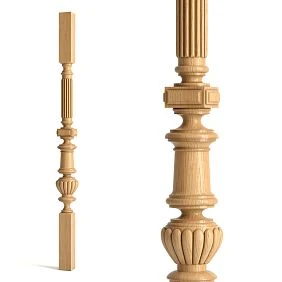
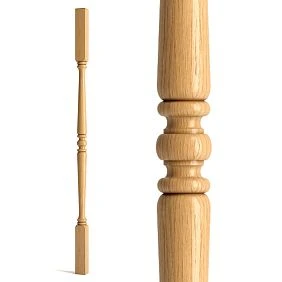
- Turned balusters: consider the neck diameter
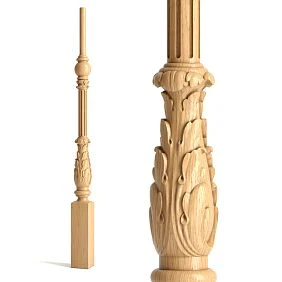
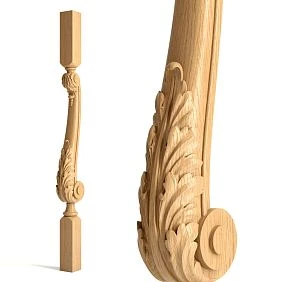
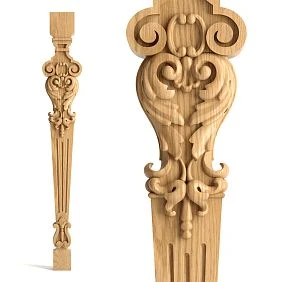
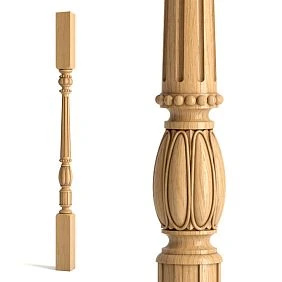
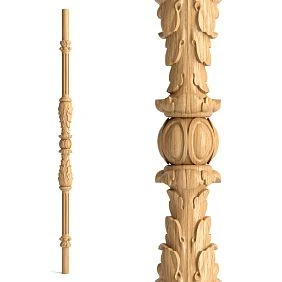
- Carved balusters: beauty with caveats
- Flat balusters: wide surface = large clearance
- Which wood to choose for safe balusters
- Beech: the optimal choice for a family home
- Oak: if you want it to last long and look beautiful
- Pine: with reservations
- Comparison of wood species in terms of safety and durability
- What to buy along with balusters: a systematic approach to safe railings
- Handrail: support for adults and children
- Posts: the foundation of the structure
- Bottom sub-baluster rail
- Fasteners: stainless steel or galvanized
- Post Caps
- How to correctly calculate the number of balusters for safe railings
- Calculation algorithm
- Example calculation for a two-story house
- Mistakes when buying balusters for a home with children
- Mistake 1: bought balusters with standard spacing "for adults"
- Mistake 2: took balusters with a thin neck
- Mistake 3: fastening only with screws without studs
- Mistake 4: bought beautiful carved balusters with deep relief
- Mistake 5: handrail at 800 mm — "it'll do"
- Mistake 6: balusters are one type, posts are another
- Mistake 7: didn't check the coating for smell and composition
- Price of a safe staircase railing in a home with children
- Budget difference: standard vs. safe spacing
- Full budget of a safe set for a two-story house
- About the Company STAVROS
- FAQ: Answers to Popular Questions
- Which balusters are best to buy for a home with children?
- What gap between balusters is safe for children?
- What is more important: the height of the balusters or the distance between them?
- Can I buy balusters without posts and handrails?
- Which balusters are safer: flat, square, or carved?
- Where to buy safe balusters for stairs?
- Is a baluster rail needed for safe railing?
- What to coat balusters with in a home with children?
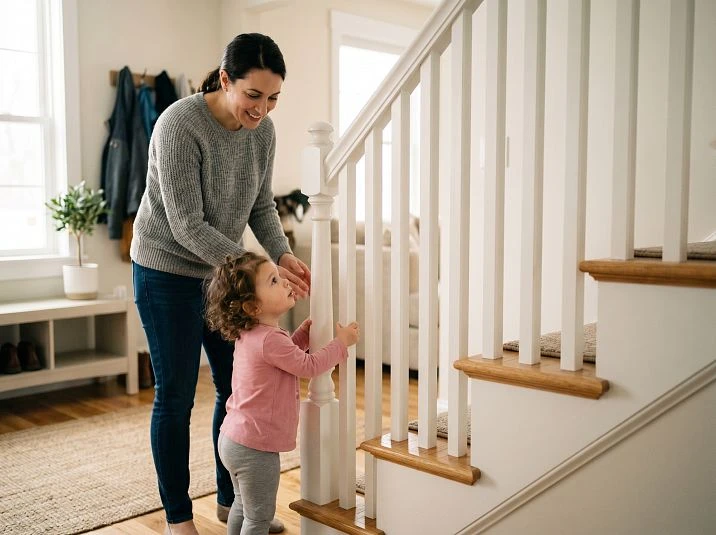
When there are children in the house, the staircase ceases to be just an architectural element. It becomes an area of increased attention, an object of parental anxiety, and at the same time — a place that must be arranged correctly from day one. Because redoing the railing after a child has tested its strength is no longer a choice, but a necessity.
Safe balusters for stairs — this is not a marketing term. It is backed by specific parameters: the correct height of the railing, standardized installation spacing, sufficient thickness of the baluster body, reliable fasteners, and compatibility of all elements in a single system. This article provides a complete, honest breakdown: how to choose, what to consider, what to buy, and how to avoid mistakes you'll regret later.
A staircase in a home with children is not just a structure
Let me ask a direct question: have you ever watched a three-year-old child explore a stair railing? From a child's perspective, balusters are a grid they want to stick their head through. Steps are a place where it's fun to slide down. Handrails are something to hold onto when jumping.
Parents who build or renovate a staircase in a home with children face three tasks simultaneously. First, the railing must not allow a child to slip through, collapse under their weight, or provide a dangerous foothold. Second, it must last long enough so you don't have to redo it in five years. Third, it must look good because a staircase in a home is always visible.
All three tasks are solved by choosing the right balusters in the right railing system.
buy balusters for the staircase with an understanding of regulatory requirements, structural parameters, and fastening features — this is the starting point.
What makes a baluster safe: five parameters
Railing safety is a systemic characteristic. No single baluster makes a staircase safe on its own. The combination of parameters matters.
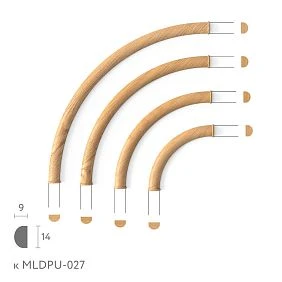
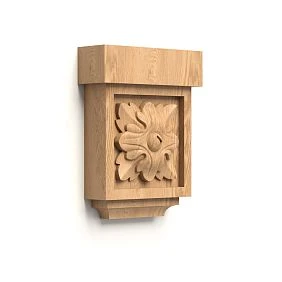
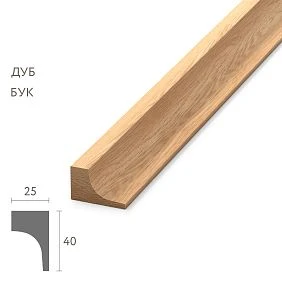
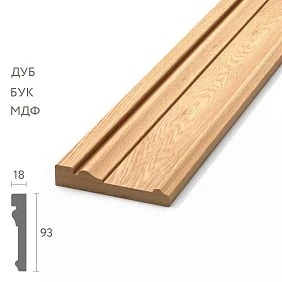
Our factory also produces:
Parameter 1: height of the working part
standard baluster height for staircases — the starting point for any railing calculation.
The working part of the baluster is the distance from the surface of the step (or floor) to the lower edge of the handrail. According to Russian building regulations for residential premises, this distance must be at least 900 mm. For homes with children under 12 years old, the recommended height is 1,000–1,100 mm.
Why is this important? A child 110–120 cm tall, leaning on the railing, shifts their center of gravity above the handrail when the guard height is 900 mm. At a height of 1,000–1,100 mm, the handrail is at the child's chest level, which physically prevents them from leaning over it.
A standard baluster height of 900 mm is the minimum for adults. For a home with children, especially for open areas on the second floor and mezzanines, the correct choice is 1,000 mm or ordering a custom height.
Get Consultation
Parameter 2: spacing between balusters
This is perhaps the most critical parameter for child safety. The distance between the side surfaces of two adjacent balusters is the gap. The gap must not allow a child to stick their head through it.
A child's head aged 2–6 years has a circumference of 50–52 cm, which corresponds to a diameter of about 16 cm. The regulatory requirement according to Russian standards: the gap between balusters must be no more than 150 mm.
What does this mean in practice? If a baluster has a diameter or width of 45 mm, the center-to-center distance should be no more than 195 mm (45 + 150 = 195 mm). In practice, a reliable spacing for a home with children is 130–150 mm between baluster centers, resulting in a gap of 85–105 mm.
Can balusters be placed even closer? Yes. A spacing of 100 mm creates a very dense guard with a gap of only 55 mm for a baluster with a diameter of 45 mm. Visually slightly heavier, but no safety concerns.
Balusters cannot be placed less frequently than the regulatory gap of 150 mm allows. Seeing "beautiful with rare balusters" on the internet is not about a home with children.
Parameter 3: thickness of the baluster body
A thin baluster with a neck diameter of 20–22 mm looks elegant. It also breaks under a sharp lateral impact — and children love to swing, hang, and kick the railing.
For a home with children, recommended parameters:
-
Minimum neck diameter of a turned baluster — 30 mm
-
Cross-section of a square baluster — at least 45×45 mm
-
Thickness of a flat baluster — 25–28 mm, width at least 80 mm
These are not aesthetic recommendations — this is the physics of bending strength. All else being equal, a baluster with a 30 mm neck will withstand 2.5 times the lateral load of a baluster with a 20 mm neck.
Parameter 4: fastening strength
A baluster can be made of excellent oak, perfectly turned, and correctly installed with proper spacing — but if the fastening is weak, the railing is dangerous. It is at the fastening points that maximum loads occur during impact or swinging.
Proper fastening for balusters on tenons:
-
M8 stud made of galvanized steel with a nut and wide washer
-
PVA wood glue (indoor) or moisture-resistant construction adhesive (outdoor)
-
Tenon depth in groove — at least 40 mm
Weak fastening — a thin self-tapping screw or M6 stud without a washer — means a baluster that will start to loosen under a load of 50–80 kg. For a home with children who like to vibrate the railing, this is a direct path to gradual destruction of the fastening.
The full technology with a step-by-step description of each operation — from marking to tightening nuts — is provided in the instructions for installation of wooden railings and balusters.
Parameter 5: absence of sharp protrusions and snags
Beautiful decorative elements can create sharp edges or snags that are dangerous for children. What to check when choosing:
-
No sharp ends on decorative cuts
-
Edges of square balusters — with a chamfer of at least 2 mm
-
Stud heads and nuts — recessed or covered with caps
-
Surface sanded (P120–180) — no burrs
A wooden baluster made of solid wood with proper sanding is a soft, warm material without sharp edges. This is one of the important advantages of wood over metal: when in contact with a child's hand or face — no cold, no sharp edges.
Height of balusters and railings: numbers behind safety
Let's discuss the height topic in detail, because this is where questions most often arise.
railing baluster sizes for staircases — this is not only the height of the working part. This is the total length of the product including tenons and seating depth.
How a baluster is structured along its length
| Baluster part | Size |
|---|---|
| Lower tenon (into step or plank) | 40–70 mm |
| Working (visible) part | 900–1000 mm |
| Upper tenon (into handrail) | 25–50 mm |
| Total length | ~970–1120 mm |
The total length of the baluster ≠ the height of the railing. The working part is what remains visible between the step and the lower edge of the handrail. It is this that is measured at 900 mm.
Height standards by application
| Application area | Minimum railing height |
|---|---|
| Interior staircase of a residential building | 900 мм |
| Balcony, mezzanine of the 2nd floor | 1,000 mm |
| Staircase with children | 1,000–1,100 mm (recommendation) |
| Porch, external staircase | 900 mm (standard), 1,000 mm optimal |
| Terrace, veranda | 1,000 mm |
For homes with children — a guideline of 1,000 mm for stairs and 1,100 mm for balconies and mezzanines.
What happens if the height is insufficient
With a railing height of 850 mm and a child's height of 110–120 cm, the handrail is at stomach level. Leaning forward, the child easily tips over it. This is not a theoretical scenario — this is how most falls from stairs occur in children.
Correctly selected baluster height for stairs — is the parameter that is not up for discussion. It must comply with the standard, and for homes with children, it should be higher than the minimum standard.
Spacing between balusters: a key parameter for child safety
Let's return to the topic of the gap — here it's important to delve into the details.
Why 150 mm is the limit
150 mm is the standard regulatory gap adopted in most building codes for residential buildings. Where does this figure come from?
The head circumference of a child aged 2 years is about 48 cm (≈ diameter 15 cm). At age 4 years — 50 cm (≈ diameter 16 cm). 150 mm is the maximum gap at which the head of a child of this age physically cannot pass through the opening without significant effort.
But: a child who sticks their head through an opening may not always be able to pull it back out (the head goes forward more easily than backward due to the ears and skull shape). That is why the actual safe gap for homes with children up to 5–6 years old is 100–120 mm, not 150 mm.
How to recalculate the step for the gap
The formula is simple:
Step (between axes) = baluster width/diameter + gap
| Baluster | Allowable gap | Step between axes |
|---|---|---|
| Square 45×45 mm | 100 мм | 145 мм |
| Square 45×45 mm | 120 мм | 165 мм |
| Turned ø50 mm | 100 мм | 150 мм |
| Turned ø50 mm | 120 мм | 170 мм |
| Flat 90×25 mm | 100 мм | 190 мм |
For homes with children up to 5 years old — gap no more than 100 mm. For children 6–12 years old — 120 mm. When children have grown up — up to the standard 150 mm.
Counting the number of balusters for a safe step
If the staircase flight is 2,600 mm, the gap is 100 mm, and the baluster is square 45 mm:
-
Step: 45 + 100 = 145 mm
-
Quantity: 2,600 ÷ 145 = ~18 balusters
-
10% reserve: +2 pcs.
-
Total: 20 balusters per flight
Compare with a less strict calculation with a gap of 150 mm: 2,600 ÷ (45 + 150) = ~13 balusters. The difference is 7 pieces per flight. This is a real difference in budget and safety level.
Which baluster shape to choose for a safe staircase
Shape affects safety not only aesthetically. There are specific technical aspects.
Square balusters: geometry of reliability
square balusters for stairs Made from solid timber — this is a 45×45 or 50×50 mm beam along the entire length. No neck means no point of minimum cross-section, no vulnerable spot for a lateral impact.
What does this provide in terms of safety:
-
Maximum bending strength for its cross-section
-
A square-section tenon does not rotate in the groove under load
-
Predictable behavior on contact: straight edges without sharp protrusions (when chamfered)
-
Simple quality control: easy to check straightness and geometry
For a modern minimalist home with children, for interiors in a Scandinavian spirit, for houses with straight architectural lines — square balusters made of beech or oak under white or light paint are reliable, beautiful, and completely safe.
Turned balusters: consider the neck diameter
Turned balusters for a family home are a good choice under one condition: the neck diameter must be at least 30 mm. Elegant balusters with a thin neck of 18–22 mm in the context of a home with active children are a risk not worth taking.
A turned baluster with a neck of 30–35 mm and a vase diameter of 50–60 mm is a stable, durable structure. The shape with 2–3 vases and smooth transitions without sharp edges is safe for children with proper sanding.
wooden balusters for stairs buy in a turned design with a specified neck diameter — please clarify this parameter when ordering.
Carved balusters: beauty with caveats
Buy carved wooden balusters for a home with children — it's a matter of the specific model's shape.
A carved baluster with deep relief creates catches that attract children's curiosity. Fingers in the decorative recesses are not a disaster, but caught clothing or a stuck finger can create a problem.
If you want carved balusters — choose models with moderate relief, without sharp protrusions and deep pockets. A turned-carved shape with a soft contour for painting is acceptable and beautiful.
Flat balusters: wide plane = large gap
Flat balusters with a width of 90–120 mm at the same width provide a smaller gap at the same installation step. This is a non-obvious but important advantage for safe railings with children.
A flat baluster 100 mm wide with a step of 180 mm gives a gap of 80 mm — this is very safe. At the same time, the railing visually remains light and not overloaded.
For a dacha, wooden house, terrace with children — flat balusters made of beech under white paint are a practical, safe, and beautiful solution.
Which wood to choose for safe balusters
In the context of safety, the type of wood is important not only from an aesthetic but also from a mechanical perspective.
Beech: the optimal choice for a family home
Buy beech balusters for a staircase in a home with children — it's a solution that works on all levels.
Mechanics: a hardness of 3.5 Brinell units means that a beech baluster will not get dents from a child's toy or accidental contact with a heel. This is important — the first scratches and impacts appear within the first year of use.
Coating: beech under white enamel gives a perfectly smooth surface. White coating is the safest in terms of the composition of the coating that will be touched by hands: high-quality water-based or acrylic enamel without toxic solvents.
Repairability: if after a few years the coating needs refreshing — the beech surface is easily sanded and repainted. The wood "forgives" repairs, unlike metal.
Price: beech is 40–50% cheaper than oak, which when ordering 60–80 balusters plus posts plus handrail — a noticeable difference.
Oak: if you want it to last a long time and look beautiful
Buy oak balusters for a staircase in a home with children — it's an investment in a railing that will outlive childhood, adolescence, and several more decades.
Hardness of 3.7–3.9 Brinell units, natural biological resistance due to tannins, ability to be repeatedly sanded and repainted — oak as a material for a family staircase has no competitors.
Under a transparent oil or varnish coating, oak reveals a grain that only becomes more expressive over time. This is a staircase that the owners will love.
Pine: with reservations
Pine is a soft wood (2.5 units on the Brinell scale). Dents from contact will appear quickly. For a home with children where the staircase is used intensively, pine will show surface damage after 2–3 years when coated with paint.
For a country house staircase, where usage intensity is lower, and under opaque paint — it is acceptable. For the main staircase in a permanent residence — beech is better.
Comparison of wood species in terms of safety and durability
| Parameter | Pine | Beech | Oak |
|---|---|---|---|
| Hardness (Brinell units) | 2,5 | 3,5 | 3,7–3,9 |
| Resistance to dents | Low | High | Very High |
| Under children's load | Satisfactory | Good | Excellent |
| Repairability | Good | Good | Good |
| Price (relative) | ×0,4 | ×0,7–0,8 | ×1 |
| For paint | Satisfactory (resinous) | Excellent | Good |
What to buy along with balusters: a systematic approach to safe railing
Individually purchased balusters without a well-thought-out set do not yet make a safe staircase. Safety is a systemic characteristic.
Handrail: support for adults and children
A handrail is something to hold onto. For a child climbing stairs, a handrail can also be a lifeline when losing balance.
Requirements for a handrail in a home with children:
-
Diameter (width) — 40–55 mm: should be comfortably grasped by a child's hand
-
Surface — sanded, varnished or painted, without sharp edges
-
Profile — semi-circular or oval (not rectangular with sharp edges)
-
Continuity — no breaks along the length of the flight
buy balusters and handrails from one batch, one wood species — this is the only way to get a railing uniform in tone and scale.
Posts: the foundation of the structure
Posts are support elements that bear the total load from the entire railing. When a child hits a baluster, the force is transmitted through the handrail and balusters to the posts. If a post is poorly secured or made of low-quality material, the entire railing becomes unreliable.
Buy balusters and posts for a wooden staircase from one system — this guarantees consistent strength.
Post mounting:
-
To the stringer or bowstring — with M10 anchor bolts
-
To the floor or platform — with through bolts with a backing plate or special support pads
-
Minimum fastening depth into a wooden floor — 80 mm, into a concrete floor — 100 mm with a dowel nail or chemical anchor
For detailed techniques of fastening elements — see the specialized material on fastening balusters and stair posts.
Bottom baluster rail
The strip is mounted on the steps and the lower tenons of the balusters are inserted into it. Functions:
-
Uniform spacing: holes for tenons are drilled with precise intervals at the factory
-
Protection of the lower end of the baluster from direct contact with the step
-
Aesthetics: no exposed tenons, even bottom line of the railing
For a home with children, the bottom strip is a mandatory element: without it, each baluster is fastened individually with the possibility of spacing variation.
Fasteners: stainless steel or galvanized
For indoor stairs — galvanized M8 studs. For outdoor or wet areas — A2 stainless steel.
Rule: one baluster — one stud with full tightening + glue. A screw alone without a stud is insufficient for a railing in a home with children. A ø4.5 mm screw under a 100 kg lateral load pulls out of wood without warning.
Post finials
Decorative caps on post ends cover the open end (a vulnerability point when wet) and simultaneously eliminate sharp corners at a height dangerous for children 90–110 cm tall. A ball-shaped finial is safer than a sharp pyramid.
Complete composition of a safe kit:
-
Balusters (calculated quantity + 10%)
-
Handrail (linear meters + 5%)
-
Posts (per design + 1 spare)
-
Bottom baluster rails
-
Fasteners (M8 studs, nuts, washers, glue)
-
Pillar tops are rounded
-
Handrail end caps
Buy a staircase railing kit all from one manufacturer means one delivery and full compatibility guarantee of elements.
How to correctly calculate the number of balusters for a safe railing
Calculation for safe clearance differs from standard. Let's go through it step by step.
Calculation algorithm
Step 1. Determine the length of each railing section:
-
Stair flight — along the stringer length (sloping line)
-
Second floor landing — along the horizontal railing length
-
Porch, terrace — similarly
Step 2. Determine safe clearance:
-
Children under 5 years: 90–100 mm
-
Children 5–12 years: 110–130 mm
-
Adults (standard): up to 150 mm
Step 3. Calculate the pitch: d (baluster width) + gap
Step 4. Calculate the quantity: section length ÷ pitch
Step 5. Add 10–15% extra.
Step 6. Sum across all sections.
Example calculation for a two-story house
| Section | Length (mm) | Spacing (mm) | Balusters | +10% | Total |
|---|---|---|---|---|---|
| March 1 (stairs) | 3 200 | 145 | 22 | +2 | 24 |
| Second floor landing | 4 500 | 145 | 31 | +3 | 34 |
| Porch (2 sides) | 2 800 | 145 | 19 | +2 | 21 |
| TOTAL | 72 | +7 | 79 |
This calculation is for a square baluster 45×45 mm with a gap of 100 mm (children under 5 years). For older children or with a baluster of ø50 mm, recalculate using the formula.
Mistakes when buying balusters for a home with children
These mistakes occur regularly. Each one is a real story with real consequences.
Error 1: bought balusters with standard spacing "for adults"
We bought beautiful turned balusters, installed them with a spacing of 175 mm (clearance 125 mm). A 2-year-old child easily stuck their head between the balusters. We had to dismantle and reinstall them, adding extra balusters.
Solution: if there are children, keep the clearance between 90 and 100 mm, instead of using the standard adult spacing.
Error 2: bought balusters with a thin neck
We chose elegant turned pine balusters with a 20 mm neck — "they look prettier." After a year, the child shook the railing, and one baluster cracked at the neck upon impact. A thin pine neck under lateral load is a risk zone.
Solution: for a home with children, the minimum neck diameter is 30 mm, and the wood species should be beech or oak.
Error 3: fastening only with screws, without threaded rods
"The installer said screws are enough." After two years of intensive use, several balusters became loose. Soft steel screws in soft wood loosen under vibration load.
Solution: M8 threaded rods with nuts and washers, glue is mandatory. For a home with children, no compromise on fasteners.
Error 4: bought beautiful carved balusters with deep relief
Looks great in the catalog — stunning. In reality: a child's fingers got stuck in the decorative recess, clothes constantly caught on protruding elements, and the paint in the recesses peeled off after just one season.
Solution: for families with children — carved balusters with moderate relief or simple turned shapes.
Mistake 5: handrail at 800 mm — "it'll do"
We used leftovers from a previous renovation. The railing height ended up at 820 mm instead of the standard 900 mm. A 6-year-old child could easily lean over the handrail.
Solution: check the railing height during the planning stage, not after installation.
Mistake 6: balusters from one source, posts from another
We bought balusters from one manufacturer and found posts "cheaper" from another. The post groove for the handrail and the handrail profile didn't match. Rework — removing and returning the posts.
Solution: balusters, posts, and handrails buy in a unified system from one manufacturer.
Mistake 7: didn't check the coating for smell and composition
We bought balusters and a handrail, coated them with "whatever we found in the store" — alkyd varnish with solvent. The smell lingered for three months. In a home with children, this is unacceptable.
Solution: for interiors with children — water-based acrylic paints and varnishes without solvents, labeled "safe for children's rooms."
Price of a safe stair railing in a home with children
Balusters price when calculating a safe railing, you need to evaluate considering an increased number: more frequent spacing = more balusters on the same flight.
Budget difference: standard vs. safe spacing
Let's take a flight of 3,000 mm, a square beech baluster 45×45 mm, price 1,400 rubles.
| Option | Step | Quantity | Cost of balusters |
|---|---|---|---|
| Standard (gap 150 mm) | 195 мм | 15 pcs. | 21,000 rubles. |
| Safe (gap 120 mm) | 165 мм | 18 pcs. | 25 200 RUB |
| Children's (gap 100 mm) | 145 мм | 21 pcs. | 29,400 RUB |
The difference between the standard and children's version for one flight is 8,400 RUB. For three sections (stairs + landing + porch) — about 25,000 RUB. This is the price of safety, which pays off by avoiding one trip to the emergency room.
Full budget for a safe set for a two-story house
| Element | Quantity | Price (beech) | Total |
|---|---|---|---|
| Square balusters 45×45, beech | 79 pcs. | 1,400 RUB | 110,600 RUB |
| Posts 100×100×1200, beech | 10 pcs. | 4 500 RUB | 45,000 RUB |
| Handrail beech ø50, semi-circular | 18 linear meters | 1 800 RUB | 32,400 RUB |
| Under-baluster strips | 3 sets | 2,500 RUB | 7,500 RUB |
| Fasteners, finials | — | — | 6 000 RUB |
| TOTAL | ~201,500 RUB |
This is the real cost of a proper, safe fence for a home with children in three zones — made of beech wooden elements with a frequent spacing of 145 mm.
buy staircase components in full assortment — balusters, posts, handrails, slats, fasteners — in the STAVROS catalog.
About the company STAVROS
STAVROS is a Russian manufacturer of solid wood products since 2002. Specialization — components for wooden stairs: balusters, posts, handrails, railings and fasteners in a unified compatibility system.
All products are made from solid wood (pine, beech, oak, ash) with kiln drying to 8–10% moisture content. CNC machining ensures precision of tenons and grooves: balusters from any series fit into the handrail of one manufacturer without adjustment.
Assortment — more than 50 models of balusters of all shapes. Production works with batches from 1 piece: you can order an individual calculation for a specific staircase, get a full specification with the exact quantity, height and spacing.
Pickup from Moscow and St. Petersburg. Delivery by transport companies throughout Russia. Specialist consultation is free, including calculation of a safe step for families with children.
FAQ: Answers to popular questions
Which balusters are best to buy for a home with children?
Square or turned balusters made of beech or oak with a neck diameter of at least 30 mm. Installation step — no more than 145 mm for children under 5 years old, up to 165 mm for older children. Railing height — 1,000–1,100 mm.
What gap between balusters is safe for children?
For children under 5 years old — 90–100 mm. For children 5–12 years old — 110–130 mm. Regulatory maximum — 150 mm (for adults).
What is more important: the height of the balusters or the distance between them?
Both parameters are critical. A railing height below 1,000 mm in a home with children creates a risk of climbing over the handrail. Too large a gap between balusters poses a risk to a child's head and body.
Can I buy balusters without posts and handrails?
Technically — yes. Practically — no. Without posts and a handrail in one system, the railing will either be incompatible in grooves or mismatched in tone. For a safe result — order a set from one manufacturer.
Which balusters are safer: flat, square, or carved?
For homes with children — square and flat with a wide surface: no thin neck, no sharp hooks with a moderate shape. Carved ones are acceptable with moderate relief without sharp protrusions.
Where to buy safe balusters for a staircase?
In the STAVROS catalog: wooden balusters from solid wood, over 50 models. Free calculation of spacing and quantity for a specific staircase. Complete set: balusters, posts, handrails, fasteners.
Is a sub-baluster rail needed for safe railing?
Yes. A rail with pre-drilled holes ensures precise, even spacing — without the rail, controlling the gap during manual installation is significantly more difficult.
What to coat balusters with in a home with children?
Acrylic water-based paints and varnishes without solvents, labeled "odorless" or "for children's rooms." Do not use alkyd varnishes with solvents — the smell lingers for up to 3 months.