





































Article Contents:
- Why the color of the underframe affects the perception of the entire table
- What to check before choosing a color
- Black underframe: when it is appropriate
- White underframe: which interiors it suits
- White or black underframe: comparison
- How to choose the color of the underframe for a light tabletop
- How to choose the color of the underframe for a dark tabletop
- Wooden underframe for painting: the best scenario for an exact color
- Can I paint a wooden table base
- What color table base to choose for the kitchen
- What color table base to choose for the dining room
- What color table base to choose for the living room
- What color table base to choose for the study and country house
- Color selection table by room
- What to buy together with a table base for painting
- How not to confuse a colored table base with similar solutions
- Practical selection for specific situations
- Need a table for a light kitchen
- Need a contrasting table with a white tabletop
- Need a table for a dark tabletop
- Need a table for neoclassical style
- Need a table in loft style
- Need a table for a country house
- Need the color to exactly match the facades
- Need a table for commercial interior
- What color to choose for the underframe?
- White or black underframe — which is better?
- How to choose the color of the underframe for the tabletop?
- Which underframe to choose for a light tabletop?
- Which underframe to choose for a dark tabletop?
- Can a wooden underframe be painted?
- What is better: a ready-made colored underframe or a wooden one for painting?
- Will a black underframe suit a small kitchen?
- When should you choose a white underframe?
- What color of underframe matches a wooden tabletop?
- Can you make a black underframe from a wooden base?
- Where to buy a wooden underframe for painting?

The color of the table base changes the table more than it seems from a single product photo. The same tabletop on a white base looks lighter and calmer, on a black base — more graphic and strict, on a natural wooden base — warmer and softer. Therefore, a black table base, a white table base, or a wooden base for painting is not just a matter of taste. The color determines the visual weight of the table, its connection with the kitchen, dining room, living room, chairs, floor, facades, and the entire furniture group.
The buyer often starts with a simple choice: "I need a black table base" or "I want a white table base for the table." But it's better to first understand what role the table should play in the interior. Will it be calm and almost blend into a light kitchen? Will it become a contrasting accent against a white tabletop? Will it support black handles, lamps, and fittings? Will it connect with the wooden floor, doors, and chairs? Or should the table base be taken for further painting to exactly match the desired shade?
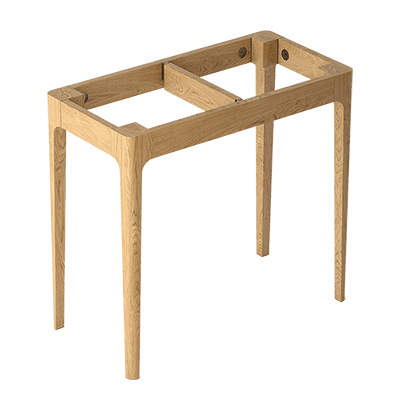
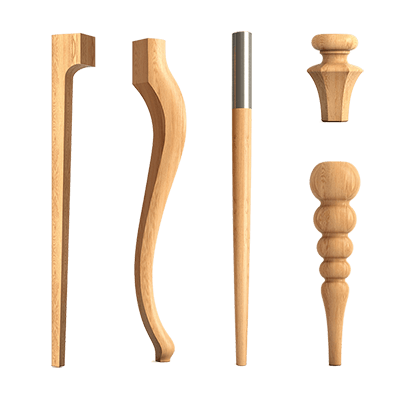
At STAVROS, the logical commercial route in this matter is not to promise a ready color if it is not confirmed in the product card, but to choose a wooden base and prepare it for the desired finish. The buyer can buy a wooden table base for painting, choose the shape to match the tabletop, and then decide what the final color will be: white, black, natural, tinted, matte, or close to the furniture.
This approach is especially convenient when you need not just any table, but a piece for a specific interior. The color of the base can be linked to the tabletop, kitchen facades, chairs, doors, baseboards, lamps, or cabinet furniture. As a result, the table base works not as a separate detail, but as part of the overall furniture composition.


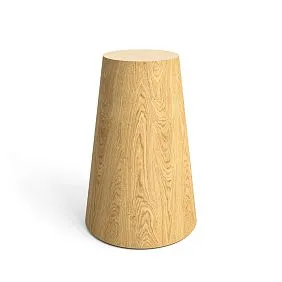
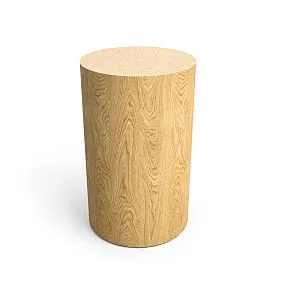
Why the color of the table base affects the perception of the entire table
The table is perceived as a whole, but the eye reads it by two main parts: the tabletop and the base. The tabletop sets the surface, material, and dimensions. The table base holds the shape, height, and silhouette. If the color of the base is chosen randomly, the table may look out of place even with a good tabletop.
A black table base makes the structure contrasting. It emphasizes the geometry, silhouette, legs, crossbars, and shape of the base. The black color is especially noticeable against a light floor, white walls, a wooden tabletop, or a kitchen in a calm color scheme. It works well where there are already black details in the interior: handles, hinges, lamps, rails, metal chair legs, frames, appliances, decorative elements.
A white table base works differently. It visually lightens the table, reduces contrast, and helps the furniture not to overload the room. A white base looks good in a light kitchen, neoclassical, Scandinavian style, soft dining areas, interiors with white facades and calm walls. Such a table can appear airier, especially if the tabletop is not too dark.
A natural wooden base creates a third scenario. It does not argue with the material but supports it. If the tabletop is wooden, the floor is warm, and there are wooden chairs, doors, baseboards, or solid wood furniture nearby, a base with a wood finish can tie the interior together more softly than a white or black contrast.
There is also a fourth path — a wooden base ready for painting. It is convenient when a precise color is needed: not just "approximately white" or "approximately black," but a shade matching facades, walls, doors, furniture, the tabletop, or a chosen palette. In this case, the base becomes a blank for custom finishing rather than a compromise among ready-made options.
The color of the base is especially noticeable on tables with an open structure. The more visible the base, the stronger its impact on the interior. With a massive tabletop, the base color determines whether the table feels heavy or balanced. With a lightweight tabletop, it decides whether the base becomes too coarse. With a round table, it affects how neatly the silhouette reads. With a rectangular table, it influences how the base works with length and proportion.


What to check before choosing a color
Before deciding whether the base will be white, black, natural, or painted, it is worth evaluating the table not in isolation but together with the interior. The color of the base should work with what is already around.
| Parameter | What to Check | Why this affects the color |
|---|---|---|
| Tabletop color | Light, dark, wooden, stone, painted, contrasting | The base can match the color, soften it, or create contrast |
| Tabletop material | Wood, MDF, stone, glass, porcelain stoneware, or other material | Heavy materials often require a more confident visual base |
| Floor color | Light, dark, wood, gray, contrasting | The base can blend with the floor or stand out against it |
| Kitchen fronts | White, dark, wood, colored | The table base can support the facades and unify the kitchen area |
| Chairs | Color of legs, seats, upholstery, frame | The table and chairs should look like a group, not a random set |
| Lighting and hardware | Black, white, brass, chrome, wooden parts | The color of the underframe can be matched with metal and furniture accents |
| Room size | Small kitchen, spacious dining room, living room, study | Black can weigh down, white can lighten, wood can soften |
| Interior style | Loft, scandi, neoclassical, classic, minimalism, country house | Different color scenarios work for each style |
| Future finishing | Enamel, stain, varnish, oil, matte finish | The wooden base can be adapted to the desired look |
| Product card | Material, dimensions, purpose, current parameters | Before ordering, check if the product matches the selected finish |
This table helps avoid the main mistake: choosing the color of the underframe separately from the room. A beautiful black base can look heavy in a small light kitchen. White can get lost against white walls and floors. Natural wood may not match the tone of existing furniture. A paintable underframe allows you to integrate the table more precisely into the interior but requires a well-thought-out finish.
Our factory also produces:


Black underframe: when it is appropriate
A black underframe is chosen when the table needs graphics, contrast, and a clear silhouette. It works well in modern interiors, lofts, minimalism, kitchens with black hardware, dining rooms with accent lighting, and living rooms where there are other dark details.
A black base emphasizes the shape. If the underframe has expressive lines, geometry, a U-shaped, X-shaped, or frame construction, the black color makes these lines more noticeable. The table ceases to be just a surface on a support and becomes an architectural object.
A black table underframe looks especially good with a light tabletop. A white, milky, light gray, stone, or light wood surface on a black base provides strong contrast. Such a table looks cohesive and modern. But contrast requires support. If there are no other black details in the room, the underframe may look out of place.
A good technique is to connect the black base with other elements: kitchen handles, chair legs, light fixtures, mirror frames, household appliances, rails, door hardware. Then the table does not hang as a separate spot but continues an existing rhythm.
A matte black base often looks calmer than a glossy one. A matte surface reflects less light, fits better into loft and modern interiors, and feels softer next to wood. But the exact coating option cannot be assumed in advance: it needs to be checked in the product card or agreed upon during finishing.
A black loft underframe is appropriate where the interior is built on contrasts: wood and metal, brick and smooth facades, black lamps and light walls, a massive tabletop and a thin graphic support. But in a small kitchen, such a color can weigh down the space. Especially if the tabletop is also dark, the floor is dark, and the chairs are massive.
Black loves air. If there is enough space around the table, it looks expressive. If the table is squeezed between a wall, cabinets, and a passage, the dark base can seem too heavy. Therefore, before painting or purchasing, you need to evaluate not only the color of the tabletop but also the size of the room.
Get Consultation
White base: which interiors it suits
A white table base is chosen when the table needs to be made lighter, calmer, and visually softer. It works well for light kitchens, Scandinavian style, neoclassicism, interiors with white facades, light walls, pastel furniture, and a soft natural palette.
A white base does not always mean 'invisible.' Against a wooden tabletop, it can look fresh and neat. Against a white tabletop, it creates a cohesive monochrome look. Next to colorful chairs, it serves as a calm base. In an interior with white kitchen facades, it connects the table with the set.
A table with a white base is often perceived as lighter than a table with a dark base. This is especially useful if the tabletop is massive, the room is small, or the furniture group is in a kitchen-living room where you don't want to overload the space.
A white table base works well with natural wood. A wooden tabletop on a white base looks softer and lighter. This option is often chosen for a kitchen, dacha, country house, calm dining room, or an interior where you want warmth without heaviness.
But white has its risks. First is dirt visibility. Marks are more noticeable on a light surface, especially in an active kitchen. Second is lack of support. If there are no white details in the interior, the base may look out of place. Third is excessive blending. A white base on a white background can get lost if the base shape is not expressive.
A white base looks good when it is supported by facades, chairs, walls, lights, baseboards, door trims, or decorative elements. It doesn't have to match them perfectly, but it should be part of the overall palette.
If the buyer wants a white table base but there is no ready option or a specific shade is needed, a wooden base can be considered for further painting. This helps achieve the desired tone: cool white, warm milky, creamy, matte, semi-matte, or another option if it is chosen for the project and suits the product.
White or black table base: comparison
There is no universal answer. White and black underframes serve different purposes. One lightens, the other gathers and emphasizes. One works better in a light kitchen, the other in a contrasting interior. One requires careful maintenance, the other proper support with dark details.
| Criterion | White underframe | Black underframe |
|---|---|---|
| Visual effect | Lighter, softer, calmer | More contrasting, more graphic, stricter |
| Best interiors | Scandi, neoclassical, light kitchen, soft dining room | Loft, minimalism, modern interior, contrasting kitchen |
| Combination with a light countertop | Provides a soft monochrome or a calm light table | Creates a sharp contrast and graphic look |
| Combination with wooden tabletop | Makes the table lighter and fresher | Emphasizes the wood texture through contrast |
| Combination with a dark tabletop | Provides strong contrast, requires support | Creates a cohesive, strict look |
| Risk | May look dirty or too subtle | May weigh down the interior |
| Best scenario | Light kitchen, living room, dining room, country house | Accent table, loft, kitchen with black hardware |
| What to check | Practicality of coating and white color support | Room size and presence of other dark details |
| Alternative | Natural wood or warm tinting | Dark stain, graphite, deep wood tinting |
A white base should be chosen if the table is to become part of a light, calm interior. Black — if an accent, contrast, or support for dark details is needed. Natural wood — if a soft transition between the tabletop and the room is desired. For painting — if an exact color is needed that cannot be found ready-made.
How to choose the color of the base for a light tabletop
A light tabletop offers many options. It can be supported with a white base, emphasized with black, warmed with natural wood, or connected to the interior through custom painting. The choice depends on what the table should be: calm, contrasting, or warm.
A white base under a light countertop creates a soft monochrome. Such a table fits well into a light kitchen, Scandinavian interior, neoclassicism, or a calm dining room. It does not overload the space and can look particularly neat if there are white facades, light chairs, or white walls nearby.
A black base with a white tabletop is a more expressive scenario. The black foundation emphasizes the light surface and makes the table graphic. This is a good option for a modern kitchen, loft interior, a dining room with black light fixtures, or a space where contrasting accents are needed.
A table with a white countertop and black base can look striking but requires balance. If the countertop is white, the base is black, and the rest of the room is completely light and soft, the base will be too noticeable. It is better when the black color is repeated elsewhere: in chairs, handles, appliances, cornices, or light fixtures.
Natural wood under a light tabletop works more calmly. It adds warmth and is well-suited for interiors where white needs to be softened. This option is especially good if the floor, doors, chairs, or adjacent furniture have a wooden texture.
The base under the countertop can be painted not only white or black. Sometimes it is better to choose milky, graphite, warm gray, a wood shade, a tone matching the facades, or a color that repeats the furniture. Therefore, the base under the tabletop for painting gives more freedom than trying to find a ready-made option 'almost the same color'.
How to choose the base color for a dark tabletop
A dark tabletop already carries visual weight. The base can enhance this effect or soften it. Here it's especially important to consider the room size. In a spacious dining room, a dark table can look solid. In a small kitchen, it can feel heavy.
A black underframe paired with a dark tabletop creates a cohesive, strict look. The table appears monolithic, graphic, and modern. This option is suitable for an office, loft, minimalism, a dining room with dark furniture, a kitchen with black appliances, or a space where dark details are already present.
But a completely dark table requires light and air. If there is little space around and the floor is also dark, the structure can become too massive. In such a case, consider a lighter base shape, matte finish, or natural wood instead of deep black.
A white underframe under a dark tabletop creates a strong contrast. Such a table can become an accent, but it is harder to integrate. The white base must be supported by other light details: facades, chairs, walls, baseboards, lighting, or textiles. Without support, it looks unexpected.
Natural wood under a dark tabletop helps soften the contrast. If the tabletop is dark but the interior should not be strict, a wooden base can make the table warmer. Stain, varnish, oil, or tinting allow you to choose a shade closer to the floor, chairs, or cabinet furniture.
For a dark tabletop, the shape of the underframe is especially important. The dark color already adds mass, so the base should not be overly heavy. If the table is large, it is better to evaluate it against the room: will it take up too much visual space?
Wooden underframe for painting: the best scenario for an exact color
A ready-made colored option is convenient when it immediately matches the interior. But in practice, there are too many shades of white, black, gray, wood, and tinting. White can be cold, warm, milky, creamy. Black can be matte, graphite, deep, soft. Wood can be light, honey, walnut, dark. Therefore, a wooden underframe for painting often turns out to be the most flexible solution.
A wooden base can be adapted to the interior. It can be coated with enamel, varnish, stain, oil, or another suitable compound, if compatible with the specific product and chosen finish. Before work, you need to check the material, surface preparation, and manufacturer's recommendations.
The main benefit is an exact match to the project. The underframe can be tied to kitchen fronts, doors, baseboards, chairs, tabletops, frames, or decorative elements. This is especially important if the table is in an open kitchen-living room, where all details are visible at once.
wooden bases Finishing options are also convenient for those who want not white or black, but a more complex shade. For example, soft gray, warm beige, deep stain, a color to match the chairs, or tone-on-tone with a wooden tabletop.
This option also helps avoid the 'almost matched' mistake. A ready-made white underframe may differ from white fronts. A ready-made black one may differ from hardware and lighting. A wooden base for painting allows you to coordinate the shade with other materials in advance.
Can you paint a wooden under-table
A wooden underframe can be painted if the material, surface, and construction are suitable for the chosen finish. But painting is not just 'applying color'. The preparation determines how neat the base will look and how long the coating will maintain its appearance.
Before painting, the surface is usually prepared: cleaned, sanded, primed if necessary, and only then the chosen coating is applied. Enamels are used for dense color. To preserve the texture, use stain, oil, varnish, or a tinted compound. The specific option depends on the material and the desired result.
Dense white enamel hides the texture and makes the base more furniture-like. It works well for a light kitchen, neoclassical, or Scandinavian interior. Black enamel or a dark coating creates a graphic look and emphasizes the shape. Stain preserves the wood character and changes the tone without completely hiding the material.
Before painting, you need to consider where the table will be placed. In the kitchen, the coating should be practical for everyday use. In the dining room, appearance and compatibility are more important. In the living room, the connection with the tabletop, cabinet furniture, and decorative details matters. In a commercial space, durability and maintenance are key.
You cannot assume in advance that any under-table is suitable for any finish. You need to check the material and recommendations in the product card or clarify with a STAVROS manager. This is especially important if a dense enamel, dark tint, or coating for active use is required.
What color under-table to choose for the kitchen
The kitchen is the most demanding room for the color of the under-table. Here, the table often stands next to facades, the countertop of the set, appliances, chairs, lighting, and the work area. Any base color immediately enters into a dialogue with the surrounding furniture.
For a light kitchen, a white table base, natural wood, or a soft tint works well. A white base supports the facades and lightens the table. Wood adds warmth if the kitchen feels too cold. Black can be used as an accent if it is supported by handles, appliances, lights, or chair legs.
For a kitchen with wooden facades, a natural or wood-stained base often looks calmer than white or black. But if you want a modern contrast, a black underframe can emphasize the wood texture and make the table more expressive.
For a dark kitchen, balance is needed. A black base will continue the strict look but may weigh down the room. White will provide contrast but will require support. Wood will soften the interior. Sometimes it is better to choose not extreme black, but a deep wood tint or a matte graphite shade.
The color of the kitchen table base should be linked to the chairs. If the chairs have black legs, a black table base looks logical. If the chairs are white or light, a white base will support the group. If the chairs are wooden, you can choose natural wood or paint in a similar shade.
The practicality of the coating is also important. A kitchen table gets dirty more often, is wiped down more frequently, chairs are moved around it, and the base may be bumped by feet. Therefore, the color and finish should not only be beautiful but also easy to maintain.
What color table base to choose for a dining room
In the dining room, the table often becomes the main piece. Here, you can afford a more expressive base color than in a small kitchen. But the more noticeable the table, the more precise its connection to the interior should be.
A black base in the dining room works well with a large wooden tabletop, modern chairs, a graphic light fixture, dark hardware, and contrasting decor. Such a table can become the center of the room, especially if there are light walls and enough space around.
A white base is suitable for a light dining room, neoclassical style, a country house, an interior with white cabinets, a sideboard, or light chairs. It makes the table softer and visually lighter, especially if the tabletop is wooden.
Natural wood in the dining room creates a more traditional look. It is well-suited for a family table, classic chairs, warm light, textiles, and calm finishes. If the dining room is connected to the living room, a wooden base helps unify the zones.
For a large dining room, you can use contrast more boldly. For a small one, be more cautious. Black requires air, white needs support, and wood must match the shade. A paintable base helps solve this task more precisely: the base can be finished to fit the overall design rather than choosing from random ready-made colors.
What color table base to choose for the living room
In the living room, the base can relate not only to the dining table but also to a coffee table, console table, or decorative table. Here, the color of the base should work with the sofa, rug, case furniture, TV area, light fixtures, and doors.
A black base looks good if the living room has graphics: black furniture legs, metal lighting fixtures, dark frames, minimalist shelves, modern decor. It helps tie the interior together and makes the table more expressive.
A white base works well for a light living room where furniture should not look heavy. It pairs nicely with soft shades, light wood, pastel textiles, white walls, and calm furniture.
A wooden base is often the most versatile for the living room. It connects the table with the floor, doors, frames, shelves, armchairs, and other furniture. If the room already has Solid Wood Items, a wooden-finished base can support the overall material.
In the living room, visual weight is especially noticeable. A black table base under a large tabletop can look too heavy next to a soft sofa. A white one can get lost on a light rug. Wood may not match the floor. Therefore, the color should be checked not by a separate card but across the entire area.
What color base to choose for a home office and a country house
In a home office, the table base should usually look neat and calm. Dark, graphic, or natural wood shades work well here. A black base is suitable for a modern desk, meeting area, strict writing desk, or interior with dark shelves. Natural wood adds warmth and makes the office less cold.
A white base in a home office is appropriate if the entire interior is light: white shelving, a light table, Scandinavian furniture, a minimalist workspace. But for a classic office, it may look too light.
In a country house, natural wood, soft white, warm tinting, and calm enamel often work better. Black is also possible, especially if the interior is closer to a modern chalet, loft, or a contrasting kitchen-living room. But for a traditional wooden house, too harsh black can clash with the material of the walls and furniture.
In a country interior, the base is best connected with the floor, doors, staircase, beams, frames, chairs, and kitchen group. If the shade is hard to find ready-made, a wooden base for painting or tinting helps to more accurately match the overall material.
Color selection table by room
| Room | What works better | When to choose white | When to choose black | When to choose wood or paint |
|---|---|---|---|---|
| Kitchen | Practical finish, connection with facades and chairs | Light kitchen, white facades, neoclassicism | Black hardware, loft, modern contrast | Need to match the shade of the furniture or countertop |
| Dining room | Expressive table, connection with chairs and lamp | Light dining room, light furniture | Accent table, contrasting group | Family table, natural atmosphere |
| Living room | Balance with sofa, rug, case furniture | Light interior, upholstered furniture | Modern graphics, black details | Need to connect the table with the floor and furniture |
| Office | Restraint, solidity, convenience | Light work area | Strict modern office | Natural furniture, calm interior |
| Suburban house | Warm materials, natural palette | Soft country style, light kitchen | Modern chalet or contrast | Wood, stain, tinting to match the interior |
| Commercial space | Practicality and expressiveness | Bright salon, showroom, cafe | Contrasting interior, loft | Custom finish for brand and furniture |
The table shows that color cannot be chosen separately from the scenario. A white underframe can be successful in a kitchen and controversial in an office. Black can decorate a dining room and weigh down a small living room. Wood can be the most calming option if you need to tie different elements together.
What to buy with an underframe for painting
A table base for painting is rarely chosen separately from other elements. To make the table look cohesive, you need to consider the tabletop, finish, fasteners, chairs, and adjacent wooden parts.
| What to add to the purchase or selection | Why this is needed | What to pay attention to | Link |
|---|---|---|---|
| Tabletop | Defines the color scheme and visual weight | Material, thickness, shade, shape | The link depends on the selected tabletop |
| wooden bases | Base for future painting or tinting | Size, shape, purpose, compatibility | Table base section |
| furniture frames | Help to select a base for different furniture tasks | Dimensions, height, construction | Furniture frames section |
| Finish | Forms the final color: white, black, natural, tinted | Compatibility with material and usage conditions | Selected for the product |
| Chairs | Connect the table into a dining group | Color of legs, seats, material | Link not provided in source data |
| Fastening | Needed to connect the base and tabletop | Depends on material and thickness | Selected to match the construction |
| Solid Wood Items | Help support the wooden interior line | Texture, shade, style | Solid wood products section |
A comprehensive approach is especially important if the table is in an open kitchen-living room. There, the underframe is visible next to the facades, chairs, floor, sofa, doors, and lights. The base color should be part of the overall picture.
How not to confuse a colored underframe with similar solutions
A buyer may search for "buy black underframe" or "buy white underframe", but in practice, a wooden base for painting may suit them better than a ready-made colored option. It is important not to confuse these scenarios.
| What the buyer is looking for | What it can be confused with | How to distinguish |
|---|---|---|
| Black underframe | Any dark base | Need to check the material, coating, purpose, and dimensions |
| White underframe | Light blank or unpainted wood | White color must be confirmed by finish |
| Wooden underframe for painting | Finished colored product | Color is created after preparation and finishing |
| Black metal underframe | Wooden base painted black | The material affects the look, attachment, and feel of the table |
| Underframe for tabletop | Individual legs or decorative supports | The underframe must match the purpose and design |
| Furniture frame | Any frame or blank | You need to look at what furniture the product is intended for |
The main difference is confirmed parameters. If the color, material, or purpose are not specified in the card, you cannot base a purchase on assumptions. It is better to choose a suitable wooden base and agree on further finishing than to buy a random color that won't fit the interior.
Practical selection for specific situations
Need a table for a light kitchen
It is better to consider a white, natural, or softly tinted underframe. If the tabletop is wooden, a white base will make the table lighter. If the facades are white, the base will support the kitchen. If you want warmth, wood may be better than pure white.
Need a contrasting table with a white tabletop
A black underframe will work if there are other black details in the room. This could be hardware, lamps, appliances, chair legs, or frames. Without support, a black base may look too harsh.
Need a table for a dark tabletop
A black base gives a solid, strict look. White gives a contrasting and bolder look. Wood gives a soft and warm look. For a small room, it's better not to weigh down the table, but to choose a lighter form or tint.
Need a table for neoclassical style
A white or softly painted underframe often works better than a black one. But the shade should match the facades, walls, or other furniture. Too cold a white can clash with a warm tabletop.
Need a table in loft style
A black underframe or dark finish of a wooden base supports the loft well. Especially if the tabletop is wooden, massive, or with a noticeable texture. But in a small room, it's better to choose a not too heavy form.
Need a table for a country house
Natural wood, stain, warm tint, or soft white often look more natural. Black should be used if it's supported by lights, a fireplace zone, hardware, or modern furniture.
Need a color exactly matching the facades
The most convenient way is a wooden base for painting. A ready-made white or black option may differ in shade, while painting allows you to choose a color closer to the project.
Need a table for a commercial interior
In a cafe, salon, showroom, or office, the color of the underframe should support the style of the room and withstand active use. Black works well in graphic spaces. White — in light salons. Wood — in cozy, natural interiors.
Mistakes when choosing the color of the table base
The first mistake is choosing the color separately from the tabletop. The base and surface should work together. Even a beautiful table base can look out of place if it is not connected to the tabletop.
The second mistake is not considering the chairs. A table is almost always used with chairs. If their legs, backs, or upholstery clash with the base, the dining set looks random.
The third mistake is using a black base in a small, cluttered room. Black can be stylish, but in a tight space, it adds visual weight, especially under a dark or thick tabletop.
The fourth mistake is using a white table base without support. The white color should be repeated in facades, walls, chairs, lights, baseboards, or other details. Otherwise, the base looks separate from the interior.
The fifth mistake is forgetting about the practicality of the finish. In a kitchen, dining room, or commercial space, the base is regularly touched, bumped with feet, and wiped down. The color and finish must withstand this scenario.
The sixth mistake is choosing a shade based on the screen. On a monitor, white, black, and wood tones may look different. It's better to compare samples, product cards, and real interior materials.
The seventh mistake is not accounting for future painting. If the base is intended for finishing, you need to understand in advance who will paint it, with what composition, how the surface will be prepared, and what result is needed.
The eighth mistake is confusing painted wood and metal. A black metal underframe and a wooden base painted black can look different. The material affects texture, feel, and style.
Who a wooden table base for painting is suitable for
A wooden table base for painting is suitable for those who want to control the final color of the table. This is a good option for a kitchen, dining room, living room, study, country house, cafe, salon, or design project where matching a specific palette is important.
This option is useful if a ready-made white or black base does not match the shade. It is also suitable if you need to match the table with facades, doors, baseboards, chairs, cabinet furniture, or a wooden tabletop.
Choosing a base for painting is worth it for those who understand that color is part of the project. White can be warm or cool. Black can be deep or soft. Natural wood can be light or deep. Custom finishing allows you to adjust these nuances.
But an underframe for painting is not suitable for those who want a ready-made color without additional work. If the buyer needs a fully finished product, they need to carefully look at the product card and choose only confirmed options. If there is no understanding of who will perform the finishing and how, it is better to clarify the process with a manager or craftsman in advance.
Where to buy a wooden table base for painting
It is best to start the purchase with the shape and purpose. First, you need to understand what kind of table is being assembled: dining, kitchen, coffee, work, round, rectangular, or non-standard. Then select the base size for the tabletop. And only after that decide what the color will be.
on the Stavros website you can buy a wooden table base for painting and use it as a base for the future interior. In the product card, you need to check the dimensions, material, purpose, shape, compatibility with the tabletop, and current parameters.
If you need a wider selection of table bases, it's worth looking furniture frames. If the project involves wooden furniture and finishing, it's useful to additionally evaluate Solid Wood Itemsso that the color and material of the table do not fall out of the overall line.
Before ordering, you should decide in advance what finish is needed: natural, white, black, tinted, matte, lacquered, stained, oiled, or enameled. If the color must match the fronts or chairs, it's better to plan samples and check the shade before applying the coating.
FAQ
What color should I choose for the table base?
The color of the table base is chosen based on the tabletop, interior, and furniture around the table. For a calm effect, white, natural wood, or a similar shade will work. For an accent, black or a contrasting finish.
White or black table base — which is better?
A white table base visually lightens the table, while a black one makes it graphic and expressive. The best option depends on the tabletop, floor, chairs, walls, fronts, and overall style of the room.
How to match the color of the table base to the tabletop?
You can choose a color to match the tabletop, create contrast, or tie the table base to other interior details: kitchen fronts, chair legs, light fixtures, doors, or baseboards.
Which table base to choose for a light tabletop?
For a light tabletop, you can choose a white underframe for a soft look or a black one for contrast. Natural wood works if you want to make the interior warmer.
Which table base to choose for a dark tabletop?
For a dark tabletop, a black or dark underframe works well if you need a cohesive, strict look. A white underframe can be used for contrast, but it's better to support it with other light details.
Can a wooden table base be painted?
Yes, if the material and surface are suitable for the chosen finish. Preparation is usually required: sanding, primer, and an appropriate coating. Before starting, you should check the recommendations for the specific product.
What is better: a ready-made colored underframe or a wooden one for painting?
If you need an exact color to match the interior, a wooden underframe for painting is more convenient. This makes it easier to match the shade of facades, tabletops, chairs, or other furniture.
Will a black underframe suit a small kitchen?
It will if it is supported by other black details and does not overwhelm the space. In a small kitchen, it's better to choose a lighter form and avoid a too massive dark base.
When should you choose a white underframe?
A white underframe is well suited for a light kitchen, neoclassical, Scandinavian style, interiors with white facades, and cases where you need to visually lighten the table.
What color base suits a wooden countertop?
For a wooden countertop, natural wood, a white base, black contrast, or tinting to match the interior are suitable. The choice depends on whether you want the table to be soft, graphic, or as cohesive as possible.
Can a black underframe be made from a wooden base?
Yes, the wooden base can be finished in a dark color if the material is suitable for such treatment. Before painting, you need to check the surface, preparation, and the chosen coating.
Where to buy a wooden underframe for painting?
Suitable options can be viewed in the section buy a wooden table base for painting on the STAVROS website. Before ordering, you need to check the dimensions, shape, material, and compatibility with the tabletop.
Result: the color of the underframe should work together with the tabletop and the interior
White and black underframes solve different problems. White lightens the table, making it softer and calmer. Black adds graphics, contrast, and a modern character. Natural wood connects the table with furniture and finishes. A wooden base for painting gives freedom when you need an exact shade to match the tabletop, facades, chairs, doors, or the overall interior.
It is better to choose the color not based on a single photo, but based on the entire room. You need to consider the tabletop, floor, chairs, facades, lighting, hardware, room size, and future finishes. Then the underframe will not be a random support, but will become part of the finished table.
STAVROS allows you to start with the right foundation: choose a wooden underframe, check the parameters in the product card, and then decide what the final color will be — white, black, natural, or individually painted. This approach helps to assemble a table for the interior, rather than adapting the interior to a randomly chosen base.