Article Contents:
- What is confirmed for KPU-120
- Why the topic does not duplicate existing articles about bar counters and slats
- "Continue the countertop" — first determine which edge of it you are continuing
- Along the top edge
- Along the bottom edge
- Along the central axis
- No gap
- With smooth pause
- Slats as the main accent
- KPU as the main connecting belt
- Both active
- In the color of the bar counter
- In the color of the slats
- Contrast color
- Mistake 1. Align KPU with the top of the countertop and not check the bottom
- Mistake 2. Calculate the countertop thickness from the catalog, not from the visible line
- Mistake 3. Buy two strips just because the wall is longer than 2000 mm
- Mistake 4. End KPU where the strip ended
- Mistake 5. Place the joint of two strips in the center automatically
- Error 6. Painting KPU to look like wood without a test coat
- Error 7. Ignoring the functional role of the bar area
- Error 8. Trying to use KPU to hide a structural defect in the stand
- Minute 1
- Minute 2
- Minutes 3–4
- Minute 5
- Minute 6
- Minute 7
- Minute 8
- Minute 9
- Minute 10
- If the countertop is 40 mm thick, can you install a KPU-120 that is 60 mm high?
- Is it mandatory to start the KPU exactly from the end of the bar counter?
- If the wall is 2300 mm, is it mandatory to buy two strips?
- Can you make a KPU-120 with a length of 1500 mm?
- Where is the best place to position the joint of two KPU-120s?
- Do I need to paint KPU-120 to match the countertop color?
- Will KPU-120 work for the wall behind the bar work area?
- Can KPU-120 be used as a backsplash edge at the countertop?
- What to do if 60 mm looks too massive?
- Where can I find geometric models if KPU-120 is not suitable?
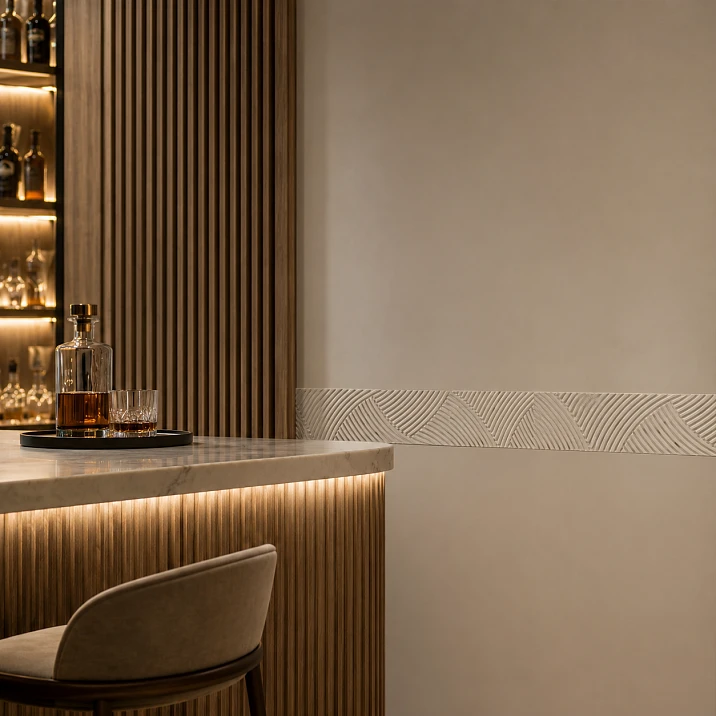
The bar counter ends, but its horizontal line visually continues for several more meters along the smooth wall. There are already vertical slat panels nearby. It is in this spot that the temptation arises to "extend" the countertop with a decorative strip: install KPU-120 on the wall at the same height and connect the bar area with the adjacent plane.
The idea seems simple only until you take measurements.
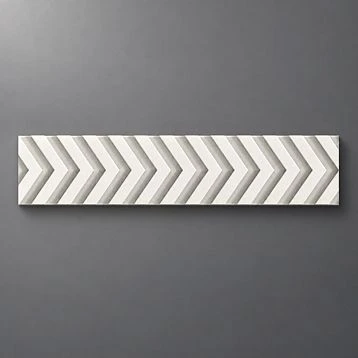
KPU-120 has its own geometry: 60 × 5 × 2000 mm. According to the current STAVROS product card, it is a polyurethane decorative molding priced at 7,750 ₽ per two-meter strip. The official category filter defines parameter A as the profile width, C as its height/protrusion, and L as the length. This means that when mounted horizontally, KPU-120 creates a decorative band on the wall approximately 60 mm vertically, protrudes 5 mm from the wall, and has an original length of 2000 mm.
The STAVROS product card and category pages also classify KPU-120 as geometric ornament and part of the Art Deco collection.
But this does not mean it should be installed in every interior with a bar counter.
Commercial fork of this article:
0 planks, if the horizontal makes the wall heavier and conflicts with the vertical slats;
1 × KPU-120 = 7,750 ₽, if the finished decorative line fits within 2000 mm and the solid profile truly connects the post to the wall;
2 × KPU-120 = 15,500 ₽, if the line needs to be longer than 2000 mm and the project tolerates a joint in the geometric ornament.
The most important check arises even before length: which exact line of the bar counter should KPU-120 continue — the top of the countertop, its bottom edge, or the visual central axis?
If the countertop thickness is 40 mm and KPU has a height of 60 mm, it is impossible to align both edges. You need to consciously choose one reference point.
Therefore, the correct order before purchasing is as follows:
measure the post → determine the reference horizontal → make a template 60 mm high → check the rhythm next to the slats → set the length → calculate 0/1/2 planks → check the joint and color → only then buy.
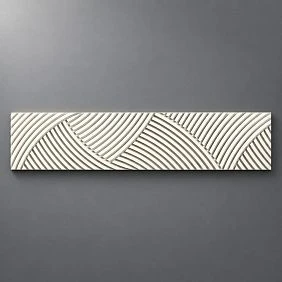
What is confirmed about KPU-120
| Parameter | Value |
|---|---|
| Product type | decorative molding / decorative stucco |
| Article number | KPU-120 |
| Material | Polyurethane |
| A | 60 mm — profile width |
| C | 5 mm — height/protrusion |
| L | 2000 mm — plank length |
| Ornament | Geometric |
| Collection | Art Deco |
| Current price | 7,750 ₽/pc. |
| One plank | 7 750 ₽ |
| Two slats | 15 500 ₽ |
If the fitting confirms the decision, you can buy decorative polyurethane molding KPU-120.
For this article, it is especially important to correctly read three dimensions.
60 mm determine the visual height of the horizontal belt.
5 mm — for the protrusion from the smooth wall and the character of the shadow.
2000 mm — for the maximum original length of one solid plank.
You can't use only the last size. It happens that one two-meter plank perfectly covers a wall in length, but the belt itself, 60 mm high, looks too massive next to a thin countertop.




Why the topic does not duplicate existing articles about bar counters and racks
STAVROS already has materials on slat panels for kitchen islands and bar counters, on slat partitions, as well as a separate extensive article on molded decor and wooden slats in a home bar.
Their task is different.
They answer the questions:
-
what to clad the counter with;
-
how to continue the slat rhythm;
-
how to make a partition;
-
how to connect wooden slats and the overall finish of the bar area.
Here, the slat finish is already done, and the bar counter is already in place.
A new question arises after it:
what to do with a smooth wall that starts where the countertop ends?
KPU-120 does not clad the riser and does not replace the battens. It is considered only as a horizontal decorative line on the adjacent plane.
That is why the article should remain narrow and product-focused.
For general context, you can use the STAVROS material about stucco decor and wooden battens for a home bar, and the new page answers the specific question about KPU-120.
Our factory also produces:
"Continue the countertop" — first determine which edge of it you are continuing
The countertop has a thickness.
KPU-120 has a height on the wall — 60 mm.
If these dimensions do not match, the phrase "continue the countertop line" becomes ambiguous.
Let's imagine a bar countertop:
-
top mark — 1050 mm from the floor;
-
thickness — 40 mm;
-
bottom edge — 1010 mm.
KPU-120 when mounted horizontally takes up 60 mm vertically.
There are three basic reference points.
Get Consultation
Along the top edge
The top of the KPU aligns with the top of the countertop — 1050 mm.
Then the bottom of the molding will be at:
1050 − 60 = 990 mm.
The countertop ends at the bottom at 1010 mm.
So, the KPU will drop 20 mm below its lower edge.
Visually, the horizontal line will appear thicker than the furniture line.
Along the bottom edge
The bottom of the KPU coincides with the bottom of the countertop — 1010 mm.
Top of the trim:
1010 + 60 = 1070 mm.
It will rise 20 mm above the top surface of the stand.
This is a different visual effect: the wall band seems to protrude above the countertop.
Along the central axis
Center of the 40-mm tabletop:
(1050 + 1010) / 2 = 1030 mm.
If the center of the KPU is also placed at 1030 mm, its top will be at 1060 mm, and its bottom at 1000 mm.
That is, the profile will protrude relative to the furniture strip:
-
10 mm upward;
-
10 mm downward.
Of the three options, this one often looks the most balanced, but it is not a universal standard.
Main conclusion: the KPU-120 should not automatically copy the top edge of the tabletop just because the bar counter sets the horizontal line.
When the width of the KPU-120 matches the thickness of the visual strip of the counter
Sometimes the bar counter has not just a tabletop, but a visible apron, end panel, or decorative strip about 60 mm high.
Then the situation changes.
If the actual visible horizontal furniture strip is also 60 mm, KPU-120 can be tried to be continued along both edges at once.
For example:
-
top of the furniture strip — 1050 mm;
-
bottom — 990 mm;
-
height — 60 mm.
KPU-120 with a height of 60 mm can be installed from 990 to 1050 mm.
The horizontal line literally becomes a continuation of the furniture belt.
This is much stronger than trying to "match" a 60-mm molding with a 30–40-mm tabletop.
Therefore, before the mockup, they measure not the nominal thickness of the tabletop, but the actual visible height of the line that a person perceives as a continuation of the counter.
Mounting table for countertops with thicknesses of 30, 40, and 60 mm
The difference between furniture thickness and KPU-120 height changes not only millimeters, but also the very nature of the continuation.
To avoid repeating the same arithmetic with three separate examples, it is more convenient to summarize the characteristic cases in a table. Suppose the top of the countertop is at the same level, and the KPU has a constant height of 60 mm.
| Visible height of the furniture horizontal | If the top edges are aligned | If the central axes are aligned | Practical conclusion |
| 30 мм | KPU will drop 30 mm below the furniture | 15 mm above and below | KPU is noticeably thicker, literal continuation is weak |
| 40 мм | KPU will drop 20 mm below | 10 mm above and below | Centering is often calmer, but requires a mockup |
| 50 мм | KPU will drop 10 mm lower | 5 mm above and below | The visual discrepancy is small |
| 60 мм | The edges align | The edges align | The most literal continuation scenario |
| 70 мм | KPU is already 10 mm below the furniture strip | 5 mm inside at the top and bottom | The wall belt reads more easily than the furniture one |
This table does not establish a norm that a difference of 10 or 20 mm is acceptable, while 30 mm is not.
It shows exactly what effect needs to be seen in the layout.
With a furniture strip of 30 mm, KPU-120 is twice as high. If it is placed along the top edge, the lower part of the wall belt will significantly shift downward. This is no longer a "thin continuation of the countertop," but a new decorative border.
At 50–60 mm, the match is much more convincing.
There is another variable: the countertop itself can protrude into space by 300–400 mm, while KPU lies on the wall. Even if the edges match, they are in different planes. Therefore, the visual connection is assessed from the main viewing point, not from the side ten centimeters from the joint.
Practical test: photograph the stand frontally and apply three strips to the photo — 30, 40, and 60 mm. If the 60-millimeter strip seems too heavy relative to the furniture, KPU-120 does not need to be "saved" by color. It is better to choose a different profile.
The strip on the wall does not have to continue around the corner
If a smooth wall ends at a corner, a new temptation arises: to wrap KPU-120 onto the adjacent plane and make a long belt around the perimeter.
For the original theme, this is not an automatic continuation.
On the first wall, KPU is explained by the bar counter.
After the corner, this causal connection may disappear.
Continuation around the corner is justified if there is its own reason on the second wall:
-
furniture horizontal;
-
a niche;
-
repeating panel;
-
common compositional axis.
If there is no such reason, it is better to end the KPU at the corner.
This is especially important near slat panels. The vertical texture already sets a spatial boundary, and the "wrapping" horizontal trim can turn a local gesture into a decorative band for the entire room.
In addition, the corner transition of a geometric pattern requires separate trimming and pattern alignment. The KPU-120 card does not confirm a special corner element specifically for this scenario, so the article does not promise a seamless turn.
The conclusion is simple:
the corner is a natural ending point, not a mandatory turn.
Full-size mockup: height 60 mm, starting point and visual gap
For KPU-120, there is no point in starting with a physical product.
The first question is whether the decorative belt height of 60 mm itself is suitable.
It is easy to check with a full-size mockup.
You need to:
-
cut a long strip of paper or cardboard 60 mm high;
-
place it at the chosen mark;
-
start exactly from the intended point where the post continues;
-
make the length 1500, 1800, or 2000 mm depending on the wall;
-
look from the entrance side and from the seating area;
-
remove the mockup and compare the wall without it.
This test answers four questions at once:
-
is the horizontal line really necessary;
-
is it too wide;
-
which height alignment is stronger;
-
is it worth buying the KPU-120 at all.
If a flat strip already looks heavy, a relief geometric molding will not make it visually lighter.
If the strip, on the contrary, ties the interior together, you can move on to the next check — the actual pattern and 5 mm relief.
Where the KPU-120 should start: directly from the end of the post or with a pause
One of the most important questions is the start of the line.
There are two different scenarios.
Without a gap
The KPU starts practically from the vertical plane where the bar counter visually ends.
Pros:
-
the connection is very clear;
-
the horizontal line reads as a continuation.
Cons:
-
any mismatched height becomes more noticeable;
-
the profile may look "glued to the furniture";
-
the junction needs to be carefully checked.
With a smooth pause
Between the stand and the KPU, part of the empty wall remains.
Then the molding is no longer a literal continuation of the furniture piece, but an echo of the horizontal line.
This may be calmer next to the slat panels.
Especially if:
-
The end of the stand is complex;
-
There is a vertical slat nearby;
-
The stand does not end flush with the wall;
-
The KPU and the countertop differ greatly in height.
A universal gap in millimeters cannot be specified.
You need to make several full-size options and look at the composition as a whole.
If the stand does not end right next to the wall, the "continuation of the line" becomes conditional.
The bar counter can end:
-
directly at the wall;
-
with a small passage;
-
in front of a column;
-
in front of a slatted partition;
-
at a distance from a smooth wall.
The greater the physical gap between the countertop and the future KPU, the weaker the literal connection is perceived.
If, for example, there is a doorway or a wide pier between them, the horizontal line already becomes an independent decorative band.
Then you need to honestly ask a new question:
Is the KPU-120 needed on this wall by itself?
If the answer is "no" without visual connection to the rack, don't stretch the idea across too large a gap.
This is one of those cases where a zero purchase looks more professional.
Length and quantity: when one 2000 mm plank is enough, and when two are needed
For length, a simple condition applies:
K ≤ 2000 mm,
where K — the finished length of the horizontal section of KPU-120.
But the length of the wall and the length of the decor are not the same thing.
Suppose the smooth wall after the rack has a length of 2400 mm.
This does not mean that two planks are needed.
You can choose:
-
KPU 1600 mm;
-
1800 mm;
-
2000 mm;
-
or a full line of 2400 mm from two slats.
The question is where the line should end.
It can:
-
reach the corner of the wall;
-
end before the door;
-
stop along the axis of the furniture;
-
end earlier and leave some air.
A single solid slat is often stronger than a long composite line.
Especially with a geometric pattern.
Borderline 2000 mm: why "exactly enough" is not always ideal
If the design length of KPU-120 is exactly 2000 mm, arithmetically one plank fits.
But there is no length allowance.
Any need:
-
to trim the edge;
-
to remove a damaged end;
-
to adjust the pattern;
-
to change the starting point;
-
to shift the ending,
reduces the available finished length.
Therefore, the line of exactly 2000 mm is a borderline case, not a comfortable one.
The following is especially important for her:
-
check the actual plank;
-
inspect the end faces;
-
look at the beginning and end of the pattern;
-
confirm the exact wall size.
The article does not introduce an artificial percentage of allowance.
The problem here is not about percentages, but that the product physically has a length of 2000 mm.
When two planks are technically needed
Two KPU-120 are needed if the approved line must be longer than 2000 mm.
Cost:
2 × 7 750 = 15 500 ₽.
For example, a belt of 2600 mm is needed.
Then one plank is not enough.
But buying a second one only solves the issue of total length.
It creates a new issue — the joint.
That is why you cannot write:
wall 2600 mm → take two planks.
Correct order:
-
first confirm that 2600 mm is indeed better than 1800–2000 mm;
-
then design the joint;
-
check the pattern;
-
estimate the cost;
-
only then buy the second one.
The joint of a geometric ornament is a separate task
KPU-120 belongs to trim with a geometric ornament.
For such a pattern, the connection may be more noticeable than for a smooth strip.
The available card characteristics do not specify a confirmed repeat value, so the article does not invent the repetition step.
Before cutting, you need to look at:
-
the actual strip;
-
a drawing;
-
the 3D model;
-
the nature of repeating elements.
After that, choose the joint location.
Options:
-
along the center of the long line;
-
closer to the corner;
-
in a less noticeable area;
-
at the point where the pattern is easier to align.
There is no universal rule that the joint must be in the center.
Sometimes the central seam becomes the most noticeable spot on the entire wall.
Why the second plank for an extra 200–400 mm may be compositionally disadvantageous
Let's imagine:
-
one solid line — 2000 mm;
-
desired full line — 2250 mm.
The difference is 250 mm.
The second KPU-120 costs another 7,750 ₽.
With this extra payment, you get:
-
a second item;
-
cutting;
-
joint;
-
remainder;
-
additional work.
You should ask:
does an extra 250 mm really improve the interior that much?
If not, a solid 2000 mm line makes more sense.
This is not an attempt to "save at any cost."
This is a check of whether the complication is justified.
Decision table by length
| Desired line length | Minimum KPU-120 | Cost of linear footage | What to check |
| up to 1600 mm | 1 | 7 750 ₽ | scale and remainder |
| 1600–1900 mm | 1 | 7 750 ₽ | end position |
| 1900–2000 mm | 1 | 7 750 ₽ | finish end and accuracy |
| exactly 2000 mm | 1 | 7 750 ₽ | borderline length without freedom |
| 2001–4000 mm | 2 | 15 500 ₽ | joint, pattern, justification of length |
| the line does not improve the interior | 0 | 0 ₽ | leave the wall smooth |
This is commercially more useful than the general advice "take with a margin."
Horizontal KPU-120 versus vertical rhythm of slats: balance and stylistics
There is already a strong vertical rhythm nearby.
KPU-120 adds a horizontal line.
In a good scenario, this creates a clear compositional pair:
vertical slats → bar horizontal → continuation of the horizontal on the wall.
The interior gets two axes.
Verticals organize the wall.
The horizontal connects the furniture and the adjacent plane.
But balance only occurs when there is one horizontal line and its position is clear.
If there is already nearby:
-
a horizontal shelf;
-
an LED strip;
-
two borders;
-
molding;
-
apron;
-
pendant light line,
KPU-120 can become an extra sixth horizontal signal.
When KPU-120 starts to argue with slat panels
The conflict arises not because "horizontal and vertical cannot be combined."
On the contrary, their combination often works.
The problem appears when they have equal visual strength.
For example:
-
the slats are dark and contrasting;
-
KPU is painted in a bright color;
-
nearby there is a rigid geometric pattern;
-
The light emphasizes both reliefs.
Then the eye doesn't understand what's the main thing.
It's better to choose a hierarchy.
Rails are the main accent
Then KPU-120:
-
in the color of the wall;
-
with a soft shadow;
-
without strong contrast.
KPU is the main connecting belt
Then the slat zone can be calmer in color and light.
Both are active
Works only in a more decorative, rich interior.
For a small bar or kitchen-living room, this scenario needs to be especially carefully mocked up.
The geometric Art Deco pattern is not suitable for every bar.
KPU-120 belongs to the Art Deco collection and geometric pattern.
But one should not conclude from this:
any bar means Art Deco is suitable.
The interior can be:
-
minimalist;
-
Scandinavian;
-
loft;
-
Japanese;
-
eco-style;
-
classic;
-
eclectic.
The geometric ornament KPU-120 is appropriate if the space already has corresponding cues:
-
symmetry;
-
metal;
-
graphic forms;
-
rhythm;
-
contrasting lines;
-
geometric lighting fixtures.
If the bar area is built only on natural wood and soft organic forms, KPU-120 may be too decorative.
In this case, you can view other polyurethane moldings instead of trying to forcibly fit a specific SKU.
Color and light KPU-120: how not to turn a line into an unnecessary accent
For a horizontal decorative belt next to a slatted wall, the safest first layout is KPU-120 in the color of the smooth wall.
Why this is useful:
-
one color plane is preserved;
-
the geometric pattern is read through the shadow;
-
the line does not conflict with the material of the slats;
-
it is easier to evaluate precisely the form, not the color effect.
With a relief of 5 mm, the shadow will be more delicate than with deeper overlays or moldings.
This is an important feature of KPU-120.
It doesn't create a massive protrusion, but the 60-millimeter height makes the belt itself noticeable.
In the color of the bar counter
This option seems logical: if the line continues the countertop, why not repeat its color?
The problem is in the material.
Polyurethane doesn't become wood just because it's painted brown or beige.
If the countertop has a pronounced oak texture, a solid-color imitation may look weaker.
It needs to be checked with a real sample next to the counter material.
In the color of the slats
This way, you can connect the vertical and horizontal systems.
But the risk is the same: if the slats are natural, KPU doesn't automatically reproduce the wood grain.
Contrast color
Black, graphite, bronze, or gold KPU-120 turns into a separate decorative accent.
This only works if the same color is already present:
-
in lamps;
-
on the rack supports;
-
in the hardware;
-
on the frames;
-
on the kitchen elements.
Otherwise, the horizontal stripe looks random.
The thickness of 5 mm is small, but side lighting still matters.
KPU-120 protrudes from the wall by about 5 mm.
This is not a deep relief.
But the geometric pattern creates local shadows according to its design.
In the bar area, it is especially important to check:
-
pendant lights above the counter;
-
track lighting;
-
LED under the countertop;
-
slat wall lighting;
-
evening mode.
If light comes from above at an angle, the lower edge of the KPU may become noticeable.
If the slats are lit from the side, a horizontal strip on a smooth wall may appear almost flat and lose out.
This does not mean that it should be enhanced with contrast.
First, you need to understand what role it should play.
Sometimes a subtle shadow is exactly the right result.
The height of the KPU-120 relative to the bar counter should account for a seated person
The bar counter is perceived not only when empty.
There are bar stools nearby.
People sit, move, place elbows, bags, and dishes.
If the KPU-120 runs along the wall at countertop level, it should be evaluated in a working scenario.
Questions:
-
does the line visually pass through chair backs;
-
is it not obscured by people;
-
is it not too low;
-
does it not fall into a frequent contact zone;
-
does it not interfere with wall cleaning.
The article does not specify a universal bar counter height.
It works from the actual mark of the specific furniture.
It is useful to take a photo of the wall with installed chairs and a person.
If the KPU disappears behind backrests and objects, the decorative function may be weak.
If a smooth wall is used as a backsplash or is in the splash zone, the decorative strip requires separate verification.
The bar area can be decorative, or it can be functional.
On a smooth wall nearby there may be:
-
coffee machine;
-
sink;
-
work surface;
-
feeding zone;
-
beverages;
-
high humidity and regular cleaning.
KPU-120 — decorative polyurethane molding.
The article should not automatically move it to the intensive contamination zone just because the line neatly aligns with the counter.
Need to check:
-
how often the wall is washed;
-
where splashes fly;
-
what coating is planned;
-
can the ornament be maintained;
-
wouldn't it be better to leave the working part smooth?
if the line falls into the active apron, the aesthetic idea may lose to operation.
sockets, switches, and equipment can completely change the length of the line
a smooth wall after the bar counter is rarely absolutely empty.
It may contain:
-
sockets;
-
switches;
-
thermostat;
-
backlight button;
-
wall menu;
-
holder;
-
screen.
KPU-120 with a height of 60 mm can pass through these points.
If the device is exactly at the height of the rack continuation, there are several options:
-
finish the KPU before it;
-
start after it;
-
change the height;
-
abandon the line.
Cutting the decorative belt into many short fragments usually means losing the main idea.
The original theme relies on one clear horizontal line.
If the electrical work turns it into three short sections, the KPU-120 is already solving a different task.
End points, ends, pattern, and usefulness of remnants
The line must end somewhere.
The most understandable architectural points:
-
angle;
-
door trim;
-
the edge of the panel;
-
a niche;
-
vertical pilaster;
-
another clear boundary.
A random ending like "because the plank ran out" looks much weaker.
For example, a wall of 2600 mm, but KPU of 2000 mm.
If the 2000 mm line ends 600 mm before the corner without another reason, it may look unfinished.
But if a doorway or another zone starts there, the ending is explainable.
Therefore, the length is chosen not only by the price and size of the plank, but also by the point of architectural completion.
The beginning and end of a geometric ornament should be viewed together
KPU-120 is not a smooth molding.
He has a drawing.
If the line starts from the bar counter and ends at the corner, it is important to check both ends.
It may turn out that with a length of 1800 mm:
-
the start looks good;
-
the ending falls on an unfortunate fragment of the pattern.
A shift of the cut by 20–40 mm can change the appearance of the end.
Therefore, the finished length must be confirmed not only with a tape measure, but also with the pattern of the actual plank.
If the project requires a perfect finish of the pattern on both sides, the allowable length may change.
Without a confirmed repeat, an exact match cannot be promised in advance.
A short line of 800–1200 mm sometimes looks like a random insert.
One two-meter bar can be cut to any shorter length within the working project.
But a KPU that is too short next to a long counter can lose the meaning of "continuation."
Let's imagine:
-
bar counter 1800 mm;
-
after it a smooth wall;
-
The KPU goes only 800 mm further.
Such a fragment may look like a local decorative block rather than a continuation of the horizontal line.
This is not necessarily bad.
But the meaning changes.
If the task is specifically to "continue the line," it is useful to check the ratio:
-
length of the counter;
-
length of the KPU;
-
of the total wall length.
In a large kitchen-living room, a short segment may seem cut off.
In a small bar niche — on the contrary, sufficient.
Where to put the remainder from one KPU-120
If the finish line is 1600 mm, about 400 mm of the original length remains from a two-meter plank.
If 1800 mm — about 200 mm.
There is no need to think up a decorative use for the remainder in advance.
It is more useful for:
-
a test joint;
-
a paint sample;
-
checking glue;
-
repair;
-
demonstration of the ornament.
This is especially reasonable for a geometric pattern.
A small segment torn from context does not have to become a separate decor on furniture or another wall.
If there is already another horizontal line on a smooth wall, KPU-120 must either coincide with it or step back
In the bar area, there is often another line that is easy to forget when designing:
-
top of the backsplash;
-
shelf for glasses;
-
bottom edge of the wall cabinet;
-
menu screen;
-
decorative painting;
-
boundary of two materials.
If such a horizontal line is near the countertop height, KPU-120 can create a double belt.
Let's imagine:
-
top of the countertop — 1050 mm;
-
paint boundary — 1120 mm;
-
A KPU with a height of 60 mm is placed along the top edge of the countertop and occupies the range 990–1050 mm.
Between the top of the KPU and the paint line, 70 mm remains.
Visually, two close parallels appear on the wall:
KPU 60 mm → 70 mm pause → new horizontal boundary.
This can look like a deliberate composition, or it can look like accidental layering.
If the distance between two horizontal lines is small, it is better to compare three solutions:
-
KPU remains on the counter line;
-
KPU is tied to the existing architectural horizontal line;
-
KPU is removed entirely.
It is especially dangerous when a horizontal shelf already runs nearby. Then the molding can be visually perceived as its weak duplicate.
Therefore, before ordering, all horizontal lines are marked on the wall elevation at the same scale, not just the countertop.
This is another reason why KPU-120 cannot be designed in isolation using the formula "counter height = molding height."
The KPU line should remain readable after installing chairs, lighting, and decor.
An empty photo after renovation is often misleading.
After opening the bar, the following appear:
-
chair backs;
-
pendant lights;
-
menu;
-
bottles;
-
plants;
-
dishes;
-
people.
If the KPU is at a height that is constantly covered by objects, its role weakens.
On the other hand, a small partial overlap is not necessarily bad: the horizontal line can work as a background architectural line.
You need to check the real scenario:
-
place the chairs in the working position;
-
place typical items on the counter;
-
turn on the lights;
-
take a photo from the entrance;
-
assess whether the connection between the countertop and the KPU is readable.
If the connection is only visible on an empty object, purchasing decorative molding may not give the expected effect after the space is launched.
It is also useful to check the evening scenario after the space opens: when chairs are pulled out, guests sit at different angles, glasses are on the counter, and decorative lighting is on. If the KPU horizontal line remains readable only in a staged photo without people, its practical value is low. If, even with a filled bar area, it still connects the end of the counter with the smooth wall and does not draw attention to itself, then the decorative line works as part of the architecture, not as a separate decorative insert.
Mounting plane, operation, and the boundary between decor and furniture
Molding up to two meters long shows waves in the base.
With a profile of only 5 mm, local detachment from the wall may be noticeable as a side shadow.
Before installation, you need to check:
-
flatness of the plane;
-
paint condition;
-
decorative plaster;
-
wallpaper;
-
MDF panel;
-
other coatings.
You cannot choose a mounting compound based only on the word "polyurethane."
It must be compatible with KPU-120 and with the specific substrate.
If the wall is painted, it is important to understand how firmly the paint itself adheres.
Strong adhesive does not save a weak finish layer.
KPU-120 should not become a structural extension of the countertop
The word "continue" here is only visual.
KPU-120 does not:
-
support the countertop;
-
bear load;
-
cover the structural gap;
-
replaces the furniture edge;
-
works as a side board.
This is a decorative wall element.
This separation is important because near a bar counter it is easy to start perceiving the horizontal profile as a functional part of the furniture.
If the counter has a technical issue on the edge, it is solved with a furniture construction.
The trim can only visually connect already correctly assembled elements.
If the counter has a rounded edge, the transition to a straight wall line needs to be checked especially carefully.
A curved counter and a straight KPU create a contrast of shapes.
It can be interesting.
But the transition point often becomes complex.
If the countertop ends with a radius, it has no single obvious vertical boundary.
Then it is better to define the KPU start:
-
tangentially;
-
along the end axis;
-
along the nearest vertical plane;
-
after a short pause.
Without a mockup, it is easy to get the feeling that the carved profile starts "out of nowhere."
If the bar counter is clad with flexible slat panels along a radius, this area is already very active. In some cases, a smooth pause before the KPU is necessary.
The bar counter and slat panels can be made of different
Commercial choice: 0, 1, or 2 KPU-120
Option 0 pcs. is mandatory in an honest commercial article.
It is better to avoid KPU-120 if:
-
the bar counter already looks finished;
-
a smooth wall is needed as a pause;
-
the slats dominate and an additional belt overloads the interior;
-
60 mm is too high relative to the thin tabletop;
-
there is no clear edge that the profile continues;
-
the electrical wiring breaks the future line;
-
the area gets dirty too actively;
-
there is no support for Art Deco geometry in the interior;
-
the wall is longer than 2 m, but the extra 200–400 mm does not justify a second plank;
-
the ornament joint is too noticeable;
-
the end of the line has no architectural reason;
-
The layout without KPU looks calmer and more cohesive.
An empty painted wall cannot automatically be considered unfinished.
Sometimes it is precisely the absence of new decor that allows the slat zone and the counter not to compete.
When one KPU-120 is the most reasonable purchase
One plank for 7,750 ₽ is especially logical if:
-
finish line 1200–1900 mm;
-
the vertical position is confirmed by the mockup;
-
the ornament reads calmly;
-
the line ends at a clear boundary;
-
there is no need for a joint;
-
The remainder can be saved for cutting or repair;
-
The color is coordinated with the wall or interior.
A particularly successful case is when a single solid KPU visually continues a furniture strip of approximately the same height.
Then the connection is understood without explanation.
When two KPU-120 are justified
Two strips for 15,500 ₽ make sense if:
-
the required line is objectively longer than 2000 mm;
-
the shortened solid version is noticeably worse;
-
the joint can be placed and executed neatly;
-
the pattern allows for coordination;
-
the length ends at the correct architectural point;
-
the interior is large enough for a long horizontal band.
For example, the wall after the stud extends 3200 mm to the door, and it is the door trim that is the natural end of the composition.
If the 2000 mm line breaks off randomly in the middle of the wall, while the 3200 mm reaches the door and truly ties the interior together, two strips can be justified.
This is a different conclusion than the scenario of "adding another 250 mm."
A different profile is better if the problem is not the length but the 60 mm scale.
If the paper mockup shows that KPU-120 is too wide in height, there is no need to buy it just because the length fits.
The problem of scale is solved by a different scale.
In this section you can Buy polyurethane trim and compare narrower models.
If a geometric character is needed, the category is useful geometric polyurethane molding.
If the interior truly supports the corresponding style, you can look at Art Deco polyurethane molding.
The alternative must address the real reason for the rejection.
Too high KPU → a different profile.
Too long a line → a different cut or a different technique.
Too much decor → no molding at all.
Mistakes that cause the "line continuation" to stop working
Mistake 1. Aligning the KPU with the top of the countertop without checking the bottom
Why it occurs: the top surface is the most noticeable.
Consequence: a 60 mm high KPU may protrude far below the furniture strip.
Check: draw both edges to scale.
How to avoid: compare alignment by top, bottom, and center.
Mistake 2. Assuming the countertop thickness from the catalog rather than the visible line
Why it occurs: the nominal material size is known.
Consequence: the actual apron or end panel changes the perceived height.
Check: measure the finished side panel from the side.
How to avoid: continue exactly the visible horizontal line.
Error 3. Buying two planks just because the wall is longer than 2000 mm
Why it happens: the wall length is mistaken for the decor length.
Consequence: an unnecessary joint appears and an extra 7,750 ₽.
Check: set the finished length of the KPU separately.
How to avoid: first a mockup of 1600–2000 mm.
Error 4. Ending the KPU where the plank ended
Why it happens: you want to use all 2000 mm.
Consequence: the end hangs in the middle of the wall without an architectural reason.
Check: find the end point before cutting.
How to avoid: make the length follow the wall, not the product packaging.
Mistake 5. Placing the joint of two planks in the center automatically
Why it happens: symmetry seems safe.
Consequence: the seam may fall into the most noticeable phase of the geometric pattern.
Check: the actual pattern and the 3D model.
How to avoid: design the joint after checking the pattern.
Mistake 6. Painting KPU to look like wood without a test sample
Why it happens: you want to match it with slats or a countertop.
Consequence: polyurethane looks like a weak imitation of natural texture.
Check: a real sample next to the material.
How to avoid: first check the color of the wall.
Mistake 7. Ignoring the functional role of the bar area
Why it happens: the design is considered on an empty render.
Consequence: the ornament ends up in the splash zone, cleaning area, or equipment zone.
Check: look at the wall in a working scenario.
How to avoid: separate the decorative area from the active one.
Mistake 8. Trying to hide a structural defect of the counter with KPU
Why it happens: the profile seems like a convenient "finishing touch."
Consequence: the decorative element gets an uncharacteristic function.
Check: understand whether the furniture structure itself is sound.
How to avoid: first resolve the rack end constructively.
What to check in 10 minutes with a paper mockup
A quick check does not replace the installation project, but it filters out weak ideas well.
Minute 1
Measure:
-
top of the tabletop;
-
bottom of the visible furniture strip;
-
length of the smooth wall.
Minute 2
Mark three possible horizontals:
-
along the top;
-
along the bottom;
-
Centered.
Minute 3–4
Attach a paper strip 60 mm high.
Minute 5
Compare the option without a gap from the stand and with a slight visual pause.
Minute 6
Make the line of the assumed finished length.
Minute 7
Look from the entrance.
Minute 8
Place bar stools and turn on the work light.
Minute 9
Remove the model.
Minute 10
Answer:
With KPU, the interior is really more composed or just more decorated?
This is a good filter.
"More decor" and "better composition" are not the same thing.
Practical algorithm before ordering KPU-120
-
Measure the finished bar counter.
-
Record the top mark of the countertop.
-
Record the bottom mark of the visible horizontal strip.
-
Calculate its actual height.
-
Compare with the 60 mm of KPU-120.
-
Select three test anchors: top, bottom, center.
-
Make a paper strip 60 mm high.
-
Check the start directly from the stand.
-
Check the variant with a pause.
-
Measure the smooth section of the wall.
-
Determine the architectural point of line termination.
-
Do not automatically equate the wall length to the KPU length.
-
If the finish line is ≤2000 mm — first design a single plank.
-
If >2000 mm — compare the shortened one-piece and composite versions.
-
For two planks, design the joint location.
-
Check the geometric pattern against the actual product/3D.
-
Mark outlets, switches, and equipment.
-
Check the work area for splashes and cleaning.
-
Look at the line with bar stools and people.
-
Turn on the evening light.
-
Start the color test with KPU in the wall color.
-
Check the base and mounting system.
-
Compare 0, 1, and 2 slats by cost and composition.
-
Only after that place the order.
After such a check, you can order KPU-120 60 × 5 × 2000 mm already in the confirmed quantity.
Decision matrix: 0, 1, or 2 KPU-120
| Condition | First option |
| A smooth wall itself looks calm and finished | 0 KPU |
| The countertop provides a clear horizontal line | mock up 1 KPU |
| The visible furniture strip is close to 60 mm | KPU is especially promising |
| Countertop 30–40 mm, KPU 60 mm | Compare top/bottom/center |
| Finish line 1200–1900 mm | 1 KPU |
| Finish line 1900–2000 mm | 1 KPU, check the ends |
| Required line >2000 mm | compare 1 solid and 2 with a joint |
| Need to add only 200–400 mm | check the shortened solid more often |
| Sockets cut the horizontal line | change the scheme or refuse |
| The work area gets actively dirty | leave it smooth |
| The slats are already very active | KPU in wall color or 0 |
| Art Deco geometry not supported by the interior | Another profile |
| No clear end point | Do not order KPU until decision is made |
| Two strips actually reach the architectural boundary | 2 can be justified |
Bottom line: KPU-120 is worth buying only after checking the horizontal line itself
KPU-120 is a decorative polyurethane molding 60 × 5 × 2000 mm with a geometric ornament, belonging to the Art Deco collection. Current price is 7,750 ₽ per strip.
The main mistake in this topic is to start with the length.
In fact, the height and axis are decided first.
If the countertop has a visible strip of 40 mm, and the KPU occupies 60 mm on the wall, it cannot simultaneously align with both the top and bottom edges.
You need to choose:
-
the top;
-
bottom;
-
central axis.
Only after the 60-millimeter paper mockup actually continues the stand does it make sense to calculate the length.
If the approved line fits within 2000 mm, one KPU-120 costs 7,750 ₽ and provides a solid horizontal element without a transverse joint.
If the line needs to be longer than two meters, two strips cost 15,500 ₽, but the buyer gets not only additional length, but also the task of matching the geometric pattern.
Therefore, a wall 2200–2600 mm long is not an automatic reason to buy two strips.
Sometimes a solid line of 1800–2000 mm looks stronger than a longer one with a joint.
And sometimes the right answer is 0 KPU-120, because the vertical slat panels and the bar stand itself already form a sufficiently clear composition.
This is why the article leads to a real solution:
first check the horizontal level — then buy the linear molding, not the other way around.
If the KPU-120 matches in scale, ornament, and length, it can be ordered on the product page. If 60 mm is too much or the style doesn't match, it's worth browsing the entire polyurethane trim assortment.
For adjacent finishes, available are slatted panels for walls and a separate catalog where you can buy slatted panels.
FAQ
If the countertop is 40 mm thick, can I install KPU-120 with a height of 60 mm?
Yes, but it won't be an exact match on both edges. You need to check the alignment with the top edge, bottom edge, and central axis.
Is it mandatory to start KPU exactly from the end of the bar counter?
No. A small smooth gap can look better, especially if the counter end is complex or KPU and the furniture strip differ significantly in height.
If the wall is 2300 mm, is it mandatory to buy two strips?
No. First, check a single continuous line up to 2000 mm. A second strip is only needed if a longer composition is truly better.
Can KPU-120 be made 1500 mm long?
A shorter line can be designed if its ending is explained by the architecture and it does not look like a random cut-off.
Where is the best place to position the joint of two KPU-120s?
After checking the actual geometric pattern. There is no universal rule of "centered," and the confirmed repeat is not specified in the main characteristics.
Is it necessary to paint KPU-120 in the color of the countertop?
Not necessarily. The first and usually safest layout is in the color of a smooth wall. Especially if the countertop and slats have a natural wood texture.
Will KPU-120 be suitable for the wall behind the work bar area?
Only after checking dirt, cleaning, coating, and the mounting base. The decorative idea should not worsen operation.
Can KPU-120 be used as a countertop edge?
No. In this article, it is considered as decorative wall molding, not as a structural or protective part of furniture.
What to do if 60 mm looks too massive?
Don't try to "hide" the profile with color. Better compare a narrower molding in the catalog.
Where to view geometric models if KPU-120 is not suitable?
You can go to the section geometric polyurethane molding and choose a different scale.