



























Article Contents:
- Bar area as an architectural object
- Six zones for wooden slats in a home bar
- Wall behind the bar counter: the main plane
- Side zones near the wine display
- Niche with shelves: slats as interior finishing
- Pier between the kitchen and living room
- Mini-bar area in the study
- Bar area in a showroom or guest space
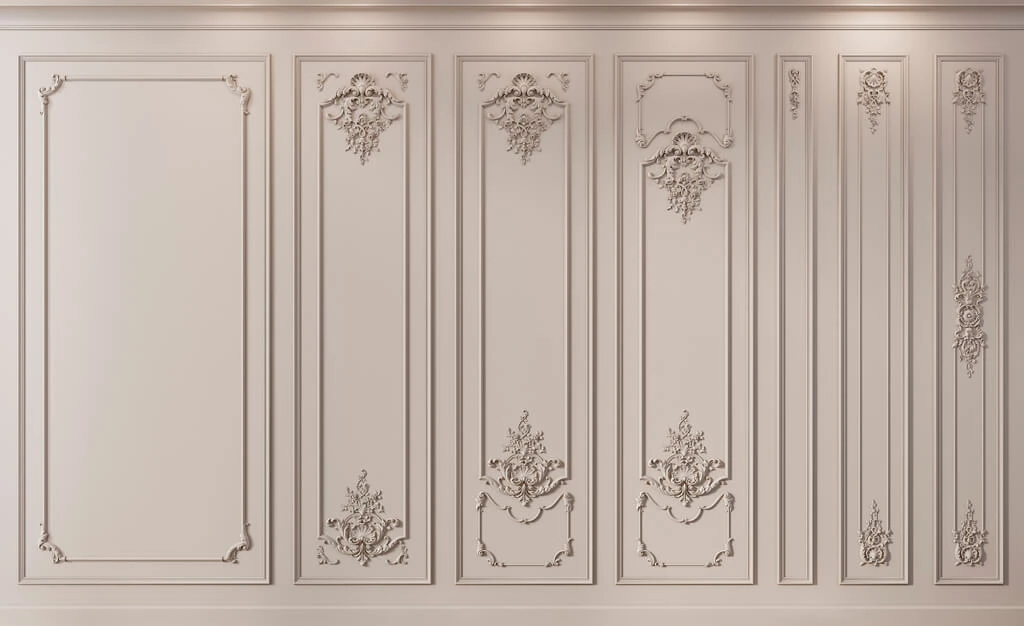
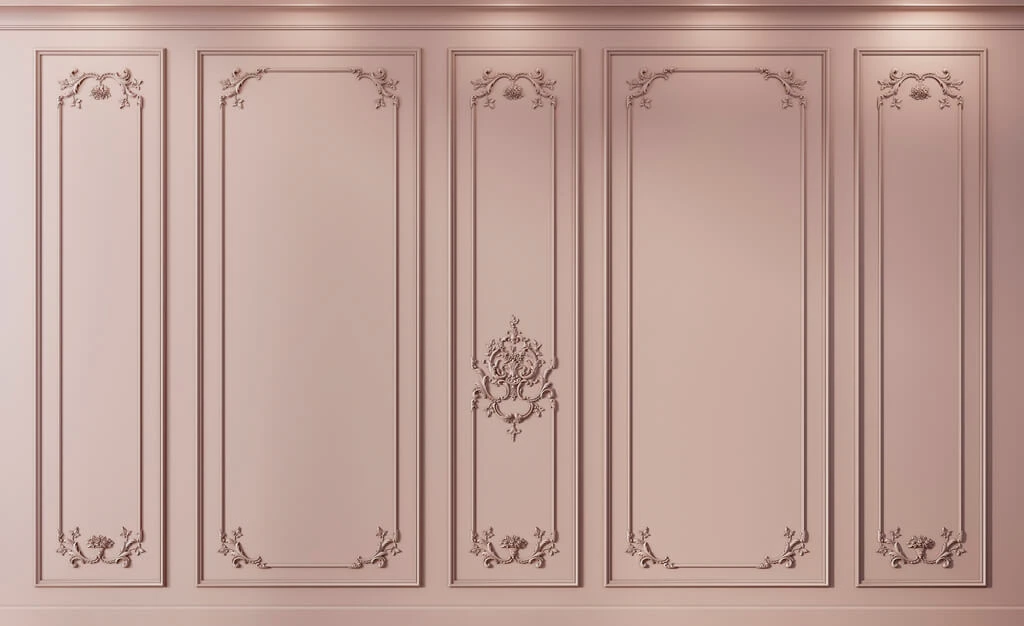
- Stucco decor and moldings for the bar area: six schemes
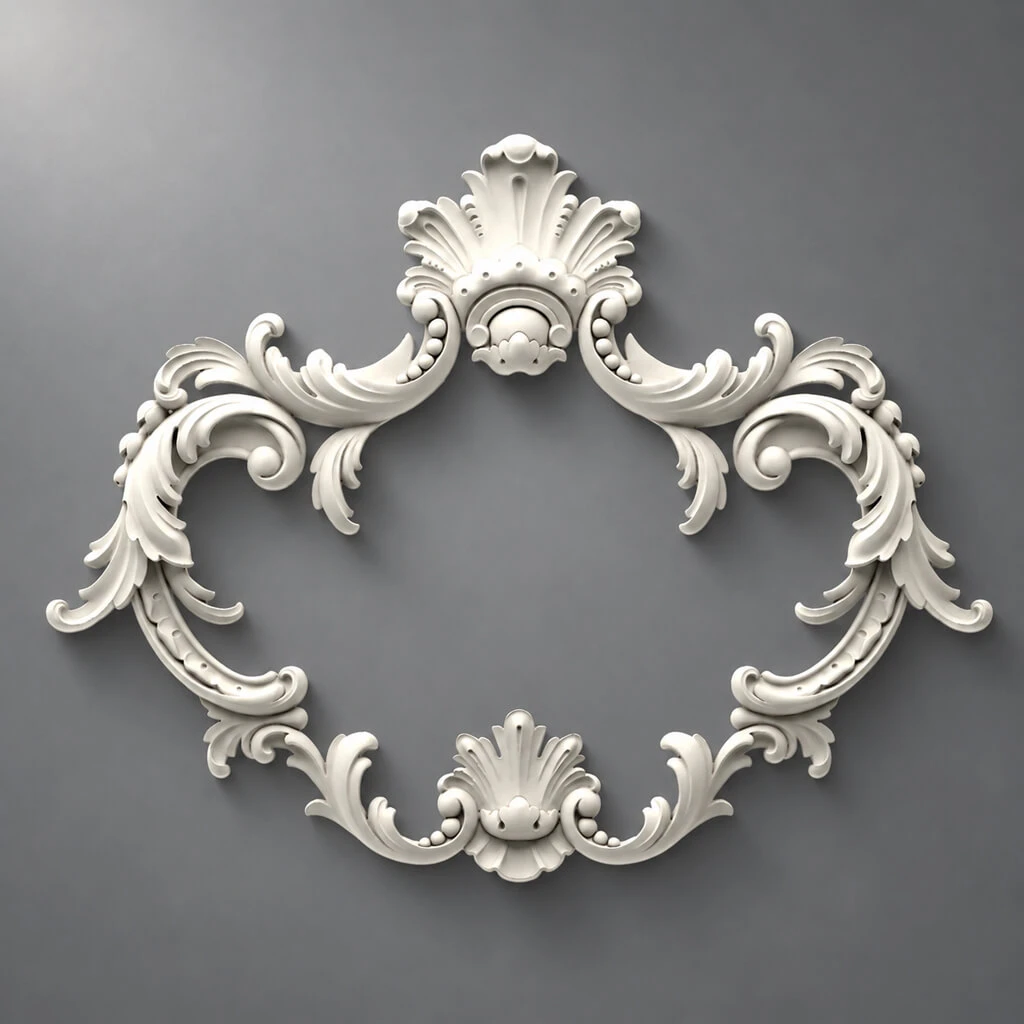
- Molding frame around the bar display scheme
- Stucco decor on the wall behind shelves scheme
- Wooden moldings matching bar furniture scheme
- Slats as background, moldings as frame scheme
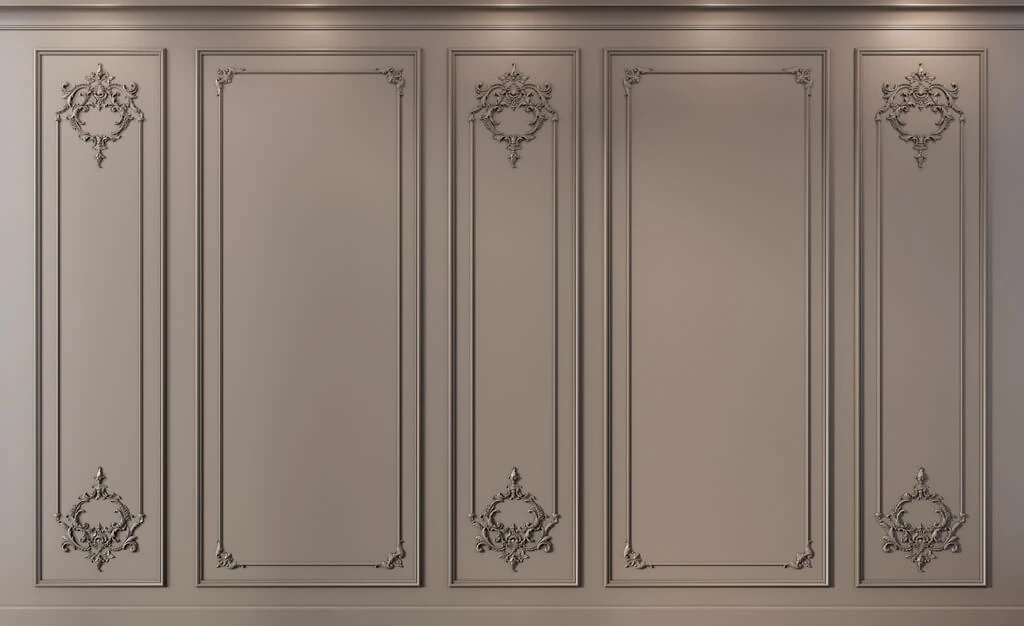
- Stucco frame around the bar niche scheme
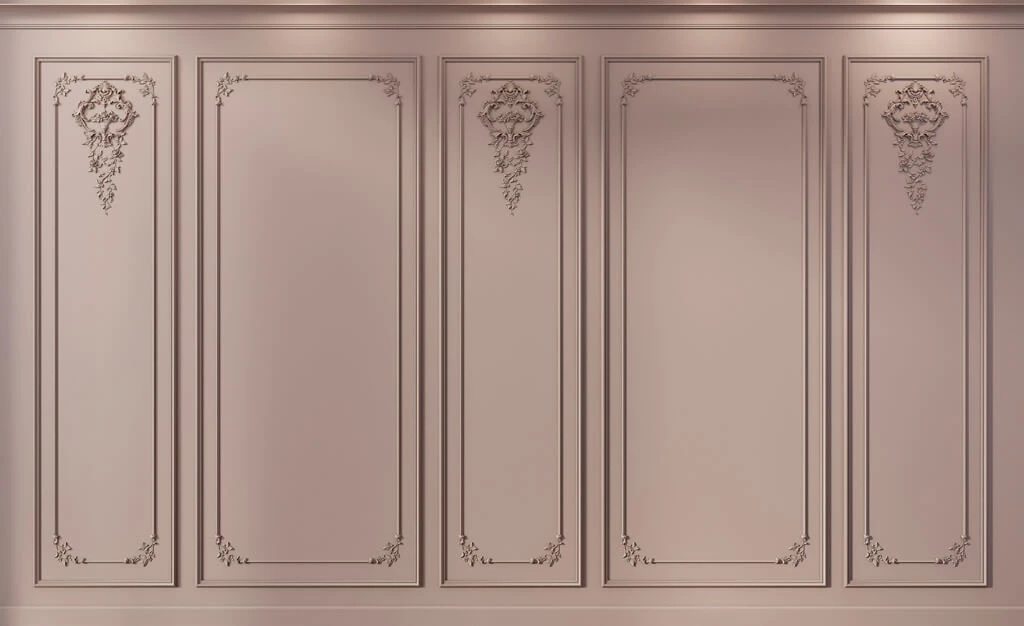
- Polyurethane decor in wall color scheme
- Cornice and top of bar area: how to finish the space from above
- Wooden cornice above the bar area
- MDF furniture cornice
- Polyurethane ceiling decor above the bar area
- Thin molding as a minimalist finish
- Which baseboard to choose for a bar area
- MDF baseboard for a kitchen-living room with a bar area
- Wooden baseboard for a bar area with slats
- Wide wooden baseboard for a premium bar
- Baseboard in floor color
- Combination of bar furniture, slats, moldings, and baseboards: material systems
- Trim, corners, and bars: neatness at joints
- Wooden bar in the bar area
- Wooden corner on all external corners
- Trim products for junctions with furniture
- Five ready-made design systems for a home bar
- Dark English Bar system
- White Neoclassical Bar system
- Art Deco Cocktail Bar system
- Scandinavian Wine Bar system
- Loft Bar with Wood system
- Seven mistakes when designing a home bar
- Too active decor behind the bar
- Open ends of slats
- White baseboard in a dark bar area
- Gap above furniture without a cornice
- Several mismatched wood shades
- Slats not connected to baseboard and cornice
- Molding conflicting with lighting
- About the Company STAVROS
- FAQ: Answers to Popular Questions
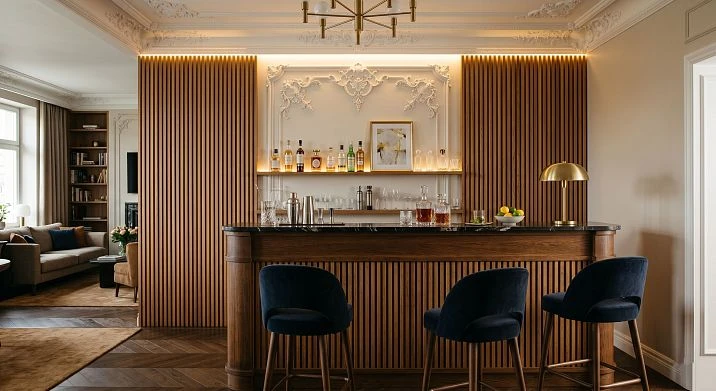
A home bar is not just a shelf with bottles. It's a statement about the owner's character. A bar area, executed with architectural attention to detail, instantly becomes the center of attraction in any space — be it a kitchen-living room, study, hall, or a separate room. And the difference between "just a shelf with drinks" and a real home bar with atmosphere is measured precisely by what happens with the walls, ceiling, cornices, and baseboards around it.
Wooden slats for a home bar, Moldings made of polyurethane, Polyurethane wall decor, properly selected Wooden baseboardandwooden cornice is a system that turns an ordinary niche into a real bar with a story. There are no trifles here. Everything matters: from the end of the slat to the transition of the baseboard into the bar counter.
Let's break down this space in detail — with specific solutions, proportions, diagrams, and honest advice.
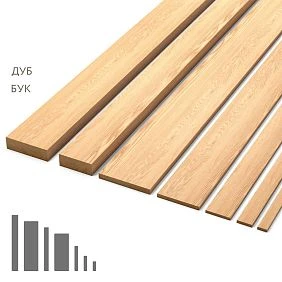
Bar area as an architectural object
Why does the bar area require a separate decorative scenario — not the same as the living room or kitchen?
The answer is simple: a bar is a stage. Bottles, glasses, and accessories are displayed here. The lighting enhances the showcase effect. The bar counter encourages live interaction — people stand or sit on high stools facing this area. This means the wall behind the bar is constantly in view.
Moreover, the bar area in a modern home rarely exists in isolation. It is integrated into the kitchen-living room, adjacent to the dining area, located in the hallway, or occupies a niche in the study. This means the decor around the bar must simultaneously be part of the overall interior narrative and stand out as an independent accent — like a chapter in a book that can be read separately but is connected to the overall plot.
It is herewooden slats for the bar areaandSculptural wall decorationsolve the problem of connection and accent simultaneously: they create "bar architecture" — structured, rich, but not overloaded.
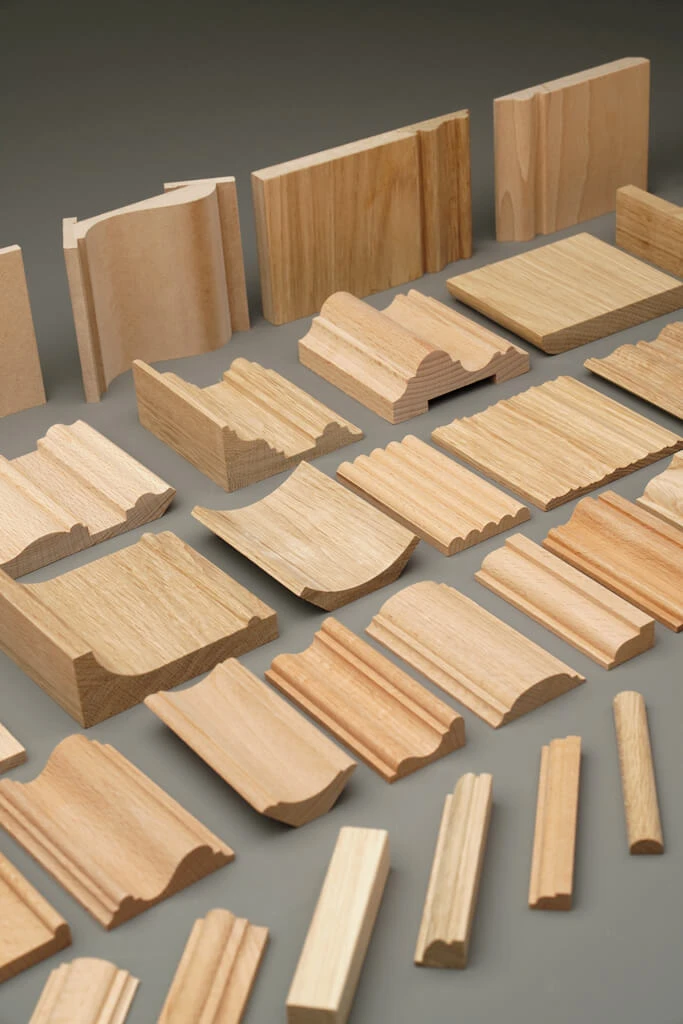
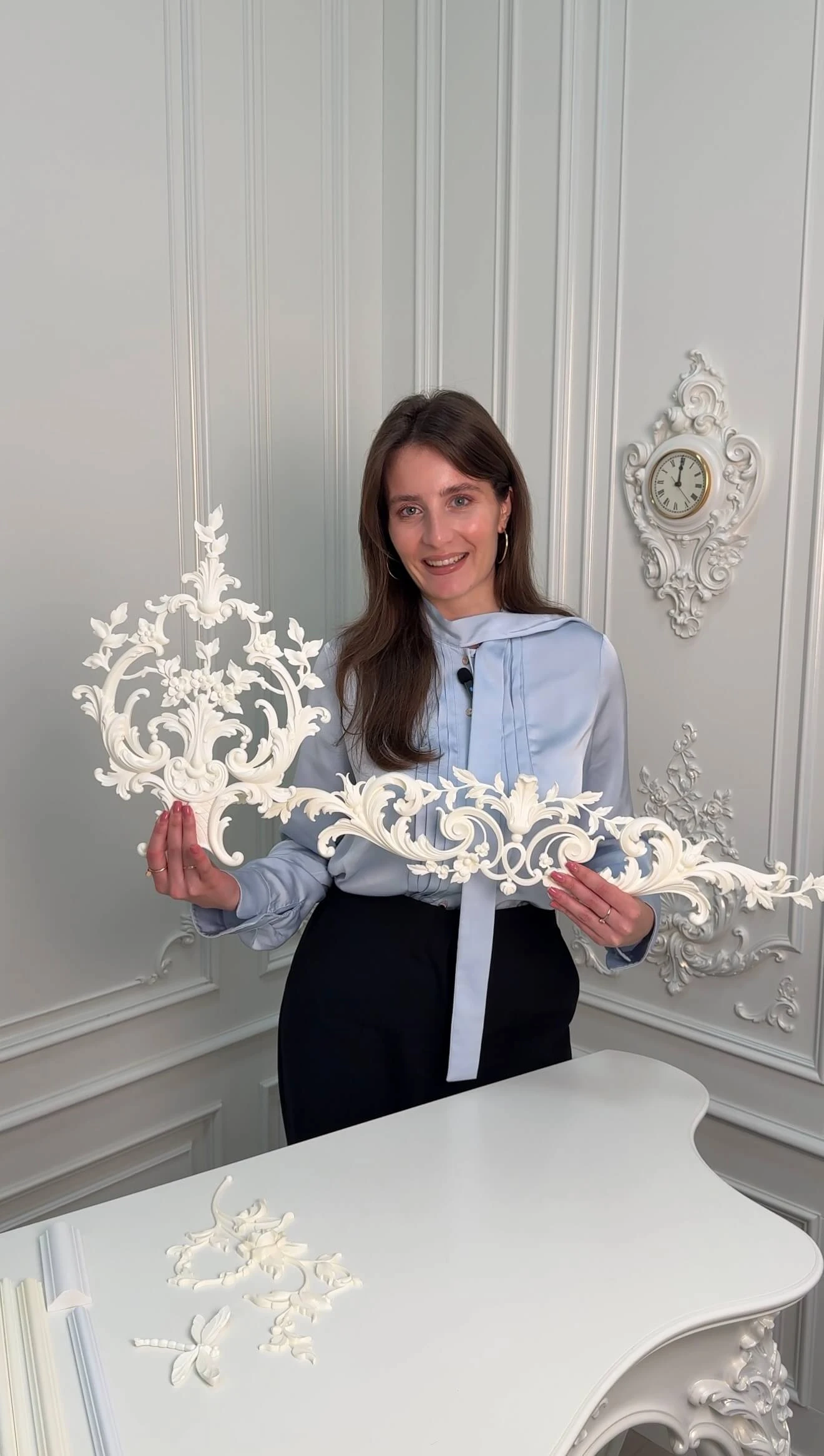

Six zones for wooden slats in a home bar
The media zone is one plane. The bar area is a system of planes, furniture, shelves, and niches. Slats work differently here: not as a background for a technical device, but as a decorative ensemble that combines with the world of bottles, glasses, and wooden shelves.
Our factory also produces:
The wall behind the bar counter: the main plane
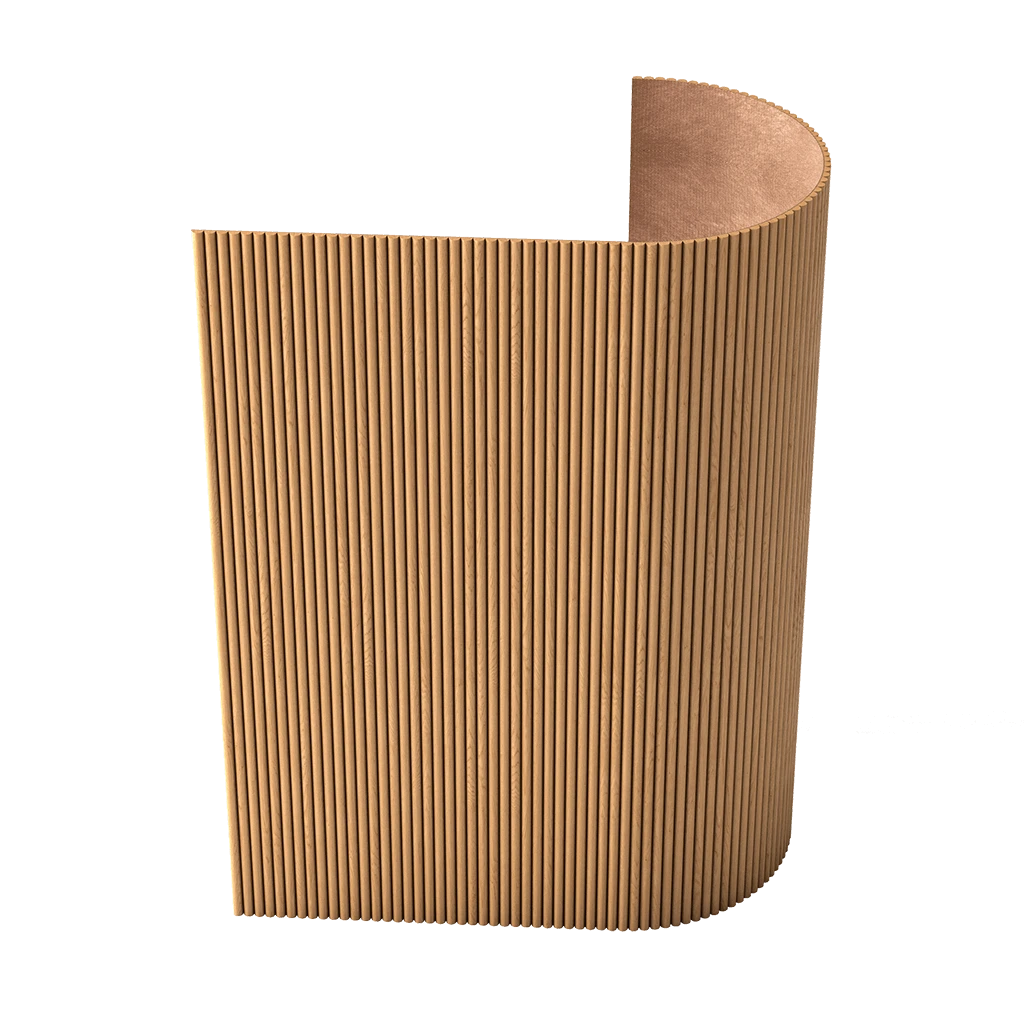
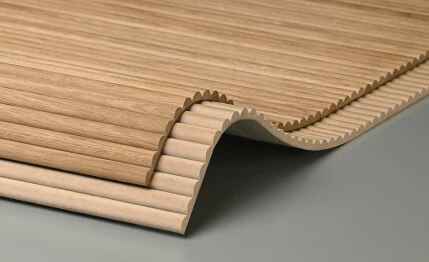
The wall behind the bar counter is the first thing a guest sees when approaching the bar. It is a showcase, a background, a stage.Wooden slats behind the bar countercreate a textured "carpet" here — a vertical rhythm that makes the wall lively and expressive without competing with bottles and glasses.
Optimal parameters for this zone: slat width 20–30 mm, spacing 35–50 mm, wood species — dark oak or walnut for bars in dark warm tones; bleached oak or ash — for light Scandinavian or minimalist concepts. Height of the slat field: from floor to ceiling or from the top of the bar counter to the ceiling — depending on the room height and the presence of shelves.
If there are shelves for bottles on the wall behind the bar, the slats are mounted in the space between the shelves: in the lower part (under the bottom shelf), in the gaps between shelves, and above the top shelf. The shelves are "built into" the slat background — and the bar wall is perceived as a single architectural system.
Get Consultation
Side zones near the wine display
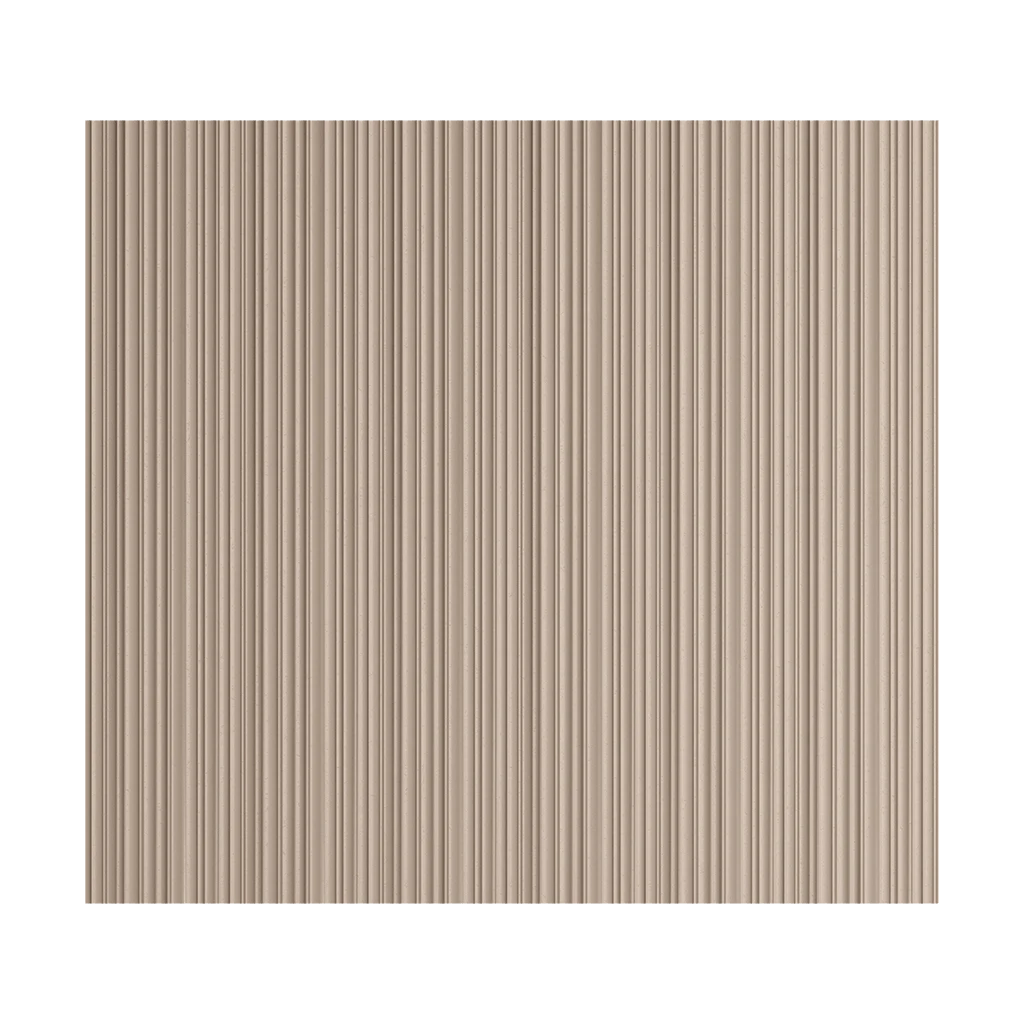
The side walls of the bar area are often an undeservedly forgotten space. But it is they that frame the main bar wall, creating a "side" architectural content.vertical wooden slatson the side walls narrow or widen the visual perception of the bar area depending on the color: dark slats on the side walls — "condense" the space, creating a sense of depth and intimacy; light ones — expand it.
Side zone withslat panels for interioris especially effective if there is a wine display next to the bar. The slats are a textured background against which the silhouette of the display is read clearly and elegantly.
Niche with shelves: slats as interior finishing
A bar niche is a three-dimensional object: three internal walls (back and two side) plus the niche ceiling. The back wall of the niche withwooden slats for a wall with shelves — this is a professional designer technique that immediately elevates a niche from the level of a 'built-in wardrobe' to the level of a 'designer shelving unit'.
Parameters for interior niche finishing: narrow slats 15–20 mm with a spacing of 20–25 mm — a denser rhythm than on an open wall, because the depth of the niche visually enlarges the scale. Dark background of the back wall + slats slightly lighter — a classic contrast scheme for a bar niche.
LED strip in the gap behind the slats (gap 15–20 mm) — and the niche turns into a glowing architectural 'box' with bottles in the foreground. Warm light 2200–2700K from behind the slats creates amber backlighting — the exact tone for a bar atmosphere.
The space between the kitchen and living room
A bar counter often stands on the border between the kitchen and the living room, and behind it there is a wall or partition.Wall decoration with wooden slats on this partition creates a 'double-sided' decorative plane: on the kitchen side — functional finishing, on the living room side — a decorative accent. Slats here are an elegant alternative to wallpaper or paint.
If the partition is low (does not reach the ceiling), the slats are mounted from the top of the partition downwards.wooden cornice on top of the slatted partition completes the top — and the partition becomes a full-fledged architectural element.
Mini-bar area in the study
A mini-bar in the study is a special genre. It should fit into the bookish-leather-wooden aesthetic of the study, without slipping into an 'entertainment' register.Wooden slats for a home barmade of dark oak or walnut on the back wall of the built-in mini-bar in the study — this continues the wooden theme of the bookcases and furniture. The slats do not contrast with the study's atmosphere but organically complement it.
Bar area in the showroom or guest space
If the home bar is a representative area (guests are often in the house, business meetings are held), then the requirements for decor increase: architectural seriousness and visual persuasiveness are needed here.Rack panelto the full height of the wall +polyurethane molding framesaround the perimeter of the bar area +wooden cornicewith hidden lighting — this is a set that makes the home bar indistinguishable from a professional one.
Stucco decor and moldings for the bar area: six schemes
Scheme «Molding frame around the bar display case»
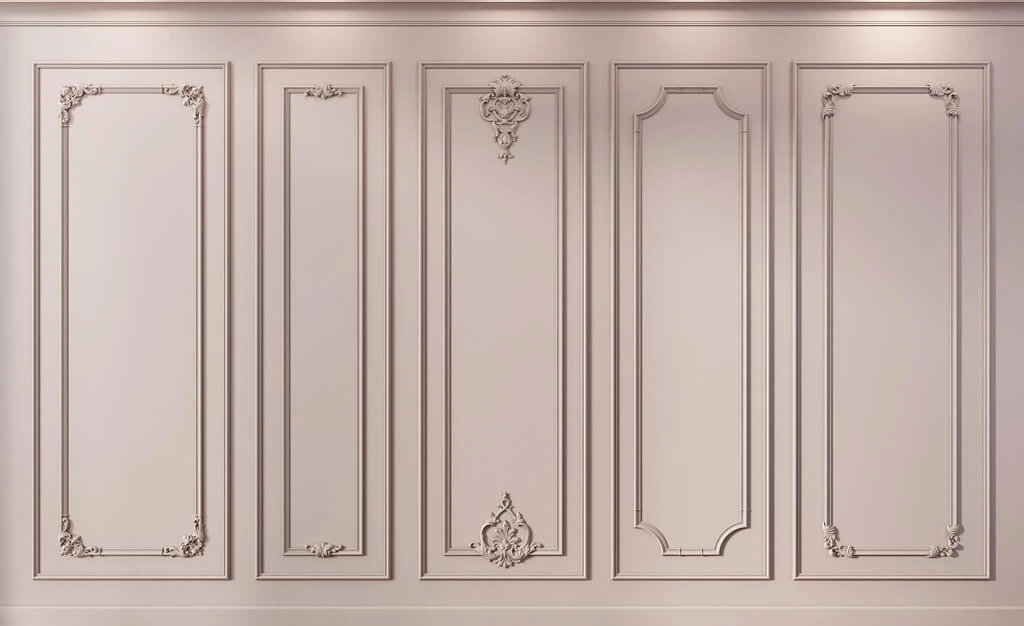
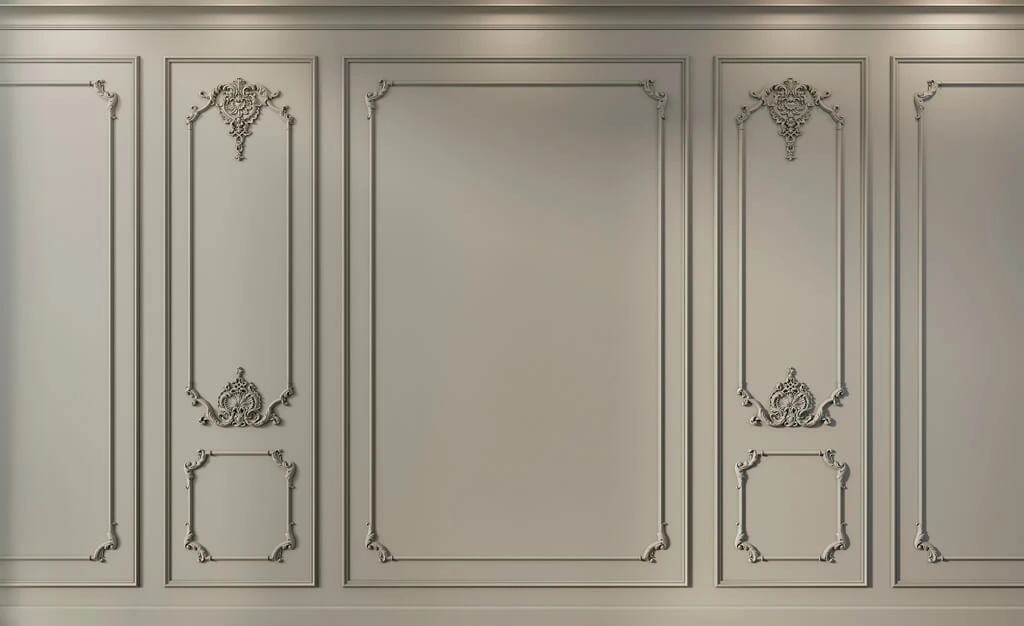
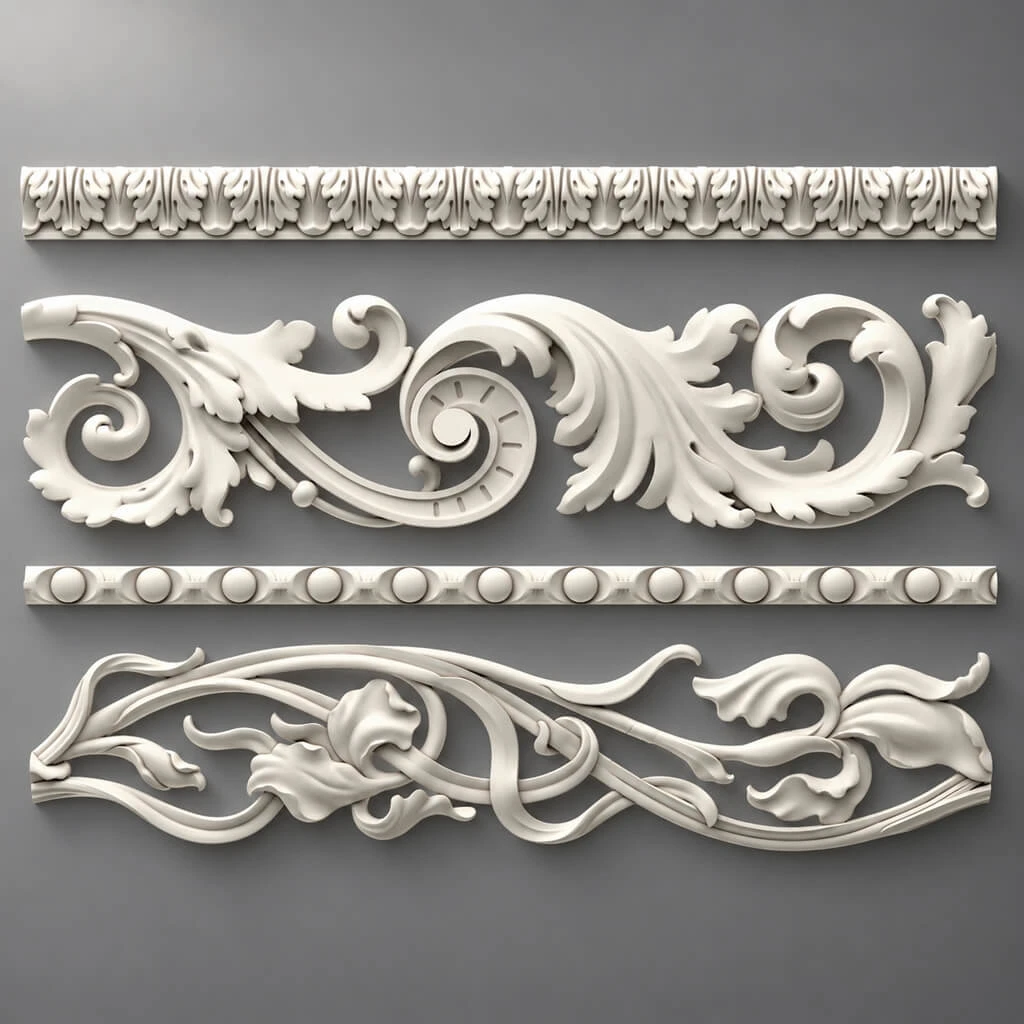
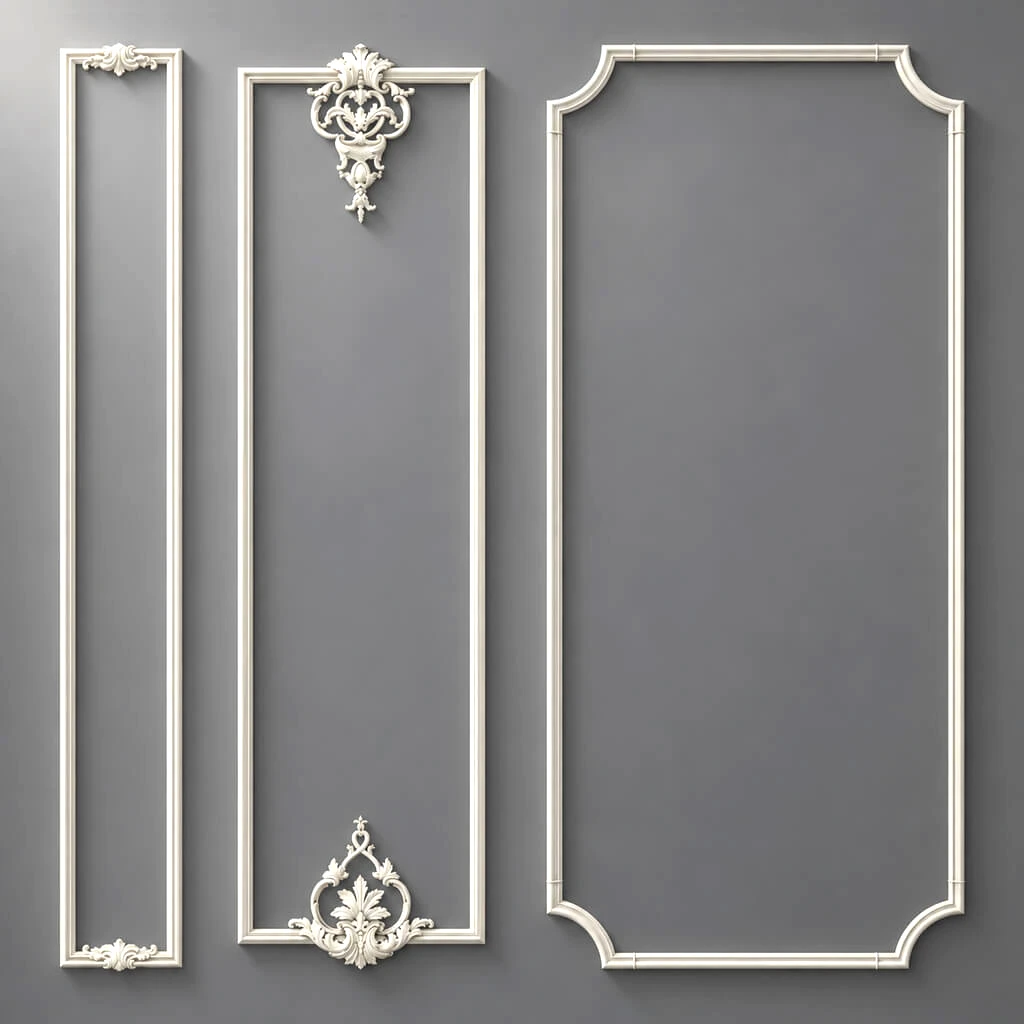
The best analogue is a classic English sideboard: the furniture is built into the wall, with an architectural molding frame around the perimeter. In a home bar, this works the same way:moldings for the bar areaare mounted around the perimeter of a built-in display case or shelf unit, creating a "portal" around the contents.
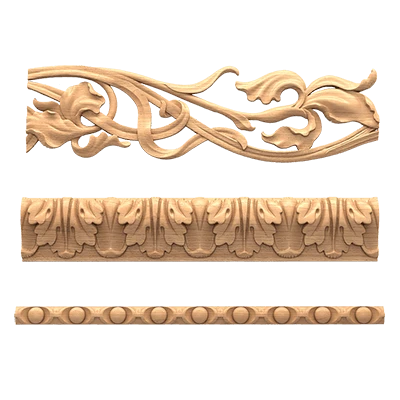
Parameters: molding 30–50 mm wide. Color: matching the wall (monochrome frame, relief from shadow) or matching the furniture (wooden molding in the color of shelves and countertop). The molding frame structures the display case as an independent object — and not only the furniture becomes a bar, but also the wall around it.
Scheme "Stucco decor on the wall behind the shelves"
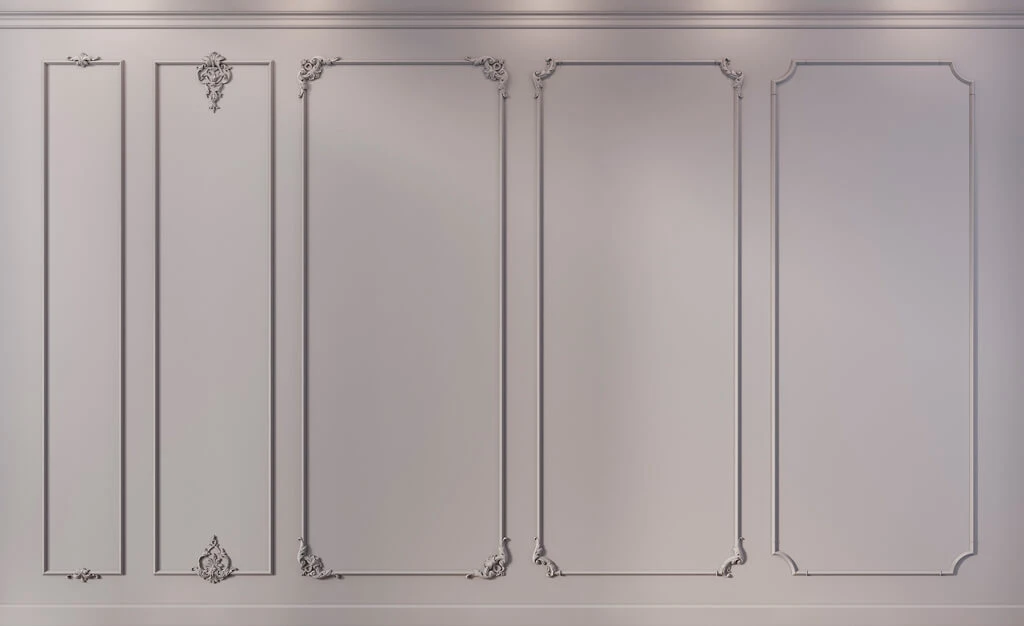
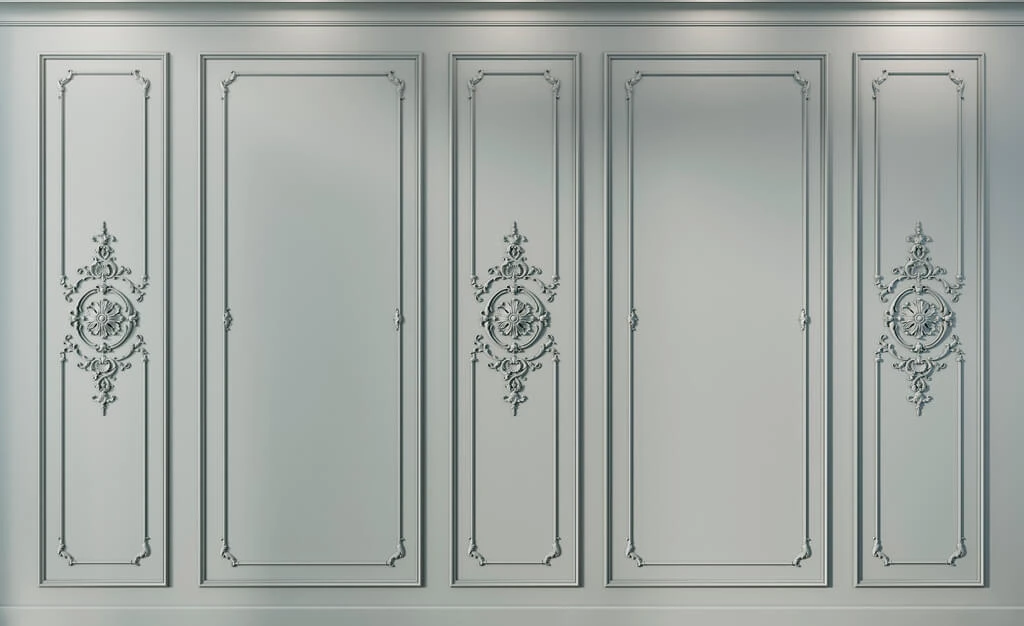
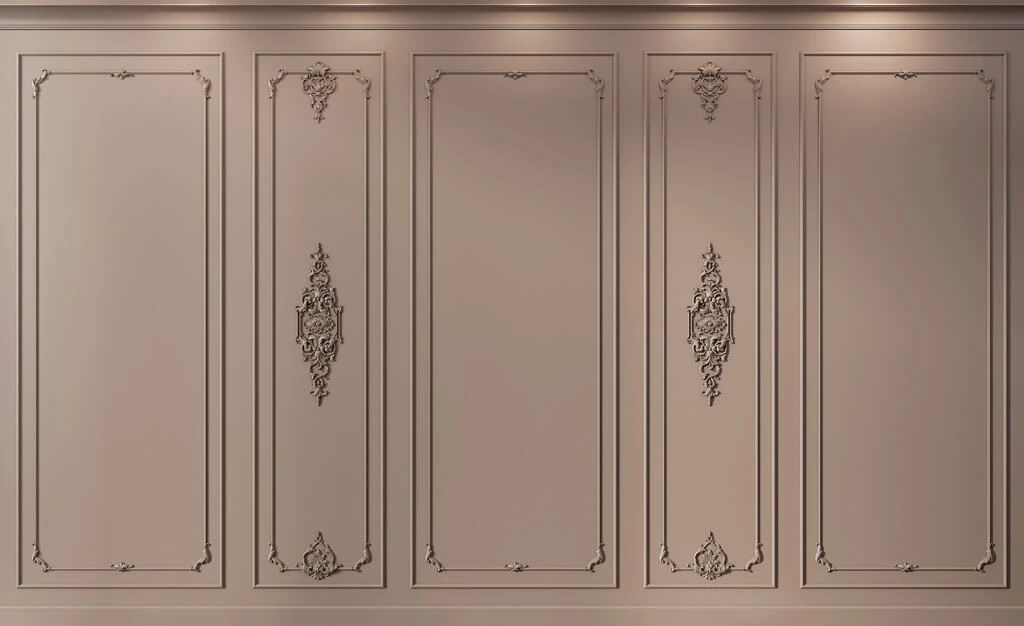
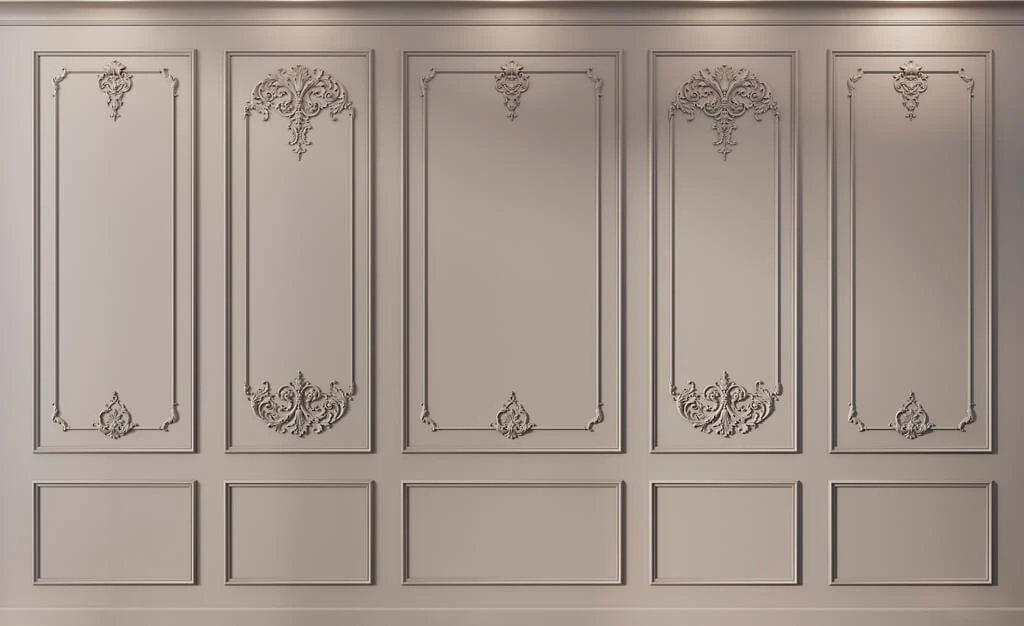
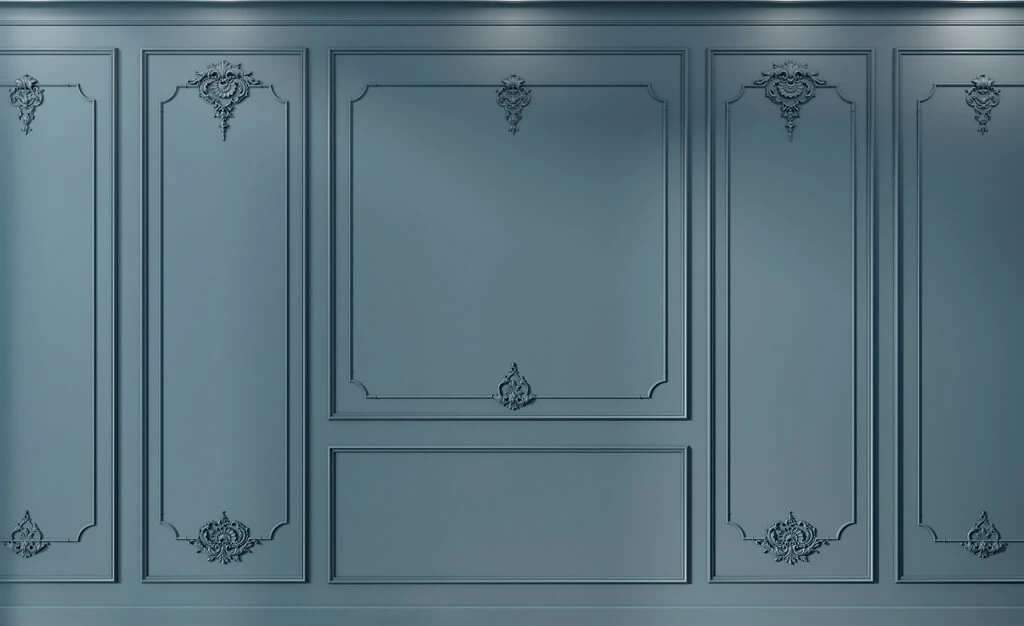
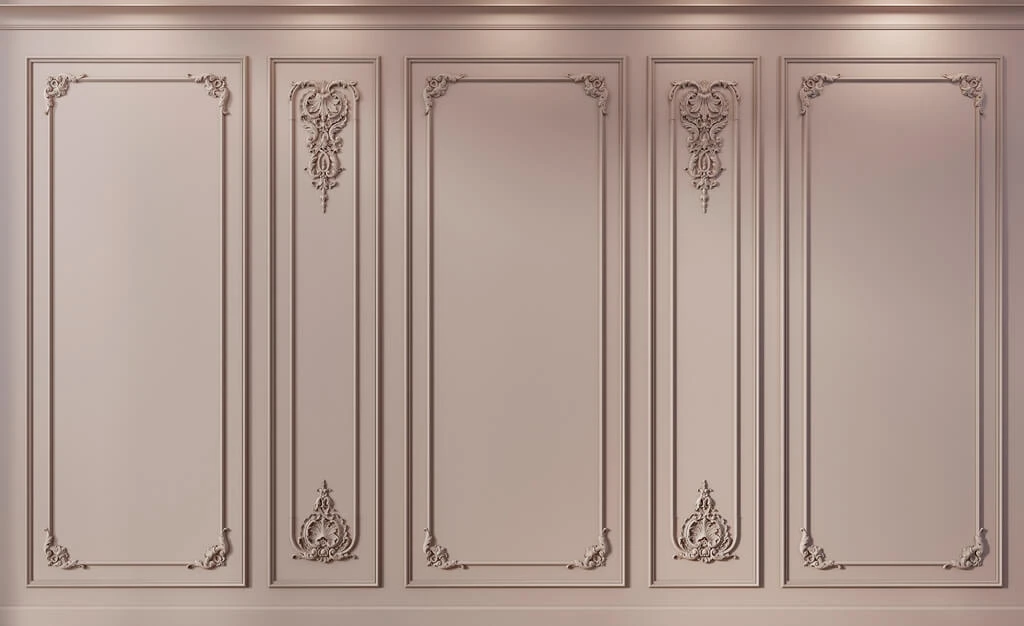
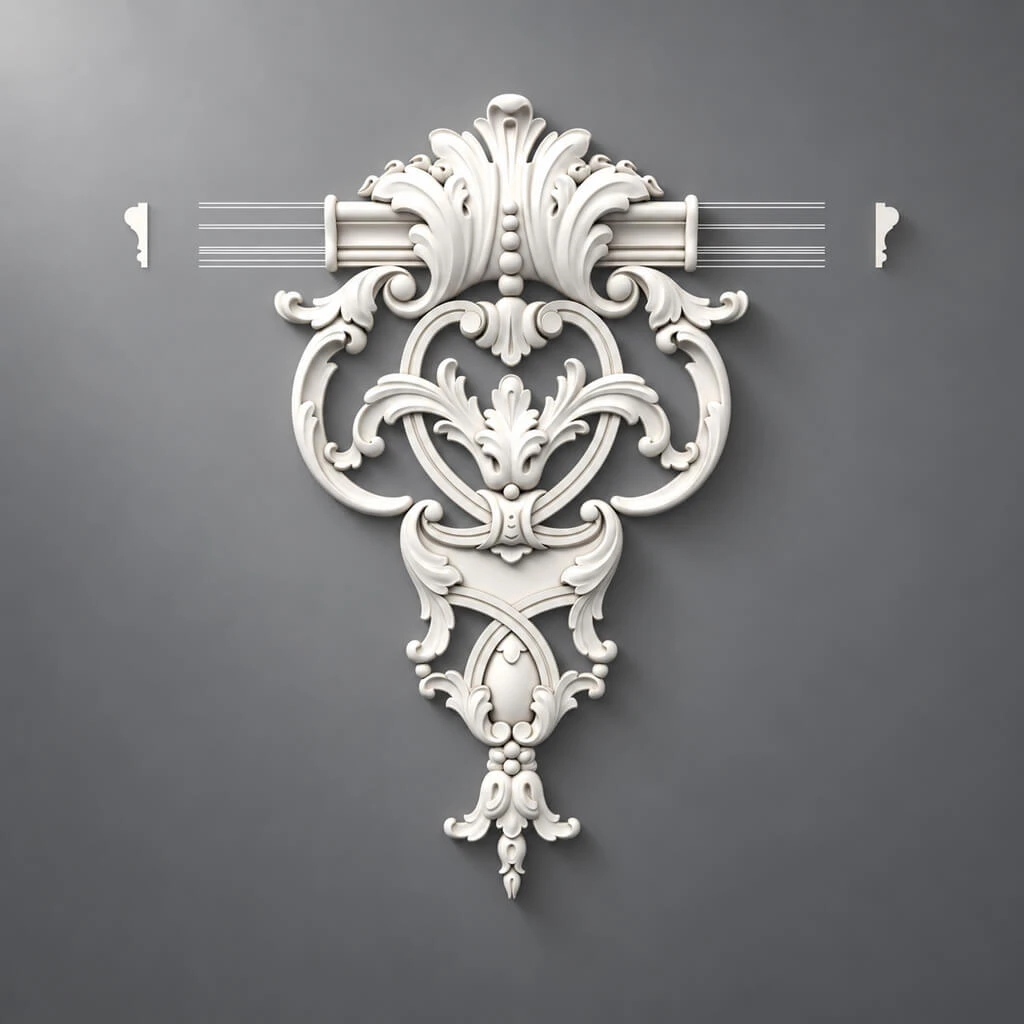
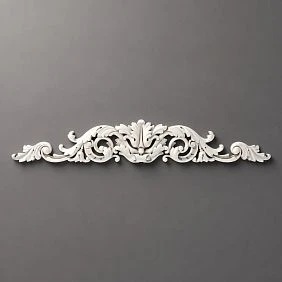
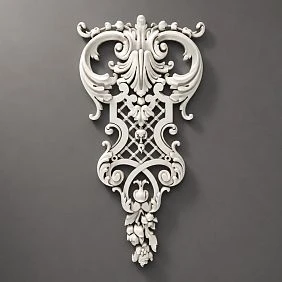
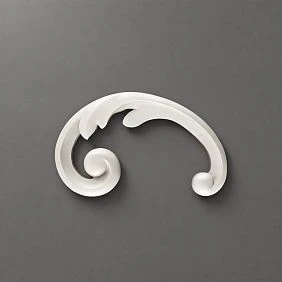
On the wall behind the bar, in the spaces between the shelves —Polyurethane wall decorin the form of small architectural frames. This creates the impression of a coffered relief: the visible part of the wall between the shelves is not just a painted plane, but a structured surface with geometry.
In a dark bar with dark walls — stucco decor in the color of the wall: the relief is only visible in the oblique light of the backlight. The effect is subtle, expensive, unobvious. This is exactly what is needed in this area.
Scheme "Wooden moldings matching the bar furniture"
If the bar furniture is made of dark oak —Decorative wooden moldingson the wall behind the bar from the same dark oak. The moldings connect the furniture and the wall into a single material ensemble. The frame layout on the wall is perceived as a continuation of the furniture facade.
This is exactly the technique used in expensive interiors, when the furniture maker and finisher work together: the wall is an extension of the furniture, the furniture is part of the wall.
Scheme "Slats as background, moldings as frame"
Wooden planks — in the central area behind the bar counter,Moldings made of polyurethane — along the perimeter of the slatted field as an architectural frame. Slats — texture and surface. Moldings — architectural boundary.
This hierarchy is intuitively clear: the molding "holds" the slatted field, preventing it from visually "blurring" across the wall. In the bar area, this is especially important: clear boundaries of decorative zones create a sense of thoughtfulness and luxury.
Scheme "Stucco frame around the bar niche"
A niche in the wall for a home bar is already an architectural object.Stucco decor for the wall behind the bar in the form of a monumental frame around the perimeter of the niche turns it into something between an altar niche and a theater stage. It sounds lavish — and that's exactly how it looks in real life.
Frame profile: 40–60 mm. Frame height: from floor to ceiling (or from baseboard to cornice). Frame width: 10–15 cm wider than the niche on each side. Material:Polyurethane Items— lightweight, precise, mounted on glue without complex work.
Scheme "Polyurethane decor in wall color"
For bars in contemporary, neoclassical, dark American styles —Moldings made of polyurethanein an absolutely identical wall color. The frames are "invisible" under general lighting but are read due to shadows in the angled light of the bar backlight. This is "quiet architecture" — luxury that doesn't shout.
Cornice and top of the bar area: how to complete the space from above
Ask yourself: does the bar furniture or display case reach the ceiling? In most cases — no. And then the space between the top of the furniture and the ceiling becomes a "zone of uncertainty": it belongs neither to the furniture nor the ceiling — and looks like an architectural flaw.
It is the cornice — ceiling or furniture — that solves this problem.
Wooden cornice above the bar area
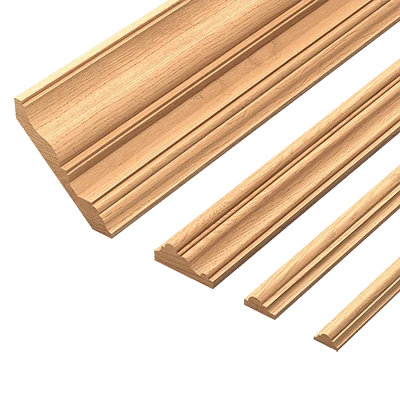
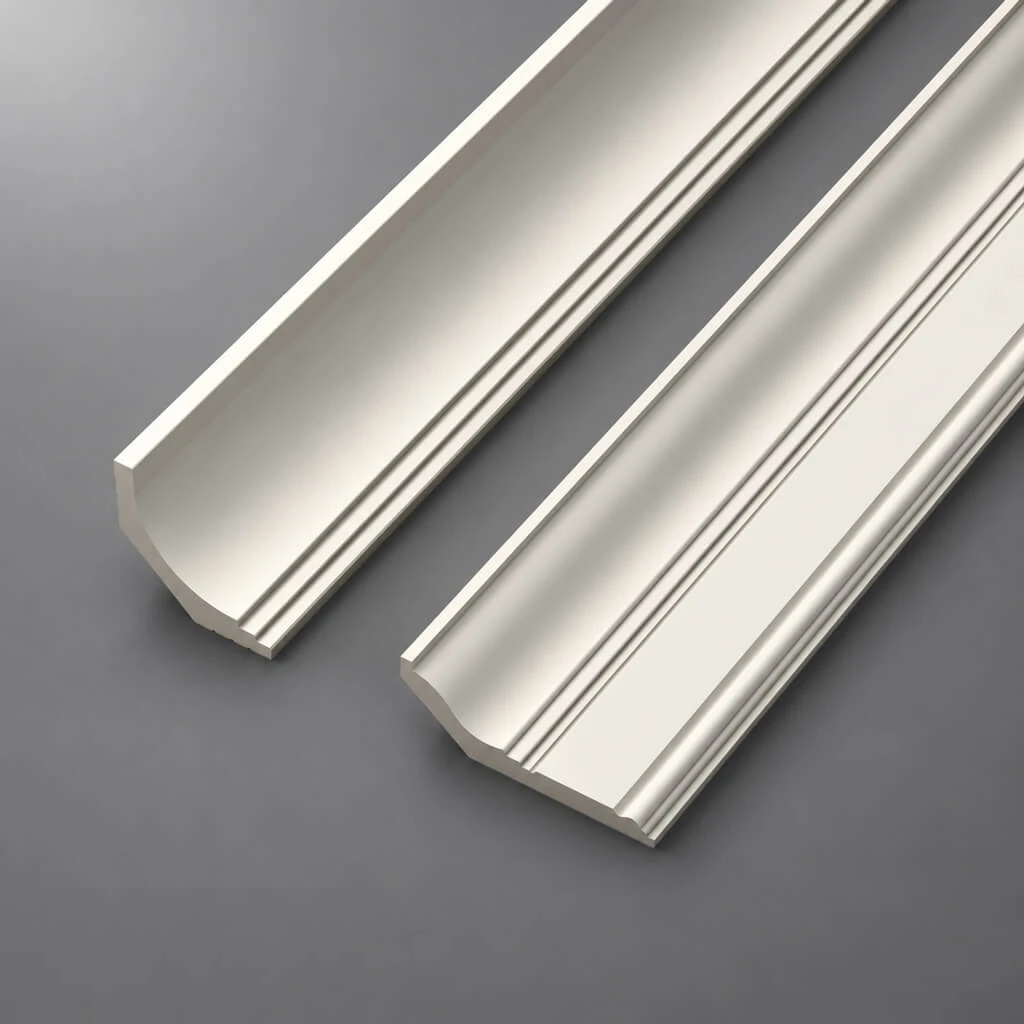
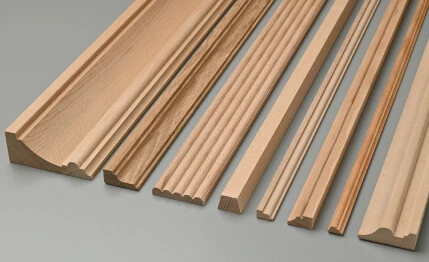
wooden corniceabove the bar area is mounted on the wall at ceiling height — and visually "connects" the top of the wall with the ceiling. IfWooden cornicehas a niche for an LED strip, then hidden lighting from behind the cornice creates a soft overhead illumination hovering above the bar area — just like above professional bar counters in restaurants.
Cornice profile for the bar area: 60–100 mm depending on ceiling height and the scale of the bar area itself. For a bar counter in a kitchen-living room with a 2.7 m ceiling — a cornice of 60–75 mm. For a separate bar or wine cellar with high ceilings — 90–110 mm.
MDF furniture cornice
When the bar area is built-in furniture (cabinet bar, shelving, display case), the top of the furniture needs to be 'closed' with a transition to the ceiling.MDF Crownis mounted over the top furniture facade and covers the gap between the furniture and the ceiling, creating a single monolithic block. This is a standard furniture technique — but the quality of the cornice makes a difference: MDF with a clear profile looks more expensive and neater than a glued ceiling plinth.
Important:MDF Crownis coated with the same paint as the furniture facades. If the facades are white — the cornice is white. If the facades are dark gray — the cornice is in the same tone. This is a condition for the monolithic nature of the upper part of the bar area.
Polyurethane ceiling decor above the bar area
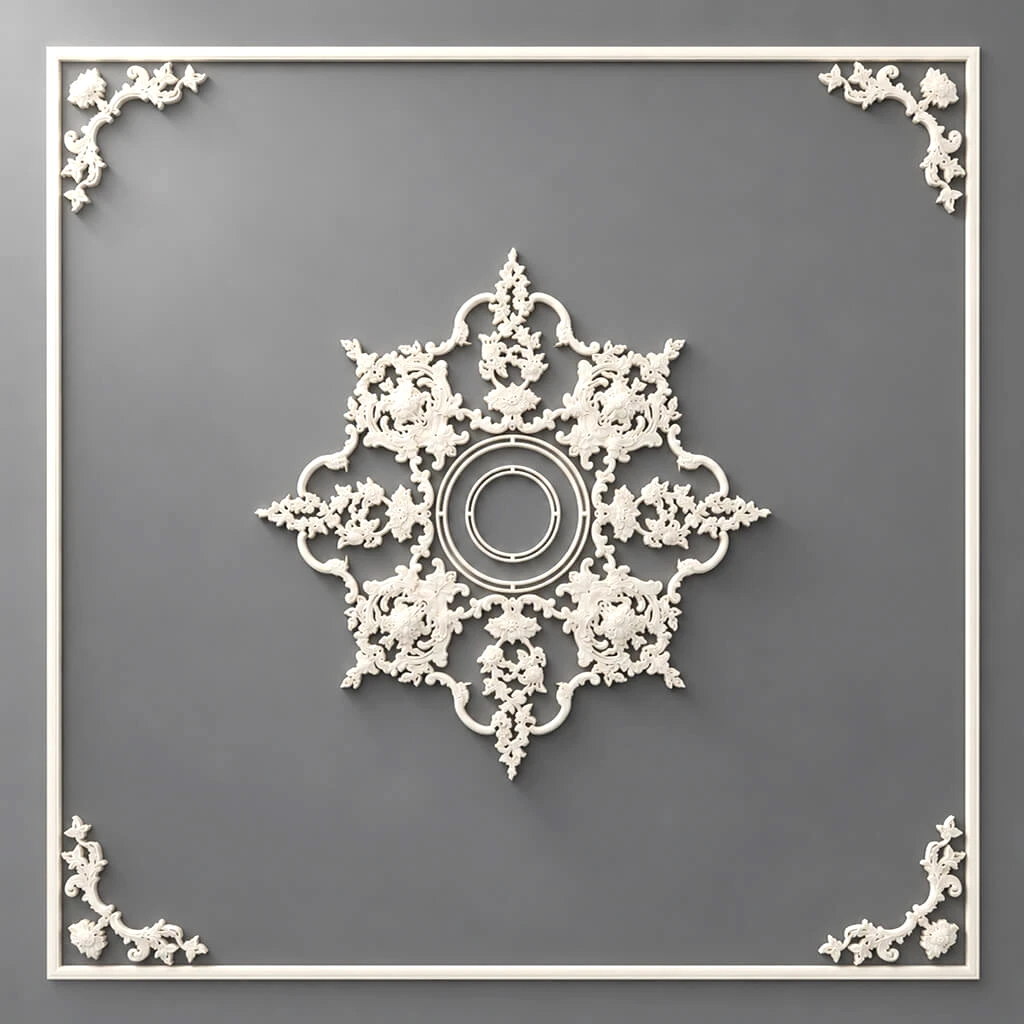
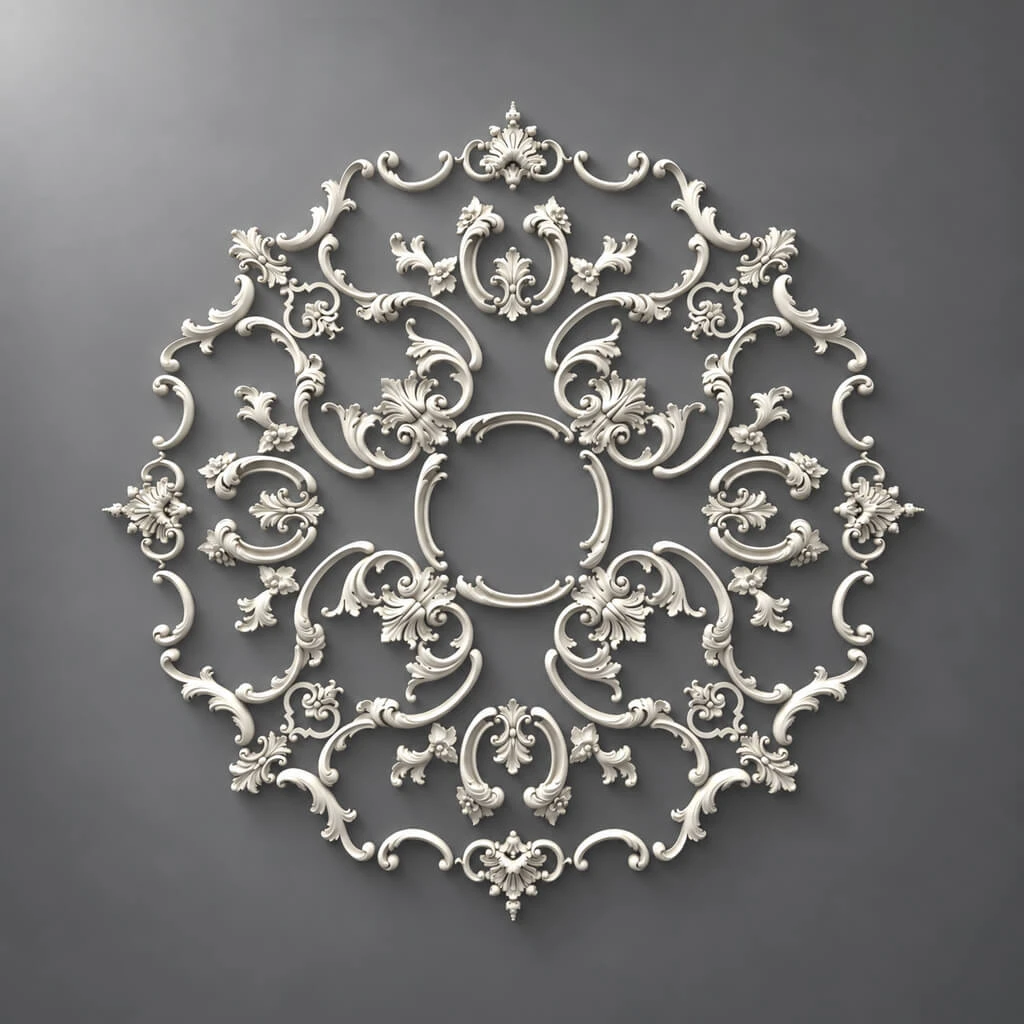
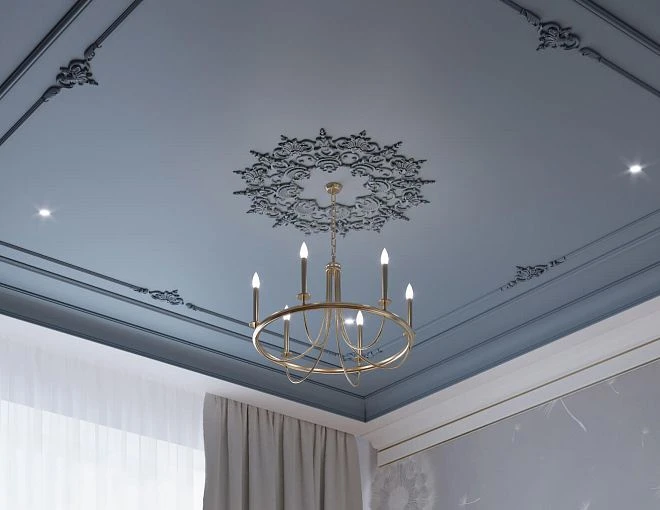
For bars with ambitions —polyurethane ceiling decorin the form of a coffered pattern or frame layout directly above the bar area. This is the 'sky above the bar' — an architecturally designed ceiling fragment that reads as a separate decorative zone.
Ceiling coffer above the bar: a molding frame on the ceiling along the perimeter of the bar area. Inside the frame — painting the ceiling in a darker or accent color. Inside the coffer — recessed lights or a chandelier. This 'covers' the bar area from above, creating intimacy and visual separation from the rest of the space.
Thin molding as a minimalist finish
For a Scandinavian, Japanese, or minimalist bar — a thin molding 25–35 mm at the wall-ceiling transition in the ceiling color. Invisible but structuring. It covers all joints and unevenness, creating an architecturally neat upper boundary — without excess.
Which baseboard to choose for a bar area
The baseboard in the bar area is the lower completion of the entire decorative system. And it is here that a gap most often occurs: the top and middle of the wall are designed with attention, while the baseboard is chosen on a residual basis.
MDF baseboard for a kitchen-living room with a bar area
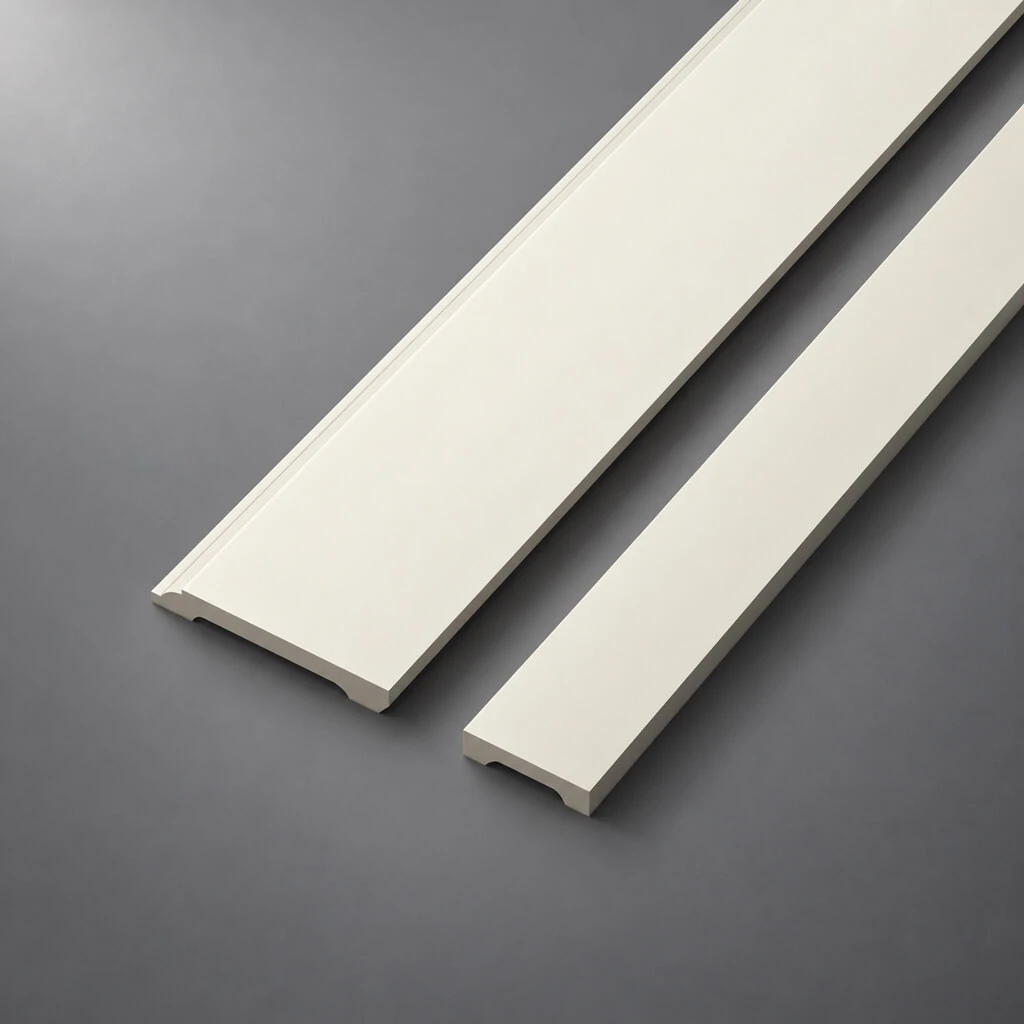
MDF Skirting Board — a universal choice for open kitchen-living room spaces, where the bar area is part of a unified interior. Clear geometry, perfect surface evenness, compatibility with any paint.
White MDF Skirting Board — for light spaces with a white kitchen and a bar area in neutral tones. The lower white line unites the kitchen perimeter with the bar area — creating a single lower contour of the room.
— is a horizontal element that frames the room at the bottom of the walls where the wall meets the floor. Skirting boards perform several functions: they hide the technological gap between the wall and floor covering (necessary for thermal expansion), protect the lower part of the wall from mechanical damage, create visual completion, and may conceal wiring. — for accent walls in dark or saturated tones: a baseboard in the wall color makes the lower contour monolithic, without "cutting" the accent zone with a white horizontal line.
Wooden baseboard for a bar area with slats
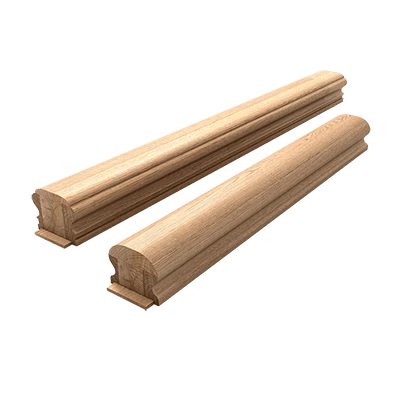
If the bar wall is decoratedwooden planks with oak, thenWooden baseboardfrom oak of the same tint — the only correct choice. Material rhyme: slats on the wall → oak in the baseboard → oak in the countertop or furniture facade. A single wooden thread connecting the top, middle, and bottom of the bar area.
with a classic profile creates a sense of solidity, reliability.is especially important where the bar area has parquet or a wooden floor. A baseboard made of the same species as the parquet: oak to oak, walnut to walnut. This is a professional standard, instantly read as an expensive solution.
Wide wooden baseboard for a premium bar
Wide Wooden Skirting Board80–120 mm — for separate bar rooms, wine cellars, bars in country houses or premium-class apartments. A wide baseboard strip at the floor gives the lower part of the room architectural "weight" — the space feels substantial, not lightweight.
In combination withwith wooden cornices90–110 mm at the top andplank panelsin the middle — a wide wooden baseboard completes the vertical architectural system: baseboard–slats–cornice — a single wooden contour of the bar space.
Skirting Board in Floor Color
Alternative minimalist approach for open spaces: baseboard in the exact color of the floor. The lower contour "dissolves" — walls visually "grow" directly from the floor. The bar area is perceived as taller and more spacious.wooden baseboardin tone with the oak parquet — this is exactly that technique.
Combination of bar furniture, slats, moldings, and baseboard: material systems
The bar area, unlike most other zones in the home, concentrates many materials in a small space: the wood of the countertop, the metal of the hardware, the glass of the display case, the texture of the wall, the texture of the slats, the profile of the molding. To keep this ensemble from falling apart, a system of material unity is needed.
| Bar type | Slats | Moldings | Skirting board | Crown Molding |
|---|---|---|---|---|
| Dark bar (jazz, whiskey) | Stained oak 25–30 mm | Polyurethane in wall color | Wood, dark oak 80–100 mm | Wood 90 mm with LED |
| Light Scandinavian | Whitewashed oak 20 mm | Thin MDF in white | White MDF 55–65 mm | Thin molding 25 mm |
| Classic English | Walnut 25 mm | Decorative wooden | Wood, walnut 80–90 mm | Wood 80–100 mm |
| Art Deco | Dark oak 30 mm | Polyurethane geometry | MDF for painting 70 mm | Polyurethane classic |
| Loft bar | Dark oak/metal | Without moldings | Dark MDF 80 mm | Metal profile |
| Minimalism | Ash 20 mm | Without moldings or MDF | MDF in wall color 50 mm | Thin MDF |
Trim, corners and bars: neatness at joints
In the bar area, there are more joints than anywhere else: slats meet shelves, moldings meet niches, baseboards meet the bar counter, and cornices meet the ceiling above the furniture. Every uncovered joint is a visual "scandal" in a space that should be flawless.
Wooden block in the bar area
Wooden block in the bar area performs several tasks. The horizontal block is a closing strip on top of the slatted field: it covers the ends of all vertical slats, creating a neat horizontal boundary between the slatted field and the upper wall zone. The vertical block is a side frame of the slatted field: it limits the slatted area on the sides, creating clear vertical edges.
In the bar niche Wooden block as a supporting lathing under the slats creates a gap behind the slats — space for lighting and air circulation. This is especially important in a niche with technical equipment (drink refrigerator, ice maker), where ventilation is critical.
Wooden corner on all external corners
The external corner of the bar area — where the slatted wall meets a perpendicular plane — requires wooden corner of the same wood species and tint as the slats. An open end of a slat at the corner is an aesthetic failure. The wooden corner covers all ends, creating a flawless vertical corner line.
In the bar area, where the corner is a transition from the slatted background to the side wall with moldings, Wooden angle also serves as a "seam" between two decorative systems: it separates the slatted area from the molding area without disrupting either.
Molding products for junctions with furniture
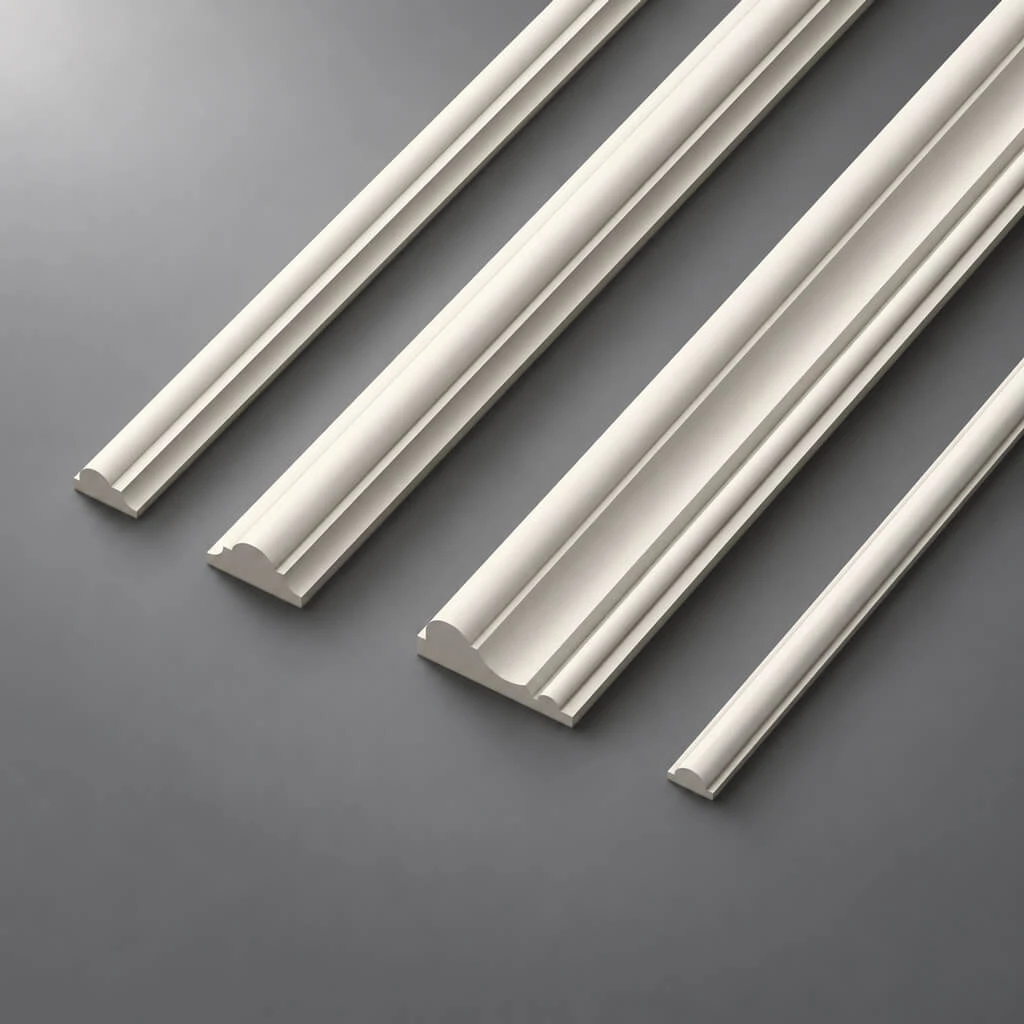
The most challenging joint in the bar area is where the slatted wall meets the bar counter or furniture block. This requireswood trim itemsspecial profiles: a quarter-round, a bead, or an L-shaped profile to cover the gap between the wall and the side plane of the furniture.
Linear products for furnituremade from the same wood species as the bar furniture — the only professional choice. No white PVC corner in a wooden bar area: it immediately ruins the look.
Five ready-made design systems for a home bar
The "Dark English Bar" system
This is a bar with character — rich, slightly mysterious, smelling of aged whiskey and old wood.
Wall behind the bar counter:Wooden planksmade of smoked oak, 25 mm, spacing 40 mm. Shelves of dark oak are built into the slatted background. LED strip 2200K behind the slats.
Moldings:Decorative wooden moldingsmade of dark oak around the perimeter of the slatted field and around each shelf niche.
Crown molding:wooden cornice90 mm with LED niche, dark oak. Amber light from the niche.
Skirting board:Wide Wooden Skirting Board95 mm, dark oak.
Molding:Wooden angleandWooden blockat all joints, dark oak.
Result: a monolithic dark wood bar. Rich, serious, expensive. Without a single "white spot".
"White Neoclassical Bar" system
Light, airy, with a slight historical note.
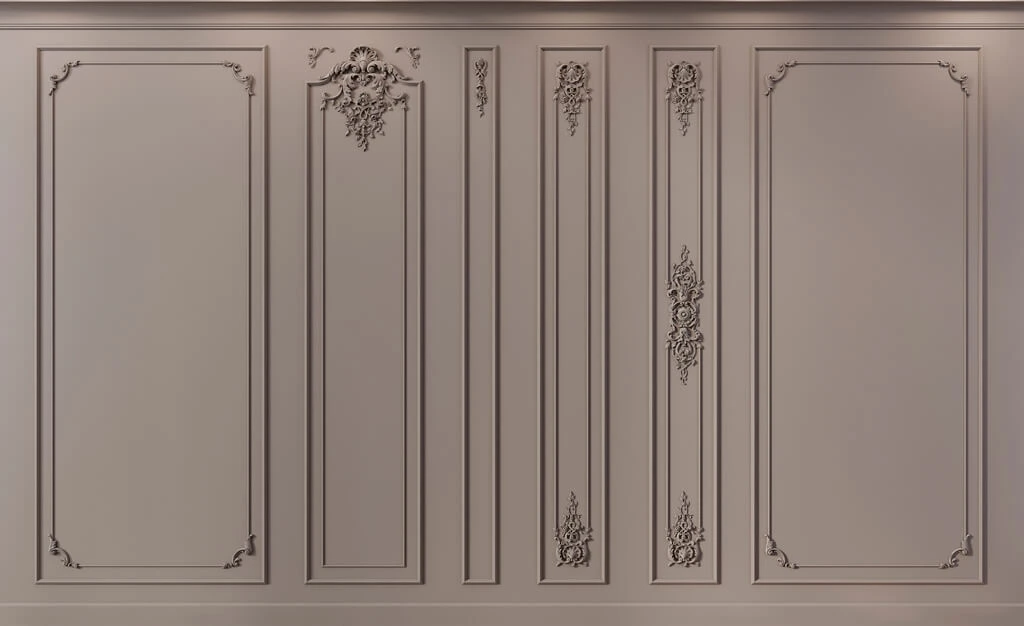
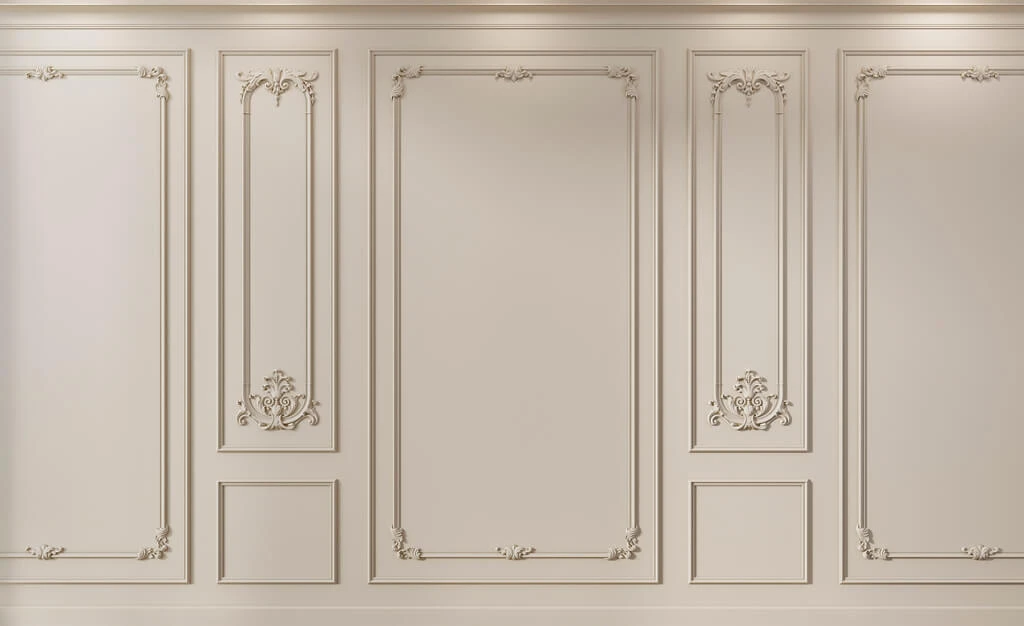
Wall behind the bar counter:Moldings made of polyurethanewith a frame layout in white. In the central frames — tinted finish imitating "aged marble".
On the sides:Wooden planksof bleached oak, 20 mm, pitch 30 mm.
Crown molding:wooden cornice70 mm, white.
Skirting board:White MDF Skirting Board75 mm.
Result: an elegant light bar. French lightness, architectural completeness.
Art Deco Cocktail Bar System
For those who love the 1920s and want Gatsby at home.
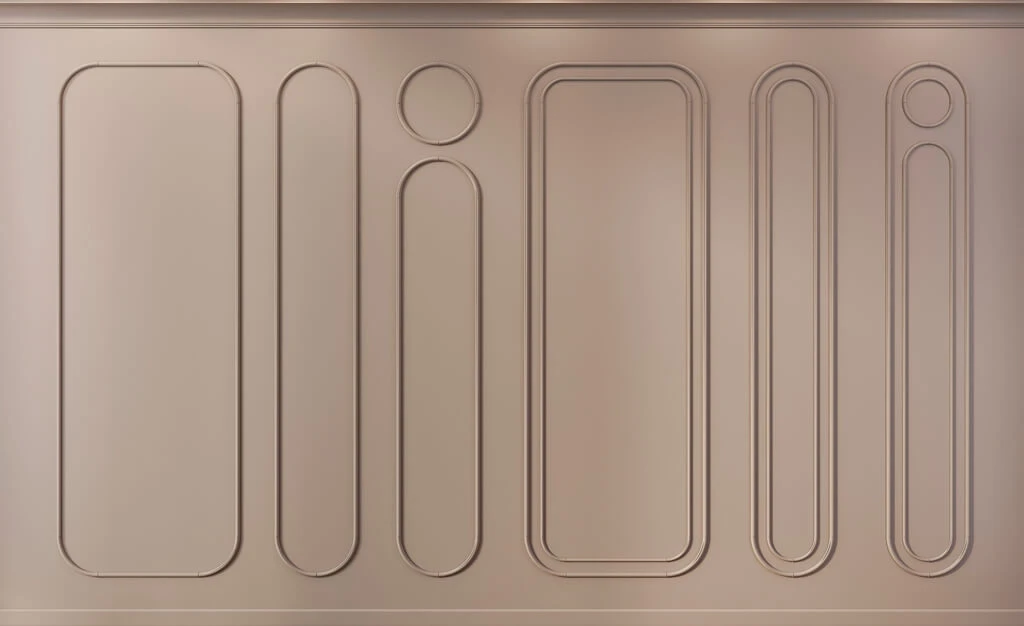
Wall behind the bar:Polyurethane wall decorgeometric pattern — diamonds and rectangles in dark green. Gold inserts at frame intersections.
Slats:Wooden planksmade of dark oak as the side "pillars" of the bar area.
Crown molding:polyurethane ceiling decorgeometric profile, gold paint.
Skirting board:Wooden baseboard85 mm, dark oak.
Result: a cocktail bar at the level of a 1920s club. Dark green, gold, wooden.
Scandinavian Wine Bar System
For those who love Scandinavia, natural wood, and transparency.
Wall behind the bar:Rack panelash, natural, horizontal slats. Shelves made of the same ash — recessed between the slats.
Cornice: thin wooden molding 30 mm, natural ash.
Skirting board:Wooden baseboardash, 50 mm, natural.
Result: light, clean, organic bar. Ideal for an apartment with a Scandinavian interior.
Loft bar with wood system
Industrial aesthetics + warmth of wood.
Wall behind the bar: brick or brick-style. Metal shelves.Wooden planksdark oak on the sides of the bar area on open metal brackets.
Cornice: metal profile +wooden cornicedark oak in the area where the wall meets the ceiling.
Skirting board:— is a horizontal element that frames the room at the bottom of the walls where the wall meets the floor. Skirting boards perform several functions: they hide the technological gap between the wall and floor covering (necessary for thermal expansion), protect the lower part of the wall from mechanical damage, create visual completion, and may conceal wiring.80 mm in dark gray color.
Result: loft with warm wooden accents. Brutal, lively, stylish.
Seven mistakes when designing a home bar
Too active decor behind the bar
Small pattern, contrasting moldings, colorful wallpaper behind the bar counter — this is visual chaos that competes with the contents of the shelves. The wall behind the bar should highlight bottles, glasses, and lighting, not draw attention away.
Open ends of slats
In the bar area, where slats often end at shelves, at the cornice, at furniture sides — the open end of the slat is visible up close, in bright light.Wooden blockandWooden anglecover all ends without exception.
White baseboard in a dark bar area
White plastic baseboard under a dark wooden counter and dark slats — this is not saving money, it's destruction.— is a horizontal element that frames the room at the bottom of the walls where the wall meets the floor. Skirting boards perform several functions: they hide the technological gap between the wall and floor covering (necessary for thermal expansion), protect the lower part of the wall from mechanical damage, create visual completion, and may conceal wiring.in dark color costs a little more — and completely changes the final look.
Gap above furniture without a cornice
If there is a "no-man's" space between the top of the bar furniture and the ceiling —MDF Crownorwooden corniceare mandatory. An uncovered gap destroys the monolithic look of the bar area.
Several mismatched wood shades
Slats of bleached oak, a countertop of dark walnut, a baseboard of medium-tinted ash — three competing wood tones. A single species or a single tint across all wooden elements is a must.
Slats are not connected to the baseboard and cornice
Slats on the wall. Baseboard in an arbitrary color. Cornice in another. Three independent elements, not materially connected. In the bar area, everything should "rhyme": slats, baseboard, cornice — a unified wooden system.
Molding competing with lighting
Large volumetric molding next to bar lighting: protruding details create sharp shadows, which under directional bar lighting produce unpleasant optical noise. For areas with active spot lighting — a thin reliefpolyurethane decorwithout large protruding elements.
About the company STAVROS
All materials mentioned in this article are fromwooden stripsandof slatted panelstowooden decorative moldings, MDF skirting boardsandwooden crown moldingsare produced and supplied by the Russian company STAVROS.
In the STAVROS catalog:Wooden planksMade from solid oak, beech, and ash,Rafter panelsfor quick installation. For stucco decor —Moldings made of polyurethane, Polyurethane wall decor, polyurethane ceiling decor and the full range of polyurethane products.
For cornice framing —wooden corniceandWooden beamswith profiles from 50 to 130 mm,MDF Crownfor furniture design. For the lower contour —MDF Skirting BoardandWooden baseboardin a wide range of species and profiles.
For precise installation —Wooden block, Wooden angleand full assortmentwood trim.
STAVROS is everything you need for a bar area that looks like a designer piece, not a shelf of drinks assembled from random materials.
FAQ: Answers to popular questions
Which wooden slats to choose for the bar area?
For a dark bar — smoked oak or walnut, width 25–30 mm, spacing 40–50 mm. For a light Scandinavian style — bleached oak or ash, 20 mm, spacing 30–35 mm. Gap behind the slats — at least 15 mm for lighting and ventilation.
Are moldings needed for the bar area?
Moldings are not mandatory — but they significantly elevate the "architectural class" of the bar area. A molding frame around the bar display turns furniture into an architectural object. The minimum option is a molding along the perimeter of the slatted field.
How to join the baseboard with the bar counter?
Using a linear molding — a wooden quarter round or bead — at the junction of the counter with the wall. The baseboard is either run under the bar counter or neatly cut flush to the side plane of the furniture. The open end of the baseboard is covered.wooden corner piece.
Is a ceiling cornice needed above the bar area?
Yes — especially if the furniture or display does not reach the ceiling. The cornice covers the "no-man's" space between the top of the furniture and the ceiling, creating a monolithic look. With an LED niche — it adds atmospheric lighting above the bar area.
Which baseboard to choose for a home bar?
For a dark bar with wooden slats — a wooden baseboard of the same species and stain. For a light kitchen-living room — white MDF 65–75 mm. For an accent dark bar wall — MDF for painting in the wall color.
Can horizontal slats be used in the bar area?
Yes. Horizontal slats on the back wall of the bar area create a "layered" texture reminiscent of parquet or wood paneling. They are especially effective in Scandinavian or Japanese styles. Technically: horizontal slats are more difficult to install (a vertical lathing is needed), but they provide a unique texture.
How to properly cover the ends of slats on shelves?
Where the slats meet the shelf from below or above — horizontalWooden blockcovers the ends. Where the slats meet the side plane of the shelf or furniture —Wooden angleora molding itemat the joint.