








































Article Contents:
- Why a media zone requires a special approach to design
- Wooden slats in the media zone: six functional areas
- Area on the sides of the screen or projector
- Behind the acoustic speakers: decor + acoustics
- Wall with the screen: a background that stays silent
- Niche with equipment: organized space
- Wall behind the sofa: extension of the media zone
- Ceiling of the media zone: acoustics and lighting
- Moldings and stucco decor for the media zone: six principles
- Principle: "Molding does not compete with the screen"
- Principle: "Molding as a cinematic frame"
- Principle: "Polyurethane decor in wall color"
- Principle: "Stucco decor on the periphery"
- Principle: "Wooden slats as a textured background"
- Principle: "Minimal brightness behind the screen"
- Ceiling cornice for home theater
- Wooden cornice with LED niche
- Polyurethane cornice: profile plasticity
- Cornice for low ceilings
- Baseboard for home theater: lower contour of media zone
- MDF baseboard for painting — for a dark media zone
- Wooden baseboard — for a media zone with wooden slats
- Wide wooden baseboard — for a premium cinema room
- Baseboard matching wall color for a minimalist media zone
- Moldings, corners, and bars: installation culture of media zone
- Wooden bar: load-bearing base and decorative element
- Wooden corner: precision at every corner
- Molding products for media zone
- Five ready-made design systems for home theater
- "Dark Cinema Hall" System
- "Living Room Cinema" System
- "Art Deco Cinema Hall" System
- "Scandinavian Media Zone" System
- "Loft Cinema" System
- Eight Mistakes in Home Theater Design
- Too Active Background Behind the Screen
- Fine-Pitch Slats — Flicker Effect
- Exposed Ends of Wooden Slats
- Contrasting White Baseboard in a Dark Media Zone
- Massive cornice with a low ceiling
- Several shades of wood
- Cables and equipment not accounted for when designing the decor
- Overload: slats + molding + bright lighting + active color
- About the Company STAVROS
- FAQ: answers to questions about the media zone
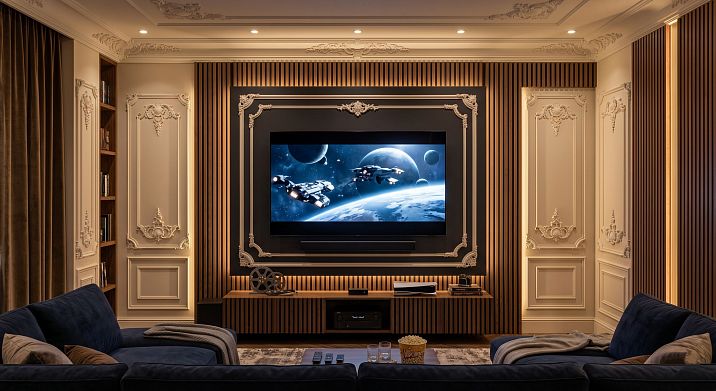
Imagine: you turn off the lights, turn on the projector — and the first thing you see before the movie starts is the wall. If the wall is faceless, gray, without an idea — there is no immersion. There is a screen, there is sound, but there is no atmosphere. And the atmosphere in a home theater is exactly half the impression.
Exactly thereforewooden slats for a home theater, Moldings made of polyurethane, Polyurethane wall decor and properly selected MDF Skirting Boardorwooden — this is not a perfectionist's whim. These are tools that transform a media zone from a "wall with a TV" into a full-fledged cinematic space.
But there is a subtlety here: decor for a home theater works according to special rules. It should be present — but not compete with the screen. Create an atmosphere — but not distract the eye during viewing. Be rich — but not overwhelming. This is a balance that requires understanding. That is what this article is about.


Why the media zone requires a special approach to design
Media Zone is not a living room in the usual sense. It is a stage space where a screen or projector is the absolute protagonist. Everything else—decor, lighting, furniture, wall color—exists as a supporting background.
This basic setup leads to several requirements for the finishing.
First requirement: background neutrality. The wall around the screen or projector should not attract attention. It can be expressive—but only in the off, "daytime" mode. When the screen is on, the wall recedes and becomes a background.
Second requirement: acoustics. Wooden slats with gaps are decor with a function. A structured surface of vertical slats diffuses sound, reducing echo and room boominess. A home theater in a rectangular room without acoustic treatment is a "ringing box." Wooden slats on the side and rear walls partially solve this problem without professional acoustic installation.
Third requirement: darkness. Most projection media zones operate in dim lighting. This means that wall decor is perceived in conditions of almost complete absence of reflected light. Light slats in a dark media zone will "glow"—reflecting the screen's light. Dark ones will dissolve into the space. The choice of slat and finish color is a choice considering lighting scenarios.
Fourth requirement: cables and equipment. A media zone is a concentration area for equipment: projector, receiver, speakers, subwoofer, streaming devices, router. All of this requires cables. A properly organized system of baseboards with cable channels and decorative niches made ofwooden battensolves the problem of hidden cable routing.




Wooden slats in a media zone: six working areas
A media zone is not just one wall. It is a system of several planes, each requiring its own solution. Let's break down each one.
Our factory also produces:





Area on the sides of the screen or projector
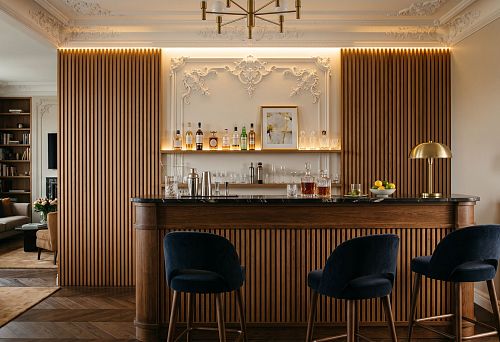
On both sides of the screen are vertical side surfaces. It is here thatthe wooden slats behind the screen work most organically. They create "pilons" — wooden vertical fields on the sides of the media zone, which architecturally frame the screen field.
Parameters for this zone: slat width 25–35 mm, pitch 40–55 mm. Color — dark, matching the overall tone of the media zone. In a dark cinema room: slats made of stained oak or tinted dark gray or anthracite. Gap behind the slats 15–20 mm — for sound diffusion.
These side slatted "pilons" are not only decorative. Behind them, you can place surround system speakers — and the slats will hide the speakers, allowing sound to pass through the gaps. Acoustic fabrics behind the slats — a professional cinema solution in a home format.
Get Consultation
Behind the acoustic speakers: decor + acoustics
Wooden slats for acoustics — a unique solution combining visual decor with a functional acoustic task. On the rear and side walls of the media zone, vertical slats with a wide pitch (50–70 mm) create a diffusing surface. This technique is called a first-order diffuser — a surface with a regular relief diffuses reflected sound waves.
Important: for acoustic effectiveness, the slats must have a gap between themselves and the wall of at least 20 mm. The deeper the gap, the lower the frequencies at which diffusion works. For a home theater, the optimal gap is 25–40 mm.
The wall with the screen: a background that remains silent
The main wall of the media zone — the one where the TV hangs or the image is projected — is an area of strict decorative neutrality. Here, decor yields to function. What is appropriate here?
Option A: solid dark surface. The wall behind the screen is painted in a matte dark color (anthracite, dark gray, dark blue) — with no relief decor. The screen takes center stage.
Option B:slat panel for the media zonemade of dark slats matching the background wall. The slats do not contrast — they create a texture visible only in daylight. When the projector or screen is on, the wall appears as a monolithic dark plane.
Option C:molding frame around the screen — the screen in an architectural frame made ofwooden decorative moldingsor polyurethane. The frame does not compete with the image — it structures the space around it.
Niche with equipment: organized space
In the media zone, there is often a niche: a built-in cabinet, a shelf for the receiver and players, an area for cable management.Wooden slats for the wall with a projectoras "louvered" facades of the niche — this is an elegant solution: the equipment is hidden behind the slats, ventilation is ensured through the gaps, and the niche looks like a decorative architectural element, not like a "shelf with appliances."
The wall behind the sofa: continuation of the media zone
In a home theater where the sofa is opposite the screen, the back wall (behind the viewers) is an acoustically active zone. Reflected sound waves arrive here. And it is here thatvertical wooden slatswith a wide gap provide the greatest acoustic effect — while also serving a decorative function.
The wall behind the sofa in the media zone can be more decoratively active than the wall with the screen. Here you can use a combination of slats and moldings, wooden panels with a frame layout,Polyurethane wall decorin a calm pattern.
Ceiling of the media zone: acoustics and light
The ceiling in the media zone is an area of light and sound concentration. Here there can be built-in ceiling speakers, a projector on a ceiling mount, ceiling lighting for creating ambient illumination.polyurethane ceiling decorin the form of a coffered layout or frame pattern — a way to give the ceiling architectural completeness without adding weight.
Moldings and stucco decor for the media zone: six principles
The principle of "molding does not argue with the screen"
In the media zoneSculptural wall decoration follows the main law: it works in the dark. When the lights are off and the screen is on, all decor disappears. This is not a flaw but an advantage: moldings and slats create atmosphere in daylight and in lighting scenarios "before" and "after" viewing.
Therefore, choose: active decor on the side and back walls — where it does not compete with the screen. On the wall with the screen — minimal or zero decor.
The principle of "molding as a cinematic frame"
Moldings around the screen is a classic technique of cinema halls. In large cinemas, the screen is always framed by an architectural frame — this creates a visual "portal" for immersion in the image. In a home theatermoldings for the media zone reproduce this effect: a screen in a molding frame is not a TV on the wall, it is a portal to another space.
Parameters: molding 30–50 mm wide around the perimeter of the screen with an offset of 5–10 cm. Molding color — matching the wall or slightly darker. Avoid contrasting moldings around the screen: white molding on a dark wall with the screen on creates a "glowing rectangle" around the image.
The principle of "polyurethane decor in the color of the wall"
In the media zoneMoldings made of polyurethanein an absolutely identical dark wall color — relief without contrast. In daylight — an architectural wall with fine geometry of frames. In a dark cinema lighting scenario — a monolithic dark surface. This is an ideal solution for a media zone in "day/night" mode.
The principle of "stucco decor on the periphery"
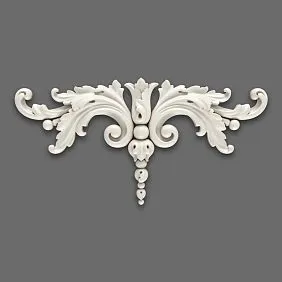
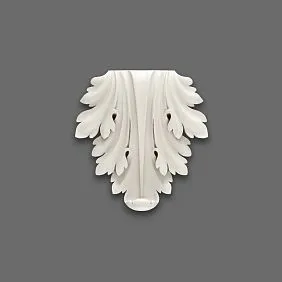
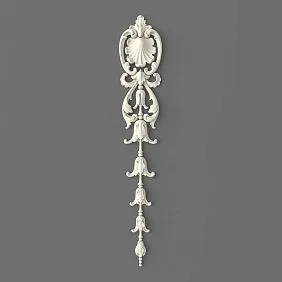
Stucco decor for the media zoneis most appropriate in peripheral areas: side walls, wall behind the sofa, transition to the ceiling. Here, decor does not compete with the screen — here it creates a sense of richness and completeness of the space. Cornice profiles, frame layout of moldings, wooden slatted panels — all of this works in the "framing" zones of the media zone.
The principle of "wooden slats as a textured background"
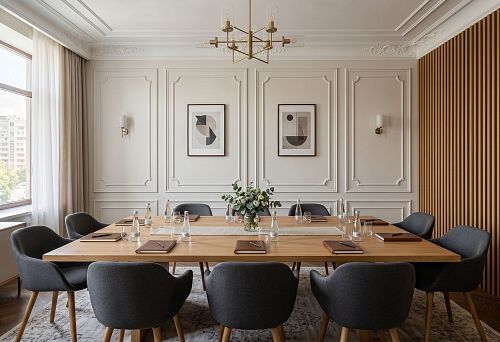
Wooden texture — warm, natural, acoustically active — is an ideal background for a cinema atmosphere.Wooden planks for decorationon the side walls create a textured "coat" of the media zone: with the lights on — a lively wooden interior, with the lights off — a structured dark framing.
The principle of "minimal brightness behind the screen"
No decorative element — neither moldings, nor slats, nor cornices — should be lighter than the main wall in the screen area. Any light spot next to an active screen creates a "halo" — an annoying optical phenomenon that reduces the quality of image perception.
Ceiling cornice for home theater
The media zone ceiling is a separate story. It often houses:
-
Projector on a bracket
-
Ceiling speakers
-
Recessed lights
-
Perimeter lighting
All of this needs to be organically integrated into a single ceiling system without creating visual chaos. The cornice here serves as an architectural guide: it defines the boundary between the ceiling and the wall.
Wooden cornice with LED niche
wooden cornice with a niche for LED strip — one of the best solutions for a home theater. Warm amber light 1800–2200K from behind the cornice creates "cinematic" lighting: soft, diffused, non-glaring. This lighting scenario is used in luxury cinemas — and is easily replicated at home.
Wooden beams with a 70–100 mm profile and an internal shelf for the LED strip provide sufficient niche volume for even light distribution. Important: the strip is installed with an indent of at least 30 mm from the edge of the cornice — so that the direct light source is not visible from a seated position on the sofa.
Polyurethane cornice: profile plasticity
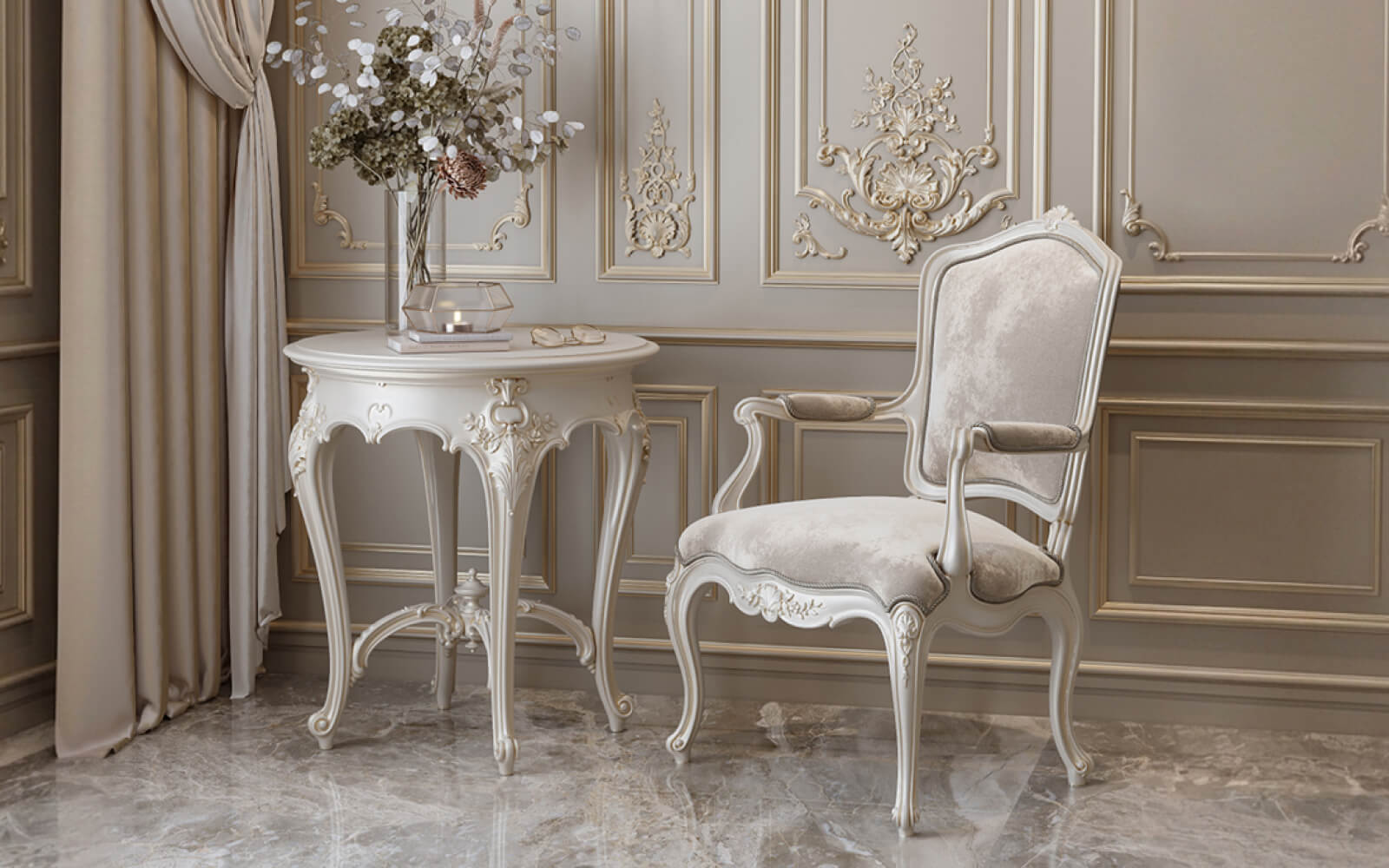
For media zones in art deco style, home theaters in dark saturated tones, interiors with historical styling —polyurethane ceiling decorwith an expressive profile. Polyurethane cornices reproduce complex classical profiles unattainable in wooden moldings — multi-level transitions, cassette profiles, fascias.
For a dark home theater: the polyurethane cornice is painted in a dark matte color — and when the backlight is on, it creates a subtle architectural line without white accents that interfere with image perception.
Cornice for low ceilings
Home theaters are often located in basements, attics, converted garages — rooms with non-standard or limited height. For ceilings up to 2.5 m: a thin straight molding 25–35 mm in the dark color of the ceiling — a delicate perimeter marking without losing height. No massive cornice: it will "weigh down" an already low ceiling.
| Ceiling Height | Cornice recommendation |
|---|---|
| Up to 2.5 m | Thin molding 25–30 mm in ceiling color |
| 2.5–2.8 m | Wooden cornice 50–70 mm with LED niche |
| 2.8–3.2 m | Wooden or polyurethane 70–100 mm |
| from 3.2 m | Cornice 100–130 mm with multi-level profile |
Baseboard for home theater: lower contour of media zone
In a media zone, the baseboard is a boundary that is constantly visible: both in daylight and in the semi-darkness of a movie session (in the reflection of floor lamps or hidden lighting). There is no room for carelessness here.
MDF baseboard for painting — for a dark media zone
— is a horizontal element that frames the room at the bottom of the walls where the wall meets the floor. Skirting boards perform several functions: they hide the technological gap between the wall and floor covering (necessary for thermal expansion), protect the lower part of the wall from mechanical damage, create visual completion, and may conceal wiring. — an ideal choice for media zones in dark tones. The baseboard is painted to match the exact wall color — and the lower boundary of the media zone becomes monolithic: the wall and baseboard form a single dark plane. In the dark with the screen on, there is no light horizon at the floor distracting the eye.
MDF Skirting Board with a cable channel — an additional advantage for the media zone: power, audio, and HDMI cables from wall sockets to the media cabinet are laid in the baseboard groove. This provides a clean lower line of the media zone without protruding wires.
Wooden baseboard — for a media zone with wooden slats
If the media zone is finished withwooden planks dark oak, thenWooden baseboard of the same species and tinting is the only correct lower contour. One species from floor to the top of the slatted panel: baseboard — slats — cornice. This is a system of material rhyme that makes the media zone visually cohesive.
with a classic profile creates a sense of solidity, reliability. with stained oak or dark ash — for media zones in loft, dark neoclassical, industrial styles with warm accents.
Wide wooden baseboard — for a premium cinema room
Wide Wooden Skirting Board80–120 mm — for home theaters in country houses, mansions, premium-class apartments. The wide front surface creates a sense of architectural solidity: the lower part of the wall feels weighty, the space seems serious. Combined with dark slats and an expressive cornice, this forms a complete vertical system for a premium cinema room.
Baseboard in wall color for a minimalist media zone
For media zones in the "black box" concept (walls, ceiling, floor — a single dark tone) —Baseboard MDFin the exact wall color. The baseboard blends into the wall — no light bottom line, no color breaks. The space is perceived as a single dark volume, which maximally aligns with cinema aesthetics.
Molding, corners, and bars: installation culture of the media zone
In a media zone, decorative installation is a profession. Every detail is visible: ends of slats, junctions with niches, transitions between decorative zones. Unprofessional installation destroys the cinema atmosphere as badly as poor sound.
Wooden bar: load-bearing base and decorative element
Wooden blockperforms several tasks in the slat system of the media zone: load-bearing lathing, covering strip for slat ends, frame element for decorative zones. In a media zone with equipment niches —Wooden blockas vertical niche posts: creates a wooden "portal" around the built-in cabinet.
The horizontal bar as the bottom closing strip of the slatted panel also performs a cable function: behind it, horizontal cable routes are laid from the entry point to the exit points.
Wooden corner: precision at every corner
In the media zone, corners are especially vulnerable: different planes, different materials, and different decorative solutions meet here.Wooden angleon all external corners of slatted panels — a mandatory element. In the dark media zone — a corner piece with the same tint as the slats: a monolithic dark corner that does not attract attention.
Molding products for the media zone
wood trim itemsin the media zone cover all junctions: the slatted panel to the door, to the niche with equipment, to the acoustic panel, to the side wall. Every open joint in the media zone is visual "noise" that disrupts the holistic perception of the space.Trimming Itemseliminate this noise.
Five ready-made home theater design systems
The "Dark Cinema" system
Concept: complete immersion. All surfaces are dark.
Screen wall: matte anthracite, no decor. Dark— is a horizontal element that frames the room at the bottom of the walls where the wall meets the floor. Skirting boards perform several functions: they hide the technological gap between the wall and floor covering (necessary for thermal expansion), protect the lower part of the wall from mechanical damage, create visual completion, and may conceal wiring.in the color of the wall.
Side walls:Wooden planks smoked oak, 30 mm, pitch 45 mm, gap 25 mm. Acoustic fabric behind the slats. It is recommended on the sidesWooden angle.
Back wall:Rack panel of dark slats — wide pitch 60–70 mm for maximum acoustic diffusion.
Crown molding:wooden cornice 80 mm with LED niche (amber 1800K) around the entire perimeter.
Skirting board:Wooden baseboard smoked oak 80 mm.
Result: a professional home theater. Dark, acoustically treated, with atmospheric perimeter lighting. Cinema here is an event.
Living Room-Cinema System
Concept: a media zone that works both as a living room and a cinema.
Screen wall:molding frame around the screenmade of polyurethane in the color of the wall (dark blue). Thin profile 30 mm. On the sides of the screen —Wooden planksof natural oak as “pillars”.
Side and back walls:Polyurethane wall decorwith a frame layout in the color of the wall.
Crown molding:wooden cornice70 mm with LED niche (warm white 2700K).
Skirting board:Wooden baseboard70 mm, natural oak.
Result: a media zone that looks like a living room with character in daylight — and turns into a cozy home theater when the lights are off.
“Art Deco Cinema Room” system
Concept: 1930s luxury, gold and dark tones.
Wall with screen: dark green “bottle” color.Decorative wooden moldingsaround the screen in dark oak. Geometric layout of moldings on both sides of the screen — symmetrical Art Deco diamonds and rectangles.
Side walls:Wooden planksdark oak, vertical, 50 mm spacing. Between the slatted zones —Polyurethane wall decorwith a geometric pattern.
Cornice: polyurethane with a classic profile —Polyurethane Itemsin a dark gold tone.
Skirting board:Wide Wooden Skirting Board100 mm, dark oak.
Result: a home theater worthy of the Hollywood era. Luxurious, dark, geometrically complex.
Scandinavian Media Zone system
Concept: light, natural, with an emphasis on wood.
Wall with screen: gray-beige matte color. No decor on the wall itself. The screen is simply on a neutral background.
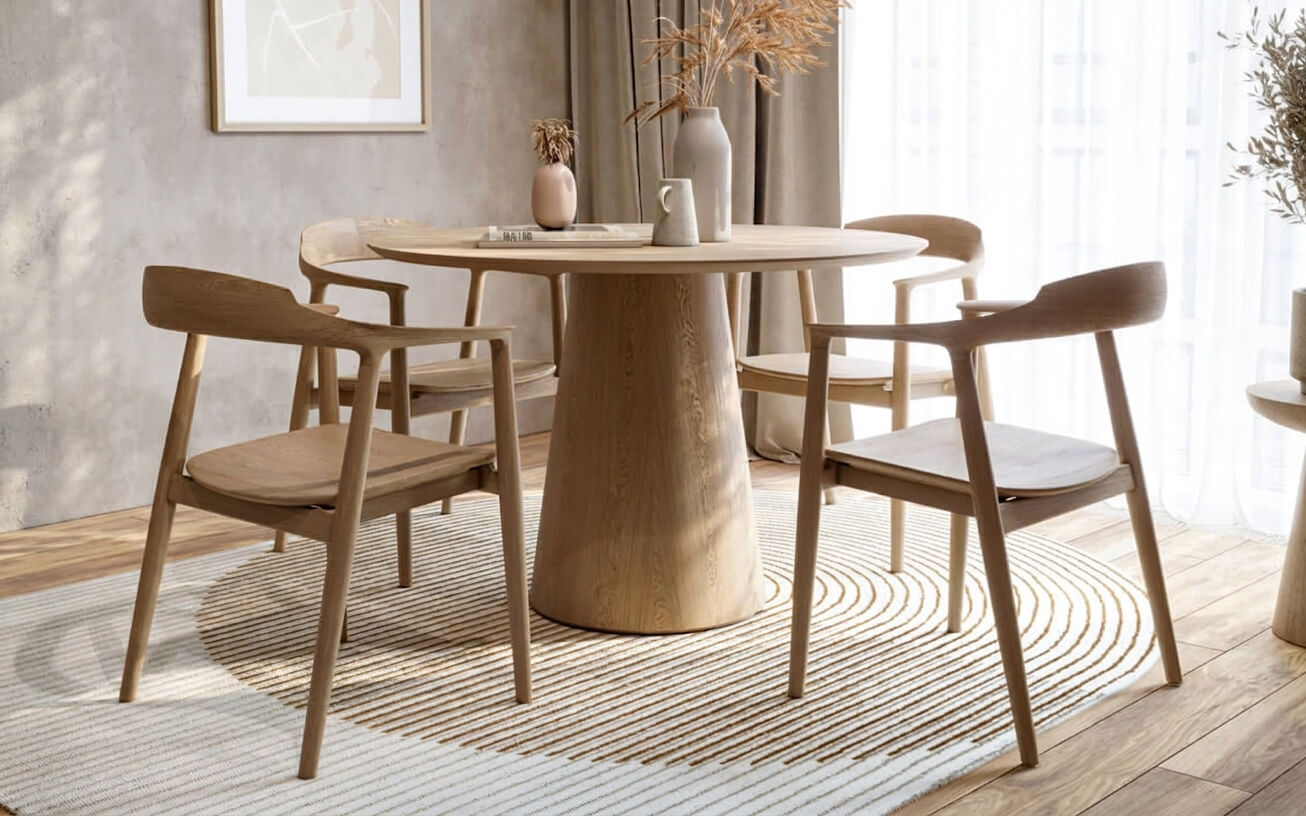
On the sides of the screen:wooden slats in the media zone made of bleached oak, width 20 mm, spacing 30 mm — light, airy.
Back wall:Rack panel made of ash, horizontal slats.
Cornice: thin molding 30 mm in white.
Skirting board:Wooden baseboard ash, 55 mm, natural.
Result: light, modern media zone. Wood as the only material accent. Light, airy, Scandinavian style.
Loft Cinema System
Concept: industrial space with warm wooden accents.
Wall with screen: brick (real or decorative tile). No moldings.
On the sides:Wooden planks raw or lightly toned oak on a metal bracket (open mounting).
Back wall:slat panel for the media zone dark oak — horizontal rhythm.
Cornice: metal profile orwooden cornice dark color with hidden lighting.
Result: a loft home theater with an industrial character and natural wood as a counterpoint.
Eight mistakes when designing a home theater
Too active background behind the screen
Bright contrasting slats, light moldings, decorative rosettes near the screen — all of this distracts the eye from the image. The wall with the screen should be decoratively neutral.
Fine-pitch slats create a flickering effect
15 mm slats with 15 mm spacing under variable screen lighting create optical noise. The fine rhythm "flickers" as film light scenes change. The minimum spacing for a media zone is 40 mm.
Exposed ends of wooden slats
Especially critical in the media zone: ends facing a walkway or a niche with equipment are constantly visible.Wooden blockas a cover strip andWooden angleat every corner — are mandatory.
Contrasting white baseboard in a dark media zone
WhiteMDF Skirting Boardin a dark media zone — this creates a "glowing horizon" near the floor when the screen is on. The baseboard should match the wall color or be darker.
Massive cornice with a low ceiling
wooden cornice130–150 mm with a 2.5 m ceiling "weighs down" the home theater. The cornice scale must be strictly proportional to the height.
Multiple wood shades
Bleached oak slats, dark oak cornice, walnut baseboard — three competing wood shades in one space. One species — one tint for all wooden elements.
Cables and equipment not accounted for when designing the decor
The slatted panel is installed — and only then it turns out that the power outlet behind the slats is not brought out. Or there is nowhere to route the HDMI cable. Planning cable routes — before installing the decor.
Overload: slats + stucco + bright lighting + active color
Four competing accents in one media zone — this is visual chaos. Media zone rule: one dominant decorative technique. Wooden slats — dominate, moldings — support. Or moldings — dominate, slats — textured background. Not all four elements at once.
About the company STAVROS
For those creating a home theater, media zone, or cinema room with character, STAVROS offers a full range of decorative elements proven in real projects.
In the STAVROS catalog:Wooden planks made of solid oak and beech for acoustic and decorative panels,Rafter panels for quick installation on any wall. For stucco and molding decor —Decorative wooden moldings, Moldings made of polyurethane, Polyurethane wall decorandpolyurethane ceiling decor.
For ceiling framing —wooden corniceandWooden beamswith profiles for LED backlighting, from 50 to 130 mm. For the lower contour —MDF Skirting Board for painting and Wooden baseboardin a wide selection of species and profiles.
For precise installation —Wooden block, Wooden angleandwood trim itemsfor all joints and junctions. The full rangepolyurethane productsfor classic decor.
At STAVROS — everything to make your home theater a true cinematic space.
FAQ: answers to questions about the media zone
Which wooden slats to choose for a home theater?
For a dark media zone — dark stained oak or ash, width 25–35 mm, spacing 40–55 mm. For a light living room theater — natural or bleached oak. The main condition for all: spacing at least 40 mm, gap behind the slats 20–25 mm for acoustic function.
Can wooden slats be placed directly behind the screen or projector?
Directly behind the screen is not recommended if the slats contrast with the background. Optimal: slats on the sides of the screen, a dark neutral wall under the screen. If the slats match the background wall, they are acceptable behind the screen.
Do you need a special curtain rod for a home theater?
For ambient lighting, a cornice with an LED niche. This allows for a "cinematic" lighting scenario: soft amber light around the perimeter of the ceiling. If backlighting is not planned, a thin molding in the color of the ceiling is sufficient.
Which baseboard to choose for a dark media zone?
MDF for painting in the exact color of the wall. A monolithic dark lower contour does not create a "light horizon" near the floor when the screen is on. If there are dark oak wooden slats in the media zone, a wooden baseboard of the same tint.
Do wooden slats help with acoustics?
Yes, partially. Slats with a gap from the wall scatter high-frequency reflections, reducing echo. For full acoustic treatment, absorbent materials are needed behind the slats. Slats plus an acoustic porous panel behind them is the optimal combined solution.
How to properly close the ends of wooden slats in a media zone?
At the top and bottom, a closing horizontal plank made of a wooden block. On the sides, a vertical wooden corner or block. For niches with equipment, wooden trim pieces at all junctions.
What to do with cables when installing slatted panels in a media zone?
Cable routes are planned before panel installation. Horizontal routes are in the space behind the battens (on the supporting lathing). Vertical outlets are at the installation points of sockets and exits. A skirting board with a cable channel covers the horizontal cable run near the floor.