































Article Contents:
- The wall at the head: why it defines everything
- Seven solutions for an accent wall behind the bed
- Solution 1: Vertical slats from floor to ceiling
- Solution 2: Molding frame around the bed
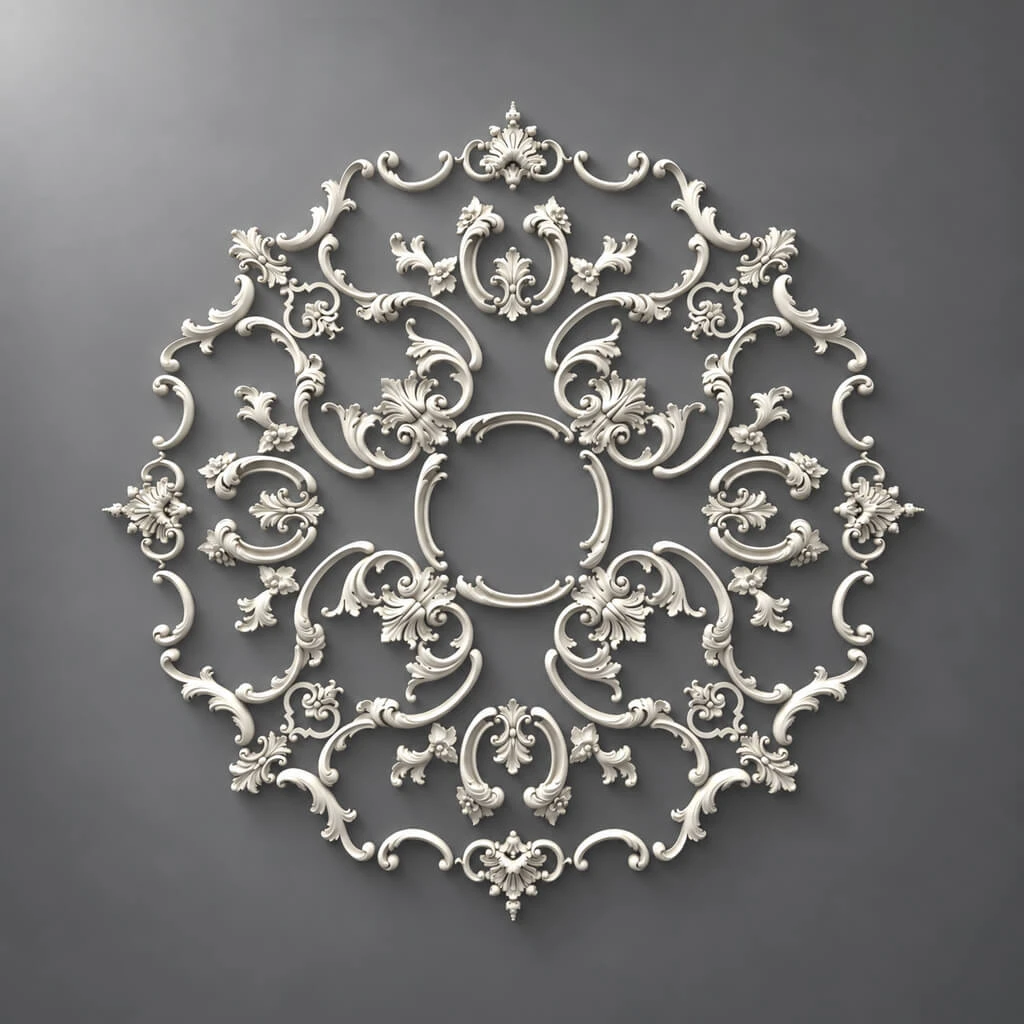
- Solution 3: Stucco frame behind the headboard
- Solution 4: Slats on the sides, moldings in the center
- Solution 5: Wooden slats behind the bed with lighting
- Solution 6: Moldings in the color of the wall — "quiet architecture"
- Solution 7: Slat panel as a backdrop behind a soft headboard
- How to combine wooden slats and stucco molding in the bedroom
- Five working combination schemes
- Ceiling cornice in the bedroom: the upper border of the accent wall
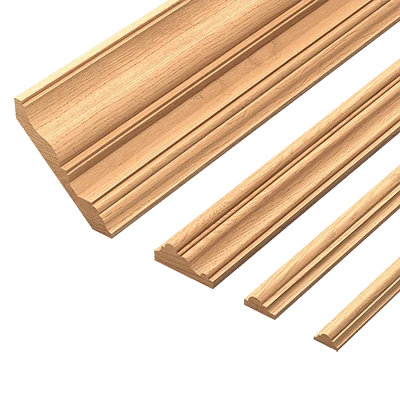
- Wooden cornice: a warm choice
- Polyurethane cornice: plasticity and classics
- Cornice as part of the accent wall
- Choosing a cornice by style and height
- Baseboard for a bedroom with an accent wall: the lower contour that completes everything
- MDF baseboard: versatile, clear, reliable
- Wooden baseboard for slatted wall
- Wide wooden baseboard for master bedroom
- How to choose a baseboard for your bedroom type
- Molding, corners, and strips: why installation precision matters
- Why you need a wooden corner
- The role of a wooden strip in a slat system
- Molding products: everything about junctions
- Eight ready-made bedroom design systems
- Warm Scandinavian system
- Modern neoclassical system
- Dark study / master bedroom system
- Backlit Slat System
- Classic Stucco Frame System
- Slats + Moldings in Color System
- Three-Material System
- Countryside System
- Seven Mistakes When Decorating a Wall Behind the Headboard
- Slats Too Close Together — a Cage-Like Feel
- Large Stucco Next to an Expressive Upholstered Headboard
- Exposed Ends of Wooden Slats
- Baseboard Stops at the Accent Wall
- Cornice Not Integrated into the Overall Composition
- Different shades of wood
- Too bright backlight behind the slats
- About the Company STAVROS
- FAQ: answers to questions about designing the wall at the headboard
Close your eyes and imagine a bedroom you want to stay in. Not the one you saw in a catalog with perfect lighting, but a real one — lively, warm, with character. What makes it that way? In most cases, the answer is the wall behind the bed. The one that catches your eye first, as soon as you cross the threshold. The one visible above the pillow when you wake up. The one that carries the entire visual weight of the bedroom.
It is the wall at the headboard that is the main architectural accent of any bedroom. And it is here thatwooden slats for the bedroom, Moldings made of polyurethane, Sculptural wall decoration and properly selected Wooden baseboardwork as a single architectural system. Not just 'something on the wall,' but a well-thought-out composition that turns the bedroom into a space with atmosphere.
Let's break this down in detail — with diagrams, materials, proportions, and honest answers to all the questions that arise while working on the bedroom.
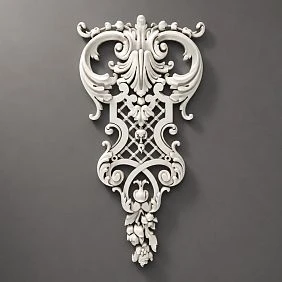
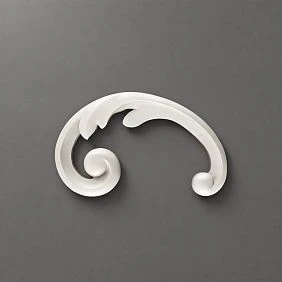
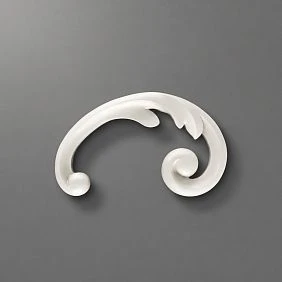
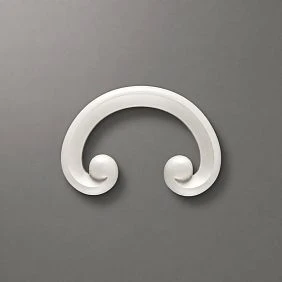
The wall at the headboard: why it defines everything
Ask yourself: if you remove all the furniture from the bedroom, what remains defining? That's right — the walls. And of all the walls, the one behind the bed carries the greatest semantic load.
There are several reasons, and all of them are practical.
Geometry of perception. The bed is placed flush against the wall or close to it. This means the distance between a person sitting on the bed and the wall is minimal. Decor on this wall is perceived as large and detailed. Everything is noticeable here: the quality of the molding, the shade of the slat, and the precision of installation.
Photogenicity. The wall behind the bed is the first thing that enters the frame when photographing a bedroom interior. Any photo on social media, in an interior design blog, or in a designer's portfolio features the wall behind the headboard. Architectural completeness is important here.
Psychology of space. Upon waking, a person first sees the ceiling and the wall opposite or adjacent, depending on the bed's position. The first seconds after waking shape the mood. A calm, well-thought-out, beautiful wall behind the headboard literally influences how the day begins.
Balance of the entire interior. In a bedroom, the accent wall is an anchor. It holds the entire space together, preventing it from feeling scattered. Without an accent behind the headboard, the bedroom feels unfinished, even with expensive furniture and beautiful textiles.
That is why working on the wall at the headboard is not a suggestion but a necessity for any bedroom aiming for completeness.

Seven solutions for an accent wall behind the bed
There is no single universal design option. Each bedroom has its own ceiling height, size, lighting, and style. But there are seven basic schemes that work in most situations.
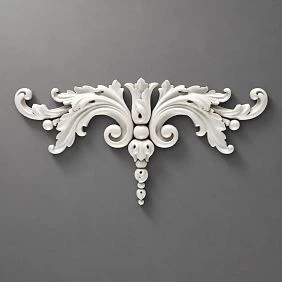
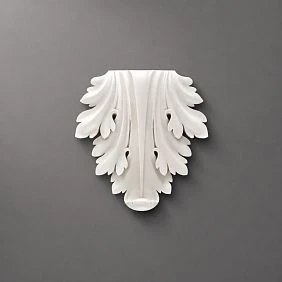
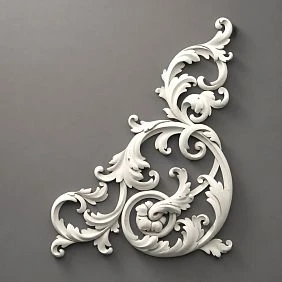
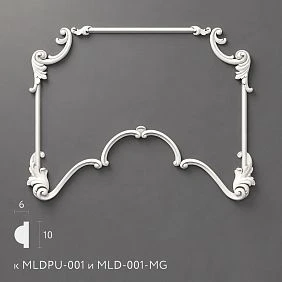
Our factory also produces:

Solution 1: Vertical slats from floor to ceiling
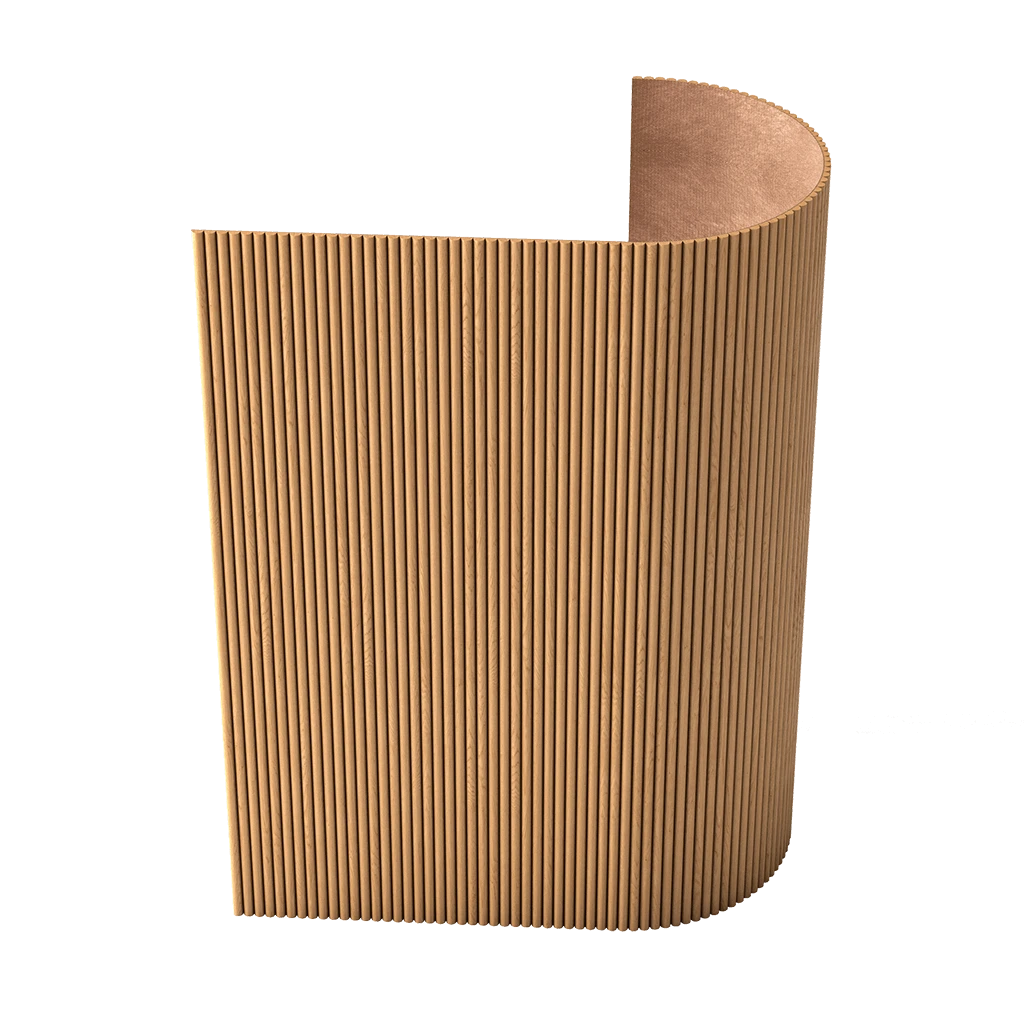
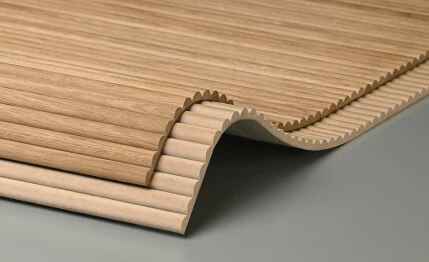
The most powerful and expressive technique isvertical wooden slatsacross the entire height of the wall from the baseboard to the ceiling cornice. This option creates an illusion of height: the vertical line visually 'raises' the ceiling even at standard 2.5 m.
Parameters for the bedroom: slat width 20–30 mm, spacing 30–50 mm, height — full wall height. Wood species: oak, beech, ash. Tinting: from natural to medium-dark. Very dark slats in the bedroom feel oppressive — neutral, warm shades are preferable.
The slats are mounted on a supporting lathing made ofwooden batten with a gap of 15–20 mm. This gap is important: it creates shadows between the slats, making the wall "breathe" — it doesn't look flat, but alive.
How to finish the wall at the top and bottom? At the top — a horizontal covering strip made ofwooden battenorwooden cornice. Below —Wooden baseboardorMDF Skirting Board, covering the bottom end of the slats. On the sides —Wooden angleorWooden block as a vertical frame.
Get Consultation
Solution 2: Molding frame around the bed
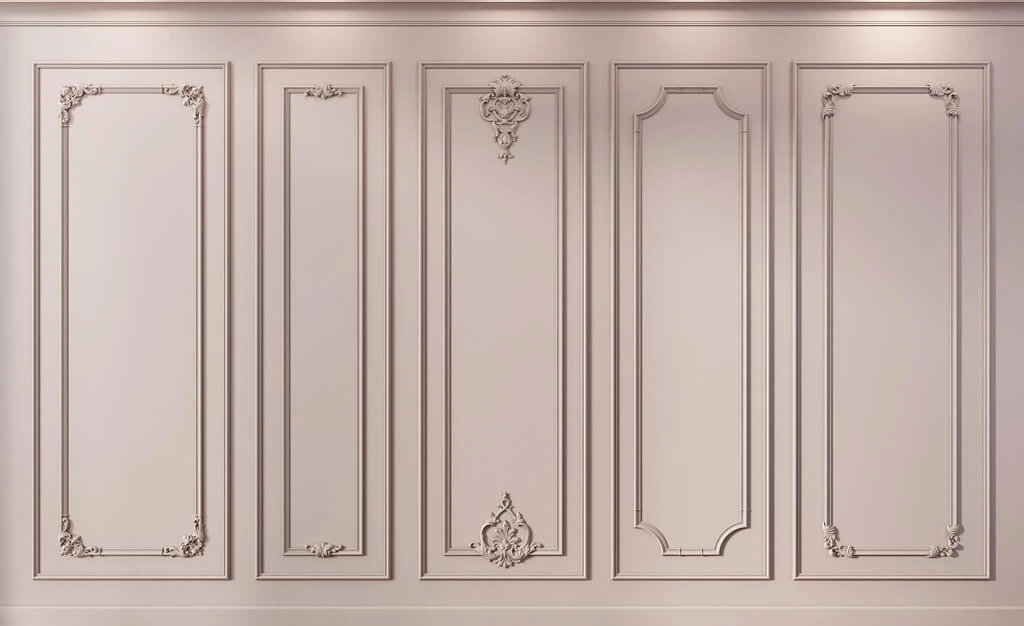
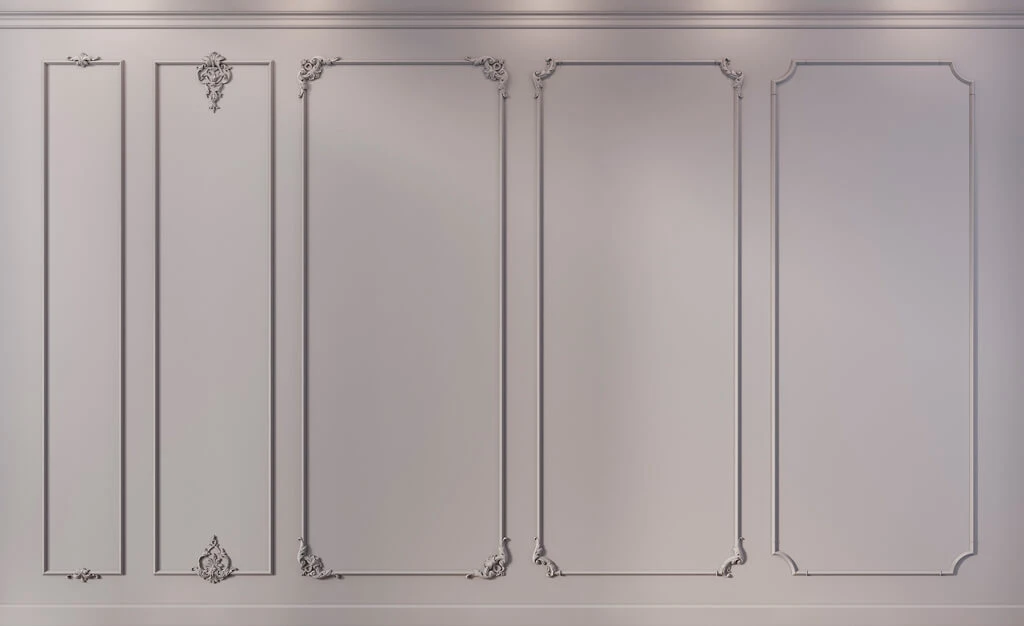
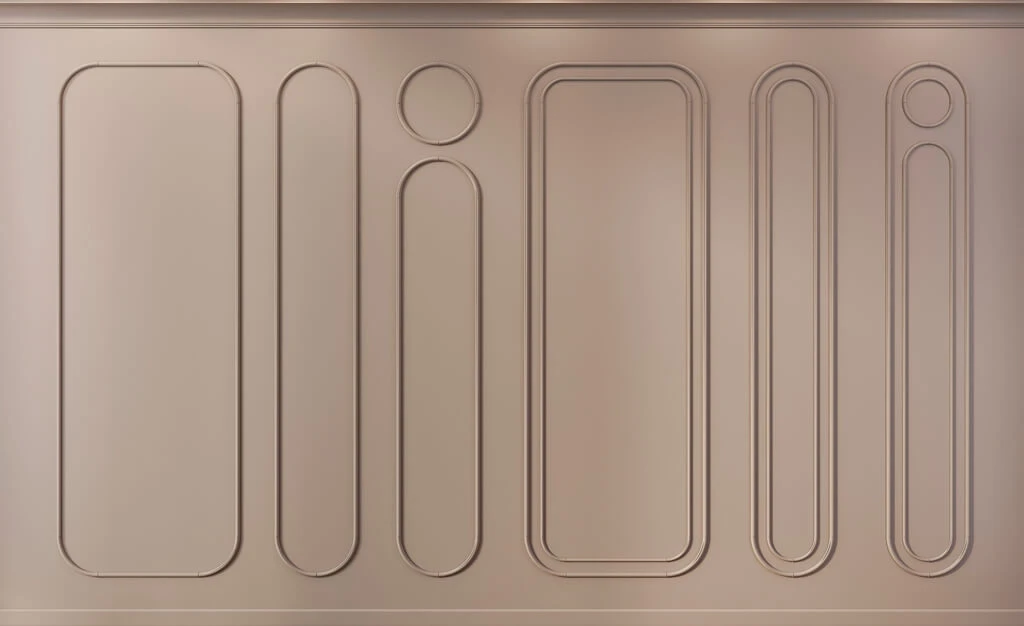
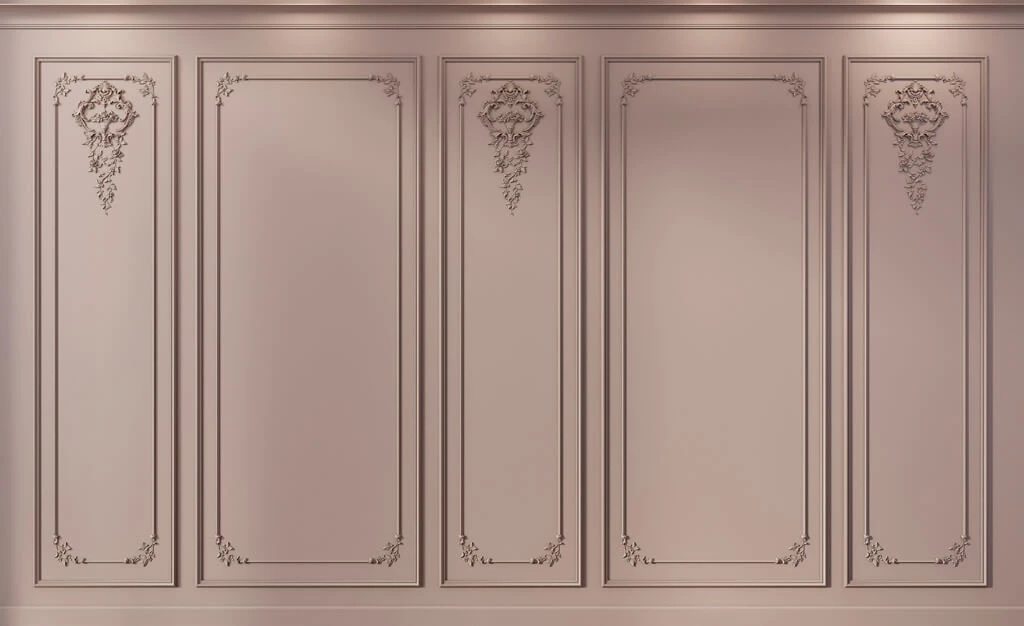
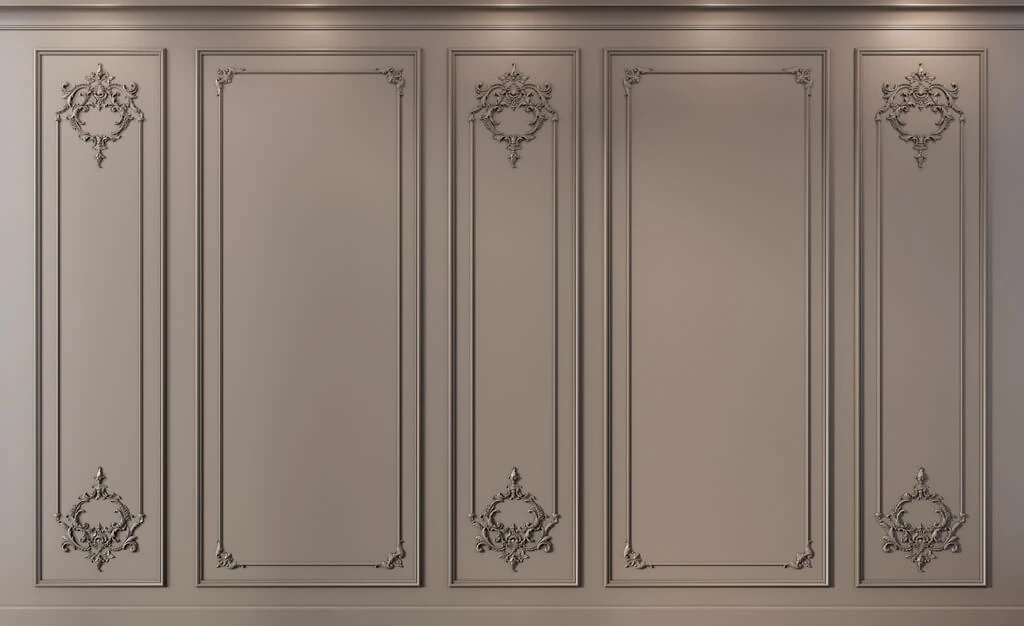
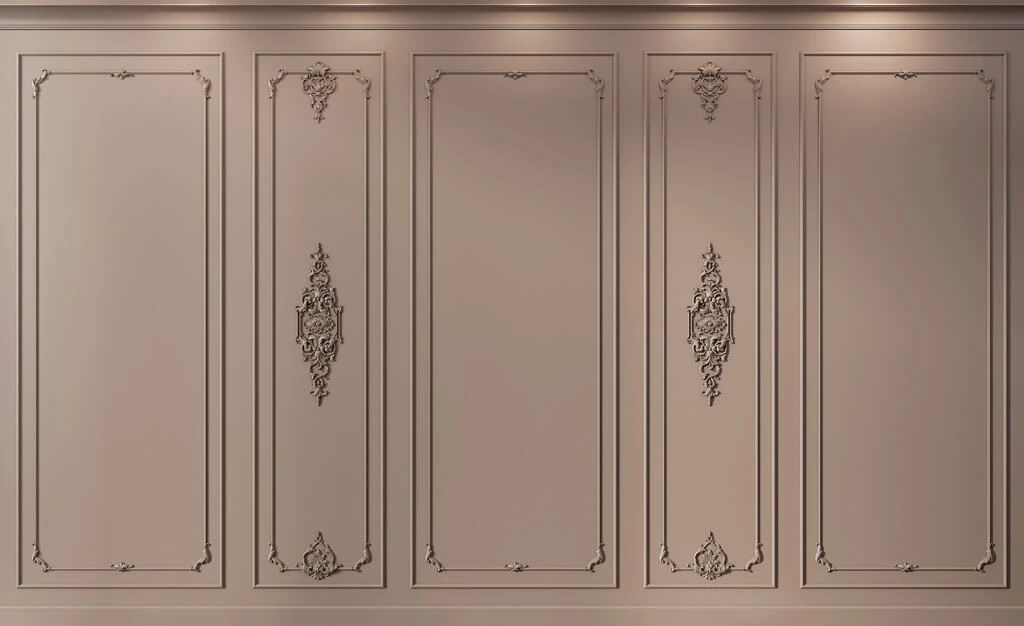
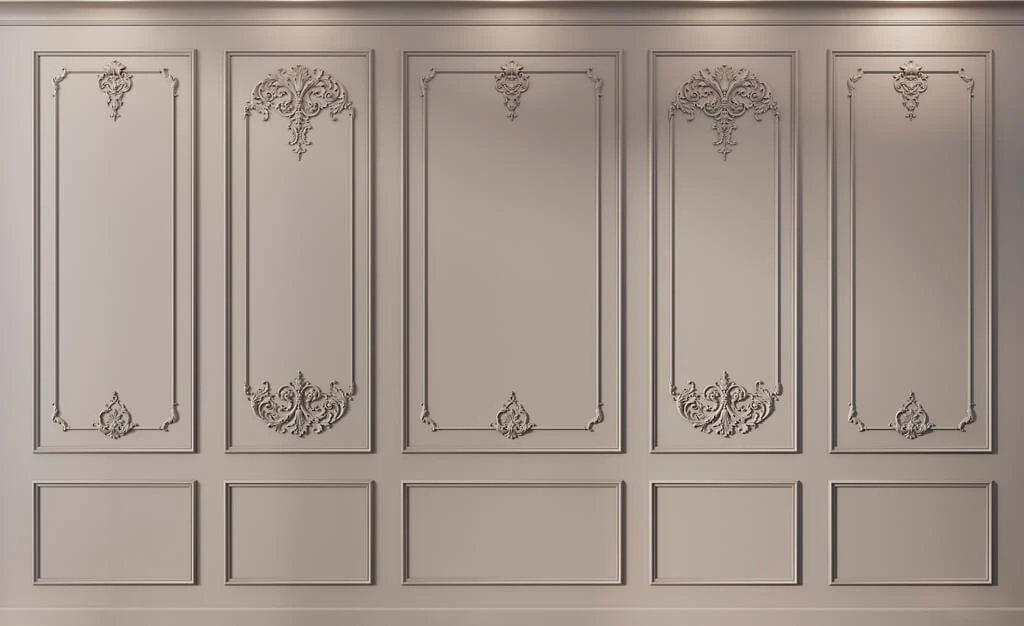
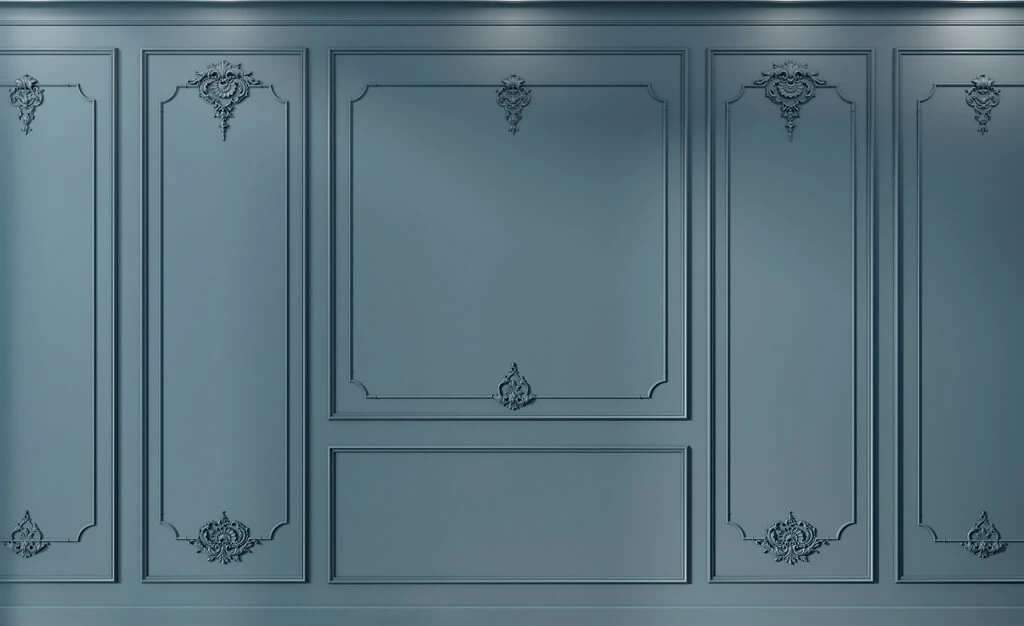
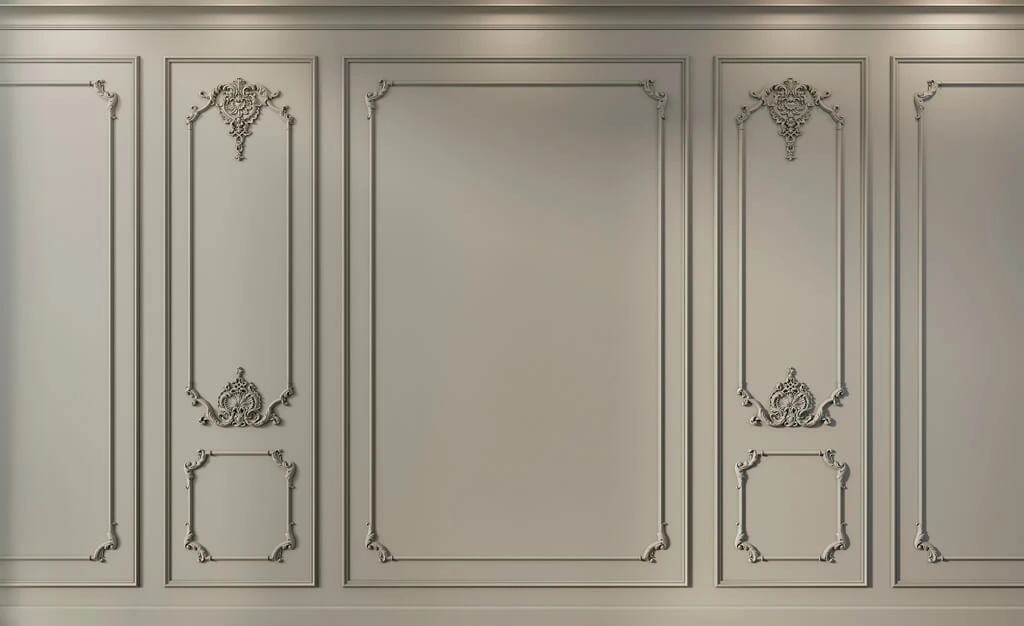
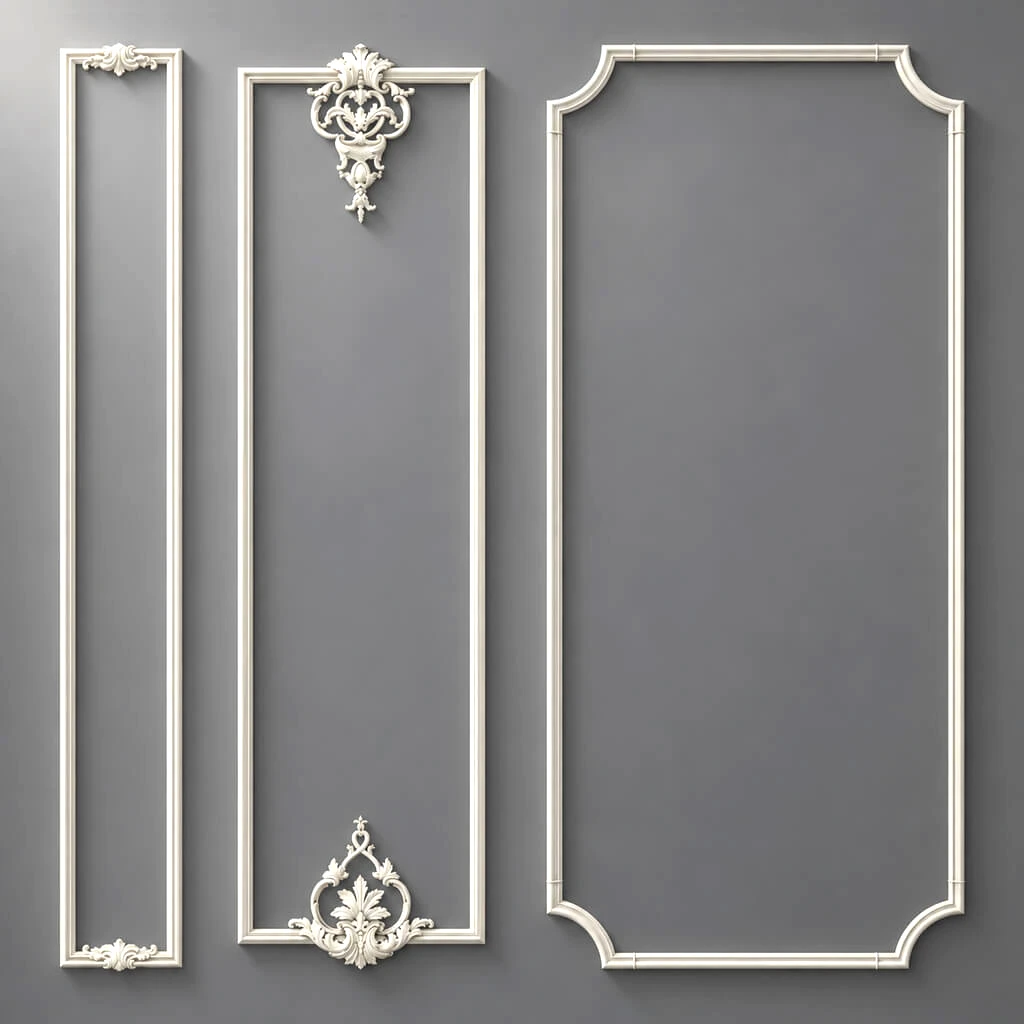
An exquisite, classically elegant solution.Moldings at the head of the bed create an architectural "frame" in which the bed is placed as the main object — like a work of art in a gallery setting.
Scheme: around the bed area — molding frames of different scales. A large outer frame from floor to ceiling (the width of the bed plus 50–80 cm on each side), one or more inner frames creating a multi-level layout. The upper part —Polyurethane wall decorin the form of a horizontal frame or belt.
This option is ideal for neoclassicism, modern classicism, French style, and "New York" apartment interiors. Moldings in the color of the wall create "invisible architecture" — the relief is read through shadow, not color. Moldings in a contrasting color are a bolder, accent solution.
Solution 3: Stucco frame behind the headboard
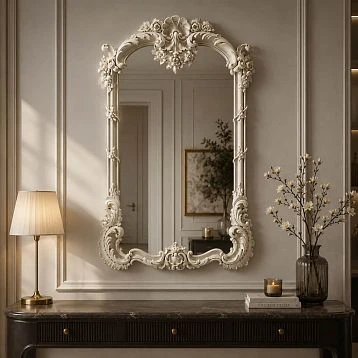
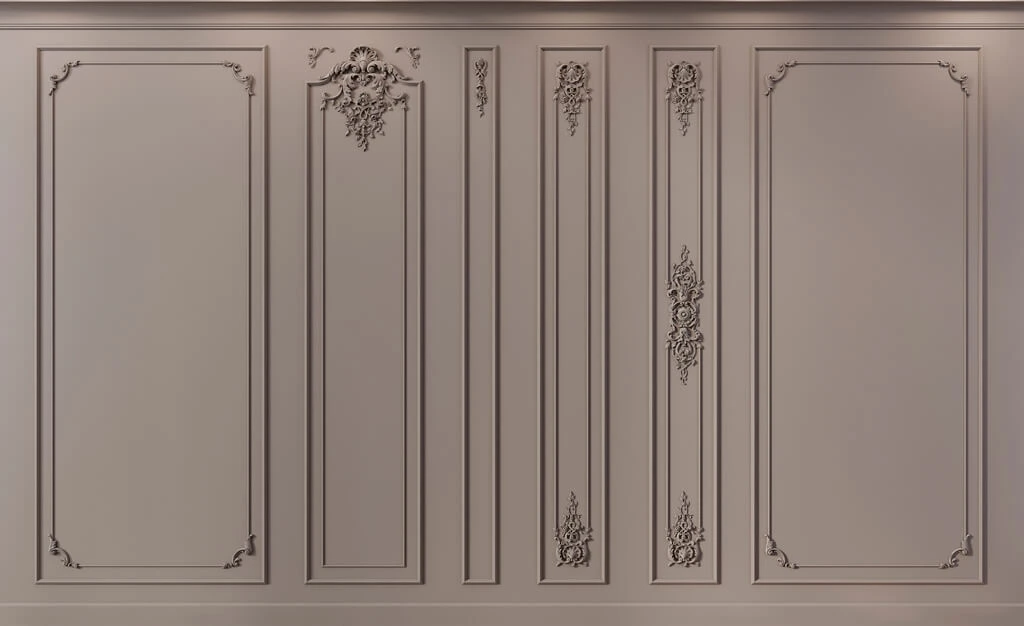
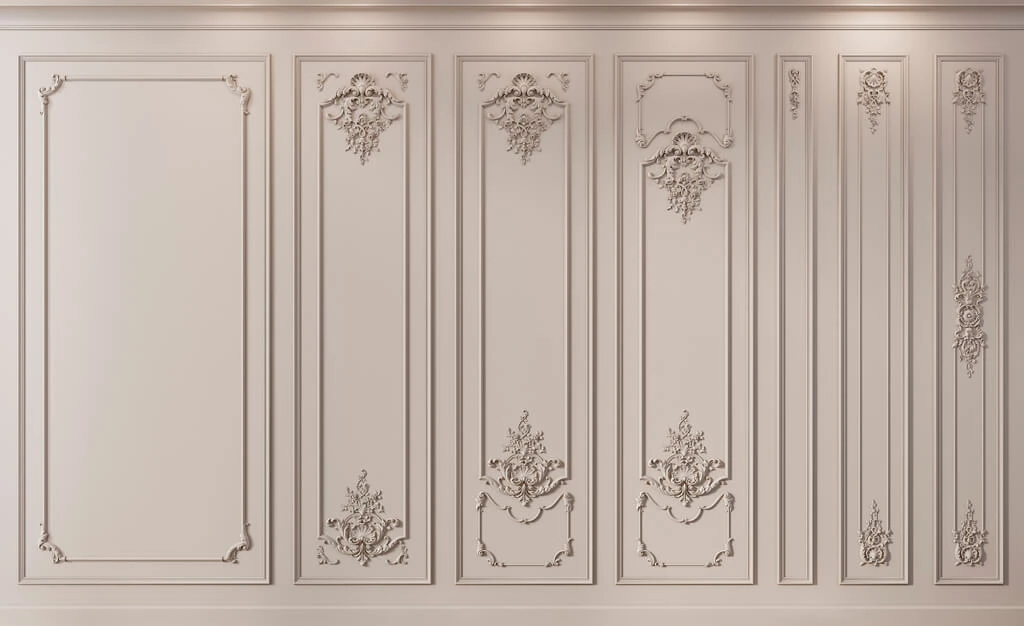
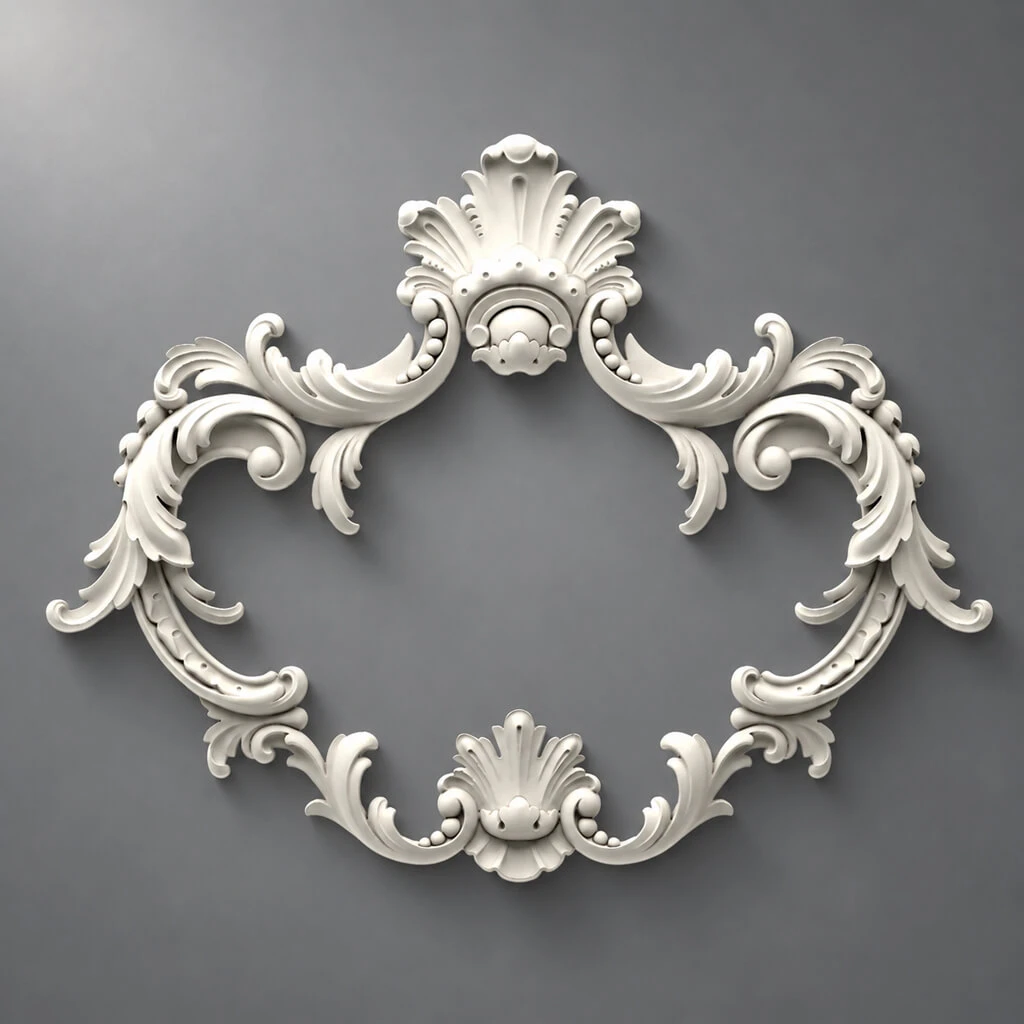
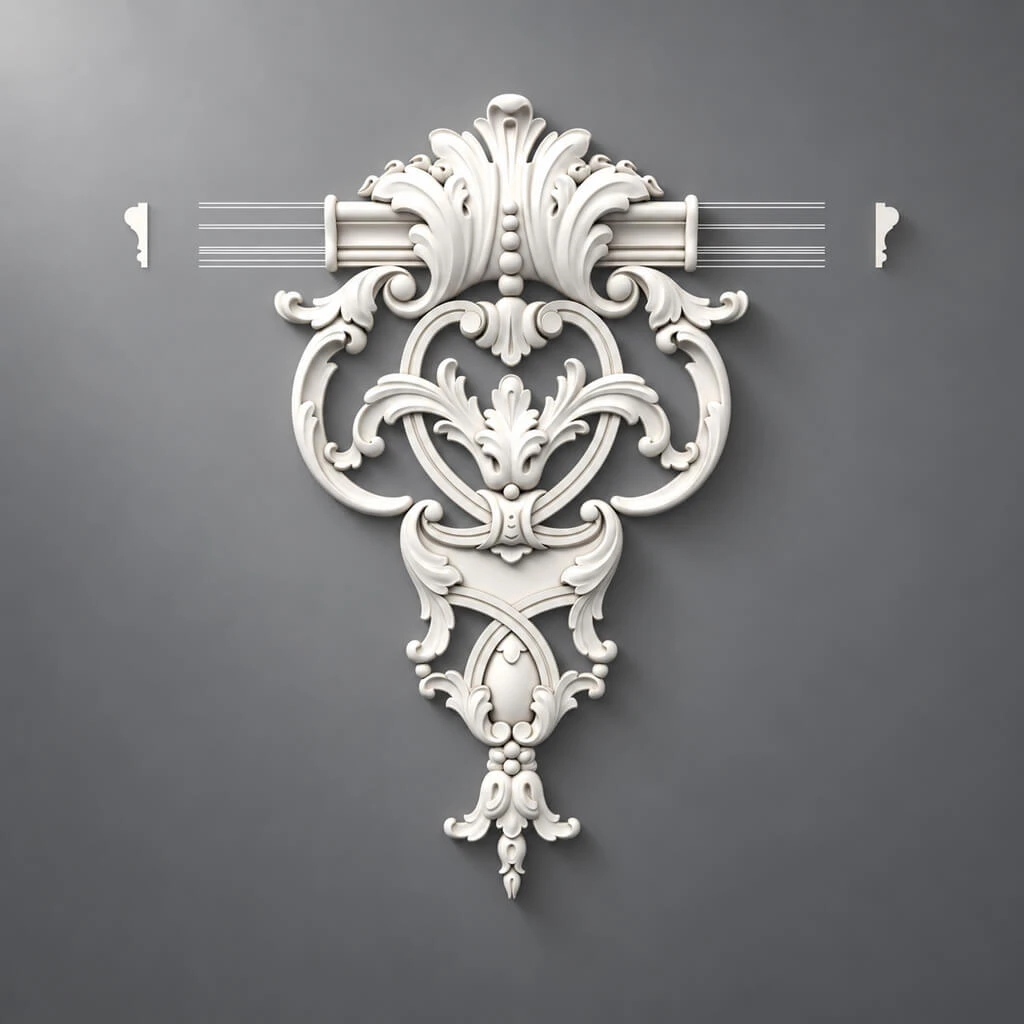
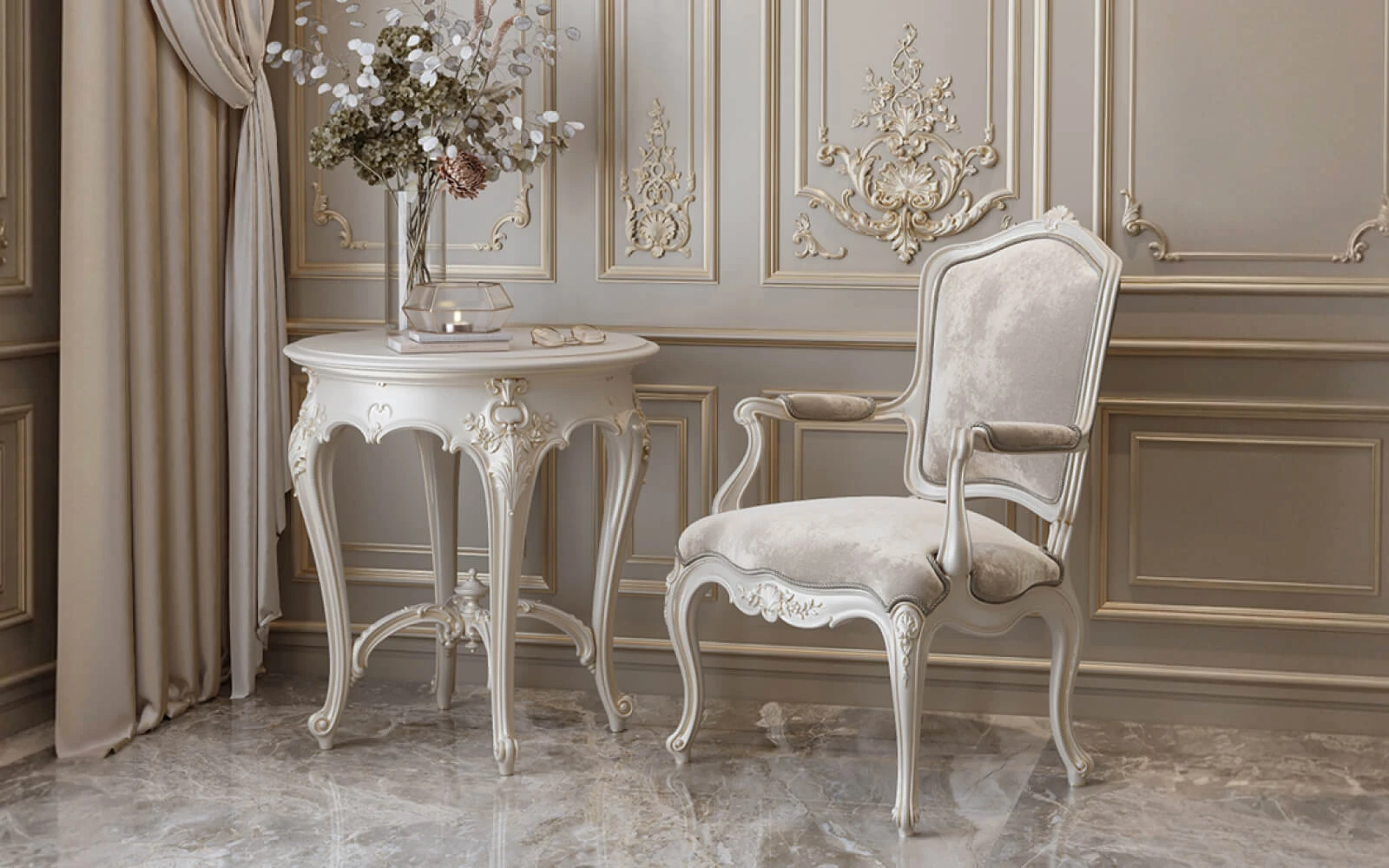
Stucco decor at the head of the bedin the form of an expressive frame — this is historically one of the oldest interior techniques. In the bedrooms of Italian villas, French castles, English estates — there was always a stucco frame or architectural portal above the bed.
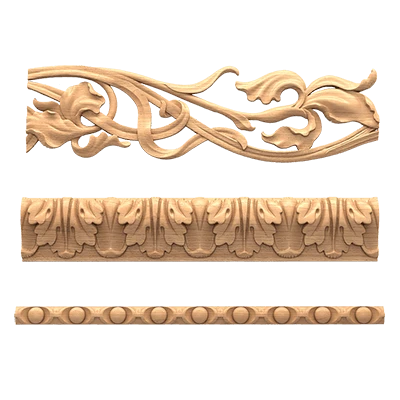
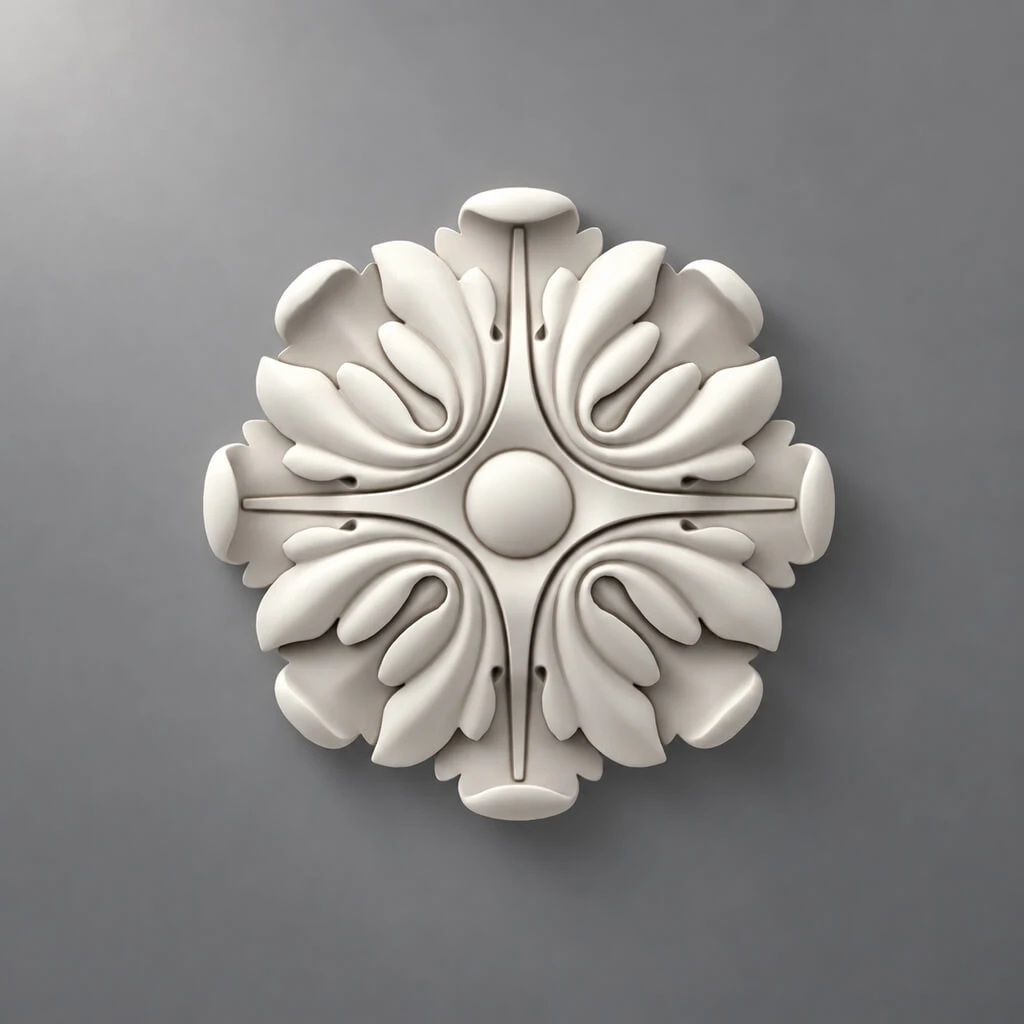
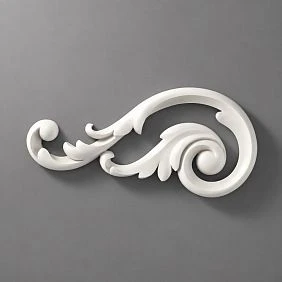
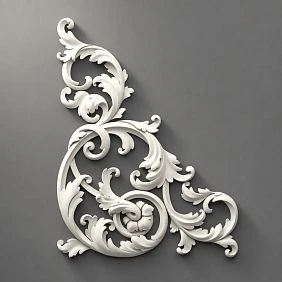
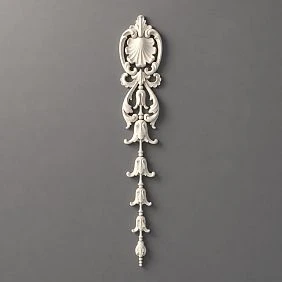
Modern version:Stucco decor for the bedroommade of polyurethane. This is a lightweight, precise in pattern, easy-to-install material. The frame is mounted on the wall with glue — without complex work, without dust, without chasing. The result is an architectural accent with historical connotations.
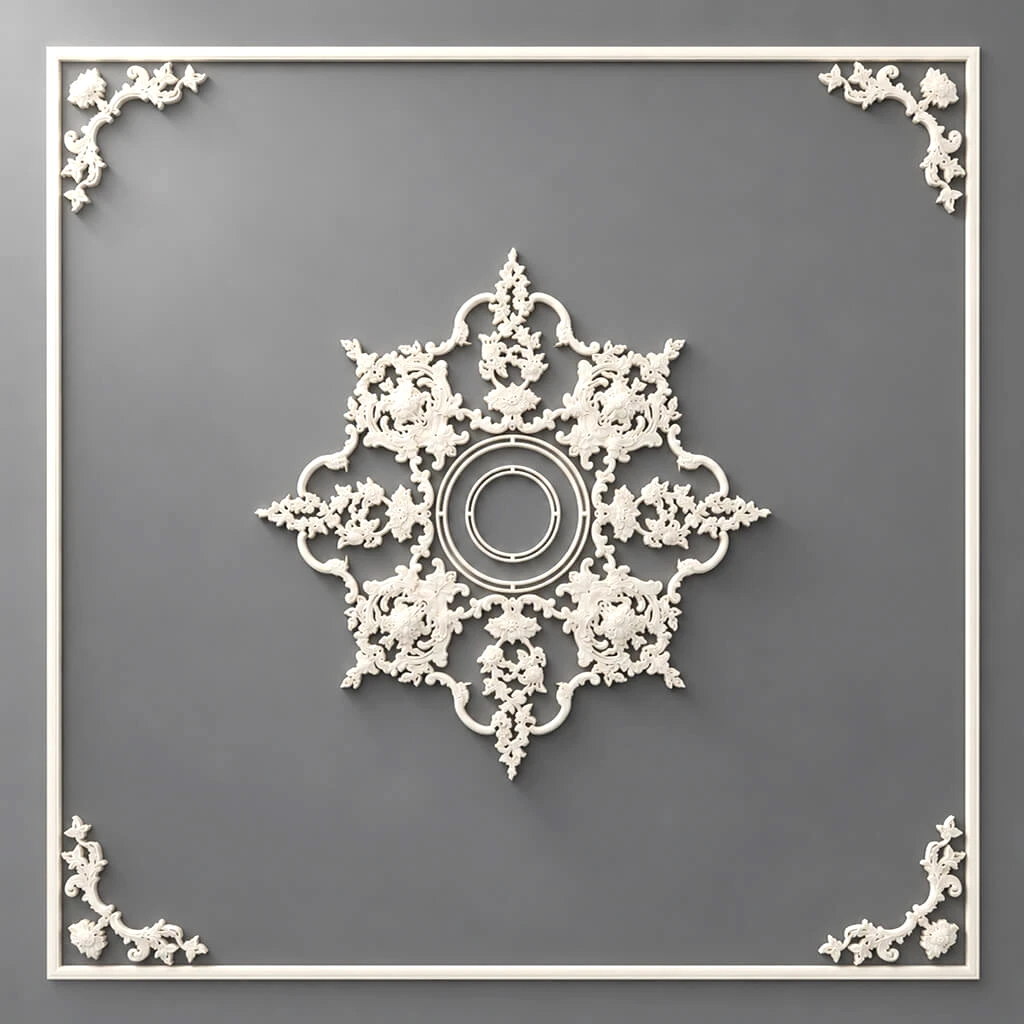
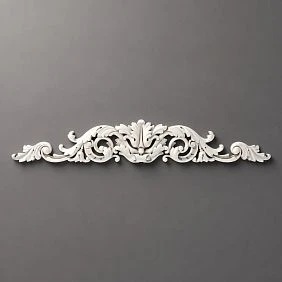
Frame behind the headboard: height 100–140 cm from the mattress level or 160–200 cm from the floor, width — the width of the bed or slightly wider. Inside the frame — solid color painting (the same color or slightly darker/lighter than the wall). Above the frame — a ceilingPolyurethane wall decorin the form of a "cartouche" or rosette.
Solution 4: Slats on the sides, moldings in the center
A combined approach — powerful yet delicate. On both sides of the bed (nightstand areas) — verticalWooden strips in the bedroom, creating wooden "pilons". In the central zone behind the headboard —Moldings behind the bed in the form of a frame layout with a more neutral background.
This solution creates a three-part symmetrical composition. Wooden — on the sides: natural texture, warmth, living rhythm. Stucco — in the center: architectural frame, classic, grandeur. The bed between them — as an object in a frame.
Solution 5: Wooden slats behind the bed with lighting
Wooden slats with a gap between the slat and the wall create the perfect technical condition for hidden lighting. The LED strip behind the slats shines through the gaps, creating a soft warm light between the slats — a "glowing wall" effect.
Wooden slats behind the bed with lighting — one of the most photogenic and atmospheric techniques in a modern bedroom. Warm 2700K light from behind the slats creates a twilight, romantic atmosphere without an overhanging floor lamp or bedside lamp.
Technically: an LED strip 2700K is mounted on a horizontal base bar. The slats — in front of the strip with a gap of 20–30 mm. Soft diffused light comes through the gap between the slats. At eye level (lying down) — it does not blind.
Solution 6: Molding in the color of the wall — "quiet architecture"
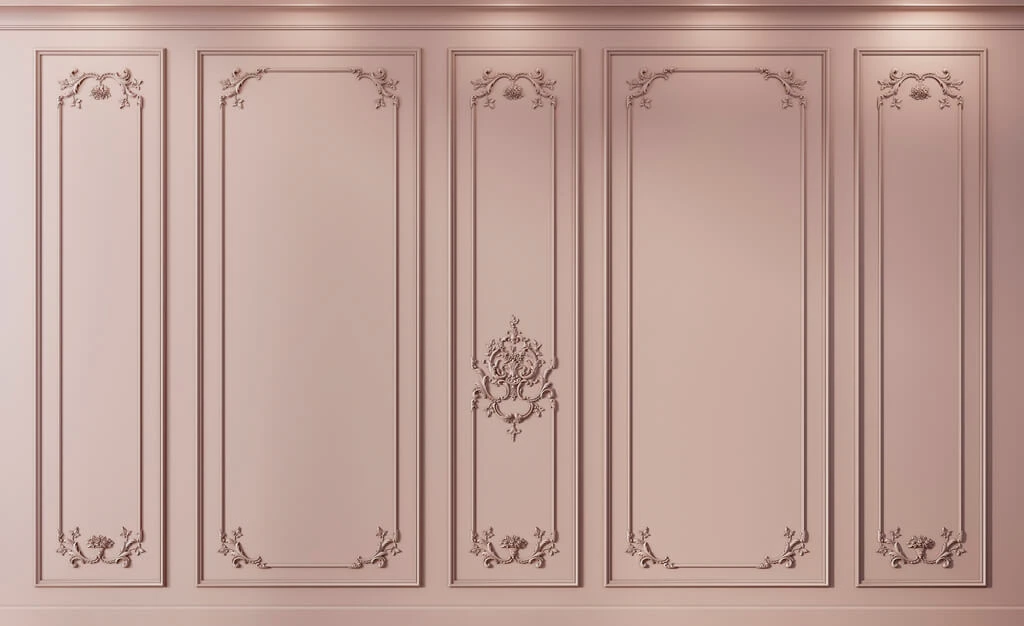
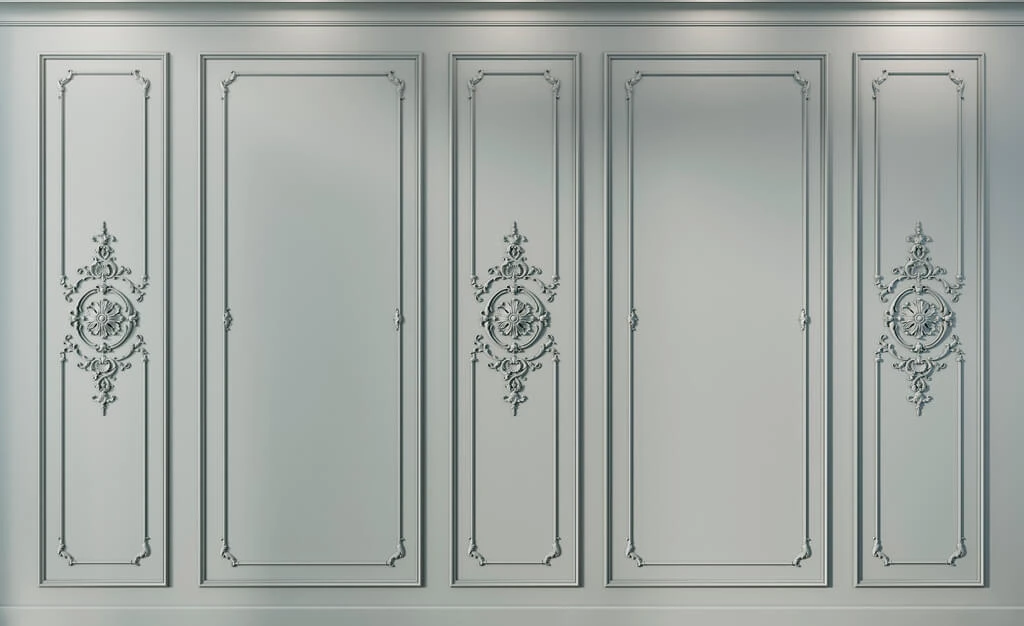
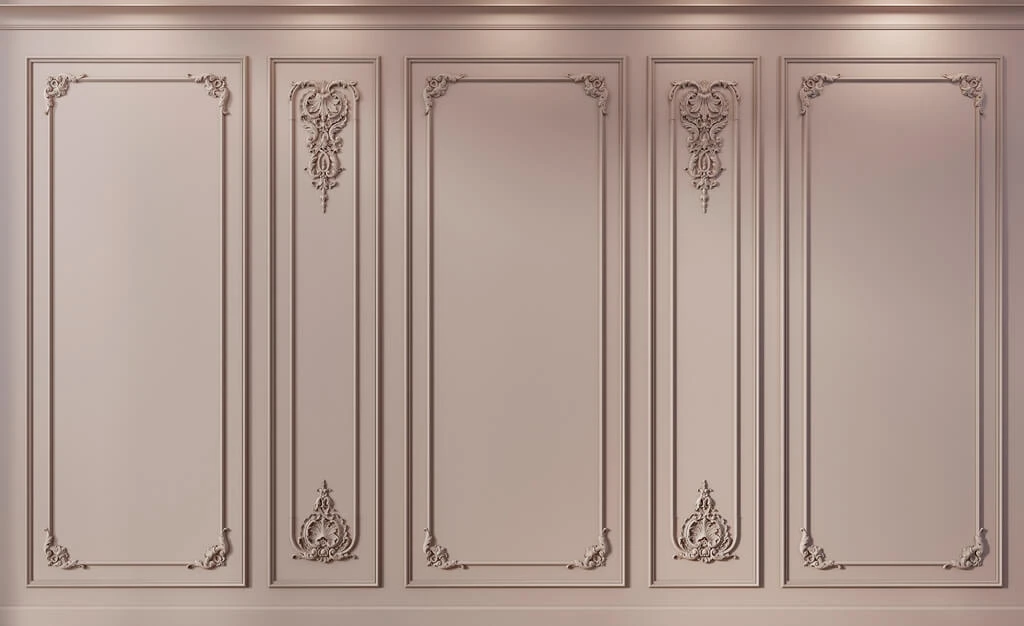
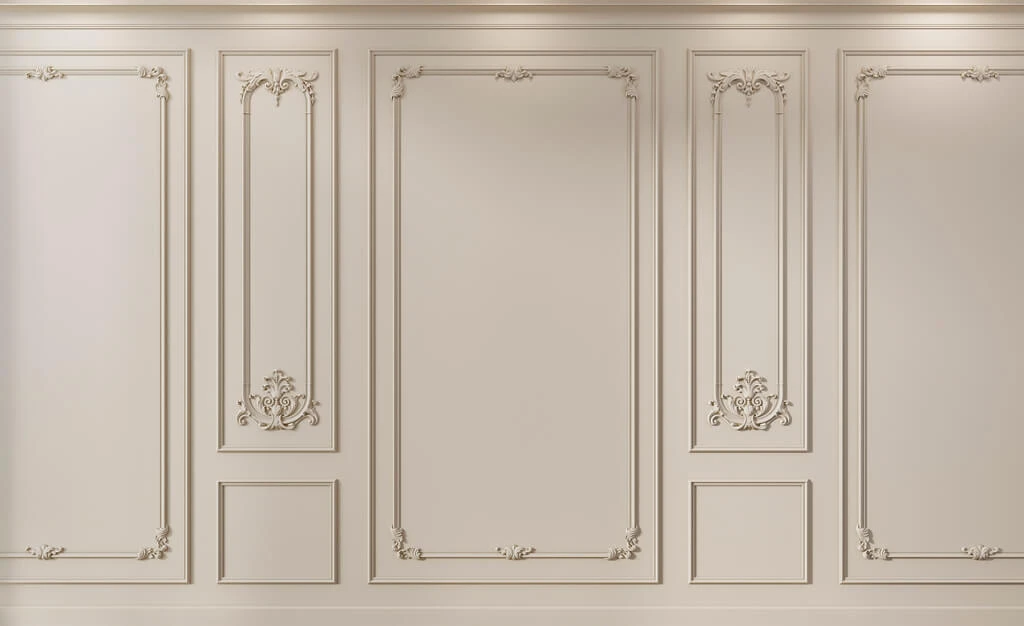
One of the most refined and modern techniques:Wall decor with moldingsin an absolutely identical wall color. Moldings are applied to the wall — but in the same tone. The relief is visible only through light and shadow.
This technique originates from classical architecture, where wall paneling was monochrome. In a modern interpretation, it is a "quiet" class. For a bedroom in shades of dusty soot, gray-green, warm cream — moldings of the same color create exquisite depth without excessive decor.
Solution 7: Slatted panel as a backdrop behind a soft headboard
A soft headboard is a growing trend in modern bedrooms. But a soft headboard by itself is not yet an architectural accent.Slatted panel for the bedroomon the entire wall as a backdrop behind a soft headboard — this is a solution where the soft form is "read" against a structured vertical.
Wooden slats — background. Soft headboard — object. Two contrasting materials: natural wood texture and fabric softness of the headboard. This is a contrasting duo that always wins.
How to combine wooden slats and stucco decor in the bedroom
The main question that arises when working with an accent wall: how not to overdo it? Slats and stucco — both elements are expressive, both vie for attention. How to make them allies, not competitors?
Five working combination schemes
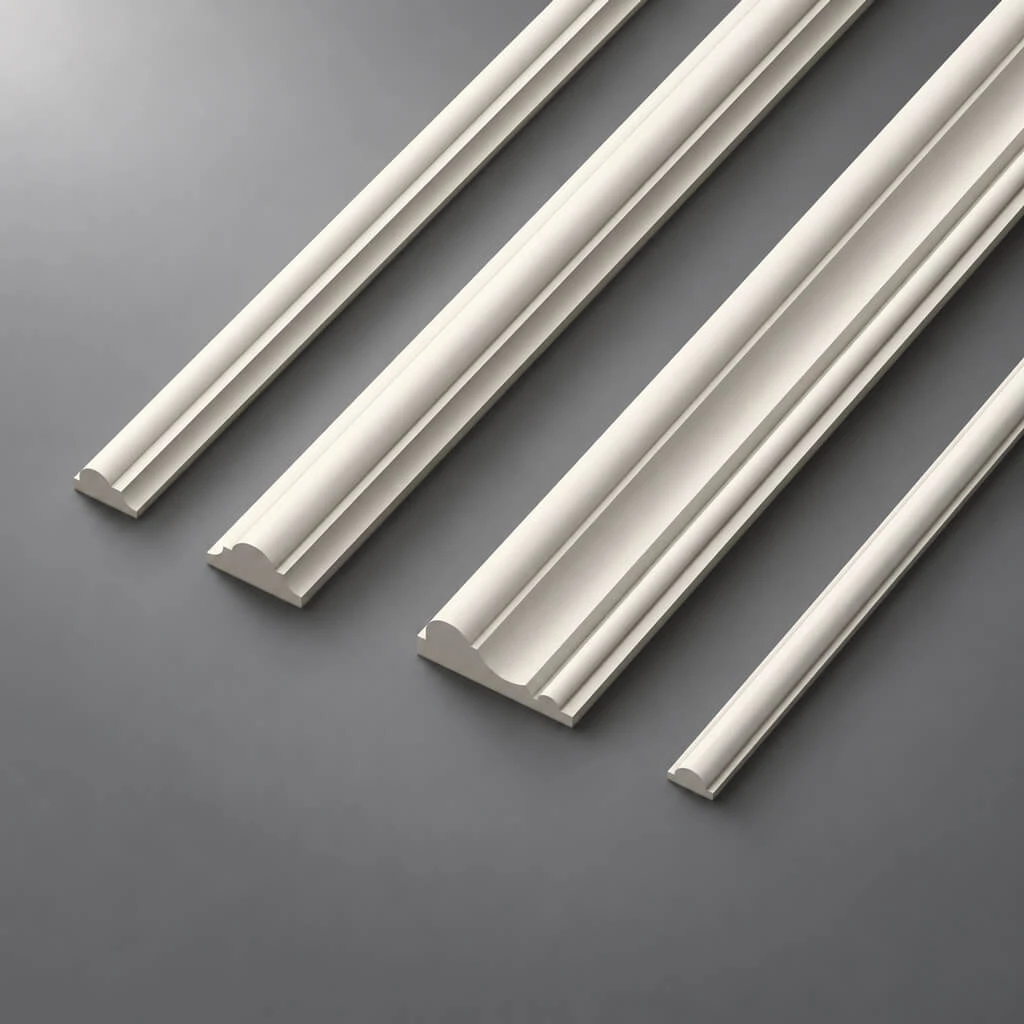
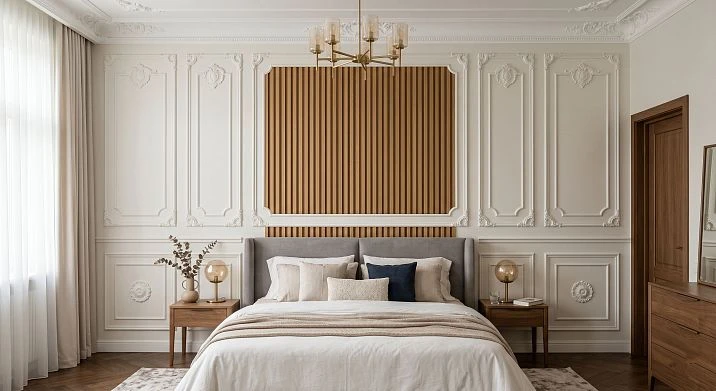
Scheme 1: Slats as the field, moldings as the frame.Wooden slats in the central areabehind the headboard,Decorative wooden moldingsas a frame around the perimeter of the slatted area. Slats provide texture, moldings provide an architectural boundary. They don't compete but are hierarchically arranged: the molding frames, the slats fill.
Scheme 2: Moldings on the central wall, slats on the side walls.moldings for the bedroomwith a frame layout on the accent wall behind the headboard.wooden rails for wall decorationon the side walls. The center is stucco and architectural, the periphery is natural and wooden. This is an option for a wide bedroom with a large space.
Scheme 3: Polyurethane decor in the wall color + contrasting wooden slats.Polyurethane wall decorin the wall color (moldings 'disappear', readable only by relief) + natural wooden slats as the only contrasting accent. Delicate, modern, refined.
Scheme 4: Molding frame above the slats. The lower part of the wall up to a height of 100–120 cm —Wooden planks as a vertical panel. Above — a molding frame layout made ofof polyurethane moldings. A wooden molding belt at the transition point connects the wooden lower zone and the stucco upper zone.
Scheme 5: Wooden moldings matching the slats. Oak slats — oak moldings with the same tint. A unified material code. Different profiles, different functions — but one material and one color create a monolithic wooden ensemble on the accent wall.
Ceiling cornice in the bedroom: the upper boundary of the accent wall
A ceiling cornice in the bedroom is not a luxury. It is an architectural necessity, especially when the accent wall features active decor: slats, moldings, stucco decor. The cornice completes the vertical line of the wall, creating a horizontal line that "holds" the entire composition from above.
Wooden cornice: a warm choice
wooden cornice in a bedroom with wooden slats is a natural continuation of the material theme: wood on the wall transitions to wood at the transition to the ceiling. This creates a unified wooden contour, especially beautiful in a bedroom with a wooden floor or parquet.
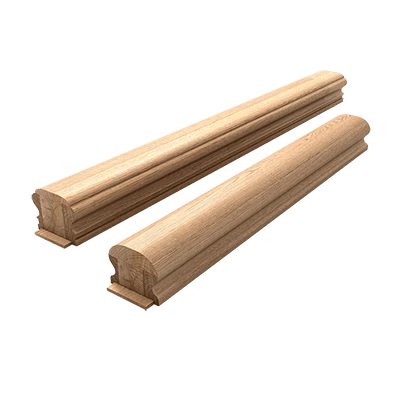
For a bedroom with oak slats:wooden cornice oak of the same tint, profile 50–70 mm — optimal for a ceiling of 2.5–2.8 m. Not too massive to be overwhelming, but expressive enough to create an architectural accent.
Wooden beamswith a more expressive profile — 80–100 mm — for a master bedroom with high ceilings from 2.9 m. The scale of the cornice should match the scale of the room.
Polyurethane cornice: plastic and classic
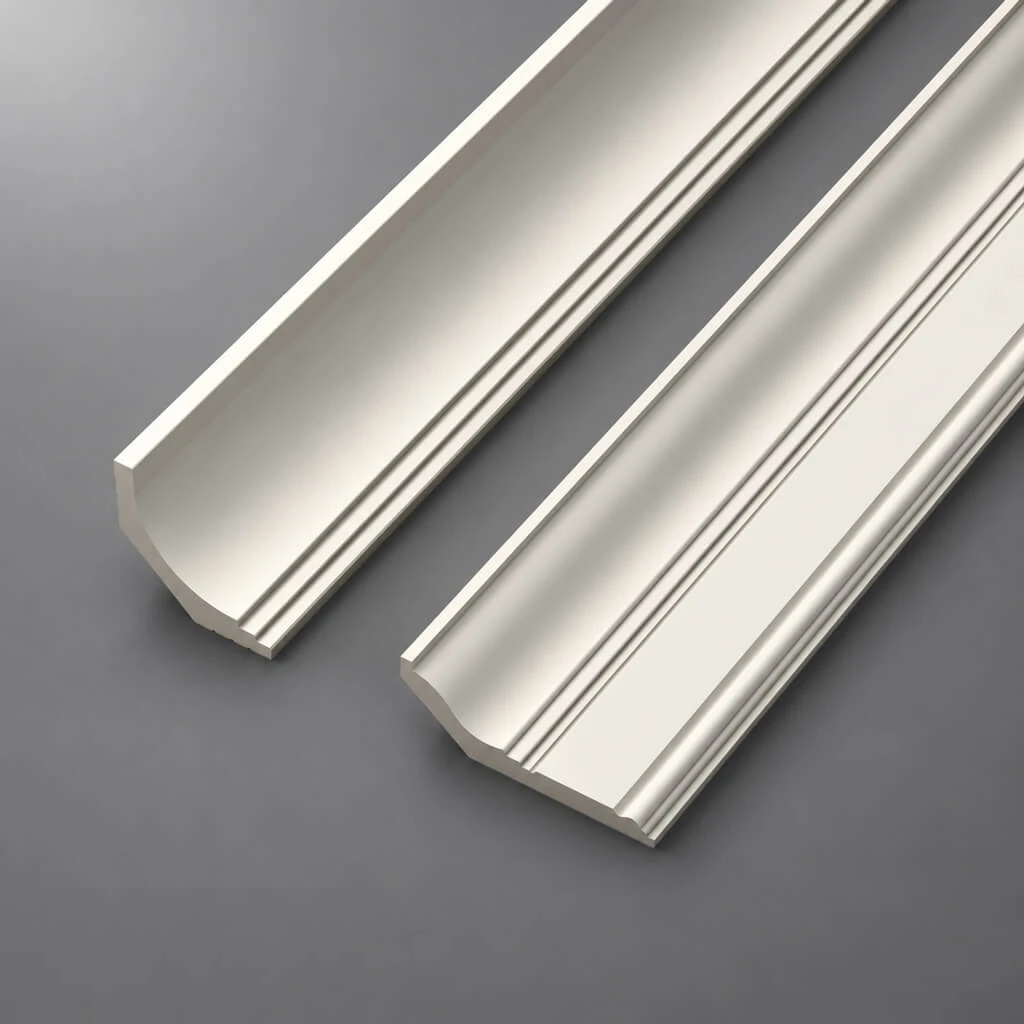
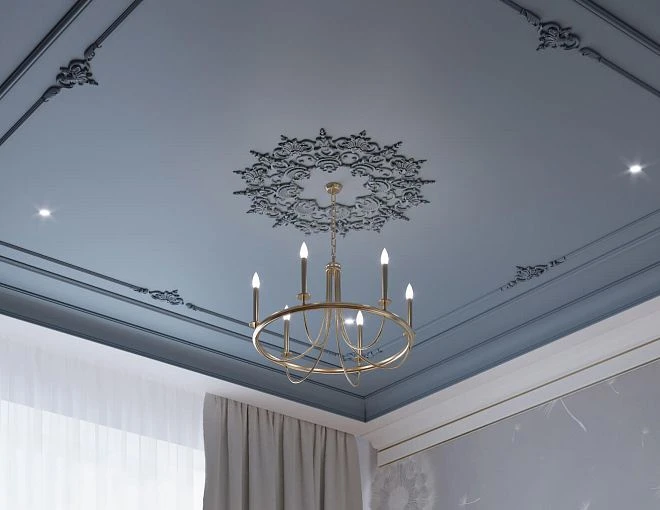
When the accent wall is decoratedpolyurethane moldingsin a classic style, it is logical to choose a ceiling cornice from the same material and in the same aesthetic.polyurethane ceiling decor— cornices with profiles from simple ovolo to multi-level classic profile — make it possible to create a complete classic transition.
A polyurethane cornice is mounted with glue — without complex fasteners. This is especially convenient for a bedroom: minimal construction work, maximum decorative result.
Cornice as part of an accent wall
Want to make the ceiling cornice part of the overall composition of the accent wall? Then — a cornice with a lighting niche. A wooden or polyurethane cornice with a shelf for an LED strip creates a soft diffused glow around the perimeter of the ceiling. This is especially valuable in a bedroom: warm light from behind the cornice is an ideal evening lighting scenario that does not interfere with sleep.
Choosing a cornice by style and height
| Bedroom style | Ceiling Height | Recommended cornice |
|---|---|---|
| Scandinavian / Japandi | 2.4–2.6 m | Thin molding 25–35 mm in ceiling color |
| Modern Classic | 2.6–2.8 m | Wooden cornice 50–70 mm |
| Neoclassical | 2.8–3.0 m | Wooden or polyurethane 70–90 mm |
| Master bedroom / country house | from 3.0 m | Wooden cornice 90–120 mm with profile |
Baseboard for bedroom with accent wall: lower contour that completes everything
They say the devil is in the details. The baseboard in the bedroom is exactly that detail that is not noticed immediately, but which affects the integrity of the entire interior.
Think: you spent time and money on wooden slats, moldings, cornice — and approached the baseboard on a residual basis. White PVC from a hardware store. All the effort — in one place.
MDF skirting board: versatile, clear, reliable
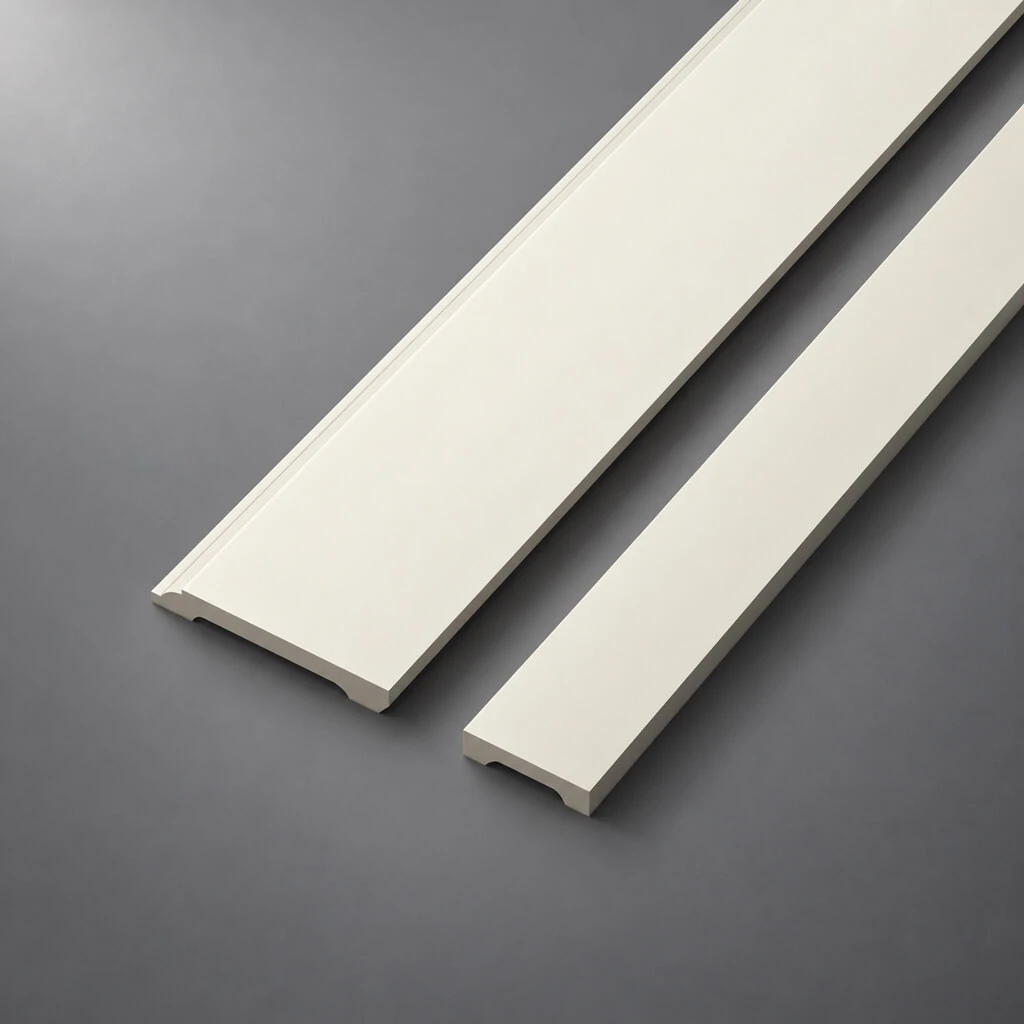
MDF Skirting Board — the best choice for most bedrooms with a modern and neutral character. Precise geometry, perfectly smooth surface, flawless compatibility with any paint.
White MDF Skirting Board — for bedrooms with light walls and a white ceiling. The lower white line is unobtrusive, does not distract from the main decor of the accent wall.
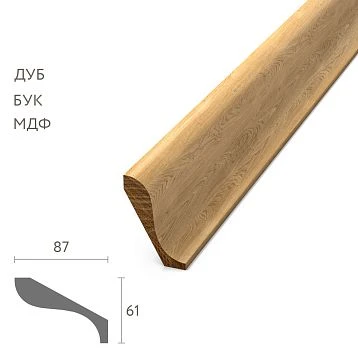
— is a horizontal element that frames the room at the bottom of the walls where the wall meets the floor. Skirting boards perform several functions: they hide the technological gap between the wall and floor covering (necessary for thermal expansion), protect the lower part of the wall from mechanical damage, create visual completion, and may conceal wiring. — for bedrooms with accent colored walls: anthracite, dark blue, terracotta. A skirting board in the color of the wall makes the lower contour monolithic and invisible — the entire accent wall is perceived as a single color plane.
Wooden baseboard for a slatted wall
Wooden baseboard — a mandatory choice when the bedroom has wooden slats, wooden parquet, or solid wood flooring. Single species: oak on slats — oak in the skirting board. Single tint: medium oak on slats — medium oak in the skirting board. This is a material rhyme that closes the wooden system from below.
with a classic profile creates a sense of solidity, reliability. — in a bedroom with parquet: the skirting board species matches the floor species. Parquet made of oak — skirting board made of oak. This is a professional finishing standard that is instantly recognizable.
Wide wooden skirting board for the master bedroom
Wide Wooden Skirting Board — 80–120 mm — for the master bedroom, country bedroom, bedroom in a mansion or apartment with high ceilings. The wide face gives the lower part of the wall architectural weight. Combined with high slats and an expressive cornice, this creates a complete vertical system: wide skirting board at the floor — slats on the wall — cornice at the ceiling.
How to choose a skirting board for the bedroom type
To avoid mistakes:
-
Oak wooden slats → oak wooden baseboard of the same tint
-
White moldings → white MDF baseboard 60–80 mm
-
Accent wall in a dark color → MDF for painting in the same color
-
Scandinavian style → thin ash wooden baseboard, 40–50 mm
-
Neoclassicism → wooden or MDF with profile, 70–90 mm
-
Master bedroom / country house → wide wooden baseboard, 90–120 mm
Moldings, corners, and strips: why installation precision matters
This is where many lose a victory they almost had. The slats are purchased, the moldings are chosen, the cornice is installed — but the installation details lack precision. And the whole impression collapses.
Why you need a wooden corner
On any external corner of a slatted panel or at the transition of a wooden wall to a perpendicular plane — you need Wooden angleIt closes the open ends of the slats, creates a neat vertical corner line, and connects two planes into a single installation solution.
In a bedroom where the slatted panel on the accent wall extends behind the bed into the corner, the corner piece is indispensable. Without it, the corner looks like an abandoned, unfinished job.
The role of a wooden block in a slatted system
Wooden blockperforms several tasks simultaneously in a slatted panel:
-
Supporting lathing: horizontal bars to which vertical slats are attached. This is the base that ensures the rigidity and evenness of the entire panel.
-
Covering strip: a horizontal bar at the top of the panel covers the ends of all vertical slats — instead of them ending abruptly in mid-air.
-
Decorative element: a visible horizontal bar as the lower and upper border of the slatted field visually frames the panel as a complete rectangle.
Molding products: everything about junctions
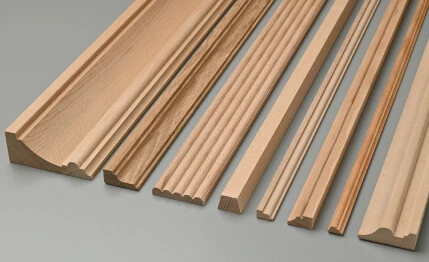
wood trim itemsin the installation of a slatted wall cover all junctions: to the cornice at the top, to the baseboard at the bottom, to the door frame on the side, to the window, to the perpendicular wall. This is a professional installation standard where there is not a single uncovered joint.
In a bedroom where the slatted panel often starts from a door frame or window, proper junction with molding is the difference between "nice" and "very nice." Every joint is visible from the bed — and every joint must be neat.
Eight ready-made bedroom design systems
"Warm Scandinavian" system
Accent wall:Wooden planksmade of bleached ash, width 20 mm, pitch 30 mm, with a gap behind the slats of 15 mm. LED lighting 2700K.
Cornice: thin molding 25 mm, white.
Other walls: calm, light gray, without decor.
Skirting board:Wooden baseboardmade of ash, 45 mm, natural.
Result: a Scandinavian bedroom with a warm wooden accent and atmospheric lighting. Calm, minimalist, with a natural character.
"Modern Neoclassical" system
Accent wall:Moldings behind the bedframe layout made of polyurethane in white. Large central frame + two smaller side frames on top.
Crown molding:wooden cornice70 mm, white.
The other walls: dusty white, moldings in tone.
Skirting board:White MDF Skirting Board 80 mm.
Result: an airy neoclassical bedroom. White, with delicate relief of moldings. Cozy and elegant.
System «Dark Study / Master Bedroom»
Accent wall:Wooden planks behind the bed — dark oak, 30 mm, spacing 40 mm. Wall in dark green.
Molding frame made of . Clear lines, created using modern technologies, emphasize the strict aesthetics of the room. Each decorative element harmoniously fits into the overall concept, creating a sense of order and thoughtfulness. around the slatted area, painted in the wall color.
Crown molding:wooden cornice 80 mm, dark oak.
Skirting board:Wide Wooden Skirting Board 90 mm, dark oak.
Result: a master bedroom with character. Dark, deep, luxurious. Dark wood against dark green — a strong, memorable image.
"Backlit Slats" system
Accent wall:Slatted panel for the bedroom — medium-toned oak. Slats 25 mm, spacing 35 mm, gap behind slats 20 mm, LED strip 2700K.
Crown molding:wooden cornice 60 mm with a niche for backlighting — perimeter warm light.
Skirting board:Wooden baseboard made of oak 60 mm.
Result: bedroom with two-level warm lighting — behind the slats and from behind the cornice. In the evening — an absolutely cinematic space.
"Classic Stucco Frame" system
Accent wall:stucco frame at the headboard made of polyurethane — a large white frame, height 180 cm from the floor. Inside the frame — a warm cream shade, outside — light gray-beige.
Above the frame — a smallpolyurethane ceiling decor in the form of a rosette.
Cornice: polyurethane cornice with classic profile, white, 80 mm.
Skirting board:White MDF Skirting Board 80 mm.
Result: classic Italian bedroom with architectural stucco accent. Elegant, formal, historically rich.
System "Slats + moldings in color"
Accent wall:Wooden planks in the area behind the headboard — natural oak. Along the perimeter of the slatted area and on the side walls —Moldings made of polyurethane in the exact wall color (warm gray-green).
Cornice: thin molding in the color of the ceiling.
Skirting board:— is a horizontal element that frames the room at the bottom of the walls where the wall meets the floor. Skirting boards perform several functions: they hide the technological gap between the wall and floor covering (necessary for thermal expansion), protect the lower part of the wall from mechanical damage, create visual completion, and may conceal wiring. — in the color of the wall.
Result: exquisite "quiet" bedroom. The only contrasting accent is the natural wood of the slats. Everything else is monochrome, delicate, invisible.
System "Three materials"
Accent wall: lower part up to 100 cm —Wooden plankslike a slatted panel. Transition belt —Decorative wooden moldingsmade of oak of the same shade, horizontally. The upper part —stucco decoration for the wall behind the bedmade of polyurethane in the form of a frame layout in the color of the wall.
Crown molding:wooden cornice70 mm, oak.
Skirting board:Wooden baseboardmade of oak 70 mm.
Result: the most architectural bedroom. Three levels of decor on one wall — each in its place.
System «Country»
Accent wall: beam cladding made ofwooden stripsandblock— horizontal and vertical elements form a «beam» grid on the wall. Natural oak with oil impregnation.
Crown molding:wooden cornice90–100 mm, oak.
Skirting board:Wide Wooden Skirting Board100–110 mm, oak.
Result: a country bedroom with a natural wooden character. Solid, organic, truly alive.
Seven mistakes when decorating the wall at the headboard
Too frequent slats — a cage-like feeling
Slats 15 mm with a 15 mm gap — a fragmented, anxious rhythm. Especially critical for a bedroom: a fine rhythm excites the nervous system, hinders relaxation. The optimal gap in a bedroom is from 30 mm.
Large stucco next to an expressive soft headboard
A soft, voluminous headboard is already an active decorative element. If there are large stucco rosettes or multi-level paneling nearby, they compete for attention. Rule: the more active the soft headboard, the more delicate the moldings and stucco nearby should be.
Exposed ends of wooden slats
Open ends at the top, bottom, and sides of the slatted panel indicate unfinished work.Wooden blockandWooden angle— mandatory elements of final installation.
The baseboard breaks off at the decorative wall
The baseboard should run continuously along the entire perimeter of the room — including the accent wall with slats.Skirtingshould not 'break off' at the slatted panel: the slats are mounted over the baseboard or the baseboard goes around them with a precise fit throughTrimming Items.
The cornice is not integrated into the overall composition
A cornice chosen separately from the slats and moldings often does not fit into the system: too decorative for minimalist slats, or too thin for large-scale stucco layout. The cornice is chosen last — after all other elements of the accent wall have been determined.
Different shades of wood
Slats made of natural oak, baseboard made of light pine, wooden doors made of dark walnut — three 'wooden' stories in one bedroom. Neutral solution: bring the baseboard and slats to a single species or a single tint.
Too bright lighting behind the slats
LED strip behind the slats with a temperature of 4000–6500K (cold, daylight) — this is not atmospheric lighting for a bedroom. This is task lighting that destroys evening coziness. Only 2700K — warm, amber, soothing.
About the company STAVROS
For those who want to create a bedroom you want to return to, STAVROS offers a full range for decorating the accent wall at the head of the bed.
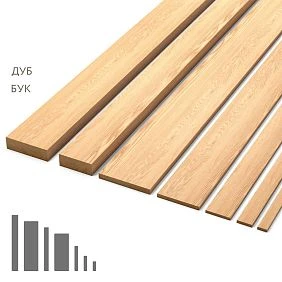
In the STAVROS catalog:Wooden planksfrom oak and beech arrays with precise parameters for bedroom interiors,Rafter panelsfor quick installation,wooden corniceandWooden beamsin profiles from 40 to 120 mm.
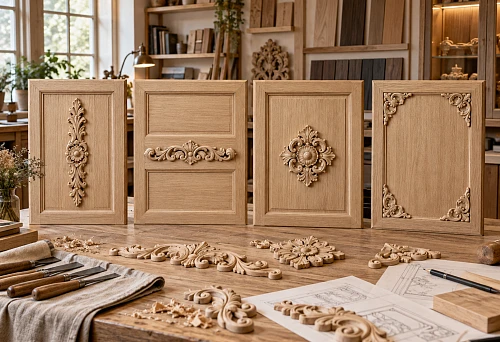
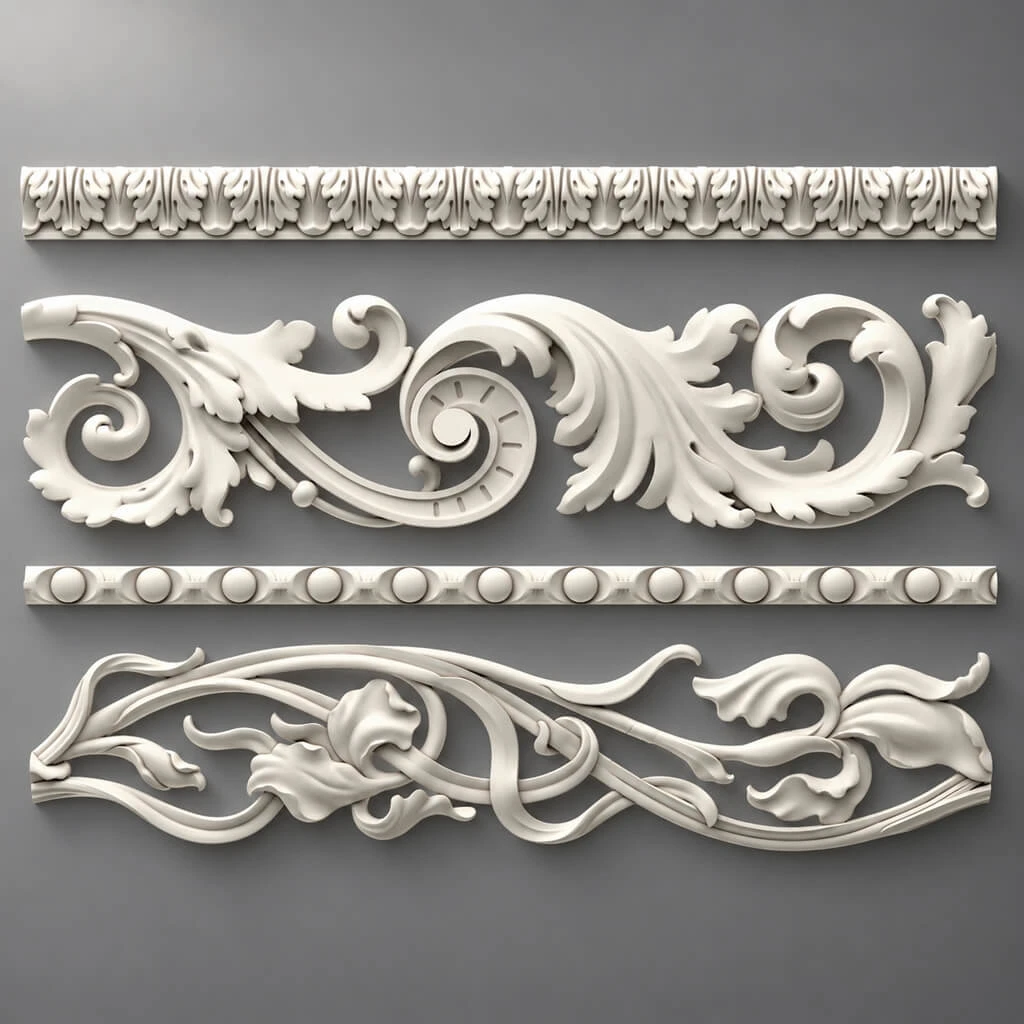
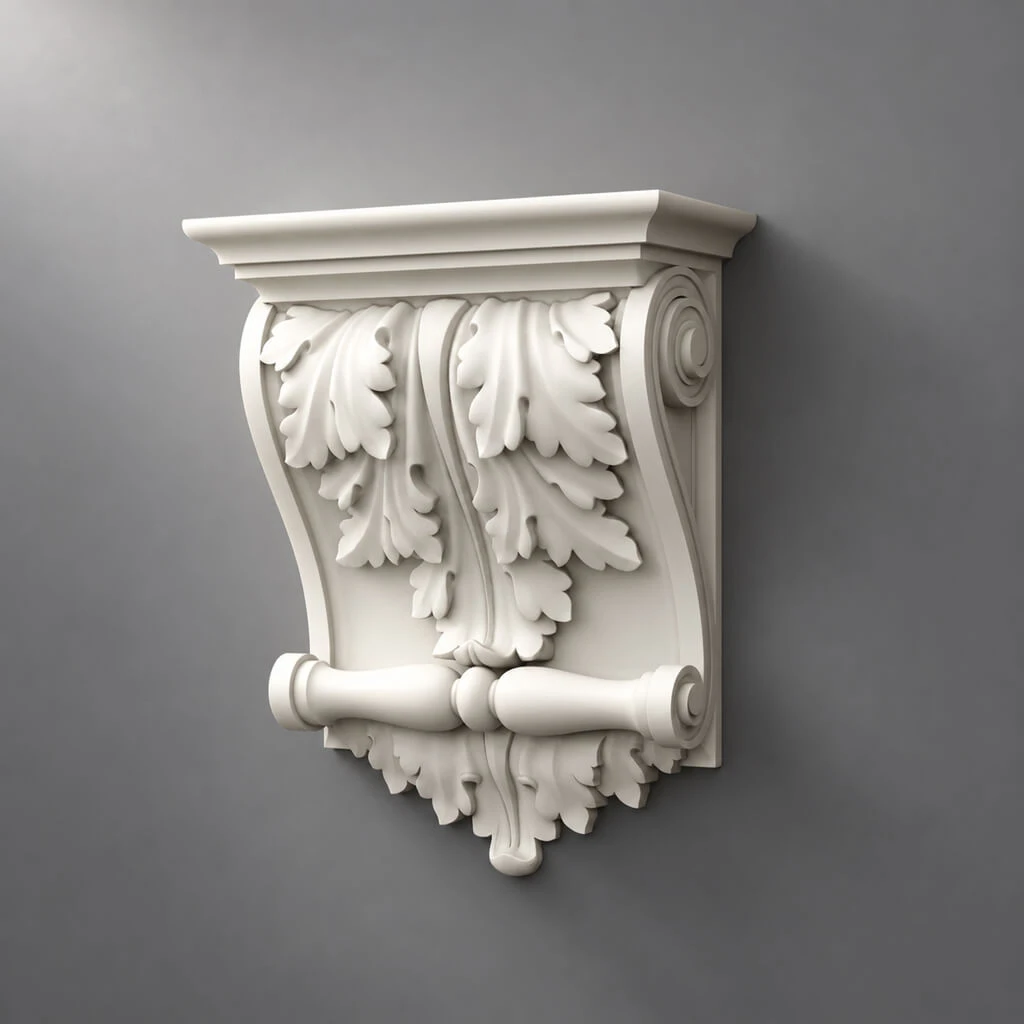
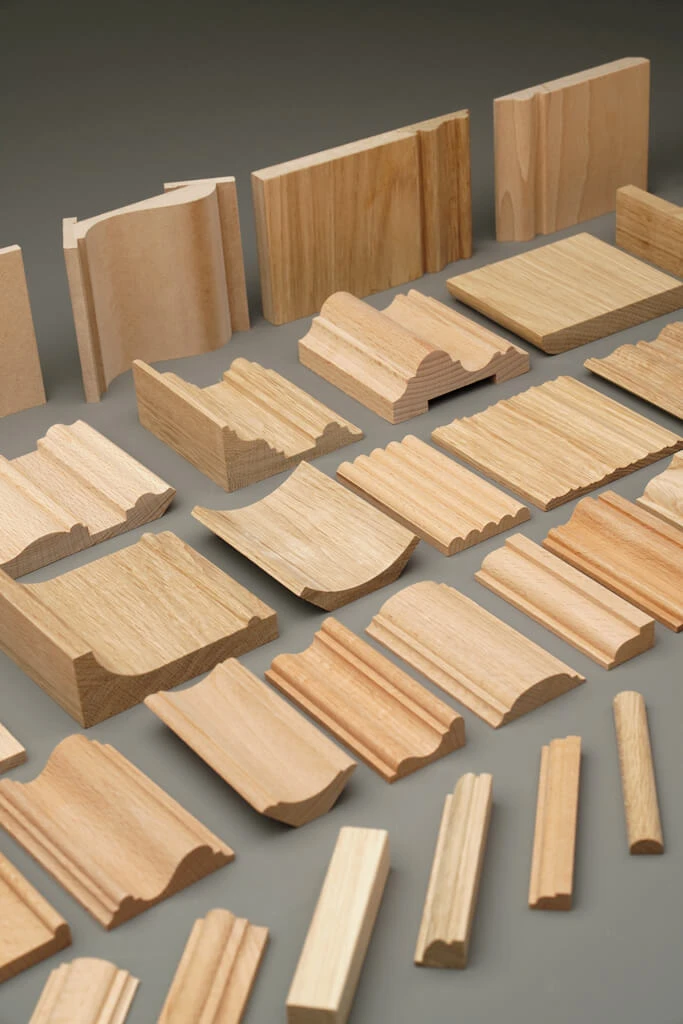
For stucco decor and moldings:Polyurethane wall decor, polyurethane ceiling decor, Decorative wooden moldings, Moldings made of polyurethane. For the lower contour —MDF Skirting BoardandWooden baseboardin a wide selection of profiles.
For precise installation —Wooden block, Wooden angleandwood trim itemsfor all joints and junctions. The full rangepolyurethane productsfor classic and modern stucco decor.
At STAVROS, we have everything to make the wall behind the bed the main highlight of your bedroom.
FAQ: answers to questions about designing the wall at the headboard
Which wooden slats to choose for the wall behind the bed?
Width 20–30 mm, spacing 30–50 mm — optimal for a bedroom. Species: oak, beech, ash. Natural or neutral medium shade. Very dark slats in the bedroom are acceptable only with good lighting.
Can you combine wooden slats and stucco molding on one wall?
Yes — provided there is a hierarchy: one element dominates, the other supports. Slats provide texture, moldings form a frame. Or moldings are the main architectural motif, slats are a textured insert. Two active accents on one wall would be overload.
Is a ceiling cornice needed in a bedroom with a slatted accent wall?
Yes. The cornice finishes the top of the slatted panel and creates a horizontal line that holds the entire vertical composition. Without a cornice, the slats visually 'drift' into the ceiling without completion.
Which baseboard is better — MDF or wooden — for a bedroom with oak slats?
A wooden oak baseboard with the same stain. Material rhyme: wood on the wall — wood on the floor. If a wooden baseboard exceeds the budget — MDF for painting in a neutral shade close to the wood color.
How to finish the ends of wooden slats on an accent wall?
At the top and bottom — a horizontal closing strip. On the sides — a wooden corner or vertical strip as a side frame. All joints with adjacent walls, baseboard, and cornice — through trim pieces.
Is a wall with slats in the bedroom a complex installation?
No. Vertical slats on a batten frame are one of the most accessible decorative techniques. Installation of one wall by two people takes 4 to 8 hours. Carpentry skills are not required. The main thing is a level surface and precise cutting of slats to height.
How to properly place LED backlighting behind slats in the bedroom?
The 2700K LED strip is mounted horizontally on the base bar of the slatted panel. The optimal placement is several horizontal rows of the strip evenly across the height of the panel. The gap between the slat and the strip must be at least 20 mm for even light diffusion. A dimmer is mandatory: the ability to adjust brightness for different lighting scenarios.