Article Contents:
- Why oak: not marketing, but physics and aesthetics
- Density and hardness
- Natural moisture resistance
- Texture as a work of art
- When oak is the right choice: five scenarios
- Capital staircase in a private house or cottage
- Classic interior with rich decor
- Staircase under a transparent coating
- Staircase for decades
- Combined finishing with oak floors, steps or doors
- Oak, beech or pine: an honest comparison of three main species
- Oak: durability as a principle
- Beech: practicality with character
- Pine: economy vs. aesthetics
- Comparison table
- Which oak baluster shapes to choose: from classic to geometric
- Turned oak balusters
- Carved oak balusters
- Square oak balusters
- Flat oak balusters
- How to choose a shape: three questions to ask yourself
- How to match oak balusters to handrails and posts
- Oak handrail: unity of species
- Oak or compatible species posts
- Decorative stair posts
- Scale of carving and pattern
- Finish: more important than it seems
- Oak balusters under varnish and stain: finishing nuances
- Why oak reveals itself under varnish
- Stain: tone without losing texture
- White oak balusters: when it is appropriate
- How to calculate the number of oak balusters: a foolproof method
- Calculation principle
- How to determine the step
- Calculation by flights
- Landing
- Reserve
- Calculation table for typical flights
- Price of oak balusters: what is included in the cost and how not to overpay
- Main pricing factors
- Approximate prices of oak balusters (2026)
- How not to overpay
- Installation of oak balusters: technical nuances
- Pre-drilling is mandatory
- Glue: only waterproof PVA-M or polyurethane
- Stainless steel fasteners
- Installation sequence
- Mistakes when buying oak balusters: analysis of specific cases
- Mistake one: buying oak balusters, but the handrails are made of beech 'because it's cheaper'
- Mistake two: not specifying the moisture content
- Mistake three: mixing balusters from different batches
- Mistake four: not considering the fasteners
- Mistake five: choosing a shape based on a photo without understanding the scale
- Mistake six: ordering balusters but forgetting about staircase components
- Mistake seven: choosing the 'cheapest oak' ones
- Where to buy oak balusters for stairs
- STAVROS: oak balusters and a complete set for a staircase with character
- Frequently Asked Questions
- Where to buy oak balusters for stairs?
- Why are oak balusters better than beech ones?
- Are oak balusters suitable for varnishing?
- Can I buy oak balusters and handrails as a set?
- What determines the price of oak balusters?
- Do oak balusters require special fasteners?
- How long will oak balusters last?
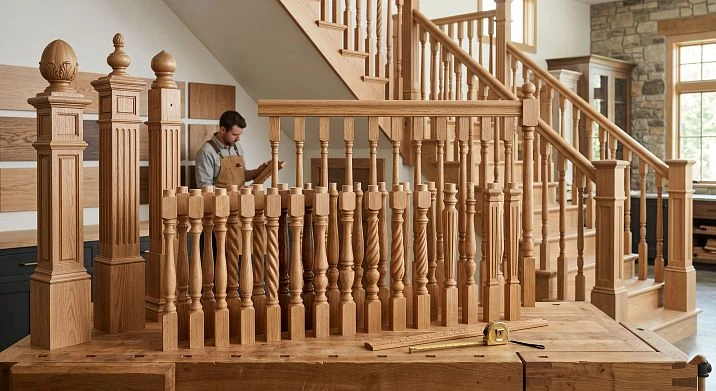
There are decisions made once and for a lifetime. A staircase in the house is one of them. And when a person has already gone from "need some kind of balusters" to "I want oak balusters" — they are at the right crossroads. This choice is not about fashion or whim. It is about understanding: oak is a different dimension of durability, a different quality of texture, a different conversation with the interior.
Buy oak balusters — means choosing a material that does not become outdated either technically or aesthetically. An oak baluster under a clear varnish reveals a texture that no other wood can imitate. A properly selected shape, a well-assembled oak railing — this is a detail of the house that guests will notice and the owners will be proud of. This article is about how to make this choice without mistakes.
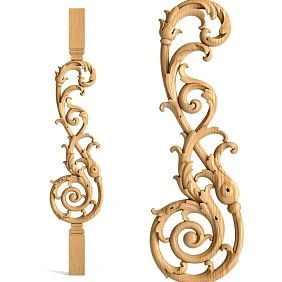
Why oak: not marketing, but physics and aesthetics
Before moving on to practice — let's understand why oak occupies a special place in the hierarchy of wood species for stair railings. This is not just prestige. Behind the reputation of oak are quite measurable characteristics.




Density and hardness
Oak has a density of 720–800 kg/m³. For comparison: beech — 680–720 kg/m³, pine — 480–540 kg/m³. The difference in density is the difference in resistance to mechanical damage. An oak baluster does not leave dents from accidental impact, does not scratch during cleaning, and does not deform under lateral load.
For a stair railing that daily experiences touches, hand pressure, accidental impacts — this is critically important.
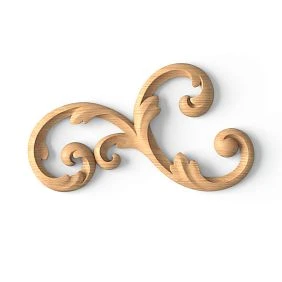
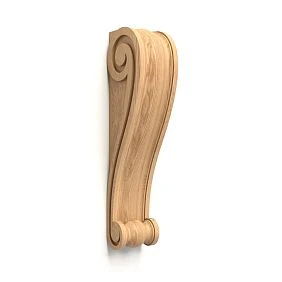
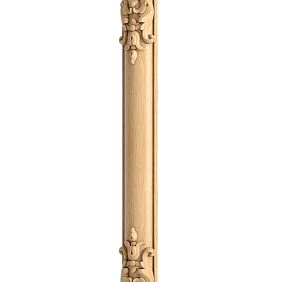
Our factory also produces:
Natural moisture resistance
Oak contains a high concentration of tannins — tannins. They create a natural barrier in the wood structure against moisture penetration and biological aggressors: mold, fungus, wood-boring beetles. Oak balusters are resistant to wet cleaning, condensation in bathrooms (if the staircase passes nearby), and humidity fluctuations in the house depending on the season.
Get Consultation
Texture as a work of art
Here is the most interesting part. Oak has a pronounced large-pored structure with characteristic medullary rays, which on a radial cut give the effect of "mirror" flashes — fleck. Under a transparent varnish, this texture lives: it plays depending on the angle of light, breathes warmth, and creates depth.
No other breed produces the same effect with a transparent finish. This is not a decorative technique — it is a natural property of the wood, and it is what makes oak balusters under varnish an object of true interior pleasure.
When oak is the right choice: five scenarios
A grand staircase in a private house or cottage
A project with natural material finishes: stone, wood, wrought metal. The staircase as an architectural element, not just a functional unit. Here buy oak balusters for stairs — this is not a question of "why," but a question of "which ones."
Classic interior with rich decor
Moldings, coffered ceilings, oak or ash parquet, solid doors. In such a context, beech or pine balusters would look like a compromise. Oak is the only material that speaks the same language as heavy classical finishes.
Staircase under a transparent coating
If you plan to leave the wood visible — varnish, oil, wax, tinting impregnation — oak will give you what no other breed in this price category can. Texture, color depth, tactile surface sensation.
Staircase for decades
There are people who build a house once. Not "for the season", not "while the children are small". Once and for good. For such an approach, oak balusters are the only logical choice: in 30 years they will look not worse, but better — they will acquire patina, become richer in color, and fill with the history of the house.
Combined finishing with oak floors, steps or doors
When the house already has oak steps, oak parquet, oak doors — choosing balusters from a different wood species will require either perfect color matching or create noticeable dissonance. Simpler and more correct is Buy oak balusters the same species as the other wooden surfaces.
Oak, beech or pine: an honest comparison of the three main species
This question is asked often — and deserves an honest answer, without advertising clichés.
Oak: durability as a principle
Oak is more expensive than beech and significantly more expensive than pine. But the difference in price is the difference in the service life horizon.
-
Density: 720–800 kg/m³
-
Brinell hardness: 3.7–4.0 kgf/mm²
-
Natural moisture resistance: high
-
Texture under transparent coating: expressive, "lively", with flex
-
Interior perception: premium, prestigious
Beech: practicality with character
Buy beech balusters — a reasonable choice for most indoor staircases. Beech is hard, dense, and easy to work with. Its structure is more uniform and calm — making it ideal for painting and tinting in any color.
-
Density: 680–720 kg/m³
-
Brinell hardness: 3.5–3.8 kgf/mm²
-
Natural moisture resistance: medium
-
Texture under transparent coating: calm, without pronounced pattern
-
Interior perception: neutral, universal
Beech is the right choice when the color of the coating matters, not the "naturalness" of the texture. Oak is when you want to show the wood itself.
Pine: economy vs. aesthetics
Pine is three to four times softer than oak. It dents from strong pressure, scratches during maintenance, and is sensitive to moisture. The resinous nature of pine complicates painting — enamel yellows over time on resin pockets.
For budget projects and temporary structures — a justified choice. For a permanent staircase in a house — a risk that will lead to rework in 5–8 years.
Comparison table
| Parameter | Oak | Beech | Pine |
|---|---|---|---|
| Density (kg/m³) | 720–800 | 680–720 | 480–540 |
| Brinell hardness | 3,7–4,0 | 3,5–3,8 | 1,8–2,2 |
| Moisture resistance | High | Medium | Low |
| Texture under varnish | Expressive | calm | Medium |
| For painting | Good | Excellent | More difficult |
| Operational horizon | 30–50 years | 20–30 years | 10–15 years |
| Price | High | Medium | Low |
Which oak baluster shapes to choose: from classics to geometry
Oak is a material that equally well embodies different shapes. The choice of shape is a matter of staircase and interior style.
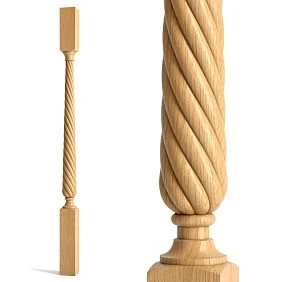
Turned oak balusters
A classic of the genre. A rounded profile with alternating thickenings and narrowings characteristic of turned work. In oak, this form acquires a special dignity: the dark texture emphasizes the relief of the profile, and the play of light on the curves creates living plasticity.
Turned oak balusters — for classic interiors, for homes with history, for staircases that should be "like grandfather's in the estate." And this is not irony — it is a genuine architectural narrative that is valued today.
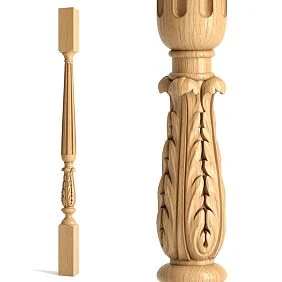
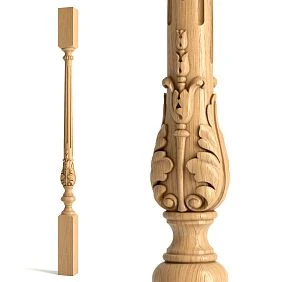
Carved oak balusters
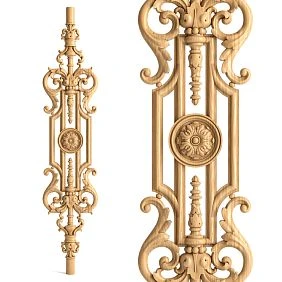
Carving on oak is a separate story. The tool enters the dense structure of oak with resistance, which gives clean, sharp edges without fuzz or fraying. The carved ornament on oak holds the contour perfectly — for years, without blurring the relief.
Buy carved wooden balusters in oak execution — for decorative, rich staircases in homes with lavish finishes. This is the maximum level of decorativeness with maximum material durability.
Square oak balusters
Strict prismatic forms in oak give a completely different image — monumental, confident, without unnecessary words. square balusters for stairs made of oak fit well into modern classicism, into interiors with clean lines and natural materials — stone, wood, metal.
Feature: on the faces of a square oak baluster, the texture is read especially expressively — wide planes allow the wood grain to fully unfold.
Flat oak balusters
Silhouette products with decorative cutouts, carved from a board. In oak, they acquire a particular solidity — a thin profile, but made of dense, heavy wood: the feeling of reliability is not lost.
Buy flat balusters made of oak — for staircases with decorative railings in a light, "lace-like" style that still retains the visual solidity of an expensive wood species.
How to choose the shape: three questions to ask yourself
First: what dominates the interior — straight lines or rounded shapes? A modern interior with right angles calls for square or strict turned balusters. A classic interior with arches and moldings calls for turned and carved ones.
Second: what coating is planned? Under varnish, any shape is expressive. Under white enamel, turned and square ones work better, since carving loses some of its meaning under opaque paint.
Third: how does the railing look as a whole — from below, from the first floor level? Go up to the second floor and look down: this is how you check the silhouette of the row of balusters and its harmony with the space.
How to choose oak balusters for handrails and posts
This is the area where problems most often arise. The balusters are chosen. But what about the handrail?
Oak handrail: unity of wood species
The ideal solution is a handrail of the same wood species, from the same manufacturer. Then the color under varnish or oil will be uniform, and the shade will not vary from batch to batch. The handrail profile should have a groove for the tenon of the oak baluster of the required shape.
For square balusters — a handrail with a rectangular groove. For turned ones — with a round groove. For flat ones — with a groove matching the thickness of the flat board. This is a technical parameter that cannot be ignored.
handrails and balusters made of wood In a single order — the right strategy that eliminates technical incompatibilities.
Posts made of oak or a compatible wood species
Buy balusters and posts for a wooden staircase — a complete-set principle that works for any wood species, but is especially important for oak. Oak posts with a cross-section of 100×100 or 120×120 mm give the railing a solidity befitting the material's status.
A post made of a different wood species next to oak balusters is either a properly matched tone for painting or an obvious dissonance. Compromise here is not the best advisor.
Decorative stair posts
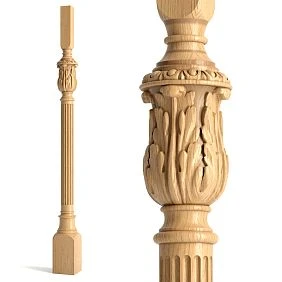
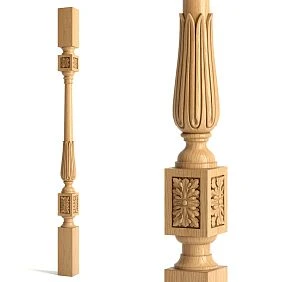
For a classic staircase with carved oak balusters, decorative Wooden stair posts with profiled rods, relief bands, or carved elements are organic. Such a post completes the railing logically — the decorative row of balusters is framed by decorative supports.
Scale of carving and pattern
If the balusters are carved — the scale of the carved ornament on the baluster and on the post should be comparable. A fine pattern on the baluster and a large relief on the post is eclecticism, not always appropriate. Large ornament everywhere — monumental, but logical.
Finishing: more important than it seems
The coating decision is made before installation — and it affects the choice of baluster shape. Clear varnish "reveals" the texture: the more complex the baluster shape, the more expressive the relief. Opaque enamel "hides" the texture: here the silhouette shape matters, not the wood grain pattern.
Oak balusters under varnish and stain: finishing nuances
Oak and transparent coating — a combination worth examining in detail.
Why oak reveals itself under varnish
Oak's structure with large pores and medullary rays creates a play of depth under clear varnish. A light ray penetrates the varnish layer, reflects from different levels of fibers, and returns to the eye from various depths — this creates the feeling of "living" wood, which is absent in opaque coatings.
Parquet varnish, yacht varnish, oil-wax for wood — they all interact with oak differently:
-
Parquet varnish — a polyurethane film, creates a glossy or matte surface with clear protection. Durable, resistant to abrasion. It highlights the texture well but somewhat "freezes" it.
-
Oil-wax — penetrates the wood structure, does not create a film. The surface remains "alive" to the touch. The texture is visible as naturally as possible. Requires periodic renewal — every 2–3 years.
-
Yacht varnish — maximum moisture resistance, for stairs in high-humidity areas.
Stain: tone without losing texture
Oak under stain is a classic technique that changes the natural color of the wood while preserving the texture. The stain penetrates the fibers, tints them, and the texture is only enhanced: dark pores contrast with light fibers.
Popular oak tinting directions:
-
Walnut — warm, rich, classic
-
Wenge — dark brown, almost black, for modern classics
-
Gray — Scandinavian option, for minimalist interiors
-
Whitewashing — aging effect, for Provence-style interiors
Important: before tinting oak, always test on a hidden area. Oak has uneven absorbency in different parts of the same piece — pores absorb differently than fibers.
White oak balusters: when it is appropriate
A common question: is it worth painting oak balusters white? On one hand — loss of oak's main advantage: texture. On the other — oak under enamel lasts significantly longer than beech or pine: mechanical strength remains fully intact. For a classic white railing, oak is the best base, just more expensive.
How to Calculate the Number of Oak Balusters: A Foolproof Method
Calculation Principle
The number of balusters is determined by the length of the railing and the installation spacing. For turned and square balusters, the spacing is from the center of one baluster to the center of the next.
Formula:
N = (L / t) − 1
Where L is the horizontal length of the railing in mm, and t is the center-to-center spacing in mm.
How to Determine the Spacing
Center-to-center spacing = baluster diameter (width) + clear gap between balusters.
Recommended clear gap: 100–150 mm for residential stairs. For homes with children, no more than 100 mm.
Example: oak baluster with a diameter of 50 mm, clear gap of 120 mm → center-to-center spacing of 170 mm.
Calculation by Flights
Each flight is calculated separately. The horizontal projection of a flight = number of steps × horizontal run of one step.
Example:
-
Flight: 12 steps of 270 mm = 3,240 mm
-
Step spacing: 170 mm
-
N = (3,240 / 170) − 1 = 19.1 − 1 ≈ 18 balusters
-
Adjusted spacing: 3,240 / 19 = 170.5 mm — accepted.
Landing
Calculated separately, based on the actual length of the platform railing. Platform balusters are vertical (not at the flight angle), working height may differ slightly from flight balusters.
Reserve
For oak balusters: +10%. Oak is an expensive material, but defects from improper cutting or chipping during installation are possible. It is better to have a reserve from the same batch than to look for a later purchase.
Calculation table for typical flights
| Flight length | Baluster diameter | Gap | Step | Balusters | With 10% spare |
|---|---|---|---|---|---|
| 2,700 mm | 45 мм | 120 мм | 165 мм | 15 | 17 |
| 3,200 mm | 50 мм | 120 мм | 170 мм | 18 | 20 |
| 3,600 mm | 50 мм | 100 мм | 150 мм | 23 | 26 |
| 4,000 mm | 55 мм | 110 мм | 165 мм | 23 | 26 |
Price of oak balusters: what is included in the cost and how not to overpay
Main pricing factors
Product size — height and diameter (or cross-section) directly determine the volume of material used. An oak baluster 50 mm × 900 mm consumes significantly less cubic volume than 70 mm × 1,100 mm. The price difference is multiple.
The complexity of the shape — a simple turned baluster with a standard profile is cheaper than a carved one with a custom pattern. Carving adds 40–80% to the cost depending on the complexity of the design.
Moisture content and drying quality — kiln-dried balusters (moisture content 8–12%) cost more than air-dried products. But kiln drying guarantees the stability of the product after installation.
Quantity — a batch of 20–30 pieces gives a significantly better price per piece than buying 5–8 products.
Surface condition — a baluster sanded "ready for coating" costs more than one "to size" without finishing. The savings here are deceptive: you will have to do the sanding yourself, which takes time and materials.
Approximate prices for oak balusters (2026)
| Shape | Size | Condition | Price per piece |
|---|---|---|---|
| Turned | 40 mm, 900 mm | Sanded | 580–750 RUB |
| Turned | 50 mm, 900 mm | Sanded | 680–900 RUB |
| Square | 50×50, 900 mm | Sanded | 720–950 RUB |
| Carved | 45 mm, 900 mm | Sanded | 950–1,400 RUB |
| Flat | 90×28, 900 mm | Sanded | 620–850 RUB |
| Turned | 50 mm, 1,000 mm | Sanded | 800–1,100 RUB |
For a march with 20 turned oak balusters: 13,600–18,000 rubles. This is the cost of material for a railing that will last 30–50 years without replacement.
How not to overpay
-
Order the entire volume at once — bulk discount is real
-
Choose standard height (900 mm) — custom is always more expensive
-
Choose a manufacturer, not a reseller: manufacturers have no reseller markup
-
Check the humidity: an "oak baluster" made from undried wood is not worth oak money
Balusters price — current catalog with prices for all shapes and species, including oak products.
Installation of oak balusters: technical nuances
Oak is a dense species, and this affects the installation technology.
Pre-drilling is mandatory
Screwing a self-tapping screw into oak without a pre-drilled hole will either split the baluster or strip the screw slot. Drilling diameter: 1 mm less than the screw diameter. For a 5×70 mm screw — a 4 mm drill bit.
Glue: only waterproof PVA-M or polyurethane
Regular wood glue works well in handrail grooves, but when in contact with moisture (if the staircase is located near an entrance or in an area with variable humidity) — waterproof PVA-M or one-component polyurethane glue is more reliable.
Stainless steel fasteners
Oak contains tannins — tannic acids. In contact with regular steel screws, they cause black spots around the fastening points. Solution: galvanized or stainless steel fasteners (stainless steel A2 or A4).
Installation sequence
-
Installation and fastening of support posts
-
Laying the lower mounting plate or marking attachment points on the steps
-
Mounting balusters from below: tenon into groove/hole + glue
-
Trimming the upper ends of balusters to the angle of the flight
-
Laying the handrail on the tenons of the upper ends + glue + additional fasteners
-
Sanding joints, eliminating gaps
-
Finish Coating
Step-by-step instructions with analysis of each stage — in a professional article about installing wooden railings and balusters.
Mistakes when buying oak balusters: analysis of specific cases
Mistake one: they buy oak balusters, but the railings are made of beech 'because it's cheaper'
Two different woods under clear varnish will give different tones: oak is warmer, yellower, with a pronounced structure. Beech is colder, grayer, calmer. Side by side, under the same coating — the difference is obvious. Rule: if the balusters are oak — buy balusters and handrails from one manufacturer, from one breed.
Mistake two: they don't specify the humidity
"Oak" doesn't always mean "dry oak." A baluster with 18% humidity will dry out after installation: cracks will appear, tenons will sag in the grooves, and the coating will peel at the joints. Rule: kiln drying, humidity 8–12%, documented.
Mistake three: mixing balusters from different batches
Bought 10 pieces now, 10 in a month — from the same seller, "the same model." Under varnish, the difference in shade between batches is clearly visible. Rule: the entire volume — in one order, from one batch.
Mistake four: not considering the fasteners
"Garage" screws — regular steel. In contact with wet oak, black spots will appear at the attachment points after a few months. Rule: stainless or galvanized fasteners — mandatory, especially for oak.
Mistake five: choosing a shape based on a photo without understanding the scale
"Looks nice in the picture." On a specific staircase flight — not so. The scale of the baluster must match the scale of the staircase. For a narrow 800 mm flight, massive 70 mm diameter balusters will create a feeling of "cluttered" space. Rule: look not at the baluster, but at the row of balusters in the context of the flight.
Mistake six: ordering balusters, forgetting about staircase components
Balusters purchased. Handrail incompatible with groove. Posts not ordered. Fasteners — "we'll buy at the hardware store." Result: installation drags on, incompatibilities arise. Rule: complete set in one order.
Mistake seven: choosing "the cheapest oak"
There are products on the market called "oak" but made from raw, undried low-quality material. Can be identified by weight (raw oak is noticeably heavier than dry) and by the look of the ends (cracks, blueness are signs of problems). Rule: buy from a manufacturer specifying moisture content and wood species.
Where to buy oak balusters for stairs
The market for wooden balusters is large. But manufacturers with oak in constant stock are significantly fewer than sellers with beech and pine.
What to look for when choosing a supplier of oak balusters:
-
Permanent stock of oak products — not "made to order in 6 weeks," but available now
-
Specification of moisture content — specific numbers, not "dry"
-
Several oak shapes — turned, square, carved, flat
-
Compatible oak handrails and posts — same manufacturer, same parameters
-
Ability to order a kit — balusters, handrail, posts, fasteners in one order
-
Calculation consultation — a professional supplier will answer the question "how much do I need" without referring to an "installation specialist"
Buy wooden balusters in oak execution — a catalog with several shapes, real prices, and warehouse availability.
Buy wooden balusters in a full range of shapes and wood species: from budget pine to premium oak — in one catalog for comparison.
balusters for staircase to buy together with posts, handrails, and components — a complete order in one place.
STAVROS: oak balusters and a complete staircase kit with character
STAVROS — a Russian manufacturer of components for wooden stairs and railings made of solid hardwood. Oak in the STAVROS assortment means permanent stock, chamber drying, and several product shapes.
In the STAVROS catalog for oak balusters:
-
Buy oak balusters — turned, square, carved, flat shapes made of chamber-dried oak with specified moisture content and exact dimensions
-
Buy carved wooden balusters — for decorative classic staircases
-
square balusters for stairs — strict geometry of solid wood for modern classics
-
Wooden stair posts — size- and style-compatible support elements
-
Staircase Components for Sale — the entire set in one order: balusters, posts, handrails, fasteners
Consultation on shape selection, quantity calculation, and compatible handrail choice. Shipment from warehouse. Delivery across all of Russia.
STAVROS — when an oak staircase becomes not a task, but a pleasure.
Frequently asked questions
Where to buy oak balusters for a staircase?
In the STAVROS catalog — oak balusters of several shapes (turned, square, carved, flat) with constant warehouse availability and delivery across all of Russia. Consultation on selection and set calculation — upon ordering.
Why are oak balusters better than beech ones?
Oak is denser and heavier than beech, has natural moisture resistance, and a significantly more expressive texture under a clear coating. For interiors with natural wood and clear finish, oak is the clear choice. Beech is more practical for painting, cheaper, and more neutral in pattern.
Are oak balusters suitable for varnish?
Yes, this is one of the best combinations. Clear varnish highlights the texture of oak with large pores and medullary rays, creating the effect of living, deep wood. Parquet varnish, oil-wax, or yacht varnish — the choice depends on the operating conditions.
Can I buy oak balusters and handrails as a set?
Yes, and this is the recommended approach. In the STAVROS catalog, balusters, handrails, posts, and accessories are selected in compatible sizes — the entire set is ordered from one place.
What determines the price of oak balusters?
Main factors: height and cross-section of the product, complexity of the shape (simple turned are cheaper than carved), drying quality (kiln-dried is more expensive than air-dried), order volume (bulk gives a better per-unit price), and surface condition (sanded for coating is more expensive than 'as-is').
Is special hardware needed for oak balusters?
Yes. In contact with oak, regular steel fittings cause black spots due to the reaction of tannins with metal. It is mandatory to use stainless steel fasteners (A2 or A4) or high-quality galvanized ones — in all connection points.
How long will oak balusters last?
With proper installation and regular maintenance of the coating — 30–50 years without replacement. This is one of the most long-term material choices in home furnishing.