Article Contents:
- Short answer: which balusters to choose for a staircase
- What are balusters and what role do they play in a staircase
- Types of wooden balusters
- Turned balusters
- Flat balusters
- Carved newels
- Simple smooth balusters
- How to choose balusters by material
- How to match balusters to your interior style
- Balusters, posts, and handrails: why it's better to choose them as a set
- How to calculate the number of balusters
- Mistakes when choosing balusters
- What to buy together with balusters
- FAQ: Answers to Popular Questions
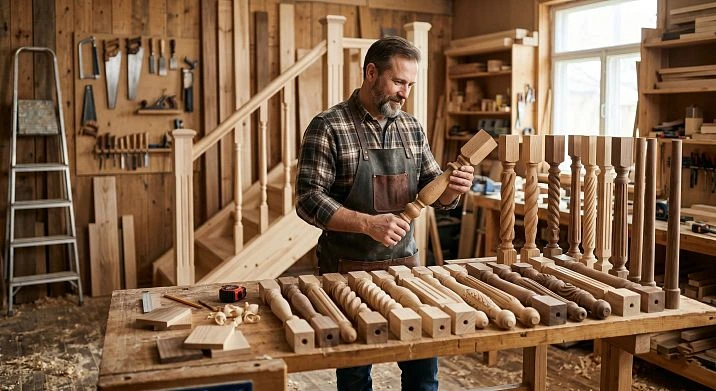
A staircase in a home is not just a transition between floors. It is an architectural accent that is visible from the first seconds after entering. And it is the stair balusters that determine whether the railing will look like a well-thought-out design solution or a random set of details without a concept. Let's break it all down in order — from types and wood species to calculating the quantity and typical mistakes.
Short answer: which balusters to choose for a staircase
If you need a quick reference — here it is:
For a classic staircase in a country house or hall, choose turned or carved wooden balusters with a voluminous profile. For a lighter and airier railing — Flat balusters with a clean silhouette. For a massive staircase with thick steps, balusters with an expressive, large profile are needed — thin elements on a powerful structure look weak. For painting with white enamel — beech models with high-quality sanding. And in any case — balusters, posts, and handrails should be selected in a unified style: a mismatched set ruins the staircase's appearance.




What are balusters and what role do they play in a staircase
A baluster is a vertical element of a staircase railing, installed between the handrail on top and the stringer or step on the bottom. Balusters form the "body" of the railing: they create a visual barrier, support the handrail along the entire length of the flight, and absorb lateral loads when leaning or accidentally bumped.
But the safety function is only one side. Visually, Wooden balusters they set the rhythm of the entire staircase flight. Repeating vertical elements at equal intervals create a pattern that either makes the staircase beautiful or mercilessly exposes selection errors. That is why balusters cannot be chosen in isolation — they work as a system: step, stringer, baluster, handrail, newel post. If one element breaks out of this chain in style or scale, the system loses integrity.
From a safety perspective, there are practical guidelines: the railing height in a residential house is at least 900 mm, in a house with children it is recommended to be 1000–1100 mm. The gap between balusters is no more than 100–150 mm. Each baluster must be securely fixed without play, the connection must be rigid, using a dowel or screw with glue.
Our factory also produces:
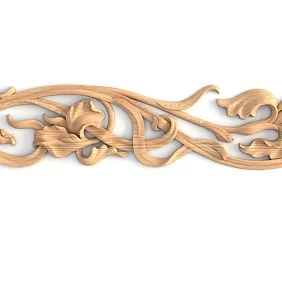
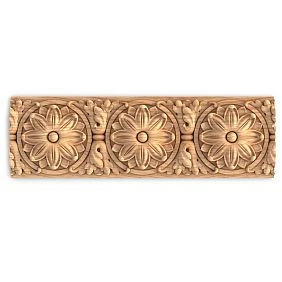
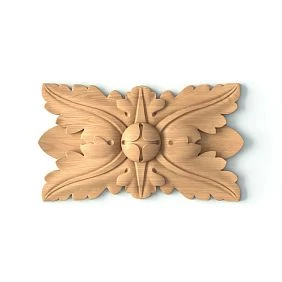
What types of wooden balusters are there
The classification of wooden balusters reflects the real needs of different types of interiors. Each shape has its own aesthetic, its own environment, its own tasks.
Get Consultation
Turned balusters
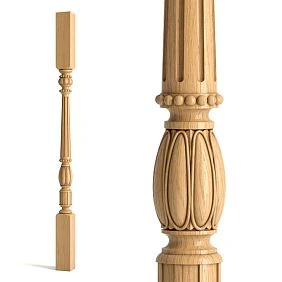
Turned balusters are the most common type for classic wooden staircases. They are made on a lathe: the workpiece rotates, and the cutter forms a symmetrical profile with alternating thickenings, grips, spheres, and vase shapes. The result is a voluminous, three-dimensional silhouette that looks equally expressive from any side and creates a deep play of shadows under side lighting.
It is precisely turned wooden balusters for staircases create the recognizable image of a classic wooden staircase — in a country house, estate, city hall, or spacious living room. The profile can be concise with two or three elements or rich with six to eight transitions, depending on the interior style.
Standard parameters: cross-section of the lower mounting tenon — 35×35 or 45×45 mm, maximum body diameter — 50–80 mm, working height including tenons — 900–1100 mm. For classic and neoclassical staircases, turned balusters are a no-compromise choice.
Flat balusters
Flat balusters — a fundamentally different aesthetic. They are made by milling or cutting from a board and have a flat silhouette: rectangular or with a shaped contour, but without a three-dimensional profile. Visually, they are lighter and airier than turned ones — they create a rhythm of the railing without monumentality.
Flat balusters are appropriate where lightness of the solution is important: decorative staircases on the veranda, balcony railings, stairs in a country house, summer buildings. They are also easier to install and, if necessary, easily replaced.
An important feature: a flat baluster is very demanding of verticality. Any deviation from the vertical is immediately noticeable on the flat silhouette — unlike a turned one, where the figured profile smooths out minor imperfections.
Carved balusters
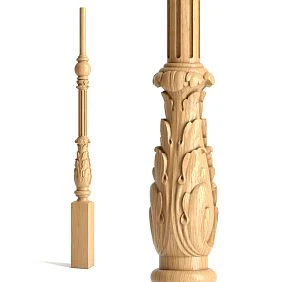
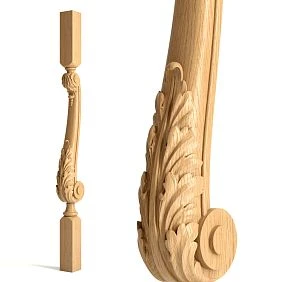
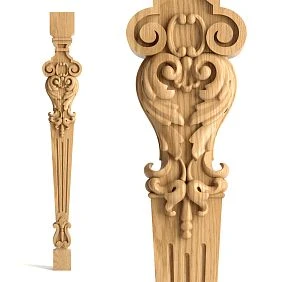
Carved balusters are the highest category of complexity and expressiveness. Ornamental surfaces, plant motifs, geometric patterns, figured overlay elements — all this is created by hand or machine carving. A carved baluster is not just a railing element, but an object of decorative art.
Such balusters are appropriate where the staircase is an architectural dominant: a grand hall, a spacious living room with high ceilings, an estate house in Russian or palace style. For carved balusters, the best species are oak and ash: their dense structure holds fine details well without chipping.
A separate nuance: carved balusters require a special coating technique. A brush with stiff bristles or a spray gun works through each element of the ornament — otherwise, the paint clogs the carving and the pattern loses clarity.
Simple smooth balusters
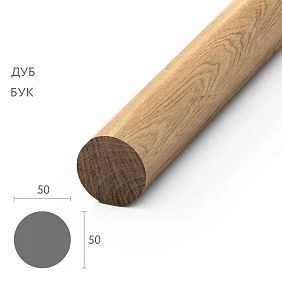
Square or round cross-section, straight or slightly tapered posts, minimal decor — maximum purity of lines. This is a profile for a modern staircase where wood is perceived as a warm natural material, not a decorative accent. Scandinavian style, Japanese minimalism, laconic neoclassicism — all this is the space for a smooth baluster.
Smooth balusters place maximum demands on the quality of execution: the absence of decor means that no geometric defect is hidden under ornamentation. Perfect sanding, impeccable verticality, absolute uniformity in the batch are mandatory conditions.
How to choose balusters by material
The type of wood is not a matter of taste; it is a matter of how the element behaves in specific conditions. A staircase in a country house with seasonal humidity fluctuations behaves differently than a staircase in a city apartment with a constant climate.
Beech is one of the most balanced options. Density 620–680 kg/m³, bending strength about 120 MPa, fine-porous homogeneous structure without a pronounced grain. The main advantage is exceptional receptivity to any paint and varnish materials. Beech balusters They are painted under enamel with minimal labor: the surface does not require additional pore filler, the enamel lays evenly and lasts a long time. That is why beech is the standard for classic white staircases. Cons: with significant humidity fluctuations, it is prone to deformation, so it is less suitable for irregularly heated country houses.
Oak is a legend among species for stair railings. Density 650–750 kg/m³, expressive texture with distinct medullary rays, highest stability under humidity changes. Oak balusters are chosen where the wood texture remains visible: oil or varnish treatment emphasizes the natural pattern, creating a visual that no other material provides. For a premium staircase with oak parquet and oak doors, oak balusters are a must. Using oak under white enamel is more difficult: open pores require pore filler, and the texture still shows through several layers of coating.
Ash is an underestimated choice. Bending strength 130–140 MPa — higher than oak and beech. A beautiful straight-line pattern with thin parallel fibers looks elegant when treated with light oil or varnish. For Scandinavian and Japanese interiors, for staircases in a light color scheme, ash creates exactly that balance between the warmth of wood and the lightness of lines.
Pine is the most affordable option. Density 450–550 kg/m³, resin content provides natural protection from moisture but complicates painting under enamel: resin can seep through the coating. It is appropriate in country houses, on verandas, in country-style interiors where the naturalness of wood is perceived as an advantage.
Comparative table of wood species:
Species | Under enamel | Under oil and varnish | Moisture resistance | Strength | Price level
Oak | more difficult | excellent | excellent | very high | high
Beech | excellent | good | average | high | medium
Ash | good | excellent | good | very high | high
Pine | more difficult | good | average | average | affordable
How to choose balusters to match your interior style
Interior style is a system of requirements for the shape, scale, and character of elements. Choosing the right balusters is impossible without understanding this system.
Classic and neoclassical styles dictate clear rules: the profile should be voluminous, historically recognizable, with several thickenings and vases. The finish should be white enamel or varnish with staining in dark walnut. It is mandatory to combine with solid wood moldings on the walls of the stair flight — this creates a unified architectural image. Support posts should be significantly more massive than the balusters, creating the necessary hierarchy: a powerful accent at the beginning and end of the flight, a rhythmic row of thinner balusters between them.
Russian and estate style — a different character of profile. More folk, with balls, vases, and curls, often with applied carving on the posts. carved wooden balusters create expressive accents, turned balusters with a rich profile fill the space between them. Coating — clear varnish or staining while preserving the texture.
Country house — here the staircase must be simultaneously beautiful, durable, and practical. Turned balusters of medium complexity made of oak or ash, coated with oil or varnish. White enamel in a country house will require more intensive maintenance: scratches and scuffs are more noticeable on a light surface.
Scandinavian and modern style — minimalist smooth or flat balusters with a clean silhouette. Coating — light oil or white enamel. wooden stair components in this style are combined with white walls, light flooring, and minimalist furniture.
An interior with wooden furniture requires consistency of wood species. If the house has solid wood furniture, the staircase should continue this line. Oak balusters with oak parquet and floor baseboard of the same species — a foolproof solution.
A staircase in the hall as an architectural object carries maximum representative load. Here, the most expressive elements are acceptable: carved balusters, massive posts with figured finials, a handrail with a rich profile. Wooden decoration in the form of applied elements on the posts and stringer enhances the architectural effect.
Balusters, posts, and handrails: why it's better to select as a set
This is one of the most important tips that is often ignored — and later regretted. A baluster, a post, and a handrail are three different elements, but in a finished railing they form a single visual system. And this system either works or it doesn't.
A typical mistake: a buyer chooses turned balusters with a rich profile in a classic style, square posts without decoration in a modern spirit, and a handrail with an aggressive shaped profile. Each element can be of high quality. But together they create visual chaos that no paint can fix.
The support post should always be significantly more massive than the baluster. If the baluster has a maximum diameter of 60 mm, the post should have a cross-section of at least 100×100 mm. The proportion of post to baluster in a classic staircase is approximately 2 to 1 by volume. The style of the post profile should be from the same decorative family as the baluster profile: carved wooden balusters — carved with carved, turned with turned, smooth with smooth.
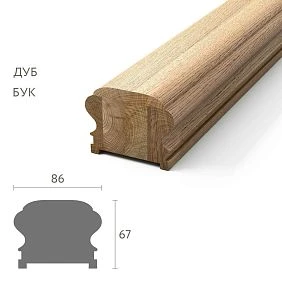
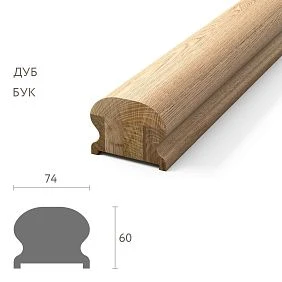
The handrail is chosen by scale and profile. For a light staircase with flat balusters — width 40–50 mm. For a classic one with turned balusters — 60–80 mm. For a monumental one with carved balusters — 80–100 mm. The profile under the palm should be ergonomic: the grip should be comfortable first and foremost, and only then decorative.
The main rule for a set is a single wood species for all elements. Even if everything is painted one color, different species react differently to changes in humidity: some elements swell, others shrink, and over time the railing will start to loosen and creak. Buy all elements of one staircase railing from the same wood species, ideally from the same production batch.
How to calculate the number of balusters
A practical question that everyone has. The answer depends on several parameters.
The standard gap between balusters is 100–150 mm clear. A gap of 100 mm is safe for children of any age, 150 mm is acceptable in homes without small children. With a step of 100 mm, there are approximately 6–7 balusters per meter of railing, considering their own cross-section. With a step of 150 mm — 4–5 balusters per meter.
A simple formula for a straight flight: N = (L − d) / (a + d), where L is the length of the stringer in mm, d is the width of the baluster at the bottom in mm, a is the desired gap in mm, N is the number of balusters.
Example: stringer length 4500 mm, baluster diameter 50 mm, gap 120 mm. N = (4500 − 50) / (120 + 50) = 4450 / 170 ≈ 26 balusters.
Don't forget about horizontal landings and turns: balusters are installed not only in flights, but also along the perimeter of landings with the same spacing. On turns, corner balusters bear increased load — they are fastened especially securely.
When ordering of wooden balusters for the staircase always add a 10–15% margin above the calculated quantity. Some will go to trimming for the flight angle, some to replacement for possible defects, and some may be needed later for repairs.
Mistakes when choosing balusters
Over years of practice in wooden interior decor, it becomes obvious: most unsuccessful staircases are the result not of a limited budget, but of wrong decisions when choosing.
Choosing balusters separately from handrails and newel posts is the main mistake. A staircase is a system. Buying elements individually, focusing only on the price of each, is a path to visual chaos.
Taking too thin balusters for a massive staircase is a proportion error. If the steps are made of massive oak 60 mm thick, and the balusters are chosen with a maximum diameter of 40 mm, thin elements on a powerful structure look fragile and unserious.
Using complex carving in a small space creates clutter instead of luxury. In a small cramped hallway, rich carved balusters produce the opposite effect. For small spaces, use laconic profiles.
Not considering future painting when choosing the wood species is a serious oversight. Balusters for enamel made from a mix of different batches of the same species will show noticeable texture differences after painting.
Not checking geometry upon receiving the order is also a mistake. Before installation, be sure to check the straightness of the axis (the baluster should not have a longitudinal bend) and the uniformity of the profile within the batch.
Mixing different styles in one railing destroys the unity of the staircase, even if each element is of high quality on its own.
Forgetting about landings and turns when ordering. There won't be enough material, you'll have to reorder — and the new batch may differ in color or profile. Order everything at once with a reserve.
Not planning the painting before installation. Painting the profile after installation is always more difficult: hard-to-reach places, risk of painting adjacent surfaces. Prime and apply the first coat before installation, the finishing coat after.
What to buy together with balusters
A smart purchase for a staircase is a complete set where every part has its place.
Support posts are massive vertical elements installed at the beginning and end of each flight, on landings and turns. They bear the main load from the handrail and the entire railing. For a classic staircase carved wooden balusters with figured finials create expressive accents. The minimum cross-section of a load-bearing post is 100×100 mm.
Handrails are what the hand touches with every ascent and descent. The coating is especially important: oil or wax give the most natural feel of wood, varnish gives a smoother surface. The wood species is the same as for the balusters.
Solid wood treads and risers are the foundation for any wooden staircase. The wood species must match or harmonize with the species of the balusters.
Decorative overlays — Wooden decoration in the form of overlay elements on the ends of steps, side surfaces of the stringer, on support posts. The most affordable way to add expressiveness to a staircase without large expenses.
Moldings and baseboards for decorating the walls of the stairwell. Moldings from solid wood create horizontal belts and decorative frames, with a classic profile creates a sense of solidity, reliability. frames the base of the span walls. All these elements are made of the same wood and in the same style as the balusters.
Wooden slats for the stair flight walls. Vertical Wooden planks on the span walls create a connection between the railing and the walls, uniting all wooden elements into a single system. Slats and balusters made of the same wood with the same finish is a professional solution.
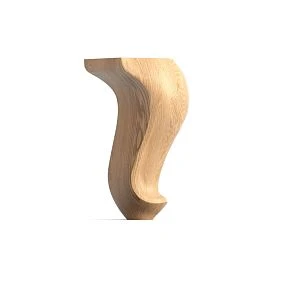
Decorative brackets, furniture legs and handles for the space near the stairs. The area next to the stairs is often used for storage or decoration. wooden furniture legs and brackets made of the same solid wood complete the unified wooden look of the entire space.
FAQ: Answers to popular questions
Which balusters are best for a wooden staircase in a house?
For a classic staircase, turned wooden balusters with a profiled section made of oak or beech. For a modern or Scandinavian interior, smooth or Flat balusters with a minimalist silhouette. The choice is always determined by the interior style, the scale of the staircase, and the planned type of finish.
How do flat balusters differ from turned ones?
A turned baluster has a voluminous three-dimensional profile — it is expressive from any side and creates a deep play of shadows. A flat baluster has minimal depth — it gives a lighter, airier silhouette, expressive "from the front". Turned ones are for classics, flat ones are for light and decorative railings.
Which wood to choose for balusters: beech or oak?
If painting with enamel is planned, beech is preferable: its fine-pored structure provides a smoother finish. If the balusters will be treated with varnish or oil to preserve the texture, oak is indispensable: its natural grain creates a unique decorative effect. In terms of strength, both species are comparable.
Do I need to buy balusters together with handrails and posts?
It is strongly recommended. A staircase railing is a system where all elements must visually and structurally match. staircase components from the same stylistic group and the same wood species guarantees a cohesive result.
Where are wooden balusters used?
In private homes and cottages for all types of staircases, on verandas and balconies, in country estates, and grand halls. Wooden balusters are appropriate wherever a warm, lively atmosphere is desired, as opposed to glass and metal.
How Many Balusters Are Needed for a Staircase?
Aim for a gap of 100–150 mm between balusters. For homes with children, use 100 mm. Approximate calculation: 5–7 wooden balusters per linear meter of stringer with a 100 mm gap. Add 10–15% spare and elements for horizontal landings.
How to combine balusters, posts, and handrails?
Same wood species, same finish, the post is about twice as massive as the baluster, the profile of all elements is from the same stylistic group. Everything together — from the same catalog, ideally from the same production batch. Buy wooden balusters for staircases together with posts and all related elements can be found in the STAVROS catalog — here is a full range of wooden moldings and components made from solid oak and beech for stairs of any complexity.