Article Contents:
- What is baguette molding and when is it bought by the meter
- For picture frames
- For mirrors
- For interior panels
- For decorative wall inserts
- You can assemble a non-standard size
- You can choose a profile to match the interior style
- You can paint or tint it to match the project
- By Profile Width
- By relief depth
- By wood species
- By finish type: painted or unpainted
- By task: painting, mirror, panel, wall
- For a baguette workshop
- For interior designer
- For a carpenter or furniture workshop
- For a private buyer
- Choosing a profile only by photo
- Do not count the footage
- Confusing baguette and molding
- Not considering the finish
- Taking a too decorative profile for a calm interior
- Buying a ready-made frame where molding is needed
- Do not check the product card
- What is baguette molding?
- How is baguette molding different from a ready-made frame?
- Where to buy wooden picture frame molding by the meter?
- When is an unpainted wooden baguette needed?
- Can a wooden baguette be used for a mirror?
- Will the molding fit for interior panels?
- What is the difference between a picture frame molding and a crown molding?
- How to choose the width of a wooden molding?
- What to choose for a classic interior?
- Do I need to buy molding with extra length?
- What to check before ordering molding?
- Who finds it more convenient to buy wooden molding by the meter?
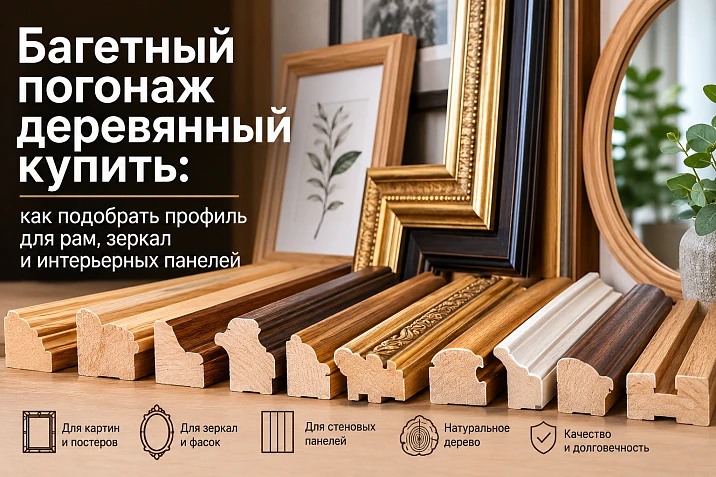
Wooden molding by the meter is usually bought not for a single random frame, but for a specific project: to frame a series of paintings, assemble a frame for a mirror, cover a decorative insert on the wall, make a panel in a classic style, or select a profile for a workshop, carpentry production, or design object. In such a task, not only the appearance of the profile is important. You need to understand the length, relief shape, width, material, future finish, and how the molding will work next to the painting, mirror, wall panel, or furniture.
A ready-made frame is convenient when the size is standard and nothing needs to be adjusted. But in professional work, what is more often needed is molding by the meter: a long wooden profile that can be cut to the required size, adjusted to the project, and finished in the desired color. This approach is convenient for framing workshops, designers, carpenters, furniture manufacturers, interior decorators, and buyers who need not one ready-made item, but material for precise assembly.
At STAVROS, there is a real product group of wooden molding, so the buyer does not have to search for random blanks, but can immediately buy wooden baguette molding in the specialized section. This is important when you need not just a decorative element, but a wooden baguette for paintings, mirrors, panels, and interior design with the ability to choose a profile for the task.
In this article, we will look at how baguette molding differs from a ready-made frame, when wooden baguettes are bought by the meter, how to choose a profile for a painting, mirror, or decorative panel, why an unpainted baguette is convenient for finishing, and how not to confuse a baguette with a molding, architrave, or decorative overlay.
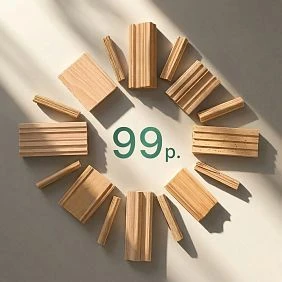
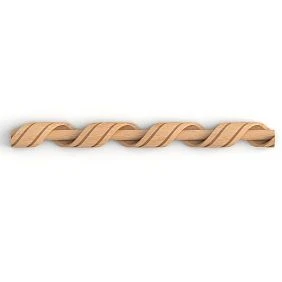
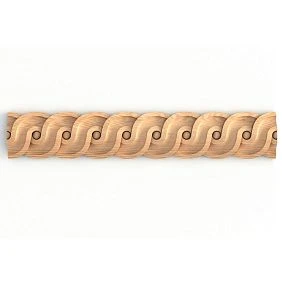
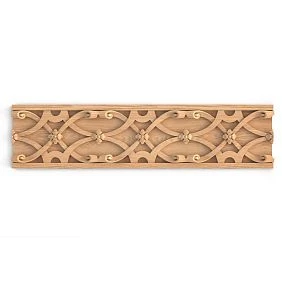
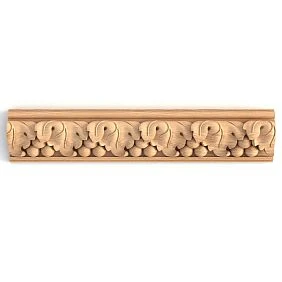
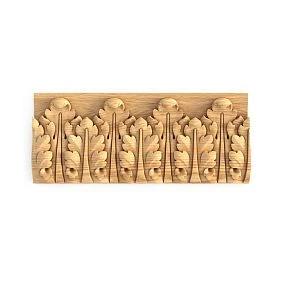
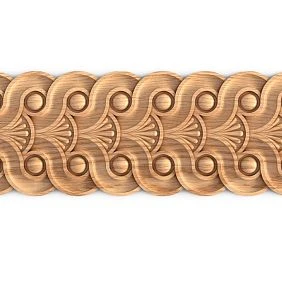
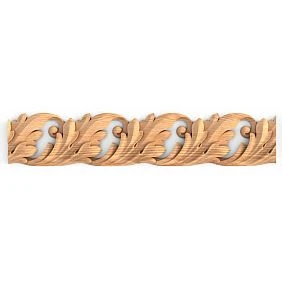
What is baguette molding and when is it bought by the meter
Baguette molding is a wooden profile used for making frames, framing mirrors, decorative panels, inserts and interior elements. It is bought not as a finished frame with a given size, but as a material that can be cut to fit a specific task.
That is why queries like "buy wooden baguette by the meter", "buy wooden baguette for paintings by the meter" or "buy unpainted wooden baguette by the meter" are important for professional purchasing. The buyer is looking not for a souvenir frame, but for a profile that can be used in work: cut, joined, finished, matched to the style of the room or to a series of products.
Baguette molding is especially convenient when standard frames do not fit. For example, a mirror has a non-standard height, a painting is on a canvas of unusual size, a wall panel must repeat the proportions of furniture, and a decorative insert requires precise framing. In such cases, a finished frame limits, while molding gives freedom.
At the same time, freedom of choice requires care. You need to understand in advance what profile is needed: narrow or wide, simple or carved, smooth or embossed, painted or unpainted, for a painting or for a mirror, for a wall or for a furniture element. A mistake in the profile can ruin even good material.




For picture frames
For paintings, the baguette should work not by itself, but together with the image. A too wide profile can draw attention to itself. A too thin one can get lost next to a large canvas. A deep relief is not suitable for every subject, and a calm profile sometimes better emphasizes the work without competing with it.
If you need Buy wooden picture frame molding by the meter, first you should assess the size of the painting, the thickness of the base, the style of the image, and the place where it will hang. For a classic interior, a more expressive profile is often appropriate. For a modern wall, a simple wooden frame without excessive decoration may suit.
Buying by the meter is convenient for a workshop that frames several pieces. You can choose a single profile for a series of paintings, maintain one stylistic direction, and not depend on ready-made frames of fixed sizes. This is especially important for gallery walls, restaurants, hotels, salons, offices, and private interiors with multiple images.
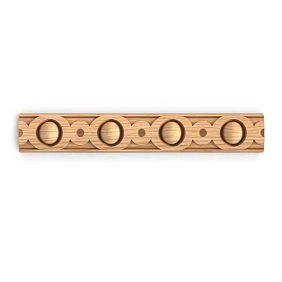
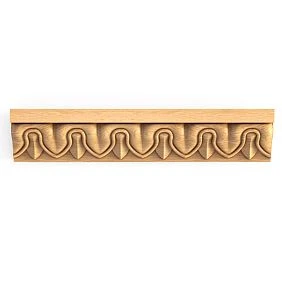
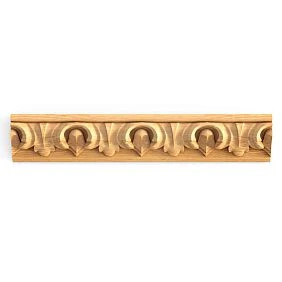
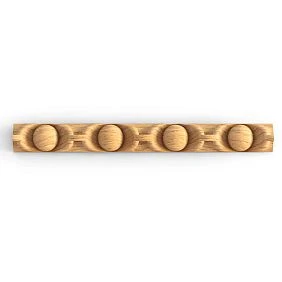
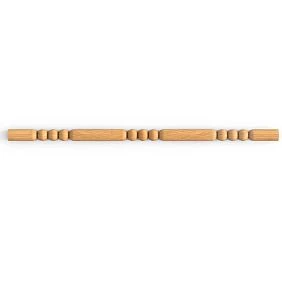
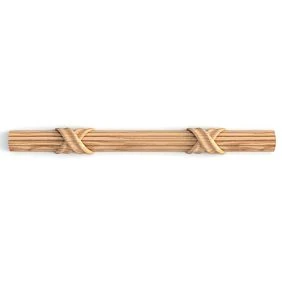
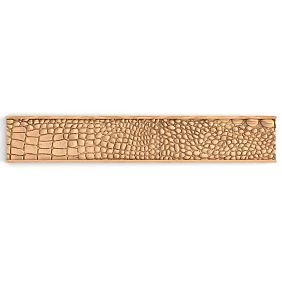
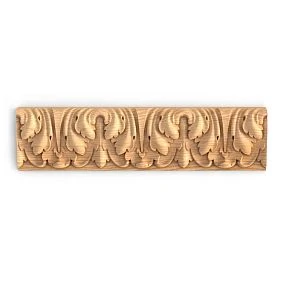
Our factory also produces:
For mirrors
A mirror requires a different approach. Here, the frame must consider not only the beauty of the profile but also the visual weight of the mirror itself. A large mirror in a thin frame may look weak, while a small mirror in an overly heavy frame may appear overloaded.
A wooden frame for a mirror helps make the object more furniture-like and interior-oriented. The mirror ceases to be just glass on the wall and becomes part of the room: hallway, bedroom, bathroom area, dressing room, living room, or salon. Wooden framing works especially well next to solid wood furniture, carved decor, classic doors, consoles, and panels.
If the mirror size is non-standard, molding by the meter is more convenient than a ready-made frame. It can be cut to the required height and width, the profile can be matched to the room's style, and finished so that the frame complements the furniture, wall, or adjacent decor.
Get Consultation
For interior panels
Interior panels often require neat framing. The molding helps define a border, emphasize an insert, highlight the central part of a wall, or connect the panel with furniture. Unlike regular molding, a frame profile is more often perceived as a framing element: it gathers the inner field and makes it complete.
This scenario is especially interesting for designers and carpenters. You can use wooden molding around a decorative insert, wall panel, fabric panel, mirror section, or artistic element. Molding by the meter allows you to adapt to the size of the object rather than being limited to a ready-made product.
In an interior with a classic or neoclassical logic, the frame profile helps make the wall more substantive. It doesn't just add a line but creates a frame around the semantic center. Therefore, it is important to choose a profile that matches the scale of the panel and does not conflict with adjacent details.
For decorative wall inserts
A decorative wall insert can be made of wood, fabric, mirror, art panel, or other material. Bagette molding helps frame it so that it doesn't look like a random fragment. The profile creates a border, sets the scale, and connects the insert with the rest of the interior.
For such tasks, it is important not to confuse bagette with molding. Molding is more often used as linear decor for walls, facades, or ceilings. Bagette molding more often works as a frame. If the task is to create a decorative frame around an insert, painting, mirror, or panel, bagette is more suitable.
Why bagette molding is more convenient than a ready-made frame
A ready-made frame is good when the size is standard, the task is simple, and the buyer doesn't need to adjust the profile to the interior. But in professional work, such situations are fewer. More often, you need to frame a non-standard object, maintain a consistent line across multiple frames, or select a wooden profile for a specific finish.
Bagette molding offers flexibility. It can be cut to the required length, used for multiple items, matched to a project's profile, and finished to coordinate with furniture, walls, doors, panels, or decorative elements. Therefore, workshops, designers, and carpenters find it more advantageous to work with molding rather than ready-made frames.
You can assemble a custom size
The main advantage of molding is size freedom. Paintings, mirrors, and panels rarely fit standard frames. This is especially true for private orders, custom work, mirrors for niches, decorative wall panels, or series of items for commercial interiors.
If baguette is purchased by the meter, the craftsman can cut the profile to a specific size. This reduces the risk of compromises. You don't have to choose a ready-made frame that is slightly larger or smaller than the required format. The profile adapts to the object, not the other way around.
You can choose a profile to match the interior style
A ready-made frame often limits style options. With molding, the selection is broader: you can choose a more subdued, more expressive, carved, classic, or minimalist profile. This is important for interiors because the frame or border should not exist separately from the room.
If the interior is classic, a relief wooden profile looks good. If the space is modern, a more restrained baguette may be appropriate. If the task involves furniture, wall panels, or mirrors, the profile should consider not only the object but also its surroundings.
Can be painted or tinted to match the project
An unfinished wooden molding is convenient because it can be finished to match a specific interior. This is an important scenario for workshops, designers, and carpenters. The same profile can look different after painting, tinting, or other finishing treatments.
If you need to buy unpainted wooden baguette by the meter, the buyer usually wants to control the final appearance of the product. This is useful when the frame must match furniture, doors, panels, walls, or decorative details. Before ordering, check the current parameters and finishing options in the product card or clarify them with a STAVROS manager.
How to choose STAVROS wooden molding
Wooden molding is chosen not only by the profile design. It is important to evaluate the width, relief depth, material, future finish, purpose, and installation location. One profile will look good on a small painting, another on a large mirror, and a third on a decorative panel.
The STAVROS section features wooden molding products, including items K-034, K-105, K-006, K-017, K-049, K-020, K-095, K-127, and others. Before ordering, check the product cards: verify current dimensions, material, profile features, purchase conditions, and compatibility with the task.
| Selection parameter | What to Check | Why this is important |
|---|---|---|
| Profile | Shape, relief, width, and depth | The profile defines the style of the frame or molding |
| Footage | How much profile is needed for the project | Calculation errors lead to material shortage |
| Finishing | Painted or unpainted option | An unpainted baguette is convenient for a custom color |
| Purpose | Painting, mirror, panel, insert | Different tasks require different profile scales |
| Style | Classic, neoclassical, modern interior | The frame should match the room and the object |
By profile width
Profile width affects how noticeable the frame will be. A narrow baguette is suitable for small works, light mirrors, calm interior panels, and cases where the frame should not draw attention. A wide profile makes a stronger statement and is suitable for large objects, classic interiors, and expressive wall compositions.
The error often occurs when buying 'by eye'. In a photo, the profile may seem suitable, but next to the actual painting or mirror it may turn out too thin or too heavy. Therefore, before ordering, you need to imagine the frame in the scale of the object and the room.
By relief depth
Relief depth determines how decorative the frame will be. A carved and pronounced profile works well in classic styles, for framing mirrors, formal frames, interior panels, and objects where noticeable plasticity is needed. A calm profile is better suited for modern rooms and paintings where the emphasis should remain on the image.
For complex interiors, you can consider carved wooden frame STAVROS. Such a profile helps add depth, relief, and classic character, but requires careful selection by scale.
By tree species
The type of wood affects the texture, density, behavior in finishing, and the overall character of the product. If exact options for a specific product are not specified in the source data, they need to be checked in the product card. You cannot choose the wood type by assumption: different profiles may have different characteristics.
For the buyer, it is important to understand not only the name of the material but also the future scenario. If the baguette will be painted, a stable base for finishing is needed. If it will be tinted, texture is important. If the profile is used next to solid wood furniture, you need to see how well the wood will match the adjacent elements.
By finish type: painted or unpainted
Unpainted wooden frame is convenient for projects where the final color must match the interior. It can be matched to furniture, doors, wall panels, mirrors, picture frames, or decorative trim. This is especially important for designers and workshops that work not with a ready-made standard, but with a specific interior.
The painted option is more convenient if the buyer needs a ready visual result and does not plan to do their own finishing. But if the task is complex, buying an unpainted wooden baguette by the meter is often more practical: it gives more freedom for the finish.
By task: painting, mirror, panel, wall
For a painting, the balance between the image and the frame is important. For a mirror, the scale and furniture-like character. For a panel, the connection with the wall and adjacent decor. For a decorative insert, the precise framing function. Therefore, the same baguette cannot be considered universal for all cases.
Before ordering, you need to describe the task: what exactly will be framed, where the object will stand or hang, what style is needed, what size the product is, whether painting or tinting is planned. This helps to choose a profile not randomly, but for the actual job.
Commercial selection: which baguette molding to buy for the task
To make the choice practical, it is useful to start from the buyer's task. One needs a basic wooden baguette for a project, another needs a carved profile, a third needs a classic collection, a fourth needs solid wood molding for wall or furniture design.
| Buyer's task | What to choose | Why it fits |
|---|---|---|
| Need a baguette profile for the project | STAVROS wooden baguette | You can choose a profile for frames, mirrors and panels |
| Need a carved profile | Carved wooden baguette | Suitable for classics, mirrors, and expressive frames |
| Need a classic style | Wooden baguette in classic style | Helps maintain an interior with traditional forms |
| Need a profile for wall or furniture | Solid wood molding for interiors | Suitable for interior elements, panels, and decorative tasks |
This logic helps avoid confusing different categories. If you need a baguette for frames and mirrors, it's better to start with the wooden baguette section. If you need carved linear decor or a profile for interior finishing, you can additionally look at solid wood molding.
How not to confuse baguette, molding, casing, and frame
Baguette, molding, casing, and finished frame may look similar externally because they all belong to decorative profile elements. But their tasks are different. If you choose the wrong type of product, the result will be uncomfortable or visually incorrect.
Bagette molding is chosen for frames, mirrors, panels, and decorative borders. Molding is more often needed for linear decoration of walls, facades, ceilings, or furniture. Trim is used around a door or window opening. A ready-made frame is suitable when cutting and self-assembly are not required.
| Element | When to choose | Main difference |
|---|---|---|
| Bagette molding | For frames, mirrors, panels, decorative framing | Works as a frame profile |
| Molding | For linear wall, facade, and ceiling decor | More often defines a line, not a frame |
| Casing | For a door or window opening | Frames an opening, not a picture or mirror |
| Ready-made frame | When the size is standard and assembly is not needed | Already has a set format |
| Decorative overlay | For furniture, facade, or accent element | Does not replace frame profile |
The most common mistake is buying molding instead of a baguette. Molding can be beautiful, but it is not always suitable for a framing task. If you need to frame a painting, mirror, or panel, it is better to choose a profile designed specifically for frame framing.
Choosing baguette for different customer scenarios
For a framing workshop
For a workshop, the important factors are length, profile repeatability, ease of cutting, and the ability to use one baguette in a series of orders. If a client brings paintings of different sizes, ready-made frames do not solve the problem. Linear molding allows making frames for specific work.
For a workshop, supply stability, clear product cards, and the ability to select several profiles for different styles are especially important. In such a scenario, it is better to choose a base group of profiles in advance: a calm option, a classic one, a carved one, and a more expressive one.
For an interior designer
A designer chooses a baguette not as a separate product, but as part of a project. The profile should match the furniture, walls, doors, mirrors, panels, and the overall concept of the room. Therefore, not only the dimensions are important, but also the character of the relief.
If the interior is classic, the designer can use Wooden baguette in classic style. If the task is broader and includes walls, panels, or furniture, you should look not only at frame baguettes but also at solid wood moldings.
For a carpenter or furniture workshop
A carpenter needs baguette linear molding not only for paintings. It can be used in decorative panels, framing inserts, working with mirrors, designing facade elements, and interior details. Here, it is important that the profile is suitable for processing, joining, and future finishing.
Before ordering, you need to check the material, dimensions, profile shape, and finishing options. If the exact characteristics are not specified in the initial data, they should be viewed in the product card or clarified with a STAVROS manager.
For a private buyer
A private buyer most often looks for a baguette for a specific painting, mirror, or decorative idea. It is important for them not to make a mistake with the type of product. If a non-standard size is needed, it is better to choose moldings. If a ready-made frame without cutting is needed, moldings may require additional work.
For a private project, it is useful to measure the object in advance, determine the room style, and understand who will do the cutting and assembly. This way, buying a wooden baguette will not turn into a problem after receiving the material.
What to buy together with a wooden baguette
Baguette moldings almost always require adjacent materials and solutions. For a frame task, mounting materials, a finishing coating, proper cutting, and sometimes additional decorative elements are needed. For an interior panel, moldings, solid wood moldings, overlays, or other wooden parts may be required.
If you need to decorate a wall or panel, you should look at Solid wood molding for interiors. If an expressive frame profile is needed, you can choose carved wooden baguette. If the project is classic, it is appropriate to consider the "Classic" collection.
| What to add to the purchase | Why this is needed | For which scenario |
|---|---|---|
| Installation materials | For assembly, fastening, and installation | Frames, mirrors, panels |
| Finish coating | To adjust the shade for the project | Unpainted baguette for finishing |
| Wooden moldings | For linear decor next to a frame or panel | Walls, facades, interior inserts |
| Carved overlays | For furniture or accent elements | Classic interior projects |
| Ready-made mirror frames | When the client does not want to assemble a frame from molding | Quick ready-made scenario |
Don't buy molding separately from the project. It's better to immediately understand how it will be attached, how it will be finished, who will do the cutting, what adjacent profiles are needed, and whether additional decor will be required.
Mistakes when buying molding
Choosing a profile only by photo
The photo shows the shape but doesn't always convey the scale. A profile may look expressive on a card but turn out too narrow for a mirror or too busy for a painting. Before ordering, you need to evaluate the dimensions and the actual object.
Do not calculate the footage
Molding is bought for cutting, so it's important to calculate the perimeter of the product in advance and account for a margin for joints. If there isn't enough material, the project will stop. If you buy too much without calculation, leftover pieces will remain.
Confusing baguette and molding
Molding doesn't always replace baguette. For frames, mirrors, and panels, you need a profile that works as a border. If you buy linear wall decor instead of baguette, assembly may be inconvenient.
Not considering the finish
Unpainted baguette is good for a custom project but requires further finishing. If the buyer expects a ready color, you need to clarify the product's condition, finish, and future surface work in advance.
Choosing a too decorative profile for a calm interior
Carved baguette is beautiful but not always appropriate. If the interior is minimalist, too active a relief may clash with the room. In such a case, it's better to choose a more restrained profile.
Buying a ready-made frame where molding is needed
If the size is non-standard, a ready-made frame often forces you to adjust the object to it. Molding works the opposite way: it allows you to assemble a frame for the object. For a professional task, this is more convenient.
Not checking the product card
Before ordering, you need to check current parameters: dimensions, material, profile, finish, purchase conditions. If there is insufficient information, it's worth clarifying details with a STAVROS manager.
Who is wooden baguette molding suitable for
Wooden baguette linear molding is suitable for framing workshops, designers, carpenters, furniture manufacturers, interior decorators, and private buyers who need a profile for a specific size. It's a good choice for frames of paintings, mirrors, panels, decorative inserts, wall compositions, and interior projects.
It is especially useful when you need to work by the meter, assemble a custom frame, make a series of products in the same style, or finish a profile to match the interior. Unpainted wooden baguette is convenient for projects where the final color must match furniture, walls, or other wooden elements.
Molding is also suitable for those who want to avoid random blanks. If the profile is purchased in a dedicated category, it is easier to control the purpose, assortment, and compliance with the task.
When it's better to choose another option
Baguette molding is not always needed. If the customer requires a ready-made frame of a standard size and does not want to deal with cutting, joining, and finishing, it is more convenient to choose a finished product. Molding requires further work.
If the task is not related to a frame, but to linear wall, ceiling, or facade decor, it is better to look at moldings or other suitable profiles. If you need to frame a doorway, you need a casing. If a furniture accent is required, a decorative overlay may be suitable.
If the customer does not understand who will assemble the frame, how to fasten it, and how to finish it, it is better to first clarify the technology with a craftsman. Baguette molding provides freedom but requires skilled work.
How to buy baguette molding on STAVROS
It is best to start the purchase with the task. You need to understand what will be framed: a painting, mirror, panel, decorative insert, wall, or furniture element. Then determine the size of the object, interior style, desired profile, future finish, and required length.
If the task is a frame, the main category is buy wooden baguette molding. There you can look at STAVROS wooden bagette and choose a profile for the project. If a carved option is needed, you can go to the section carved wooden frame STAVROS. For a classic design, profiles from the section are suitable Wooden baguette in classic style.
Before ordering, you need to check the product card: current dimensions, material, profile, finish, purchase conditions, and compatibility with the task. If the baguette is needed for a workshop or a project with multiple objects, it is worth calculating the total footage and a cutting allowance in advance.
If the project is complex, it is better to prepare the object dimensions, interior photo, finishing task, and desired style. This makes it easier to select a profile and avoid a purchase that looks beautiful separately but does not suit the frame, mirror, or panel.
FAQ: frequently asked questions about wooden baguette moldings
What is baguette molding?
Baguette molding is a wooden profile purchased by the meter for making frames, framing mirrors, panels, decorative inserts, and interior elements.
How is baguette molding different from a ready-made frame?
A ready-made frame already has a set size. Baguette molding can be cut to fit a specific painting, mirror, or panel, making it more convenient for non-standard sizes and professional projects.
Where to buy wooden baguette for paintings by the meter?
You can Buy wooden picture frame molding by the meter in the STAVROS wooden baguette section. Before ordering, you should check the profile, dimensions, and purchase conditions.
When is unpainted wooden baguette needed?
An unpainted baguette is needed if the profile will be painted, tinted, or matched to furniture, walls, doors, mirrors, or the overall project. It offers more freedom for finishing.
Can a wooden baguette be used for a mirror?
Yes, a wooden baguette is suitable for framing mirrors. It is important to choose a profile based on the mirror size, room style, and visual weight of the future frame.
Is baguette suitable for interior panels?
Yes, baguette molding can be used for decorative panels and inserts. It helps create a frame, highlight the central part, and make the wall more finished.
How is a baguette different from a molding?
A baguette is more often used as a frame profile for paintings, mirrors, and panels. A molding is more often needed for linear decoration of walls, facades, ceilings, and furniture.
How to choose the width of a wooden baguette?
The width depends on the size of the object. For a small painting, a more delicate profile is usually needed; for a large mirror or panel, a more noticeable one. Before ordering, it is important to assess the scale in the interior.
What to choose for a classic interior?
For a classic interior, you can consider Wooden baguette in classic style. It helps support traditional furniture, mirrors, panels, and decorative elements.
Do I need to buy baguette with a reserve?
Yes, during cutting, a reserve is usually needed for joints, trimming, and possible errors. The exact reserve depends on the project, frame size, and assembly scheme.
What to check before ordering baguette?
You need to check the profile size, material, surface condition, future finish, purpose, required length, and compatibility with the object: a painting, mirror, panel, or wall insert.
Who finds it more convenient to buy baguette molding by the meter?
Molding by the meter is convenient for baguette workshops, designers, carpenters, furniture manufacturers, and private buyers who need to assemble a frame or trim for a non-standard size.
Conclusion
Baguette molding is not just a wooden strip or a ready-made frame. It is a profile for precise work: frames for paintings, mirrors, decorative panels, inserts, and interior design. It is bought by the meter when a non-standard size, suitable relief, finishing options, and project flexibility are needed.
For a successful purchase, you need to determine the task in advance: a painting, mirror, panel, wall, or furniture element. Then select a profile by width, relief, style, material, and future finish. Unpainted wooden baguette is convenient for workshops and designers because it can be finished to the desired color and character for a specific interior.
At STAVROS you can buy wooden baguette molding in the wooden baguette section, select carved wooden frame STAVROS for expressive frames and view Solid wood molding for interiors for related decorative tasks. This approach helps not to fit the project to a random frame, but to choose a profile for the actual work, size and interior style.