Article Contents:
- What is a decorative frame for a TV: essence and principle
- How a baguette frame for a TV works
- When a frame for a TV zone is needed: five scenarios
- Scenario 1: The TV "falls out" of the interior
- Scenario 2: The wall looks empty around the TV
- Scenario 3: Need to connect the TV zone with furniture
- Scenario 4: TV in a niche or portal
- Scenario 5: Classic or neoclassical interior
- What to use for assembling a TV frame: a complete overview of STAVROS materials
- Wooden baguette: the main framing element
- Wooden moldings: a more subdued framing
- Solid wood molding: profile for strips and inserts
- Decorative elements: accents for a classic frame
- Pilasters as vertical supports for the portal
- How to choose a profile for the frame: parameters and principles
- Profile width
- Relief height
- TV depth and frame gap
- Joint angle
- Finish color and its coordination
- How to Calculate TV Frame Size: Step-by-Step Guide
- Step 1: Measure the TV
- Step 2: Determine the Gap Between TV and Inner Frame Edge
- Step 3: Determine the Outer Frame Size
- Step 4: Check Symmetry Relative to Wall and Furniture
- Step 5: Calculate Profile Length
- Step 6: Finalize Finish Before Installation
- TV Zone Design Options with STAVROS Wood Profiles
- Decision Table
- Simple Picture Frame: Minimalist and Effective
- Double frame: external and internal
- TV portal with pilasters and cornice
- Frame in the boiserie system
- Frame styling options for TV
- Classic
- Neoclassicism
- Modern classicism
- Office and Library
- Frame finishing: material, technique, coordination
- White and cream enamel
- Wood Toning
- Patina: the relief becomes visible
- Mounting the frame around the TV: practical principles
- Typical mistakes when designing a TV frame
- Mistake 1: Frame flush with the TV
- Error 2: Lower cabinet not accounted for
- Error 3: Profile too wide for a small wall
- Error 4: Molding too thin for a large TV area
- Error 5: Different profiles for horizontal and vertical frame slats
- Error 6: Inconsistent finish
- Error 7: No allowance for trimming
- Error 8: Confusing decorative frame with structure
- Where to buy elements for STAVROS TV area design
- Frequently Asked Questions
- About the Company STAVROS
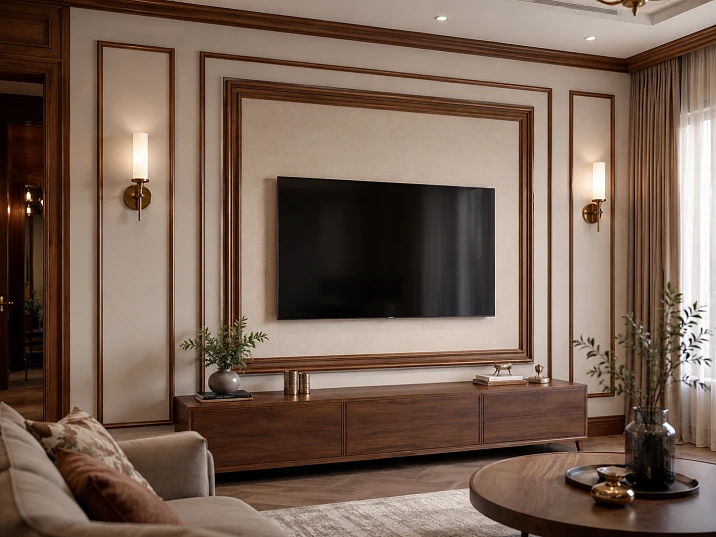
Imagine a living room with a well-thought-out classic interior: wall panels, wooden moldings, furniture with carved decor, proper lighting. And in the middle of all this — a black rectangle of a TV hanging on the wall like a random guest at an elegant party. Without a frame. Without connection to the space. Just a screen.
It is this picture that makes designers and attentive homeowners ask the question: how to design a TV on the wall so that it does not disrupt the integrity of the room? The answer is A frame for a TV on the wall Made from wooden baguette and moldings. Not a mount. Not a bracket. Not an electronic gadget like a "TV-picture." But a thoughtful decorative framing that integrates the screen into the interior system.
A baguette frame for a TV on the wall is a designer's tool. And we will discuss how to use it properly here in detail.
What is a decorative TV frame: essence and principle
First of all — an important distinction. Decorative TV frame is neither a bracket, nor a swivel mechanism, nor a structure for attaching the TV panel to the wall. It is precisely a decorative element — a framing created around an already mounted TV.
The TV hangs on the wall using the standard mounting bracket. The frame made of wooden molding is mounted around it separately — on the wall, on a furniture portal, or as part of a wall decorative system. It does not touch the TV. It frames it, defines its "place" in the wall space.
This is fundamental. Because understanding the difference between "frame as decor" and "frame as structure" determines all further choices: which profile to use, what gap to leave, how to coordinate with furniture, how to calculate the size.




How a baguette TV frame works
TV baguette frame — это четыре отрезка деревянного профиля (багета или молдинга), смонтированных на стене вокруг ТВ-панели по периметру. Углы стыкуются под 45 градусов — как в обычной картинной раме.
Принцип работы: рама задаёт зрительную границу. Телевизор перестаёт быть «чёрным пятном» и становится «панно» — частью стены, которая имеет чёткую форму и обрамление. При выключенном экране рама превращает зону телевизора в декоративную нишу. При включённом — организует зрительный фокус.
Рама из деревянного багета для телевизора работает в любом интерьере, где есть деревянный декор: молдинги, погонаж, буазери, мебельные фасады. Именно связь через материал и орнамент делает ТВ-зону частью общего пространства.
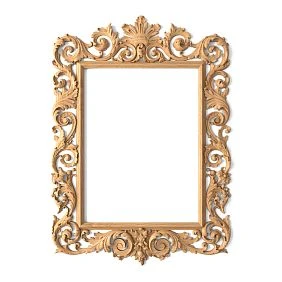
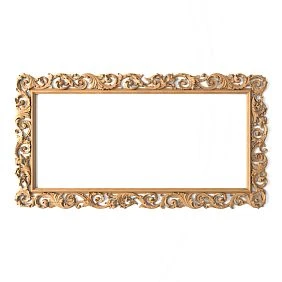
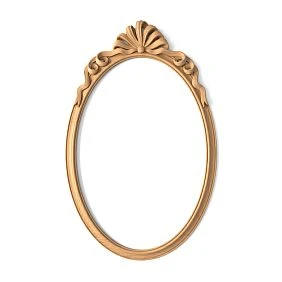
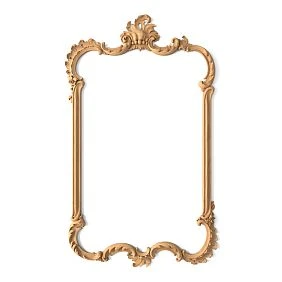
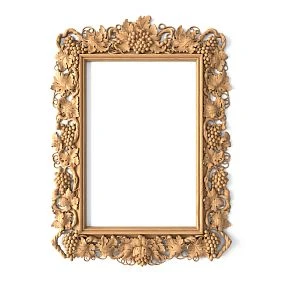
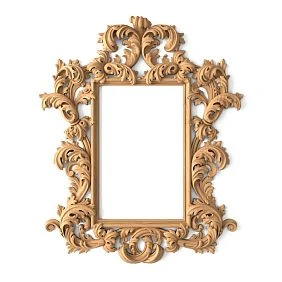
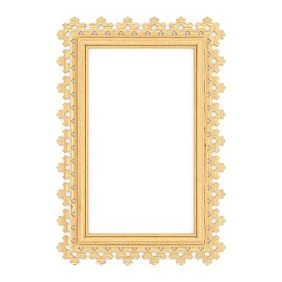
Our factory also produces:
Когда нужна рама для ТВ-зоны: пять сценариев
Есть несколько ситуаций, когда вопрос «нужна ли рама вокруг телевизора» решается однозначно — да.
Get Consultation
Сценарий 1: Телевизор «выпадает» из интерьера
Классическая гостиная с молдингами, паркетом, деревянными фасадами — и чёрный прямоугольный экран без какого-либо обрамления. Это диссонанс. Рама из of wooden moldings устраняет его: экран приобретает «рамочный» контекст, характерный для остального декора комнаты.
Сценарий 2: Стена выглядит пустой вокруг телевизора
When the TV is the only element on a large wall, the space around it feels incomplete. A frame — even without extending the decor across the entire wall — defines the zone and "holds" the composition.
Scenario 3: Need to connect the TV zone with furniture
A cabinet under the TV, cabinets on the sides, shelves — and a TV that doesn't interact with them at all. A frame made from the same profile as Wooden trim on the cabinet facades creates visual unity. The screen becomes part of the furniture composition.
Scenario 4: TV in a niche or portal
A built-in niche for the TV is a ready-made "framing" situation. A wooden profile around the perimeter of the niche turns a technical opening into an architectural element. This is especially important in a system of boiserie and wall panels, where the niche must be coordinated with the entire decorative program of the wall.
Scenario 5: Classic or neoclassical interior
In these styles, the principle "every element must be integrated into the system" is mandatory. A TV without a frame in a classic interior is a visual mistake. A frame made of wooden baguette or moldings is not an addition, but a style requirement.
What to use for assembling a TV frame: a complete overview of STAVROS materials
This is a key section. The choice of profile determines everything: the character of the frame, its scale, style, installation method, and finishing.
Wooden baguette: the main framing element
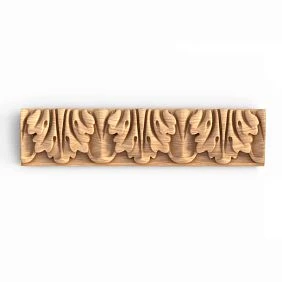
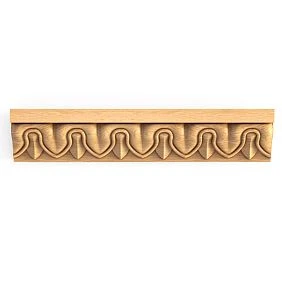
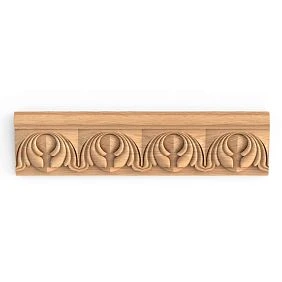
Wooden Picture Frame — a profile with a developed relief, designed for framing applications. Its cross-section is "wrapping": the profile covers the plane on one side and creates an expressive outer edge on the other.
Why a baguette is the best choice for a frame around a TV:
-
It creates a genuine framing effect — the TV is perceived as a "picture"
-
The developed profile is clearly visible from a distance of several meters (standard viewing distance)
-
Corner joints at 45° provide clean geometry without visible transitions
-
The baguette coordinates with other wooden interior elements: moldings, pilasters, cornices
Width of a wooden baguette for a TV frame: optimally 40–80 mm. Less than 40 mm — the frame will be too thin and "get lost" against the screen background. More than 80–90 mm — it will overload a small room.
For a 55" TV (121 × 68 cm): a baguette frame with a width of 50–60 mm looks proportional.
For a 65" TV (144 × 81 cm): width 60–75 mm.
For a 75" TV (166 × 94 cm): 70–85 mm.
Wooden moldings: a more restrained framing
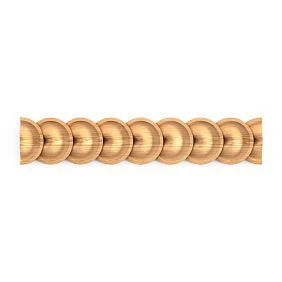
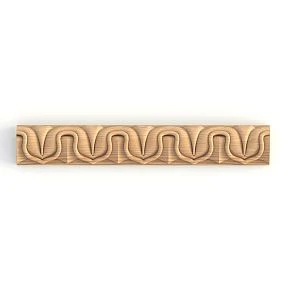
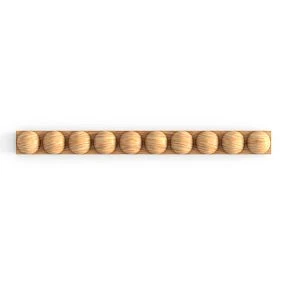
wooden moldings, cornices, and baseboards — horizontal and vertical profiles with moderate relief. Molding creates a thinner, "airier" frame — less expressive than baguette, but more versatile.
Moldings are good for neoclassical interiors: strict, with clean geometry, where each profile must be precisely scaled.
Molding for the TV zone frame: width 25–50 mm. Relief — moderate, 5–12 mm. You can combine two moldings of different widths — inner and outer — to create a frame with a "belt."
Solid wood trim: profile for planks and strips
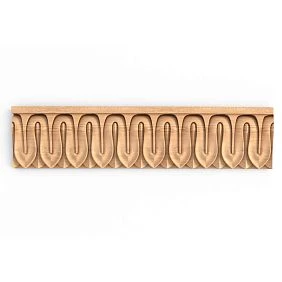
solid wood millwork is used not as the main "framing" detail, but as an auxiliary element of the system. It can be used for:
-
horizontal planks above and below the TV ("lines" of the TV zone)
-
frame layouts on wall panels around the TV
-
transition profiles between the frame and wall finish
-
elements that 'connect' the frame with furniture facades
If wooden moldings are used on furniture facades in the living room, the same profile as horizontal planks in the TV zone creates perfect decorative cohesion.
Decorative elements: accents for a classic frame
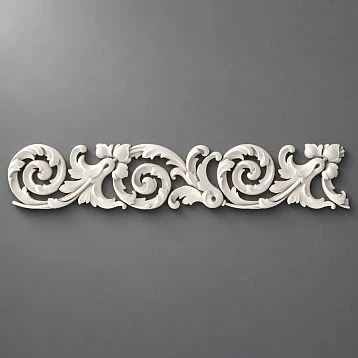
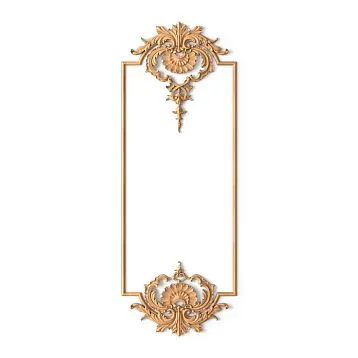
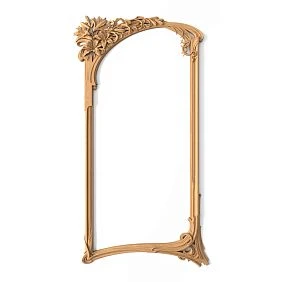
wooden decorative elements — rosettes, capitals, keystones, ornamental inserts — are used as additions to the frame in classic and baroque interiors.
Where are they used in the TV frame:
-
Corner elements — instead of a 45° corner joint. Four decorative rosettes at the corners of the frame + straight profiles between them. This is a more expensive solution, but visually rich.
-
Central accent — a decorative element at the center of the top horizontal of the frame. Characteristic of baroque and classic solutions.
-
Corner overlays — Carved decorative inserts for furniture In the corners of the frame over the joints.
Pilasters as vertical supports of the portal
wooden pilasters and columns — vertical decorative elements that turn the frame into a portal. When pilasters are installed on the sides of the TV and a horizontal cornice profile on top, the TV area becomes an architectural "altar" — a portal in the full sense of the word.
How to choose a profile for the frame: parameters and principles
This is the most technical part. But this is where decisions are made that determine the final result.
Profile width
Already discussed in relation to the TV size. Let's add an important principle: the width of the frame profile should be proportional to the TV size, not the room size. A large living room does not require a wide baguette if the TV is small. A small room does not require a thin molding if the TV is large.
Relief height
The relief of the profile determines how much the frame "protrudes" from the wall plane. This is critical in terms of shadows.
Low relief (3–7 mm) — the shadow is almost invisible under normal ambient lighting. The frame "reads" as a line on the wall.
Medium relief (8–15 mm) — the shadow is clearly visible under directional or side light. The frame "works" volumetrically, creating depth.
Developed relief (15–25 mm) — strong shadow, expressive volume. For portal solutions, classics, library TV zones.
Important: when embedding the TV into a niche, the frame must have a relief that does not protrude beyond the wall plane next to the niche. Otherwise, the profile will stick out unattractively.
TV depth and frame gap
Modern TV panels are very thin: 4–8 cm from the wall (including the mount). A wooden baguette glued or nailed to the wall must not touch the TV. A gap is needed:
-
At least 10 mm between the side edges of the TV and the frame — for easy installation and heat dissipation
-
At least 15–20 mm at the top — for convection of hot air from the TV
-
At the bottom — standard gap plus allowance for cables
These are technical requirements. Violation — risk of TV overheating.
Joint angle
The frame is assembled from four segments with ends cut at 45°. This is a classic "frame" angle. Important: cut precisely. An error of 1° creates a gap in the corner joint. Gaps between profiles are bad both aesthetically and in terms of strength.
Solution: use a miter saw with a fixed 45° angle. Or order pre-cut elements.
Finishing color and its coordination
The frame for the TV on the wall must be painted (or tinted) before installation. The final coat is applied after installation, along the joints.
Three main color strategies:
Frame in wall color. The profile is painted in the same shade as the wall. The frame almost 'disappears' into the background, leaving only the relief — a play of shadows. This is a solution for those who want the most delicate framing. Characteristic of neoclassicism.
Frame in furniture color. The profile is painted or tinted to match the color of the cabinet, shelves, or wooden elements of the room. The frame 'connects' the screen with the furniture — visually they become a single ensemble. This is the most common and organic approach.
Contrasting frame. A dark profile on a light wall or, conversely, a light one on a dark panel. The frame is accentuated, intentionally 'declared'. Works in bold interiors.
How to calculate the size of a TV frame: step-by-step instructions
A specific methodology, without which it is difficult to move forward.
Step 1: Measure the TV
You need the actual dimensions of the TV panel body (not the screen):
-
Body width
-
Body height
-
Body depth (including protruding connectors and cables)
Example: a 55" TV — body approximately 123 × 71 × 8 cm.
Step 2: Determine the gap between the TV and the inner edge of the frame
I recommend: 15–25 mm around the perimeter. This provides good ventilation and visual "airiness."
Inner frame size: body width + 2 × gap; body height + 2 × gap.
For a TV 123 × 71 cm with a 20 mm gap: inner frame size = 163 × 111 cm.
No, wait: the gap is on each side. Width: 123 + 20 + 20 = 163 mm → no, 123 cm + 4 cm = 127 cm; height: 71 + 4 = 75 cm.
Total inner frame size: 127 × 75 cm.
Step 3: Determine the external frame size
External size = internal + 2 × profile width.
For a 60 mm profile: width: 127 + 12 = 139 cm; height: 75 + 12 = 87 cm.
This is the overall frame size on the wall.
Step 4: Check symmetry relative to the wall and furniture
Draw the wall with the cabinet and TV. Place the frame around the TV. Check:
-
Is the frame symmetrical relative to the wall width?
-
Is the frame not cut off by side cabinets or pilasters?
-
Does the bottom edge of the frame not overlap the cabinet or interfere with cables?
-
Does the top edge of the frame not hit the ceiling or cornice?
Step 5: Calculate the profile length
Bottom and top horizontal strips: length = external frame width. Two pieces.
Left and right vertical strips: length = external frame height minus 2 × profile width (if using a 'frame' installation with overlapping horizontal strips). Or all four strips of equal length — for 'corner' joining. Depends on the chosen installation scheme.
Cutting allowance: +10–15% of the total length.
Step 6: Agree on finishing before installation
Profiles should be painted (tinted, varnished) before installation. After — only the final joint seam. This is important: a profile painted after installation causes drips at corners and uneven color.
TV area design options with STAVROS wooden profiles
Decision table
| Option | Material | Suitable for | Expressiveness |
|---|---|---|---|
| Simple picture frame | Wooden picture frame molding | Living room, bedroom, study | Medium–high |
| Molding frame | Moldings + millwork | Neoclassical, walls with panels | Medium |
| TV portal with pilasters | Baguette + pilasters + cornice | Classic, study, library | High |
| Frame in boiserie system | Moldings + millwork + panels | Living room, hall, study | High |
| Decorative niche | Baguette + profile + overlays | Built-in furniture, TV wall | High |
| Double frame | Outer baguette + inner molding | Classic, expressive interior | Very High |
Simple baguette frame: minimalist and effective
This is the most commonly chosen solution. Four pieces of wooden baguette — and the TV gets a "picture" frame. Installation: glue on liquid nails + additional dowels into the wall.
Ideal for a bedroom, small living room, or study where a complex decorative system is not needed — a specific result is needed quickly and cleanly.
Double frame: outer and inner
A more complex option. The outer frame is made of wide wooden molding. The inner frame is made of thinner molding at a distance of 20–30 mm from the outer one. Between them is a "field" painted in a different shade or finished with tinting.
This solution creates a sense of depth and complexity — like in antique mirror frames. For classic and baroque interiors.
TV portal with pilasters and cornice
This is the most architectural solution. On the sides of the TV — Wooden pilasters. Above the TV — a horizontal cornice profile or entablature made of moldings. Below — a baseboard line or shelf.
The portal turns the TV area into an architectural "niche" with a full structure: verticals (pilasters) + horizontal (cornice) + frame around the screen. This is a whole stage, not just a wall with a TV.
For more details on implementing this solution, see the section Consoles and Frames and on the page frames for TV zone STAVROS.
Frame in the boiserie system
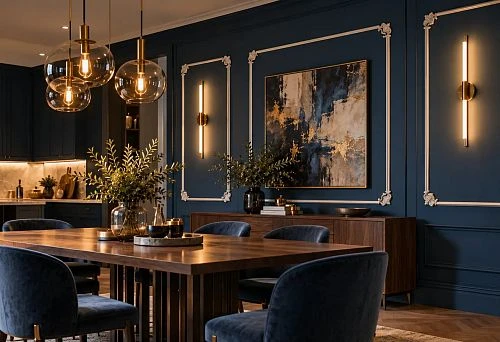
If the wall is designed in a system Boiserie, the TV should be "integrated" into one of the panel sections. The frame around it is made from the same molding or trim profile as the frames of the wall panels.
In this case, the TV occupies the place of a "central panel" or "niche section." When the screen is off, the TV area looks like a decorative panel. When it's on, it appears as a built-in element of the wall's architectural system.
Styling options for the TV frame
Classic
Developed baguette profile with ornamental relief. Symmetrical system with pilasters on the sides. A decorative element is possible at the center of the top horizontal of the frame. Finish: tinting in dark walnut or patina. Or white enamel with gilding on accent points.
STAVROS carved decor — for corner elements and the central accent of the frame in a classic style.
Neoclassicism
Restrained molding with a neat profile. No ornamental inserts in the corners. Finish: enamel in the color of the wall or the color of the furniture. The frame is "delicate" — it is not declared but visible. The rhythm of the profile is consistent with the moldings on the other walls.
Modern classic
Minimal profile. Flat or with slight relief. Finish: matte enamel in a neutral color. No corner elements. The frame as a "pause" in the geometry of the wall.
Office and library
Dark tinting in walnut or wenge. Wooden baguette with an expressive but restrained profile. Connection with dark wooden shelves, wooden pilasters and wall panels.
For a library with bookcases: the TV fits into the section between the cabinets. The frame = the section's surround, made from the same profile as the cabinet's frame inserts.
For information on how to combine the TV zone with cabinet decor, see the section STAVROS cabinet decor.
Frame finishing: material, technique, coordination
White and cream enamel
The most common choice for a classic and neoclassical living room. The frame matches the ceiling molding or wall panels.
Application scheme: sanding → acrylic primer (2 coats) → finish enamel (2 coats). All coats — before installation. After installation: fill corner joints, touch up paint.
Important: warm white ("ivory", "cream", "beige") and cool white ("arctic", "optical white") are different colors. Mixing them will produce a noticeable contrast.
Wood toning
For natural interiors and studies. Stain of the desired shade + varnish 2–3 coats. Tinting is coordinated with the parquet, wooden furniture details, wooden molding и with matching legs.
Matching rule: all wooden elements in one space must be from the same series of stains.
Patina: the relief becomes visible
Patina — dark base tinting + sanding of protruding edges to a lighter color. Profile recesses are dark, protrusions are lighter. The relief is "revealed" to the maximum.
Patina is best suited for classic and baroque frames. It "showcases" the craftsmanship of the profile — every curve, every fillet is read separately.
Mounting a frame around a TV: practical principles
Not a "how to do it yourself" instruction, but guidelines for understanding the task.
Preliminary marking. Mark the exact position of the inner edge of the frame on the wall. Check horizontal and vertical with a level. Marking is critical: a 5 mm shift of the frame from the TV center is immediately visible.
Installation order. Start with horizontal planks (top and bottom). Then vertical ones. Fixation: glue + dowels into the wall (not into the TV profile). Apply glue not along the entire length, but in "dots" — so that the profile can be removed if necessary.
Corner joints. After installation, corner joints are puttied with a thin layer of acrylic, cleaned, and painted. This gives a monolithic corner without a gap.
Cable access. The lower horizontal plank of the frame should be installed above the level of the TV connectors — or at a distance sufficient for cable routing. Plan the cable route before installing the frame.
Typical mistakes when framing a TV
Mistake 1: Frame flush against the TV
The TV heats up. A frame flush against the body blocks convection. This is technically incorrect and potentially dangerous.
Mistake 2: Not accounting for the lower cabinet
The bottom rail of the frame 'cuts into' the cabinet under the TV — making the frame look truncated. Check the cabinet height and the height of the frame's bottom edge before installation.
Mistake 3: Too wide a profile for a small wall
A frame made of wide molding (80+ mm) on a 150 cm wide wall with a 55" TV creates the impression that the frame is 'bigger' than the TV. The proportion is off.
Mistake 4: Too thin a molding for a large TV area
A 20 mm molding around a 75" TV on a 4 m wall. The frame 'disappears'. From a distance of 3–4 m it won't be visible. The minimum width for a large TV is 45–50 mm.
Mistake 5: Different profiles for horizontal and vertical frame planks
It's less common, but it happens. Horizontal and vertical strips must be from the same profile. Only then will 45° corner joints give clean geometry.
Error 6: Inconsistent finish
Frame in warm tint + furniture in cool white = conflict. The frame finish matches all wooden and painted decor in the room — not just the cabinet, but also moldings, trim, and cabinet fronts.
Error 7: No allowance for trimming
Cutting a 45° angle and being off by 2 mm means a lost piece of profile. Purchase with a 15% margin.
Error 8: Confusing decorative frame with structure
A decorative frame does not hold the TV. If the TV is poorly mounted on the wall, the frame will not fix or compensate for it.
Where to buy elements for STAVROS TV zone design
Buy a TV frame for the wall — means selecting the right profiles from the STAVROS catalog. All elements for a complete decorative frame are in one system:
-
Wooden Picture Frame — main frame profile
-
wooden moldings, cornices, and baseboards — for frames, transitions, and system solutions
-
solid wood millwork — auxiliary linear profile
-
wooden decorative elements — corner accents and central elements
-
wooden pilasters and columns — for portal solutions
-
Carved decorative inserts for furniture — for frame corner accents
-
STAVROS carved decor — entire decor catalog
-
Solid Wood Items — full catalog of profiles and wooden elements
-
Boiserie and wall panels — for systematic wall design with TV
-
furniture solutions — for coordination with cabinet and wardrobes
-
Cabinet decoration — for connecting the TV zone with furniture
-
Consoles and Frames — for portal and console solutions
Contact us to confirm shipping to your destination. Warehouses in Moscow and St. Petersburg.
Frequently asked questions
What is a TV frame for the wall?
This is a decorative framing around the TV panel, assembled from wooden baguette, moldings, or trim. It is not a structure for mounting the TV — the TV is mounted on the wall separately. The frame is installed around it and creates a decorative border that integrates the screen into the interior system.
How is a decorative frame different from a TV mount?
A mount is a mounting bracket that holds the TV. A decorative frame is wooden profiles that are mounted on the wall around the TV and serve only a visual function. They are not structurally connected to the TV.
How to choose a baguette for the TV zone?
Baguette width — 4–7% of the TV panel width. Profile relief — depends on viewing distance: the farther the viewer, the more developed the relief. Finish — matching or contrasting with the wall and furniture.
How to calculate the size of the frame around the TV?
Inner frame size = TV body dimensions + 15–25 mm gap on each side. Outer size = inner size + 2 × profile width. Add 15% allowance for trimming.
Is it necessary to leave a gap between the TV and the frame?
Yes, definitely. At least 10–15 mm on the sides, 20 mm on top — for ventilation and heat dissipation. A frame pressed tightly against the TV body hinders cooling.
Can the TV frame be made in the color of the wall?
Yes, this is a popular solution for neoclassicism. A frame in the wall color is 'subtle' — only the profile relief remains. Under directional lighting, it is well read through the shadows from the relief.
How to combine the TV area with boiserie?
The TV is integrated into one of the boiserie sections. The frame around the screen is made from the same profile as the boiserie panel frames. When the screen is off, the area looks like a 'panel' within the wall finishing system.
What mistakes are most often made when designing the frame?
Main ones: frame too close to the TV (hinders ventilation), mismatched finish with furniture, too thin a profile for a large TV, lack of allowance for trimming.
About the company STAVROS
A TV on the wall is not the end result of design work. It is a test: can the interior 'accept' the technology and not fall apart? A proper frame is the answer to this challenge. A wooden profile, precisely matched in size, style, and finish, turns a problem into a solution.
STAVROS is a Russian manufacturer of wooden interior and furniture decor from solid wood. Wooden baguettes, moldings, linear profiles, pilasters, cornices, overlays — everything needed for a complete TV area design in any style. Manufactured in Russia. Warehouses in Moscow and St. Petersburg. Delivery across the entire country.
STAVROS — a tree that completes the interior.