















































Article Contents:
- When acoustic wall panels are really needed
- Situations where panels work
- Situations where panels won't help
- Decorative acoustic panels: what they are and how they work
- Where to place acoustic panels: zone map
- Behind the desk and monitor
- Behind the TV
- Behind the headboard in the bedroom
- In the negotiation zone and mini-office
- On part of the wall in the study or living room
- Acoustic panels for a home office: a detailed breakdown
- Task #1: remove the empty wall
- Task #2: visually highlight the workspace
- Task #3: improve sound during calls and recordings
- Task #4: add an expensive look to the interior
- Acoustic panels for the TV zone — a living room scenario
- Why slatted panels behind the TV work
- What goes with a slatted panel on the TV wall
- How to choose the format: individual slats or ready-made slat panels
- Ready-made slat panels — fast and precise
- Individual slats — design freedom
- Comparison table
- How to choose panel color — from warm wood to monochrome strictness
- Wood-like: natural and tinted
- Wall color: subtle accent
- Contrast color: panel as the main accent
- To match furniture and flooring
- Acoustic panel material: what to choose
- Solid wood
- MDF for painting
- Veneered panels
- Technical parameters: slat width, spacing, relief depth
- Slat width: from thin to wide
- Spacing Between Slats
- Depth of Relief
- Installing acoustic panels — what you need to know before starting
- Wall preparation
- Mounting methods
- Panel framing
- Lighting
- Common mistakes when choosing acoustic panels for walls
- What to check before buying: final checklist
- FAQ — answers to popular questions about acoustic panels
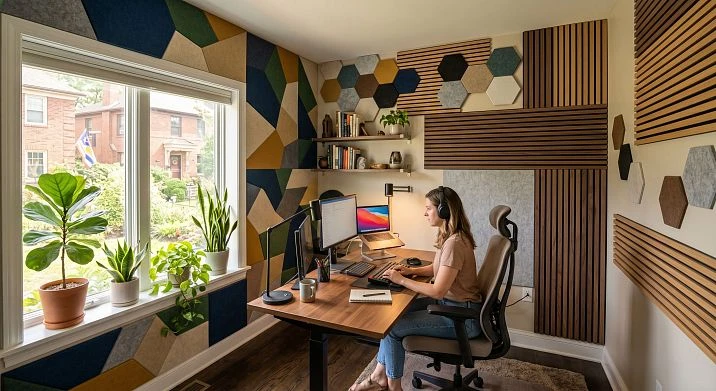
Have you ever heard your own echo in an empty room? Not in the mountains, not in a hallway — but right at your desk. Your voice rings, words return a fraction of a second later, video calls sound like negotiations in a reverberant hall. This is not fantasy or exaggeration — it's a real acoustic problem of modern homes with high ceilings, bare walls, and minimalist interiors, where every sound bounces around the room like a ball in an empty gym.
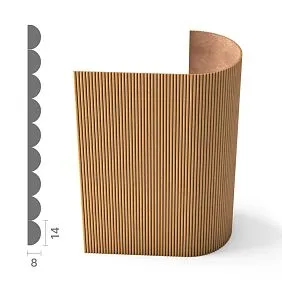
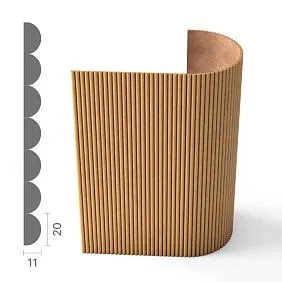
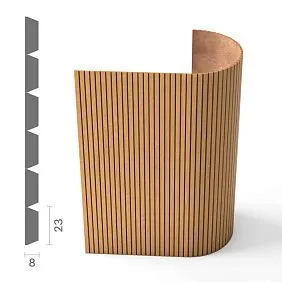
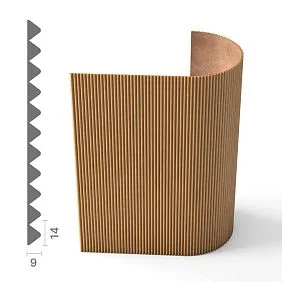
The solution is not construction acoustics, not professional studio foam, and not the quiet horror of gray pyramids. The solution is elegant and interior-friendly: decorative slatted acoustic panels for walls. They simultaneously absorb some reflected sound, create an expressive vertical rhythm on the wall, and turn the workspace into a full-fledged, expensive-looking area.
View STAVROS slatted wall panels — in the catalog.
When acoustic panels for walls are really needed
Before moving on to the choice — an honest conversation about when panels help and when too much is expected from them.


Situations where panels work
Echo in the room. A large room with smooth walls, laminate or parquet flooring, without upholstered furniture — an ideal resonator. Sound reflects off every hard surface and returns to you with a delay. Wooden slatted panels on the wall add a surface with uneven relief — the sound is partially scattered, the echo is reduced.
Video calls and online meetings. The interlocutor hears not only you but also the room. A ringing empty wall behind you is an additional reverberation background that degrades speech quality. A panel behind the workspace dampens the reflection from the wall directly behind you.
Recording videos and podcasts. If you run a blog, shoot training, record voice or video clips — room echo kills sound quality. A decorative acoustic zone behind you or behind the monitor is the first step to normal sound without professional acoustic treatment.
Working in a multifunctional apartment. A studio apartment or an apartment where the bedroom is combined with a workspace: here every sound travels throughout the entire space. Panels on the work wall help visually and acoustically define the zone.
TV zone with ringing sound. A TV with good acoustics in an empty living room — the sound scatters around the room and loses coherence. A panel behind the TV partially holds the sound in the desired direction.
Empty wall behind the desk. Even if there is no acoustic problem — an empty white wall behind the monitor puts pressure on the psyche. The workspace should have a "backdrop": a visual accent that gathers the zone and creates a sense of completeness.
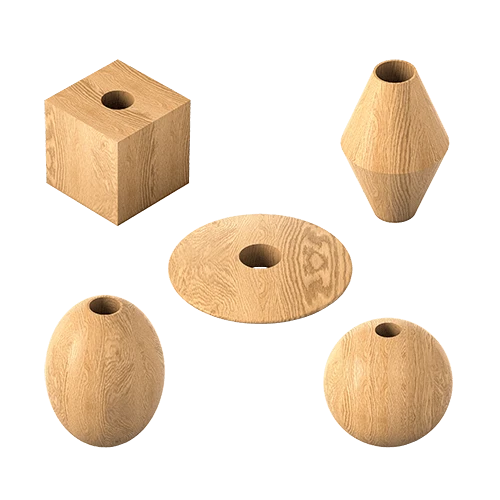
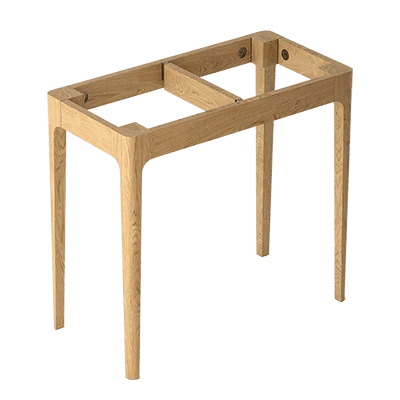
Our factory also produces:



Situations where panels won't help
Honesty is the best sales. Decorative acoustic wall panels do not replace structural soundproofing. If you can hear your neighbor's music or street noise through the wall, a slatted panel on the wall won't solve the problem. A different technology is needed here: soundproofing sandwich constructions, an additional layer of drywall with acoustic wool, and special soundproofing profiles.
The distinction is clear: panels improve the acoustics inside the room (echo, reverberation, ringing), but do not protect against sound from outside.
Get Consultation
Decorative acoustic panels: what they are and how they work
An acoustic panel in the interior sense is a decorative structure with a textured surface that scatters sound waves instead of reflecting them. A smooth surface (painted wall, glass, MDF without texture) reflects sound with almost no loss. A textured surface (slats, protrusions, irregularities) scatters waves in different directions, reducing echo.
A slatted panel is one of the most effective decorative acoustic solutions precisely because its vertical texture creates many surfaces at different angles. Each slat is a separate reflective plane, and together they create a scattering effect.
It is important to understand: the thickness of the slats, the gap between them, and the base material are simultaneously acoustic and design parameters. By choosing wider slats and a larger gap, you get a more expressive pattern and slightly different acoustic behavior than with narrow slats and a small gap.
Where to place acoustic panels: zone map
Not every wall is a suitable place. Where do panels provide maximum effect and the best visual result?
Behind the desk and monitor
This is a classic and the most logical scenario. The wall behind the monitor is the first thing your interlocutor sees during a video call. Decorative acoustic panels on this wall create a professional backdrop for video calls, eliminate emptiness, and add depth.
From an acoustic perspective, it is the wall behind the desk that reflects sound directly into the microphone. A panel on it is the most effective position for reducing echo in voice recordings.
Practical tip: the panel behind the desk should start at the level of the tabletop (or slightly higher) and rise to the ceiling. This way, it covers exactly the area that appears in the frame during a video call.
Behind the TV
A TV wall with panels is one of the most sought-after design techniques in recent years. A TV on a bare white wall looks like an artifact from another interior. slatted panels for walls behind the TV turn this wall into an accent zone: vertical rhythm creates visual volume, slats frame the screen, and wood texture softens the technological feel.
Besides design, there is an acoustic effect. Sound from speakers is partially absorbed by the panel behind the screen, reducing reflection from the hard wall. This is especially noticeable in rooms with high ceilings and hard floors.
Behind the headboard of the bed in the bedroom
In the bedroom, acoustic panels serve a different purpose: here, it's not about sound recording or video calls, but about creating a sense of coziness and quiet. A panel behind the headboard is a popular design technique that simultaneously creates a "frame" for the bed and softens the bedroom's acoustics.
A bedroom with bare walls and parquet flooring is echoey and uncomfortable. Wooden slats on the wall add softness to the perception of the space — and this is not only a visual but also an acoustic effect.
In the meeting area and mini-office
If the home has a dedicated meeting area or mini-office for receiving clients, a wall with acoustic panels creates a professional backdrop and improves speech intelligibility. Business negotiations in a reverberant space are not only inconvenient but also reduce concentration.
On part of the wall in the study or living room
An important principle: you don't need to cover the entire room with panels. First, it's expensive. Second, it's excessive from an acoustic standpoint. Third, it visually overloads the space. One accent wall or part of a wall (behind the desk, behind the TV, behind the sofa) is the optimal volume for a residential interior.
Acoustic panels for a home office: a detailed breakdown
A home office is a special space. It's not just a desk and a chair. It's a work environment that must be simultaneously functional, acoustically comfortable, and visually presentable.
Task #1: eliminate the empty wall
Imagine a typical home office: white walls, a desk with a monitor, a chair, bookshelves. The wall behind the monitor is empty. On a video call, a white rectangle is visible behind you, which says nothing about you or the interior. It's a visual vacuum.
Wooden Acoustic slat wall panels On this plane, a professional background is instantly created. Warm wood texture, vertical rhythm — and behind the monitor appears a wall that "speaks" about the interior and the person at the desk.
Task #2: visually highlight the work area
In a studio apartment or a bedroom combined with a workspace, there is no study zone as such. The desk stands against the wall — that's it. The boundary between "I'm working" and "I'm resting" is absent.
Wall acoustic panels on the work wall create this boundary. Visually: "here is a special place." Psychologically: "sat at the desk — means I'm working." This is a simple but effective zoning technique without major renovations.
Task #3: improve sound during calls and recordings
Let's dispel illusions: one slatted panel won't turn an office into a professional recording studio. But it will noticeably reduce the number of reflections from the wall directly behind you. The person on the other end of the call will hear your voice clearer, without the metallic taste of room echo.
For those who record video lessons, do reviews, or host podcasts — this is a tangible improvement. Especially if the workroom is small, with parallel walls and a hard floor.
Task #4: add an expensive look to the interior
An office with slatted panels on the wall is a different level of perception. Wood on the wall, layered rhythm of vertical lines, play of shadows between the slats — this is that very "depth" that no paint or wallpaper can provide. And this is not about expensive renovations — it's about the right choice of one element.
An office that looks expensive affects how you feel in it: it's more pleasant to work, easier to concentrate, and you get less tired.
Acoustic panels for the TV zone — a scenario for the living room
The wall behind the TV is perhaps the most public place in the apartment. Everyone who comes to visit looks there. Your gaze is directed there every evening. And yet, it is the most "forgotten" wall in most apartments.
Why slatted panels behind the TV work
Several reasons, each of which is compelling.
Visually: a TV on an empty wall is a technical object without context. Slatted panels create a "frame" for the screen: vertical rhythm, play of shadows, warm material — and the TV becomes part of the interior, not a foreign body on the wall.
Acoustically: a living room with a hard floor, glass, and furniture without soft coverings is a ringing space. Wooden slats on the wall behind the TV partially absorb direct sound reflection. The difference is especially noticeable in movie mode: voices become clearer, bass doesn't "boom," and high frequencies don't grate on the ears.
Practically: a slatted panel on the TV wall is also a convenient way to hide cables. Wires from the TV, from the console, from the soundbar — all of this can be routed behind the panel, and not a single cable will be visible from the outside.
What goes with a slatted panel on the TV wall
-
A TV stand made of the same wood or in the same tint — a unified material language.
-
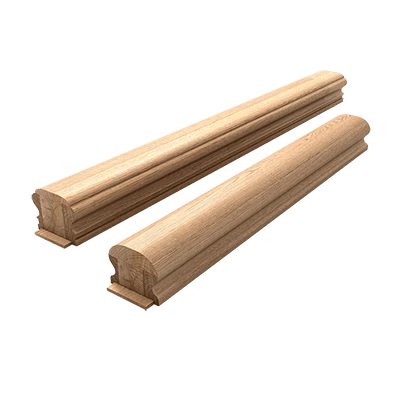
Wooden baseboard at the bottom: finishes the wall from below, creating a horizontal line. solid wood baseboard — an important finishing element that is often underestimated.
-
Lighting: LED strip behind the slats or built-in spots above the panel provide soft accent light that highlights the texture.
-
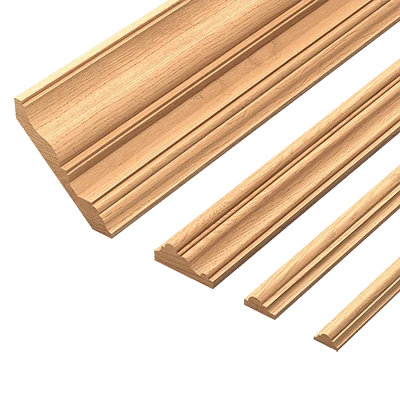
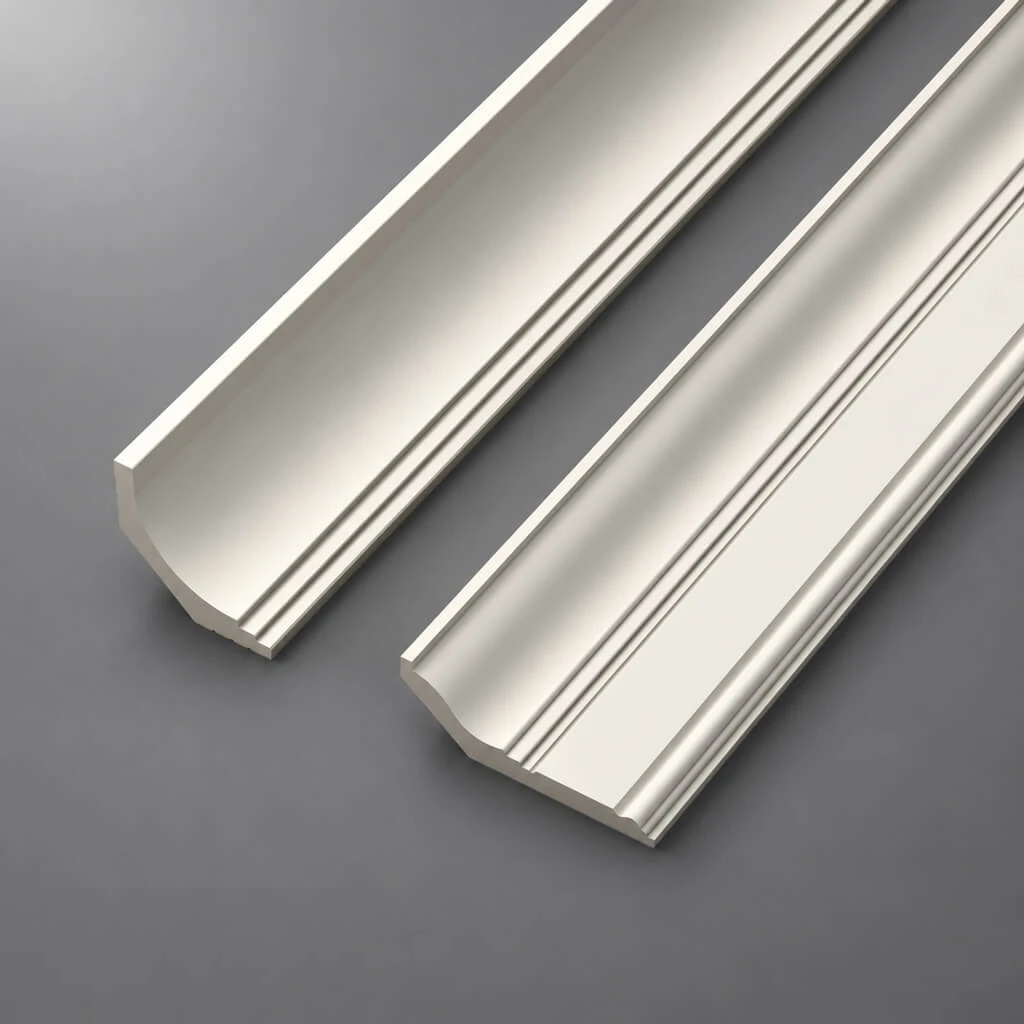
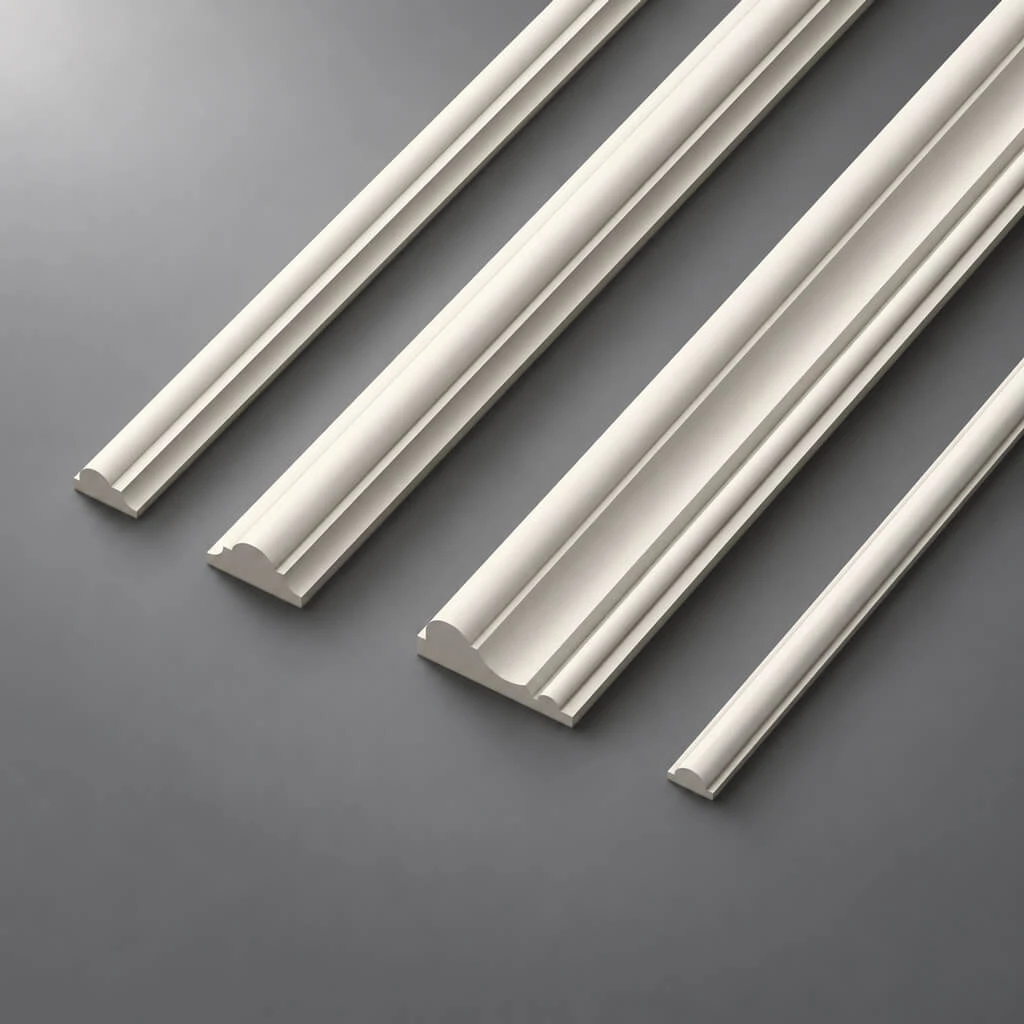
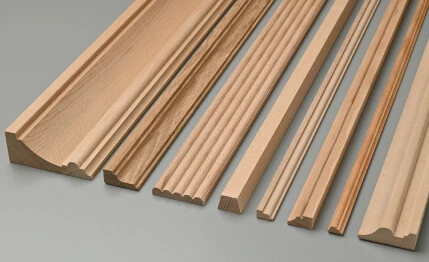
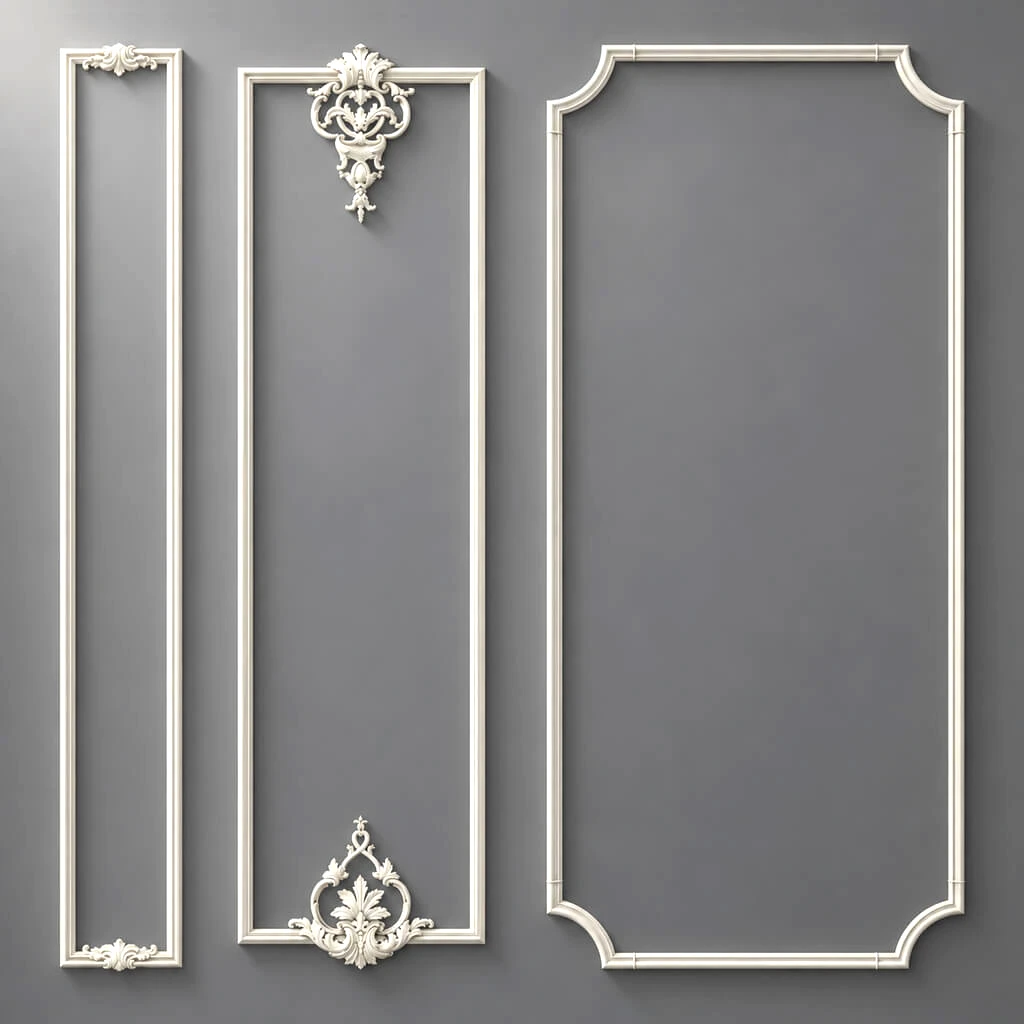
Molding or cornice around the panel perimeter: frames the accent area, making it even more complete. Wooden moldings and cornices organically complete the decorative wall.
How to choose the format: individual slats or ready-made slatted panels
This is the same choice as when designing furniture facades — but here the context is different. On the wall, installation matters, not movement.
Ready-made slatted panels — fast and precise
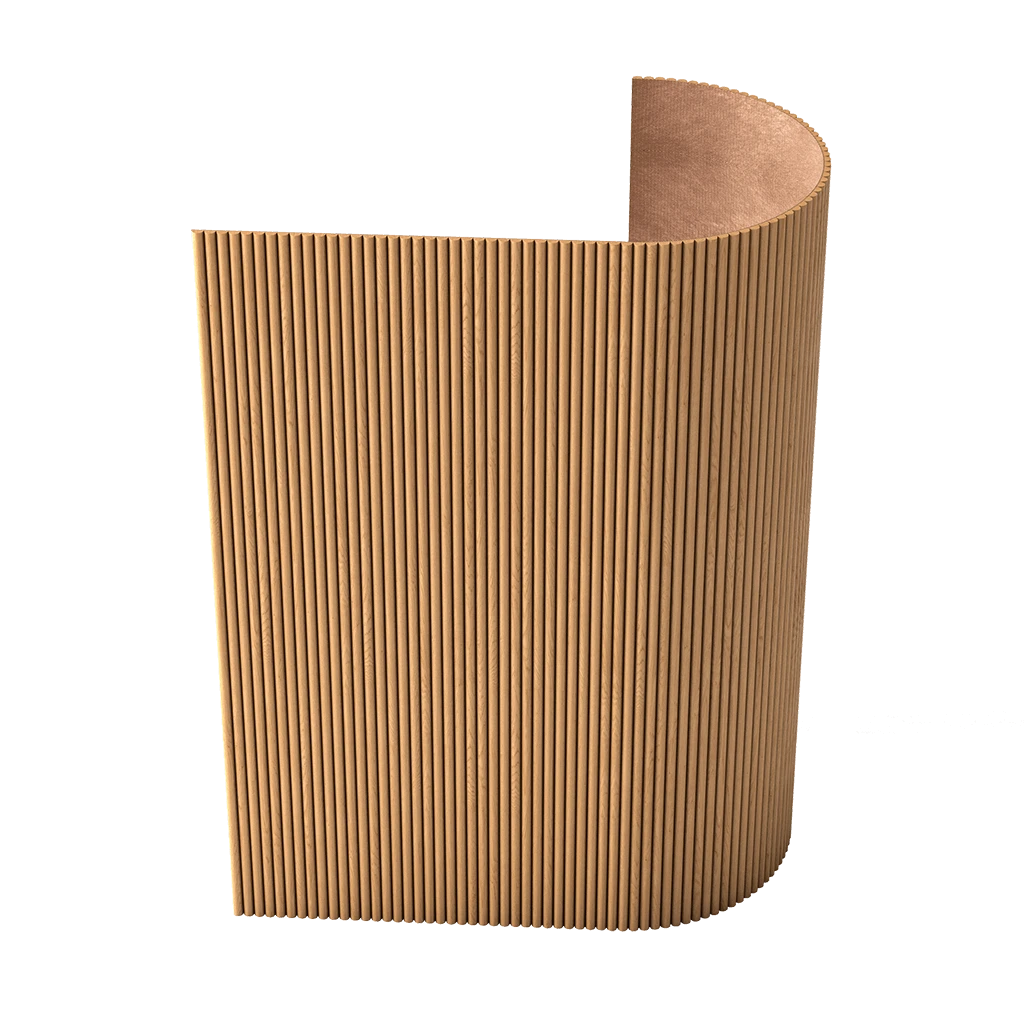
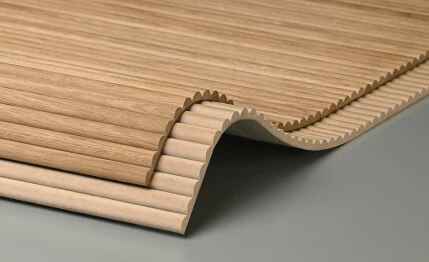
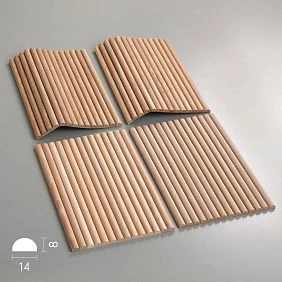
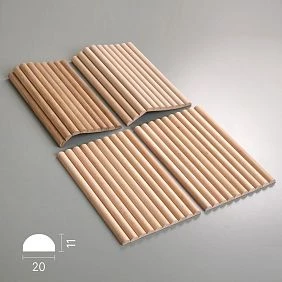
Ready-made slatted panel — is a structure where the slats are already fixed to a base with a set spacing. You get a finished element of a specific size that is mounted on the wall as a single unit.
Advantages of ready-made panels:
-
Even, factory-set spacing — no manual marking.
-
Quick installation: the panel is aligned and fixed to the wall.
-
Multiple panels are joined edge-to-edge or with a small gap — the rhythm remains continuous.
-
Less waste: the panel has specific dimensions, cutting is minimal.
For whom: for those who want to get results quickly, without complex calculations and marking. For a typical accent wall in a living room or bedroom.
Slat panel PAN-001 — a classic choice for an accent zone in the interior. Clear rhythm, neat end, possibility of painting or tinting.
For painted interiors — primed MDF slatted panel PAN-002: ideal surface for enamel in any RAL color.
Individual slats — design freedom
If a non-standard step, special rhythm, variable density of slats (denser in the center, sparser at the edges) or any other custom composition is needed — individual Wooden Planks for Walls provide complete freedom.
The architect or designer specified a specific rhythm — 22 mm slat, 9 mm gap. This is a non-standard step not available in ready-made panels. The only way is to mount individual Wooden planks onto a prepared base.
For acoustic effect: different slat spacing scatters sound waves more widely than uniform spacing. An alternating rhythm yields a slightly different acoustic result.
Comparison table
| Parameter | Prefabricated Panels | Individual slats |
|---|---|---|
| Installation speed | Fast | Requires marking |
| Non-standard step | Not always | Any |
| Stable rhythm | Production | Depends on installation |
| Custom size | Limited | Complete freedom |
| Suitable for | Standard walls | Designer projects |
How to choose panel color — from warm wood to monochrome strictness
Panel color is not just aesthetics. It is a fundamental choice that determines how the room will be perceived after finishing.
Wood: natural and tinted
Wood in natural or tinted color is the most popular and versatile choice. Why? Because it is warm. Literally — visually warm. In a room with wooden panels, it is psychologically more comfortable to work and relax.
Light oak — for Scandinavian interior, Japandi, modern classic. Light color visually increases the space.
Dark walnut, wenge — for a masculine study, strict classic, work area with dark furniture. Creates a feeling of weight and seriousness.
Natural birch — fresh, light, slightly cool. For light minimalist interiors.
Wall-colored: a subtle accent
Panels in the color of the wall — a technique for those who want a restrained accent. The wall remains uniform in color but gains relief. Visually, it reads as a "wall with texture" rather than a "wall with panels." Very modern, very delicate.
Contrasting color: the panel as the main accent
White walls + black slatted panels. Light gray wall + white slats. Beige living room + dark blue TV panel. Contrast makes the panel wall the main visual focus of the room. This is a strong technique but requires caution: there should be only one accent.
To match furniture and flooring
When the room already has a wooden table, wooden shelves, or a wooden floor — the panel color should be coordinated with them. The ideal option: the same material and the same tint. Panels and a table made of oak with "light oak" oil — a unified material language that brings the space together.
If an exact match is impossible (different manufacturers, different batches) — choose panels in the same color group: both warm, both cool, both light, or both dark. Mixing a warm wood texture with steel gray is a risk.
Acoustic panel material: what to choose
Solid wood
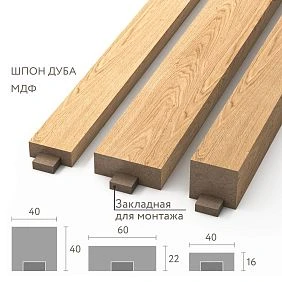
Solid wood slats — for studies and living rooms where naturalness is important. Oak, ash, beech — all are living materials with individual patterns that cannot be faked by any film. Solid wood slats accept any coating: oil, varnish, tint, enamel.
Acoustically: solid wood slats diffuse sound slightly better than MDF due to the non-uniformity of the fiber structure. The difference is small, but it exists.
MDF for painting
MDF Plank Panels — for monochrome interiors and those who want to paint the wall in a specific RAL color. Perfectly smooth surface, no fiber pattern, completely hidden under enamel.
For a minimalist office — white or light gray MDF slats on the wall work great: neutral background, light relief, business atmosphere.
Veneered panels
Veneer is a compromise. Base made of MDF or plywood, face side — natural veneer of oak, ash, wood. Looks like solid wood, behaves more stable. Matches well with other veneered furniture elements.
Technical parameters: slat width, pitch, relief depth
The right rhythm is not just aesthetics, but also acoustics.
Slat width: from narrow to wide
15–20 mm — narrow slat, light frequent rhythm. Creates a textile effect on the wall. On a large surface it may "ripple" — better for small accent areas.
25–30 mm — universal width. The rhythm reads clearly, slats do not blend. Good balance for an office and TV area.
35–40 mm — wide, expressive slat. For large walls, high ceilings, accent areas in spacious living rooms.
Spacing between battens
Optimal gap is 30–50% of the slat width. Slat 25 mm → gap 8–12 mm. Slat 30 mm → gap 10–15 mm.
From an acoustic perspective: the gap between slats is a channel through which sound "penetrates" to the panel base. If the base is made of a soft material (e.g., flock, felt, acoustic mat behind the slats) — sound is partially absorbed there. If the base is hard (MDF, plywood) — it is scattered by the slats but not absorbed.
Relief Depth
8–10 mm — soft relief, visually light. For modern and minimalist interiors.
12–15 mm — pronounced relief, good play of shadows. Optimal for a study and TV area.
18–20 mm+ — deep architectural relief. For classic and neoclassical interiors, for tall rooms.
Installation of acoustic panels — what you need to know before starting
Installing slatted panels on a wall is not a difficult task, but requires preparation.
Wall preparation
The wall must be clean, level, and dry. If the wall has unevenness — the panels will follow it, the rhythm will "drift". Pre-treatment: putty, primer.
Important: mark the wall before installation. Where the panel starts, where it ends. Account for sockets, switches, cables — they need to be routed before installation or their position relative to the slats planned in advance.
Methods of mounting
Construction adhesive + finishing nails — optimal for most situations. Adhesive ensures even adhesion, nails provide instant fixation.
Countersunk screws — for panels mounted on a batten. More reliable on uneven walls.
Batten made of wooden slats — if the wall is very uneven or you need to hide utilities. The panel is attached to the batten, the batten to the wall.
Panel framing
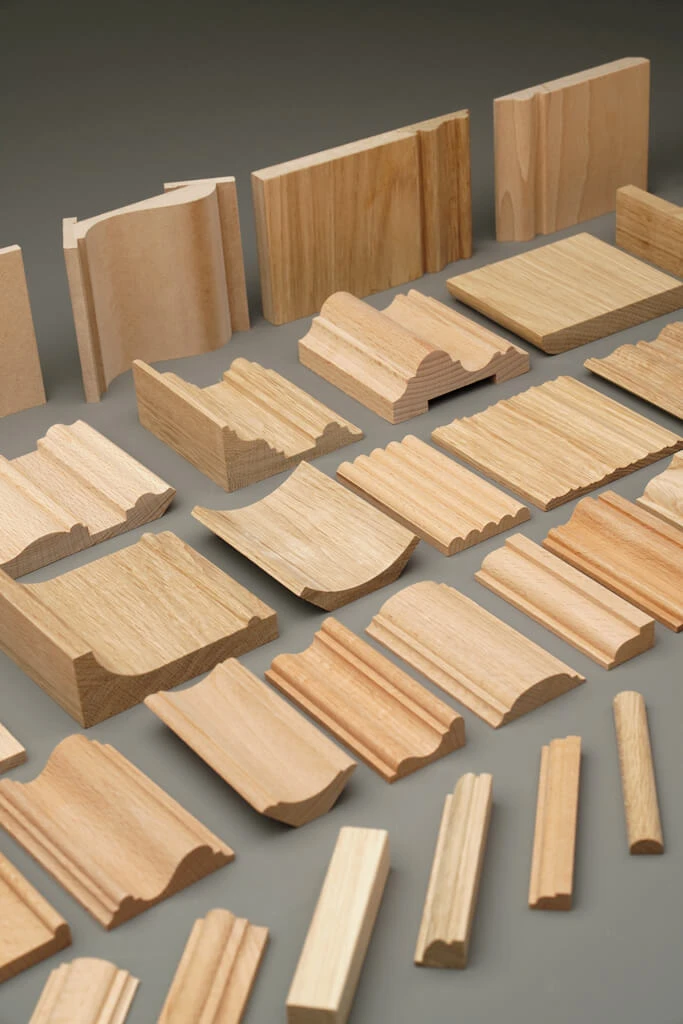
A panel without framing looks unfinished — especially if it only covers part of the wall. Wooden moldings and trim around the perimeter create a frame that turns the panel into a finished decorative object.
At the bottom — Wooden baseboard. On top and sides — molding or cornice. This is a small additional step, but it dramatically improves the final appearance.
Backlighting
LED strip behind the slats — one of the most effective techniques. The lighting goes into the gaps between the slats and creates a soft glow that emphasizes the relief. This is especially beautiful in the evening and at night, on dark or tinted panels.
For a study: warm white (2700–3000K) — creates a cozy working atmosphere. For a TV area: warm or neutral white behind the TV — reduces eye strain while watching.
Common mistakes when choosing acoustic panels for walls
Expecting complete soundproofing from decorative panels. Slats won't stop neighbor noise. They work with room acoustics, not outside sound.
Covering too small an area. A small 60×60 cm panel square in a corner is visually lost and acoustically almost useless. Minimum is one full accent: the entire wall behind a desk or the entire TV wall.
Placing panels randomly without relation to furniture. The panel should be centered relative to the TV, desk, or headboard. A random panel in the middle of a wall without logic looks like unfinished renovation.
Choosing too dark a color for a small room. Dark slats absorb light and visually narrow the space. In a small 10–12 m² office, light or medium tones are better.
Not accounting for outlets and cables. If there are wall outlets behind the desk, their position must be considered before installation. Otherwise, you'll have to cut sockets into installed panels — unsightly.
Not planning top and bottom finishing. A panel 'hanging in the air' without a molding on top and a baseboard below looks unfinished. Framing is a mandatory element.
Too fine a rhythm on a large wall. Narrow slats with small spacing on a 4 m wide wall create a ripple effect, not rhythm. The larger the wall, the wider the slats should be.
Mixing incompatible wood stains. 'Dark wenge' slats on the TV wall and light parquet on the floor create a conflict. A unified palette is needed.
Forgetting about ventilation in the TV area. If the TV is built into a niche with slatted panels, a gap for equipment ventilation is needed. Slats must not cover ventilation openings.
What to check before buying: final checklist
Go through this list before ordering:
-
Wall or zone size — height, width.
-
Coverage area — how many square meters need to be covered.
-
Zone purpose — office, TV, bedroom, living room, studio.
-
Panel type — ready-made or individual slats.
-
Slat width and spacing — match to wall size.
-
Color and finish — to match furniture, flooring, or as a contrasting accent.
-
Presence of sockets and switches in the installation area.
-
Baseboard height — lower edge of the panel.
-
Are trim moldings needed?
-
Is lighting planned — and where to run the cable.
-
Installation type — adhesive/nails or on a lath.
-
Compatibility with other trim in the room.
FAQ — answers to popular questions about acoustic panels
Do acoustic panels completely eliminate noise from neighbors?
No. Decorative acoustic panels for walls do not provide structural sound insulation. They work with the acoustics inside the room: reduce echo, reverberation, and ringing. For protection from external noise, other structural solutions are needed.
Where is the best place to install acoustic panels in an office?
Ideally — at a desk, in front of a monitor, on a wall that is visible during a video call. This area provides the maximum visual and acoustic effect.
Are slatted panels suitable for a TV area?
Yes, this is one of the best use cases. Slatted panels behind the TV create an accent wall, add depth, and diffuse some of the reflected sound from the speakers.
How many panels are needed for a workspace?
You don't need to cover the entire room. One accent wall or area behind the workspace is enough. The minimum effective area is 2–3 m².
What is better: individual slats or ready-made panels?
Ready-made panels — for quick installation and a consistent rhythm. Individual Wooden planks — for non-standard spacing, custom composition, and designer projects.
Can the panels be painted after installation?
Yes, but it's better to paint before installation. Painting after installation causes drips in hard-to-reach gaps and uneven coverage. Before installation — each slat is painted separately, resulting in significantly higher quality.
Is a lath needed under slatted panels?
If the wall is flat, it's not necessary. If the wall has differences of more than 3–5 mm, the lathing allows you to level the installation plane. Additionally, the lathing is convenient for hidden cable routing under LED lighting.
Which type of wood is best for an office?
Oak has an expressive texture, is a status material, and takes stains well. Ash is lighter and slightly softer in perception. Beech is for painting or solid-color staining. For a natural, warm office, choose oak or ash with an oil finish.
A home workspace is not just a desk and a chair. It's an environment that affects productivity, mood, and work quality. A ringing empty wall behind the monitor steals concentration. Wooden panels with the right rhythm bring it back. An office with wall slat panels is a place where you want to work. And a TV area with an accent wooden wall is a place you want to return to.
STAVROS offers Acoustic slat wall panels, Solid wood slats for custom compositions, Wooden Skirting Boards и Moldings for framing, as well as a complete set solid wood products for creating a cohesive wooden interior. Own production, dry premium-grade solid wood, precise geometry, Contact us to confirm shipping to your destination. STAVROS — because the right work environment starts with the right wall.