










































































Article Contents:
- Why molding should not exist on its own
- Three levels of coordination
- Doors: they set the tone for everything
- Smooth doors: which molding to choose
- Paneled doors: possibilities expand
- Arched or complex profile doors
- Door color and molding
- Baseboards and moldings: rules of scale balance
- Baseboard height and molding width
- Baseboard profile and molding profile
- Color of baseboard and moldings
- Distance from baseboard to bottom frame
- Furniture: when decor should be silent, and when it should speak
- Active furniture with relief, routing, details
- Simple furniture without pronounced ornament
- Furniture in Classic Style
- Built-in furniture: a special case
- Wall color and stucco: three main logics
- First logic: white stucco on a colored wall
- Logic two: stucco in the color of the wall
- Logic three: moldings in an intermediate neutral tone
- Ceiling stucco: the upper tier of the system
- Why the cornice is important for the unity of the finish
- Cornice height according to ceiling height
- How the cornice connects doors and furniture
- Ceiling rosette: the final accent from above
- Stucco decor in a unified finish system
- When stucco decor is appropriate and when it is not
- How stucco decor connects with doors and furniture
- Practical scenarios: what to buy in different situations
- Scenario one: modern apartment, smooth doors, laminated baseboard 70 mm
- Scenario two: apartment with neoclassical style doors, white paneled doors, high baseboard 100 mm
- Scenario three: country house, dark wooden doors, thick wooden baseboard
- Scenario four: studio with minimalist renovation, no clear style
- Scenario five: restaurant or hotel, high ceilings, classic style
- Table: molding for interior situation
- Details often overlooked
- Door casing as a guide for molding
- Height of frames and height of furniture
- Curtains and stucco molding
- Lighting and stucco relief
- FAQ: answers to main questions before purchase
- About the Company STAVROS
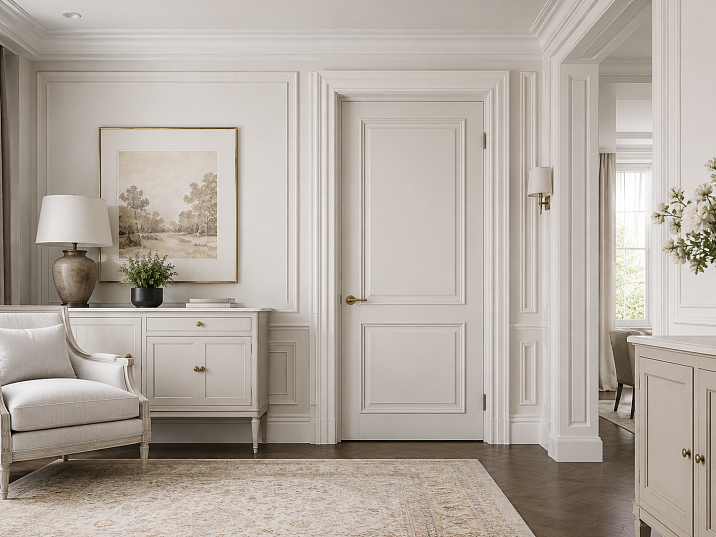
Renovation is not a set of separate solutions. It is a system. Doors are chosen, baseboard is bought, furniture is ordered, wall color is approved. And then a person opens a stucco catalog — and freezes. Because stucco is beautiful everywhere, but it's unclear which one won't clash with what already exists.
This very question is one of the most common and yet one of the most underestimated. Stucco is often bought separately from everything else. People look at it in a catalog, fall in love with a profile or ornament, order it — and only during installation realize: the molding is too relief for smooth doors, or too narrow next to a tall baseboard, or too active against already saturated furniture.
An interior where each element was chosen separately never looks cohesive. An interior where all parts read as a set looks expensive and well-thought-out. This article is exactly about that.




Why stucco should not exist on its own
There is a simple principle that changes the approach to choosing decor: in a good interior, no element lives separately. Every detail talks to its neighbors. The door leaf — with the casing. The baseboard — with the molding. The molding — with the furniture. The furniture — with the wall color. The wall color — with the ceiling cornice.
When these dialogues are coordinated, the interior is perceived as a single statement. When they conflict — the eye catches inconsistencies, the space seems assembled from random things.
Buy moldings — is not a separate operation. It is a step in a system that must be done with an understanding of the context: which doors, which baseboard, which furniture, which light, which color.




Three levels of coordination
For the stucco to look organic, it needs to be coordinated on three levels:
Scale. The width of the molding should be proportional to the height of the baseboard, the width of the door casing, and the dimensions of the furniture. Mismatched scales are the main reason stucco looks out of place.
Style. The character of the molding profile should match the stylistic "language" of the doors and furniture. Smooth modern doors — calm molding. Doors with classic panels — molding with moderate relief. Antique furniture with carving — expressive classic stucco.
Color. Moldings, baseboards, casings, and decorative stucco should follow a unified color logic. They can be the same color, adjacent colors, or work in a "wall — white accents" system. The main thing is no randomness.
Our factory also produces:





Doors: they set the tone for everything
A door is the most noticeable vertical element in a room. It stands in the opening and is visible from any point in the space. And it is the door that most often sets the stylistic tone for the entire finish — including moldings and stucco decor.
So the logic is this: first look at the door, then choose the stucco. Not the other way around.
Get Consultation
Smooth doors: which stucco to choose
Smooth doors are a modern, minimalist, or transitional style. A flat panel without panels, without decorative routing. Often — lacquered or matte, light or dark.
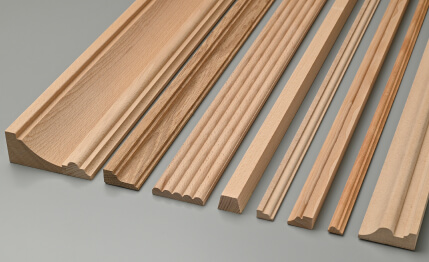
For smooth doors, choose Moldings made of polyurethane with a clean, unsaturated profile. This could be:
-
Smooth rectangular or semi-circular profile — minimalist, strict
-
Light heel profile with a smooth S-shaped curve — universal
-
Stepped profile — for Art Deco or modern neoclassicism
Relief ornamental moldings with acanthus, pearl string, or laurel garlands on smooth doors create a stylistic conflict. The door speaks modern, the molding speaks classical. This is not a dialogue — it's an argument.
Painting moldings in the wall color with smooth doors is the optimal solution. The frames are there, but they are delicate, not distracting attention from the door as the key accent.
Doors with panels: possibilities expand
Paneled doors are a classic. Rectangular or arched insert panels in the door leaf. The casing of such a door already carries a decorative frame. And this 'language of frames' transitions into the space.
To doors with panels Buy polyurethane moldings can be with a more expressive profile. The width of the molding for wall frames is proportional to the width of the door casing. If the casing is 70 mm wide — a molding of 35–50 mm looks harmonious. If the casing is wider — the molding can be 60–70 mm.
The profile of paneled doors allows for moderate ornamentation: an Ionic band, a meander, a bead molding. This is consistent with the classical character of the door.
An important rule: the molding of wall frames should be narrower than or proportionate to the casing, but not wider. A molding that is wider than the casing visually competes with the door for attention.
Arched doors or doors with a complex profile
Arched doors and doors with a complex figured frame indicate a classical or Baroque interior. Here, richer stucco is acceptable: relief moldings, decorative overlays, a ceiling cornice with ornamentation. The door style allows it, so the stucco can be more expressive.
Door color and stucco
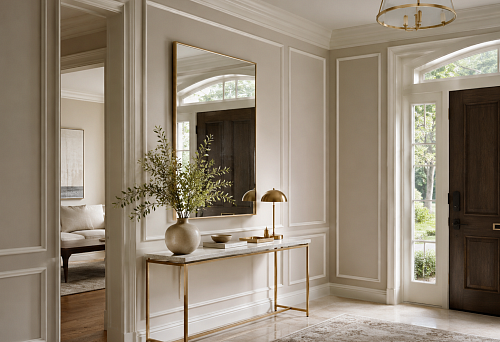
White door. A classic combination: white moldings, white baseboard. Everything 'white and light' works as a single accent on walls of any color.
Dark door (wenge, anthracite, dark gray). An interior with dark doors requires care. For dark doors, it is better to paint the stucco the color of the wall or a light neutral shade. White molding with a dark door can create excessive contrast and break the unity.
Natural wood. For a natural wood door, the stucco should be the color of the wall or a restrained ivory shade. Not pure white: next to warm wood, cold white molding looks alien.
Baseboard and moldings: rules of scale balance
The baseboard is a horizontal linear element at the bottom of the wall. The molding is also a horizontal linear element (in the frame system). They must be friends. Not identical, but proportionate.
Baseboard height and molding width
This is the most practical pair of parameters to coordinate when choosing stucco decoration.
Low baseboard (up to 60 mm). Such a baseboard does not dominate near the floor. It suits moldings of any width — from narrow 20 mm to medium 45 mm. The only limitation is ceiling height.
Medium baseboard (60–100 mm). Noticeable, expressive. It suits medium-width moldings — 30–50 mm. A narrow molding next to a tall baseboard visually gets 'lost': the base of the room is heavy, and the frames are invisible.
High baseboard (100 mm and more). An architectural baseboard, typical for classical and neoclassical interiors. It requires moldings of proportionate width — 45–70 mm. With a high baseboard, a thin molding looks unserious — like a pencil line next to a wide brush.
Baseboard profile and molding profile
They don't have to be identical — but they should speak the same language.
Smooth baseboard — smooth molding. Baseboard with ornament — molding with moderate ornament of the same character. Baseboard with Ionic profile — molding with Ionic band. Baseboard with simple ogee — molding with a similar curve.
If you already have a baseboard — pick it up, look at the cross-sectional shape, and look for a molding that 'rhymes' with that shape. This doesn't mean complete identity. It means stylistic kinship.
Color of baseboard and moldings
Same color. White baseboard — white moldings. This is a classic. It works flawlessly in most interiors. Creates a single "white contour" of the space: baseboard at the bottom, cornice around the ceiling perimeter, frames on the walls.
Moldings in the color of the wall, white baseboard. Often found in modern interiors. The molding "dissolves" into the wall, creating an embossed effect. The baseboard remains a white accent near the floor. This works provided the molding and baseboard are not the same width and do not compete.
Moldings and baseboard in the same neutral tone. Beige, ivory, light gray. Works well with warm walls and natural materials.
Distance from baseboard to bottom frame
This is a technical but important parameter. The bottom horizontal side of the molding frame should not visually "sit" on the baseboard. The minimum distance from the top edge of the baseboard to the bottom side of the frame is 30 cm for baseboards up to 80 mm. For baseboards 100 mm and higher — 40 cm.
If the distance is smaller, the frame and baseboard visually "stick together." The eye cannot tell where one element ends and another begins.
buy polyurethane moldings taking into account the height of the baseboard — means marking the wall before purchasing and ensuring the proportions of the frames are maintained.
Furniture: when decor should be silent, and when it should speak
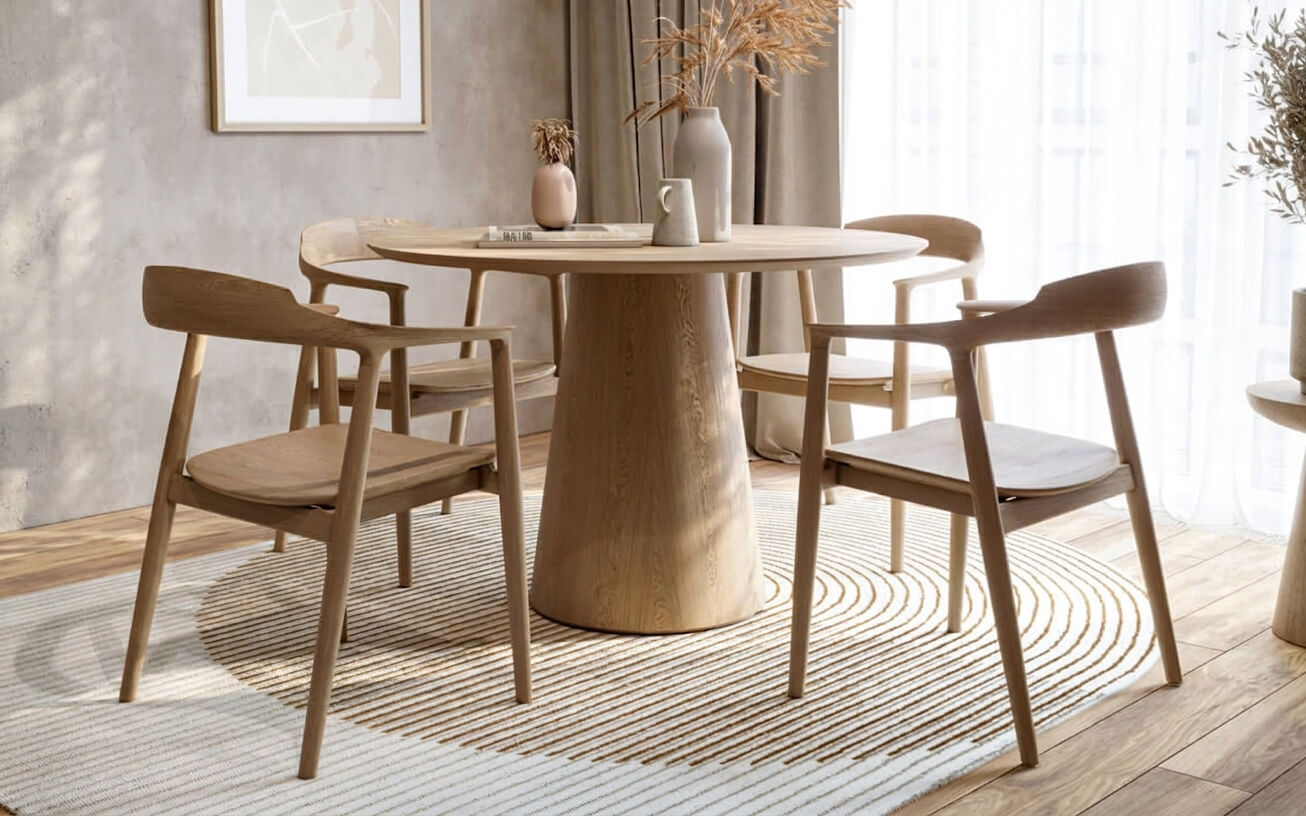
Furniture is the most voluminous element of the interior. It occupies the most visual space, it is the "loudest." And that is precisely why moldings should be chosen with consideration of what is already in the room.
Active furniture with relief, routing, details
Active furniture is furniture with decorative elements: milled facades, carved legs, metal handles with ornamentation, textured wood, mosaic inserts. Such furniture itself is a decorative object.
With active furniture, the molding should be calmer — otherwise, two decorative 'voices' will start competing. Imagine a carved sideboard with ornamental details — and next to it, a wall covered with rich stucco frames with cartouches and medallions. That would be overload.
With active furniture, choose:
-
Smooth or minimally relief moldings
-
Narrow or medium profiles
-
Painting in the color of the wall — so that the wall decor 'fades into the background'
-
Minimum decorative overlays
Simple furniture without pronounced ornamentation
Simple modern furniture is flat facades, minimalist handles or handleless systems, matte or semi-matte surfaces, neutral colors. Such furniture 'is silent' — it does not create decorative noise. And it is in this silence that molding can speak in full force.
With simple furniture:
-
Medium-width moldings with moderate relief are a good solution
-
Decorative stucco — medallions, overlays — are appropriate and expressive
-
More saturated decorative decor inside frames — works without overload
-
Ceiling cornice with moderate ornament complements the system
Furniture in classic style
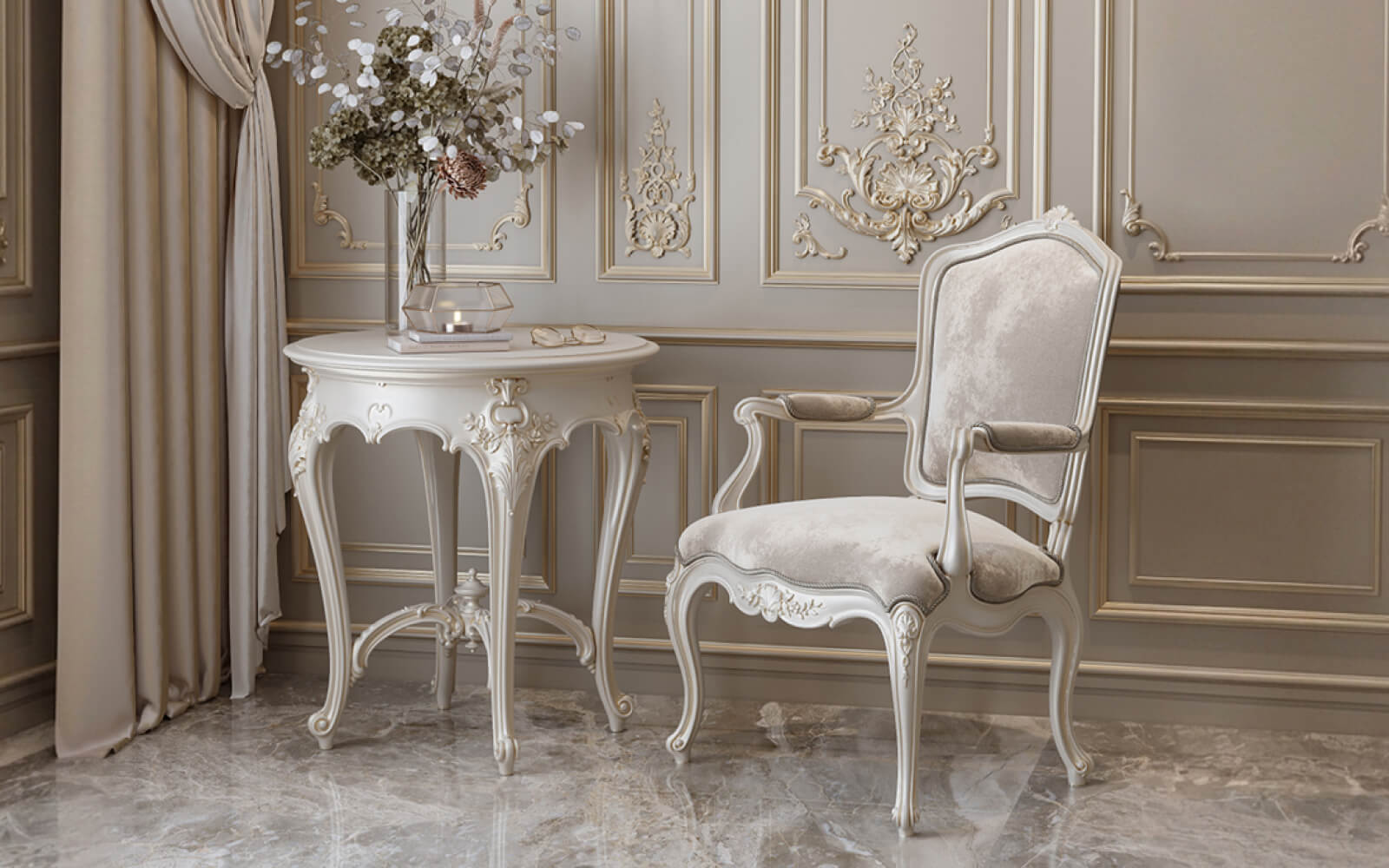
Classic furniture — with turned legs, paneled facades, polished surfaces, inlays — dictates the style of the entire room. Stucco with such furniture should support this style, not work in a different direction.
buy decorative moldings for a room with classic furniture — means choosing an ornamented profile, corner overlays, a ceiling cornice with relief. Everything in a single classic key.
Built-in furniture: a special case
Built-in furniture — cabinets, wardrobes, library systems — occupies entire walls. With built-in furniture, moldings on the same wall are impractical: the frames will be covered by cabinets. Stucco here works on other walls — free ones.
But decorative overlays can be used directly on built-in furniture: small stucco elements on cabinet facades, overlays on the cornice of the furniture system. This is a stylistic solution for a classic interior that visually integrates furniture into the overall room design.
Wall color and stucco: three main logics
The color of the walls is the background against which all the stucco works. An incorrect combination of color and stucco kills the effect.
First logic: white stucco on a colored wall
A classic technique. Walls are colored (gray, green, blue, terracotta, powder). Moldings, baseboards, and trim are white. This creates a clear graphic contrast: the frames are well visible, the space is clearly structured.
Works with ceilings from 2.7 m. With a ceiling of 2.5 m, contrasting white moldings on a saturated colored wall can create a feeling of tightness — especially if the moldings are medium or wide.
Second logic: stucco in the tone of the wall
Moldings are painted the same color as the wall. The frames are there, but they are 'sunk' into the surface — creating an embossed, relief effect without graphic contrast.
This is a delicate, modern technique. Especially good for:
-
Ceilings of 2.5 m, where a contrasting molding would be too noticeable
-
Saturated colored walls, where white molding would be too aggressive
-
Minimalist interiors, where a hint of decor is needed, not a declaration
Logic three: moldings in an intermediate neutral tone
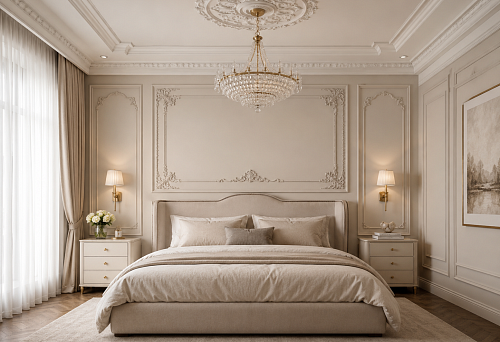
Walls — warm gray or powder. Moldings — ivory or beige. Baseboard — the same shade. This creates a soft, warm interior without sharp contrasts.
Works especially well in Scandinavian style, French Provence, soft neoclassical interior.
Ceiling stucco: the upper tier of the system
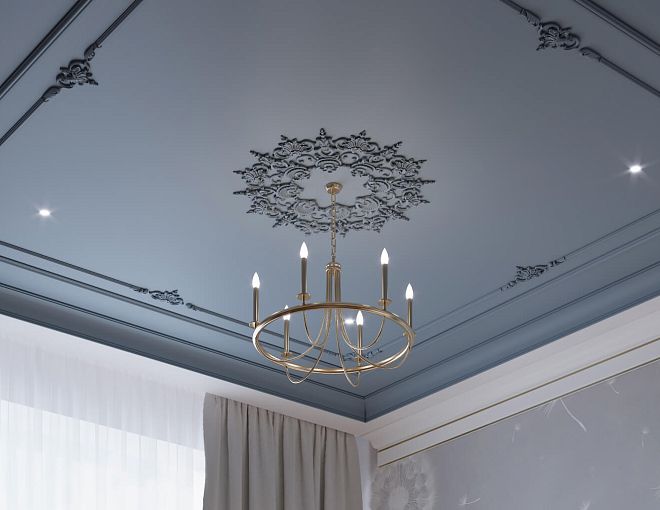
Moldings on walls, baseboard by the floor, door trims — that's good. But if the ceiling remains bare, the system is incomplete. This is where Ceiling molding — a cornice at the junction of wall and ceiling, which covers the transition and makes the decor cohesive.
Why the cornice is important for unity of finish
The cornice is a horizontal boundary between two planes: wall and ceiling. Without it, this boundary remains like an unfinished cut. With the cornice, the transition is smooth, architectural, complete.
If walls are decorated with molding frames and the ceiling is left empty, the eye perceives the wall as a separate object — not connected to the room as a whole. When the cornice is present, the walls, ceiling, and frame system work as a single decorative volume.
Buy ceiling stucco molding should be in the same style key as the wall moldings. Smooth molding on walls — smooth or slightly relief cornice. Ornamented molding — matched ornamental cornice.
Cornice height matching ceiling height
Ceiling 2.5 m — cornice up to 50 mm high. Small, neat.
Ceiling 2.7 m — cornice 50–70 mm. Noticeable, expressive.
Ceiling 3 m — cornice 70–100 mm. Monumental transition.
Ceiling 3.5 m+ — cornice 100–130 mm. Architectural scale.
How the cornice connects doors and furniture
A well-chosen cornice works as a horizontal "frame" for the entire space from above. It connects doors (which go up to the ceiling or slightly below), furniture (which often has a horizontal line of the top cornice), walls (with their vertical frames) into a single architectural system.
It is this effect that creates the feeling of an "expensive renovation": when the top and bottom of the room are structured equally precisely, the entire space reads as designed.
Ceiling rosette: the final accent from above
If the room has a central chandelier, the ceiling rosette is an important detail of the unity of the finish. The rosette should be chosen in the same style as the moldings and cornice. Its diameter should correspond to the ceiling area and room height.
With a ceiling height of 2.7 m and a room of 18–20 sq. m — a socket with a diameter of 50–65 cm. Style — coordinated with moldings.
Stucco decor in a unified finishing system
Relief Decoration — medallions, cartouches, corner overlays, ornamental inserts — these are details that complete the system. They do not replace moldings and cornices, but complement them: they add point accents where the system has created a structure for them.
When stucco decor is appropriate and when it is not
Appropriate when:
-
Classic and neoclassical interior style
-
Ceiling height from 2.7 m
-
Simple furniture that does not create decorative competition
-
Presence of molding frames that require a central accent inside
-
Presence of an accent spot on the wall (above a mirror, above a console, above a fireplace)
Not suitable for:
-
Overloaded interiors with active furniture, complex wallpaper, and lots of decor
-
Ceilings below 2.5 m, if decorative elements are large
-
Minimalist style, where any overlay disrupts purity
How stucco decor connects with doors and furniture
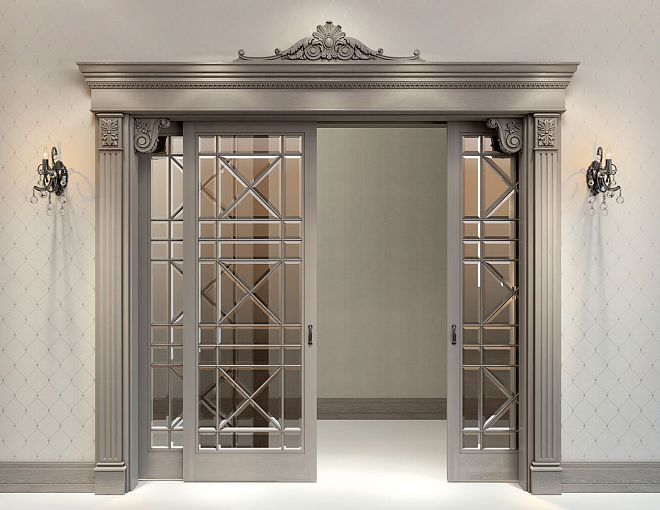
Stucco decor above a doorway is an architectural technique that has always been used in classic finishes. A cartouche above the door, a semicircular medallion above the arch — this is a strong decorative move that emphasizes the architectural role of the door.
A decorative element above furniture — a console, chest of drawers, vanity table — connects the object with the wall. The furniture ceases to be just an item placed against the wall; it becomes part of the decorative zone.
Buy Molded Decoration to coordinate with furniture — means choosing an element that rhymes with the furniture style in terms of ornament. Carved classic furniture — a cartouche with acanthus ornament. Smooth modern furniture — a laconic medallion with minimal ornament.
Practical scenarios: what to buy in different situations
Now for specifics — for those who already know what is in the room and want to understand exactly what stucco to add.
Scenario one: modern apartment, smooth doors, laminated baseboard 70 mm
Style — modern or transitional. Doors — smooth, matte. Baseboard — medium height.
What to buy:
-
Moldings made of polyurethane width 25–35 mm, smooth or heel profile
-
Painting to match the wall color or white — depending on wall color
-
Small cornice along the ceiling perimeter (40–50 mm) — optional but recommended
-
Without lavish decor
Scenario two: apartment with neoclassical style doors, white paneled doors, high baseboard 100 mm
Style — neoclassical. Doors with distinct classical details.
What to buy:
-
Moldings 35–50 mm, moderately relief profile — Ionic or heel
-
Cornice 60–80 mm with matching profile
-
Medium diameter ceiling rosette
-
Decorative stucco — corner overlays in frames and one central accent
Third scenario: country house, dark wooden doors, thick wooden baseboard
Style — classic or rustic. Natural wood dominates.
What to buy:
-
Moldings 40–60 mm, ornamental or relief profile
-
Painting in ivory color — not pure white, but a warm neutral tone
-
Ceiling stucco with a more expressive cornice
-
Buy Moldings with warm ornament — leaves, curls, acanthus
Fourth scenario: studio with minimalist renovation, no clear style
Style — open. Smooth walls, simple doors, basic baseboard.
What to buy:
-
One smooth profile molding 25–30 mm for one accent wall
-
Painting to match the wall color
-
No decorative overlays — or one small accent above the mirror
-
You can buy ready-made stucco matching the Baroque style. Calculate the quantity: linear meters of cornices and moldings, number of rosettes, pilasters, consoles, corner elements. Add a ten to fifteen percent allowance for trimming. Minimal set for a first experience
Scenario five: restaurant or hotel, high ceilings, classic style
Style — representative, classic or neoclassical.
What to buy:
-
Moldings 50–70 mm, ornamental profile
-
Ceiling molding — wide cornice 80–120 mm
-
Ceiling Outlets
-
Large stucco decor for accent walls
-
Coordinated decorative overlays above doorways
Table: stucco molding for the interior situation
| Situation | What to buy |
|---|---|
| Smooth doors, modern renovation | Moldings 25–35 mm, glue, paint to match |
| Paneled doors, neoclassical | Moldings 35–50 mm, cornice, corner decor |
| High baseboard 100+ mm | Moldings 45–60 mm of proportionate width |
| Simple furniture, needs an accent | Decorative stucco inside the frame |
| Active furniture with ornament | Smooth molding, painted to match the wall |
| Dark wooden doors | Moldings in a warm tone, not white |
| Ceiling without a cornice — feels unfinished | Ceiling molding — cornice around the perimeter |
| Want a unified trim set | Moldings + decor + cornice + rosette |
Details that are often overlooked
Door casing as a guide for molding
The casing is essentially the same as molding, just around the door opening. Look at its width, profile, relief — and you'll immediately get a guide for wall moldings. The molding should not be wider than the casing (otherwise it will overpower the door), but it can be narrower or proportionate.
Height of frames and height of furniture
The bottom line of the frame is often aligned with the height of the sofa back or the dresser. If the bottom frame extends behind the sofa back, part of the decor is hidden. It's better when the bottom frame starts slightly above the back — then the decor and furniture work together rather than compete.
Curtains and stucco molding
Ceiling-height curtains are one of the most relevant solutions in modern interiors. With such curtains, a ceiling cornice made of stucco molding fixes the transition line, and it's better to mount the curtain rod flush with or slightly above the stucco cornice. This creates a smooth transition.
Lighting and stucco relief
If the room has directional lights or sconces, the textured stucco will be highlighted by side light. This looks beautiful. But if the lighting is only overhead and diffused, the relief gets lost. In this case, it's better to choose a smooth molding with a simple profile that reads from its shape rather than from light and shadow.
FAQ: answers to key questions before purchasing
How to choose moldings for doors?
Look at the door style. Smooth doors — calm, smooth molding. Paneled doors — moderately textured. Dark doors — moldings in the color of the wall or a warm neutral shade, not white.
Should moldings match the baseboard in width?
They don't have to match, but they should be proportionate. High baseboard — wider molding. Thin baseboard — narrower molding. A large difference in scale disrupts proportions.
Which stucco to choose for furniture?
Active furniture with decor — a calm smooth molding, matching the wall color. Simple furniture without ornament — decorative molding or you can add stucco decor more boldly.
Can moldings be painted the same color as the walls?
Not only can they — often it's the best solution. The embossed effect is more delicate than contrasting frames, especially with low ceilings and in small rooms.
Is ceiling stucco necessary if moldings are already on the walls?
It's advisable. A cornice around the perimeter completes the decorative system and connects the walls to the ceiling. Without it, the wall decor looks unfinished.
How to combine stucco with dark walls?
On dark walls, it's better to paint the stucco in the same tone or slightly lighter than the wall. White moldings on a very dark wall can look too contrasting — especially with a large profile.
What to buy to make the finish look cohesive?
Moldings + ceiling stucco + decorative overlays — in one stylistic direction, coordinated with doors, baseboards, and furniture in scale and profile.
Should you buy molding before or after finishing the renovation?
It's better during the process, when the final look of doors and baseboards is clear, but before the final wall painting. Then you can coordinate the color and install the moldings before the last coat of paint, achieving perfect unity.
About the company STAVROS
A unified interior is precise work with details. And choosing the right molding in conjunction with all other finishes is one of the most important details of the final result.
STAVROS is a Russian manufacturer of decorative polyurethane products with a full range for residential and commercial interiors. The STAVROS catalog includes: Moldings made of polyurethane a wide selection of profiles and widths, Decorative stucco и Relief Decoration for accent zones, Ceiling molding for cornices and ceiling solutions, a full range moldings from polyurethane for any scale and style.
All STAVROS products are made of high-quality polyurethane with precise relief, stable geometric parameters, and readiness for final painting in any color. Delivery is available throughout Russia. STAVROS specialists will help you select molding in conjunction with your finishes, calculate the footage, and assemble a set that works as a unified system—from baseboard to ceiling cornice.