Article Contents:
- What is an accent wall with polyurethane decor
- What to choose for an accent wall: moldings, panels, or a ready-made set
- Moldings: architectural geometry
- Stucco decor: ornamental accent
- Ready-made sets: a systematic solution
- Where to place an accent wall
- In the living room
- In the bedroom
- In the TV area
- In the entryway
- Which style to choose for an accent wall
- Neoclassicism
- Neoclassic Light
- Jatoba
- Versailles Light
- How to calculate decor for an accent wall
- Color of the accent wall with polyurethane decor
- Lighting of the accent wall: how light works with relief
- Decor for moldings: corner accents and nodal points
- Combining styles: when it works and when it doesn't
- Practical scenarios: how to assemble an accent wall step by step
- Mistakes in designing an accent wall
- Where to buy decor for a polyurethane accent wall
- FAQ: frequently asked questions about a polyurethane accent wall
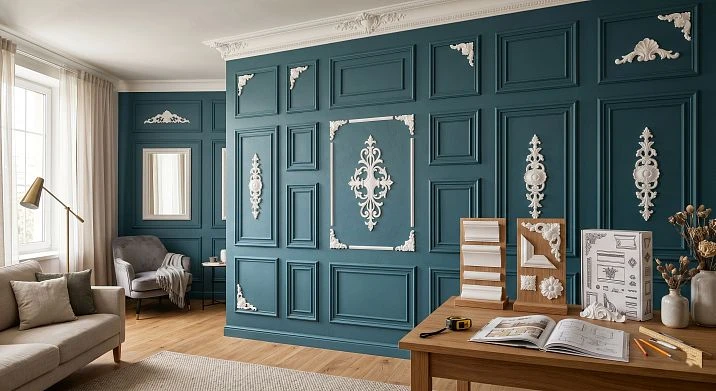
One precise strike — and the space transforms. That's exactly how an accent wall works: one bold, well-thought-out step that changes the perception of the entire room without major renovations, without re-papering the whole house, without replacing furniture. Just one wall is enough. But this wall needs to be given a voice — relief, structure, character. And that's exactly where Accent wall made of polyurethane becomes a solution you won't regret.
Polyurethane decor for an accent wall is not just a buzzword. It is a specific tool: moldings for frames and vertical lines, stucco overlays for ornamental accents, decorative panels for creating a three-dimensional wall composition, and finally — ready-made kits that combine all of this into a single professional solution. In this article, we will break down each tool, each application scenario, and each mistake to avoid. Because one beautiful wall is the result of the right decisions, not a random selection of elements.
What is an accent wall with polyurethane decor
First of all — let's agree on terms. An accent wall is one of the walls in a room that is deliberately highlighted with color, texture, or three-dimensional decor. It is not a background. It is a statement. It is the first thing the eye falls upon when entering the room, and it holds the entire visual composition of the space.
An accent wall with moldings is an architectural version of an accent that works more subtly and durably than just contrasting paint. The relief of the molding catches light differently than a smooth surface. It creates depth — not with color, but with volume. And this depth does not get boring, does not fade, and does not require rethinking when changing furniture.
An accent wall with stucco adds another level: an ornamental accent that gives the wall a stylistic character. Whether it's a classic floral motif, a concise geometric pattern, or a minimalist vertical line — each of these options creates a wall that speaks more about the owner of the space than any interior magazine.
Polyurethane accent wall decor is used in the living room — behind the sofa or around the fireplace. In the bedroom — at the head of the bed. In the TV area — as a frame for the screen and a background for the media zone. In the hallway — as the first and last visual impression of the apartment. Everywhere — one principle: one wall, maximum expressiveness, zero unnecessary details.




What to choose for an accent wall: moldings, panels, or a ready-made kit
This is the main question from which any accent wall project begins. And the honest answer here depends not on what is "better" in the abstract, but on what specific task you are facing.
Let's break down three main tools.
Our factory also produces:

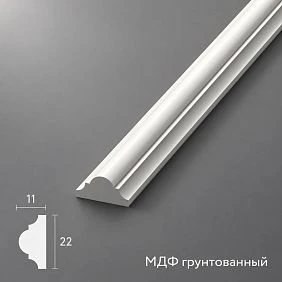


Moldings: architectural geometry
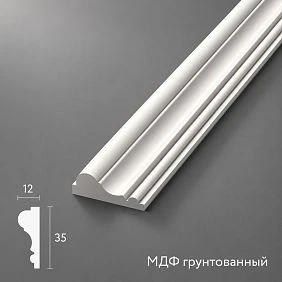
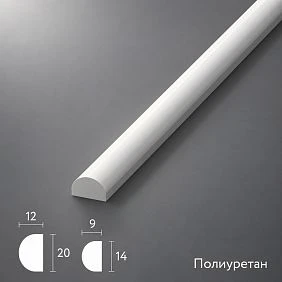
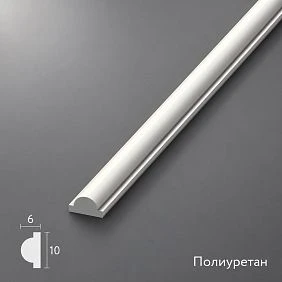
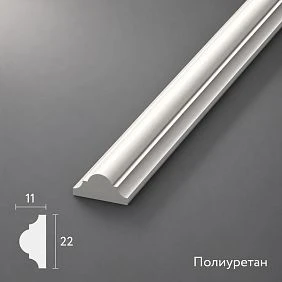
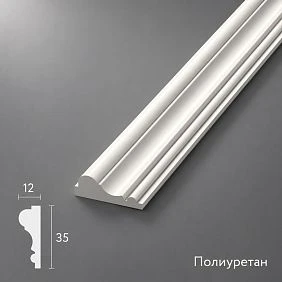
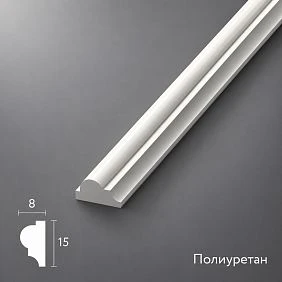
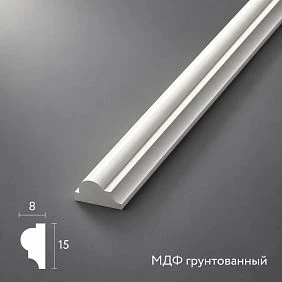
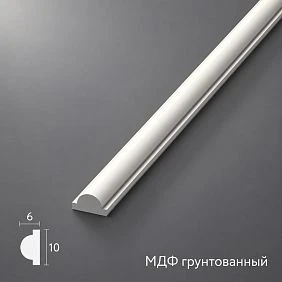
polyurethane wall moldings — these are linear profiled elements: straight slats with a cross-section of a specific shape. They create frames on the wall, vertical divisions, horizontal friezes, and any other linear structures.
Molding on an accent wall is used for:
-
rectangular frames of different proportions (classic, neoclassical, modern minimalism)
-
vertical lines from floor to ceiling (works in Japandi, loft, modern apartment)
-
a horizontal frieze dividing the wall into two tiers
-
framing a mirror, niche, or TV panel
Choosing a molding profile is a key decision. A narrow profile of 12–16 mm is suitable for a modern minimalist or Japandi interior. A medium one of 20–35 mm is for neoclassicism and modern classic. A wide one from 40 mm is for formal classical decor. An incorrectly chosen profile width will either "lose" the wall or overwhelm it — in both cases, the effect will be opposite to what was intended.
Get Consultation
Stucco decor: ornamental accent
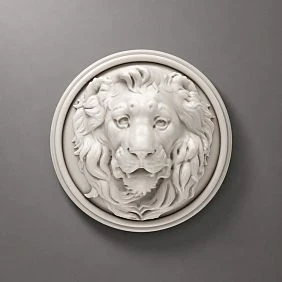
molded decoration made of polyurethane — these are three-dimensional overlays of various shapes and sizes: floral motifs, curls, acanthus leaves, geometric cartouches, corner elements. They do not create a line — they create an accent point. A strategically placed overlay at the intersection of moldings, on the central axis of a frame, or at the top of a vertical panel turns geometry into a stylistic statement.
Stucco decor for an accent wall is used as:
-
corner overlays at intersections of molding frames
-
central elements inside frame panels
-
accent inserts in vertical systems
-
individual wall panels without molding framing
Ready-made kits: a system solution
Ready-made molded decor kits — these are designer-developed systems where moldings and ornamental elements are already coordinated in proportion, scale, and style. One kit — one panel. Several kits in a row — a full accent wall with architectural character.
When a ready-made kit is the right choice:
-
no time to develop a layout scheme from scratch
-
want a predictable result without the risk of making mistakes in proportions
-
need a stylistically cohesive wall, not a set of random details
-
the task is to quickly and accurately achieve a professional result
When are individual moldings better:
-
there is an original design with non-standard sizes
-
a non-standard layout for a specific floor plan is needed
-
maximum flexibility in choosing the profile and pitch is important
Where to make an accent wall
In the living room
The living room is the main arena for an accent wall. Its effect is maximized here because this is where most time is spent and where the eye is drawn regardless of furniture arrangement.
An accent wall in the living room is most often executed in two variations.
The wall behind the sofa is the most popular scenario. Decorating the wall behind the sofa with moldings creates an architectural frame for the seating area, making it the center of the room and giving the living room a representative look. Both vertical systems of two to three parallel frames with ornamental accents and horizontal panels in several tiers work well here.
The fireplace or TV wall is a functional accent that also receives architectural framing. Decorating the wall with moldings in the living room around the fireplace or media center structures this area and transforms it from just a 'wall with a screen' into a thoughtful design element.
For a living room of 18–30 sq. m, the optimal choice would be medium-saturation sets: systems with two vertical panels on the sides and a central accent above the sofa or fireplace. In spaces over 30 sq. m, you can use a series system of three to four sets with equal spacing.
In the bedroom
The accent wall in the bedroom is the wall at the head of the bed. There are usually no other options, and that's good: the task is clearly defined, and the solution is chosen without hesitation.
Decorating the wall behind the bed with polyurethane works as a visual "portal" — it frames the bed just as a canopy once framed a royal bed. Two vertical sets on the sides of the bed, connected by a horizontal accent at the top, is a classic and always working scheme.
The wall decor at the headboard should not compete with the bed's headboard. If the bed has a soft panel headboard 90–120 cm high, moldings should start above it. If the headboard is low or absent, the molding system can go from floor to ceiling, creating a single vertical structure.
In the TV area
The TV zone is a problematic area in modern interiors. A large screen on the wall is functional, but visually it's a "hole" in the interior: a rectangle of gadget without context or framing. Decorating the wall under the TV with polyurethane solves this problem, turning the screen from an "electrical device on the wall" into part of a thoughtful architectural composition.
Decorating the TV zone with polyurethane follows several schemes. The first is vertical moldings on the sides of the screen and a horizontal accent below it (at the level of the cabinet or console). The second is a frame panel that encloses the screen, with ornamental corner accents. The third is a full system of vertical divisions from floor to ceiling with a central accent on the screen's axis.
Moldings around the TV are selected according to the following principle: the profile should be no more than one and a half times wider than the screen frame. A too thin molding gets lost against a large screen. A too wide one feels oppressive.
In the hallway
The hallway is a space of first and last impressions. This is where every day begins and ends. And it is here that the accent wall in the hallway works with particular psychological force.
Decorating the wall near the mirror is the most common scenario for the hallway. A molding frame around the mirror with ornamental corner accents turns an ordinary mirror into an architectural element — this is how mirrors were framed in classic halls.
Vertical wall decor in a narrow hallway works differently: three to four vertical moldings on the main wall with equal spacing create rhythm and visually expand the space. This is especially effective in long corridors where, without structure, the wall seems endlessly monotonous.
Which style to choose for an accent wall
The style of the accent wall should match the overall interior design. This doesn't mean it has to literally repeat it — but it shouldn't contradict it. Let's break down four main style directions available in ready-made collections.
Neoclassicism
Neoclassicism is a classical language translated into a modern dialect. Ornamentation is present here, but without historical heaviness: floral motifs, soft acanthus leaves, regular frames with a slightly pronounced profile. This is a style for interiors that want to speak the language of tradition but live in the present day.
Set of stucco decor "Neoclassic"It is suitable for living rooms and bedrooms with classic furniture, for studies with a representative function, for hallways of country houses and high-end residential complexes. The ornamental overlays in the kit are expressive enough for the wall to "speak" and restrained enough not to overload the space.
Neoclassic Light
If "Neoclassic" is a confident classical statement, then "Neoclassic Light" wall decoris its lighter, airier version. The profiles are thinner, the relief softer, the ornament more delicate. This is the right choice for modern apartments with ceilings of 2.5–3 m, where full neoclassicism can feel heavy, and pure minimalism seems too cold.
"Neoclassic Light" works in bedrooms, modern living rooms with neutral furniture, and children's rooms with classic elements. It doesn't require the interior to fully immerse in a historical style — a neutral base and the right color are enough.
Japandi
"Japandi" decor setis for those who choose tranquility as an aesthetic stance. No ornamentation, only geometry. Vertical lines, square corner accents, laconic frames with minimal relief. This is a style for modern apartments, studios, bedrooms, and hallways where the silence of form and architectural purity matter.
Japandi is the most "neutral" of the four options in terms of compatibility with furniture and textiles. It works with light oak wood, linen textiles, and ceramics in natural shades. An accent wall with a Japandi kit is an interior meditation expressed in polyurethane.
Versailles Light
"Versailles Light" stucco decor setis for those who want expressiveness without compromise. This is the most ornament-rich system in the line: floral overlays with relief up to 22 mm, profiled moldings with a pronounced contour, corner accents with classic ornamentation. Versailles Light is created for formal spaces — living rooms, hallways, studies, fireplace areas — where the wall needs to make an impression.
This is not a "palatial heaviness," but a modern interpretation of French classics on the scale of a real apartment. When painted correctly to match the wall tone, Versailles Light reads as high-level architectural decor, not as "a lot of ornament on the wall."
How to calculate decor for an accent wall
Calculation is what separates a beautiful result from disappointment after installation. The good news: for ready-made kits, most of the calculations are already done by the developer. But it's important to understand the basic principles.
Step one: measure the wall. Width and height are the two main numbers. Write them down. Don't round.
Step two: determine the center of the composition. In a living room, this is usually the center of the sofa or fireplace. In a bedroom, the center of the bed. In a TV area, the center of the screen. In a hallway, the center of the mirror. The entire layout is built symmetrically from this point.
Step three: account for furniture and objects. The bed, sofa, TV, mirror, console — all of these limit the decor placement zone from below. The top edge of the decor should be either at the level of the cornice or leave at least 15–20 cm to the ceiling.
Step four: check the margins. The side margins from the edge of the wall to the first frame should be equal. The margin from the baseboard should be at least 10 cm. The distance between sections should be no less than the width of the section itself (the "air equals element" rule).
Step five: choose the format. For a wall up to 2 m wide — 1–2 vertical kits. For a wall 2–3.5 m — 2–3 kits. For a wall over 3.5 m — 3–5 kits with equal spacing or a three-part system with a central accent and two side ones.
Step six: check the sockets and switches. This sounds trivial, but it's what people forget most often. The molding frame should not intersect with a socket. The switch should be either inside the frame in the correct position or completely outside it — but not on its border.
Color of the accent wall with polyurethane decor
Color is a separate topic that deserves a detailed discussion. An accent wall can be highlighted in three ways: by painting it in contrast to the other walls, by painting it monochromatically in the same tone as the moldings and the wall, or by using a combined solution.
Contrast wall — when the accent wall is painted in a different color relative to the other surfaces. For example, one wall in deep blue-green, the rest in light beige. The moldings are painted in the color of the accent wall (monochrome) or slightly lighter.
Monochrome wall — when the moldings and the wall are the same color. The decor reads as pure volume and relief, without color contrast. This is the most elegant option, used in the best European interiors of the 18th–19th centuries.
Two-tone wall — when the inner field of the frame is painted 2–3 tones darker than the main background. The molding and the outer wall are in the same tone, the inner field is darker. This creates an illusion of depth without additional elements.
Forwall decor made of polyurethaneAcrylic matte paints are best suited: they provide an even coating, a soft surface without shine, and good adhesion to the polyurethane base.
Accent wall lighting: how light works with relief
There is one thing that is not visible in photographs but is always felt in person: how lighting interacts with the relief of the moldings. This is perhaps the strongest effect of polyurethane decor — and at the same time the most undeservedly forgotten when planning.
Direct overhead light (standard chandelier or spotlights) creates soft shadows under the horizontal protrusions of the molding. The decor reads as volume, but without drama.
Side lighting (sconces, floor lamp to the side of the wall) gives a more pronounced chiaroscuro: the vertical edges of the molding are lit on one side and shaded on the other, ornamental overlays 'come to life,' each curve of the stucco decor gains depth. It is this light that reveals the relief most fully.
Bottom-up lighting (built-in lights in the baseboard or directed floor lights) is the most theatrical option. It is suitable for formal areas, fireplace interiors, executive offices. In living spaces, such light is best used as an additional accent, not the main lighting.
Rule: the richer the reliefpolyurethane molding decoration on the wall, the more important proper lighting is. An ornamental overlay in direct top light is beautiful. The same overlay in side light is lively and expressive.
Decor for moldings: corner accents and nodal points
Once the frame is assembled and the moldings are installed, there is one element that takes the result to the next level. This isDecor for Molding: corner ornamental overlays installed at the intersection and connection points of profiles.
In a classic interior, the corners of frames always received an additional accent — this is a historical tradition that developed for a very clear reason: the corner of a frame is a nodal point, a place that catches the eye first. Without an ornamental accent, the corner looks technically clean but stylistically unfinished. With a corner overlay, it becomes a detail that completes the look.
Corner accents are especially important in the "Neoclassic", "Neoclassic Light", and "Versailles Light" systems. In "Japandi", corner overlays are typically replaced with square geometric elements without ornamentation — this aligns with the minimalist aesthetic of the style.
Combining styles: when it works and when it doesn't
One question almost everyone asks: "Can I mix elements from different collections?" The answer is cautiously yes, if you understand the logic of compatibility.
Moldings from the sectionpolyurethane wall moldingscan be combined with ornamental overlays from different collections — if the profile of the molding and the size of the overlay visually match each other. A thin 12 mm molding with a large Versailles Light overlay is a conflict of scales. A wide 40 mm molding with a delicate Neoclassic Light overlay is a weight imbalance.
The Neoclassic and Neoclassic Light collections work well together in one space if used in different zones: Light in the bedroom or hallway, full Neoclassic in the living room or study. This is a professional technique of "style hierarchy."
Japandi does not mix with other collections — it is too self-sufficient and stylistically independent.
Versailles Light — only in spaces where the classical character is declared throughout the interior. It does not tolerate proximity to minimalist furniture or Scandinavian textiles.
Practical scenarios: how to create an accent wall step by step
Let's move from theory to specifics. Three real scenarios — three different tasks.
Scenario 1. Living room 22 sq m, wall behind the sofa 3.4 m. Style: modern neoclassicism. Sofa width 2.4 m is centered on the wall. Solution: two Neoclassic sets symmetrically on both sides of the sofa, with a 50 cm offset from the edges of the sofa. Between the sets — a central field without decor (above the sofa). Result: an architectural wall with air in the center that holds the entire interior.
Scenario 2. Bedroom 16 sq m, accent wall at the headboard 3 m. Style: Japandi. Bed 160 cm centered. Solution: five vertical moldings with a step of 52 cm from floor to ceiling, square corner accents at points of contact with the cornice. Moldings in the color of the wall. Result: a calm vertical structure that visually raises the ceiling and creates a meditative backdrop behind the bed.
Scenario 3. Hallway 4 sq m, wall opposite the entrance 1.8 m. Style: Neoclassic Light. Mirror 60×120 cm centered. Solution: one Neoclassic Light set with mirror framing and vertical accents on the sides. Above the mirror — a small ornamental overlay. Result: a grand entrance with character that looks like an expensive designer solution.
Mistakes when designing an accent wall
Let's talk about what most often goes wrong. These mistakes are constantly made by independent buyers — and they are all predictable and easily avoidable.
Too many different elements. Moldings of one profile + overlays of another style + corner elements of a third — and the wall turns into a warehouse of decorative details, not an architectural system. Rule: one style, one collection, one level of decorativeness.
No single center of composition. When elements are placed without an axis of symmetry and without reference to furniture, the wall looks random, even if each element is beautiful on its own.
Moldings that are too thin for a large wall. A 10 mm profile on a wall 4 meters wide gets lost. Scale is not an option, it's a requirement.
Decor conflicts with furniture. Classic frames with ornamentation above a loft-style sofa is a conflict that no paint can resolve. The style of decor should match the style of furniture.
Outlets, sconces, and switches are not taken into account. This is the most frustrating mistake. A frame that is cut by a switch is irreparable. The layout must account for all points on the wall.
Individual elements are bought without a scheme. Taking seven different profiles "by eye" and laying them out on the floor is not designing. Without a scheme with exact dimensions, axes, and offsets, installation will be a redo.
The accent wall ends up overloaded. In an attempt to make it "richer", they add another frame, another overlay, another corner — and the result is a wall that tires the eyes. Classic advice: do half of what seems sufficient. In an accent wall, empty space is part of the design, not unfilled space.
Where to buy decor for an accent wall made of polyurethane
One wall — one solution. It is with this logic that the STAVROS catalog works, wherePolyurethane wall decorassembled into a single system: from individual moldings to ready-made style kits.
For calm modern interiors —"Japandi" decor setand"Neoclassic Light". For classic interiors with character —«Neoclassic»and"Versailles Light". For those building a custom system —Moldings for walls, polyurethane decorative wall panels, molded decoration made of polyurethaneandDecor for Molding — all the components for project work from scratch.
STAVROS is a manufacturer that works with DWG drawings and 3D models for each catalog item, provides Contact us to confirm shipping to your destination., advises on selection for a specific room, and takes on the calculation of the number of elements based on a drawing or photo. One wall — one solution. And STAVROS will help make that solution precise.
FAQ: frequently asked questions about an accent wall made of polyurethane
Does an accent wall have to be a different color?
No. Color is one way to create an accent. The relief of moldings with monochrome painting works just as well, and in some cases more elegantly than contrasting painting. In classic and Japandi interiors, a monochrome accent wall is the preferred solution.
Can you make an accent wall in a small room?
Yes, but be careful when choosing elements. In a room up to 12 sq. m, it is better to limit yourself to one vertical set or two or three vertical moldings. Avoid rich frame systems — they will overload a small space.
How long will polyurethane decor last on the wall?
With proper installation and painting — decades. Polyurethane does not degrade at standard room temperatures, is moisture resistant, does not crack or yellow.
Do I need to remove furniture before installation?
No. Installation is done on the vertical surface of the wall. It is enough to move the furniture slightly to have free access to the lower part of the wall.
Can moldings be repainted after installation?
Yes, an unlimited number of times. Acrylic paints adhere well to polyurethane, and when changing the color scheme of the interior, the moldings are simply repainted together with the wall.
How to choose between a ready-made set and individual moldings?
If you have no experience in designing layouts — start with a ready-made set. If you have a clear scheme and non-standard sizes — take individual moldings. A set gives predictability. Individual elements give flexibility.
Is an accent wall suitable for rental apartments?
Yes, if agreed with the landlord. Polyurethane elements are dismantled without serious damage to the wall. Traces of glue are puttied and repainted.