Article Contents:
- Geometric furniture leg MN-205: which five heights can you actually buy
- MN-205 250 mm
- MN-205 350 mm
- MN-205 450×60×70×30 mm
- MN-205 650 mm
- MN-205 740×60×80×30 mm
- Brass or stainless steel
- Same profile character
- Same B=60 mm
- Same metal accent G=30 mm
- Different height A
- Different F — 70 and 80 mm
- What remains the same
- What changes
- Practical conclusion
- Tabletop 20 mm
- Tabletop 30 mm
- Tabletop 40 mm
- Why the coffee table is first checked next to the sofa
- Conditional layout
- Tabletop 20 mm
- Tabletop 30 mm
- Tabletop 40 mm
- Tabletop thickness
- Apron
- Chair height
- Armrests
- Installation diagram
- Material
- Tinting or enamel
- Metal tip color
- Tabletop style
- Edge thickness
- Corner shape
- Main conclusion
- Brass with beech
- Brass with oak
- When brass can be too active
- Why metal should be chosen for all eight legs at once
- Steel with painted beech
- Steel with oak
- When stainless steel is especially logical
- Beech 450 mm
- Beech 740 mm
- Oak 450 mm
- Oak 740 mm
- Commercial output
- Beech + stainless steel
- Beech + brass
- Oak + stainless steel
- Oak + brass
- The whole set made of beech
- The whole set made of oak
- Mix beech on the coffee table and oak on the dining table
- The same tinting of different wood species does not make them identical
- One color
- One shine
- One stain formula
- One system of varnish or oil
- One control sample
- Why 'one batch' does not guarantee absolute wood identity
- Example: round coffee table + oval dining table
- Example: rectangular coffee table + rectangular dining table
- Why different tabletops are sometimes even better
- Seat height
- Armrest
- Thickness of the future tabletop
- Will the table be central or side
- Quick layout
- Seat height
- Armrests
- Lower edge of the apron
- Tabletop thickness
- Installation diagram
- Coffee tabletop 30 mm, dining tabletop 40 mm
- Coffee tabletop 20 mm, dining tabletop 60 mm
- A visual edge can be used
- Why one type is convenient on both tables
- How many are needed
- Is a reserve needed
- Why you can't automatically add all 5 mm to the table height
- Beech + stainless steel
- Beech + brass
- Oak + stainless steel
- Oak + brass
- What this means practically
- Plus of one order
- Especially useful for oak
- Plus for metal
- Plus for finishing
- When one order is bad
- What to be sure to save
- Why this may still not be enough for oak
- Why this is especially important for a stone or heavy tabletop
- What to Check
- Coffee table
- Lunch
- Then place them in the same room
- Example
- 450 + 20 = 470 mm
- 450 + 30 = 480 mm
- 450 + 40 = 490 mm
- How to choose
- 740 + 20 = 760 mm
- 740 + 30 = 770 mm
- 740 + 40 = 780 mm
- Coffee table — a compact accent
- Dining table — the main functional piece
- Why the F difference is useful
- How to remove the literalness
- 450 mm does not suit the sofa group
- 740 mm is not suitable for a dining table
- A dining table requires a different structural scheme
- A coffee table should look lighter
- The interior benefits from contrast
- Step 1. Determine the actual tabletop
- Step 2. Calculate the nominal height
- Step 3. Make a plane at this mark
- Step 4. Place it next to the sofa
- Step 5. Simulate the tabletop size
- Step 1. Approve the tabletop
- Step 2. Approve the apron or another rigid component
- Step 3. Calculate the top mark
- Step 4. Calculate the bottom mark of the apron
- Step 5. Place real chairs
- Step 6. Check the clearance around the table
- Why the metal should be nearby on the sample
- What to approve
- What can differ
- Why one batch is convenient
- Before finishing
- They are grouped by tables
- One finish
- Mistake 7. Ordering oak in two stages and expecting a full tone match
- Mistake 8. Finishing tables on different days without a control sample
- Mistake 9. Choosing brass just because it is "more premium"
- Error 10. Choosing steel only to save money
- Error 11. Not counting FUR-023 for eight legs
- Error 12. Automatically adding 5 mm FUR-023 to the height
- Error 13. Using four 740 mm for a too-large tabletop without calculation
- Error 14. Making the coffee table too small
- Error 15. Making both tables literally identical in every way
- Why this is important for beech
- Why this is important for oak
- What to check before painting
- Oak
- Oak
- "Under enamel" and "under tinting"
- If warm dominates
- If cold
- If mixed
- Can G be changed
- What to look at
- How to fix
- Conditional example
- Why this is stronger than immediately choosing another model
- What to consider
- Is a spare ninth needed
- Price of the reserve
- A more sensible approach
- What to Check
- Why two tables may require different top mounting hardware
- What is really desirable to unify
- Why you should not look for a replacement for only one table at the last moment
- Coffee table example
- Another coffee table example
- Dining example
- Boundary dining example
- Why is reverse calculation needed for the 450+740 pair
- What heights are available for MN-205?
- Is there an MN-205 450 mm?
- Is there an MN-205 740 mm?
- Can one MN-205 be used for both coffee and dining tables?
- Are MN-205 450 and 740 the same in proportions?
- How much larger is F in the 740 mm version?
- Why is this not bad?
- How to calculate the height of a coffee table?
- How to calculate the height of a dining table?
- Can these values be considered universally comfortable?
- What to choose — beech or oak?
- Can I make a coffee table from beech and a dining table from oak?
- What to choose — brass or stainless steel?
- How much does a set of beech with stainless steel cost?
- How much does beech with brass cost?
- How much does oak with stainless steel cost?
- How much does oak with brass cost?
- How much does FUR-023 cost?
- What size is FUR-023?
- How many FUR-023 are needed for eight legs?
- Do I need to buy a spare FUR-023?
- Do I need to buy a ninth MN-205 as a backup?
- Can I order eight MN-205 in one batch?
- What is the production time if the required leg is not available?
- Should I buy all eight at once?
- When should I first buy only 450 mm?
- When should I first buy only 740 mm?
- Can I use 350 mm instead of 450?
- Can I use 650 mm instead of 740?
- Do the tabletops need to be the same?
- Why should the coffee table be checked specifically next to the sofa?
- Why is the dining table checked with chairs?
- Can I use the same MN-205 on a very large dining table?
- Where can I buy legs for a coffee table?
- Where can I buy legs for a dining table?
- Where can I buy MN-205 furniture legs?
- How do I order MN-205?
- How to check the current price?
The same article number does not make two tables a set.
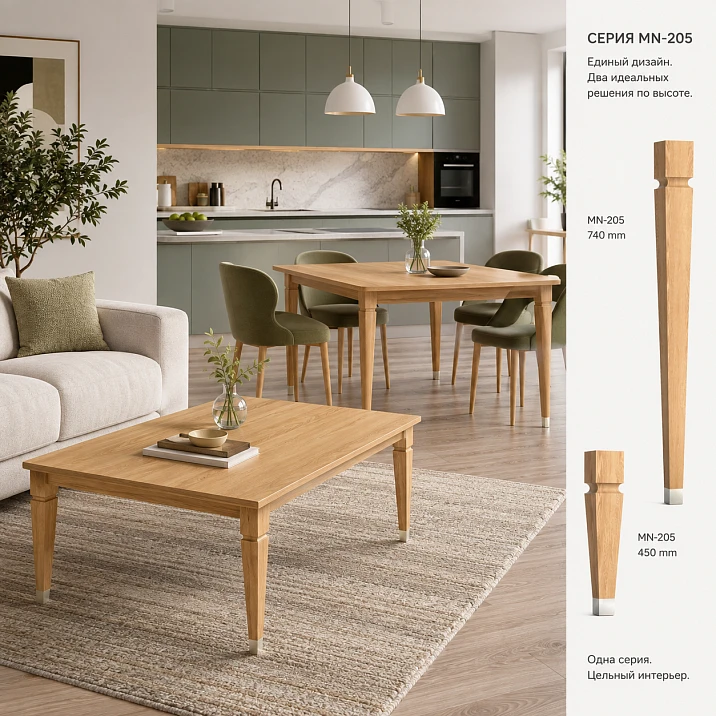
This is especially visible on MN-205. For the coffee table version with a height of 450 mm, dimension F is 70 mm; for the dining version at 740 mm, it is already 80 mm. B=60 mm and the metal element G=30 mm remain the same, but the proportions of the wooden body change. If you place two finished tables side by side, the viewer will see the kinship of the design, not a mechanically enlarged copy.
This is exactly what needs to be checked before ordering eight legs.
For the coffee table, the project considers four MN-205 450×60×70×30 mm. For the dining table, four MN-205 740×60×80×30 mm. The material is proposed to be chosen as one: either beech or oak. The metal tip is also one for both items: brass or stainless steel.
This approach can link the coffee and dining groups much more strongly than trying to pick two random models of "roughly similar" design. But there are four conditions.
First, 450 mm must give the correct finished height of the coffee table specifically next to your sofa. If after the tabletop it turns out to be an inconveniently tall item, the unified article number does not save it.
Second, 740 mm needs to be checked together with the actual thickness of the dining tabletop, the apron, and the chairs. With a 30 mm tabletop, the simple sum gives 770 mm; with 40 mm, it is 780 mm. This is not yet a finished ergonomic recommendation, but only the starting geometry.
Third, the same beech/oak and metal need to be finished as one interior batch. Two oak tables tinted on different days with different compounds may look less connected than beech in a single enamel.
Fourth, the price needs to be calculated immediately for eight legs. The difference between brass and stainless steel for one MN-205 is small, but the 4+4 set gives a noticeable total. At the same time, the choice of metal should still come from the interior, not from an attempt to save a few percent.
At the time of inspection, the MN-205 card confirms five heights: 250, 350, 450, 650, and 740 mm. For the two versions we need:
| Option | A | B | F | G |
|---|---|---|---|---|
| Coffee table MN-205 | 450 мм | 60 мм | 70 мм | 30 мм |
| Dining table MN-205 | 740 мм | 60 мм | 80 мм | 30 мм |
That is why the main question of the article is not "can one article number be used twice," but:
will the MN-205 450 and 740 mm look like one furniture family after two different tabletops, different functional heights, and one chosen metal are added to them?
If the answer is confirmed by mockups and calculations, you can buy MN-205 furniture legs immediately as a set of 4+4. If at least one table does not pass by height, it is better to abandon literal unity and preserve convenience.
Geometric furniture leg MN-205: which five heights can actually be purchased
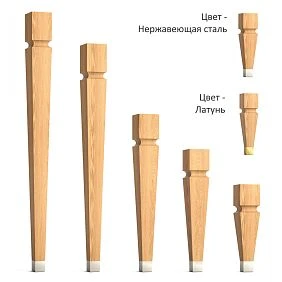
The MN-205 family is convenient precisely because one leg character exists in several scales.
For the current card:
| A, mm | B, mm | F, mm | G, mm |
|---|---|---|---|
| 250 | 60 | 60 | 30 |
| 350 | 60 | 60 | 30 |
| 450 | 60 | 70 | 30 |
| 650 | 60 | 80 | 30 |
| 740 | 60 | 80 | 30 |




MN-205 250 mm
Compact support for low items. Not needed for our pair, but shows that the series truly scales in function.
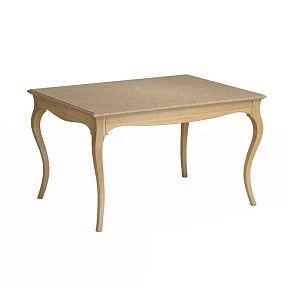
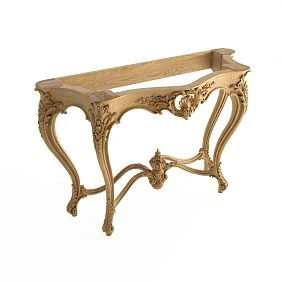
Our factory also produces:
MN-205 350 mm
Intermediate height between very low furniture and the coffee table version of 450 mm.
If 450 mm turns out to be too tall next to the sofa, 350 mm is worth checking before giving up on the entire MN-205 idea.
Get Consultation
MN-205 450×60×70×30 mm
This is the central SKU for the coffee table scenario.
A=450 mm sets the height of the wooden support in the card.
B=60 mm remains common for the series.
F increases to 70 mm.
G=30 mm maintains the same dimensional logic of the metal accent.
MN-205 650 mm
Transition to taller items. Not used for the standard dining scenario of our plan, but useful as a backup option if 740 mm gives an excessive finished height in a specific design.
MN-205 740×60×80×30 mm
Tall version for a dining or writing desk.
F is already 80 mm — 10 mm more than the coffee table 450.
Brass or stainless steel
The card allows ordering the metal tip in two variants.
It is the color of the metal that is easiest to make an absolutely repeatable visual link between the two tables.
Buy table legs in one series: why MN-205 really suits two different items
If the task is legs for a table to buy at once on two objects, MN-205 is interesting not only for the number of heights.
Same profile character
Both versions share the same design logic: a wooden geometric body and a metal lower accent.
Same B=60 mm
This dimension remains unchanged.
Visually, this helps maintain the kinship of the upper zone.
Same metal accent G=30 mm
The tip on the low and high table maintains the overall scale by G.
If you choose the same brass or the same stainless steel, the connection is read immediately.
Different height A
450 and 740 mm work on two different functions.
The difference:
740 − 450 = 290 mm.
Different F — 70 and 80 mm
This is a fundamental limitation.
The high leg has a more massive geometry.
Therefore, the final set should look like a related series, not like "one leg at a scale of 1:1.64".
MN-205 450 and 740 mm: why this is not the same leg, just shortened and lengthened
Let's compare only the needed options.
| Parameter | Coffee table MN-205 | Dining MN-205 | Difference |
|---|---|---|---|
| A | 450 | 740 | +290 mm |
| B | 60 | 60 | 0 |
| F | 70 | 80 | +10 mm |
| G | 30 | 30 | 0 |
Relative increase in F:
10 / 70 × 100 ≈ 14,3%.
This is not a huge difference, but enough to change the visual mass of the leg.
What remains the same
-
B;
-
G;
-
material when ordered correctly;
-
the color of the metal;
-
overall geometric idea.
What changes
-
height;
-
F;
-
ratio of the leg to the tabletop size;
-
distance between the metal tip and the top of the furniture.
Practical conclusion
The silhouette is similar, but the proportions are not identical.
This is even useful: the dining table gets a slightly larger base, which matches its greater height and usually larger tabletop.
Buy legs for coffee table MN-205 450 mm: what height the finished furniture will give
If you need to buy legs for a coffee table, you cannot stop at A=450 mm.
Simplified formula:
H of the finished table = A of the leg + structure above the leg + actual addition of the lower hardware.
Tabletop 20 mm
If it really lies directly on the upper mounting plane and there is no other structure:
450 + 20 = 470 mm.
Tabletop 30 mm
450 + 30 = 480 mm.
Tabletop 40 mm
450 + 40 = 490 mm.
These are nominal amounts.
If there is a underframe, mounting plates, apron or other component, the result changes.
Why a coffee table is first checked next to the sofa
There is no point in choosing 450 mm just because the card classifies this height as coffee tables.
You need to measure:
-
seat height;
-
armrest height;
-
desired position of the tabletop relative to the sofa;
-
ability to move the table closer.
Conditional layout
If the sofa seat is at 440 mm and the coffee tabletop comes out to 480 mm, it is 40 mm higher than the seat.
This may be acceptable or inconvenient — it depends on the use case.
If the armrest is 500 mm, the tabletop is 480 mm below it.
This is already a different functional result.
The article does not prescribe a universal ratio. It provides a way to check your sofa.
MN-205 740 mm for a dining table: why the final height should be calculated separately
A high leg should be checked as an independent furniture structure.
Tabletop 20 mm
740 + 20 = 760 mm.
Tabletop 30 mm
740 + 30 = 770 mm.
Tabletop 40 mm
740 + 40 = 780 mm.
Again: these are only nominal sums.
Tabletop thickness
The thicker the tabletop, the higher the finished surface.
Tsarga
If it is present, not only the total table height matters, but also the lower edge of the apron — it is this that determines the space for legs and armrests.
Chair height
You need to measure real chairs, not an abstract 'dining standard'.
Armrests
Especially critical: the chair may be comfortable in the seat, but not fit under the table apron.
Mounting diagram
If the leg goes into the table base or has an additional top piece, the final height changes.
Two tables in one room: what should match besides the MN-205 model itself
The same leg is just one layer of the overall furniture collection.
Material
Better to use one: beech or oak.
Stain or enamel
One finish recipe.
Color of the metal tip
Brass or stainless steel — the same on all eight legs.
Tabletop style
They don't have to be identical in shape, but should share a common visual logic.
Edge thickness
If the coffee table has an ultra-thin edge of 12 mm, and the dining table has a massive 60 mm one, legs alone may not be enough to convey a set feel.
Corner shape
Radius, chamfer, or right angle also tie furniture together.
Key takeaway
The same SKU MN-205 creates a strong foundation for the series, but doesn't replace work on tabletops.
Wooden legs MN-205 with brass tip: when brass binds both tables best
The brass tip works well if the kitchen-living room already has a warm metallic accent.
This could be:
-
kitchen fittings;
-
dresser handles;
-
pendant lights;
-
mirror frame;
-
decorative shelf details.
In such an environment, eight identical brass tips MN-205 bring the coffee and dining tables into one composition.
Brass with beech
If the beech is painted with opaque enamel, brass becomes the main visible accent of the leg.
For example, light enamel + brass gives a more decorative solution.
Brass with oak
Oak and brass are both visually warm.
Such a set looks natural in interiors where wood is not hidden under thick paint.
When brass can be too active
If the kitchen already has a lot of metal:
-
brass handles;
-
pendants;
-
faucet;
-
exposed hardware;
-
decorative frames.
Eight more brass tips can turn one accent into a repeating motif.
Here you need to look at the whole room, not the product card.
Why the metal should be chosen for all eight legs at once
If the first table is ordered with brass, and the second a few months later with stainless steel, the furniture will no longer read as one series.
Technically, it is still the MN-205.
Visually, it is already two different solutions.
MN-205 with a stainless steel tip: when two tables look calmer
Stainless steel gives a more neutral metallic note.
It works well if the interior already contains:
-
steel handles;
-
household appliances;
-
chrome;
-
nickel;
-
metal legs of other furniture.
Steel with painted beech
Neutral combination.
If the furniture should be calm and the focus is on the tabletop, steel does not draw attention away.
Steel with oak
This results in a more modern combination: natural wood + cold metal.
When stainless steel is especially logical
If the dining table is located near the kitchen where steel appliances are visible.
Then the MN-205 tip is connected not only to the coffee table, but also to the kitchen area.
Brass or stainless steel: you need to count eight legs, not the price difference of one
Based on the current card for the two required heights:
Beech 450 mm
-
brass — 5,880 ₽;
-
stainless steel — 5,590 ₽.
Difference — 290 ₽ per leg.
Four pieces:
290×4 = 1 160 ₽.
Beech 740 mm
-
brass — 7,100 ₽;
-
stainless steel — 6,810 ₽.
The difference is again 290 ₽.
Four:
1 160 ₽.
Complete set 4+4:
2,320 ₽ difference.
Oak 450 mm
-
brass — 7,950 ₽;
-
stainless steel — 7,660 ₽.
Difference — 290 ₽.
Oak 740 mm
-
brass — 10,290 ₽;
-
stainless steel — 10,020 ₽.
The difference is 270 ₽.
Total difference for eight legs:
4×290 + 4×270 = 2 240 ₽.
Commercial conclusion
Against the overall cost of the set, the difference between metals is relatively small.
So, choosing metal solely for savings is weak logic.
If the interior works better with brass, the surcharge for eight legs is a few thousand rubles, not tens of thousands.
Price of the MN-205 set: four commercial scenarios
| Set 4×450 + 4×740 | Leg price at the time of check |
|---|---|
| Beech + stainless steel | 49 600 ₽ |
| Beech + brass | 51 920 ₽ |
| Oak + stainless steel | 70 720 ₽ |
| Oak + brass | 72 960 ₽ |
Let's check the arithmetic.
Beech + stainless steel
4×5 590 + 4×6 810:
22 360 + 27 240 = 49 600 ₽.
Beech + brass
4×5 880 + 4×7 100:
23 520 + 28 400 = 51 920 ₽.
Oak + stainless steel
4×7 660 + 4×10 020:
30 640 + 40 080 = 70 720 ₽.
Oak + brass
4×7 950 + 4×10 290:
31 800 + 41 160 = 72 960 ₽.
These are only eight legs.
The full budget will include:
-
the countertop;
-
underframe/aprons;
-
hardware;
-
FUR-023;
-
finish;
-
delivery;
-
assembly.
Buy wooden furniture legs made of beech or oak for two tables
If you need Buy wooden furniture legs specifically as a 4+4 set, the wood should be chosen not by one table, but by the entire kitchen-living room.
The entire set made of beech
Beech is especially convenient if:
-
an opaque enamel is planned;
-
a uniform color surface is needed;
-
natural texture is not the main motif.
Budget-wise, this is significantly cheaper than oak.
The difference between the cheapest beech set considered and the oak one:
70 720 − 49 600 = 21 120 ₽.
The entire set made of oak
Oak is justified if natural wood must be visible.
Then the legs participate in the interior not only with their shape, but also with their texture.
Mix beech on the coffee table and oak on the dining table
Possible.
But this is no longer a "single series by material."
Such a solution needs to be explained by another repeating element:
-
one enamel;
-
the same metal;
-
the same tabletop;
-
a common shape.
The same tinting of different wood species does not make them identical
Beech and oak have different textures.
Even a close color does not turn them into one tree.
Therefore, if the goal is the strongest possible visual connection, it is easier to use one species.
Why it is better to finish a 4+4 set with one batch
Two tables are in the same room and are often visible at the same time.
The difference in finish is more noticeable than if the furniture is in different rooms.
One color
For enamel — one code and one application system.
One gloss
Matte and semi-matte surfaces of the same shade can visually differ more than it seems from a sample.
One stain formula
This is especially important for oak.
One system of varnish or oil
The finish affects the depth of color.
One control sample
Before processing eight legs, it is better to approve one short control piece or one leg.
Why "one batch" does not guarantee absolute identity of wood
Natural wood still has variations.
The point is to reduce differences through the same technology, not to turn solid wood into printed decor.
Buying legs for a tabletop: do you need to use the same tabletops on both tables
No.
Request buy legs for the tabletop does not mean that all furniture must be literally identical.
Coffee and dining tables serve different purposes.
Their sizes almost inevitably differ.
A connection can be created through:
-
the same breed;
-
one finish;
-
the same metal;
-
similar visual edge thickness;
-
a related tabletop shape.
Example: round coffee table + oval dining table
The shape is different, but both are soft.
MN-205 unites objects.
Example: rectangular coffee table + rectangular dining table
The connection is even stronger.
But you can get an overly literal set if you repeat everything without changing the scale.
Why different tabletops are sometimes even better
They show that the furniture is not a set from a catalog, but is assembled as a single interior family.
Why MN-205 450 mm should not be purchased before checking the sofa
Four legs of 450 mm are expensive enough not to choose them just by the name "coffee table."
Seat height
Measured on a real sofa in working condition.
Armrest
If the table should slide in from the side of the sofa, it becomes more important than the seat.
Thickness of the future tabletop
At 40 mm, the final nominal height is already about 490 mm.
Will the table be central or side
A central table may have a different allowable height than a side table.
Quick mockup
Make a box or a stable temporary model at 470/480/490 mm and see if it's comfortable to reach the surface.
Why you shouldn't buy MN-205 740 mm before checking the chairs
Four tall legs — a large part of the budget.
Seat height
Measured in reality.
Armrests
If they don't fit under the table, the function is compromised.
Lower edge of the apron
Even with a comfortable surface, an apron that is too low interferes with the legs.
Tabletop thickness
30 and 40 mm give different final marks.
Mounting diagram
You cannot count 740+thickness if the leg fits into the underframe non-standardly.
Two tables and different tabletop thickness: how to maintain a visual connection
Identical physical thickness is not required.
But the visible edge must be coordinated.
Coffee tabletop 30 mm, dining tabletop 40 mm
The difference is only 10 mm.
With different table scales, it can look natural.
Magazine 20 mm, dining 60 mm
The contrast is stronger.
Then the legs no longer guarantee the feeling of a set.
You can use a visual edge
For example, the structural thickness differs, but the bevel/edge creates a similar look.
This is already the work of a joinery project.
Identical metal on eight legs: why this is stronger than identical tabletops
The metal tip is in the same place on all supports — at the floor.
In the room, it forms a repeating horizontal system of small accents.
If the eight tips are identical, the eye connects the furniture even with different tabletops.
If four are brass and four are steel, the connection weakens.
Can you deliberately make different metals?
Yes.
For example, a coffee table in brass, a dining table in steel.
But that's already contrasting two zones, not the idea of one furniture family.
If that's exactly what the designer wants, using different metals is possible.
You just shouldn't simultaneously claim that both items should look like one set.
One FUR-023 for the entire furniture series: why unify glides
Card MN-205 recommends FUR-023.
The current card for the glide itself confirms the size 25×25×5 mm and the price of 110 ₽ at the time of checking.
You can buying the FUR-023 foot after the legs are finally approved.
Why one type is convenient for both tables
Not only for the sake of a uniform appearance.
One SKU simplifies:
-
purchasing;
-
warehouse stock;
-
repairs;
-
replacement of damaged fittings;
-
installer's work.
How many are needed
If the design includes one FUR-023 for each MN-205:
8 legs → 8 working support pads.
At the current price:
8×110 = 880 ₽.
Is a reserve needed
You can buy 1–2 additional support pads if the furniture will be actively used and a spare of small hardware is convenient.
But this is not a universal norm.
Why you cannot automatically add all 5 mm to the table height
25×25×5 mm — the dimensions of the FUR-023 itself.
The actual addition after installation depends on the fit.
Therefore, it is better to check the final furniture height on the assembled unit.
How much does the MN-205 set cost together with FUR-023
Let's add eight support pads to the four main options.
Beech + stainless steel
49 600 + 880 = 50 480 ₽.
Beech + brass
51 920 + 880 = 52 800 ₽.
Oak + stainless steel
70 720 + 880 = 71 600 ₽.
Oak + brass
72 960 + 880 = 73 840 ₽.
This is already a more realistic product estimate, but still without:
-
countertops;
-
aprons;
-
fasteners;
-
finishing;
-
delivery.
Why the difference between beech and oak should be calculated for eight legs
Let's take the same metal — stainless steel.
Oak set:
70 720 ₽.
Beech:
49 600 ₽.
The difference:
21 120 ₽.
For brass:
72 960 − 51 920 = 21 040 ₽.
That is, the choice of wood species affects the budget by about 21 thousand rubles, while the choice of metal — by about 2.2–2.3 thousand rubles.
What this means practically
If the budget is limited, the material has a significantly greater impact than brass/steel.
Therefore, you can keep the desired metallic accent and save on the wood species if beech suits the project.
Should you buy all eight MN-205 at once?
Sometimes yes.
Sometimes it's better to split the order.
Advantage of a single order
Both pairs of tables are created as one project.
Easier to control:
-
material;
-
metal;
-
finish;
-
timelines;
-
availability.
Especially useful for oak
If the tables need to have a similar wood tone, purchasing them together makes sorting and finishing easier.
Plus for metal
There is no risk that later the second table will be assembled from a different hardware version due to a project change.
Plus for finishing
Eight legs can be run through one cycle.
When one order is bad
If the coffee table has not yet passed the height mockup.
Or the dining table is not structurally designed.
Ordering eight legs for the sake of "completeness" when one of the items is not ready yet is wrong.
When first buying four MN-205 450 mm, and ordering four 740 mm later
This path is reasonable if one item is already approved and the other is still changing.
For example:
-
the sofa has already been purchased;
-
the height of the coffee table has been checked;
-
the dining chairs have not been chosen yet.
Then the coffee tables MN-205 can be ordered, and the dining ones — later.
What must be preserved
-
article number;
-
wood species;
-
metal;
-
the finishing formula;
-
photos of the reference sample;
-
order date.
Why this may still not be enough for oak
Another batch of solid wood may differ in tone.
This is not a manufacturer's error, but a natural property of wood.
Therefore, if visual matching is critical, a single order is preferable.
If the dining table is large, are four MN-205 740 mm legs sufficient?
Four legs is the standard scenario for the article, but the quantity and design must be confirmed by the table's project.
A large tabletop may require:
-
aprons;
-
additional reinforcement;
-
a different support scheme;
-
an intermediate support.
The MN-205 card states that the legs can be connected by aprons, but it does not replace the calculation for a specific large table.
Why this is especially important for a stone or heavy tabletop
Mass and spans are higher.
You cannot transfer a solution for a compact countertop to a large dining table just because the leg is the same.
If the coffee table is small, four MN-205s may look too bulky.
MN-205 450 has F=70 mm.
On a small tabletop, four identical supports can visually take up too large a share.
In such a case, a unified series should not become an end in itself.
What to check
-
tabletop size;
-
leg offset from the edge;
-
distance between supports;
-
side view.
How to check eight legs in an interior before purchasing
There is no need to model every thread.
Mockups are enough.
Coffee table
Collect volume:
-
countertop of the required size;
-
four conditional legs with a height of 450;
-
overall dimension F about 70.
Dining
Same for 740 and F=80.
Then place them in the same room
And look not separately, but simultaneously.
This is fundamental.
Why two beautiful tables separately may look bad together
One may be too light, the second — too massive.
And identical legs only emphasize the difference in scale.
Example
Coffee table top 600×600 mm.
Dining table — 2200×1000 mm.
Although the legs are related, the difference in tabletop sizes is enormous.
A larger coffee table or a different edge geometry may be needed.
How to link tables through the proportion of leg offsets
It is not necessary to place MN-205 at the same distance from the edge in millimeters.
It is better to look at the proportion.
For example:
-
on the coffee table, the legs are offset by approximately 8% of the tabletop width;
-
on the dining table — a similar visual proportion.
Exact percentages are not a standard; this is an example of a way to think about scale.
Why the same 80 mm offset can be bad
On a 600 mm countertop, this is a significant portion.
On 2000 mm, it's almost nothing.
The same absolute numbers do not create the same proportion.
How to connect countertops without a full match
You can repeat:
-
the shape of the bevel;
-
corner radius;
-
color;
-
material;
-
edge line.
For example, a rectangular dining table 1800×900, a coffee table 900×600. If both have the same bevel and the same oak, MN-205 becomes an additional unifying element.
When countertops made of different materials can still be part of the same series
For example:
-
coffee table — glass;
-
dining table — wood.
MN-205 and the same metal can still tie them together.
But then the wood of the legs becomes an even more noticeable common motif.
Brass and stainless steel: does it need to match kitchen hardware literally
Not necessarily.
If the kitchen has black handles, the tables can still have brass, if that brass is repeated in the lighting.
A common system is needed, not a literal match of every metal detail.
When not to buy the brass MN-205
If there is no other warm metal accent in the interior and the designer does not plan to add one.
Eight brass tips can then become a random motif.
When stainless steel is not worth buying
If the entire interior is built on warm bronze/brass and cold metal will be a single exception.
Why mixing metals is sometimes normal
Modern interiors can contain several metals.
But the repetition should be deliberate.
If steel is only on the dining table and brass only on the coffee table, the "unified series MN-205" becomes weaker.
Actual height of the coffee table: three scenarios
450 + 20 = 470 mm
Thin tabletop.
450 + 30 = 480 mm
Medium option.
450 + 40 = 490 mm
More massive.
How to choose
Place the model next to the sofa.
Do not reason abstractly.
Actual height of the dining table: three scenarios
740 + 20 = 760 mm
740 + 30 = 770 mm
740 + 40 = 780 mm
The difference between the extreme variants is 20 mm.
For a chair with armrests, this can already be significant after adding the apron.
Why the apron can ruin the correct height of a dining table
The surface is comfortable.
But the lower edge of the apron is too low.
The chair does not slide in.
Therefore, the drawing should indicate two marks:
-
top of the tabletop;
-
the bottom of the apron.
If the table is without an apron
Then the legroom is simpler, but structural rigidity needs to be ensured in another way.
If the coffee table has a lower shelf
Its position is also related to the 450-millimeter leg.
Identical exterior design does not yet guarantee a convenient internal assembly.
When the unified MN-205 series truly works as an interior system
The strongest solution emerges when sameness is not limited to the article number.
The two tables share:
-
wood species;
-
finish type;
-
the color of the metal;
-
tabletop character;
-
indentation principles;
-
visual edge thickness.
But the scales remain different.
This creates a sense of collection, not copying.
Coffee table — a compact accent
MN-205 450 mm works closer to the level of the sofa group.
Dining table — the main functional piece
MN-205 740 mm is higher, F=80 mm, and is usually under a larger tabletop.
Why the F difference is useful
If the tall leg were simply stretched without increasing mass, it could look too thin relative to the dining table.
Increasing F from 70 to 80 mm supports the scale.
When identical MN-205 legs make the interior too literal
The downside of unification is the risk of a "furniture suite."
If they match:
-
legs;
-
metal;
-
the countertop;
-
shape;
-
color;
-
edge;
-
decor,
two items may look not like a modern furniture family, but like a reduced and enlarged copy.
How to remove literalness
Keep MN-205 the same, but change one layer:
-
countertop shape;
-
material;
-
proportion;
-
corner radius.
For example, the coffee table is round, the dining table is rectangular.
Or both are oak, but the coffee table has a glass insert.
When MN-205 should not be used at all on both tables
A unified series should be a result of convenience, not a replacement for it.
450 mm does not suit the sofa group
Then there is no point in buying four legs just for visual connection.
You can check 350 mm or another model.
740 mm does not suit the dining table
For example, the tabletop is already very thick and the final surface becomes excessively high for the selected chairs.
The dining table requires a different structural scheme
A large span, heavy tabletop, or specific apron may require different support.
The coffee table should look lighter
MN-205 450 with F=70 may be too massive for a small tabletop.
The interior benefits from contrast.
Sometimes it's better to make a coffee table on a different base — for example, a more sculptural one.
Then the connection can be maintained through material and metal.
How to check the MN-205 450 coffee table before ordering
You need one evening and a simple mock-up.
Step 1. Determine the actual tabletop
Not "approximately 30 mm."
But the specific thickness.
Step 2. Calculate the nominal height
450 + countertop.
Step 3. Make a plane at this mark
Use a stable layout.
Step 4. Place next to the sofa
Check:
-
seat;
-
armrest;
-
passage;
-
arm's reach.
Step 5. Model the countertop size
Height without area does not give a sense of the object.
How to check the dining MN-205 740 before ordering
Step 1. Approve the countertop
Size, thickness, material.
Step 2. Approve the apron or another rigid node
Step 3. Calculate the top mark
740 + structural.
Step 4. Calculate the bottom mark of the apron
Step 5. Place real chairs
Check the seat and armrests.
Step 6. Check the passage around the table
Height is only one parameter.
One control finish sample for eight MN-205
If both furniture groups are to look like one series, the finish sample becomes more important than a regular color swatch.
It should include:
-
selected wood species;
-
selected preparation;
-
the actual finish;
-
a metal tip next to it.
Why the metal should be next to the sample
Wood color is perceived differently next to brass and stainless steel.
Warm oak with brass may seem richer.
With cold steel—more neutral.
What to approve
-
tone;
-
shine;
-
depth;
-
the degree of metal contrast.
If beech is used under enamel
It's easier to bring eight legs to a maximally identical color.
This is a strong argument for beech if natural texture is not required.
What may differ
The surface still needs to be prepared the same way.
Why one batch is convenient
One painting cycle.
If oak is used under tinting
Control is more difficult.
Before finishing
Eight legs are laid out side by side.
They are assembled by tables.
It is not necessary to look for four absolutely identical ones for each.
It is better to avoid a sharp contrast between two items.
One finish.
One tinting formula.
Mistake 7. Ordering oak in two stages and expecting a complete match in tone.
Reason: one wood species is perceived as one color.
Consequence: batches differ.
Mistake 8. Finishing tables on different days without a control sample.
Reason: the recipe seems to be written down.
Consequence: saturation or gloss changes.
Mistake 9. Choosing brass only because it is "premium"
Reason: the metal is evaluated separately from the interior.
Consequence: eight accents conflict with the kitchen hardware.
Mistake 10. Choosing steel only to save money
The difference for the entire set is about 2.2–2.3 thousand rubles, so the economic effect is small relative to the overall budget.
Mistake 11. Not counting FUR-023 for eight legs
Consequence: the set arrives incomplete.
Mistake 12. Automatically adding 5 mm of FUR-023 to the height
Consequence: erroneous final mark.
Error 13. Use four 740 mm for too large a tabletop without calculation
Consequence: the structure may require additional reinforcement.
Error 14. Make the coffee table too small
MN-205 450 visually overloads it.
Error 15. Make both tables literally identical in everything
Consequence: the interior looks like a set, not a living system.
When it is better to order four 450 mm first
if:
-
the sofa already exists;
-
the coffee tabletop is approved;
-
The dining table is still being designed.
This reduces the risk.
When it's better to order four 740 mm first
If the dining table is needed first, the chairs are chosen, and the coffee table area is still changing.
When it's more reasonable to order eight at once
If both layouts have passed review and a unified finish is critical.
How not to lose the unified metal when ordering in stages
In the specification, write not "silver" or "gold", but the exact card variant:
-
Hardware Brass;
-
Hardware Stainless steel.
Why the order specification must be as precise as possible
MN-205 exists in five heights.
An error in one digit turns the set into different furniture.
Buy unpainted wooden legs and finish eight pieces as one batch
If both tables have not yet gone to finishing, it is more convenient Buy unpainted wooden legs and run the entire set through one finishing system.
Why this matters for beech
Under an opaque enamel, it is easier to repeat the overall color.
If one table is painted today and the second in two months, even the same color code may differ slightly due to:
-
a different batch of material;
-
different preparation;
-
different layer thicknesses;
-
changes in gloss.
Why this matters for oak
With semi-transparent finishes, differences are more noticeable.
One control panel helps compare eight parts before finishing.
What to check before painting
-
no sharp tonal jump;
-
whether the metal looks the same;
-
whether the surface preparation differs.
Materials and quality of wooden legs: what matters specifically for a 4+4 set
After geometry, it's useful to cross-check Materials and quality of wooden legs.
For this article, the main point is not a general description of wood, but the practical implication.
Beech
If the product is intended for enamel, you can achieve a very cohesive furniture series.
Oak
If the texture remains visible, natural variations need to be accepted.
"For enamel" and "for tinting"
The choice depends on the final finish.
You don't need to buy a blank for enamel and then expect a perfect transparent result.
Scenario: beech legs, brass, two different tabletops
Coffee table:
-
MN-205 450;
-
beech;
-
brass;
-
painted tabletop.
Dining:
-
MN-205 740;
-
beech;
-
brass;
-
Wooden countertop.
The connection through legs and metal remains, but tabletops diverge in material.
This can work if the color palette is coordinated.
Scenario: oak legs, stainless steel, same tint
The strongest "family" option.
Both pairs of legs:
-
oak;
-
one finish;
-
steel.
Countertops can be of different sizes, but it is better to use a similar wood species or color.
Scenario: coffee table — beech, dining table — oak, metal is the same
The series becomes weaker.
The same MN-205 and metal maintain a connection, but the wood is already different.
Such a decision should be made consciously, for example, if the coffee table is painted to match the upholstered furniture, while the dining table remains natural oak.
Scenario: one table is brass, the second is stainless steel
This is already a division of functions.
It can be used if the kitchen-living room itself is divided into warm and cold zones.
But then the article stops meeting the goal of 'the same metal tip'.
How to choose metal using an interior map, not by a card
Make a list of all visible metal elements in the room:
-
kitchen handles;
-
faucet;
-
pendants;
-
bar stool legs;
-
frames;
-
appliances;
-
decorative hardware.
Then note which metal repeats most often.
If warm dominates
Brass is logical.
If cold
Stainless steel is simpler.
If mixed
You can choose the one that should connect specifically the furniture zone.
Is it necessary for the metal to match the faucet
Not necessarily.
The faucet can be located far from the tables.
Much more important is the repetition in the immediate field of view.
What to do if the metal tip MN-205 seems too small on the dining version
G=30 mm is the same for 450 and 740.
On a high leg, it occupies a smaller proportion of the height.
This is one of the reasons why the dining and coffee table versions are not direct copies.
Can G be changed
The article does not imply individual modification of the standard product.
If a different scale of the metal tip is needed, that is already a separate project.
How to compare the silhouette of 450 and 740 in scale
The simplest way is to print both legs at the same scale by height.
Place the images side by side.
What to look at
-
the ratio of wood to metal;
-
thickness;
-
F;
-
overall slenderness.
This way you can see whether the series really suits you before purchasing.
Visual error: the coffee table is too "thick", the dining table is too "thin"
This can happen due to different tabletops, not legs.
For example:
-
coffee table top 60 mm;
-
dining 20 mm.
The legs are related, but the top mass is the opposite.
How to fix
Match the visual thickness of the edge.
Not necessarily the actual structural thickness.
Checking proportion through the ratio of tabletop to leg
You can compare:
tabletop width/length ÷ leg dimension F.
This is not a standard.
But it helps to see how large the leg looks relative to the plane.
Conditional example
Coffee table top 800 mm wide, F=70:
800/70 ≈ 11,4.
Dining table 1000 mm, F=80:
1000/80 = 12,5.
Proportions are close.
If the coffee table is only 500 mm:
500/70 ≈ 7,1.
The leg will visually be much more massive relative to the tabletop.
Why one model works better on tables of similar stylistic scale
MN-205 creates kinship.
But a too small coffee table and a very large dining table may require different design masses.
When the 350 mm coffee table version should be checked instead of 450
If the layout is 450 mm:
-
above the armrest;
-
uncomfortable for a sofa;
-
looks too large.
MN-205 350 keeps the same series and G=30, B=60, F=60.
That is, you can keep the family idea but change the functional height.
Why this is stronger than immediately choosing another model
The series remains MN-205.
When the dining 650 mm should be checked instead of 740
Only if the actual table structure allows it and the resulting height does not become too low.
650 has B=60, F=80, G=30 — in terms of main horizontal dimensions, it is closer to 740.
This can preserve visual kinship.
But why is the article still focused on 450+740
Because these two heights are specified in the procurement scenario.
350 and 650 are boundary alternatives, not a new main intent.
One order or two: the financial difference is not always there, the organizational one is
The card does not declare a discount for eight pieces.
Therefore, one cannot promise that a single order is automatically cheaper in terms of product price.
The advantage is different:
-
one logistics;
-
one control;
-
one finish;
-
less risk of a misaligned specification.
Delivery conditions for furniture legs
You can check before ordering delivery conditions for furniture legs.
For eight massive parts, logistics becomes more noticeable than for one test leg.
What to consider
-
address;
-
packaging;
-
timelines;
-
availability of two heights at the same time.
When it makes sense to first order one test MN-205
If the interior is not yet physically approved and returns/logistics allow it.
One 450 can confirm:
-
texture;
-
metal;
-
Scale.
But it won't replace the 740 test for the dining table.
When a test leg is not needed
If the workshop already works with MN-205 and has physical samples.
How many to order: eight or eight plus reserve
For finished furniture, the working quantity is:
4 + 4 = 8.
Is a spare ninth needed
This depends on the project.
For oak, one additional leg may be difficult to perfectly match both tables in tone.
But a spare from the same batch is useful for repairs.
Reserve price
It depends on the selected SKU.
For example, a spare 450 beech stainless steel — 5,590 ₽.
Spare 740 oak brass — 10,290 ₽.
This is too large an amount for the automatic rule "take one extra."
A more reasonable approach
First, understand the risk of damage and the availability of reordering.
When the MN-205 450+740 kit does NOT need to be purchased yet
Do not place an order if:
-
sofa not selected yet;
-
coffee table top not approved;
-
dining chairs unknown;
-
dining table top thickness changes;
-
apron not calculated;
-
material between tables not agreed;
-
metal is chosen "later";
-
finish of each item planned separately;
-
quantity 4+4 not confirmed by design;
-
FUR-023 not accounted for;
-
Prices were only checked for one height.
When the whole set can already be ordered
-
MN-205 450 passed the mockup next to the sofa.
-
The final height of the coffee table is approved.
-
MN-205 740 was checked with the tabletop.
-
Chairs and armrests are passing.
-
The dining structure is calculated.
-
One wood species is selected.
-
One metal is selected.
-
Finishing has been approved.
-
Tabletops share a common visual logic.
-
FUR-023 included.
-
Quantity 4+4 confirmed.
-
Reserve decision made.
-
Price and availability rechecked immediately before payment.
How to place an order for MN-205 for two tables at once
Coffee table:
MN-205 / 450×60×70×30 mm / material ___ / hardware ___ / 4 pcs.
Dining table:
MN-205 / 740×60×80×30 mm / same material / same hardware / 4 pcs.
Total:
FUR-023 — 8 working pcs. / finish ___ / control sample ___ / reserve ___.
After that, you can order MN-205 450 and 740 mm with one specification.
Order control table 4+4
| Parameter | Coffee | Dining |
|---|---|---|
| Article number | MN-205 | MN-205 |
| A | 450 | 740 |
| B | 60 | 60 |
| F | 70 | 80 |
| G | 30 | 30 |
| Quantity | 4 | 4 |
| Material | ___ | The same |
| Metal | ___ | The same |
| Tabletop | ___ | ___ |
| Finished height | ___ | ___ |
| Apron | ___ | ___ |
| FUR-023 | 4 | 4 |
| Finish | One | One |
| Furniture check | Yes/No | Yes/No |
How to understand that two tables already look like one series without final finishing
Place two mockups in one room.
Step back to the entrance.
If the eye immediately connects:
-
shape of supports;
-
the same metal;
-
material;
-
nature of tabletops,
the idea works.
If one table looks "coincidentally similar," you need to find which layer diverges.
Fittings for furniture legs: why it's better to include them in the same specification
If two tables are ordered in one order, Furniture leg hardware should also be part of the overall list.
This does not mean that all available fittings are needed for MN-205.
Only what is actually provided by the design is needed.
What to check
-
FUR-023;
-
top mounting;
-
number of screws/ties;
-
compatibility with the tabletop or under-table material.
Why two tables may require different top mounting hardware
A coffee table top and a dining table underframe are structurally different.
The same MN-205 on the bottom does not mean the same mounting on the top.
What is really desirable to standardize
The lower FUR-023, if it is used on all eight legs.
Where to buy furniture legs if MN-205 still did not pass one of the two mock-ups
If the coffee table version of 450 mm is not suitable, it does not mean that the idea of wooden legs should be abandoned altogether.
You can buy furniture legs from another series and maintain the connection between the tables through:
-
wood;
-
metal;
-
the shape of the tabletops;
-
finishing.
Why you shouldn't look for a replacement for just one table at the last moment
Then the series may become random.
Better to review both items together again.
Final commercial check: four questions before payment
First: does the finished height of the 450 version suit you next to the sofa?
Second: does the 740 version suit you with the real tabletop and chairs?
Third: have you chosen one material and one metal for all eight legs?
Fourth: are the tables structurally ready so that the quantity is really 4+4?
If at least one answer is "no", the order is not ready yet.
If the tabletops are already purchased: it's better to calculate MN-205 backwards from the required finished height
Sometimes a project goes in reverse order: first two tabletops are purchased, then legs are selected to match them. In this case, there is no need to substitute 450 and 740 mm and see "what happens." It is more useful to calculate what support height is actually needed.
Simplified formula:
Arequired = Htarget − Ttabletop − Hother structural component.
Here Htarget is not a universal "correct height," but a mark that the client has already checked next to a sofa or chairs.
Magazine example
Suppose the mockup showed that the surface should be at 480 mm.
Tabletop is 30 mm.
There is no additional upper component in the design.
Then:
480 − 30 = 450 mm.
MN-205 450 fits the calculation exactly at nominal value.
Another magazine example
Required surface — 450 mm.
Tabletop is 30 mm.
Required support:
450 − 30 = 420 mm.
Standard MN-205 420 mm is not in the card.
Then you cannot buy 450 mm just because it is closest without checking the additional 30 mm. You can compare 350 mm, change the countertop, or choose a different model.
Dining example
The layout with chairs showed a target surface of 770 mm.
Tabletop is 30 mm.
770 − 30 = 740 mm.
Here MN-205 740 matches the required nominal height.
Boundary dining example
Target surface — 750 mm.
Tabletop — 40 mm.
Required support:
750 − 40 = 710 mm.
Standard neighboring options MN-205 — 650 and 740 mm. Neither equals 710.
This is an important point: the desire to use one furniture series should not force changing a comfortable height by tens of millimeters without checking.
Why a reverse calculation is needed for the pair 450+740
It quickly shows whether both selected heights actually came from a function or were taken only because they nicely form “low” and “high” versions of the same item.
If the reverse formula simultaneously leads to approximately 450 mm for the coffee table and 740 mm for the dining table, the MN-205 idea is especially strong. If one calculation falls far between standard sizes, that particular table should be reconsidered before ordering eight legs.
Checking two tables from one viewpoint
In an open kitchen-living room, furniture is more often perceived not individually, but from the common entrance or from the sofa. Before ordering, place both mockups in real locations and take one overall shot. If the metal, wood, and silhouette read as a repeat, and the height difference looks functional, the series works. If one table visually "gets lost" or the second seems overly massive, the problem should be sought in the tabletop, scale, or F, not by automatically changing the metal.
FAQ
What heights are available for MN-205?
The current card shows 250, 350, 450, 650, and 740 mm.
Is there an MN-205 at 450 mm?
Yes. Dimensions per the card are 450×60×70×30 mm in A×B×F×G.
Is there an MN-205 at 740 mm?
Yes. Dimensions are 740×60×80×30 mm.
Can one MN-205 be used for both a coffee table and a dining table?
Yes, it is precisely the availability of multiple heights that allows you to assemble a related furniture series. But the functional height of each table needs to be checked separately.
Are the MN-205 450 and 740 identical in proportions?
Not completely. B=60 and G=30 are the same, but F changes from 70 to 80 mm.
How much larger is F in the 740 mm version?
By 10 mm, approximately 14.3% relative to F=70 mm in the 450 version.
Why is this not bad?
The high leg gets a slightly larger scale and can better match a larger dining tabletop.
How to calculate the height of a coffee table?
Add the actual structure above the leg and the actual addition of the bottom hardware to A=450 mm. A simple sum with a 20/30/40-mm tabletop gives 470/480/490 mm before additional components.
How to calculate the height of a dining table?
Similarly: 740 mm plus the tabletop and the actual mounting scheme. With 20/30/40 mm, it nominally becomes 760/770/780 mm.
Can these values be considered universally comfortable?
No. Need to check the sofa, chairs, armrests, the apron, and the specific use case.
What to choose — beech or oak?
Beech is rational under covering enamel, oak — if visible natural texture is needed. For maximum coherence of two tables, it's better to use one species.
Can I make a coffee table from beech and a dining table from oak?
It's possible, but the connection through material will become weaker. Then the same MN-205 and metal should be supported by other common elements.
What to choose — brass or stainless steel?
Based on the interior. The cost difference for a set of eight legs is significantly less than the difference between beech and oak.
How much does a set of beech with stainless steel cost?
At the time of checking — 49,600 ₽ for 4×450 and 4×740 mm.
How much does beech with brass cost?
51 920 ₽.
How much does oak with stainless steel cost?
70 720 ₽.
How much does an oak with brass cost?
72 960 ₽.
How much does FUR-023 cost?
At the time of checking — 110 ₽ per piece.
What size is FUR-023?
25×25×5 mm.
How many FUR-023 are needed for eight legs?
If the project uses one foot pad per support — eight working pieces.
Do I need to buy a spare FUR-023?
Not necessarily, but 1–2 spares may be useful as small service hardware.
Do I need to buy a ninth MN-205 as a reserve?
Not automatically. The price of one leg is too high for a universal stock rule. The reserve should have a specific purpose.
Can I order eight MN-205 in one batch?
Yes, if both designs are already approved and the required options are available. At the time of checking, the stock quantity allows for 4+4 for the materials in question, but availability needs to be verified before payment.
What is the production time if the required leg is not available?
The card indicates an average time of 5–10 working days.
Is it worth buying all eight at once?
Yes, if both heights are verified and a single finish batch is important. If one table is still being changed, it's better not to rush.
When should I buy only the 450 mm first?
When the coffee table is already approved, but the chairs or dining design are still being selected.
When should I buy only the 740 mm first?
When the dining table is ready for production, but the sofa area is not yet defined.
Can I use 350 mm instead of 450?
MN-205 350 exists. It is worth checking it if 450 mm gives too high a coffee table surface.
Can 650 mm be used instead of 740?
Such a version exists, but its finished height must suit the specific table. It is an alternative, not an automatic replacement.
Do the tabletops need to be identical?
No. A general visual logic is enough — material, edge, shape, finish, or metal.
Why should the coffee table be checked specifically next to the sofa?
Because the function depends on the actual seat height and armrest height, not just on the catalog purpose of the leg.
Why is the dining table checked with chairs?
Armrests and the apron can conflict even when the tabletop height is suitable.
Can identical MN-205 legs be used on a very large dining table?
Quantity and reinforcement must be calculated for a specific tabletop. Four legs cannot be considered sufficient for any size based only on the product card.
Where to buy legs for a coffee table?
In the dedicated category for coffee table legs STAVROS.
Where to buy legs for a dining table?
In the table legs category.
Where to buy furniture legs MN-205?
In the exact product card MN-205.
How to order MN-205?
Specify height, material, metal, quantity, and the overall specification for two tables.
How to check the current price?
Open the product card right before payment: prices and availability are updated.
Final algorithm for order MN-205 for coffee and dining tables
-
Approve the size of the coffee tabletop.
-
Approve its thickness.
-
Calculate the nominal height with MN-205 450.
-
Check the layout next to the sofa.
-
Approve the dining tabletop.
-
Calculate its finished height with MN-205 740.
-
Apply an apron or other structural element.
-
Check the actual chairs and armrests.
-
Compare F=70 and F=80 visually.
-
Place layouts of two tables in one room.
-
Choose one wood type — beech or oak.
-
Choose one metal — brass or stainless steel.
-
Approve the finish on one control sample.
-
Decide whether tabletops should repeat the material or only the visual logic.
-
Confirm four legs for the coffee table.
-
Confirm four legs for the dining table.
-
Check the structure of the large table.
-
Include FUR-023 in the specification.
-
Decide whether a reserve is needed.
-
Verify the cost of four commercial scenarios.
-
Check the availability of both heights simultaneously.
-
If one position is unavailable, account for 5–10 working days of production.
-
Verify delivery terms.
-
Record the passport of the furniture family.
-
Only after this, place the order for 4+4.
Conclusion
MN-205 allows solving a rare and useful interior task: building two functionally different tables on one language of supports, without selecting two randomly similar models.
For the coffee table, MN-205 450×60×70×30 mm is used; for the dining table, 740×60×80×30 mm. They share the same B=60 and G=30, preserving the character of the wooden body and metal tip, but F increases from 70 to 80 mm. Therefore, the tables truly look related, yet are not copies at different scales.
This is rather an advantage. The tall leg gains slightly more visual mass and better suits the dining piece.
But buying eight MN-205 solely for unity cannot be done without checking both functions.
Magazine version 450 mm with tabletop 20/30/40 mm gives nominal 470/480/490 mm before additional mounting elements. This height needs to be compared with the actual sofa.
Dining 740 mm with the same thicknesses gives 760/770/780 mm. Here you need to check chairs, armrests, the lower edge of the apron and the tabletop construction.
After this, the material is selected.
The beech set is noticeably cheaper than the oak one: with stainless steel, the difference for eight legs is 21,120 ₽. The choice of brass/stainless steel affects the budget much less: about 2,320 ₽ for beech and 2,240 ₽ for oak for the entire set. Therefore, it is more reasonable to choose the metal based on the interior, not on small savings.
If the goal is to maximally connect two items, it is better to order one wood species, one metal, and run all eight legs through one finishing batch. For oak, this is especially important due to the natural variability of the texture.
FUR-023 is also convenient to unify: the current card confirms 25×25×5 mm and 110 ₽ per piece. With one glider per leg, eight working items will be needed.
A single MN-205 does not require identical tabletops. Two tables can differ in size, shape, and even material. The connection is created by repeating legs, wood species, metal, finish, and related edge geometry.
And if 450 mm does not suit the sofa or 740 mm does not suit the chairs, the literal set must be abandoned. The convenience of two tables is more important than having the same item number on each.
When both mockups are checked, the material and metal are approved, and the quantity is confirmed by the design, you can buy MN-205 furniture legs in one order: 4×450 mm + 4×740 mm with the same wood species and the same metal tip.