Article Contents:
- Why changing a room number can ruin a technically correct order
- First determine: did only the name change, or did the zone itself change
- Renaming only
- One room was split into two
- Two rooms were combined
- The number changed along with the geometry
- We relabel the finished packaging using a transitional label
- A new number cannot be written with a marker over the old one
- Construction materials wholesale: we update the packing list together with the labels
- We do not move goods physically just because the room number has changed
- If floor numbering has changed, a room number alone is no longer enough
- A building number change runs through the entire supply chain
- Old printed lists are especially dangerous
- The installation crew needs not just a new plan, but a clear transition
- We keep photos and reports with old numbers rather than masking them
- Before the next reorder, we always check the new numbering
- A stable code does not eliminate the need to verify geometry
- If one new room inherits material from several old ones, the relationship must be explicit
- If one old room has become several new ones, the relationship must also be many-to-many
- How to proceed if the new numbering appeared after a partial shipment
- How to proceed if the new numbering appeared on the day of loading
- How to work if room numbers changed after warehouse distribution across rooms
- How to work with material that was assembled as a set for a room
- How to work with a reserve that was linked to the old room
- How to work with an already open additional order
- How to work with an order where the room assignment changed along with the number
- How to work with a room number that was reused for another zone
- The renaming date and revision are needed in the register
- When recalculation is mandatory, even if the item code remains the same
- Practical example: 201 became 215 without changing the layout
- Practical example: 201 became 215, but the door was moved
- Practical example: one room was divided, but the total count remained the same
- Practical example: merging rooms resulted in a surplus
- Practical example: building number changed without changing rooms
- Practical example: floor numbering changed after half of the volume was installed
- Practical example: room 2.14 became 2.26, and the old number was assigned to another room
- Practical example: only the room's function changed
- How to work with multiple renaming waves
- How to verify that the old number is no longer used anywhere in current work
- How to update spreadsheets without losing old data
- How to work with systems where the old room is already hardcoded into the line
- How to work with digital labeling
- How to work with material in transit
- How to work with partially opened packages
- How to work with usable offcuts linked to old rooms
- How to work with reserve after merging zones
- How to work with labeling after the transition is fully completed
- Before relabeling, it is useful to verify the room by stable physical features
- If the supplier cannot change the official document, we change the operational link separately
- Material receiving must know which numbering is indicated on the packaging
- Quantity verification after renaming must be based on the physical zone, not the old number
- Changing the number must not automatically change the installation queue
- The same rule applies to the responsible contractor
- When closing the transition, a control search by old numbers is required
- The new numbering must be checked for future operation
- If some rooms do not yet have final new numbers
- If the new number appeared in only one discipline
- How to work with temporary construction numbers
- How to update floor set drawings
- How to verify the sequence of rooms after renumbering
- How to work with hidden work certificates and technical units
- How to avoid confusing renaming with moving material to another phase
- How to use a control sample after mass renumbering
- How to check already closed floors before handover to operations
- When a separate complex procedure is not needed
- A control signature against the register is useful before mass relabeling
- 1. Simply replacing numbers in one table
- 2. Not checking the geometry
- 3. Delete old numbers immediately
- 4. Do not create a mapping table
- 5. Re-label the item before verification
- 6. Change the label but not the packing list
- 7. Update the purchase but not the warehouse
- 8. Update the warehouse but not the installation crew
- 9. Split the quantity in half when dividing a room
- 10. Add up the old quantities when merging rooms
- 11. Do not recalculate deleted partitions
- 12. Leave old printouts in progress
- 13. Move the item physically without necessity
- 14. Lose the link to the original order
- 15. Use only the floor number
- 16. Fail to update the operational reserve
- 17. Rename archived photos without history
- 18. Place a reorder using the old number
- 19. Treat the numbering change as a purely architectural task
- 20. Close the transition while there are unverified rooms
- Do I need to change the supplier order if only the room number has changed?
- How can I prove that the old 201 is the new 215?
- Do I need to remove the old label?
- What should I do when a room is split?
- What should I do when rooms are merged?
- Do I need to move the package in the warehouse if only the number has changed?
- What should be done with material that has already been issued?
- What should be done with old reports and photos?
- When can the transition to the new numbering be considered complete?
- What should be checked before a future reorder?
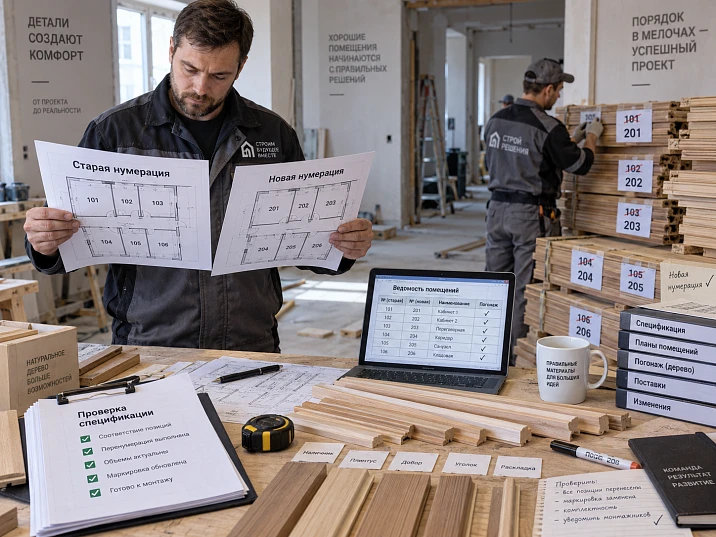
The moulding for the large project has already been calculated, ordered and partially produced. Some packages are labelled by room: "201", "202", "203", "corridor K-2", "meeting room 2.14". The procurement list, warehouse map and issue to installers use the same designations.
Then new working documentation is issued. The numbers change: room 201 becomes 215, 202 becomes 216, 203 becomes 217, corridor K-2 is designated K-2A, and meeting room 2.14 is now called 2.26. The wooden moulding itself may remain exactly the same: same article, material, finish, length and quantity.
This is not an ordinary order change. Nothing needs to be produced again. But if the old labelling is left in place, the correct goods start moving around the site to the wrong addresses. This is exactly where purchase of construction materials turns from a purely commercial task into a traceability task.
Work sequence:
NEW NUMBERING → KEEP THE OLD VERSION → CREATE A CROSS-REFERENCE TABLE → CHECK THAT THE PHYSICAL ROOM HAS NOT CHANGED → IF THE GEOMETRY IS THE SAME, UPDATE THE ASSIGNMENT → IF THE GEOMETRY HAS CHANGED, RECALCULATE THE REQUIREMENT → UPDATE THE PROCUREMENT LIST → PACKING LIST → LABELLING → WAREHOUSE → ISSUE TO INSTALLERS → OPERATIONAL ARCHIVE.
The main rule:
A NEW NUMBER DOES NOT PROVE THAT THE ROOM HAS REMAINED THE SAME.
Why a change of room number can ruin a technically correct order
Let's imagine package MLD-A, calculated for the old room 203. After the new revision, this room is now called 217. The moulding itself is correct, the quantity is correct, the finish is correct. The error arises not in the goods, but in the information assignment.
The installer sees "203" on the label, opens the current plan and cannot find such a room. Then manual guesswork begins: someone writes the new number with a marker, someone moves the pack to another floor, someone checks against the old file. As a result, the same material can receive two different interpretations.
That is why a change of address within the site can disrupt:
- packaging labeling;
- packing list;
- warehouse allocation;
- issuance to installers;
- acceptance by room;
- history of completed works;
- future operational reserve.




First, determine: has only the name changed, or has the zone itself changed
This is the central fork of the entire procedure. A new designation may hide several different scenarios.
Renaming only
Room 201 became 215. The geometry, doors, furniture, and purpose remained the same. In that case, the procurement requirement usually does not change.
One room was split into two
It was 201. Now it is 215 and 216. The previous quantity can no longer be mechanically divided in half: the new zones have different perimeters and nodes.
Two rooms were merged
There were 201 and 202. Now there is one room, 215. The shared partition is gone, so part of the baseboard or molding is no longer needed.
The number changed along with the geometry
The room formally became 215, but the door, cabinet, or partition was moved. Such a line already requires recalculation.
That is why new numbering is never handled with a simple bulk find and replace.
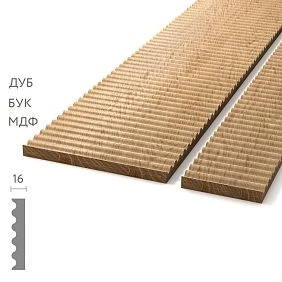
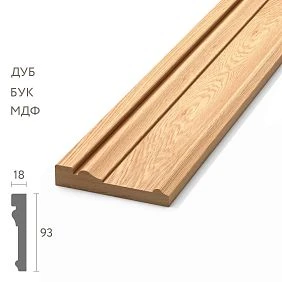
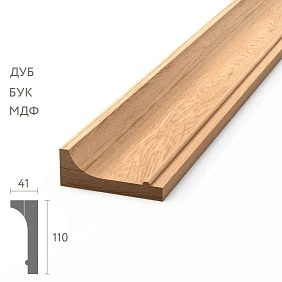
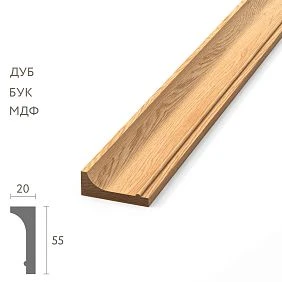
Our factory also produces:
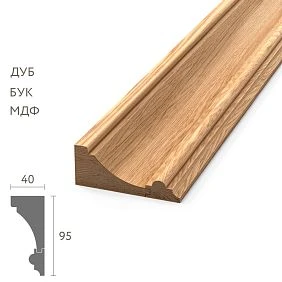
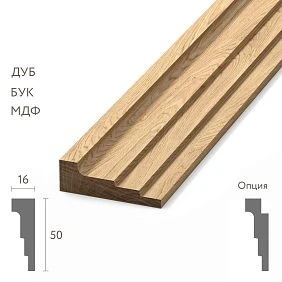
The mapping table must appear before the new labels
A bad process looks like this:
new plan → warehouse immediately rewrites the numbers on the packaging.
Correct:
new plan → correspondence table → physical zone check → confirmation → new labeling.
Until the link is proven, the old label remains part of the history. It is not destroyed or covered over with a random inscription.
| Old designation | New designation | Article | Quantity | Geometry | Status |
|---|---|---|---|---|---|
| 201 | 215 | PLT-A | 24 | No changes | Confirmed |
| 202 | 216 | PLT-A | 22 | No changes | Confirmed |
| 203 | 217 | MLD-A | 18 | Check | Requires verification |
| K-2 | K-2A | KZ-A | 14 | No changes | Confirmed |
| 2.14 | 2.26 | MLD-B | 26 | No changes | Confirmed |
Get Consultation
wholesale purchase of building materials: do not delete the old designation immediately
During the transition period, it is useful to keep both numbers.
On the label:
WAS: 201
BECAME: 215
The table shows the same mapping. This allows linking:
- the old purchasing list;
- the supplier's delivery note;
- the old packing list;
- the new working documentation;
- photos and reports issued before the renaming.
If only 215 is kept from the start, in a few weeks it will be difficult to prove which old line a particular batch belonged to.
We transfer the wooden skirting board to the new number only after checking the geometry
For the old room 201, 24 planks are calculated wooden baseboard PLT-A. New room 215 appears to be the same one.
Before transferring, check:
- perimeter;
- position of doorways;
- built-in furniture;
- columns;
- niches;
- skirting endpoint markers;
- wall changes;
- areas excluded from installation.
If everything matches, 24 planks can be reassigned to 215 without a new calculation and without changing the commercial part of the order.
When a simple rename is no longer enough
The old room 201 had a clean skirting route of 32 m. After the new revision, it is called 215, but the door has been moved and the built-in wardrobe has been reduced. The new route is 34.6 m.
This is no longer an informational operation. A change in procurement demand has arisen.
The line receives the status:
Recalculate
Next, you need to re-determine:
- clean length;
- list of segments;
- number of whole products;
- remaining balance of the old order;
- actual shortage or surplus.
The four line states help avoid mixing up renaming and recalculation
| Status | What does it mean | Action |
|---|---|---|
| Confirmed | The old and new premises match in purchasing logic | Update link |
| Requires verification | There is new documentation, but compliance is not proven | Do not relabel |
| recalculate | Geometry or finish composition has changed | New calculation |
| CANCELLED | The old zone no longer exists as a standalone | Redistribute material |
This system allows the warehouse and procurement to work with a single set of concepts.
Wooden molding: a new number may hide a change in the number of frames
For decorative walls, a single perimeter check is not enough. The old room 203 could have five MLD-A frames. After the numbering change, the new zone 217 looks like its direct successor, but the current elevation shows only four frames.
If you simply replace number 203 with 217, the procurement error will persist. Therefore, for wooden molding Check:
- number of frames;
- the size of each frame;
- the presence of new portals;
- removed decorative elements;
- junctions with furniture;
- change of the SKU itself.
A room can keep the same area and receive a different amount of molding.
We move the wooden cornice only after checking the ceiling plan
Renaming a room often comes together with a new architectural revision. If the old number K-2 became K-2A, you need to make sure that the ceiling contour has indeed not changed.
for wooden cornice Check:
- ceiling niches;
- built-in furniture up to the ceiling;
- curtain niches;
- partition changes;
- ventilation grilles;
- light profiles;
- cornice end points.
If the ceiling outline length has changed, this is no longer a simple address change.
wholesale purchases of building materials: one table should link the old and new documentation
On a large project, several parallel lists quickly appear: architects keep their own table, the procurement manager keeps theirs, the warehouse keeps theirs, and the site foreman records matches in chat. This almost guarantees discrepancies.
A single transition registry for the new numbering is needed. It does not replace the source documents but links them.
| Old building | Old floor | Old room | New building | New floor | New room | Article | Quantity | Geometry changed | Recalculation |
|---|---|---|---|---|---|---|---|---|---|
| А | 2 | 201 | А | 2 | 215 | PLT-A | 24 | No | No |
| А | 2 | 203 | А | 2 | 217 | MLD-A | 18 | Yes | Yes |
The fields "marking updated", "warehouse updated", "installation list updated" can also be added to this same line.
If one old room was split into two new ones, do not divide the quantity in half
There was room 201 and 24 PLT-A planks. It became 215 and 216.
Mechanical solution:
12 + 12.
But the physical reality may be different:
- 215 — 14 planks;
- 216 — 10 planks.
Or:
- 215 — 18 planks;
- 216 — 9 planks.
The total requirement may also change because a new partition, new doors, and new endpoints have appeared.
When dividing a room, a new calculation for two zones is required.
When combining rooms, you cannot simply add up the old quantities
Was:
- 201 — 14 planks;
- 202 — 18 planks.
It became one room, 215.
The total of 32 looks logical, but after removing the shared wall, the baseboard along that partition is no longer needed. The actual result may be 27 planks.
Therefore, combining rooms almost always requires a new geometric check.
construction material deliveries: the new numbering must reach the finished package
If part of the batch is still with the supplier or at the assembly warehouse, the new assignment must be submitted before shipment.
A simple rename does not change:
- article number;
- the material;
- length;
- quantity;
- finishing.
Only the destination address changes.
If the warehouse has already created locations under the old numbers, the packing list must be linked as “old → new.”
We relabel finished packaging using a transition label
The best transition option does not destroy the old history.
On the new label:
WAS: room 201
BECAME: room 215
Project revision: ___
Relabeling date: ___
When the transition is complete and all participants are working under the new system, the old number can be kept only in archived fields.
The new number must not be written with a marker over the old one
In a week, no one will understand:
- who made the edit;
- on the basis of which document;
- whether the geometry was checked;
- whether the correction is not a warehouse error;
- which revision was in effect.
Labeling must be a continuation of the confirmed correspondence table, not a local decision by the storekeeper.
construction materials wholesale: we update the packing list together with the labels
Old list:
| Place | Article | Room |
|---|---|---|
| 01 | PLT-A | 201 |
| 02 | MLD-A | 201 |
| 03 | PLT-A | 202 |
Updated:
| Place | Article | Old room | New room |
|---|---|---|---|
| 01 | PLT-A | 201 | 215 |
| 02 | MLD-A | 201 | 215 |
| 03 | PLT-A | 202 | 216 |
If the label says 215, but the list says 201, the transition is not yet complete.
The warehouse must receive a new information mapping card
If the goods are already distributed across zones 201, 202, and 203, a single edit in the design documentation is not enough.
Need to update:
- warehouse zones;
- labels;
- issue list;
- floor sets;
- internal storage location map.
At the same time, it is not always necessary to physically move the bundles.
We do not move goods physically just because the room number has changed
If room 201 became 215 but physically remained in the same place, the bundle can remain at the same warehouse position.
The information link changes:
201 → 215.
Unnecessary physical logistics creates an additional risk of mis-sorting, damage, and loss of connection with the original packaging.
Material should be moved only if the actual installation area or warehouse logic has changed.
If floor numbering has changed, a room number alone is no longer sufficient
For example, the design "floor 2" becomes "floor 3" after a change to the facility scheme. The marking "floor 2" without additional attributes becomes risky.
For reliable identification, it is useful to use:
- building;
- floor;
- room;
- zone;
- article number;
- section code if necessary.
The larger the object, the weaker a single floor number is as the sole address.
Changing the building number runs through the entire supply chain
If "Building B" becomes "Building 2," the change must reach:
- the procurement list;
- the warehouse card;
- packing list;
- logistics documents;
- issuance to installers;
- maintenance archive.
Otherwise, a technically correct batch may end up in the wrong building.
Some of the material is already with the installers: there is no need to return it just for a rename
Of the 24 PLT-A for the old room 201, ten have already been issued to the crew, and fourteen remain in the warehouse. After changing 201 → 215, there is no point in returning ten planks just for a paperwork operation.
Their information status needs to be updated:
previously issued for 201 → now actually applies to 215.
If the geometry has not changed, no physical movement of material is required.
Old printed schedules are especially dangerous
The electronic system has already been updated, but the crews still have paper copies from 201, 202, and 203. As a result, two numbering systems are in use at the site at the same time.
After the transition, old working copies must be marked:
REPLACED BY A NEW VERSION.
They are withdrawn from current use, but archival copies are kept for the record.
The installation crew needs more than just a new plan — it needs a clear transition
If some of the work has already been done according to the old system, it is important to show the installer the correspondences.
| Was | Became | Comment |
|---|---|---|
| 201 | 215 | Geometry unchanged |
| 202 | 216 | Geometry unchanged |
| 203 | 217 | Check molding frames |
This way the crew does not try to match old packages with new rooms on their own.
We do not rename already installed material retroactively without history
Part of PLT-A could have been installed in room 201 before the new revision was released. After the change, the room is called 215.
The current documentation uses 215, but the installation history must preserve the link:
formerly 201 → currently 215.
One should not rewrite old reports and photos as if number 201 never existed. In a year, this will make it harder to find the original documents.
In the operational archive, it is useful to keep both identifiers as long as the old documents remain relevant.
A correspondence table is also needed for the operational reserve
After the facility is handed over, the operations service will be looking for the answer to a simple question: which skirting board is installed in room 215?
If the reserve pack and the archive ledger are still labeled "201", a new identification problem arises without a cross-reference table.
Therefore, the transition table must reach:
- the list of installed SKUs;
- the service reserve;
- the as-built documentation;
- the repair archive;
- future reorders.
We keep photos and reports with old numbers rather than masking them
Acceptance photos, reports, comments, control samples, and other materials may have been created before the numbering change. Renaming the file "201_acceptance_01" to "215_acceptance_01" without a trace is a bad idea.
Better to keep the connection:
File: 201_acceptance_01
Correspondence: 201 → 215 per revision ___.
This way the history remains accurate, and the current user still understands the new address.
The transition is considered complete only after all working environments are updated
It is not enough to update the architectural plan. The transition is complete when the new designations are synchronized everywhere they are used operationally.
Checklist:
- current working plan;
- correspondence table;
- procurement list;
- warehouse map;
- packing list;
- marking;
- issue to installers;
- working copies on site;
- maintenance archive.
If at least one working loop continues to live only by the old numbers, the transition is not yet closed.
Before the next additional order, we must check the new numbering
After the transition, you must not create a request:
“order additional PLT-A for room 201.”
Such a room no longer exists in the current documentation.
Correct transitional entry:
room 215, formerly 201 / PLT-A / oak / quantity ___.
After the old system is fully decommissioned, "previously 201" can only be kept in the archive.
A stable internal room code reduces the risk of future renamings
On large sites, the displayed room number may change several times: first the design number, then the tenant number, then the operational number.
To avoid tying all inventory accounting solely to the visible door number, it is useful to use an additional stable internal zone code.
For example:
| Internal code | Old designation | New designation | Physical zone |
|---|---|---|---|
| ZN-02-015 | 201 | 215 | Same number on the plan |
| ZN-02-016 | 202 | 216 | Same number on the plan |
Then the procurement history can reference the stable code ZN-02-015, while the displayed name can be changed separately.
Such a code is not required for a small project, but is useful where numbering changes frequently.
A stable code does not eliminate geometry verification
Even if zone ЗН-02-015 retained its internal code, its walls may have changed. Therefore, a stable identifier solves the address problem, but does not prove that the procurement requirement remains unchanged.
The following are still verified:
- room boundaries;
- Doors;
- Furniture;
- perimeter;
- ceiling assemblies;
- decorative frames.
A stable code helps link documents; it does not replace technical verification.
If one new room inherits material from several old ones, the relationship must be explicit
When merging 201 and 202 into a new 215, the registry must not store only one row “201 → 215.” Both source zones must be shown.
| Old room | New room | Original quantity | New verified quantity |
|---|---|---|---|
| 201 | 215 | 14 PLT-A | 27 PLT-A |
| 202 | 215 | 18 PLT-A |
This shows where the new line came from and why 14 + 18 does not equal the total of 27.
If one old room became several new ones, the relationship must also be many-to-many
To split 201 → 215 + 216, two lines are created in the register. This allows the material to be allocated after the actual recalculation.
| Old room | New room | Article | New quantity |
|---|---|---|---|
| 201 | 215 | PLT-A | 14 |
| 201 | 216 | PLT-A | 10 |
If the sum of the new quantities differs from the old order, the difference must be explained by the geometry.
How to proceed if the new numbering appeared after a partial shipment
Part of the material has already been delivered to the site under the old numbers, and part remains with the supplier.
Two groups need to be separated:
- already shipped — update the object assignment;
- not yet shipped — update the packing list and labeling before dispatch.
You cannot assume that a single relabeling at the supplier automatically fixed material that has already been delivered.
How to proceed if the new numbering appeared on the day of loading
The most dangerous situation is trying to fix all labels at the vehicle.
If the correspondence has not yet been verified, it is better to stop the labeling change and split the process:
- record the old configuration;
- obtain a confirmed correspondence table;
- determine which places can be safely relabeled;
- for lines with changed geometry, do not change the address until recalculation;
- update the packing list.
Loading speed must not turn an unverified renaming into a fact.
How to work if the numbers changed after warehouse distribution by rooms
The warehouse could have pre-assembled separate zones: 201, 202, 203. If the physical rooms remained in the same places, the warehouse cells do not need to be moved.
It is enough:
- rename the cell in the system;
- add transitional labeling;
- update the issue sheet;
- check that adjacent cells are not mixed up.
If, however, after re-planning the material now belongs to other physical zones, actual redistribution will be required.
How to work with material that was assembled as a set for a room
For number 201, one pack could have been assembled:
- PLT-A — 24;
- MLD-A — 18;
- KZ-A — 4.
If 201 simply became 215, the set can be renamed entirely.
If 201 was split into 215 and 216, the set must be dissolved and reassembled according to the new calculations. You cannot simply split the batch visually in half.
How to handle a reserve that was tied to the old room
A reserve can be stored centrally or assigned to a zone. If reserve PLT-A was assigned to 201, after the transition you need to determine:
- whether it remains the reserve of the new 215;
- whether it is split between 215 and 216;
- whether it returns to the common pool when rooms are merged;
- whether the required reserve quantity has changed.
A reserve cannot simply be renamed automatically when the geometry has changed.
How to handle an already open backorder
Before the numbering change, the buyer had already sent the supplier an additional order: PLT-A for 201 — 6 planks.
After the transition from 201 to 215, you need to verify that:
- the shortage itself still exists;
- the geometry of 215 has not changed;
- the additional order must not be redistributed;
- the marking of the future delivery will be new.
If 201 was split into two zones, the old additional order cannot simply be reassigned to 215.
How to handle an order where the room purpose changed along with the number
The old room 201 was an office, and the new 215 became a meeting room. Even with similar geometry, the design may differ.
Checked:
- finishing;
- SKU;
- molding frames;
- cornice;
- Furniture;
- junction points.
A change in purpose is a strong signal not to carry over the old purchasing line automatically.
How to handle a room number that was reused for another zone
This is a particularly dangerous scenario. The old 201 was renamed to 215, and the number 201 was later assigned to another room.
If a batch labeled "201" without a date or revision remains in the warehouse, it may be mistakenly sent to the new room 201.
Therefore, transitional labeling must store not only the number but also the context:
old 201 → current 215 / revision ___ / item code ___.
The date and revision of the renaming are needed in the registry
On large projects, numbering can change several times. It was 201 → became 215 → then became 2.15.
Without a date and revision, the table turns into a chain of unclear renamings.
| Date | Revision | Was | Became |
|---|---|---|---|
| 01.08 | 12 | 201 | 215 |
| 20.08 | 15 | 215 | 2.15 |
The current address is 2.15, but the archive knows the full history.
The main transition registry must show not only the numbers but also the readiness of all systems
| Old number | New number | Article | Quantity | Geometry | Marking | Warehouse | Installation issue | Summary |
|---|---|---|---|---|---|---|---|---|
| 201 | 215 | PLT-A | 24 | No changes | Updated | Updated | Updated | done |
| 202 | 216 | MLD-A | 18 | No changes | Updated | Updated | Updated | done |
| 203 | 217 | KZ-A | 14 | Changed | Do not change | Do not change | Stop | recalculate |
This is the table that shows whether the transition is actually complete.
wholesale purchase of building materials: when the quantity does not need to be recalculated
No recalculation is needed if all of the following conditions are confirmed at the same time:
- the physical boundaries of the room have not changed;
- the doors have remained in the same places;
- the built-in furniture has not changed the skirting board route;
- the number of moulding frames has remained the same;
- the ceiling contour has not changed;
- the article number and material are the same;
- the finish is the same;
- the old area unambiguously corresponds to the new one.
Then the operation really comes down to changing the material address within the object.
When recalculation is mandatory, even if the SKU remains the same
A preserved SKU does not mean a preserved quantity. Recalculation is required if the following have changed:
- perimeter;
- number of door openings;
- built-in furniture;
- ceiling niche;
- number of decorative frames;
- height or configuration of the portal;
- room boundaries;
- purpose of the zone, if the design has changed.
Such a line moves from the relabeling process to the regular process of changing procurement demand.
Practical example: 201 became 215 without changing the layout
Old order:
201 / PLT-A / 24 pcs. / oak.
New revision:
215 / same perimeter / same doors / same furniture.
Solution:
- 24 pcs. remain unchanged;
- the order is not adjusted;
- the packaging receives transitional labeling;
- the warehouse zone is renamed;
- the installation sheet is updated;
- the archive preserves the link 201 → 215.
This is a pure renaming.
Practical example: 201 became 215, but the door was moved
The old 201 had 24 PLT-A. After renaming to 215, the door was moved to another wall, so the baseboard route changed.
You cannot keep 24 just because the room is "the same".
You need to:
- get the current plan;
- recalculate the clean route;
- generate the list of segments;
- check whole items;
- compare the new total with the old order;
- determine the shortage or surplus.
Practical example: one room was divided, but the total quantity remained the same
The old 201 had 24 planks. After the split, 215 and 216 were created. The new calculation gave 14 + 10 = 24.
The total quantity has incidentally remained the same, but the packaging still needs to be divided among the new zones.
Otherwise, the installer receives one combined pack and starts distributing the material on site again.
Practical example: when rooms were merged, a surplus appeared
201 — 14 PLT-A, 202 — 18 PLT-A. After merging, the new calculation is 27.
Five planks become a free remainder.
They cannot be left tied to 215 as if they are still needed by this zone. They are transferred to:
FREE REMAINDER / COMMON FUND.
This fund is then taken into account before future reorders.
Practical example: changing a building number without changing rooms
Building B has been renamed to Building 2. The rooms and geometry have not changed.
In this case, a mass recalculation of linear meters is not needed, but the update must go through the entire address chain:
Building B / 201 → Building 2 / 201.
It is especially important to update transport and warehouse documents if deliveries go to several buildings at the same time.
Practical example: floor numbering changed after half of the volume was installed
Half of the material has already been installed under the designation “floor 2,” and half is still in the warehouse. After the change, this level is called “floor 3.”
For already installed items:
historically: floor 2 → current: floor 3.
For warehouse stock:
re-label before issue.
There is no need to reissue old reports as if the installation had already taken place on floor 3.
Practical example: room 2.14 became 2.26, and the old number was assigned to another room
This is a scenario where simple short labeling becomes especially dangerous.
A batch labeled "2.14 / MLD-B" in the warehouse may a month later be mistakenly sent to the new room 2.14, although historically it was intended for the current 2.26.
The transition label must contain:
WAS 2.14 → BECAME 2.26 / revision ___
This way the old number cannot be mistakenly interpreted as the current one.
Practical example: only the room's function changed
Old office 201 became meeting room 215. The walls are almost the same, but the designer added molding frames and changed the baseboard near the built-in screen.
This is not a simple renaming, although the room's geometry has hardly changed.
The check must take into account not only the architectural boundaries, but also the new finishing specification.
How to work with multiple renaming waves
On a long project, numbers may change multiple times.
For example:
201 → 215 → 2.15 → G-2.15.
Instead of many scattered comments, it is better to store the version chain.
| Version | Designation | Date | Status |
|---|---|---|---|
| 10 | 201 | ___ | Archive |
| 12 | 215 | ___ | Archive |
| 15 | 2.15 | ___ | Archive |
| 18 | G-2.15 | ___ | Active |
Only the current version is used for work, but the archived chain remains accessible.
How to check that the old number is no longer involved anywhere in current work
Before closing the transition, it is useful to search for the old designation across working systems.
Check:
- the procurement list;
- warehouse table;
- packing list;
- current issue requests;
- additional orders;
- working printouts;
- active remarks;
- current reserve register.
The old number may remain in the archive, but it must not control the current movement of goods.
How to update spreadsheets without losing old data
Instead of overwriting the "Room" column, it is useful to temporarily have two columns:
- Old room;
- New room.
After the transition is complete, the old column remains archived, while filters and working reports use the new one.
This preserves traceability without creating a separate copy of each table.
How to work with systems where the old location is already hardcoded into the line code
For example, the purchase line is called:
PLT-201-01.
After switching to 215, the question arises: should the code itself be changed?
If the code is already used in orders, invoices, and history, it is safer to keep it as an internal identifier and store the new location in a separate field.
Otherwise, changing the line number breaks the link to old documents.
How to work with digital marking
If packages have a digital identifier, it is better to change the data in the linked record rather than change the identifier itself, if the system allows it.
When scanning, the user should see:
- current number;
- old number;
- article number;
- quantity;
- revision;
- verification status.
A digital system does not replace the physical label if the warehouse and installation teams use it without a scanner.
How to handle material in transit
The shipment is already on its way to the site when the new numbering arrives. It is impossible to relabel it at the supplier.
In this case:
- do not change transport documents retroactively unless necessary;
- prepare a cross-reference table before acceptance;
- during unloading, identify each item by the old manifest;
- after acceptance, apply transitional labeling;
- update the warehouse map.
This way, an address change does not prevent verifying the actual contents of the delivery.
How to handle partially opened packaging
In an opened pack, the old room can only be written on the outer packaging. After opening, individual planks lose their zone marking.
When renaming, you need to:
- recalculate the remaining quantity;
- confirm the item code;
- create a new group label;
- specify the old and new room;
- do not mix with the adjacent zone until the transition is complete.
How to handle useful offcuts linked to old rooms
There are short remnants of PLT-A in the warehouse labeled "201". After the transition, they may:
- remain useful for 215;
- become a free stock;
- be required for another new zone after the room is divided.
Therefore, offcuts also go through the mapping table if they are stored by room.
How to work with the reserve after merging zones
Unit 201 had a reserve of 1 plank, and 202 also had 1. After merging into 215, a reserve of 2 is not necessarily required.
The new reserve is determined by the new geometry and the project rules. One of the planks may return to the general operational stock.
How to work with labeling after the transition is fully completed
After all systems are updated, new packages can already be labeled only with the current designations.
The old number is retained:
- in the mapping table;
- in the archival documentation;
- in the history of completed works;
- if necessary, in the digital card-based records.
It should no longer be the primary working address.
Before relabeling, it is useful to verify the room by stable physical features
The number on the plan is only one identifier. If the numbering has changed, it is more reliable to confirm the match using several physical features: position relative to axes, neighboring rooms, doorway, exterior wall, column, staircase, or elevator lobby. Such an approach
If the supplier cannot change the official document, we change the operational reference separately
The delivery note or invoice may already have been issued with the previous designation. If the item code, quantity, and price do not change, it is not always necessary to reissue the commercial document just for the room number. But warehouse and site documentation must contain the confirmed match.
That is, the commercial history may retain 201, while the operational issue works as “201 → 215”. The specific procedure depends on the project’s document flow, but the physical identification of the goods must not depend on the ability to change an old document.
Material acceptance must know which numbering is indicated on the packaging
If cargo arrives with the old marking after the site is already operating under the new one, the receiver must have a transition table in advance. Otherwise, the correct location may be flagged as incorrectly marked or sent to quarantine.
In the acceptance sheet, it is useful to temporarily have two columns: "supplier marking" and "current site zone". After re-marking, the first remains archived.
Quantity reconciliation after renaming should be based on the physical zone, not the old number
If the old sheet for 201 had 24 PLT-A, and the new one for 215 also shows 24, that is not yet proof of correctness. First, it is confirmed that the physical zone is indeed the same. Only after that can the numbers be considered equivalent.
This procedure protects against the situation where number 215 is accidentally assigned to an adjacent room with a similar quantity.
Changing the number should not automatically change the installation queue
If 201 was in the first queue, and after renaming it became 215, the number change alone does not move it to the second queue. But if the handover sequence changed along with the new documentation, that is a separate characteristic.
In the registry, it is useful to store the queue separately from the room number. Then renaming does not disrupt the calendar logic of procurement and issuance.
The same rule applies to the responsible contractor
A new number does not automatically mean a new contractor. If room 201 was installed by crew A, after switching to 215 their responsibility remains until the project changes the work distribution.
The responsible contractor must be a separate field. This helps avoid losing open work items and the material balance during mass renumbering.
When closing the transition, a verification search by old numbers is needed.
After the new system is declared active, it is useful to search for each old number in the current working files. If 201 still appears in an open additional order, warehouse request, or installation task without a "previously" note, the transition is not complete.
At the same time, finding 201 in an archived act or an old photograph is not an error. It is important to distinguish between the current and archival scope.
The new numbering must be checked for future operation.
Before final closure, it is useful to simulate a simple operational question: "A year from now, a baseboard was damaged in room 215 — will the facilities service be able to quickly find the article number, stock reserve, and old documents?"
If answering requires remembering that 215 used to be 201 and searching for this in correspondence, the transition has been poorly documented. If the link is found in a single registry, the system is ready for operation.
If some rooms do not yet have final new numbers
Sometimes a new revision is introduced in stages: most rooms have already been renamed, while a few zones remain with temporary designations. Such rows must not be forcibly closed just to have a single table. For them, it is better to use the status "TEMPORARY DESIGNATION" and not destroy the old link.
Materials for such zones can be stored by a stable internal code, building, and physical location until the final number is confirmed. This is safer than relabeling the same batch twice in one week.
If a new number appeared in only one discipline
The architectural plan already uses 215, while the door schedule and furniture still say 201. This means the transition between disciplines is not complete. Before mass renumbering, you need to confirm that this refers to the same physical room.
In the correspondence table, you can temporarily indicate which documentation sets have already been updated and which have not. This way, the warehouse does not mistake incomplete coordination for a final decision.
How to work with temporary construction numbers
During construction, a room may have a temporary number that will never appear in operational wayfinding. If procurement and the warehouse use exactly this number, the transition to the final system must be planned in advance.
It is better to distinguish a “temporary construction number” from a “current operational number” with separate fields. Then changing the designation does not look like an unexpected project error, but becomes a normal stage of building handover.
How to update floor set drawings
If trim is issued not for a single room but as a set for a group of numbers, the renaming must also be reflected in the set composition. For example, the old set “201–210” after the new numbering may correspond to “215–224” or a more complex set.
You cannot simply replace the first and last digits if the order of the rooms has changed. The set composition is checked line by line.
How to verify the sequence of rooms after renumbering
New numbers do not always preserve the previous physical order along the corridor. If the warehouse assembles material in the sequence of unloading or installation, the route needs to be checked.
For example, the old 201, 202, 203 went in a row, while the new 215, 217, 216 are assigned by a different logic. Simple sorting by number can change the issue order. Therefore, for logistics it is useful to store the physical sequence or zone coordinate separately.
How to work with hidden work certificates and technical assemblies
If the old number appears in a certificate or assembly diagram, the document is kept as historical. The correspondence table indicates the current room number so that a future engineer can find the original certificate.
Reissuing a signed document just for a new number is usually not necessary, unless the rules of a specific project require otherwise. The main thing is to preserve a reliable link between the old address and the new one.
How not to confuse renaming with moving material to another phase
After the new revision, room 201 became 215 and at the same time was moved from the first phase to the second. These are already two changes: the address and the calendar affiliation.
In the registry, they must be stored separately. Otherwise, the team may decide that the new phase arose automatically because of the number. Separate fields help to understand what exactly changed and what action is required from the warehouse.
How to use a control sample after mass renumbering
If hundreds of rooms have been renamed, after updating the system it is useful to select several random zones and go through the path completely: current plan → correspondence registry → warehouse cell → packing list → label → installation issue.
Such a sample quickly reveals a systemic error, for example an old number that continues to live on in the warehouse template or printed form.
How to check already completed floors before handover to operations
Even if installation was completed before renumbering, the operational archive must know the new addresses. It is useful to check that the installed SKU, photos, comments, and reserve can be found by the new number without relying on the memory of the construction participants.
If search is possible only via the old number, the archive is not yet ready for full-scale operations.
When a separate complex procedure is not needed
If three rooms were renamed on a small site, the geometry did not change, the material has not yet been packed by room, and the warehouse is managed by one team, a simple "was → became" table and one check of the plans are sufficient.
A complex multi-stage procedure is needed where the material has already been ordered, distributed, marked, partially issued, or installed. The methodology must match the real risk of mix-ups.
A control signature on the register is useful before mass relabeling
If dozens or hundreds of rooms have been renamed, the warehouse must not start printing new labels from a draft table. Before mass relabeling, it is useful to confirm that the register has been checked by the responsible parties of the project: architecture, the procurement specialist, or whichever participant is responsible for the current room addressing.
This does not have to be a separate official act. What matters is that there is a version of the register with a date and the status "FOR TRANSITION", and that subsequent changes are issued as a new revision. Then the warehouse always understands which table was used to print specific labels.
If an error is discovered after re-marking has begun, the new revision should show only the affected rows. There is no need to re-change hundreds of already verified packages. This approach reduces the risk of repeated errors and preserves traceability of the mass transition.
For objects with multiple buildings, it is useful to keep a final transition report even after the new numbering has become the only working one. It is sufficient to list the revision, transition date, number of renamed zones, a list of rows with recalculation, and confirmation that the warehouse, packaging, installation issue, and operational reserve have been updated. Such a report is not needed by the installer daily, but it helps the project manager quickly restore the history several months later and understand why the old marking appears in archived invoices or photographs.
20 typical mistakes when changing room numbering
1. Simply replace the numbers in one table
Why it happens: the change seems purely administrative. Consequence: the warehouse and installation continue working with the old system. How to prevent it: update the entire chain.
2. Not checking the geometry
Cause: the new room is considered a direct successor of the old one. Consequence: an incorrect quantity is retained. Prevention: check the perimeter and junctions.
3. Delete old numbers immediately
Cause: there is a desire to switch to the new system quickly. Consequence: the connection with the order and acts is lost. Prevention: a transition period of “was → became”.
4. Not creating a correspondence table
Cause: the matches seem obvious. Consequence: different participants create their own versions. Prevention: one shared registry.
5. Relabel the item before verification
Cause: the warehouse wants to update labels quickly. Consequence: disputed geometry turns into a confirmed address. Prevention: status "CONFIRMED" first.
6. Change the label but not the packing list
Cause: the label is more visible. Consequence: documents and the physical cargo diverge. Prevention: update simultaneously.
7. Update purchasing but not the warehouse
Cause: the buyer considers their task complete. Consequence: material continues to be issued to the old addresses. Prevention: monitor readiness of all systems.
8. Update the warehouse but not the installation crew
Cause: it is assumed that the new plan has been sent to everyone. Consequence: the crew looks for the old numbers. Prevention: a separate transition table for installation.
9. Split the quantity in half when dividing the room
Cause: it seems fair. Consequence: both new zones receive incorrect quantities. Prevention: calculate each zone separately.
10. Add up old quantities when merging rooms
Cause: the arithmetic seems obvious. Consequence: material for the removed partition remains in the order. Prevention: recalculate the new geometry.
11. Not recalculating removed partitions
Cause: attention is focused on numbers, not walls. Consequence: excess skirting and molding. Prevention: check the physical contour.
12. Leaving old printouts in use
Cause: the electronic system has already been updated. Consequence: two parallel numbering systems. Prevention: withdraw working copies, keep the archive.
13. Moving goods physically without necessity
Cause: the number changed, so the zone supposedly changed. Consequence: unnecessary logistics and mis-sorting. Prevention: separate the information reference from the physical location.
14. Losing the link to the original order
Reason: old numbers were deleted. Consequence: it is difficult to verify the invoice and price. Prevention: archival correspondence.
15. Use only the floor number
Reason: this was sufficient before. Consequence: after floor renumbering, the address becomes ambiguous. Prevention: building + floor + room + zone.
16. Do not update the operational reserve
Reason: the reserve is considered a separate warehouse. Consequence: after a year, it is no longer linked to the current rooms. Prevention: include the reserve in the transition.
17. Rename archival photos without history
Reason: there is a desire to unify file names. Consequence: the context of old reports disappears. Prevention: keep the correspondence.
18. Place a reorder using the old number
Reason: the old template remained with the purchaser. Consequence: the new batch receives outdated labeling. Prevention: check the current address before each reorder.
19. Treat a numbering change as a purely architectural task
Reason: the item has not changed. Consequence: logistics and installation remain outside the process. Prevention: an end-to-end register.
20. Close the transition if there are unverified rooms
Reason: most lines have already been updated. Consequence: one disputed area may receive the wrong material. Prevention: close only after the status "REQUIRES VERIFICATION" has zero remaining.
Final algorithm for transitioning to the new numbering
NEW NUMBERING RECEIVED → SAVE THE OLD VERSION → CREATE A CROSS-REFERENCE TABLE → VERIFY EACH ROOM → DETERMINE: RENAMING ONLY OR GEOMETRY CHANGE → IF RENAMING ONLY, UPDATE THE LINK → IF THE GEOMETRY HAS CHANGED, RECALCULATE THE REQUIREMENT → UPDATE THE PURCHASE LIST → PACKING LIST → LABELING → WAREHOUSE → ISSUE TO INSTALLERS → WITHDRAW OLD WORKING COPIES → SAVE THE OLD NUMBERING IN THE ARCHIVE → UPDATE THE RESERVE AND FUTURE REORDERS → CLOSE THE TRANSITION.
- Obtain the official new revision.
- Record the transition date.
- Save the previous documentation.
- Create an "old → new" register.
- Add the building and floor.
- Verify the physical correspondence of the rooms.
- Check the baseboard along the perimeter.
- Check the moldings against the layouts.
- Check the cornices against the ceiling plan.
- Highlight the divided rooms.
- Highlight merged rooms.
- Highlight zones with modified geometry.
- Assign a status to each row.
- Recalculate only the necessary rows.
- Compare the new quantities with the old order.
- Determine the free remaining stock or shortage.
- Update the purchasing list.
- Update open backorders.
- update the packing list.
- Apply transitional labeling.
- Update warehouse zones.
- Update the installation output.
- Remove old working copies.
- Do not rewrite the archive retroactively.
- Update the operational reserve.
- Verify that old numbers are not used in current work.
- Close all "REQUIRES VERIFICATION" lines.
- Record the completion of the transition.
Bottom line: the right product can become the wrong delivery if its address is lost
Changing room numbering seems like an administrative edit, because the SKU, material, price, and quantity may remain the same. But for a large facility, the room number is part of the material's logistical identity.
If the number changes, a bridge must be preserved between the old and new documentation. If the geometry remains the same, the product does not need to be produced again and does not need to be physically moved without reason. It is enough to correctly update the information linkage.
If the layout, furniture, door, ceiling, or decorative scheme changed along with the number, the line is no longer a simple re-labeling and requires a new calculation.
Main formula:
OLD ADDRESS → PROVEN MATCH → NEW ADDRESS.
And only after that are labels, warehouse zones, and installation schedules changed.
Frequently asked questions
Do I need to change the supplier order if only the room number changed?
If the SKU, material, quantity, finish, and geometry have not changed, the commercial line does not need to be changed. The assignment and labeling need to be updated.
How do I prove that old 201 is new 215?
Compare the current and old plans, room boundaries, doors, furniture, and other reference points, then record the match in a shared registry.
Do I need to remove the old label?
For the transition period, it is better to keep the old number and add the new one along with the revision. This maintains the link to the original order.
What should be done when a room is divided?
Recalculate both new zones separately. The old quantity cannot be automatically divided in half.
What should be done when rooms are merged?
Recalculate the new geometry. The sum of the two old quantities may be overstated due to the removed shared partition.
Should a batch in the warehouse be moved if only the number has changed?
Not necessarily. If the physical zone remains the same, it is enough to change the information link.
What should be done with material that has already been issued?
Do not return it just for renaming. Update the records to show that what was previously issued for the old number now belongs to the new one.
What should be done with old reports and photos?
Keep them without rewriting history and add a link between the old designation and the current one.
When can the transition to the new numbering be considered complete?
When the current documents, packaging, warehouse, installation issue, and operational archive are updated, and there are no more rows with the status "REQUIRES CHECKING".
What should be checked before a future reorder?
Use the current room number and, if necessary, keep the old one as an archived reference so that new goods do not receive outdated labeling.