Article Contents:
- Why you should buy the SV-006 exhibition stand
- Confirmed specifications of SV-006
- Who should buy the SV-006 exhibition stand
- For a finishing materials dealer
- For a furniture showroom
- For a door showroom
- For a design studio
- For an architectural firm
- Carpentry workshop
- Interior finishing office
- Network of showrooms
- Next to the meeting table
- Near the catalog and finish samples
- On a separate demonstration wall
- At the entrance to the showroom
- In the aisle
- In the niche
- On a mobile partition
- Wooden moldings
- Wooden skirting boards
- Wooden cornices
- Wooden casings
- Oak and beech
- Samples for enamel and tinting
- Fewer scale errors
- Faster material approval
- Easier to sell a set
- Simpler to explain the price
- More confident decision for a large batch
- Place the stand next to the conversation area
- Provide side lighting
- Leave free space in front of the panel
- Do not overload the adjacent wall
- Add a short title
- Provide space for a catalog
- Floor
- Wall and furniture
- Ceiling
- Door and window openings
- Furniture fronts
- One profile in two wood species
- Unpainted sample
- Transparent finish
- Opaque enamel
- Patina finish
- Match with facades and doors
- One SV-006
- Two stands
- Three to four stands
- Multiple branches
- Exhibition and temporary venue
- SKU
- Product type
- Size
- Material
- Finishing
- QR code or short link
- Identical names
- Identical SKU
- Manager scenario
- Saving a selection
- Stand update
- Product samples
- Main categories of moldings
- Additional set of finishes
- Printed or electronic catalog
- Labeling
- Lighting
- Stand and sample set
- Stand for moldings and stand for furniture handles
- Exhibition stand and advertising roll-up
- Stand and information board
- Stand for sheet materials
- DIY panel
- Need to open a small finishing materials showroom
- Need to update an old display
- Need to showcase products to designers
- Need to sell a kit for one interior
- Need to design an area for furniture facades
- Need to equip several branches
- Need to participate in an exhibition
- Need to organize the assembly office
- By number of product groups
- By number of consultation zones
- By number of branches
- By styles
- By materials
- Weekly cleaning
- Checking Mounting
- Updating labeling
- Profile rotation
- Show too many similar profiles
- Mix categories without labels
- Keep outdated samples
- Use damaged parts
- Label only with internal codes
- Do not show material
- Place stand far from consultation
- Consider QR code as replacement for consultation
- Do not link stand to availability and order
- Save on lighting
- Make signatures larger than samples
- A showroom with a constant flow of customers
- A studio with project sales
- A dealer in the region
- Furniture manufacturing
- An architect and specifier
- A designer who only works on-site
- A showroom without wooden paneling
- A temporary exhibition without secure fastening
- A very small office without a client area
- Create a layout measuring 912 × 275 mm
- Determine the orientation
- Check the wall
- Prepare the lighting
- Compile a list of samples
- Develop the labeling
- Start with the client's task
- First compare the scale
- Then choose the material
- After the material, move to the finish
- Confirm the choice with an article
- Complete with a calculation
- Unified consultation route
- Knowledge of key differences
- Regular assortment check
- Handling Objections
- Fixing the choice
- Frequency of use
- Number of saved SKUs
- Selling kits
- Reducing repeated approvals
- Manager feedback
- Change one sample at a time
- Leave basic guidelines
- Set update date
- Sync digital materials
- Approve a unified set
- Create placement instructions
- Store a supply of labels
- Assign a responsible person
- Base molding
- Two baseboards of different heights
- Cornice in a clear orientation
- Trim next to the door sample
- Material and finish
- Cards with ready-made scripts
- Application photos
- Finishes table
- Selection confirmation form
- Contact for continued consultation
- First, select one task
- Then assemble the kit
- Do not promise a match without a finish sample
- What is the size of the SV-006 exhibition stand?
- What samples is the SV-006 designed for?
- Who is the sample stand suitable for?
- Why is the stand better than a regular catalog?
- Can the SV-006 be placed in design studios?
- Will the stand fit a small showroom?
- How many stands are needed for the salon?
- Which profiles should be placed on the first stand?
- Is it necessary to show oak and beech?
- Is it necessary to show one profile in multiple finishes?
- How to label the samples?
- Can QR codes be added?
- Where is the best place to place SV-006?
- What lighting is needed?
- Can SV-006 be used at the exhibition?
- Does the stand include the full range of moldings?
- Do I need to buy separate samples?
- How often should the display be updated?
- How do I know if the stand helps sales?
- Where can I buy the SV-006 display stand?
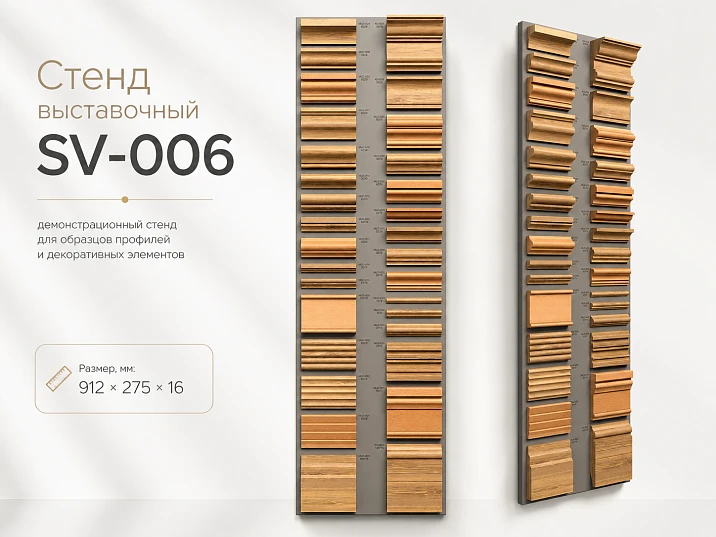
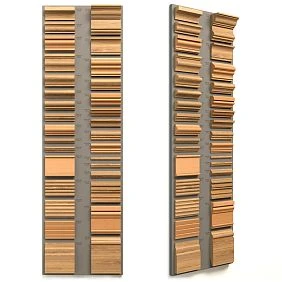
Why you should buy the SV-006 display stand
The SV-006 is worth buying for a showroom, salon, design studio, or architectural firm that needs to show clients wooden moldings, baseboards, cornices, and trim in real scale, not on a screen. The stand, measuring 912 × 275 × 16 mm, helps gather key samples in one permanent area, simplifies consultations, and speeds up converting client interest into a specific profile choice.
Short answer: SV-006 is suitable for businesses that need a constant visual demonstration of wooden moldings. Before ordering, determine the installation location, set of profiles, labeling principle, and number of stands for each product group or branch.
Buy exhibition stand SV-006 for molding samplesBuy a stand for samples it makes sense not for wall decoration, but for clearer sales. It's hard for a client to imagine a profile from a small photo: they don't see the actual thickness, don't understand how deep the relief is, and can't compare oak and beech by touch. SV-006 turns the assortment into a physical showcase where several options can be evaluated simultaneously.
The model is designed for displaying wooden moldings, baseboards, cornices, and architraves. This is not a universal stand for tiles, laminated chipboard, clothing, or advertising posters. Its task is to showcase STAVROS interior trim in a compact professional format and link each sample to a product card, catalog, finish, and future order.
A properly organized stand helps the manager conduct a consultation sequentially. First, the client formulates the task: decorate a wall, cover a floor joint, choose a ceiling transition, or a door architrave. Then they see suitable profiles, compare scale and material, receive article numbers, and proceed to quantity calculation. Without the stand, the same consultation often breaks down into searching for samples, opening dozens of pages, and trying to describe the shape in words.




Confirmed characteristics of SV-006
| Parameter | SV-006 | What this gives the showroom |
|---|---|---|
| Type | Display stand for wooden trim samples | Permanent demonstration panel for consultations |
| Size | 912 × 275 × 16 mm | Compact vertical or horizontal format for wall and sales area |
| Main samples | Moldings, baseboards, cornices, architraves | You can cover the four most understandable client tasks in one display |
| Wood species | Oak and beech | The client compares the pattern, density perception, and future finish |
| Purpose | Showrooms, exhibition halls, design studios, architectural firms, furniture salons | Suitable for professional permanent presentation |
| Order placement | Cart and quick order in the card | You can move from planning the display to purchasing a specific stand |
| Additional task | Comparison of actual size, relief, texture, and processing quality | Reduces customer doubts before choosing a batch of moldings |
Before purchasing, it is worth view dimensions and price of stand SV-006 in the card and check current order conditions. The size 912 × 275 × 16 mm is known, but the specific placement method in your room should consider the wall, furniture, lighting, and ease of access to samples.
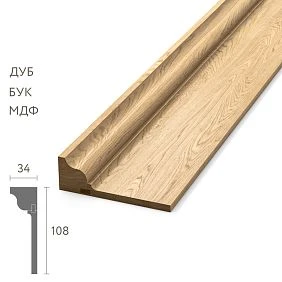
Our factory also produces:







Who should buy the SV-006 display stand
Get Consultation
Finishing materials dealer
A dealer needs not just a catalog, but a tool that helps sell the assortment without lengthy explanations. SV-006 allows you to bring to the forefront the profiles that most often start a project: baseboard, molding, cornice, and casing. The client sees the difference between smooth and relief profiles, compares the height, and agrees faster to move on to calculating the batch.
Furniture showroom
In a furniture showroom, the stand is useful next to facades, handles, and finish samples. Molding can be shown as a facade detail, casing as an extension of the door composition, baseboard as a link between furniture and the interior. The manager gets the opportunity to sell not just one cabinet or kitchen, but a broader set of decor.
Door showroom
Trims and cornices are difficult to evaluate from a small sample. SV-006 helps show the width, profile, and transitions next to door panels. The buyer understands why a narrow trim and a wide decorative profile give different results and can coordinate the set before door production.
Design Studios
A designer needs the stand as a working tool for client meetings. Instead of dozens of saved photos, you can show the material in person, match the sample to fabric, paint, or facade, and immediately choose a direction. This reduces the number of re-approvals and lowers the risk that the client had a different scale in mind.
Architectural Bureau
Proportions are important to an architect. On the stand, it's convenient to compare a large ceiling cornice and a compact molding, evaluate the profile depth, and correlate it with the room height. A physical sample helps justify the decision to the client and the specifier.
Carpentry Workshop
The workshop can use SV-006 to present furniture finishes, wall panels, and doors. The client chooses a profile not from a random piece found in the warehouse, but from an organized display. This increases trust in production and simplifies the upselling of finished elements.
Interior Fit-Out Office
It's important for the specifier to quickly match the profile with the project, material, and budget. The stand becomes a point where they discuss not an abstract category, but specific product groups. After approval, the specialist moves to the card, checks the size, and places the order.
Salon Chains
If a company has multiple branches, identical SV-006 units help establish a unified standard. The client receives the same presentation logic in different cities, and manager training is simplified: each zone is labeled and operates according to a single consultation scheme.
Dimensions 912 × 275 × 16 mm: where to place the stand
The dimensions of SV-006 make it a compact panel, but size cannot be judged by numbers alone. You need to consider the distance to the floor, eye level, neighboring samples, lighting, and the spot where the manager will stand during the consultation.
Next to the meeting table
This is one of the most convenient options. The client sits, discusses the project, and can immediately approach the samples. The stand should be within view but not block the screen, whiteboard, or walkway.
Near the catalog and finish samples
If color fans, enamel, and wood samples are nearby, it's easier for the client to match the profile with the finish. It's important that the area doesn't turn into a storage room. Only working materials should be left in sight, and outdated samples should be removed.
On a separate demonstration wall
Multiple SV-006 units can be placed in a series: the first for moldings, the second for baseboards, the third for cornices and architraves. Leave a visual gap and maintain the same height between panels. Such a system looks more professional than random placement.
At the entrance to the showroom
The stand at the entrance attracts attention, but the client hasn't formulated their task yet. It's better to use this position for a general introduction, and conduct detailed consultation in the main area. If samples are too close to the door, they may be brushed by clothing and bags.
In the aisle
A narrow aisle is a bad location. People will accidentally touch the samples, and the manager won't be able to stand calmly nearby and explain the differences. The stand should function as a consultation point, not as a decorative panel in the path of movement.
In a niche
A niche helps highlight the display and install lighting. But the depth should not create a shadow on the relief. It's better to direct the light at an angle so that the profile reads three-dimensionally.
On a mobile partition
This option is possible if the partition itself is stable and designed for mounting. The stand should not be attached to a random lightweight structure that wobbles when touched. The buyer should be able to calmly examine the samples.
Which samples SV-006 shows
The main strength of the stand is not in the number of elements, but in the correct selection. There's no need to try to show the entire catalog on one panel. It's better to form a clear route from the client's task to the product group.
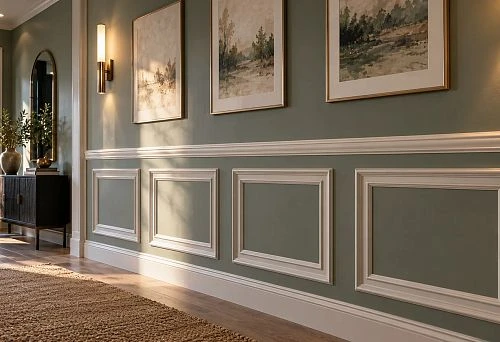
Wooden moldings
Moldings help decorate walls, furniture facades, panels, mirrors, and door compositions. For display, several contrasting profiles are chosen: a narrow smooth one, a medium universal one, and a deeper decorative one. This set shows the range without overloading the stand.
For filling, you can buy wooden moldings for demonstration to clients and select samples by width, relief, and style.
Wooden baseboards
Baseboards are primarily compared by height and the shape of the top part. On the stand, it is useful to show a low restrained profile, a tall architectural one, and an option for painting or tinting. The client quickly understands which baseboard matches the ceiling height and door scale.
For the floor group, it is worth selecting samples of wooden baseboards with a noticeable difference in height and geometry.
Wooden cornices
It is harder to imagine a cornice without a real profile. The depth, projection, and angle of attachment to the wall affect the perception of the ceiling. On the stand, it is useful to show a modern minimalist option and a larger classic profile.
For the ceiling display, you can buy wooden cornices for the stand and link each sample to an interior photo or drawing.
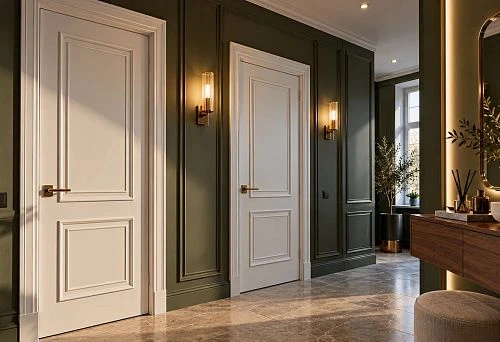
Wooden architraves
An architrave is perceived next to a door or window, but even a short sample shows the width, relief, and edge character. For a showroom, a few models representing different styles and scales are enough.
For framing openings, it is useful to select wooden architraves for demonstration and put on the stand those options that are most often sold together with doors.
Oak and beech
It is advisable to show the same profile in at least two wood species, if possible in your sample system. Oak gives a pronounced texture, beech — a calmer surface. The client sees why the same shape looks different after finishing.
Samples for enamel and tinting
It is not necessary to fill the stand only with finished colors. It is useful to show an unpainted profile, a version under a transparent finish, and a sample under opaque enamel. Then the client understands that the shape and finish are chosen separately.
Why a stand sells better than photos and a catalog
A photo helps to get acquainted with the assortment, but a physical sample removes the main doubts. It shows the real scale, which is not visible on the screen. The buyer can touch the relief, assess the depth, see the edge treatment, and compare wood species under the same lighting.
Fewer scale errors
A large cornice in a photo may seem compact, and a high baseboard — ordinary. On the stand, the size is read immediately. This is especially important when designing small rooms and furniture.
Faster material approval
The customer may hesitate between oak and beech for weeks while only seeing pictures. Real samples allow comparing the texture in one meeting and choosing the finishing direction.
Easier to sell a set
When a molding, baseboard, cornice, and casing are placed together, the manager shows not a separate product, but a system. The client sees how the elements can repeat the same geometry and connect the floor, wall, ceiling, and doorway.
Easier to explain the price
A real profile shows the material, volume, and quality of processing. The client understands what they are paying for and compares the product less based solely on price per linear meter.
More confident decision on a large batch
Before ordering tens or hundreds of meters, it is important for the buyer to see a sample. The stand reduces the risk that after delivery the profile will turn out to be visually larger, smaller, or more textured than expected.
Ready stand or individual samples
| Criterion | SV-006 | Individual samples in a box |
|---|---|---|
| Availability | Always in sight | Need to search and lay out before consultation |
| Comparison | Multiple profiles visible simultaneously | Samples compared one by one or on a table |
| Showroom appearance | Organized professional display | Risk of feeling like a warehouse and disorder |
| Manager's work | Ready consultation script | Depends on memory and access to boxes |
| Mobility | Permanent panel | Samples are easy to take to an off-site meeting |
| Best scenario | Showroom and sales office | Designer visit and temporary approval |
A finished stand does not replace individual samples. The panel works in the showroom, and the mobile set can be taken to the site. For a complete system, it is reasonable to purchase STAVROS product samples and distribute them between the permanent display and off-site work.
How to set up a demonstration area in the showroom
Even a good stand does not work on its own. It needs to be integrated into a clear customer journey: see, compare, ask a question, get a SKU, open a card, check the size, and proceed to calculation. If the panel hangs separately and is not linked to the consultation, it becomes decor.
Place the stand next to the conversation area
The manager should be able to bring the client to the samples within seconds. If the stand is in another room or behind furniture, it will be used less often. The best place is next to the meeting table, catalogs, and finish samples.
Provide side lighting
The relief of the wooden profile is readable thanks to the shadow. Flat frontal light makes the surface look flat. Directional light at a slight angle helps to see depth, chamfers, and transitions, but should not distort the color of the wood.
Leave free space in front of the panel
The client needs to approach, lean in, touch the sample, and step back. A narrow passage and furniture close to the stand hinder the consultation. It is useful to leave space for two or three people in front of the panel.
Do not overload the adjacent wall
If posters, handle samples, fabrics, and promotional materials are hanging nearby, attention scatters. SV-006 is better highlighted as an independent work point. Additional materials can be placed below in closed storage or on an adjacent panel.
Add a short title
A simple caption above the stand is enough: "Wooden moldings: trims, baseboards, cornices, and casings." The visitor immediately understands the purpose of the display. A long advertising text next to the samples is not needed.
Provide space for a catalog
After selecting a shape, the manager should quickly show the full card, length, material, finishing options, and price. A tablet, monitor, or printed catalog is placed nearby, but does not cover the samples themselves.
How to divide samples by purpose
The customer thinks not in terms of the internal catalog, but in terms of interior tasks. They want to design the floor, wall, ceiling, door, or furniture. The stand should speak the same language.
Floor
Baseboards are placed in the lower or separate zone. They are convenient to compare by height, top edge, and degree of relief. The label may include not only the article number but also a scenario: "for a modern interior", "high profile", "for enamel painting".
Wall and furniture
Moldings form the most diverse group. To prevent the client from getting lost, divide them into narrow frame, medium universal, and large architectural. A few representatives of each group work better than a dozen similar options.
Ceiling
Cornices should be placed so that their profile is visible from the side. A small diagram of the wall-ceiling joint can be added nearby. The client understands the orientation and actual projection faster.
Door and window openings
It is logical to place architraves in a separate vertical group. Show the difference between smooth, shaped, and wider options. If the showroom sells doors, the stand is placed next to the door panels and finish samples.
Furniture facades
Some moldings can be displayed on a small demonstration panel simulating a facade. This explains not only the shape of the profile but also its role in the finished composition.
How to show oak, beech, and finishing options
One profile in two wood species
The most understandable way to compare is to place identical geometries of oak and beech side by side. Then the difference relates specifically to the material, not the shape. The client sees the pronounced texture of oak and the calmer grain of beech.
Unpainted sample
It shows the original surface and helps discuss future finishing. But an unpainted profile cannot be presented as the final appearance of the finished product. It should have a label next to it saying "for painting or tinting."
Transparent finish
Such a sample preserves the wood grain and helps envision a natural interior. Oak reveals itself especially expressively, beech looks smoother and calmer.
Opaque enamel
Enamel shows how the profile works through form, not texture. It is useful for the client to see that the same detail in white or dark color is perceived completely differently.
Patina finish
Patina emphasizes the relief and suits classic profiles. It should not be presented as a universal solution. The caption should explain that such a finish is chosen for a specific stylistic effect.
Coordination with facades and doors
A profile sample can be attached to a facade, casing, or cutout. For this, it is useful to keep several mobile finish tablets near the stand. The client sees the combination in person and confirms the set more confidently.
One stand or several
One SV-006
Suitable for a small office, design studio, or salon with a limited assortment. Key profiles from four groups are placed on one stand, leaving a wider selection in the catalog.
Two stands
The first can be dedicated to moldings and casings, the second to baseboards and cornices. This division helps show more options and avoids mixing furniture and architectural tasks.
Three to four stands
Suitable for a large showroom or dealer. Each panel is responsible for a separate group or style: modern millwork, classic profiles, oak, beech, finishing options. The stands maintain a single grid and identical labels.
Multiple branches
The quantity is calculated not only by showrooms but also by functions. One stand may be in the main showroom, a second in the designers' meeting room, and a third used at exhibitions. For a network, it is useful to approve a unified set of samples.
Exhibition and temporary venue
At the exhibition, SV-006 must be integrated into the overall stand structure and protected during transportation. It cannot be assumed that a compact panel will automatically become mobile equipment without reliable support and packaging.
How to label samples on the stand
SKU
SKU is a mandatory link to the product card. It must be readable without magnification and should not cover the profile.
Item Type
The label "molding", "baseboard", "cornice", or "casing" helps visitors navigate. Not every client knows the purpose by shape alone.
Size
The width and height of the profile are minimally useful. If the length is standard or has variations, it is better to show it in the catalog to avoid overloading the label.
Material
Specify oak, beech, or other confirmed material. If the sample is painted, it is still useful to keep the wood type in the description for the manager.
Finishing
White enamel, transparent tinting, oil, or unpainted surface must be named precisely. Do not use vague words like "light" and "dark" if there is a specific name.
QR code or short link
A digital transition is useful if it leads to a specific product card without extra parameters. The client can open the product on their phone, save it, and return to the order later. The code should not replace a readable SKU.
How to link physical samples with the online catalog
The stand shows the material, and the catalog provides a complete set of data. These tools should work together. After the client has chosen a shape, the manager opens the card, checks available sizes, material, finish, and current order conditions.
Identical names
The name on the stand and in the card must match. If the panel shows an internal abbreviation that is not on the website, the client will not find the product on their own.
Identical SKU
The SKU links the physical profile to the digital page. When updating the assortment, old labels should be replaced, not left next to the new sample.
Manager's Script
It is useful to train employees in a single sequence: client's task — profile on the stand — article — card — footage calculation — finishing — order. This route reduces chaos in consultation.
Saving a Selection
After the meeting, the client can be sent a list of selected articles. They receive not a general catalog link, but specific items they saw in person.
Stand Update
If a product is discontinued, changed, or temporarily unavailable, the display is updated. The stand should reflect the working assortment, otherwise the physical demonstration creates false expectations.
For filling the display, it is convenient to select wooden moldings for the exhibition stand and then distribute products by groups, styles, and materials.
What to buy together with the stand
SV-006 is the basis of the display, but by itself it does not replace a well-thought-out set of profiles, labels, and a digital catalog. The purchase should be linked to the assortment that the business actually sells and can deliver to the client.
Product samples
Some samples are placed on the stand, while others remain mobile for on-site visits and applications to facades, doors, and paint finishes. Useful to select samples of wooden decor for the showroom, dividing them into permanent and portable groups.
Main categories of moldings
The display should reflect the working assortment. For the first panel, representatives from four groups are usually sufficient: moldings, baseboards, cornices, and architraves. Rare profiles can be shown in the catalog or on a separate stand.
Additional set of finishes
The same profile in several finishes helps sell not only the shape but also the finish. The set should be compact: an unpainted sample, a transparent option, and one or two opaque enamels.
Printed or electronic catalog
The stand shows physical properties, the catalog shows the entire range. It's better to have both tools nearby. The manager should not have to go to another room for the catalog.
Marking
Labels, SKUs, and QR codes must be consistent across the system. Temporary paper notes taped on quickly ruin the impression of a professional display.
Lighting
Local lighting makes the texture more noticeable. The source should not overheat the wood, blind the client, or distort color. Before permanent installation, test the lighting on actual samples.
| What to add to the purchase | Why | For which scenario | What to Check |
|---|---|---|---|
| Set of molding samples | Fill the stand with working profiles | Showroom, dealer, design studio | SKUs, material, assortment relevance |
| Moldings | Show wall and furniture decor | Furniture showrooms, design studios | Difference in width and texture |
| Baseboards | Compare height and profile | Finishing materials showrooms | Scale relative to doors and walls |
| Cornices | Show wall and ceiling transition | Architectural firms, fittings | Orientation and profile protrusion |
| Door casings | Link trim to door group | Door and furniture showrooms | Width, style, and finish |
| Catalog and labeling | Move selection to card and order | Any permanent exhibition | Matching names, SKUs and URLs |
How not to confuse SV-006 with similar equipment
Stand and sample set
The sample set can be carried, laid out on a table and taken to the site. SV-006 is designed for permanent organized display. These products complement each other but do not replace.
Stand for moldings and stand for furniture handles
Handles require a different method of fixation and grip demonstration. SV-006 is focused on linear wooden profiles. It should not be used as a universal panel for any fittings.
Exhibition stand and advertising roll-up
A roll-up conveys images and text. SV-006 shows real materials. Both formats are suitable for brand presentation, but only the stand provides tactile comparison of profiles.
Stand and information board
The information panel contains documents and announcements. SV-006 is retail equipment for displaying goods. There is no need to place price lists on top of samples or service messages on it.
Stand for slab materials
Laminate, tiles, and chipboard have a different format and weight. SV-006 is intended for moldings, baseboards, cornices, and architraves, not as a universal system for large slabs.
DIY panel
A DIY board may be cheaper in materials, but will require design, processing, mounting, and organization of samples. The ready-made SV-006 is convenient because the product already has a confirmed format and purpose.
Practical selection for specific tasks
Need to open a small finishing materials showroom
Start with one SV-006 and a limited set of the most understandable profiles. Show two or three moldings, baseboards, cornices, and architraves. Do not try to transfer the entire catalog to the wall at once.
Need to update an old display
First, audit the samples. Remove discontinued items, damaged parts, and duplicates. Then distribute the current profiles on the new stand and replace the labeling.
Need to showcase products to designers
Emphasize the material and finish. Show one profile in oak and beech, add transparent and painted options. Keep a color swatch and a tablet with product cards nearby.
Need to sell a kit for one interior
Create a logical chain on the stand: floor baseboard, wall frame molding, ceiling cornice, and door casing. The client sees how the elements connect in form and material.
Need to set up a zone for furniture facades
Bring moldings and casings that match furniture and doors to the forefront. Place a small facade sample nearby to show the profile not separately, but in a finished composition.
Need to equip several branches
Create a unified matrix: identical SKUs, labels, group order, and update rules. Order stands and samples in series so each branch works according to the same scenario.
Need to participate in an exhibition
Determine how SV-006 will be mounted on a temporary structure and packed after the event. Leave only key samples on the panel, and show the full range in a digital catalog.
Need to organize a picking office
Place the stand next to the table where drawings and specifications are discussed. Samples should be easily removable or attachable to other materials only if the design provides for such a mode.
How to calculate the number of stands
By the number of product groups
If the assortment is small, one SV-006 covers four categories. With a wide selection, it is better to separate groups so that the client does not get lost among similar profiles.
By the number of consultation zones
In a large showroom, one stand may be occupied by another meeting. A separate panel in each meeting room speeds up managers' work but requires uniform updates.
By the number of branches
Each branch needs at least one working set. Additional stands are calculated for exhibitions, partner points, and employee training.
By styles
You can divide modern and classic moldings. This principle is clear to the client, but within each panel, the separation by purpose must still be maintained.
By materials
A separate stand for oak and beech is only useful with a large assortment. In a small showroom, it is enough to display two species next to each other on one panel.
How to maintain the display in working condition
Weekly cleaning
Dust is especially noticeable on relief and dark finishes. Samples are cleaned with soft products that do not damage the wood and coatings.
Checking fasteners
If a sample is loose, it is temporarily removed until repair. The client should not touch a poorly secured part.
Updating labeling
The article number, name, or card has changed — the label needs to be replaced. A mismatch between physical and digital assortment reduces trust.
Profile rotation
New and priority models can be periodically moved to the front stand. Basic positions remain as reference points, while rare ones are
Showing too many similar profiles
Ten nearly identical moldings do not expand choice but complicate it. It is better to show differences on the stand: narrow and wide, smooth and textured, modern and classic. The full range is left in the catalog.
Mixing categories without labels
If a baseboard is placed next to a casing without explanation, the client may misunderstand its purpose. Groups should be visually separated, and labels should be readable without a manager's help.
Leaving outdated samples
A profile may be discontinued, renamed, or temporarily unavailable. If the stand is not updated, the manager shows a product that cannot be properly ordered. Checking relevance is included in the regular showroom work.
Using damaged parts
A chip on a sample is perceived as the quality of the entire assortment. You cannot explain to the client that 'this is just an old stand.' A damaged profile is replaced or removed.
Labeling only with internal codes
The warehouse code does not help the customer find the product on the site. The panel needs the article and name matching the card. Internal data can be left in the manager's working table.
Do not show material
If oak and beech are not labeled, the customer evaluates the texture but does not understand what exactly they liked. The material should be indicated next to the finish.
Place the stand far from consultation
The manager uses what is at hand. If you need to walk across the entire hall to reach SV-006, samples will be shown less often. The location should support sales, not just the room design.
Consider QR code a replacement for consultation
The code is convenient for saving the card but does not explain the purpose and scale. The manager must still help compare profiles and calculate the set.
Do not link the stand to availability and ordering
After selection, the customer needs to be informed of current parameters, terms, and conditions. The stand should not end the path with the phrase 'check later on the site.' Transition to the card and calculation should be done during the meeting.
Save on lighting
In a dark corner, oak, beech, and relief look equally flat. Incorrect lighting can make a warm tint appear cold. Exposure is checked under the same lighting as the consultation.
Make labels larger than samples
The main object is the profile, not the advertising text. Marking should assist but not cover the wood or turn the stand into an information poster.
Who SV-006 is especially suitable for
The stand suits businesses that regularly discuss wooden profiles with clients and receive orders for linear products. It is especially useful where decisions are made after tactile comparison and where a manager sells several categories in one project.
For a showroom with a constant flow of clients
SV-006 reduces consultation preparation time. Samples are already organized, the manager does not search for boxes, and the client sees the assortment from the first minutes.
For a studio with project sales
When one project includes floor, walls, ceiling, and doors, the stand helps coordinate the set. The designer links four categories in one visual system.
For a dealer in the region
A physical display increases trust in the assortment that the client previously saw only online. The stand becomes a local point of introduction to the material.
For furniture manufacturing
Moldings and architraves can be offered together with facades and bodies. Samples help sell additional details without making separate demonstration furniture for each profile.
For the architect and specifier
The panel is convenient for discussing proportions and materials. It does not replace drawings, but provides a real sample that can be compared with the project.
Who should choose a different format
For a designer who works only on-site
A permanent stand in the office may be used rarely. A mobile sample set will be more practical if all meetings take place at sites.
For a salon without wooden millwork
SV-006 is not needed if the business does not sell moldings, baseboards, cornices, and architraves. It should not be used universally for any materials without checking the purpose.
Temporary display without reliable mounting
For a short event, a mobile system designed for frequent assembly may be suitable. SV-006 can only be used with a well-thought-out support, packaging, and transportation.
Very small office without a client area
If the client does not come to the premises, a permanent panel does not work for sales. It is better to order portable samples and organize an online consultation properly.
How to prepare a showroom before the stand delivery
Make a layout measuring 912 × 275 mm
Cut out a rectangle from cardboard or paper and attach it to the chosen wall. Check the height, adjacent furniture, and viewing distance. The thickness of 16 mm is also important if the stand is installed in a narrow niche.
Determine the orientation
The panel must match the logic of sample placement and the available space. The final installation method is agreed upon based on the stand and wall construction, not relying solely on a photograph.
Check the wall
The base must support the stand and samples. Drywall, brick, concrete, and furniture partitions require different fasteners. Precise installation cannot be chosen without inspection.
Prepare the light
Before installation, decide where the light comes from and whether the manager creates a shadow while standing in front of the panel. It is better to plan electrical points and lighting fixtures in advance.
Make a list of samples
Do not wait for delivery to decide what to display. Prepare SKUs, materials, finishes, and the order of groups. Then the stand will start working immediately.
Develop labeling
The label template should include the name, SKU, material, and size if necessary. For a network of showrooms, use one design and consistent terminology.
How to buy SV-006 on STAVROS
Open the product card, check the size 912 × 275 × 16 mm and the current price. Verify where the stand will be installed, which samples will be in the first display, and how many panels your showroom or network needs.
If the stand is needed with filling, make a list of categories in advance and go to the sections for samples and linear products. Do not order a random set of profiles just to fill the panel. The display should reflect the products that managers actually sell.
For one small office, a single SV-006 may be sufficient. For a salon with multiple zones or branches, the quantity is calculated based on the number of consultation areas and product groups. For large orders, it is useful to coordinate a unified configuration with the manager.
The card allows adding to cart and quick ordering. Before checkout, you can once again order a stand for moldings, baseboards, and architraves, after checking the current terms.
What to Check Before Ordering
- whether the size 912 × 275 × 16 mm fits the selected wall;
- whether there is free space for consultation in front of the stand;
- whether the lighting is sufficient for the relief and wood texture;
- which categories will be included in the first display;
- which SKUs will be shown;
- whether a comparison of oak and beech is needed;
- Which finishing options should be added?
- Is one stand or a series of panels needed?
- How many branches need to be equipped?
- Who is responsible for updating samples?
- How will the captions be designed?
- Will QR codes lead to clean product cards?
- Where to place the catalog or tablet?
- How to protect the display from accidental impacts?
- What type of wall and mounting is used?
- Are mobile samples needed additionally?
- Are the price, availability, and ordering terms relevant?
How to use SV-006 in a consultation
Start with the client's task
The manager doesn't need to list the entire range at once. It's better to ask what is being finished: floor, wall, ceiling, door, or furniture. After that, the client approaches the corresponding group on the stand and compares only relevant profiles.
First compare the scale
The buyer chooses between two or three options based on width and depth. At this stage, don't overload them with finishes. First, you need to understand if the geometry fits the room and furniture.
Then choose the material
After the shape, compare oak and beech. The manager explains how texture affects transparent finish and why the difference may be less noticeable under opaque enamel.
After the material, move on to the finish
The client applies the profile to the paint sample, facade, or door sample. At this moment, the stand turns from a display into a working configuration tool.
Confirm selection with article
The selected profile is immediately found in the catalog. The client sees the full card and does not leave with the phrase 'I liked the second molding on the left.' They have the exact name and article.
Complete with calculation
After selection, the manager specifies the footage, angles, margin, material, and finish. The stand helps make a decision, but the order is formed based on the full project data.
How to train employees to work with the stand
Unified consultation route
All managers must understand what each group shows in the same way. It is useful to prepare a short internal script: task — category — comparison — article — card — calculation.
Knowledge of key differences
The employee must be able to explain the difference between oak and beech, high and low baseboard, smooth and relief molding, cornice and casing. Without this, the stand remains a silent display.
Regular assortment check
Once a month, the responsible employee checks the article numbers, links, and availability of profiles. If a profile is no longer offered, it is replaced with a current one.
Handling objections
When a client says the profile looked different in the photo, the manager redirects the conversation to the actual sample and explains the scale. When the price seems high, the material, processing depth, and difference from a flat imitation can be shown.
Confirming the choice
After the meeting, the manager saves the list of selected article numbers and sends it to the client. This reduces the risk that the buyer will later choose a similar but different model on the website.
How to evaluate if the stand is driving sales
Frequency of use
Observe how many consultations take place at SV-006. If managers rarely approach the panel, it may be inconveniently placed or the employees may not be trained.
Number of saved article numbers
The stand should help convert interest into specific items. If after the consultation the client still doesn't know which profile they chose, the labeling and script need improvement.
Selling sets
A useful metric is the increase in orders where baseboard, molding, cornice, or casing are present together. Physical proximity helps visualize the system and supports upselling.
Reduction of repeated approvals
If a client approves a live sample, the likelihood of revisiting the form and material issue is lower. The design studio can compare the number of repeat meetings before and after setting up the stand.
Manager feedback
Employees quickly notice which profiles are missing and which samples are not working. It is useful to review the panel composition quarterly based on real client questions.
How to update the stand without losing logic
Change one sample at a time
If the entire display is replaced, employees and regular clients lose the familiar structure. It is better to update one group at a time, preserving the overall order.
Leave basic reference points
It is useful to keep one narrow and one wide profile as constant comparison points. New items are placed nearby so the client understands the difference.
Fix the update date
The internal stand card may contain a list of SKUs and the date of the last check. This is especially important for a network of branches.
Synchronize digital materials
The new signature, QR code, and manager list must be updated simultaneously with the physical sample. Partial updates create confusion.
How to prepare a stand for multiple branches
Approve a unified set
The central office determines which profiles are mandatory in each salon. Regional managers can add locally demanded items, but the basic logic remains common.
Create a placement instruction
Photos and diagrams help install all stands at the same height and maintain group order. The client gets the same experience in any branch.
Store a supply of markings
Signatures get damaged and outdated. Ready-made templates speed up replacement and maintain brand identity.
Assign a responsible person
Each branch needs an employee to monitor cleanliness, fixtures, and relevance. Without accountability, the display quickly loses its working condition.
How to set up your first display without overloading
For the first launch of a stand, it's better to build not on the principle of "show everything," but on the principle of "explain differences." The client needs clear benchmarks. For each category, choose a basic profile, a more expressive option, and one example of a different material or finish. This set helps make a decision rather than forcing the study of dozens of nearly identical details.
Basic molding
Show a smooth or moderately textured profile of medium width. It will serve as a comparison point for narrower and larger models. Nearby, you can add a decorative molding with noticeable depth.
Two baseboards of different heights
One compact and one tall profile explain the impact of scale better than a long table. The client immediately sees why a tall baseboard requires matching doors and ceiling.
Cornice in a clear orientation
The ceiling profile should be displayed so that the visitor understands where the wall is and where the ceiling is. A small diagram next to it eliminates confusion and reduces explanation time.
Trim next to the door sample
Even a small part of the panel or facade helps to see the trim in context. If space is limited, use a neutral demonstration panel.
Material and Finish
For the first display, one oak, one beech, and one painted sample are enough if they represent real order options. Then the assortment is expanded based on customer questions.
How to prepare commercial materials near the stand
Cards with ready-made scenarios
A small card "for floor", "for wall frames", "for ceiling", or "for door" helps the visitor start their selection independently. It should not replace product labeling.
Application photos
Several interior images can be placed nearby, where the profile is visible in real scale. The photo shows the result, the stand shows the material and shape. Together they work more effectively.
Finishes table
If different finish options are available, a separate small tablet with samples is more useful than trying to show each profile in all colors. This keeps the stand readable.
Selection confirmation form
The manager needs a simple table or digital form where article numbers, material, finish, and quantity are entered. After the meeting, the client receives a clear list, not photos without names.
Contact for continued consultation
The stand does not necessarily need large advertising, but there should be a clear way to continue the discussion nearby: a manager's business card, a showroom card, or a form for submitting selected articles.
How to use the stand when working with a private client
Although SV-006 is primarily designed for professional demonstration, a private buyer also benefits from it. It makes it easier to understand the scale of the profile, compare materials, and see how several categories are connected in one interior.
First, choose one task
Don't discuss the entire house at once. Start with a specific room: living room, bedroom, study, or hallway. Show the profile that solves the immediate task.
Then assemble a set
After selecting the baseboard, you can suggest a molding and casing with a similar geometry. The client sees the set in person and is more likely to agree to the coordinated design.
Do not promise a match without a finish sample
Even if the shape is chosen, the color must be checked separately. Oak, beech, enamel, and tinting interact with lighting and adjacent materials. The stand helps start the selection but does not replace the final finish approval.
How to keep the stand useful after a year
SV-006 should remain a working tool, not a monument to the first assortment. Keep the original sample list, layout photos, and label templates. Once a quarter, compare the stand with the current catalog, client questions, and sales. Profiles that no one chooses and are hard to explain should be replaced with more in-demand ones. Introduce new items next to basic benchmarks so the visitor sees the difference, not just another SKU.
If the showroom changes its brand identity, update the labeling and lighting without disrupting the group logic. For a network of branches, it is useful to maintain a single file with the date of the last check for each stand. Such control ensures consistent presentation and helps quickly identify outdated links, damaged samples, and missing items.
Before the final order, it is useful to photograph the stand layout on the chosen wall and mark the future samples nearby. This simple check helps to see in advance whether the panel will be too high, whether furniture will block it, and whether there is enough space for the manager to work with the client.
Such preliminary control helps to buy the stand not as a separate panel, but as a ready part of the sales system, where each sample, label, and digital card work together.
Frequently asked questions
What is the size of the SV-006 display stand?
The confirmed size is 912 × 275 × 16 mm. Before ordering, make a full-size mockup and check the chosen wall, mounting height, lighting, and free space for consultation.
What samples is the SV-006 intended for?
The stand is used to display wooden moldings, baseboards, cornices, and architraves. It is oriented towards STAVROS linear products, not claimed as universal equipment for tiles, clothing, or laminated chipboard.
Who is the sample stand suitable for?
It is suitable for dealers, furniture and door showrooms, design studios, architectural firms, carpentry workshops, fitting-out offices, and showrooms where clients regularly choose wooden profiles.
Why is the stand better than a regular catalog?
A catalog shows photos and parameters, while the stand provides real scale, relief, texture, and the ability to compare several profiles side by side. The best result comes from using the stand and catalog together.
Can the SV-006 be placed in a design studio?
Yes. The panel is convenient next to a meeting table and finish samples. The designer can apply profiles to paint swatches, facades, and fabrics, then record the selected item.
Will the stand fit a small showroom?
The size of 912 × 275 mm is quite compact, but you need to leave a free area in front of the panel. One stand is best filled with key representatives of four categories, without overloading with similar models.
How many stands does a salon need?
A small salon often only needs one SV-006. A wide assortment can be divided into two or three stands by category, style, or material. A chain calculates at least one per branch.
Which profiles should be placed on the first stand?
Start with the most understandable and in-demand ones: several moldings, a low and high baseboard, a compact and large cornice, two architraves. The profiles should noticeably differ in scale and shape.
Is it necessary to show oak and beech?
Yes, if both species are part of the working assortment. It is especially useful to place the same profile in oak and beech next to each other so that the client compares the material, not two different shapes.
Is it necessary to show one profile in several finishes?
This is useful, but you should not fill the stand with dozens of colors. An unpainted sample, a clear finish, and one or two enamels are enough to explain the main possibilities.
How to label samples?
The minimum label includes the name, article number, product type, material, and size. For a painted sample, the exact name of the finish is added. A QR code can supplement but not replace the article number.
Can I add QR codes?
Yes, if each code leads to an up-to-date product card without extra parameters. Check all links before printing and assign an employee for regular updates.
Where is the best place to place SV-006?
Near the consultation area, catalog, color swatches, and material samples. The stand should not be in a narrow passage, dark corner, or far from where the manager discusses the project.
What lighting is needed?
Soft directional light at an angle emphasizes the depth of the profile and wood texture. Too frontal light makes the relief flat, and a colored lamp distorts the shades of oak, beech, and finishes.
Can SV-006 be used at an exhibition?
Yes, with a reliable mounting structure, thoughtful packaging, and safe transportation. The stand cannot simply be leaned against a random partition that visitors might bump into.
Does the stand include the full range of moldings?
The card confirms the purpose and display of main groups, but the specific composition of the exhibition should be checked before ordering. Do not assume that one panel contains the entire catalog.
Do I need to buy separate samples?
Yes, if you need off-site meetings, facade applications, and extended finish comparisons. The SV-006 works as a permanent panel, while mobile samples complement it outside the showroom.
How often should the display be updated?
The relevance of items is checked regularly, and the composition is revised when new products appear or demand changes. Damaged and discontinued items are replaced immediately, without waiting for a general review.
How can I tell if the stand is helping sales?
Monitor how often managers use it, how many specific items clients save, and whether the number of complete orders is growing. If the panel remains unused, check the placement and employee training.
Where can I buy the SV-006 display stand?
The model is featured in the STAVROS catalog. On the product page, you can check current specifications and place an order via the cart or quick order.
Conclusion: SV-006 turns samples into a permanent sales tool
The SV-006 is not just for decorating a showroom wall. Its purpose is to organize moldings, baseboards, cornices, and architraves so that the client sees the real scale, compares oak and beech, understands the relief, and chooses a specific profile faster. The size 912 × 275 × 16 mm allows the panel to be integrated into a compact consultation area, but the installation location and display composition need to be planned in advance.
One stand is suitable for a small studio or salon. Several panels help to separate categories, styles, materials, and branches. The SV-006 brings maximum benefit when samples are labeled, linked to current cards, illuminated, and included in a unified manager workflow.
STAVROS offers a finished product that can be linked to the sample section and the working assortment of wooden moldings. After checking the wall, the number of panels, and the set of profiles, you can order the SV-006 stand for a showroom, studio, or architectural firm and build a permanent display area without random storage of samples in boxes.