
























Article Contents:
- Why the end of the island often asks for a decorative finish
- NPU-108 is precisely a carved decorative overlay, not a molding and not a rosette
- What is known about NPU-108 before choosing
- Two sizes of one overlay create two different impressions
- Small NPU-108: when 70 × 75 mm is enough
- Large NPU-108: when 100 × 107 mm looks more convincing
- How to compare two sizes not "by eye," but on a real island
- Do not ask "what size for the island" until the end itself is measured
- What measurements are needed for the end of a kitchen island
- The geometric center of the end and the visual center are not always the same thing
- NPU-108 does not have to be exactly in the middle of the height
- One overlay in the center: the calmest option
- Two NPU-108: when a pair looks logical
- Three overlays: no longer an accent, but an ornamental row
- Four or more: a full project is needed, not a free layout
- One large or several small ones: what to choose
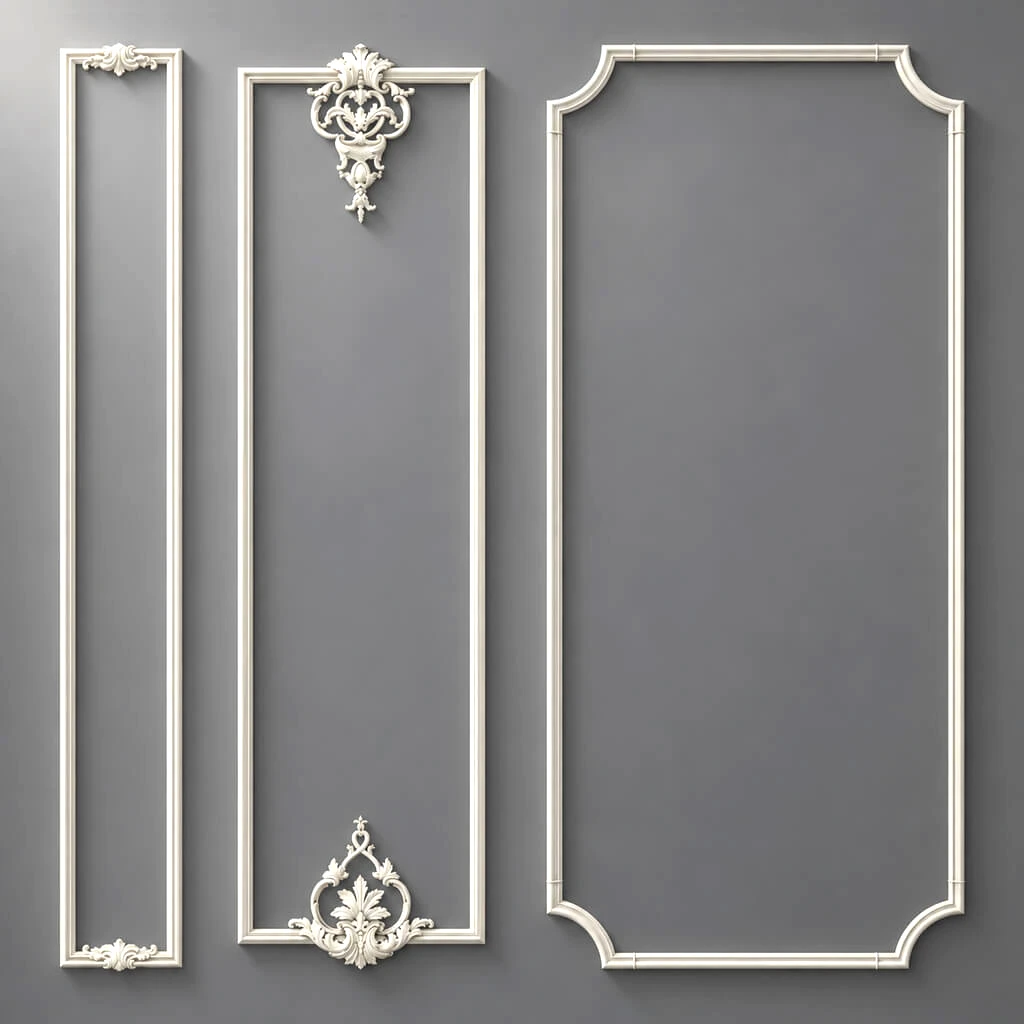
- NPU-108 inside a molding frame: one of the most convincing scenarios
- The frame should not be too tight around the NPU-108
- Frame first or overlay first
- How to position the frame relative to the countertop
- The plinth is not just a technical bottom strip
- Main practical boundary: do not place relief in the zone of constant impacts
- Bar stools change the design scheme
- Island near a passage: a small NPU-108 may be more reasonable
- When it is better not to decorate the end at all
- Why a polyurethane overlay is especially convenient for already finished furniture
- But "can be glued" does not mean "can be glued to any surface"
- Overlay on a painted MDF end
- Overlay on laminated panel
- Why NPU-108 cannot be used as a furniture handle
- NPU-108 and island door opening
- White island and white NPU-108: relief instead of color contrast
- Contrast overlay: size visually increases
- Painting the frame and NPU-108 in one color
- Classic kitchen: NPU-108 supports facades, not competes with them
- Neoclassicism: the place for NPU-108 is especially clear
- Modern kitchen: can a carved overlay be used
- Kitchen-living room: the island end actually becomes living room furniture
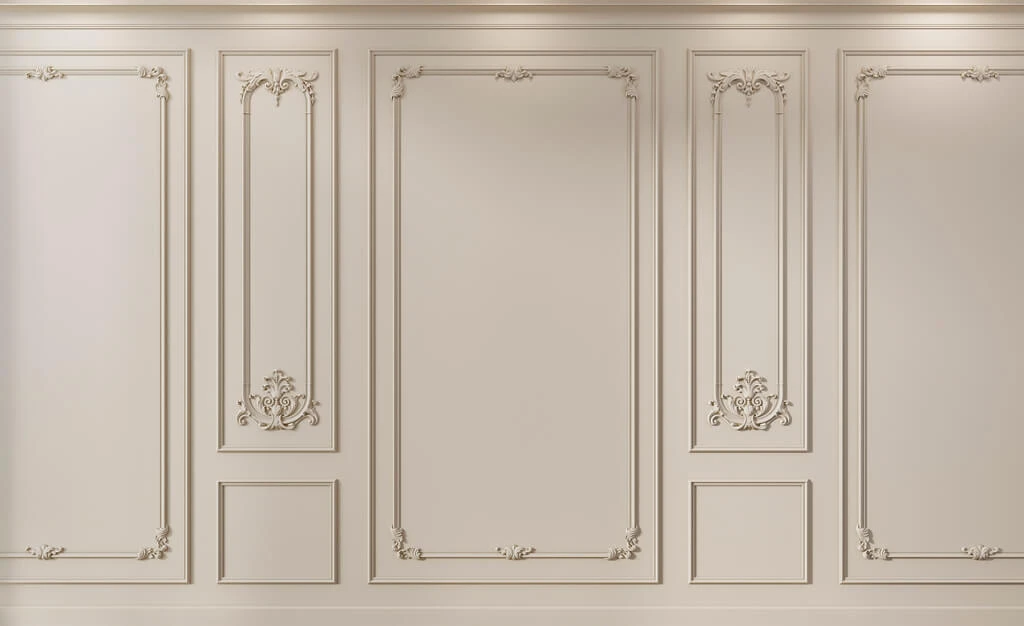
- Island next to the molding wall
- Do I need to repeat NPU-108 on all kitchen facades
- Can I place NPU-108 on both ends of the island
- If one end is wide and the other is narrow
- What is more important: the size of the overlay or the size of the frame
- How to make a frame mockup without buying moldings
- Frame with one NPU-108 or frame without overlay
- NPU-108 without a frame: a particularly precise center is needed
- A large NPU-108 can replace an overly complex composition
- Small NPU-108 inside a large frame
- How many NPU-108 to buy for one island
- How much does a composition of NPU-108 cost
- When should you open the full catalog of decorative overlays
- When is a general catalog of stucco decor needed
- How not to confuse NPU-108 with similar products
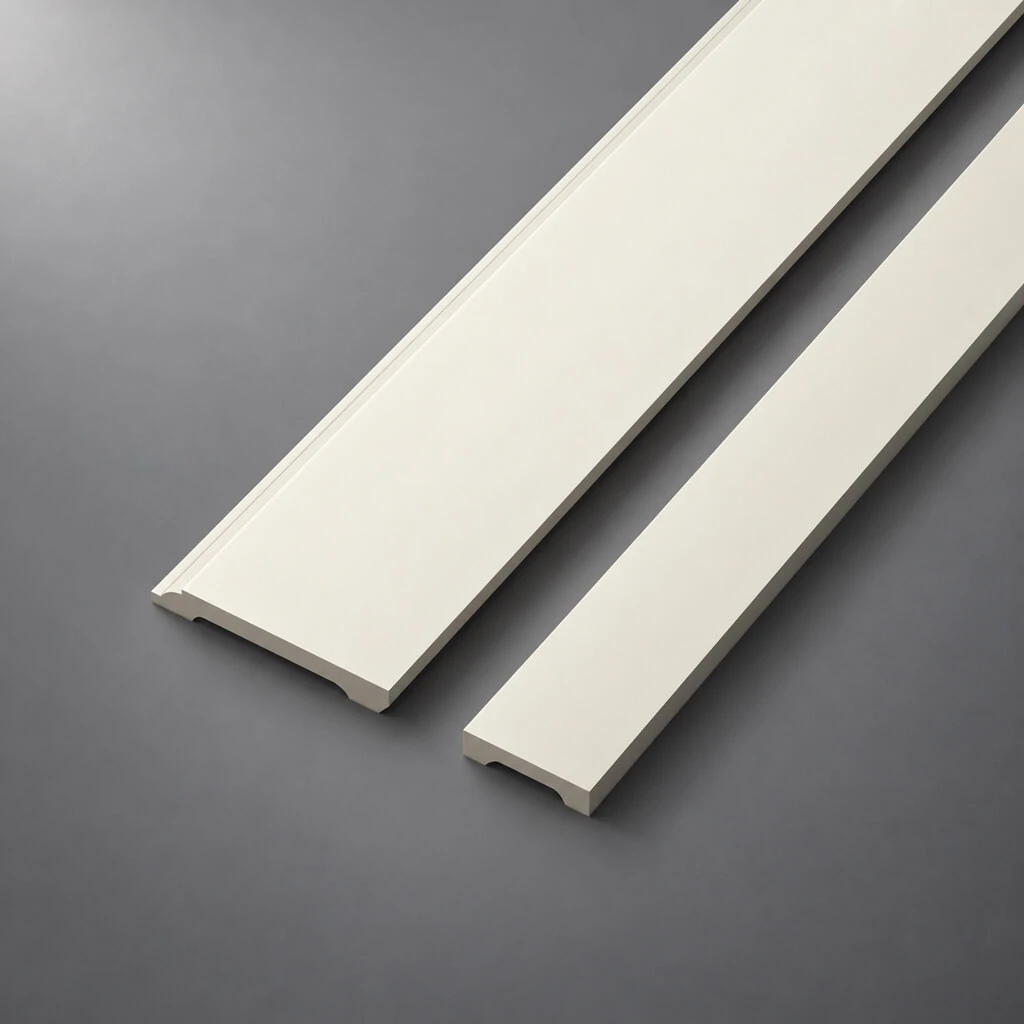
- NPU-108 and molding
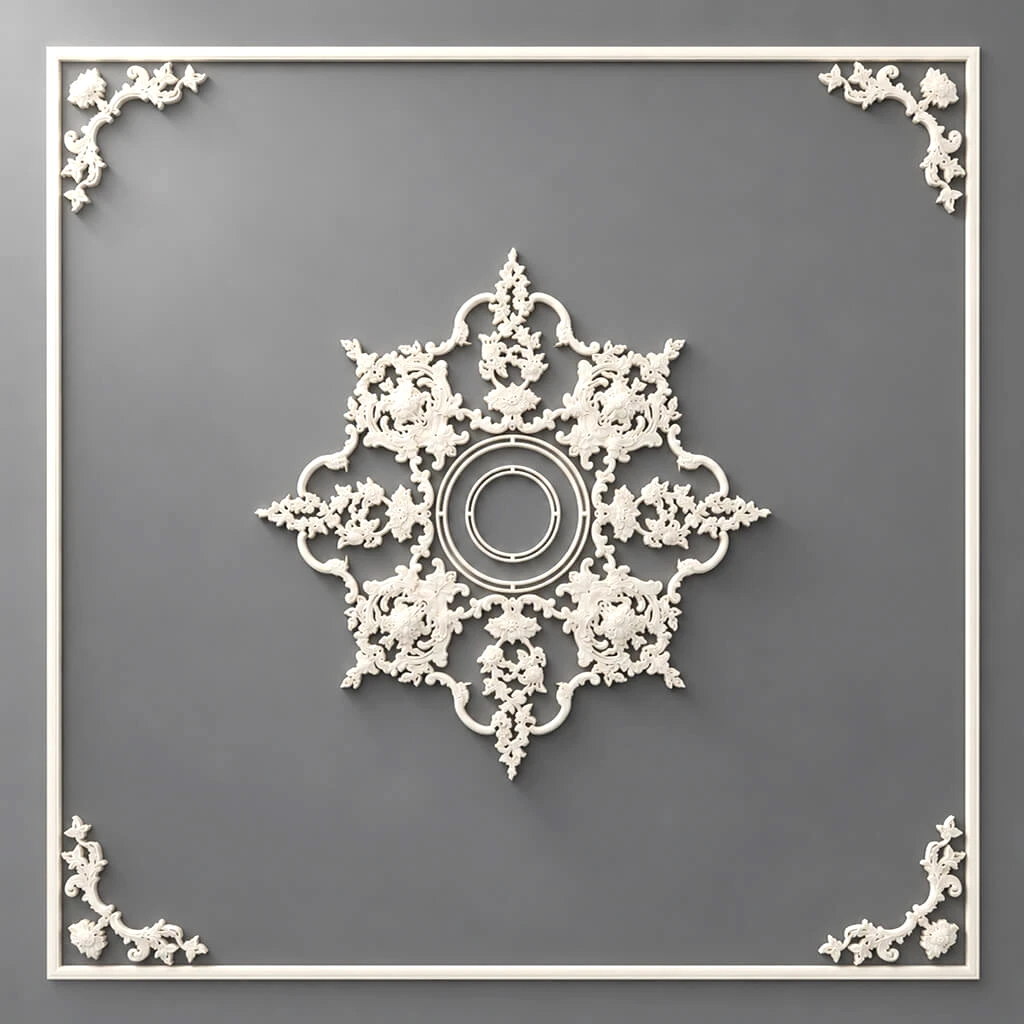
- NPU-108 and rosette
- NPU-108 and baguette
- NPU-108 and furniture handle
- NPU-108 and solid carved panel
- What is NPU-108?
- What sizes of NPU-108 exist?
- How much does NPU-108 70 × 75 × 11 mm cost?
- How much does NPU-108 100 × 107 × 15 mm cost?
- What size is best for a kitchen island?
- Will the small NPU-108 get lost on a large island?
- Can the large NPU-108 look too heavy?
- Is a molding frame needed around the NPU-108?
- Can one NPU-108 be placed in the center?
- Can two overlays be placed?
- Can three NPU-108s be placed?
- Can different sizes of NPU-108 be used on the same end?
- Can both ends of the island be styled the same way?
- Is NPU-108 a molding?
- Is NPU-108 a socket?
- Can NPU-108 be used instead of a furniture handle?
- How is NPU-108 mounted?
- Can NPU-108 be glued to a painted panel?
- Can the cover be installed on a laminated edge?
- Do I need to remove the facade or end panel for installation?
- Where is the best place to position NPU-108 by height?
- Can the cover be placed next to the plinth?
- Can NPU-108 be placed directly under the countertop?
- What to do if a bar stool is nearby?
- Which NPU-108 protrudes less from the plane?
- Do I need to consider thickness when choosing?
- Can NPU-108 be installed on an island door?
- How to make an NPU-108 template?
- Do I need to draw an ornament on the template?
- From what distance should I evaluate the overlay?
- Can I choose only based on a photo?
- What to do if both NPU-108 look too small?
- What to do if both are too big?
- Is NPU-108 needed in a minimalist kitchen?
- Can NPU-108 be combined with a molding?
- Do I need to buy the molding right away?
- How to Calculate the Amount of Molding?
- Can the same motif be transferred to the wall of the kitchen-living room?
- How many NPU-108 are needed for one end?
- Do I need to buy a spare overlay?
- Which NPU-108 should I choose for the frame?
- Can NPU-108 be positioned above the center?
- Can NPU-108 be painted in a contrasting color?
- What should you check right before ordering?
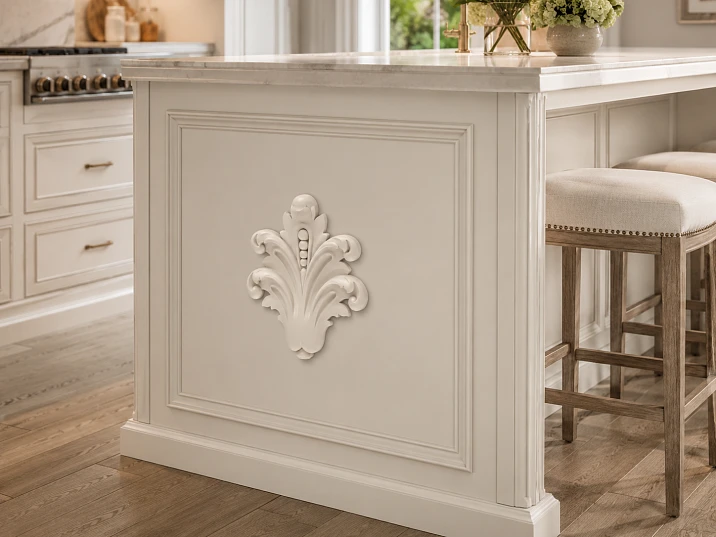
A kitchen island can be impeccably designed on the work zone side and unexpectedly empty on the living room side. The facades are aligned, the countertop is selected, the handles are in place, but the outer end remains a large smooth rectangle. While you look at the kitchen from the cabinets side, it is almost unnoticeable. Once you move to the living room, it becomes clear: the end of the island is right in the line of sight and looks as if the composition was not finished.
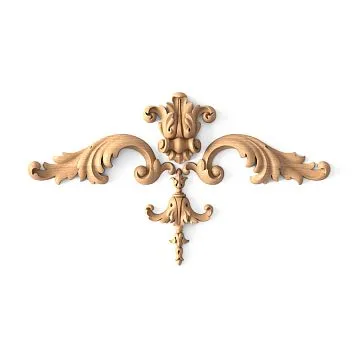
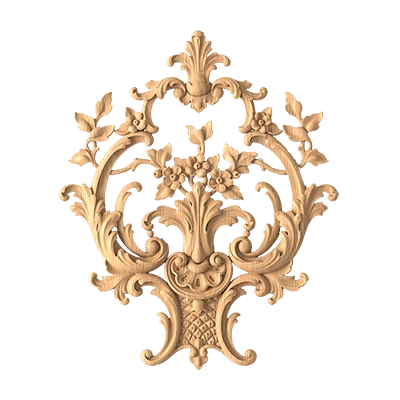
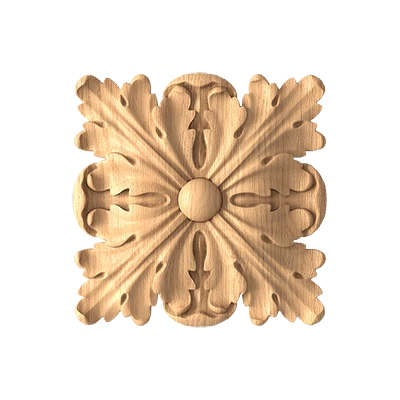
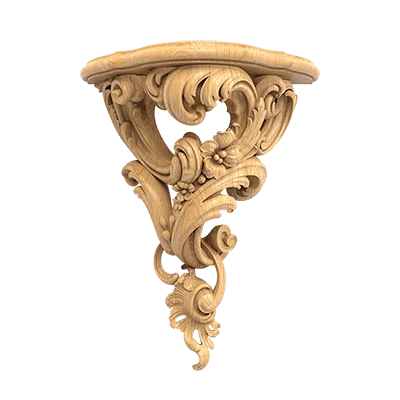
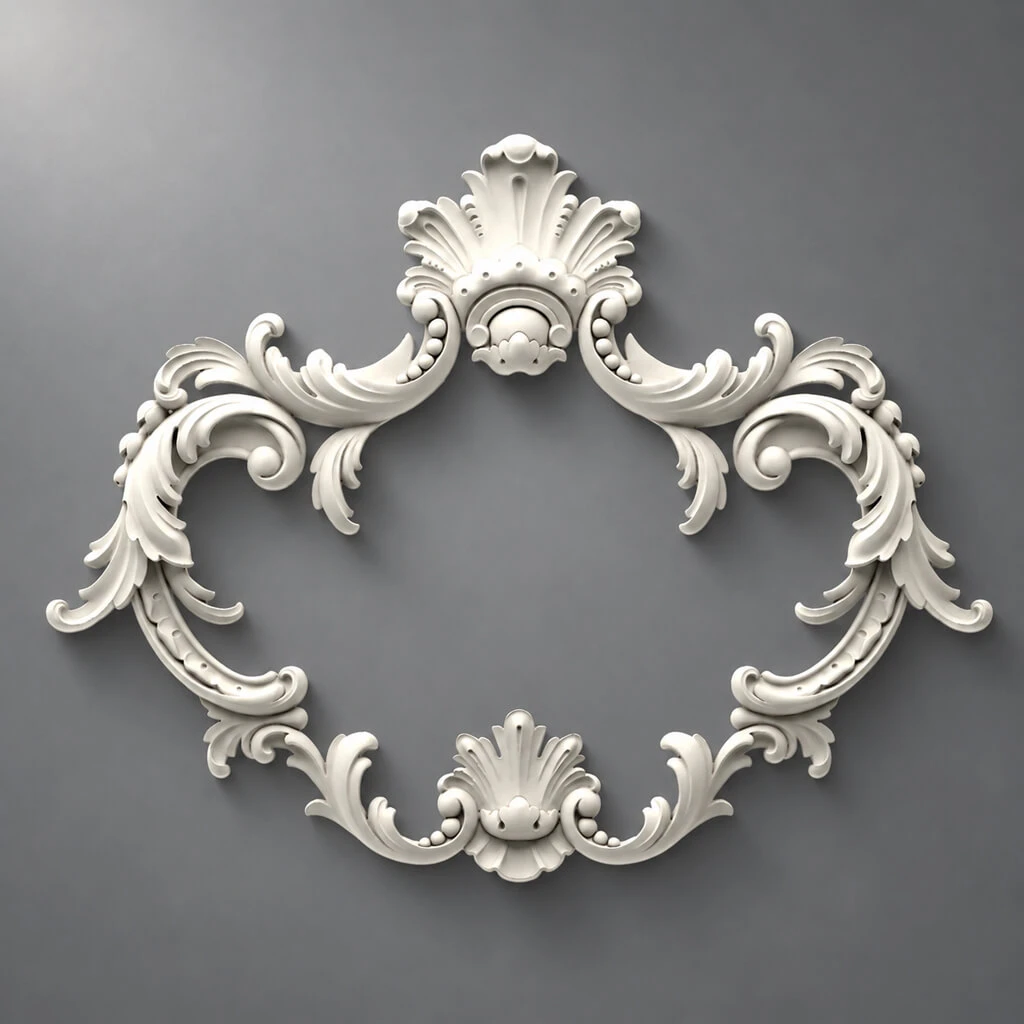
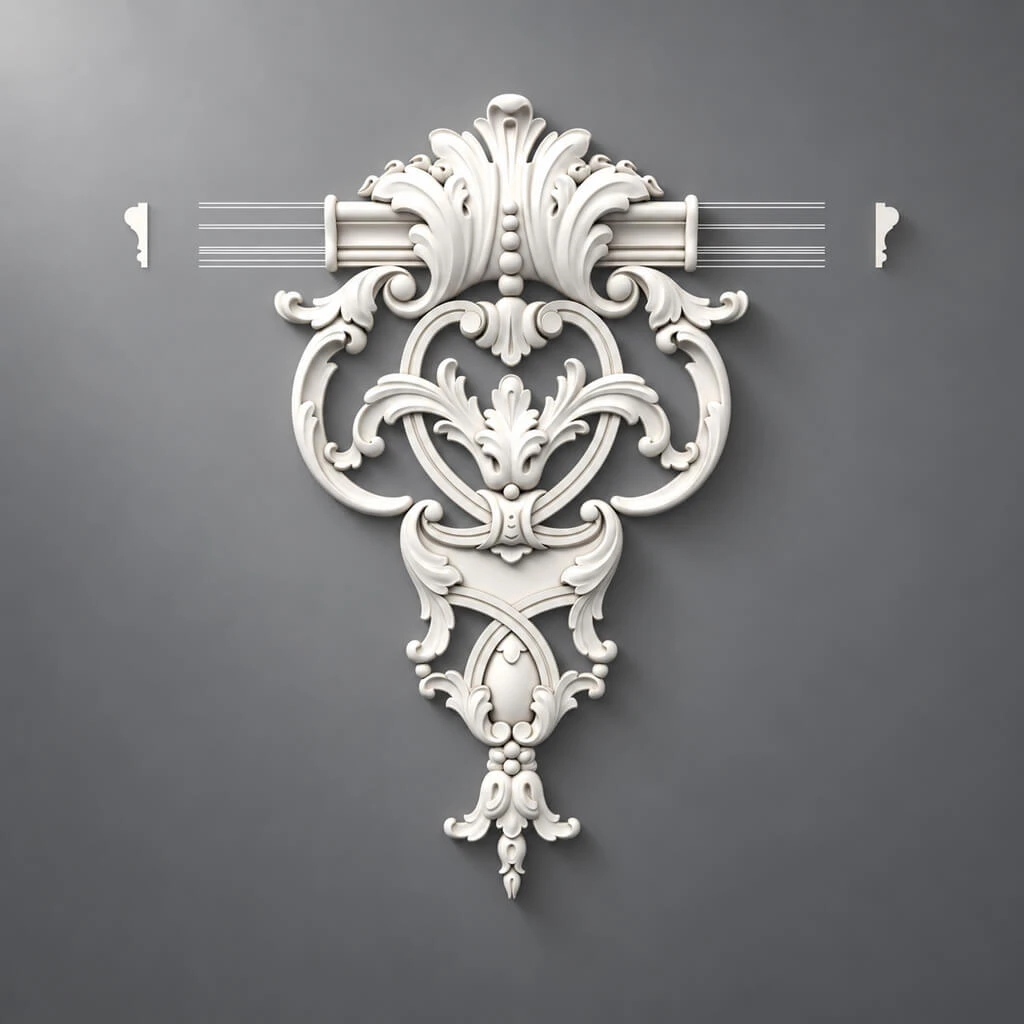
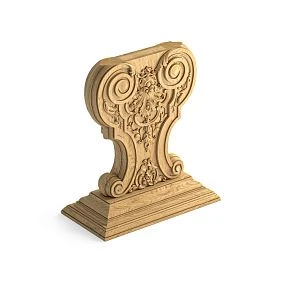
In such a situation, it is not necessary to redo the furniture or order a new facade. A small polyurethane decor for furniture can change the perception of an already finished surface if you choose it by scale and place it not randomly, but relative to the actual geometry of the island. One of these options is NPU-108, a carved decorative overlay made of polyurethane, designed for furniture facades and decorative panels.
NPU-108 has two sizes: 70 × 75 × 11 mm for 920 ₽ and 100 × 107 × 15 mm for 1,290 ₽. The difference between them seems small only in the table. On the smooth end of a kitchen island, a few extra centimeters change both the silhouette of the ornament, the amount of free space around it, and how confidently the overlay reads from the living room side.
Hence, the buyer's main question is not "do I like NPU-108?". It is much more useful to ask: what size will suit my end, do I need one overlay or a composition, will it be in the zone of constant impacts, and should I add a molding frame around it?
It is better to answer these questions before ordering. Then buy the carved overlay NPU-108 made of polyurethane can be done already for a specific scheme, and not with the hope of "we'll figure out at home where to put it".

Why is it that the end of an island often asks for a decorative finish
A kitchen island has working and viewing sides. On the kitchen side, there are usually drawers, doors, appliances, open shelves, or seating. There, the surface is already broken up by structural lines, so additional ornamentation is not always needed.
The situation is different with the external end.
This could be one large smooth panel from the base almost to the countertop. If the kitchen is combined with the living room, this is what a person sees while sitting at the dining table, on the sofa, or entering the room. The end effectively becomes a furniture panel in the living room interior, although structurally it remains part of the kitchen.
And here an interesting design paradox appears. The island itself can be large and expensive in perception, but one empty side plane makes it look like a simple box. A small decorative polyurethane overlay does not change the furniture's construction, but it helps show that the end is intended as a facade surface, not left without finishing.
This is especially noticeable in kitchens with classic and neoclassical facades. The doors already have panels, frames, or profiles, but the side panel is completely smooth. As a result, the main volume of the kitchen speaks one decorative language, while the island speaks another.
NPU-108 can solve this task in a targeted way.
However, precision here is fundamental. A small overlay should not try to cover the entire end. Its task is to set a center, support the overall style, and give the eye a point around which the empty field begins to be perceived meaningfully.

NPU-108 is precisely a carved decorative overlay, not a molding and not a rosette
Before purchasing, it is useful to clearly understand the type of product.
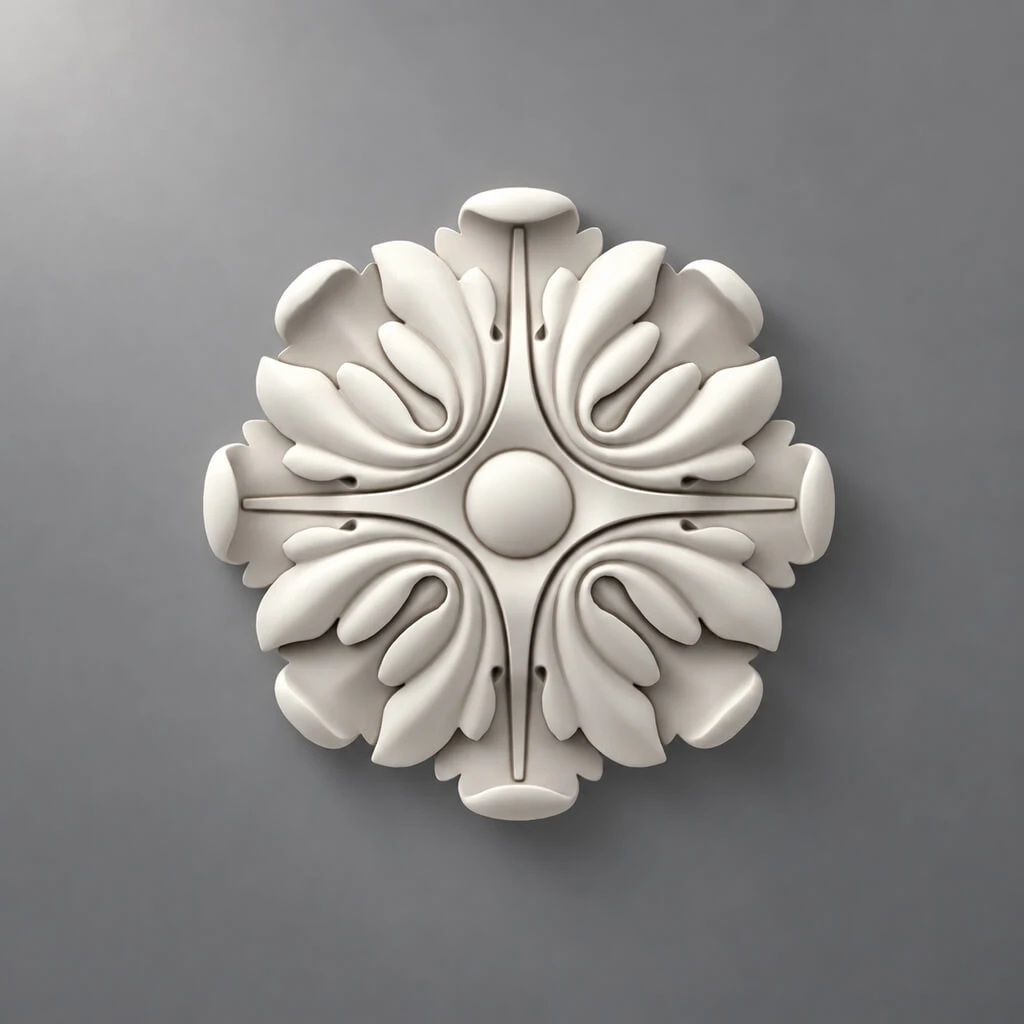
NPU-108 — carved decorative overlay made of polyurethane.
It has a complete pattern and a fixed size. It cannot be perceived as a linear profile that is cut to length and forms a rectangular frame. This is not a baguette. Not a furniture handle. Not a round ceiling rosette. And not a standalone panel covering the entire end face.
The overlay works as a separate ornamental fragment.
That is why NPU-108 is especially interesting where a surface already exists and you don't want to completely redo it. A large smooth furniture panel can be left in place, adding a small carved shape to it.
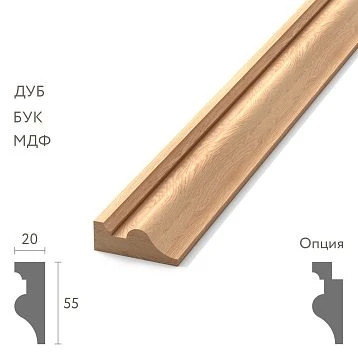
If the task is different — for example, running a profile along the perimeter of the end face — then you need buy polyurethane moldings. And NPU-108 in such a system can become a central or additional decorative motif.
This separation avoids a typical mistake: a buyer sees a beautiful small stucco detail and tries to solve with it a task that requires a long profile.
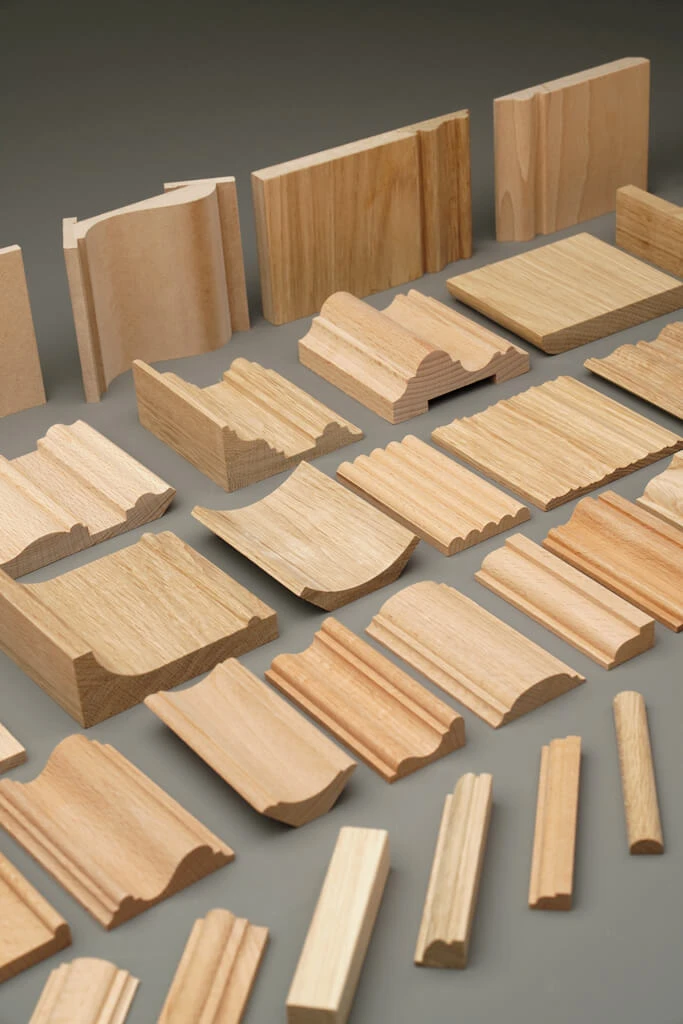
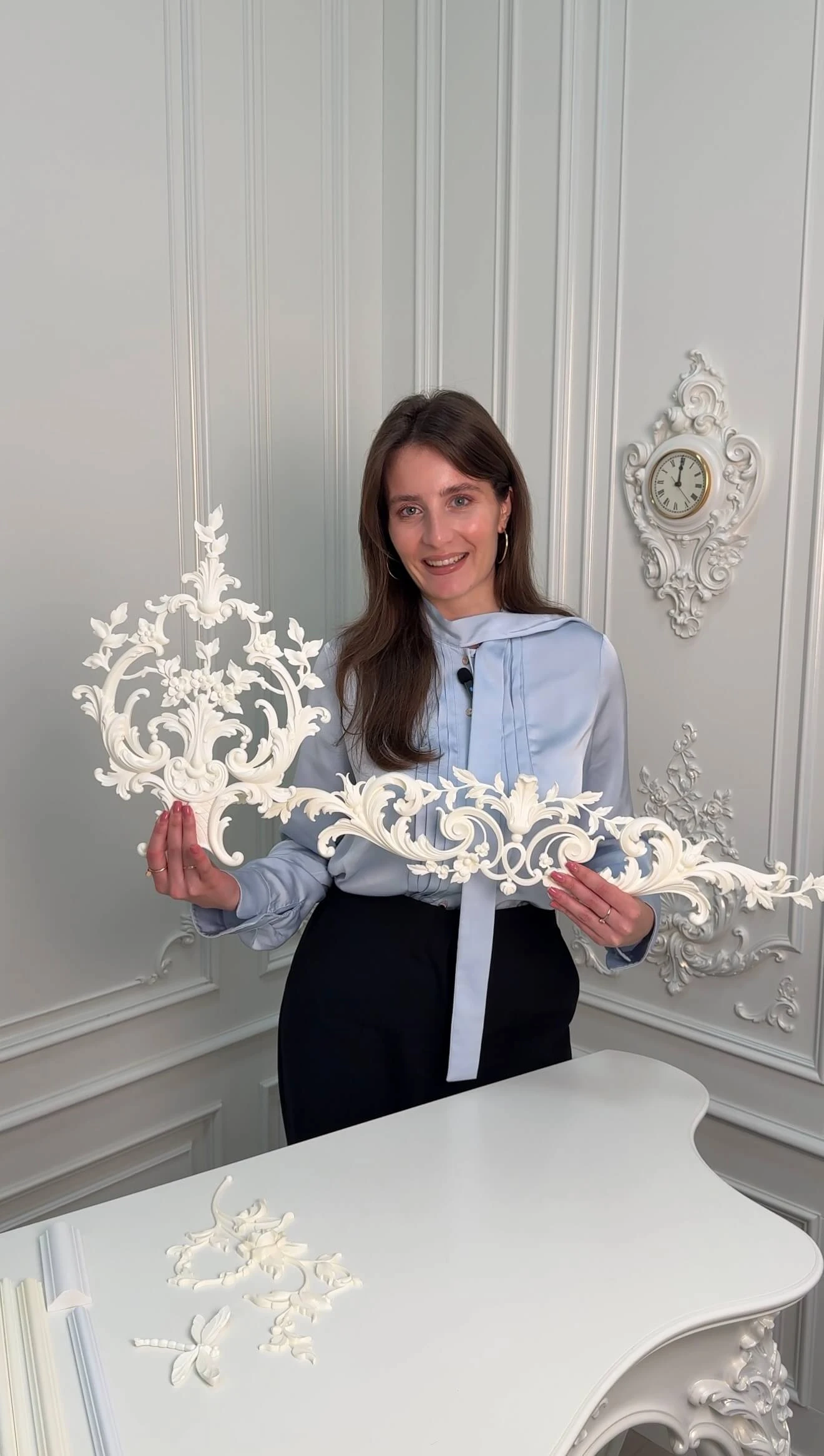
Our factory also produces:
What is known about NPU-108 before choosing
| Parameter | Small size of NPU-108 | Large size of NPU-108 |
|---|---|---|
| Type | Carved decorative overlay | Carved decorative overlay |
| Material | Polyurethane | Polyurethane |
| Size | 70 × 75 × 11 mm | 100 × 107 × 15 mm |
| Price | 920 ₽ | 1 290 ₽ |
| Application | Furniture facades, decorative panels | Furniture facades, decorative panels |
| Installation principle | On glue | On glue |
| Visual character | More compact | More noticeable |
| Which end to check first | Small, narrow, or already saturated with decor | Medium or large smooth end |
| What to do before ordering | Full-size template | Full-size template |
The table has an important practical continuation.
70 × 75 mm and 100 × 107 mm are not abstract numbers from the card. They need to be transferred directly to the end of your island.
On a large furniture panel, a 70-millimeter overlay can look almost jewelry-like.
On a narrow end, a 100-millimeter one, on the contrary, can take up too much space relative to the side offsets.
Therefore, the size is chosen not by price or by the principle 'bigger looks richer,' but in relation to the actual panel.
Get Consultation
Two sizes of the same overlay create two different impressions
Often a buyer thinks this way: the pattern is the same, so you can just take the cheaper option.
But the scale of the ornament is a full-fledged design parameter.
The small NPU-108, measuring 70 × 75 × 11 mm, is perceived as a neat jewelry-like detail. It is easier to leave it surrounded by a large amount of free space. Such an overlay does not require the entire island to be decorated with complex molding.
The large version, 100 × 107 × 15 mm, is noticeable from a distance. It works more confidently on the end that is visible from another part of the kitchen-living room. The relief is deeper: the thickness is 15 mm instead of 11 mm. This means that side light and shadows will make the large overlay even more expressive.
This difference is important to see in full size.
Not in a product photo.
Not on the phone screen.
And not even at the scale of a drawing on an A4 sheet.
Make two templates.
The first is 70 × 75 mm.
The second is 100 × 107 mm.
If you want to assess not only the size but also the volume, you can add a makeshift cardboard edge to the paper template to roughly feel the 11 and 15 mm protrusion. This won't replace the actual part, but it will help understand how much the overlay will extend from the surface.
Small NPU-108: when 70 × 75 mm is enough
The compact version is especially interesting in four situations.
The first is when the end of the island itself is small.
For example, the island is narrow, the countertop has a small overhang, and the side panel is not perceived as a standalone large wall. In such a case, a large overlay could take up too significant a portion of the surface.
The second is when there is already a molding frame on the end.
If the profile forms a rectangular field, the central overlay does not have to be large. The frame already creates the architecture, and the NPU-108 only adds ornament to the center.
Third, the kitchen is quite saturated with decorative details.
If the facades are complex, with cornices, decorative handles, pilasters, or other stucco molding, a small NPU-108 helps maintain a common language without overloading.
Fourth, the end is viewed from a close distance.
For example, there is a passage or dining area nearby. A 70 × 75 mm detail will not get lost because a person constantly sees it up close.
Here, a small size can be stronger than a large one precisely due to restraint.
Large NPU-108: when 100 × 107 mm looks more convincing
The large version is needed not because it is "better." It has a different task.
It works more confidently when the end is a large smooth panel.
Imagine an island with a wide countertop and a deep body. The external side surface is large, the furniture stands in a spacious kitchen-living room, and the end is visible from the sofa.
A 70 × 75 mm plate may turn out to be too small a point.
A size of 100 × 107 mm already creates a more readable center.
The larger version is also interesting when the NPU-108 is used without a molding frame. If there are no other decorative lines around, the plate itself should hold attention better.
However, there is a limit.
If the end face is really large, even 100 × 107 mm does not necessarily have to become the only decor. Sometimes it is much more convincing to place the NPU-108 inside a proportional molding frame.
Then the plate does not try to visually fill the giant surface on its own.
How to compare two sizes not "by eye," but on a real island
This takes ten minutes.
Cut two rectangles from thick paper:
70 × 75 mm;
100 × 107 mm.
On each one, you can schematically draw the outline of the ornament so that the white sheet is not perceived as just a geometric patch.
Next, the template is temporarily fixed with masking tape on the end face.
Look at the island from several points:
from the kitchen entrance;
from the living room;
from the dining table;
standing at the work area;
sitting on the nearest chair.
Why do you need to change the distance?
Because the decorative element behaves differently depending on the viewing point.
Up close, a small overlay looks expressive.
From four meters away, it can almost disappear.
A large one, on the contrary, may seem active up close, but from the living room it will look balanced.
A photo from each point helps make the decision more calmly. The phone captures the overall mass of the surface better than the eye, which during fitting involuntarily focuses on the overlay.
Don't ask "what size for the island" until the end itself is measured.
The query "which NPU-108 to get for a kitchen island?" is too general.
Islands differ from one another.
One has a side panel about the width of a small door.
Another has a huge wall with a massive countertop.
The third includes a seating area, so the visible end face occupies only part of the total surface.
The fourth has a plinth, an overlay baseboard, or a protruding frame.
Therefore, before ordering, take the actual dimensions of the visible surface.
Not the entire body.
Specifically, the surface that remains exposed and on which the decor will be placed.
What measurements are needed for the end of a kitchen island
Start with the overall width of the panel.
Measure from the visible left edge to the visible right edge.
Then the height—from the bottom edge of the decorative panel to the top.
If there is a countertop overhang on top and a plinth at the bottom, they are not automatically included in the clean decorative field. They should be considered as adjacent lines.
After that, mark the obstacles:
sockets;
switches;
technical hatches;
ventilation grilles;
panel joints;
protruding profiles;
places that chairs regularly hit.
Only now does the real rectangle appear, inside which the NPU-108 can be placed.
The geometric center of the end face and the visual center are not always the same thing
Let's imagine a regular rectangular panel.
You want to find the middle with a ruler and glue the overlay there.
Sometimes it really is the best option.
But the island has a countertop and a base. The top line can protrude far forward. The bottom, on the contrary, can be recessed. Because of this, the purely mathematical center does not always look like the center of the composition.
In addition, there may be a tall bar stool nearby that constantly covers the lower part of the panel.
Therefore, after measuring the geometric middle, it is useful to raise or lower the paper template by a few centimeters and compare visually.
The final position should be perceived correctly from the main point of view.
The NPU-108 does not have to be exactly in the middle of the height.
There are two approaches.
The first is strict centering.
It works well on an end without other details. One NPU-108 becomes the central medallion.
The second is binding to the frame.
If there is a molding around the overlay, the position is determined by the inner field of the frame. The NPU-108 is centered within it, not relative to the entire end face.
Sometimes the field starts above the plinth and ends below the countertop. Then the ornament ends up slightly above the mathematical center of the entire panel, but it looks more correct.
One overlay in the center: the calmest option
For most ready-made islands, this is where you should start.
One carved NPU-108 occupies the center of a large smooth field.
No symmetrical pair.
No complex ornamental row.
No attempt to turn a furniture end into a wall panel of a palace interior.
This option is especially good if the kitchen fronts already have an expressive pattern.
The NPU-108 simply repeats the decorative language on the side surface.
Small size gives an almost jewelry-like touch.
Large is more noticeable.
If after trying on one NPU-108 looks confident enough, there's no need to automatically add two more 'for richness'.
Two NPU-108s: when a pair looks logical
A paired scheme can work on a wide horizontal end.
For example, the panel is noticeably wider than its height.
One overlay in the center looks lost, but you don't want to make a molding frame.
Then two identical NPU-108s are placed symmetrically relative to the central axis.
This introduces a new parameter — the distance between them.
Too close — and the two details start to be perceived as a randomly torn central ornament.
Too far apart — they split into two independent spots.
The most sensible way is again the same: two full-size templates.
Move them along the end face until the free space between the overlays and the edges becomes visually balanced.
Three overlays: no longer an accent, but an ornamental row.
Three NPU-108s create a completely different character.
The central overlay and two side ones form a rhythm.
This can be interesting on a very wide island, especially if the end face resembles a long furniture panel.
But three elements require careful marking.
The distances between their centers must be coordinated.
Edge offsets too.
If even one overlay is visually misaligned, the row looks untidy.
For a regular island, such an option is rarely needed. Before buying three pieces, compare with an alternative: one NPU-108 inside a large molding frame.
Very often, a frame creates a more architectural result with fewer carved pieces.
Four or more: a full project is needed, not a free layout.
When the number of small overlays increases, the end starts to work as an ornamental panel.
This is a separate task.
Here it is important to decide:
whether there will be a grid;
which axes are used;
whether there is molding division;
Are all fields the same?
How does the composition relate to the kitchen facades?
Four identical elements glued "roughly at the corners" can make the panel seem cheaper, not richer.
If you want more complex decor, it is wiser to first look at Buy decorative polyurethane overlays and define a common system rather than mechanically multiply one item.
One large or several small ones: what to choose
This is a good question not only for NPU-108, but for furniture decor in general.
One large overlay:
creates one center;
is easier to mark out;
perceived more calmly;
leaves more free space.
A few small ones:
create a repetition;
can support a long surface;
require precise symmetry;
increase decorative saturation faster.
If the island has a simple rectangular end, start with one NPU-108 measuring 100 × 107 mm.
If it seems too large, check 70 × 75 mm.
If even the large one gets lost, don't rush to place three. First try a frame.
NPU-108 inside a molding frame: one of the most convincing scenarios
The smooth end of a kitchen island is very well suited for frame design.
Why?
Because the end itself already has rectangular geometry.
The molding repeats it on a smaller scale, forming an inner panel.
NPU-108 appears in the center.
Then the eye sees not a small decoration on a large sheet of furniture, but a complete architectural facade:
the outer edge of the island;
the inner frame;
the central ornament.
If this is exactly the task facing the buyer, it makes sense to simultaneously order moldings for furniture decor and NPU-108, but only after the frame dimensions are calculated based on the actual end face.
The frame should not be too tight around NPU-108
A small overlay needs air.
If the molding runs almost flush with the ornament contour, the whole composition looks cramped.
Imagine a picture whose frame touches the image on all sides. Roughly the same happens with carved decor.
The inner field should allow NPU-108 to be perceived as an independent center.
The exact offset value cannot be universally assigned without the dimensions of the specific end face and the chosen molding.
Therefore, make a paper mockup not only of the overlay but also of the frame.
With painter's tape, you can depict it directly on the panel in a few minutes.
Frame first or overlay first
If the end is large, start with the frame.
Determine its external size.
See how it relates to the countertop and the plinth.
Only then place the NPU-108 inside.
If the end is small and one overlay is enough, the frame may be unnecessary.
Then the NPU-108 is checked first.
This order helps avoid a situation where the buyer has already purchased a wide molding in advance, then added a large overlay, and almost no free space remains.
How to position the frame relative to the countertop
The countertop is a strong horizontal line.
If the frame is raised too high, the top molding will end up almost pressed against its lower surface.
It will result in a heavy strip.
If lowered too low, the frame will approach the baseboard and start to be perceived as a decorative element of the lower zone.
It is better to give each part its own space.
For this, mark out on the actual island.
First, the countertop.
Then, a free gap.
Then the frame.
Then, again a free field down to the baseboard.
Inside the frame — NPU-108.
Even a simple tape on the facade quickly shows where compositions are cramped.
The plinth is not just a technical bottom strip.
It affects the entire end face.
A dark recessed plinth visually "raises" the body.
A plinth in the color of the facade makes the panel taller.
If the decorative overlay is placed too low, it starts to compete with this transition.
Additionally, the lower part of the island more often receives mechanical contact.
It gets hit by shoes, chair legs, vacuum cleaner attachments, or other cleaning equipment.
Therefore, it's better not to lower the carved overlay there just for mathematical symmetry.
The main practical boundary: do not place relief in the zone of constant impacts.
A kitchen island is not a museum wall panel.
They walk around him.
They move chairs.
They sit on bar stools.
They clean the floor.
They carry bags.
Sometimes children play nearby.
NPU-108 has a protruding relief — 11 or 15 mm depending on the size. This should be considered not only aesthetically.
If the overlay is in an area where a chair back or shoes regularly hit it, a beautiful spot on the drawing turns out to be a bad spot in real use.
Before ordering, place all chairs the way they are used daily.
Move them away.
Move it closer.
Check the trajectory.
Look at which part of the end face actually remains calm.
Bar stools change the layout scheme
If the seating is along the long side of the island, the end face can remain fairly protected.
If one stool is placed right at the end face, the situation is different.
Its backrest or legs may come close to the panel.
In that case, it's better to:
raise the cover higher;
reduce its size;
use one central piece instead of several low ones;
or abandon the relief on this side altogether.
The decor should live with the furniture, not require daily caution from the whole family.
Island near the passage: a small NPU-108 may be more reasonable
If the end faces the passage between the kitchen and the living room, people constantly walk in close proximity.
Large protruding decor here is more noticeable not only to the eyes.
It is easier to accidentally hit it with a bag or clothing.
A compact NPU-108 with a thickness of 11 mm may be more rational than a large 15-millimeter version.
But the final decision depends on the width of the passage and the position of the panel.
Do not invent a universal minimum passage — just assess the actual movement route.
When it's better not to decorate the end at all
Not every empty surface needs an overlay.
Skip the idea if:
the end is in a very narrow passage;
the surface is constantly bumped into;
functional electrical components are located on the panel;
the island is done in an extremely minimalist style;
there is already too much ornament nearby;
the panel has a pronounced texture that you don't want to cover;
NPU-108 doesn't match in scale even after trying both sizes.
A proper commercial article should help not only to buy a product, but also to refuse an unsuitable purchase in time.
Why a polyurethane overlay is especially convenient for ready-made furniture
The main advantage in the scenario under consideration is not the need to redo the cabinet itself.
NPU-108 is applied to the finished surface as a decorative layer.
This is fundamentally different from changing the shape of the facade, cutting a complex relief, or ordering a new carved panel.
The buyer can keep the existing island and change only its external appearance.
That is why queries like stucco for furniture, polyurethane decor for furniture, and decor for furniture facades align well with the real task: not to build a kitchen from scratch, but to refine an existing furniture volume.
But "can be glued" does not mean "can be glued to any surface"
The NPU-108 card provides for installation with adhesive.
However, before installation, the material and condition of the end itself must be taken into account.
The surface must allow the selected mounting system to work properly.
If the panel has a non-standard decorative coating, strong texture, weak peeling layer, or other complex finish, the standard mounting scheme cannot be automatically applied.
It is better to check the specific compatibility of the adhesive and the substrate before purchasing.
Especially if the kitchen is already finished and an error would damage the existing surface.
Overlay on a painted MDF edge.
This is one of the typical furniture scenarios.
But even here, the condition of the finish is assessed first.
Do not apply a decorative piece to an area with damaged or peeling coating.
The overlay should not become a way to hide a substrate problem.
If the surface is stable, then the compatibility of the adhesive technology with the specific finish is checked.
First, the NPU-108 is dry-fitted, marked for position, and only then proceed to installation.
Overlay for laminated panel
Here it is especially important not to make assumptions.
Laminated surfaces differ.
Adhesive compositions too.
Therefore, the very fact that NPU-108 is mounted with adhesive does not mean confirmed compatibility with any furniture laminate.
If the island is already ready, before ordering it is worth clarifying the technology specifically for its surface.
This check is cheaper than trying to fix a damaged edge.
Why NPU-108 cannot be used as a furniture handle
The carved shape looks voluminous, and sometimes there is a desire to place it on the door in the hand area.
But NPU-108 is a decorative overlay.
It is not intended for permanent gripping and opening of the facade.
At the end of the island, this issue usually does not arise because the panel is blank.
But if the same article is planned to be transferred to kitchen doors, the handle and molded decor need to be functionally separated.
NPU-108 and opening of island doors
If the end is blank, the problem is absent.
If there is an opening door next to it, check the trajectory.
The large overlay protrudes by 15 mm.
The small one — by 11 mm.
It must not be allowed for a neighboring door, drawer, or other movable element to touch the relief during operation.
This is checked very simply: fully open all adjacent facades before installation and apply the template taking into account the thickness.
White island and white NPU-108: relief instead of color contrast.
The monochrome scheme is especially suitable for small decor.
The overlay and the end are perceived as one surface.
The ornament is revealed only by shadows.
In calm daylight it looks soft.
With side evening light it becomes more noticeable.
This method works well if the kitchen should not seem overly classic.
The relief itself speaks enough.
It is not necessary to highlight NPU-108 with a different color.
Contrasting overlay: size visually increases
If the NPU-108 differs in color from the end face, it begins to appear larger.
This should be kept in mind when choosing between 70 × 75 and 100 × 107 mm.
A large contrasting overlay can appear significantly more active than its paper white template.
Therefore, for a contrasting scheme, make a template of the desired color.
Regular colored paper will give a much more honest representation.
Painting the frame and NPU-108 in one color
If molding is used, the most cohesive scenario is a unified system.
The frame and overlay are perceived as parts of one architectural panel.
In this case, the end face can be the same color or differ.
If everything is painted the same color, the effect is built on depth.
If the background is different, the frame together with the NPU-108 becomes more graphic.
Which specific finishing materials are acceptable for the product should be checked before work, without inventing a universal coating system.
Classic kitchen: NPU-108 supports facades, not competes with them
In a classic kitchen, carved elements look natural, but that is exactly why it is easy to overdo them.
If the facades already have complex panels, cornices, capitals, and decorative handles, the end should not become the most saturated place.
One NPU-108 inside a calm frame often looks more convincing than several overlays.
It repeats the theme of the ornament and completes the island.
But it does not try to turn the side panel into an independent decorative portal.
Neoclassicism: the place for NPU-108 is especially clear
A neoclassical island often has simple framed facades and fairly clean surfaces.
On the smooth end, one small carved overlay creates the necessary historical hint.
At the same time, the rest of the volume can remain modern.
Here, the small NPU-108 70 × 75 mm is especially useful, or the large version in a very calm monochrome finish.
The main thing is not to add ornament to every available surface.
Modern kitchen: can you use a carved overlay
Yes, if the contrast is deliberate.
A modern kitchen does not have to be completely devoid of historical motifs.
For example, a smooth island, a simple stone countertop, and one carved overlay in the color of the facade can create an interesting clash of geometry and ornament.
But if the entire project is based on an extremely minimalist plane without frames or profiles, the NPU-108 may look random.
Then it's better to leave the end clean or finish it with a different material.
Kitchen-living room: the end of the island actually becomes living room furniture
This is a key scenario.
When the kitchen is isolated, the island is mainly visible to the person cooking.
When the space is combined, the side panel is constantly in view.
It becomes a backdrop for the sofa, dining area, and the entire living room.
Therefore, the design of the end can be coordinated not only with kitchen facades but also with the wall decor of the room.
If you want to continue the same language further, you can Buy polyurethane wall decor and connect the island with the wall composition of the kitchen-living room.
But the repetition should be subtle. There's no need to mechanically duplicate the same panel everywhere.
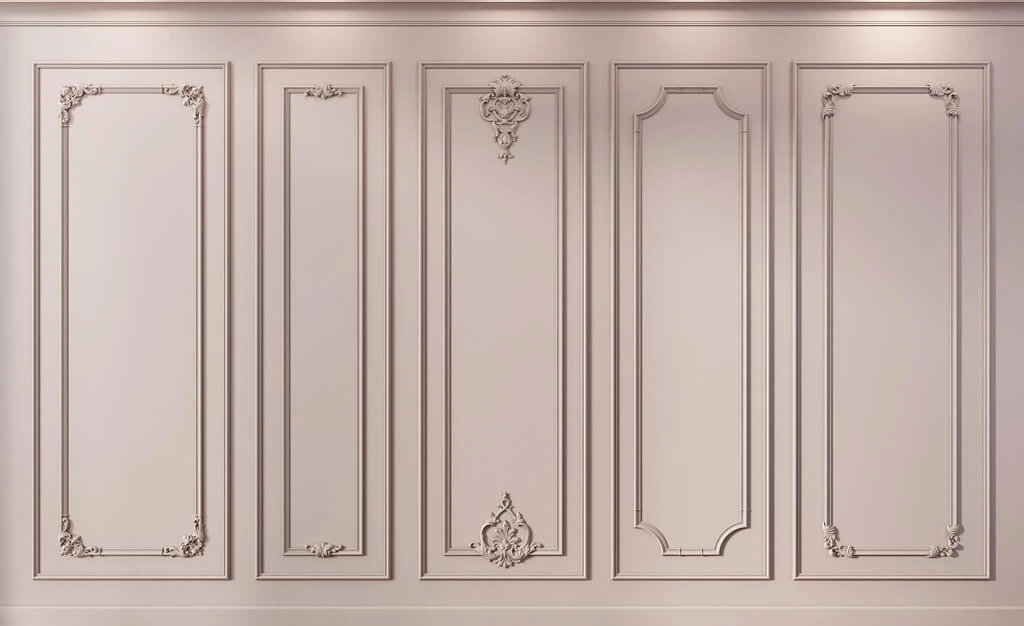
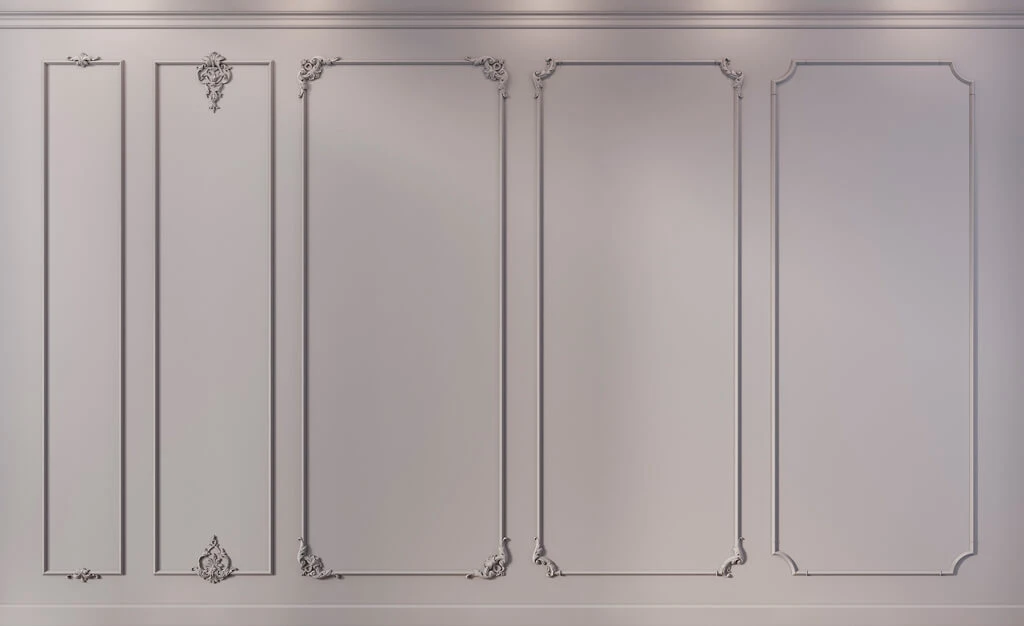
An island next to a molding wall.
Imagine a living room with classic wall frames.
The kitchen island is located opposite.
The smooth end looks alien.
A small frame with NPU-108 can connect the furniture with the wall architecture.
However, the molding on the island does not necessarily have to be identical to the wall molding.
More important is the general principle: a rectangular field plus a central stucco accent.
This way, the kitchen no longer looks like a separate technical block inside the living room.
Is it necessary to repeat NPU-108 on all kitchen facades?
No.
Repeating the same ornament on each door quickly turns an interesting detail into a background.
The end of the island is good precisely because it is a separate large surface.
One NPU-108 can become its distinctive motif.
On working facades, frames, handles, or other existing decor are sufficient.
It is not necessary to turn the entire set into a collection of identical overlays.
Can NPU-108 be placed on both ends of the island?
If both ends are visible and have the same construction, a symmetrical repeat is possible.
Then you need to buy two identical overlays of the same size and place them at the same height.
If one end faces the living room and the other is almost against the wall, a repeat is no longer necessary.
Decorate what actually participates in the interior.
If one end is wide and the other is narrow
Do not automatically use different sizes of NPU-108 just because the surfaces differ.
Two versions of the same ornament in one small furniture piece can create a sense of random scaling.
Sometimes it is better to decorate only the main end face.
If you want to decorate both, create a common layout and make sure the size difference looks intentional.
What matters more: the size of the overlay or the size of the frame
If NPU-108 is used without a frame, the main parameter becomes the overlay itself and the free space around it.
If there is a molding, the frame begins to define the scale of the entire composition.
In a large field, a small NPU-108 can look like a precious central detail.
In a tight field, a large one can look too dense.
Therefore, you cannot choose the molding and the overlay independently of each other.
First, the overall architecture is determined.
How to make a frame mockup without buying moldings
Use painter's tape.
Stick four strips directly onto the end face in the shape of the intended frame.
In the center, add a paper template NPU-108.
Step back.
Take a photo.
Then reduce the frame.
Take a photo again.
Then enlarge it.
This way, in literally fifteen minutes, you understand what scale is needed.
After that buy polyurethane moldings you can already do it according to the measured scheme.
A frame with one NPU-108 or a frame without an overlay
Sometimes during the mockup, something unexpected is revealed.
A molding frame is enough.
The central NPU-108 seems redundant.
This is a normal result.
You don't need to buy an overlay just because the article originally started with it.
Conversely, sometimes a single large NPU-108 works perfectly without a frame.
Good design is not determined by the number of items in the cart.
NPU-108 without a frame: a particularly precise center is needed
The molding hides small positioning errors through its overall geometry.
A single overlay hides nothing.
If it is shifted on a smooth field, the eye notices immediately.
Therefore, mark the axes.
Draw a temporary vertical and horizontal line.
Apply the template.
Check the position relative to the countertop and the baseboard.
Only then secure the part.
A large NPU-108 can replace an overly complex composition
There are edges where you want to "do something," but a full frame seems excessive.
The large size of 100 × 107 × 15 mm is just useful in such a situation.
It is more noticeable than the small version.
It does not require additional profiles.
It keeps the surface calm.
This option works well for a medium-width island where a large smooth panel needs one expressive center.
A small NPU-108 inside a large frame
This is the reverse scenario.
The molding already creates scale.
The central overlay 70 × 75 × 11 mm becomes a thin ornamental finish.
This works especially well when the inner area of the frame is fairly open.
The small decor does not try to fill the entire field.
It is the empty space around it that makes the composition feel more premium.
How many NPU-108 to buy for one island
First, decide on the layout.
One main end — one overlay.
Two identical ends — two.
Paired composition on one wide end — two.
Three elements in a row — three.
Don't buy four "just in case" if the project requires one.
The current possibility to buy the item later depends on availability and order conditions, so before purchasing, it's better to check the required quantity in the product card.
How much does a composition of NPU-108 cost?
When t
hen it's worth opening the full catalog of decorative overlays
The main sign is that both sizes of NPU-108 do not provide the needed scale.
70 × 75 mm is too small.
100 × 107 mm also gets lost.
Or vice versa: the small version already looks excessively large.
Then there's no need to forcefully build the composition around NPU-108.
Better to look at carved polyurethane overlays for furniture and choose a different size or silhouette.
The product should fit the furniture.
Not the furniture to the product.
When a general catalog of stucco decor is needed
If the island end turned out to be just the beginning of a larger project, it will come in handy. ordering polyurethane molding decor.
For example, the following are designed simultaneously:
kitchen island;
display facades;
dining room wall;
mirror zone;
decorative panel.
Then it is important to see all elements as one system.
Different overlays, moldings, and wall details should share a common scale and not conflict with each other.
How not to confuse NPU-108 with similar products
NPU-108 and molding
NPU-108 is a separate shaped overlay of fixed size.
Molding is a linear profile.
If you need a center — use an overlay.
If you need a frame — use molding.
If you need a frame with a center — both types are used.
NPU-108 and rosette
A rosette is usually perceived as an independent center of a different shape and typology.
In the product card, NPU-108 refers specifically to decorative overlays.
There is no need to call it a rosette just because it is small and may be located in the center of a panel.
NPU-108 and baguette
The baguette forms an extended framing.
NPU-108 has a complete ornament and is not used as a linear frame.
NPU-108 and furniture handle
The overlay decorates the facade.
The handle works by hand and transmits force to the opening mechanism.
These functions cannot be mixed.
NPU-108 and solid carved panel
The overlay occupies a small area.
The panel sets the pattern for the entire surface.
If the end face is so large that one NPU-108 does not affect its perception at all, the task may already be closer to a decorative panel or a comprehensive frame system.
Practical scenario No. 1: a small island with a narrow end face
The smooth panel is visible from the passage.
The kitchen fronts are classic, but quite subdued.
First, we try the NPU-108 70 × 75 mm.
It occupies a small central part and supports the pattern of the fronts.
The large version 100 × 107 mm seems too active.
A frame is not needed.
In that case, a small overlay is a rational choice.
Scenario No. 2: a large island in a spacious kitchen-living room
The end is wide.
The distance to the sofa is several meters.
The small NPU-108 almost disappears.
The large one is easier to read, but by itself it still looks a bit lonely.
We add a rectangular frame with painter's tape.
The composition immediately becomes complete.
So, it's worth buying a large NPU-108 and a suitable molding, rather than three small overlays.
Scenario #3: the island already has a frame design
There is a furniture frame or a paneled field on the end.
You just need to add a center.
Here, the large NPU-108 may be too close to the edges.
The small version leaves more free space.
As a result, 70 × 75 mm looks neater, although the panel itself is large.
This is a good example of why the edge size is not the only criterion.
Scenario #4: the edge is located next to a bar stool
The large NPU-108 looks nice in the photo.
But when the chair is pulled back, the backrest almost touches the panel.
In this case, the size 100 × 107 × 15 mm may be unfortunate precisely because of the larger protrusion.
We check the small version above the line of possible contact.
If it also falls into the danger zone, it is better to refuse the overlay on this edge.
Scenario #5: island in a minimalist kitchen
All facades are smooth.
Handles are hidden.
The countertop is laconic.
There is no other molding.
The buyer likes NPU-108 separately.
But the paper template shows that the floral ornament looks alien.
The right decision is not to order it for the island.
You can leave the end empty or use the decor in another room.
Scenario #6: island continues the classic living room
There are molding panels on the walls of the kitchen-living room.
The door leaves have a classic design.
The simple end of the island stands out.
Here, a small frame and one NPU-108 in the center connect the kitchen furniture with the room's architecture.
Thus, stucco molding for kitchen furniture ceases to look like a separate decoration and becomes part of the overall system.
Scenario No. 7: the end is very wide and low
One central NPU-108 may look too small regardless of size.
Then there are two options.
The first is two identical elements horizontally.
The second is one frame with a central overlay.
More often, the second option looks calmer.
But the final decision should be made only after the mockup.
Scenario #8: the end face is tall and narrow
The key here is not to overload the width.
The large NPU-108 may come close to the edges.
The small one preserves the air.
The frame should also be narrow and proportional.
If the space is too tight, it is better to use only one small overlay.
Scenario #9: the island has a decorative plinth
The plinth already adds expressiveness to the lower part.
If the NPU-108 is lowered too much, the two decorative layers will start to compete.
Raising the template higher.
Checking the visual center of the remaining field.
Often after this, the larger version looks more appropriate because it is on a cleaner surface.
Scenario #10: the countertop protrudes significantly beyond the end.
A deep overhang creates a noticeable shadow on top.
An overlay placed too close to the countertop may get lost in this shadow.
Lower the template.
Look under normal lighting.
Not only geometry matters, but also real light.
Light is a hidden parameter in choosing the size of NPU-108
Relief exists thanks to shadows.
On a front-lit surface, a small overlay can look very calm.
With side lighting, the same relief becomes more noticeable.
Therefore, the mockup should be evaluated in the morning and evening if the kitchen lighting changes.
This is especially important for the large version with a thickness of 15 mm.
The stronger the side light, the more actively the volume is perceived.
If the end of the island is opposite the window
Daylight can come almost frontally.
The relief will be soft.
In the evening, when pendant lights or sconces are turned on, the direction of the light will change.
Check both modes.
Don't choose a large overlay just because the small one seems too inconspicuous during the day.
What to do with decor on the island if the kitchen is used very actively
The more active the use, the calmer the installation area should be.
In a family where people constantly cook, move chairs, and children run around the island, the lower part of the end gets more contact.
It's better to place the carved overlay higher.
Reduce the quantity.
Do not place protruding relief near corners and passages.
A beautiful solution should withstand real household logic at least in terms of placement, even if the article does not replace a technical instruction manual.
Why the end corner is a bad place for a small carved overlay
The corner is constantly in the zone of accidental touches.
Moreover, NPU-108 is a standalone ornament that reads better on a field rather than pressed against the edge.
If you want to emphasize the corners of a frame, other types of decor are usually used for that.
NPU-108 makes more sense to give its own space.
Do not place NPU-108 "wherever the outlet fits"
Sometimes there is electrical wiring on the end.
The buyer tries to place the overlay on the other side to balance the panel.
But one functional outlet and one carved overlay rarely create true symmetry.
It is better to treat the electrical as a separate technical element and build the decor around the overall geometry, rather than trying to mirror it with ornament.
Error: choosing size based on price difference
The small one costs 920 ₽.
The large one is 1,290 ₽.
The difference is relatively small, but the interior difference can be noticeable.
Don't take the large one just because "for a small extra cost you get more decor."
And don't take the small one to save money if it gets lost on the end.
Price is the last filter after scale and placement.
Error: gluing the panel before placing the island in position
If the kitchen is still being assembled and the end is lying separately, it's very tempting to finish it in advance.
But the final perception depends on the whole kitchen.
Countertops.
Bases.
Chairs.
lighting.
It's better to at least do the final layout after the main volumes have taken their places.
Error: centering on the bare panel, forgetting about the countertop
The countertop may protrude asymmetrically.
Because of this, the center of the panel itself and the visual center of the island are sometimes perceived differently.
Check the finished object as a whole.
Error: using too many small overlays
A small element seems harmless.
Therefore, there is a desire to buy four or six at once.
As a result, the end face is covered with a fine repeating ornament.
If a rich facade is needed, it is better to develop a complete system with frames and axes.
Error: combining NPU-108 with several random ornaments
One overlay with one pattern.
Molding of the second character.
Corner decor of the third.
Handles of the fourth.
It is so easy to lose unity.
If NPU-108 becomes the center, neighboring elements should support it, not compete.
Error: do not account for the 11 or 15 mm protrusion
On a flat sketch, everything looks safe.
In reality, the overlay has thickness.
Especially the large version.
Check adjacent doors, the passage, and chairs.
Error: place the decor too low
The lower zone is more often subject to mechanical contact.
Additionally, the overlay may appear visually attached to the baseboard rather than to the main panel.
Error: place too high
An overlay pressed against the countertop looks as if it didn't have enough space.
If there is a strong shadow on top, the relief is even harder to read.
Mistake: making the frame flush with the edge
The ornament needs a background.
Too tight an inner margin reduces the sense of neatness.
Mistake: not making a template
This is the simplest mistake and one of the most frustrating.
Two product sizes are specifically provided to allow choosing the scale.
There is no point in not using this option and buying blindly.
Mistake: considering NPU-108 as universal decor for any kitchen
It has a certain carved character.
Not every interior requires such an ornament.
Sometimes a calmer overlay or the absence of decor will be better.
Mistake: choosing NPU-108 when a molding is needed
If the problem is that the end has no architectural division at all, one small overlay may not solve it.
Then a frame is needed first.
Mistake: choosing a molding when one overlay is enough
The opposite extreme.
A small end can be overloaded with a full frame.
A paper mock-up will show that one NPU-108 works better.
Mistake: decorating the working side of the island using the same scheme
The end face and the working facade have different conditions.
On the side of cabinets and doors, decor can interfere with handles, opening, and daily contact.
There is no need to mechanically repeat the design of all sides.
Mistake: buying NPU-108 before deciding the entire kitchen-living room composition
If the walls are still to be decorated with molding, it is better to see the island and wall decor together.
The size of the overlay may change after large wall frames appear.
When NPU-108 is really worth buying
The purchase looks justified when:
the end of the island is a smooth rigid decorative panel;
the surface is suitable for the intended installation technology;
the overlay does not fall into the zone of constant impacts;
one of the two sizes has been tested at full scale;
the position is coordinated with the countertop and the plinth;
the ornament matches the kitchen style;
quantity is known;
it has been decided whether a molding frame is needed.
In such a situation order NPU-108 in size 70 × 75 or 100 × 107 mm it can already be part of the finished project.
When it is better to choose a different overlay
NPU-108 should not be made an end in itself.
Another product is better if:
both sizes are too small;
both are too large;
the drawing does not match the facades;
a corner solution is needed;
an elongated vertical shape is needed;
a large central medallion is required;
the end has unusual geometry.
In this case, it is reasonable Buy decorative polyurethane overlays after comparing other shapes.
When it is better to move to moldings
If the main problem of the end is not the lack of ornament, but the lack of structure, moldings are more useful.
They divide the plane.
They create a frame.
They repeat the paneled language of the facades.
NPU-108 is either added inside or not added at all.
This is especially noticeable on very large end walls.
When it is worth continuing the decor on the wall
The island sometimes looks like a separate beautiful object, but is not connected to the interior.
Then a similar principle can be supported on the wall of the kitchen-living room.
It is not necessary to repeat NPU-108.
A common language of frames and moldings is enough.
For such a project you can Buy polyurethane wall decor after the island layout has already been determined.
How to buy NPU-108 on STAVROS without an extra order
Start not with the purchase button.
Start with the end.
Take measurements.
Make two templates.
Identify a calm zone without constant impacts.
Check one element.
Check the pair.
Add a frame mockup.
Remove the frame.
Compare again.
After that, open the NPU-108 card and select a specific size.
Small — 70 × 75 × 11 mm.
Large — 100 × 107 × 15 mm.
If the needed pattern is found, you can place an order.
If not, move on to other overlays or moldings.
This way, the commercial choice remains reasonable: the product is bought when a place for it has already been found.
Ready-made verification procedure before payment
Ask yourself:
What is the size of the end face?
Not approximately, but in millimeters.
Which size of NPU-108 looks better?
Checked with two templates.
Where is the center?
Marked relative to the finished island.
Will the chair hit the overlay?
Checked in operation.
Is a frame needed?
There is a mock-up with painter's tape.
How many overlays are needed?
The quantity is known in advance.
Is the base suitable for adhesive mounting?
Verified for a specific finish.
After these answers, the purchase becomes predictable.
FAQ: NPU-108 on the end of a kitchen island
What is NPU-108?
NPU-108 is a carved decorative polyurethane overlay for furniture facades, decorative panels, and other suitable surfaces.
What sizes of NPU-108 are available?
Two sizes: 70 × 75 × 11 mm and 100 × 107 × 15 mm.
How much does NPU-108 70 × 75 × 11 mm cost?
The current price for the specified size is 920 ₽. Before ordering, it is better to check the current price again in the product card.
How much does NPU-108 100 × 107 × 15 mm cost?
Current price is 1,290 ₽. The price may change, so before purchasing, refer to the current product page.
What size is best for a kitchen island?
There is no universal size. For a small or already finished end, first check 70 × 75 mm; for a large smooth field, 100 × 107 mm. The best way to choose is a full-size template.
Will the small NPU-108 get lost on a large island?
It may get lost, especially when viewed from the living room. In this case, try the larger version or place the small one inside a molding frame.
Can the large NPU-108 look too heavy?
Yes. On a narrow end or inside a small frame, the 100 × 107 mm size may take up too much space.
Is a molding frame needed around the NPU-108?
Not always. On a small end, one overlay is enough. On a large empty panel, a frame often helps connect the small ornament to the scale of the entire surface.
Can I place one NPU-108 in the center?
Yes. This is one of the calmest and most versatile options for a smooth end surface.
Can two overlays be installed?
Yes, especially on a wide horizontal field. Before ordering, be sure to lay out two templates and choose the distance between them.
Can three NPU-108 be installed?
Yes, but then it becomes an ornamental row. This layout requires precise symmetry and is not suitable for every island.
Can different sizes of NPU-108 be used on the same end surface?
Technically, any composition can be devised, but different scales of the same ornament easily look random. For a regular end surface, it is better to use the same size.
Can two ends of the island be decorated identically?
Yes, if both are visible and have the same geometry. Then the overlays are placed at the same height and use one size.
Is NPU-108 a molding?
No. This is a carved decorative overlay of a fixed size.
Is NPU-108 a socket?
No. The product belongs to decorative overlays.
Can NPU-108 be used instead of a furniture handle?
No. This is a decorative overlay, not hardware for opening the facade.
How is NPU-108 mounted?
The card provides for adhesive mounting. The specific adhesive and preparation need to be selected considering the material and finish of the edge.
Can NPU-108 be glued onto a painted panel?
The possibility depends on the condition of the coating and the compatibility of the mounting system with the specific finish. It is not advisable to install the decor on a weak or peeling coating without preparation.
Can the overlay be installed on a laminated edge?
It is necessary to separately check the compatibility of the adhesive and the specific laminated surface. Not every laminate should be considered the same base.
Do I need to remove the facade or end panel for installation?
If access to the surface is free, the very idea of an overlay decor does not automatically require replacing the panel. The specific method of work depends on the island's design.
Where is the best place to position the NPU-108 in height?
Most often, it is placed relative to the visual center of the free decorative field. If there is a frame, it is centered within the frame.
Can the overlay be placed next to the plinth?
It is better not to lower the protruding decor into the zone of constant contact with feet and cleaning equipment.
Can the NPU-108 be placed directly under the countertop?
Physically, the place may be accessible, but a too cramped location often looks bad and falls into shadow. Check with a template.
What to do if a bar stool is nearby?
Check the trajectory of the chair and its backrest. If the furniture can regularly hit the relief, move the pad higher or choose another location.
Which NPU-108 protrudes less from the plane?
The 70 × 75 mm version has a thickness of 11 mm, the 100 × 107 mm version — 15 mm.
Do I need to consider the thickness when choosing?
Yes. On a kitchen island, this is especially important due to walkways, chairs, and adjacent opening fronts.
Can NPU-108 be installed on an island door?
The card allows furniture use, but you need to check the opening, handles, and contact area. On a blind end, the task is usually simpler.
How to make an NPU-108 template?
Cut out a 70 × 75 mm rectangle from paper or cardboard and a second one 100 × 107 mm. Attach them one by one with masking tape to the end.
Do I need to draw an ornament on the template?
Preferably at least schematically. An empty rectangle is perceived as heavier than a real openwork pattern.
From what distance should the overlay be evaluated?
From all key points: from the living room, from the dining table, from the entrance, and near the island itself.
Can I choose only based on a photo?
You shouldn't. The photo does not show the real scale of your furniture.
What to do if both NPU-108 look too small?
Try a molding frame or choose a larger decorative overlay from the corresponding category.
What to do if both are too large?
Look at other smaller models or leave the end without a central ornament.
Is NPU-108 needed on a minimalist kitchen?
Not necessarily. If the carved pattern contradicts the overall style, it's better not to add it just to fill an empty space.
Can NPU-108 be combined with a molding?
Yes. This is one of the most logical options: the molding creates a frame, and NPU-108 becomes the central overlay.
Do I need to buy the molding right away?
Only after the frame mockup. First, apply painter's tape and check the proportions.
How to calculate the amount of molding?
You need to know the actual frame dimensions and the chosen profile. An accurate calculation is done after marking out the specific composition.
Can the same motif be transferred to the wall of a kitchen-living room?
Yes, but it's not necessary to use NPU-108 specifically. Wall decor is better designed as an independent part of the interior, maintaining the overall decorative language.
How many NPU-108 pieces are needed for one end?
In most calm schemes, one. For a wide surface, two or three are possible, but that's a separate composition.
Do I need to buy a spare pad?
Without a specific reason, buying an extra element is not necessary. It is better to determine the actual quantity in advance.
Which NPU-108 should I choose for the frame?
It depends on the inner field. In a small frame, it is often more convenient to check 70 × 75 mm; in a large one, both versions are suitable.
Can the NPU-108 be positioned above the center?
Yes, if it looks better relative to the countertop, baseboard, and furniture. The mathematical center does not always coincide with the visual one.
Can the NPU-108 be painted in a contrasting color?
The possibility of a specific finish should be checked for the product and the chosen coating. From a design perspective, contrast makes the pad more noticeable and visually larger.
What should be checked right before ordering?
The size of the end face, the selected NPU-108 modification, quantity, position, presence of a frame, adjacent movable fronts, chairs, and compatibility of the mounting technology with the surface.
An empty end face does not need to be filled with decor entirely
The most important thought in this task is simple: emptiness is not a defect in itself.
A large smooth field can look beautiful.
The problem arises when the end piece stands out from the language of the whole kitchen.
The facades have architecture, but the island looks like a box.
In this case, NPU-108 can provide exactly the amount of decor that is missing.
But its strength lies precisely in its small form.
There is no need to try to make a 70-millimeter or 100-millimeter overlay imitate an entire carved panel.
Let free space remain around it.
Which option most often makes sense to check first
If the end piece is small — 70 × 75 × 11 mm.
If the end is large and smooth — 100 × 107 × 15 mm.
If a large overlay still seems lonely — add a molding frame to the layout.
If the frame overloads the panel — return to a single overlay.
If both versions don't match the scale — open the category and choose another model.
This is what real choice looks like, not an attempt to fit the interior to a specific item.
From idea to order: a short commercial route
First, inspect the island from the living room side.
Take measurements of the visible end.
Identify the areas that are hit by chairs or feet.
Cut out two templates.
Compare.
Decide whether one overlay or several.
Mark out the frame with painter's tape.
Compare again.
After that, you can buy the carved overlay NPU-108 made of polyurethane in exactly the chosen size and quantity.
If one NPU-108 is not enough, the next step is to use buy polyurethane moldings for a framed composition.
If the NPU-108 does not fit in scale at all, it is wiser to choose carved polyurethane overlays for furniture a different size rather than change the furniture to suit unsuitable decor.
The end of the island can become one of the most expressive furniture surfaces in the kitchen.
It has a rare advantage.
There are usually no handles on the end.
There is no row of boxes.
There is no large number of functional lines.
This is a calm field.
That is why a small carved polyurethane overlay NPU-108 reads especially cleanly here.
In a working facade, it could compete with the hardware.
On the end, it becomes an independent ornament.
One detail can visually connect the island with framed facades.
A frame with one overlay — to bring furniture closer to the architecture of the walls.
A pair — to support a wide surface.
But in all cases, the result starts not with glue and not with a purchase.
It starts with proportions.
Final decision before purchase
Before ordering, look at the end face once more.
If it really seems unfinished, don't ask yourself: "How much molding should I add here?"
Ask differently:
where is the main free space;
what size of NPU-108 is confidently readable;
how much space should remain around;
isn't a single frame needed instead of several overlays;
won't the decor fall into the work area;
Is its shape related to the rest of the kitchen?
After that, the choice becomes significantly easier.
Small 70 × 75 × 11 mm — for a more delicate accent.
Large 100 × 107 × 15 mm — for a more noticeable one.
One — for a calm center.
Several — only with a justified rhythm.
Molding — if the end lacks architectural structure.
If you want not just to decorate one panel, but to continue the decorative theme throughout the entire interior, you can You can buy ready-made stucco matching the Baroque style. Calculate the quantity: linear meters of cornices and moldings, number of rosettes, pilasters, consoles, corner elements. Add a ten to fifteen percent allowance for trimming. and select overlays, moldings, and other details as a unified system.
STAVROS company allows you to choose not an abstract "furniture decor," but specific elements with known dimensions, so the right approach here is extremely practical: first measure the island, then try on the real scale, and only after that place the order.
The end of a kitchen island doesn't have to be complicated.
It just needs to be finished.
And if one properly selected NPU-108 solves this task, adding more decor is no longer required.