










































































Article Contents:
- Why 'expensive' no longer means 'lavish'
- Three things that distinguish an expensive calm interior from a budget overload
- What is stucco without overload: signs and principles
- Signs of calm stucco for an expensive interior
- What destroys quiet luxury
- Polyurethane moldings: the foundation of a calm expensive interior
- Why polyurethane is the material for modern classics
- Thin moldings: restraint as a style
- Medium moldings: a universal tool
- Wide moldings: monumentality without excess
- How to choose a molding profile for a calm interior
- Decorative stucco: one accent is better than ten small details
- Where decorative stucco works in a calm interior
- What ornaments to choose for quiet luxury
- Stucco decor: how to add character without turning into a museum
- The rule of one motif
- Pairing: the power of symmetry in a calm interior
- Painting stucco decor in the wall color: the main technique of quiet luxury
- Ceiling stucco without a palace effect
- Ceiling cornice: the horizontal line that ties everything together
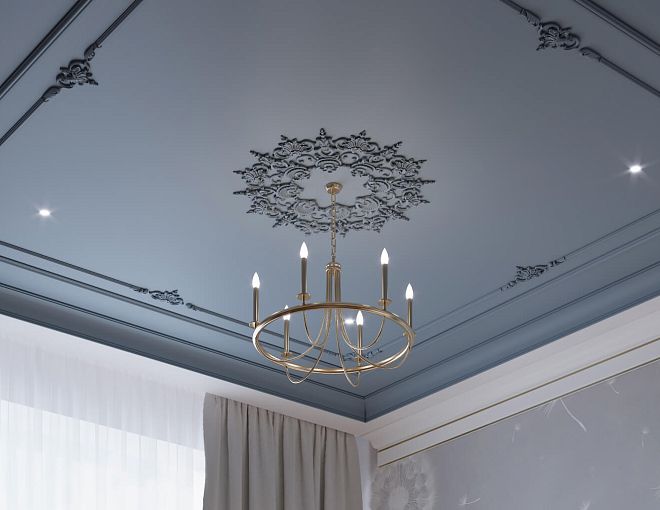
- Ceiling rosette: a center without a loud statement
- Ceiling contour as an alternative to a rosette
- Light ceiling decor without heavy architectural solutions
- Color: why stucco is often better painted in the wall color
- Stucco in wall color: architecture instead of a sticker
- Contrasting stucco: when it is appropriate
- What paint to use for stucco
- Ready-made purchase scenarios for a calm, expensive interior
- Scenario 1. «Living Room Without Visual Noise»
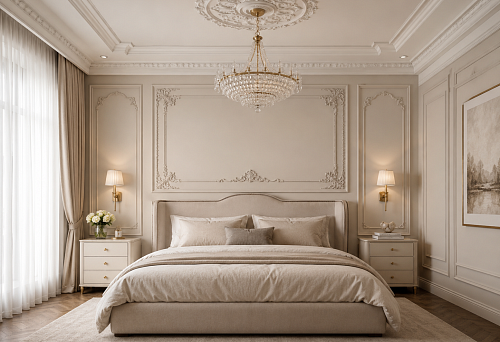
- Scenario 2. «Bedroom in Quiet Luxury Style»
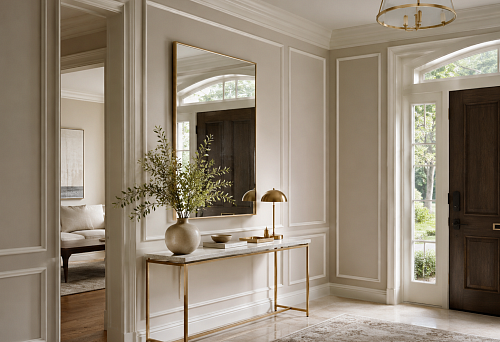
- Scenario 3. «Hallway That Looks Expensive from the First Step»
- Scenario 4. «Study Without Heavy Classics»
- How to Assemble a System from Several Elements: Assembly Principles
- System Principle: Everything from One Line
- Hierarchy principle: one main element
- Breathing Principle: Leave Empty Surfaces
- Table: Molding for Quiet Luxury vs. Molding with Palace Effect
- FAQ: Answers to Questions About Molding for a Calm Interior
- Which Molding Is Suitable for a Calm, Expensive Interior?
- How to buy stucco without a palace effect?
- Can decorative stucco be used in a modern interior?
- What is better: contrasting or monochrome stucco?
- What to buy for a quiet luxury interior style?
- Is stucco in the color of the wall beautiful or boring?
- How many decorative elements are enough for one room?
- STAVROS: a choice for those who understand the difference between beautiful and precise
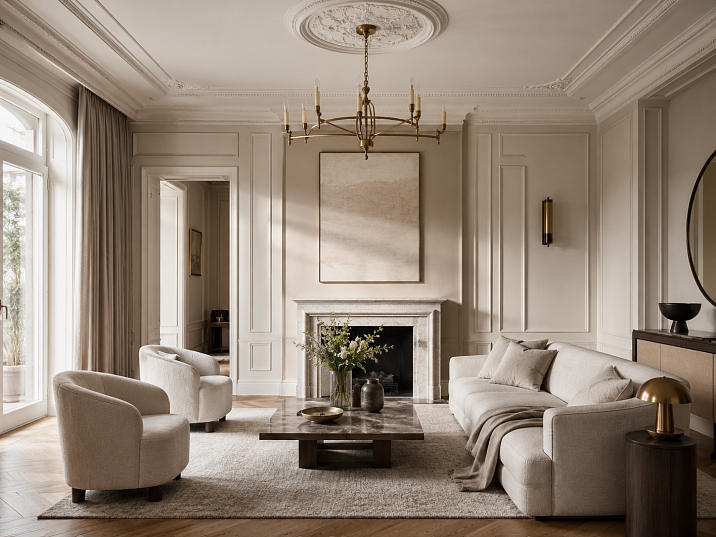
The word "stucco" evokes the same image for many people: a huge hall, a ceiling with gilded curls, heavy cornices with grapevines, and the feeling that you are not in an apartment but in a museum of fine arts. This image is the most persistent stereotype in decor, and it is what stops people from buying, even though they already feel: the interior is missing something.
And what it is missing is architecture. Lines. Relief. What designers call "completeness of space." And all this can be created with moldings — not lavish palace-style, but precise, calm, modern. The kind that speaks quietly but convincingly. The kind that doesn't shout "look at me" but makes the room better without drawing unnecessary attention to itself.
This is exactly what is called quiet luxury in interior design. And this article is about it.



Why "expensive" no longer means "lavish"
Over the past ten years, the aesthetics of interior design have made a sharp turn. If before "expensive interior" necessarily meant gold, marble, complex classic style with a maximum of details, now everything is different. The most expensive and desirable interiors are those with plenty of air, few objects, and every detail chosen with surgical precision.
Quiet luxury is the philosophy of "less, but more precise." It's about materials, not quantity. About proportions, not ornamental abundance. About the fact that a good molding in the right place speaks of taste more than ten different overlays on one wall.
to buy molding In the spirit of quiet luxury means choosing not the most lavish, but the most precise one. The one that fits the scale, does not argue with the furniture, and creates relief where it is needed — without the desire to fill every centimeter of the surface.




Three things that distinguish an expensive calm interior from a budget overload
This is important to understand before you start choosing specific elements.
First: one main accent, not several equal ones. In a quiet expensive interior, there is always a hierarchy. There is a main wall, a main point, a main decorative element. Everything else supports, not competes. If every wall is equally "decorated" — it's not luxury, it's clutter.
Second: painting to match the surface. White molding on a white wall or taupe molding on a taupe wall is not an attempt to hide the decor. It's a technique where the relief is visible through the play of light and shadow, not through contrast. This is exactly how the most expensive interiors in European magazines look.
Third: a unified ornamental language. One motif repeated in different places in the room creates a sense of thoughtfulness. Mixing birds, scrolls, acanthus leaves, geometry, and rosettes in one space is visual noise that destroys the feeling of calm.
Our factory also produces:



What is stucco without overload: signs and principles
Before choosing specific elements, you need to establish the principles. This is the point where "I want something beautiful" turns into "I know exactly what I need."
Stucco without overload is not the absence of decor. It is precise decor, where every element is justified and appropriate.
Get Consultation
Signs of calm stucco for a luxurious interior
-
One dominant element on the main surface — wall, ceiling, or furniture facade
-
Moldings in the color of the wall or a close shade — they create architecture, not spots
-
Delicate relief of overlays and ornamental elements — not flat, but not overly convex
-
Matte finish — gloss destroys the feeling of calm
-
Repetition of one motif, not a collection from the entire catalog
-
Proportionality: a molding that is visible but does not draw all the attention
-
The connection between the ceiling and walls through a single cornice — without it, the room always feels "unfinished"
Buy molding For a calm interior — it means first answering the question: "what will be the main thing here?" — and only then choosing elements around this center.
What destroys quiet luxury
Several typical mistakes that turn a calm, expensive interior into a "decorated box":
-
Different patterns on different walls of the same room
-
Too wide a cornice with a low ceiling — it "weighs down"
-
Large overlays in a narrow hallway
-
Contrasting white stucco on a colored wall without a well-thought-out system
-
Mixing profiles from different series that don't match in height
All these mistakes are solved simply: with a systematic approach and choosing elements from the same line.
Polyurethane moldings: the foundation of a calm, expensive interior
If quiet luxury is architecture, then Moldings made of polyurethane — it is its tool. They do not decorate the wall, they organize it. They create lines, frames, verticals and horizontals that turn a flat surface into an architectural object.
It is the molding that makes the most ordinary wall "correct": with it, the wall has structure, proportions, character. Without it, it is just a painted plane.
Why polyurethane is the material for modern classics
Polyurethane moldings have exactly the set of properties needed for a calm, expensive interior:
-
Precision of casting: the relief is transmitted without loss — every transition of the profile is clear and even
-
Lightness: polyurethane is several times lighter than plaster, so it is glued securely without additional mechanical fasteners
-
Compatibility with paints: it perfectly accepts water-dispersion paints — the same ones used for painting walls and ceilings
-
Moisture resistance: does not deform with changes in humidity
-
Ease of installation: cut with a regular hacksaw, glued with special adhesive, suitable for DIY installation
Buy polyurethane moldings for modern classic — it's a choice that combines the beauty of historical profiles with the convenience of modern technologies.
Thin moldings: restraint as a style
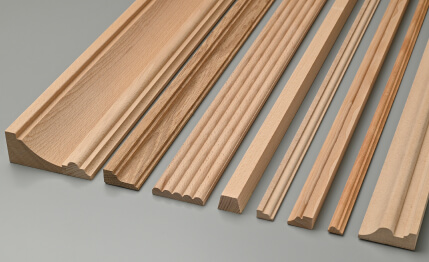
For quiet luxury, narrow moldings (20–35 mm) are often the best choice. They create clean, precise lines without visual weight. A frame made of such molding on a living room wall reads as an architectural detail, not as decoration.
Narrow moldings work well:
-
In small rooms where structure is needed without heaviness
-
On furniture facades — along the perimeter of the door
-
As an inner contour of a frame when the main frame is made of medium molding
-
In a modern interior with classic details
Medium moldings: a universal tool
Moldings 40–70 mm wide are the working format for most residential interiors. They are clearly visible from a distance, create an expressive frame, and remain in the zone of calm, unobtrusive decor.
buy polyurethane moldings Choosing a medium profile means selecting a format that works in a standard living room, bedroom, hallway, or study. It is a molding that is not immediately noticed but makes the room fundamentally feel more "expensive" on a sensory level.
Wide moldings: monumentality without excess
For rooms with high ceilings (3 m and above) or for formal areas, a wide molding (from 70 mm) is the right choice. In a calm interior, a wide molding works not as an ornament but as an architectural boundary: it defines a zone, adds weight, and speaks to the scale of the space.
The main rule for a wide molding in the quiet luxury style: the profile must be strict. Not overloaded with details, but clear — with a distinct relief and readable edges.
How to choose a molding profile for a calm interior
The molding profile is its cross-section: the shape by which one can judge the "weight" of the decor.
| Profile type | Character | For which interiors |
|---|---|---|
| Flat with a single relief band | Very light, restrained | Minimalism, Scandinavian classic |
| Semicircular (B-shaped) | Delicate, soft | Modern classic, neoclassical |
| Multi-tiered without ornament | Strict, architectural | Classic, office, kitchen |
| With floral ornament | Traditional, historical | Classic, Empire, Baroque |
| Geometric combined | Neutral, modern | Eclectic, modern classic |
For quiet luxury — the first three types. Ornamental profiles can be used, but carefully: one ornamental molding as a cornice with several calm frame ones.
Decorative stucco: one accent is better than ten small details
The main principle of quiet luxury in a decorative accent: fewer points, but each one is precise. Decorative stucco in a calm interior, it's not about 'decorating,' but about 'taking a pause.'
What is a 'pause'? It's a place where the gaze stops with pleasure. Not because there's a flashy ornament, but because there's a precise relief accent that reads as intention.
Where decorative stucco works in a calm interior
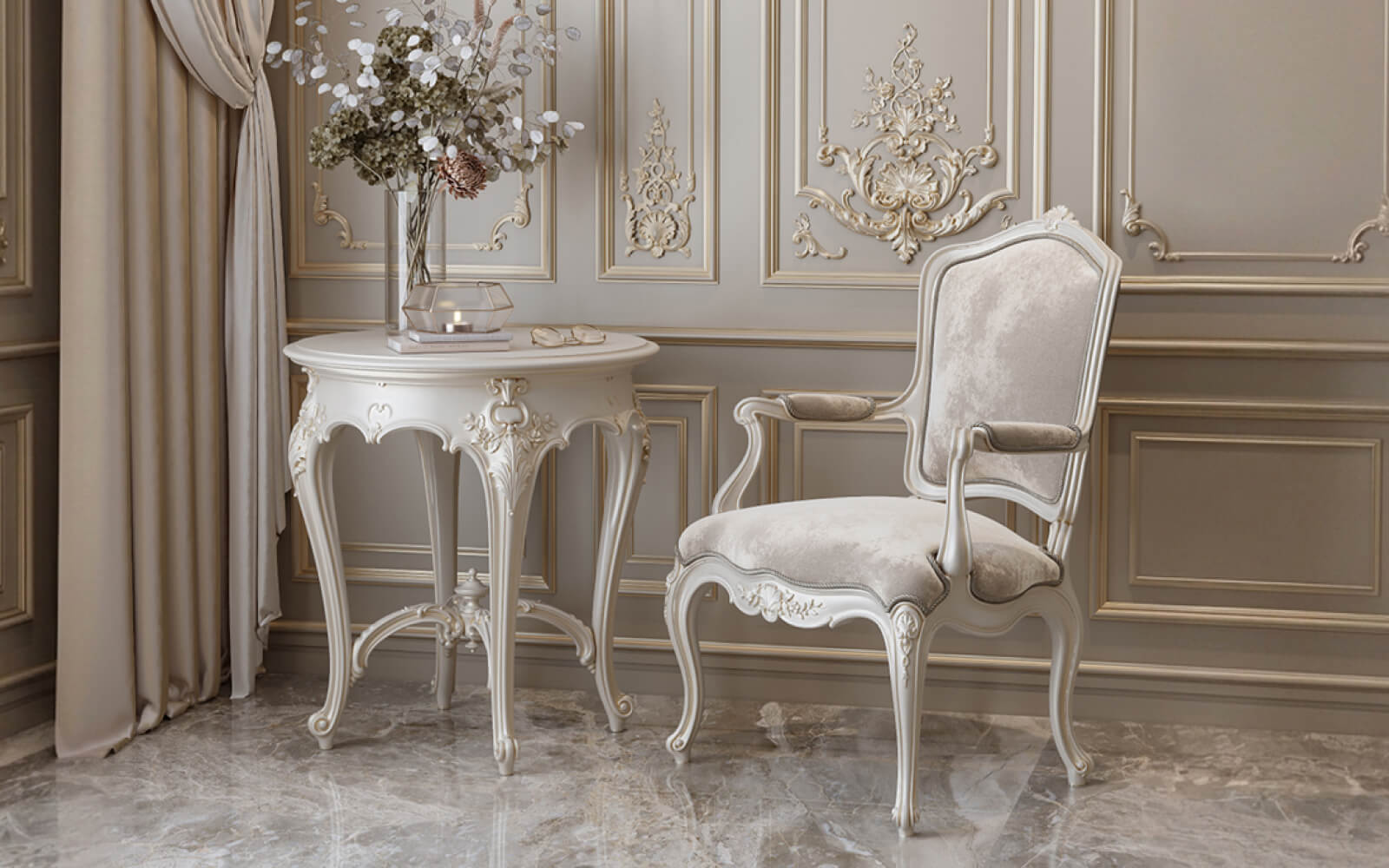
Above the mirror. The mirror already attracts the eye. A delicate relief element above it is a finishing point that turns the mirror into an architectural object. For quiet luxury, a small or medium overlay with a floral or geometric motif, painted in the wall color.
In the center of a molding frame. A frame without a central accent is an empty rectangle. A frame with with molded decoration in the center is already a 'painting.' One central medallion or high relief in the main frame on the living room wall is enough for the entire room.
Behind the headboard. A bedroom in quiet luxury style is peace and symmetry. A molding frame behind the bed with a delicate central accent or paired corner elements — that's it. Nothing more is needed.
Above the console. The console is a horizontal point. A decorative vertical element above it creates balance: the room needs both horizontals and verticals. One overlay above the console in the hallway or living room is a ready-made architectural composition.
On the furniture facade. A thin molding around the perimeter of the door and a small overlay in the center — and an old cabinet turns into furniture with character. This is the most economical use buy decorative stucco molding with maximum visual impact.
On the sconce. Wall lights paired with symmetrical decorative overlays nearby — this is a technique that designers use to create "complete" light points.
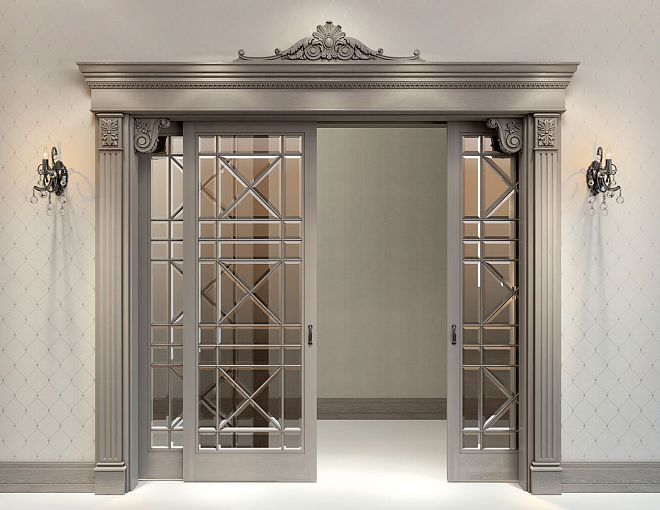
On the portal. A door or fireplace portal with delicate decor — this is not a palace effect, this is architecture. One element above the arch or in the corner area of the portal is enough.
What ornaments to choose for quiet luxury
Ornament is the language of the interior. For quiet luxury, the following are suitable:
-
Laurel branches, oak leaves — restrained classics, read as "historical" without excess
-
Geometric weaves — neutral, work in a wide range of styles
-
Acanthus leaf — a classic motif that doesn't "shout"
-
Abstract floral forms are modern, not tied to a specific historical style.
What is not suitable for a calm interior: grimacing mascaron masks, large high reliefs with figurative scenes, little dragons, baroque-style curls — all of this is appropriate only in very specific conceptual interiors, but not in "quiet luxury."
buy decorative moldings for a calm interior means choosing an ornament that can be described with the word "elegant."
Stucco decor: how to add character without turning into a "museum"
There is a fine line between an "interior with character" and a "museum-like interior." In the first, stucco decor enhances the space. In the second, it fills it. The difference is not in the number of elements, but in the system.
The rule of one motif
Choose one ornamental motif for the entire room. If you chose leaves — it's leaves everywhere: in frames, on overlays, in corner blocks. If geometry — geometry at all points.
Mixing motifs in one space is the most common mistake that destroys the feeling of an expensive interior. A bird on one wall, a curl on another, a rosette on the ceiling, and a mascaron above the door — this is not richness, it's chaos.
Buy Moldings they need to be from one series or stylistically close series. Then different elements at different points in the room will sound like variations of one theme, not like a random assembly.
Pairing: the power of symmetry in a calm interior
Paired elements are one of the most powerful tools of quiet luxury. Two identical elements on either side of a mirror, two brackets at a console, paired corner pieces in a molding frame — this is symmetry that the brain reads as "intentional," "thoughtful," "expensive."
Paired elements should be used carefully: not everywhere and not always. Symmetry works well in places where it is expected: on the sides of a mirror, at the headboard, on double doors.
Painting stucco decor in the color of the wall: the main technique of quiet luxury
If there is one technique to master for creating an expensive, calm interior, it is painting moldings decoration in the tone of the surface. White molding on a white wall. Taupe on taupe. Gray on gray.
Why does this look expensive? Because the relief is visible not through color contrast, but through the play of light and shadow. This is a more subtle, more refined effect than white stucco on a colored wall. And this is exactly how the most expensive and calm interiors are designed.
Technically: the same paint as for the wall, or a close tone, is used. Matte or semi-matte finish is best. Gloss destroys the "calmness" of the surface.
Buy Molded Decoration painting in tone means incorporating a technique that will work for years and will not require any changes when fashion trends shift.
Ceiling stucco without a palatial effect
The ceiling is a surface that is not noticed immediately, but it sets the tone for the entire space. An empty ceiling is an unfinished interior. A ceiling with the right ceiling moldings — an interior where everything is in its place.
For quiet luxury, the ceiling should not "weigh down." The task is to complete the space from above, not turn it into another decorated surface.
Ceiling cornice: the horizontal line that ties everything together
A cornice around the perimeter of the ceiling is what professionals call "closing the perimeter." It connects walls and ceiling into a single system. Without it, the room looks like an unstitched box. With it, it looks like a finished architectural space.
For quiet luxury, choose a cornice with a moderate profile. The cornice projection should match the ceiling height: for a ceiling of 2.7–2.9 m — 50–80 mm, for a ceiling of 3 m and higher — 80–110 mm.
Buy ceiling stucco molding in the form of a cornice with a profile from the same line as the moldings on the walls — this is a rule that ensures stylistic coherence.
Ceiling rosette: the center without a loud statement
A rosette in the quiet luxury style is not a baroque medallion with angels. It is a delicate, proportionate element that anchors the center of the room and creates a sense of completeness.
Criteria for choosing a calm rosette:
-
Diameter — strictly in proportion to the room (no more than 1/8 of the shorter side)
-
Relief is moderate, without excessive depth or massiveness
-
Ornament is from the same stylistic family as moldings and decorative overlays
Painting is in the color of the ceiling. Not contrasting, not gilded. It is the monochrome rosette that creates the feeling of an "embedded" architectural element, rather than an "attached detail".
Ceiling contour as an alternative to a rosette
In some calm interiors, a more organic solution is not a rosette, but a ceiling contour made of moldings — a rectangle or square in the center of the ceiling. This works especially well in rooms with a regular square plan.
The contour is made from the same moldings as the wall frames — this connects the walls and ceiling with a unified language.
Buy ceiling molding For the contour — means choosing a molding of the desired profile, calculating the perimeter, and ordering corner blocks. Installation is similar to wall frames.
Light ceiling decor without heavy architectural solutions
For ceilings of standard height (2.7–2.9 m), a full set — cornice, rosette, contour — may be excessive. In this case, the principle of "one ceiling solution" applies: either a cornice or a rosette. Both at once — only if the ceiling is high and the space is spacious.
Color: why stucco is often better painted in the color of the wall
This is one of the most important expert blocks of the article. The question of stucco color is not a matter of taste, it is a professional choice that fundamentally changes the perception of the decor.
Stucco in the color of the wall: architecture instead of a sticker
When the molding and the wall are the same color, the relief works due to shadows. In the morning — one shadow, in the evening under artificial light — another. The decor "lives" throughout the day. It is not static because it changes with the light.
This is what makes stucco a real architectural element, not a decorative overlay. The feeling of "it was always here" is created precisely by monochrome painting.
Moldings in the wall color — this is the standard for any calm, expensive interior. A French apartment, a London townhouse, a New York loft in a classic spirit — this technique is used everywhere.
Contrasting stucco: when it is appropriate
White stucco on a colored wall is not a mistake, it is a different technique. It creates a more active, "talkative" effect. This works well in:
-
Accent zones that should be read at first glance
-
Children's rooms and play spaces
-
Classic interiors with high ceilings and a pronounced palace aesthetic
For quiet luxury — monochrome. For expressive classics — contrast. These are two different tasks.
What paint to use for stucco molding
Polyurethane decor perfectly accepts water-dispersion acrylic paints — the same ones used for walls and ceilings. Important conditions:
-
The surface is primed before painting — this ensures even coverage
-
Matte or semi-matte paint — gloss is undesirable
-
Two coats — for even coverage of the relief
Molding in the wall color after painting to match the tone, it looks as if it was cast from the same wall. This is exactly the effect needed for quiet luxury.
Ready-made purchase scenarios for a calm, expensive interior
Theory only works when there is a specific list behind it. Let's break down four real scenarios.
Scenario 1. "Living room without visual noise"
Task: the large living room wall looks empty, but I don't want to overload it with decor.
Solution: two or three molding frames on the main wall, one decorative overlay in the center of the main frame, a ceiling cornice around the perimeter.
What to buy:
-
Moldings made of polyurethane medium profile — for frames
-
Decorative corner blocks — 4 for each frame
-
One decorative molding — central accent of the main frame
-
Ceiling cornice from the same series
-
Glue for polyurethane, finishing putty, paint to match the wall
Result: the living room got an architectural wall without a single extra element. Calm, expensive, precise.
Scenario 2. "Bedroom in quiet luxury style"
Task: create a feeling of a calm, expensive space without overload.
Solution: a molding frame behind the headboard, paired stucco decor at the corners of the frame, a ceiling rosette, a light cornice around the perimeter.
What to buy:
-
Moldings made of polyurethane — thin or medium profile for the frame behind the headboard
-
Paired Decorative Inserts — corner frame accents
-
ceiling molding — rosette + cornice around the perimeter
-
Glue, putty, paint in the color of the walls and ceiling
Result: a bedroom with symmetry, relief, and completeness. Not a single extra element.
Scenario 3. “An entryway that looks expensive from the first step”
Task: a small entryway should make an impression despite the limited space.
Solution: vertical moldings on the walls, a delicate accent above the mirror, a light cornice around the ceiling perimeter.
What to buy:
-
Thin Moldings made of polyurethane — vertical stripes on the walls
-
decorative molding — one overlay above the mirror
-
Light cornice around the perimeter
-
Glue and paint
Result: the hallway transforms from a 'transit zone' into a space with character. First impression — 'people with taste live here'.
Scenario 4. 'Study without heavy classics'
Task: the workspace should look presentable, but not like a 19th-century courtroom.
Solution: strict molding frames on the main wall, calm decorative stucco, ceiling cornice with a geometric profile.
What to buy:
-
Moldings made of polyurethane with a geometric profile — for frames
-
One decorative molding with a laconic motif
-
Cornice with moderate projection
-
Relief Decoration in the color of the wall — without contrast
-
Buy molding for a study from one strict line
Result: the study looks representative and calm. Not a palace, not an office — a workplace of a person with taste.
How to assemble a system from several elements: assembly principles
One molding is a line. One decorative element is a dot. But when moldings, overlays, cornice and rosette are combined into a system — that is architecture. This is what makes an interior 'quiet luxury', not just a 'decorated room'.
Principle of system: everything from one line
Choose all elements for one space from one series or stylistically close series. The height of the cornice should be a multiple of or close to the height of the moldings. The ornament of decorative overlays should echo the ornament of the ceiling rosette.
This does not require a design education — it is enough to choose from one section of the catalog and check stylistic compatibility.
The principle of hierarchy: one main element
There is no interior with several 'main' accents. There is always one dominant element — the main wall, the main frame, the main decor. Everything else works in support.
When building a system, decide in advance: what will be the main thing? The wall behind the sofa? The wall behind the headboard? The ceiling? The rest of the system is a secondary background for this center.
Principle of breathing: leave empty surfaces
Quiet luxury is not about filling every surface with decor. It's about alternating decor and 'air'. Empty spaces between frames, neutral walls next to an accent wall, a ceiling without decor where there is decor on the walls — all of this is fundamentally important.
Buy decorative molding For quiet luxury means choosing not so much 'where to add' but 'where to leave empty'.
Table: molding for quiet luxury vs. molding with a palatial effect
| Parameter | Quiet luxury | Palatial effect |
|---|---|---|
| Molding profile | Strict, moderate | Multi-tiered, ornamental |
| Amount of decor | One main accent | All surfaces |
| Stucco color | Matching or close to wall color | Contrasting or gilded |
| Ornament | Single motif | Mix of motifs |
| Ceiling rosette | Delicate, proportionate | Large, with deep relief |
| Feeling | Calm, luxurious | Lush, ceremonial |
| For which spaces | Apartment, house, office | Palace, grand hall, restaurant |
FAQ: answers to questions about stucco for a calm interior
Which stucco is suitable for a calm, expensive interior?
For quiet luxury, choose Moldings made of polyurethane with a moderate profile, decorative molding with a delicate ornament and ceiling molding without excessive relief. The key principle is one main accent, monochrome painting, a single ornamental motif.
How to buy stucco without a palace effect?
Choose not the most ornate elements, but those that match the scale of the room. Paint to match the wall. Choose one decorative accent instead of several. Buy molding from one series, not from different collections.
Can decorative stucco be used in a modern interior?
Yes. In a modern interior, Decorative stucco it works when it is calm, painted in the tone of the surface, and supported by moldings. This creates an effect of "built-in architecture" rather than a historical quote.
What is better: contrasting or monochrome stucco?
For a quiet luxury effect, monochrome. The relief becomes visible due to light and shadow, not color contrast. This is a more refined and trend-resistant technique.
What to buy for a quiet luxury interior?
Basic set: Moldings made of polyurethane the required profile, one Relief Decoration as the main accent, Ceiling molding for the cornice and rosette, glue, putty, paint in tone. Additionally — Decorative stucco for point accents.
Is stucco in the color of the wall beautiful or boring?
This is the most accurate answer to the question 'how to make an interior look expensive'. Monochrome stucco is an architectural technique used in the best interiors in the world. Not boring. Exactly.
How many decorative elements are enough for one room?
For a standard living room: one main accent on the main wall, supporting corner elements in frames, a cornice, and a ceiling rosette. This is the maximum for quiet luxury. More than that is already a different style.
STAVROS: the choice for those who understand the difference between beautiful and precise
Everything that was discussed in this article — Moldings made of polyurethane with moderate profiles and strict proportions, Decorative stucco with a delicate relief, Ceiling molding to complete the space from above, Relief Decoration for point accents — all of this is presented in full assortment in the catalog of the company STAVROS.
STAVROS produces polyurethane decor from European raw materials with precision casting that preserves relief detailing and ensures clean, even profiles. Each series is designed as a system: moldings, cornices, baseboards, corner blocks, decorative overlays, and rosettes from the same line are compatible in height, style, and proportions.
This is exactly what is needed for quiet luxury: not individual beautiful objects, but a cohesive, well-thought-out system where everything is in its place. to buy molding choosing STAVROS means choosing not random decor, but architecture for your space.