








































Article Contents:
- Wooden stand SUV-001: dimensions and features of the specific model
- Why the overall size of 155 × 84 × 24 mm does not answer the compatibility question
- Why the absence of a cable channel needs to be mentioned
- Preliminary assessment table
- Why you cannot choose a desk stand based only on the smartphone model
- Where exactly to measure the phone
- Why you need a caliper, not a school ruler
- What to do if the result is 12.5 mm
- Camera bump: when it really matters
- Charging with a cable
- What clearance in the groove is sufficient: a decision tree instead of a made-up norm
- Oak
- Oak
- Ash
- When the SUV-001 is especially convenient
- Smartphone thickness with a case of 13 mm or more
- Need an adjustable holder
- Charging via the bottom cable is mandatory
- Step 2. Measure the bottom area
- Step 3. Calculate the clearance
- Step 5. Check the charging
- Practical scenarios: how the solution changes with different cases
- Scenario 3. Case 12.5 mm — the topic of this article
- How to use the nominal clearance of 0.5 mm in a real solution
- How to submit a request to a manager before purchasing
- Final checklist before ordering the SUV-001
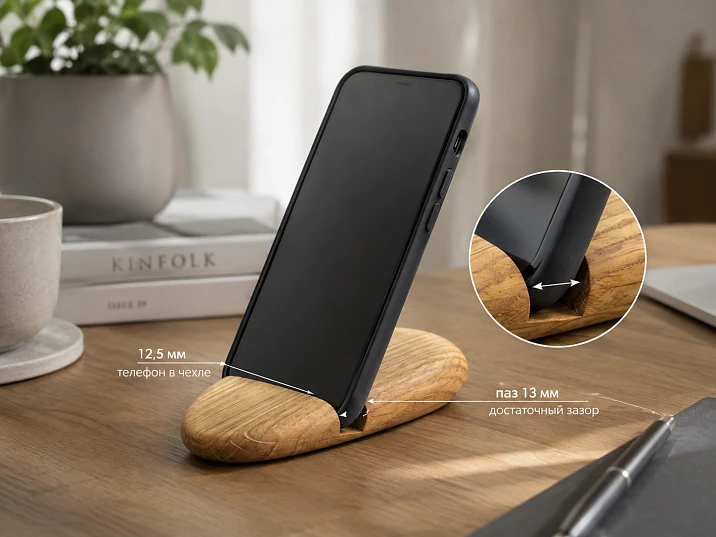
The smartphone with its case measured a thickness of 12.5 mm. The wooden SUV-001 stand has a stated inclined slot width of 13 mm. Simple arithmetic gives:
13 − 12.5 = 0.5 mm.
If we imagine the phone standing exactly in the center and both surfaces being perfectly parallel, nominally there will remain approximately:
0.5 / 2 = 0.25 mm on each side.
But such a calculation does not yet mean that the phone will fit easily, not get stuck, and be convenient to remove. A clearance of only half a millimeter is too small to turn tabulated dimensions into an unconditional guarantee of compatibility. The SUV-001 card confirms the 13 mm slot but does not publish a separate tolerance for the actual slot width, does not promise the fit of any phone up to 12.9 mm thick, and does not indicate what operational clearance is considered comfortable.
Therefore, for a phone in a case with a thickness of 12.5 mm, the conclusion is this: the SUV-001 can be considered, but buying it without additional verification is riskier than with a thickness of, for example, 11–12 mm. You need to measure not the "specified smartphone thickness" but the maximum actual thickness of the part of the phone in the case that will go into the slot, and check for a protruding lip, seam, overlay, fold of a soft case, or any other locally thickened area.
If the measurement shows 13.0 mm or more, you should no longer count on normal installation in that particular case. At 13 mm, the nominal clearance is zero. Any local thickening, measurement inaccuracy, or slight difference in actual geometry turns "theoretically equal" into "practically does not fit."
There is also a second important boundary. The SUV-001 card confirms the product dimensions of 155 × 84 × 24 mm, materials of oak, beech, and ash, the Prestige Transparent finish, and a description of the coating with colorless oil. At the same time, the page does not state a dedicated channel or hole for the charging cable. Therefore, the article should not promise that the smartphone can be guaranteed to charge while it is installed in the SUV-001.
The main task before purchasing is not to choose a "nice-looking case" or compare prices. First, you need to confirm the compatibility of a specific smartphone in a specific case with a specific 13 mm slot.
Procedure:
-
measure the phone together with the case;
-
measure at several points;
-
find the maximum thickness of the section that will actually fit into the slot;
-
do not squeeze the soft case with calipers;
-
separately check the bottom edge of the case;
-
assess whether the camera protrusion interferes with seating on the stand itself;
-
calculate the nominal margin up to 13 mm;
-
determine whether a tight fit suits you;
-
if the stock is minimal, request an actual fitting/confirmation from the seller;
-
only after that buy wooden phone stand.
This article deliberately does not repeat the general STAVROS publication about wooden phone stands. It covers a much narrower commercial scenario: a phone in a 12.5 mm case, a nominal clearance of 0.5 mm, and the decision "order or check first."
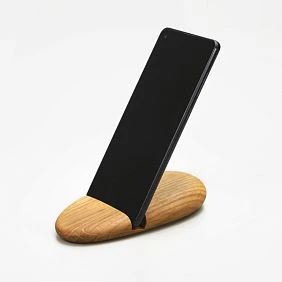
Wooden stand SUV-001: dimensions and features of the specific model
SUV-001 is a desktop wooden smartphone stand made of solid wood. The current product card shows one basic geometry of the item:
| Parameter | Value |
|---|---|
| Size A × B × C | 155 × 84 × 24 mm |
| Width of the inclined groove | 13 мм |
| Materials | oak, beech, ash |
| Finishing | Prestige Transparent |
| Finish as described | Colorless oil |
| Purpose | placing the smartphone into the inclined groove |
| Special cable channel | not stated in the product card |
The product card describes the shape as streamlined, resembling a smooth stone, and confirms that the groove is inclined. That is, the smartphone is not simply inserted vertically into a straight slot — it receives a predetermined inclined position.


Why the overall size of 155 × 84 × 24 mm does not answer the question of compatibility
The size of the stand itself matters for the desk: it occupies approximately a rectangle of 155 × 84 mm and has a body size of 24 mm per the product card. But phone compatibility is determined primarily by the slot width of 13 mm, not by the base dimensions.
A large smartphone can be longer than 155 mm and still stand in the stand if the pivot point and slot allow it. A small smartphone may not fit if it has a thick shockproof case. Therefore, you cannot choose the SUV-001 based on screen diagonal or phone length.
Three wood types do not change the stated slot width
Oak, beech, and ash are material options for the same product. The product card does not state that the oak version has a wider slot or the beech version a narrower one.
Consequently, if the issue is specifically the thickness of 12.5–13 mm, changing the wood type by itself does not solve it.
The material is chosen after geometric verification.
What does "Prestige Transparent" mean
The product card has the finish "Prestige Transparent" selected, and the description clarifies that the SUV-001 has a finish coating of colorless oil. This is a finished item, not an unfinished blank that the buyer must coat with oil themselves after purchase.
For the article, it is important not to mix:
-
quality/variant of product finish;
-
subsequent maintenance care.
The oil coating is already present; care is needed to preserve the item, not for "initial activation."
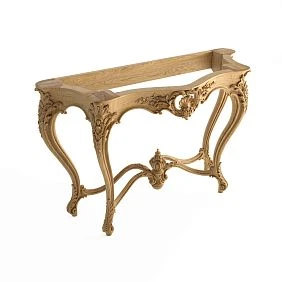
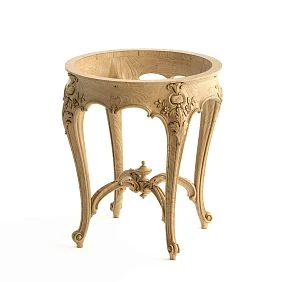
Our factory also produces:





Why the absence of a cable channel needs to be stated
Some desktop stands have a slot for the wire. In the SUV-001 card, only the angled slot for a smartphone is confirmed. There is no separate channel, hole, or route for the cable in the description.
Therefore, you cannot write:
"charge your phone without removing it from the stand."
Correctly:
the ability to connect the cable in the installed position depends on the specific smartphone, the location of the connector, the orientation of the device, and the actual geometry of the stand; the card does not promise a dedicated cable channel.
Why SUV-001 cannot be called a holder
Search queries for "phone holder" often refer to devices with a clamp, hinge, or mounting to a car, table, or bicycle.
SUV-001 is a stand. It holds the smartphone due to the geometry of the groove and its own base, but the card does not state:
-
clamp;
-
magnet;
-
width adjustment;
-
hinge;
-
surface mounting;
-
automotive use.
This is a separate search intent.
Get Consultation
Phone stand with a 13 mm groove: how to check compatibility
Main formula:
Z = 13 − T,
Where:
-
Z — nominal total clearance;
-
13 mm — width of the SUV‑001 groove;
-
T — actual thickness of the phone together with the case in the area that fits into the slot.
If T = 12.5 mm:
Z = 0.5 mm.
If T = 12.0 mm:
Z = 1.0 mm.
If T = 11.0 mm:
Z = 2.0 mm.
If T = 13.0 mm:
Z = 0 mm.
If T = 13.5 mm:
Z = −0.5 mm, meaning the phone is nominally thicker than the stated slot.
Preliminary assessment table
| Phone thickness with case | Nominal clearance in the 13 mm slot | Preliminary conclusion |
| 10.0 mm | 3.0 mm | Geometrically, the clearance is large |
| 11.0 mm | 2.0 mm | more comfortable for pre-selection |
| 12.0 mm | 1.0 mm | requires careful measurement, but the allowance is noticeable |
| 12.5 mm | 0.5 mm | minimal margin, better to confirm by trying on |
| 12.8 mm | 0.2 mm | very tight nominal scenario |
| 13.0 mm | 0 мм | risky to buy without checking |
| >13.0 mm | negative | for this SUV-001 case, you should not choose without proven compatibility |
This is not a table of factory tolerances. It only shows arithmetic based on the stated groove.
Why you cannot choose a desktop stand based only on the smartphone model
The same phone can have an ultra-thin, silicone, leather, rugged case, a flip case, or a case with an additional cover.
The official thickness of the smartphone itself is almost useless in this case.
For example:
phone without a case — 8.2 mm;
but the case adds 2.2 mm on each side in the rim area.
The actual thickness becomes approximately:
8.2 + 2.2 + 2.2 = 12.6 mm.
For SUV-001, this is already a scenario with a margin of only 0.4 mm.
Where exactly to measure the phone
You need to measure not just one spot "at the center of the body," but several.
Minimum:
-
bottom edge;
-
central part;
-
the area of the side edges;
-
area with the case's decorative trim;
-
the thickest point that may fit into the groove.
If the phone is installed with its bottom edge into the groove, the thickness of the lower part of the case is especially important, not the camera bump on top.
The camera becomes critical only if its block presses against the stand surface, changes the angle, or prevents the device from achieving a stable position.
Why a caliper is needed, not a school ruler
With a margin of 0.5 mm, a regular ruler is too coarse for a confident decision.
If the user sees "approximately 12–13 mm," that is insufficient accuracy.
It is better to use a measuring tool that allows you to see tenths of a millimeter.
At the same time, a soft case cannot be strongly compressed with the jaws: you will get a nice number of 12.2 mm, although without pressure it actually occupies 12.7 mm.
How to measure a soft case
Bring the jaws to light contact.
Do not squeeze the material.
Repeat the measurement 3–5 times.
If you get:
-
12,4;
-
12,6;
-
12,5;
-
12.7 mm,
for the solution, you should focus on the maximum realistic value, not the minimum.
That is, in the example:
T ≈ 12.7 mm.
Nominal margin:
13 − 12.7 = 0.3 mm.
This is an even tighter scenario.
Why the clearance is only conditionally divided in half
The phrase “0.25 mm on each side” is only true with perfect centering.
In reality, the phone may touch one wall of the groove, leaving the entire 0.5 mm gap on the other side.
Therefore, 0.25 mm is an illustration of scale, not a guaranteed operational clearance.
What to do if the result is 12.5 mm
Correct order:
-
repeat the measurement;
-
measure the bottom part of the case;
-
check protruding seams;
-
measure without squeezing;
-
clarify the actual groove with the manager or ask for a fitting if possible;
-
assess whether a tight fit is acceptable.
If you have to pick up the phone from the desk and put it back every hour, a too-tight fit is annoying even with formal compatibility.
What to do if the result is exactly 13 mm
Do not consider this as compatibility.
13 − 13 = 0.
There is no allowance for measurement error, local edge, slight shape change of a soft case, actual groove geometry, and free removal.
If using this specific case is mandatory, an actual check is needed before purchase.
Desktop smartphone stand: what else to check before buying
Thickness is the main filter, but not the only one. The phone may physically fit into the groove and still be inconvenient for daily use.
How deep the bottom edge goes in
The card reports the groove width, but does not provide a separate seating depth of the smartphone inside the groove in the text description. Therefore, it cannot be promised in advance that a specific case will fit "all the way" to a certain number of millimeters.
For the user, it is important to check:
-
whether the bottom edge of the case is pressing;
-
whether the phone is not standing only on one edge;
-
whether there is any misalignment;
-
is the position stable enough when touching the screen with a finger.
If the phone fits too tightly and remains high, the actual angle and stability may differ from expectations.
Camera bump: when it really matters
Many smartphones have a camera module that protrudes more than the main back cover. But including its thickness in the 13 mm calculation is not automatic.
First, determine whether the camera falls within the contact area with the stand.
If the smartphone is inserted with its bottom edge and the camera module is located high and does not touch the wood, its thickness may not affect entry into the groove.
If the back surface of the phone rests on the wooden part of the stand so that the camera hits earlier than the body, the following may occur:
-
additional tilt;
-
less deep seating;
-
point contact;
-
instability.
Therefore, the best test is not just to measure the "maximum smartphone thickness at the camera," but to understand the contact geometry specifically with the SUV-001.
High protective lip around the screen
On shockproof cases, the front edge often protrudes above the glass.
If the smartphone is installed in the groove across this edge, it may become the widest point.
For example:
-
body with case at center — 12.2 mm;
-
lip at the bottom — 12.8 mm.
For the calculation, 12.8 mm should be used.
Nominal margin:
13 − 12.8 = 0.2 mm.
This is almost a "size-to-size" fit.
Leather case seams
For leather and combined cases, the thickness may not be uniform.
A seam on the end, material fold, or reinforced insert can add tenths of a millimeter exactly where the phone enters the groove.
With a margin of 2–3 mm, this is almost irrelevant. With a margin of 0.5 mm, it's critical.
Book-style case
For a book-style case, you need to separately understand how the cover will be positioned.
Options are possible:
-
fully remove or fold it back;
-
leave it on the side;
-
fold it at a specific angle.
The SUV-001 card does not claim special compatibility with book-style cases. Therefore, the thickness of the folded cover may make the 13 mm groove unusable, even if the phone itself fits.
Rings, popsockets, and overlays
If glued on the back:
-
ring;
-
folding leg;
-
magnetic plate;
-
thick MagSafe accessory;
-
card holder,
the phone may enter the groove with its bottom part, but the back attachment will interfere with the support.
Such an accessory needs to be checked separately.
Vertical and horizontal orientation
The card itself confirms the smartphone stand with an inclined slot, but does not publish different geometries for vertical and horizontal modes in the specifications.
In real-world use, it is useful to check both scenarios:
vertically
-
notifications;
-
calls;
-
messengers;
-
video calls;
horizontally
-
video;
-
timer;
-
content viewing.
The groove width does not change, but the fulcrum and the position of the camera/case may differ.
How convenient it is to take out the phone
Compatibility is not just about "it fits."
For a desktop, the cycle is important:
placed → saw a notification → picked up → replied → put back.
If a 12.5 mm smartphone only fits with precise alignment and force, the stand may be inconvenient, even though the device formally fits.
Therefore, for daily use, it is more useful to have some operational clearance than to strive for the tightest possible fixation.
The manufacturer does not specify an exact "ideal" clearance, so the article should not invent a norm of 1 or 2 mm. It is important to distinguish:
-
nominal mathematical margin;
-
comfort of a specific user.
Can a phone get scratched by wood
SUV-001 has an oil coating and is made of solid wood, but the card does not promise a soft inner groove lining.
Therefore, if the phone has:
-
a metal frame without a case;
-
a glossy body;
-
a sensitive coating,
the user should assess the actual contact.
For a phone in a case, the risk of direct contact between the body and wood is usually lower, but the specific case material also matters.
Charging via cable
The card does not state a cable channel.
This leads to a cautious conclusion:
-
if the connector is on the bottom, the cable may conflict with the groove or the table;
-
if the phone is placed horizontally, the connector will be on the side and the situation may be different;
-
wireless charging through the wooden stand itself is not stated as a feature.
Therefore, a buyer who critically needs to charge the smartphone without removing it from the stand should first physically test this scenario.
Headphones and other cables
The same applies to wired accessories.
The stand is not advertised as a docking station.
If a permanent wire is needed:
-
charging;
-
audio;
-
external device,
the cable route must be checked before purchase.
What clearance in the groove is sufficient: a decision tree instead of a made-up standard
The manufacturer states a width of 13 mm but does not publish the operational tolerance.
Therefore, it is more correct to use a decision tree rather than a rigid standard.
Scenario A: thickness up to 11 mm
Nominal margin:
2 mm or more.
This is the calmest geometric scenario among those considered.
But local protrusions still need to be checked.
Scenario B: 11–12 mm
Stock:
1–2 mm.
For a preliminary choice, this looks significantly more confident than 12.5 mm.
However, soft edges and accessories still need to be measured.
Scenario C: 12–12.5 mm
Stock:
0.5–1 mm.
A more precise check is needed.
At 12.5 mm, the article does not give an unconditional "yes."
Scenario D: 12.5–13 mm
Stock:
less than 0.5 mm.
Actual fitting or confirmation of real fit becomes especially desirable.
Scenario E: 13 mm
Nominally zero.
It is not worth ordering for this case without checking.
Scenario F: more than 13 mm
The phone is thicker than the stated groove width.
You need to:
-
remove the case;
-
use a different case;
-
choose a different stand;
-
check the possibility of a different position only if it does not contradict the design.
You cannot "spread" a wooden groove like a spring holder.
Why you should not try to widen the groove yourself
SUV-001 is a finished product made of solid wood with an oil finish.
Self-removal of wood can:
-
change the angle;
-
disrupt the symmetry;
-
remove the finish;
-
leave chips;
-
make the fit too loose;
-
damage the product.
If the 13 mm groove is fundamentally too small, it is more rational to choose a different accessory rather than modify a finished product without the manufacturer's technology.
Oak, beech, or ash wooden stand: which material to order
After geometric compatibility is confirmed, you can choose the wood.
SUV-001 is available in three wood species:
-
oak;
-
beech;
-
ash.
The card does not claim that one of them “holds the phone better” or has a different groove. Therefore, the material here is primarily a visual and interior choice.
Oak
Oak is well recognized due to its pronounced natural texture.
On a desk, it can be combined with:
-
an oak tabletop;
-
veneered furniture;
-
dark natural materials;
-
a classic study;
-
with a modern interior featuring a noticeable wood texture.
However, an exact match with existing oak furniture based on a photo cannot be guaranteed.
Natural wood has an individual grain pattern and shade.
Beech
Beech is usually visually calmer.
If the table is minimalist, light, or the stand should not draw attention, beech may be a more neutral option.
But the article should not promise an identical shade for all beech SUV-001: wood remains a natural material.
Ash
Ash is the third confirmed material for SUV-001.
It allows you to get a different wood grain and choose a stand not only between "oak and beech."
This is important because some old descriptions or card titles may mention only oak and beech, while the current product table also shows ash.
How to choose the material based on the actual table
Collect four samples in one place:
-
table;
-
nearest facade/shelf;
-
smartphone in a case;
-
photo or sample of the selected SUV-001 wood.
Look at it in daylight and artificial light.
The stand is small, but it is directly in front of your eyes on the table, so mismatched wood temperature may be noticeable.
The case also participates in the composition
The phone can be in:
-
black;
-
transparent;
-
brown;
-
bright colored case.
Oak, beech, and ash will be perceived differently next to it.
If the accessory is bought as a gift, neutral natural wood is usually more versatile than an exact match to an unknown case — but thickness compatibility still needs to be checked.
Oil coating and tactility
The card confirms colorless oil.
This coating preserves the natural texture and does not turn SUV-001 into a colored lacquered stand.
The user receives a finished natural item.
For further care, follow the storage rules for wooden products: avoid prolonged direct sunlight, overheating, and water exposure. STAVROS recommends indoor use and dry storage for solid wood items.
In this scenario, one can consider a solid wood smartphone stand first and foremost as a finished interior accessory: the material is chosen based on the grain and how it matches the table, not as a way to change the width of the groove.
Who the SUV-001 smartphone stand is suitable for
The SUV-001 is especially logical when the user truly wants a desktop spot for their phone, rather than a universal adjustable holder.
Workbench
On a desk, the smartphone is often used for:
-
notifications;
-
two-factor authentication;
-
messengers;
-
video calls;
-
timer;
-
viewing incoming calls.
The stand allows you not to place the device screen-down on the table and not to search for it among documents.
But the main advantage is realized only with a comfortable fit. If a 12.5 mm phone has to be pressed into a 13 mm groove every time, the "quick grab - quick place" scenario worsens.
Home desk or bedside table
SUV-001 can be used nearby:
-
with the bed;
-
with the sofa;
-
in a home office;
-
on the console;
-
on a kitchen shelf away from water and heat.
For wood, it is important not to place the item where it regularly gets wet or overheats. In STAVROS official recommendations for solid wood, protection from water, prolonged direct sunlight, and heat sources is specifically noted. Therefore, storage and care rules for wooden items are useful to consider even for such a small accessory.
Video calls
If the smartphone's position in the inclined slot provides a suitable angle, the SUV-001 can be convenient for video calls.
But the article should not promise a specific camera angle, because the card does not publish the numerical value of the slot's tilt.
The actual frame is affected by:
-
table height;
-
user height;
-
front camera position;
-
phone orientation;
-
depth of actual seating in the slot.
Watch video
For horizontal mode, the key is whether the device rests stably on the stand and whether the side button, camera, or case conflicts.
If the phone is wide and heavy, the 13 mm groove itself does not answer the question of the stability of the entire system. Therefore, for an unusually large device, it is better to do an actual fitting.
Natural wood as part of the workspace
If the buyer deliberately assembles a workspace from:
-
a wooden tabletop;
-
natural organizers;
-
table clocks;
-
other solid wood items,
SUV-001 logically supports this material system.
In the general section, you can buy a phone stand and at the same time look at other solid wood home goods, but for the compatibility question specifically 12.5 mm, the SUV-001 card remains decisive.
Gift: why compatibility still needs to be checked
The stand may seem like a universal gift, but the 13 mm groove creates a specific limitation.
If it is unknown what case the recipient uses, there is a risk:
-
a device without a case will fit;
-
in a rugged shockproof case — no.
Therefore, for a gift, it's useful to at least know the case model or approximate thickness.
There is no need to spoil the surprise with a precise question like "how many millimeters is your phone?" if you can look at the actual case or its specifications.
When SUV-001 is especially convenient
The most understandable scenario:
-
smartphone in a thin or medium case;
-
the actual thickness is noticeably less than 13 mm;
-
the device is often on a table;
-
no clip needed;
-
no tilt adjustment needed;
-
charging in the stand is not a requirement;
-
I like natural wood.
When it's better not to buy a wooden phone stand
Expert choice should include situations where SUV-001 doesn't solve the task.
Smartphone thickness with case is 13 mm or more
This is the main limitation.
If T = 13 mm:
clearance = 0 mm.
If T > 13:
nominal thickness is greater than the groove.
You don't need to buy SUV-001 expecting that "the wood will give a little." The stand is not a spring-loaded plastic clip.
Thickness is 12.5–12.9 mm, and fitting is impossible and a tight fit is undesirable
Formally, the phone is thinner than the groove.
In practice, the gap is very small.
If the user wants to easily place the device with one hand, it's safer to look for a stand with a wider groove or first physically check the SUV-001.
An adjustable holder is needed
SUV-001 does not claim adjustment:
-
width;
-
angle;
-
height;
-
turns;
-
of clamping force.
If the phone is used as a permanent second screen and the angle needs to be changed throughout the day, an adjustable holder is functionally more precise.
A car accessory is needed
SUV-001 — desktop stand.
It is not intended for:
-
a ventilation grille;
-
dashboard;
-
windshield;
-
car vibration.
The commercial query "car phone holder" refers to a different product.
Charging via the bottom cable is mandatory
The card does not claim a cable channel.
If the user must constantly plug the wire into the bottom connector, the lack of a confirmed cable route is a reason not to buy blindly.
The user constantly changes cases
Today the phone may be 10.8 mm, tomorrow 12.8 mm, and in winter a thick protective case of 14 mm.
A fixed 13 mm slot is convenient when the device geometry is relatively stable.
With constant case changes, an adjustable stand is more universal.
The case has a bulky back cover
Even if the bottom edge is 11 mm, a large card holder or ring may interfere with the support.
You need to check the entire geometry, not just the groove.
Secure fixation against accidental impact is needed.
SUV-001 does not claim a mechanical clamp.
On a regular table, this may be sufficient.
If the stand is placed:
-
on the edge of the stand;
-
at the point of sale;
-
in a high-traffic area;
-
where the device may be bumped,
a holder with mechanical locking may be safer.
Use in wet areas
Official STAVROS recommendations require avoiding water contact with wooden surfaces and using solid wood products indoors.
Therefore, a bathroom with regular splashes, a sink edge, or another wet area is a poor scenario without additional protection.
Mistakes when ordering a smartphone stand
Mistake 1. Measuring the phone without a case
Phone:
8.5 mm.
The case adds to the overall dimensions up to:
12.5 mm.
If the buyer only noted 8.5, they think the clearance is:
13 − 8.5 = 4.5 mm.
Actually:
0.5 mm.
The difference is huge.
How to prevent: measure only in the working configuration in which the smartphone will be placed every day.
Mistake 2. Trusting the case thickness from the advertising card
The manufacturer may specify the wall thickness, but this does not always equal the full addition to the smartphone.
Available:
-
edges;
-
angles;
-
reinforcements;
-
seams;
-
camera;
-
magnetic frame.
How to prevent: measure the assembled phone.
Error 3. Relying on the screen diagonal
6.1", 6.7" or another diagonal does not determine thickness.
A thin large smartphone may fit.
A small one in a bulky case — no.
Error 4. Assuming 0.5 mm guarantees a loose fit
Math only reports the nominal size gap.
It does not account for:
-
actual groove tolerance;
-
measurement accuracy;
-
softness of the case;
-
local thickenings;
-
required extraction force.
How to prevent: at 12.5 mm, consider SUV-001 as a borderline case.
Error 5. Measuring a soft case with strong compression
A caliper can compress silicone.
For example, the actual shape is about 12.7 mm, but under tool pressure it shows 12.3.
Then the calculation falsely increases:
13 − 12.3 = 0.7 mm
instead of the real approximately 0.3.
Error 6. Including the camera bump in thickness without understanding contact
The camera may not enter the groove at all.
Then the buyer gets an inflated number and refuses a suitable stand.
How to prevent: measure the part that actually enters, and check the camera separately for contact with the stand body.
Mistake 7. Not checking the bottom edge
On the contrary, the buyer measures the middle of the body at 12.2 mm, while the reinforced bottom edge is 12.9.
It is this edge that enters the groove first.
Error 8. Treating SUV-001 as an adjustable holder
The fixed wooden slot does not expand to fit different devices.
If you need a wide range of phones, this is a different type of product.
Mistake 9. Promising yourself charging in the mounted position
The card does not have a dedicated cable channel.
If the bottom port ends up inside/near the groove, the cable may get in the way.
Error 10. Choosing the wood type before checking compatibility
The buyer spends a long time choosing between oak and ash, but then it turns out their case is 13.6 mm.
The material no longer matters.
First the groove.
Error 11. Trying to widen the groove with sandpaper
This is a finished product with finishing oil.
Unauthorized modification changes the geometry and coating.
Error 12. Do not consider a future new case.
If a shockproof case is planned in a month, buying for the current thin case may become pointless.
Mistake 13. Using the stand near water
The oil coating does not turn solid wood into waterproof plastic.
STAVROS recommends keeping wooden surfaces dry.
Error 14. Buying by an old general article instead of the current product card
The site already has general material about wooden phone stands. It is useful for general selection, but actual product parameters before purchase should be checked against the current SUV‑001 product card.
How to buy a wooden phone stand without making a mistake
For SUV‑001, a short verification checklist is useful.
Step 1. Fix the working configuration of the smartphone
Do not remove:
-
case;
-
protective frame;
-
constantly used cover,
if with them the phone will stand in the stand.
Step 2. Measure the bottom area
Take 3-5 measurements.
Record the maximum.
Example:
12.4 / 12.5 / 12.6 / 12.5 → for the solution, 12.6 mm.
Step 3. Calculate the margin
13 − 12.6 = 0.4 mm.
This is a borderline option.
Step 4. Check the back part
Are there:
-
camera;
-
ring;
-
card holder;
-
magnet;
-
embossed logo.
Determine whether it touches the stand.
Step 5. Check charging
If it is mandatory, do not assume the presence of a channel.
Check the connector location and request an actual verification.
Step 6. Determine the breed
Only after geometry:
-
oak;
-
beech;
-
ash.
Step 7. Verify the card
Before payment, check:
-
SUV‑001;
-
155 × 84 × 24 mm;
-
groove 13 mm;
-
material;
-
finish;
-
availability;
-
term.
Current prices and stock are not recorded in the article.
Step 8. If the size is borderline, do not hesitate to decline
If it is 12.8–13.0 mm and there is no real fitting, it is wiser to choose another stand.
The purpose of the article is not to sell the SUV-001 at any cost, but to prevent an unsuitable purchase.
When you can proceed to ordering
if:
-
thickness measured;
-
maximum working area is less than 13 mm;
-
the margin suits you;
-
accessories don't interfere;
-
charging in the stand is not critical or has been verified;
-
material chosen,
You can za<
If you want to clearly show the problem, make a simple drawing:
| Parameter | Value |
| Puzzle SUV-001 | 13.0 mm |
| Phone + case, center | 12.4 mm |
| Bottom edge | 12.6 mm |
| Maximum | 12.6 mm |
| Nominal minimum clearance | 0.4 mm |
Such a dataset is much more useful than the phrase “the case is quite thick.”
When a decision can be made without complex math
If all measurements are confidently below 11 mm, the question usually no longer comes down to a millimeter gap — the camera, accessories, and comfort matter more.
If all measurements are around 13 mm or higher, on the contrary, there is no point in spending a long time choosing the material: first, you need to solve the compatibility issue.
The most uncertain zone is approximately 12–13 mm, because it is here that local edges and measurement accuracy can change the conclusion.
This is not a manufacturer-declared compatibility range, but a practical division based on the size of the nominal remaining gap in the groove.
Practical scenarios: how the decision changes with different cases
The same SUV-001 can be an excellent choice for one phone and inconvenient for the same phone in a different case. Therefore, it is more useful to compare not smartphone models, but ready-made working configurations.
Scenario 1. Thin transparent case, 10.8 mm
Measured:
T = 10.8 mm.
Stock:
13 − 10.8 = 2.2 mm.
This is noticeably more spacious than the 12.5 mm scenario.
If the bottom edge is also around 10.8 mm and there's no bulky back cover, SUV-001 looks like a rational candidate.
Before purchasing, we still check:
-
camera;
-
stability;
-
the charger;
-
the required orientation.
But the slot width itself no longer seems like the main risk.
Scenario 2. Silicone case 12.0 mm
Stock:
13 − 12 = 1 mm.
This is an intermediate situation.
The phone is noticeably thinner than the slot, but for soft silicone it's useful to check if there's a lip of 12.4–12.6 mm.
If several measurements give a maximum of 12.2 mm:
13 − 12.2 = 0.8 mm.
The fit becomes tighter, but still less borderline than 12.5 mm.
Scenario 3. Case 12.5 mm — the topic of this article
Nominal margin:
0.5 mm.
Here, you can no longer recommend the SUV-001 without a caveat.
Rational order:
-
precise measurement;
-
checking the lower edge;
-
checking fit without force;
-
if possible, try on;
-
only then the order.
If the buyer prefers a snug fit and uses the phone rarely, such an option may suit them.
If the phone is constantly held in one hand, the risk of discomfort is higher.
Scenario 4. Shockproof case 12.9 mm
Stock:
0.1 mm.
Practically, this is a size "almost flush."
Even if mathematically 12.9 < 13, the article should not recommend the purchase as confidently compatible.
An actual check is needed.
Scenario 5. Case 13.4 mm
13 − 13.4 = −0.4 mm.
The phone is nominally thicker than the slot.
The right choice:
-
remove the case;
-
replace it with a thinner one;
-
choose a different stand.
Do not expand SUV‑001 yourself.
Scenario 6. Phone without a case 8.5 mm, but with a large camera module
The slot fits in thickness with a large margin:
13 − 8.5 = 4.5 mm.
But the camera protrudes, for example, by a few more millimeters.
This does not automatically mean incompatibility.
It is checked whether the camera touches the back of the stand.
If not, the protrusion has almost no effect on entering the groove.
If yes, the phone may stand differently.
Scenario 7. Book-style case
The phone without the folded cover is 10.5 mm thick.
With the cover folded back, the total thickness becomes 14.5 mm.
Then:
13 − 14.5 = −1.5 mm.
If the cover cannot be left in another position, SUV-001 is not suitable for this usage mode.
Scenario 8. Two smartphones in a family
First:
11.2 mm → clearance of 1.8 mm.
Second:
12.8 mm → margin 0.2 mm.
Buying one SUV-001 as a "universal family stand" is risky if a second smartphone needs to use it regularly.
A fixed slot is convenient for a stable single device, but it does not replace an adjustable dock system.
How to use the nominal 0.5 mm margin in a real solution
Half a millimeter is easily perceived as “there is still margin anyway.” It is useful to convert it into several practical comparisons.
0.5 mm is less than the typical visible "by eye" error
If measured with a regular ruler, the difference between 12.5 and 13 mm is almost indistinguishable.
Therefore, the solution requires a tool more precise than visual assessment.
0.5 mm can disappear due to a local element of the case
For example:
-
main body — 12.5 mm;
-
seam — +0.3 mm;
-
Lower edge — +0.4 mm.
Then the real entry zone is:
12.9 mm.
Stock:
0.1 mm.
0.5 mm does not mean 0.5 mm of free play
The phone does not have to float in the groove.
If it touches one wall, the entire remainder may end up on the other side.
If the case surface has high friction, movement may be tight even with a gap.
0.5 mm does not account for unpublished manufacturing tolerance
The card reports a nominal 13 mm, but a specific range like 12.8–13.2 mm is not published.
Therefore, you cannot assign a tolerance yourself and promise that any unit will be strictly 13.00 mm.
This is one reason why at 12.5 mm the correct conclusion is "check" rather than "fits guaranteed".
How to submit a request to the manager before purchasing
If the smartphone is on the borderline, it's better to ask a specific question rather than writing:
"Will it fit my phone?"
A useful phrasing:
I want to order the SUV-001. The actual thickness of the smartphone together with the case in the bottom edge area is 12.5–12.6 mm based on several measurements. The product card specifies a 13 mm groove. Please confirm whether it is possible to check the actual fit or the real groove width on a unit before shipping.
This way the manager understands the issue.
If charging is important, add:
The charging port is centered on the bottom edge. Is it possible to connect the cable when the phone is mounted vertically? I don't see a dedicated cable channel in the product card description.
This is better than assuming a function that is not in the specifications.
What to attach to the request
You can send:
-
a photo of the phone from the side;
-
photo of the lower edge;
-
a photo of the caliper with the measurement;
-
case name;
-
a photo of the rear accessory.
The more accurate the initial data, the more useful the answer.
Frequently asked questions about the SUV-001 stand
What is the width of the SUV-001 groove?
The current card indicates 13 mm.
The groove is slanted and designed for installing a smartphone.
Will a phone with a thickness of 12.5 mm fit?
Nominally, the phone is 0.5 mm thinner than the groove.
But this is not enough for an unconditional guarantee of a comfortable fit.
It is better to repeat the measurement and, if possible, confirm the actual fitting.
Do I need to measure the smartphone together with the case?
Yes.
If the user will place the phone in a case, this configuration determines compatibility.
Measuring the device without a case can lead to a completely incorrect conclusion.
What to do if the thickness is exactly 13 mm?
Do not count on a loose fit.
The nominal clearance is zero.
Before purchasing, an actual check is needed, or another accessory with a larger groove.
What to do if the thickness is 12.8 mm?
The nominal clearance is only 0.2 mm.
This is an even more borderline scenario than 12.5 mm.
Without trying it on, confidently recommending the SUV-001 is not advisable.
Can the phone be measured with a regular ruler?
For a rough estimate — yes.
For a solution at 12.5 mm — not recommended.
The difference up to 13 mm is only 0.5 mm, so a more precise measuring tool is needed.
Do we need to account for the camera bump?
Only if the camera actually touches the stand or affects the smartphone's position.
For the bottom edge to enter the groove, the thickness of this bottom zone is more important.
Will the SUV-001 fit a phone with a high protective lip?
It depends on the actual thickness of the lip.
If it is the one that goes into the groove, it needs to be measured.
Can a smartphone be installed without a case?
If its thickness is less than 13 mm and the device's geometry allows for a stable fit, such a scenario can be considered.
But the user should check the contact between the body and the wooden groove, especially if the phone's surface is sensitive to scratches.
What type of wood is the stand made from?
The current card shows:
-
oak;
-
beech;
-
ash.
How do oak, beech, and ash differ for this task?
According to the card, the groove width is the same.
Therefore, the wood species does not solve the 12.5 mm issue.
The material is chosen based on the wood grain and how it matches the workbench.
What is the coating on the SUV-001?
The card states "Prestige Transparent," while the description mentions a finishing colorless oil.
Do I need to coat the stand with oil myself immediately after purchase?
There is no reason to consider this a mandatory first step.
The card already describes the product with a final oil coating.
Further care is performed as needed and according to the manufacturer's recommendations.
Can I charge my phone in the installed position?
The card does not claim a special channel for the cable.
Therefore, charging via the bottom connector cannot be guaranteed.
This needs to be checked against the specific smartphone and orientation.
Is there wireless charging?
There is no confirmed data about a built-in charging module in the SUV-001.
The stand should not be described as a wireless charger.
Can it be used as a car holder?
There is no basis for this.
SUV-001 is a desktop wooden accessory.
Will it fit on a desk?
Yes, the desktop scenario matches the stand's purpose, provided the smartphone is geometrically compatible.
Can it be used in the kitchen?
On a dry surface, it can be considered.
But wood needs to be protected from regular water, strong heat, and dirt.
How to care for a clear oil finish?
Do not leave the item wet, avoid prolonged direct sunlight and overheating.
For oil renewal, it's best to check the compatible composition with STAVROS.
Can the groove be widened from 13 to 14 mm on my own?
You should not count on this as a standard operation.
You will alter the finished geometry and the oil finish.
Can SUV-001 be ordered with a different groove?
The standard card confirms a 13 mm groove.
The possibility of individual modification must be separately agreed with the manufacturer; the article does not promise such a service.
Will the SUV-001 fit a tablet?
The card sells it as a smartphone stand.
For a tablet, you need to separately check the thickness, weight, dimensions, and stability. Without confirmation, you should not extend the product's purpose.
What is better: a tight or loose fit?
There is no universal answer.
A tight fit may feel more stable but can make removal more difficult.
The free one is easier for daily use, but the phone shouldn't dangle so much that it loses stability.
The manufacturer does not publish the standard operational clearance.
If the phone is 12.5 mm, what is the main question to ask the seller?
Can you confirm the actual fit of a phone of that thickness or the real width of the slot for a specific unit?
Where to order the wooden stand SUV-001?
After checking the geometry — in the STAVROS product page under SKU SUV-001.
Do I need to check the price in the article?
No.
Price and stock change. Before payment, use the current product page.
Final checklist before ordering SUV-001
Before purchasing, go through ten points.
1. Working configuration
The phone is measured with the exact case that is used daily.
2. Maximum thickness
Not the average, but the maximum realistic value is recorded.
3. Bottom edge
Checked separately.
4. Margin
Calculated:
13 − T = Z.
5. Boundary scenario
If Z ≤ 0.5 mm, compatibility is not declared guaranteed.
6. Camera and rear accessories
Checked that they do not interfere with the support.
7. Cable
If charging is mandatory, the scenario is confirmed separately.
8. Material
Oak, beech, or ash is selected.
9. Operating conditions
The stand will be placed in a dry room, away from constant water and strong heat.
10. Card before payment
The current ones are checked:
-
material;
-
availability;
-
deadline;
-
price;
-
Delivery.
After that, you can make a decision about the purchase.
For a phone with a case thickness of 12.5 mm, the result remains deliberately cautious: the arithmetic shows a nominal clearance of 0.5 mm, but this is too little to promise a free fit without actual verification. If the measurement is consistently below 12.5 mm and the bottom edge is not thicker, the likelihood of successful compatibility is higher. If the actual measurements reach 12.8–13 mm, it is better not to buy blindly.
Closer to completing the order, you can also view other solid wood home goods, but choosing a different model only makes sense if it better solves your specific geometric problem.
Final choice for a 12.5 mm phone
SUV‑001 can neither be automatically rejected nor automatically recommended. The nominal geometry says that a phone with a thickness of 12.5 mm is 0.5 mm thinner than the groove. This indicates potential compatibility but does not prove convenience.
Practically, the decision looks like this:
-
if 12.5 mm is a stable maximum from several measurements, the bottom edge is not thicker, and there are no interfering overlays, SUV‑001 can be considered after additional confirmation;
-
if individual points reach 12.8–13.0 mm, purchasing without trying it on becomes too risky;
-
if the working thickness exceeds 13 mm, it is better not to choose this stand for this case;
-
If charging through the bottom port is mandatory, you first need to check the actual position of the cable, because a special cable channel is not declared for the card.
Only after this does it make sense to choose oak, beech, or ash. All three options belong to the same model with a 13 mm groove and a clear oil finish.
In this topic, the main commercial criterion is not "which wood is prettier," but whether a specific smartphone will fit in the form you actually use it. One accurate measurement before ordering is more useful than ten general stand reviews.