Article Contents:
- After partial handover, the material system changes
- Partial handover changes the status of the material
- Why the total remaining balance becomes dangerous
- What zone handover means for wooden trim
- The operational reserve is transferred along with the handed-over zone
- Why the reserve cannot be left "for later"
- One SKU is physically identical but operationally belongs to different funds
- Wholesale materials: one SKU — two process owners
- Four statuses of material after the first handover
- Why the "handover" status is useful on its own
- A new foreman especially easily consumes the already transferred reserve
- A partial handover must have a material checkpoint
- Wholesale building materials: handover cannot be closed without a physical recount
- Material remaining on a handed-over floor must receive a decision
- Everything remaining in the room does not automatically become a service reserve
- Wooden skirting board: the reserve is formed for a repair task
- Wooden moulding: the service stock stores the SKU and finish
- Wooden cornice: few items — high risk of losing identity
- What to do if the construction site suddenly runs out of the same SKU
- Temporary borrowing from the service reserve must be a separate event
- Why you can't just “return it later”
- Construction material in bulk: reserve not restored at the time of a new order
- What to do in case of damage in an already handed-over area
- Warranty repair must not be mixed with construction consumption
- Two accounting systems for one site
- Construction log
- Operations log
- Why a single shared Excel without statuses stops working
- What to hand over to operations along with the reserve
- How to store the reserve of completed floors if the central warehouse is still a construction one
- Physically separate zone
- Controlled shared storage
- How to physically label two stocks of the same SKU
- Service and construction stock must not be mixed during returns
- Open supplier orders also need to be split by contour
- The next handover creates a new transfer package
- When service funds from different floors can be merged
- Why automatic merging is not possible
- The origin history must be preserved after merging as well
- Wholesale building materials: the final handover closes the construction contour
- The final construction balance cannot be automatically transferred to operations
- Step 1. Form the matrix after the transfer
- Step 2. Check where the 30 PLT-A construction items are physically located
- Step 3. Take the open order into account
- Step 4. Temporary borrowing of two planks
- Step 5. A new order has arrived, but the reserve has not yet been restored
- Step 6. In a month we hand over floors 4–5
- How to calculate the available construction balance after partial handover
- Example
- How to assess the sufficiency of the service reserve without a universal percentage
- What to do with useful leftovers when transferring to operations
- When borrowing from the service reserve is justified and when it is not
- Construction materials in bulk: construction and service shortages cannot be covered with a single line
- If the service reserve is already used in a warranty case
- Partial handover and financial owners of the material
- What to do if it is physically impossible to separate the warehouse
- What to do if operations wants to store the reserve directly on the handed-over floor
- If the operations responsibility area changes after handover
- The reserve for open remarks is not equal to the operational reserve
- How not to charge service repairs to the construction budget of the upper floors
- How to manage temporary borrowing if a new delivery is delayed
- What stock level should be considered the minimum acceptable after borrowing
- How to arrange service handover after each phase
- When partial handover does not require a separate service fund at all
- When a separate physical service warehouse is practically mandatory
- How to complete the final transition from two systems to one
- Monitoring after each partial handover: how to verify that the two funds have actually been separated
- Checking the first construction issue after handover
- Checking the first service issue
- Checking the first new delivery
- We check the available construction balance, not the total amount
- Step 1. Check the actual construction deficit
- Step 2. Check the nearest open deliveries
- Step 3. Assess the risk to operations
- Step 4. Record the decision before physical issuance
- If a service replacement requires more reserve than is available
- How to assess material risk on a transitional property
- How to close the history of temporary borrowings before final delivery
- Final material matrix before closing the construction site
- When surplus is better not to be kept in operation
- Control after each handover: five questions
- Emergency service repair in a handed-over zone while construction is still ongoing
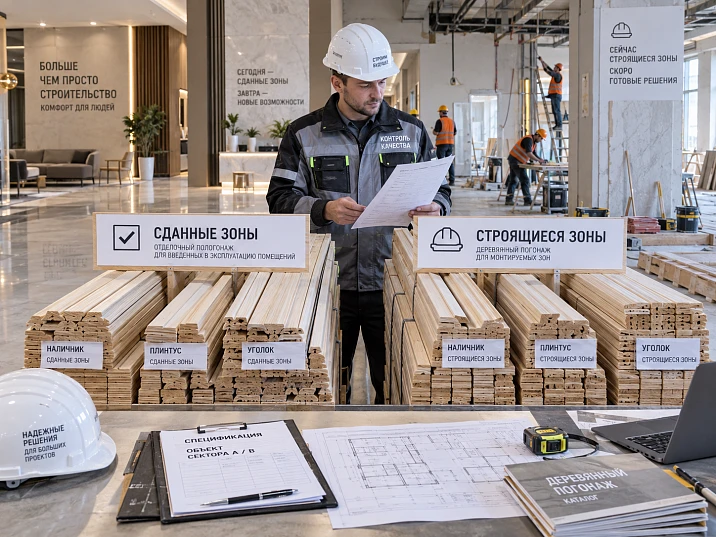
A hotel is being built in stages. Floors 1–3 have already been officially handed over to operations, floors 4–6 are still being installed, and floors 7–8 are still being finished. The wooden skirting board, moulding, and cornice were initially purchased for the entire facility as a single assortment: the same PLT-A is used both in the already handed-over rooms and in the active construction zone.
There are 18 intact PLT-A strips left in the central warehouse. The installers on the upper floors urgently need 10. If you look only at the physical stock, the decision is obvious — issue the material. But eight of these eighteen have already been allocated as the operational reserve for floors 1–3. That is, construction physically sees 18 strips, but only 10 are actually available to it.
It is precisely after partial handover wholesale building materials cease to be a single shared construction inventory. Within one project, two independent material systems emerge: unfinished construction and already operating facility management. The same SKU can belong to both at the same time, but it can no longer be consumed against a single shared balance.
SINGLE CONSTRUCTION INVENTORY → HANDOVER CHECKPOINT → CONSTRUCTION INVENTORY + OPERATIONS INVENTORY → PARALLEL ACCOUNTING → FINAL HANDOVER OF THE ENTIRE FACILITY
The main rule of the article: after the official handover of part of a facility, there should no longer be a single shared balance.
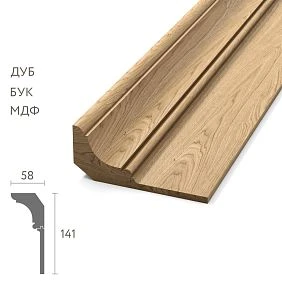
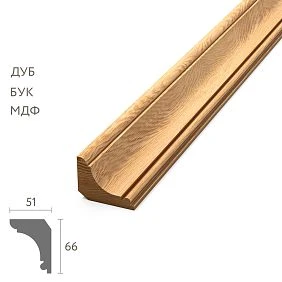

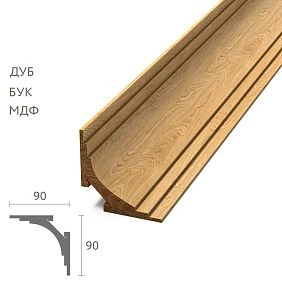
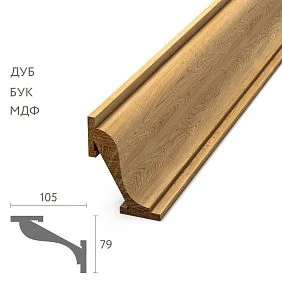
After partial handover, the material system changes




Partial handover changes the status of the material
Before the first handover, all trim belongs to the construction process. It may be in the central warehouse, on the floor, in the installation reserve, in a room kit, in quarantine, or even in an open order to the supplier. But its function is the same: to complete construction work.
After the handover of floors 1–3, part of the same assortment begins to serve the already operating area. Now PLT-A can exist in two operational states:
| Article | Status | Who has access | Purpose |
|---|---|---|---|
| PLT-A | Construction | General contractor / installation crews | Floors 4–8 |
| PLT-A | Usage | Facilities Maintenance Service | Repair of floors 1–3 |
The item is the same. The process owner, issuance rights, and reason for consumption are different.
Our factory also produces:
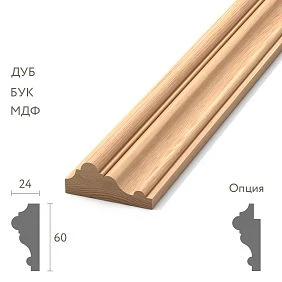
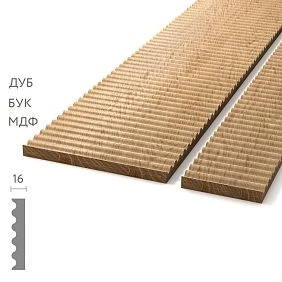
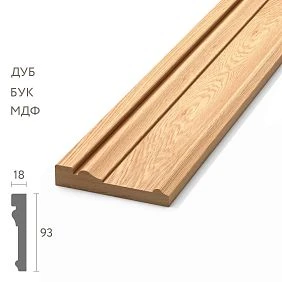
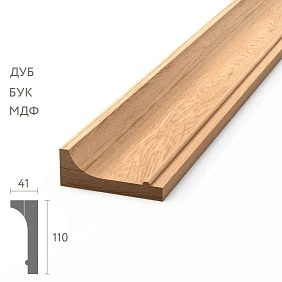
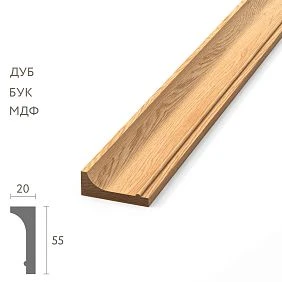
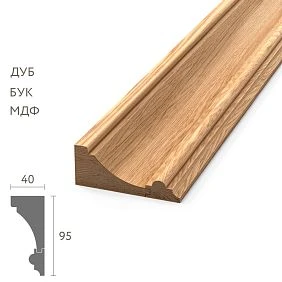

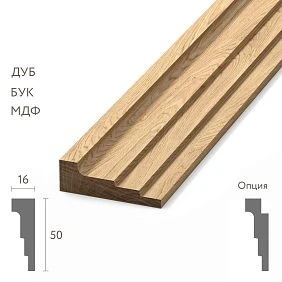
Why the total remaining stock becomes dangerous
If only the line remains in the system PLT-A — 18 pcs., the new site foreman sees the stock and uses it as ordinary construction material. Only after the next service request does it become clear that maintenance has been left without stock.
Get Consultation
What the handover of a zone for wooden trim means
No universal legal definition of handover is introduced here. For the material process, the practical result matters: a specific zone has completed the construction phase and is transferred to another operational owner.
At the time of handover, the following must be documented:
- what has actually been installed;
- which item codes have been installed;
- which material and finish have been used;
- which issues are still open;
- what stock remains for future repairs;
- where this stock is stored;
- who is authorized to issue it;
- what remains with the building fund.
The handover of the zone must result in a new material balance, not just a certificate of premises readiness.
The operational reserve is transferred together with the handed-over zone
Suppose the second floor is complete. The project provides for six whole PLT-A units for future repairs.
Before handover, they could have been counted in the general construction reserve. After the floor is transferred, these six can no longer be considered free construction remainder. They receive the status:
OPERATIONAL RESERVE / FLOORS 1–3.
Physically, the planks may remain in the same room. But the right to consume them changes.
Why the reserve cannot be left “for later”
If the operational kit is not allocated at the moment of handover, in two weeks the construction warehouse will continue to operate by the old logic and will gradually dissolve it among current needs.
One SKU is physically identical, but operationally belongs to different funds
There are two identical packs in the warehouse:
PLT-A / oak / 2400 mm / 8 pcs.
PLT-A / oak / 2400 mm / 10 pcs.
The first is the service reserve of already handed-over floors. The second is the construction remainder for floors 4–6.
Externally there are no differences. Therefore, the difference must be created by the system: separate labeling, separate status, separate accounting line, different issuance rights, and a different movement log.
Materials in bulk: one SKU — two process owners
After partial handover materials in bulk may have the same technical configuration, but different operational owners.
| Line | Responsible | Issuance right |
|---|---|---|
| PLT-A / CONSTRUCTION | General contractor / construction warehouse | To unfinished floors |
| PLT-A / OPERATION | Operations service / customer | For service and warranty cases |
This is not a legal definition of ownership. It is an operational status that answers a simple question: can this batch be issued right now to an installer on an active construction site?
Four material statuses after initial handover
| Status | Meaning | Can it be used on an active construction site? |
|---|---|---|
| Construction | Material of unfinished zones | Yes |
| HANDOVER | Material prepared for transition to operations | Only until handover is completed |
| Usage | The material already belongs to the handed-over part | No without a separate decision |
| ON HOLD | The status or quality requires a decision | No |
Why the "handover" status is useful on its own
Several days often pass between the last installation and the actual handover to operation. During this period, the reserve has already been allocated, but the construction team is still closing out issues. The "HANDOVER" status protects the material from being accidentally issued to other floors before the transition is complete.
A new site manager is especially likely to use up an already handed-over reserve
A change of responsible person mid-project increases the risk. The new site manager opens the warehouse and sees 12 PLT-A planks. It is natural for him to consider them a general remaining stock.
But the actual structure is:
- 8 — operation of floors 1–3;
- 4 — active construction.
If the accounting system does not show this immediately, an error is almost inevitable. Therefore, a single physical zone "PLT-A" is no longer sufficient after partial handover.
Partial handover must have a material control point
For example:
FLOORS 1–3 / HANDOVER / 18.09, 18:00.
Until this time, the remaining stock belongs to construction logic. After the control point, the service reserve is fixed, the operational zone gets its own responsible person, the construction warehouse stops issuing material to the handed-over premises in the usual manner, and the remaining construction items are redistributed.
BEFORE 18.09 18:00 — CONSTRUCTION SYSTEM → CONTROL POINT → AFTER 18.09 18:00 — CONSTRUCTION + OPERATIONS
Inventory and formation of the service reserve
Wholesale building materials: handover cannot be closed without a physical recount
When wholesale construction materials distributed across several floors, the entry “reserve exists in Excel” is insufficient.
Before handing over the service fund, it is necessary to:
- locate the material physically;
- recount whole items;
- confirm the item code;
- check the material and finish;
- separate from the construction stock;
- mark;
- assign a storage location;
- hand over to the operations manager.
A reserve that exists only in the table does not protect future repairs.
The material left on the completed floor must receive a decision
After the second floor was closed, three whole PLT-A, four usable offcuts, and two MLD-A remained in the storage room.
You cannot simply leave everything "on the floor." Each group receives a decision:
| Status | When to use |
|---|---|
| Usage | Material added to the service reserve |
| RETURN TO CONSTRUCTION | Material is needed for future floors |
| WRITE OFF | The remainder is unsuitable for further use |
| ON HOLD | Need to determine the SKU, quality, or purpose |
This way, after handover, no unclaimed mini-warehouse remains in closed rooms.
Everything left in the room does not automatically become a service reserve
Five short pieces of skirting board may have a total length sufficient for several local repairs, but not allow replacing a long visible section. Random leftovers from installers are not a ready service fund.
The operational reserve is formed deliberately: suitable items include whole products and useful identified leftovers for which the SKU, material, finish, and area of application are known.
Wooden skirting board: the reserve is formed for the repair task
for wooden baseboard a universal reserve percentage cannot be assigned to all objects.
It is necessary to take into account the number of rooms, typical damage risks, commercial length, the presence of long feature walls, the possibility of re-purchase, the uniqueness of the finish, and the actual intact items after construction.
For example, four short offcuts may have less service value than one whole plank of the same total length.
Wooden moulding: the service stock stores the article and finish
A building may have several visually similar of wooden moldings and several finish options.
The marking should look like:
MLD-A / oak / F01 / FLOORS 1–3 / OPERATION.
And not: white mouldings.
Wooden cornice: few items — high risk of losing identity
Only 2–3 may remain in reserve wooden cornices. It is precisely the small quantity that often leads to poor labeling: “everyone already knows it’s from the lobby.”
A year later the team changes, and the connection disappears. Therefore, the card must retain the SKU, material, length, finish, application area, original order, and storage location.
Construction shortage and temporary borrowing from operations
What to do if the construction site suddenly runs short of the same SKU
This is the central conflict of the topic.
Construction reports: 6 more PLT-A are needed.
In the operational reserve warehouse: 8 PLT-A.
The simplest solution is to take six. But first, the entire construction loop needs to be checked:
- free construction warehouse;
- material already distributed across floors but not used;
- room sets;
- whole usable remnants;
- installation reserve;
- open orders to the supplier;
- actual shortage after all checks.
Only after that is it decided whether the service fund can be temporarily touched.
Temporary borrowing from the service reserve must be a separate event
Sometimes a project deliberately decides to temporarily use part of the operational reserve. For example, floors 4–6 are short two full PLT-A units, a new delivery is confirmed in five days, and the crew is closing the feature corridor today. The service stock on floors 1–3 contains eight identical planks.
Physically, borrowing is possible. Managerially, it cannot be processed as a regular issue.
A separate record is created:
| Field | Example |
|---|---|
| Article number | PLT-A |
| Quantity | 2 pcs. |
| Source | Operational reserve of floors 1–3 |
| Issued to | Construction / floor 5 |
| Reason | Temporary shortage of construction stock |
| Who authorized | Assigned responsible person |
| How to restore | Open order ZP-072 |
| Reserve status | BELOW TARGET |
This turns improvisation into a controlled loan between two material systems.
Why you can't just “return it later”
A week later, the foreman changes, the delivery is delayed, the construction crew forgets about two planks, and operations still has the full reserve according to the documents. A separate record preserves the obligation until actual restoration.
Construction material in bulk: reserve not restored at the time of a new order
If construction material wholesale has already been ordered to restore the service stock, this does not yet mean that the reserve has been restored.
The stages must be separated:
BORROWING → RESERVE BELOW TARGET → NEW ORDER → IN PRODUCTION → SHIPPED → ACCEPTED → INSPECTED → RETURNED TO THE SERVICE AREA → RESERVE RESTORED
Until the new planks are accepted and returned to the designated operational storage zone, the status remains "below target".
This is especially important for the occupied part of the building: warranty or operational damage may occur precisely during the period when the reserve is temporarily withdrawn by construction.
Service work and two parallel movement logs
What to do in case of damage in an already handed-over zone
After the handover of floors 1–3, new damage there no longer falls under ordinary construction consumption. Depending on the cause, it goes through the service, warranty, or operational process.
For example, in a room on the second floor, one MLD-A plank is damaged.
You cannot do this:
issue MLD-A from the construction warehouse → replace → write off to floor 5.
More correctly:
- register a request for the handed-over zone;
- determine the cause and the method of closure;
- issue material from the operational stock or formalize a separate decision;
- link the expense to a specific request;
- restore the reserve if necessary.
This way, the construction statistics for floors 4–8 are not distorted by the service expense of floors 1–3.
Warranty corrections must not be mixed with construction consumption
Suppose Floor 2 has already been completed. One MLD-A needed to be replaced. On the same day, the Floor 5 installers are installing twenty MLD-A units.
If the warehouse records:
issued MLD-A — 21 pcs.
without separating the reasons, the actual construction expense will be overstated by one unit.
Separate entry:
| Zone | Quantity | Contour | Basis of expense |
|---|---|---|---|
| Floor 5 | 20 | Construction | Installation |
| Floor 2 | 1 | Usage | Service request |
The same SKU exists in two movement logs.
Two accounting systems for one object
After partial handover, it is useful to maintain two interconnected loops.
Construction log
It contains:
- acceptance of new deliveries;
- issue for installation;
- return from floors;
- installation reserve;
- construction waste;
- balance of unfinished zones;
- open construction orders.
Operations Log
It contains:
- service reserve;
- warranty issues;
- operational repairs;
- borrowings into construction;
- reserve restoration;
- balance after each service event.
The technical specification may be shared: PLT-A remains PLT-A. But movements and responsibility are separated.
Why a single shared Excel without statuses stops working
While the entire building is under construction, a single table with the columns "incoming / outgoing / balance" may be sufficient. After partial handover, it starts mixing different processes.
In a single "outgoing" column, the following end up:
- installation of floors 4–6;
- warranty replacement on floor 2;
- repair of operational damage;
- borrowing from the service reserve;
- write-off of a damaged plank.
Even if the company does not introduce two separate systems, at minimum an additional parameter is needed: "circuit / status / reason for movement".
| Date | Article | Quantity | Contour | Operation |
|---|---|---|---|---|
| 19.09 | PLT-A | 10 | Construction | Issue floor 5 |
| 19.09 | PLT-A | 1 | Usage | Service floor 2 |
| 20.09 | PLT-A | 2 | BORROWING | From service to construction |
What exactly is handed over to operations and how to store the service stock
What to hand over to operations along with the reserve
A pack without a passport is almost useless after a year. The operations service should receive not only the physical planks, but also the data.
Minimum set:
- article number;
- the material;
- product length;
- finish;
- quantity;
- photos of the profile;
- the original order or a link to it;
- storage location;
- application areas;
- a link to the category or product page, if it is useful for a future order.
This data continues the as-built documentation, but its purpose is practical: in two years, quickly find the exact product for repair.
How to store the reserve of completed floors if the central warehouse is still under construction
This is one of the most practical challenges of partial handover. Creating a new separate operational warehouse is not always rational, especially if only a few months remain until the final handover of the building.
There are two basic options.
Physically separate zone
The operational reserve is stored in a locked section, a separate room, or a cage. Construction crews do not have free access.
Advantages:
- minimal risk of accidental issuance;
- clear accountability;
- easy to conduct inventory.
The downside is that physical space is required.
Controlled shared storage
Service and construction materials are stored in the same warehouse room, but in different sections, with different labels and issuance procedures.
This works if:
- the warehouse is disciplined;
- there is one person responsible;
- issuance is done only by record;
- construction crews do not have free access to the service section.
The main condition in both options: the construction installer must not perceive the operational reserve as an ordinary free warehouse.
How to physically label two stocks of the same SKU
Construction pack label:
PLT-A / OAK / 2400 / CONSTRUCTION / FLOORS 4–8 / 10 PCS.
Service label:
PLT-A / OAK / 2400 / OPERATIONAL RESERVE / FLOORS 1–3 / 8 PCS. / DO NOT ISSUE TO CONSTRUCTION.
If the packaging is opened, the marking is transferred to a new group rather than remaining only on the discarded film.
Service and construction stock must not be mixed during returns
The installation crew is returning two intact PLT-A units from the sixth floor. A service reserve of the same SKU is stored nearby in the warehouse.
The return must go specifically back to construction stock. If it is placed with the service pack, the operational reserve will formally increase while the construction balance decreases.
Therefore, every incoming movement after a partial handover contains a provenance contour.
Open orders to the supplier also need to be split by contour
A single SKU may simultaneously have:
- reorder for floors 7–8;
- order to restore service reserve;
- warranty replacement for floor 2.
Physically, the supplier can ship everything in one vehicle. But in accounting, these are three reasons.
| Order | PLT-A | Purpose | Where to after acceptance |
|---|---|---|---|
| ЗП-081 | 24 | Construction of floors 7–8 | Construction warehouse |
| ЗП-082 | 2 | Service reserve restoration | Operational section |
| ЗП-083 | 1 | Warranty replacement | Floor 2 service process |
The summary line "PLT-A — 27 pcs." hides the reason and complicates distribution after unloading.
Next handover stages and transition to the central service fund
The next handover creates a new transfer package
Floors 4–5 finish later. The construction fund decreases again, while the operational fund increases.
The process repeats:
- a checkpoint is recorded;
- unrecorded construction movements are closed;
- the actual remaining balance by floors is verified;
- a service reserve for floors 4–5 is allocated;
- the construction balance is recalculated for floors 6–8;
- a new package is transferred to operations.
After this handover, the following may temporarily exist in the project:
- service reserve for floors 1–3;
- service reserve for floors 4–5;
- construction fund for floors 6–8.
When service funds of different floors can be merged
After several handovers, it is not always necessary to keep separate batches for “floors 1–3” and “floors 4–5.” If the technical configuration is completely identical, the operations service is unified, and storage is centralized, a common service fund can be created.
Before merging, the following are checked:
- exact article number;
- the material;
- product length;
- finish;
- execution;
- suitability of the material;
- absence of restrictions for a specific delivery.
After this, the following appears:
CENTRAL OPERATIONAL RESERVE.
Why automatic merging is not allowed
The same verbal "white molding" may have different finishes, materials, or versions. Merging by external similarity destroys traceability.
Origin history must be preserved after merging as well
Even if the service stock becomes shared for the entire building, it is useful to know which deliveries and stages it was formed from.
For example:
| Article | Quantity in the total reserve | Origin |
|---|---|---|
| PLT-A | 14 | 6 — handover of floors 1–3; 8 — handover of floors 4–5 |
| MLD-A | 9 | 4 — stage 1; 5 — stage 2 |
This helps with investigation, reordering, and comparing finishes.
Wholesale building materials: final handover closes the construction loop
When wholesale building materials are no longer needed by the active construction site and the entire facility has been handed over, the parallel model is completed.
By this point:
- the construction log is closed;
- all outstanding issues and returns are closed;
- remaining stock is classified;
- operational reserve has been formed;
- open warranty issues have been transferred;
- as-built information is up to date;
- the history of borrowings from the service fund is closed.
CONSTRUCTION + OPERATION → FINAL HANDOVER → CONSTRUCTION LOG CLOSED → CENTRAL SERVICE RESERVE + AS-BUILT DOCUMENTATION + OPEN SERVICE ISSUES
The final construction remainder cannot be automatically transferred to operations
After the last batch, dozens of items may remain in the warehouse. They require classification.
| Category | What to do |
|---|---|
| operational reserve | Transfer to operations with a passport |
| SURPLUS | Decide on return, redistribution, or storage |
| USEFUL OFF-CUT | Assess the real repair value |
| Waste | Write off according to project rules |
| ON HOLD / CLAIM | Do not mix with normal reserve until a decision is made |
The phrase “we’ll hand over everything left to operations” creates a warehouse of random material instead of a managed service fund.
Practical example: an eight-story hotel after the first partial handover
Let’s consider the full material picture at the moment when floors 1–3 have been handed over to operations, floors 4–6 are in active installation, and floors 7–8 are still being finished.
Before partial handover, the project still had:
| Article | Physical balance at the site | Open order |
|---|---|---|
| PLT-A | 38 | 24 |
| MLD-A | 26 | 0 |
| KZ-A | 12 | 0 |
If you continue to keep one total figure, the construction team sees 38 PLT-A and considers them available. But after handover, the material meaning changes.
Step 1. Build the matrix after handover
| Article | Total physically | Service reserve | Construction | Suspended |
|---|---|---|---|---|
| PLT-A | 38 | 8 | 30 | 0 |
| MLD-A | 26 | 6 | 18 | 2 |
| KZ-A | 12 | 4 | 8 | 0 |
Now the installer sees: PLT-A available 30, not 38. Two MLD-A cannot be counted at all in either construction or service until their status is closed.
Step 2. Check where the 30 construction PLT-A are physically located
Of the thirty construction planks:
- 14 are in the central warehouse;
- 10 are already allocated to floor 4;
- 4 are in the standard room kit for floor 5;
- 2 — installation reserve for the active construction site.
That is, the free construction remainder is even smaller:
30 − 10 − 4 − 2 = 14 free planks.
If the floor 6 foreman requests 12, they can be issued without touching the service stock. If they request 18, there is a real shortage of 4, but not 18.
Step 3. Take into account the open order
The supplier has already confirmed 24 PLT-A for floors 7–8. These 24 are not yet physical warehouse stock, but they already cover the future procurement need.
If floor 6 is currently short by 4, the purchaser should ask:
- can part of the confirmed order be reallocated;
- when it will actually arrive;
- whether it will be ready in time for the 6th floor installation;
- whether the reallocation will create a shortage for floors 7–8.
Only if the deadline is critical and there are no other options does the question of temporary borrowing from the service reserve arise.
Step 4. Temporary borrowing of two planks
The project decides to issue 2 PLT-A from the service stock of floors 1–3. Then the new picture is:
| Fund | Before issue | After issue | Status |
|---|---|---|---|
| Service reserve of floors 1–3 | 8 | 6 | BELOW TARGET |
| Floor 6 construction fund | Shortage 2 | CLOSED | done |
An obligation opens to restore 2 service strips. You cannot simply increase construction consumption and forget the source.
Step 5. A new order has arrived, but the reserve has not yet been restored
In five days, 24 PLT-A arrive. Two of them relate to restoring the reserve, the rest to building future floors.
Before physical distribution at the site, the line looks like this:
| Purpose | Quantity | Status |
|---|---|---|
| Service restoration | 2 | ACCEPTED, NOT YET TRANSFERRED TO SERVICE |
| Construction | 22 | ACCEPTED |
Only after marking and transferring the two strips to the operational section does the service reserve become 8 out of 8 again.
Step 6. In a month we hand over floors 4–5
The construction balance is recalculated from scratch. A separate service package is formed for floors 4–5. Suppose it contains another 7 PLT-A, 4 MLD-A, and 2 KZ-A.
Now you can either store the stage reserves separately, or, after a technical reconciliation, merge identical SKUs into a centralized service fund.
If all PLT-A have the same material, length, and finish, the total reserve can become:
PLT-A / service for the entire transferred volume / 8 + 7 = 15 whole items.
But the origin history is preserved: eight came from the first delivery, seven from the second.
How to calculate the available construction balance after a partial delivery
The physical figure no longer equals the available one.
Working formula:
available for construction = physical balance − service reserve − on hold − allocated to closed kits.
If you need to estimate future coverage, the confirmed incoming volume is added separately:
future coverage = available for construction + open construction orders.
But an open order cannot be considered physically available until acceptance.
Example
Physically 50 MLD-A:
- 8 — service reserve;
- 4 — suspended;
- 10 — assembled into floor 6 kits.
Available for new construction tasks:
50 − 8 − 4 − 10 = 28.
If the table shows only "50 in stock," it overstates availability by nearly half.
How to assess the sufficiency of the service reserve without a universal percentage
The service stock should be checked as repair capability.
For each key SKU, the following questions are asked:
- what typical repair is possible;
- what element length is needed for such a repair;
- how many rooms have already been handed over;
- which areas are most prone to impacts;
- is it easy to buy the original SKU later;
- how unique is the finish;
- is there a risk of operation stopping if the part is unavailable.
After that, the reserve is expressed not only in the number of planks, but also in the ability to cover real scenarios.
| Article | Typical service task | What matters in the reserve |
|---|---|---|
| PLT-A | Damage to a long section of the corridor | Whole long planks |
| MLD-A | Repair of the decorative frame | Length allowing to obtain the sides of the frame |
| KZ-A | Replacement of a segment of the top line | Sufficient length without an unnecessary visible joint |
This is how the reserve becomes functional rather than a formal percentage.
What to do with useful leftovers when handing over for operation
A useful offcut can be valuable if its length is known and there is a clear use case.
For example, MLD-A:
- 1600 mm — can be used for the vertical of a standard frame;
- 900 mm — suitable for a short horizontal;
- 220 mm — likely of almost no practical value.
Therefore, offcuts can be grouped by applicability, not simply by quantity.
Only those remnants that can genuinely reduce a future reorder are released for use. A stockpile of random short fragments increases the labor intensity of searching and creates a false sense of a large reserve.
When borrowing from the service is justified, and when it is not
Borrowing is an exception, not a normal practice for supplying upper floors.
It may be rational if:
- a construction shortage is confirmed;
- the material is needed for a critical near-term zone;
- the new delivery has already been confirmed;
- the service stock does not become zero after a temporary issue;
- the decision has been approved by the operations manager;
- the restoration timeline is clear.
Borrowing is not advisable if the construction site simply wants to avoid a routine reorder, if the service reserve is already minimal, if there are already open service requests in the completed area, or if the original material is difficult to replicate.
Building materials in bulk: construction and service shortages cannot be covered with a single line item
When wholesale building materials purchased for a project that is being built and operated simultaneously, two types of shortages require different solutions.
| Shortage | Reason | How to cover |
|---|---|---|
| Construction | Not enough for unfinished zones | Check the construction warehouse, allocation, and open orders |
| Service | Reserve of an already handed-over zone is below target | Restore the operational stock as a separate line |
If both shortages are combined into one new order, after acceptance no one will understand how much goods should go to construction and how much should be returned to operations.
If the service reserve is already used in a warranty case
Suppose that out of eight service PLT-A, one plank is temporarily reserved for warranty repair on floor 2. Physically, it is still in the warehouse.
But the free service reserve is no longer eight, but seven.
Therefore, within the operational stock, dedicated statuses are useful:
- AVAILABLE;
- RESERVED FOR CONTINGENCY;
- ISSUED;
- REQUIRES RESTORATION.
This protects against a situation where construction borrows a batch already intended for service repair.
Responsible parties, storage locations, and special versions of a single SKU
Partial handover and financial owners of the material
Sometimes, after partial handover of a facility, not only operational but also financial responsibility changes. For example, the operational stock has already been handed over to the owner, while the construction fund remains with the general contractor.
The article does not establish a legal ownership model, but it is useful to add a field to the register:
responsible for the fund / decision owner.
| Article | Status | Responsible |
|---|---|---|
| PLT-A | Construction | General contractor |
| PLT-A | Usage | Owner / operations service |
Thus, the decision on temporary borrowing is not made by a person who is not responsible for the service fund.
What to do if it is physically impossible to separate the warehouse
There may be only one suitable dry storage room at the site. It is impossible to create a separate operations room.
Then the separation is built on four levels:
- separate section or rack;
- different labeling;
- different statuses in the register;
- different issuance rights.
For example, the service stock occupies the upper closed shelving, while the construction stock occupies the lower working cells. On the service section, in large letters, it says "OPERATIONS — DO NOT ISSUE TO CONSTRUCTION."
Even if such physical separation is impossible, the risk of mixing is too high, and it is better to move the service reserve to another controlled location.
What to do if operations wants to store the reserve directly on a completed floor
This can be convenient if each floor has a locked technical storage room and a responsible service.
Advantages:
- quick access for local repairs;
- construction crews on upper floors do not see this stock;
- easy to link the reserve to the zone.
Disadvantages:
- several small warehouses are harder to inventory;
- the same SKU is duplicated in different places;
- when operations are consolidated, remaining stock must be collected again.
The choice depends on the structure of the facility. The key point is that the storage location must be reflected in the register.
If, after handover, the operational responsibility zone changes
First, floors 1–3 are accepted by the customer's temporary operations team. Two months later, building management is transferred to the permanent operator. The material reserve must be
The reserve for open issues is not equal to the operational reserve
If three MLD-A units are set aside to close two issues, those three are not yet service stock.
| Fund | Purpose |
|---|---|
| HANDOVER / OPEN ISSUES | Close known works before final acceptance |
| operational reserve | Future unforeseen repairs after handover |
After the issues are closed, unused material can be reviewed and, if necessary, included in the service fund.
How not to charge service repairs to the construction budget for the upper floors
The operational status of the material must also be maintained in the project's financial accounting. If Floor 2 has already been handed over, replacing a single plank there should not automatically increase the construction cost of Floor 6.
Even if the cost is small, separating the reasons helps:
- see the actual construction cost;
- see the cost of the warranty period;
- estimate the size of the future reserve;
- not distort additional orders for an active construction site;
- understand who should restore the service fund.
How to handle a temporary loan if a new delivery is delayed
The project took two planks from the service stock with a promise to restore them in five days. The supplier postpones the deadline by another week.
The loan status should not disappear. It needs to be updated:
| Field | Condition |
|---|---|
| Borrowed | 2 PLT-A |
| Current service reserve | 6 of 8 |
| Restoration order | ЗП-082 |
| New date | Confirmed by supplier |
| Risk | Escalated to restoration |
Operations should be aware of this risk, especially if there are open service jobs for the same SKU in the handed-over area.
What stock level should be considered the minimum acceptable after borrowing
The article does not introduce a universal figure. The decision depends on the specific site. But before issuing from service, you need to answer:
- what actual repairs are possible in the near future;
- whether there are open warranty cases;
- how many intact items remain;
- how quickly the goods can be reordered;
- how critical a shutdown of operation is when material is unavailable.
If after issuing one plank of a unique profile remains, which takes a long time to produce, borrowing may be unwise even given the urgency of the construction.
Organizing handover by phases until the facility is fully completed
How to arrange service handover after each phase
For each area being handed over, a short package is useful:
| Field | What to fix |
|---|---|
| Zone | Floors / building / premises |
| Date and time | Material checkpoint |
| SKUs | Actually installed profiles |
| Service reserve | Quantity and storage location |
| Open remarks | What is not yet closed |
| Operations responsible | Who accepts the fund |
| Construction balance | What remains with the active construction |
This package does not have to be a large document. Its task is to split the common warehouse into two systems without losing history.
When partial handover does not require a separate service fund at all
There are situations where allocating a separate operational reserve at each stage may be excessive.
For example:
- the object is small;
- a few days between the first and final handover;
- operations have not yet begun full-scale work;
- the entire service reserve is centralized in advance and physically protected;
- there is one responsible person who controls both circuits.
Then a single physical reserve can be maintained, but its operational part must still be reserved in accounting and unavailable to regular construction.
When a separate physical service warehouse is practically mandatory
It is especially useful if:
- operations are already receiving guests, tenants, or clients;
- construction crews on the upper floors are actively consuming the same SKU;
- service requests are already appearing;
- the finish is unique and difficult to replicate quickly;
- partial construction will continue for several more months;
- several contractors have access to the shared warehouse.
Under these conditions, Excel status alone may not be sufficient protection.
How to close the final transition from two systems to one
When floors 7–8 are completed and the entire facility is handed over, the construction loop must be closed not automatically, but through a final inventory.
Checked:
- whether all open construction issues are closed;
- whether there are returns from the upper floors;
- which open orders are still in transit;
- which items relate to claims;
- which remaining stock has service value;
- which borrowings from the service have not yet been restored;
- which material needs to be written off or returned.
Only after this is the construction log closed, and the operational system becomes the only active one.
Control after each partial handover
Control after each partial handover: how to verify that the two funds have truly separated
The formal handover may be signed perfectly, but within a week the warehouses are mixed again. Therefore, after each handover, a short control audit is useful. Its task is not to recount the entire facility anew, but to verify that the new regime works in everyday operations.
We check the first construction issue after handover
The next day, the foreman of floor 5 requests PLT-A. The storekeeper must see not the total balance, but specifically the construction availability. If he opens the line and immediately understands that 8 planks belong to operations and 14 are free for construction, the separation works.
If resolving it requires calling the person who processed the handover, or manually recalling which batch is "not for builders," the system depends too much on memory.
We check the first service issue
A few days later, operations requests one MLD-A for repair. The issue must go through the service log, not through the construction report. After the operation, the service balance decreases separately, and the construction fund remains unchanged.
| Event | Construction before | Service before | Construction after | Service after |
|---|---|---|---|---|
| Service replacement 1 MLD-A | 18 | 6 | 18 | 5 |
| Floor 5 installation — 4 MLD-A | 18 | 5 | 14 | 5 |
If both operations reduce the same total figure, the two funds exist only on paper.
Checking the first new delivery
After handover, a new batch of PLT-A arrives. It may simultaneously contain planks for an active construction site and for restoring the borrowed service reserve. During receiving, they must not be stacked into one common pile without assignment.
The acceptance report immediately separates:
- how much goes to the construction fund;
- how much the service restores;
- whether there is a warranty replacement;
- whether there are suspended items.
Only after this is the physical warehouse updated.
We check the free construction balance, not the total amount
The reference figure for the foreman should be exactly "free for construction". For example:
| PLT-A | Quantity |
|---|---|
| Physically total | 42 |
| Service | 8 |
| quarantine | 2 |
| Assigned to floor 6 | 12 |
| Free for construction | 20 |
This last line should be used when deciding on a reorder.
Decision tree for when construction requests material from an already issued stock
To prevent a dispute from being decided by the loudest participant, a simple sequence can be used.
CONSTRUCTION REQUESTS SKU → IS THERE FREE CONSTRUCTION STOCK? → YES: ISSUE FROM CONSTRUCTION / NO: CHECK ALLOCATION AND OPEN ORDERS → DOES THE SHORTAGE REMAIN? → NO: USE THE CONSTRUCTION LOOP / YES: ASSESS SERVICE RISK → APPROVAL → TEMPORARY BORROWING OR NEW ORDER
Step 1. Check the actual construction shortage
Do not start with the service rack. First, you need to make sure that the free construction stock is truly exhausted. Often the material is already on another floor or in an unused kit.
Step 2. Check the nearest open deliveries
If the required planks will arrive tomorrow and the installation can be moved to another area, borrowing from the service may be unnecessary. If the delivery is in three weeks and the work is critical today, the question looks different.
Step 3. Assess the risk for operations
You cannot look only at the number of spare planks. You need to understand whether there are open service requests, how unique the profile is, and how quickly it can be restored.
Step 4. Lock in the decision before physical issue
Record first, then move. Otherwise, after moving a batch, the source of the material is easy to lose.
How to link partial handover to the warranty period
After floors 1–3 are handed over, warranty issues may appear even before construction of the upper floors is completed. This makes parallel tracking especially important.
For example, floor 2 needs one PLT-A for a warranty case, while floor 6 simultaneously requests four PLT-A for installation. On site, there are physically six service planks and five construction planks.
Without separation, it seems there are 11 in total — no shortage. But if the service case has already reserved one plank, the free service pool is five, and the construction pool is five. Floor 6 installation can be covered from construction without affecting service.
That is why service requests must also reserve material within their own scope before actual issue.
If a service replacement requires more reserve than is available
Then the shortage arises already during operation. It cannot be automatically compensated with construction strips without a decision. It is necessary to check:
- priority of service repair;
- availability of construction surplus;
- lead time for a new order;
- impact of removal on the schedule of unfinished floors.
Physically, movement is possible in both directions, but each inter-loop transfer must be controlled.
How to assess material risk on a transitional project
After partial handover, it is useful to look not only at the quantity, but also at the risk of a specific SKU.
| Factor | Low risk | High risk |
|---|---|---|
| Repeated availability | SKU is easy to order | Long or non-standard manufacturing |
| Finish | Standard | Unique, hard to replicate |
| commercial length | Short standard sections | Long sight lines |
| Operational load | Hidden quiet zone | Corridor, lobby, service area |
| New order lead time | Short | Long |
The higher the risk, the more carefully one should approach borrowing from the service.
How to close the temporary borrowing history before final handover
Before closing the construction log, all inter-loop movements must have a final result.
For each loan, the following is checked:
- how much was taken;
- where it was used;
- by which order it was restored;
- when the material actually returned to the service stock;
- whether the SKU, material, length, and finish match;
- whether the "below target" status is closed.
An open loan cannot be carried over into final operation as if nothing happened. If restoration is impossible, the target service size is officially revised and the new actual value is recorded.
Final material matrix before closing the construction site
Before the final handover, it is convenient to gather the summary:
| Article | Service reserve | Free surplus | Useful offcuts | Quarantine | Open orders |
|---|---|---|---|---|---|
| PLT-A | 15 | 4 | 6 | 0 | 0 |
| MLD-A | 9 | 2 | 5 | 1 | 0 |
| KZ-A | 5 | 0 | 0 | 0 | 0 |
After classification, each column receives a separate decision. Only the service reserve automatically remains with the operations system.
When surplus is better not to store in operations
Surplus may be technically sound but have no reasonable service value. For example, ten strips of a profile that was used only in one small area and is easily available for repurchase.
Storage requires space, inventory, and protection. Therefore, the project may choose return, redistribution, or another permitted method. The operations warehouse should not become an archive of everything left after construction.
Conversely, a rare profile with a unique finish has high service value even in a small quantity.
Control after each handover: five questions
A few days after the next handover, it is useful to check:
- can the construction warehouse quickly name the free balance without service stock;
- can operations show its reserve physically;
- whether there are new issues from service to construction without a record;
- whether new receipts are separated by purpose;
- whether the balance reconciles after the first service and construction operations.
If the answers require manual investigation, the boundary between the systems has not yet taken hold.
Emergency service repair in a completed area while construction is still ongoing
Let us imagine a tougher boundary scenario. At night on the second floor, a skirting board is damaged in a passage area where operations begin in the morning. The operations service needs one intact PLT-A immediately. There are two planks left in the service reserve, and twelve of the same on the construction warehouse. Formally, it is easier to take one from the construction site and not touch the service minimum.
But the movement must go through a clear decision. First, it is checked whether the twelve construction units are actually free. If ten are already reserved for the sixth-floor rooms, and two are a installation reserve, there is no free remainder. Then issuing "from construction" will simply shift the deficit upward.
If, however, four planks are actually free, the project can decide to temporarily direct one into operations. This is reverse inter-contour movement: it is not service helping construction, but construction helping service. It is also registered.
| Field | Value |
|---|---|
| Article number | PLT-A |
| Quantity | 1 |
| Source | Construction |
| Recipient | OPERATIONS / emergency repair |
| Reason | Service request |
| Impact on construction | Free remainder decreases by 1 |
After the repair, the construction log shows a decrease in the free fund, while the operations log shows the completed service consumption. If the operations reserve was not reduced in this process, it does not need to be restored. But the construction requirement must be recalculated, otherwise the upper floors will later discover a shortfall.
This example shows that partial handover does not create a rigid wall between the two funds. Material can physically move in both directions when justified. What should be rigid is not a ban on any movement, but the rule: every inter-contour transfer has a reason, an owner of the decision, and a reflection in both balances.
During an emergency repair, speed is indeed important, but even an urgent issue takes a few minutes to register. These few minutes protect against hidden deficits and make it possible, after the repair is completed, to understand which fund actually incurred the expense.
18 mistakes during partial handover of the facility
- Hand over the floor but leave one shared remainder. Construction continues to consume operations material.
- Do not allocate a service reserve. Future repairs depend on random construction leftovers.
- Count the entire remaining stock as operational. The reserve ends up containing both useless items and items still needed for construction.
- Store service and construction stock in one batch without labeling. Identical items cannot be distinguished operationally.
- Do not change the issuance rights. Installers continue taking material after handover.
- Allow free access to the service stock. The reserve disappears unnoticed.
- Borrow from the service reserve without recording it. The obligation to restore the stock is lost.
- Consider the reserve restored at the moment of a new order. The goods may not have arrived yet.
- Confuse warranty replacement with construction consumption. The statistics of both circuits become distorted.
- Keep a single combined consumption log without statuses. It is impossible to understand the reason for the movement.
- Leave intact items on a completed floor without a decision. An unowned mini-warehouse appears.
- Hand over to operations only the meters without article numbers. Future repairs turn into a search for a similar profile.
- Lose the finish. One SKU with different finishes gets mixed up.
- Mix service reserves of different configurations. Technical compatibility becomes unreliable.
- Combine service funds from several stages without verification. Origin and differences are lost.
- Use an old shared warehouse balance for reordering. Double purchasing or a false shortage occurs.
- Hand over the entire final surplus to operations. The service warehouse fills up with useless leftovers.
- Close the construction site without transferring the reserve history. Operations doesn't know what it has or where it came from.
Final algorithm for partial handover of linear trim
ACTIVE CONSTRUCTION SITE → ZONE READY → HANDOVER CHECKPOINT → PHYSICAL RECOUNT → AS-BUILT SPECIFICATION → SERVICE RESERVE ALLOCATION → CONSTRUCTION REMAINDER → ZONE HANDOVER → IN PARALLEL: CONSTRUCTION OF REMAINING FLOORS + OPERATION OF THE HANDED-OVER PART
If the construction site needs material from an already transferred fund:
REQUEST → CONSTRUCTION DEFICIT CHECK → APPROVAL → TEMPORARY ISSUE FROM SERVICE → SERVICE BELOW TARGET → NEW ORDER → ACCEPTANCE → RETURN TO SERVICE → RESERVE RESTORED
After final handover:
ALL ZONES TRANSFERRED → FINAL INVENTORY → SURPLUS CLASSIFICATION → CENTRAL OPERATIONS RESERVE → CONSTRUCTION LOG CLOSED → OPERATIONS AND SERVICE HISTORY REMAINS
Final check before each new issue: the same SKU is first checked by fund status, then by available quantity, and only after that is the material physically moved. This short sequence prevents most hidden write-offs from the service reserve.
Conclusion: after partial handover, a single SKU must live in two different processes
While the entire facility is under construction, a single warehouse and a single balance work logically. But after the official handover of part of the building, the material system changes. Skirting, molding, and cornice no longer belong only to construction: part of the stock becomes an operations asset.
Therefore, the same PLT-A can simultaneously have two completely different statuses. Ten planks are available to the builders, eight are reserved for floors already handed over. Physically, they may lie next to each other, but they cannot be issued based on one shared number.
A strong system begins separation at the moment of handover. The service reserve is recalculated, labeled, and assigned an owner and storage location. The construction remainder is recalculated separately. Open issues, warranty work, and future repairs are no longer written off as construction expense.
Temporary borrowing from the service reserve is possible only as a separate controlled decision. Ordering a new plank does not automatically restore the reserve: it is considered restored only after actual acceptance and return of the material to the service zone.
As new floors are handed over, the operational stock grows while the construction stock decreases. If the technical configuration matches, service reserves can be merged, but the origin history is preserved. After final handover, the construction log is closed, and the remaining material is classified as: service reserve, useful remainder, surplus, waste, or suspended item.
This way, partial handover does not turn the shared warehouse into a source of hidden shortage. Construction knows exactly what is available to it, operations retains its repair stock, and the same wooden trim remains manageable throughout the entire transition from construction to a working building.