Article Contents:
- Early purchasing and re-approval: why a second checkpoint is needed
- Early purchasing is useful, but it creates a new responsibility — to keep the goods until their turn
- Why the project buys wooden trim in advance at all
- What changes during storage
- When additional inspection is especially justified
- Daily warehouse control and approval for installation answer different questions
- Daily control asks: are the goods in place?
- Inspection before installation asks: are the goods still ready for use?
- The initial acceptance remains the baseline point of comparison
- Before opening the packs, pull up the original specification and acceptance documents
- Minimum source data
- Why you can't work from the warehouse operator's memory
- If there is no original manifest
- First, check whether the batch identity has been lost
- Key identifiers must remain legible on the label
- A faded label is not a cosmetic issue
- Similar moulding cannot be identified "by eye"
- Packaging — the first physical indicator of storage history
- What to inspect before opening
- Damaged packaging does not equal a damaged product
- Dry packaging today does not prove it was always dry
- The history of the storage area determines the depth of re-inspection
- Which events require increased attention
- An event does not mean automatic unsuitability
- After heating is turned on, it is especially useful to compare conditions
- Geometry: checking long products on a clear reference surface
- Checking a wooden skirting board along its entire length
- We do not check straightness against an uneven wall
- A thin moulding requires a careful cut
- For a cornice, check the middle and the ends
- Moisture: measure when the procedure provides for it and it is genuinely needed
- A moisture meter is especially useful after significant events
- We do not turn the article into an argument about one universal number
- One random plank does not automatically represent a large batch
- The project determines the sample size
- We recount quantities from scratch: previously accepted does not mean physically present now
- Total remaining is not equal to the available remaining of the current queue
- Readiness for installation and the right to issue are different checks
- Open packs are physically recounted
- We check the surface and traces of construction impact
- What to look for
- Not everything found is a manufacturing defect
- We do not begin mass sanding or repainting before classification
- After re-inspection, we divide the material by its actual condition, not by its old status
- Verified and disputed material are physically separated
- The remaining independent part of the batch can continue moving
- There is no need to open the entire object at once
- We check the nearest installation queue first
- This reduces the risk of mix-ups and accidental damage
- Selective inspection of closed packages should be meaningful
- We plan the inspection in advance, not on the morning when installers arrive
- Time must be left to resolve issues
- The time buffer depends on the complexity of the batch
- Re-inspection becomes part of preparation for installation
- After a warehouse move, leak, or change of season, the depth of inspection increases
- After moving the temporary warehouse
- After a leak near the warehouse
- After the first heating season
- After a change of responsible person
- A warehouse issue and a manufacturing defect are different causal scenarios
- We keep the first acceptance data specifically for comparison
- Photos help distinguish when the problem occurred
- The cause should not be assigned before the facts
- Who authorizes the transfer of a batch from the warehouse to the assembly area
- A commission of ten people is not needed
- What the assembly crew confirms
- Handover to the crew — a new control boundary
- Main re-inspection form after storage
- Why the entry “norm” is too weak
- When a reorder is needed after re-inspection
- We don't purchase new volume at the first alarming signal
- We calculate the real deficit only after separating the states
- A recheck helps not only to find the problem but also to avoid buying excess
- Initial balance
- What happened during storage
- Check before floor 3
- Conclusion
- Why the situation would have looked different without a recheck
- How to build a sampling inspection of a large batch without false confidence
- Sampling is needed not for a formal percentage, but to see different storage conditions
- A poor sample can produce a perfect result and hide the problem
- If a recurring deviation is detected, the sample is expanded
- How to handle a pack that has been opened for several months
- An opened package requires checking not only its condition but also its contents
- Dust and construction dirt increase the risk of an erroneous conclusion
- Mixing up similar product codes is a separate threat
- What to do if the marking has been preserved on only one plank out of the group
- A restored label must show that the identity has been re-confirmed
- After prolonged storage, we check not only the product but also the suitability of the future preparation area
- The material may be ready, but the installation area may not be
- Do not confuse re-inspection with acclimatization
- How to re-inspect operational reserve stock that has been stored longer than construction batches
- Operational reserve stock is often stored longer than anything else
- Reserve stock should not be a random leftover
- Handover to operations is another control date
- Detailed scenario: three SKUs after five months of storage yield three different decisions
- PLT-A: intact packaging, stable storage zone
- MLD-A: one pack damaged during warehouse relocation
- Large volumes can be inspected section by section
- You cannot set a common date for a volume that has not yet been inspected
- When material after storage does not need extended inspection
- Small volume and short stable storage
- No need for complex control just for the sake of control
- Batch acceptance checklist before installation
- Scenario across a heating season: one batch, four months, and different consequences
- Group 1 — remained in the center of the warehouse on stable support the entire time
- Group 2 — was located by the outer wall before the heating was turned on
- Group 3 — was moved after warehouse compaction
- Group 4 — was opened for a trial section
- Decision tree for a disputed bundle
- The first question is always about identity
- The second question is quantity
- The third question is condition
- The fourth question is ownership
- How to document a detected issue so it isn't lost after the remaining materials are issued
- After the decision, the status is updated
- When material requires restoration rather than write-off
- Only the labeling is damaged
- Surface contamination without material damage
- Transport packaging is damaged
- When restoration should not be done on your own
- How to check whether the connection with the installation queue was lost after several months of storage
- Total physical stock and available stock are different numbers
- Final check before issuing to the crew
- What to do if, at issue, the crew notices an issue that was not found during the warehouse check
- How a repeat check differs from the initial acceptance in practice
- It is the comparison of the two points that provides valuable information
- How early purchasing affects the project's commercial decision
- When early purchasing is justified
- When it's better not to buy too early
- Re-inspection makes early purchasing manageable, but does not remove storage requirements
- When a reorder is better postponed until the entire upcoming queue has been inspected
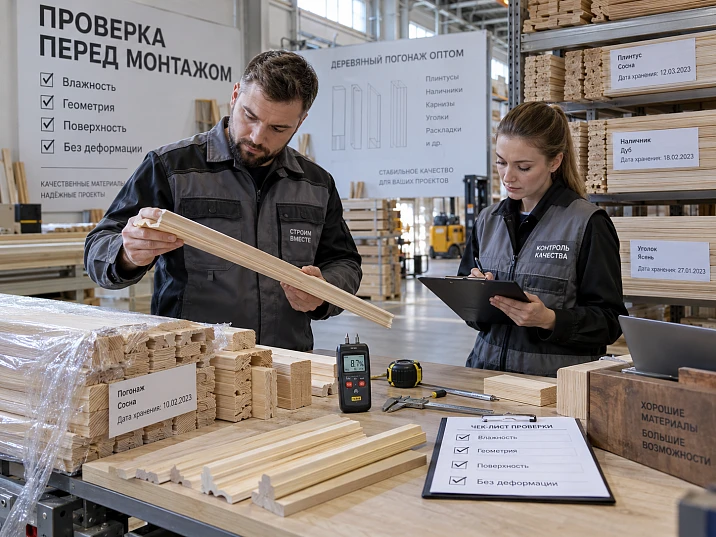
The project purchased wooden trim for several queues at once. The first part was installed in September, the second waited its turn until November, the third lay until January, and part of the operational reserve was supposed to remain on site until handover. Upon arrival, all material was accepted: the item codes matched, the quantity was correct, the packaging was intact, and no visible damage was found.
But the initial acceptance confirms the condition of the batch only at a specific moment. If on September 15 the MLD-A packaging was intact and contained 42 usable items, this does not mean that on January 15 their condition is automatically considered the same. Over several months, the humidity in the room could have changed, heating could have been turned on, the pack could have been moved, partially opened, loaded on top with other material, bumped during rearrangement, or stripped of its labeling.
Therefore buy building materials wholesale in advance is possible if the site is able to store the material properly and manage the queues. But early purchasing adds a separate stage between the warehouse and installation: a re-check of the batch's readiness before issuing it to the crew.
INITIAL ACCEPTANCE → TEMPORARY WAREHOUSE → SEVERAL MONTHS OF STORAGE → RE-INSPECTION → READY FOR INSTALLATION → PREPARATION / ACCLIMATION → ISSUE TO THE CREW
The main principle of the article: initial acceptance does not remain valid indefinitely. Before installation, it must be confirmed that the specific batch is still identifiable, physically exists in the required quantity, has retained acceptable condition, and truly belongs to the current installation queue.


Early purchasing and re-approval: why a second checkpoint is needed




Early purchasing is useful, but it creates a new responsibility — to preserve the goods until their turn
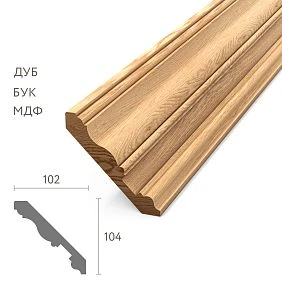
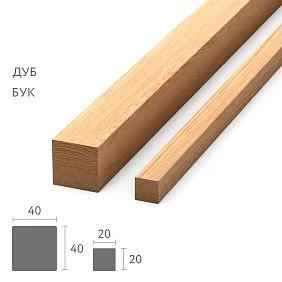
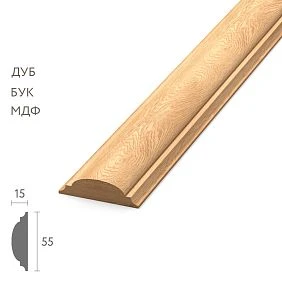
Our factory also produces:








Why a project buys wooden trim in advance at all
Purchasing for several queues at once can be justified when it is necessary to lock in an approved SKU, secure a larger project batch, synchronize production with the overall schedule, or reduce the risk of late purchasing during active installation. This is especially logical for projects with repeating floors, hotel rooms, restaurant chains, and interiors where a single profile is used in tens or hundreds of meters.
But the scheme "bought → delivered → put in the warehouse" is incomplete. For material that will wait several months, the full cycle looks different:
bought → accepted → identified → preserved → monitored → re-inspected → approved for installation.
Get Consultation
What changes during storage
Even if no one specifically touched the product, the storage context itself may change:
- the heating season has started;
- wet processes have appeared in the adjacent area;
- the warehouse has moved to another premises;
- another material was temporarily placed on the pack;
- part of the packaging was opened for a test area;
- several planks were issued and returned;
- the label has faded or torn off;
- the pack has shifted and lost even support;
- a leak occurred nearby;
- the warehouse area has become a passageway.
Therefore, re-inspection is not distrust of the initial acceptance. It is confirmation of the current condition after a long period of time.
When additional control is especially justified
There is no need to establish a universal rule like “after 30 days, any pack requires full re-acceptance.” For the project, real conditions matter more. Extended inspection is especially useful if the material has been stored for several months, has gone through a change of season, heating, a warehouse move, opening of the packaging, movement between zones, or another event that could affect its condition and identification.
Daily warehouse control and release for installation answer different questions
Daily control asks: is the item in place?
The storekeeper sees that PLT-A is in zone B, the packaging has not disappeared, and there were no issues today. For ordinary warehouse management, this is sufficient.
Inspection before installation asks: is the item still ready for use?
Before moving the batch into the installation queue, a broader answer is needed:
- is it definitely the required item code;
- does the material match the original specification;
- whether the commercial length and integrity of the items have been preserved;
- whether the marking has not been lost;
- whether there has been any adverse storage event;
- whether the geometry of individual items has changed;
- whether the quantity matches;
- whether part of the stock belongs to another phase or reserve.
Initial acceptance remains the baseline for comparison
If, upon delivery, the batch was recorded as even, clean, and complete, this data is useful four months later. It helps separate the condition at receipt from changes that occurred later on site.
Original specification, identity, and opened packages
Before opening the packs, we pull up the original specification and acceptance documents
When working with building materials wholesale a re-check should not begin with the phrase “it seems this is the right molding.” First, you need to reconstruct exactly what should be in front of us.
Minimum source data
| Field | What you need to know |
|---|---|
| Article number | Exact manufacturer code |
| Material | Oak, beech, MDF, or other finish |
| Size / cross-section | For distinguishing similar profiles |
| commercial length | For checking whole products and cutting |
| Accepted quantity | Initial balance before all issues |
| Receipt date | How much time has passed |
| Purpose | Floor, zone, queue, reserve |
| Initial remarks | What was recorded upon receipt |
Why you cannot rely on the storekeeper's memory
After a few months, an employee may remember "the second-floor oak molding" but not distinguish MLD-A from MLD-B, especially if they look similar. A misidentification before installation is more dangerous than a simple warehouse error: the wrong profile may already have gone into cutting and onto the wall.
If there is no original inventory list
It is necessary to reconstruct the most reliable chain possible: the old order, packing list, acceptance photos, markings, as-built specification, reference sample. If the exact item code is not confirmed, the material is assigned the status DO NOT ISSUE UNTIL IDENTIFIED.
First, we check whether the batch identity has been lost
Key identifying features must remain legible on the label
For long-length linear trim, it is useful to see:
- article number;
- the material;
- commercial length;
- quantity or original packaging quantity;
- delivery number, if available;
- project zone;
- reservation or queue status.
A faded label is not a cosmetic issue
If the marking has worn off and similar profiles are lying nearby, the material cannot automatically be considered free. First, identity is restored using the packaging, original documents, cross-section, and reference sample.
A similar molding cannot be identified "by eye"
The phrase "it seems to be MLD-043" is not sufficient. A few months later, returns from other zones could have ended up nearby. A verifiable link to the original specification is needed.
If doubt remains after verification, the group is physically separated from the confirmed batch.
Packaging and warehouse zone history
Packaging — the first physical indicator of storage history
What to inspect before opening
- tears and punctures;
- traces of water;
- condensation or unusual moisture;
- crushing;
- impacts on the ends;
- signs of re-opening;
- deformation of the entire stack;
- contamination with construction compounds;
- displacement of items inside the packaging.
Damaged packaging does not equal a damaged product
A tear in the film may not affect the planks themselves. But such a group is checked more thoroughly than a completely intact pack. In the log, it is useful to distinguish:
| Packaging condition | Next action |
|---|---|
| whole | Standard re-inspection procedure |
| Damaged, product visually intact | Extended inspection of contents |
| Traces of moisture present | Do not issue until further assessment |
| Pack deformed | Check the geometry of multiple items |
| Marking lost | Restore identity first |
Dry packaging today does not prove it was always dry
If the warehouse experienced a leak or a period of high humidity, the outer surface could have dried out. Therefore, when the event is known, the history of the zone matters, not just the appearance on the day of inspection.
The history of the warehouse zone determines the depth of re-inspection
When purchasing materials in bulk for several queues, it is useful to know not only the current state of the warehouse, but also the events of past months.
Which events require increased attention
- wet processes nearby;
- leak;
- start of continuous heating;
- prolonged heating shutdown;
- relocation of temporary warehouse;
- temporary use of the premises by other contractors;
- top load on long-length items;
- fall or impact of a transport unit;
- partial issues and returns;
- change of responsible employee.
The event does not mean automatic unsuitability
For example, the warehouse was relocated, but each pack retained its labeling, was moved horizontally, and was recounted after the move. This does not make the product problematic. The event merely explains why it makes sense to pay more attention to the batch before installation.
After the heating is turned on, it is especially useful to compare the conditions
The batch could have arrived at a cool September warehouse and waited until January for installation with constant heating. Even if storage was careful, the indoor microclimate changed significantly. Therefore, checking the condition and the material preparation specified by the project cannot be skipped.
Geometry, surface, moisture, and spot checks
Geometry: check long products on a clear reference surface
Check the wooden skirting board along its entire length
У wooden baseboard after long-term storage, pay attention to:
- overall bending;
- helical twisting;
- edge damage;
- ends;
- local dents;
- traces of prolonged uneven support.
We do not check straightness against an uneven wall
If you place the strip against a wall with its own curvature, it is impossible to tell what exactly is deviating — the product or the base. A clear, level reference surface or another method of verification accepted by the project is needed.
A thin molding requires careful sampling
A thin profile is easier to bend if installed incorrectly, and a small deformation is more noticeable in a framed composition. In an open pack, it is reasonable to check several items, not just the top strip.
For a cornice, we check the middle and the ends
A large long part may look straight but have a damaged end, which will become a problem during a precise joint. Therefore, the end zone is checked separately.
Humidity: we measure when it is provided for by the procedure and actually needed
A moisture meter is especially useful after significant events
Instrumental control makes sense:
- after prolonged storage;
- after a seasonal change;
- after suspected exposure to moisture;
- after a sudden change in heating;
- before mass installation of a large batch, if such a check is included in the project procedure.
We are not turning the article into a debate about one universal number
Different pages and different contexts may contain different moisture guidelines. For a specific batch, one should rely on the technical documentation of the relevant product, project requirements, and the accepted inspection procedure.
If a measurement is taken, the log should record the actual readings and the measurement context, not an abstract “normal.”
One random plank does not automatically represent a large batch
If there are 500 items in the warehouse, checking one top plank does not prove the condition of the entire stock. It is reasonable to distribute the sample across different packs, warehouse zones, and stack levels, especially if storage conditions were not uniform.
The sample size determines the project
The article does not introduce a universal percentage. The scope of control depends on the batch size, storage history, interior criticality, packaging condition, and the site's internal procedures.
Quantity, queue assignment, and reserve
We recount the quantity: previously accepted does not mean physically present now
Before issuing construction material wholesale it is necessary to verify against the current balance. Over four months, there could have been trial issues, returns, use at the reference area, movement between floors, and opening of packs.
The total balance does not equal the available balance of the current queue
According to the report:
PLT-A — 100 pcs.
Physically, 100 were also found. But:
- 8 — operational reserve;
- 12 — reserved for another floor;
- 4 — are under additional verification.
Actually available for the current installation queue:
100 − 8 − 12 − 4 = 76 pcs.
Readiness for installation and the right to issue are different checks
A pack may be physically perfect but belong to another floor or reserve. The status READY FOR INSTALLATION does not yet mean ISSUE TO THIS CREW.
Open packs are recounted physically
An old note saying “10 left in the pack” after several months should not be taken on faith if the packaging has been used. The actual quantity is checked before release into the current queue.
We check the surface and signs of construction exposure
What to look for
- scratches;
- contamination;
- stains;
- darkening;
- traces of plaster or adhesive compounds;
- sanding damage;
- change in the finish coating, if the product has already been finished.
Not everything found is a manufacturing defect
If the product was accepted without comments upon receipt, and after a few months traces of construction compound appeared on the surface, the cause is likely related to storage or on-site work. That is why it is useful to keep photos of the initial acceptance.
We do not begin mass sanding or repainting before classification
First, the scale and nature of the problem need to be determined. Sometimes contamination can be safely removed locally, sometimes the finish is affected, and sometimes the product needs to be separated from the batch and a separate decision made. Unauthorized reworking of the entire volume can create a new problem.
Decisions after inspection: ready, check, restore, do not use
After re-inspection, we divide the material by its actual condition, not by its old status
If wholesale building materials have been stored for several months, a batch may have more than one decision before installation. Some is fully ready, some requires additional inspection, some needs marking restoration, and individual products may be deemed unusable.
| Condition | What does it mean | Can it be handed over to the installers? |
|---|---|---|
| READY FOR INSTALLATION | Identity, quantity and condition confirmed | Yes, after verifying queue ownership |
| Additional check required | There is a question, no decision has been made yet | No |
| NEEDS RECOUNT | Recorded and actual stock do not match | No until the quantity is clarified |
| RESTORE LABELING | The item is identified, but the label is unusable | After marking restoration |
| REQUIRES RESTORATION | There is a local issue that can be fixed | After agreed restoration and verification |
| DO NOT USE | A final decision has been made not to send for installation | No |
We physically separate verified and disputed material
If six planks out of forty raise a question, they cannot be left in the same stack with the thirty-four ready ones and hope that the warehouse worker will remember. The disputed group gets a separate place, marking, and verification code.
For example:
MLD-A / 6 pcs. / ADDITIONAL VERIFICATION REQUIRED / do not issue.
The remaining independent part of the batch can continue moving
There is no need to automatically block the entire order because of one disputed bundle if it has been verified that the other groups are not related to the problem. This approach helps avoid turning a local issue into a shutdown of the entire site.
We check only the required queue and link control to the schedule in advance
There is no need to open the entire site at once
First of all, we check the nearest installation queue
The warehouse may hold 900 linear meters of trim, while tomorrow the crew starts only floor 2 — 160 m. There is no point in simultaneously opening and removing from protected storage all batches for floors 3–8.
Rational scheme:
- identify the nearest installation queue;
- pull up its original bill of materials;
- check exactly this scope;
- separate the ready and disputed items;
- prepare the ready material for the next stage;
- leave the remaining batches protected until their date.
This reduces the risk of mix-ups and accidental damage
Every unnecessary opening increases the number of operations. If a later batch will not be needed for another three months, it is better to preserve its labeling and protection than to “check it for the future” and then repack and store it again.
Spot checks of closed packs should be meaningful
It is not necessary to open every intact pack if the project uses an approved sampling procedure. But the sample should take storage history into account. Packs near an exterior wall, at the bottom level of a stack, or in an area that has been moved may require more attention than groups that have remained in a stable part of the warehouse the whole time.
We plan the check in advance, not on the morning when the installers arrive
Time needs to be left to resolve problems
If the crew is already on the floor and only now it turns out that part of MLD-A has lost its labeling and two packs require a geometry check, the site ends up in emergency mode.
It is better to tie re-inspection to the installation schedule:
| Queue | Installation | Re-inspection | Condition |
|---|---|---|---|
| Floor 2 | January 15 | January 10 | done |
| Floor 3 | January 25 | January 20 | Scheduled |
| Lobby | February 10 | February 3 | Scheduled |
The time buffer depends on the complexity of the batch
For a small batch without storage events, a short check may be sufficient. For a large batch after a warehouse move or a humidity incident, a larger time buffer is needed. Setting a universal interval is incorrect — it is determined by risk and the project schedule.
Re-inspection becomes part of preparation for installation
This is not an emergency measure or an "extra acceptance check." It serves as a control point between the warehouse and the installation area.
After a warehouse move, a leak, or a seasonal change, the depth of inspection increases
After moving the temporary warehouse
If the batch was moved between rooms, it is especially important to check:
- opened packs;
- long profiles;
- operational reserve;
- groups that passed through the intermediate zone;
- marking and queue assignment.
The move itself does not make the product problematic. But it creates additional operations in which identity could have been lost or the position of the bundle could have changed.
After a leak near the warehouse
Material from a potentially affected zone should not automatically undergo the usual short inspection. Even if the packaging has already dried, the event must be taken into account and the relevant groups must be checked more thoroughly.
After the first heating season
If the warehouse area has gone through the start of continuous heating, the microclimate could have changed noticeably. Before issuing, it is useful to pay more attention to geometry, the condition of the packaging, and, where such a procedure is provided, instrumental inspection.
After a change of the person responsible
If the storekeeper or site foreman changed at the same time, not only the condition of the material is checked, but also the reliability of the current records. The new team should not rely on the previous employee's verbal memory.
The cause of the problem, responsibility, and the handover boundary to the installers
A warehouse problem and a manufacturing defect are different causal scenarios
We keep the data from the first acceptance specifically for comparison
Suppose that upon arrival the profile was straight, the packaging was intact, and the quantity was confirmed. Four months after prolonged improper vertical storage, a bend appeared.
This is a different story than:
the profile arrived bent.
Without first-acceptance data, both situations look the same — "the item is warped."
Photographs help distinguish when the problem arose
Photographs are especially useful:
- packaging;
- edges;
- markings;
- visible surface;
- general placement of the pack in the warehouse.
They do not replace a technical inspection, but they help determine whether the sign was already present on the day of delivery.
The cause should not be assigned before the facts
If a bend is detected during re-inspection, the storage history, the position of the pack, the condition of neighboring items, and the initial acceptance are examined first. Only after that can a conclusion be drawn about the likely origin.
Who authorizes the transfer of a batch from the warehouse to the installation area
A commission of ten people is not needed
The composition of participants depends on the project structure. The inspection may involve a warehouse keeper, a site foreman, a kit assembler, a technical client, or a representative of the installation crew.
But one person or one role must be explicitly assigned as responsible for the decision:
THE BATCH HAS BEEN INSPECTED BEFORE INSTALLATION.
What the installation crew confirms
The crew does not sign off on "the manufacturer's quality in general." It can confirm:
- article number;
- received quantity;
- the specific batch;
- the visible condition at the time of handover.
This helps separate what existed before handover to the installers from damage that occurred during cutting, carrying, or installation.
Handover to the crew is a new control boundary
After this point, the warehouse ceases to be responsible for the internal movement of materials within the installation area to the extent that the project procedures assign this to the crew.
Re-inspection form and control of multiple sections
Main re-inspection form after storage
| Field | What to record |
|---|---|
| Object | Name / code |
| Queue | Floor, zone, or stage |
| Article number | Exact code |
| Material | Oak / beech / other |
| commercial length | Actual execution |
| Initial acceptance date | When the item arrived |
| Re-inspection date | When released to the installation queue |
| Quantity on record | Expected quantity |
| Actual quantity | Quantity found |
| Packaging | Intact / damaged / opened |
| Labeling | Readable / recoverable |
| Geometry | Checked / has issue |
| Surface | No remarks / description |
| Humidity if needed | Actual readings |
| Purpose | Current queue / reserve / other zone |
| Solution | Done / check / postpone / do not use |
Why the note “normal” is too weak
In a month, no one will understand what exactly was checked. Better short but specific:
- packaging — intact;
- marking — legible;
- geometry — checked selectively;
- quantity — 42;
- surface — free of visible contamination.
When a reorder is actually needed after storage
When a reorder is needed after a re-inspection
We don't buy a new batch at the first warning signal
For example, there were originally 120 items. After storage:
- 112 are ready;
- 4 require additional inspection;
- 4 are deemed unsuitable.
The current queue needs 90. No urgent reorder is needed at all: the confirmed suitable stock is already sufficient.
We calculate the real shortage only after separating the states
If the current queue needs 118 and 112 are ready, we first need to determine the fate of the four items under additional inspection. Perhaps after examination, two of them will also be approved.
Then the potential shortage is:
118 − 114 = 4 pcs.
and not 10.
A recheck helps not only to find the problem but also to avoid buying extra
Without sorting, an employee sees several damaged packs and reorders the entire SKU. After checking, it turns out that only six items out of 180 were affected. The economic effect arises not from lowering quality requirements, but from accurately determining the scale of the problem.
Practical example: batch PLT-A sat for four months before installation
In September, 100 intact PLT-A units for floors 2–4 arrived at the site. The delivery was accepted without comments.
Initial balance
| Purpose | Quantity |
|---|---|
| Floor 2 | 30 |
| Floor 3 | 30 |
| Floor 4 | 30 |
| installation reserve | 6 |
| operational reserve | 4 |
Floor 2 was installed in September. The remaining material was stored until January.
What happened during storage
- the warehouse was moved to another room;
- four planks were issued for the test area and returned;
- one pack lost its outer label;
- in winter, constant heating turned on;
- two packages were opened.
Check before floor 3
According to records for the current queue, there should be 30. Physically found 30, but:
- 24 are in intact labeled packs;
- 4 — in an open pack;
- 2 are stored separately after return from the test area.
The marking of the two separate items is confirmed by the original inventory and cross-section. The open pack is recounted. Geometry is selectively checked on several planks. One item raises a question regarding the surface and is set aside.
Summary
Current queue status:
- 29 — READY FOR INSTALLATION;
- 1 — ADDITIONAL CHECK REQUIRED.
The crew needs 22 planks for the first day. Installation can start without an urgent new purchase, and the disputed item remains separate.
Why the situation would have looked different without a recheck
The warehouse could have simply issued all 30 according to the old list. Then the disputed plank would have ended up in the installation area, and the lost label would have turned identification into a verbal guess. The recheck separated the real risk without blocking the entire batch.
How to build a sampling inspection of a large batch without false confidence
Sampling is needed not for a formal percentage, but to see different storage conditions
A site may hold 400–600 identical planks. Checking each one with a full procedure is often impractical, especially if the packages remain closed and storage conditions are stable. But inspecting only the top plank also gives no idea of the entire batch.
It is more useful to build the sample not only by quantity, but also by location:
- several packages from different parts of the warehouse;
- upper and lower levels of the stack;
- groups by the outer wall and in the center of the room;
- opened and unopened packs;
- packs that were moved;
- packs that stayed in one place the whole time.
This way, the inspection shows not an average “everything is fine overall,” but the batch’s sensitivity to real storage conditions.
A poor sample can produce a perfect result and hide the problem
If all the control items are taken from one upper dry pack, the check says nothing about the lower group near the wall, which was temporarily shifted a few months ago and placed on incomplete support.
Therefore, it is useful to indicate the sample source in the report:
| Checkpoint | Source | What has been checked | Result |
|---|---|---|---|
| CT-01 | Stack A / top of stack | Marking, geometry, surface | No remarks |
| CT-02 | Stack B / lower level | Geometry, ends | Check additionally |
| CT-03 | Open pack | Quantity, surface | done |
If a recurring deviation is detected, the sample is expanded
If a similar bend is found in two different packs, it can no longer be considered an isolated case. Then more groups of the same article are checked, and it is determined whether the characteristic is related to a specific storage zone, stacking method, or the entire batch.
If the deviation is found only in one pack that was stored separately, the rest of the volume is not automatically declared problematic.
How to handle a pack that has been open for several months
An open package requires checking not only its condition but also its contents
After the first floor, seven whole planks and several short offcuts remained in the MLD-A pack. The warehouse record from four months ago shows "balance 10". If this figure is simply taken before installing the next phase, a false completeness will result.
The recheck must separate:
- whole items;
- usable offcuts;
- damaged elements;
- unidentified remnants.
| Category | In fact | Can it be counted as a whole plank? |
|---|---|---|
| Whole MLD-A 2400 mm | 7 | Yes |
| Offcuts 1200–1600 mm | 2 | No, account for separately |
| Short offcut 380 mm | 1 | Only if there is a real purpose |
Dust and construction dirt increase the risk of an erroneous conclusion
Open profiles could simply have become covered in dust. This does not yet mean surface damage. First, it is determined whether the contamination can be removed safely without altering the sanding or coating. All dusty items cannot immediately be considered unusable.
Mixing up similar item codes is a separate threat
After several returns to a single opened pack, two strips of a different moulding could accidentally be placed inside. Therefore, with an opened package, it is useful not only to count but also to check the profile of several items by cross-section and original marking.
What to do if the marking has been preserved on only one strip from the group
In the old packaging, the label has disappeared, but one strip has an old warehouse tag. Can the remaining six be considered the same SKU?
Only if the group is physically connected and additional signs match. The following are checked:
- identical cross-section;
- the material;
- product length;
- surface character;
- storage location history;
- balance according to the original inventory sheet.
If everything matches, the marking can be restored for the new group. If two strips differ in profile, the entire pack does not automatically receive a single SKU.
The restored label must show that identity has been re-confirmed
For example:
MLD-A / oak / 2400 / 7 pcs. / identity restored 10.01 / queue E3.
This is how a new employee understands why the new label differs from the factory one.
After prolonged storage, we check not only the goods but also the suitability of the future preparation area
The material may be ready, but the installation area is not
The batch has passed re-inspection, but the room where it is to be moved for pre-installation preparation is still dusty or damp. There is no need to move the material from the protected warehouse into worse conditions ahead of time.
Checking batch readiness and checking installation area readiness are related but distinct decisions.
| Batch | Installation area | Solution |
|---|---|---|
| Ready | Ready | Move to preparation |
| Ready | Not ready | Keep securely in the warehouse |
| Not ready | Ready | Resolve the batch issue |
| Not ready | Not ready | Do not move |
Do not confuse re-inspection with acclimatization
Re-inspection answers: has the batch been preserved and can it be moved on? Preparation or holding before installation answers a different question: how should the material be kept in the installation area before work?
You cannot proceed to the second stage if the item code was lost in the first, the quantity does not match, or there is a suspicion of damage.
How to re-check the operational reserve that has been stored longer than construction batches
The operational reserve is often stored longer than all others
Installation batches go floor by floor, while several whole skirting boards and moldings remain until the project is handed over or are transferred to the operations service. They may lie for six months or longer.
Before handover to operations, it is worth confirming:
- exact article number;
- the material;
- commercial length;
- packaging integrity;
- Actual quantity;
- no mixing with installation leftovers;
- suitability of the chosen place for further storage.
A reserve should not be a random leftover
If out of eight reserve PLT-A units only four whole pieces and four short pieces remain, this is no longer the same operational stock. It is necessary to decide whether the actual stock matches the future repair task.
Handover to operations — another control date
It is useful to document that the reserve was checked at the time of handover. Then, a year later, the operations service understands that it received intact, identified items, not unknown leftovers from the construction site.
Three SKUs after five months of storage: three different decisions
Detailed scenario: three SKUs after five months of storage lead to three different decisions
In the hotel warehouse, three groups have been sitting since August:
- PLT-A — 84 pcs.;
- MLD-A — 42 pcs.;
- KZ-A — 16 pcs.
In January, all three are needed for the new phase.
PLT-A: intact packaging, stable storage area
The source list and marking match. 84 were actually found. The packages are intact, the warehouse zone has not been relocated, and there are no visible traces of moisture. A spot-check of the geometry reveals no issues.
Solution:
PLT-A — READY FOR ASSEMBLY.
MLD-A: one pack was damaged during the warehouse move
The overall count shows 42. In fact, 42 are on site. But one pack of 10 items has damaged packaging after the autumn warehouse relocation
Large volumes can be checked by sections
For example, floor 2 is checked on Monday, floor 3 on Tuesday, and the reserve on Wednesday. The key is that each section gets its own date and status.
| Section | Date | Item codes | Solution |
|---|---|---|---|
| Floor 2 | 10.01 | PLT-A, MLD-A | done |
| Floor 3 | 11.01 | PLT-A, MLD-B | MLD-B to check |
| Reserve | 12.01 | PLT-A, KZ-A | done |
You cannot set a single date for a volume that has not yet been checked
If only floor 2 was checked on Monday, the note “the entire batch was checked on 10.01” creates false confidence. Later sections should retain their previous warehouse status until their own check.
When the material does not require extended inspection after storage
Small volume and short, stable storage
If the batch arrived recently, was stored in a prepared dry area, the packaging was not opened, there were no movements, and the entire volume will go into installation immediately, an extended multi-stage procedure may be excessive.
Confirmation is sufficient:
- item code;
- quantities;
- markings;
- packaging integrity;
- absence of obvious storage events.
There is no need for complex control for the sake of control itself
The purpose of re-inspection is to manage the real risk of long-term storage. If there is almost no risk, the process should remain proportionate. But as soon as several months of storage, a move, a change of season, opening of packaging, or an external event appears, the depth of inspection naturally increases.
Batch acceptance checklist before installation
| Inspection | What is confirmed | Result |
|---|---|---|
| Article number | Matches the original specification | Yes / no |
| Material | Execution confirmed | Yes / no |
| Length | Matches the order | Yes / no |
| Quantity | Records and actuals reconciled | Yes / no |
| Labeling | Legible or restored | Yes / no |
| Packaging | Condition recorded | Yes / no |
| Geometry | Checked per the accepted methodology | Yes / no |
| Surface | Inspected | Yes / no |
| Moisture | Checked if necessary | Yes / not required |
| Storage history | Critical events accounted for | Yes / no |
| Queue | Material belongs to the current installation | Yes / no |
| Reserve | Not mixed with free stock | Yes / no |
| Solution | Done / check / postpone / do not use | ___ |
If a critical line is not confirmed, it is better to leave the group in the warehouse until a decision is made than to transfer uncertainty into the installation area.
Scenario through the heating season: one batch, four months and different consequences
The moulding arrived in early September. At that time the warehouse was cool, and the heating was not yet running. In October the system was started, in November the temporary warehouse was packed tighter due to the arrival of doors, and in December several packs were moved to another rack. In January the installation is due.
On paper nothing critical happened: there were no leaks, the packaging was mostly intact, and the room was closed. But the conditions of the batch changed noticeably. Therefore, before installation, the check should cover not only the current appearance but also those groups that have experienced different storage conditions.
Group 1 — lay in the centre of the warehouse on a stable support the whole time
The marking is legible, the packaging is intact, and the geometry of several control strips raises no concerns. Such material passes a standard re-check.
Group 2 — was located against the outer wall before the heating was turned on
Even if everything looks dry right now, it makes sense to compare this group with the first one more carefully. If the project uses a moisture meter as part of the procedure, instrumental testing can be included. The surface and the ends are also checked.
Group 3 — was moved after the warehouse was compacted
The main risk here is not climatic but mechanical and record-keeping: whether the marking was lost, whether the pack got mixed up with a similar profile, whether pressure or improper support occurred during relocation.
Group 4 — was opened for a trial section
For it, a recount, a mixing check, and the condition of unprotected surfaces are added. The old quantity on the label is not automatically considered the actual one.
So the same delivery date creates four different levels of inspection. That is why the universal rule “stored for four months — we check it the same way” is worse than analyzing the actual storage history.
Decision tree for a disputed pack
IS THERE A QUESTION → IS IDENTITY CONFIRMED?
No → RESTORE IDENTITY / DO NOT ISSUE
Yes → DOES THE QUANTITY MATCH?
No → RECOUNT / FIND THE DISCREPANCY
Yes → IS THE CONDITION OF PACKAGING AND ITEMS ACCEPTABLE?
There is doubt → ADDITIONAL CHECK
Yes → DOES IT BELONG TO THE CURRENT QUEUE?
No → LEAVE IN ITS OWN FUND
Yes → READY FOR ASSEMBLY
The first question is always about identity
There is no point in measuring the geometry of the strip in detail if it is unknown whether it is the right SKU. The product line is confirmed first.
The second question is quantity
If the count does not reconcile, the batch must not move into installation as "fully verified." The found volume may be allowed, but the discrepancy remains a separate task.
The third question is condition
This takes into account packaging, geometry, surface, moisture history, and any storage events.
The fourth question is ownership
Even a perfect pack may be an operational reserve or belong to another queue. Product readiness does not equal the right to issue it to a specific crew.
How to document a detected issue so that it is not lost after the remaining materials are issued
The problem may be small: out of 60 planks, four remain under inspection. The main batch goes into installation, while the disputed items continue to sit in the warehouse. Within a week, they are easily forgotten.
Therefore, a separate line is created:
| Code | Article | Quantity | Reason | Next action | Lead Time |
|---|---|---|---|---|---|
| PPM-01 | MLD-A | 4 | Geometry question | Extended check | 12.01 |
| PPM-02 | PLT-B | 2 | Marking lost | Restore identity | 11.01 |
The code is needed not for bureaucracy, but so that the disputed group does not dissolve into the free remainder after the main queue has left the warehouse.
After the decision, the status is updated
For example, PPM-01 split after the check:
- 3 pcs — READY FOR INSTALLATION;
- 1 pc — DO NOT USE.
Now accounting sees the exact usable remainder and the real volume of loss.
When the material requires restoration rather than write-off
Only the marking is damaged
If the item is identified by documents and cross-section, it does not need to be written off due to a damaged label. The marking is restored, and the new record is linked to the original batch.
Surface contamination without material damage
If the contamination can be safely removed within the accepted technology and after cleaning the surface meets the requirements, the material can return to the usable stock.
Transport packaging is damaged
If the items themselves are intact, the batch is repackaged or protected before further movement. A packaging defect should not automatically become a commercial defect.
When restoration should not be done independently
If it is necessary to intervene in the finish coating, noticeably sand the profile, correct the geometry, or perform another operation that may change the appearance and properties, the decision must be coordinated according to the project procedure. "We'll fix it on site" is not always safe for the visible finish.
How to check whether the link to the installation sequence has been lost after several months of storage
A batch may be fully serviceable, but the warehouse structure has changed over the months. This happens especially often after a move, merging of zones, or a change of the person responsible.
Before issuing, it is useful to restore:
- which part of the SKU belongs to the current floor;
- what is reserved for the next queue;
- what belongs to the installation reserve;
- what constitutes the operational stock;
- which items have already been used in the test area;
- whether there are any open returns.
Total physical stock and available stock are different numbers
There may be 140 MLD-A in the warehouse. But for the current queue, 80 are available, 30 are allocated to the next floor, 10 are operational reserve, 6 are under additional inspection, and 14 belong to another zone.
The installation manager should see exactly the available stock, not the total physical count.
Final check before issuing to the crew
Once the batch has the status "READY FOR INSTALLATION", only a short issue verification remains.
| Question | What is confirmed |
|---|---|
| Is this the correct SKU? | Item code and material match |
| Is the quantity correct? | The approved volume is being issued |
| Is this the current queue? | No borrowing from reserve or another floor |
| Are disputed items separated? | Nothing at inspection made it into the output |
| Is the condition at output visible? | The crew accepts the material without hidden issues |
After this, the material is transferred from the warehouse stock to the installation area. The next stage — preparation and installation — already belongs to a different process.
What to do if, during output, the crew notices an issue that was not present during the warehouse inspection
The installer may see a local crack, chip, or deformation that was missed during sampling inspection.
You cannot respond: “the batch has already been checked, so everything is fine.” The specific item is returned to the additional inspection status, the reason is recorded, and if necessary it is replaced from the finished stock.
A re-inspection reduces the risk, but does not replace the usual professional control during output and cutting.
How a re-inspection differs from the initial acceptance in practice
Both procedures may look at the SKU, quantity, and condition, but their context is different. During initial acceptance, the site checks what exactly the supplier delivered. Before installation, the site checks what has been preserved after its own storage period.
| Parameter | Initial acceptance | Re-inspection before installation |
|---|---|---|
| The main question | What was delivered to us? | What do we have left and in what condition? |
| Quantity | Checked against the delivery | Checked against current records and movements |
| Labeling | The original is checked | Checked whether identity has been preserved |
| Packaging | Assessed after transportation | Assessed after storage and internal movements |
| Geometry | Records the condition upon receipt | Shows whether the condition has changed |
| Environment history | Usually limited to delivery | Includes months of warehouse life |
| Solution | Accept / record the discrepancy | Allow for installation / inspect / postpone / do not use |
It is the comparison of two points that provides valuable information
If the pack was intact upon delivery but has compression damage before installation, the object understands that the event occurred later. If the marking was legible but is now missing, the problem already belongs to the warehouse period. If the quantity has decreased, you need to look at internal issues and returns rather than automatically claiming a shortage from the supplier.
How early purchasing affects the project's commercial decision
Early purchase of a large volume can reduce the risk of later unavailability of an approved item, but it creates storage and control costs. Therefore, the decision to "buy everything at once" should take into account not only the purchase price, but also the ability of the site to safely store the material until the required phase.
When early purchasing is justified
- the approved profile is critical for interior consistency;
- the volume is large and distributed across several phases;
- there is a prepared warehouse;
- a responsible person has been assigned;
- batches can be divided by zones and reserves;
- the installation schedule is sufficiently predictable.
When it is better not to buy too early
If wet processes are still ongoing at the site, the warehouse is constantly being relocated, there is no dry enclosed area, and the layout is actively changing, early delivery can create more risk than benefit. In that case, it is wiser to synchronize deliveries with the actual readiness of the phases.
Rechecking makes early purchasing manageable, but does not remove storage requirements
You cannot compensate for poor storage with “we’ll check everything later.” Re-inspection is the final check before installation, not permission to store material in unsuitable conditions. The more stable the storage, the simpler and faster the batch is released into work.
When it is better to postpone the additional order until the entire upcoming queue has been checked
Sometimes the first inspection reveals four questionable planks, and the buyer immediately prepares a new order. But if an hour later it turns out that the neighboring pack has excess free material of the same configuration, the urgent purchase will prove unnecessary. Therefore, it is better to decide on an additional order after completing the inspection of the entire upcoming installation queue, and not after the first local issue.
For the calculation, it is useful to gather one total:
current queue requirement − confirmed ready stock − allowable free remainder = actual deficit.
At the same time, the operational reserve, material from another queue, and disputed items are not deducted automatically. If their use is being considered as a separate decision, this should be visible in the statement.
Example: a floor needs 96 PLT-A. After re-inspection, 88 are ready immediately, another 6 are confirmed as free remainder of the same configuration, 4 are in the operational reserve, and 2 require additional checking. The actual confirmed stock for the floor is already 94. An urgent order for 8 planks would be overstated. First, the fate of the two disputed items is decided, after which the deficit may turn out to be two or disappear altogether.
Thus, re-inspection works not only as quality control, but also as an accurate filter for procurement needs. It does not allow questionable material to be released for installation, nor does it allow a new volume to be purchased simply because the warehouse picture remained unchecked for several months.
20 typical mistakes before issuing long-stored moldings
- Treating the initial acceptance as indefinite. The condition of the batch could have changed during storage.
- Sending material to installation after several months without inspection. Changes in packaging, labeling, and geometry are missed.
- Checking only the quantity. A hundred items may physically exist, but some are not ready for installation.
- Not checking the labeling. A similar profile ends up in the wrong queue.
- Identifying the molding by eye. The error is discovered only after cutting.
- Ignoring damaged packaging. The contents of a potentially affected group are not checked.
- Treating an intact package as absolute proof of perfect condition. The warehouse history may include external events.
- Not accounting for leaks, heating, or warehouse relocation. The inspection remains too superficial.
- Checking one random plank from a large batch. It does not automatically represent the entire volume.
- Mixing checked and questionable packs. Material under review accidentally goes to the installers.
- Opening the entire project at once. Later batches lose protection unnecessarily.
- Check on the morning the installation begins. There is no time left to solve the problem.
- Do not recount opened packs. The old record is accepted instead of the actual count.
- Do not separate the current queue from the reserve. Usable material is mistakenly considered available to the crew.
- Do not save the data from the first acceptance. It is impossible to determine when the damage occurred.
- Automatically declare warehouse damage a manufacturing defect. The cause is assigned without facts.
- Order a replacement before determining the scale of the problem. An excess volume is purchased.
- Correct the discrepancy in the report without an investigation. The history disappears.
- Write only “OK” in the form. It is unclear what was actually checked.
- Do not assign a person who authorizes the issue. A disputed batch may go to installation without a decision.
Final algorithm for re-approving a batch for installation
1. MATERIAL RECEIVED AT INITIAL DELIVERY
↓
2. BATCH PLACED IN TEMPORARY STORAGE
↓
3. STORED UNTIL ITS INSTALLATION TURN
↓
4. INSTALLATION DATE APPROACHING
↓
5. RETRIEVE ORIGINAL SPECIFICATION AND ACCEPTANCE DATA
↓
6. VERIFY IDENTITY AND LABELING
↓
7. CHECK PACKAGING AND STORAGE HISTORY
↓
8. RECOUNT ACTUAL QUANTITY
↓
9. CHECK GEOMETRY AND SURFACE
↓
10. IF NECESSARY, CHECK MOISTURE CONTENT
↓
11. VERIFY QUEUE ASSIGNMENT AND RESERVES
↓
12. SEPARATE: READY / NEEDS CHECK / RESTORE / DO NOT USE
↓
13. PHYSICALLY ISOLATE DISPUTED MATERIAL
↓
14. MOVE THE READY BATCH TO THE CURRENT INSTALLATION QUEUE
↓
15. ONLY AFTER THAT DO WE ISSUE IT TO THE CREW
For a project, this is especially important during phased construction: the longer a batch waits its turn, the less reason there is to consider an old acceptance record sufficient for today's installation decision.
Conclusion: long-term storage adds a second checkpoint before installation
Early purchase of wooden trim can be rational for a large project. It helps secure the approved assortment in advance and break installation into phases. But goods that have lain in the project warehouse for four or five months cannot be considered automatically ready just because they were once accepted without comments.
Before installation, three things need to be reconfirmed: that this is exactly the required batch, that it has physically survived in suitable condition, and that it can be issued specifically to the current queue. To do this, the original specification is pulled up, and the marking, packaging, actual quantity, geometry, surface, and, if necessary, moisture content are checked.
A re-check does not require opening the entire batch at once. The nearest queue is prepared, while later batches remain securely stored until their time. If an issue is found in only one group, it is separated from the inspected material without blocking the independent part.
This checkpoint is especially useful after a warehouse move, a change of season, turning on the heating, a leak near the storage area, or partial opening of packaging. It is precisely such events that make the old note "accepted without comments" insufficient for today's decision.
And only after the status CHECKED BEFORE INSTALLATION does the batch move to the installation area, undergo the preparation specified by the project, and is issued to the crew. This way, the site simultaneously reduces the risk of hidden warehouse issues and avoids unnecessary reorders for a volume that actually remains usable.